
Casey Benderoth Wonder Blog Post 1
Backyard
Cranford, NJ
25 June, 2021
Friday, June 25
11:00
With clear skies and mid-70s temperature, there is a multitude of species venturing outside during a prime summer day. Still early in the day, the sun has yet to heat the area to uncomfortable temperatures.
My backyard consists of many trees, shrubs, flowers, and a small man-made pond. Near the pond is a large Blue Spruce tree that has been growing for 25 years. Its sap drips down the bark, making it sticky and white. The pond is surrounded by various grasses and ferns allowing for sun coverage. There are many mosquitos and gnats that swarm near the water, providing food for birds or spiders. Past the pond are many different trees and shrubs that are home to different pollinating insects like bees or butterflies. These untrimmed trees provide most of the shade in the backyard and stand alone compared to neighbors’ yards that lack tall vegetation. In the trees are three birds nests, home to one robin and two morning doves. The rocks that surround this area of the backyard contain small fossils and are similar in shape and color. Beneath many rocks are small insects like ants and pill bugs that run away when their protective rock is picked up. The most frequent natural sounds heard in the backyard are those from birds. Morning doves, house sparrows, crows, and the common grackle are the most common birds here.
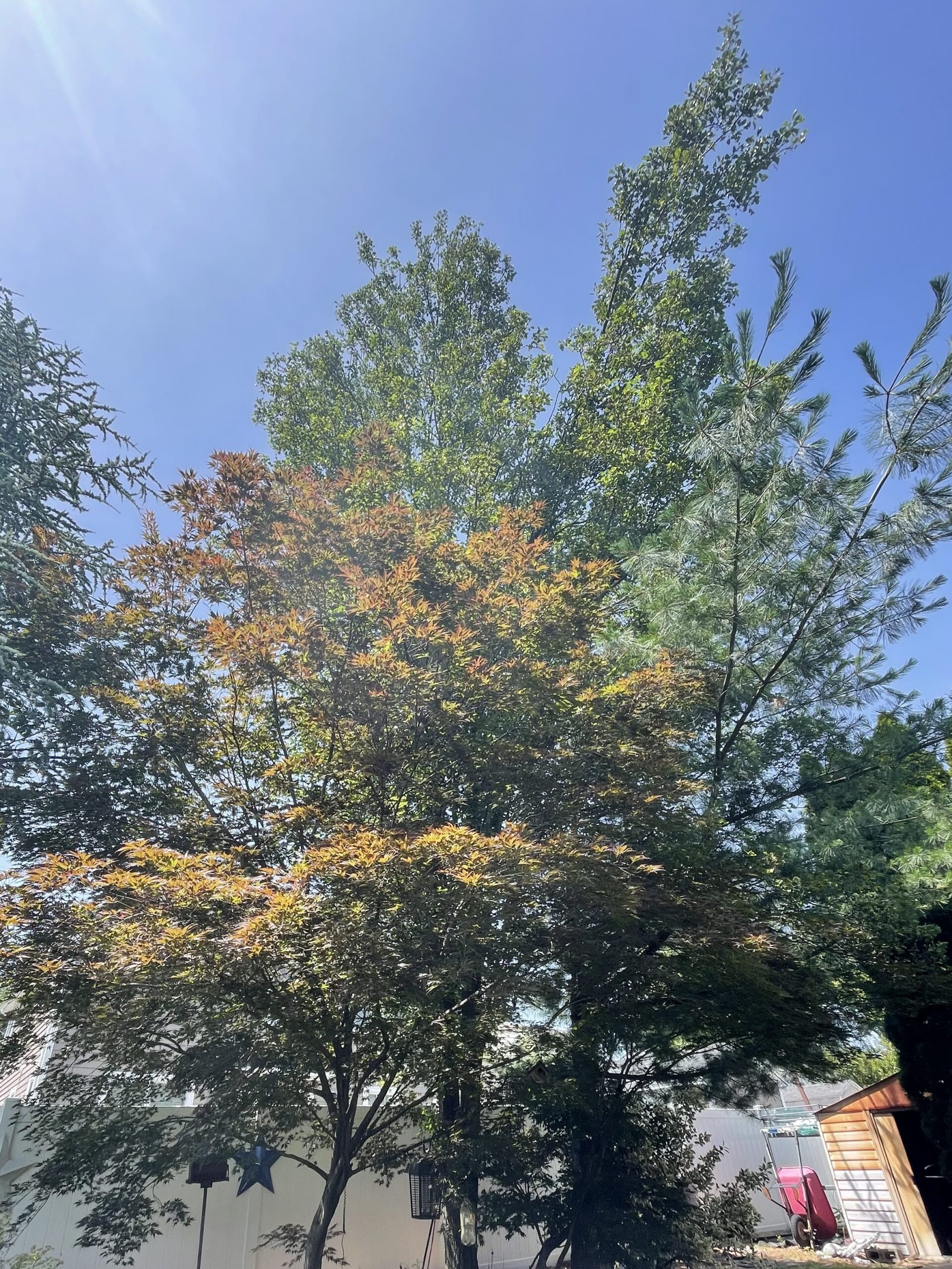
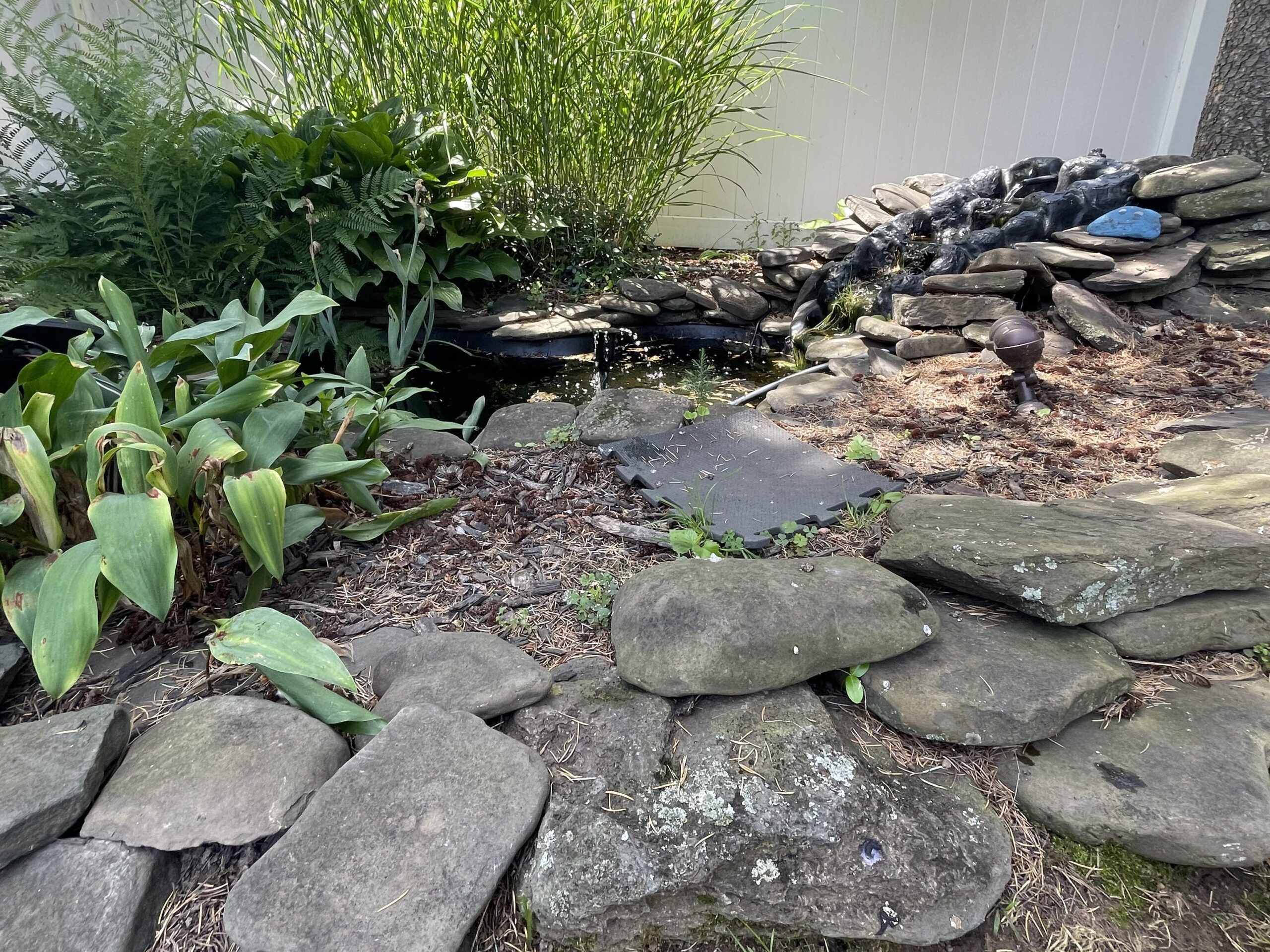
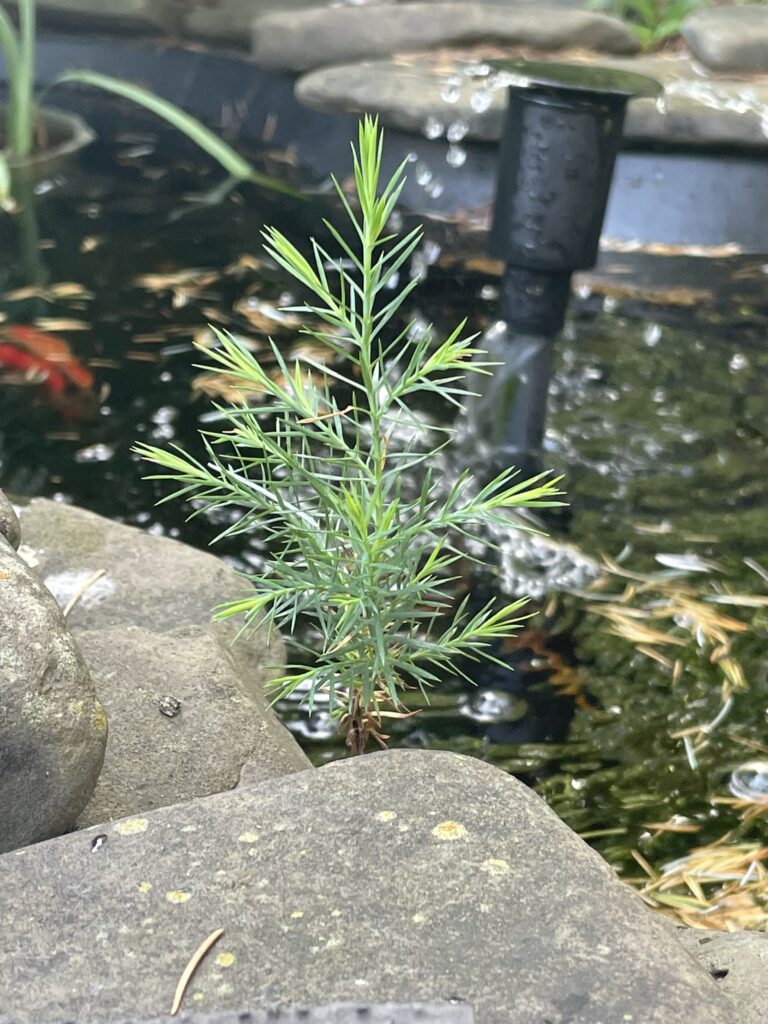
- There is a Japanese Maple sapling growing next to the adult Blue Spruce, yet the adult Japanese Maple is 20 yards away. How did it get there?
- Why is there moss on the rocks near the water but not near the grass?
- What are the birds nests made out of?
- How does the addition of a small pond benefit local species?
- How does the addition of a small pond negatively affect local species?
- An ant was seen carrying a pine needle, what will it be used for?
- What kinds of rocks are native to the area?
- What kinds of species are fossilized?
- How old are these fossilized species?
- How does human interaction shape this ecosystem?
- What kind of service does the sap inside the maple and spruce trees provide to the area?
- Why do clovers grow in areas with little available dirt?
- What did the backyard look like prior to the house being built?
- In what way is the occupation of spiders necessary to the backyard?
- What kinds of trees are native to this area?
- What kinds of trees are not native to this area that are in the backyard?
- Do birds build their nests in the same spot each year?
- What would be the effect of an invasive plant species on this backyard ecosystem?
- What is the effect of feral cats in the area on this ecosystem?
- How does the shape of the area prevent flooding?
- What role do the insects play?
- What happens to the bees when the pollinating plants die?
- How would this area be different if all vegetation was left untouched?
- Why is sun coverage so significant for species?
- Is it possible for any of these tree species to out-compete the other trees and become invasive after being planted for over 25 years?
- What kinds of insects are present underground?
- What insect hangs from trees with a small web attached to them?
- How do cicadas disrupt this ecosystem?
- What species is this?
30. What did the land look like during the time the fossilized species were alive?
Looking at the rocks the species are fossilized in, we can identify them as sedimentary. They have layers relevant to mineral compaction and erosion. Sedimentary rocks are present in aquatic environments, therefore, it is apparent that the fossils must be marine organisms. The Laurentide Ice Sheet covered parts of New Jersey thousands of years ago, blocking any oceanic water infiltration. During the last Ice Age, the Late Wisconsin Ice Age, there were glacial coverings over northern and central New Jersey 21,000 years ago (NJDEP https://www.state.nj.us/dep/njgs/enviroed/infocirc/glacial.pdf). As a result, glacial till can be found throughout New Jersey’s surface.
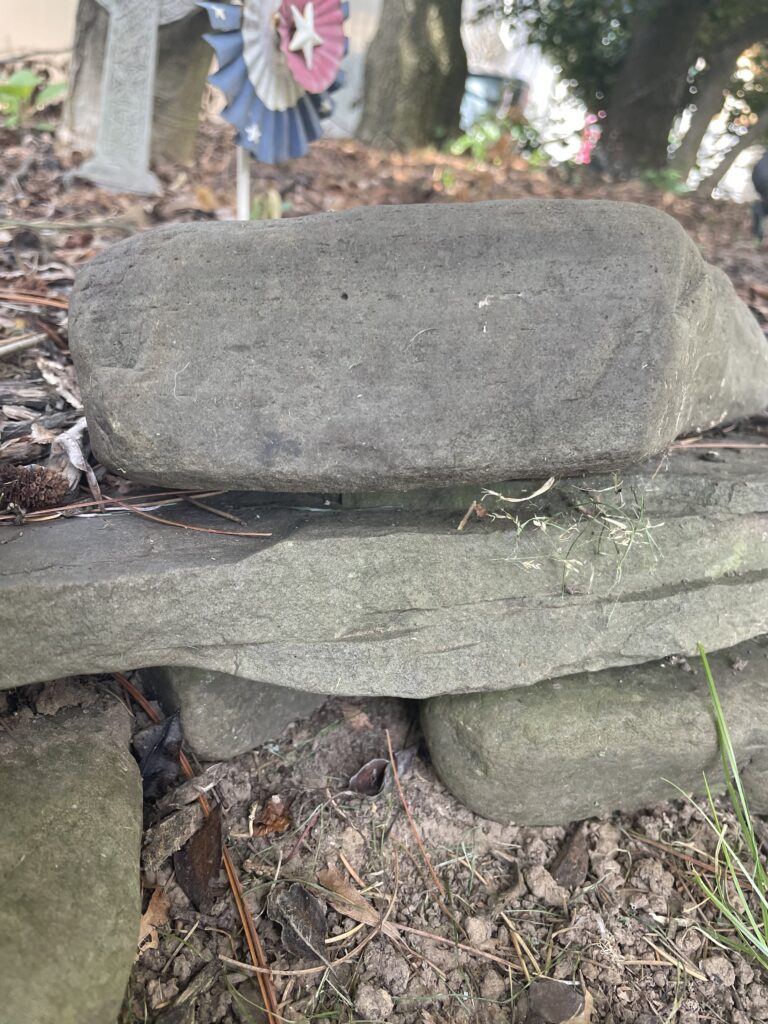
During the Cambrian Period 500 million years ago, New Jersey was underwater and part of the sea (NJ.com https://www.nj.com/data/2018/07/what_new_jersey_looked_like_millions_of_years_ago.html#:~:text=Cambrian%20Period%20(About%20540%2D500,to%20evolve%20shells%20and%20exoskeletons). The fossilized species in the sedimentary rocks lived underwater as marine organisms. Though it is difficult to identify, these organisms may be corals that have now been fossilized.
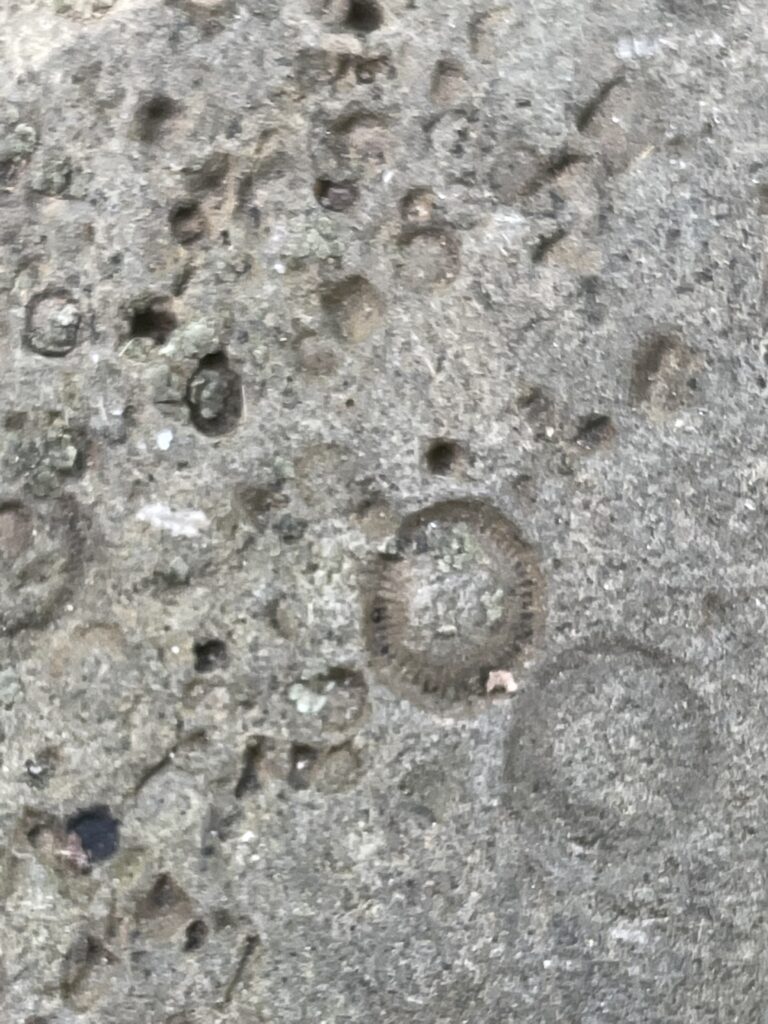
The rocks in New Jersey were formed during the Jurassic and Triassic periods, around 200 million years ago.

While these organisms were alive, New Jersey was underwater and part of the Atlantic Ocean. As plate tectonics shifted North America and glaciers appeared, disappeared, and reappeared, these organisms thrived in their marine environment.
I would like to further identify the types of rocks and fossils found in the rocks in my backyard. The vast amount of birds in this area certainly draw my attention as there are so many, and I am curious to know their direct roles they play in this ecosystem. My backyard is an adequate place to identify species because there are both natural and man-made components that affect the ecosystem and change the different ecosystem services performed by the species.
Hi, this is a comment.
To get started with moderating, editing, and deleting comments, please visit the Comments screen in the dashboard.
Commenter avatars come from Gravatar.