Posts

Wonder Blog Mini-Project

Wonder Blog Mini-Project

13 July 2021

Cranford, NJ

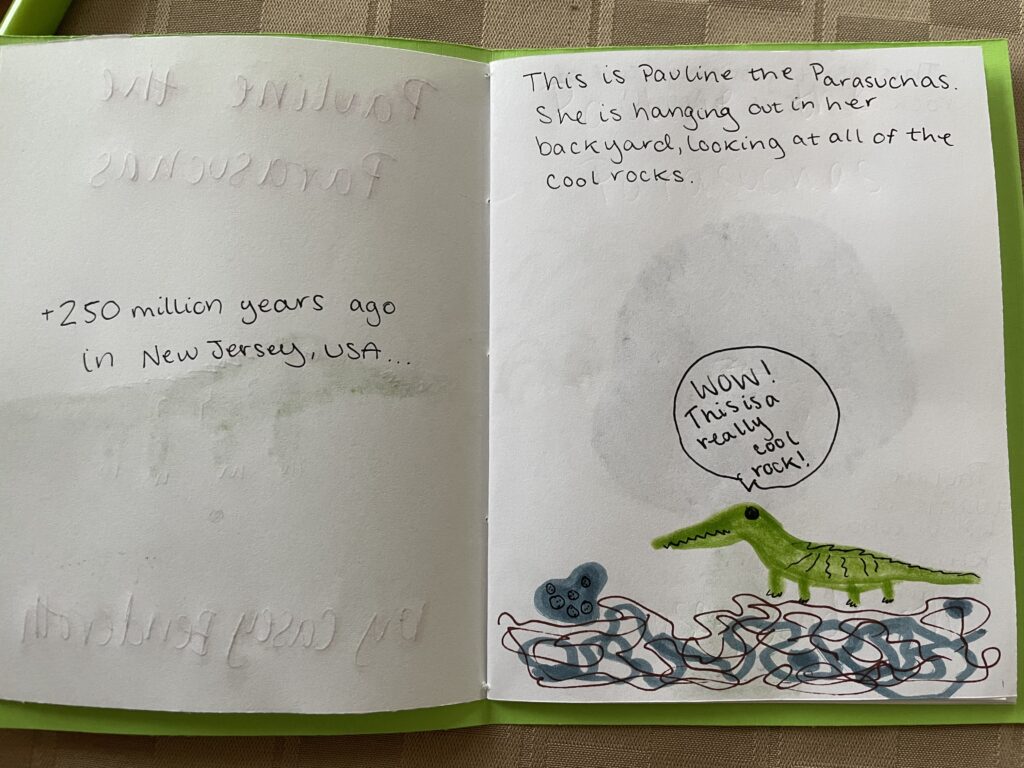
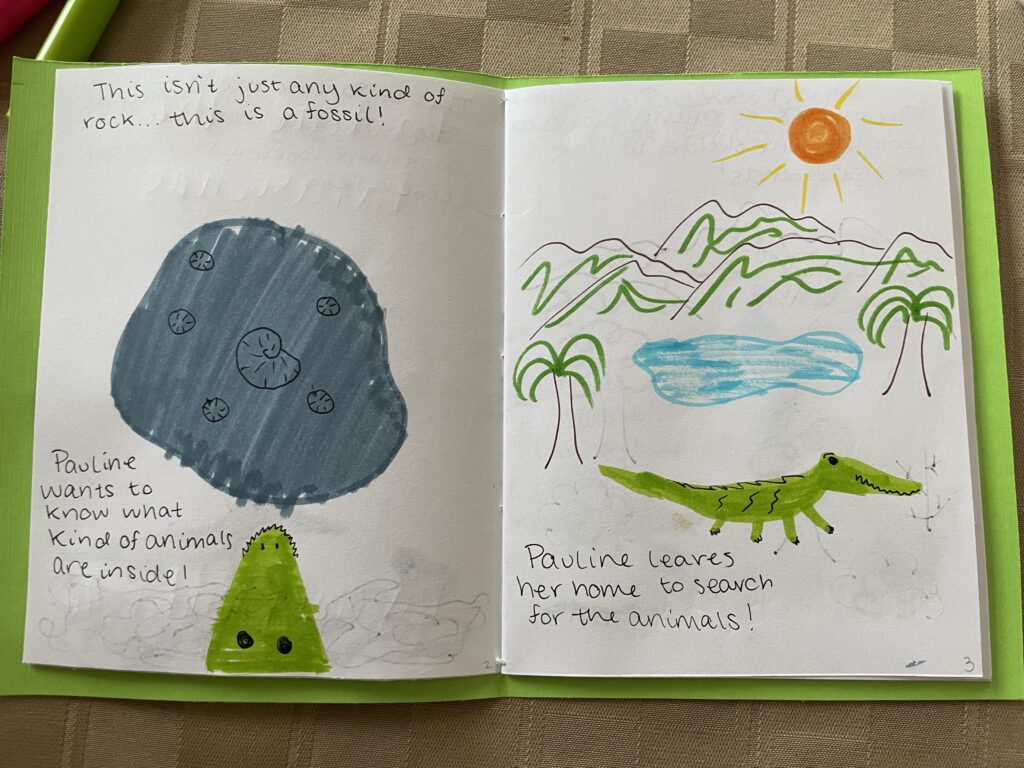
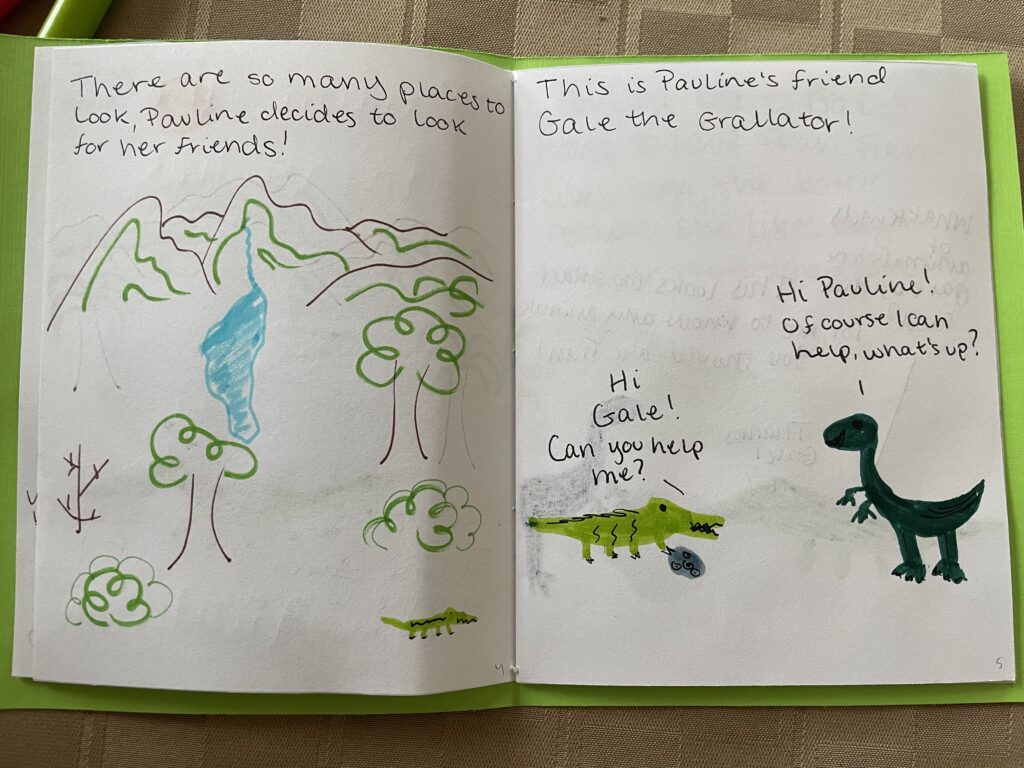
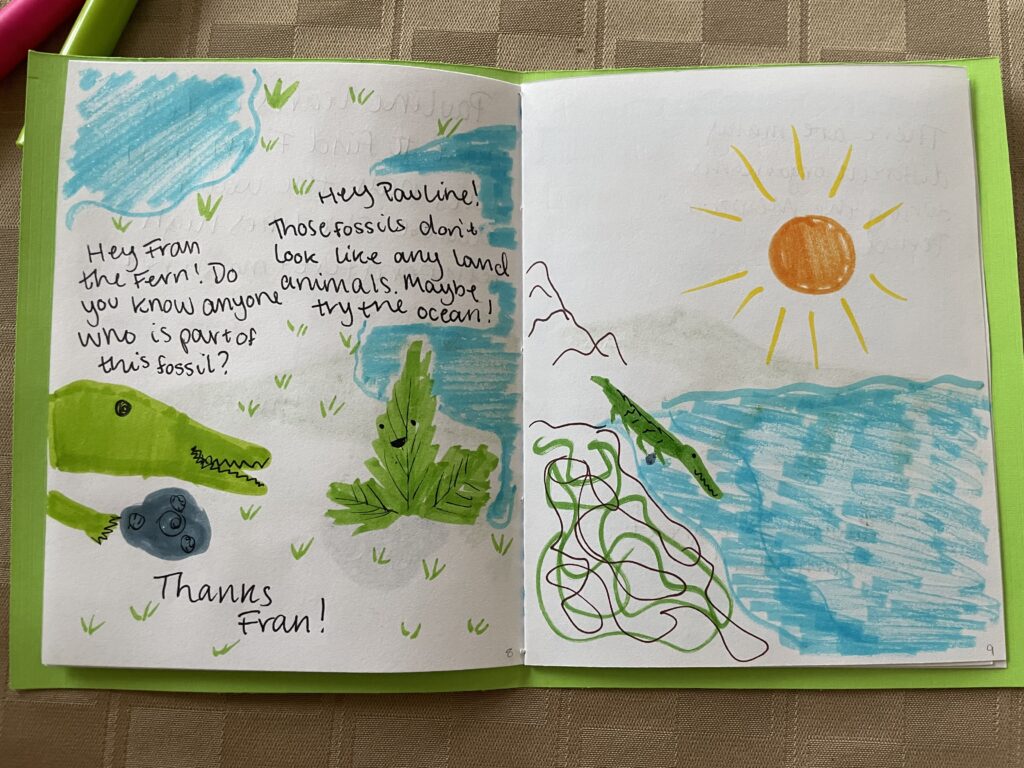
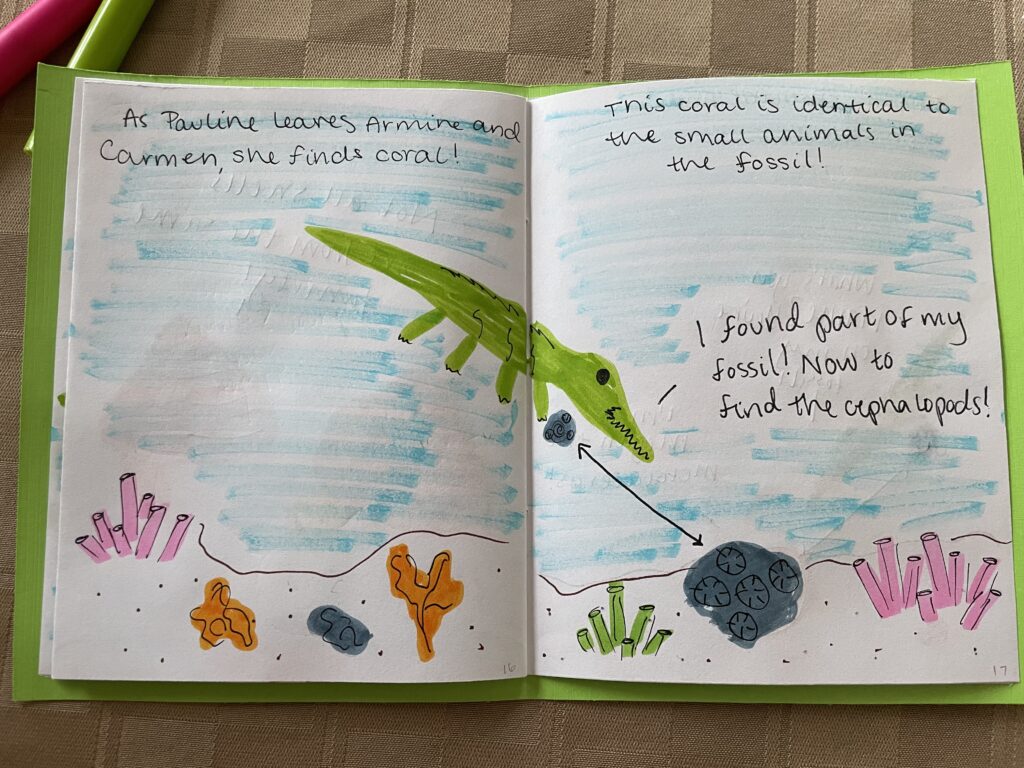
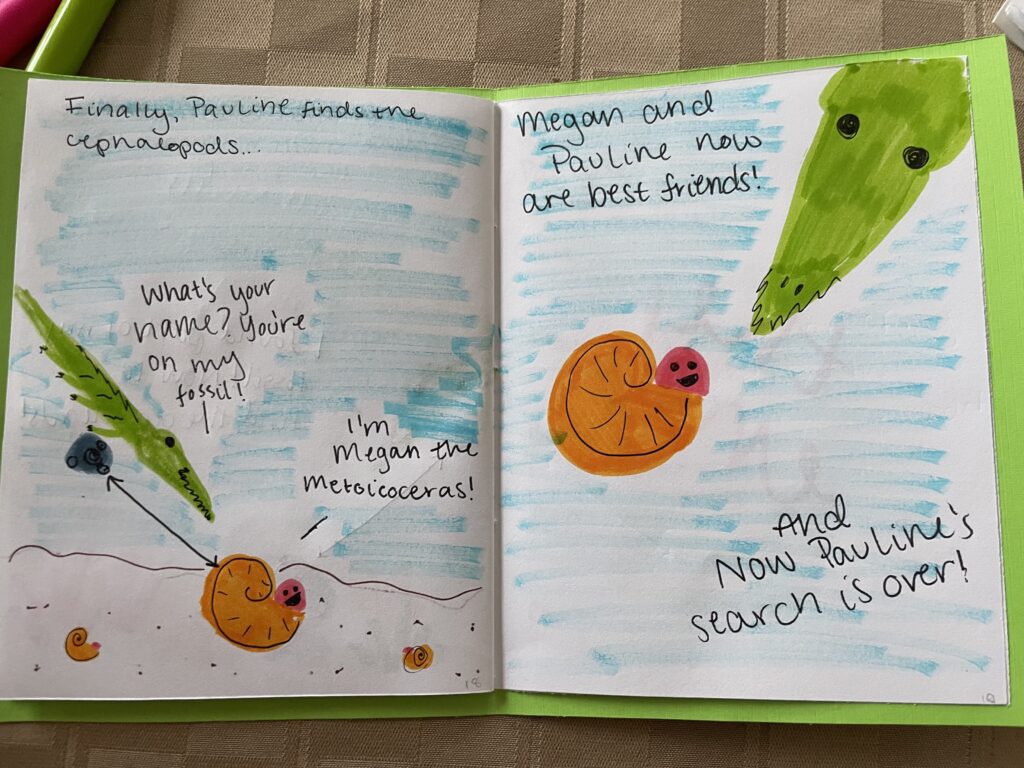
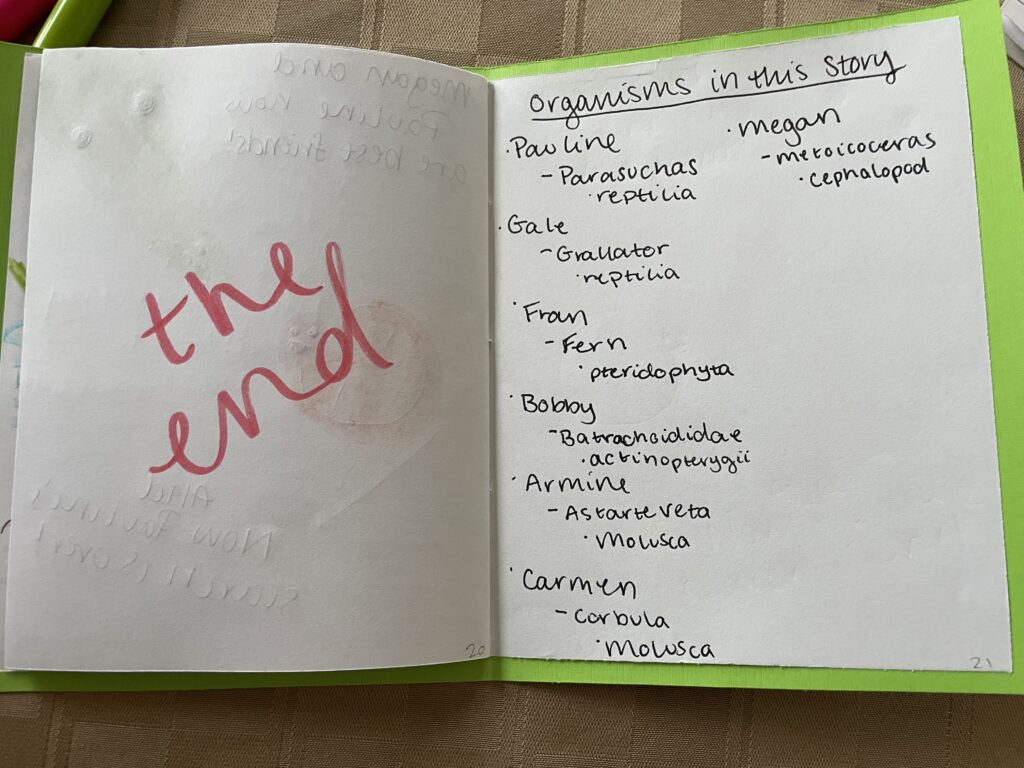
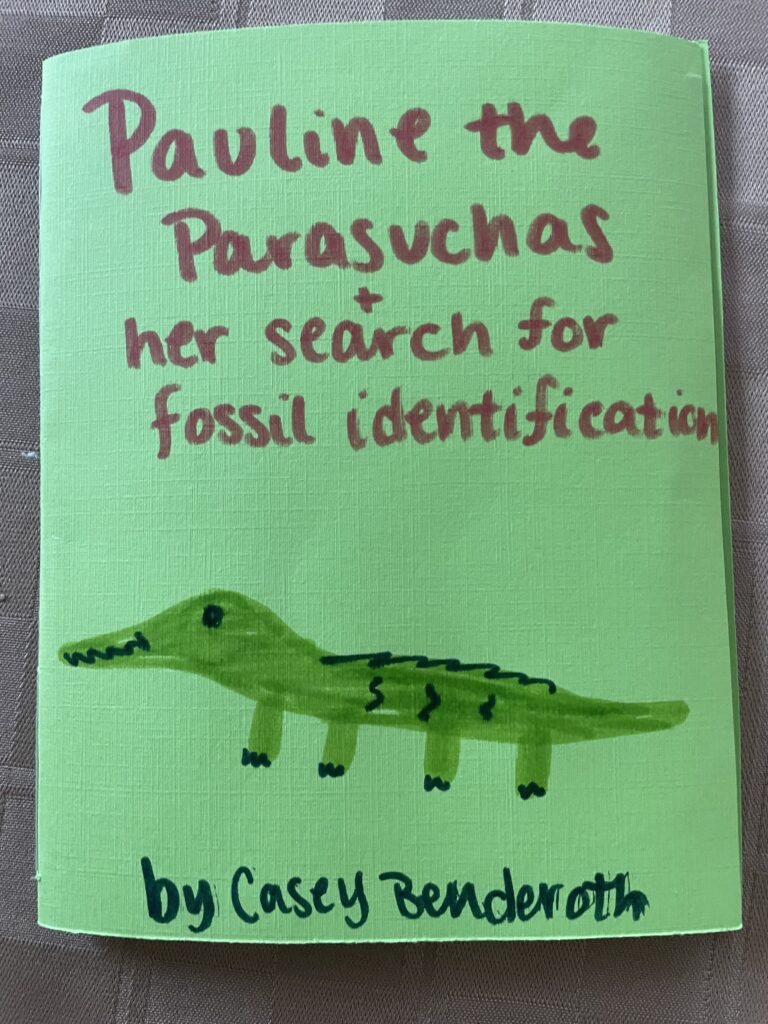
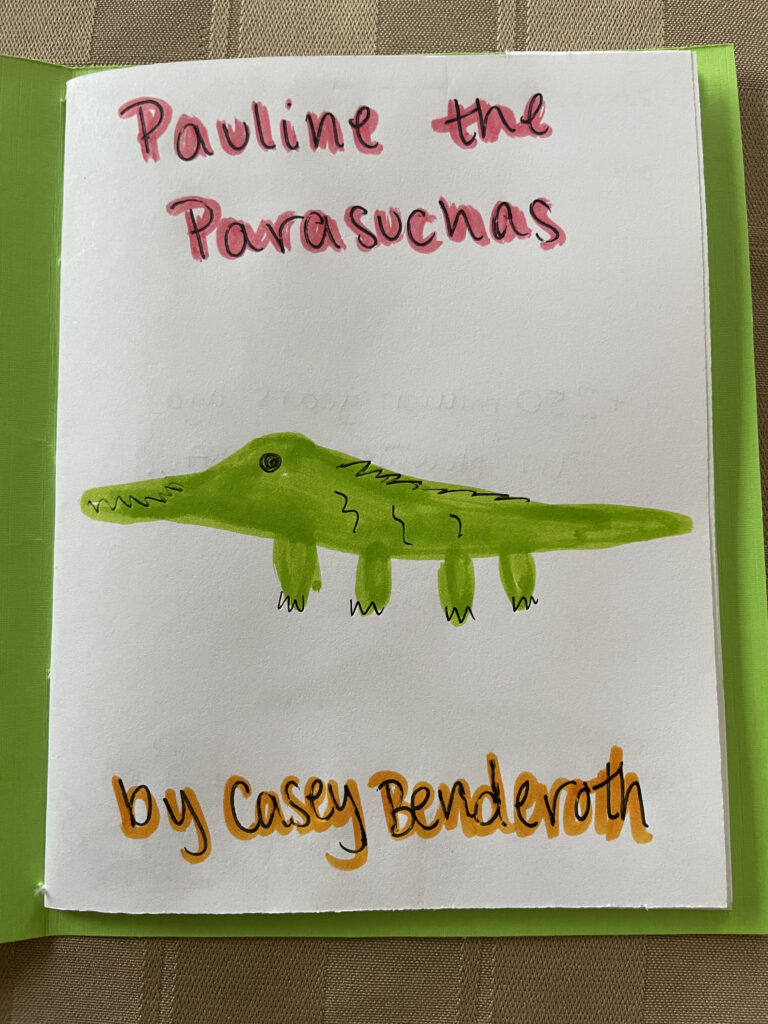
For my final Wonder Blog entry, I have decided to create a children’s book. I was able to tie in material from my previous Wonder Blog observations as well as the skills we learned during sketching (although my drawings are cartoons rather than realistic drawings of field materials).

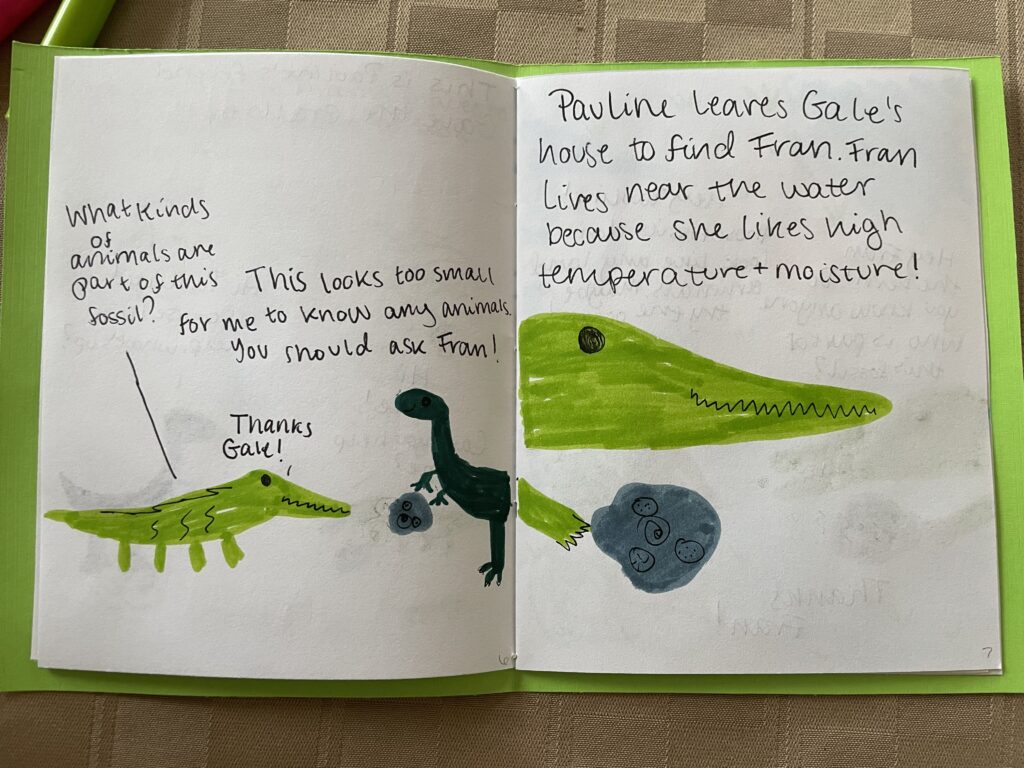
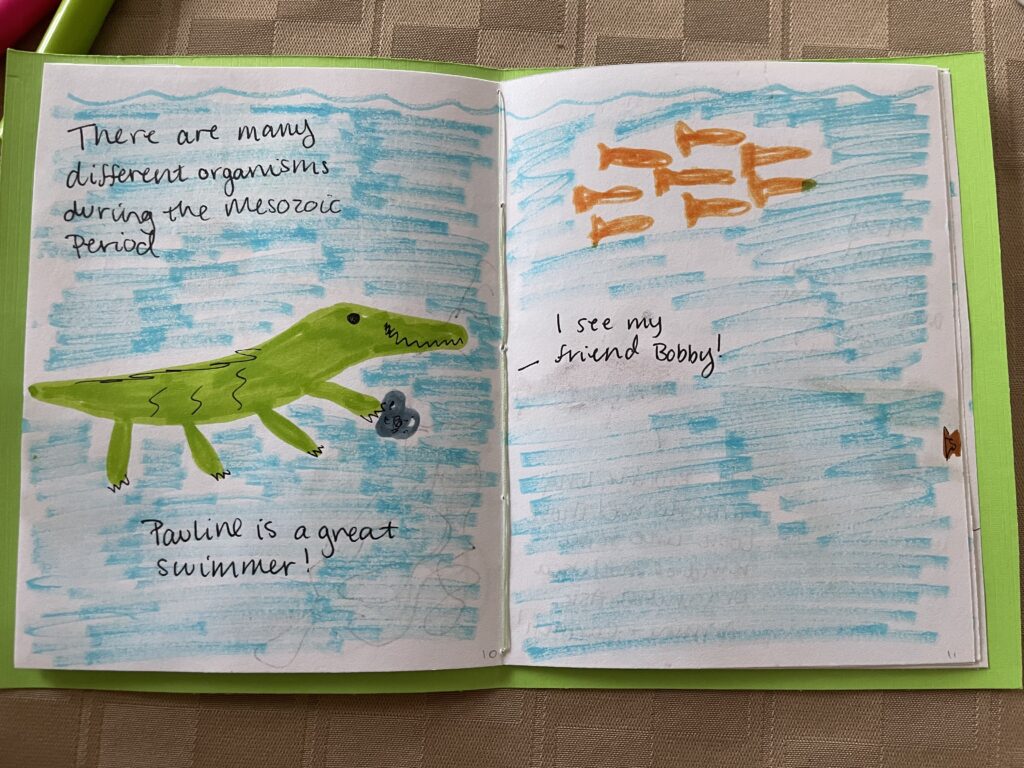
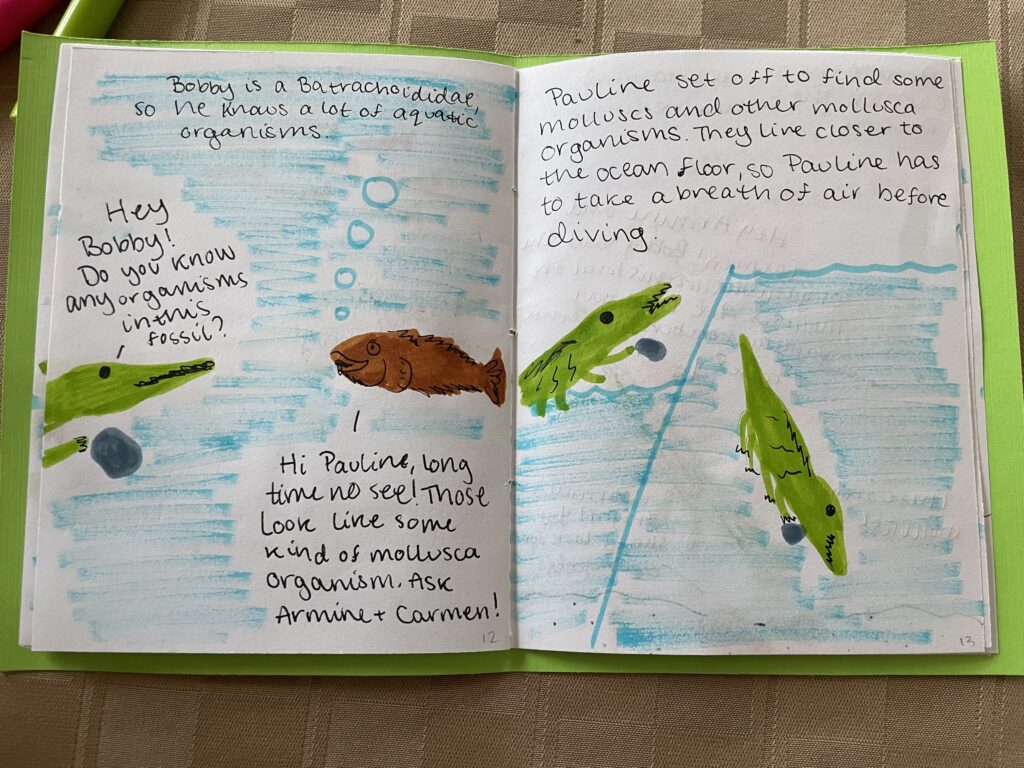
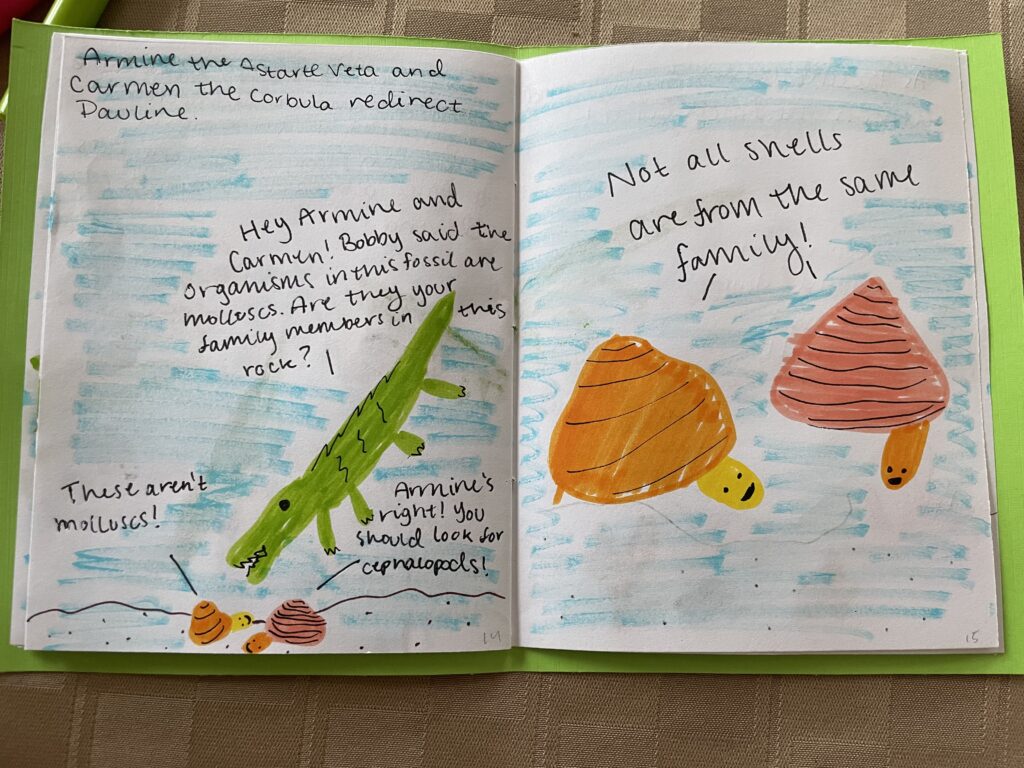
The fossils in my backyard greatly caught my attention, so I decided to try and identify organisms that lived in my area during the Jurassic and Cretaceous Periods. Following the story of Pauline, a parasuchas, I was able to personify my search to identify what organisms are in the fossils in my backyard. Pauline asks various land organisms that were found near New Jersey including a fern and a grallator. Then Pauline asks aquatic organisms like a batrachoididae fish, two mollusks, and finally a cephalopod.

Creating a children’s book was very new for me; I even bound the book with a cardstock cover with a needle and thread! I was able to use both artistic and scientific traits to complete this assignment, which combines my two favorite subjects. It was funny to see my drawings differ from scientific drawings of these organisms, but had fun making cartoon prehistoric animals to show my amazement for fossils!
Czaplewski, John J. “PBDB Navigator.” front page. Accessed July 13, 2021. https://paleobiodb.org/navigator/.

Webster, Ian, and C. R. Scotese. “Ancient Earth.” Dinosaur Images & Facts – The Online Database. Accessed July 13, 2021. https://dinosaurpictures.org/ancient-earth#170.
Post 3

Casey Benderoth Wonder Blog Post 3

Cranford, NJ

6 July 2021

Today is Tuesday, July 6 at 1:00 pm. The past week has been very hot and has been given heat advisories until at least Thursday. With few clouds in the sky, the sun beamed down onto the surface, warming the surrounding area and providing minimal shade coverage. The heat has brought out many bugs like flies and mosquitos who like the find warm environments and stick around for the decaying materials like warm fruit.

This week’s discoveries include robin fledging, analysis of sunlight exposure, and the effects of heat on wildlife. The robin’s nest that I had previously noted in a past Wonder Blog entry is now empty as the baby birds have fledged, or left the nest. The nest now lay empty in the tree with no mother robin laying in it to protect her babies nor are there any remnants of hatchlings, as if they were never even there. The sunlight plays a large role in the ecosystem services of various organisms. Some plants, like non-native succulents or native crabgrass, are soaking in the great sunlight exposure from the lack of clouds. Other plants, like ferns, are negatively reacting to the high levels of direct sunlight that has been common in this area the past few days. Along with the direct sunlight, high levels of heat are affecting the local organisms. Birds can be heard singing in the morning but are relatively quiet during the day when it is hottest. Some bugs are more frequent in their appearances due to the warm temperatures.

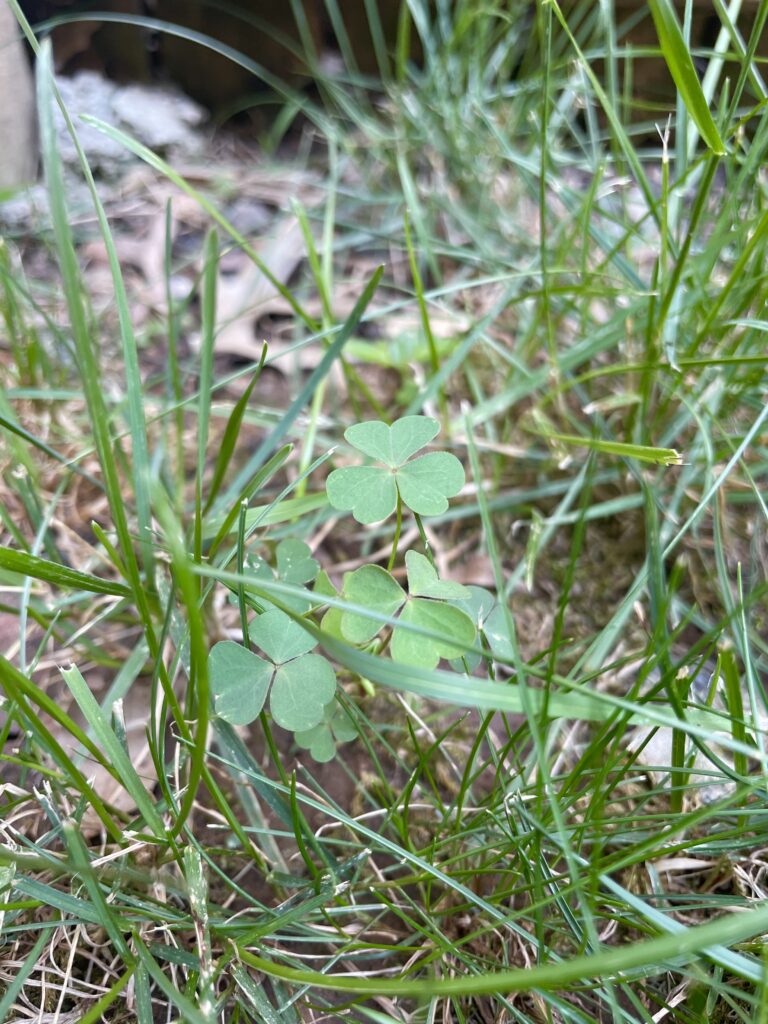
One thing I have continuously noticed is the resiliency of clovers. Wherever I look, there seems to be some kind of clump of clover in a corner or in a pile of dirt. While the clovers are not typically found in the grass, I can point out a bunch anywhere there is varying environmental conditions. Are clovers suitable for all habitats? With some research, it is clear that clovers can out-compete other weeds to become the dominant sprouting weed in a yard. Low nitrogen levels are favorable for clovers, thus areas with low nutrients seem to have the most clovers growing. For example, an area with a thick layer of mulch and little soil has a large amount of clovers because of the lack of nitrogen. While clovers do not grow in just any condition, they can adapt to many different environments depending on soil nutrients, sunlight exposure, or pH levels.

This photo shows clovers amongst some grass that is heavily surrounded by dirt. The resilience of clovers interests me, so capturing the lifestyle of this bunch of clovers was important in identifying clover environmental conditions.
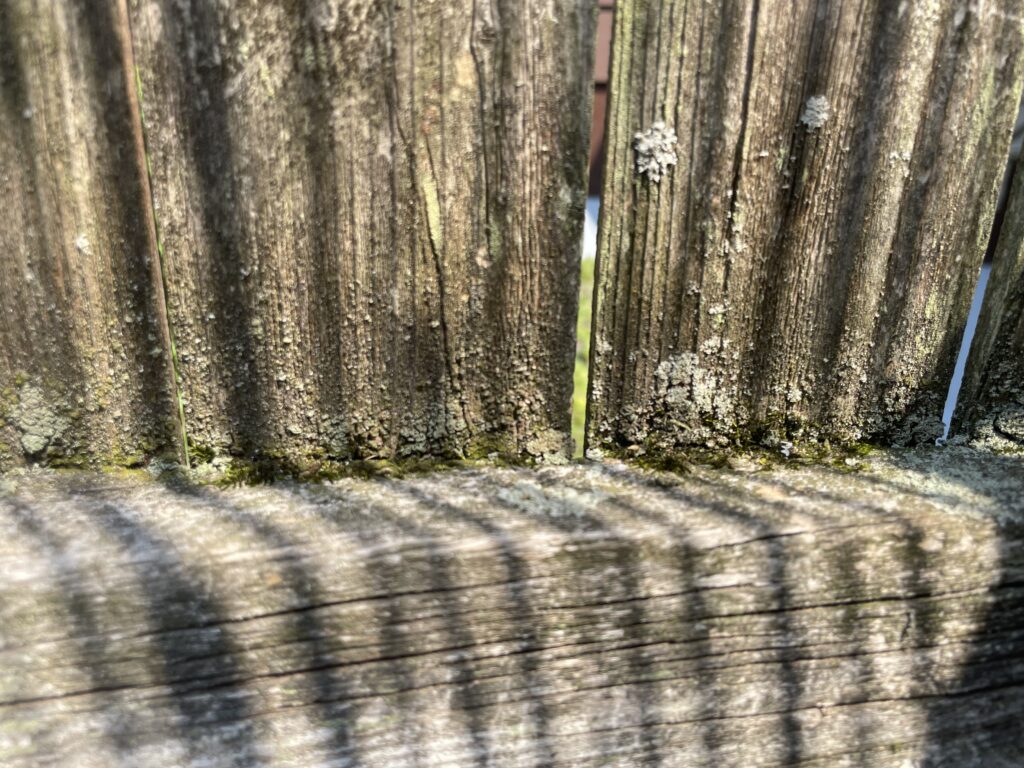
The wooden fence, that was once part of a living tree, is supporting life again as moss and lichen lay on this fence.
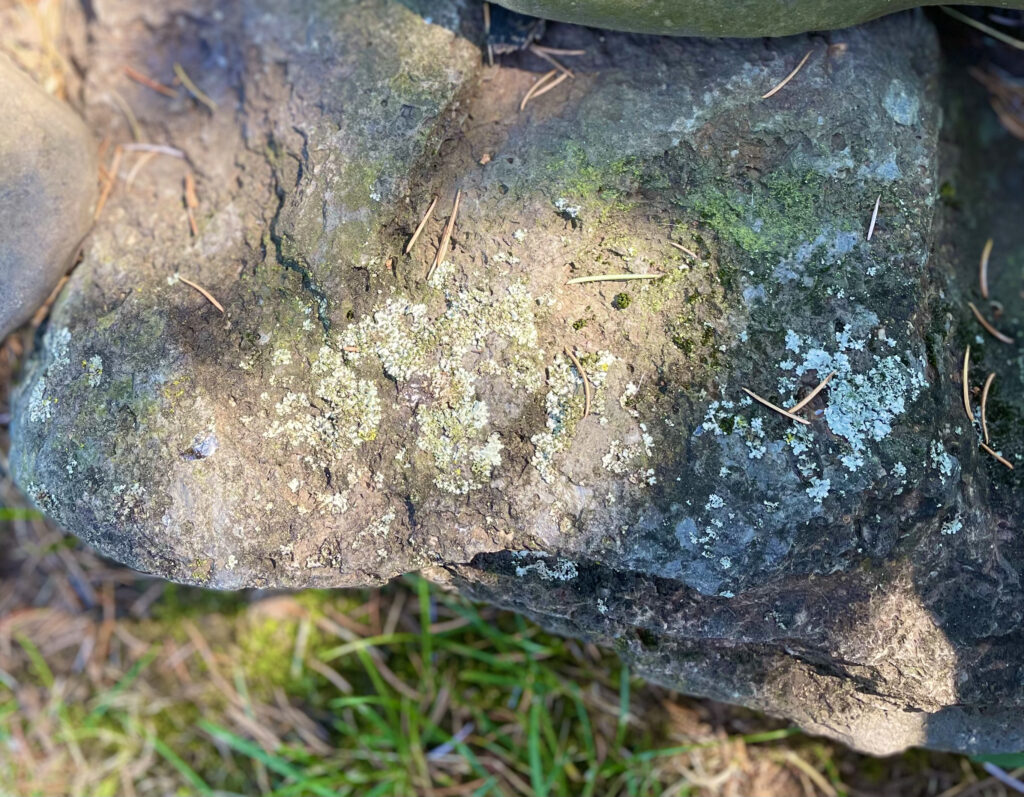
The lichen on this rock is very unique and vibrant. No grouping of lichen is the same as others, so it is interesting to to try and find patterns in groupings or individual sproutings of this organism.
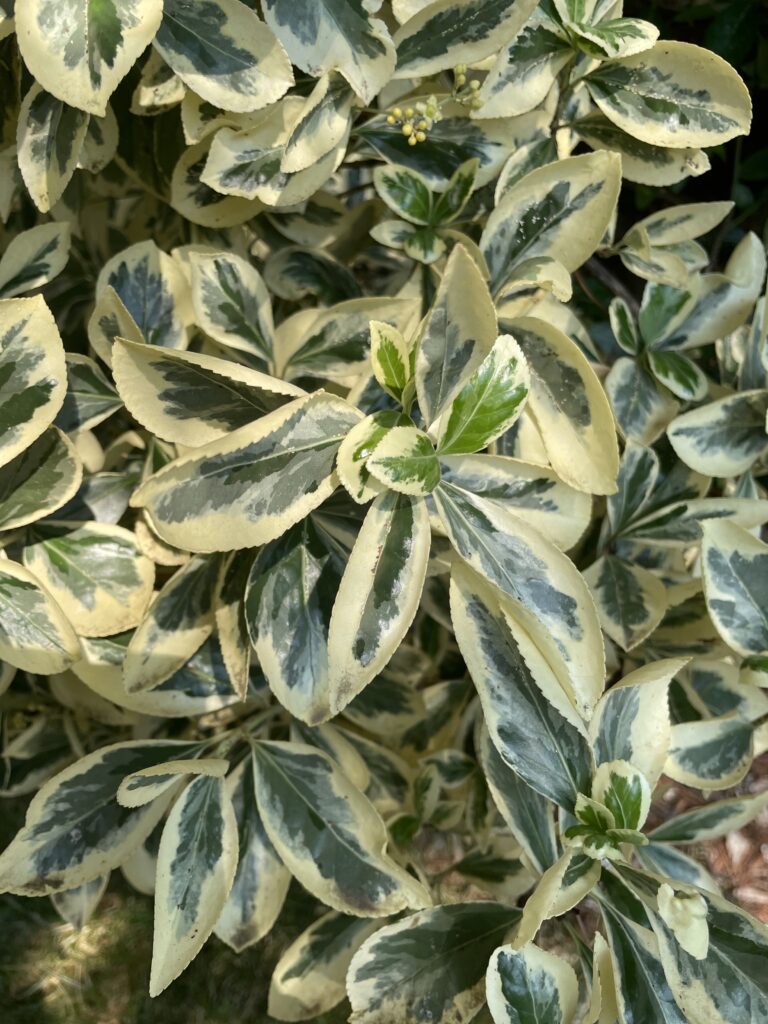
The leaves of this plant are very unique in color and pattern. Most leaves are a dull gray and yellow, however the new growth is vibrant and near-neon, which I find very interesting.
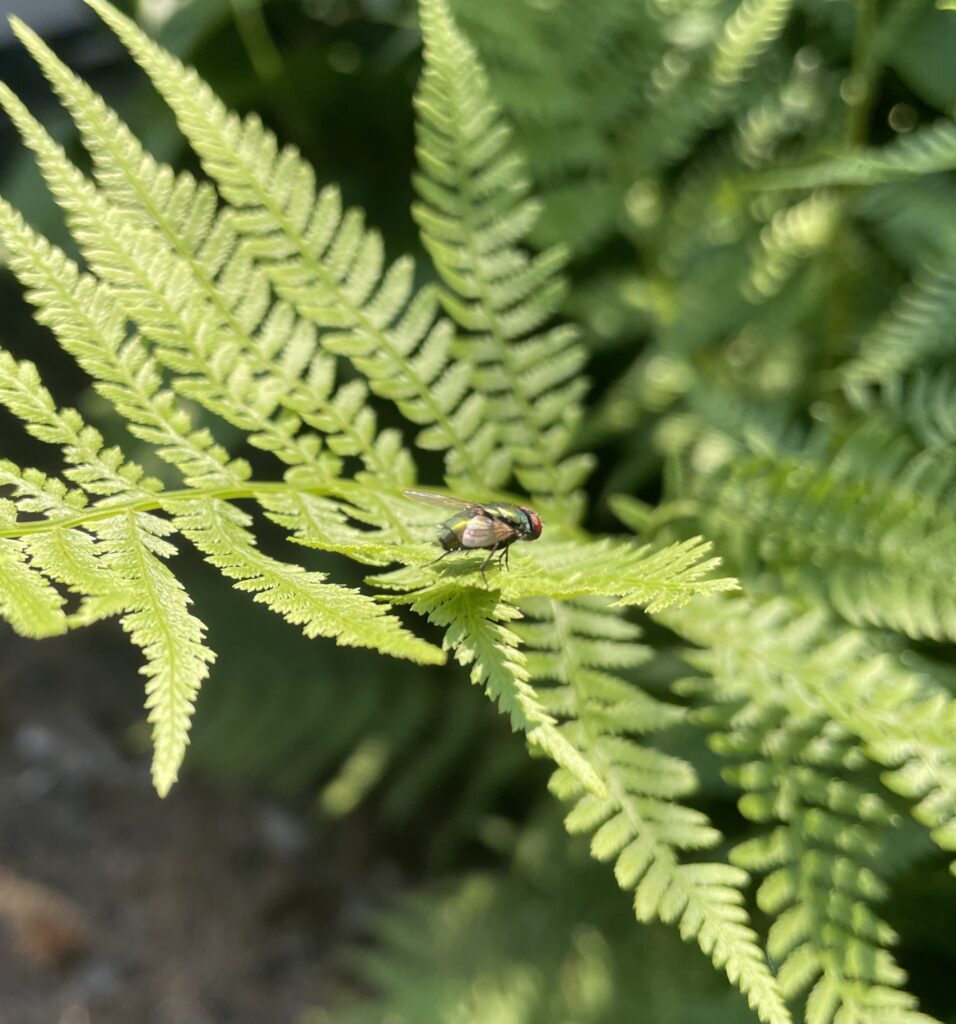
I really like this photo as it captures two living things. The fern acts as a resting place for this fly before it prepares to find somewhere else to sit. The fly as the subject works very well as it sits in the center of this photo.

Viewing plants from a different angle to take pictures was certainly unique. Rather than looking for perfection, I looked for pattern or outliers to make different subjects stand out. In sketching, I tried to find minute details that made something inherently unique. Photographing was similar in choosing the subject, though I wished to identify a subject that was both unique and uniform so I could find patterns or similarities between other subjects. Taking photos of the nature around me has provided me with a new perspective of things and a different eye in which I can interpret organisms.

Post 2

Wonder Blog Post 2

Cranford, NJ

1 July 2021

The day is Thursday, July 1 at 6:00 at night. There have been scattered thunderstorms the past two days and extreme humidity and heat. At the time of this blog entry, it is raining with light neighborly flooding. To make observations today, I had to use an umbrella and work simultaneously. The rain this week altered the environment compared to last week.

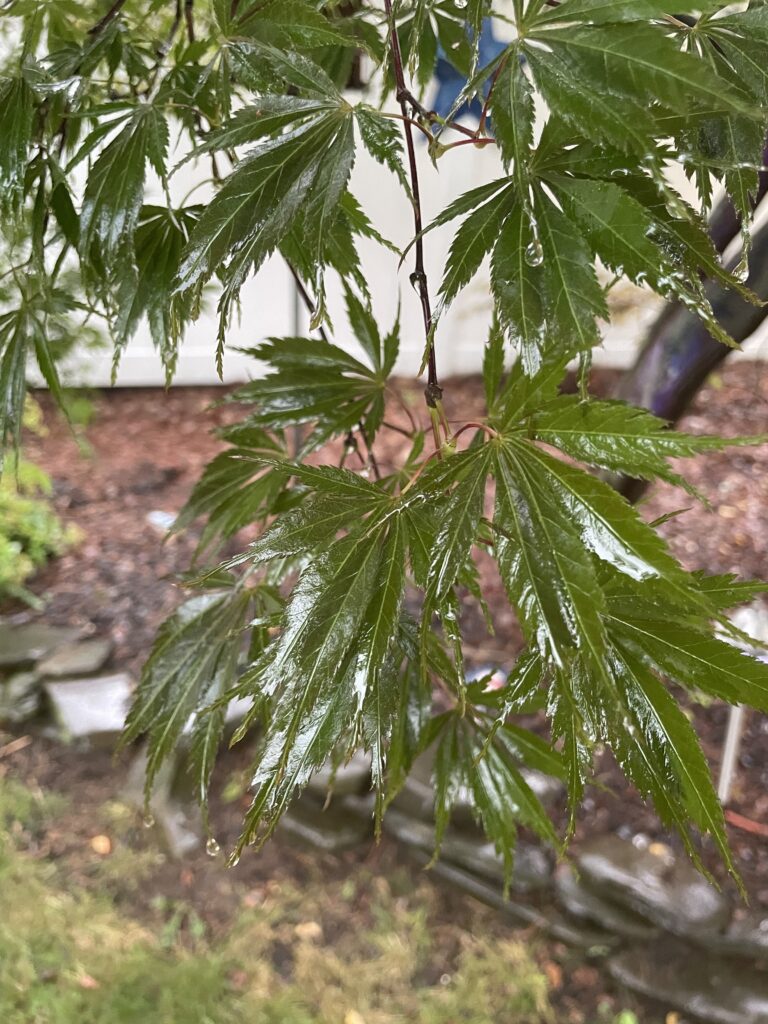
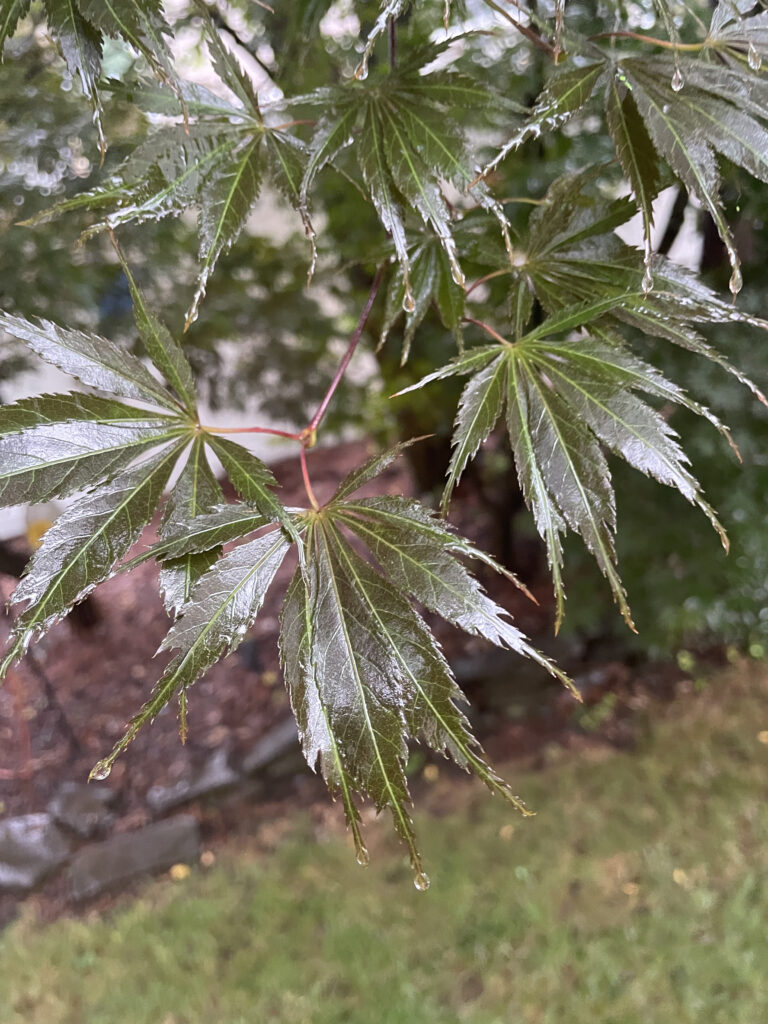
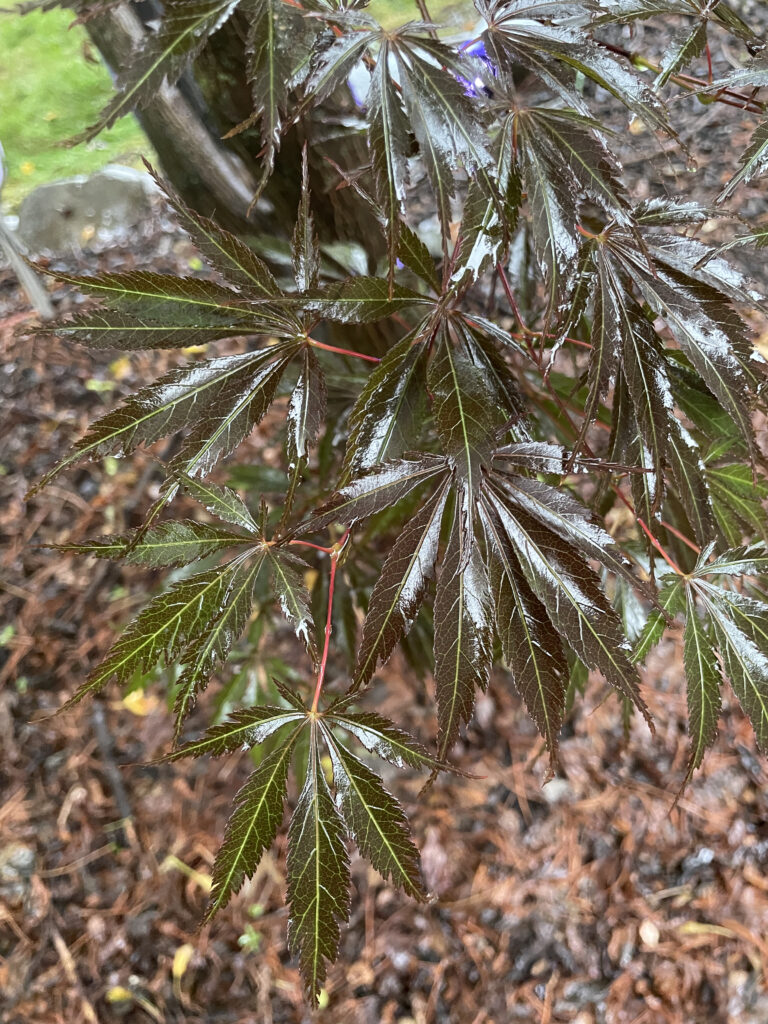
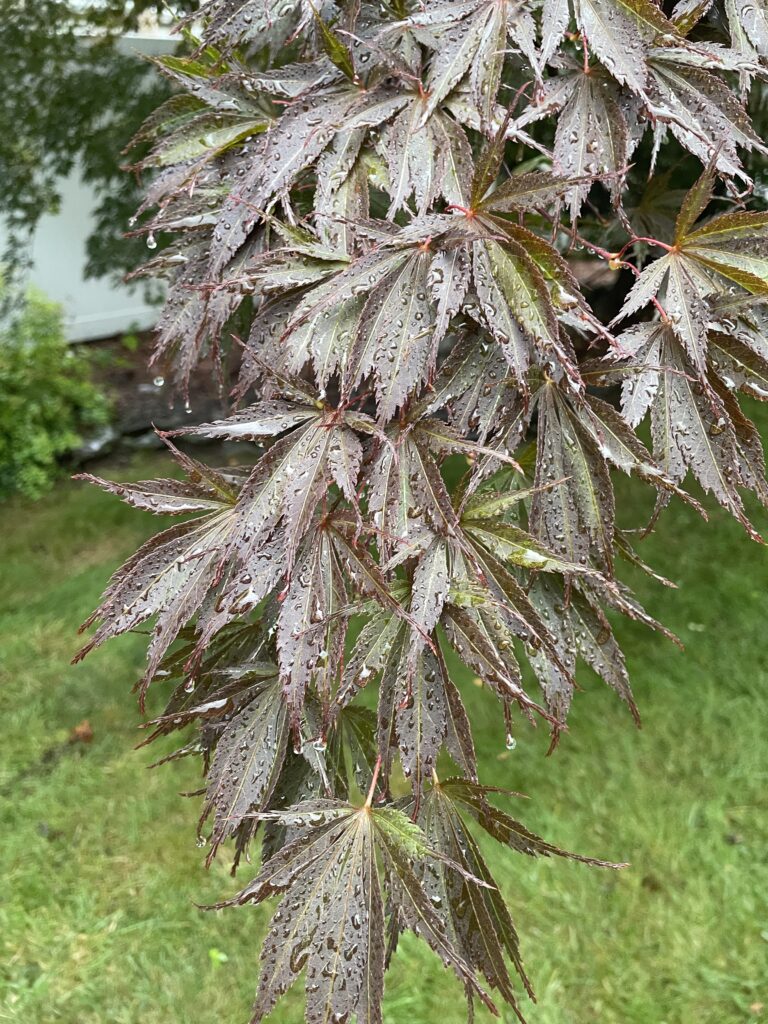
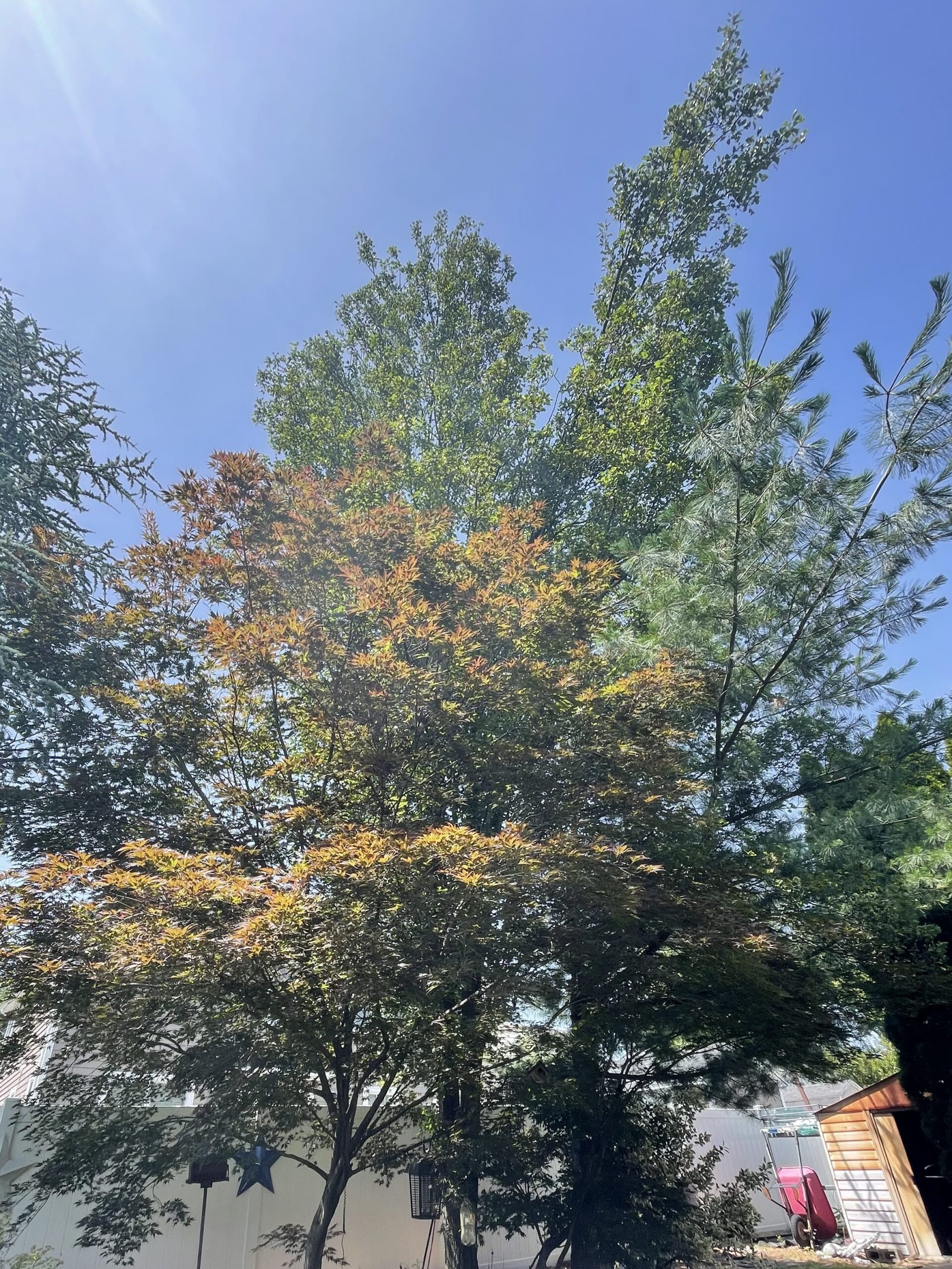
Coming back to the same spot as last week, I noticed some new things about the environment, specifically the trees. For example, I noticed discoloration in the leaves of the Japanese Maple tree. In some areas, the leaves were a bright green, whereas in other areas the leaves were a purple-ish red. Without investigating in detail, I tried to think of reasons as to why there were different colors; the conclusion I came to is new growth alters the colors of leaves. Matured leaves, like the ones stretching far out into my yard, are the dark purple. Newer leaves, like the ones first sprouting, are green. However, there are leaves that shows signs of maturity that are green. A possible conclusion here is that these leaves do not see as much sunlight as the leaves that reach further into the yard.

There was much fewer wildlife outside this week than last week. The birds, whose songs could be heard as soon as I stepped outside, were silent and hiding in any nearby dry spots. The robin who has a nest in the trees of my backyard jumped around underneath some trees to find food for their babies. The mourning dove sat tightly on her nest that was protected from the rain.

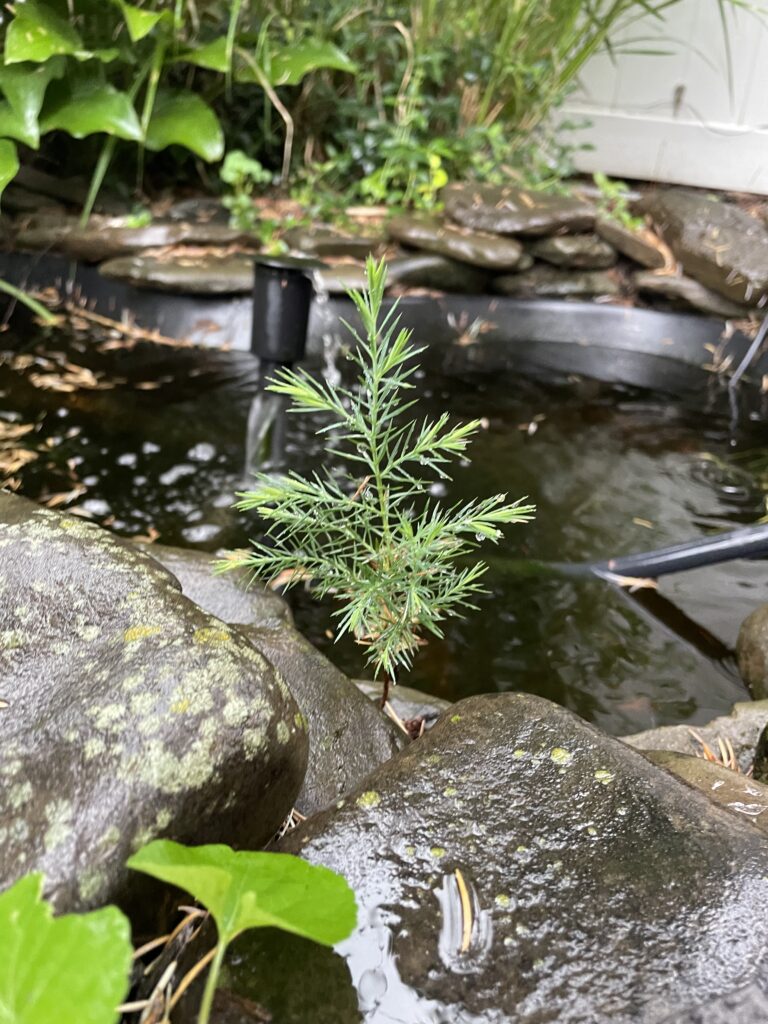
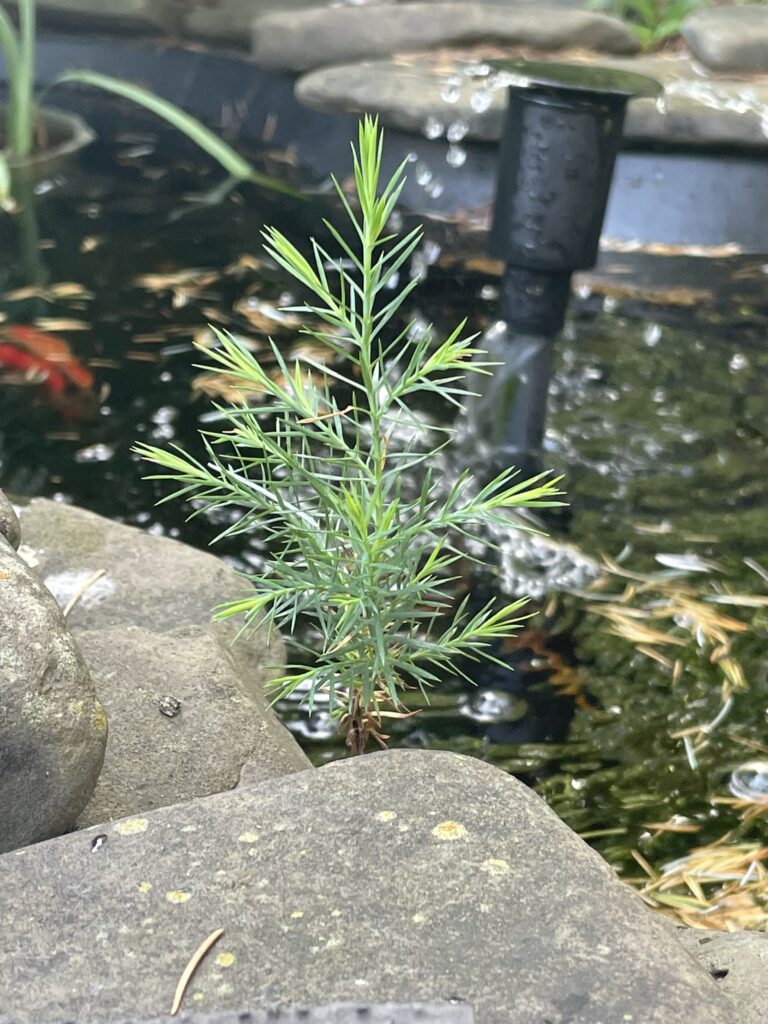
I discovered this sapling last week near the small pond in my yard. Using my resources, I tried to identify it. The websites classify this tree as a Bald Cypress. While they look almost identical, the Bald Cypress is the rarest native tree in New Jersey. It is possible that this small plant is the Bald Cypress, but also unlikely. It is obviously some kind of conifer, but I’m unsure of which one because of how small it is. There are a few other conifers in my yard that it may turn out to be like the Blue Spruce or another Evergreen. My best guess, however, is that it is a Scrub Pine, also known as a Jack Pine. New Jersey is famous for the Pine Barrens as it is home to so many different pine trees. Thus, it is likely that this small sapling is a Jack Pine.

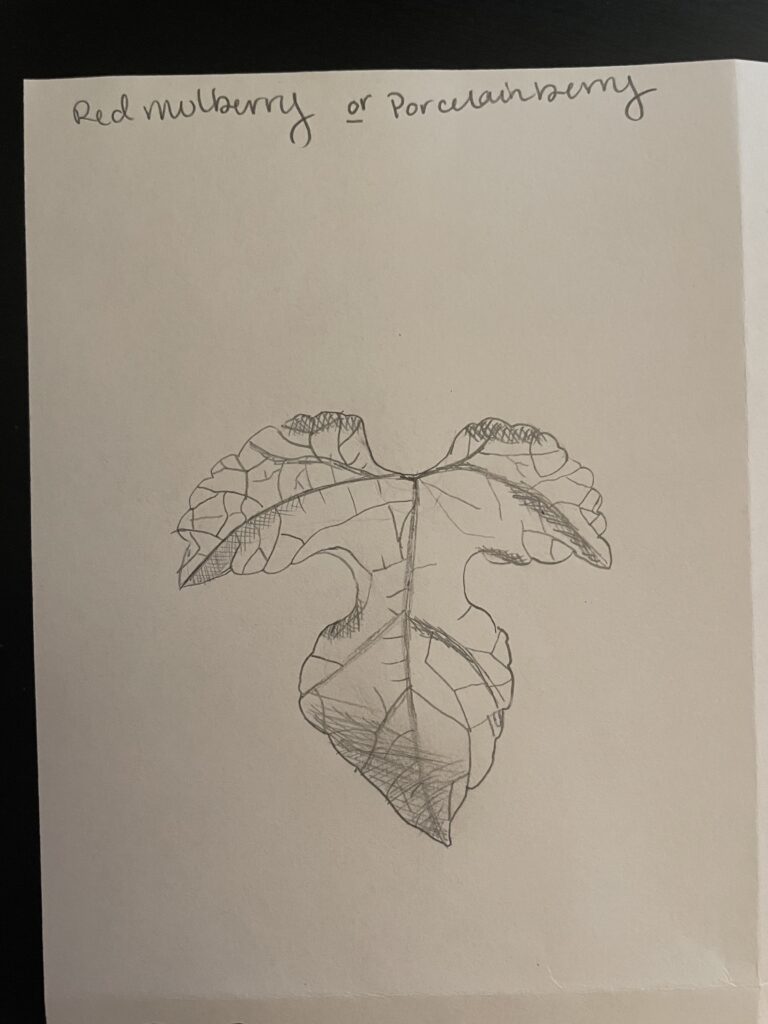
I chose this leaf because it did not look like it belonged to any trees in my vicinity. This growing tree must have been planted by animals dropping seeds, as I do not have any kind of tree like this in my year. I am unsure the type of tree this leaf belongs to, but I believe it is a Red Mulberry or a Porecelainberry tree.
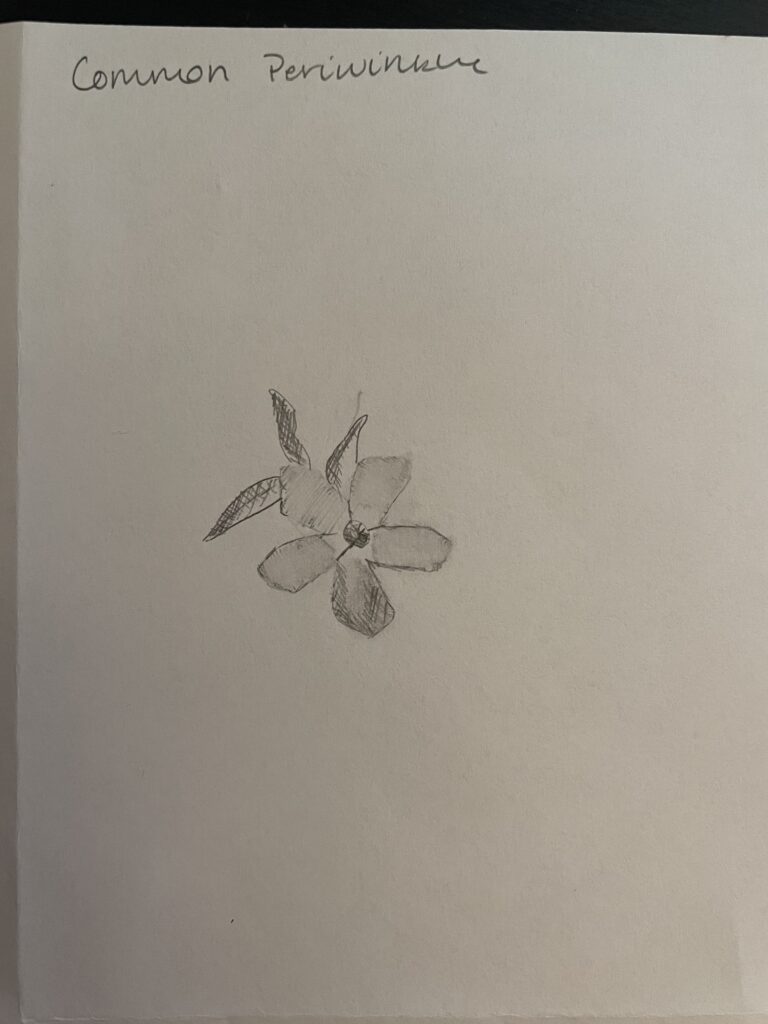
This flower, like the previous leaf, is unlike any other plant in my yard. This periwinkle stands alone in the yard with a few leaves behind it. The pointed tips and rounded sides make this flower very beautiful and unique.
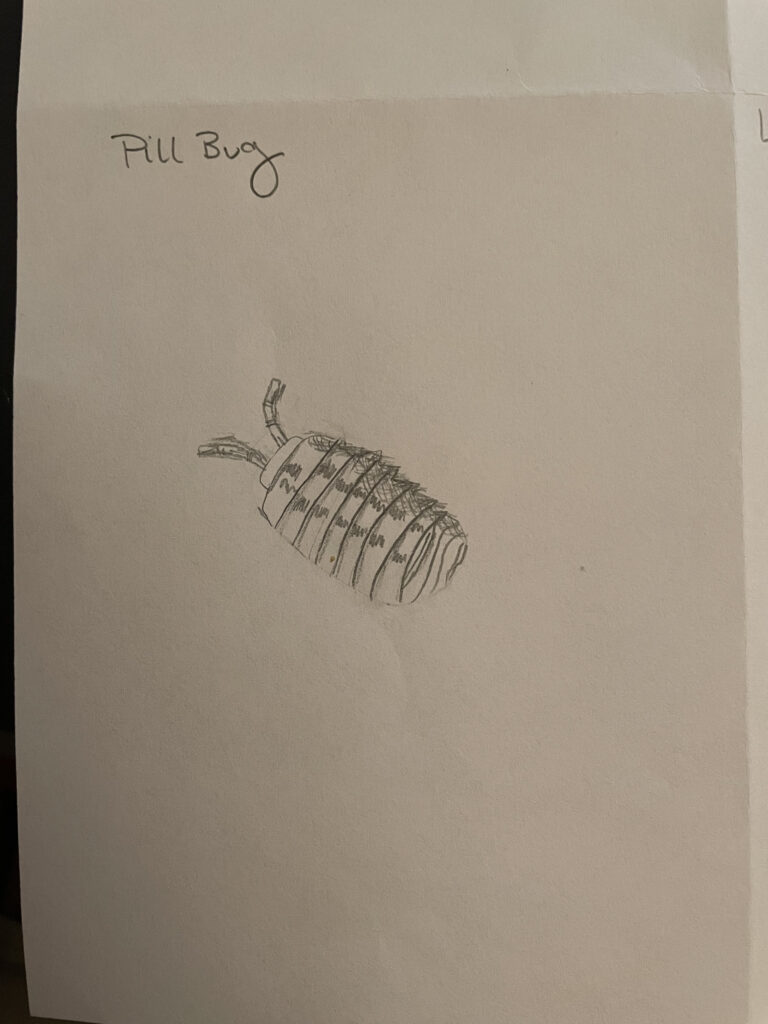
I chose this pill bug to try and draw a moving piece of nature (which turned out to be very difficult). Seeing this bug move around in the rain and beneath various rocks was very interesting as I was watching it perform its daily life activities unaware of the presence of a giant monster (me).
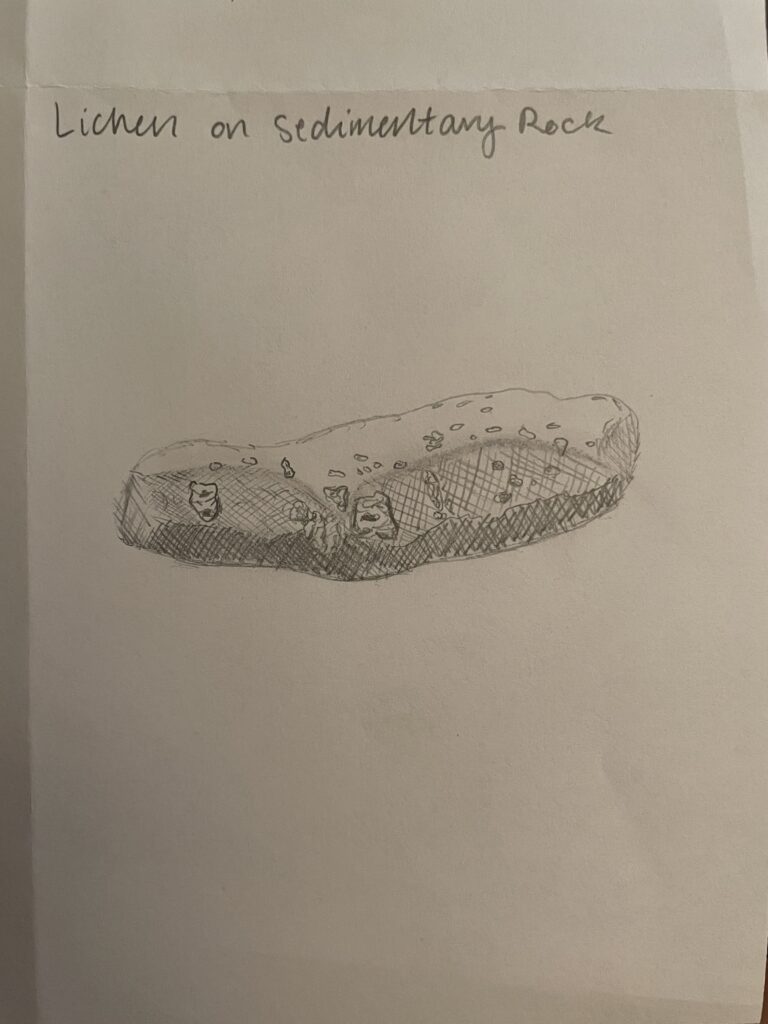
The lichen on this rock was very interesting to me and kept catching my eye. I decided to try and sketch the fine details of the lichen on the wet rock.

Sketching natural objects without being able to really inspect by breaking it off or holding it in one place proved to be difficult. Sketching the pill bug was a combination of memory sketching, sight sketching, and snapping a few photos for close-up details. Sketching in nature is something I am unfamiliar with, but it is a good process to connect with nature and really see the fine details. Though each sketch may not look completely like the natural object, there are both artistic and scientific elements that allow for the sketch to become whole. I look forward to noticing more patterns in tree leaves as well as identification of trees.

Wonder Blog Post 1

Casey Benderoth Wonder Blog Post 1

Backyard

Cranford, NJ

25 June, 2021

Friday, June 25

11:00

With clear skies and mid-70s temperature, there is a multitude of species venturing outside during a prime summer day. Still early in the day, the sun has yet to heat the area to uncomfortable temperatures.

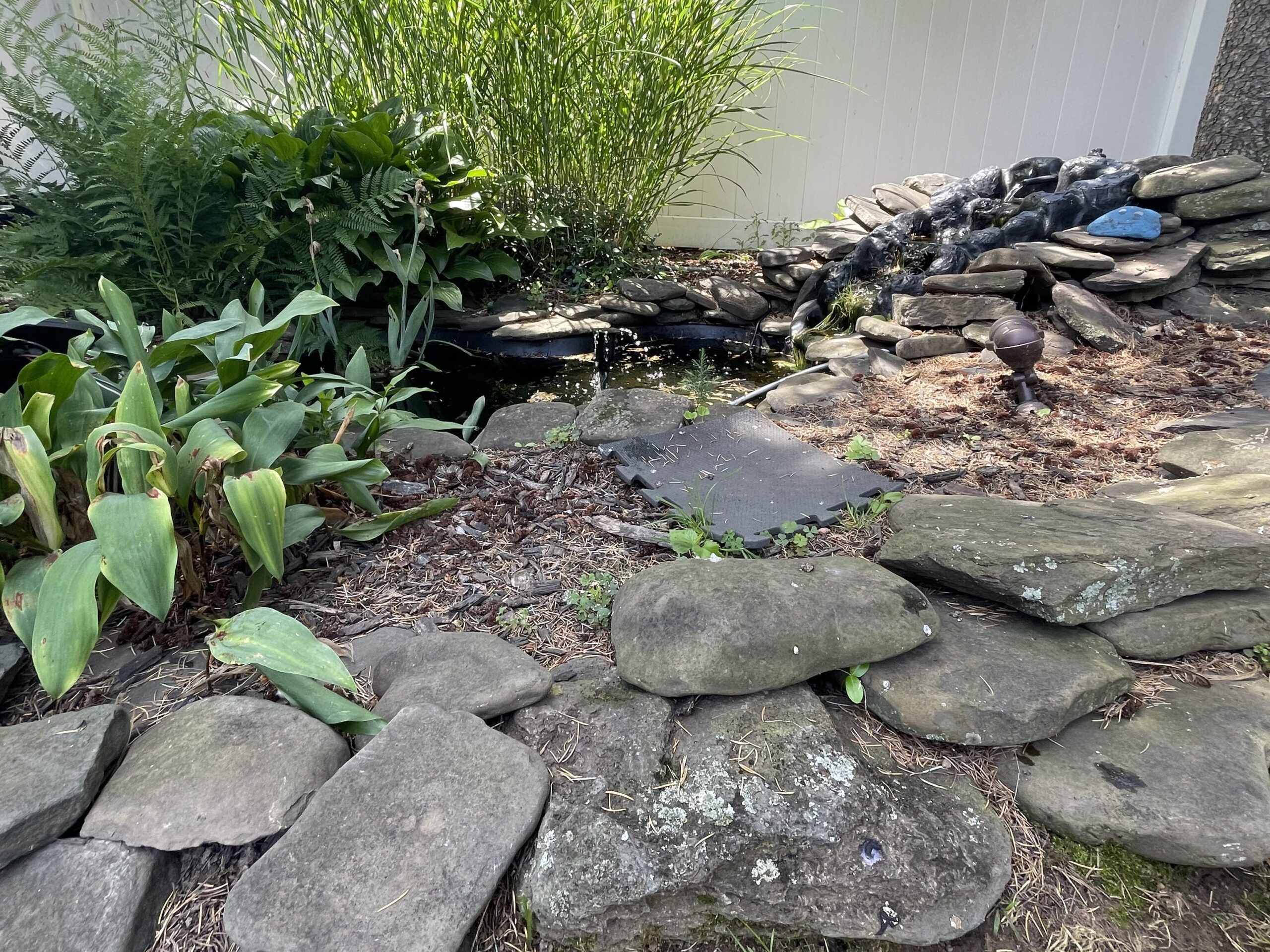
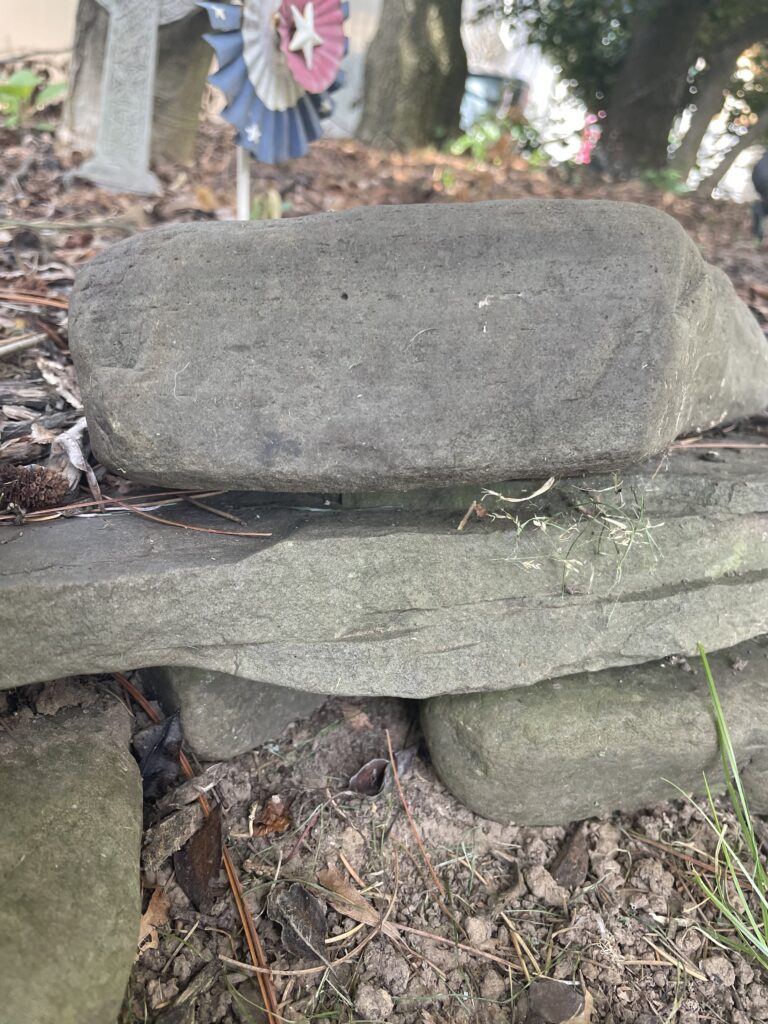
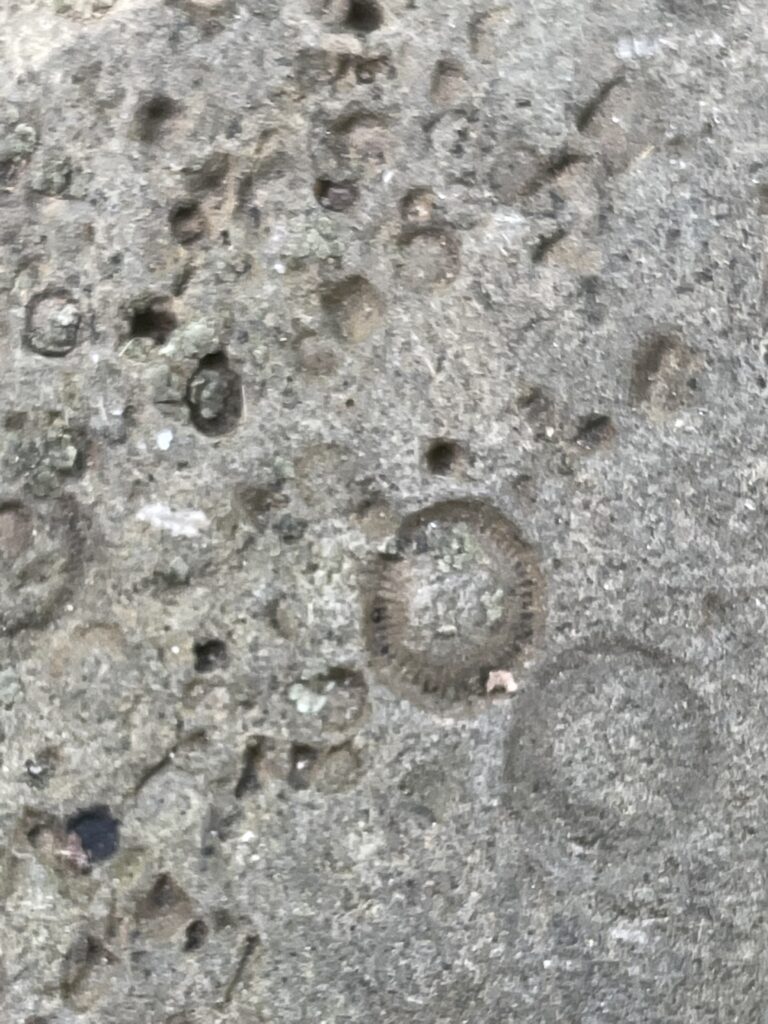
My backyard consists of many trees, shrubs, flowers, and a small man-made pond. Near the pond is a large Blue Spruce tree that has been growing for 25 years. Its sap drips down the bark, making it sticky and white. The pond is surrounded by various grasses and ferns allowing for sun coverage. There are many mosquitos and gnats that swarm near the water, providing food for birds or spiders. Past the pond are many different trees and shrubs that are home to different pollinating insects like bees or butterflies. These untrimmed trees provide most of the shade in the backyard and stand alone compared to neighbors’ yards that lack tall vegetation. In the trees are three birds nests, home to one robin and two morning doves. The rocks that surround this area of the backyard contain small fossils and are similar in shape and color. Beneath many rocks are small insects like ants and pill bugs that run away when their protective rock is picked up. The most frequent natural sounds heard in the backyard are those from birds. Morning doves, house sparrows, crows, and the common grackle are the most common birds here.

  1. There is a Japanese Maple sapling growing next to the adult Blue Spruce, yet the adult Japanese Maple is 20 yards away. How did it get there?
  2. Why is there moss on the rocks near the water but not near the grass?
  3. What are the birds nests made out of?
  4. How does the addition of a small pond benefit local species?
  5. How does the addition of a small pond negatively affect local species?
  6. An ant was seen carrying a pine needle, what will it be used for?
  7. What kinds of rocks are native to the area?
  8. What kinds of species are fossilized?
  9. How old are these fossilized species?
  10. How does human interaction shape this ecosystem?
  11. What kind of service does the sap inside the maple and spruce trees provide to the area?
  12. Why do clovers grow in areas with little available dirt?
  13. What did the backyard look like prior to the house being built?
  14. In what way is the occupation of spiders necessary to the backyard?
  15. What kinds of trees are native to this area?
  16. What kinds of trees are not native to this area that are in the backyard?
  17. Do birds build their nests in the same spot each year?
  18. What would be the effect of an invasive plant species on this backyard ecosystem?
  19. What is the effect of feral cats in the area on this ecosystem?
  20. How does the shape of the area prevent flooding?
  21. What role do the insects play?
  22. What happens to the bees when the pollinating plants die?
  23. How would this area be different if all vegetation was left untouched?
  24. Why is sun coverage so significant for species?
  25. Is it possible for any of these tree species to out-compete the other trees and become invasive after being planted for over 25 years?
  26. What kinds of insects are present underground?
  27. What insect hangs from trees with a small web attached to them?
  28. How do cicadas disrupt this ecosystem?
  29. What species is this?

30. What did the land look like during the time the fossilized species were alive?

Looking at the rocks the species are fossilized in, we can identify them as sedimentary. They have layers relevant to mineral compaction and erosion. Sedimentary rocks are present in aquatic environments, therefore, it is apparent that the fossils must be marine organisms. The Laurentide Ice Sheet covered parts of New Jersey thousands of years ago, blocking any oceanic water infiltration. During the last Ice Age, the Late Wisconsin Ice Age, there were glacial coverings over northern and central New Jersey 21,000 years ago (NJDEP https://www.state.nj.us/dep/njgs/enviroed/infocirc/glacial.pdf). As a result, glacial till can be found throughout New Jersey’s surface.

During the Cambrian Period 500 million years ago, New Jersey was underwater and part of the sea (NJ.com https://www.nj.com/data/2018/07/what_new_jersey_looked_like_millions_of_years_ago.html#:~:text=Cambrian%20Period%20(About%20540%2D500,to%20evolve%20shells%20and%20exoskeletons). The fossilized species in the sedimentary rocks lived underwater as marine organisms. Though it is difficult to identify, these organisms may be corals that have now been fossilized.

The rocks in New Jersey were formed during the Jurassic and Triassic periods, around 200 million years ago.

Geology of New Jersey - Wikipedia

While these organisms were alive, New Jersey was underwater and part of the Atlantic Ocean. As plate tectonics shifted North America and glaciers appeared, disappeared, and reappeared, these organisms thrived in their marine environment.


I would like to further identify the types of rocks and fossils found in the rocks in my backyard. The vast amount of birds in this area certainly draw my attention as there are so many, and I am curious to know their direct roles they play in this ecosystem. My backyard is an adequate place to identify species because there are both natural and man-made components that affect the ecosystem and change the different ecosystem services performed by the species.

Skip to toolbar