
27 June 2024
3:45 – 5:30pm
Clear Skies, 81F, 46% humidity
I returned to my spot in the back trails of Cunningham Park today. Beginning my visit, I spent some time looking specifically for unusual things or those I missed upon first inspection. I first noticed a swarm of flies and ants around a particular patch of ground, though I could not find any indication of what they were after; I searched through the leaf litter and found nothing. Before I begin discussing trees (as I spent most of my time there looking at our arboreal friends), I met an older man who claimed that in the 1960s and 70s trucks used to drive out to this area and dump a metallic blue and green liquid into the swamp – though in a brief search online I have found no evidence of this. That brings me to trees, of which I found quite a few that I had not yet identified at this park: a sassafras tree about 6 inches in diameter at breast height (DBH), both black cherry and fire cherry (I had noticed a cherry species before but had forgotten which it was), a copse of witch hazel (though arguable whether it’s a tree, it is most definitely a large woody plant), and two young black birches about 3 inches DBH. The sassafras tree was especially notable to me as I have never seen one matured past the stage of being part of the ground cover. I also noticed a diseased red maple that I will return to later. There were many herbaceous plant species that I was unable to identify, though with the help of the internet I was able to identify those which caught my eye. Of particular note is Ground Elder.
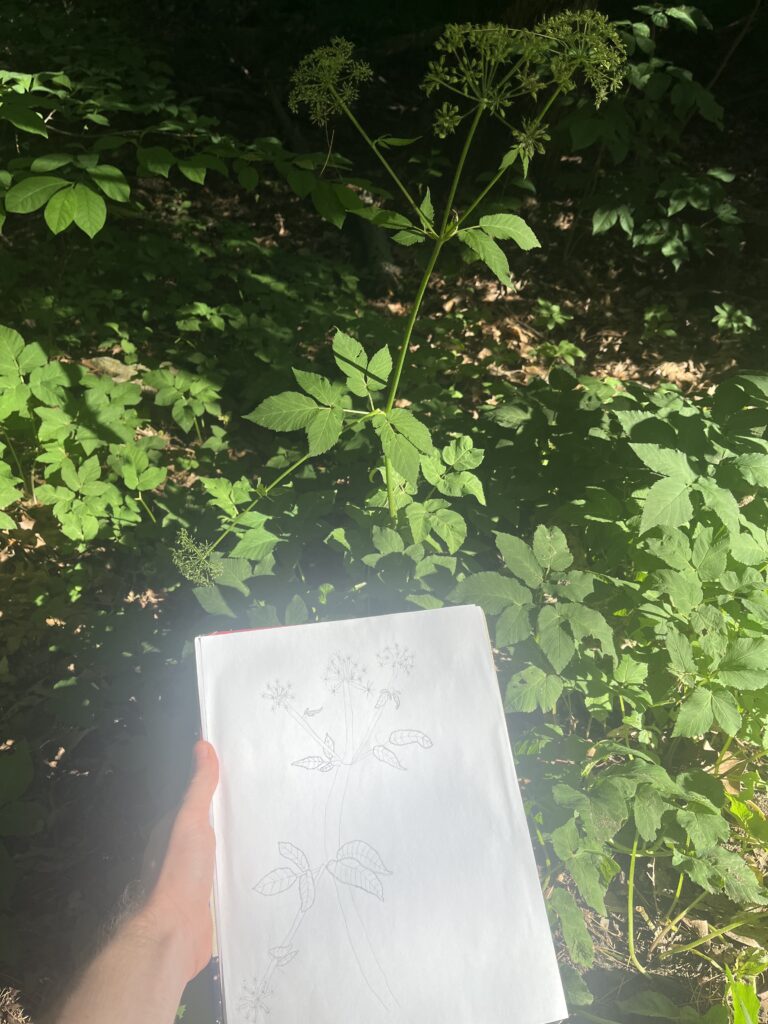
Ground Elder – Aegopodium podagraria – was not a species I was familiar with until today. It has many common names, though the most common seems to be Bishop’s Goutweed. I first identified it using the app Seek, before confirming based on photos and descriptions of habitat, range, and physical characteristics from Go Botany. It is native to Europe and invasive in the United States. Interestingly, it is edible and some people use it to treat a variety of illnesses – especially gout and arthritis – though I am skeptical on the effectiveness as I cannot find any reliable medical sources claiming its benefits. Below is an image of the plant and a sketch of it that I made.
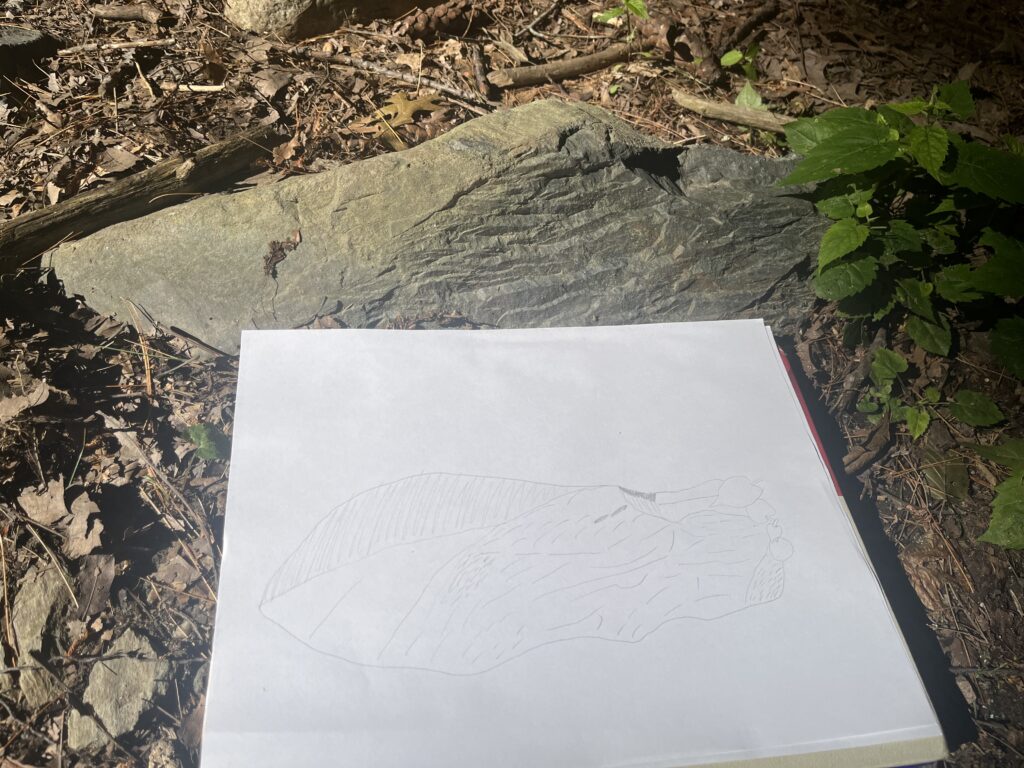
As for the rest of my time at my site today, I spent it sketching 3 other interesting things (I’m not a very practiced or quick artist). The first is a rock I found embedded in the path but with a face fractured off to reveal what I think is very slightly metamorphosed shale. I say this because it still strongly resembles shale yet there are slight waves to the layers. My sketch is from about a 45 degree angle from the layering, and I am not a very good artist, so it does not look properly layered at all in the sketch, but that is due to me trying to capture to fractured face. If you imagine looking down on it, you may have a better understanding of the layering.
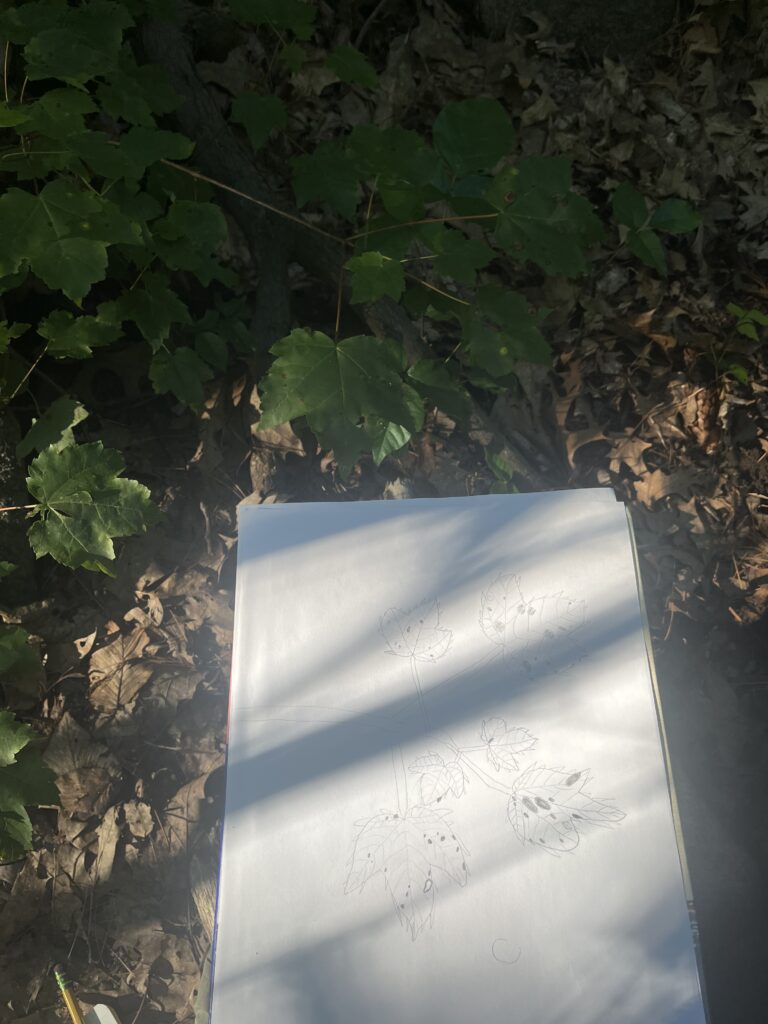
Next was a patch of diseased red maple. The leaves I drew were from a sprout out of a larger red maple – perhaps 4 inches DBH – though the whole tree was afflicted. I chose to sketch these as they were the easiest to get a good look at.
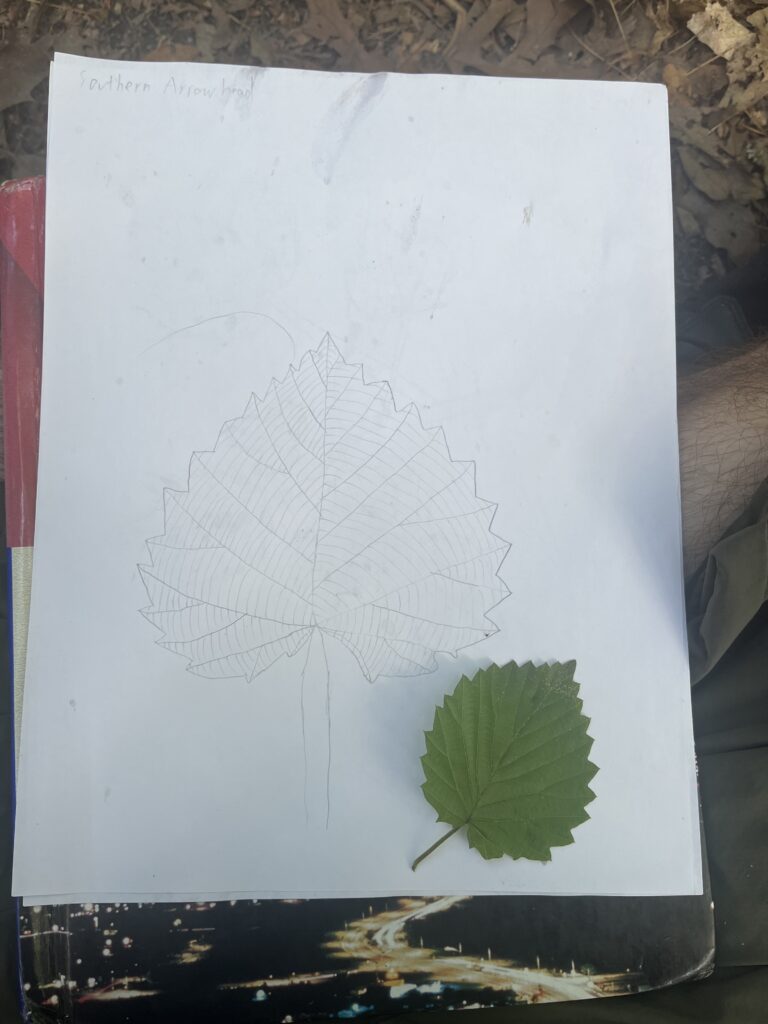
Finally, after getting splashed a bit by a passing dog, I sketched the leaf of a Southern Arrowhead – a large woody shrub than can resemble a small tree. Particularly interesting is the obvious vein pattern throughout the leaf.
Overall I enjoyed my visit today, though the sketching took me quite a while. I am very glad to have identified a number of new tree species I had not previously noticed in this park, as well as learned about this rumor of dumping waste. Perhaps I will contact the town and see if they have records of any industrial dumping in the area. Regardless, I hope that when I visit again next week the Bishop’s Goutweed will be in bloom.
Thank you for reading,
Ben Malisheski