
November 24, 2024, 1:30pm
Chicago Women’s Park and Garden
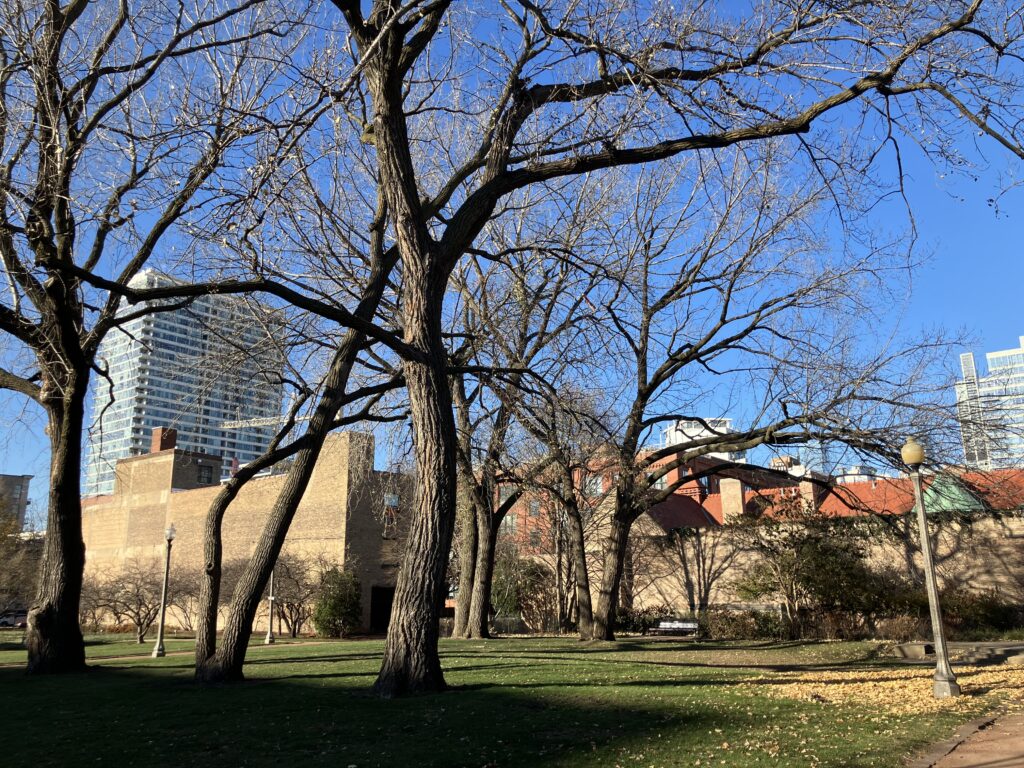
Over Thanksgiving break I went home to Chicago and visited a public park near my house. The park is relatively small and large sections are cared for by the Park District, making it not very wild. However, it is a place in which I am familiar with phenological changes since I visit the park frequently throughout the year. After more intentionally observing phenological changes in my spot in Centennial Woods, I thought it would be interesting to revisit this familiar place with a new perspective. The Women’s Garden, located at 1808 S Prairie Ave, Chicago, IL, is a relatively small public park just south of central downtown Chicago and west of Soldier Field stadium, Museum campus, Lakeshore Drive, and Lake Michigan. As you can see in the map below, it is mostly surrounded by residential areas and roads.

This spot in the Women’s Garden is very different than my phenology spot in Centennial Woods. While the Centennial Woods spot is wild and relatively untouched by humans, the Women’s Garden is a park created for human’s enjoyment. Much of the park is even planted and/or maintained by the Chicago Park District. This definitely interferes with the natural phenological changes since some plants are cut back or deadheaded as seasons change. However, I noticed that the Women’s garden has perennial plants, some of which are native to Illinois. Near the center of the park are several large eastern cottonwood trees that shade much of the park. There are several manmade structure in the park. A small concrete path winds around the garden and leads to a scuplture and a fountain in the center. The historical Clarke House sits in the garden, although it is unoccupied. The remainder of the garden is filled with smaller trees, shrubs, and flowers. These include redbuds, many magnolias, and bur oaks.
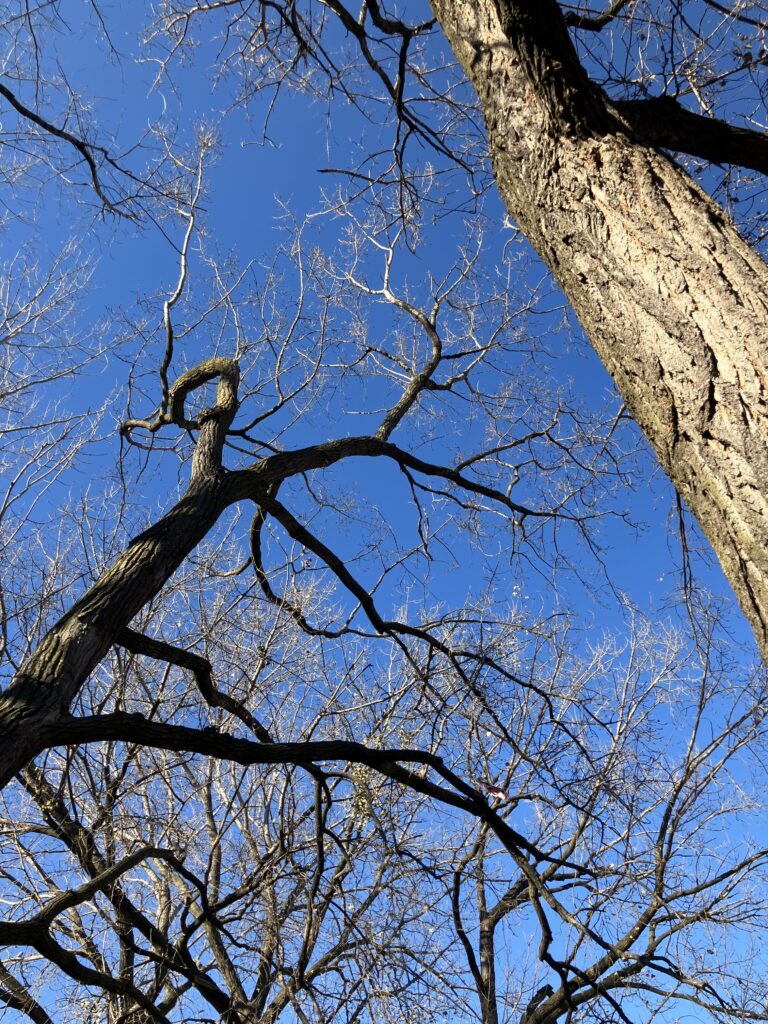
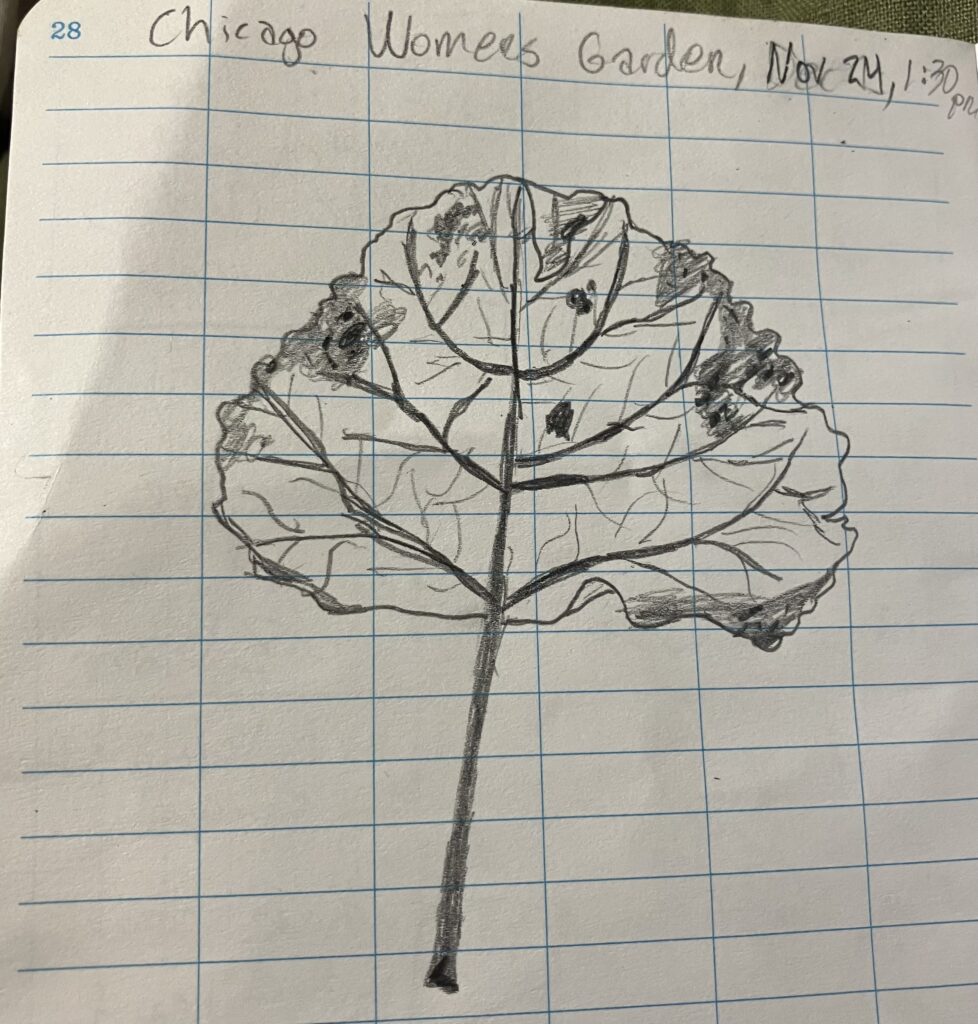
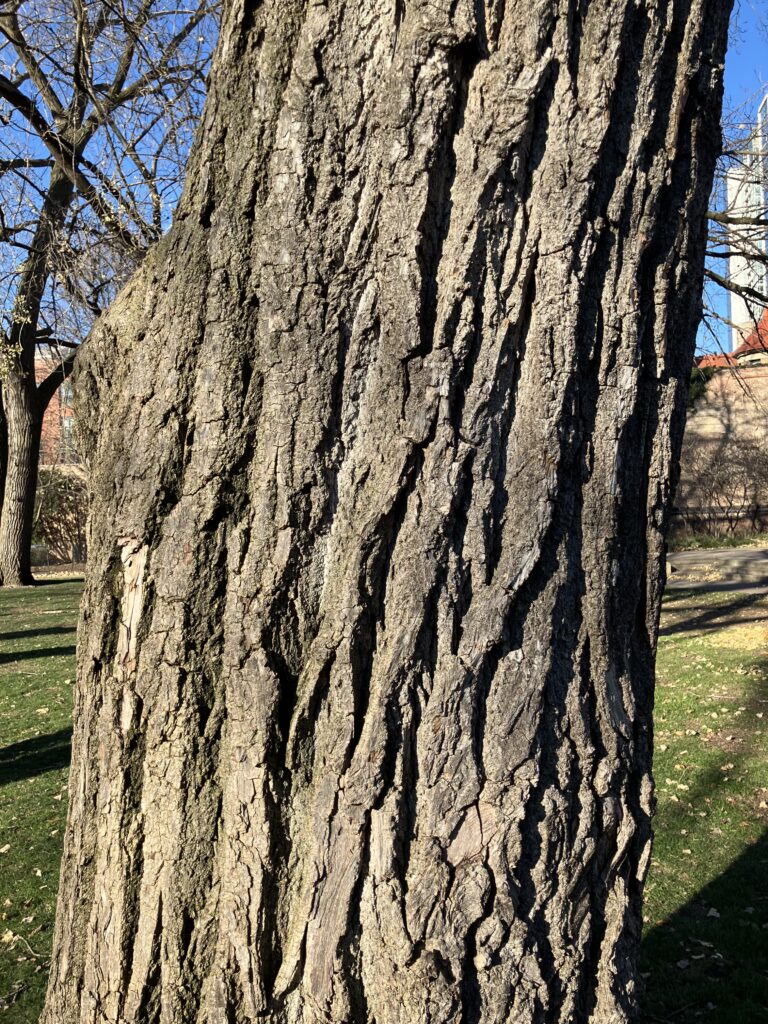
One clear difference in phenology I noticed between the two locations was the portion of leaves remaining on the trees. There were noticeably more leaves still alive and on the trees in the Women’s Garden than in my spot in Centennial Woods. This could be influenced by each location having different species of trees and by Vermont’s more northern climate leading to faster seasonal changes. There seemed to be more green in the overall vegetation in the women’s garden overall than with the wildflowers and grasses in my Centennial Woods location. In addition to being impacted by different regional climates, the two spots are also likely impacted by their surrounding environment. The Women’s Garden plays an important role sequestering carbon and water in a highly urbanized area with largely impervious surfaces. Centennial Woods also has a similar value, but is part of a much larger green area and surrounded by far less human development.
My spot in the woods is probably visited by very few people every year while the Women’s Garden sees tons of human traffic which may trampel the vegetation and disturb local wildlife. When considering the role of the garden in my neighborhood, I thought of the concept of “Honorable Harvest” that Robin Wall Kimmerer mentions in her novel Braiding Sweetgrass. As opposed to harvesting leaks or hunting animals, people use the park as a refuge from the busy city. I feel grateful to this bit of nature that I have been able to visit for peace when overwhelmed by the rest of life. I think that parks such as this one are very important both for their practical role, and job of allowing city dwellers the gift of nature. Nearby highway, high rises, stadiums, and tourist attractions generate pollution of all kinds, making the Women’s Garden a far less appealing home for wildlife. However, I noticed a significant number of birds in the garden. In comparison, I have seen few birds in my phenology spot at Centennial. This shows that despite its flaws and the human traffic, the garden can be a save haven for wildlife in the middle of the city. Both this garden in Chicago’s South Loop and my phenology spot by the Centennial Woods Brook are both valuable habitats.