Posts

Final Visit

May 4, 2024, 2:20 pm
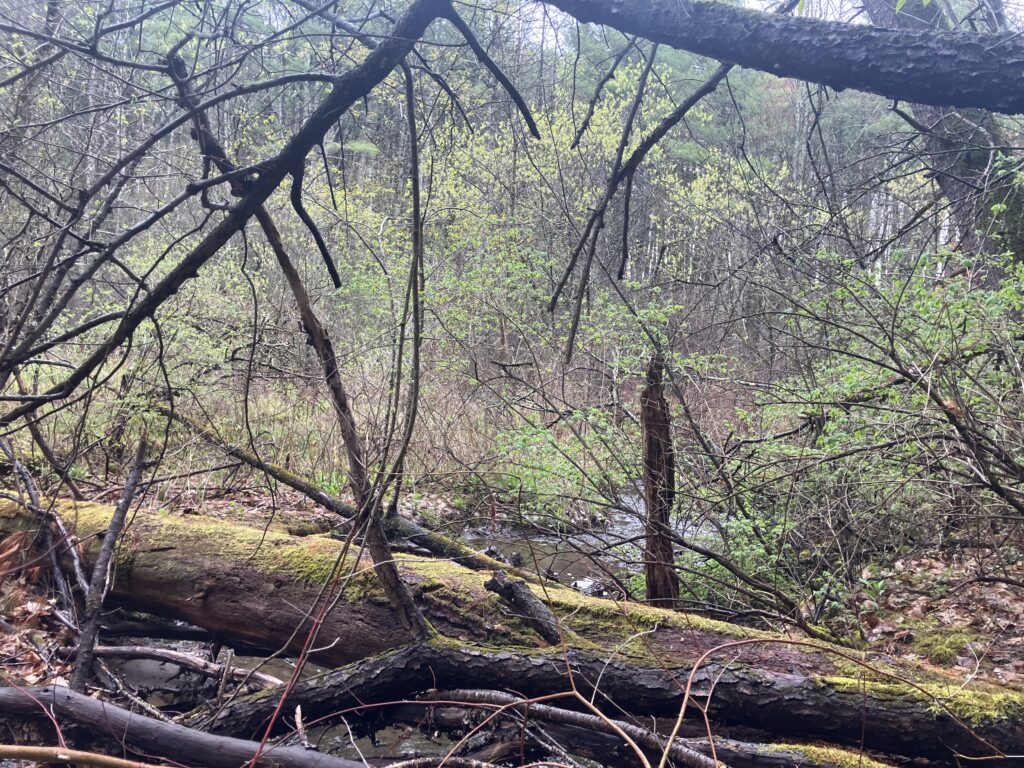
I visited my site today for what is probably the last time until fall. Just like my last two visits to Centennial Woods, it was raining. I took some time to make the sketch of my site pictured below and think about the way the space and my relationship with it has changed over the last 7 months.

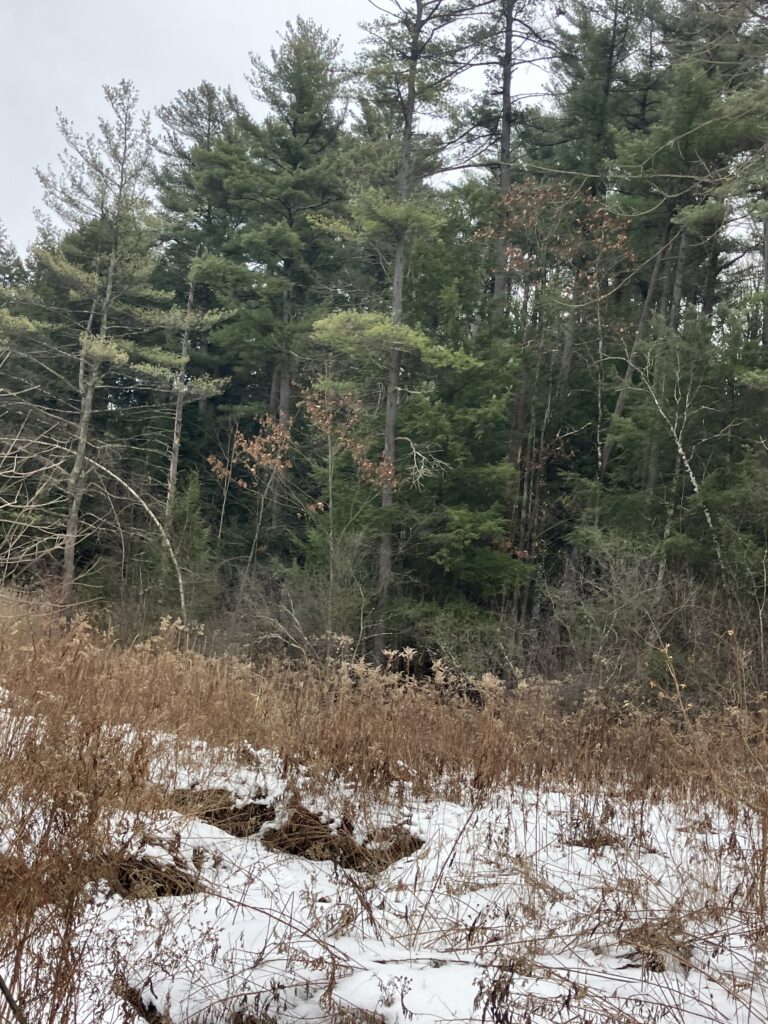
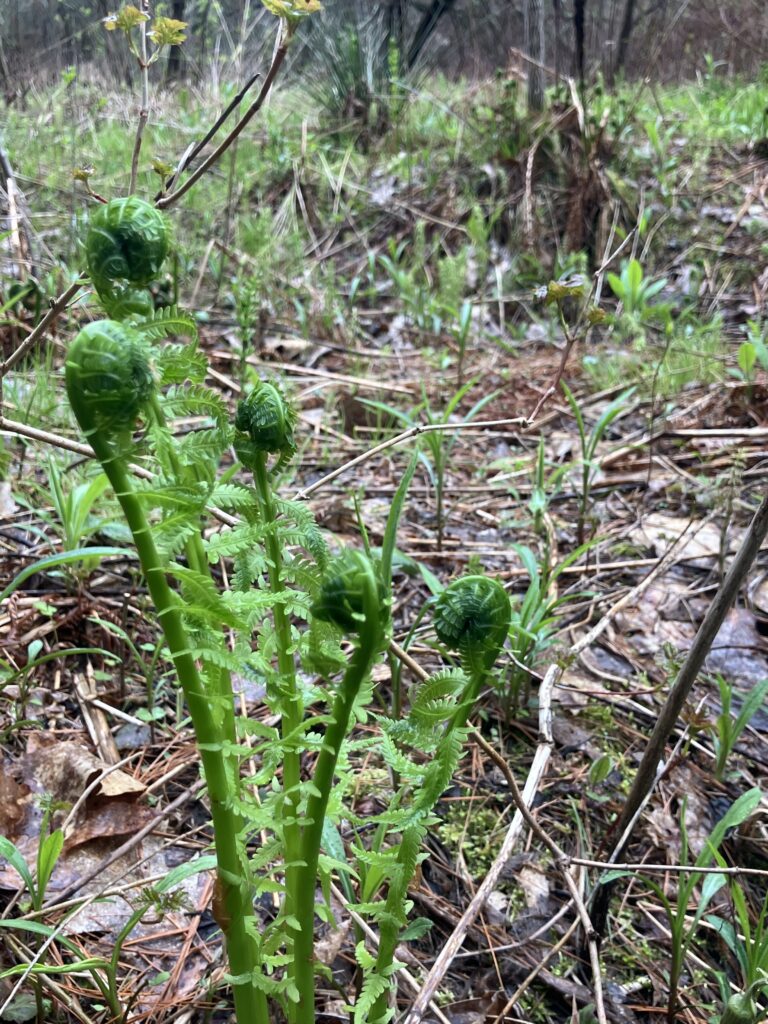
Today, for example, I noticed vegetation I had observed and recorded on my first visit back in early October just beginning to bud and come to life. The species diversity that I could observe changed significantly over the seasons and seemed to be at it’s peak during this last visit. Back in January, almost all the vegetation was dead or dormant besides the eastern white pines and hemlocks. Brown and white were by far the dominant colors in contrast to the vibrant green I saw today. While there were few wildflowers in my site, I think there were more species of plants popping up then I saw on my first visit. The brook has also changed drastically depending on the season; going from barely flowing to frozen and snowed over to the strong current it had today. My visits since December were silent aside from an occasional bird and I mostly experienced wildlife through their tracks. Today I didn’t have to look very hard to see fish, frogs, and squirrels. In my spot I saw a pine warbler and heard a brown creeper, pileated woodpecker, and white-breasted nuthatch, identified with the help of the Merlin app. All on my short walk out of the woods, I saw chickadees, more warblers, and a northern cardinal and heard rather loud great crested flycatcher.
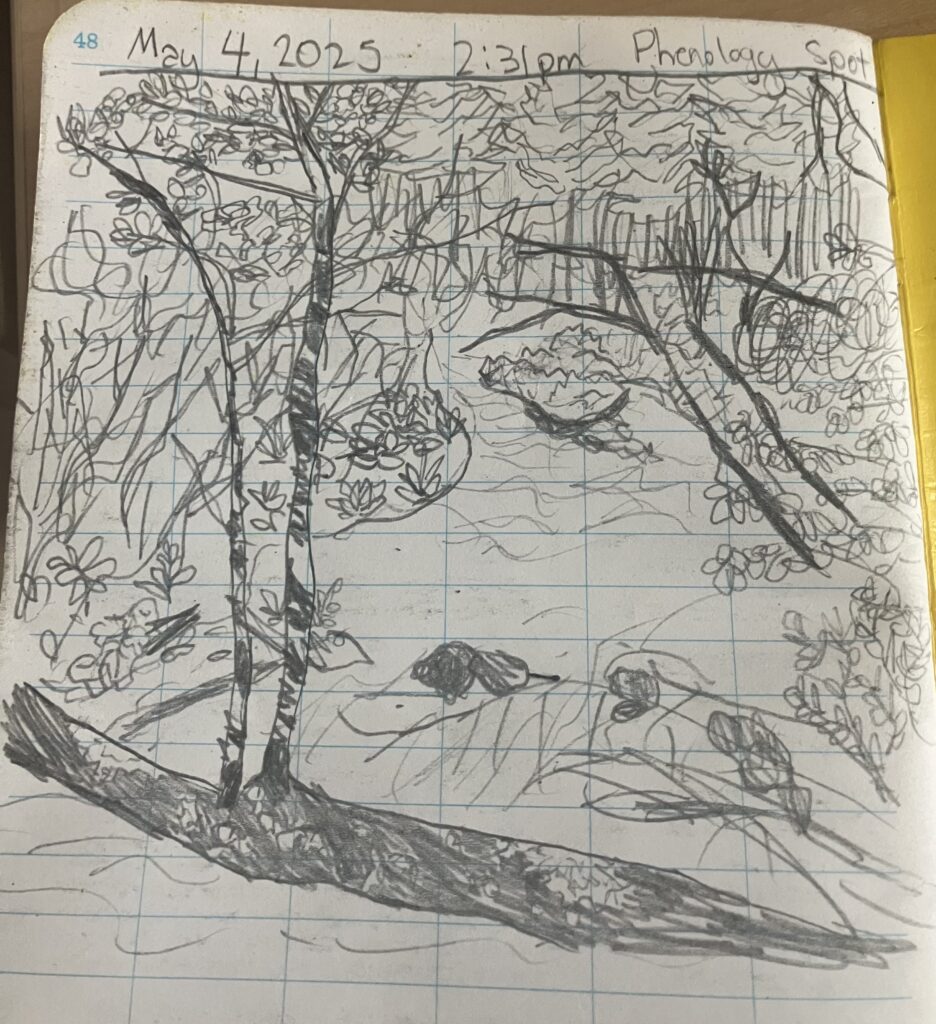
I’ve definitely become much more familiar with my spot and the surrounding area as well as better at navigating it. Initially, it was tricky to find my exact site since it is a little ways off of the path. Now I know what to look for and how to get there without having to follow the stream directly. I’ve come use the patch of hemlocks to the right of the trail as a sign to leave the trail and look for the brook. The large fallen log and small patch of land in the middle of the stream are the main landmarks that help me identify my spot no matter the season. I’ve also come to learn where the water tends to be deeper in my small section of stream and where are secure places to step.
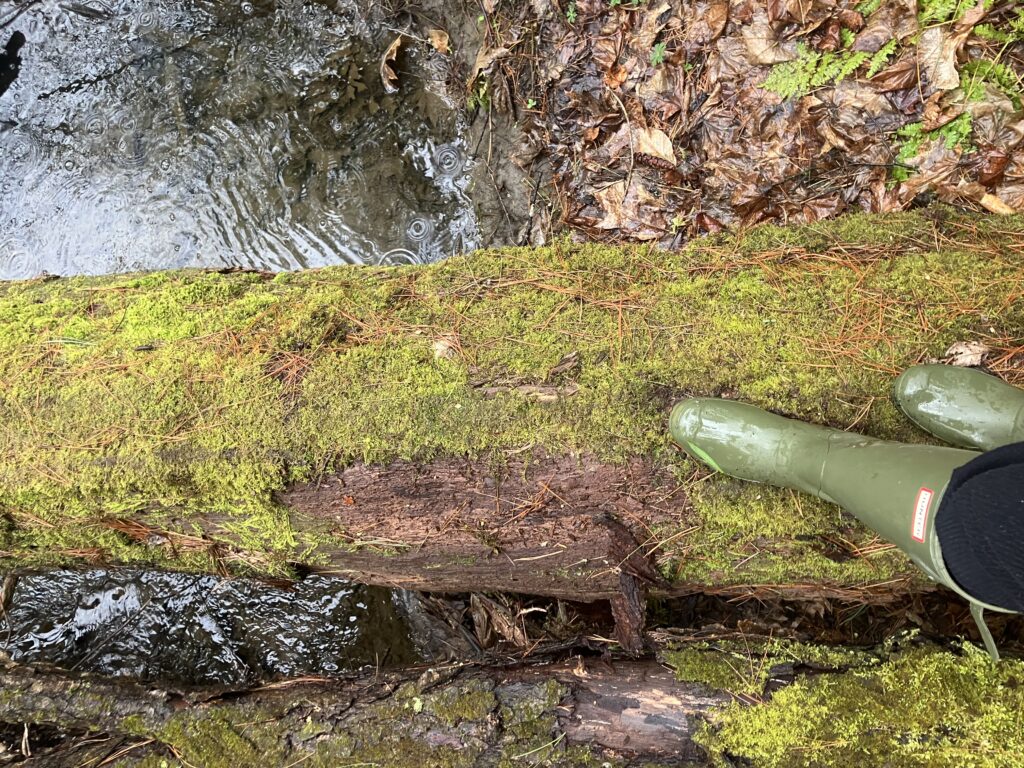
After visiting my phenology spot somewhat frequently over the past school year, i’m not sure if I would consider myself a part of the place. I guess I have come to better understand the spot and feel more a connection to it. I’m sure my presence, even if brief and infrequent, still impacts the plant and animals life around me and changes the landscape in small ways. However, I feel like I would need to spend more time in the spot and more directly influence it in order to be a part of the place. For example, if I was foraging for food or taking out the invasive buckthorn, I would be a bigger part of this ecosystem. I do however think that UVM students are a significant part of Centennial Woods as a whole. Nature and culture definitely intertwine in the woods. This can be seen by the number of little manmade huts or swings built around the woods or by the fact I almost always see another NR1020 student when visiting. Whether there for class or not, I think Centennial Woods has become an important place for learning about and appreciating local nature for many UVM students, making it a part of our culture.
City Nature Challenge

April 26, 2024

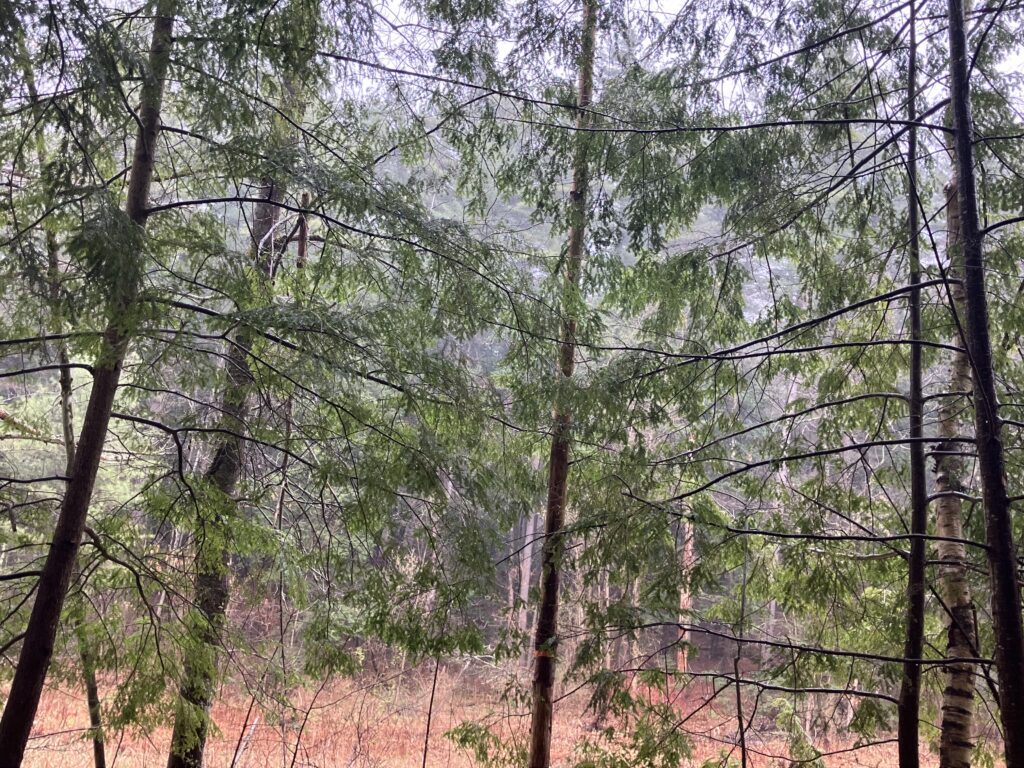
Last Sunday, I joined the tens of thousands of participants around the world in the City Nature Challenge. Started in California in 2016, this now global annual encourages people in cities worldwide to find and document local wildlife. From April 25th to April 28th, the goal is to take as many photos of wild plants and animals as possible as a kind of friendly competition between cities. Then, from April 29 to May 4, the scientific community works to identify what has been found. Pretty much anyone can participate and contribute to our understanding of biodiversity. I think its a great opportunity for people to reconnect with the natural world and notice all the beautiful organisms that surround us.

I made observations through the iNaturalist app, mostly of plants and animals in Centennial Woods. While I had used iNaturalist before, I found it super easy to use even as someone who isn’t great with technology. What’s particularly nice to me is that you don’t have to be able to confidently ID something, or ID it at all in order to record it. This makes it really accessible even for amateurs like me. The app allows other people to suggest possible ID’s and either confirm or fact check other’s identifications. iNaturalist combines many individual’s expertise along with the much needed manpower of amateurs to gather a lot of data without compromising its accuracy too much. I really appreciated that I could log cool plants I found even without being able to identify them. The best part is in a week or so, there will probably be several suggestions from others for what they might be. You can also just label the genus or family of a plant if that is as far as you are able to identify. I often find myself in this position and it is satisfying to not have to take an all or nothing approach when logging. Additionally, the evidence can come in audio form as well as photo. I used this to log a couple of birds for the project. I think it’s an important feature since taking a picture of a bird is significantly harder than a plant and many birds are identified through audio only.

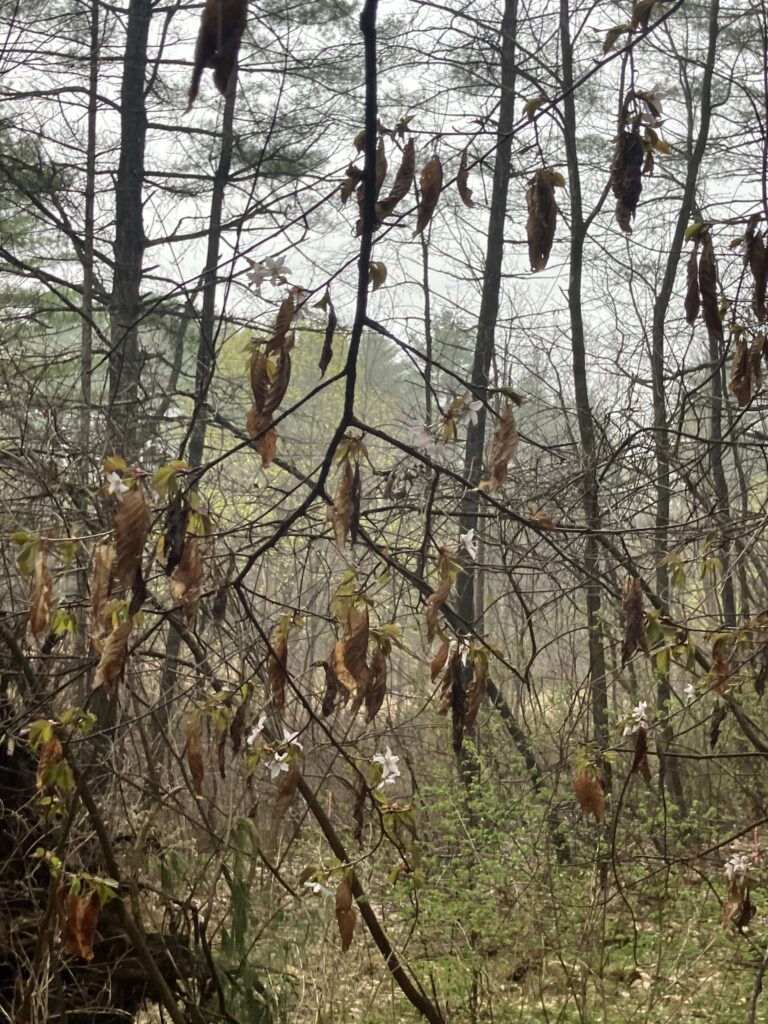
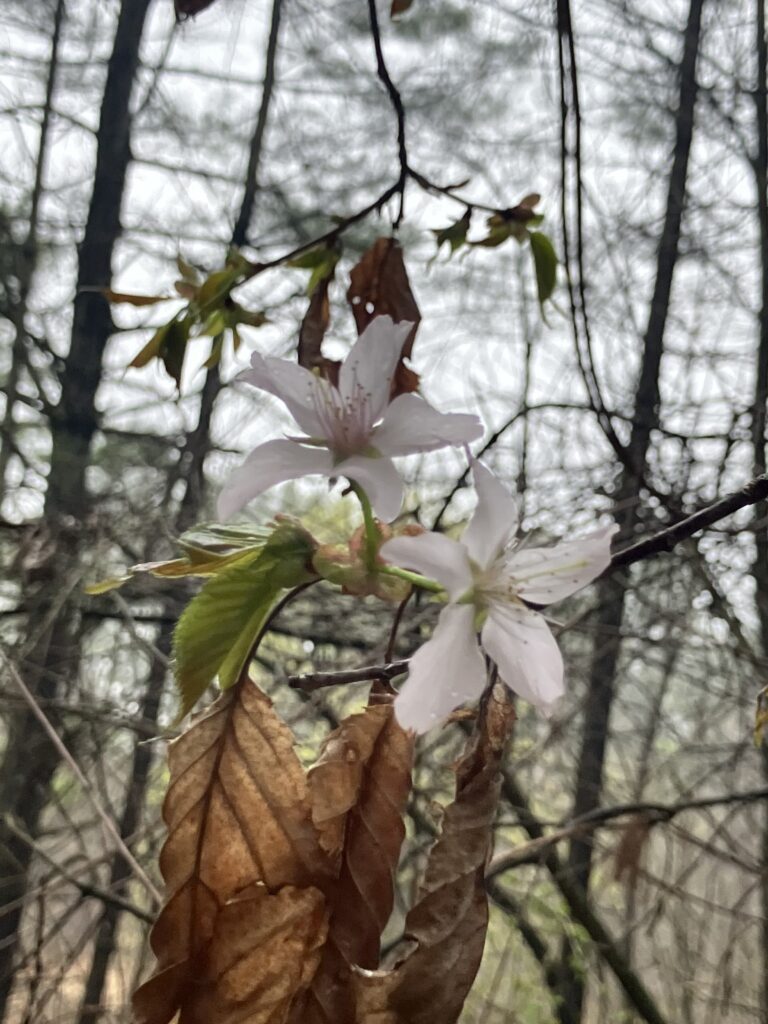
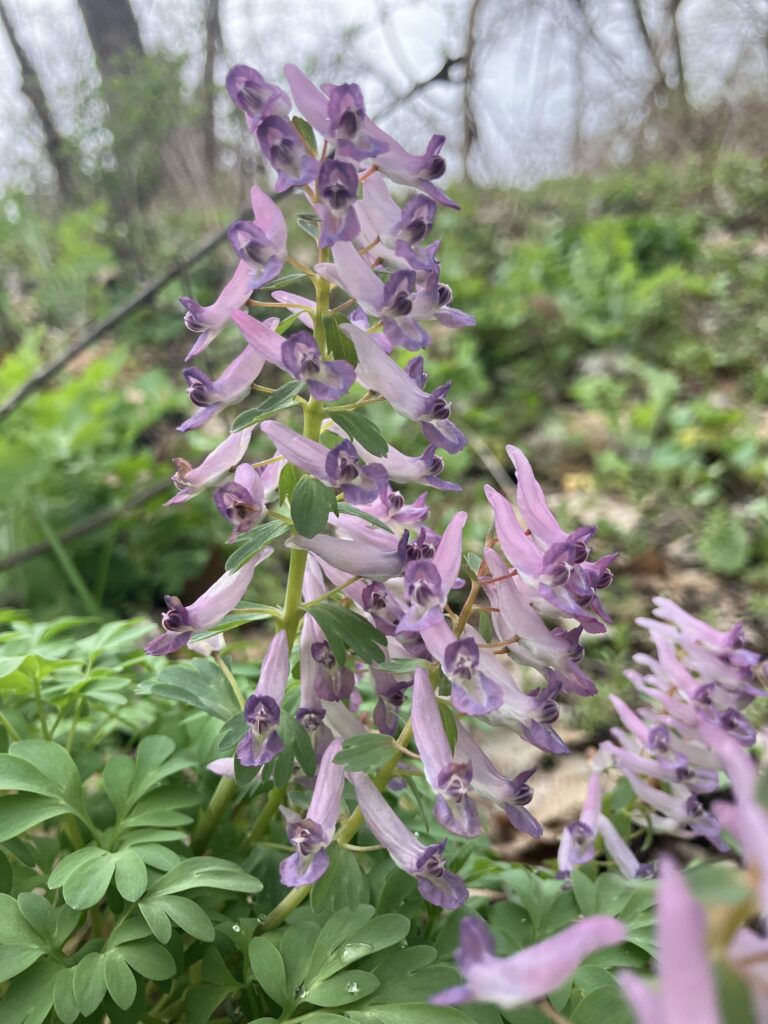
I probably recorded around 15-20 different species in Centennial Woods. Most of these were plants but a few were birds or fungi. This was just a fraction of the species I actually saw. I felt inspired to come back later to the woods and try to document more so I can learn more about what I see. My favorite plant I observed was this flowering tree pictured below. I had never noticed the tree before despite it being near the trail entrance. I’m not sure what kind of tree it is but thought the flowers were beautiful.

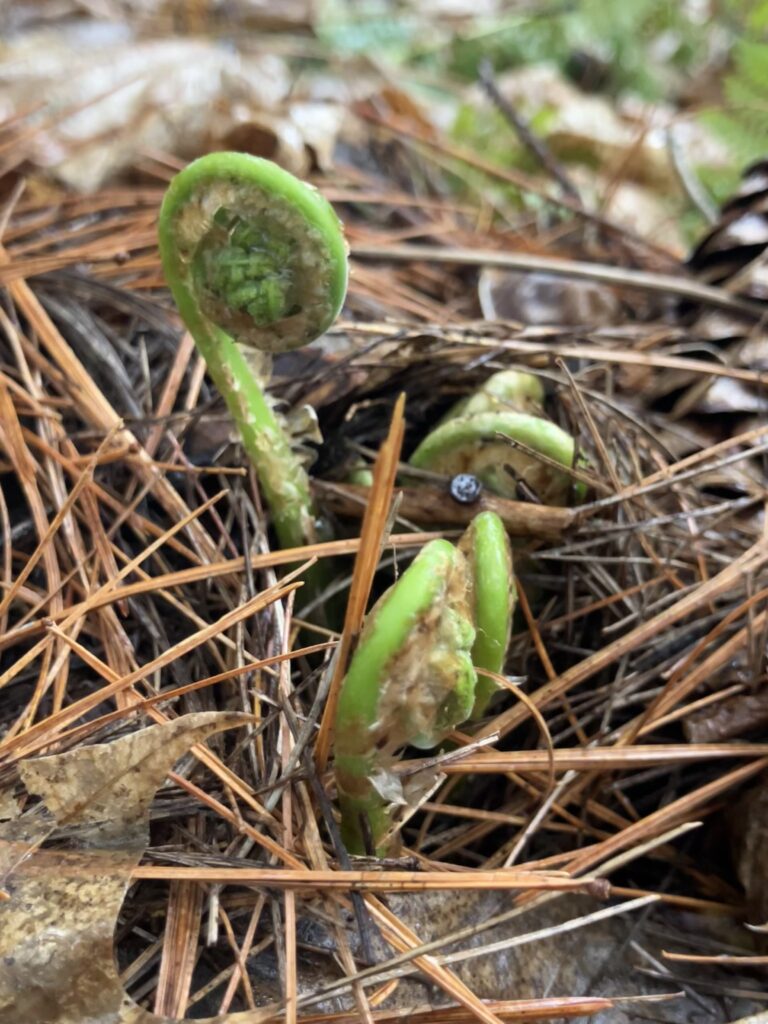
If you go to City Nature Challange’s Website you can see the long list of participating cities. You can click on any of the cities from Paris to Athens and see all the observations logged there and species seen. I loved that I was able to compare the observations from here in Burlington to those in my hometown of Chicago. I liked that even cities or regions with under 50 observations such Bhavnagar, India were still included. Every observation matters and seeing the diversity of wildlife in people’s observations was really interesting. A plant that might feel boring and commonplace to someone in one city might be exciting to someone in a different place. On the contrary, cities across the world might share a species. For example, I learned that ostrich ferns can be found in both Burlington flooded forests and Amsterdam.

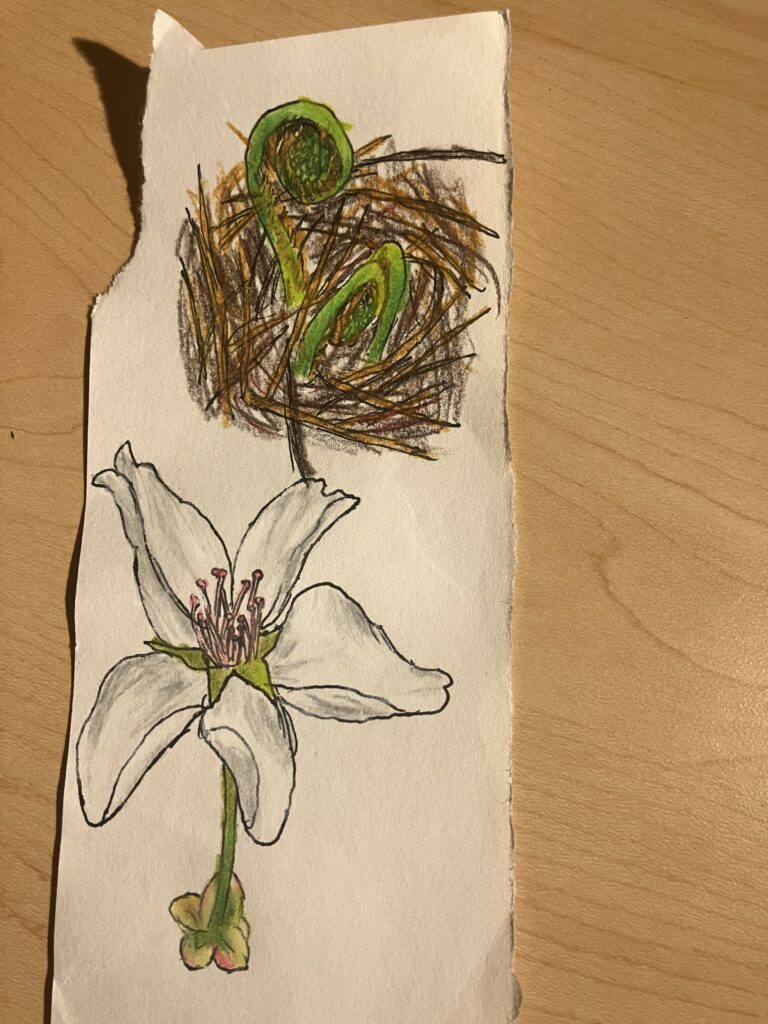
Drawings of some of my iNaturalist observations from Centennial Woods

Nature’s Notebook Phenology Walk

April 26, 2025 2:15 pm

This weekend I participated in the USA National Phenology Network’s Nature’s Notebook program by logging observations of the phenological changes of trees on UVM’s campus. The National Phenology Network (NPN) is an organization that works on a national scale to collect, organize, and interpret phenological data. Organisms go through annual patterns of change that can be observed as distinct phenological phases. Collecting information such as when certain species emerge from hibernation, when eggs are hatching, or when trees start blooming helps us determine when organisms are entering different phenophases. By keeping track of when these events happen and comparing it to past trends, we can tell a lot about the organism’s relationship to its environment and changes in climate. Through the Nature’s Notebook app, observers can contribute by documenting their observations of certain animals and plants. I was assigned to make observations of 5 particular trees on UVM’s campus on April 26.

Map of UVM showing the trees that I observed

I observed a sugar maple, red maple, Norway maple, red oak, and white oak. Each tree had a corresponding number that was indicated by small metal tags on the trunks. I had to estimate information about each tree such as what percentage of buds were breaking and how many leaves were falling. I found it a little difficult to make these estimate, particularly for the larger trees. Overall, I felt the trees were farther behind with their growth than I would have expected. Most of them had at least some amount of opening buds, but only one had begun to flower. There was not a ton of new lead growth on any of the trees. The white oak still had many colored leaves hanging on from the fall. The different trees appeared to be going through different phenophases. For example, the maples generally seemed to be “farther ahead” than the oaks.

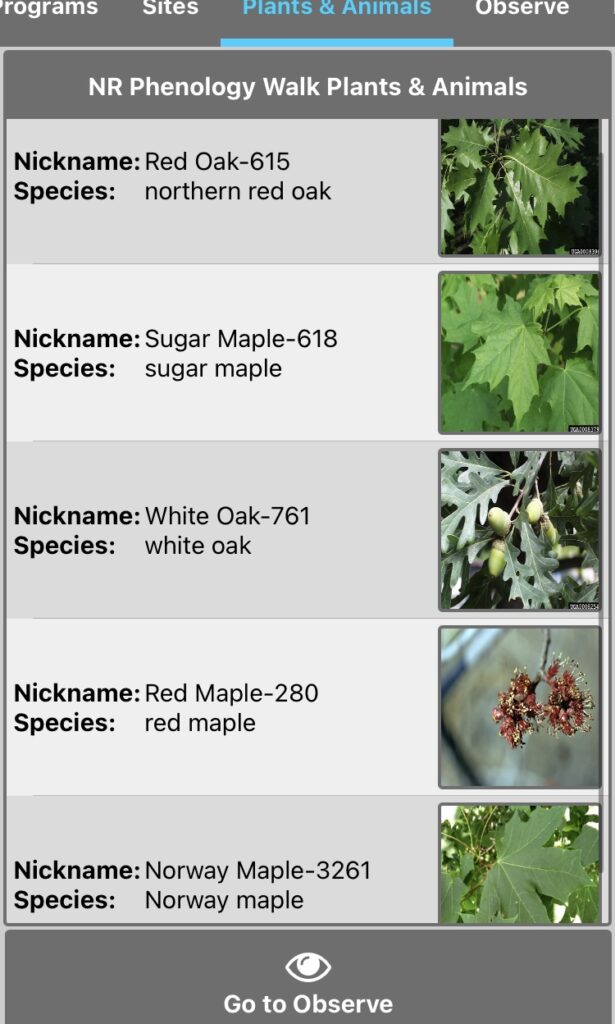
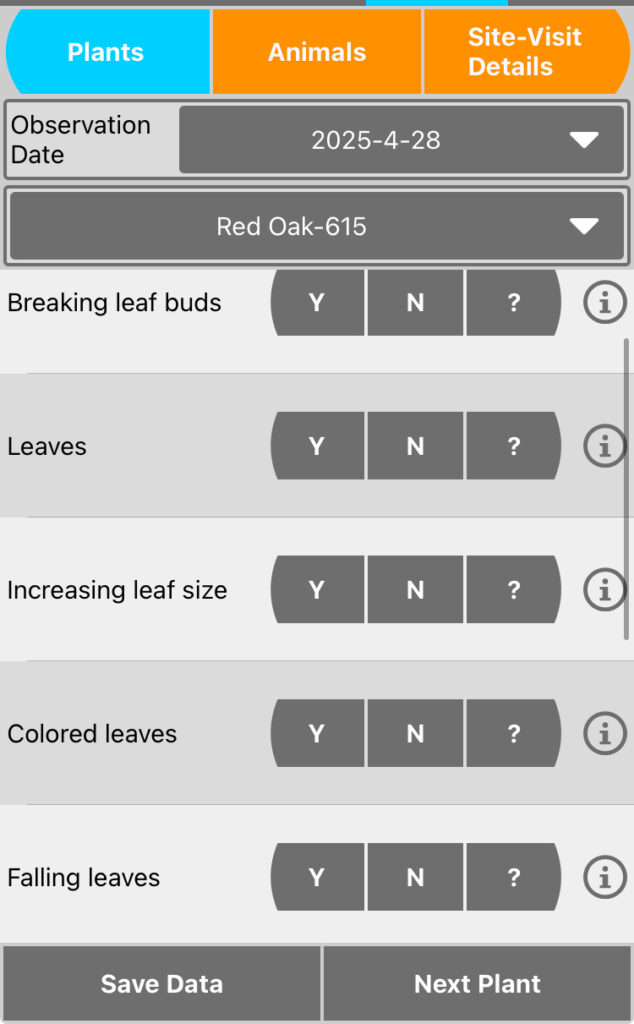
Below are screenshots from Nature’s Notebook showing the five trees I was to observe and the kinds of questions asked in order to track phenological phases.

As I mentioned before, the National Phenology Network uses data such as what I collected to compare current seasonal patterns to those observed at the same time of year in the past. For example, we can check if red maples are budding at a “normal” time in when compared to last spring. The NPN so far has found that spring (measured through phenological changes) has been arriving earlier than average in some areas of the US and later in others. For Burlington, Vt, spring is about one day late. The data is also used to make predictions. The NPS constructs Status of Spring maps which forecast when certain phenological indicators such as first leaf of first bloom should arrive to different parts of the United States. These maps are not limited to plant life. One map forecasts when emerald ash borer beetles will emerge around the country. By keeping a close record of phenological patterns, we can better understand the way climate changes are impacting species’ behavior and possibly be more prepared for future changes.

Follow the links below to learn more about the NPN or explore some of these maps

https://www.usanpn.org

https://www.usanpn.org/data/maps/spring

https://www.usanpn.org/data/maps/forecasts

April Visit

April 19, 2025 5:26pm

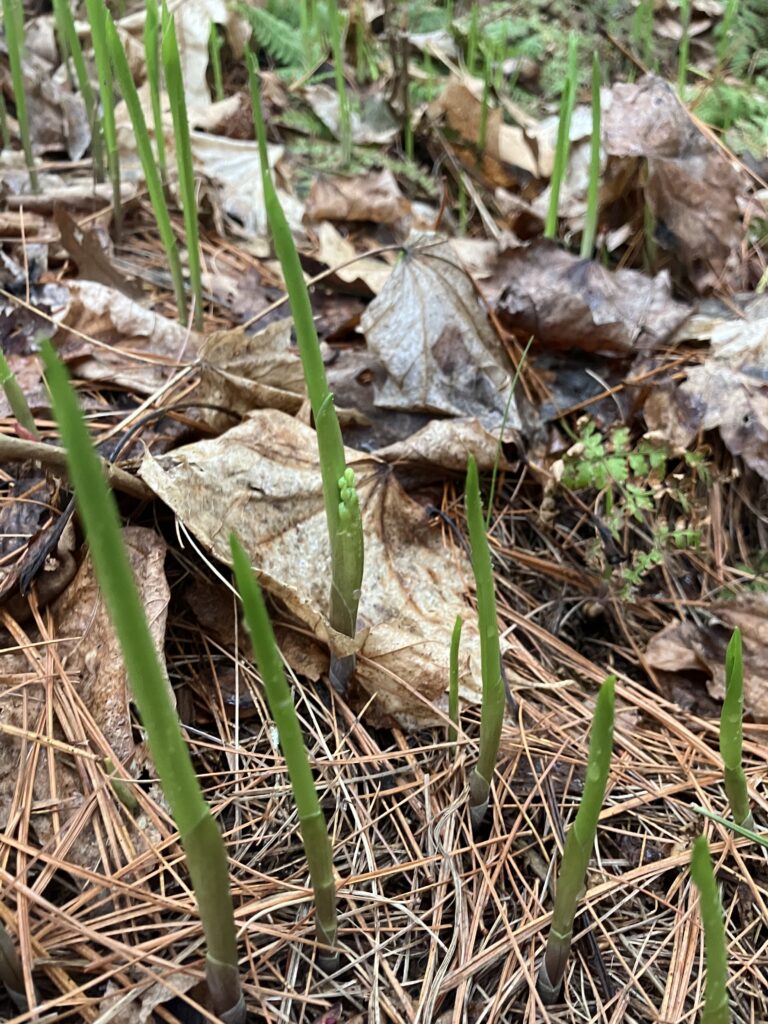
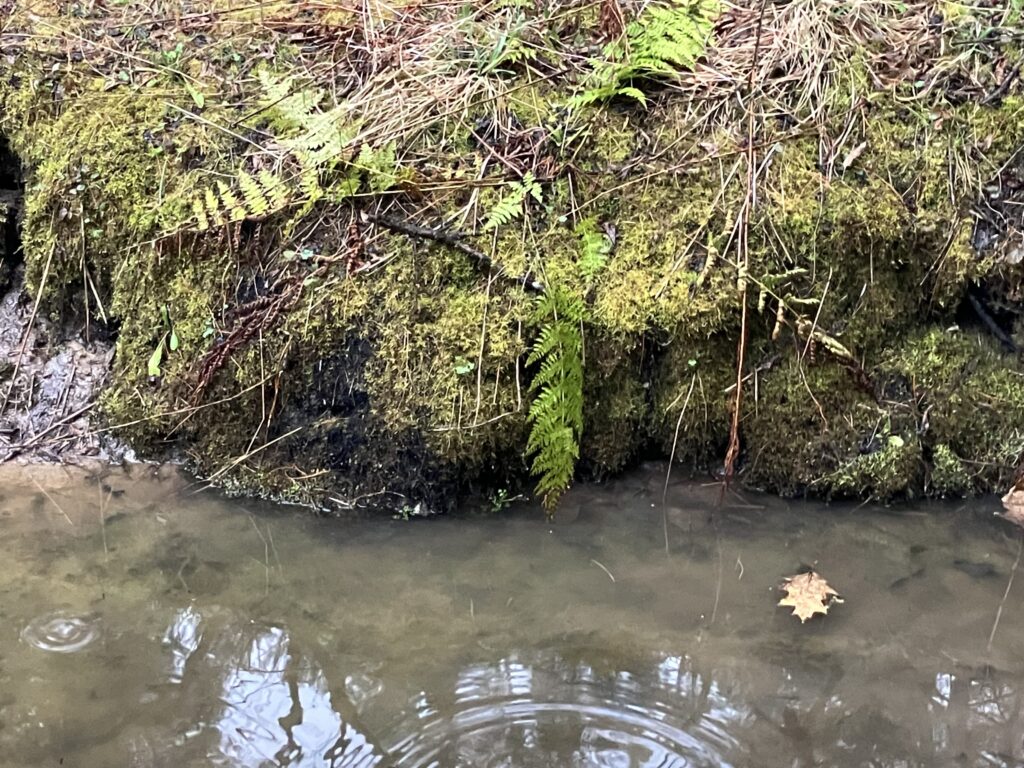
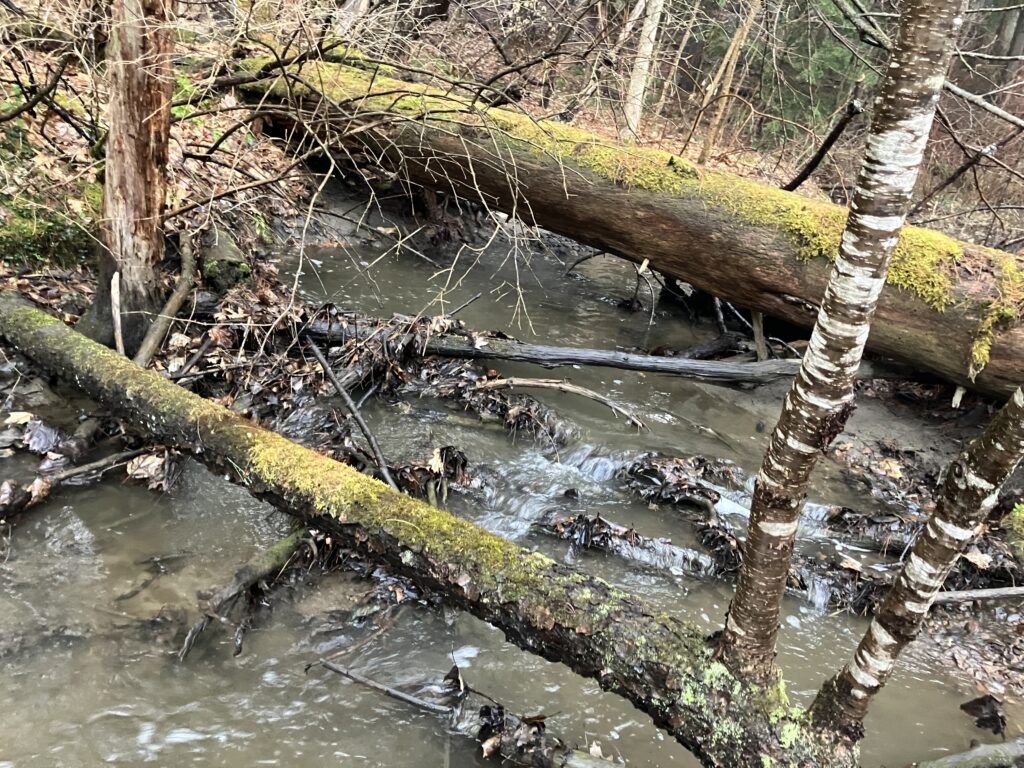
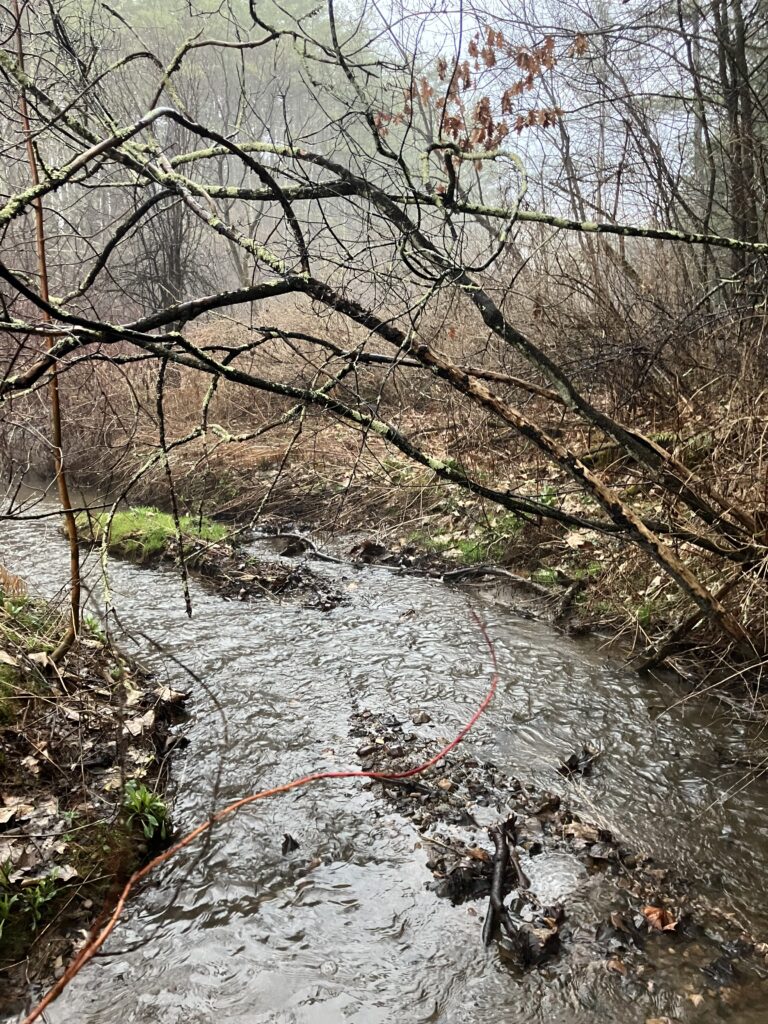
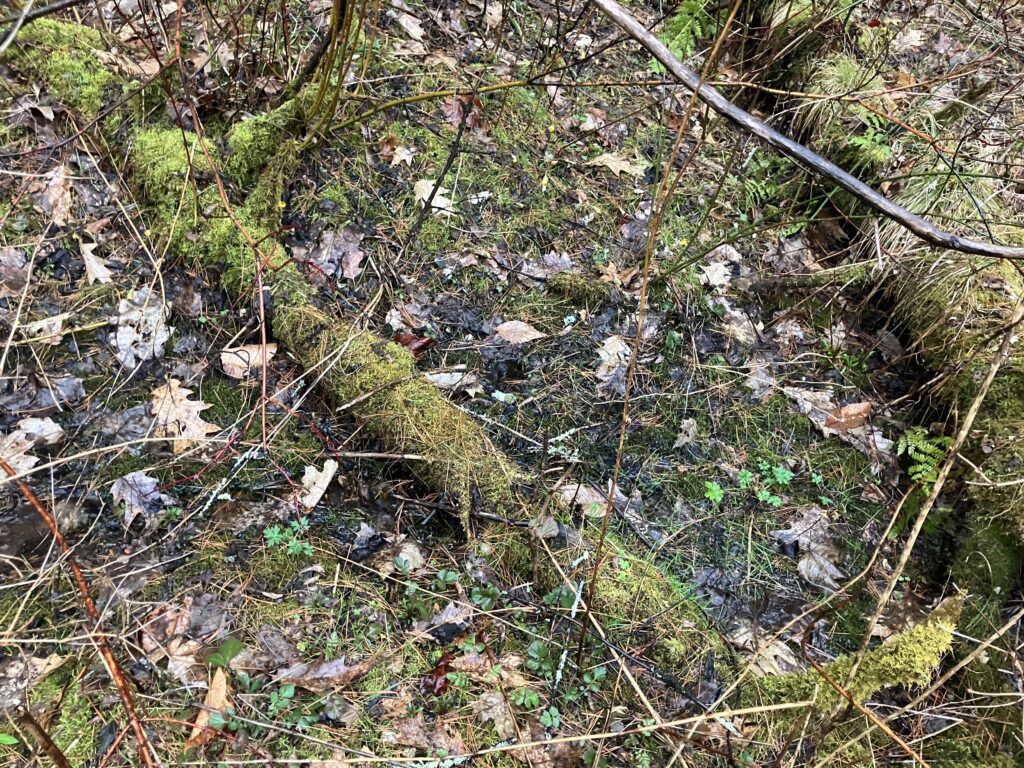
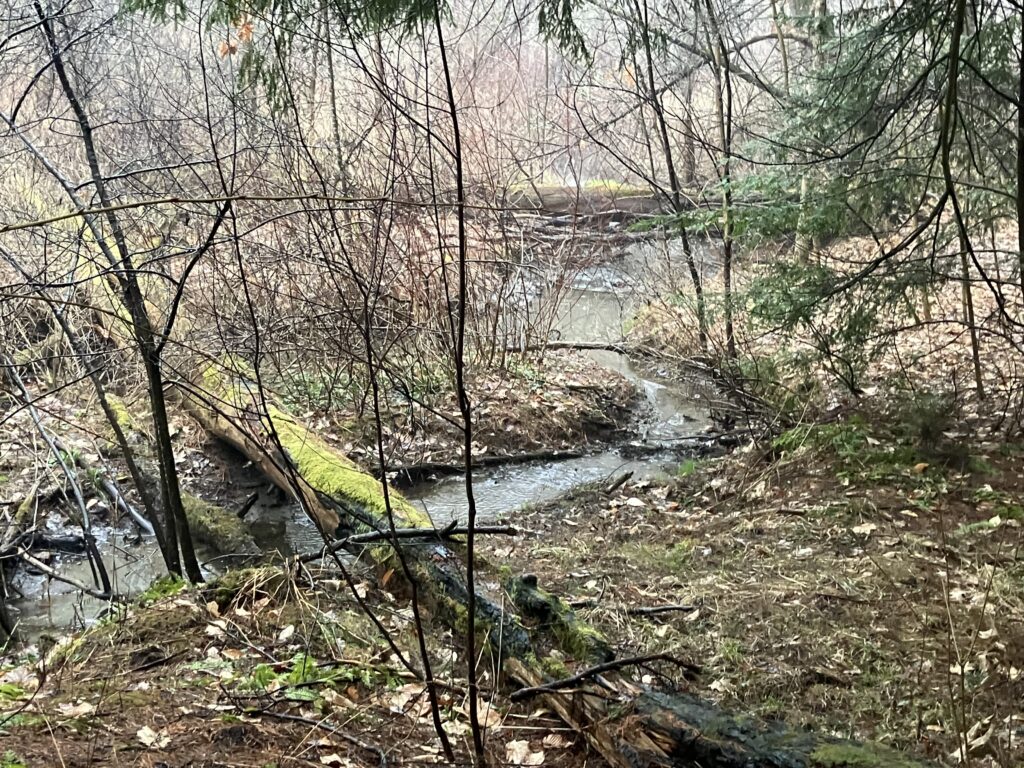
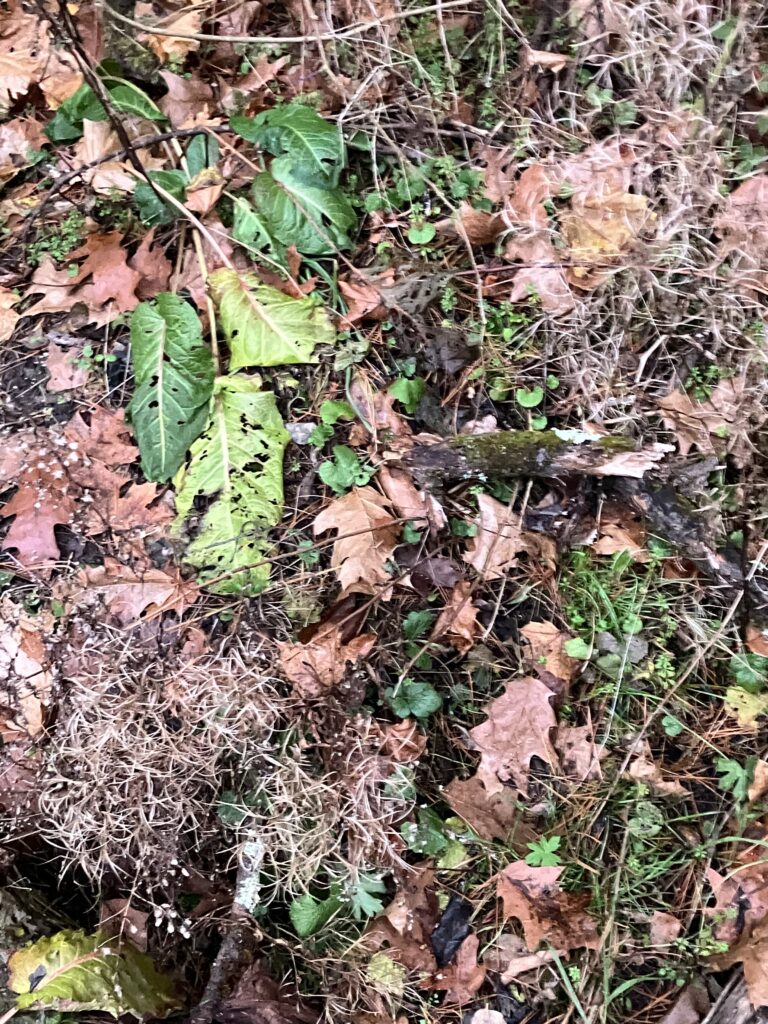
I spent some time in Centennial Woods last week following the brook to look for frogs. Stopping by my phenology site, I saw it had completely transformed since my last visit. It was raining heavily for much of the time I was there, and the stream was flowing fast. While I saw very few wildflowers in the woods, ferns and moss carpeted the stream banks and fallen trees. There was a lot of new growth on the trees and ground.

Centennial Woods as a whole felt a lot more filled with life. When the rain let up, I heard and saw many birds including an American goldfinch, yellow-bellied sapsuckers, winter wren, and brown creeper.

February at Rock Point

2:00pm, February 23, 2025

Rock Point Trail

To check out a slightly different area, I went with some friends to check out the trails at Rock Point. It was a cloudy day and warmer than it has been in weeks, about 32 degrees Fahrenheit. We started near the Rock Point South Community Garden and followed the trail North for some time, and then a bit west. There was still a significant amount of snow all over, making tracking easier. As opposed to my phenology spot, there was a lot more open space and less vegetation on the forest floor. On this hike, I was recording my wildlife observations on iNaturalist as part of a citizen science project to record wildlife in the Burlington area this month.

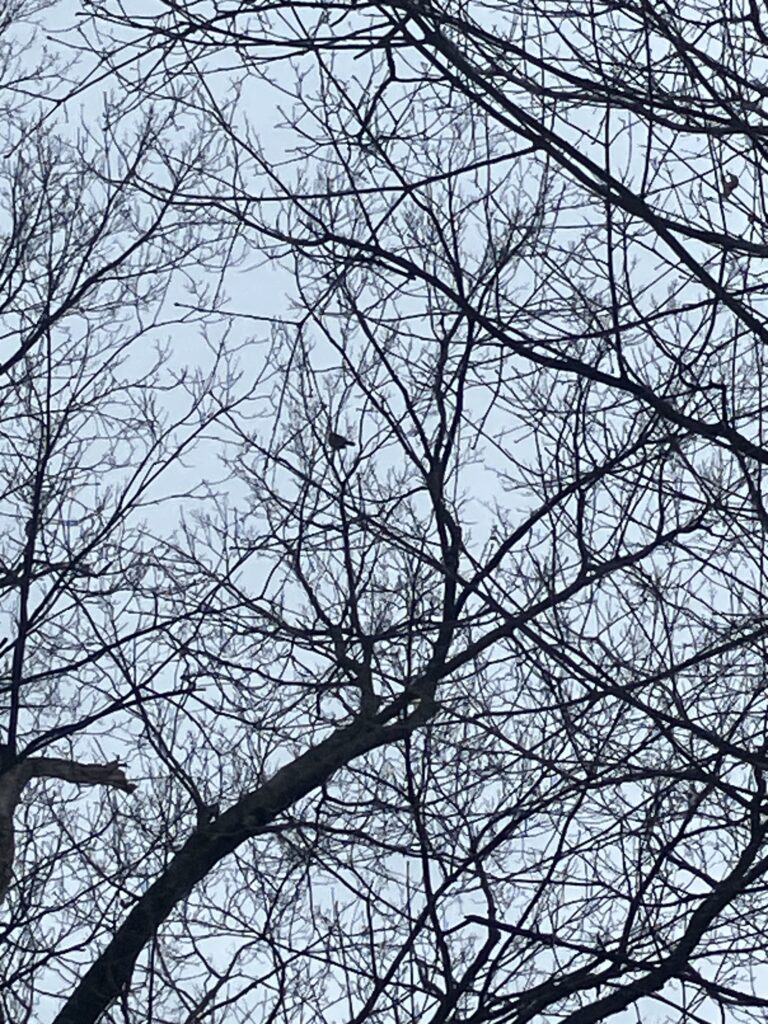
Following the trail, the main wildlife I encountered were birds. Compared to my last few visits to Centennial Woods, there were a lot more birds calling. I’m not sure if this is because of location or time of year. The photo above shows an American Robin in a tree. Unfortunately, all the birds I saw were high up in trees so I wasn’t able to get photos of any. I saw an American robin, red-bellied woodpecker, and a black-capped chickadee. I also heard a mystery bird. When I recorded audio for the Merlin Bird ID app it said that it could be a Golden-crowed Kinglet, but I didn’t see the bird. My favorite thing I saw the was red-bellied woodpecker. After hearing its pecking and its call, I was able to find it up high in a tree and watch it for a while. It was very vocal.

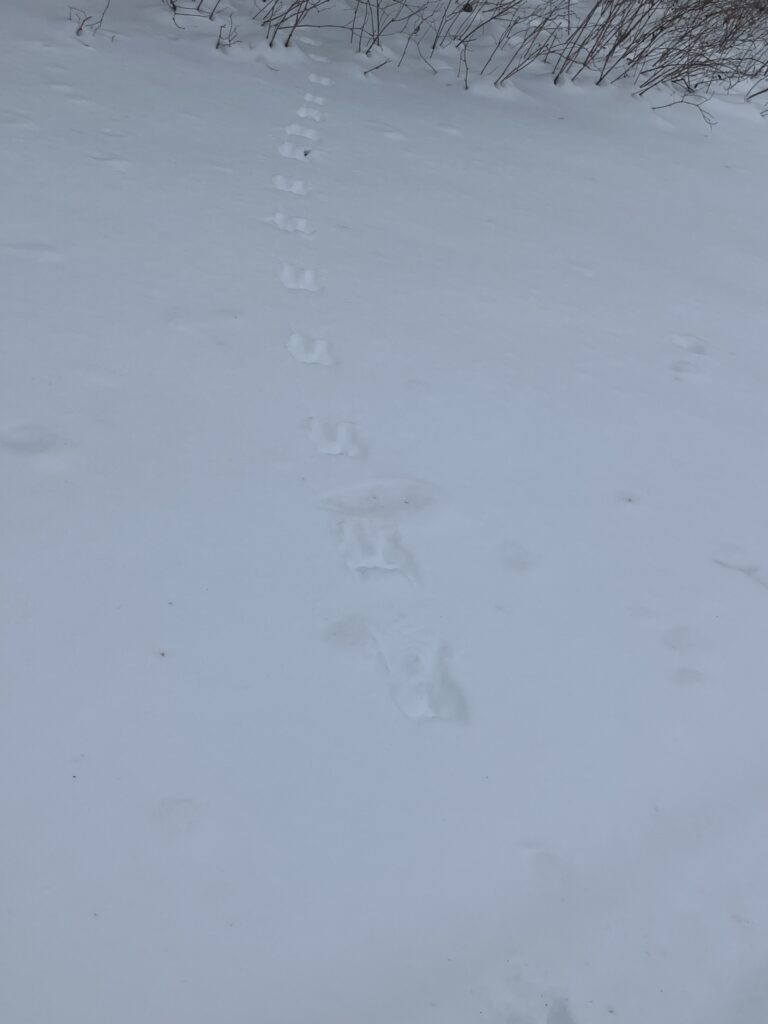
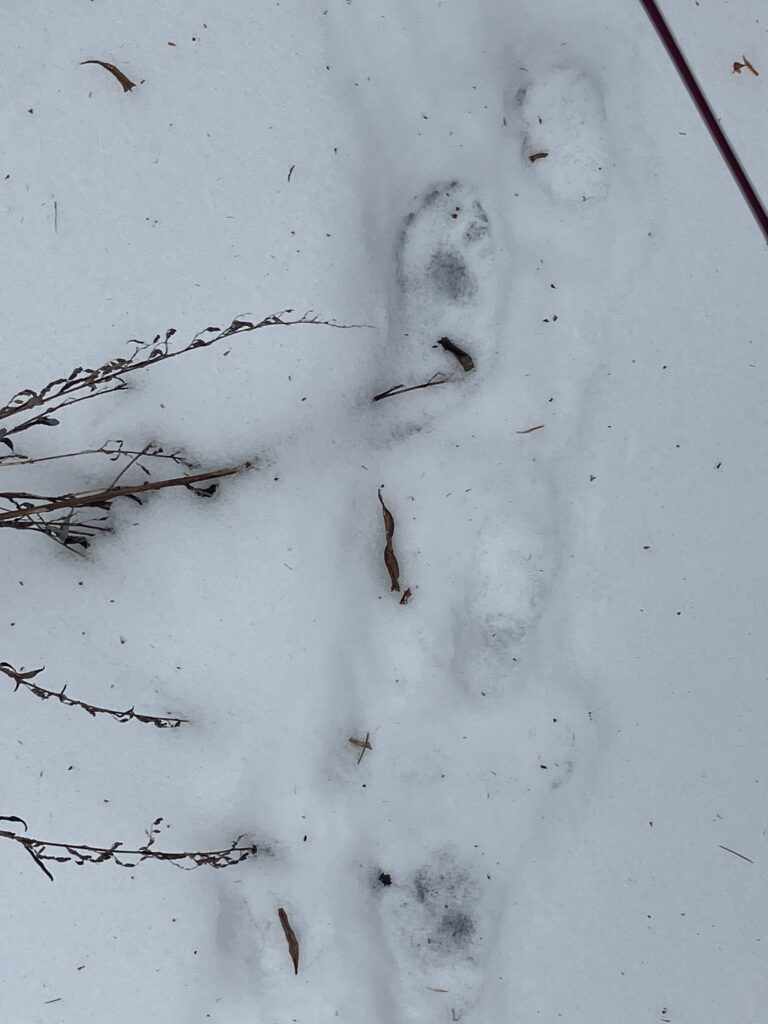
We found these tracks in two seperate places and our best guess for both is that they are cottontail rabbits. It is possible both track were made by the same one since they were not super far away. The size of the hind foot helped rule out asmaller mammals such as a chipmunk or squirrel. While the tracks weren’t super clear, there didn’t seem to be obvious toes, which made us think it wasn’t a racoon. The back feet are larger than front, but didn’t seem wide enough to be a snowshoe hare. This lead our best guess to be that they were left by cottontail rabbits crossing the walking path.

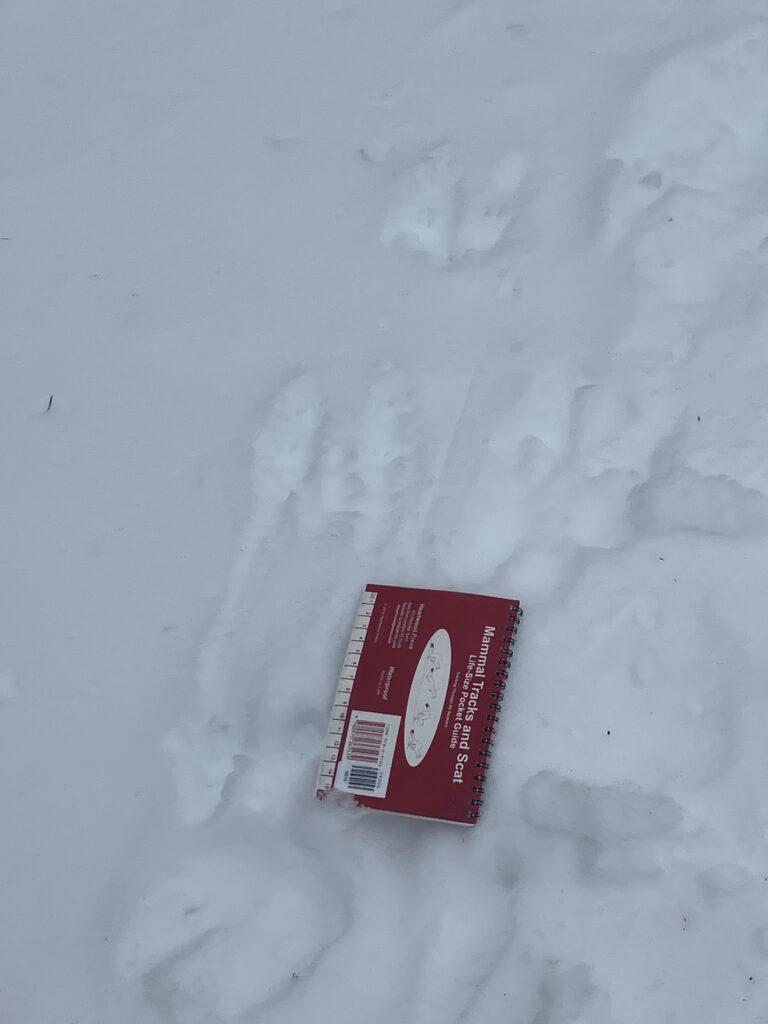
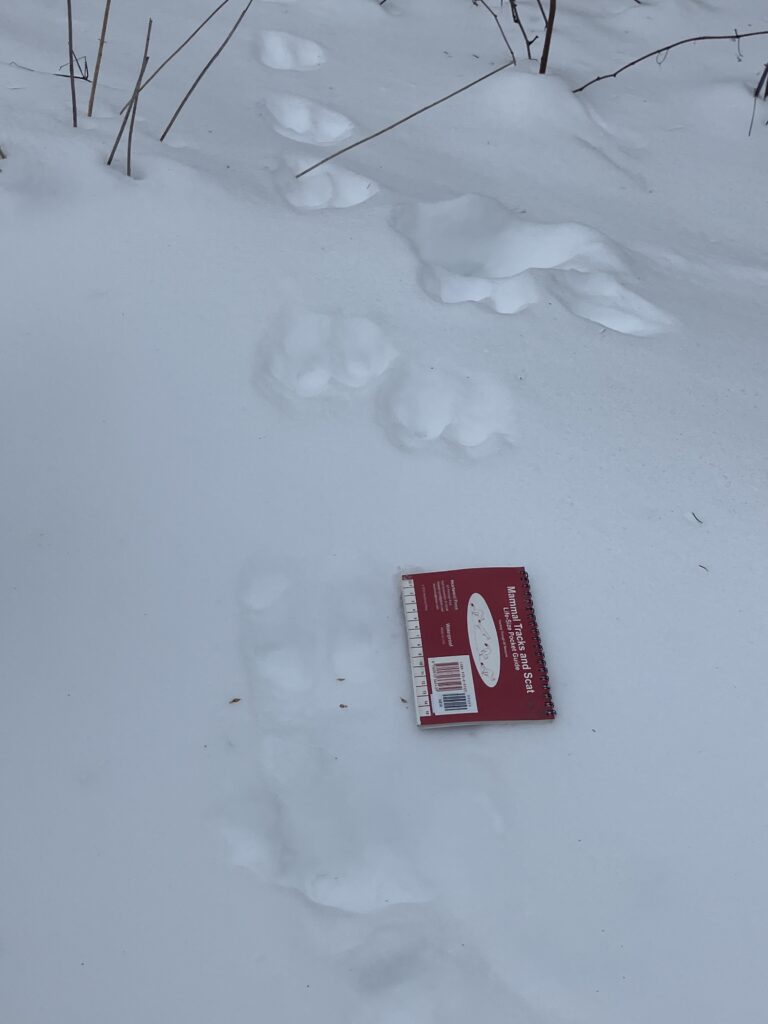
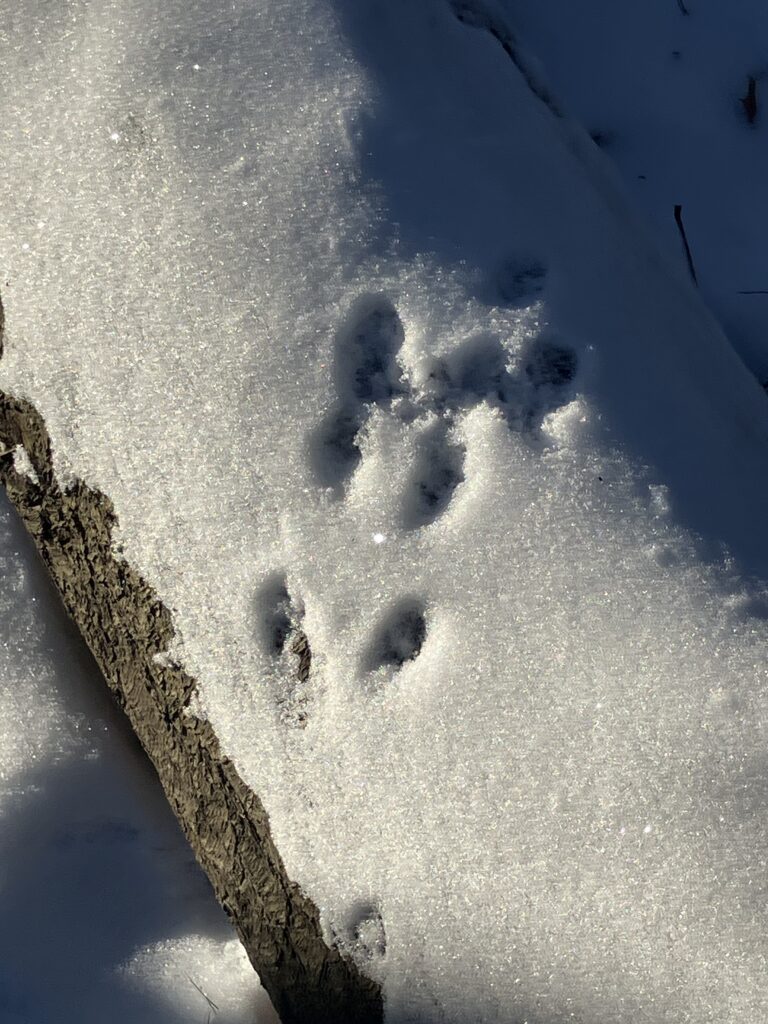
I think it is likely the above tracks were left by a squirrel. The front and hind feet were in different sizes and the tracks moved over several fallen branches. You could vaguely see the imprint of toes. As you can see next to the ruler, the hind feet were about 4-5 cm in length. This larger size makes it most likely that the tracks were left by a gray squirrel.

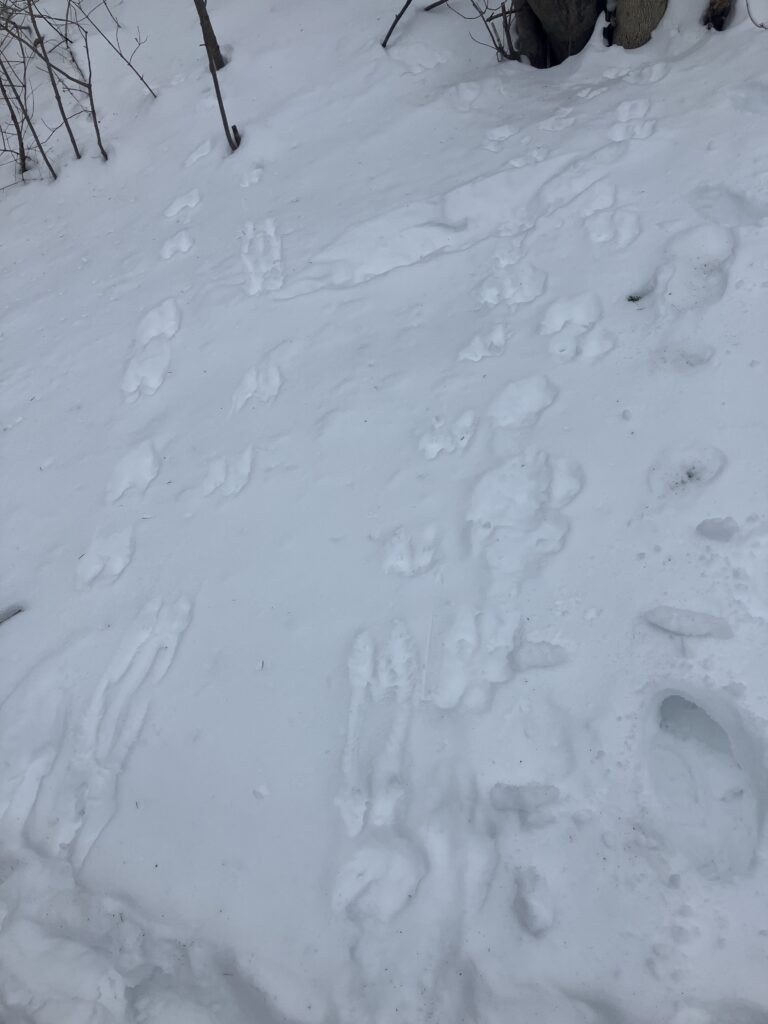
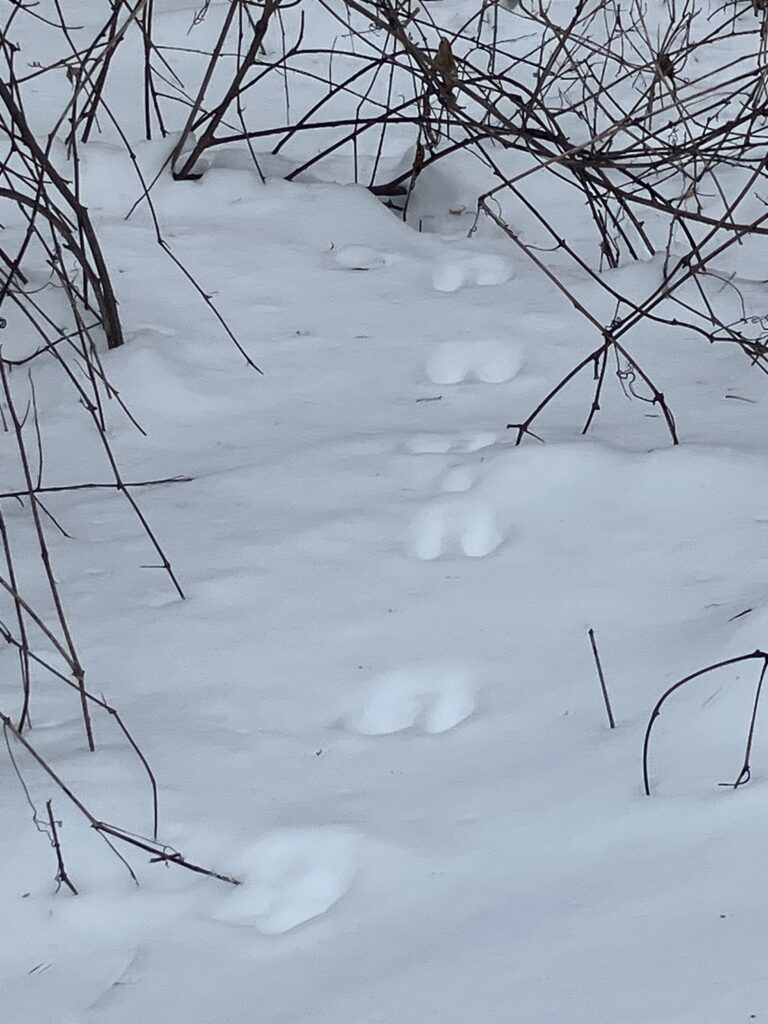
These prints had no trace of toes and resembled a hoof. The length of the track was similar to a small deer, but the pattern didn’t match. The prints seemed to be one foot directly in front of the other. My best guess is still that this was left by an eastern white-tailed deer.

January Check In

January 18, 1:20pm

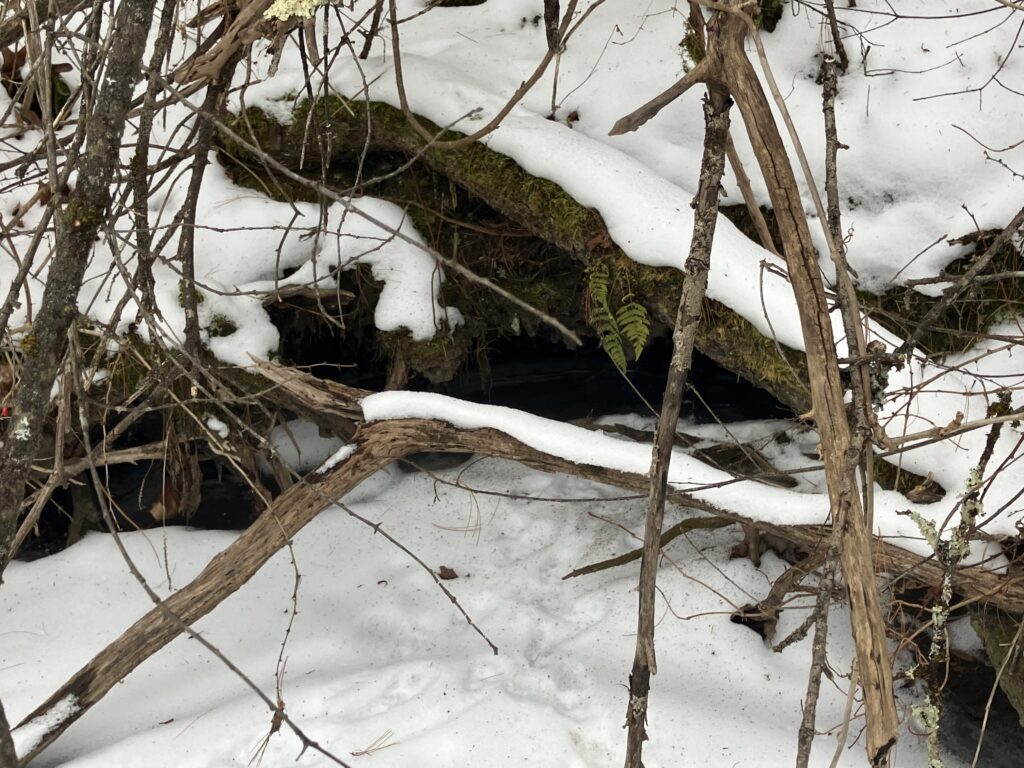
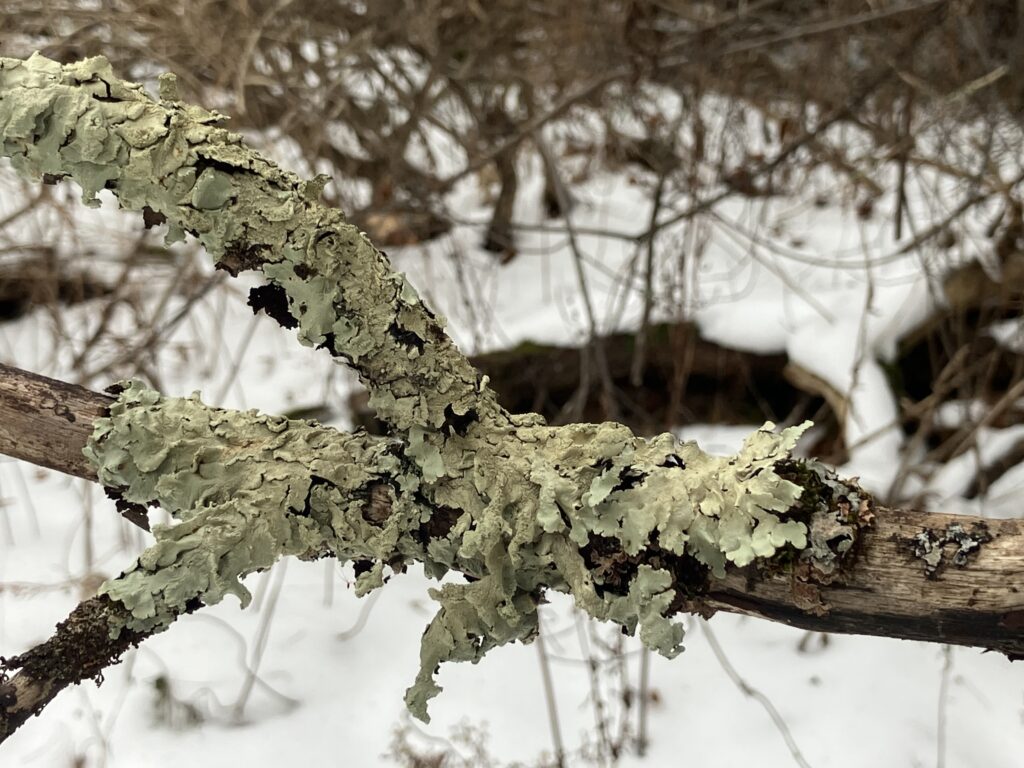
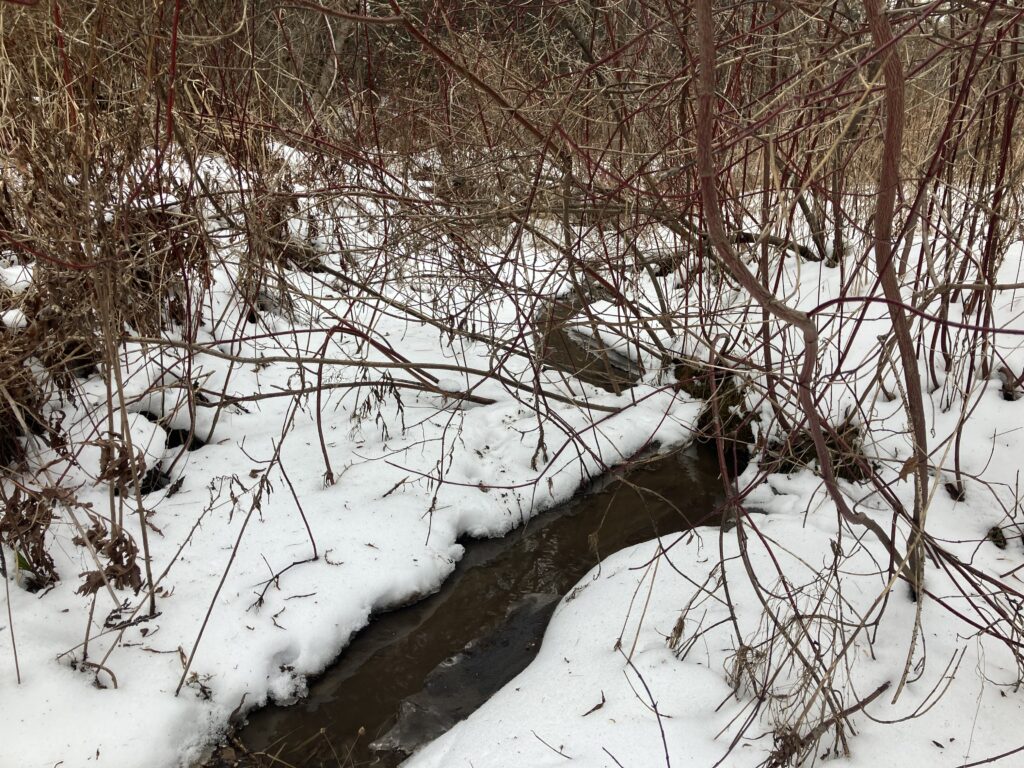
About a week ago, I revisited my phenology spot. The landscape was transformed by snow that had fallen over the last few days. The blanket of white made everything feel quieter except the creaking of trees in the wind and the crunch of hardened snow underfoot. Upon first glance, bare branches and patches of dead grasses appeared to be the only things to observe. The remaining color was from the towering eastern white pines, patches of moss and lichen, or a few shrunken red berries remaining on the barberry. Centennial Brook was largely frozen over since the weather was in the 20s. Sections of the brook had breaks in the ice revealing a steady flow of water underneath.

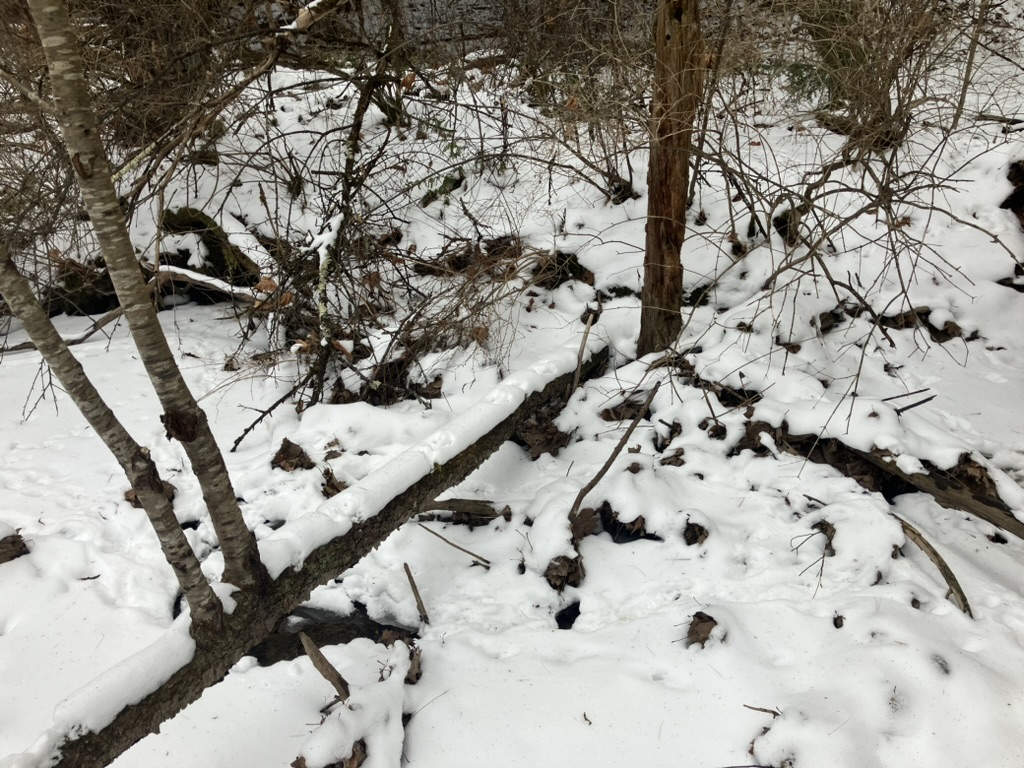
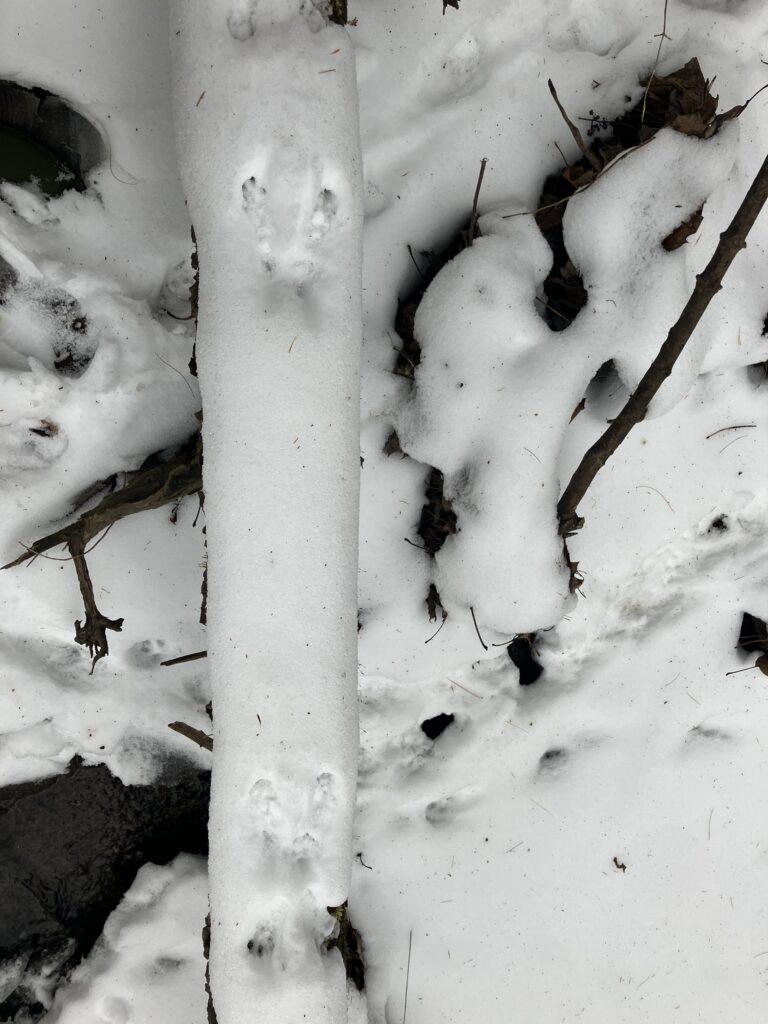
Aside from one mystery bird calling, I saw no wildlife near my spot. However, there were tracks surrounding the creek as well as left on the surface of the frozen creek. I noticed that the frozen river was used by creatures as a sort of pathway. Some of these were clearly fellow hikers and their dogs, but I tried to identify a few other tracks that seemed to be from wild animals. I am very new to identifying tracks, but below are some guesses I have for tracks I found in my phenology area.

I thought this could possibly be gray squirrel prints due to larger hind feet and distance between the tracks indicating a jump. It was larger than the similar tracks below by a few centimeters, leading me to think the below tracks might belong to a red squirrel.
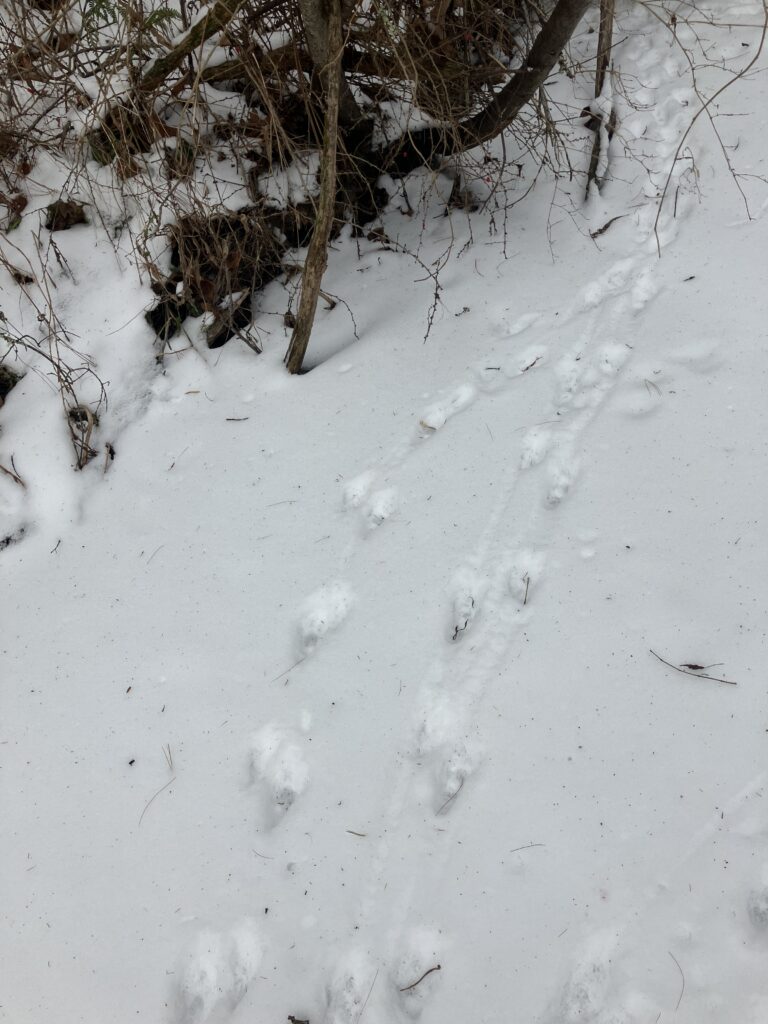
I’m unsure about this one. The significantly larger hind foot print and tracks being at a diagonal makes me think a cottontail rabbit or hare. The hind foot is pretty wide, making it seem more like a snowshoe hare. I’m not sure about the dragging which I feel like works against the tracks being from a rabbit.
This one is largely a mystery to me. It looks a little like a skunk since the hind and front are different sizes and the way the prints are staggered. It’s probably not, but is possible since skunks don’t truly hibernate over the winter.

December Update

3:45pm , December 5 , 2024

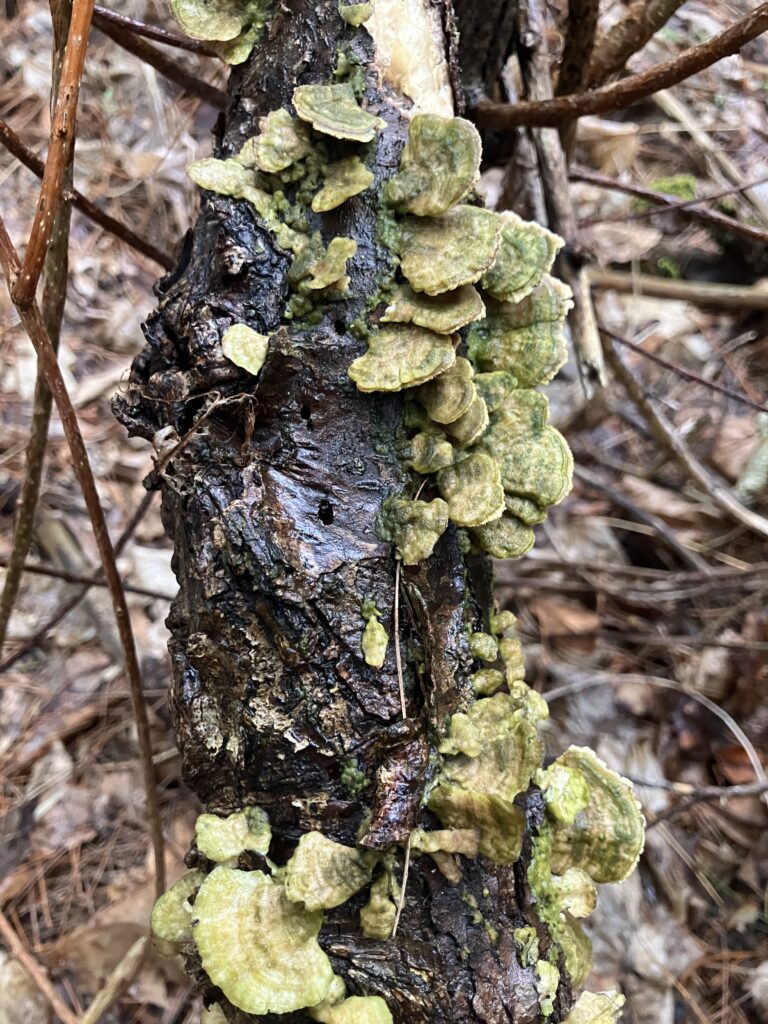
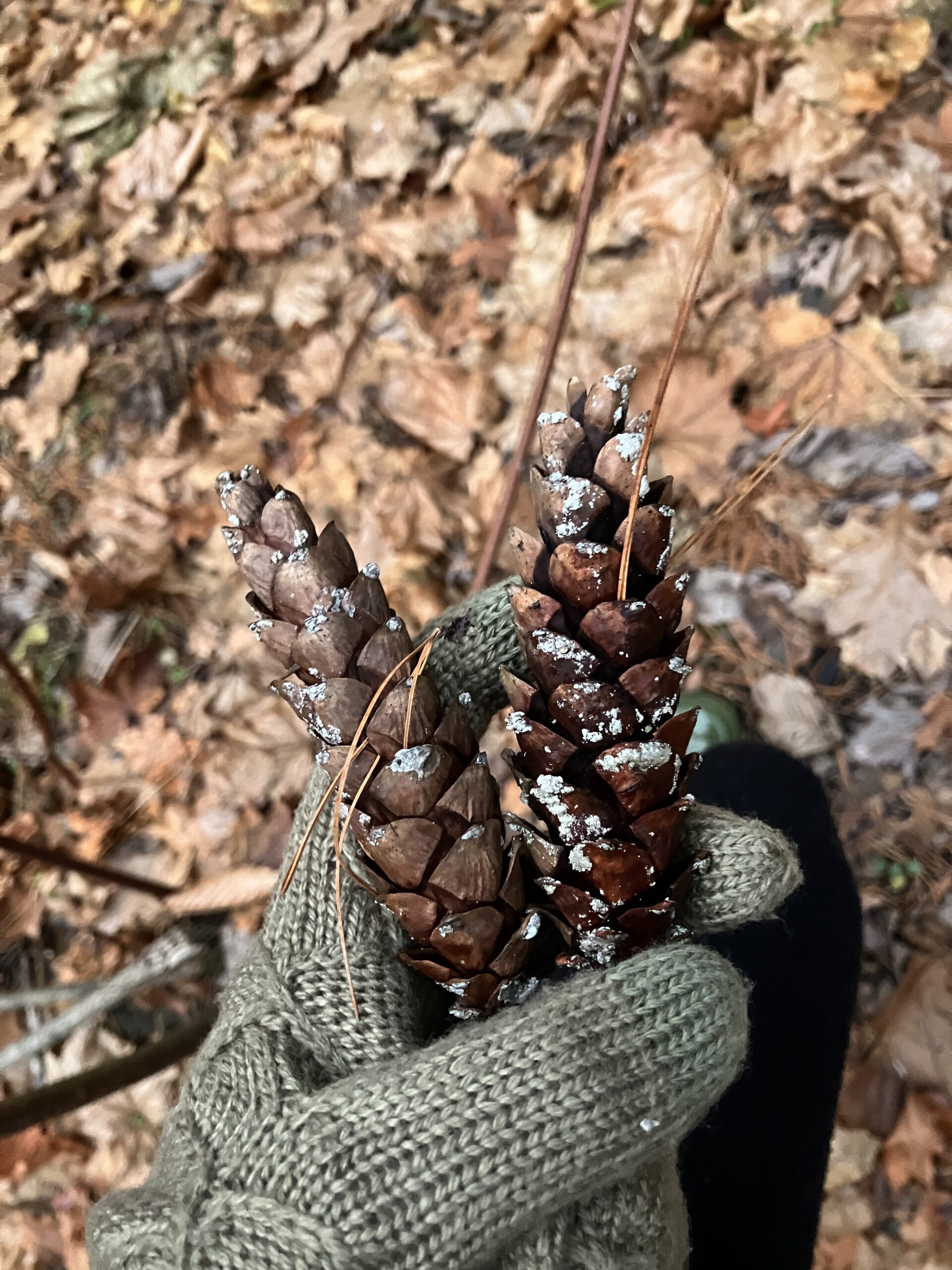
It was a pretty cold day, around 30 degrees. Immediately I noticed that there were almost no leaves left on the majority of deciduous trees in the area. The main species with some leaves hanging on were the white oak. The only green was from moss, ferns, and some small green non-woody vegetation. Another thing that was striking was the silence. I had noticed it had gotten quieter when visiting in November, but this time is was even more silent. The ground was damp and muddy and the leaves that had fallen earlier were beginning to decompose, particularly those on the muddy banks of the brook. There were a lot of pine cones from the Eastern White Pines and I saw mushrooms growing on some of the tree trunks.

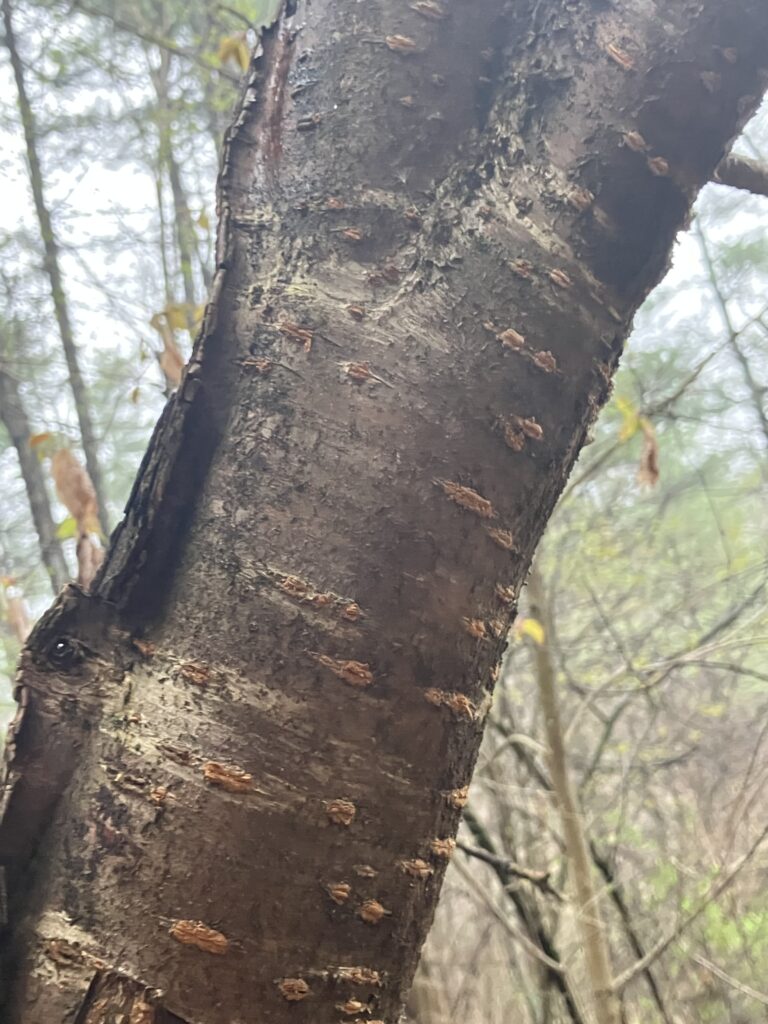
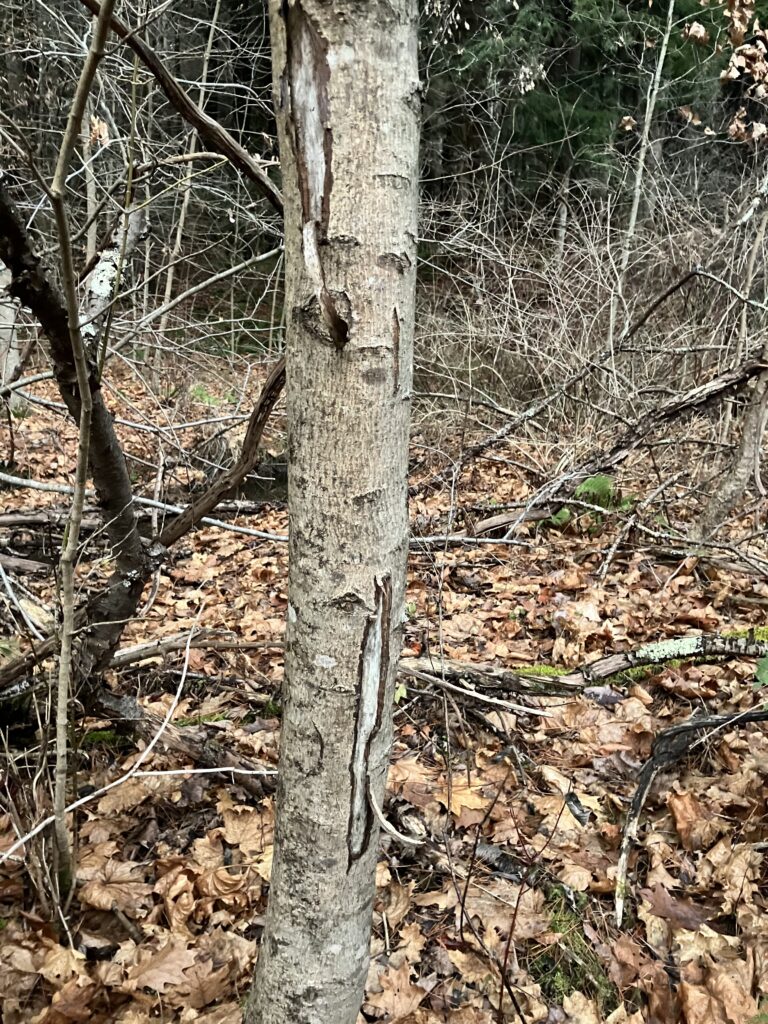
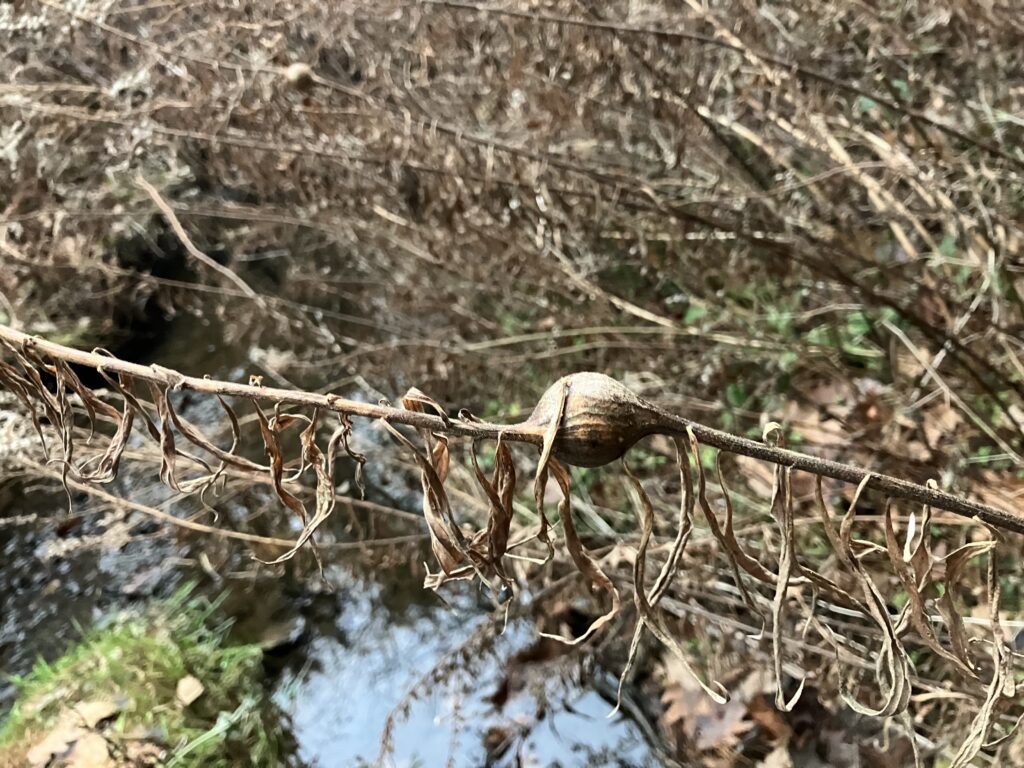
When it came to wildlife, it was definitely less noticeable than earlier in the year. I didn’t see any frogs or fish and saw only one bird. The bird was a tiny winter wren hopping around in the mud by the water’s edge. I also noticed the bark peeling off of one of the trees which might be a sign of some kind of wildlife. The goldenrod further downstream of the brook had large galls in its stems, possibly holding larvae of goldenrod ball gall flies. Whichever type of gall-making insect it is, it is likely dormant and using the stem as shelter during the winter.

Reflecting on all my visits, I think what I like most about my phenology spot is its variety. The location is partly shaded and partly sun as well as partly water and partly land. This allows for an interesting variety of trees, wildflowers, mosses, fungi, and wildlife. There is always something different going on. I also like how it is slightly off the path so it feels a little tucked away. I definitely miss the frogs though.

Phenology Comparison: Public Park

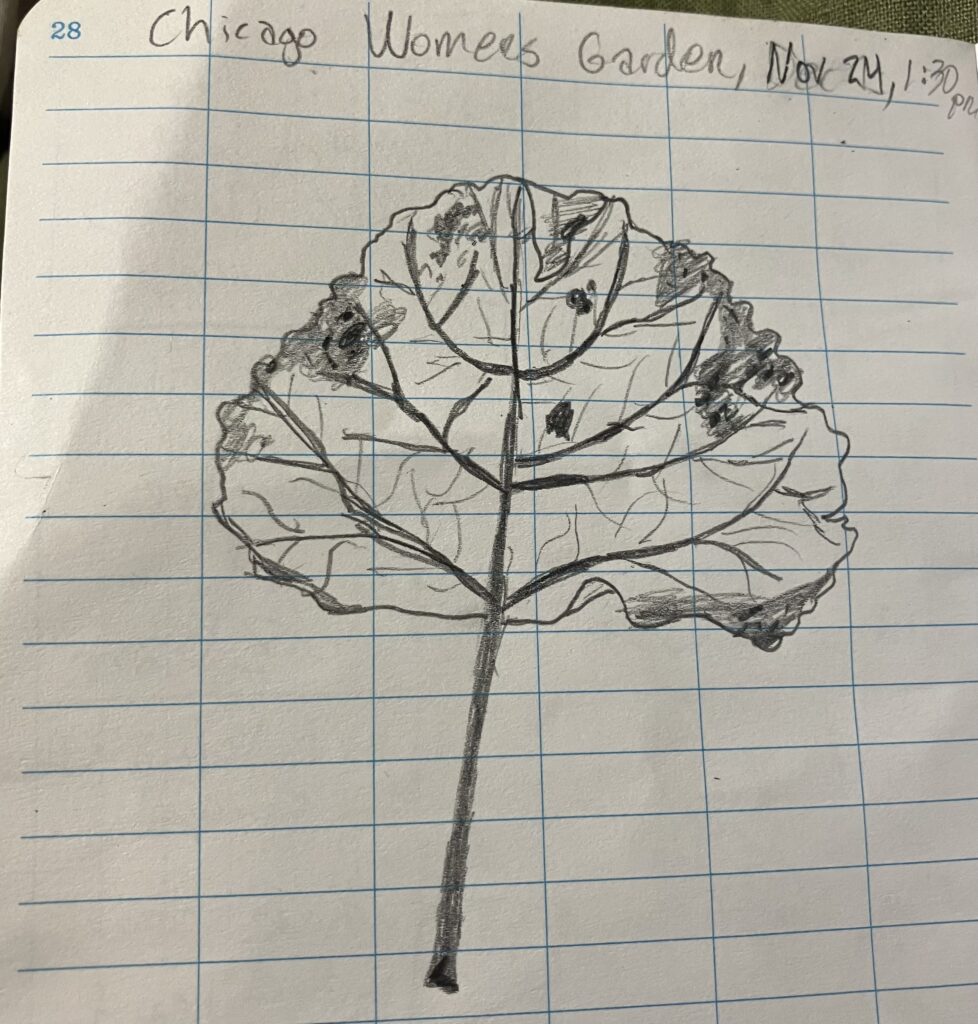
November 24, 2024, 1:30pm

Chicago Women’s Park and Garden

Over Thanksgiving break I went home to Chicago and visited a public park near my house. The park is relatively small and large sections are cared for by the Park District, making it not very wild. However, it is a place in which I am familiar with phenological changes since I visit the park frequently throughout the year. After more intentionally observing phenological changes in my spot in Centennial Woods, I thought it would be interesting to revisit this familiar place with a new perspective. The Women’s Garden, located at 1808 S Prairie Ave, Chicago, IL, is a relatively small public park just south of central downtown Chicago and west of Soldier Field stadium, Museum campus, Lakeshore Drive, and Lake Michigan. As you can see in the map below, it is mostly surrounded by residential areas and roads.

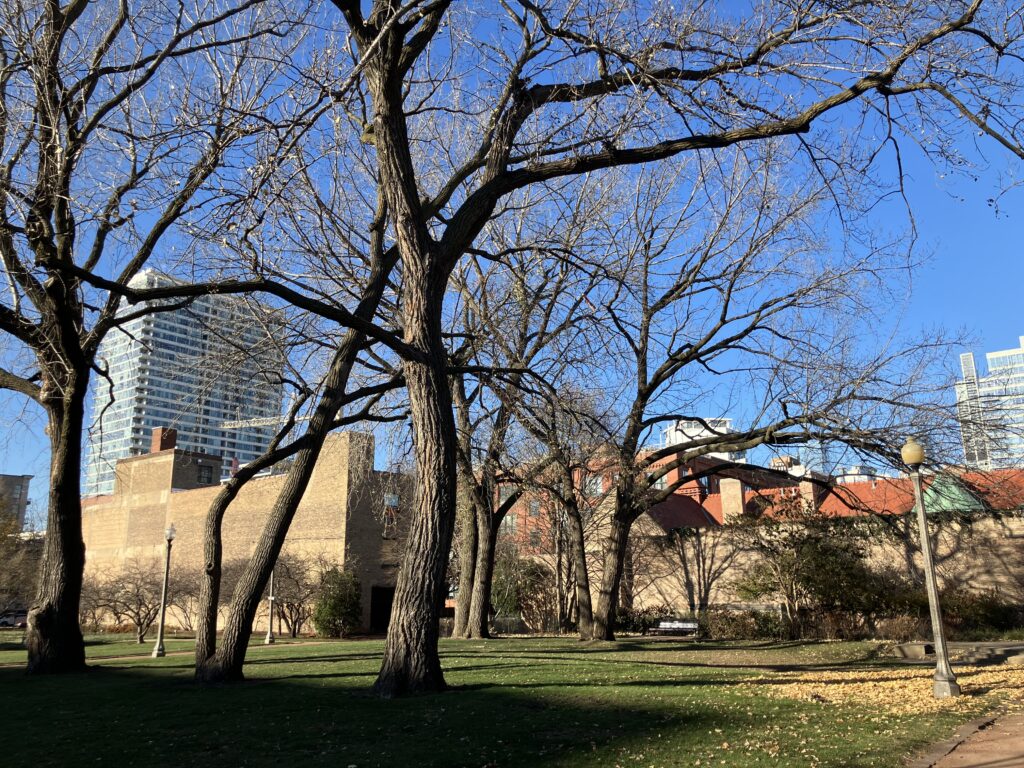
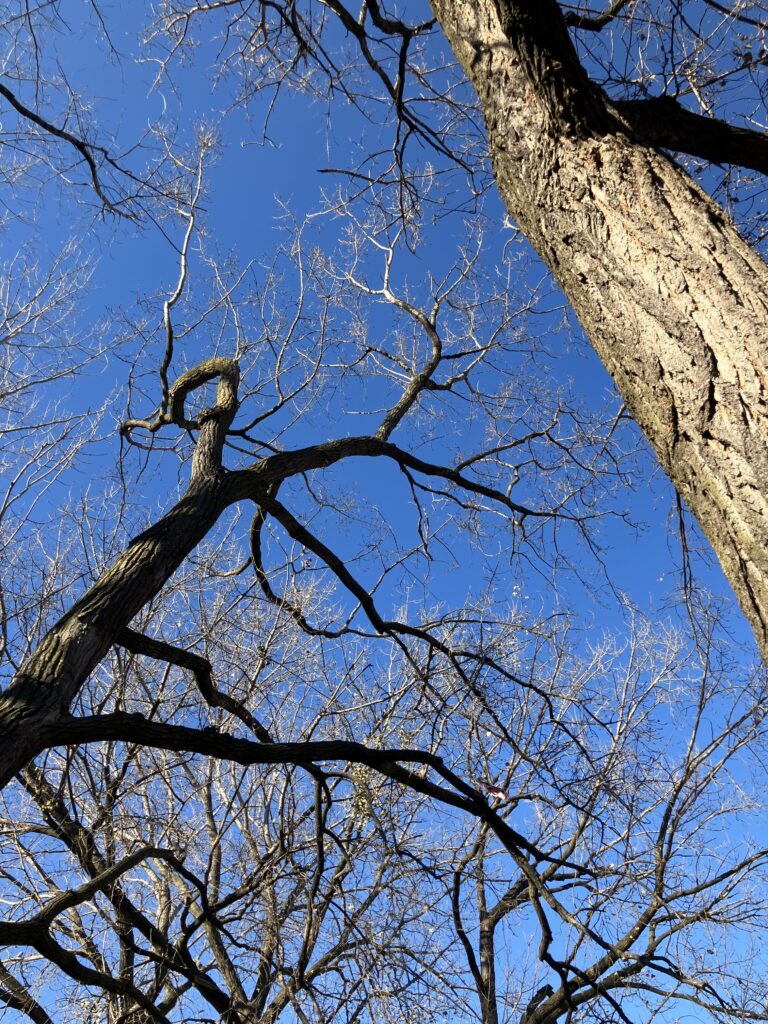
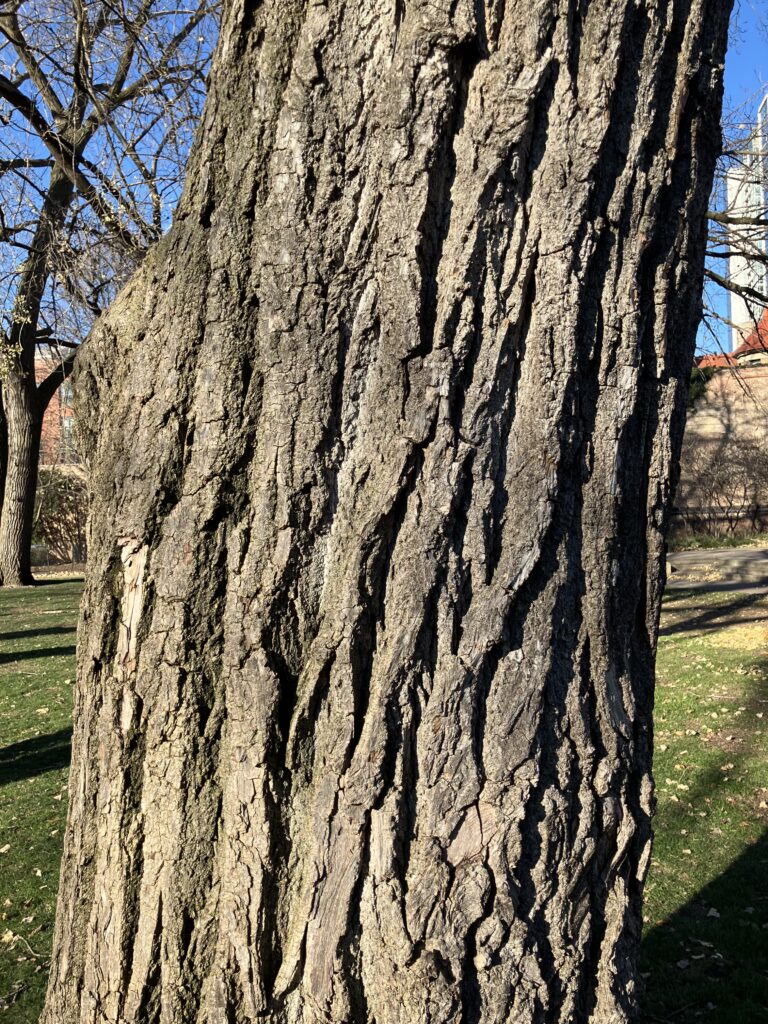
This spot in the Women’s Garden is very different than my phenology spot in Centennial Woods. While the Centennial Woods spot is wild and relatively untouched by humans, the Women’s Garden is a park created for human’s enjoyment. Much of the park is even planted and/or maintained by the Chicago Park District. This definitely interferes with the natural phenological changes since some plants are cut back or deadheaded as seasons change. However, I noticed that the Women’s garden has perennial plants, some of which are native to Illinois. Near the center of the park are several large eastern cottonwood trees that shade much of the park. There are several manmade structure in the park. A small concrete path winds around the garden and leads to a scuplture and a fountain in the center. The historical Clarke House sits in the garden, although it is unoccupied. The remainder of the garden is filled with smaller trees, shrubs, and flowers. These include redbuds, many magnolias, and bur oaks.

One clear difference in phenology I noticed between the two locations was the portion of leaves remaining on the trees. There were noticeably more leaves still alive and on the trees in the Women’s Garden than in my spot in Centennial Woods. This could be influenced by each location having different species of trees and by Vermont’s more northern climate leading to faster seasonal changes. There seemed to be more green in the overall vegetation in the women’s garden overall than with the wildflowers and grasses in my Centennial Woods location. In addition to being impacted by different regional climates, the two spots are also likely impacted by their surrounding environment. The Women’s Garden plays an important role sequestering carbon and water in a highly urbanized area with largely impervious surfaces. Centennial Woods also has a similar value, but is part of a much larger green area and surrounded by far less human development.

My spot in the woods is probably visited by very few people every year while the Women’s Garden sees tons of human traffic which may trampel the vegetation and disturb local wildlife. When considering the role of the garden in my neighborhood, I thought of the concept of “Honorable Harvest” that Robin Wall Kimmerer mentions in her novel Braiding Sweetgrass. As opposed to harvesting leaks or hunting animals, people use the park as a refuge from the busy city. I feel grateful to this bit of nature that I have been able to visit for peace when overwhelmed by the rest of life. I think that parks such as this one are very important both for their practical role, and job of allowing city dwellers the gift of nature. Nearby highway, high rises, stadiums, and tourist attractions generate pollution of all kinds, making the Women’s Garden a far less appealing home for wildlife. However, I noticed a significant number of birds in the garden. In comparison, I have seen few birds in my phenology spot at Centennial. This shows that despite its flaws and the human traffic, the garden can be a save haven for wildlife in the middle of the city. Both this garden in Chicago’s South Loop and my phenology spot by the Centennial Woods Brook are both valuable habitats.
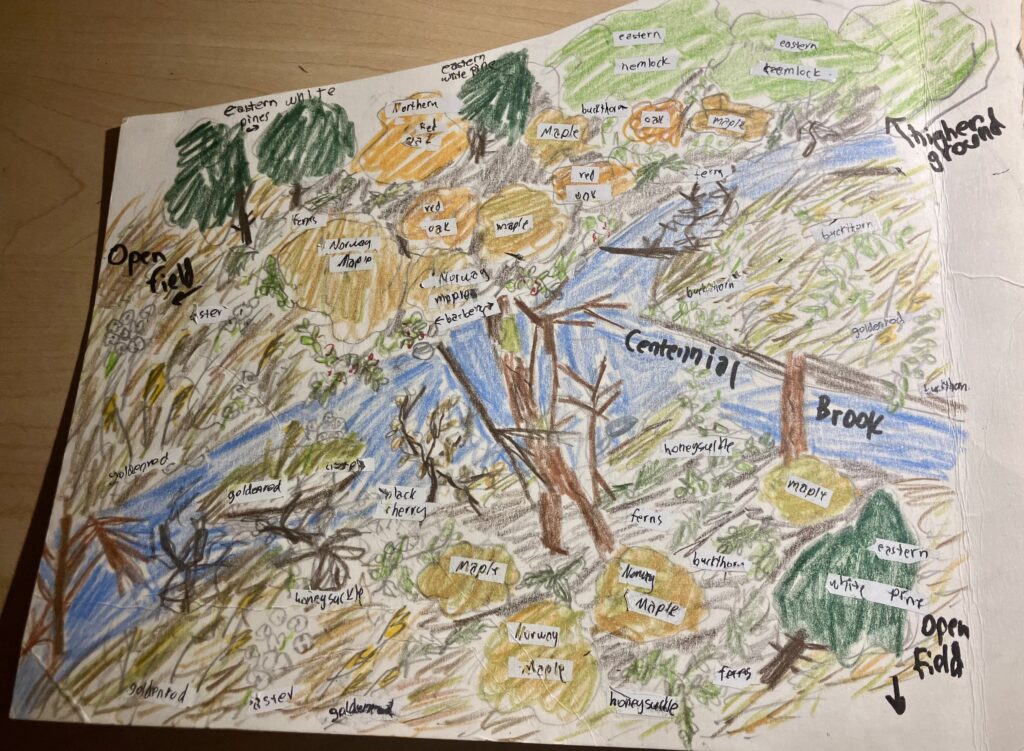
Map of Site

I made this map of my site from an arial point of view. I used colors to differentiate easier between the plants and because it is based of the fall colors I’ve seen in late October and early November. The composition of trees and plants is not exact but just to show the general makeup of different sections of the spot. While I sketched and labeled some species of plants, there are many plants and other elements I didn’t incorporate.

Early November Changes

4:36pm , November 3rd, 2024

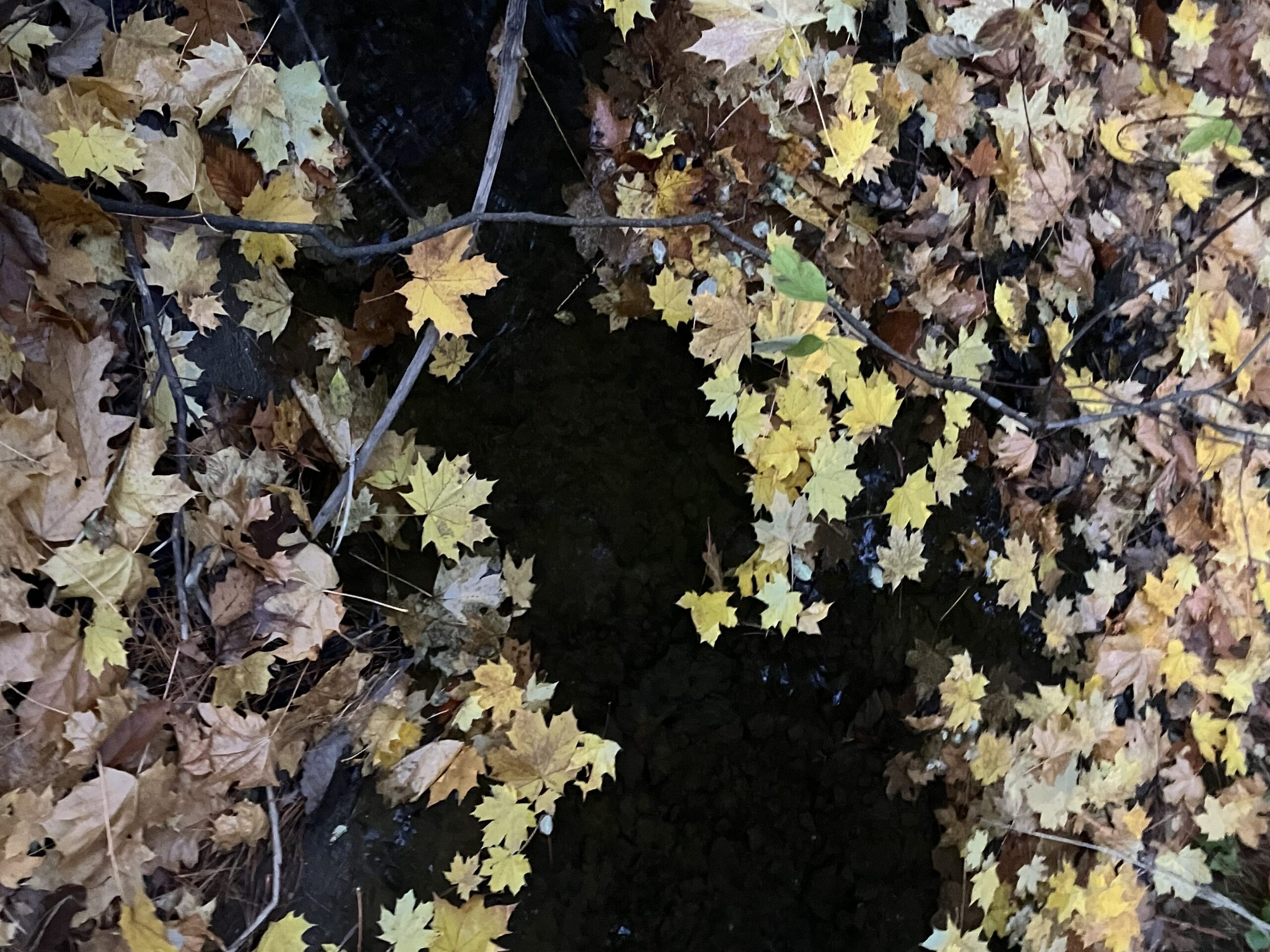
Yesterday I spent some time at my site just sitting and observing. The most noticeable seasonal change was that the sun began setting while I was there since daylight savings just happened this weekend. It was already a gloomy day and got even more so as the sun set. The entire ground was covered in leaves, mostly Norway maples and northern red oaks. Many of the trees had dropped most of their leaves and the branches crossing over the stream were largely bare. There was a lot of mud the ground seemed to have a lot of clay. I also noticed even more dead wood blocking the river than before. The stream seemed to be moving slower than when I visited in October and possibly the amount leaves and branches was contributed to this.
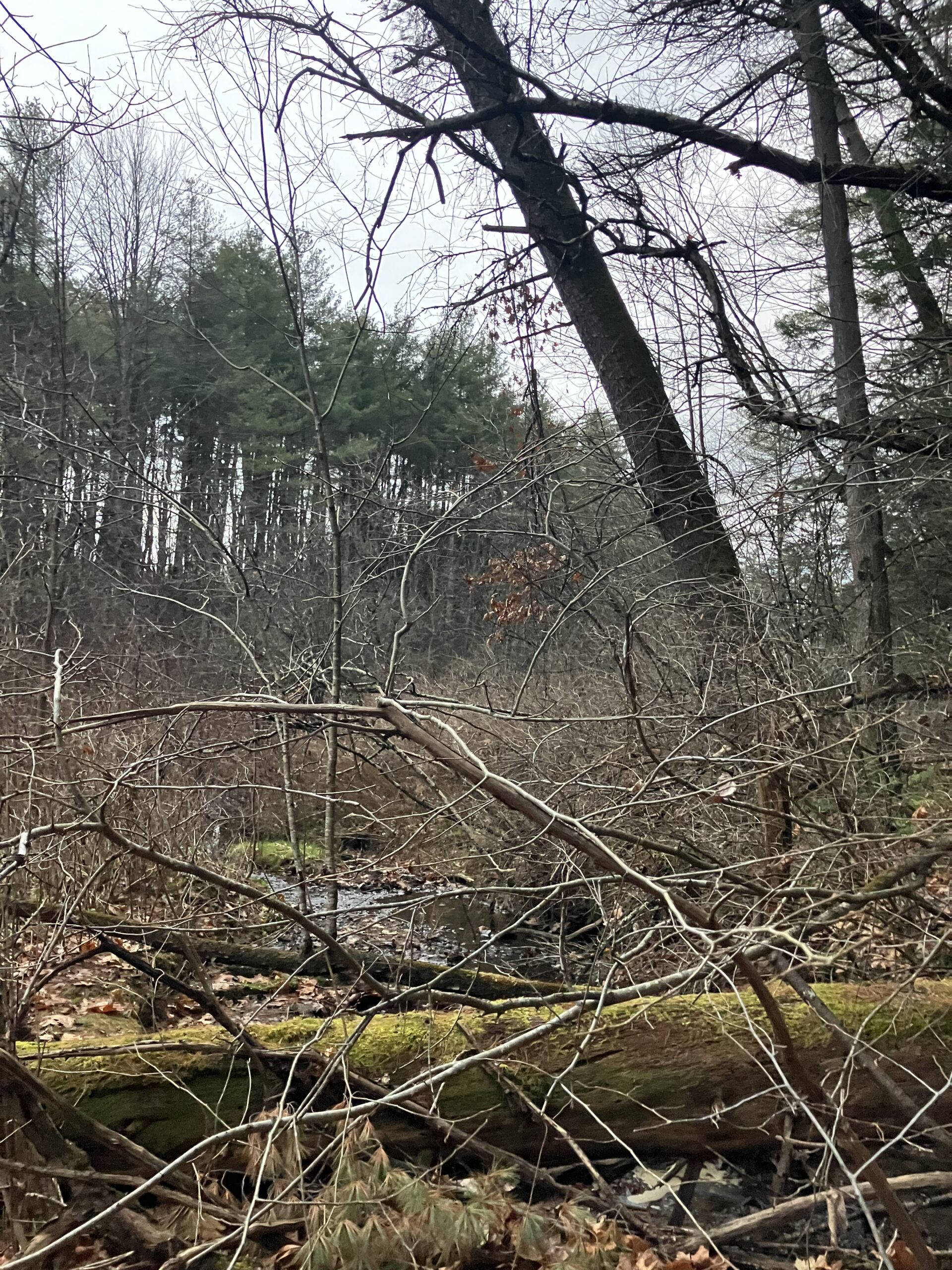
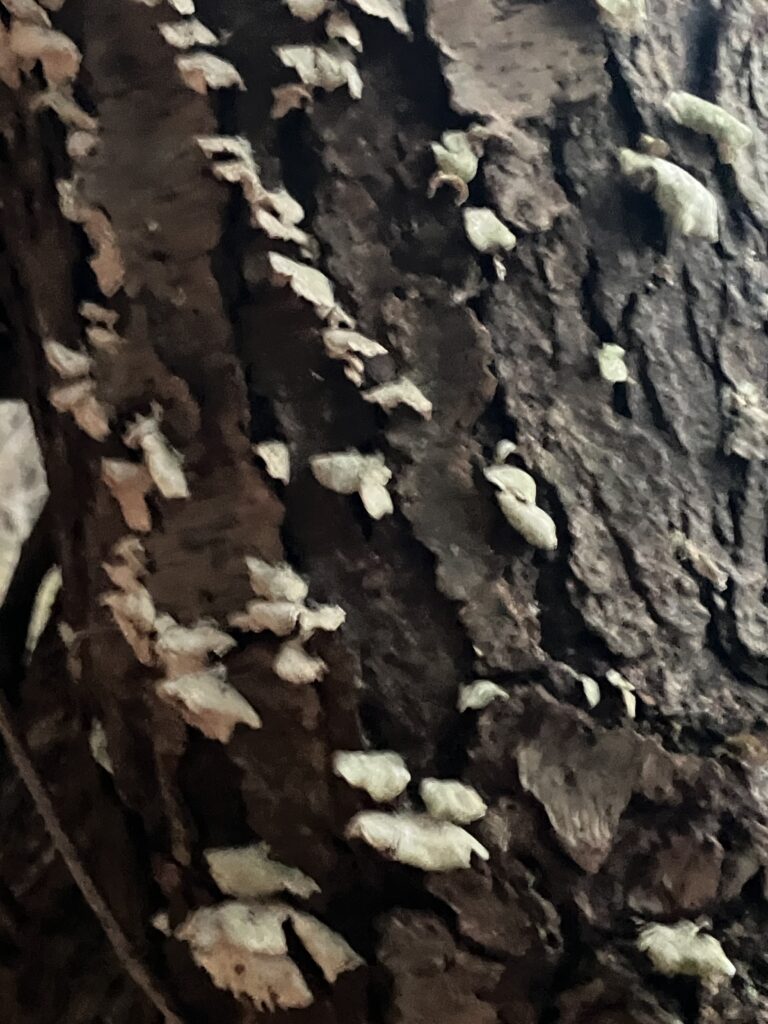
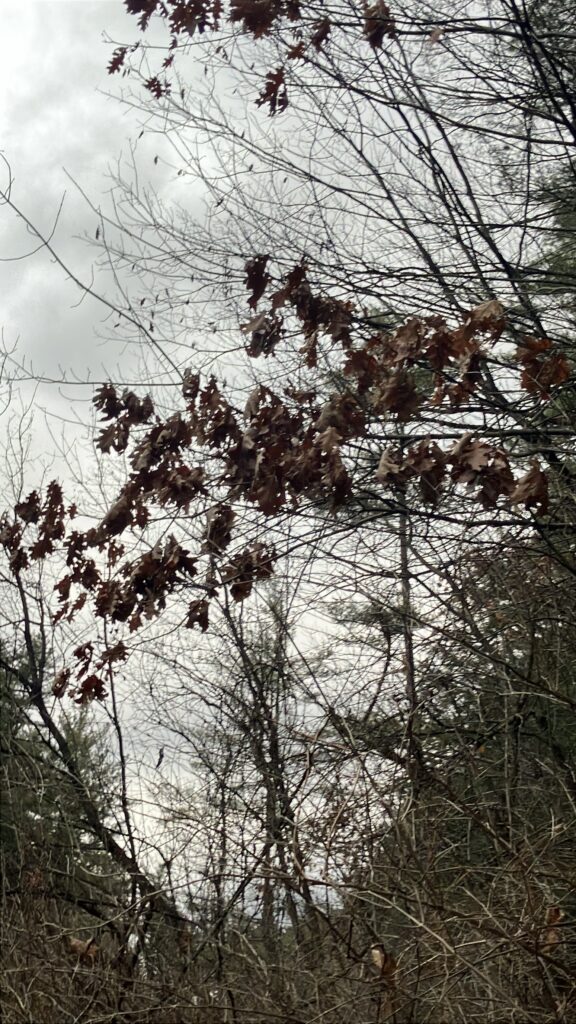
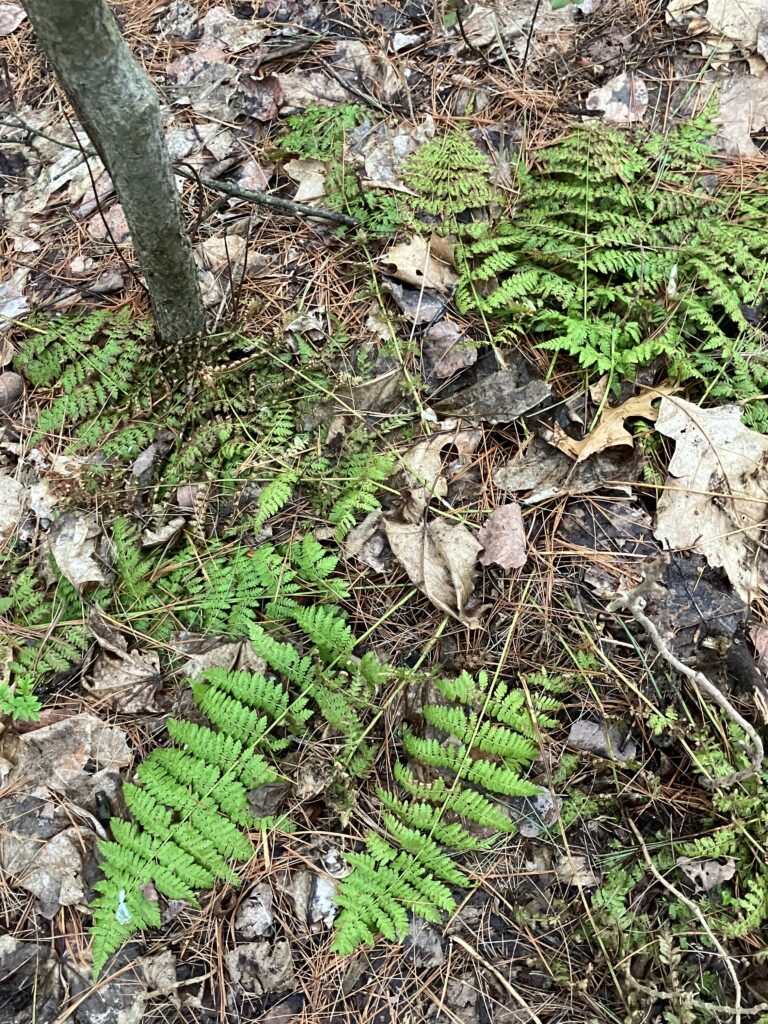
All the wildflowers were dead or dying such as the asters and golden rod growing downstream where there is no canopy of trees to block the sun. I noticed that the Norway maples and northern red oaks still held on to many leaves. All the bare branches really changed the area, making the section previously shaded by branches feel much more open and exposed. The young black cherry trees had dropped most of their leaves. The understory was damp from recent rain and almost entirely covered in maple and oak leaves. The main non woody plants I noticed in the understory were wood ferns and remains of golden rods. Woody invasives like the barberry and buckthorn still had leaves and some berries.

While sitting in silence, I felt like the woods were quieter than in my previous visits. I’m not sure if this was just because of the time of day. The main thing I heard were noisy crows passing above me in groups. I also didn’t see any frogs or fish, at least in this section of the brook. By the time I left the spot, it was dark outside already. I plan to come back soon at an earlier time in the day to try and distinguish between phenological changes and just differences depending on the time of day/weather.

I am also realizing that identifying deciduous trees will become much more difficult as their leaves fall off. Thankfully I am pretty sure I have identified almost all of the trees nearby.

Skip to toolbar