A UVM blog Phenology Spots

Posts

City Nature Challenge

Last weekend, the City Nature Challenge on iNaturalist happened here in Burlington! I loved the idea of people worldwide going out and taking pictures of nature in their cities. I happened to go to my phenology spot during the first day of this challenge, so I took photos of many different trees and plants that I either recognized or wanted to learn what they were.

After my lab meeting on Monday, I decided to add all the photos of trees on campus into iNaturalist. At first, I thought I could only post trees in a park or a natural area to this project. After I learned that I could photograph any tree, my observations went up dramatically on the app.

Another thing I did involving this challenge was attended one of the presentations downtown. I went to the Bees of Burlingont talk and it was so interesting. Hearing someone passionately talk about nature and helping save the environment makes the whole presentation so much more entertaining. Plus, being surrounded by other students plus other people from the area where everyone was interested in the environment was such a good feeling. After this, I wished that I went to more of the presentations and events because it was such an amazing experience.
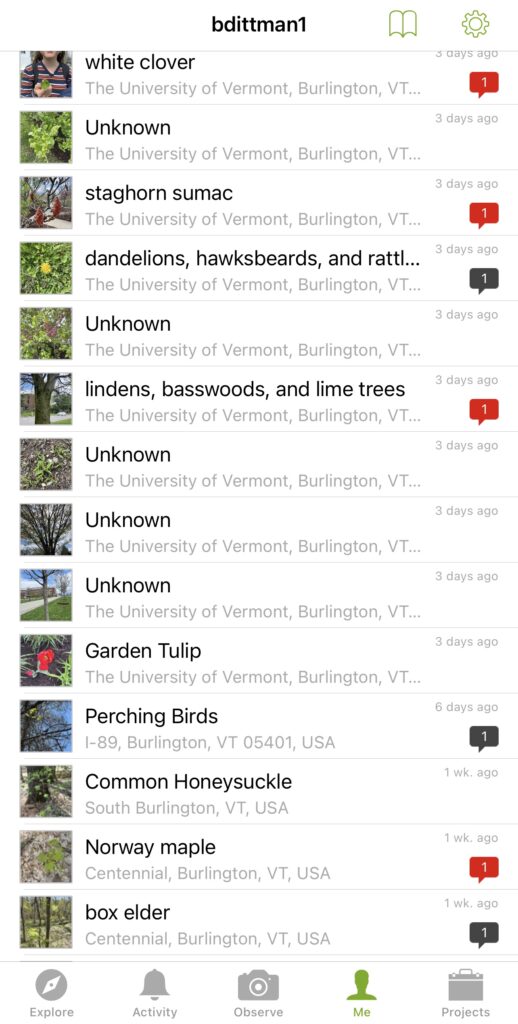
My iNaturalist after the bioblitz!

Last Visit

I returned to Centennial Woods and took a 20-minute hike through the trails. While walking, I thought about how accustomed I have become to the area by visiting this park so many times. As a woman, I often feel scared to hike by myself since I grew up always hiking with my dad. I think that this phenology project has allowed me to become more confident and comfortable exploring nature by myself.

Today, I saw many more people than usual hiking. I saw other students doing the City Nature Challenge, some bird watching, and others just hiking like me. This reminded me of how close this park is to campus and the city in general. It’s so special to be able to have an area, even a small one, to be able to escape to nature. I feel like culture and nature intertwine here because of the communal value everyone who visits has for the park. Being so close to the city, this are could easily become pollute, but it’s not. Everyone I saw visiting was staying on the trails and being overall respectful to nature.

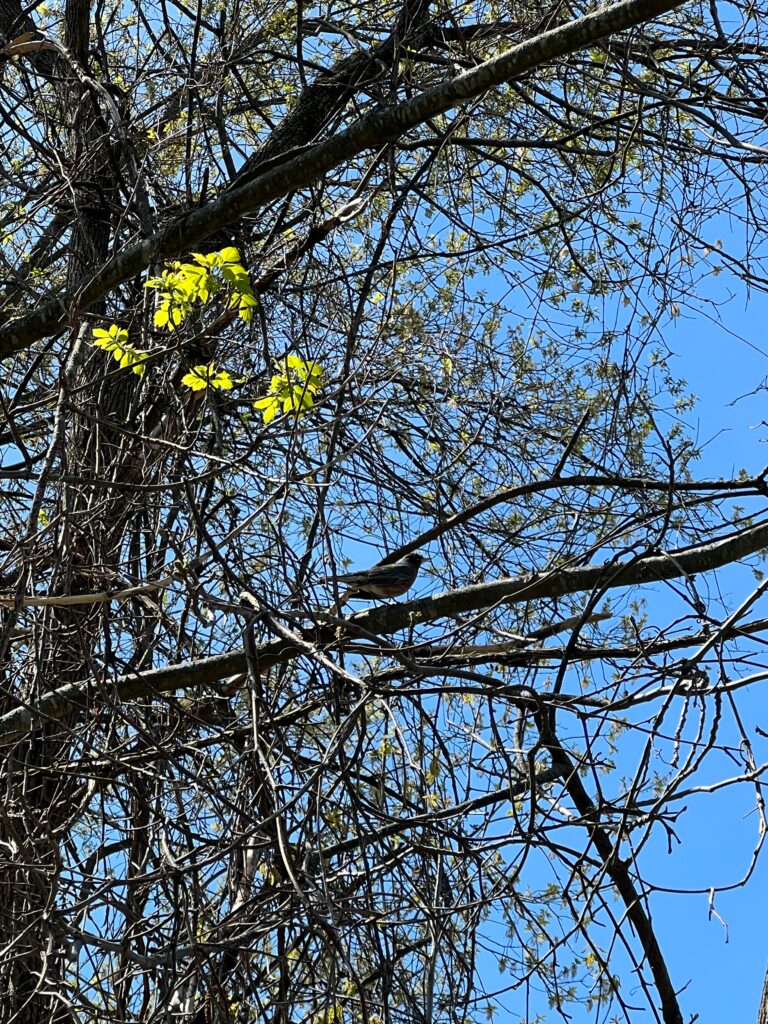
My site has changed since I first visited in the winter to the spring. There are so many more trees and plants currently blooming, the ground has become muddy and grass-covered. There were many more birds being active in my recent visits than before. The water in the streams also seems to be moving faster and with more force than in the winter due to the snow melting.

I plan to continue to visit this site often, as I’ve thoroughly enjoyed hiking and running the trails here. I hope to keep noticing and appreciating the phenology of the area and the importance of having nature so close by.

Tree Updates

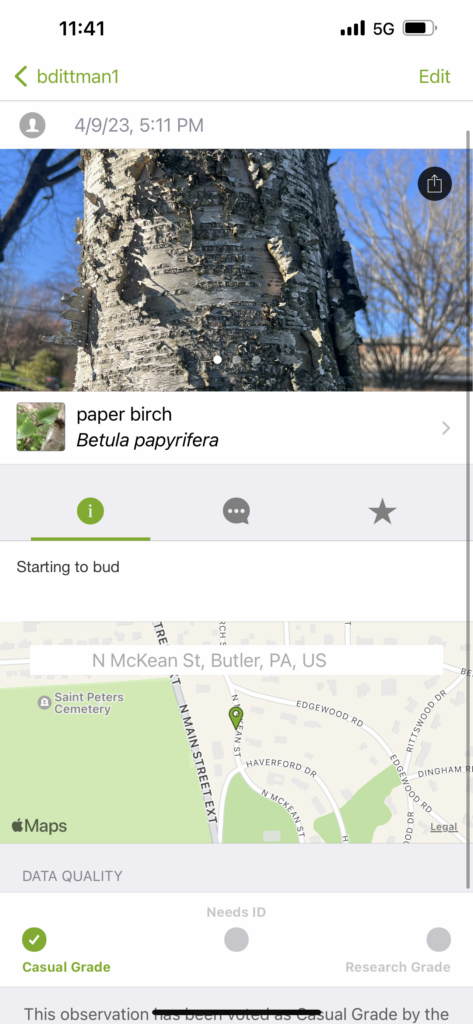
For this post, I unfortunately couldn’t make it back to my same phenology spot. As I discussed in my last post, the trail that leads to my tree is completely covered in ice and extremely hard to get to. I also traveled home to Pennsylvania to celebrate Easter with my family, so I didn’t have time to visit my tree. To make up for this, I found a paper birch tree in PA to analyze!

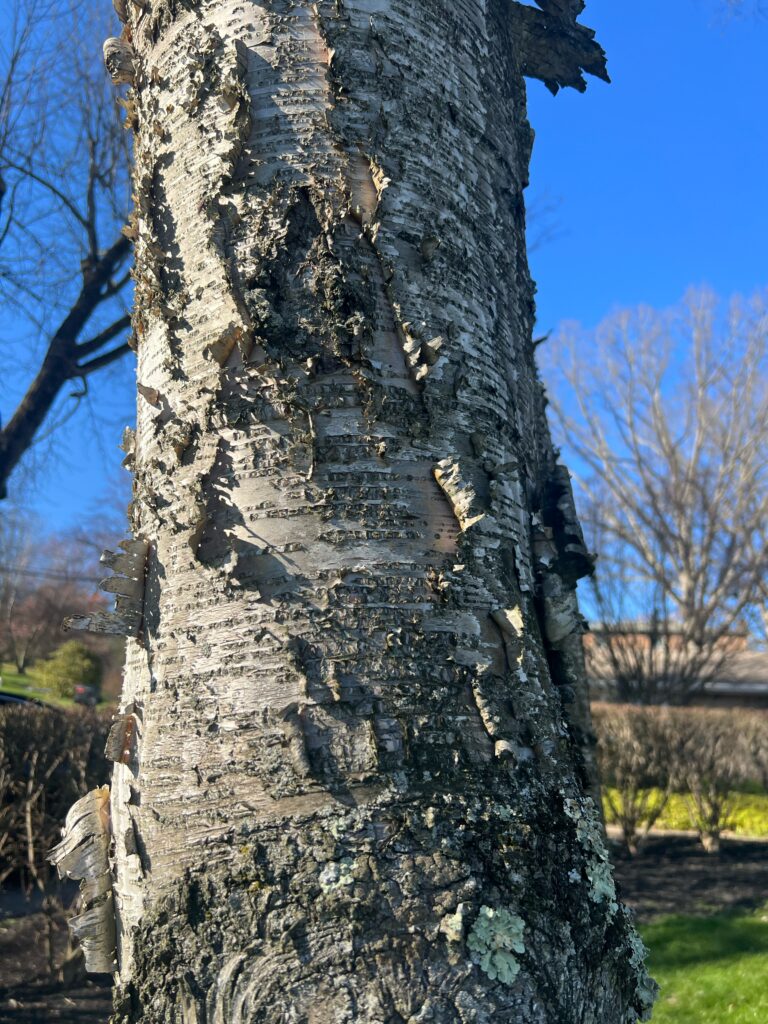
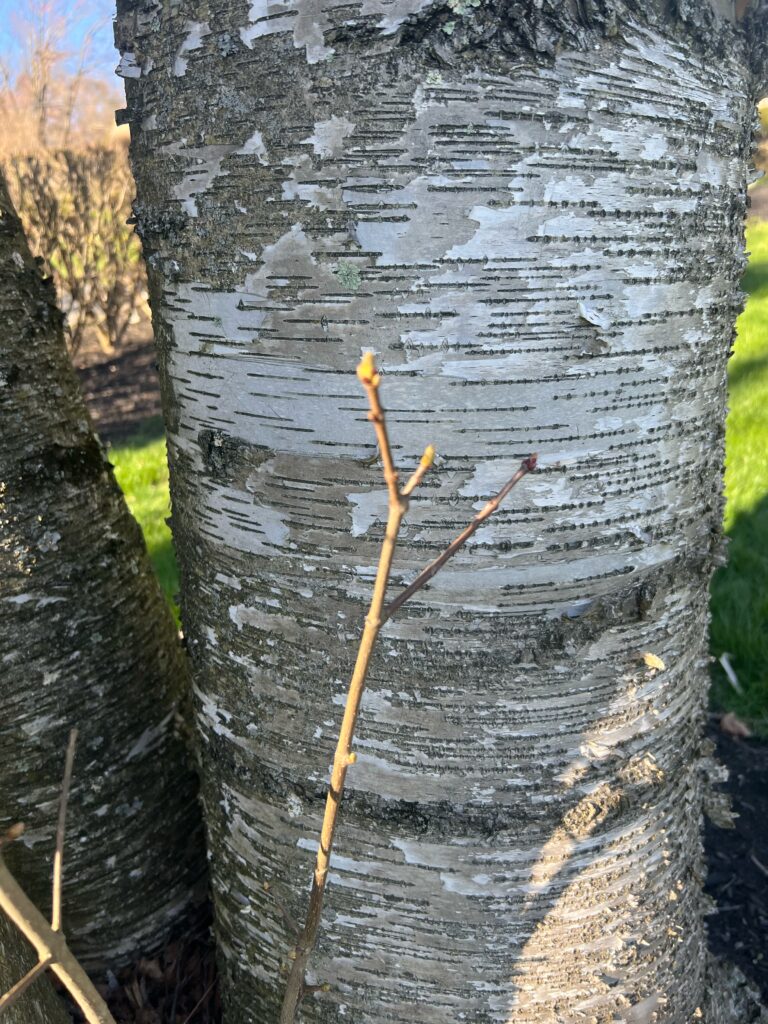
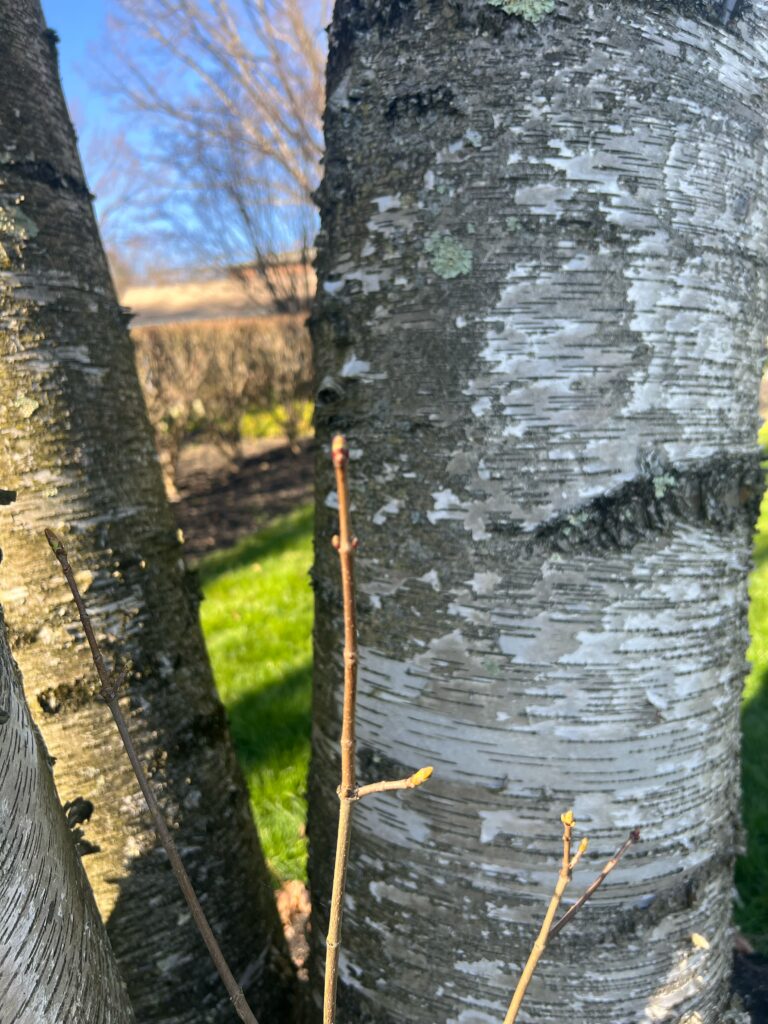
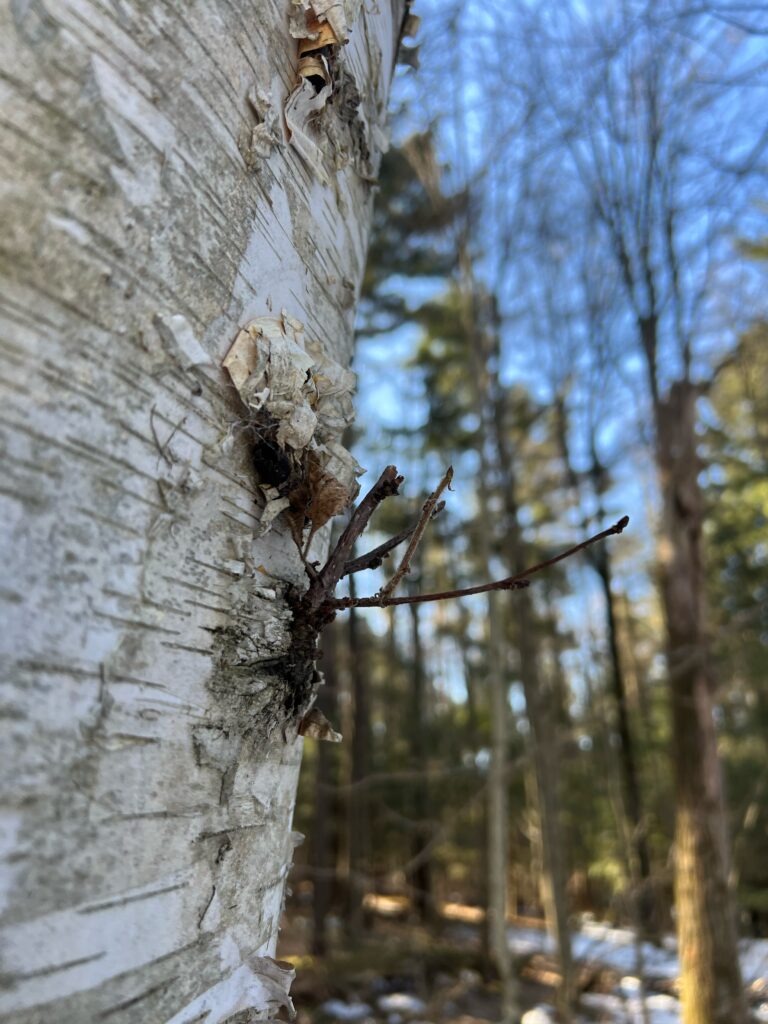
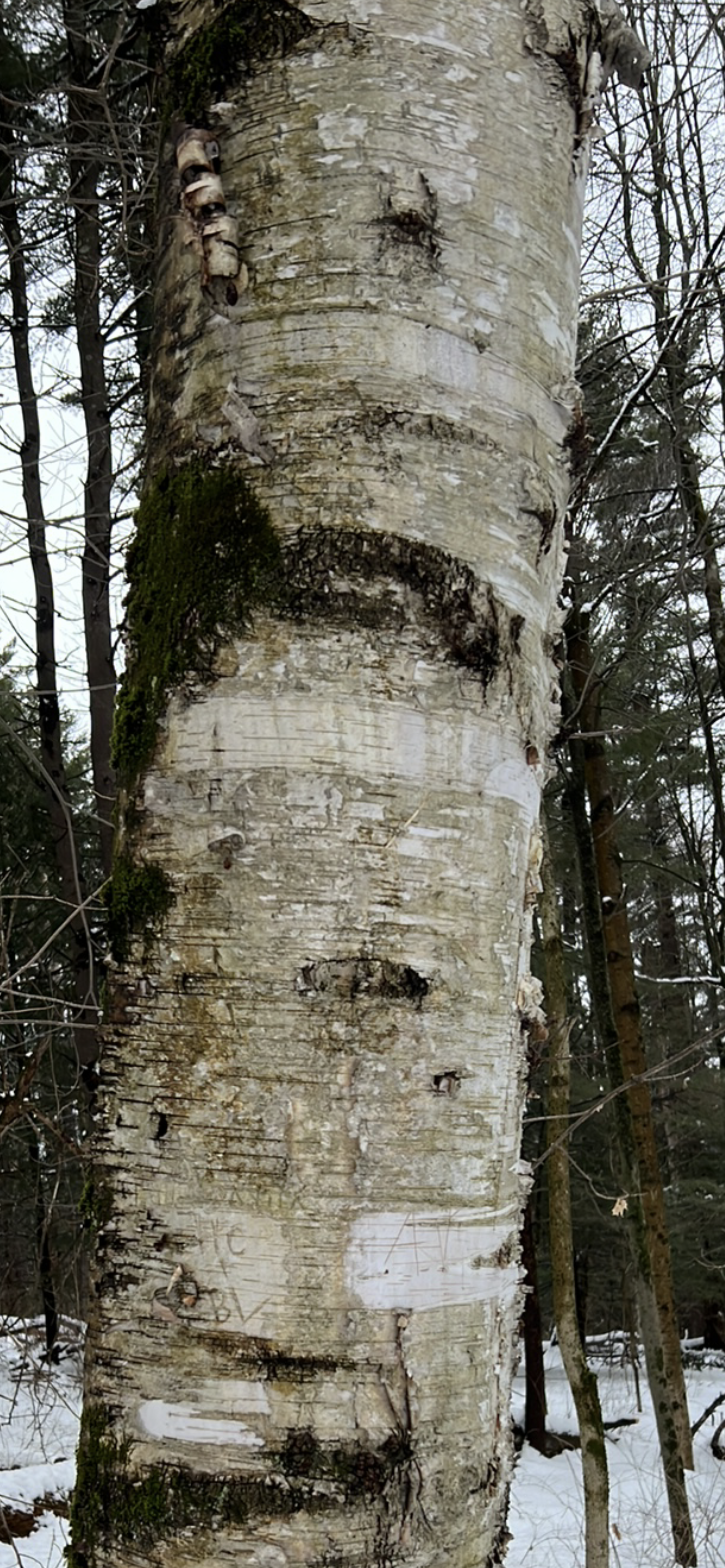
This paper birch I found was getting more sun than the one in Centennial. This tree has started to bud, but has no signs of any flowering just yet. I knew it was a paper birch because of the color of the bark and how the bark was peeling. Also, once I approached the tree I recognized then buds and confirmed it was a paper birch. I will insert below photos of the flowering buds I saw.

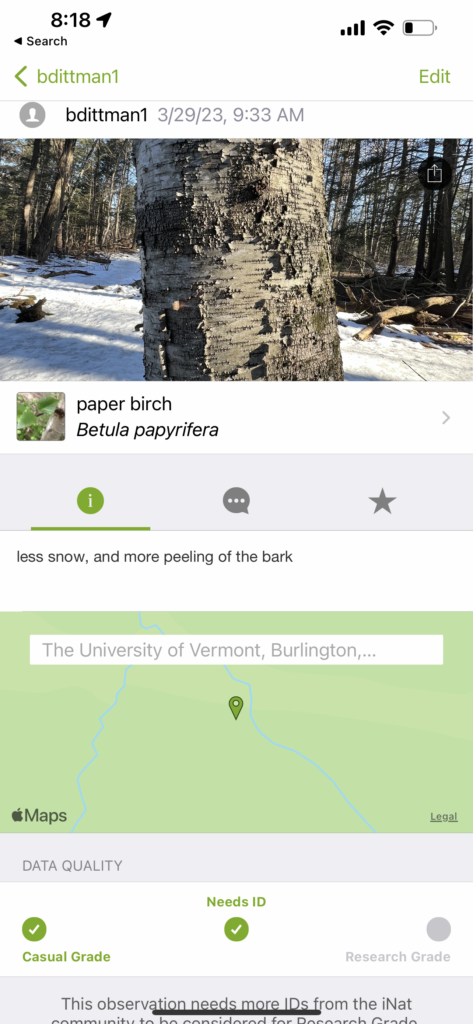
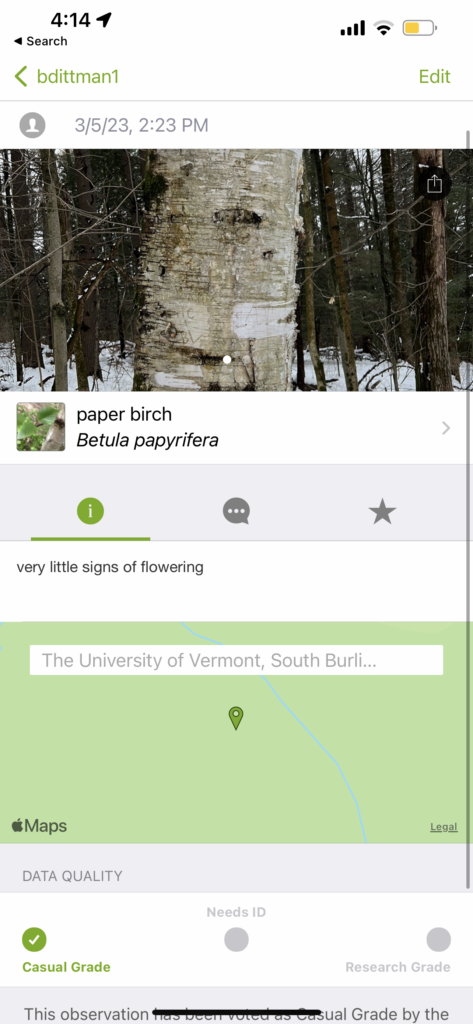
Here was my iNaturalist post. Hopefully, the centennial woods will began to melt so I can return to my old phenology site.

Revisiting My Tree

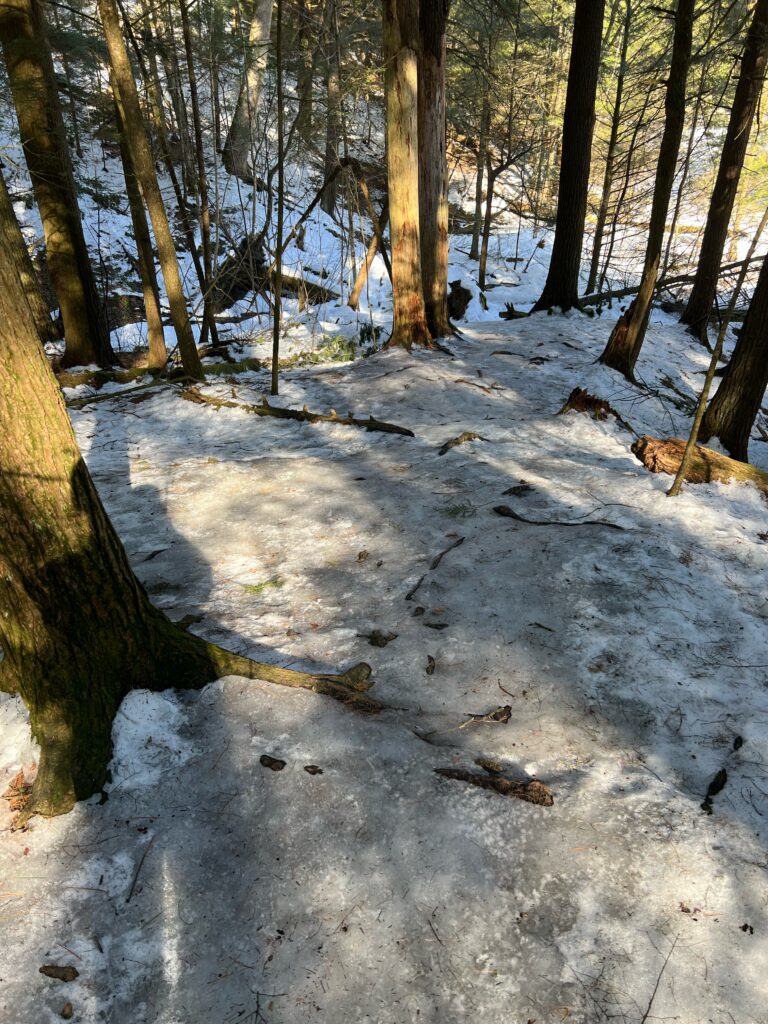
VERY ICY TRAIL

Today I finally got the chance to revisit my trail. Unfortunately, the trail was covered in ice and very hard to walk on, but I reached my spot. My tree is slightly over a mile deep in Centennial Woods and elevated on a hill.

The tree looked to be peeling more than it was before. There are slightly more buds, but not many new ones. The snow that was very high around the tree is now down to just the base of it. Hopefully, by my next visit, there will be more obvious buds and flowering to observe. I think because this area gets less sun, is shaded from other trees, and has a decent amount of snow it is taking longer to bud.

Phenology at Home

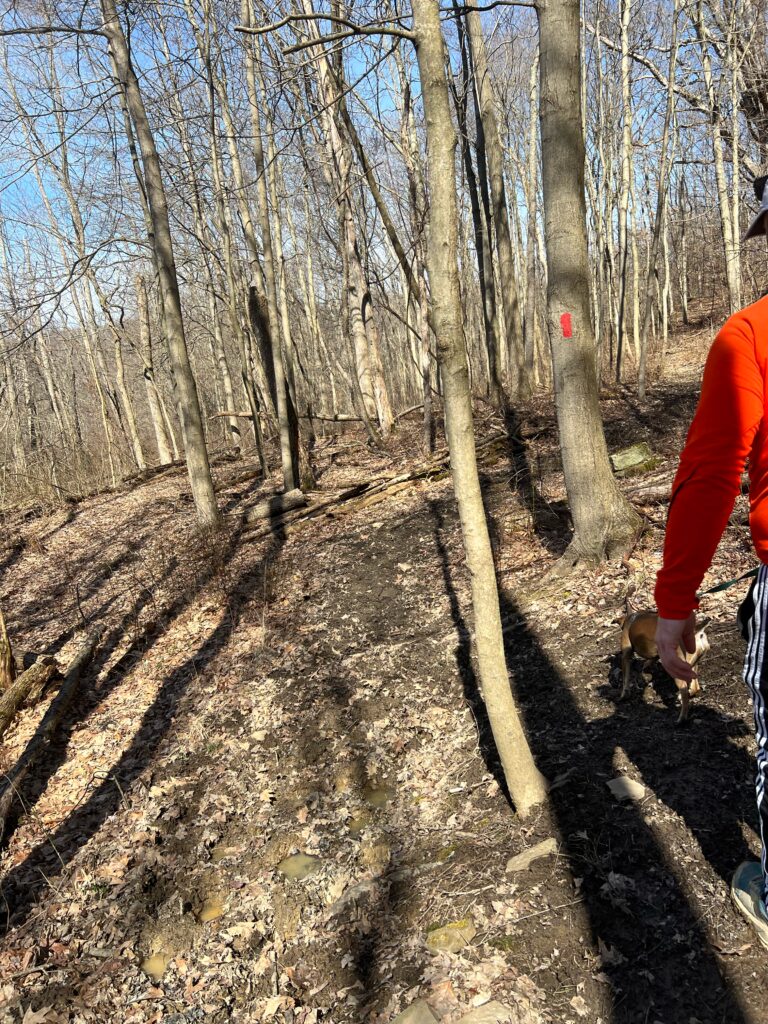
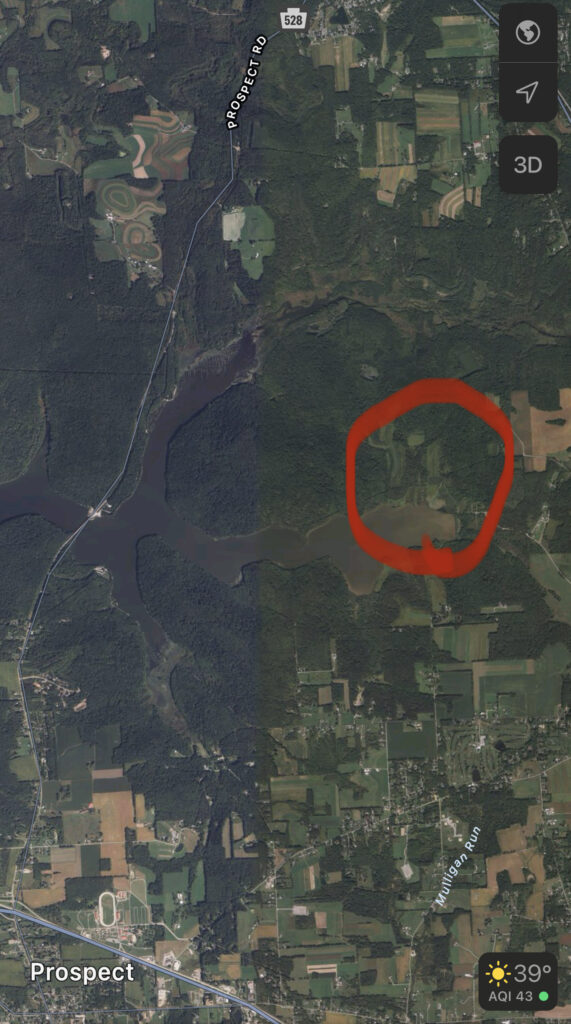
While I was home for spring break, I decided to document the phenology of my favorite state park, Moraine. Moraine State Park is located in Western PA, north of Pittsburgh. I walked my dog on a horse path in the woods, near Lake Arthur. This trail went along some grasses and then looped back into the woods. On this day, it was sunny and around 45 degrees. There were some small areas of melting snow from the previous days, but nothing compared to the snow in Vermont. I loved looking at the different trees and watching out for birds as I walked.

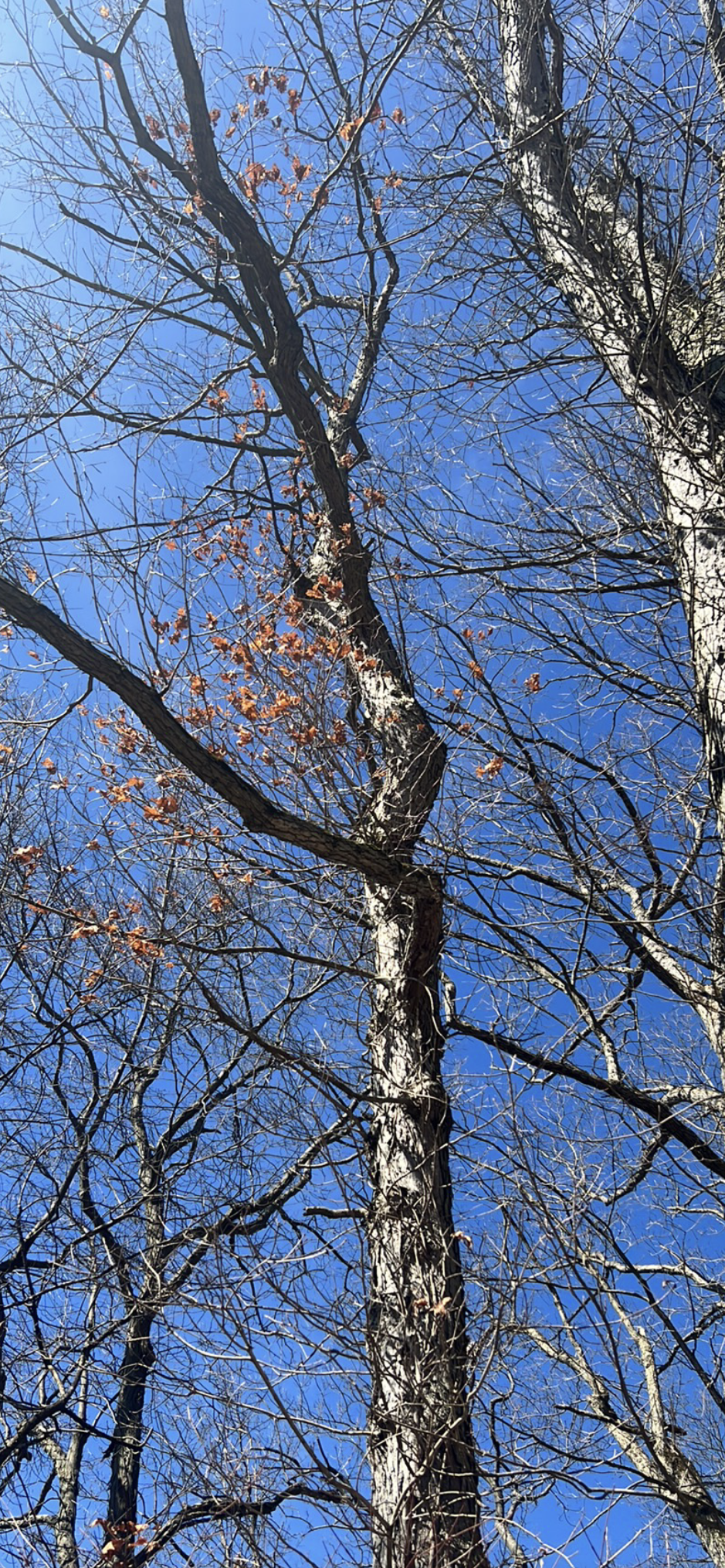
The ground was quite muddy from the snow that melted from the previous days and the horses tearing up the trails. Some trees were just beginning to bud, but some surprisingly still had dead leaves hanging on them. This year PA barely had any snowfall, which might explain why some trees didn’t lose their leaves as quickly. I identified a red oak tree that still had some dried-up leaves. Many of the trees seemed older, with some snags in the area, leading me to believe this is an older forest.

red oak tree

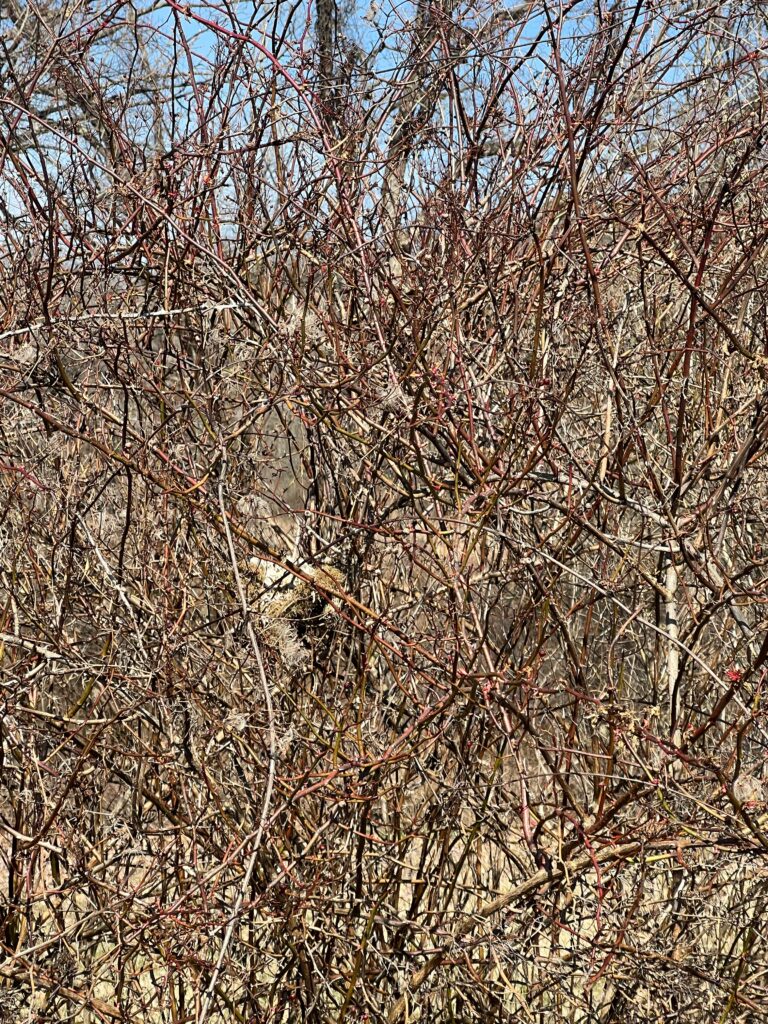
Looking out for birds lead me to notice some things I usually overlook. I recorded 3 very large birds flying overhead of the lake. I couldn’t tell if these birds were Osprey or Eagles considering how high above us they were. Both of these birds live at Moraine, so either is possible. I also found a bird’s nest buried in a tree in the grasslands by the trail. I thought this nest was interesting because it had what looked to be white feathers stuffed into the nest. I couldn’t find the bird that this nest belonged to, but I snapped a photo of the nest.

Nest hidden in the tree
Birds flying over Moraine

Winter Trees

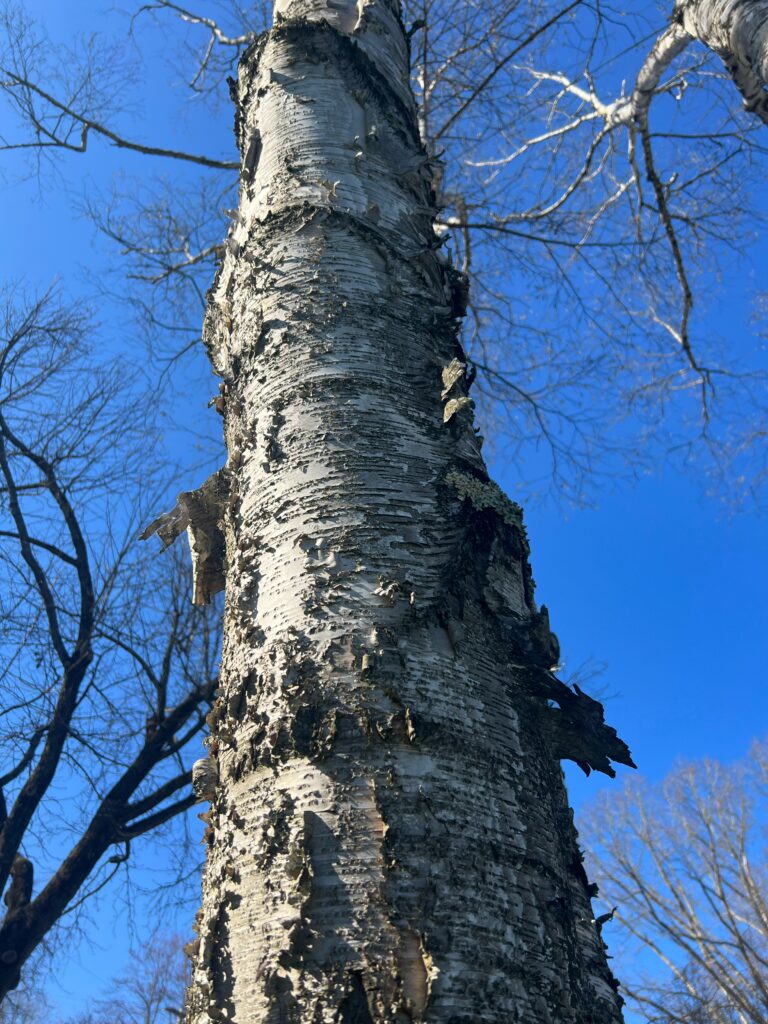
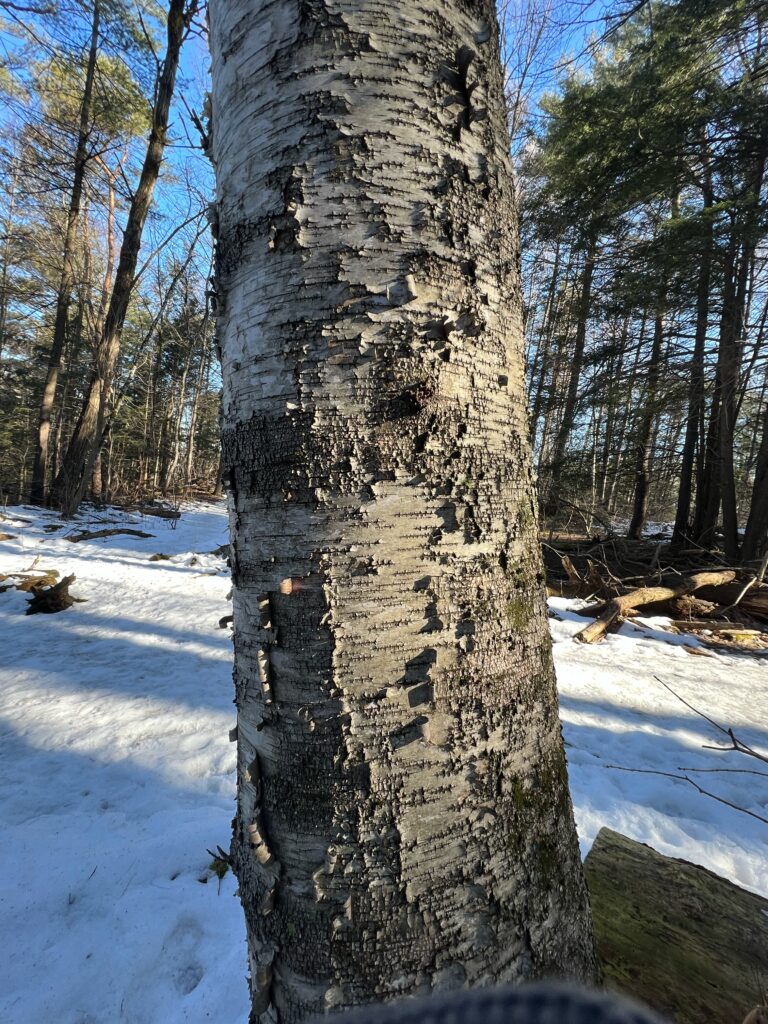
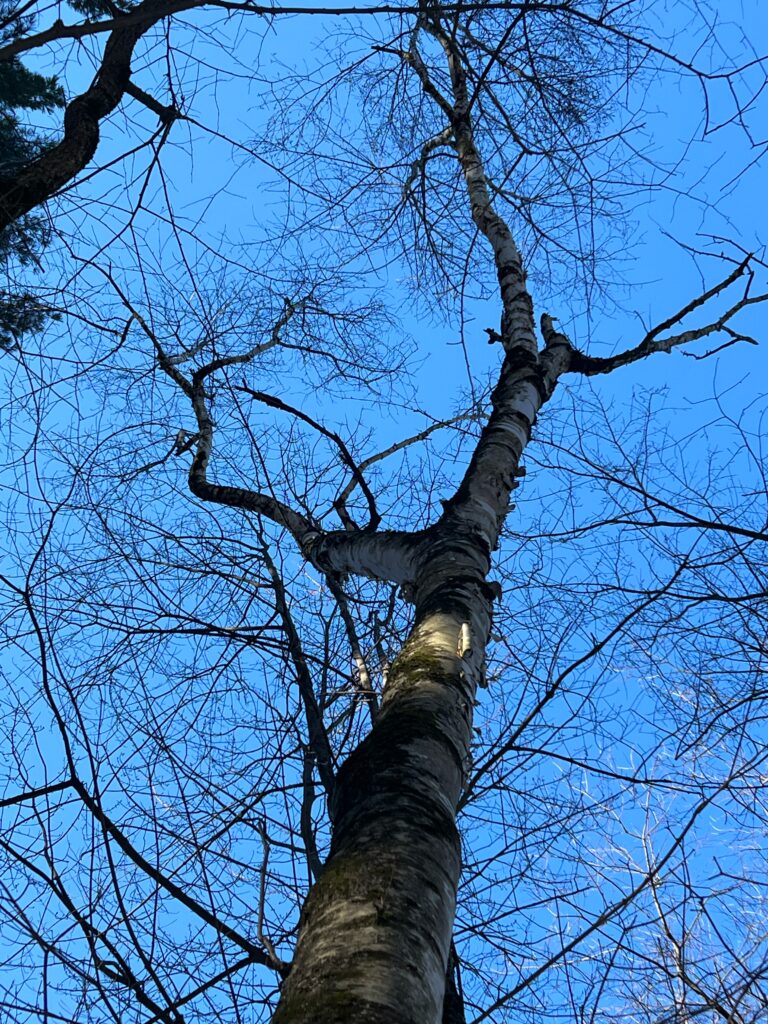
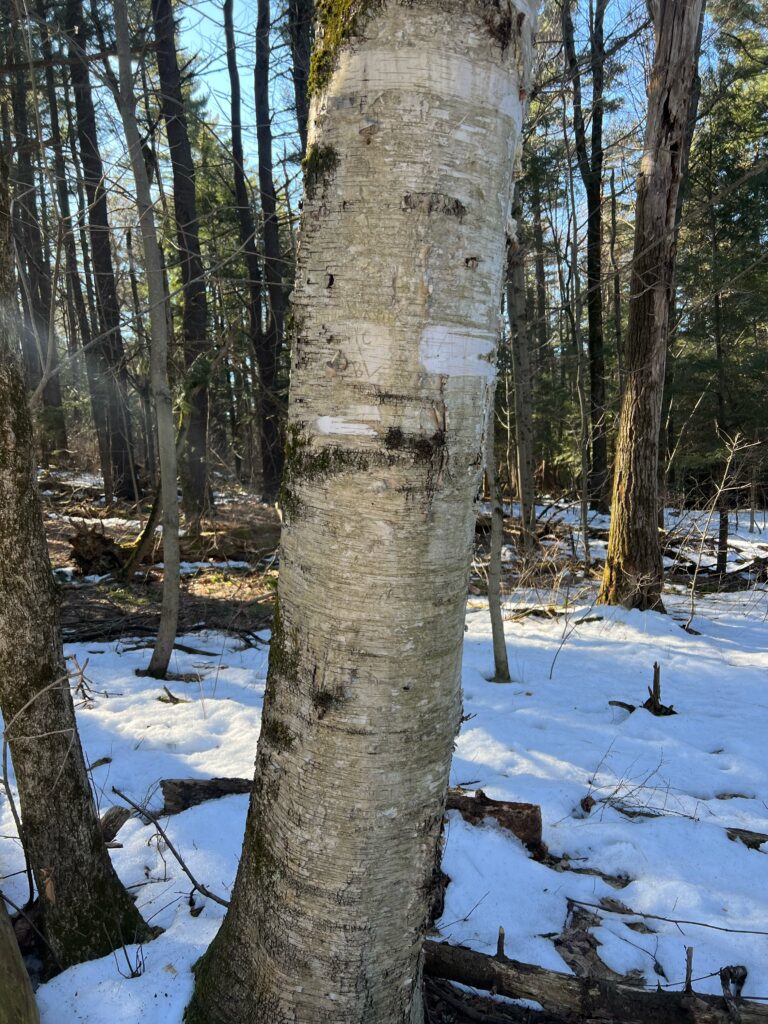
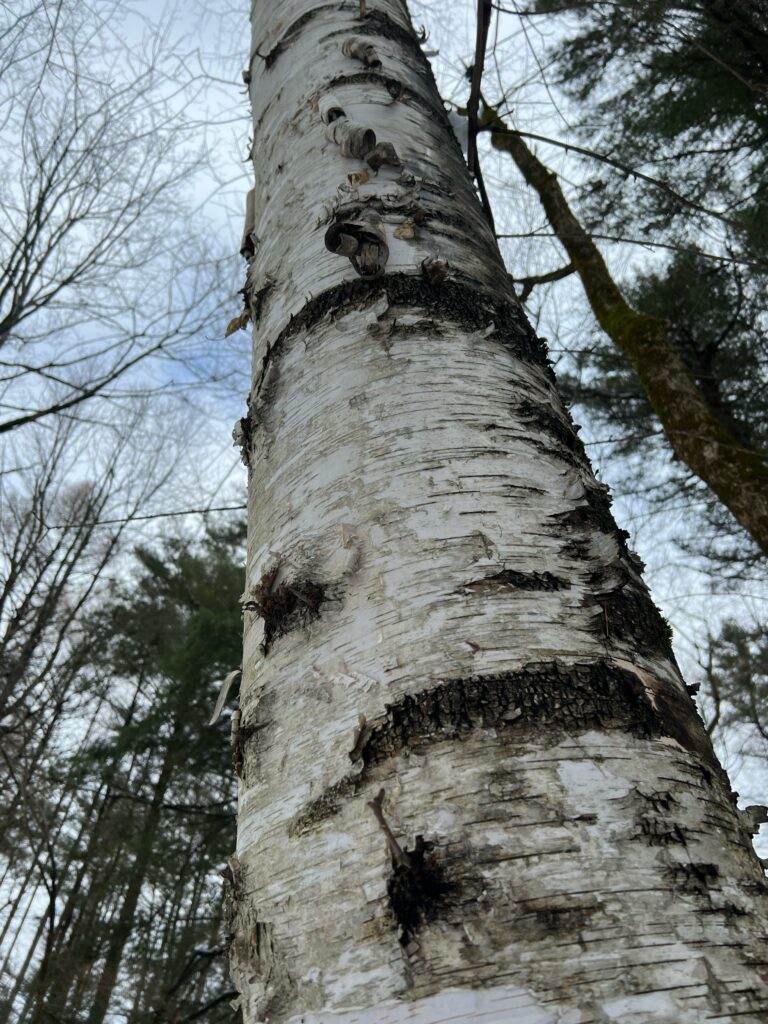
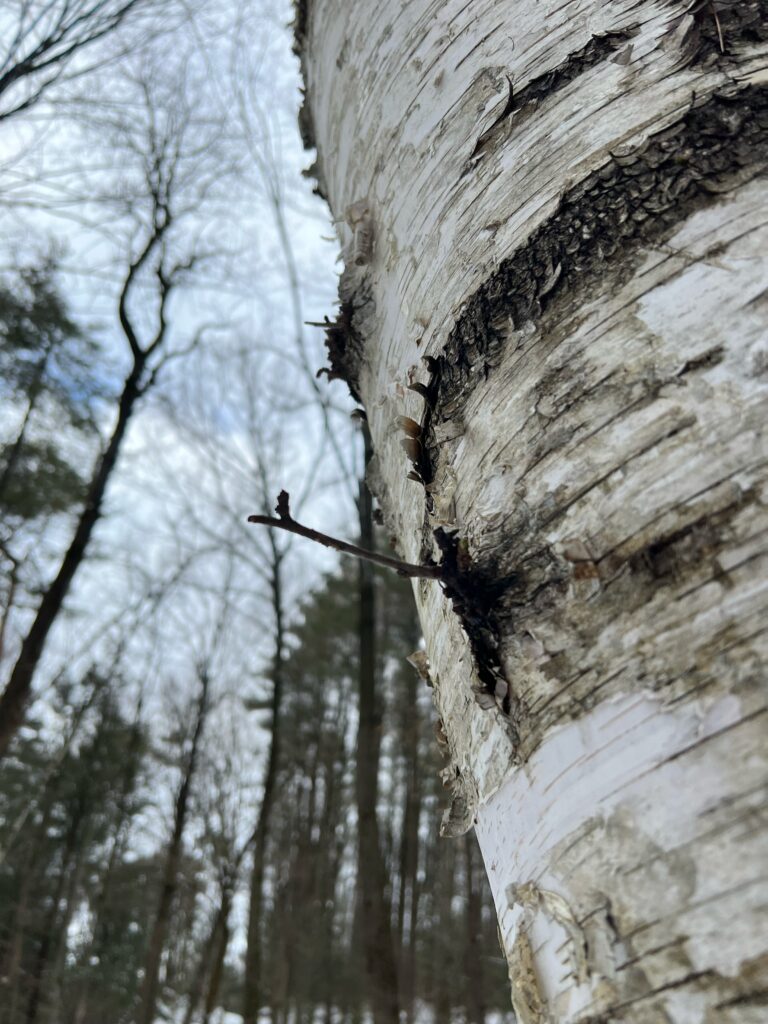
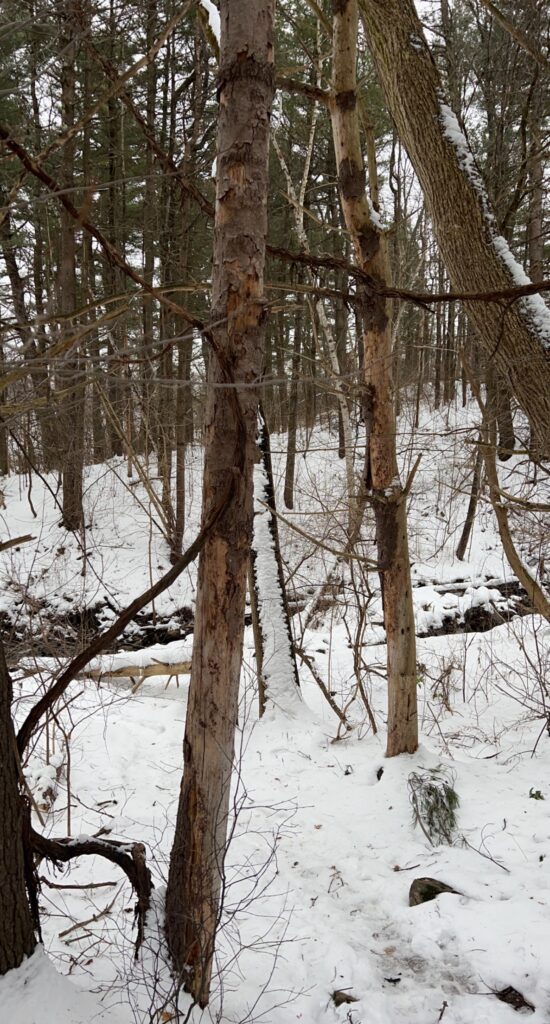
Today I went deeper into Centennial woods looking at all the different tree species. I found a Paper Birch tree and decided to document it because it is one of the easiest trees for me to identify.

This tree happened to have some short branches low to the ground that I could see, but they didn’t have any signs of flowers or buds yet. I knew this was a paper birch tree because it had the distinctive white bark that it is known for. The bark was also peeling bark in layers that indicated it was a birch tree. This particular tree had many black spots on it as well. I knew it wasn’t a yellow or grey birch because of how bright white the color was and how big the pieces of bark that were peeling off of it were.

Wildlife in Centennial

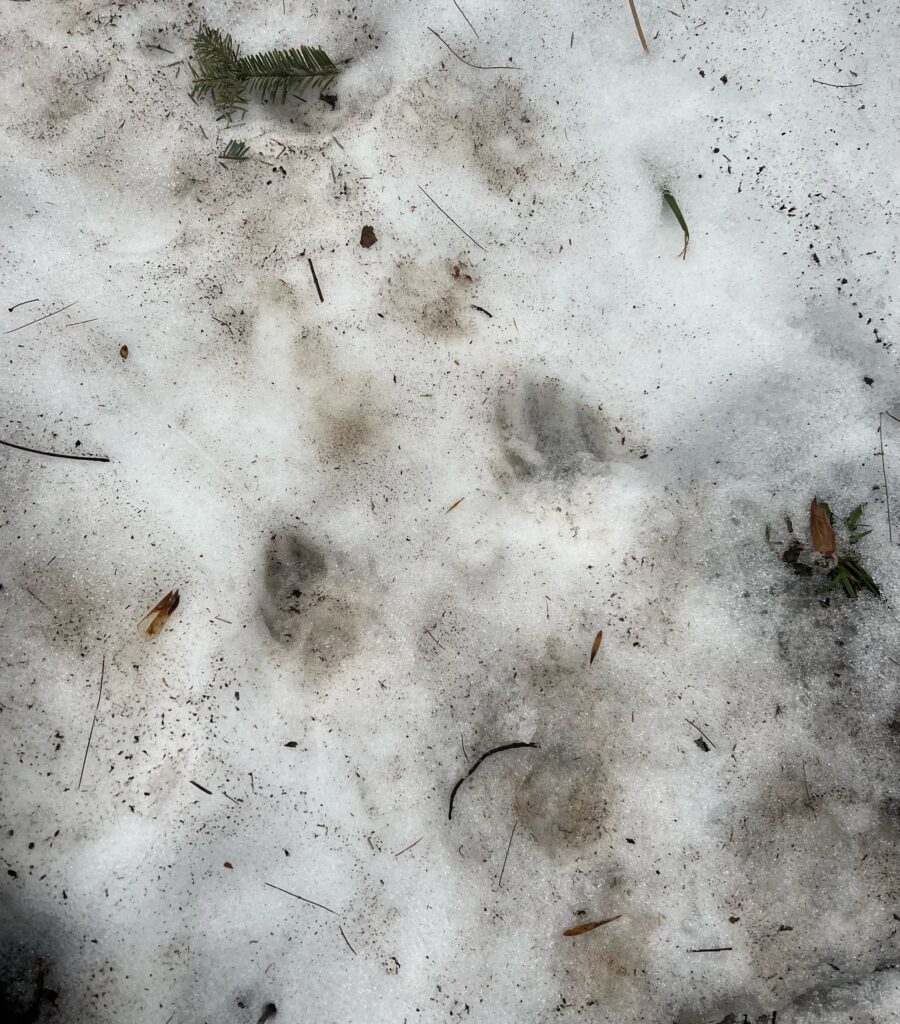
This week, I returned to the same phenology spot I visited in my last post, but with a different goal. As I was walking, I was scouting the trail for any animals or animal signs, like tracks or droppings. Unfortunately, as we’ve had warmer weather recently, much of the snow has melted so finding tracks was quite difficult. The only good print I could find was a domestic dog track (found right off of the main trail), so I kept searching.

dog tracks

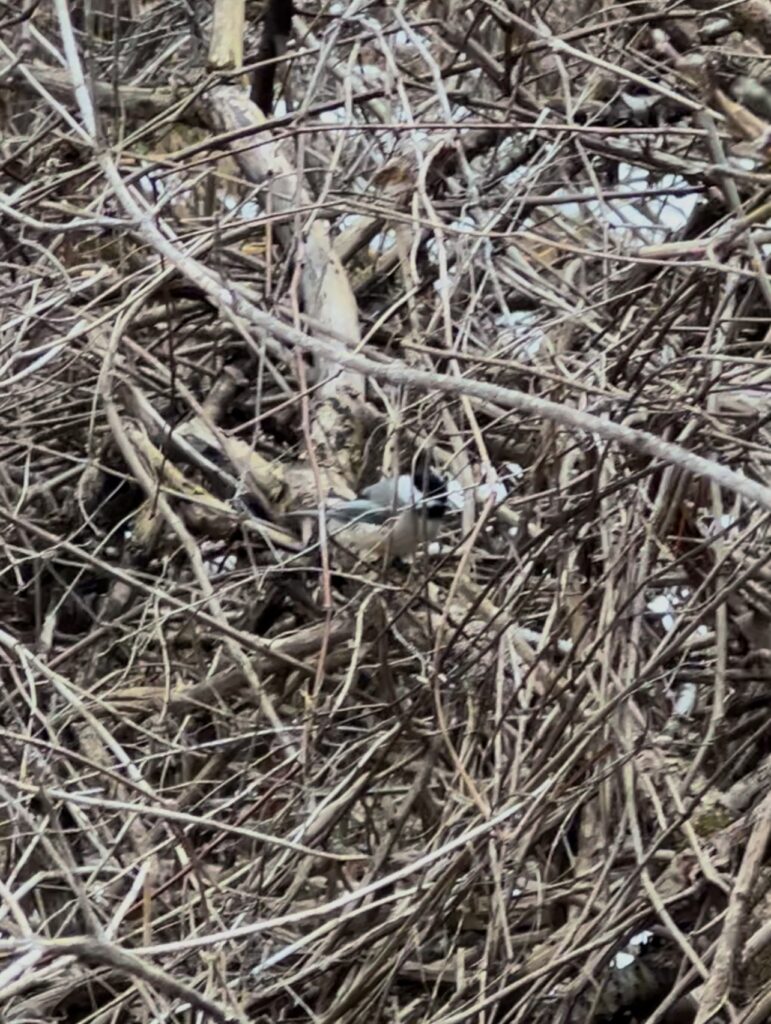
As I kept walking, I started to hear birds chirping nearby. I found an area with lots of fallen trees and sticks and noticed motion in this area. I saw a small bird, which I have now determined to be a black-capped chickadee, jumping from branch to branch. At the time, I thought this bird looked familiar, but I did not know its name. Once I returned back to my dorm I looked up common bird species in Vermont and this was the first one to come up; I assume this chickadee must be very common!

Black-capped chickadee hidden behind branches

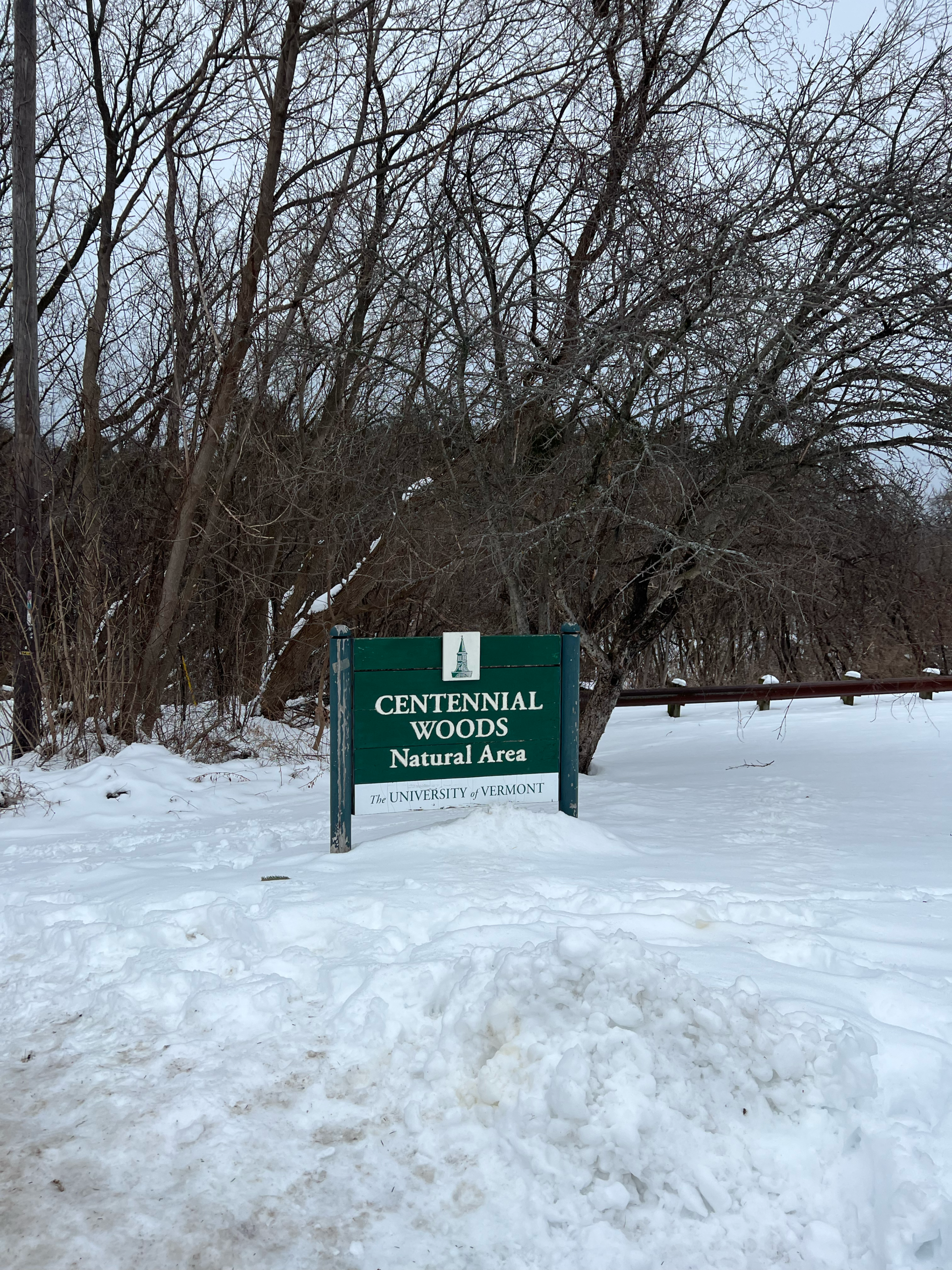
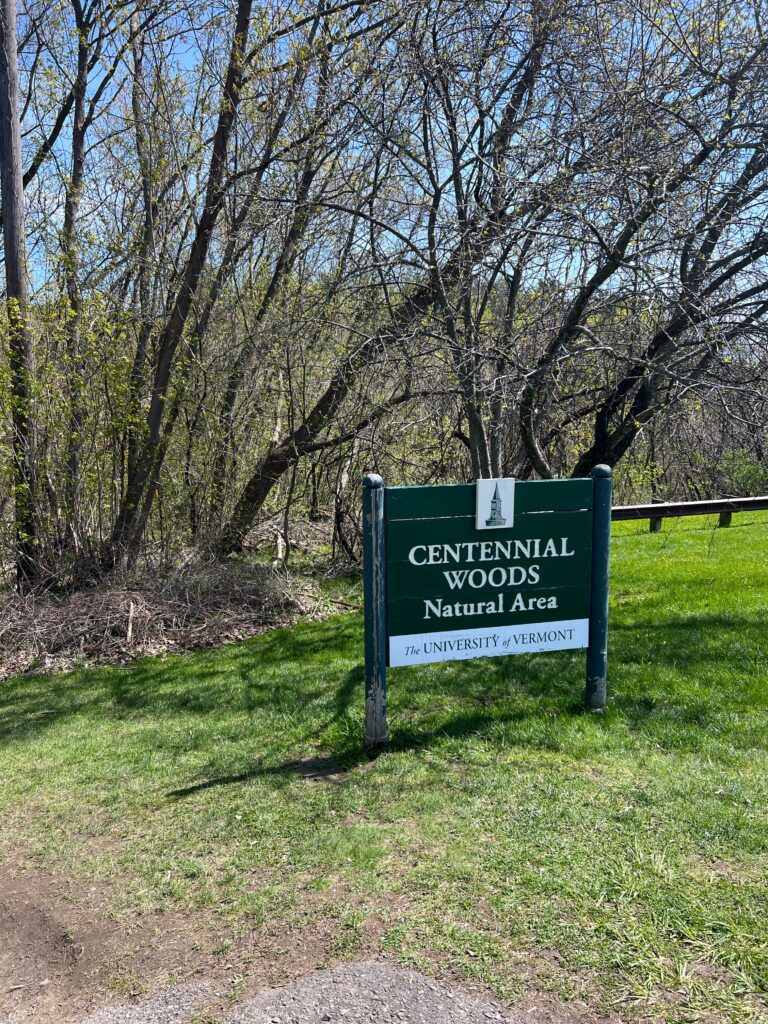
Spring Phenology Spot- Centennial Woods

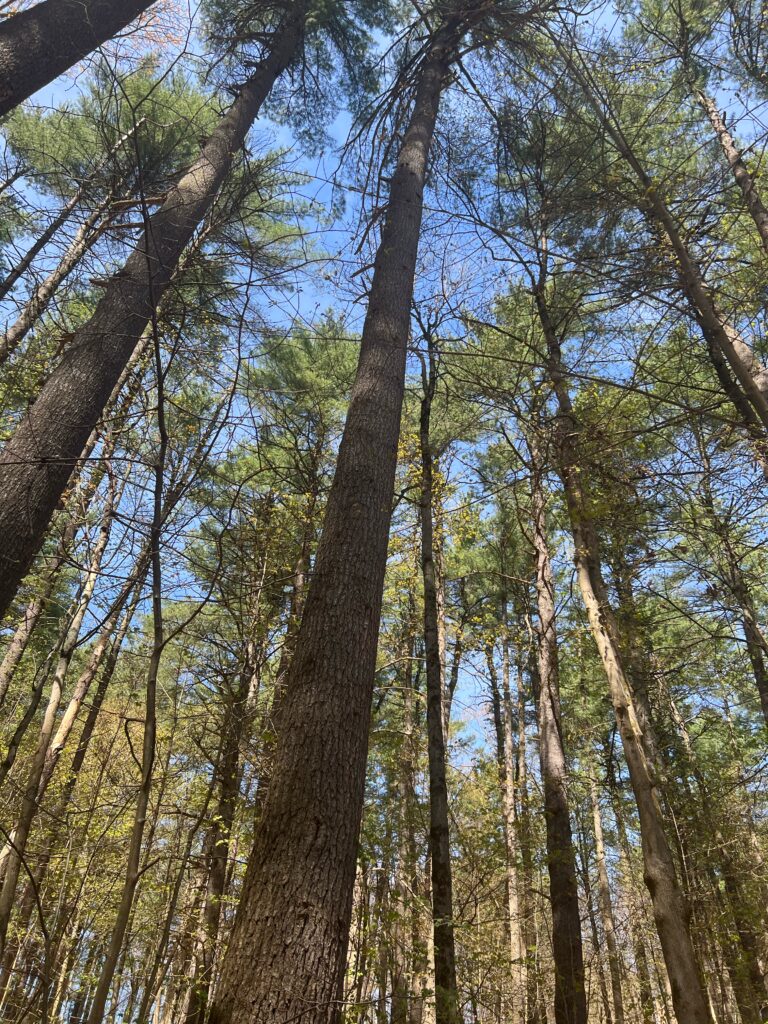
For this upcoming semester, I decided to change my phenology spot. Although Salmon Hole was quiet interesting, I just couldn’t connect with it. I didn’t feel like I was in nature there, as I could still see buildings all around me. I had trouble traveling to this place and would only spent a few minutes there when I went. Centennial woods, however, has everything I was looking for. I can escape there between classes; it is easily accessible. I can walk for only a few minutes and be in the middle of a forest, despite being so close to campus. I love the variety of trees and plants, plus the little streams you can find as you walk. With all this said, I’m very excited to explore my new phenology spot!

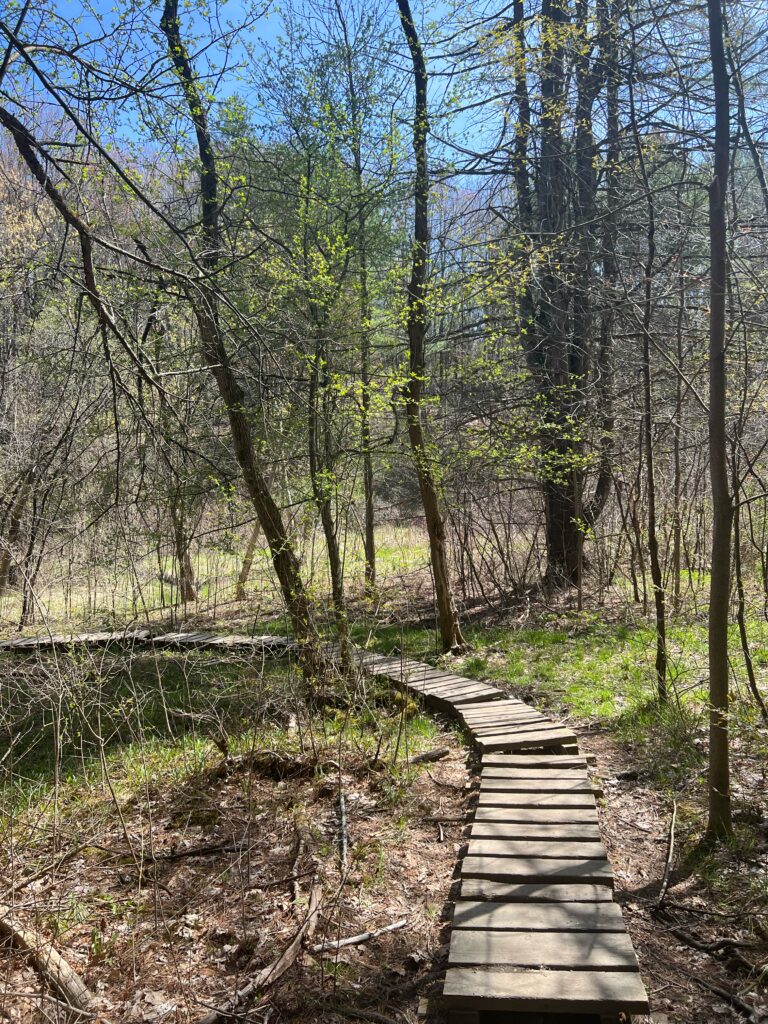
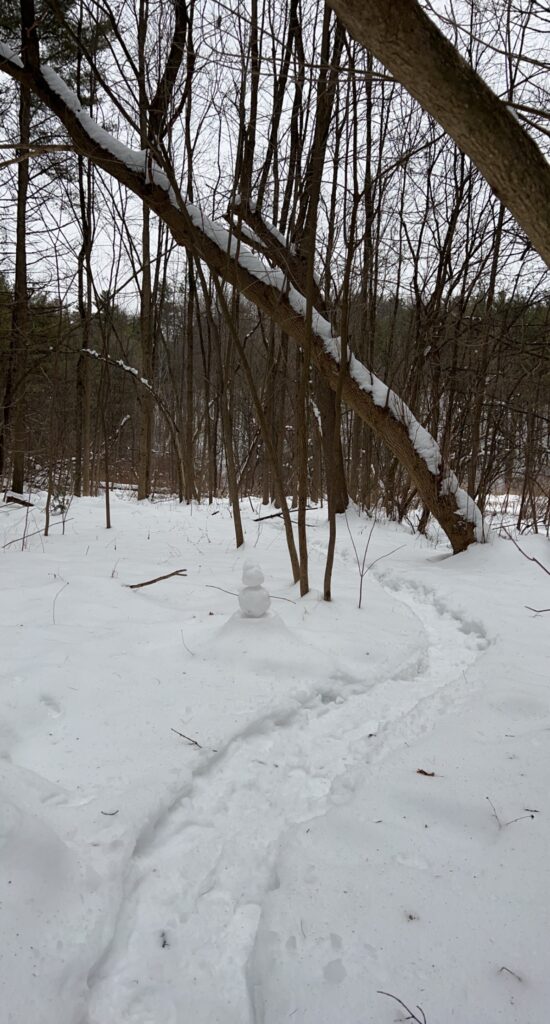
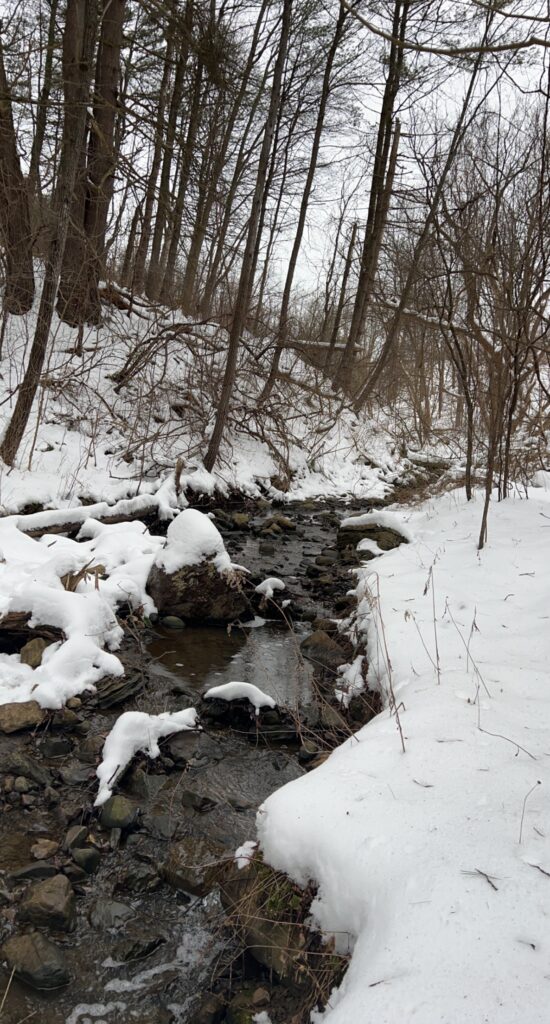
I unfortunately did not see any specific animal tracks near my spot. The path leading to the creek was packed in snow from others walking on it (there was even a small snowman built). The water was running over the rocks at a steady pace, despite the piles of snow next to it. There were no leaves in site, except some evergreen needles. Overall the woods seemed pretty calm with no new snow falling or animals in site

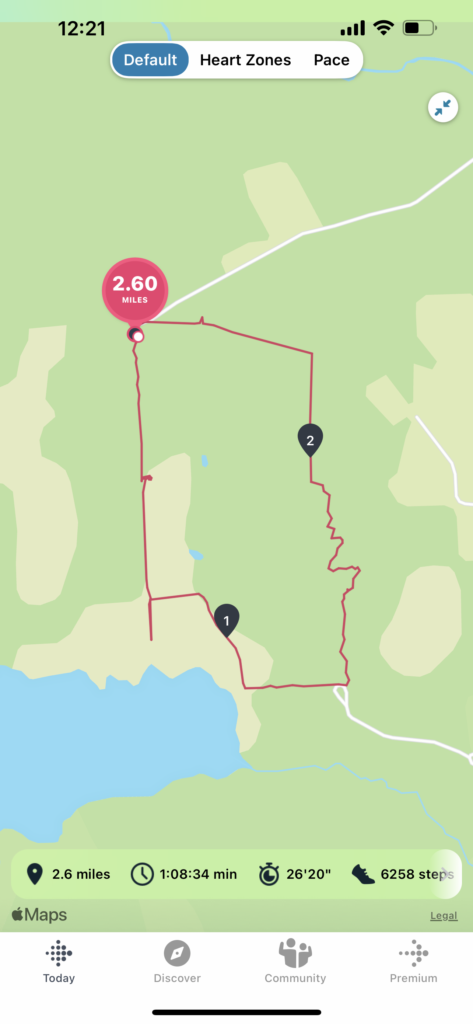
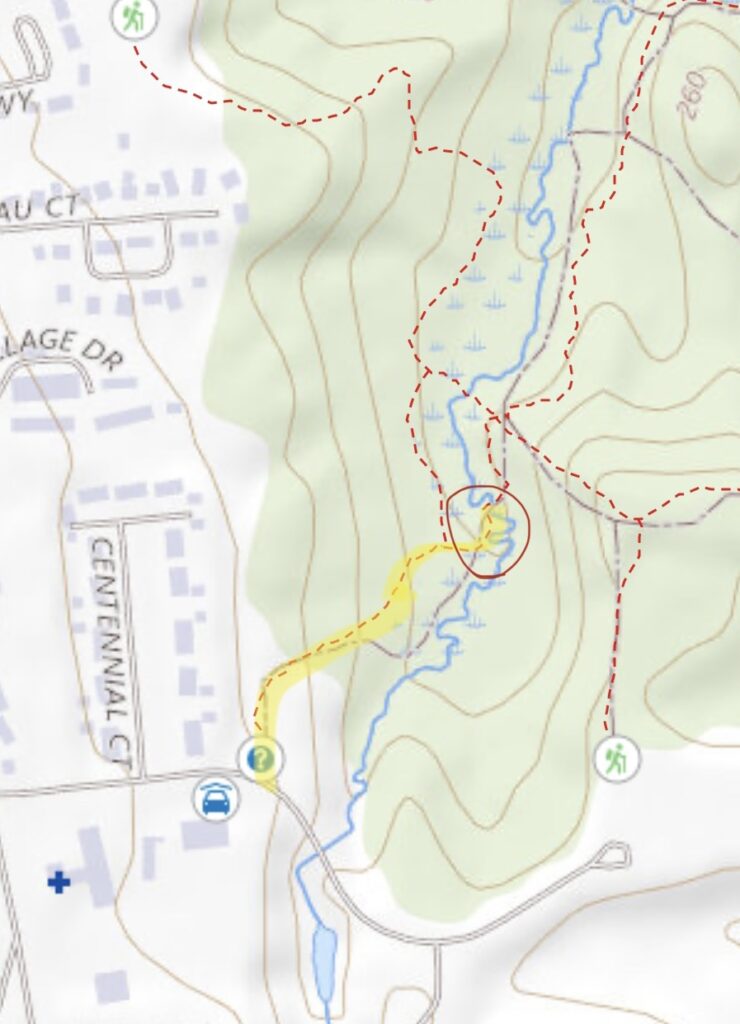
To get to this spot, enter the woods through the catamount parking lot (behind the doubletree). Turn onto the main path and keep walking until the path splits into two. At this split, turn right and go towards the creek.

map of my phenology spot

Last post of the year

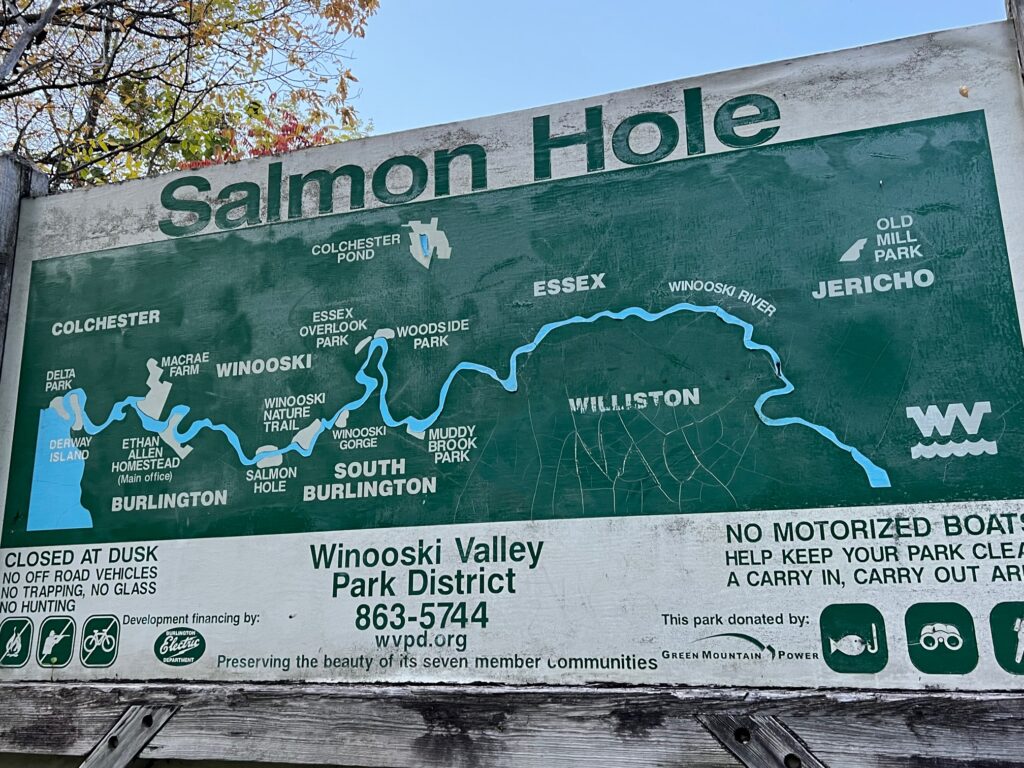
Looking back on my time at Salmon hole, I feel like I’ve learned a lot. Being able to escape off of campus and spend some time outside has been extremely rewarding. Salmon hole is located right outside of Winooski, so I was also able to be able to see another section of Vermont that isn’t Burlington. Although sometimes traveling to this location was rough, it was worth it to be able to get out of the “bubble” that campus is and explore the surrounding area. I wish I had more time and easier access to explore places like this so I can truly understand all of the aspects that go into each specific ecosystem. Beyond how the leaves change and fall, but also the species that are there that I might’ve missed in the 15 minutes I visit the place. Or how the snow falls and runs into the lake that I haven’t been able to observe. There are so many complex and unique attributes to an ecosystem that you could spend weeks visiting and still not understand fully, but that’s also what make them so special. Overall, I’m thankful that Salmon Hole gave me some insight into its ecosystem, and that I now know a place I can go explore whenever I have the opportunity.
Wintertime changes

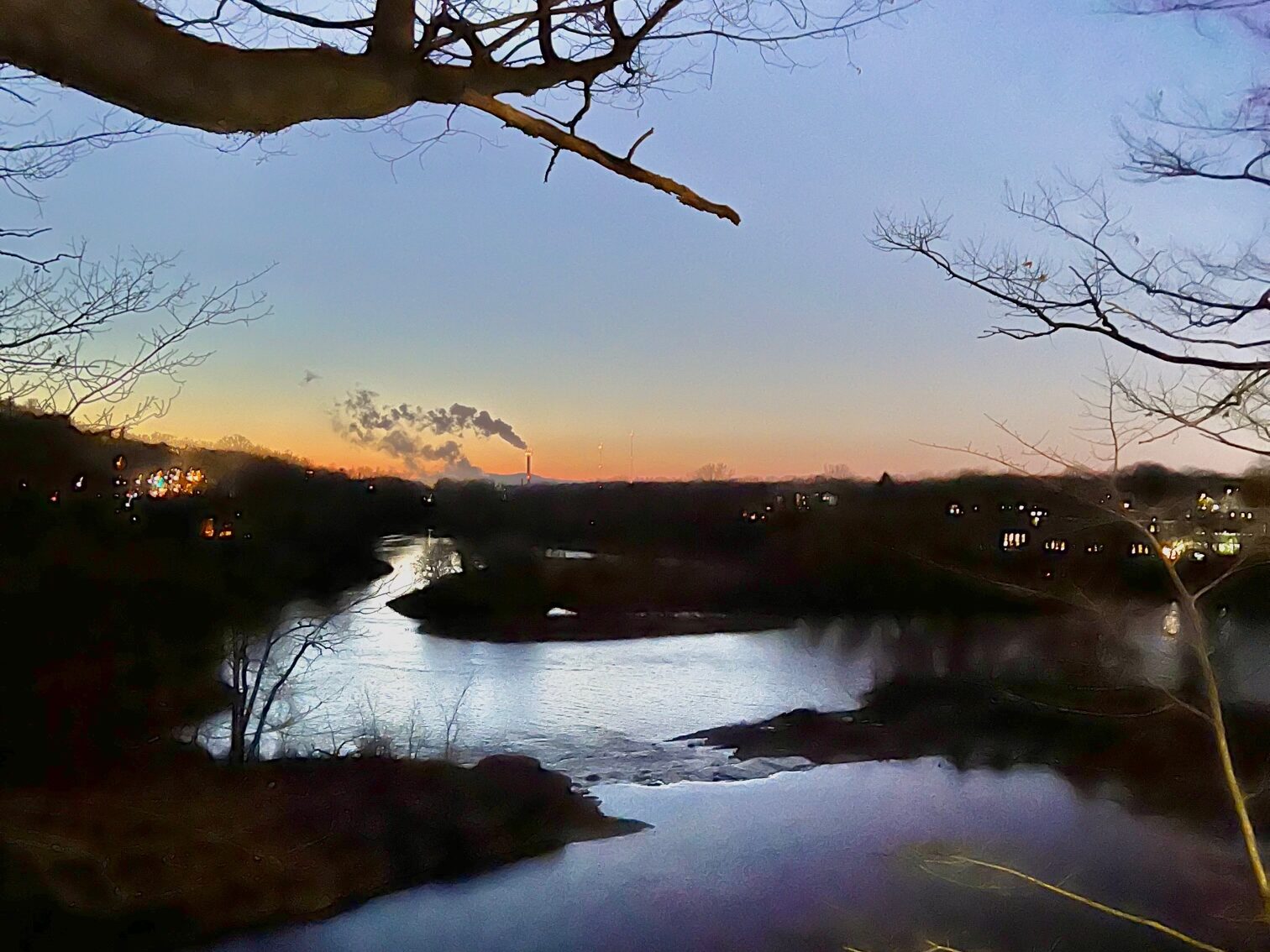
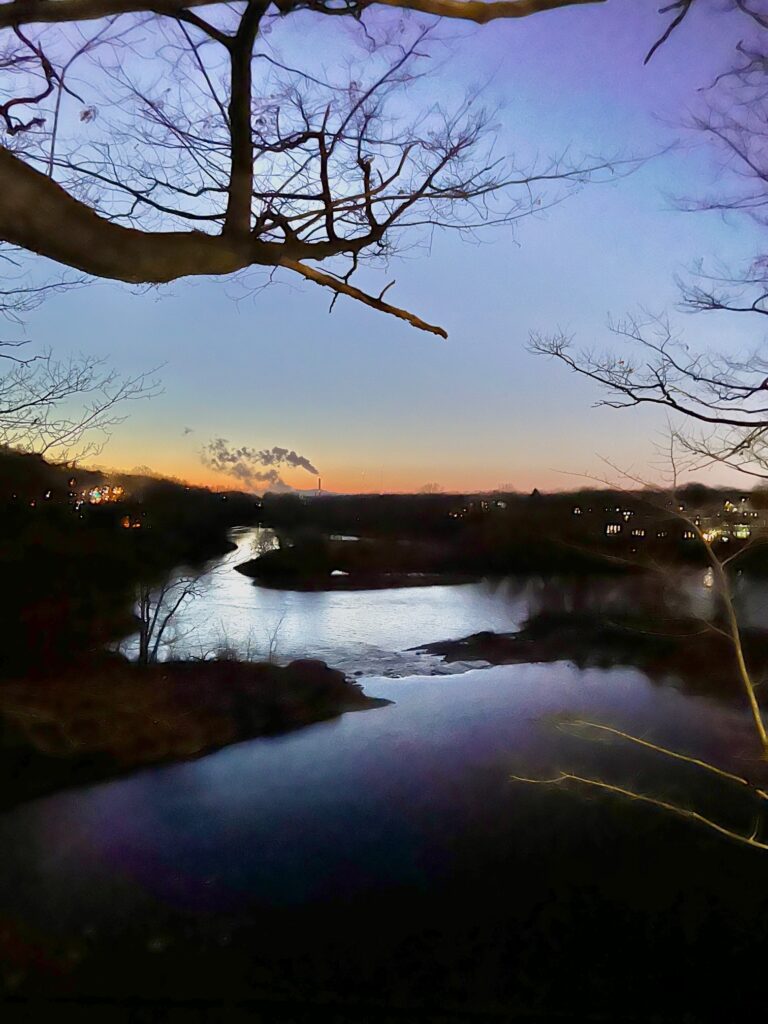
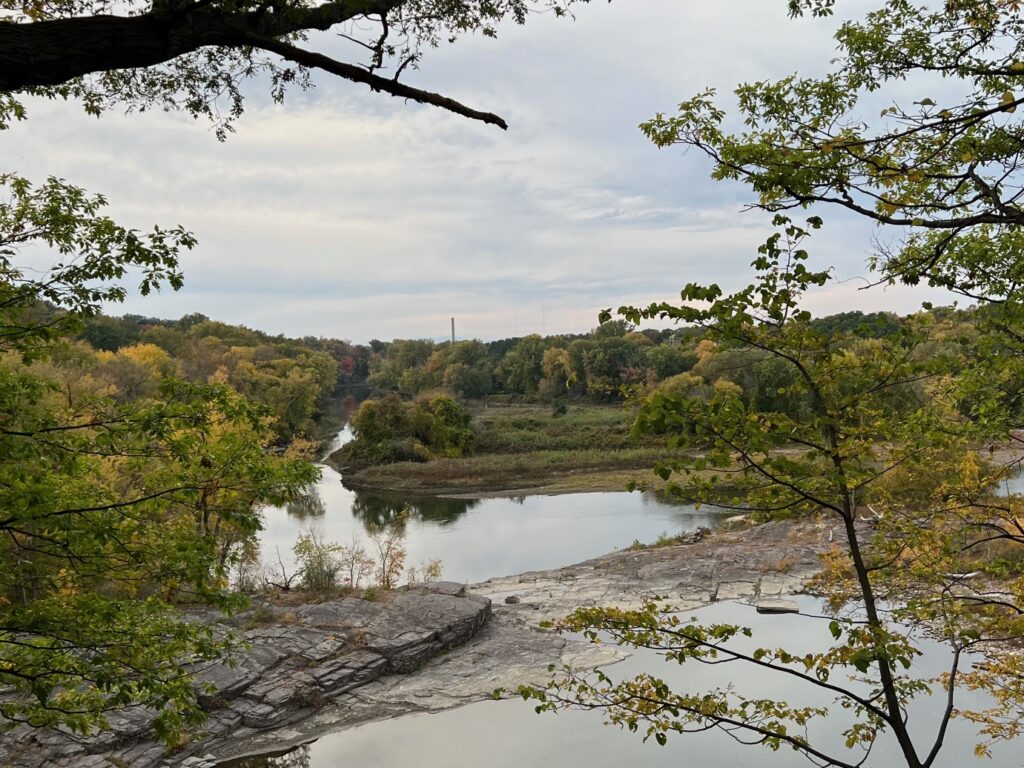
I went back to salmon hole this week just in time to watch the sunset. Going to this same place overtime I noticed many changes to the area. From the foliage, to the water level, to the overall feeling of the place.

Salmon Hole on December 9th, 5:00pm

As you can see, the leaves have almost all fallen off of the trees by now, except for the deciduous trees, like the eastern white pines, which will remain to have their needles all year long. Other species, like the oak and maple trees, all have but a few single leaves barely hanging on.

The water has not frozen over just yet, but still rushed strongly. The water level has raised higher than my previous visits, covering up more rocks than before. There is no one out fishing or enjoying the amazing view of the sunset over the water, but I can attribute that to the almost 20 degree weather.

October: more leaves, more exposed rocks, less water

December: more water, less leaves, less exposed rocks

Skip to toolbar