
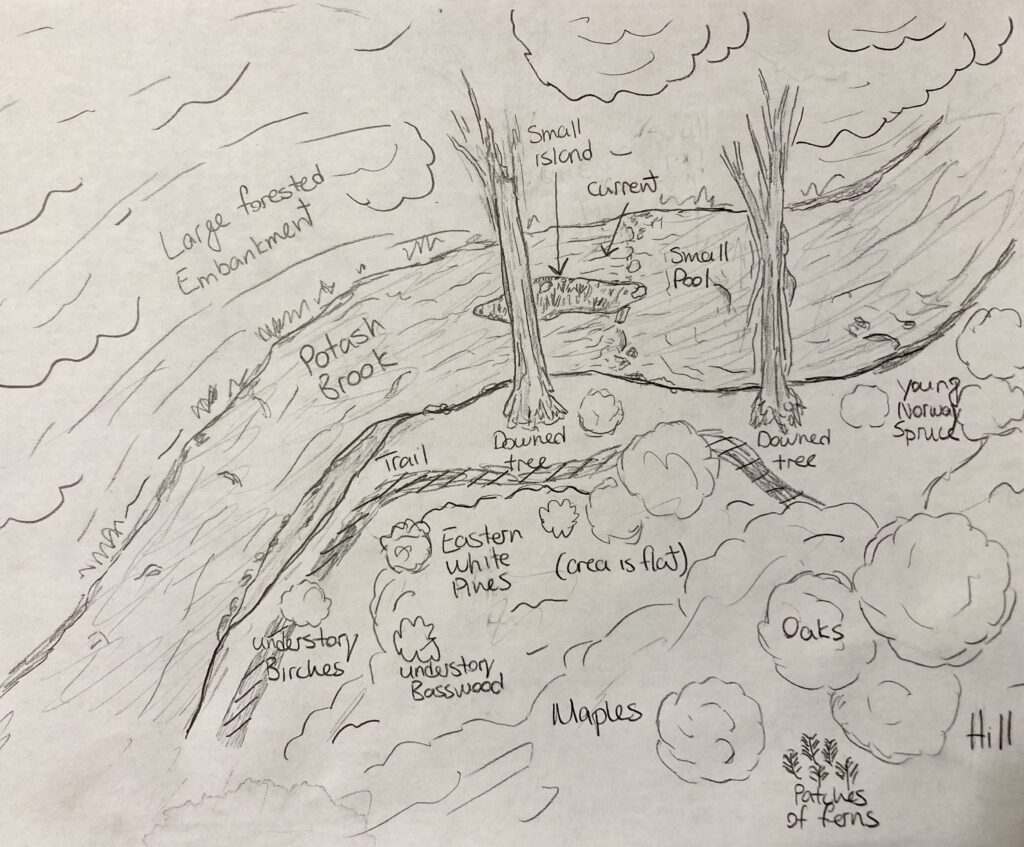
While sitting on a fallen tree that rests along the edge of Potash Brook, I attempted to exclusively focus on the world immediately around me and made an effort to observe its natural systems as thoroughly as I could. Initially, the most predominant feature was the unyielding presence of the brook. The noise of the water flowing downstream was very noticeable for the first few minutes before it eventually faded into the background of my perceiving mind as I shifted my attention into the forest. I could hear a large flock of ravens circling overhead above the canopy and observed a few chipmunks and squirrels scurrying through the freshly fallen leaves underneath. The air was cold yet comfortable and I felt a few scattered drops of rain hit my jacket which reminded me of the downpours we had gotten throughout the days prior. The stream was resultantly swollen and the ground was muddy. Looking down, I noticed the mud on the edge of my shoes and saw an earthworm wriggling into the dirt. When I picked my head back up, a gust of wind rolled through and sent a collection of leaves drifting down towards the ground. A few landed in the stream and the current subsequently carried them away at a rate that seemed especially fast. The branches of the trees in the understory were covered in bunches of brown Eastern White Pine needles that has gotten caught on their way down.
Relating to the site’s phenology, the effects of autumn were increasingly noticeable. As compared to the last time I was there, the canopy was made up of a lot less green and primarily took the form of vibrant yellows or bare branches. There were a few immature trees in the understory that managed to remain mostly green, but they were hard to come by. The ground was covered in a lot more fallen leaves, which was quite beautiful as most of them still held their color, but it also made following the trail unexpectedly difficult. The interspersed patches of ferns took on a darker, less vibrant, shade of green and the tips of their fronds were beginning to curl. I also notices some nip twigs scattered across the forest floor, which might be a sign of increased porcupine activity. The weather was also indicative of fall, as it was a brisk 48 degrees with some interspersed glimpses of sunlight making their way down through the canopy.