

Introduction
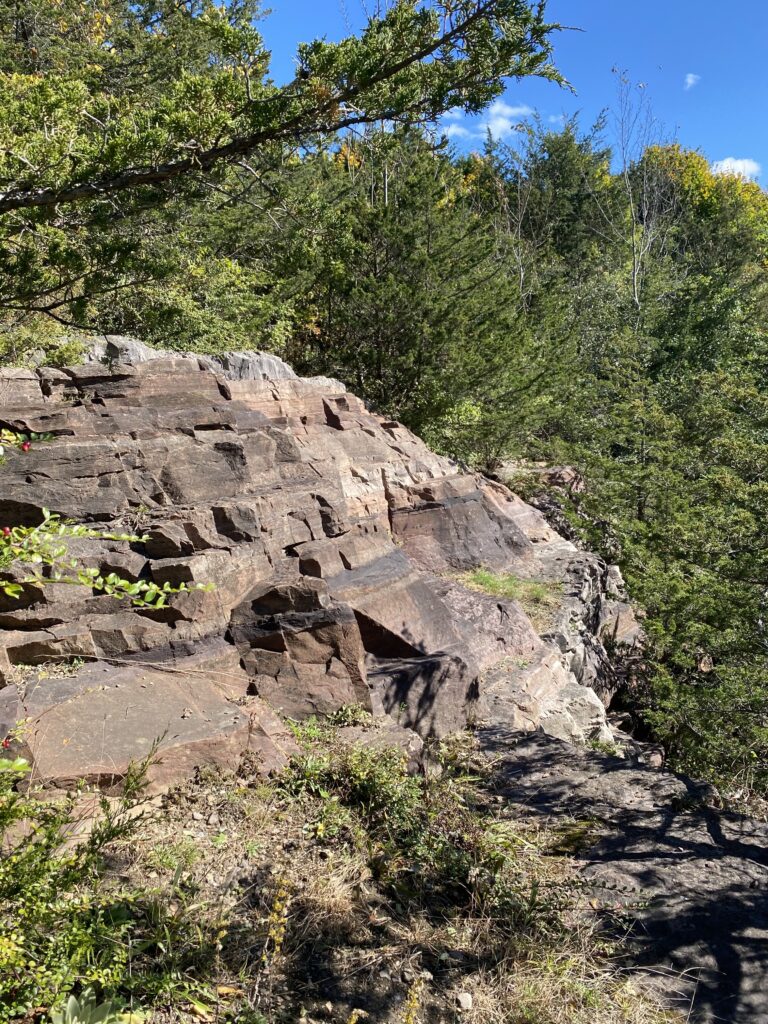
Redstone Quarry, located in South Burlington, Vermont, is a fascinating geological site and natural area known for its striking rock formations and rich biodiversity. To get to Redstone Quarry from the University of Vermont, it’s just a quick 10-minute drive/30-minute walk. Starting at the Redstone Green head west down Cliff St (very steep hill), then take a slight left (south) down S Willard St, Continue straight and cross the street past the roundabout until you reach Hoover St, Once there take a left onto Hoover St and walk to the end, finally you will know you’ve made it once you look left and see the exposed layers of the Champlain Valley limestone and dolostone. The reason I chose this place is not only because of its wide range of biodiversity but also because of the scenery around. With its rugged cliffs, tranquil atmosphere, and beautiful views of Lake Champlain, Redstone Quarry offers a peaceful escape just minutes from downtown Burlington. It’s a great spot for a quiet walk or reflection amidst nature.
Vegetation
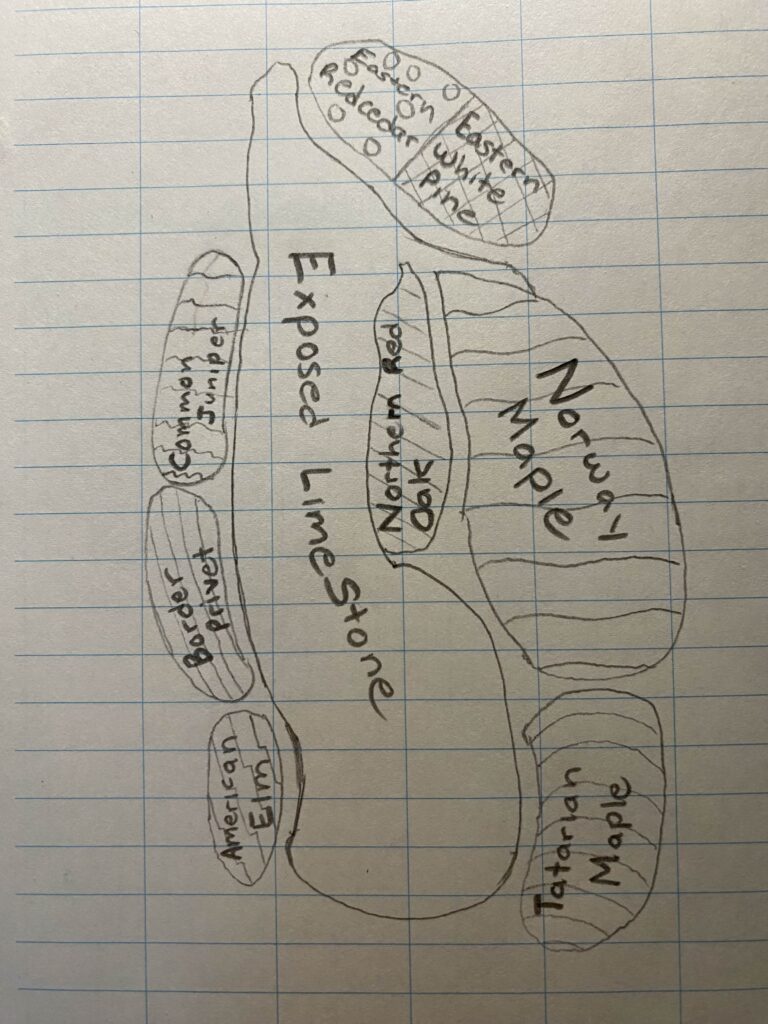
The vegetation at Redstone Quarry is a unique mix of species adapted to the rocky, alkaline conditions created by the exposed limestone. The quarry supports a variety of ferns, mosses, and lichens that thrive in these calcium infused soils. There are also small shrubs and hardy wildflowers. Trees such as Eastern white pine and Norway maple grow in the surrounding areas, adding to the site’s ecological diversity. The plant life here reflects the site’s unusual geological and soil conditions, making it a rich habitat for both common and rare species.
Woody Plants
- American Elm – https://www.inaturalist.org/observations/247033191
- Basswood – https://www.inaturalist.org/observations/247034670
- Border Privet – https://www.inaturalist.org/observations/247034860
- Common Buckthorn – https://www.inaturalist.org/observations/247035464
- Common Juniper – https://www.inaturalist.org/observations/247035687
- Eastern Cottonwood – https://www.inaturalist.org/observations/247035826
- Eastern Red cedar – https://www.inaturalist.org/observations/247035931
- Eastern White Pine – https://www.inaturalist.org/observations/247036139
- Northern Red Oak – https://www.inaturalist.org/observations/247036496
- Norway Maple – https://www.inaturalist.org/observations/247036680
- Staghorn Sumac https://www.inaturalist.org/observations/247036808
- Tatarian Maple- https://www.inaturalist.org/observations/247037032
- Winged Euonymus – https://www.inaturalist.org/observations/247037161
Sensory Reflections
Sitting at the heart of Redstone Quarry, I’m surrounded by the unique textures and colors of Vermont’s natural landscape, engaging with my place through each of my senses.
As I settle in, the sight of the quarry walls catches my eye first, layers of deep red sandstone, rugged and worn, stand in stark contrast to the lush greenery growing in patches around me. I notice how the light changes on the stone, casting shadows that emphasize the sharp edges of the quarried walls and illuminating the rough, earthy reds and browns of the stone itself.
With my fingers, I feel the sandstone, rough and grainy, with layers that crumble slightly beneath my touch. The rock feels cool and solid, grounding me in this ancient place. Nearby vegetation, perhaps mosses or patches of ferns, is soft and damp, a stark contrast to the hardness of the stone.
I listen closely to the sounds surrounding me. The rustle of leaves fills the air with a gentle whisper, while the occasional call of a bird echoes off the rock walls. This quiet, almost secluded setting amplifies each sound, from the flutter of insects to the distant rustling of small animals in the underbrush. Occasionally, I catch the distant sound of traffic, a reminder of the city’s proximity, though it feels far removed from the natural serenity within the quarry.
The air carries a faint earthy scent of stone and soil, mingling with the fresher, damp aroma of nearby plants and moss. I catch a whiff of pine or wildflowers, subtle scents that bring depth to the place’s earthy ambiance. This moment roots me deeply in this place, reminding me of the ancient processes that shaped the land and nature’s quiet persistence in reclaiming it.
Observing Vegetation Changes
Since my last visit on October 13th, I’ve noticed several changes in the appearance of the vegetation at Redstone Quarry as the season shifts further into autumn.
The most striking change is the vibrant transformation of the foliage. The leaves of many deciduous trees have progressed from their earlier shades of yellow and orange to deeper, more muted hues of red and brown. Some trees now stand bare, their branches stark against the crisp, clear sky, while others still cling to a few remaining leaves, fluttering gently in the cooler breeze.
Ground cover has also changed noticeably. The once lush carpets of green grass and underbrush are beginning to fade, with patches of browning grass revealing the impact of colder temperatures. The vibrant wildflowers that adorned the landscape in mid-October have almost entirely withered, leaving behind dried stems and seed heads that sway in the wind.
As I look closer, I can see the evergreens maintaining their deep green hues, providing a contrast to the autumn colors that surround them. The transition from fall to winter is evident in the way the overall landscape feels more open now, as the dense canopy of leaves has thinned, allowing more light to filter through and illuminating the rich textures of the rocks and soil.
Additionally, the fallen leaves have started to blanket the ground, creating a crunchy carpet that changes the soundscape of my walk. The smell of decaying leaves fills the air, a rich, earthy aroma that signals the cyclical nature of the seasons. Overall, these changes reflect the gradual shift towards winter, marking the end of the growing season and the beginning of a period of rest for the vegetation in this beautiful landscape.
Centennial Woods


Redstone Quarry and Centennial Woods comparison
In the warmer season, Redstone Quarry is full of life! The open, rocky landscape is covered with grasses, wildflowers, and small plants that can handle the hot, dry weather. You can spot birds like sparrows and goldfinches enjoying the sunny habitat. On the other hand, Centennial Woods in the cooler season feels completely different. The trees lose their leaves, and the forest becomes quiet and peaceful. Mosses, evergreen ferns, and fallen leaves cover the ground, and animals like chickadees and deer can still be seen getting ready for winter. It’s cool to see how these two places change with the seasons!
Revisiting Redstone Quarry (December 6th)
Upon revisiting Redstone Quarry, notable seasonal changes since November 4th are evident. The foliage has drastically thinned, with most trees now bare. However, a few stubborn oak leaves cling to branches, their brown, curled forms testament to the season’s transition. Persistent vegetation is limited to hardy groundcovers like mosses and some lingering evergreen plants, while fruit is scarce, save for a few dried berries on shrubs like barberry or sumac.
The fall leaf litter has transformed significantly. Decomposition is progressing, with damp, compacted layers of leaves breaking down into dark, earthy material.
Animal presence has become subtler. Bird activity has decreased, with only a few winter-resident species like chickadees or crows observed. Mammal tracks, likely from squirrels or deer, appear in patches of remaining snow or soft soil, and small gnawed acorns hint at foraging. Tree bark shows occasional markings, potentially from woodpeckers or squirrel claws. Overall, animal activity has diminished compared to early November, as many species have entered hibernation or migrated.
This quieting of the landscape reflects the deepening of winter, offering a serene and introspective moment to observe nature’s rhythm.
Aspects I enjoyed: Redstone Quarry
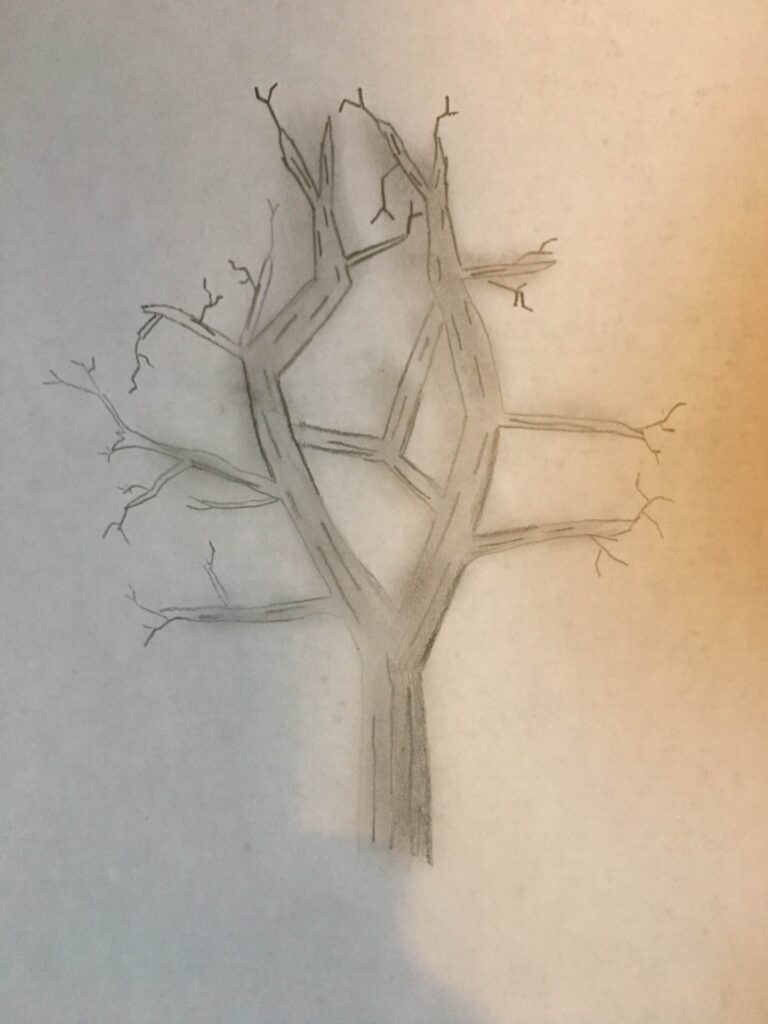
What I enjoy most about Redstone Quarry is its serene, secluded atmosphere and its ability to showcase nature’s quiet transformations across the seasons. The rugged stone formations and surrounding vegetation provide a striking backdrop to observe subtle details, like the way moss thrives even as most life slows down, or how the sunlight filters through the bare branches in winter, casting intricate shadows on the rocks.
The mix of tranquility and raw, unrefined beauty makes it feel like a hidden gem amidst the busyness of daily life. I appreciate how each visit offers something new to discover, whether it’s a shift in the landscape, traces of animal activity, or the gradual decomposition that reminds me of nature’s continuous cycle of renewal. These aspects make Redstone Quarry not just a place for observation but a space for reflection and connection with the natural world.
Changes since December 6th (January 23rd)
Since my visit to Redstone Quarry on December 6th, the landscape has fully embraced winter. The trees, already bare, now stand stark against the sky, their branches frosted with snow. Persistent vegetation like mosses and evergreens remains visible but muted, blending with the subdued tones of the season. The forest floor, once layered with damp leaf litter, is now blanketed by snow, slowing decomposition and locking the ground in winter’s grip.
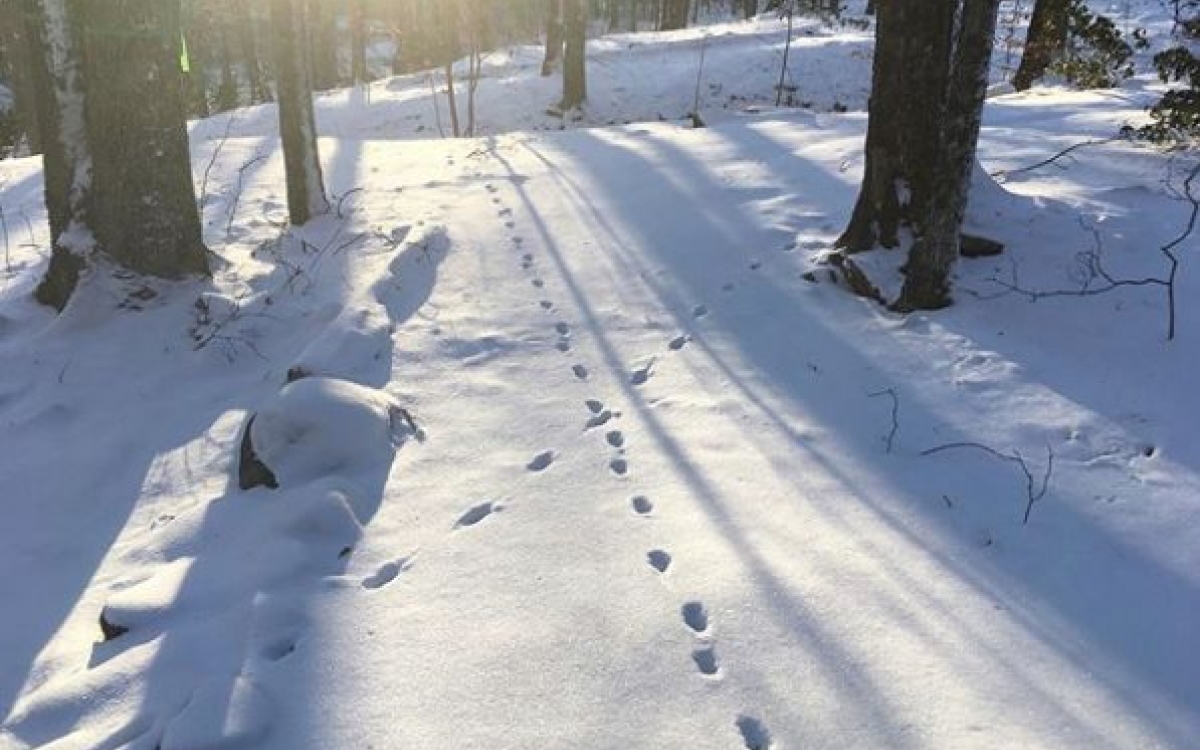
Animal activity has grown quieter. Winter birds like chickadees and juncos still appear occasionally, while fresh tracks in the snow—likely from deer, squirrels, or rabbits, offer brief signs of life. Gnawed twigs and stripped bark reveal the struggles of foraging in the sparse winter landscape.
The quarry now feels even more tranquil, its textures softened by frost and snow. This deep stillness reflects the resilience and dormancy of winter, offering a peaceful space to witness nature’s quiet endurance.
Winter Wildlife Signs in Centennial Woods
For this wildlife tracking assignment, I explored Centennial Woods with some friends from NR 1020. The fresh snow provided excellent conditions for spotting tracks and other animal signs. We followed the winding trails, looking for evidence of winter wildlife activity.
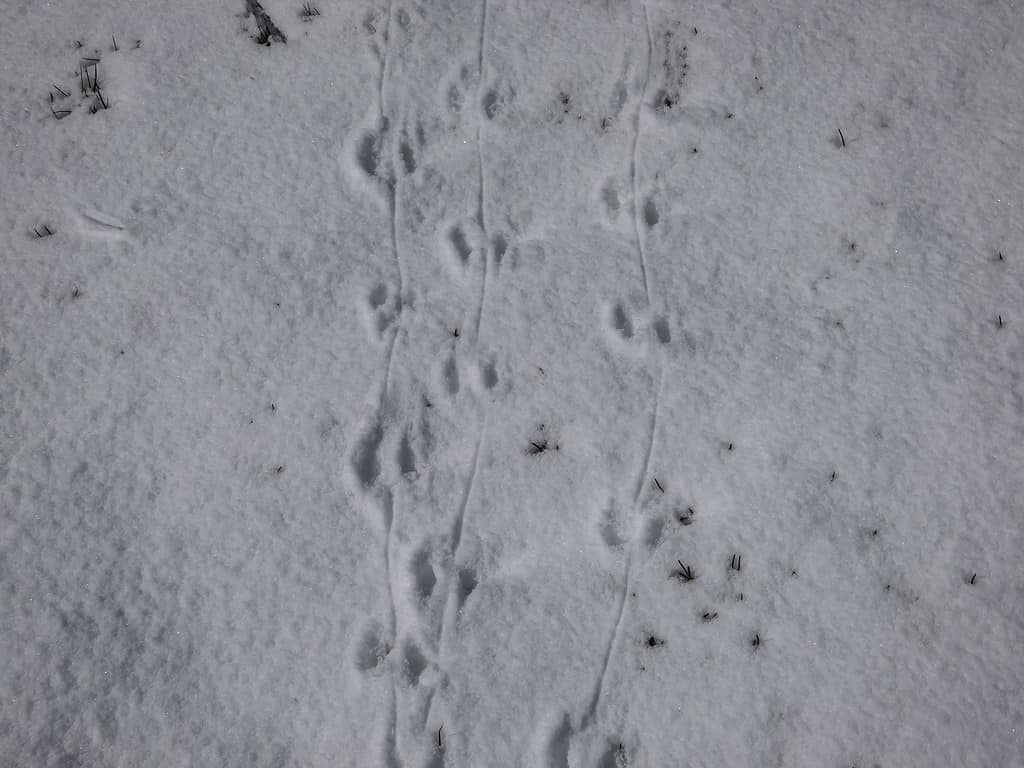
One of the first things we encountered was a set of white-tailed deer tracks. The tracks were heart-shaped, about 2.5–3 inches long, and followed a clear, meandering path through the snow. Nearby, we found twigs and saplings with rough, uneven browsing marks, likely from the same deer.
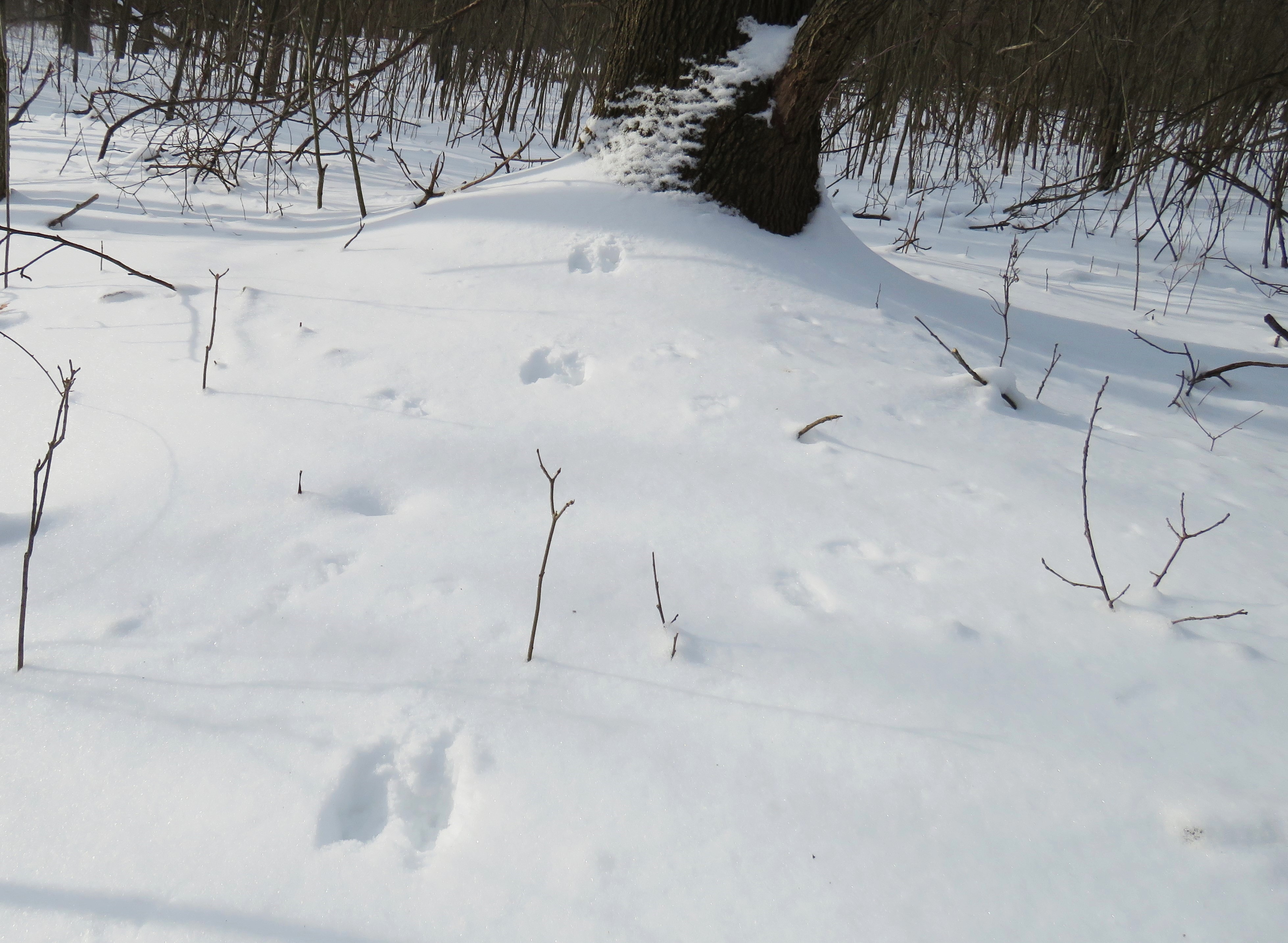
Further along, we spotted small rodent tracks—most likely from a white-footed mouse. These tracks formed a series of tiny, bounding imprints.
Recording observations on the iNaturalist app was straightforward, though differentiating some tracks required extra research. The app’s community feature was helpful for confirming IDs, and I appreciated the chance to contribute to a shared dataset.
Overall, this experience deepened my appreciation for winter ecology. Centennial Woods remains an amazing place to observe wildlife, even in the colder months. I’m excited to check back later in the season to see how these patterns change as winter transitions to spring!
Phenology Walk
4/12/2025
On April 12th, many of the trees around UVM are just beginning to show early signs of spring. Several species, like sugar maple, red maple, and Norway maple, have breaking buds, and some even have tiny emerging leaves. Red maple and Norway maple are noticeably further along, with open flowers already visible and pollen likely being released. Sugar maple is also showing both flower buds and some open flowers. In contrast, red and white oaks are still a bit behind, buds may be starting to swell, but no leaves or open flowers are visible yet. Across all species, there are no colored or falling leaves, and fruits are not present. While new fruiting hasn’t begun, last year’s seeds or acorns might still be found on the ground, especially near the oaks. Overall, this is a transitional period where early spring phenophases like bud break and flowering are beginning, especially in the maples, while the oaks are just starting to wake up.
City Nature Challenge
4/27/2025
For the City Nature Challenge iNaturalist BioBlitz, I explored a few areas around Greater Burlington over the four-day period. I spent most of my time at Centennial Woods, but I also made some quick stops along the Burlington Bike Path and around the Waterman Green. I wanted to get a mix of natural and more urban environments to see how species diversity compared.
My experience using iNaturalist was really positive. It was super user-friendly, and I liked how the app helped suggest species identifications based on my photos. It made the process of observing and learning about local plants, insects, and birds feel a lot more accessible. I also liked seeing which of my observations were confirmed by others, it made it feel like a real collaborative project, even though we were all working independently.
Over the course of the challenge, I encountered and recorded about 14 species. Most of them were plants, but I also spotted a few birds, like an American robin and a black-capped chickadee, and some early-emerging insects like bumblebees and beetles. It was exciting to realize how much biodiversity you can find even in places you pass by every day.
One of the most interesting parts of the challenge was seeing reports coming in from other cities around the world. It was amazing to scroll through the global observations and notice both similarities and differences. For example, some cities in warmer climates were documenting species like lizards and flowering plants that we won’t see here in Vermont for months. It made me think more about how different ecosystems are connected and how seasonal timing plays such a big role in what species are active. It also made the whole event feel really big and meaningful, knowing that people everywhere were taking time to pay attention to the natural world in their own communities.


Final Visit to Redstone Quarry (May 2nd)
1. How has your site changed over time?
Redstone Quarry has changed significantly with the seasons. On my last visit in January, the landscape was quiet and subdued, bare trees, thinning foliage, frozen or damp ground, and subtle signs of wildlife like chewed acorns and small tracks in the snow or mud. Now, in early May, it’s transformed. Spring has brought budding leaves, sprouting plants, and a return of birdsong and insect life. The quarry walls may still stand unchanged, but the surrounding vegetation has reawakened, adding vibrant green and liveliness that contrasts the stillness of winter. It’s a reminder of how the site pulses with seasonal rhythms.
2. What are the major and minor landmarks you’ve become familiar with?
Major landmarks include the large stone quarry walls, weathered and imposing, they are the central feature of the site. I’ve also become familiar with certain large boulders and flat rock surfaces where moss and lichen thrive. Minor landmarks include a specific tree line that changes color vividly in the fall, a persistent patch of moss that survives even through winter, and a particular trail junction that signals deeper entry into the woods. Over time, these features have become reference points, grounding my visits with familiarity.
3. In what ways do nature and culture intertwine here?
Redstone Quarry is a powerful intersection of nature and culture. Originally shaped by industrial use, it’s now a rewilded space used by hikers, students, and local residents. Its stone walls tell a story of human extraction, while the regrowth around them shows how nature reclaims space over time. The site reflects a cultural shift from industrial exploitation to recreational and educational use. It also serves as an informal outdoor classroom, a place of reflection, and a natural refuge within the city, highlighting how culture continues to shape, and be shaped by, the land.
4. Do you consider yourself a part of your place? Why or why not?
Yes, I do consider myself a part of Redstone Quarry. Over the course of my time at UVM, repeated visits have made the site feel more like a familiar companion than just a location. Observing its seasonal changes, slowing down to notice small details, and connecting with its quietness have all helped me develop a relationship with the place. I’m not just a visitor, I’ve become part of its ongoing story, even in a small way, through my attention and presence.
Hi, this is a comment.
To get started with moderating, editing, and deleting comments, please visit the Comments screen in the dashboard.
Commenter avatars come from Gravatar.