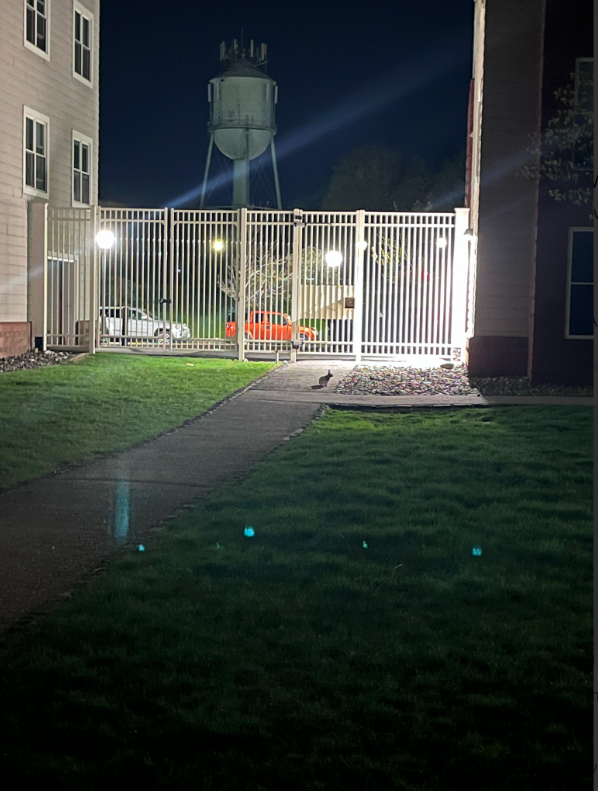
Although the weather this past weekend was less than ideal for participating in the Bioblitz, I still had a great time participating in it! Because of the rainy weather, my observations were mostly found around campus and the nearby surrounding areas. My first observation was an Eastern Cottontail, which I spotted on the green roof in University Heights South.
Eastern Cottontail (4/29/23)
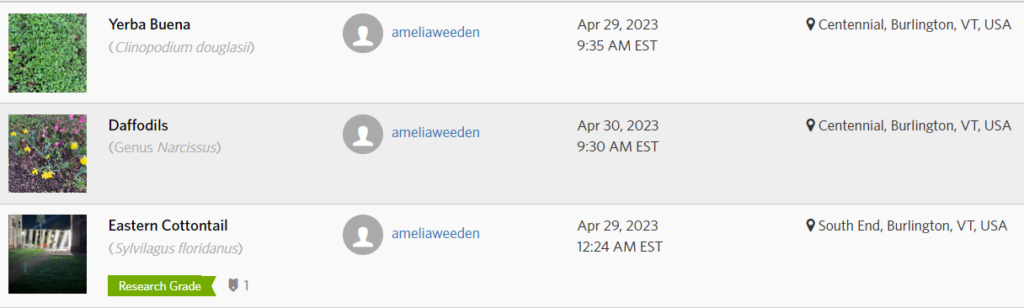
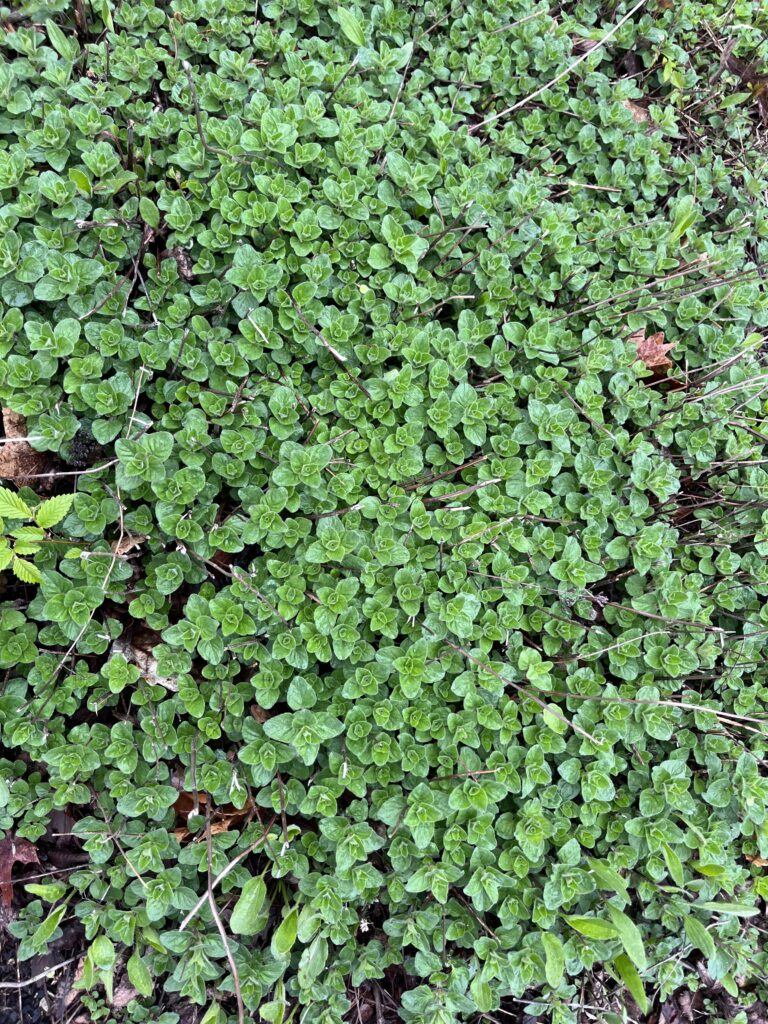
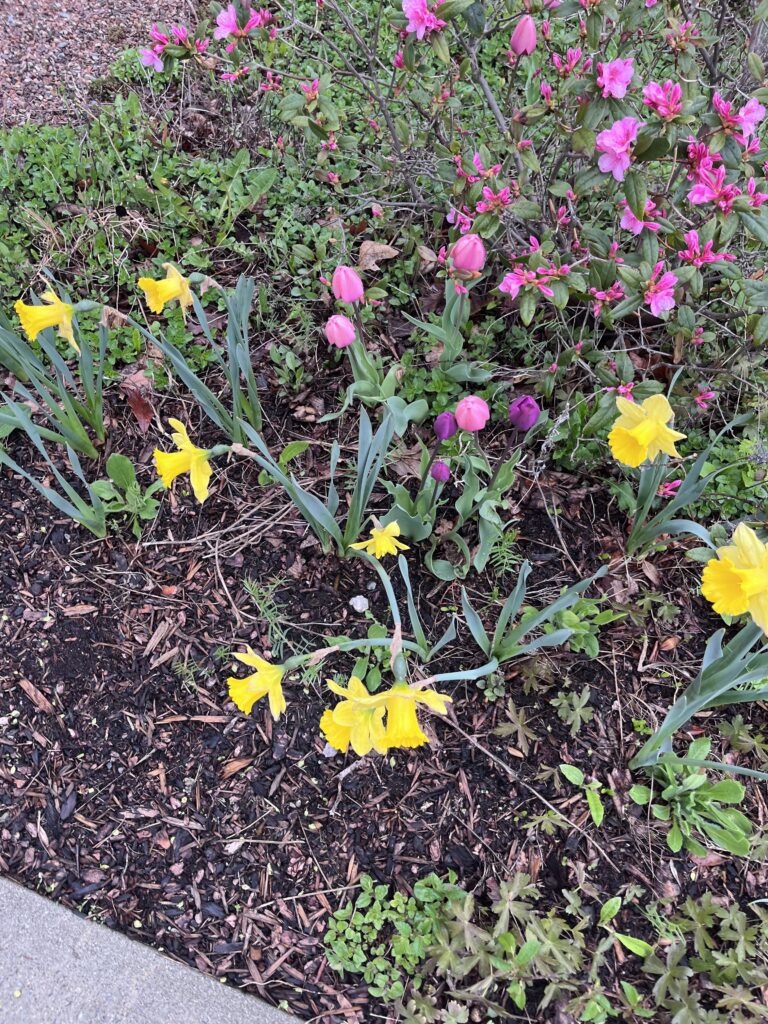
My experience using iNaturalist was a little tricky. While I had tried to upload my photos on the days they had been taken, only the observation of the Eastern Cottontail was uploaded. However, the rest of them ended up uploading and are now on iNaturalist. In total, I added 3 species that I observed: the Eastern Cottontail, Daffodils, and Yerba Buena.
Yerba Buena (4/29/2023)Daffodils (4/30/23)
My favorite part of this entire challenge was by far everyone’s excitement about it. From the TAs, to the students and Chris and Walt themselves, it was clear to me that participating in this was a well-loved tradition. It was very interesting to see that our small city of Burlington had more observations per capita than New York City, and more observations total than cities like Tokyo, Montreal, and London.
In all, participating in this challenge was super fun and I hope to do it again next year. I’m really going to miss posting on this blog and visiting my phenology spot, it was a very special and rewarding experience.
Posted in Uncategorized on April 24, 2023 by aweeden
By: Amelia Weeden
4/24/2023
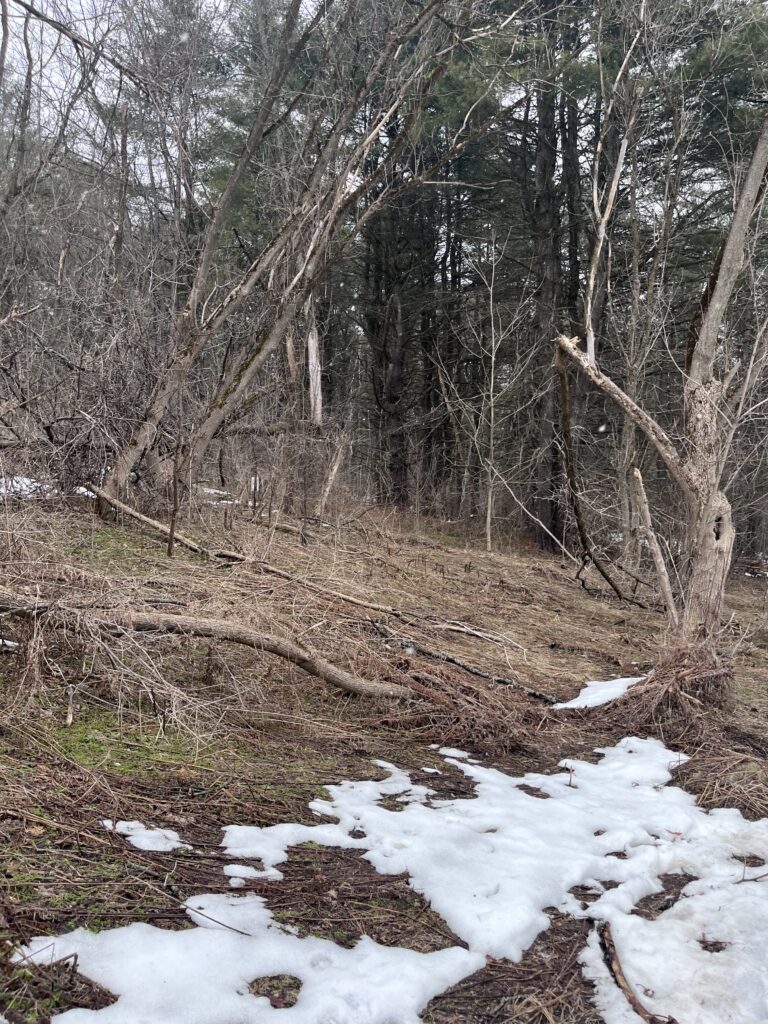
Over the course of the semester, my phenology spot has changed substantially. When I first visited it in January, there was a large amount of undergrowth and a thick layer of snow covering the ground. However, the snow began to thaw and seasonal changes such as bud growth started to occur. My phenology spot was also altered by human activity as much of the understory ended up being cleared out in early March.
There are a few major and minor landmarks I’ve become familiar with. Firstly, there is a very distant divot in the ground, where a larger chunk of earth is missing. Secondly, there is a clearing surrounded by trees, almost making up a ring shape. Nature and culture intertwine here due to the land’s complex and deep history. The land was originally inhabited by the Abenaki people and was then taken over by colonists. Later, the land was abused as a medical-waste dumping site. This land’s rich and complex history makes it the place it is today, although it is now still owned by a predominantly white institution instead of the Indigenous people to who it belongs. I don’t consider myself part of Centennial Woods, I was never at Centennial Woods for hours at a time, and left no trace other than my footprints. While I did visit my spot numerous times, I was never a permanent fixture but rather a guest.
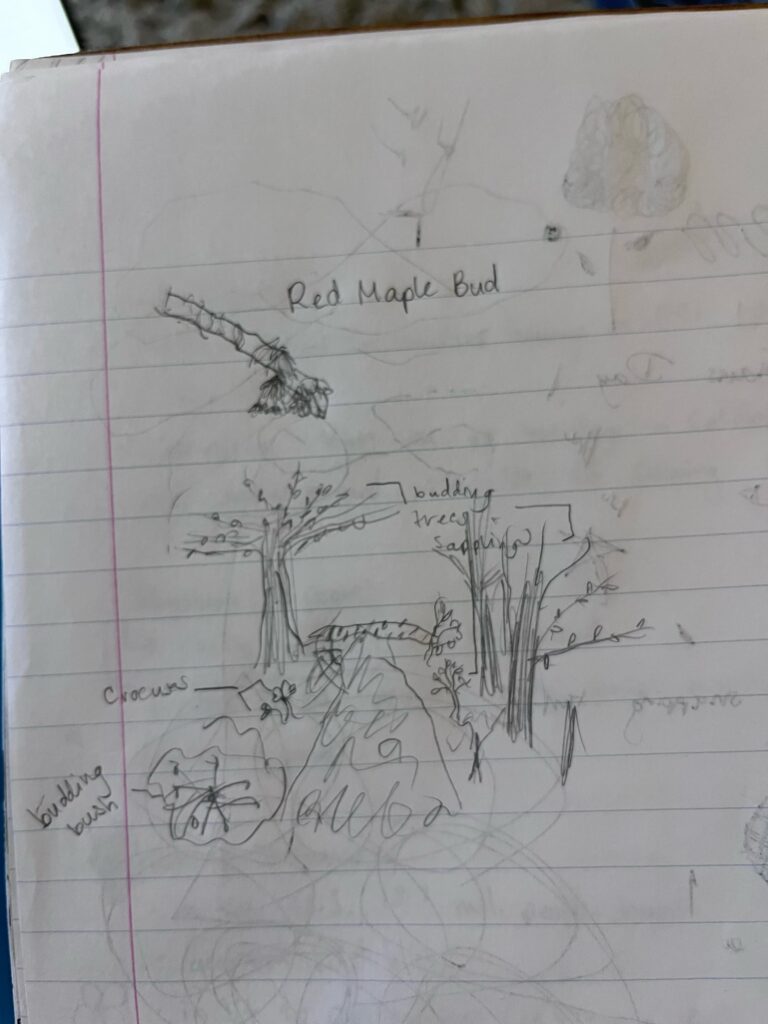
The final sketch of my phenology spot and the bud on the Red Maple I had been visiting.
Posted in Uncategorized on April 10, 2023 by aweeden
By: Amelia Weeden
4/10/2023
When I visited my tree, I noticed many signs of Spring. The sun was shining, and I was able to hear many distinct bird songs. The weather was perfect and made the visit just that much more enjoyable. When I arrived at my tree, there was not as much growth as I had expected. Because of the sunny weather, I had assumed that a rapid amount of growth would have taken place. However, there was some growth present. My tree’s buds appeared to be more elongated than on my last visit and had begun taking on a greenish hue.
Posted in Uncategorized on March 28, 2023 by aweeden
By: Amelia Weeden
3/28/2023
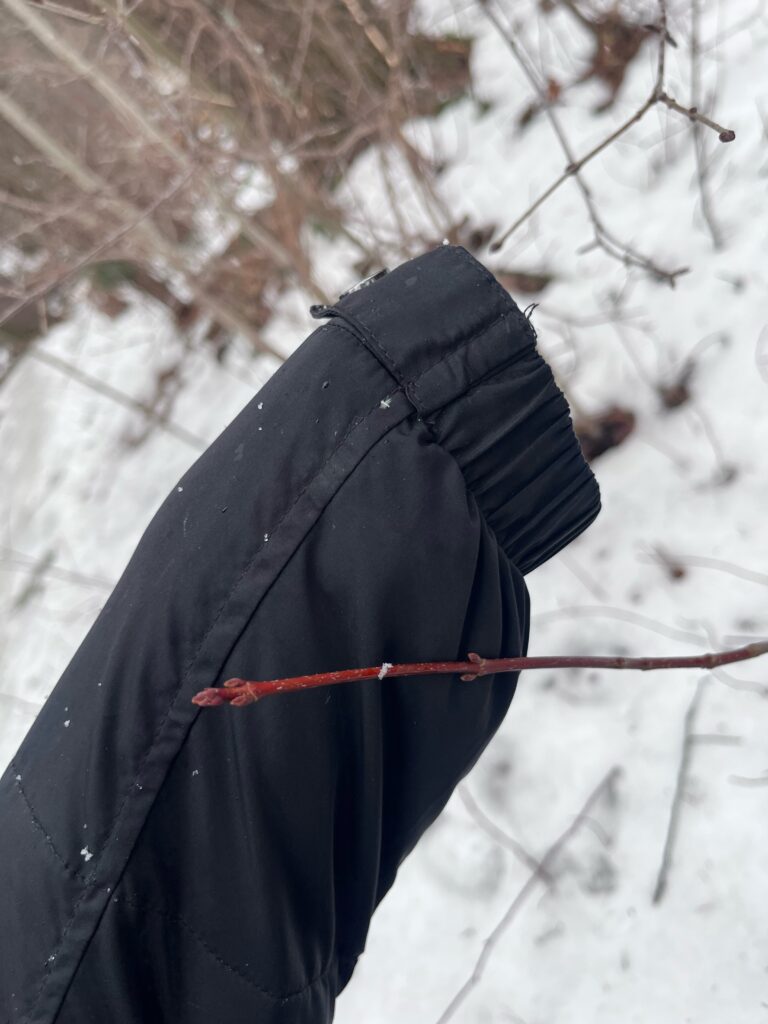
When I went to Centennial this past weekend, I wasn’t expecting to notice a large change in my tree’s appearance. That turned out to be mostly accurate; the branches themselves hadn’t changed or grown substantially, and the only true difference seemed to be a few more buds growing on each branch.
However, as I began to go further into the woods, it was clear that the overall ecology of the land had started to change. The majority of the snow had melted, revealing saplings, grasses, and woody debris. Although my Red Maple hadn’t significantly changed, it was clear to see that Spring is already upon us.
Posted in Uncategorized on March 11, 2023 by aweeden
By: Amelia Weeden
3/11/2023
This week, I returned to Centennial woods in search of a Red Maple. After only a few minutes of searching, I thought I had found it. However, it proved to be the first of many look-alikes I would encounter before finding a Red Maple.
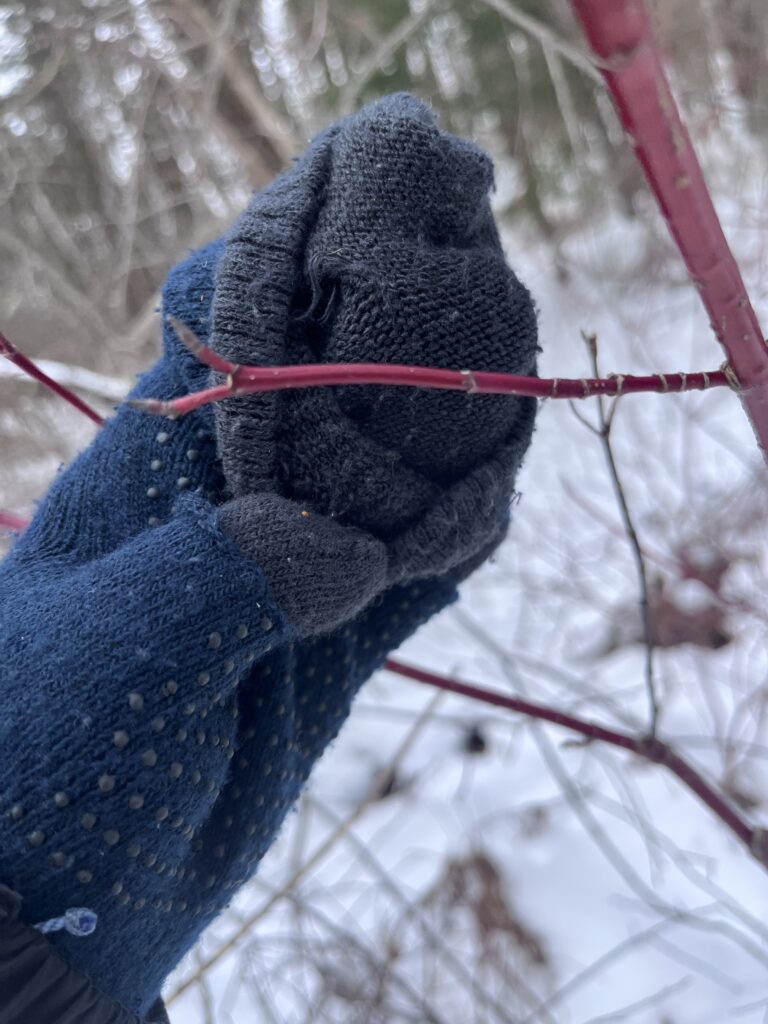
If observed closely, it’s clear to see that this species is a look-alike. While it does have the distinct red bark, the bud lacks the correct structure and pigment, indicating that this is not a Red Maple.
After determining that my first find was a fake, I continued searching. However, I was met with another look-alike.
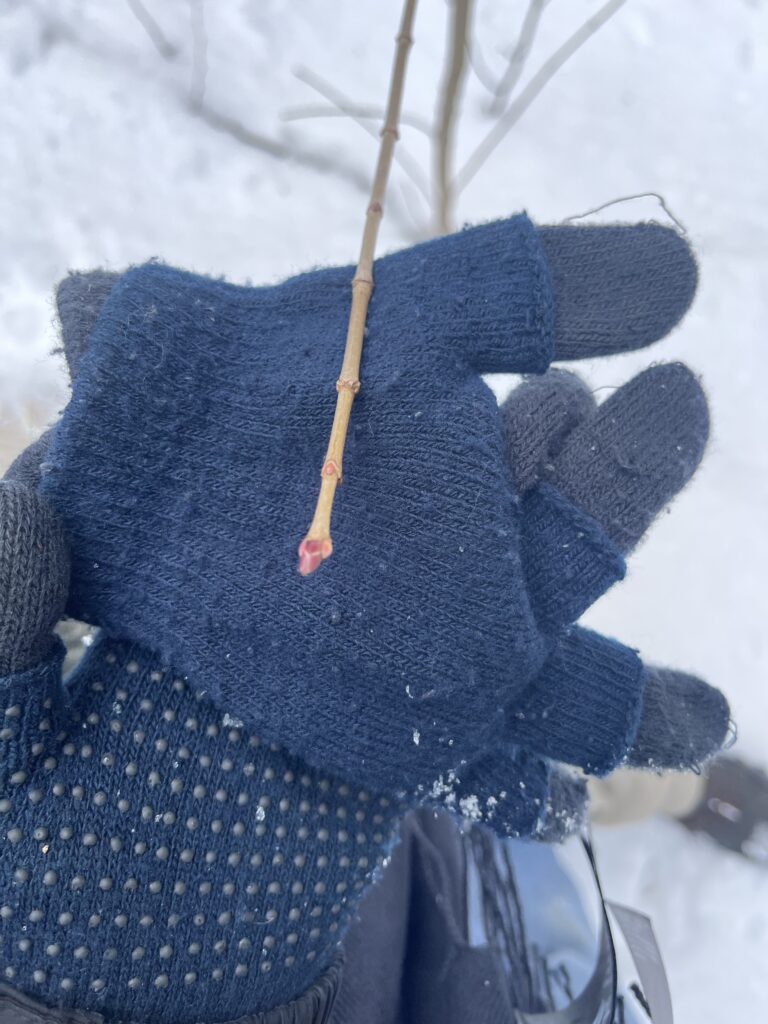
This time, the budding on the branch was very similar to that of a Red Maple, which is why I first thought it was one. However, noticeably absent from the branch is the distinct-red coloring that should be on the branch itself.
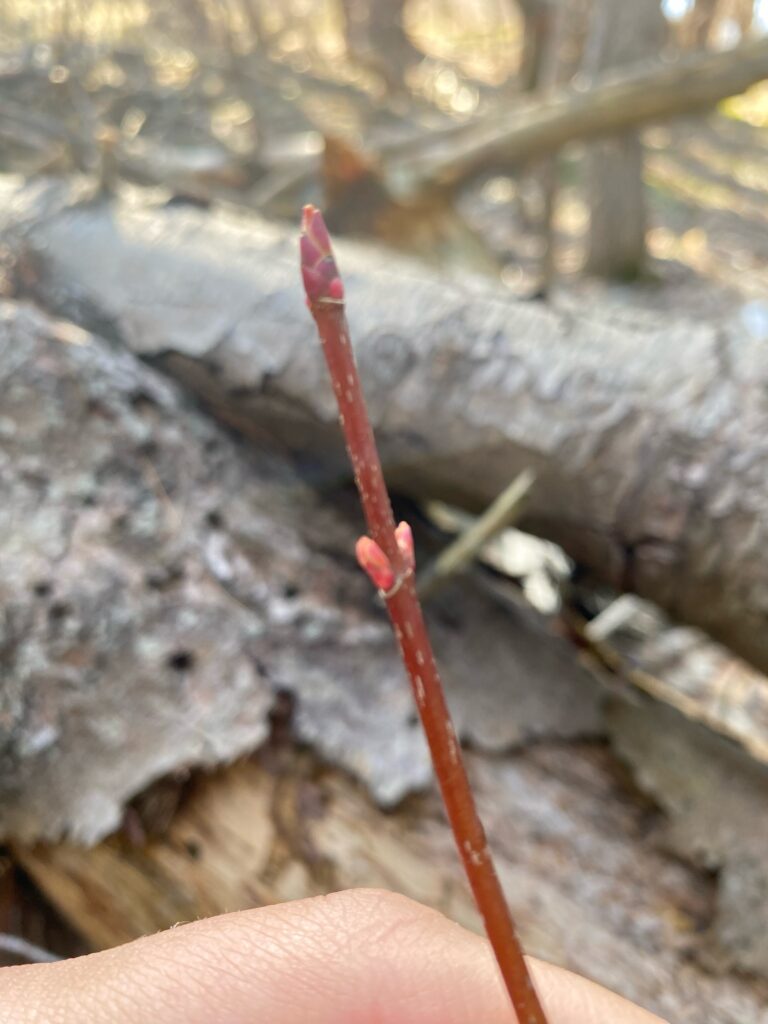
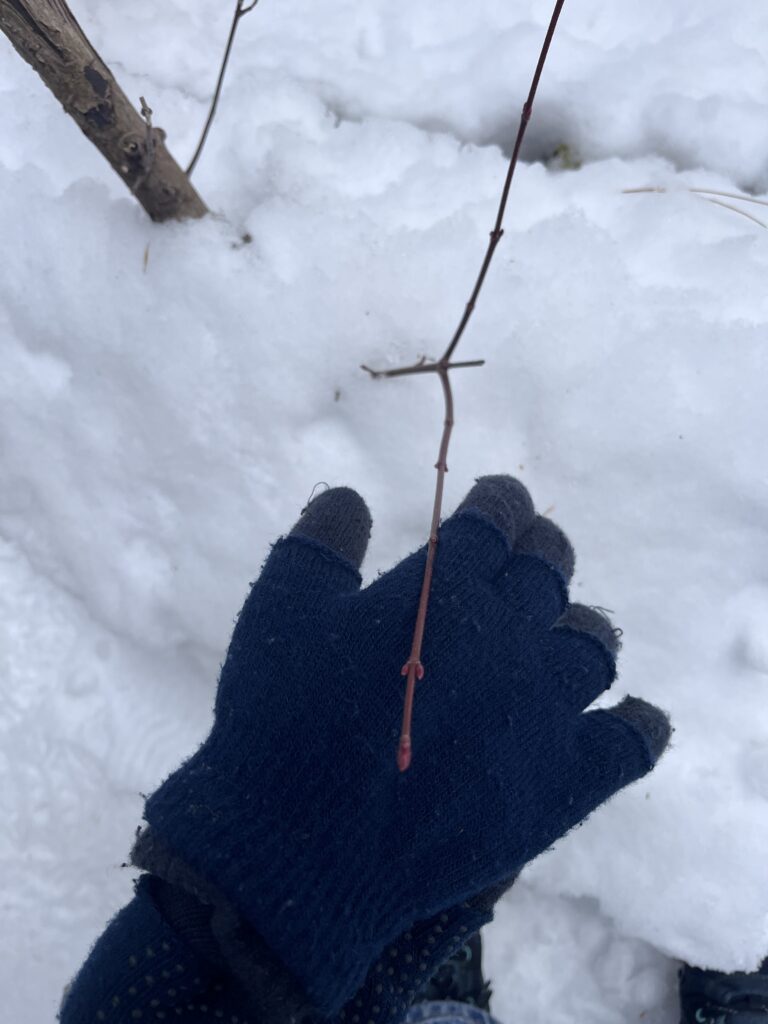
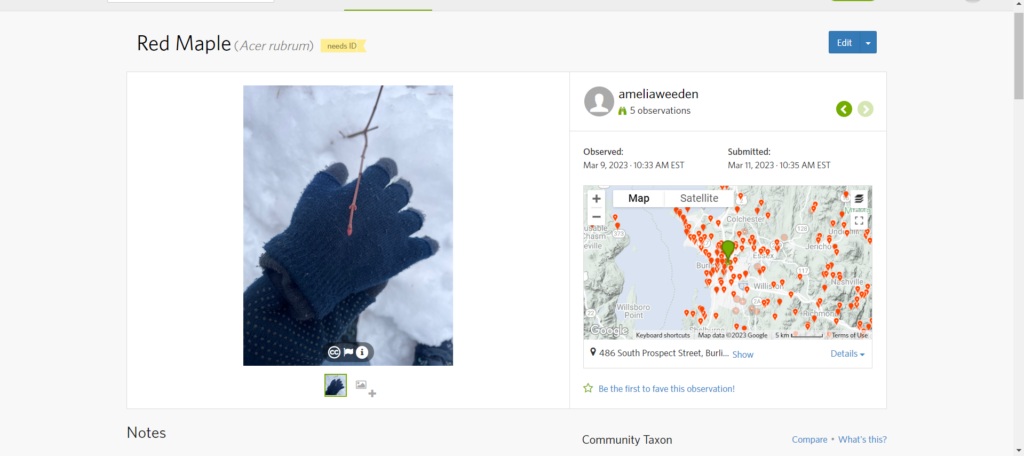
Finally, after an additional few minutes of searching, I found a Red Maple sapling. I was sure that this was a Red Maple as the bark was distinctively red, as was the bud. The bud was also the right structure and shape. The final indicator that proved this was a Red Maple was the opposite branching present through the buds on the twig.
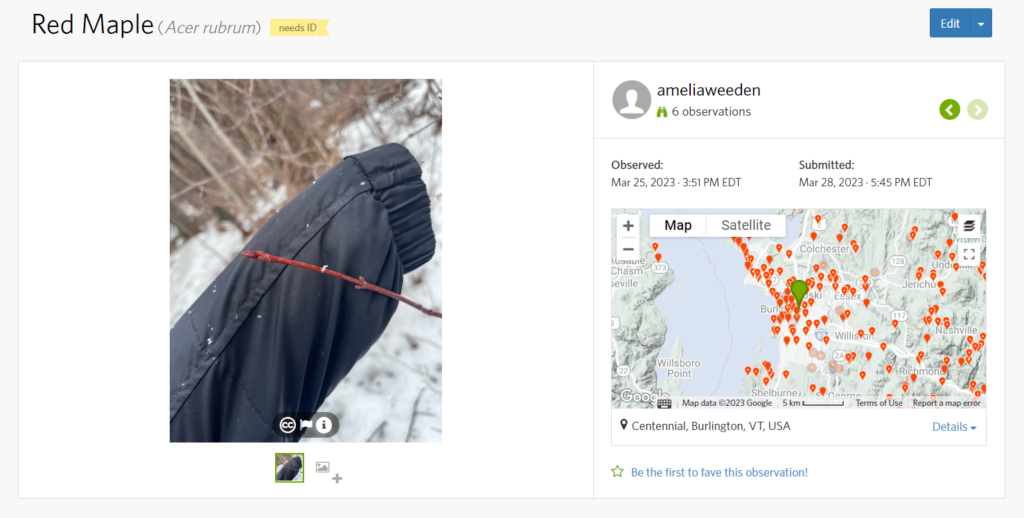
A screenshot of my post on iNaturalist as well as my locatiom
Posted in Uncategorized on February 20, 2023 by aweeden
By: Amelia Weeden
2/20/2023
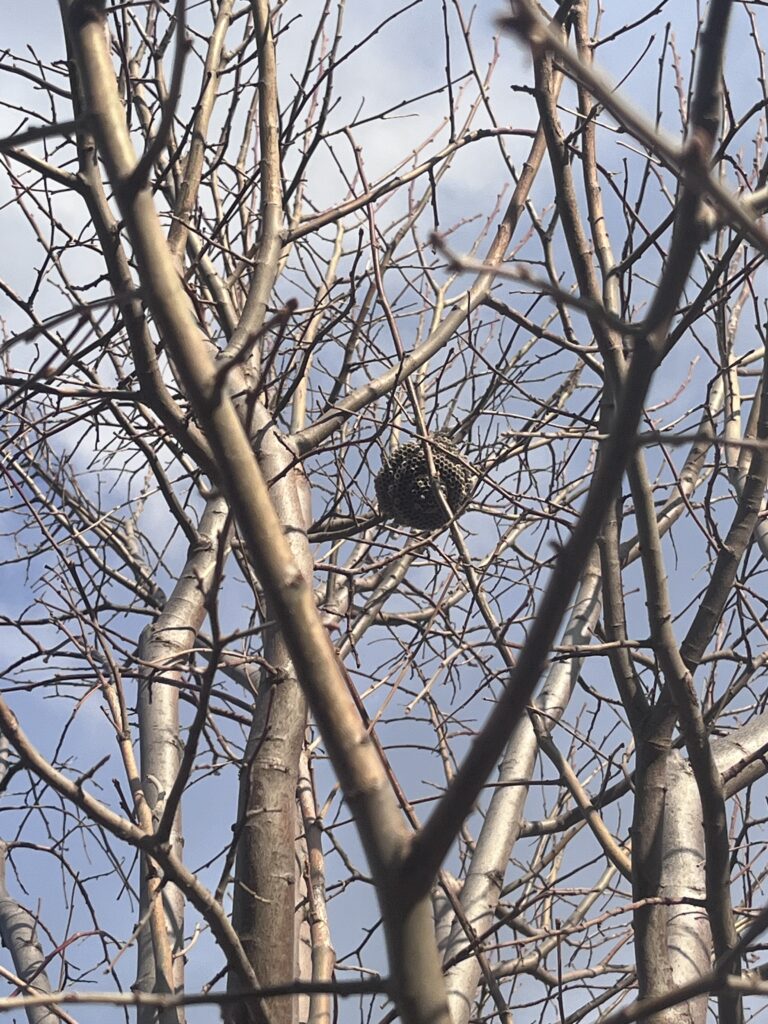
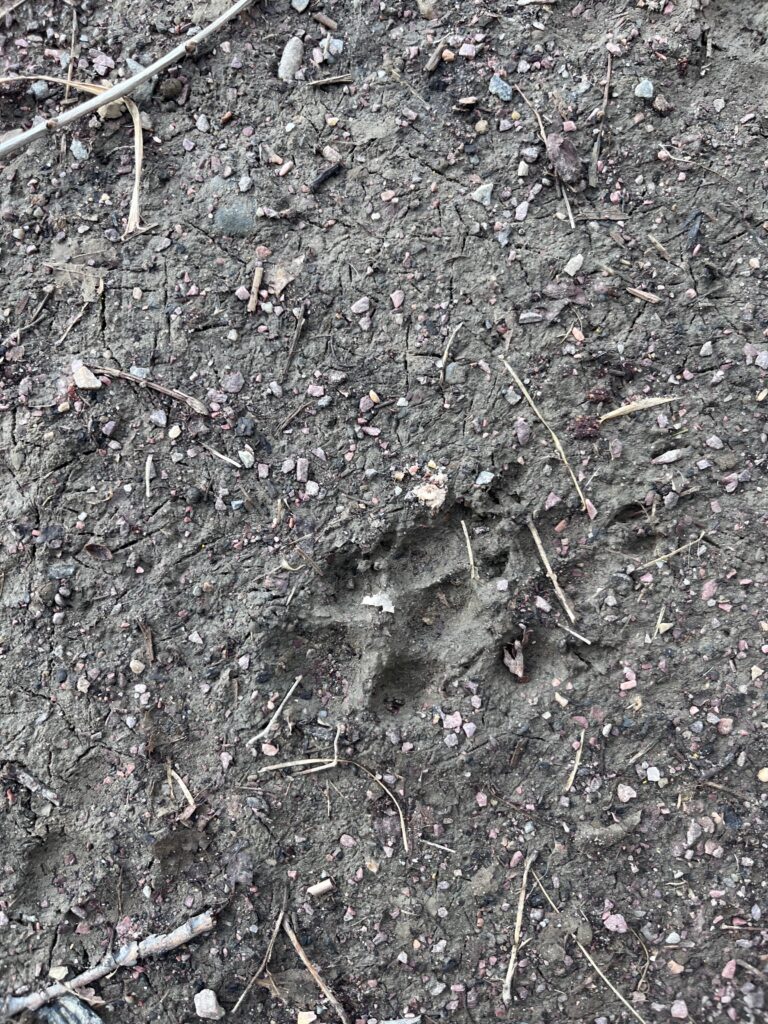
For this phenology spot visit, I decided to take advantage of the good weather and went to North Beach with a friend. With no snow, I hadn’t been expecting to find many (or any) animal tracks. However, the beach was a fantastic spot for animal activity! On the way there I encountered a hornet’s nest and many dog tracks, which I was able to identify with the iNaturalist app. Although I was able to use the app easily in identifying tracks, I was unable to properly upload them to the project. After uploading my observations to the overall site, I couldn’t find how to upload them on the iNatutralist blog for NR itself. Regardless, my visit was a success.
Hornet’s Nest seen on my way to North Beach (2/20/2023)Photo of a dog’s tracks on the way to North Beach(2/20/2023)
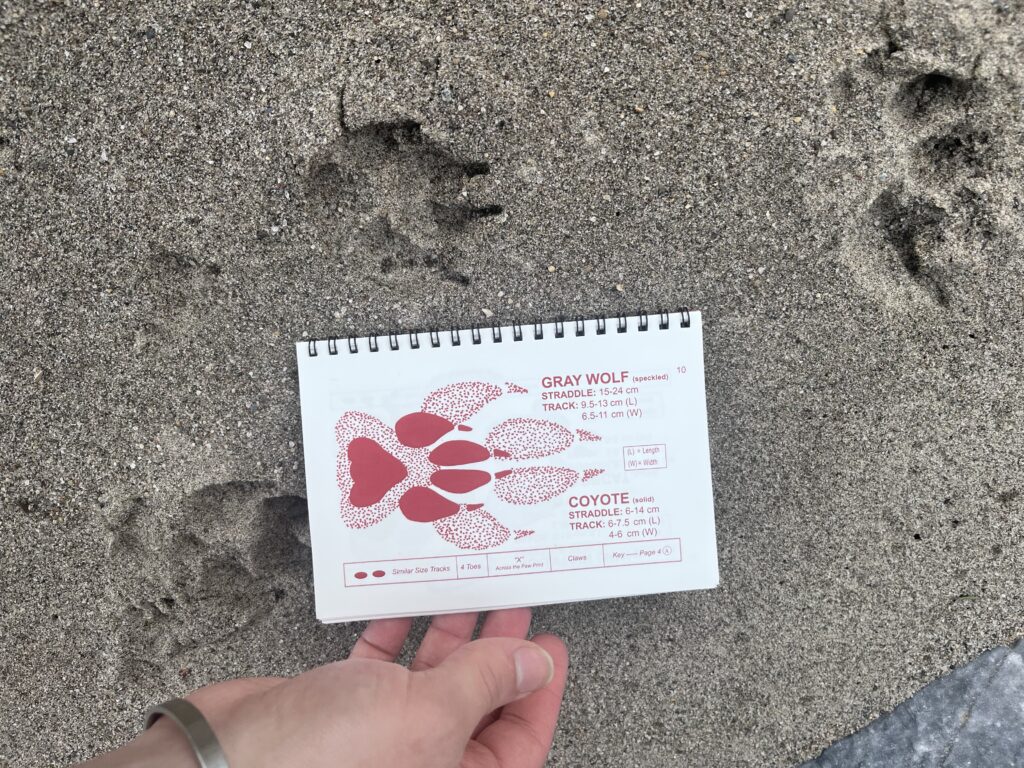
Once we arrived at the beach we encountered a few different signs of Winter animal activity. First, we noticed that there were tracks in the sand. Initially we had believed them to be dog tracks again, but came to the conclusion that they were more likely a coyote’s. The track’s were more narrow than a typical dog’s pawprint, and had sharp, pointy claws rather than dull claws.
Coyote Tracks (2/20/2023)
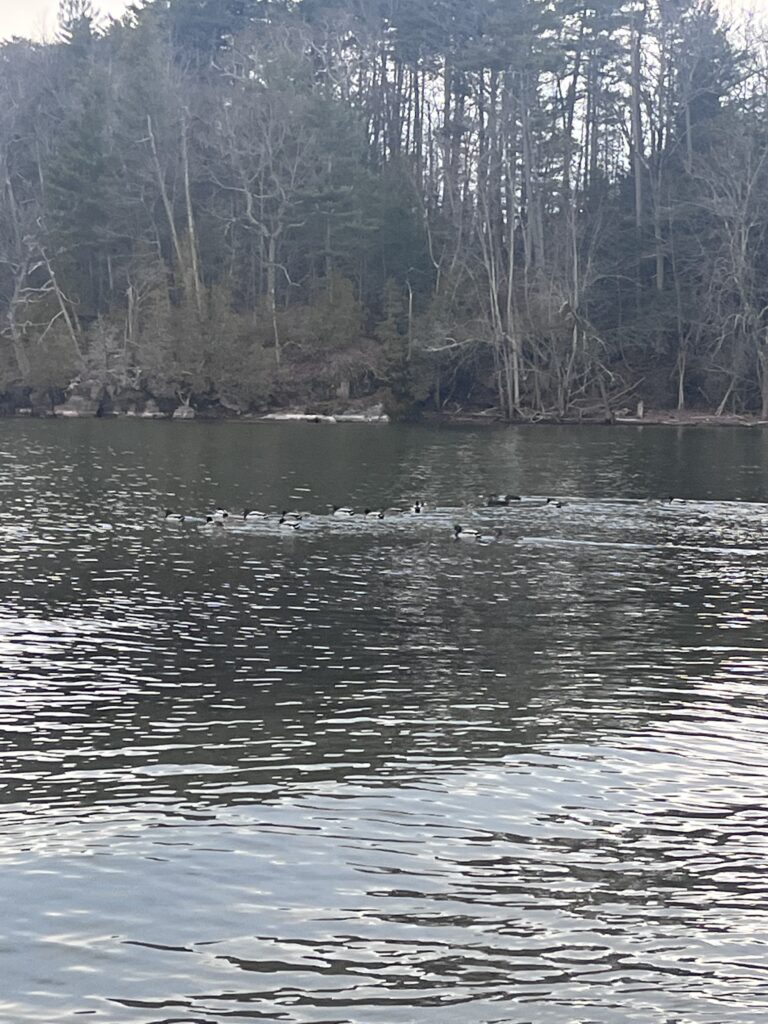
As we continued our journey we encountered yet another sign of animal life, ducks!
Ducks seen on Lake Champlain at North Beach (2/20/2023)
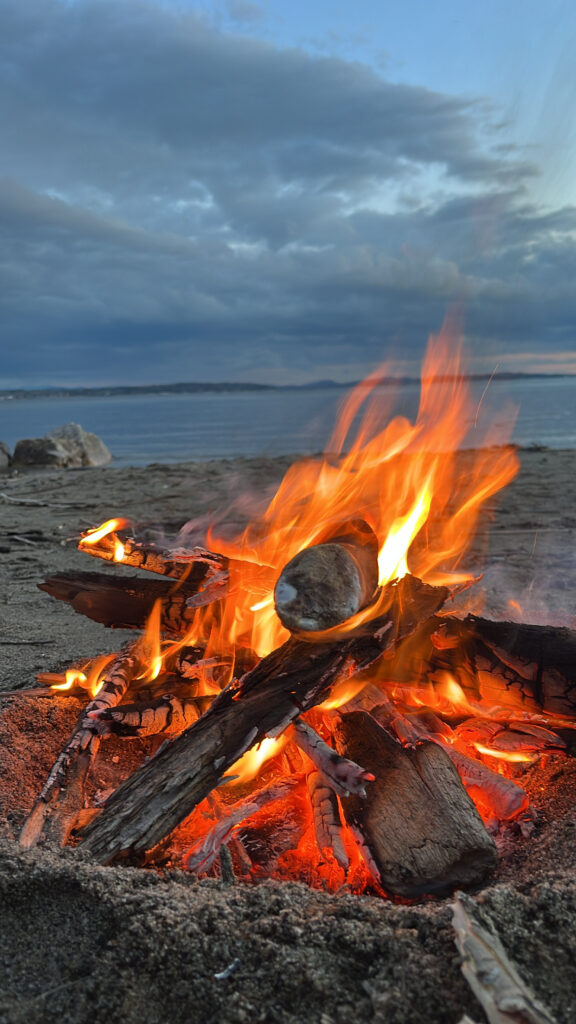
Finally, we finished out our visit with a quick campfire before deciding to call it a night. All in all, it was a very successful trip!
Posted in Uncategorized on January 30, 2023 by aweeden
By: Amelia Weeden
Monday, January 30th, 2023
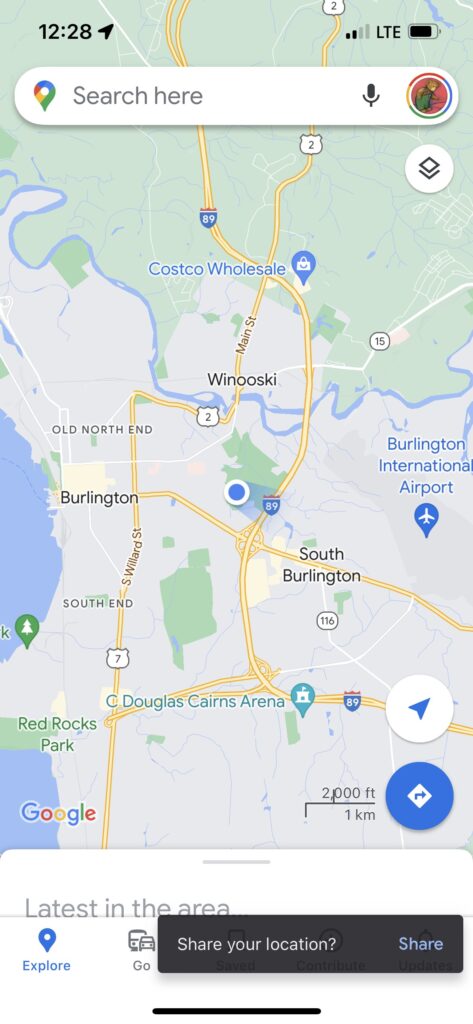
This semester, I decided to choose a new location for my phenology spot, and I decided on a small clearing in Centennial Woods. You can get to centennial from my dorm by first walking to the University Heights Bus stop, then continuing straight down that sidewalk, turning left, going straight, and then making a final right once across from the police station. Once at the entrance to Centennial, you simply have to follow the path until you reach the small clearing.
My new phenology spot on google maps.
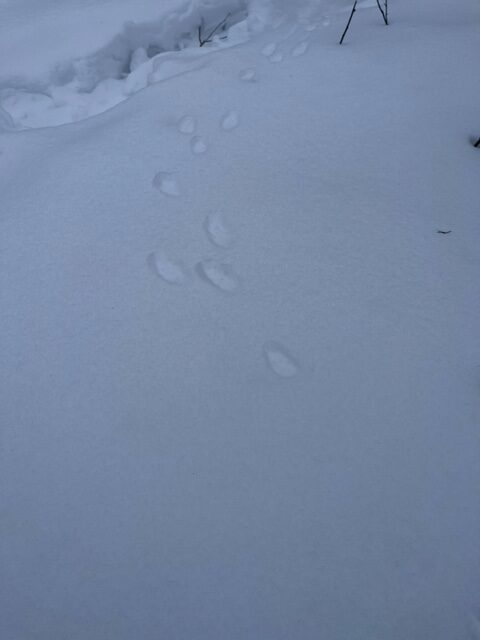
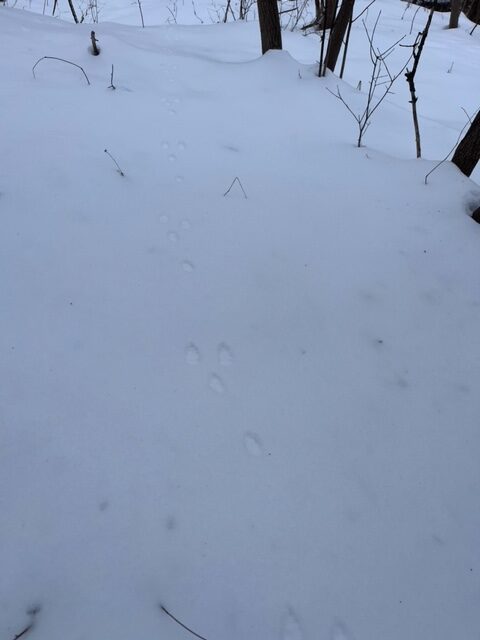
In terms of animal activity, I saw the same kind of track in a few areas. I was unable to identify what kind of animal had left these tracks, and they were a few feet from the trail.
Animal tracks in the snow of Centennial Woods (1/30/2023)Same type of animal tracks, slightly further away in Centennial Woods (1/30/2023)
More Animal Activity in Centennial!
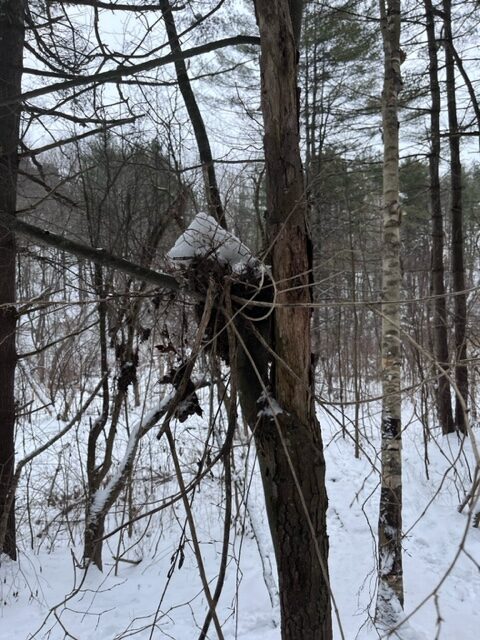
About three feet away from the small clearing I was standing in, there was a squirrel’s nest in a tree. Squirrels rely on these nests during the winter in order to keep warm and sheltered from the harsh winter temperatures and snow.
Posted in Uncategorized on December 10, 2022 by aweeden
By: Amelia Weeden
December 10th, 2022
Revisiting my phenology spot for the last time this semester was melancholy, while it represented the end of my first semester as a student at UVM, it also symbolized the beginning of a new one, with new experiences. The foliage has slightly changed since my last visit; every single deciduous tree’s leaves have fallen, which contrasts from my last visit when a few of them remained . However, the Northern White Cedars maintained most of their needles, with only a minute number of them turning brown. The Buckthorns that make up a lot of the groundcover have also lost leaves since my last visit, although there were a few that were barely hanging on. The leaves at Rock Point have now started to decompose, but are not fully there yet. Many seem shredded or in the beginning stages of decomposition, but leaves still abundantly cover the ground and don’t appear to be in the end stages of their decomposition as a whole.
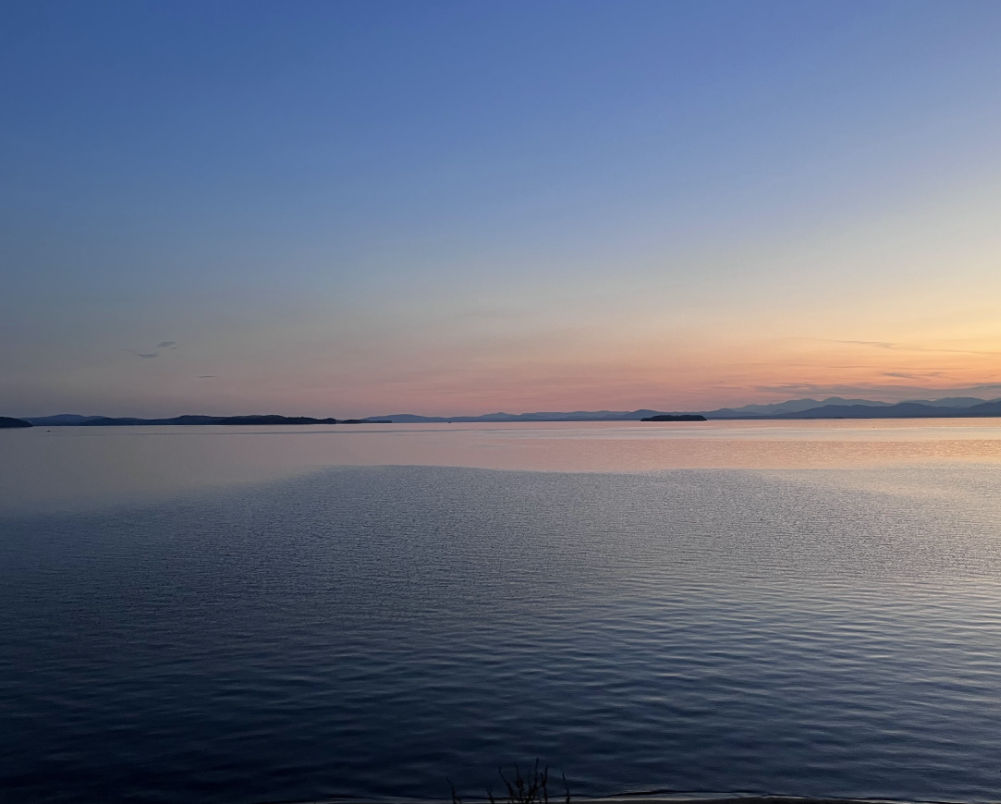
Sunset on the Way Back from Visiting Rock Point (10/16/2022)
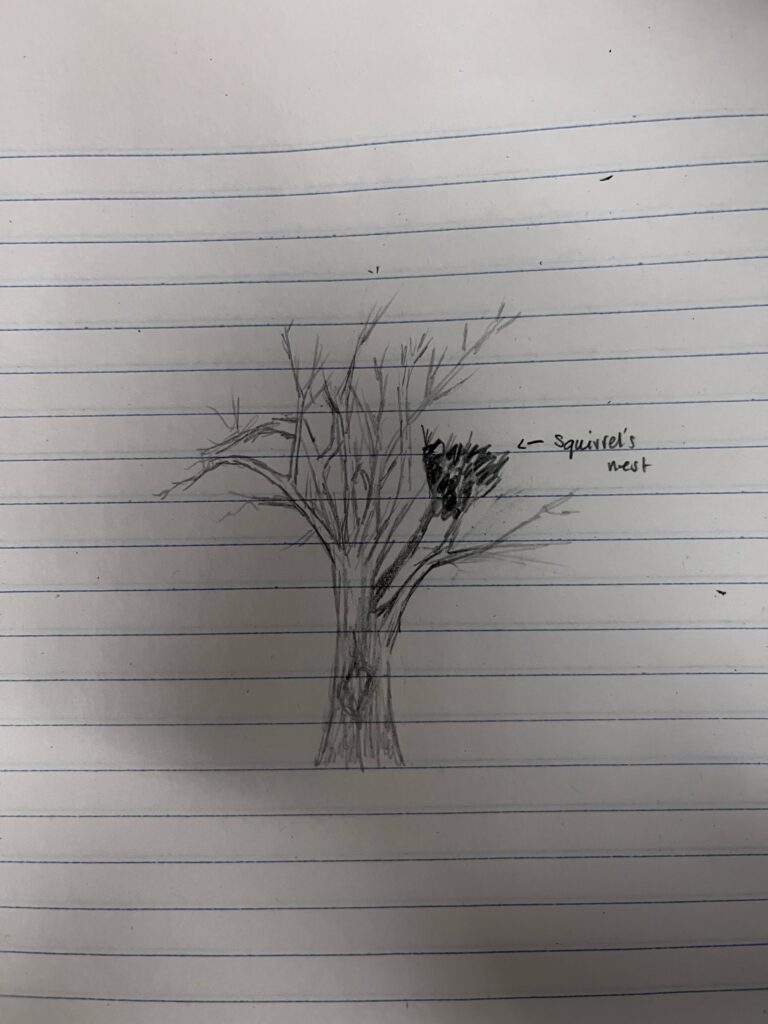
In contrast to some of the patterns we have learned in lecture, animal activity has actually appeared to slightly increase rather than decrease, likely due to the lowering influx of tourism this time of year. While this contradicts with the normal pattern of small mammalian hibernation during the winter months, it may also be my perception of ongoing animal activity vs. the actuality of animal activity. I saw a squirrel’s nest in one of the trees, as well as a few spots of animal scat, which is more animal activity than I have noted before. As a whole, Rock Point seemed the quietest it has ever been; with the combination of decreased human activity and no rustling of leaves, there was a new stillness there that could only be described as the coming of Winter. It was freezing, around 27 ° F, and the air smelled and felt crisp due to the low temperature.
My Attempt at Drawing the Squirrel’s Nest at Rock Point (12/10/2022)
Reflecting on Phenology
I thoroughly enjoyed this entire project as it motivated me to explore Burlington’s natural areas more, and allowed me to appreciate one in particular. I learned to love many aspects of Rock Point, but the ones I loved the most are as follows. Firstly, the serenity and calmness of the whole area were unlike any other place I’ve visited in Burlington. The whole spot feels so still, which I really appreciated in contradiction of such a busy campus. I also love the difference in landscapes within such close proximity to each other. The vastness of Lake Champlain and the forested rocky landscape above it compliment each other and make for an all around picturesque place. The aspect I enjoy most about Rock Point, as I mentioned before, was the quietness. Being able to immerse myself in such a quiet and natural area in the middle of a large city was an incredibly unique experience that gave me a newfound perception of quietness and wildness in urbanized places.
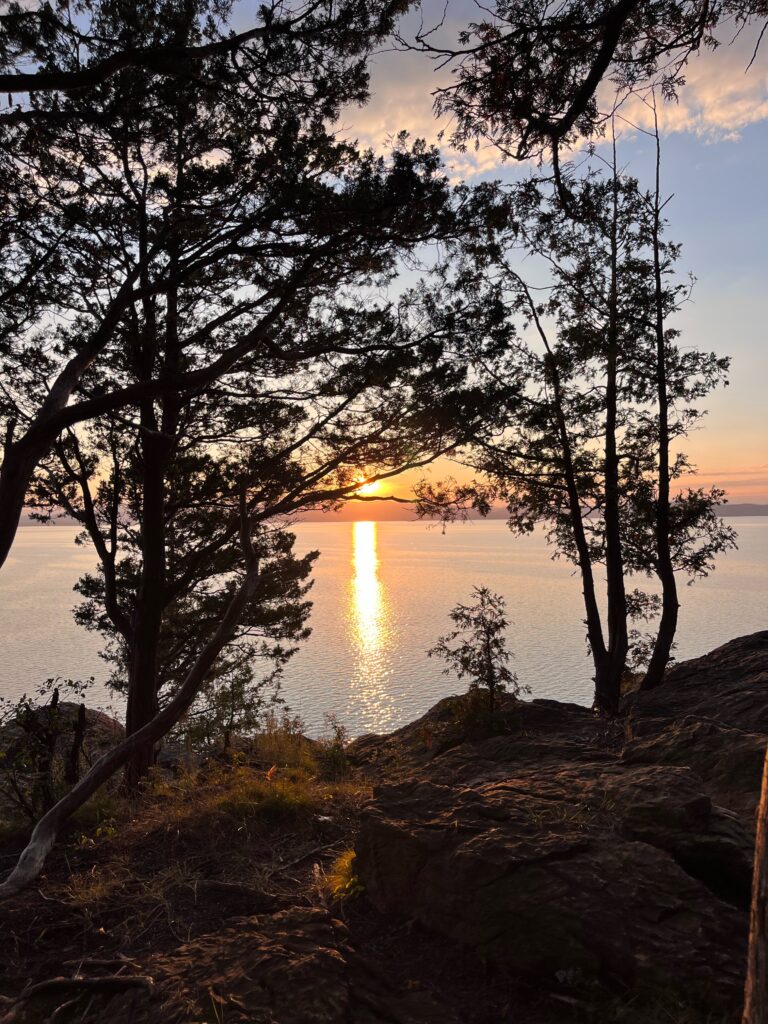
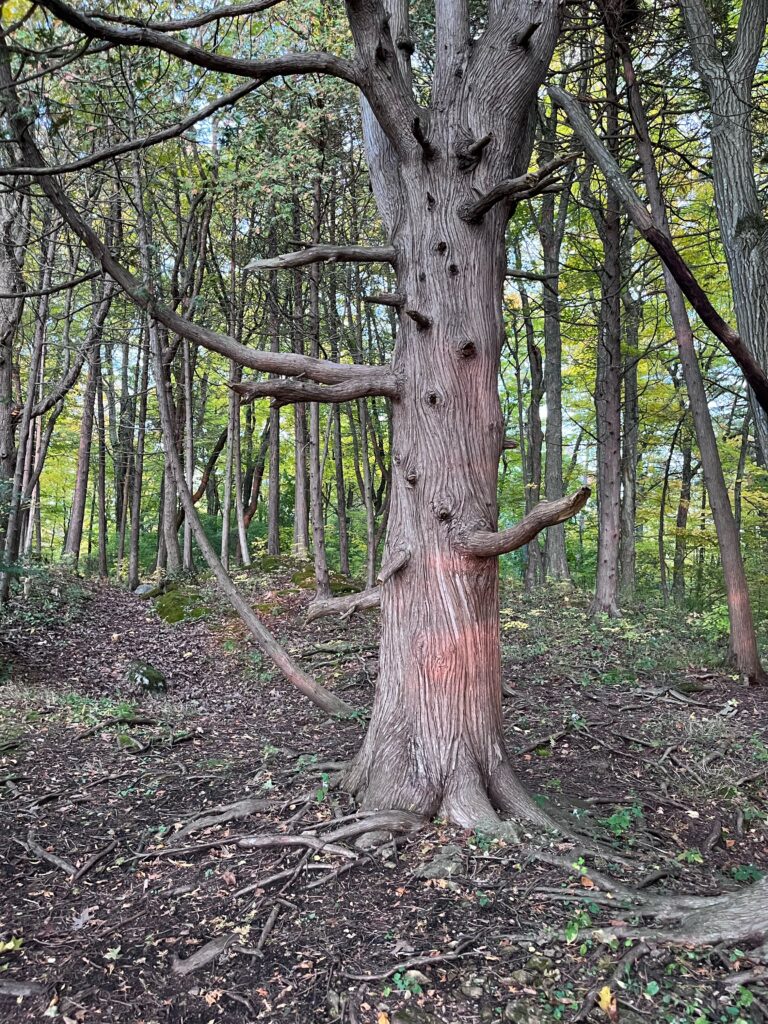
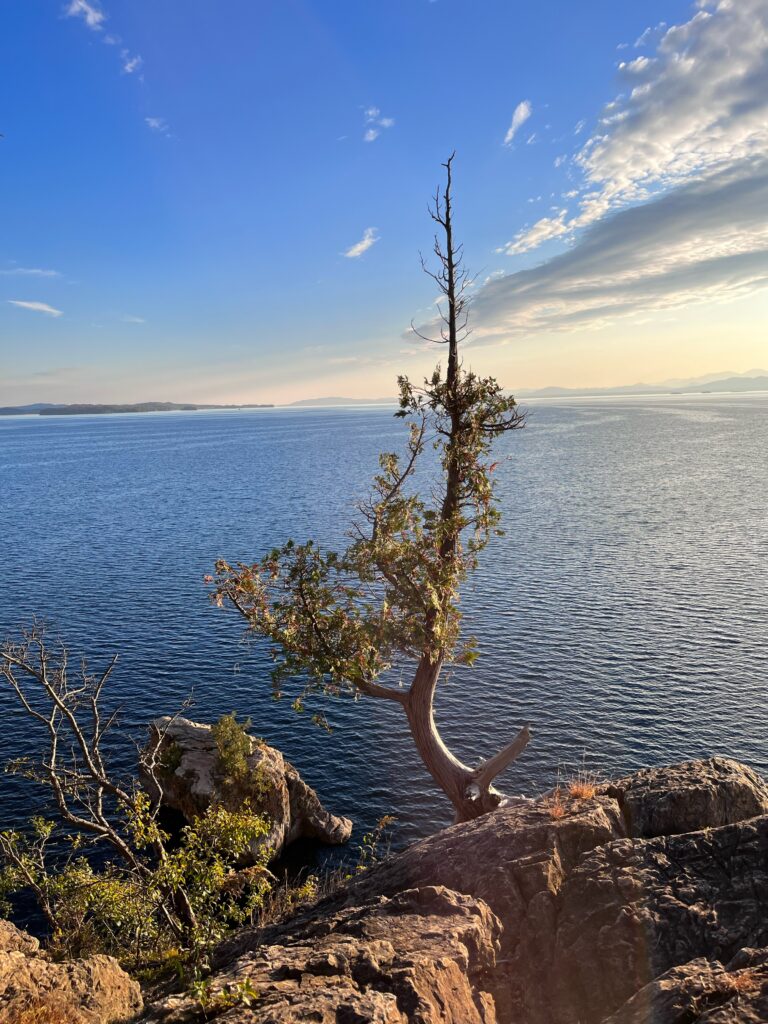
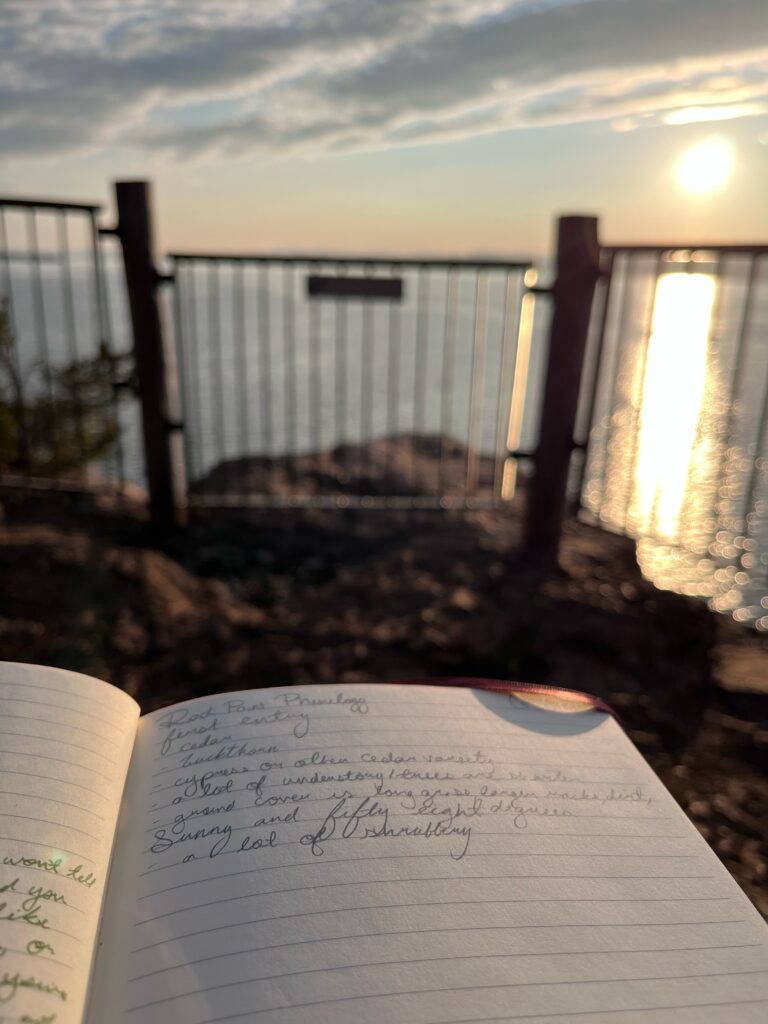
Rock Point Highlight Reel!
(AKA, the prettiest pictures I took at my phenology spot this semester)
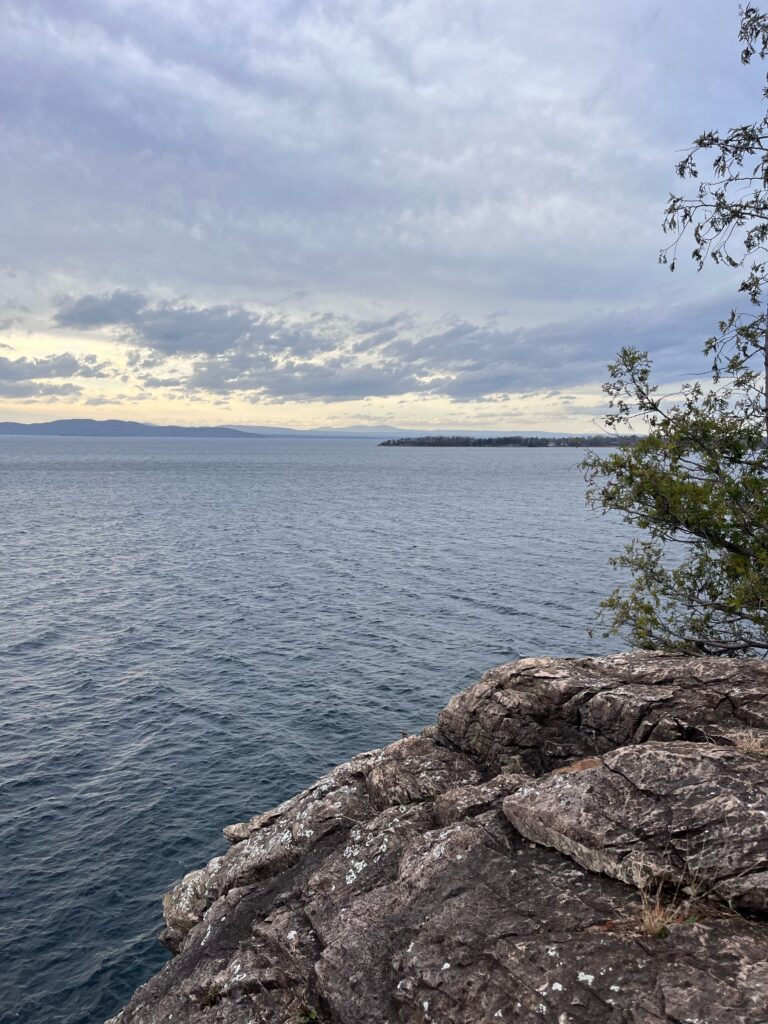
Rock Point Coast during SunsetOne of my Favorite Trees at my Phenology SpotRocky Cliff Leading to the LakeMy First Journal Entry about Rock Point
Posted in Uncategorized on November 27, 2022 by aweeden
By: Amelia Weeden
Friday, November 25th, 2022
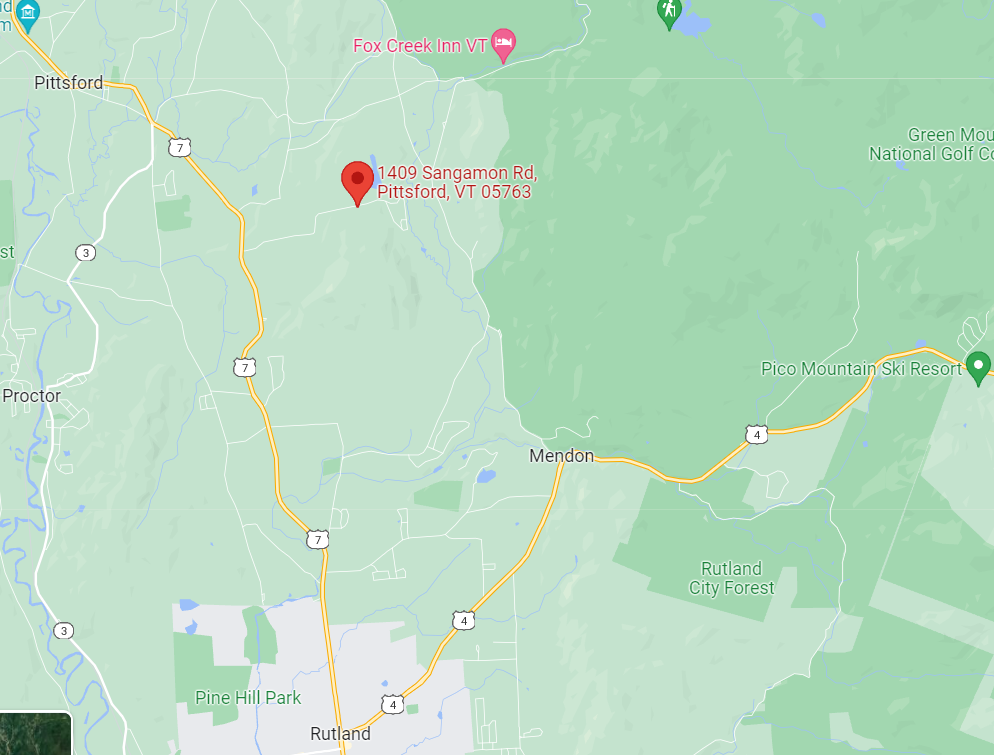
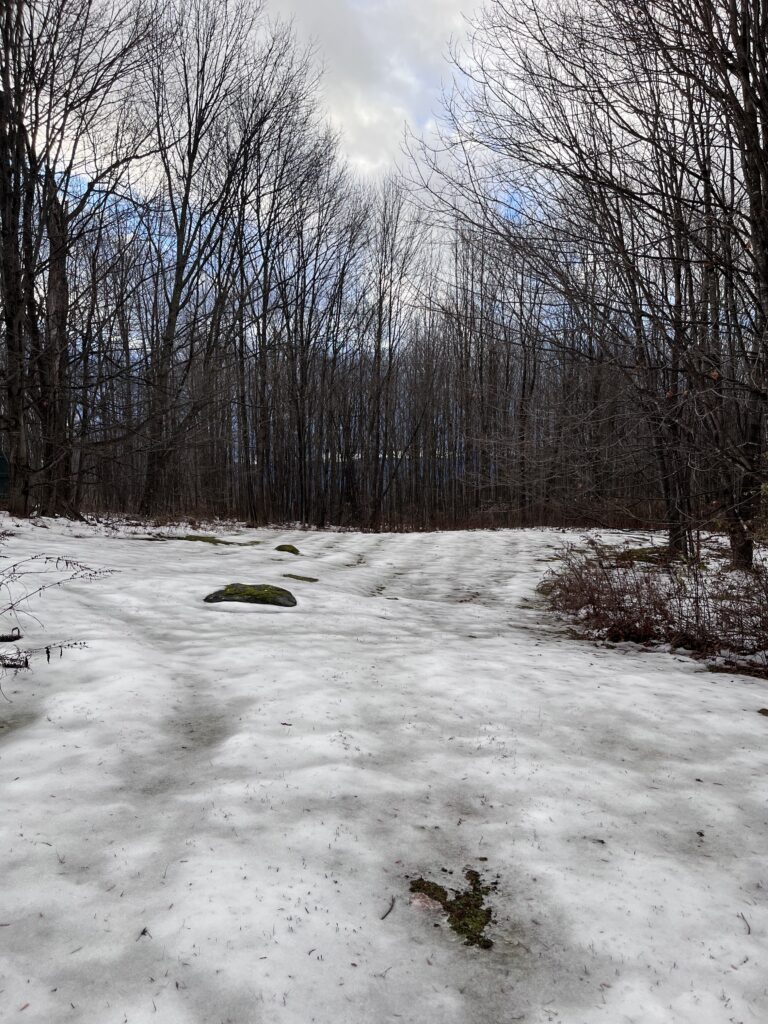
The phenology spot I chose for this assignment is my Grandparent’s backyard in Pittsford, Vermont. The ecology of their backyard was similar, but not completely alike to that of my usual spot. The trees made up the overstory and varied in species, from Sugar maples, to Red Maples, to White Oaks. All of the trees are fairly young as they began to grow in around the 90s and 2000s. There was a decent amount of shrubbery and understory as well, including Knotweed, Buckthorn, Milkweed, Clovers, and Grass. This spot has always been very special to me as I spent a lot of time here growing up. I have watched the ecology and phenology of this spot change and grow as I have changed and grown with it.
Google Map View of My New Phenology SpotMy Grandparent’s Backyard, Trees Void of Leaves (11/25/2022)
Posted in Uncategorized on November 7, 2022 by aweeden
By: Amelia Weeden
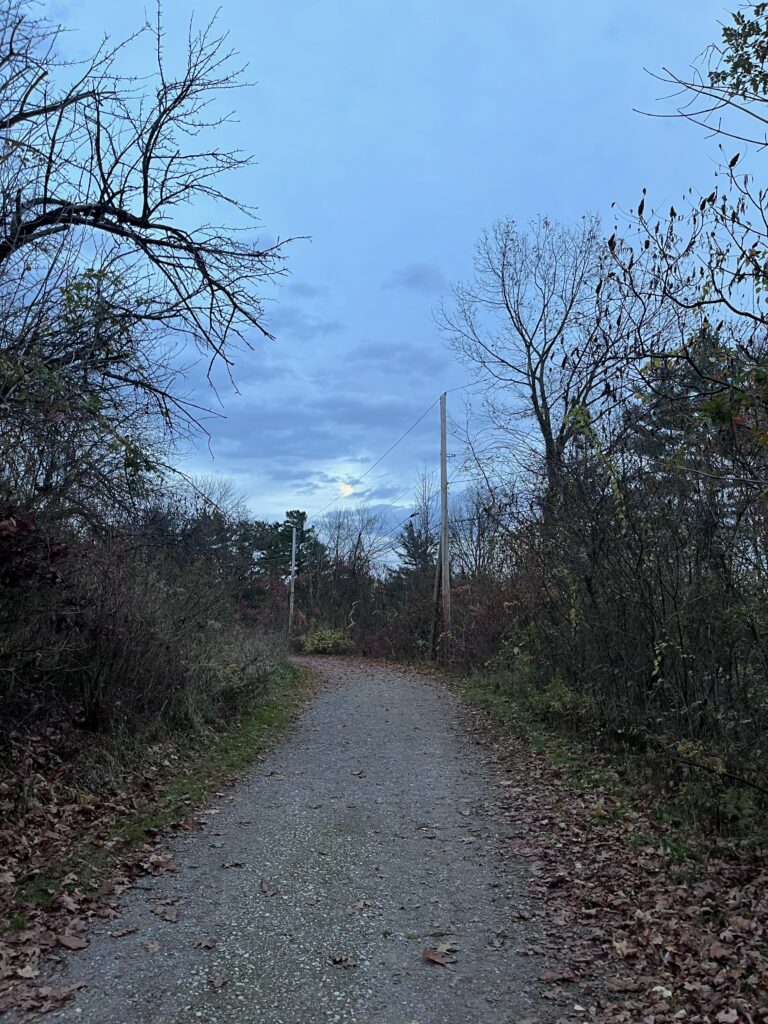
Visiting Rock Point this past Saturday was a completely different, yet gorgeous, experience from my last visit. The trees were barren, and the paths there were covered in fallen leaves. It was extremely windy, but surprisingly quiet. With the exception of a few other visitors and the sound of the wind on the lake, there truly wasn’t a lot of noise being produced. The main difference in the phenology of my spot was by far the bareness of the trees. Looking out you had a much clearer view of other parts of the lake, as leaves weren’t interfering with your vantage point.
(11/5/2022) Path to Rock Point at night, lined by trees with very few or no leaves.
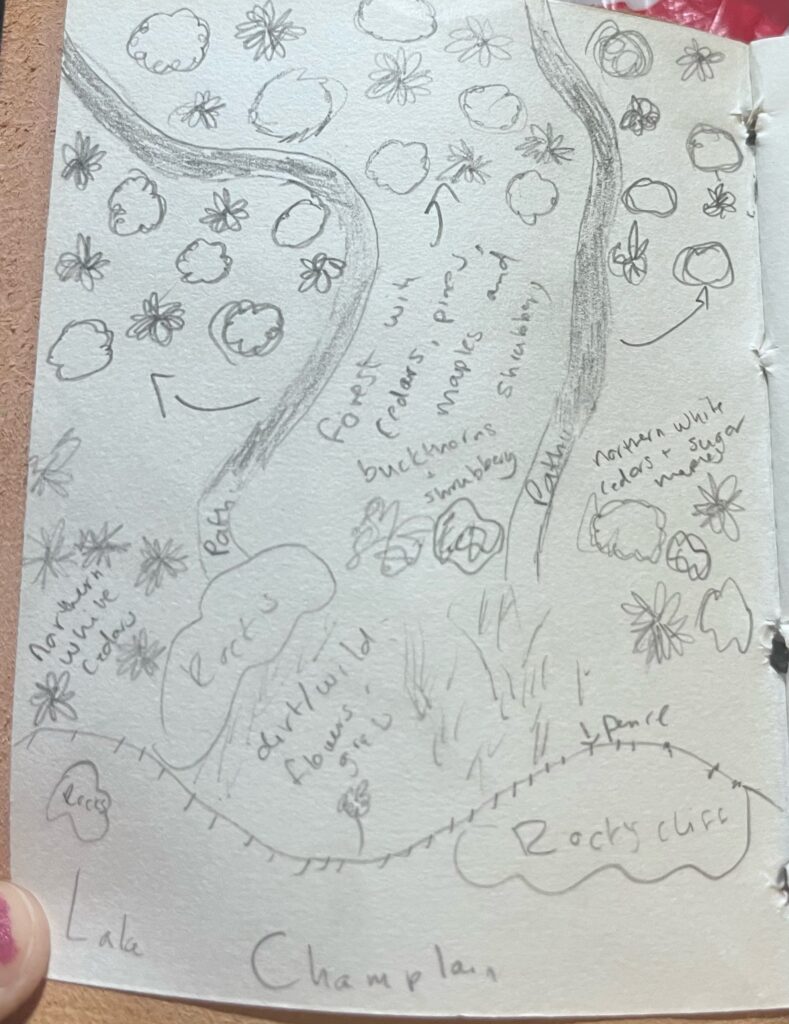
Below is a rough sketch of a bird’s eye view of my phenology spot.
(11/7/2022) Sketch of phenology spot including general species and location(11/5/2022) View from Rock Point, looking out onto another section of the lake with noticeably barren trees (stick season).