
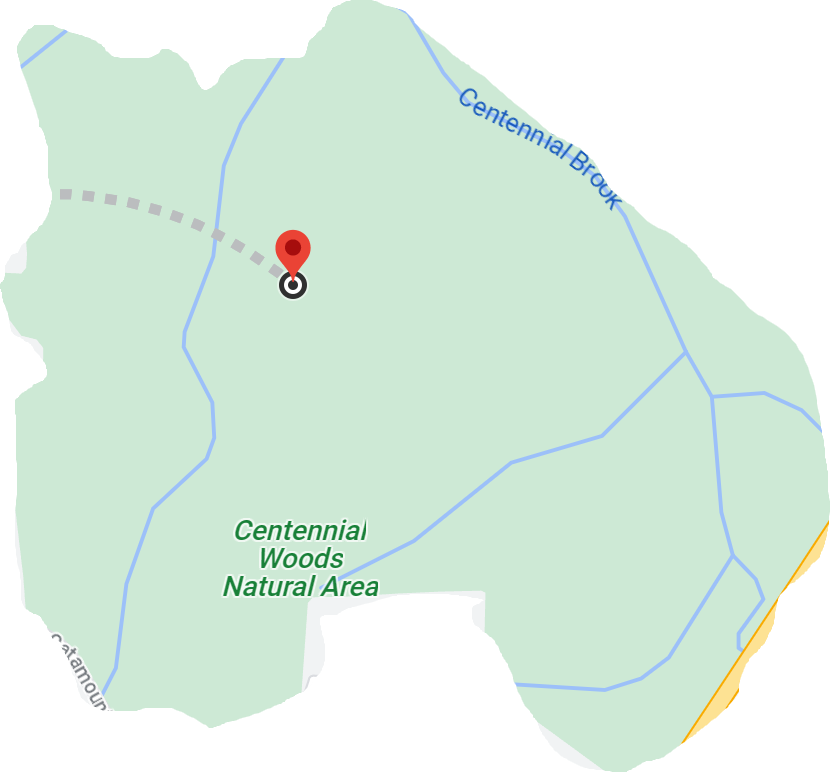
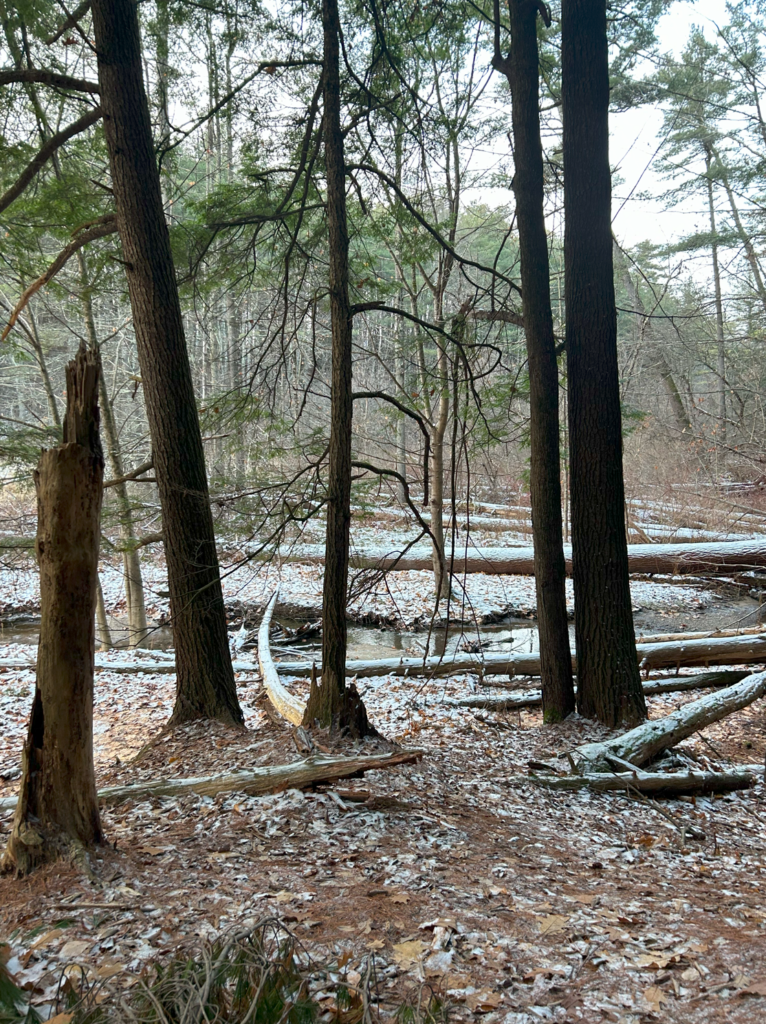
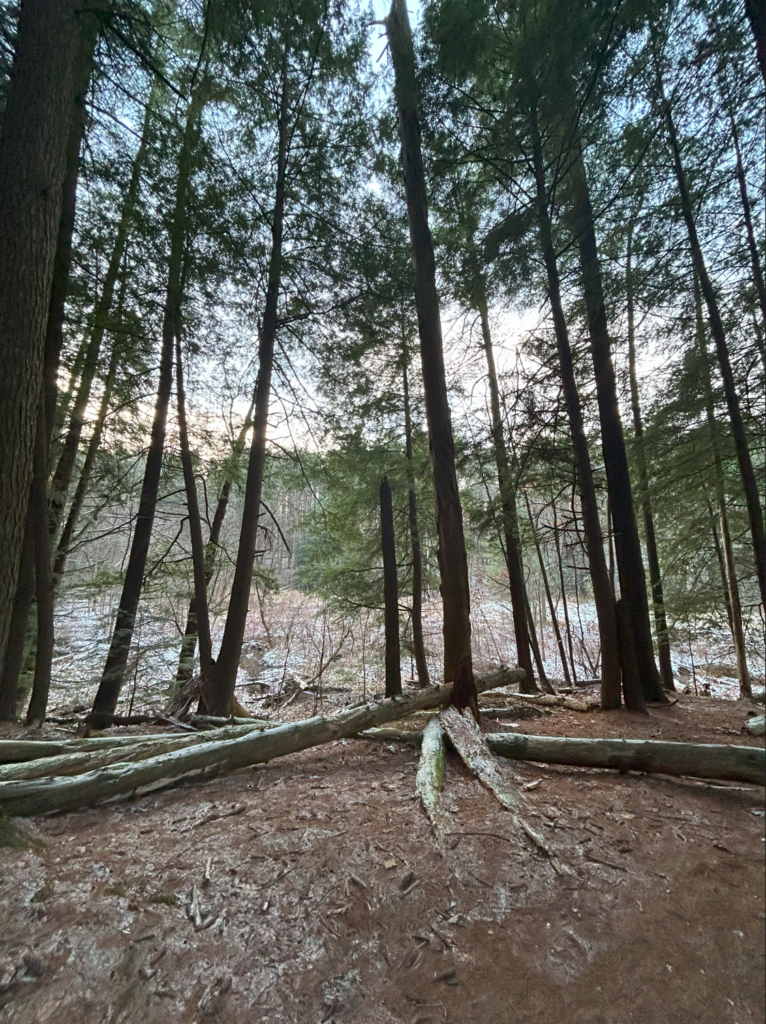
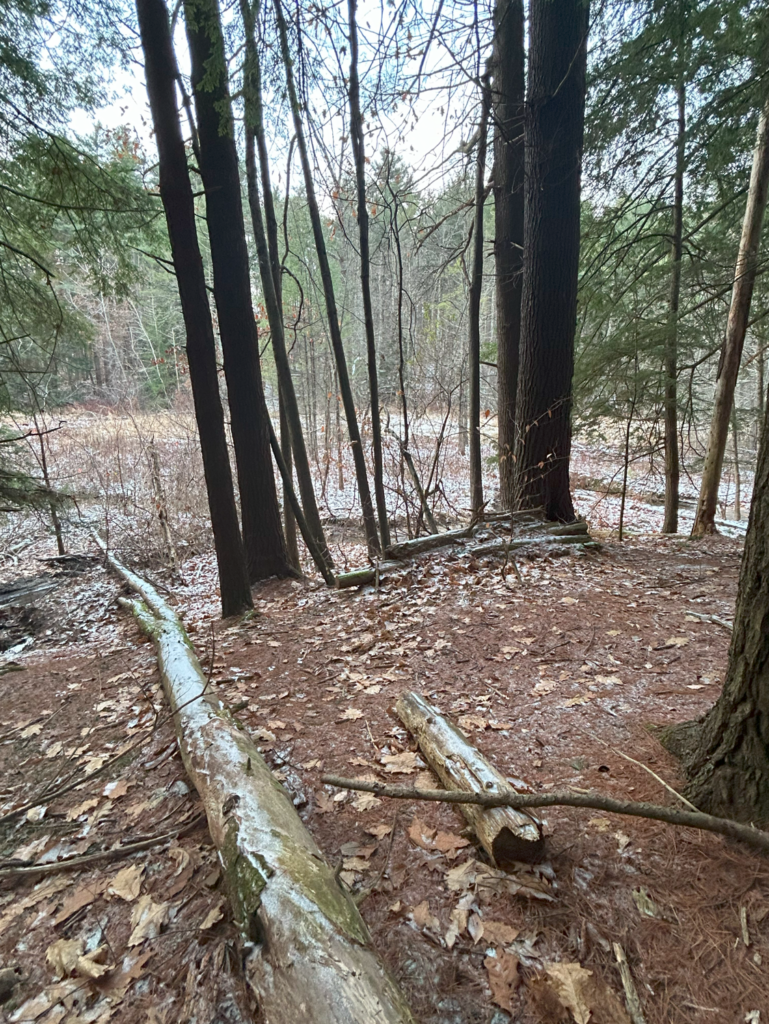
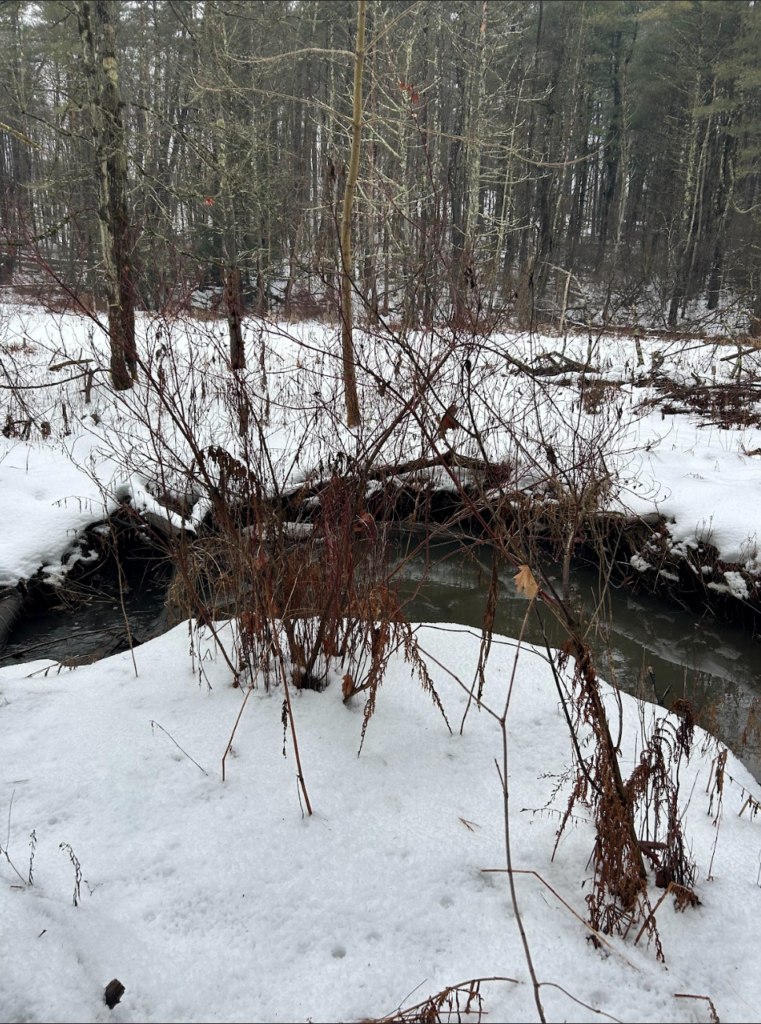
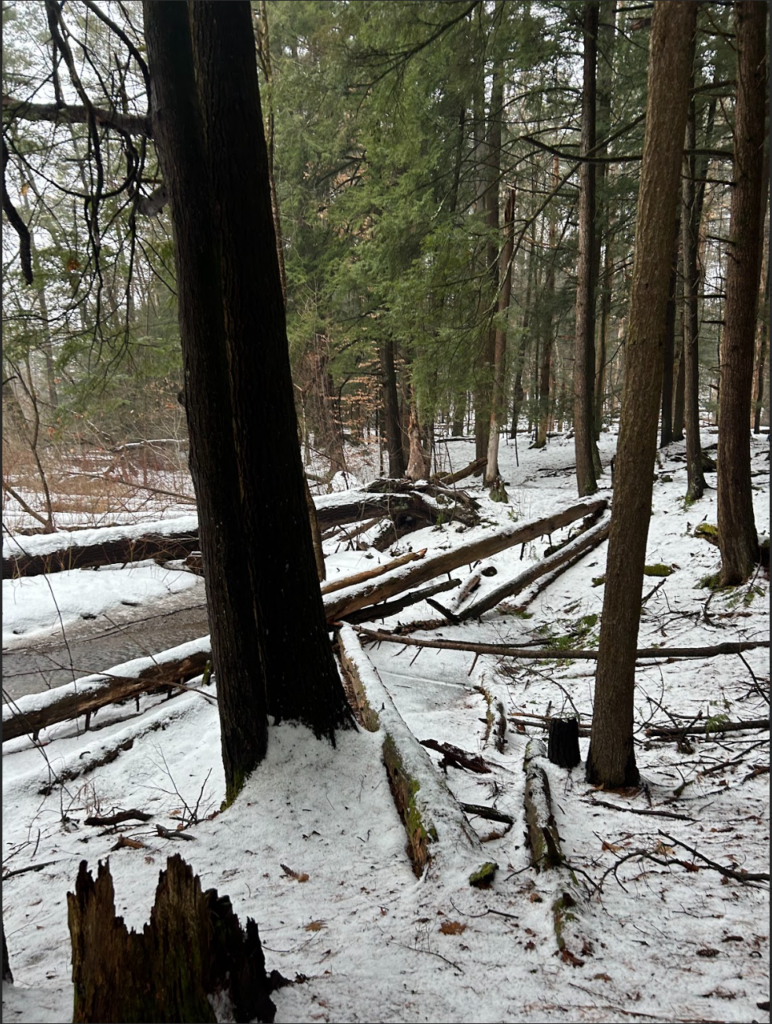
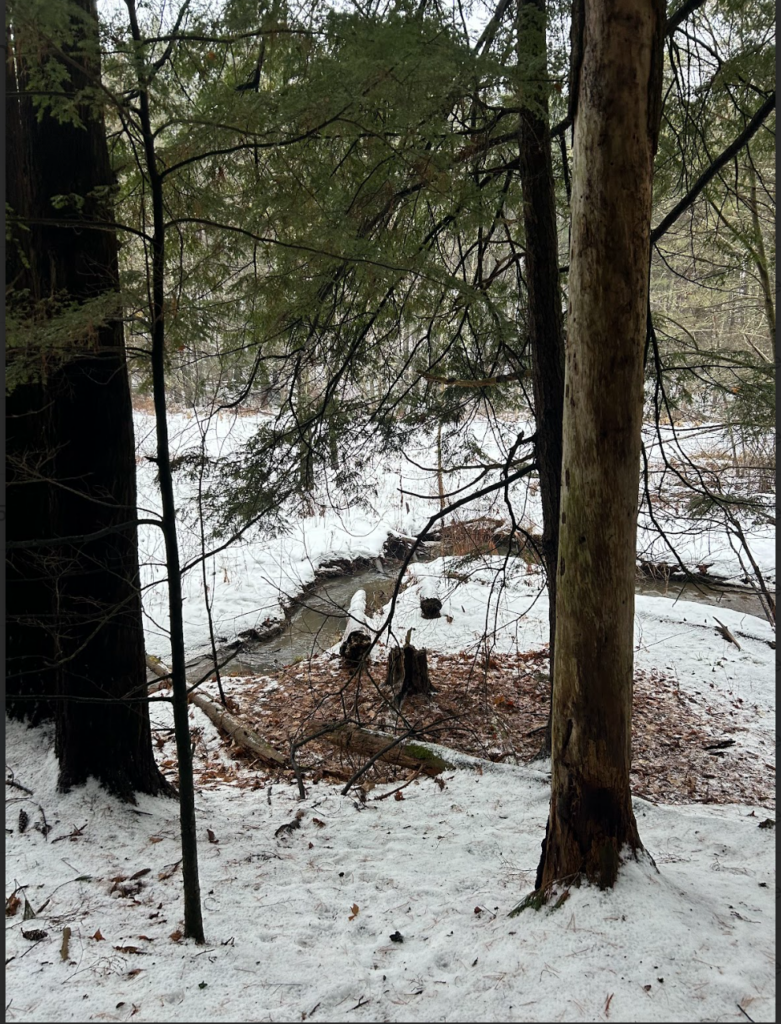
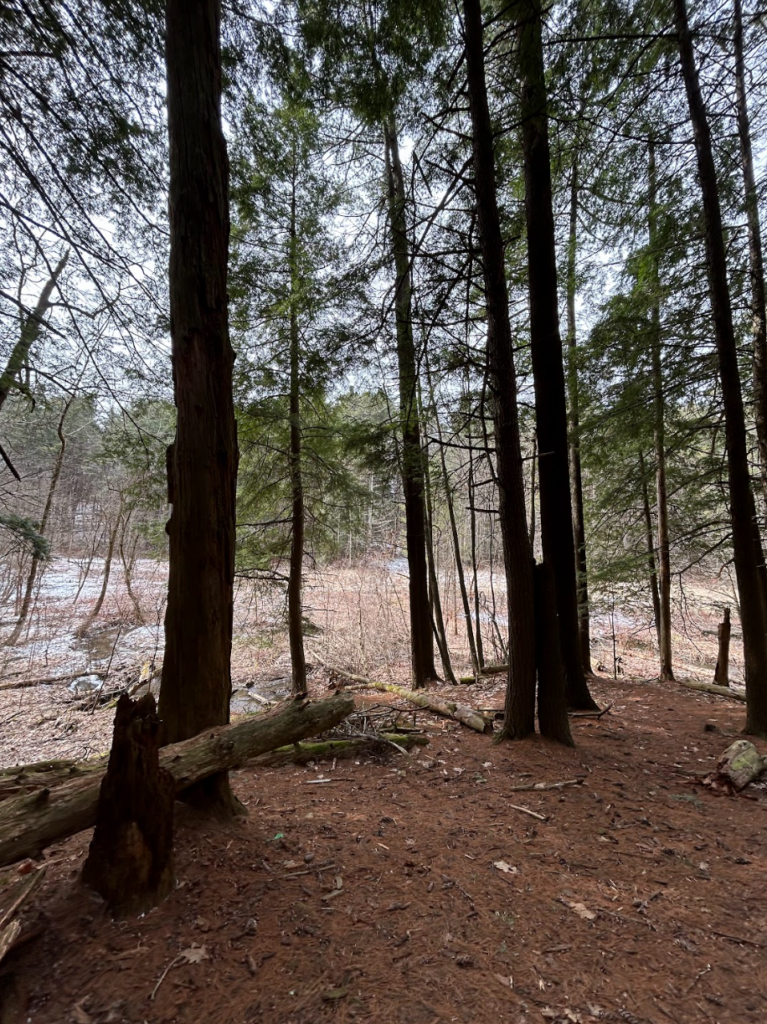
For my spot I picked Centennial Woods. Specifically, it is about a 5-minute walk into the woods following the path until you get to the first clear opening. From there you will go down the small hill then back up another hill to another opening. This opening will have a few fallen trees that are laid out to seem like a sitting circle. I chose this spot because I think it is quite beautiful. It has so many different trees, shrubs, and moss growing. It has a very small stream and pond. There is a steep hill to get to the pond but there is a fallen tree over the water so you can adventure over to the other side.
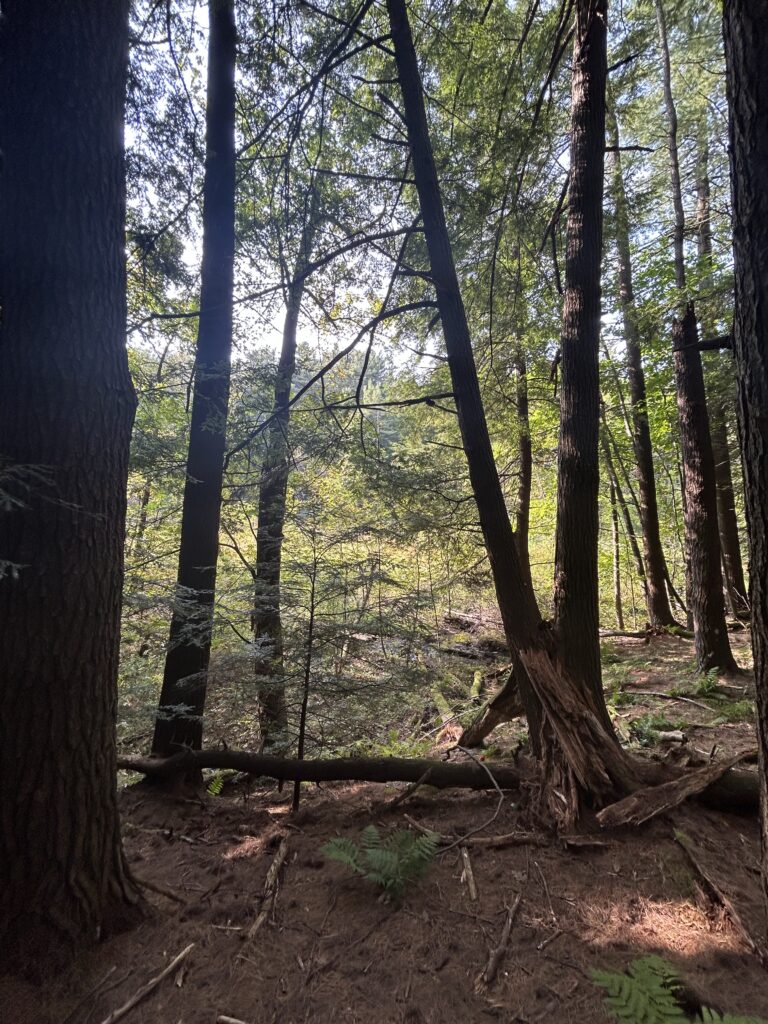
There is mix many mature trees and young trees. Most young trees are growing out of the fallen, rotting trees. There are more young trees and ferns near the water.
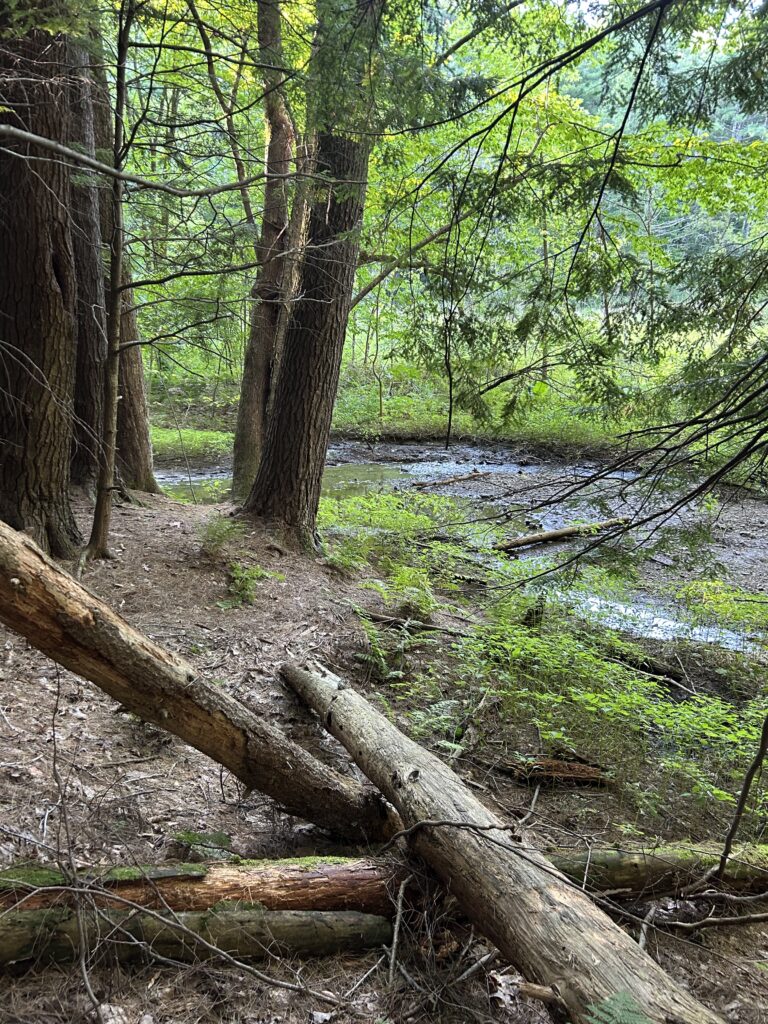
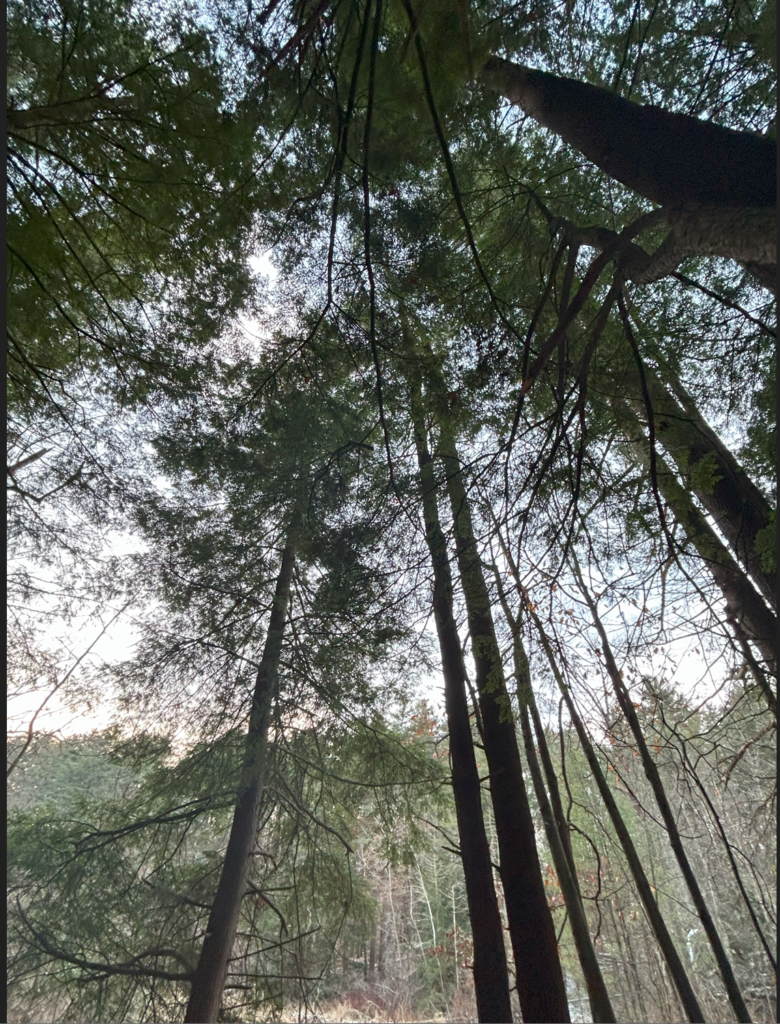
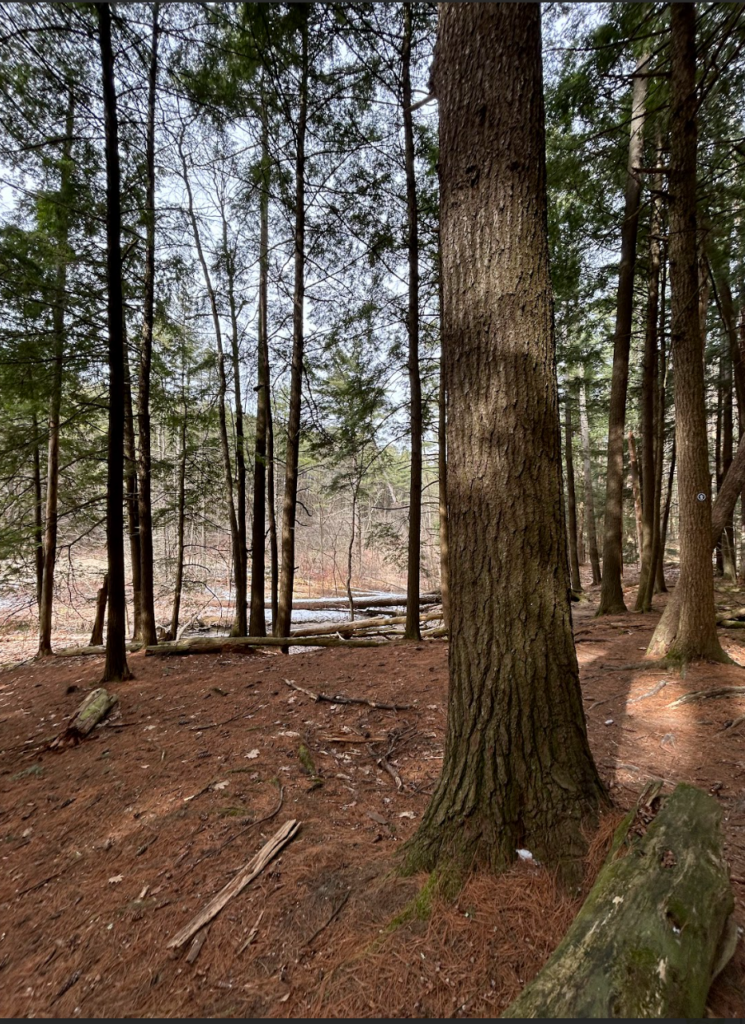
The most common woody plants in this area are eastern hemlocks, sugar maples and eastern white pines. There are also many ferns.
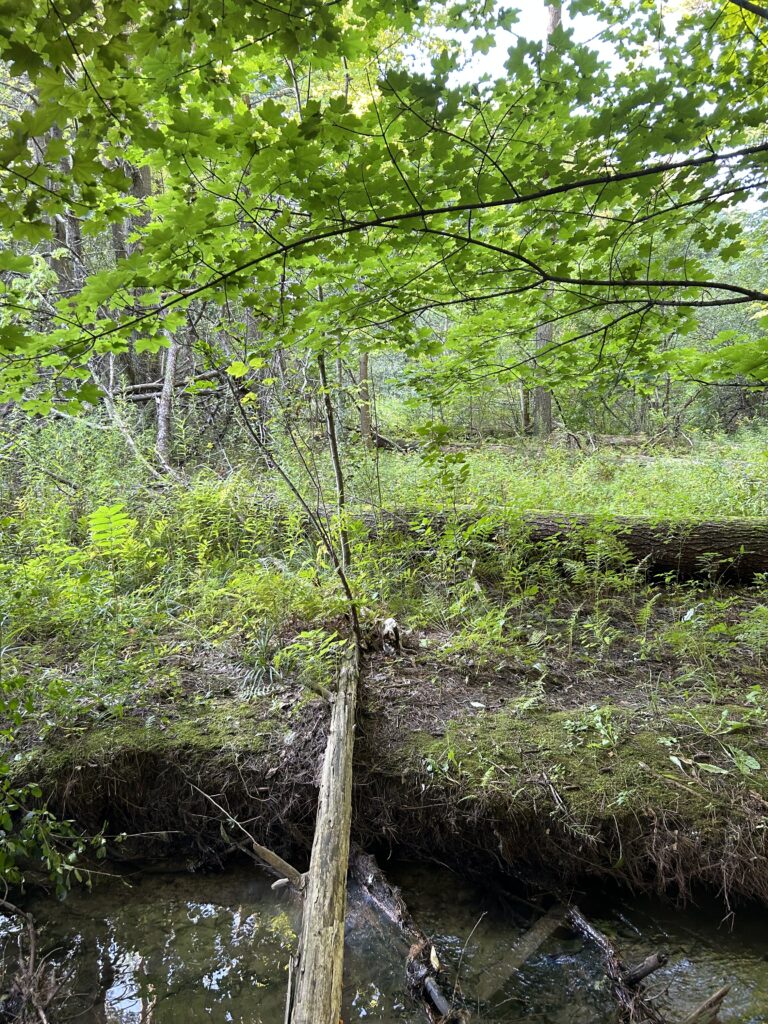
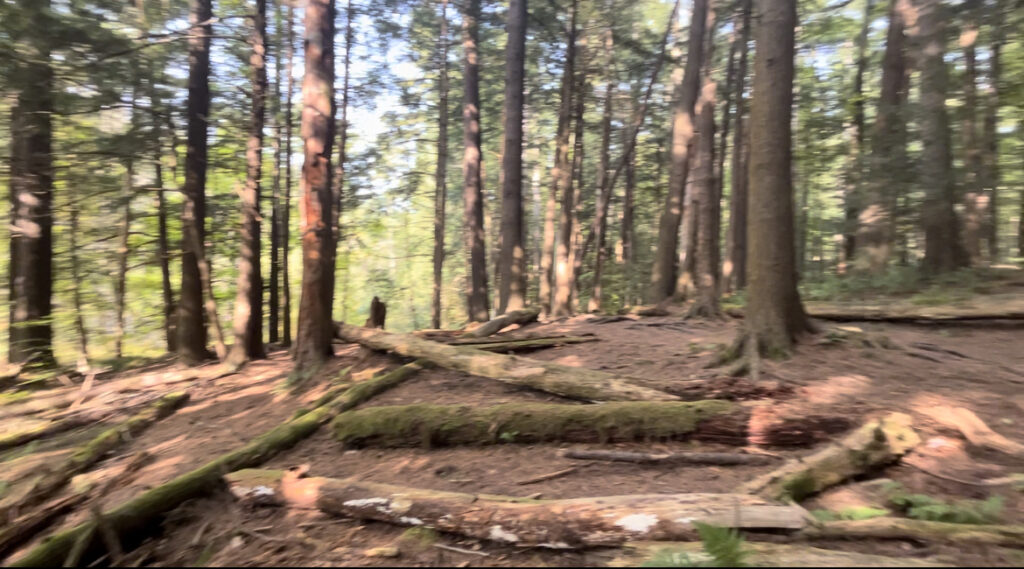
After visiting my spot for the second time I noticed that another tree had fallen. As I sat and listened for a few minutes I heard a lot of bird songs and rustling in the leaves both on the ground and in the air. I could hear the sound of the stream flowing, I heard water crashing and breaking over rocks.
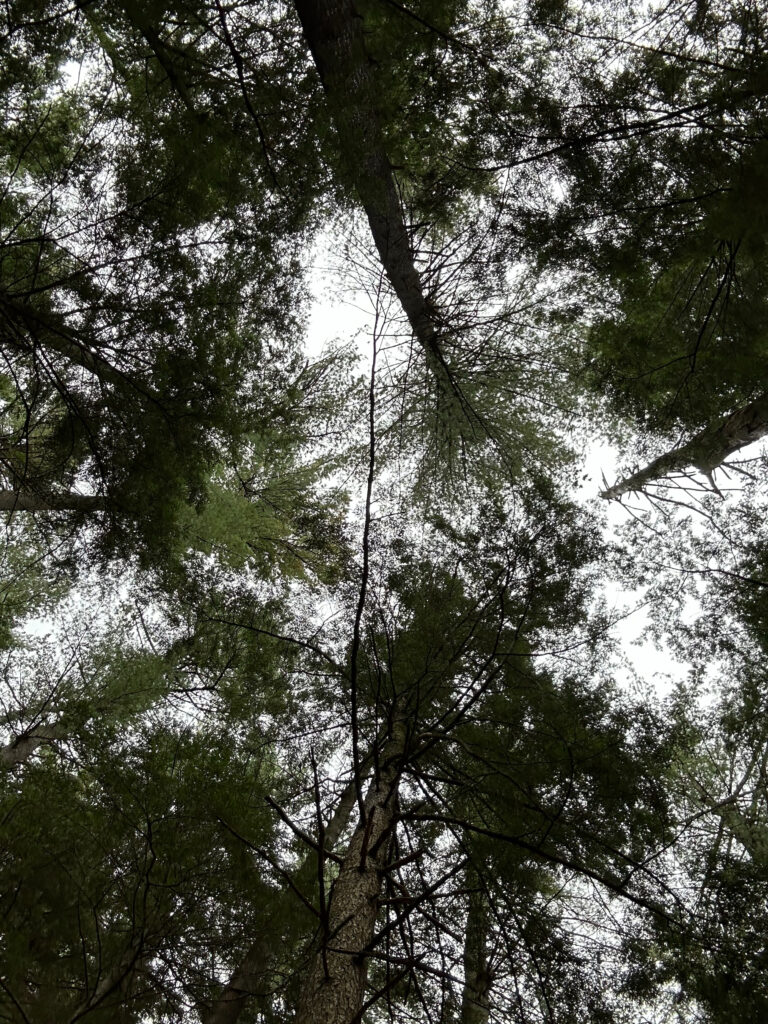

Phenology update: Beginning of stick season!
As I went back to my spot, I noticed a lot of changes. The majority of the surroundings trees are evergreens so most of the ground is needles. You can feel an increase in the number of needles on the ground because it gets softer and softer. The few non evergreens, like maples, have lost most of their leaves and have become mostly bare. Nothing has seriously changed; the little stream is still running, and the ferns are still very small.
Phenology Spot at home!
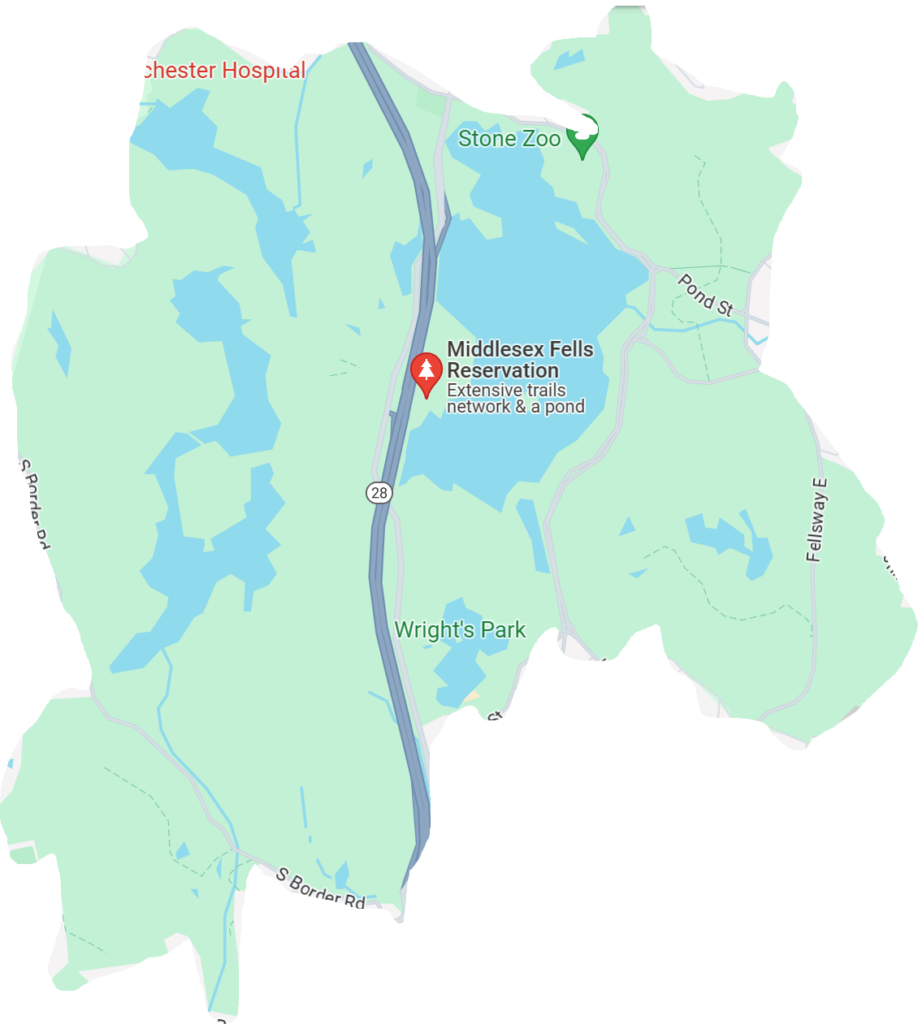
After reading the “Honorable Harvest” I could figure out what to leave as a gift for my home phenology spot. This is one of my favorite spots to bring my dogs on walks. Even though it is surrounded by busy roads once you are in the woods it is so quiet and beautiful. So instead of leaving a gift I decided to take. I went on a long hike with my dogs with a trash bag and as I followed the paths, I went around picking up all the trash I could find. By the time I finished the hike I had almost of a full bag of Dunkin’ wrappers, snack wrappers, doggy bags, and so much more. Since it this is one of my favorite spots, I wanted to do something special, and taking all the trash made me feel like I did something special.
This spot is not very similar to my phenology spot at all. The composition of trees is not the same at all. The main ones here are Northern Red Oaks, White Oaks, Norway Maples, and Eastern White Pines and my spot in Burlington has more pines and hemlocks. What I thought was surprising was that the spot in Melrose had denser understory and more woody ferns and shrubs then the spot in Burlington.
These woods had a new grove of Eastern White Pines. They are very young but seem to be in a very good spot.
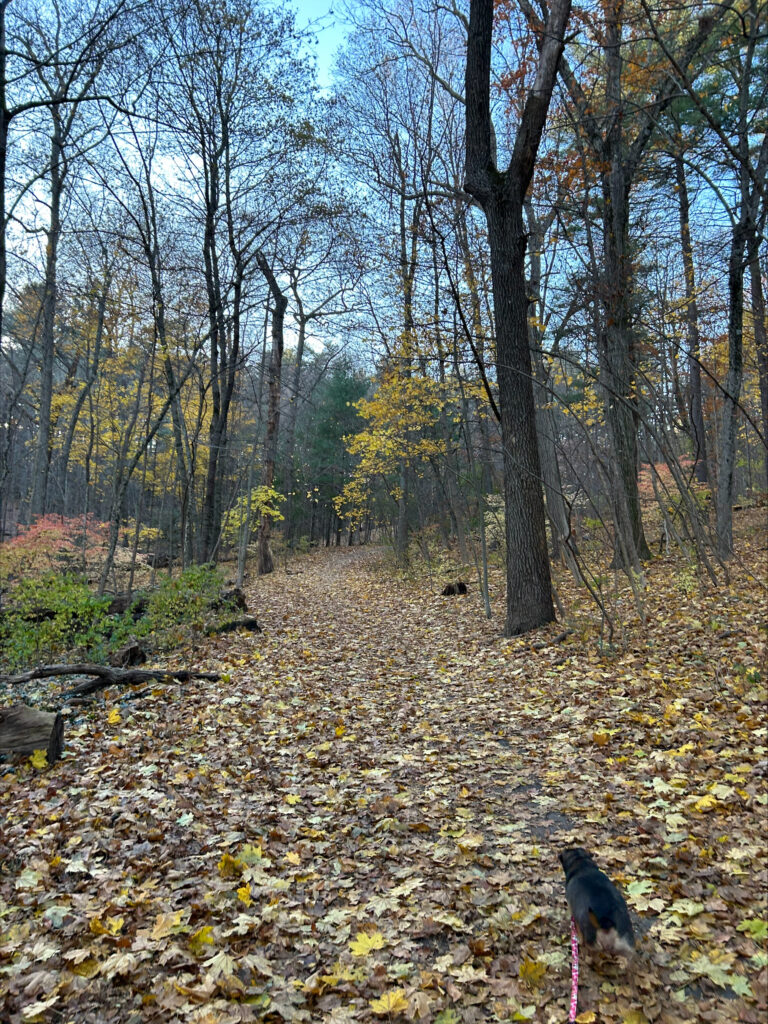

Final Update 🙁
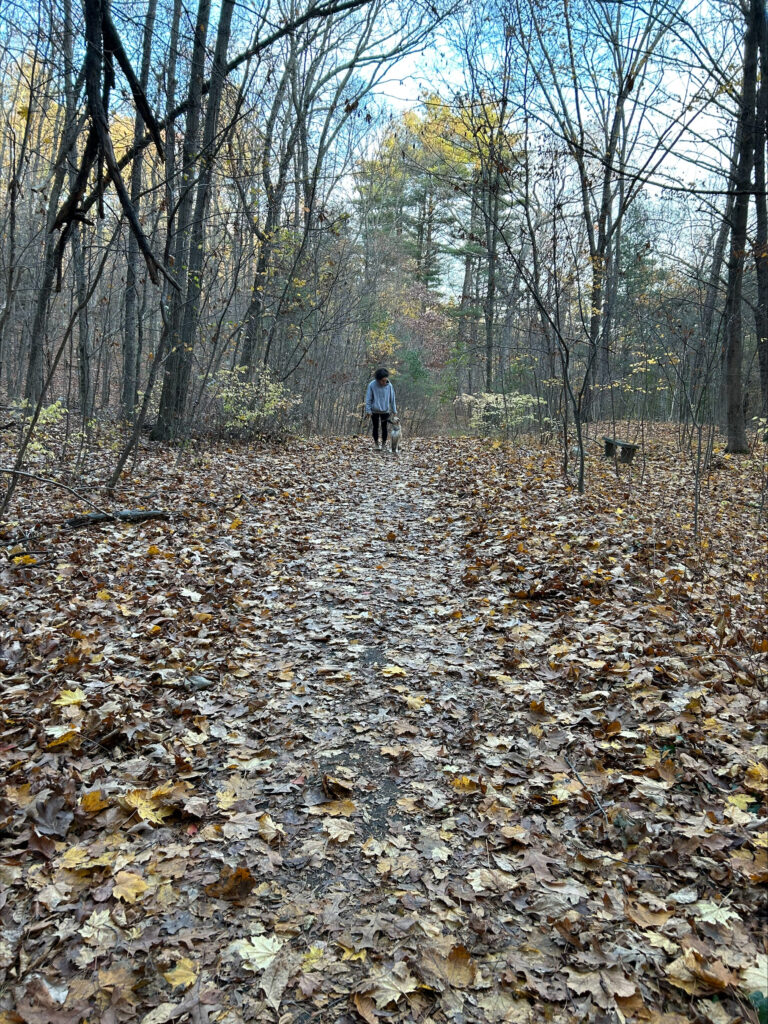
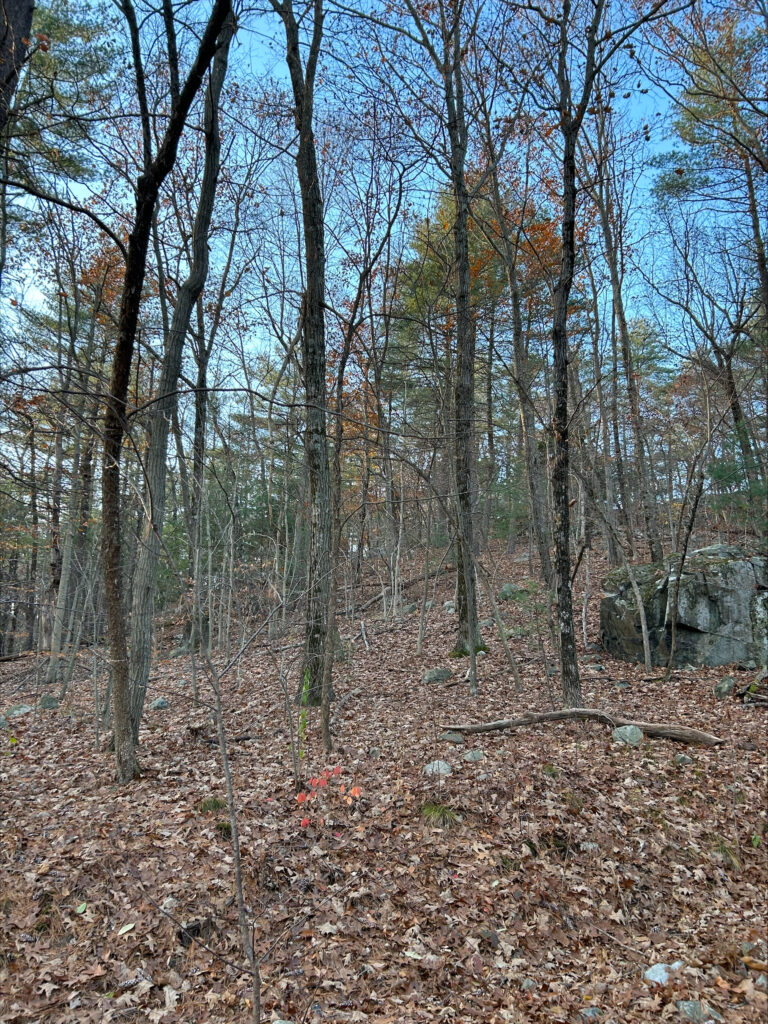
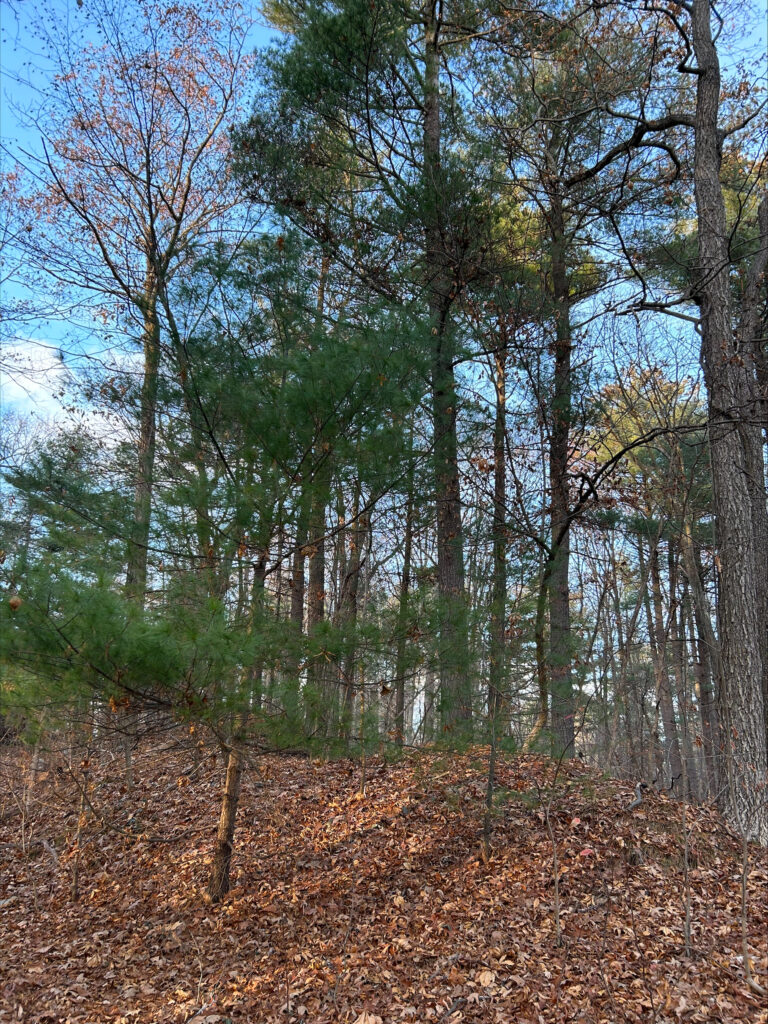
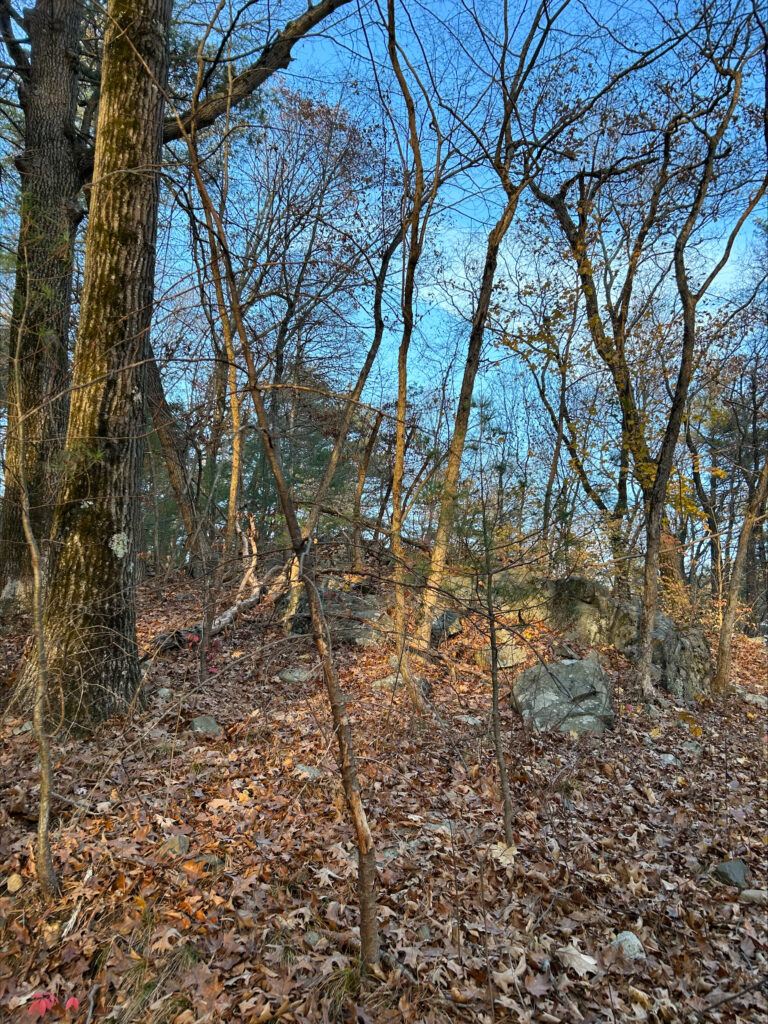
When I went back to my phenology spot there were no leaves left on trees except the needles for Eastern Hemlocks and Eastern White Pines. Unfortunately, there were more fallen trees, but the amount of moss was a drastic increase compared to the last time I went out. The ferns were also a lot more prominent. I’m not sure if it was a contrast from the white snow compared to the usually brown fallen leaves, but they were almost greener than usual.
As for leaf litter, it is a majority of needles of Eastern White Pines. As I was walking up to my spot, and as you get closer to the brook there are some Northern Red Oak leaves and very few American Beech leaves. The leaves are still whole and don’t look like they have been there for a while based on decomposition levels. There were many different levels of decomposition in the pinecones though. Some were whole, some in pieces, some very stiff, others falling apart if they move.
I couldn’t really see any evidence of animal tracks. The center of my spot is a pretty popular area for hiking so any non-dormant animals wouldn’t be in that area. The snow was also melted is most spots, so it was hard to tell.
Usually when I go out to my spot, I can hear birds chirping or a distant rustling in the leaves but today it was silent. Since most animals are now not as active or have migrated, I could really hear the running water from the brook. There is always too much “background” noise to hear the running water but today all you could hear was the water. It was so peaceful.
Even though this project is over I think I will continue to go visit my spot and see it change. I love going out there and just taking a break. When I go out for the assignments, I always leave 20-30 minutes at the end to just sit with no electronic distractions and just sit listening to the trees move in the wind, the animals making sounds or the water running. This is so relaxing for me and a great way to get away from all the stress. I also like taking different ways back every time that way I can see more of centennial woods. Sometimes it longer to get back other times its shorter but it is always new and beautiful.
Spring Semster!
I decided to stay at the same spot this semester. Although the trip was very slippery this spot means so much to me it is worth it! I slipped three times this trip maybe I’ll start a tally.
I could not find munch wildlife activity at this spot. It was filled with human snow prints and dogs’ prints, and I think all this activity scared off wild animals.
I love this area very and it was very cool seeing it covered in snow.
Since the ground is frozen, I can walk on the usually muddy marshy areas near the brook and get a better look at the plants and tree around there. I found some very young red maple trees I have never seen before.
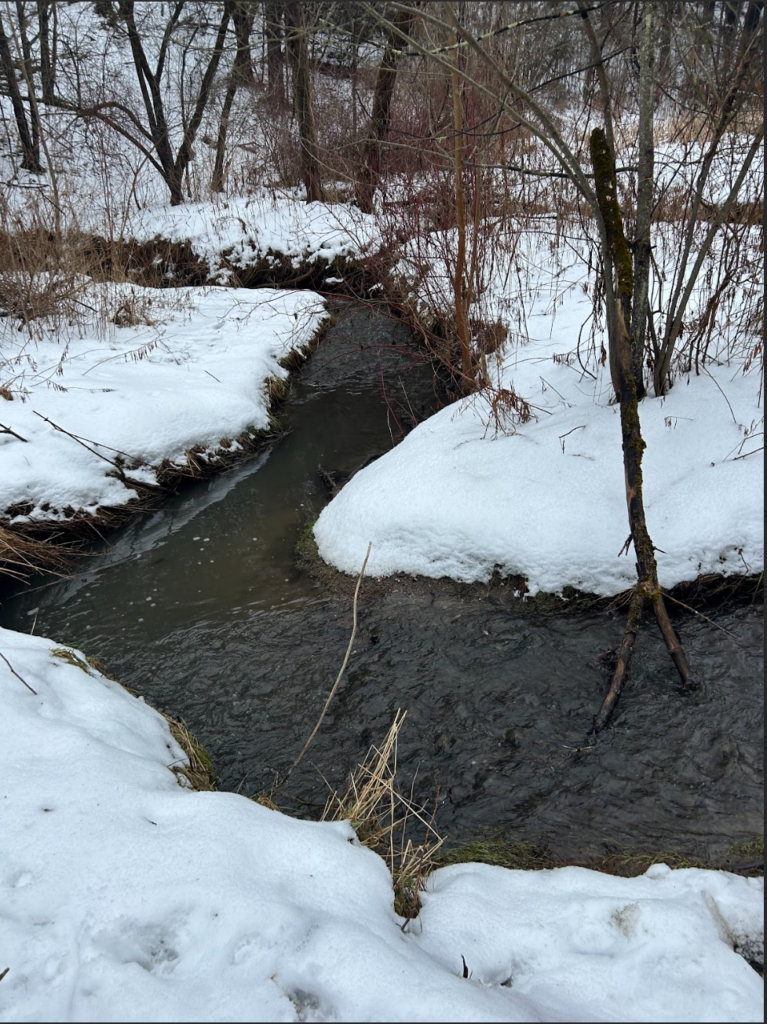
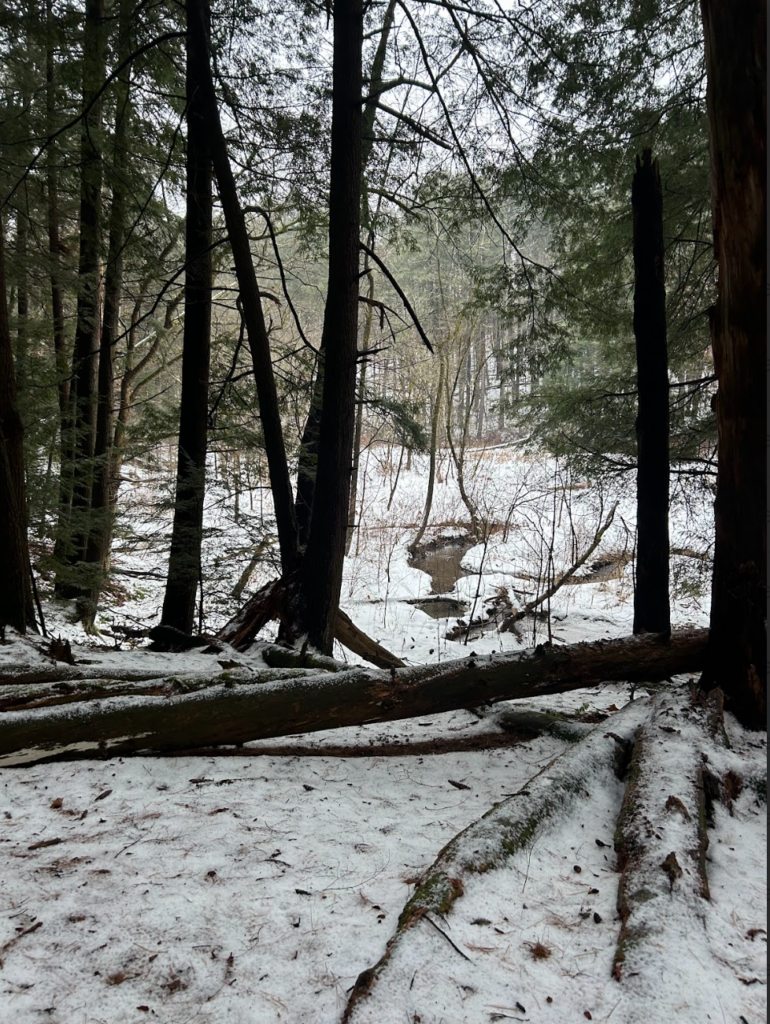
Wildlife in Burlington
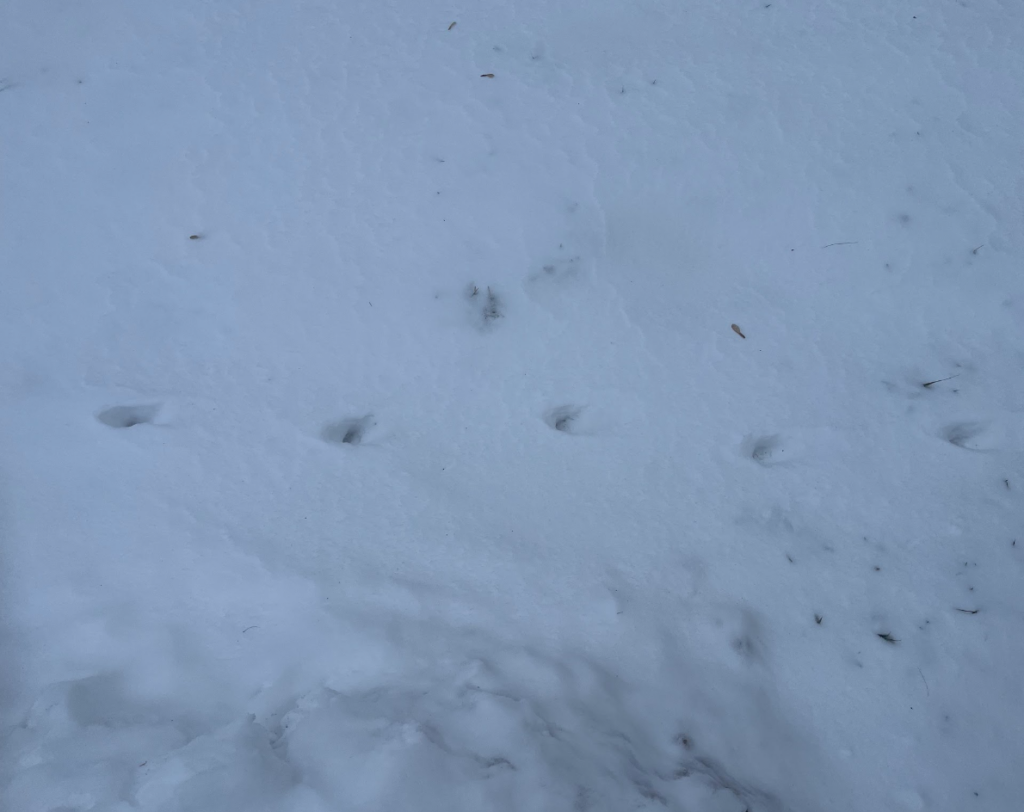
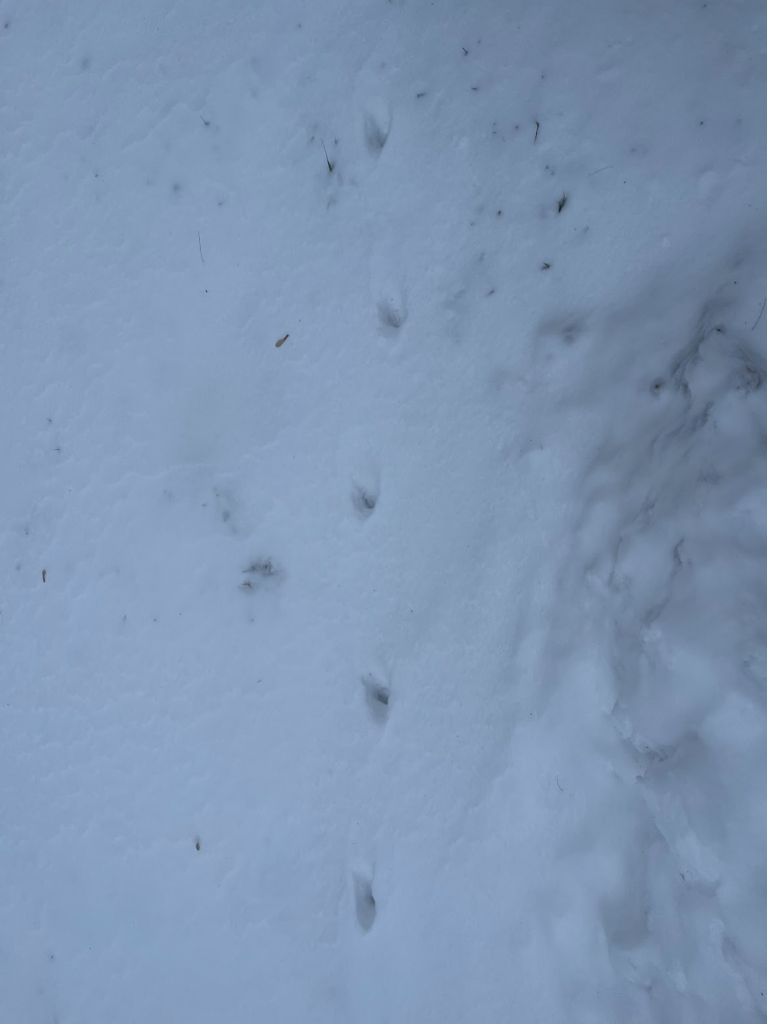
I went behind the gas station near campus, there is a small patch of open land with a few a pocket of trees. I was following what I think is a deer. Based on the diagonal stride and double register I was able to narrow it down to a few animals. Based on the size, 7in, two toes and a oval print hole I came to the conclusion of deer.
March Update!
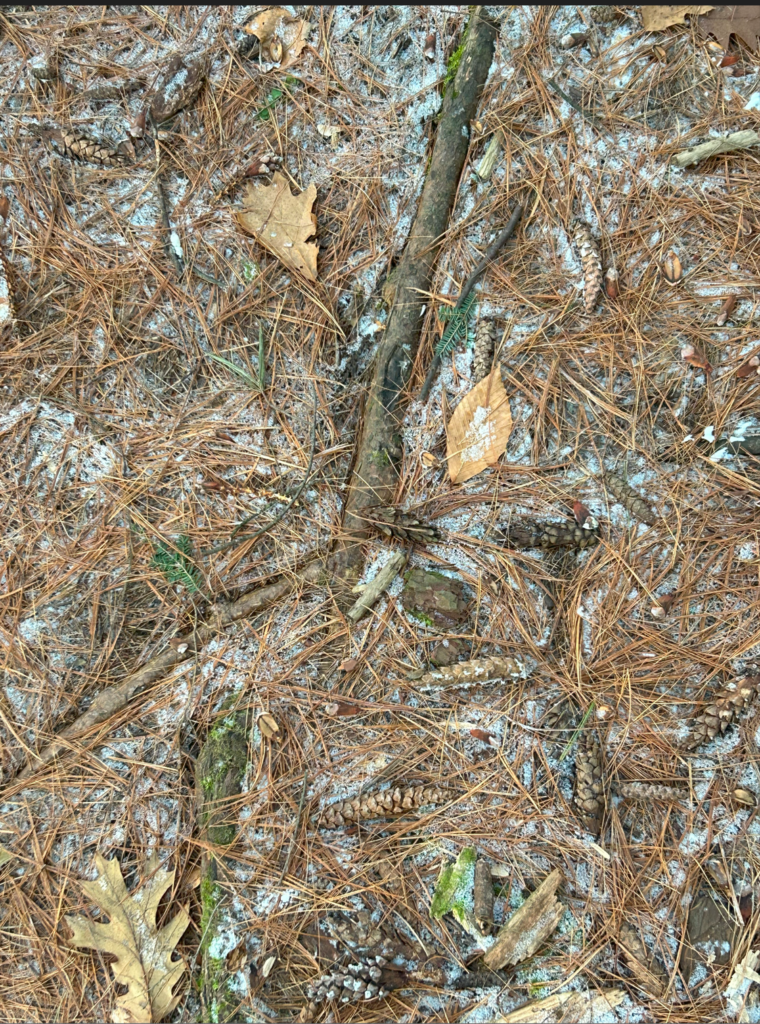
When returning to my spot after not being there for so long I noticed some major changes. For starters, there were so many more pinecones on the ground. The ground was covered and many different levels of decay within the groups of pinecones. There was a mix of Eastern White Pines and Easten Hemlock. One of the things that increased the number of pinecones was the increase in squirrel activity. It has been relatively warm recently, so squirrels are more active, maybe even knocking cones out of trees. The birds were also very active. When I was there, I heard many different birds, specifically I heard three different calls. The trees are very mature, and the branches are very high off the ground, so it was hard to tell if any buds were swelling.
BIOBLITZ! (4/27-4/28)
For bioblitz I went from south prospect street to the near the lake by going through church street. To be honest using INaturalist was very hard at first. I wasn’t sure how to add thing to my specific lab project. After some trial and error (and help from friends) I was able to it. I didn’t experience many species most of the trees were the same species — mainly maples — and I couldn’t find any animal tracks. There was also some Siberian Elm as you were closer to campus. I saw a lot of squirrels in the trees but there was one that was an absolute MODEL. He was so cool. I found it very interesting how some areas around Burlington have a very similar composition of plants, but others have such different. Along South Prospect Street, there a lot of Norway Maples. They were mainly street trees but there were a few in people’s yards.


Final Update 🙁
Over the year, through the seasons, my site hasn’t changed that much. A few new fallen trees, already fallen trees decomposed more, and the amount of pine needles on the ground piled up. The main landmark at my spot is this set of 3 fallen trees that makes an A. I always thought it was cool they landed in such a way but as the year on the “A” slightly shifted. At one point of the “A” is a slight cliff that leads to a stream. The stream is much more powerful now than it was at the beginning part of the year. There is a fallen tree across part of the stream that I like to walk across. When the weather was colder, I could walk on parts of the stream and see parts of my site I hadn’t seen before. Many people cut through my site when they are going on walks with their dogs, I’m not sure if that counts as a place where nature and culture intertwined but hiking with your dog seems to be a big part of Vermont culture. I would say I would consider myself part of the site. I have a special place I like to sit when I need to take in my site — to listen to birds, the trees swaying, water moving — that makes me feel so connected to my site. Now that this blog is down and I don’t technically have a reason to visit my site I don’t think I will come as often, BUT I do feel a connection to this site and want to try and come back at least once a semester.