Toto, I’ve a feeling we’re not in Vermont anymore…..
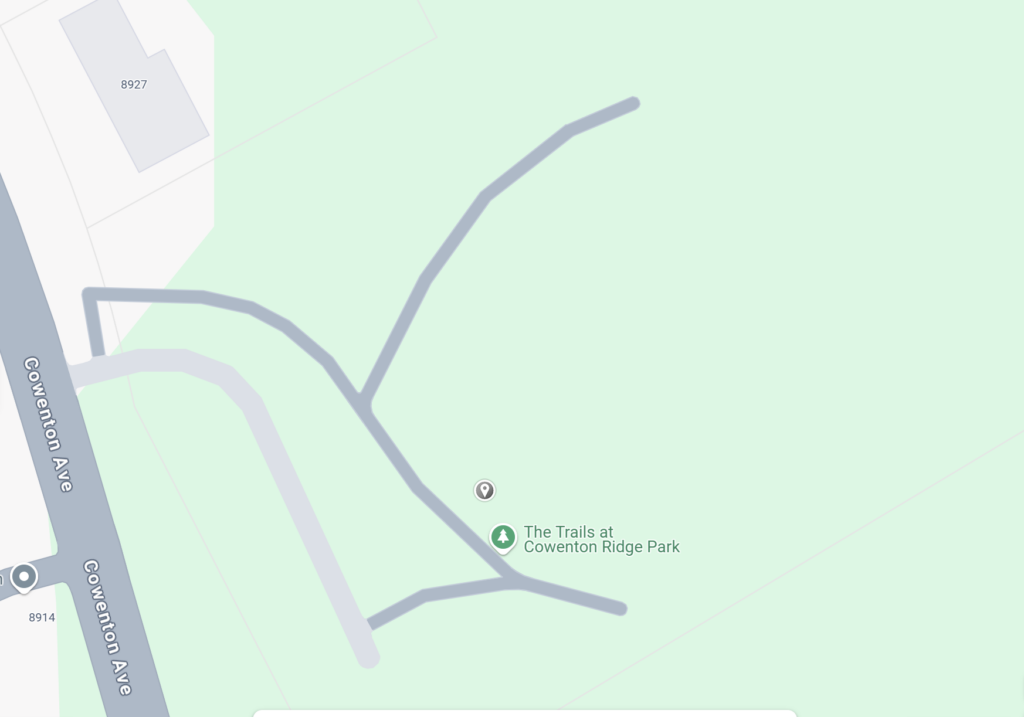
This week, we’re taking on an entirely new perspective and phenology location. Dearest reader of my blog, welcome to Perry Hall, Maryland. I’m from a town that was once a farm town, now a suburban community. Let me give you a look into the Trails at Cowenton Ridge Park.
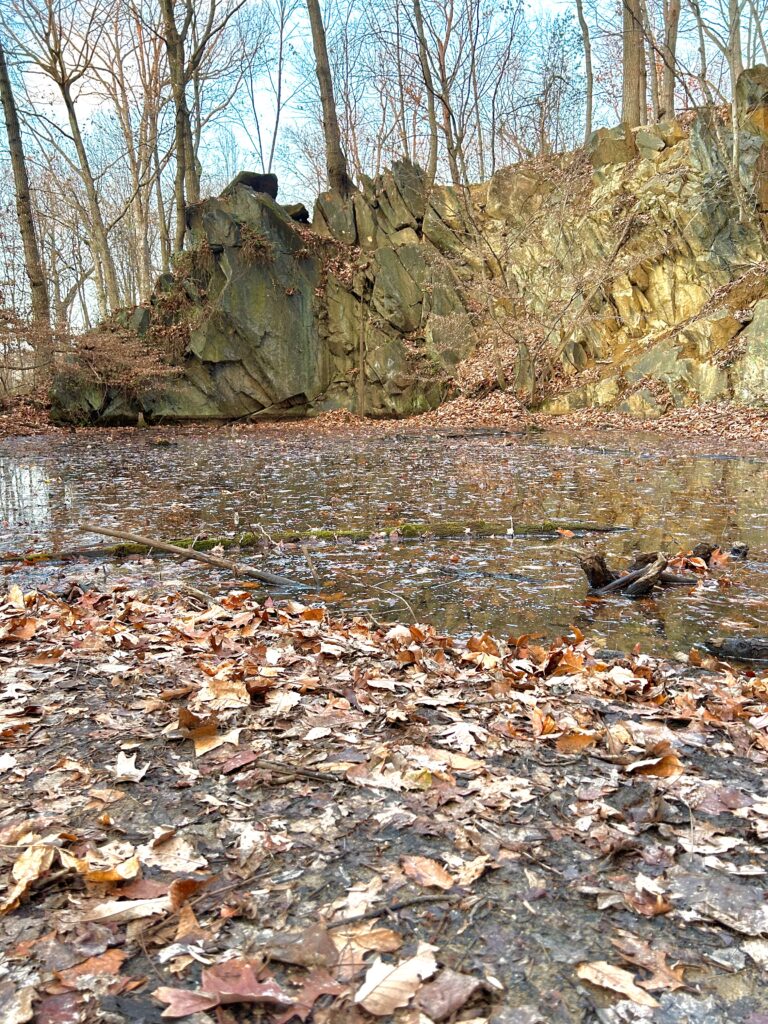
The location that I chose is small, marshy pond/quarry located along the trail in the forest. Farms would use dynamite to extract the rock to be used for agriculture. I think the geological formation around the pond is fascinating and gives a little peak into the bedrock geology and human use in the area! It is interesting to see the trees that are able to grow in the cracks of rock along the cliffs.
This little pond is also interesting because the depth is relatively small (although I would never test it out) so it is mainly inhabited by small creatures such as frogs and insects.
Comparison to Winooski River Phenology Location
- As the water level of this pond changes with precipitation, the water rises to the floodplain (where I am standing in all of the pictures!) so in that sense, the pond is similar to the banks of the Winooski river, because not many plants are able to grow in the floodplain. Similarly, both locations lack a strong riparian buffer, so there aren’t many trees or vegetation growing directly next to the body of water to shield it from erosion or pollutants moving into the ecosystem.
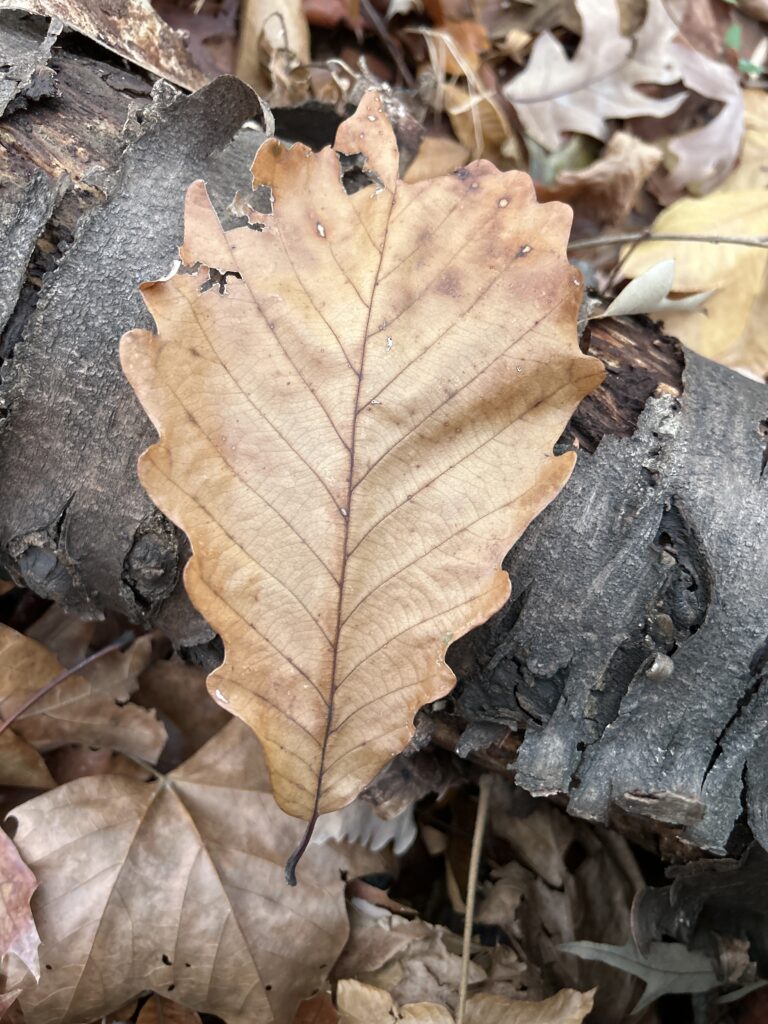
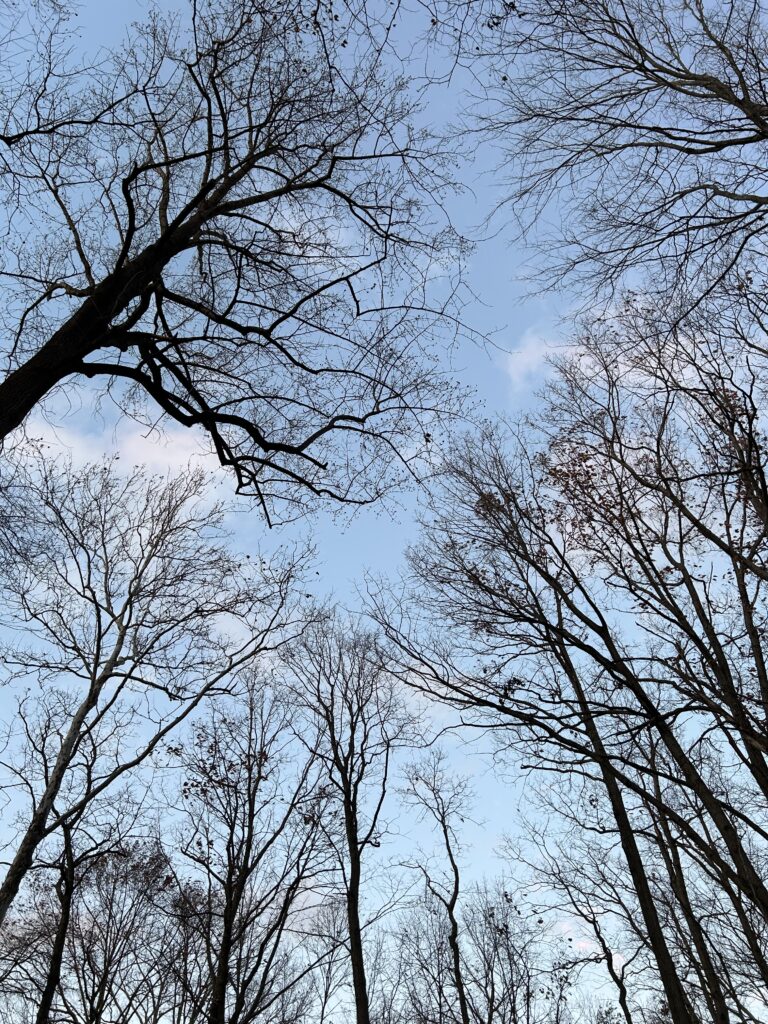
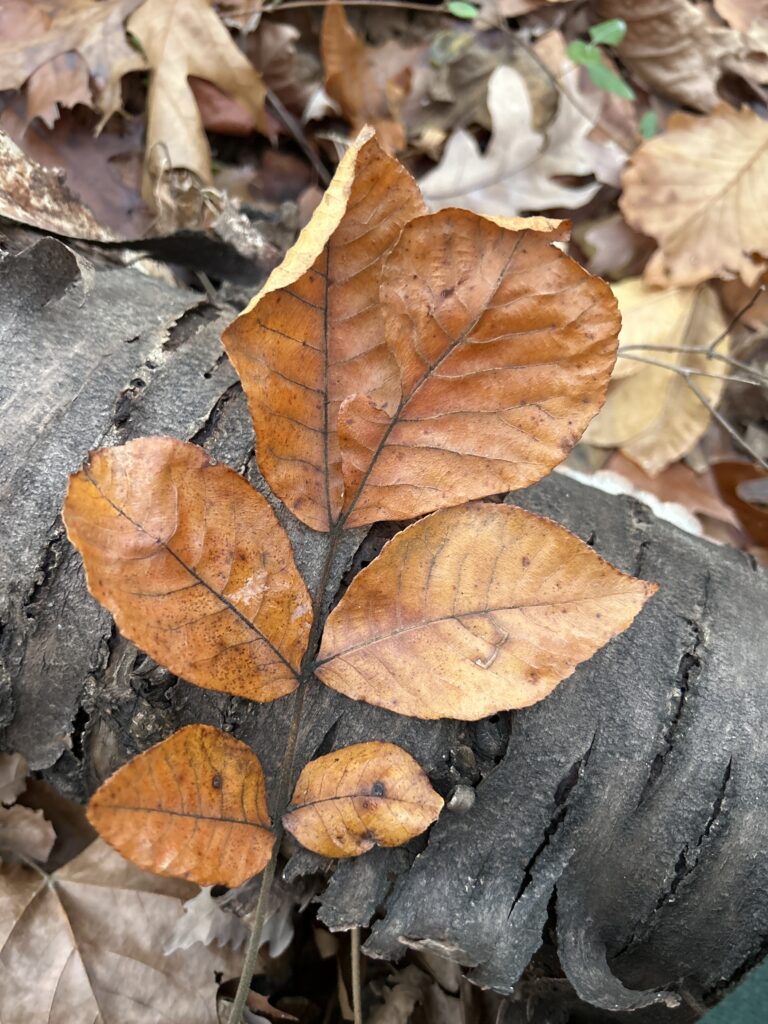
- A major difference between these two locations is the species composition. The location along the Winooski River is primarily comprised of various maple species and Boxelder, but at this new location, I did not see any nearby Boxelder or maples! It was tricky to identify the species in the area but using my limited INaturalist skills, I came to the conclusion that the main woody species in this area are Swamp Chesnuts, Pignut Hickory and White and Red Oak.
- An obvious difference between my two locations would be the characteristics of the bodies of water. The Winooski River is a decently sized flowing river, while this pond is a shallow, almost stagnant pond. I imagine the species living in these two different types of water are very different. The pond in my area is covered in leaves, meaning the bottom of the pond is shaded and unable to host photosynthesizing vegetation.
- Lastly, the banks of the Winooski River are very sandy, which remains from the ancient Champlain sea. The bedrock geology in Maryland is very different and very much not sandy. The floodplain of the pond was rich with clay instead of sand.
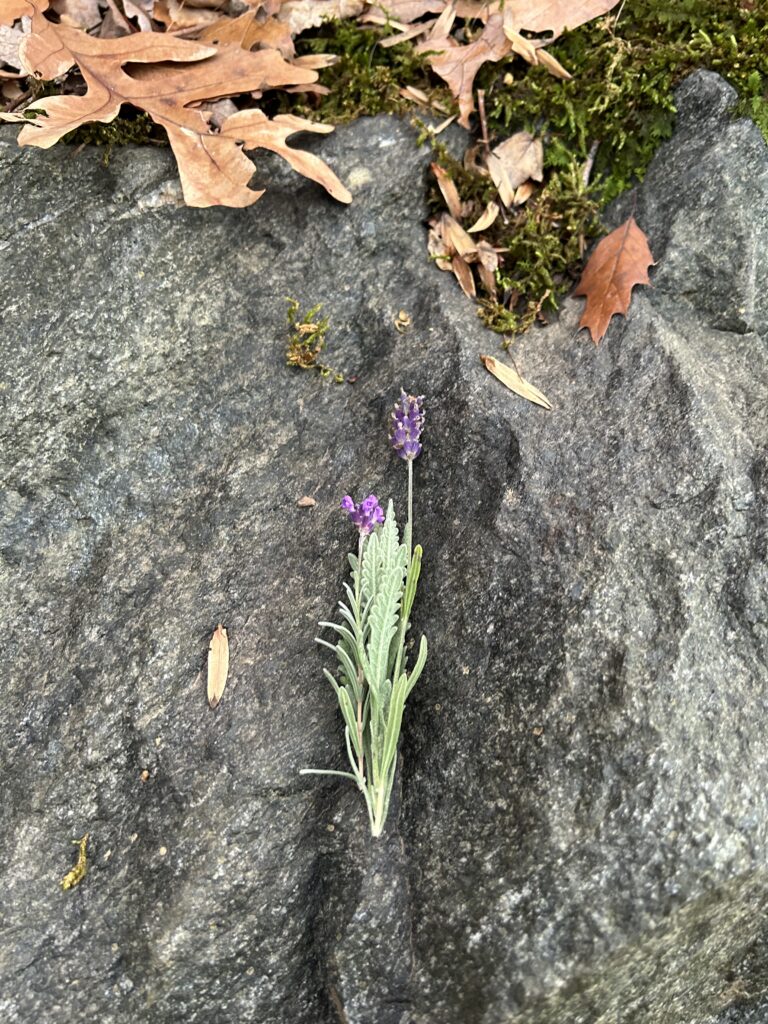
After reading the Honorable Harvest, I left a little sprig of lavender from my garden in my backyard to show my appreciation for this little piece of the forest. I have always loved lavender for its beauty and aroma and since it doesn’t grow in this area, I thought this little ecosystem should experience lavender’s many gifts. That’s all for now, have a restful week!
-M