On Wednesday April 9, I embarked on an epic journey across UVM campus on the search for evidence of phenological changes among 5 different species of native trees. After the longest, coldest, and snowiest winter of my entire life, I am simply desperate to find something, anything that gives me hope of Spring’s slow but sure arrival. If my time here has taught me anything, phenology is a patient process.
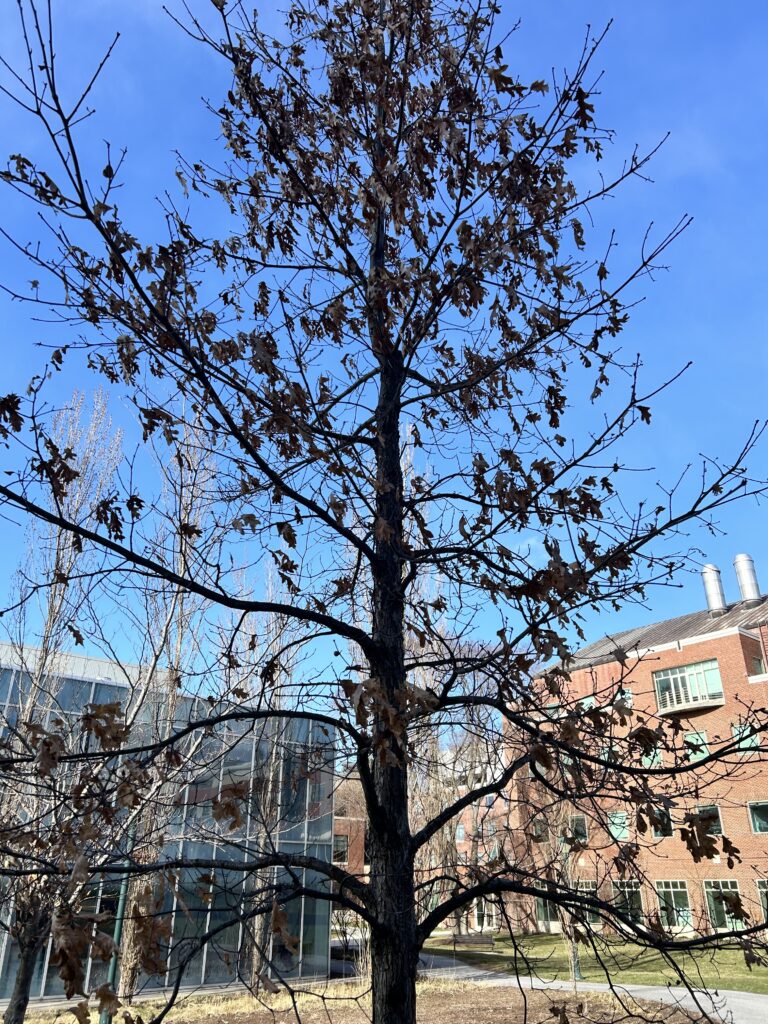
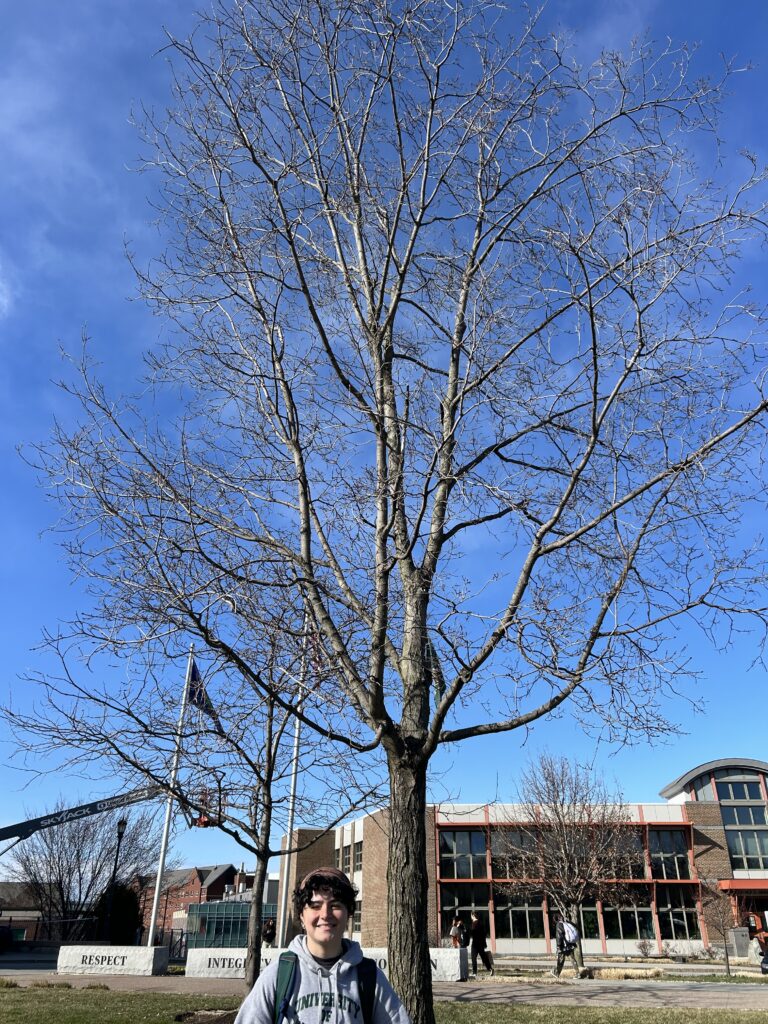
The Mighty Oaks: We have some late bloomers in our midst, because both the white oak and the red oak are a bit late to the spring welcoming party. Although I observed dozens of buds along the branches on both species, there doesn’t seem to be any sign of breakage just yet. In fact, the red oak is still hanging on to its leaves from last season, so at least it isn’t completely bare. Overall, both species of red oak don’t seem to have any intention on blooming soon.
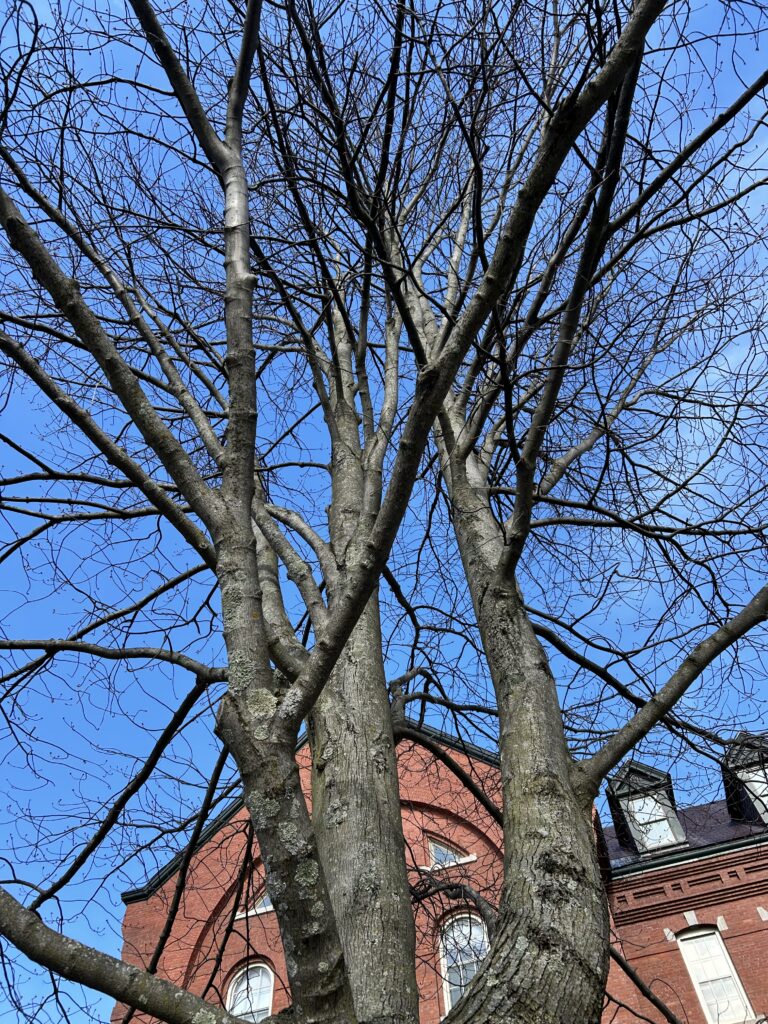
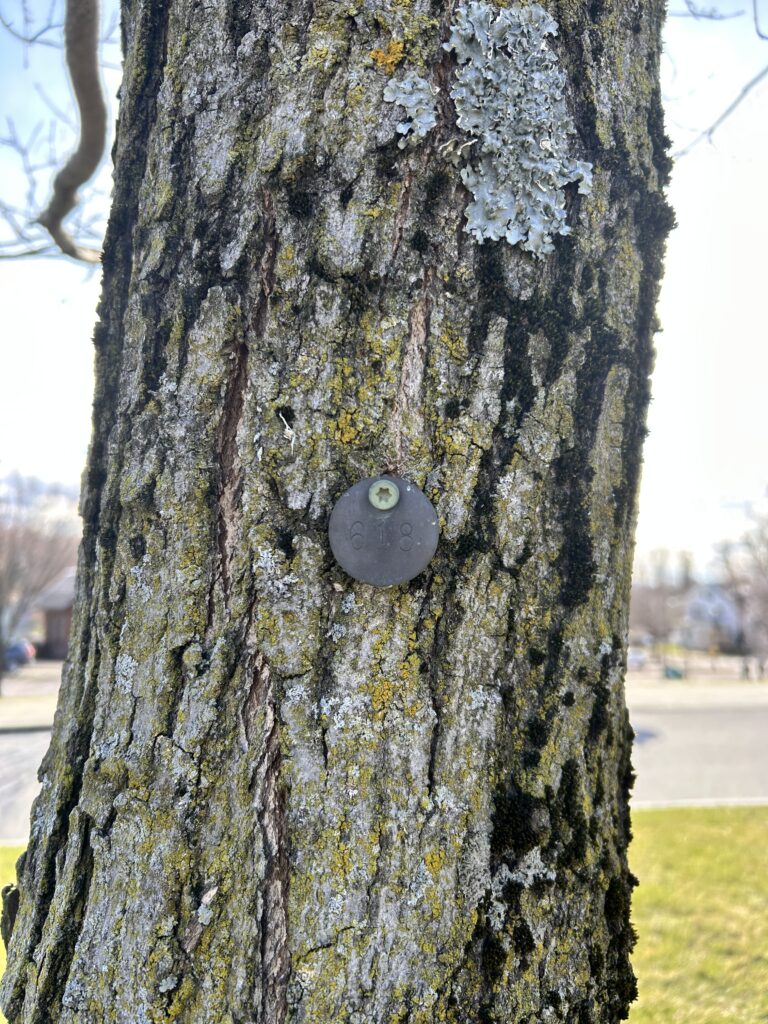
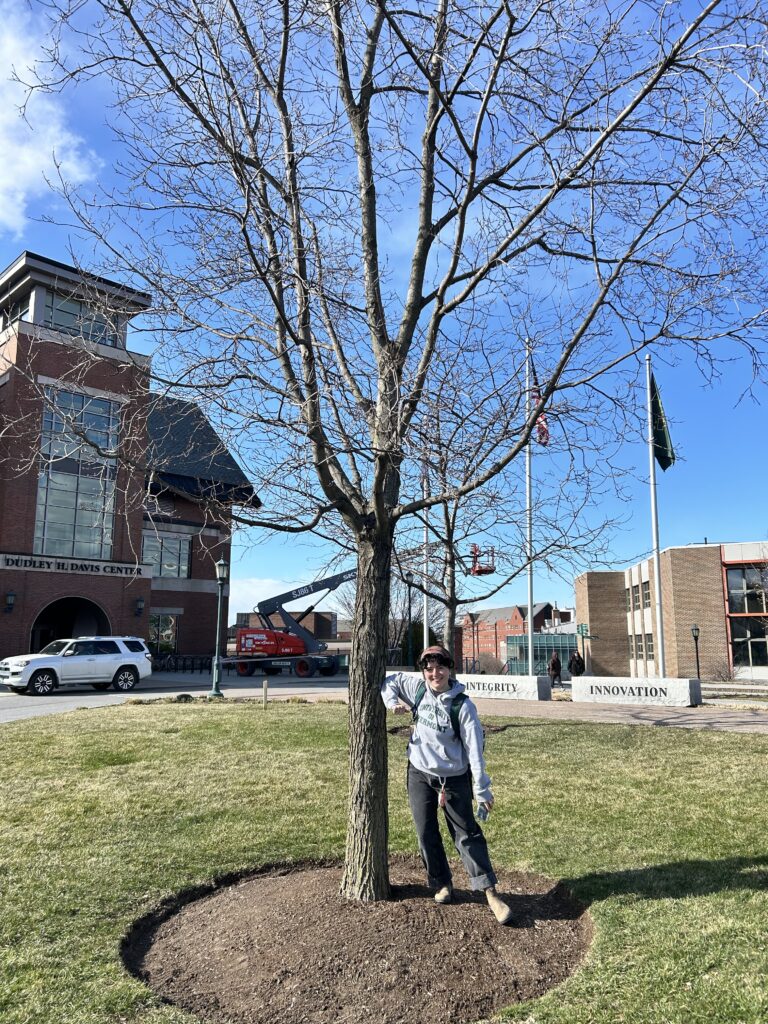
The Three Maple Trees: If you are looking for signs of spring on a dreary Vermont April day, look to the maple trees! Well, sort of……The red maple, sugar maple, and Norway maple are featured in the above photos and though it may look like there is not much going on, after some observation I can tell that there are lots of big changes on the way. The red and sugar maple are slightly more discrete though, as their only sign of phenological change was the slight breakage of buds. The lovely Norway maple is starting to produce flower buds and the beginning of opening flowers! But other than that, the arrival vibrant green treetops is still just out of reach.
National Phenology Network: What did I learn??
I took some time this week to dive deep into an ecological-technological rabbit hole that is the National Phenology Website Network. I scrolled through the “News and Publication” section until a particular article caught my eye. “Male and female trees are responding differently to increasing temperatures”?? Let’s just say my feminist curiosity got the best of me. The article discusses the impacts of warming temperatures on dioecious trees (Dioecy describes the phenomenon of a unisex organism that requires both male and female gametes to reproduce). In a nutshell, male trees often flower earlier than female trees, meaning they are increasing flowering time at a greater rate than females. This offsets the synchronicity of male/female flowering and pollen release, which allows for successful reproduction in dioecious trees. In a broader perspective, this phenological mismatch could lead to a decrease in the abundance of these types of trees, which include mulberry, holly, and willow. This article adds to the concept that human-driven climate changes are causing drastic changes in the environment and disrupting natural processes, such as tree reproduction.