Posts

I’m Back for the Bioblitz…

So due to a little brain glitch on my end, that last post was NOT the final post, though it was the final visiting of my site.

There’s still talk to be had about the Bioblitz our class participated in!

During the Bioblitz, I didn’t really get to explore more areas than usual, it was the usual walks home that I stopped to log in for data on iNaturalist. This included all of campus, and a good portion of Colchester Ave. My experience with iNaturalist was generally ok. I think it’s a very cool piece of technology, and I pretty often open it up when I’m with fellow plant enjoying-friends when we want to know what a plant is. But it’s kind of slow. After I had taken 90+ images on my walk down Colchester, it took about 45 minutes to upload them all, as iNaturalist doesn’t have a way for you to upload 90+ individual posts (that I know of). All this aside, it’s a huge database so I understand it taking a few extra seconds to upload your content onto it.

It didn’t feel like I encountered that many different species, but iNaturalist said I found 36! Which is a lot more than I can name off the top of my head. So go iNaturalist!

I found it really interesting — and admirable really — how many logs some cities had. I had no idea that Cape Town had such an active iNaturalist population. I also was interested to see so much biodiversity that differs from ours in VT. It definitely makes sense but there are some cites with birds that I am now really jealous of.

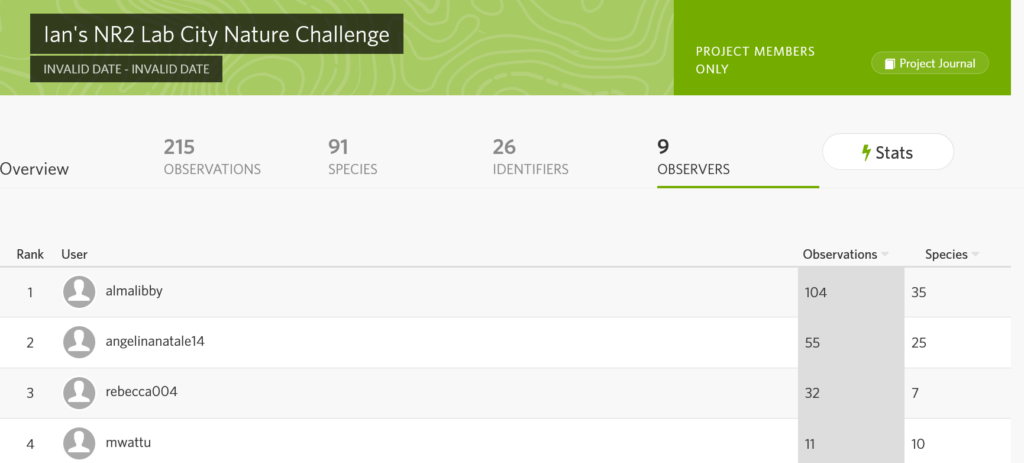
Here is a screenshot of …. just some stats that I think are cool, along with a map of current logs by NR 2 students, and some of my own submissions that I thought were pretty cool!
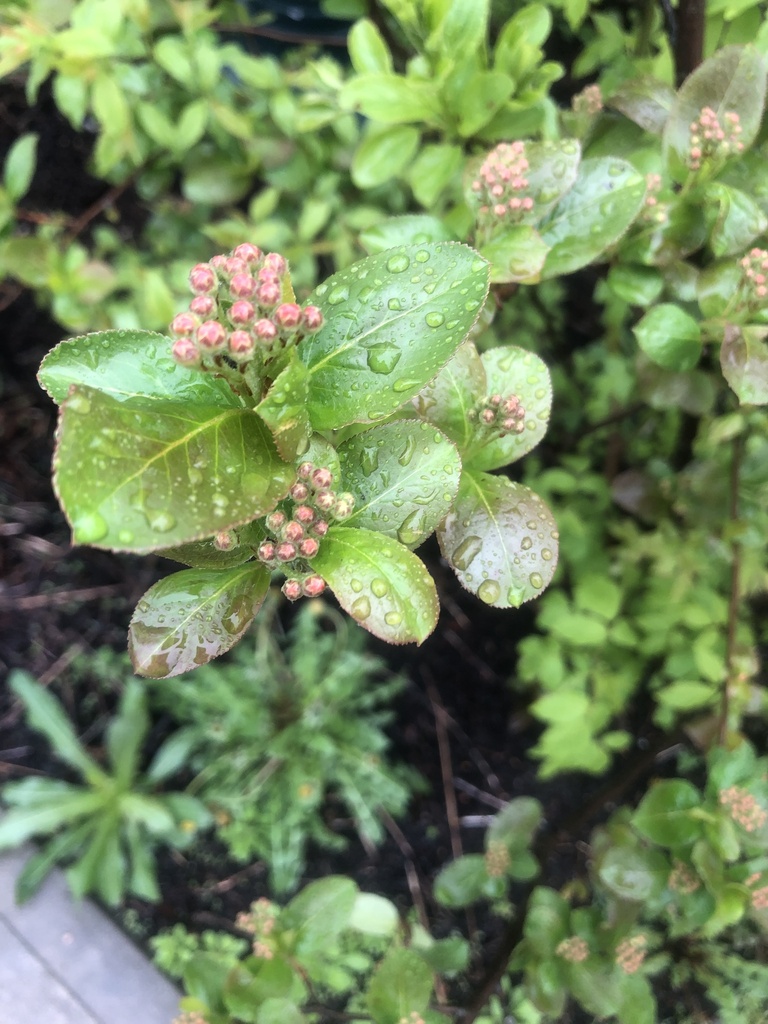
Possibly Chokeberries
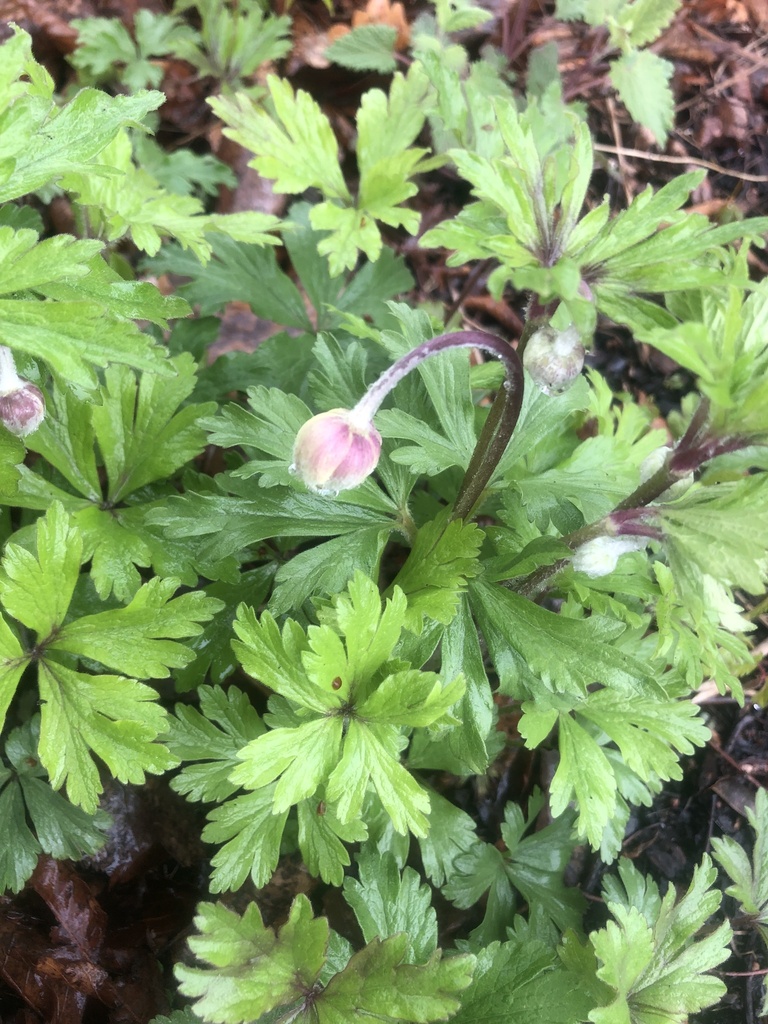
Possibly Snowdrop Anemones

Last Post

This is quite the melancholy post. I know that I’ll be able to visit my beloved spot next year, or even within the end of the semester, but I likely won’t be recording my thoughts and observations like I do now.

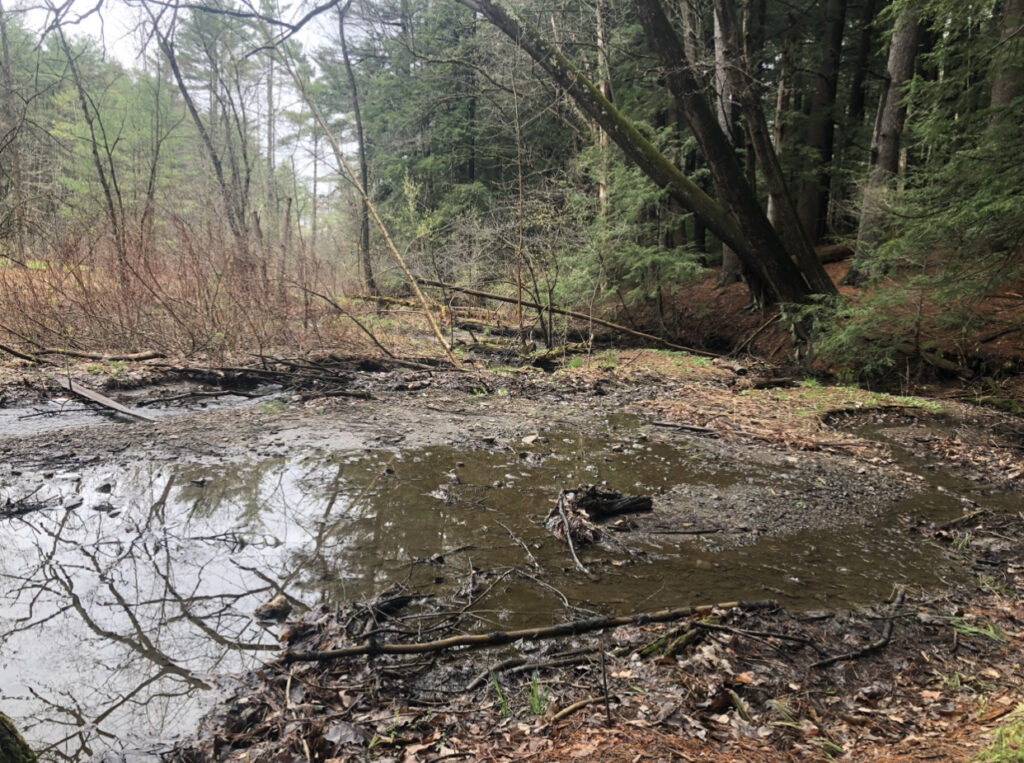
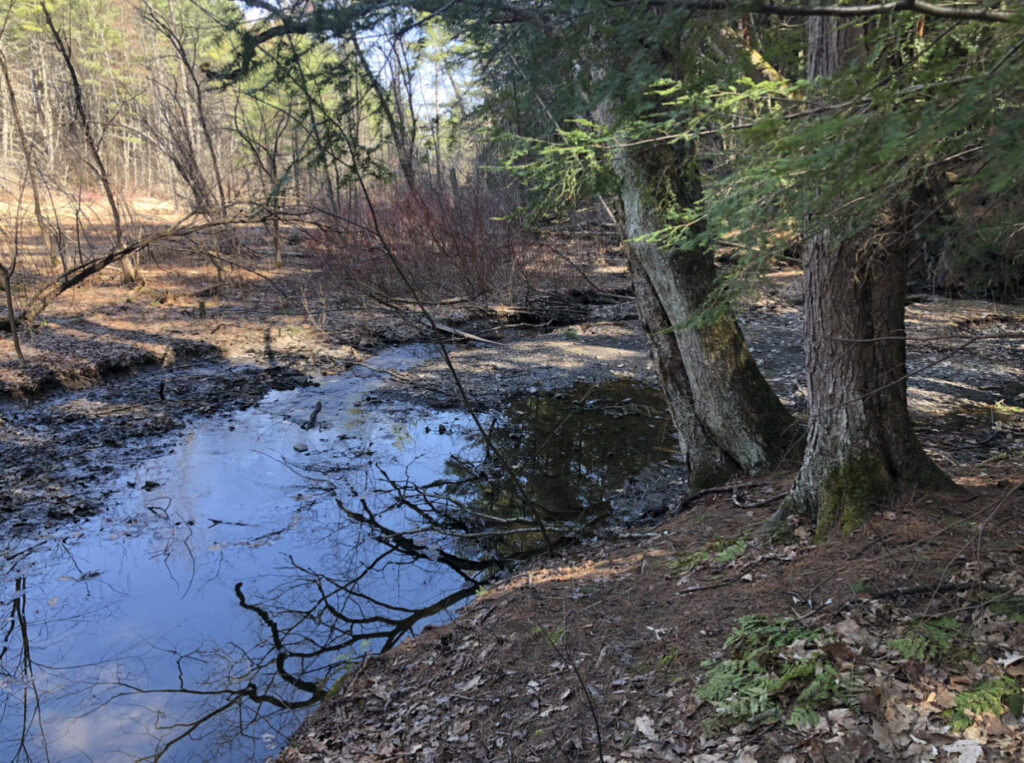
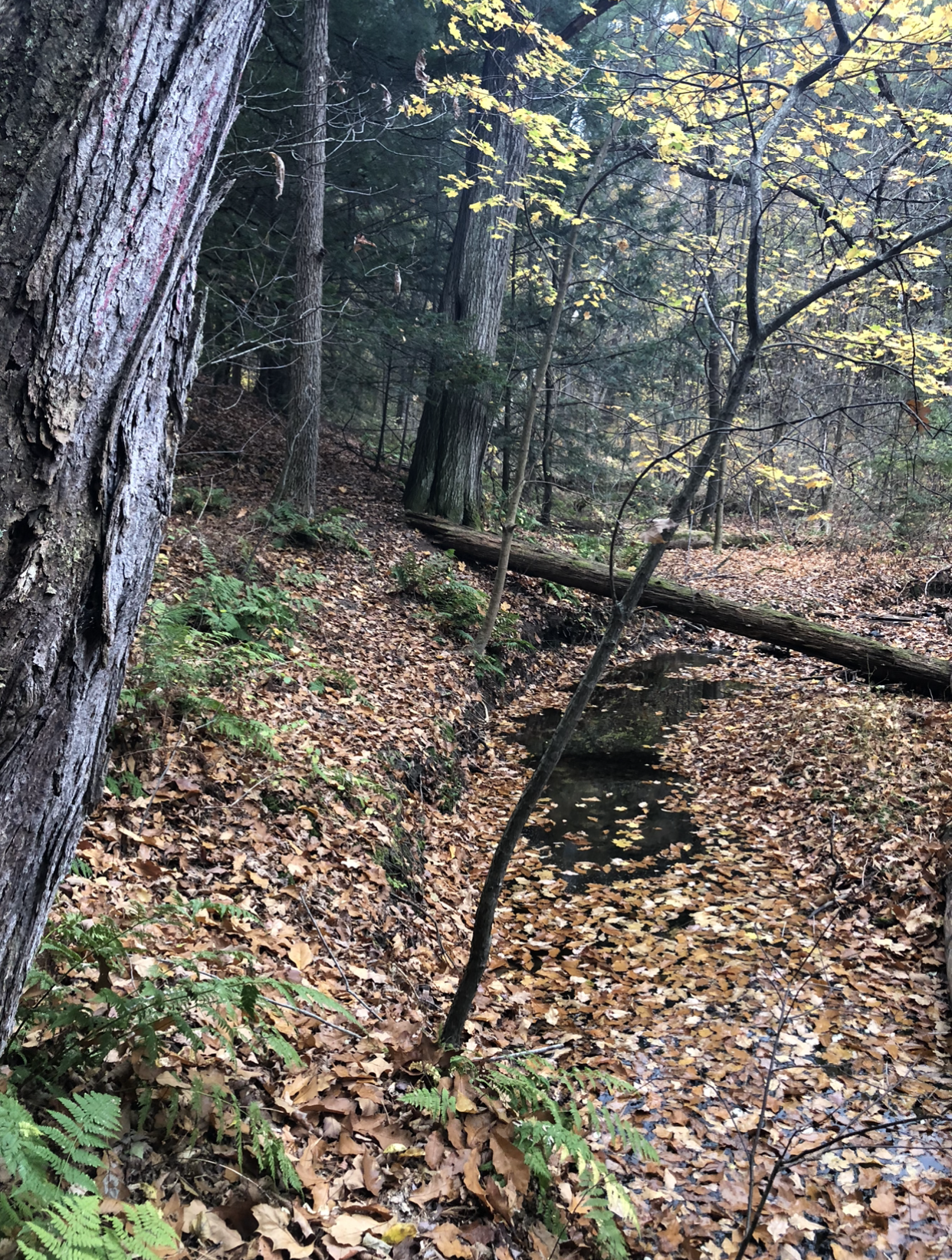
My spot hasn’t changed that much since the beginning of the year. The creek has maybe become wider, muddier, and maybe faster from the April showers.

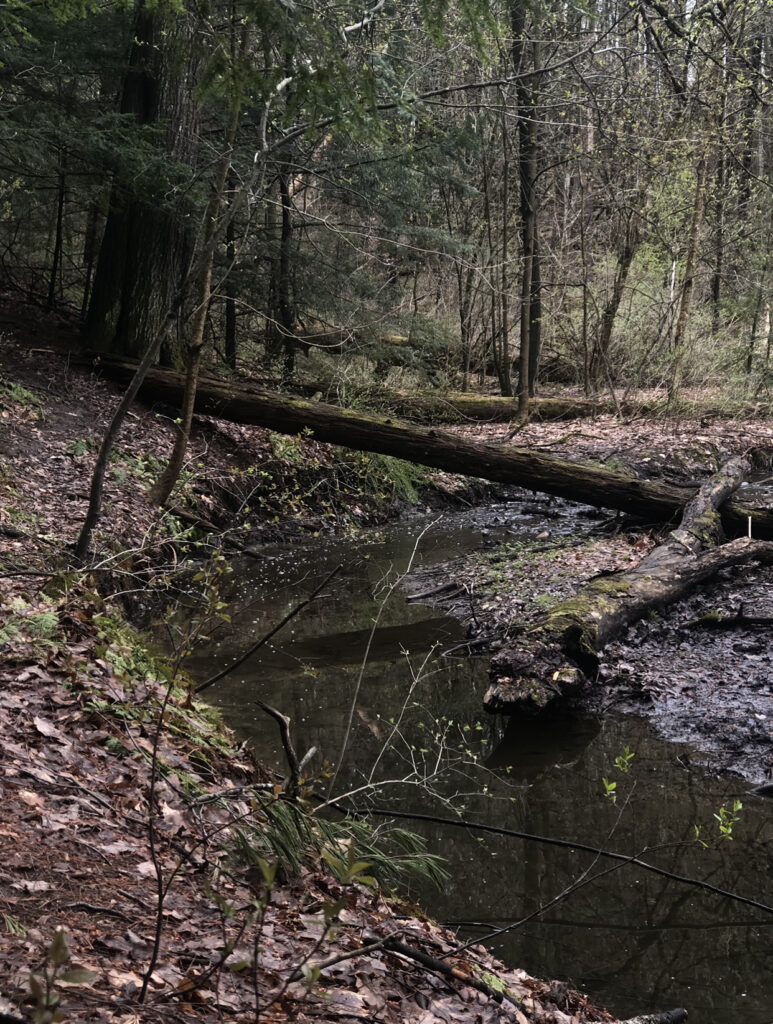
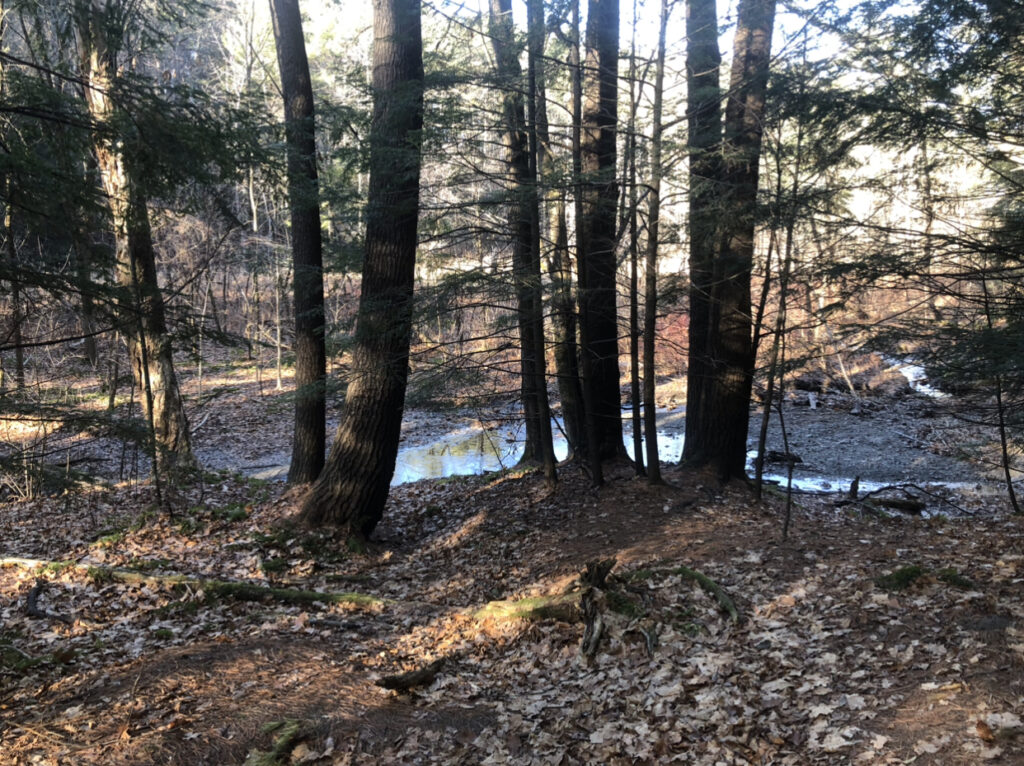
There is still the fallen tree, which has become a small bridge over the creek and mud. There is still a triangulum of hemlocks that I sit in the center of when I rest here. And of course there’s the creek, the telltale sign that I have found the right spot. It helps that my area is just under the crest of a hill, so I am able to find the familiar slope that I associate with my site.

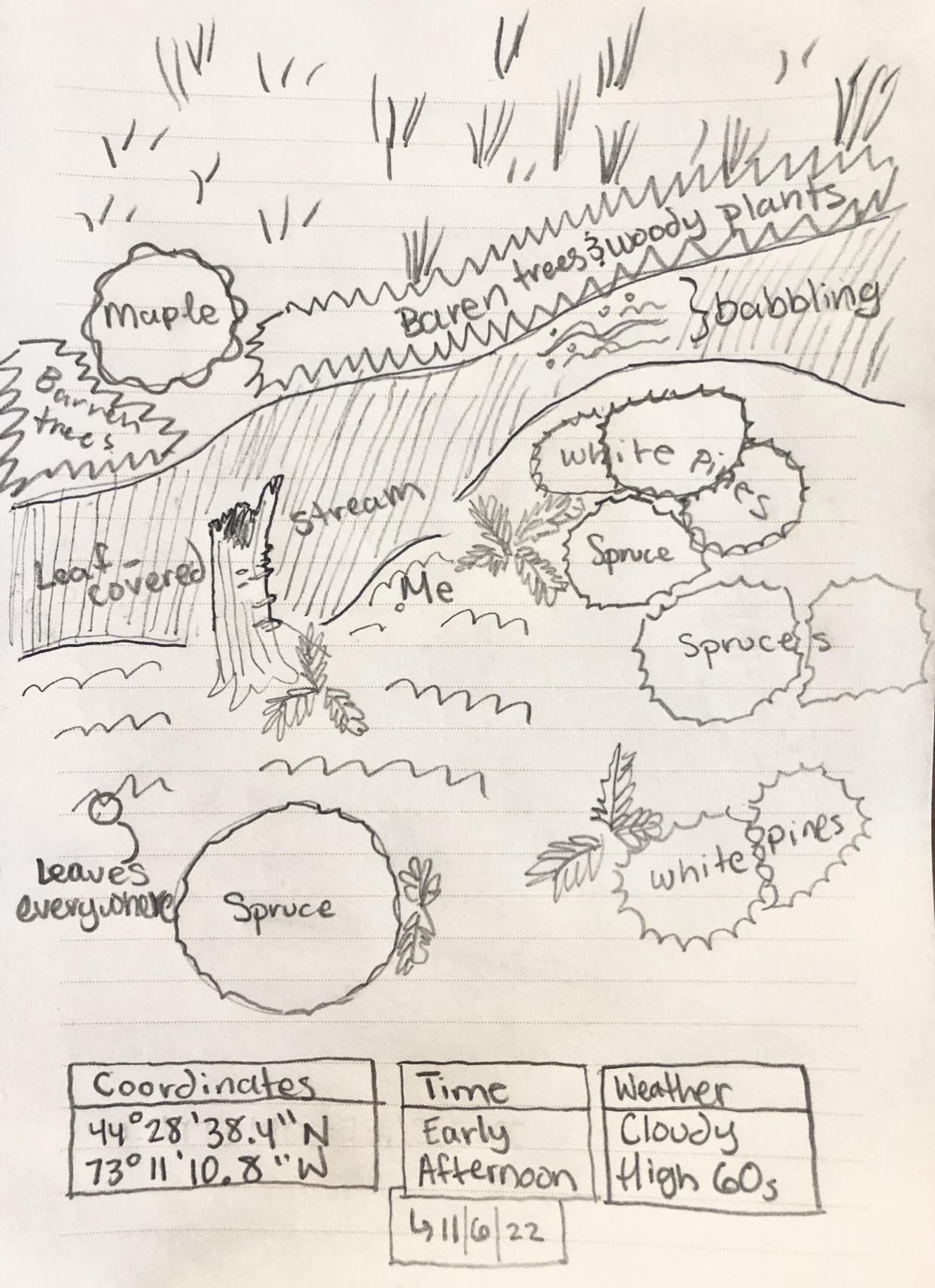
I sketched three images of my place when I sat there yesterday. The topmost is an arial, and how I’ve come to understand this area. I remember when I first found this spot, the crisscrossing grasses, young trees, patchy mud, and slow water aws hard to decipher. I felt like my eyes blurred over and did not understand the terrain. But now, I understand how the water flows. I understand the layers of trees and grasses beyond the creek.

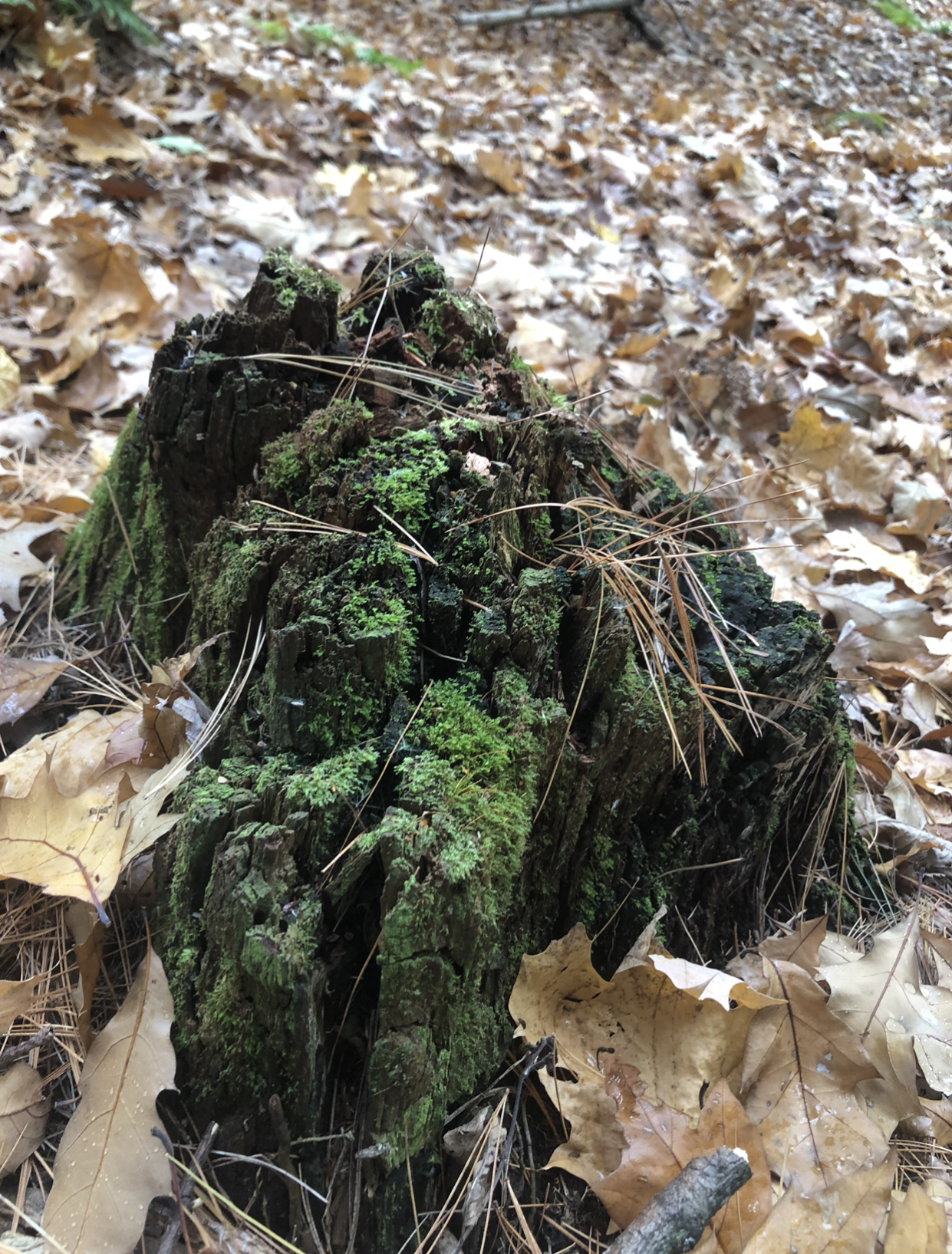
The middle image is from where I was sitting, looking towards the left. The tree that is there was darkened from rain, and had a thin green layer of moss on its roots. The ground beneath it was scattered with orange pine needles, and beyond the tree and the slight hill it is on, is the creek. Young trees are growing on the bank of the stream, and the fallen tree-bridge is laying next to these saplings and ferns.

The last sketch, is of the tree that was in front of me. It was made up of three trunks, that seemed almost braided with each other. During this last sketch was when I was able to take in the grasses behind the stream that had always seemed so blurry and chaotic when I tried to picture the area.

I did not grow up going on hikes, or exploring the outdoors. My parents are very much academic home-bodies. I think this is maybe why when I go into a wooded area, the trees take a while to sort out, and make sense to me. I think when most people picture forests, there are very old, very large trees, and a neat and tidy understory. In some ways I’m guessing this made it harder for me to see the woods. Harder to understand the patterns of the grasses and saplings, and the veins drawn in the mud from the stream’s current.

When I ask myself now, if I understand this space, the answer would tentatively be yes. When I sat here on my visit, I was a part of the systems. When the breeze came by, I felt it just the same as the needles that were stirring at my feet, and the ferns that swayed by my knees. When a spider landed on my friend’s thigh, I plucked it off her and placed it near the tree in front of us. I was cooperating with the things that live there, and I was living there too. Noa did not like the spider that had landed on her. But because I had spent much time here, and had accepted that sitting to look at the beauty of the creek and trees meant sharing the space with the ants and spiders, I was able to help our new spider friend move along. In that instance I felt like a neighbor saying hello. It made it feel all the more peaceful, and all the more harder to leave.

I’ll leave this journal with a pair of images that make a lot of sense to me now, to compare to the images from my firsts posts, when I struggled to make sense of the flow of the space. My biggest mistake was thinking that the trees around me were dying, and the woods with it. It feels more alive than ever, and I can’t wait to see how it grows! As you said, Ian, a messy forest is a good forest.

Goodbye for now to Centennial Woods. I’ll see you soon, or in a handful of months. 🥲

Post Nine – Paper Birch Update

So I went back to Centennial last week, on Friday, to find my birch tree that was right by my Phenology spot. I found it! I actually noticed budding this time, but there are not a lot of other changes, as I didn’t see sprouting leaves either. I went on a pretty warm day, and my site was looking ready for the warm weather. I’m Interested to see what it will look like further into spring. I’m wondering if it’ll get some grass to cover up the fallen leaves from earlier in the year.

Of course, as promised, the paper birch I managed to find near my spot.

Wait, Where’s that Paper Birch Again?

So, as the title may suggest, I had a bit of trouble locating the same birch tree I had found in Centennial Woods.

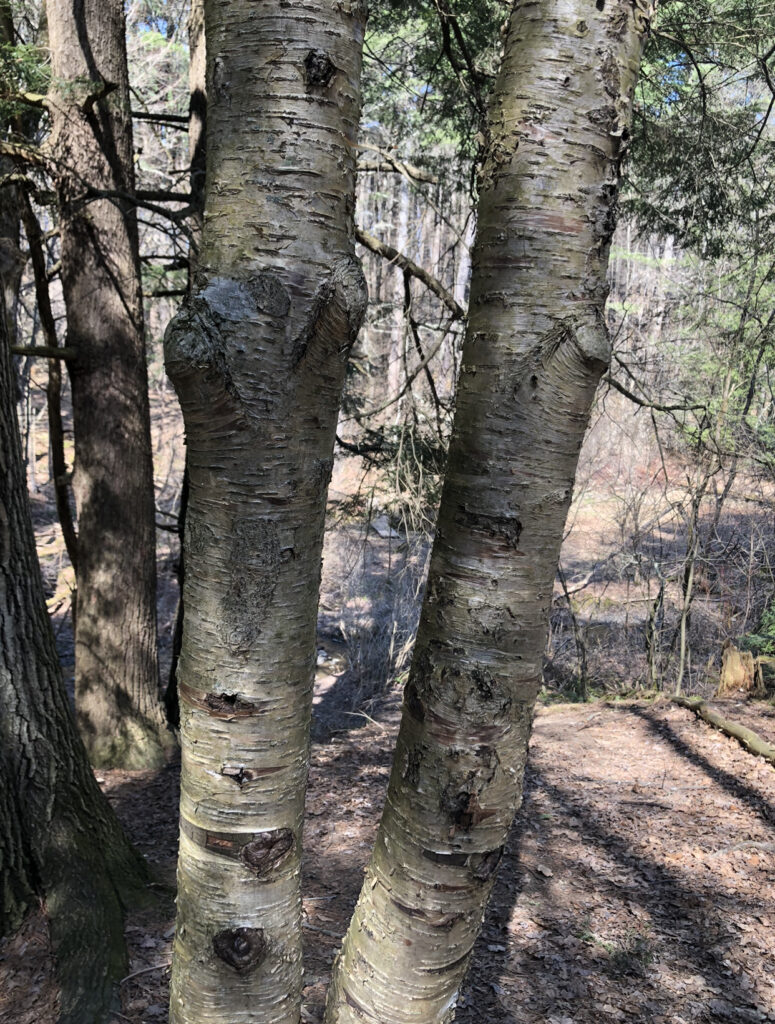
I wish I could blame it on the sudden decrease in snow that disoriented me, but really I can only blame a poor memory. Instead of the faraway paper birch tree that had taken me so long to find, I found a different paper birch, humorously close to my phenology site.

It was very hard to traverse, as the ground was either very muddy or very icy, but I managed to get close enough for an HD picture.

Here is the birch tree, looking a little worn from the recently very wet winter.

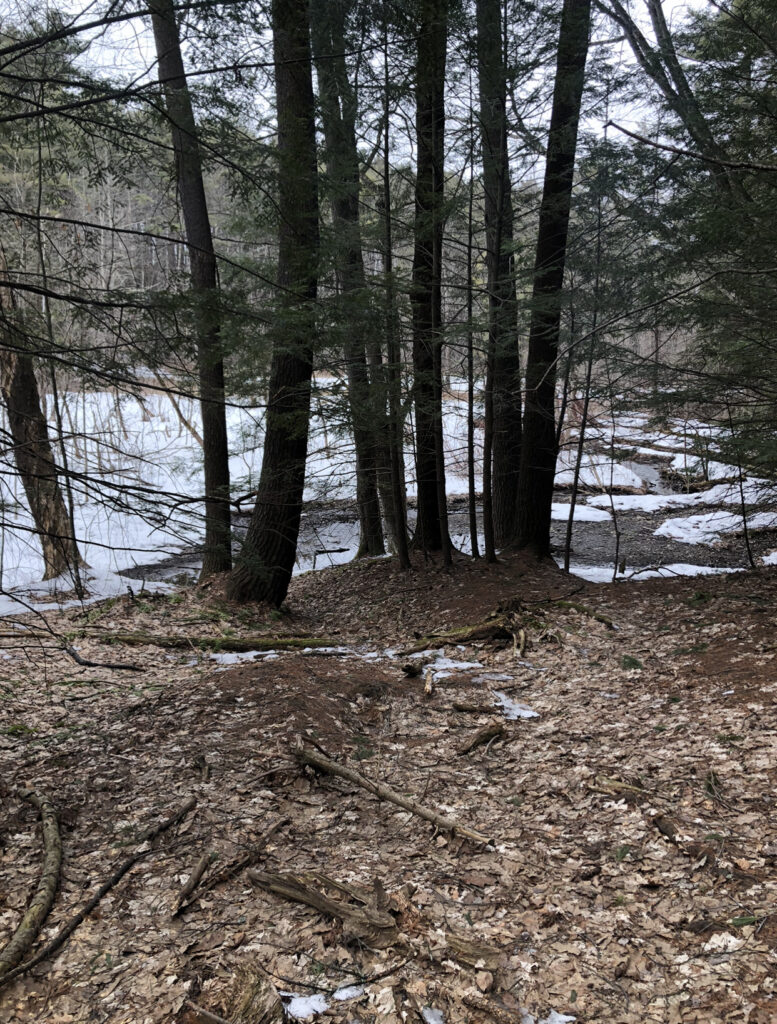
And here is my very lovely spot that has way less snow than I’m used to. The bank was very muddy, and the leaves that have been on the ground since fall are becoming cakey as they decompose more and more.

Post Seven – On The Lookout for Trees

This was the first time I had gone to Centennial for a very clear objective — find one of four specific trees at my phenology spot. It seemed simple enough. But when I tell you my site had not one tree that I needed to document, I’m not exaggerating. At least there were none that I could say for certain.

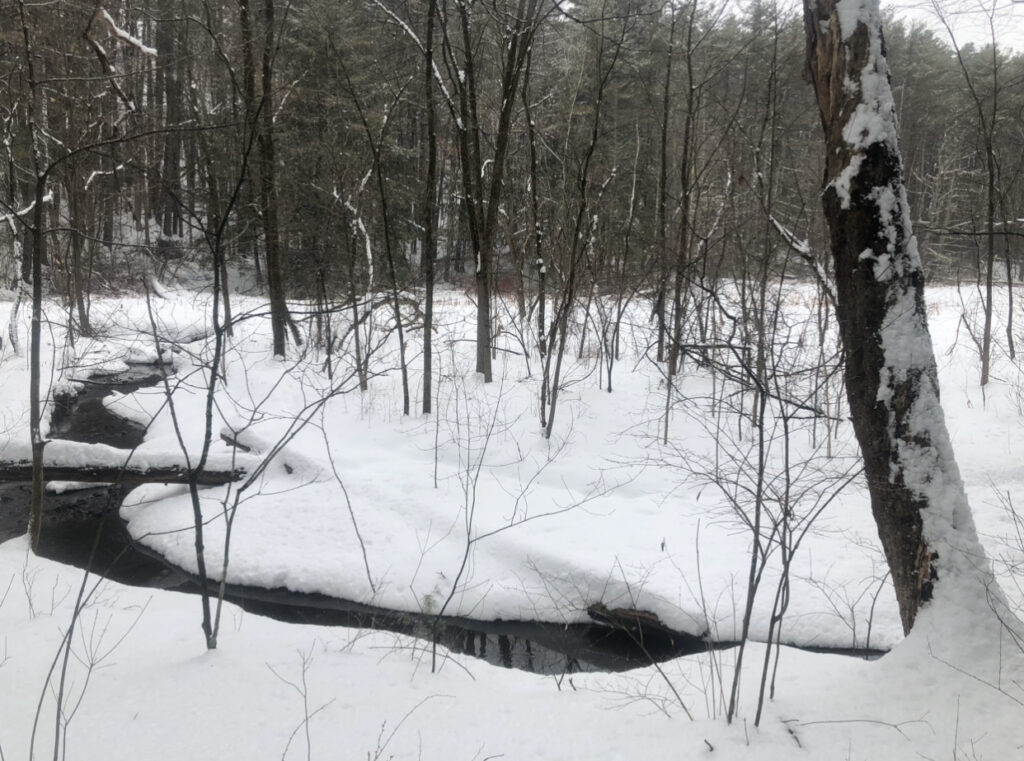
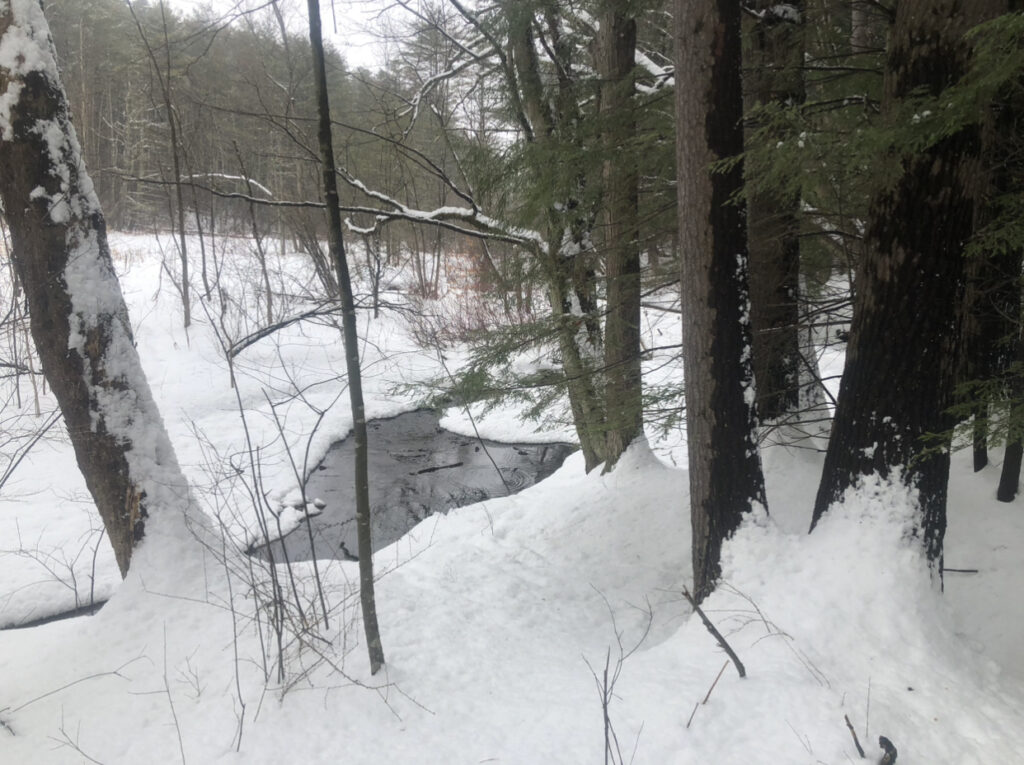
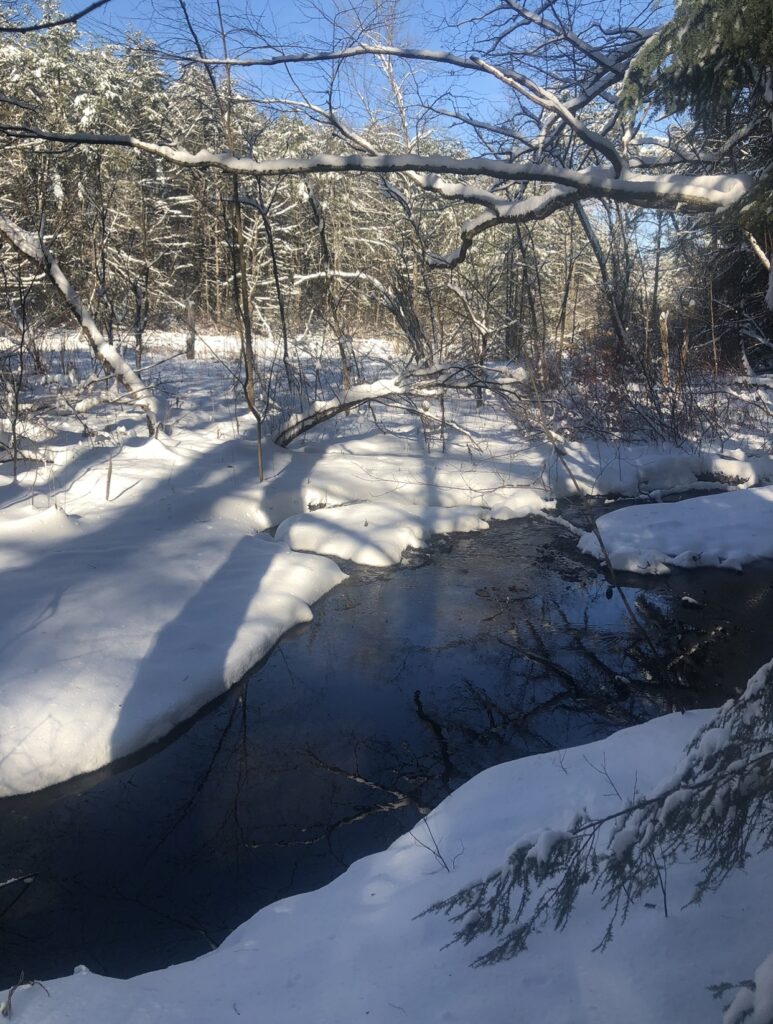
The area looked lovely, still covered in snow, but featuring running water!

So, though unable to find a red maple, paper birch, American beech, OR a red oak on my side of the creek, I did spot a lookalike!

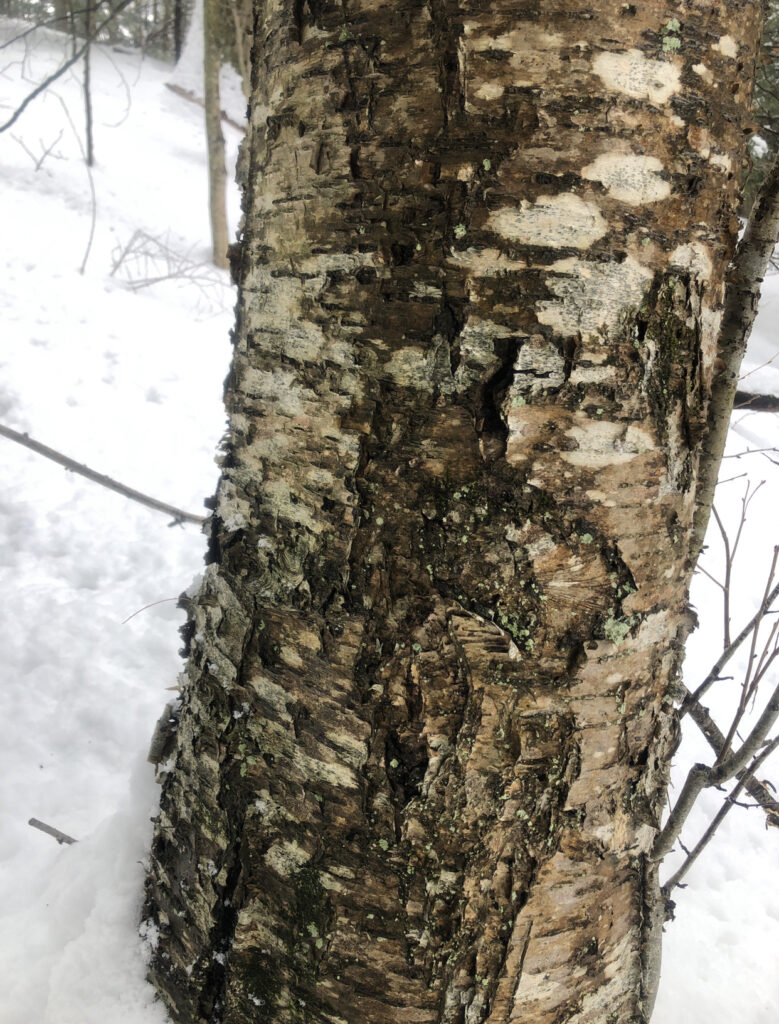
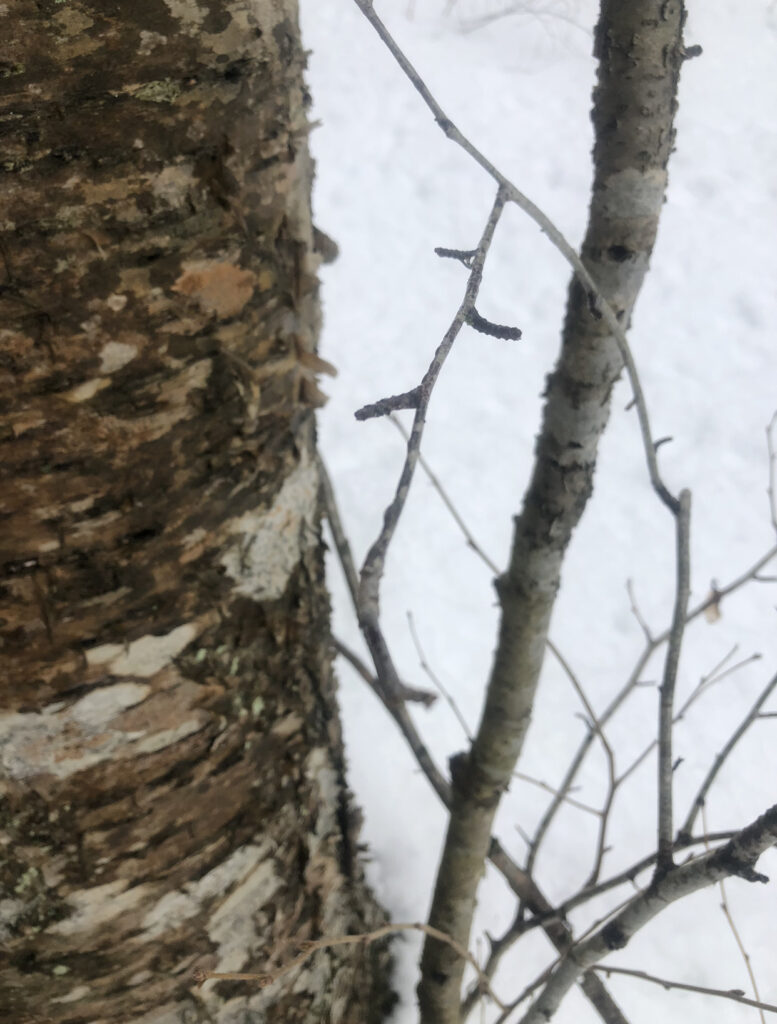
It was my beloved Yellow Birch. I recognized it by the flaky bark and texture. I also checked that it’s twig buds match yellow birch buds, and I am pretty sure they do!

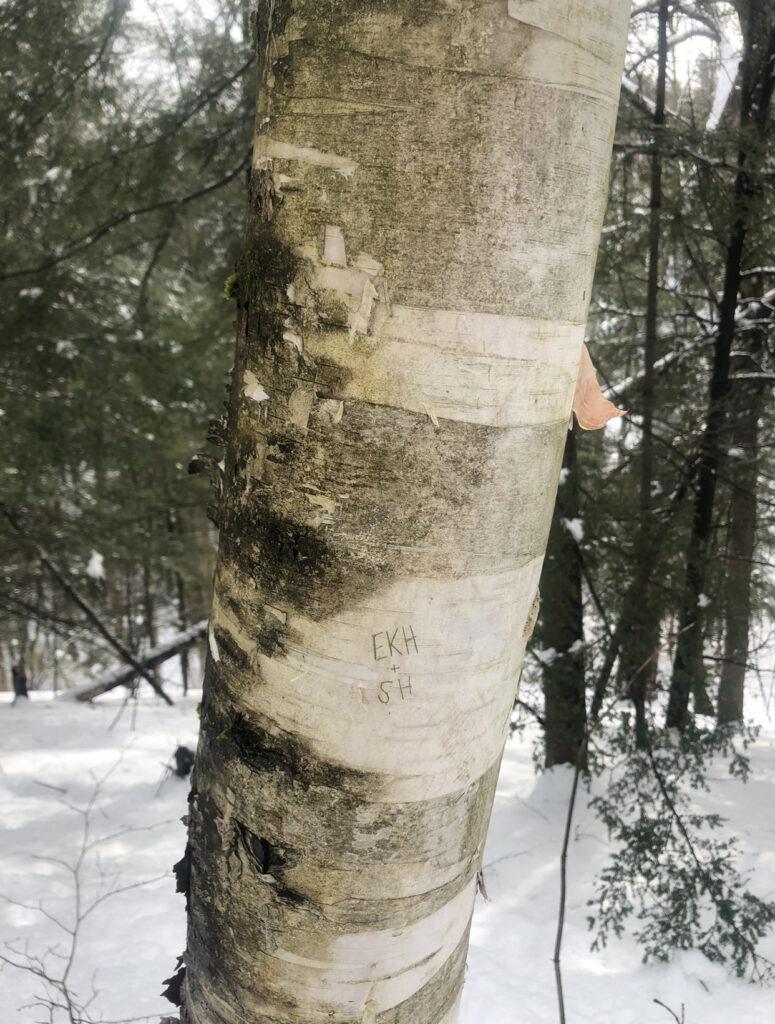
Luckily for me, I was travelling with friends, and after weaving through the majority of Centennial, I spotted a paper birch off the path!

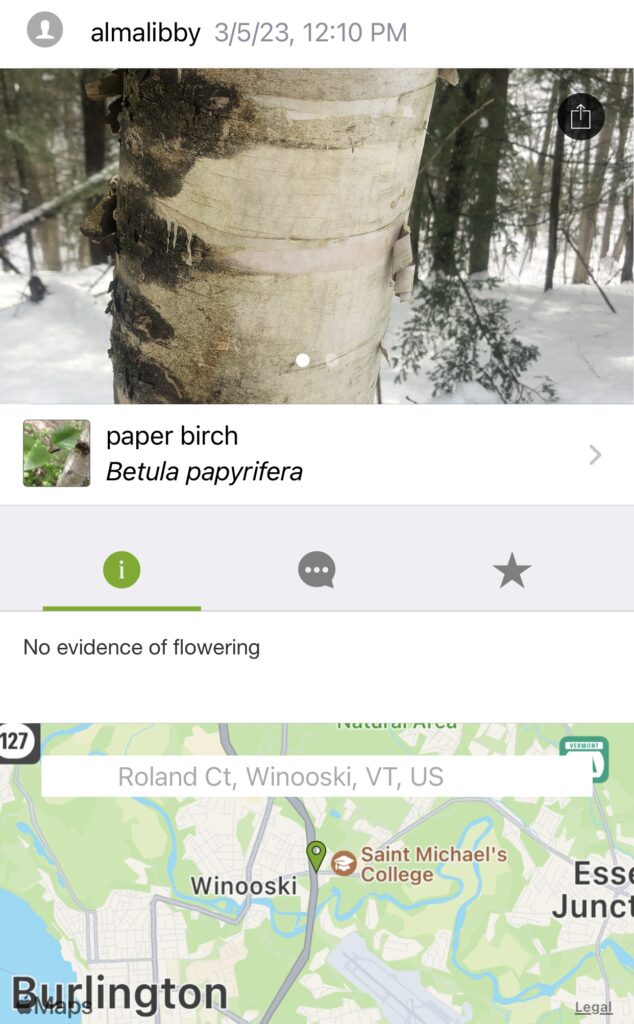
I saw that someone had carved initials into the tree, which made me very upset for the poor guy. I knew that this was not one of the paper Birch’s lookalikes, because the bark was curling off of it in much larger pieces, and it was much lighter in color.

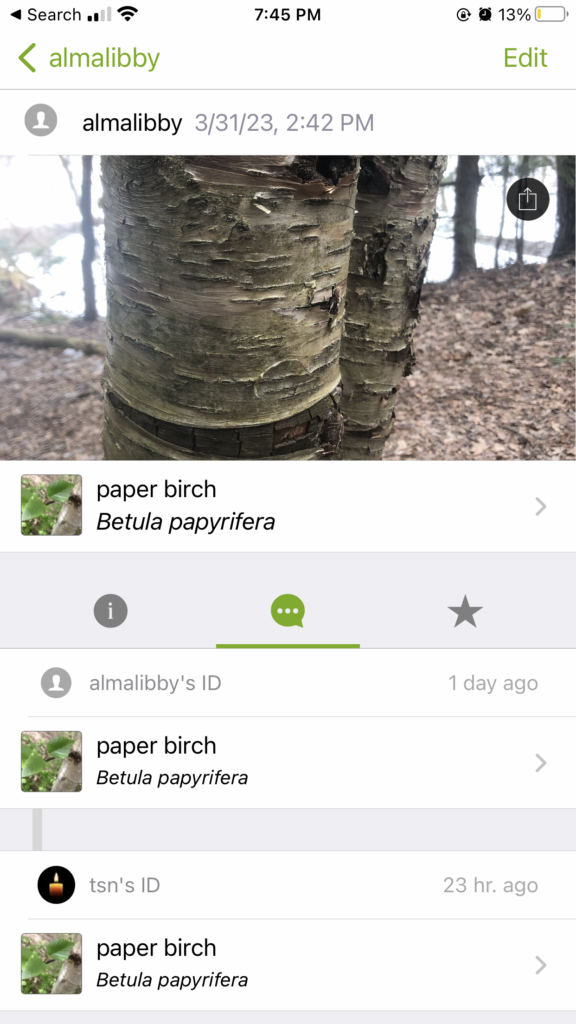
And here’s the iNaturalist post I made to record my Paper Birch Data.

All of the snow definitely made the woods hard to traverse, but all in all it was lovely to venture through the latest winter wonderland that Centennial becomes after snowfalls. I have high hopes for being able to catch another snowfall here after I come back from Spring Break!

Until next time!

Alma

Post Six – iNaturalist Tracking Project

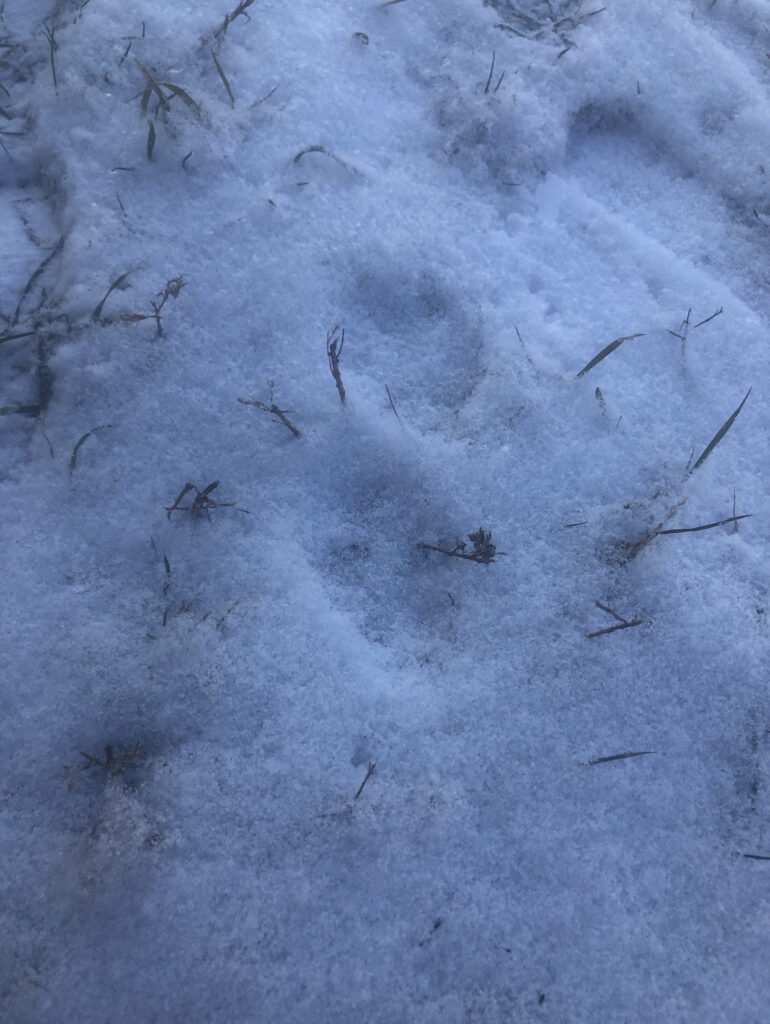
This time, instead of taking my usual trip to Centennial Woods, I found evidence of animals much closer to home, specifically right outside my residence hall. I even have a hunch about who they’re from. But we’ll circle back to that. Using the iNaturalist app to post my finding was easy. I just searched for the project our class is contributing to, joined it, and then my image was immediately uploaded.

These weren’t the clearest I’d ever seen, but I recognized them all the same. Four toes with nails, all spread out pointing forward. This was a domesticated dog! The two outer toes specifically spread out, so this makes me confident to say that it is not a wild canine breed.

I’ll be honest I had a bit of an outside clue for these. My neighbor has a lovely dog named Juno, and I’d seen her prints out here, just 3 feet away from our backdoor, many times before. Funnily enough, right as I turned to walk to the dining hall, Juno and one of her owners (my neighbor) walked out so Juno could get her outdoor time! So my hypothesis may or may not be confirmed.

I’m a little disappointed that I didn’t have time to go to the woods for this assignment, but the opportunity for winter tracking presented itself and I wasn’t about to say no!

Not to worry! I’ll see you in my next post in Centennial!
Post 5 – First Spring Semester visit

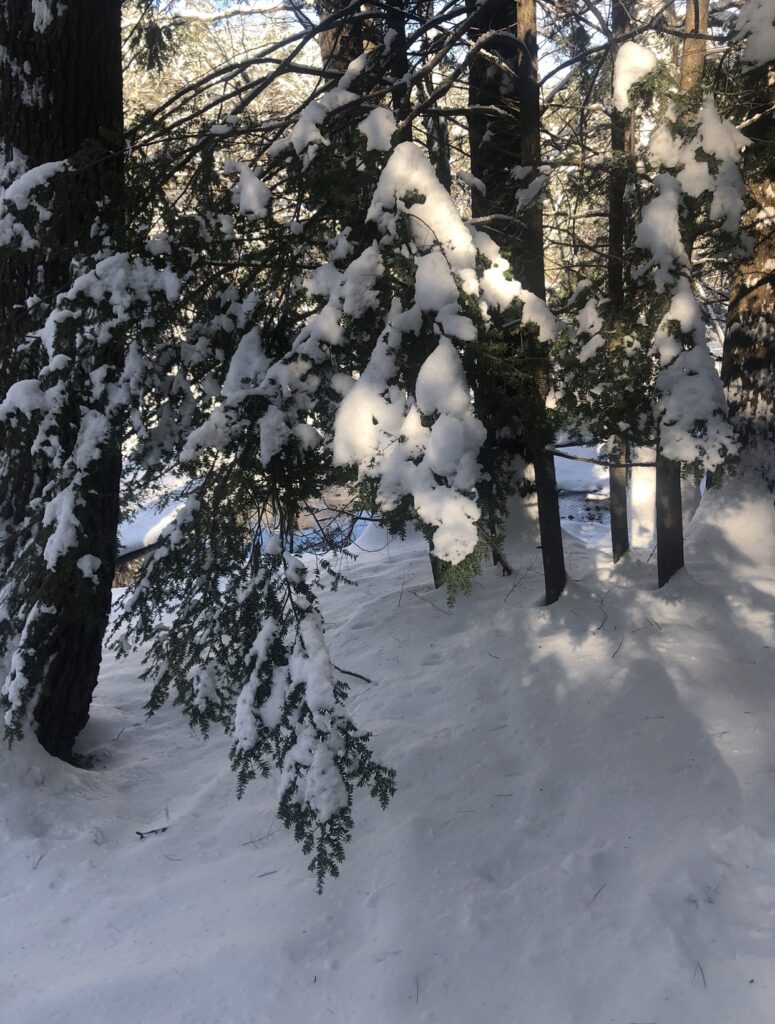
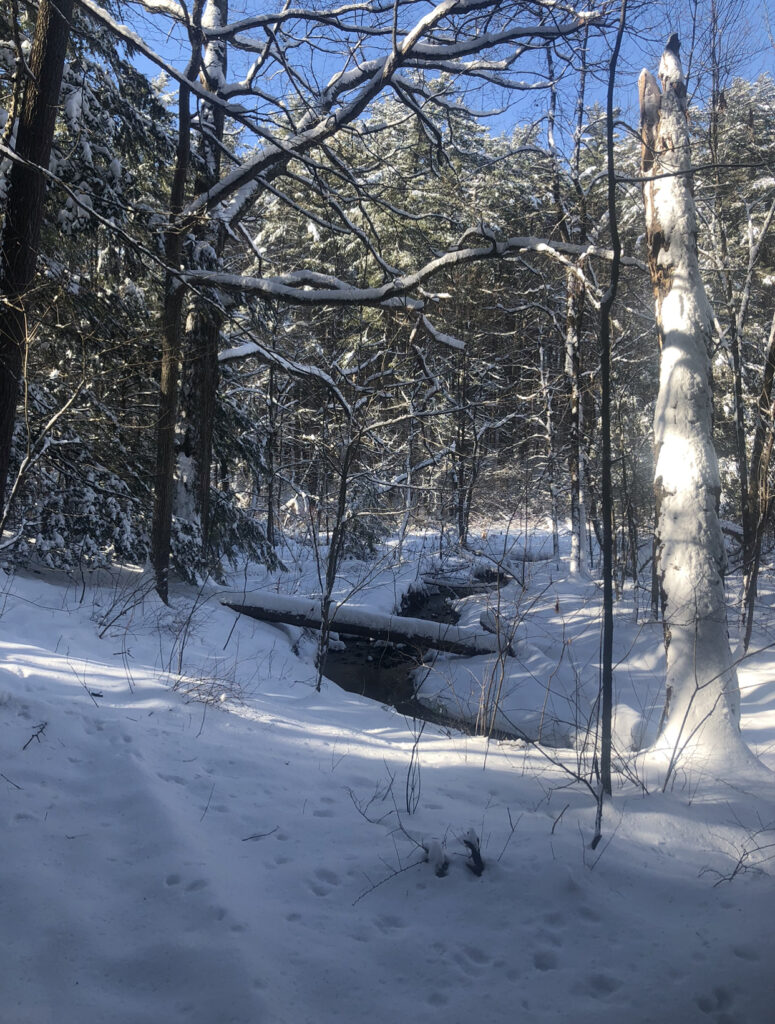
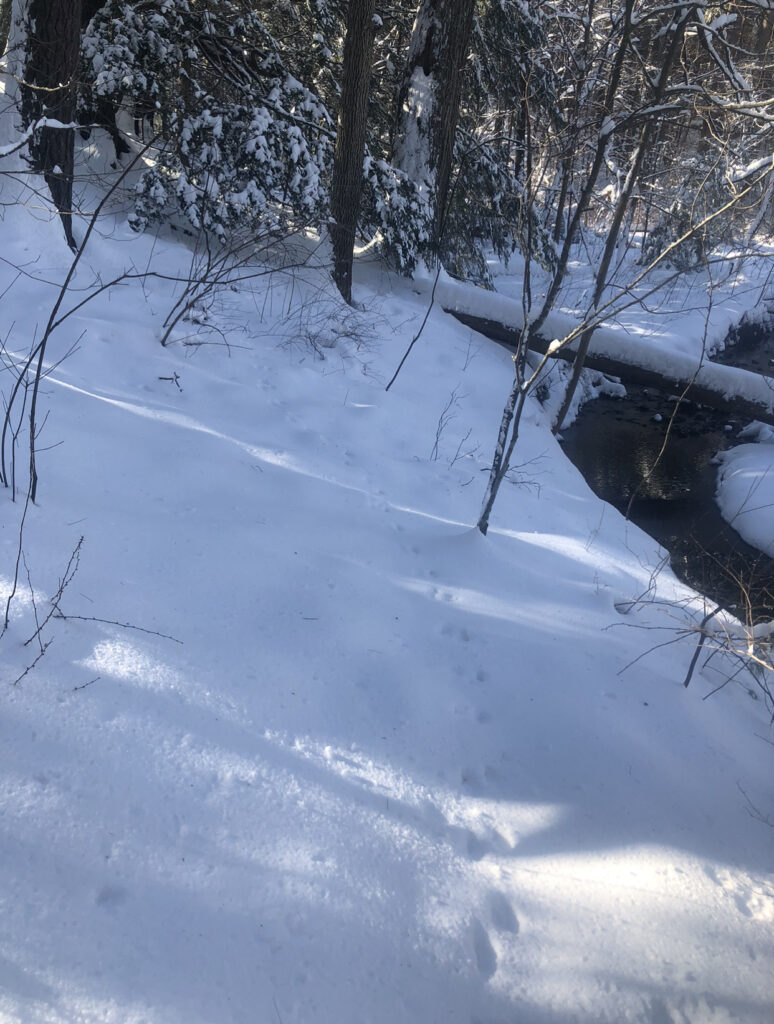
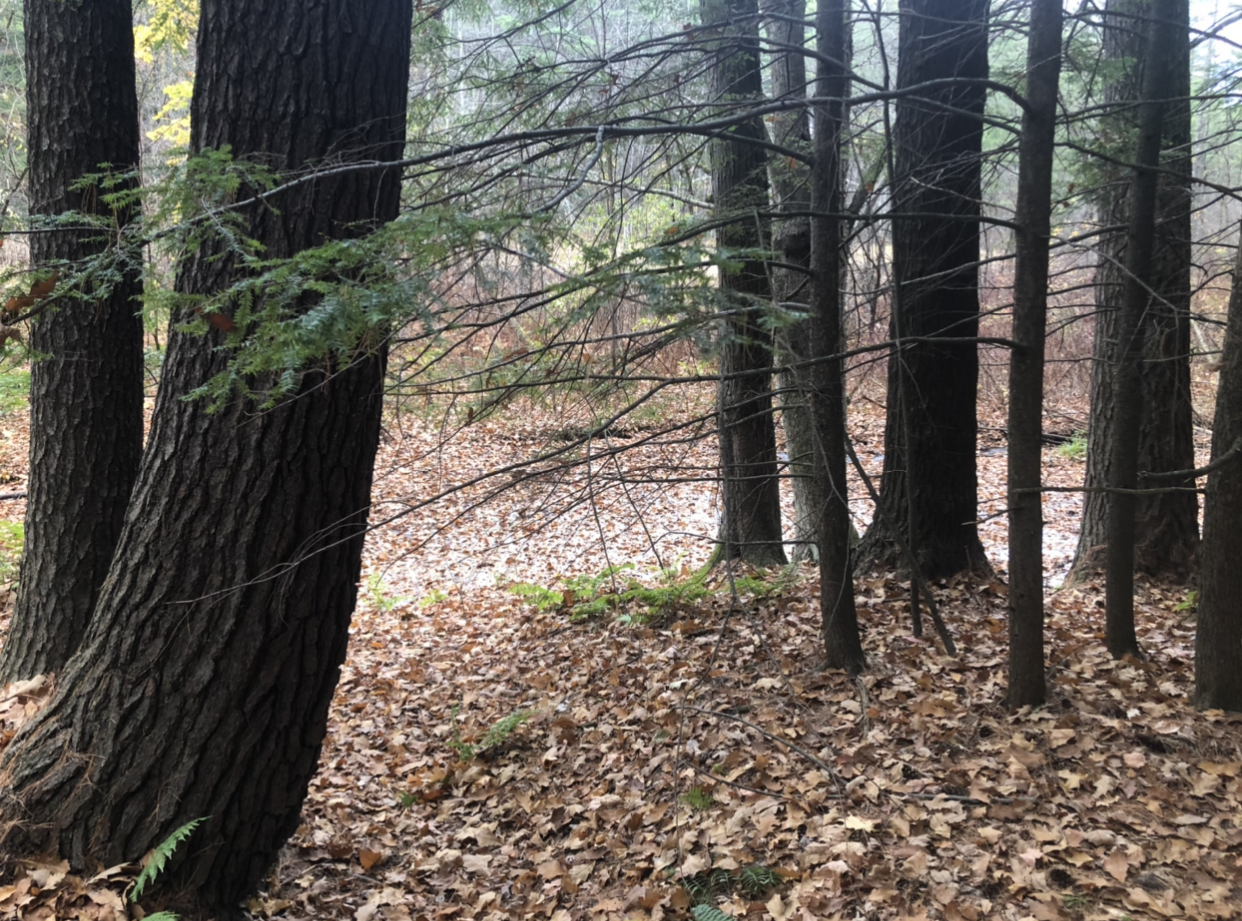
On my first visit to my spot this semester, I see this place — an undefined 50 square feet — under snow for the first time. Strangely, the water nearby was flowing more than ever. Last visit, it had been frozen, and frosted leaves gave wet crunches under my feet. This time, I heard the familiar rubbery sound of shoes on powdered snow, but funnily enough, I could still feel and hear the leaves crunching under those layers of snowfall and frost.

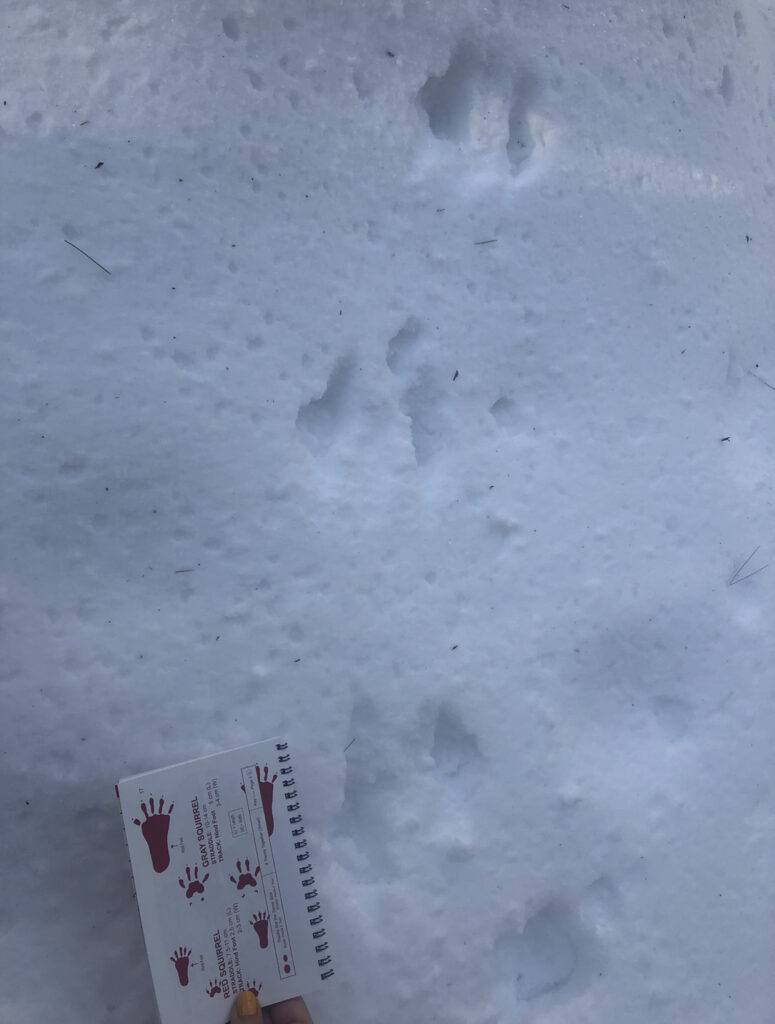
Along with this new snow, of course, brought evidence of life that I hadn’t really seen before. Small tracks that my friends and I guessed are that of a grey squirrel, were trailing all over the place. Whereas usually, I can only hear the birds to know that our dear forest is alive.

In all, I’m glad to be back. There’s not a whole lot of natural areas back home that I can call my own, and taking this ceremonial walk with my friends through the hills of Centennial was a literal and metaphorical breath of fresh air. If I have enough time I’m going to take another walk through the woods, or at the very least appreciate my time outdoors more.

Until the next post!
-Alma

Post Four – Final Semester Post

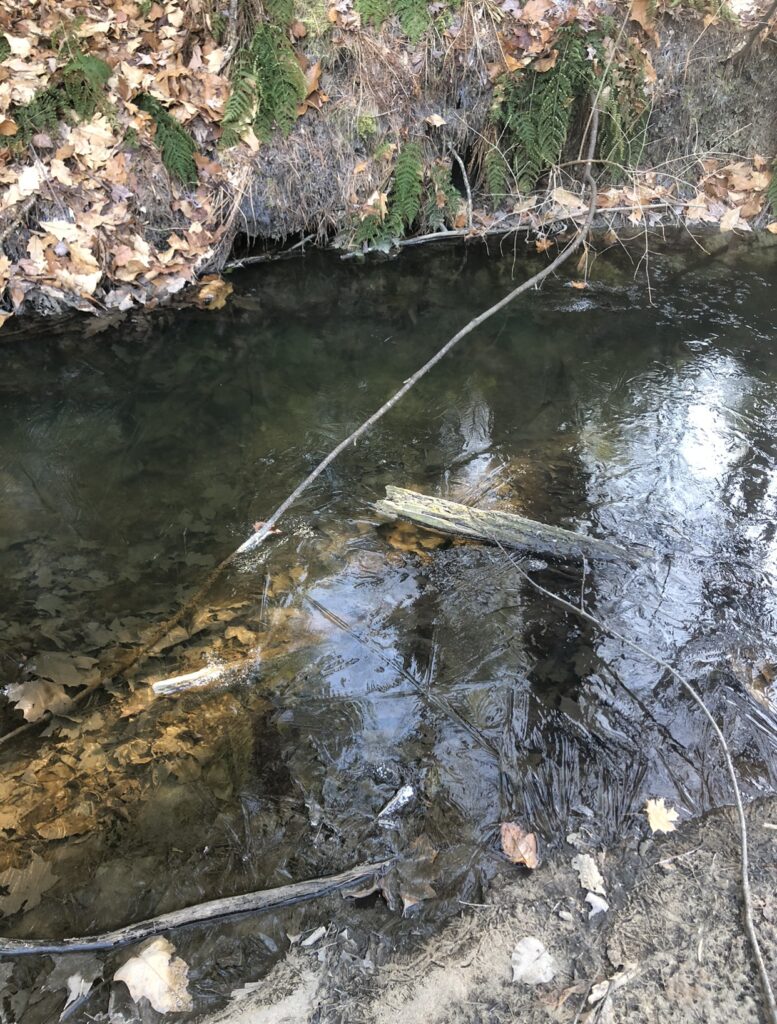
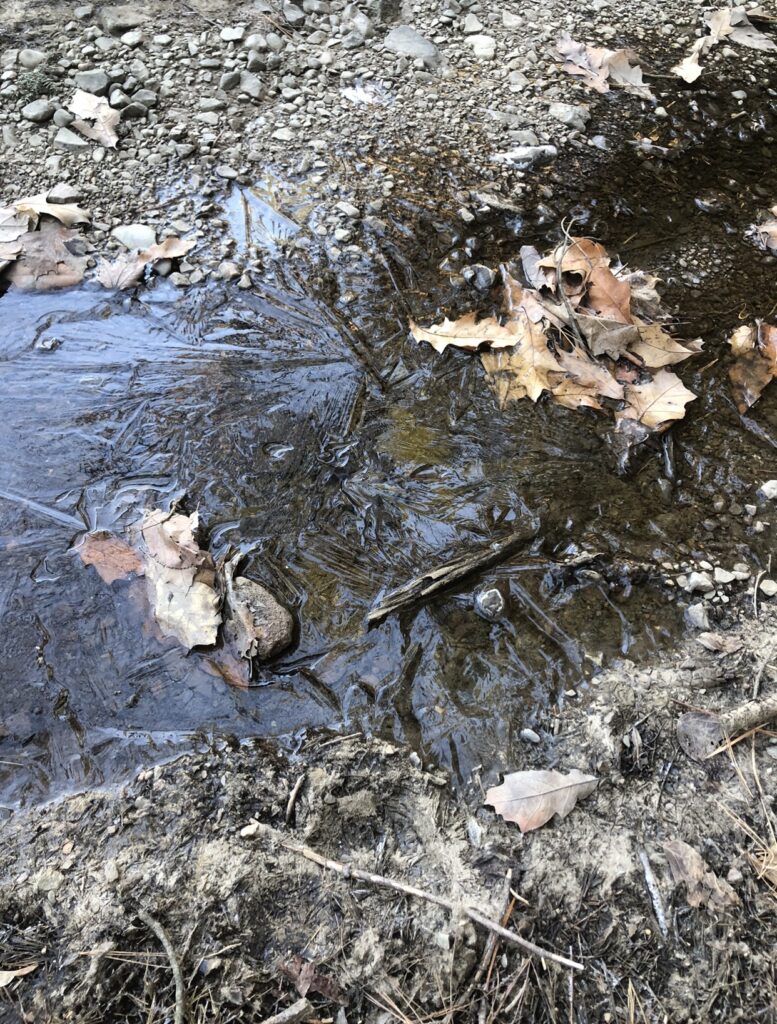
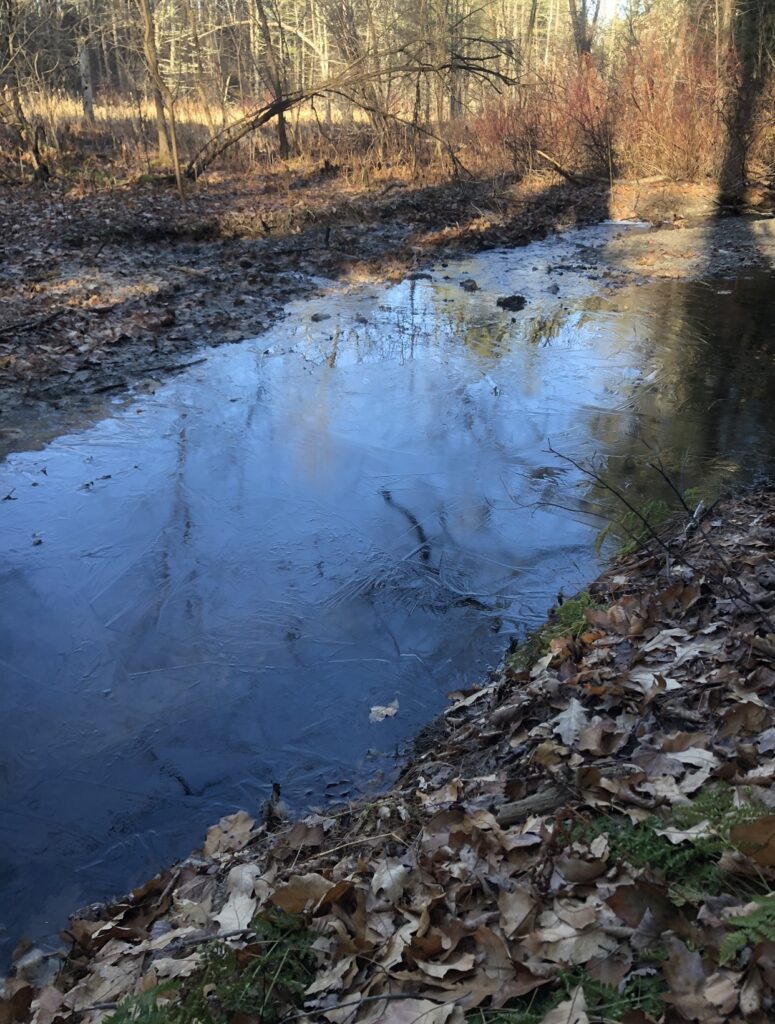
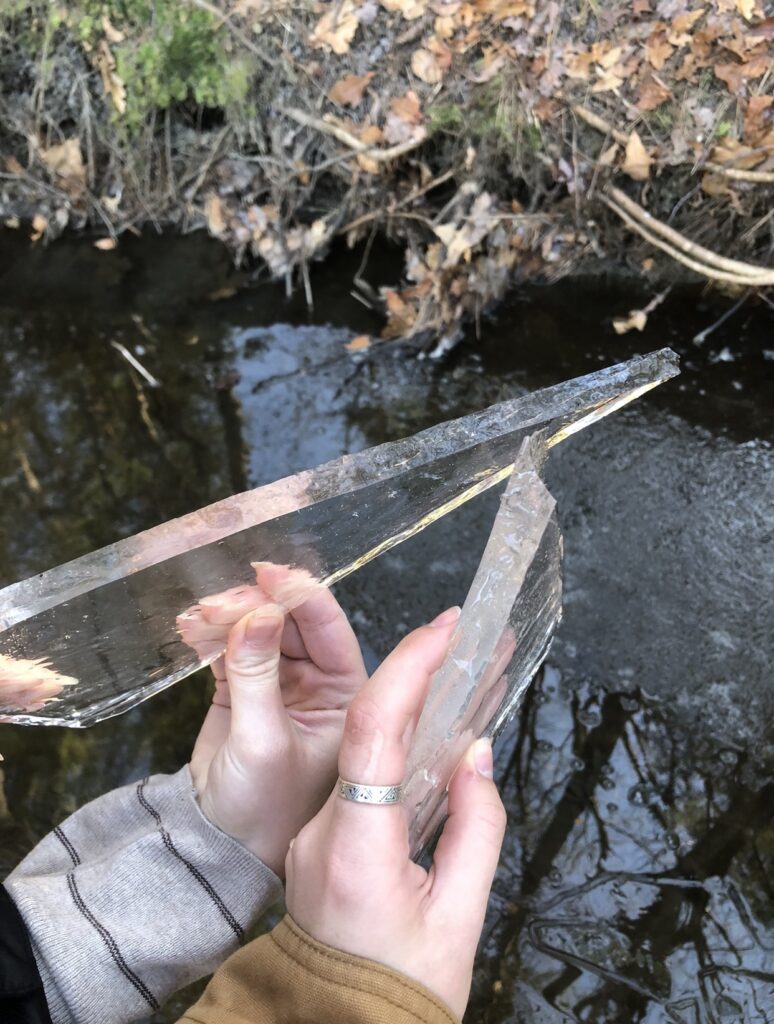
This time at my site, I decided to figure out what was going on with the water. It was frozen and clear, and I could actually see which way the stream meandered. After being caked with leaves the last time I visited, I was thrilled to see the way the ice crystalized with left-over sticks and leaves from the great shedding that had happened earlier. I was able to hop over the frozen water to explore the tiny floodplain that had formed on its bank. What I found were pebbles frozen and raised up from the ground, and leaves that were iced together, reminding me of drying paper mache when I stepped on them.

I think the last few times I’ve been here, my eyes have blurred over the scene because of all the confusing leafy piles and tiny streams of water running where they shouldn’t be. But this visit made me take my time. Maybe because everything was frozen, I felt like I could jump around [as quietly as possible] and explore, whereas previously I would have just sat and tried to take it all in.

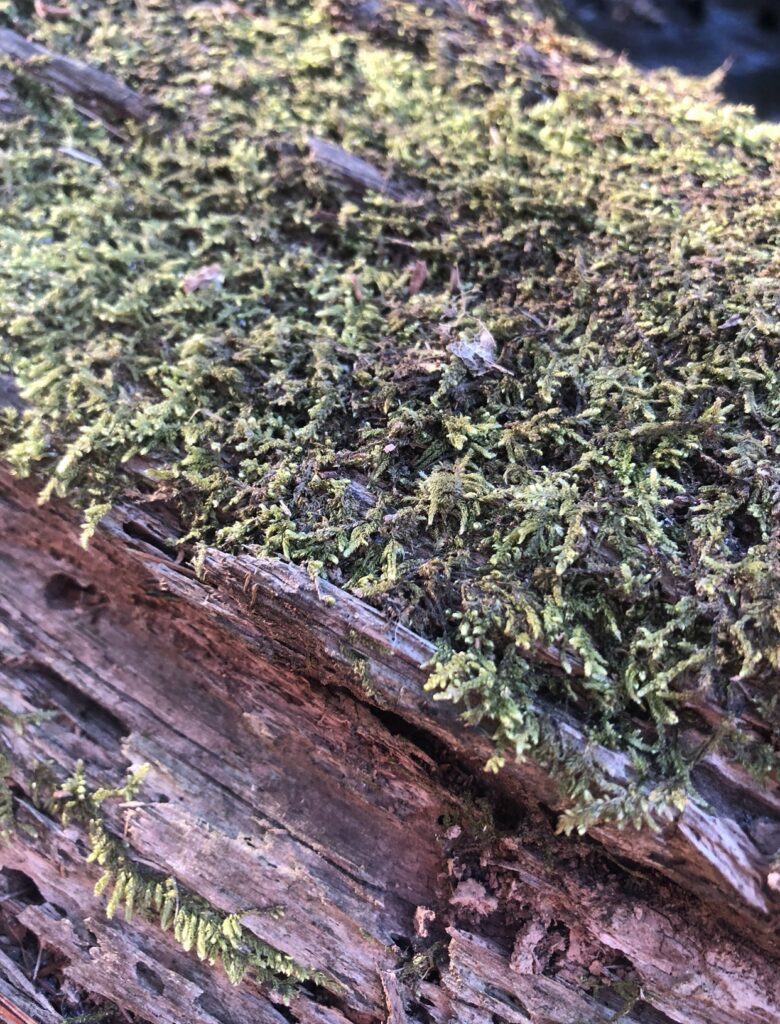
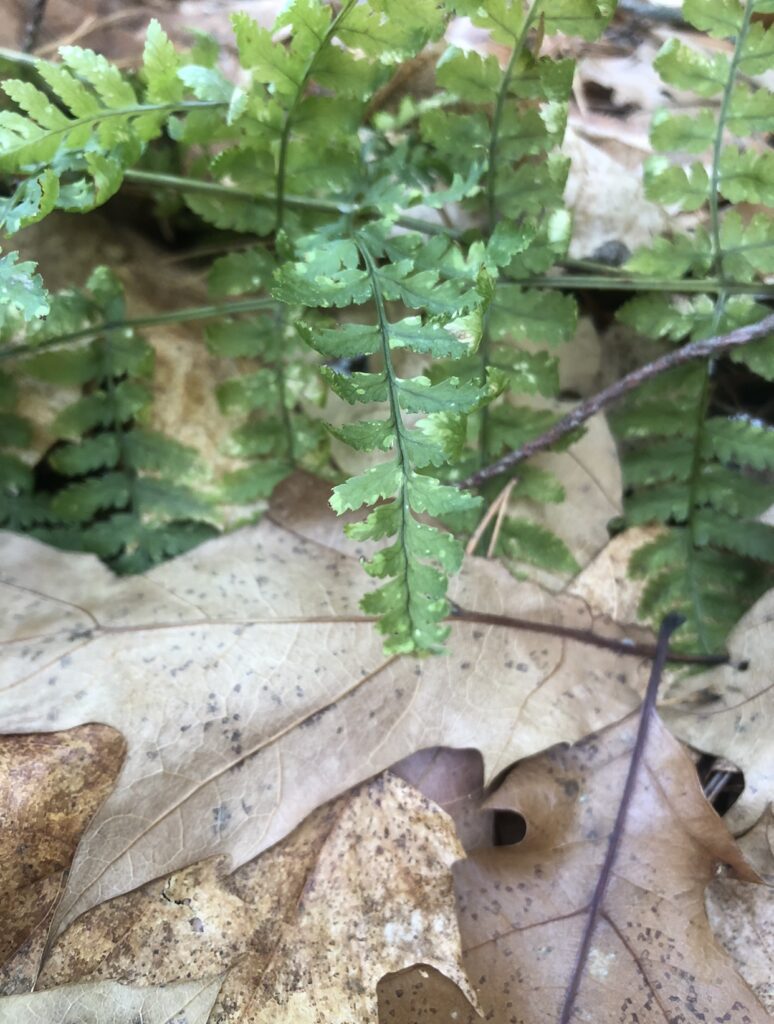
I got to look closely at the pieces of this space. The ice was frozen thick, and I was thrilled to see some sizable little fish flitting around down there. Of course, we had to test the ice, and I watched it crack under my friend’s shoe after bouncing like thick and slow laminated paper. I was most surprised to see the fish, and a little less surprised to see the ferns and moss still hanging in there. Though I saw a mushroom that had met its demise.

I always feel refreshed when I come here, but coming in the cold weather was a new level. Every breath meant another moment I was taking in this space, and I’m very grateful that I chose the spot I did, because seeing it change has been an exciting event. Leaves are gone from the trees, though of course the pine needles stay, and the green is slowly fading from the woods’ floor. I can’t wait to see what this place looks like covered in a layer of snow. I’d probably keel over with joy.

Post Three – Thanksgiving Break

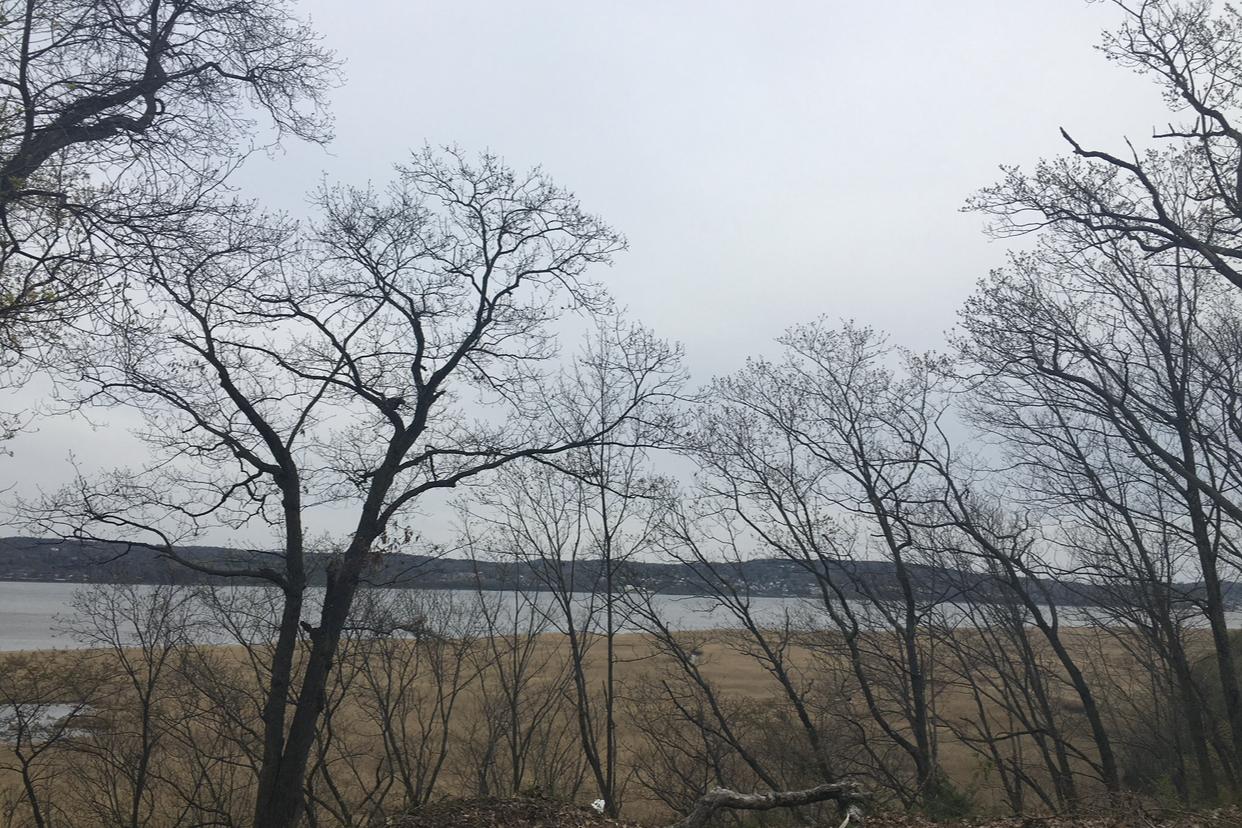
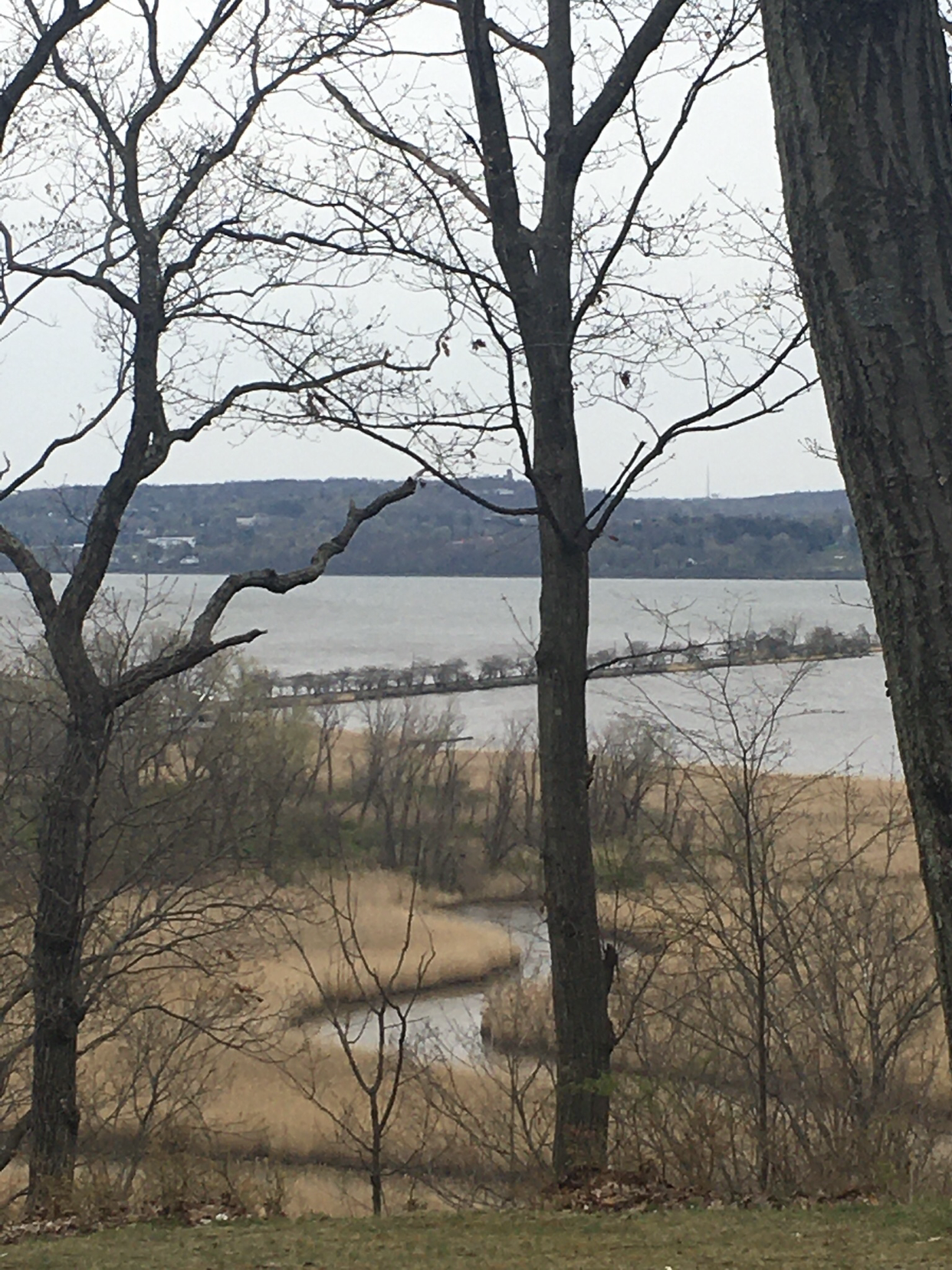
This Thanksgiving, I joined the hoards of fellow Americans skyrocketing carbon emissions by traveling around 500 miles for the holidays by car! So, unfortunately, I was not in one place for long enough to truly absorb and feel what I would have liked to in a natural space, BUT last Thanksgiving, I was able to visit such a place! My family and I were traveling for the holiday, and while in upstate New York, we stopped in Tallman Mountain State Park, in Piermont NY. It was a beautiful woody area with a great view down to the Hudson River. The trees thinned out towards the river bank to be replaced by reeds and tall dry grasses that I remember vividly. I wish we could have gone back this year, but of course, we had to travel from NJ up to CT, and then back up to VT! Fear not though, I very much enjoyed my backyard’s natural spaces, I saw a red cardinal and noticed how different my home is from Centennial woods. There are no eastern white pines, and instead, we have a tulip tree, and then a myriad of oaks and maples.

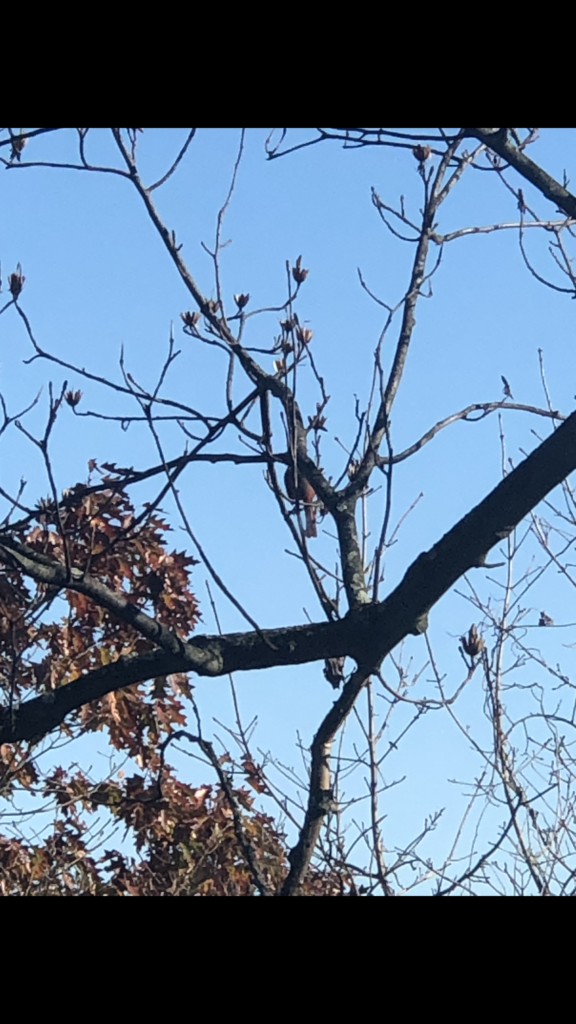
See here, down in Verona NJ, a red cardinal sitting in our dried-up but persevering Tulip Tree!

And above, we have Tallman Mountain State Park in all of its glory. Granted it was a rainy day, but I loved seeing how the stream meets the river bank, and how it meanders through the marshy area to get there. It reminds me now of the small stream through my spot at centennial. Though it’s quieter and much smaller, it still charges through the watershed, past dry grasses and bare trees.

Post Two – Sitting In Silence

After hiking down to my very watery and leafy spot, my friends and I took a seat and stared out at the landscape. It smelled like pine and wet leaves in a pleasant way, and the wind brought a sweet grass scent with it. It was a warm day for November, and pleasantly cool under the shade and on top of the dampened leaves. The following is a stream of thoughts I had as we sat in silence appreciating the last of Autumn.

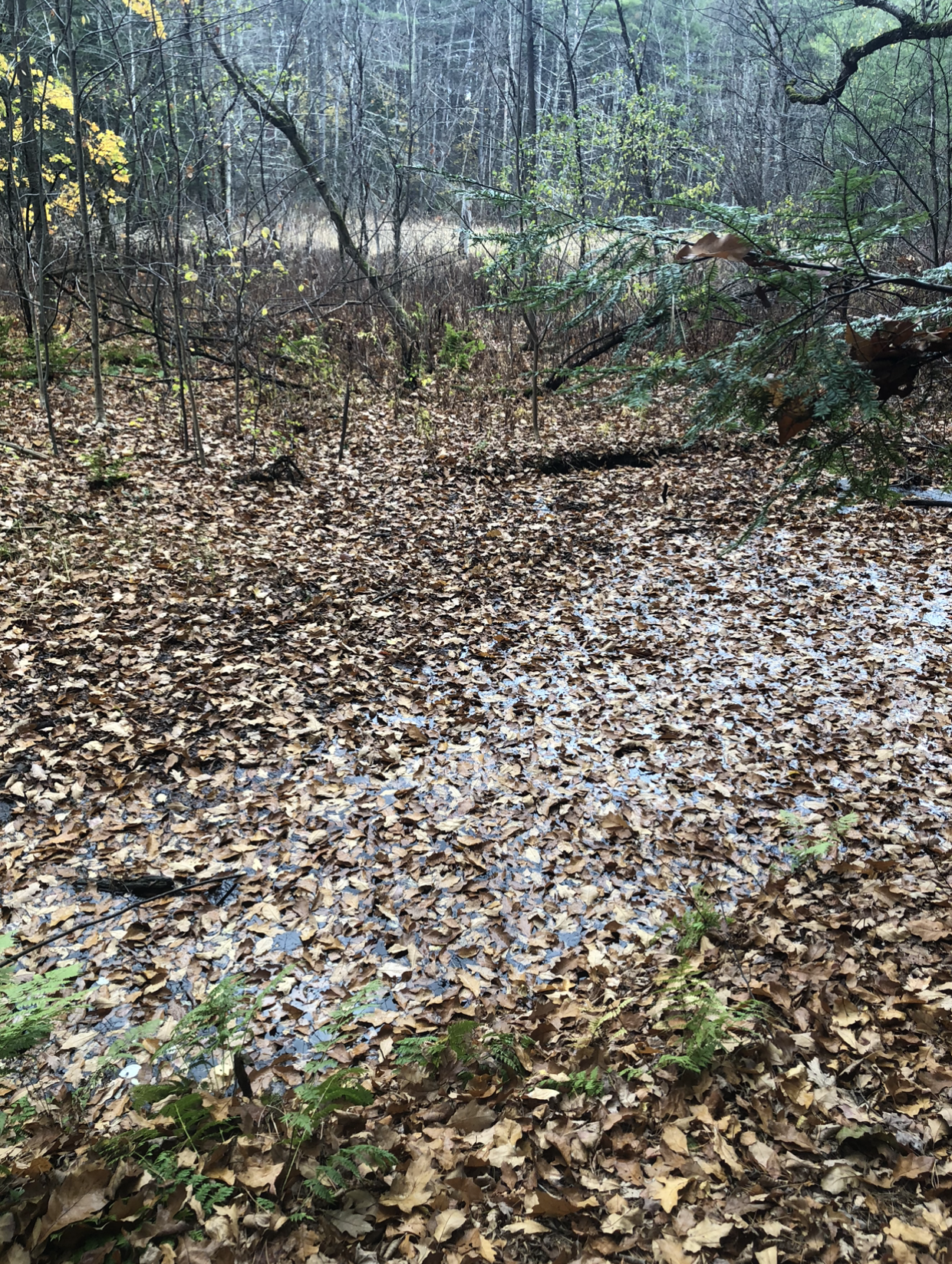
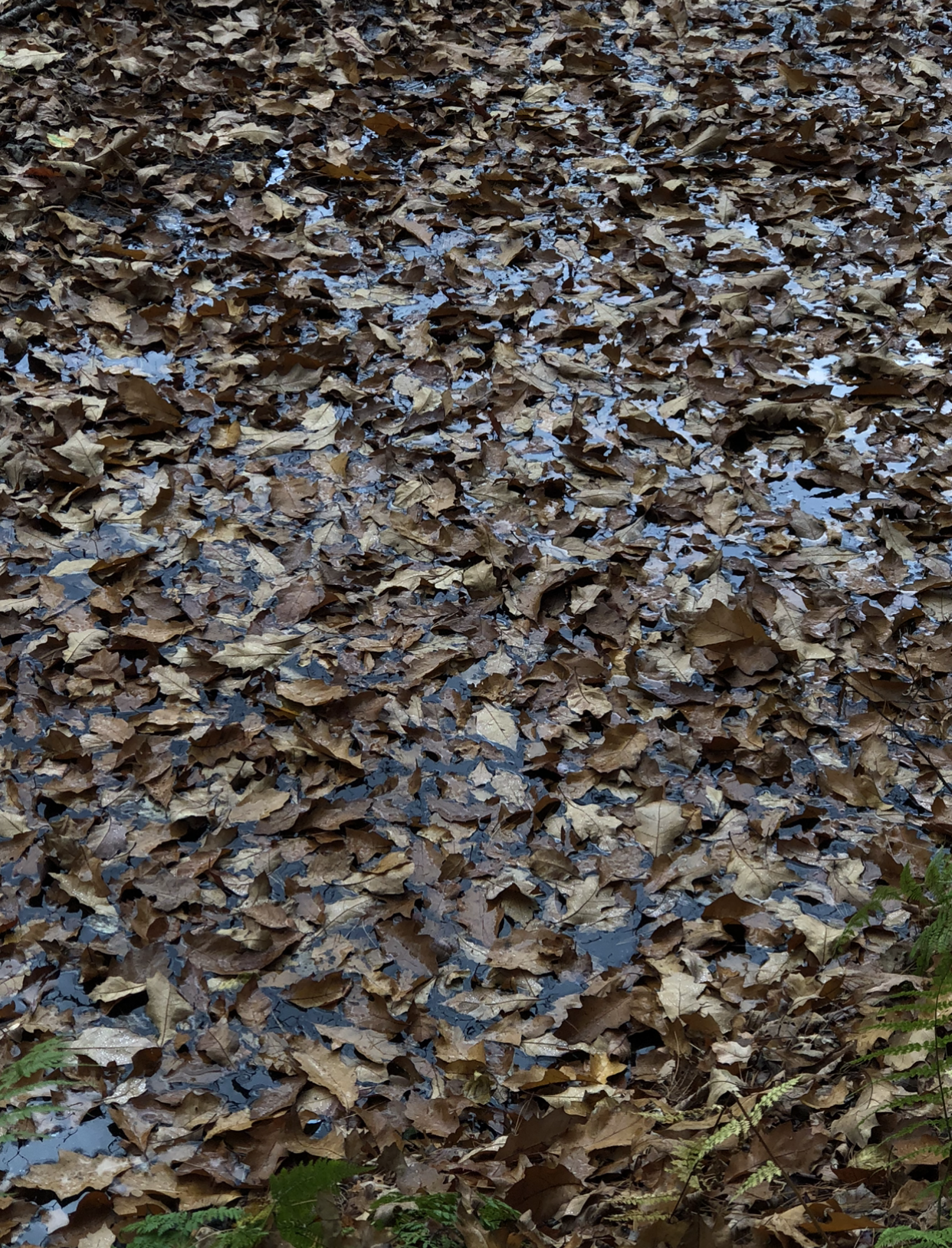
The stream area is covered in leaves. Truly, a cake-like layer sits on top of the water. The most you can see of the slow water is a light grey reflection of the sky. A much different experience than when I was here last.

Everything is covered in a hefty layer of oak leaves and pine needles, with a dash of red maple. A large swath of tall wild grasses sits across the water, which at first glance looks still. I notice the source of bubbles further downstream. There are dimples and ripples in the water, likely from the slight slope downwards.

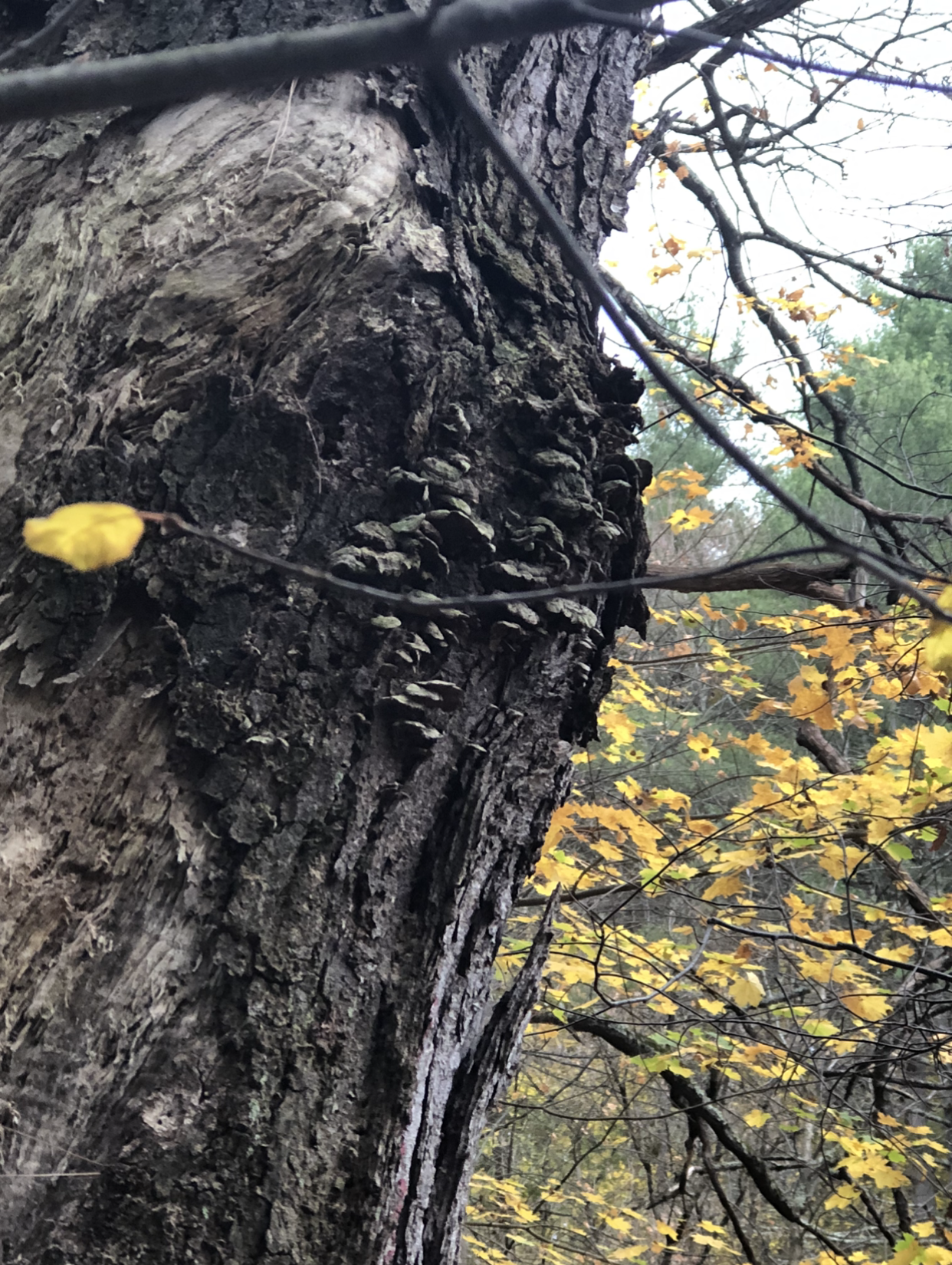
The mushrooms that blessed my visit the other day are much harder to spot growing up from the earth. Though their sister fungi on the trees and logs remain. The ferns persist as well, as does the rare maple sapling.

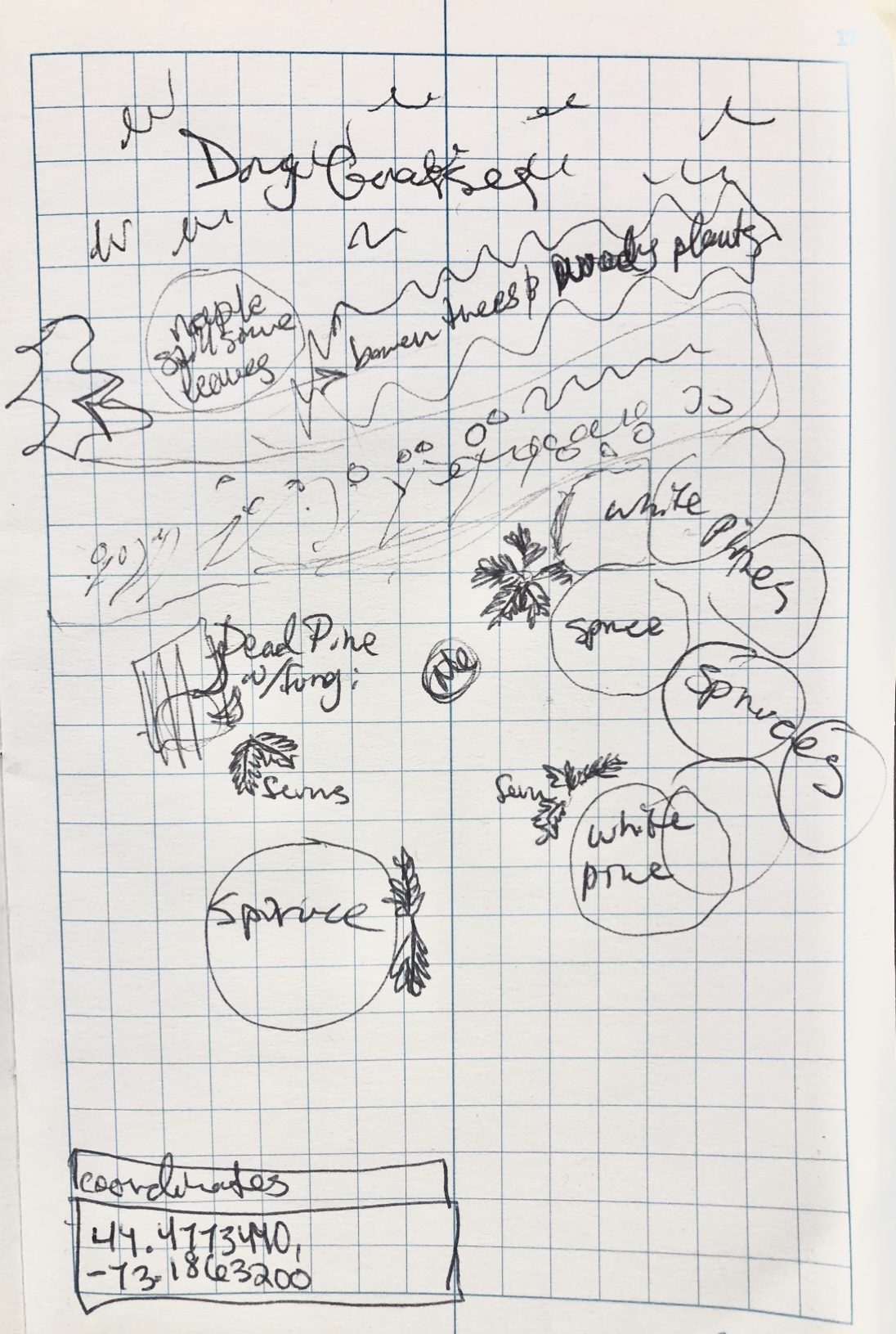
The spruces nearby are short, but fuller than the white pines which shadow them. Many of the white pines remind me of upright stripped logs. Their bark is either loose and rotting or stripped bare, carved in lines and loops from termites.


And Now,

Here is the Bird’s Eye view I from a sketch I made while sitting in this area.

Skip to toolbar