
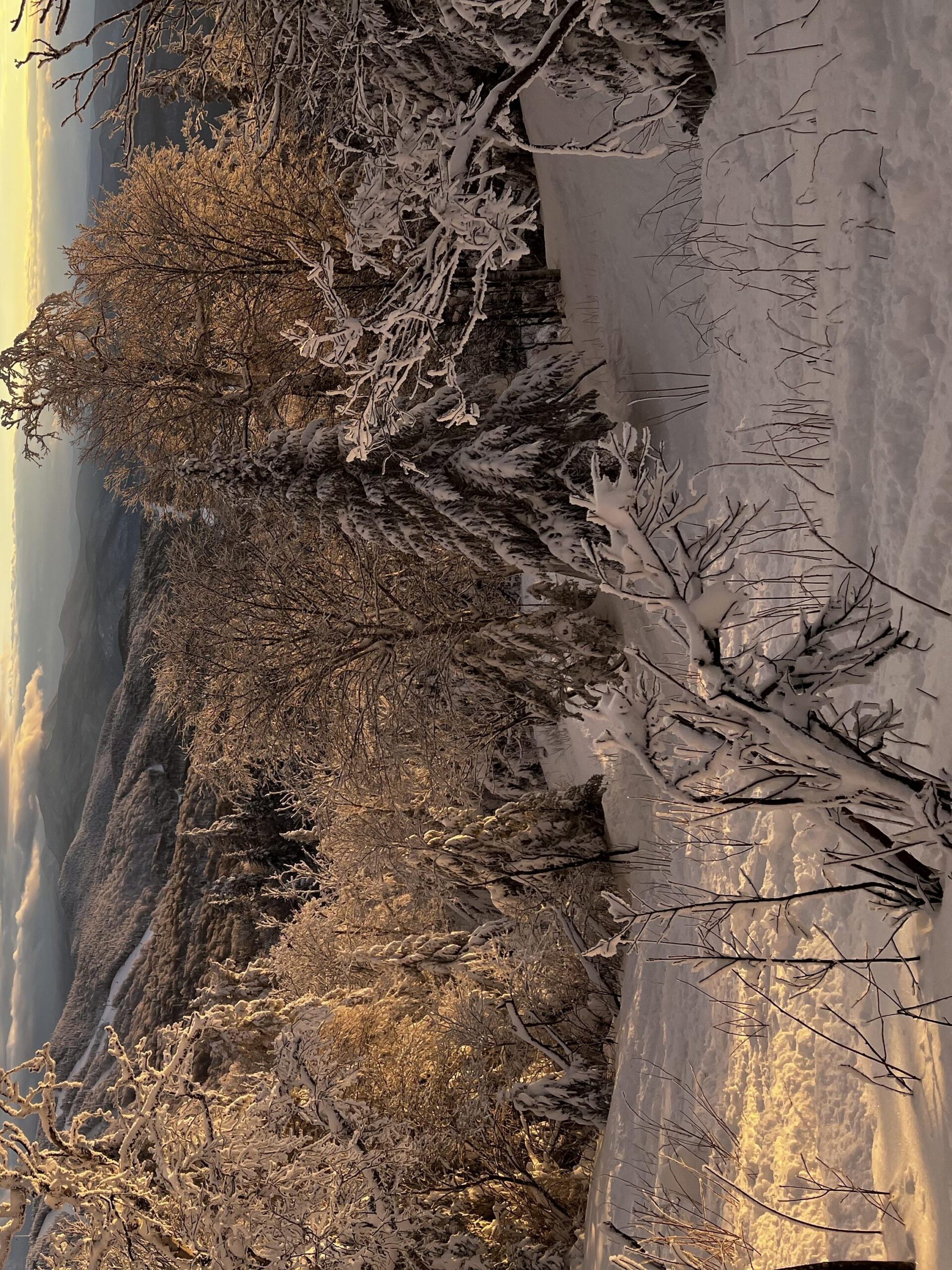
Located roughly 35 minutes from campus, my new location is the Bolton valley ski area woods. To get to my location, I park at the base of the mountain and use the uphill ski trails. Skinning up on skis, It takes around 45 minutes to an hour to get to my location. Along the way, one can notice the snow accumulations increase as you gain elevation. Along with this, tree species change, with birch trees being prominent along the way. Once at this location, there is a clear area where you find a snow cover of around 25 inches. In this snow, there are tracks from other skiers, along with wind drifts and some animal tracks, most likely to be rabbit tracks.
Burlington Phenology
local species in the Burlington area
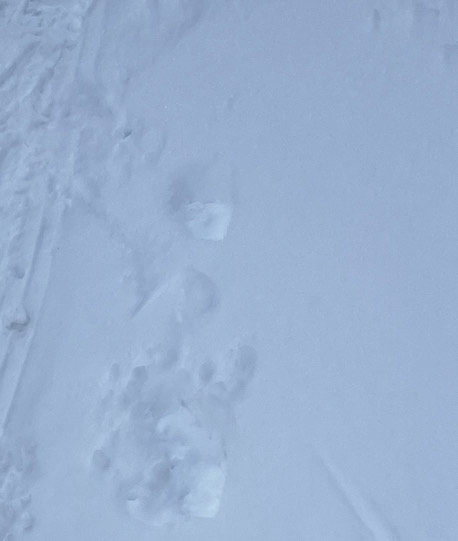
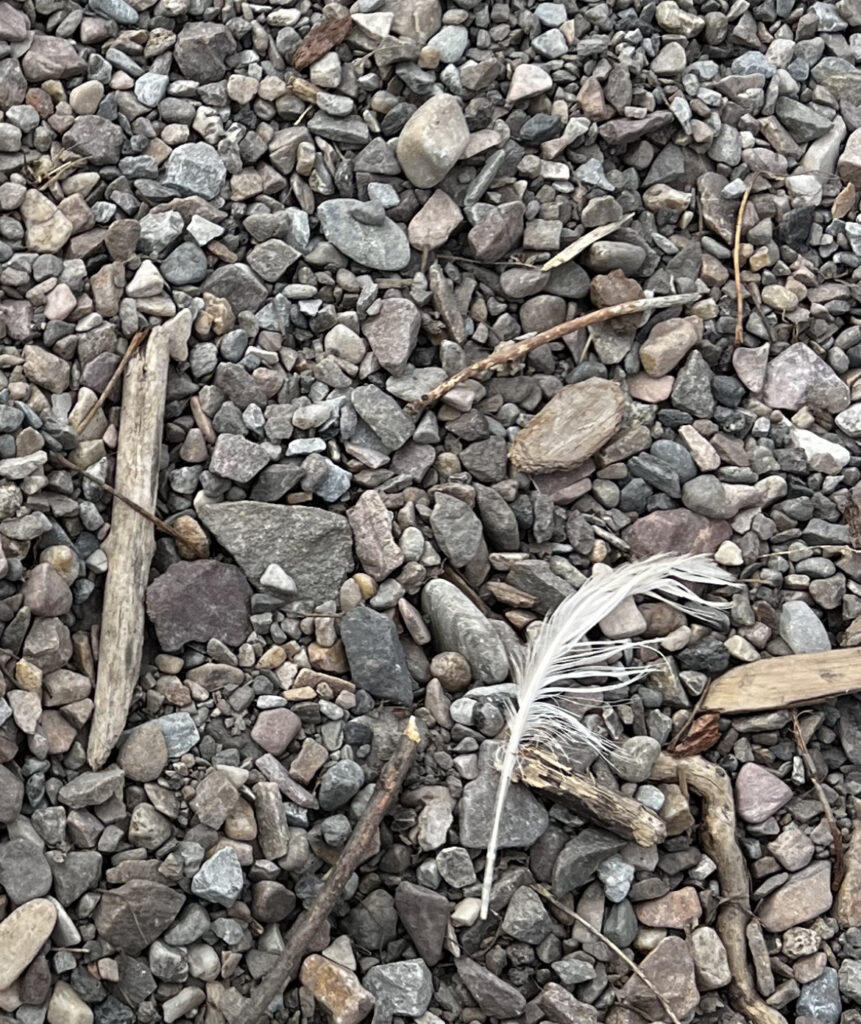
For my greater Burlington area phenology experiment, I went to the woods behind the mercy dorms on University Of Vermont’s Trinity Complex. On top of this location, I also went to Centennial woods and Perkins pier in downtown Burlington. I went to these locations on the 15th, and while I was there, I had very little luck observing any animals or scat, as this is when the melt began to refreeze. Although little species were observed, I did observe some patterns, and one feather. The snow gave me the biggest clues as to what could have been through. I found one set of tracks, measuring about 2 inches by 2 inches, with a diagonal pattern. I concluded that these tracks were those of a gray fox. The feather that I observed by the water was that of a seagull, specifically a herring gull, which occupy inland bay areas, and lakes, explaining why it was on lake Champlain. These species are indicators of the local species composition of the greater Burlington area. Below images of the tracks and feather can be seen.
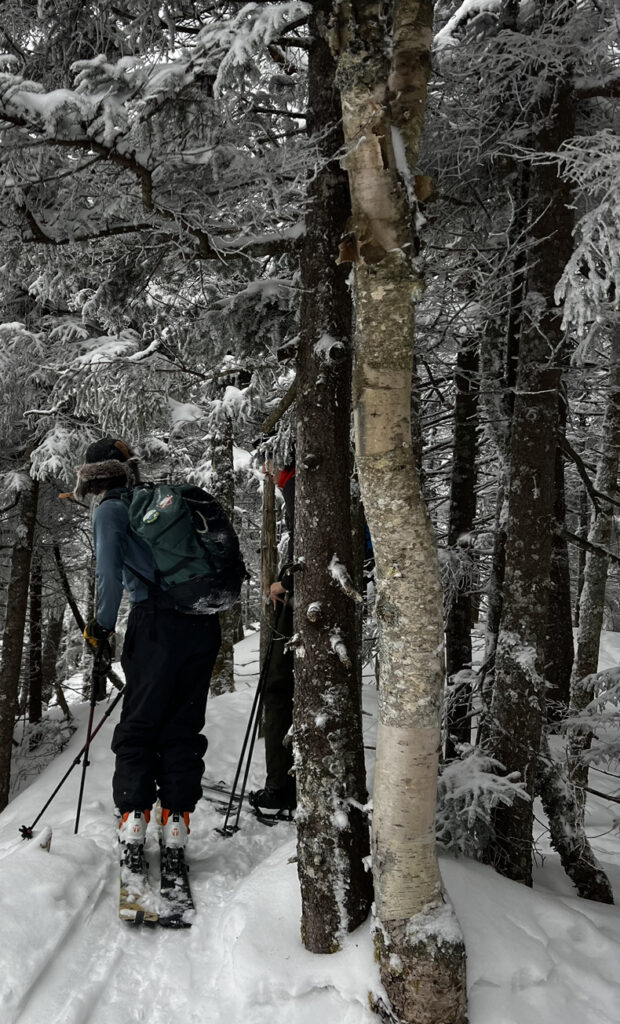
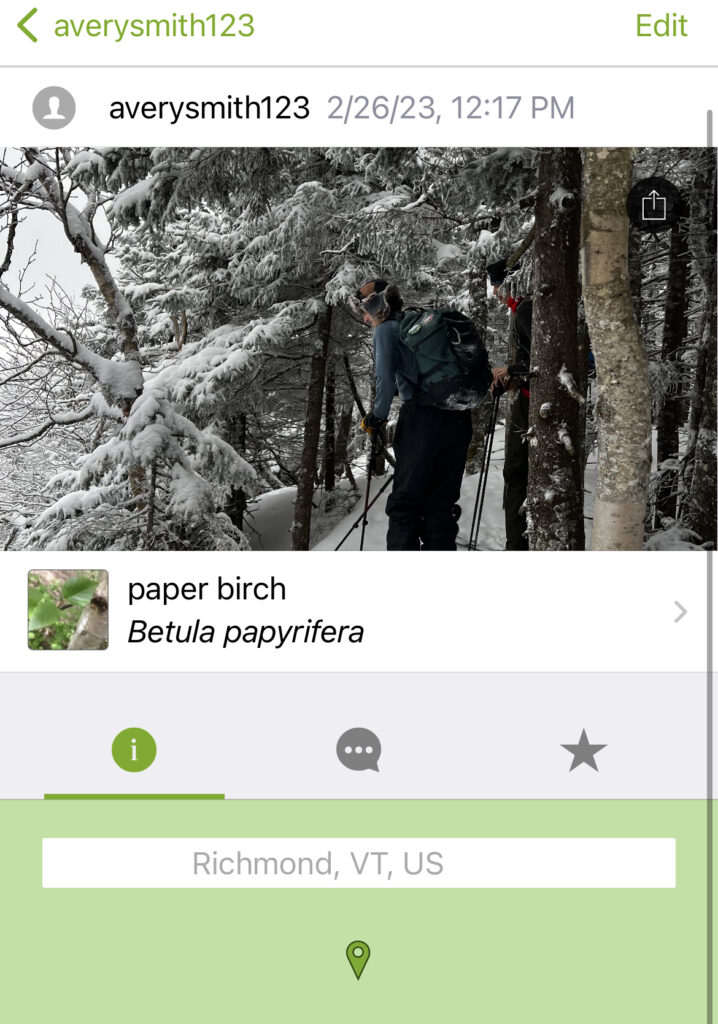
Paper birch tree in the bolton backcountry
Pictured above is a paper birch tree sighted in the bolton backcountry in February of 2023. This tree can be identified as such due the the bark, color, and location. the tree has no present budding or flowering yet, as it is at a higher, colder elevation.
Paper Birch, several weeks later
As spring in Vermont begins, one of the first telling signs is that of the trees behaviors, and growth. at bolton valley, which is located at a higher elevation, there was slightly less growth seen in this paper birch than those at the base of the mountain. At the bottom, these trees were beginning to bud, but as you get higher in elevation the progress is slightly delayed. attached is an image of what the tree looked like. as temperatures rise, I am sure the higher elevation trees will bud.
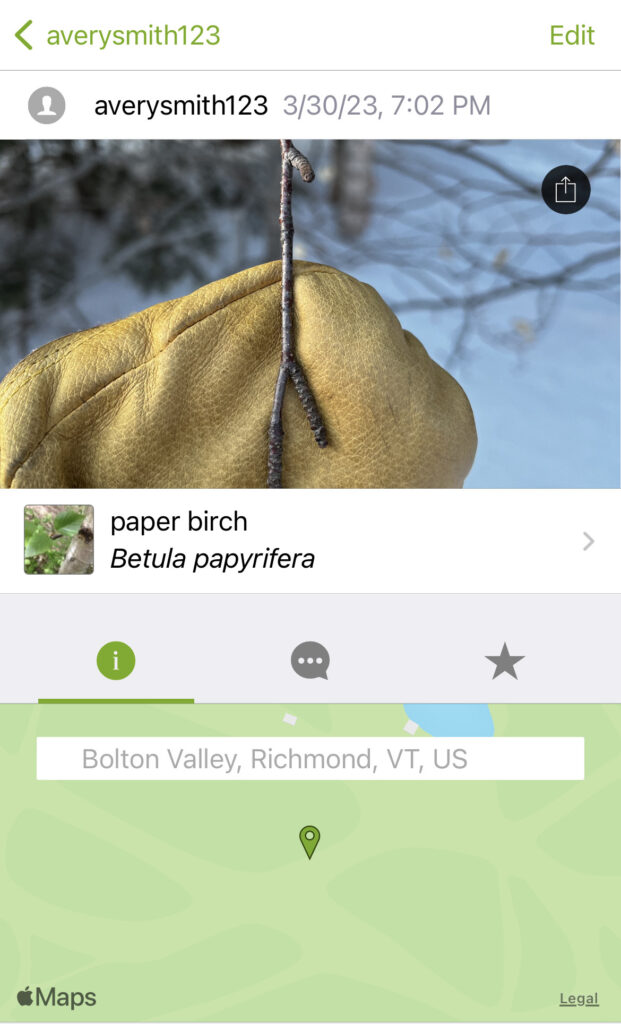
Bolton Valley Paper Birch, several weeks later
upon revisiting the tree at bolton valley, it was in a very similar stage as the previous blog post. it can be noted that the buds on this tree are now beginning to surface, likely to open in the coming days and weeks.
The Last visit
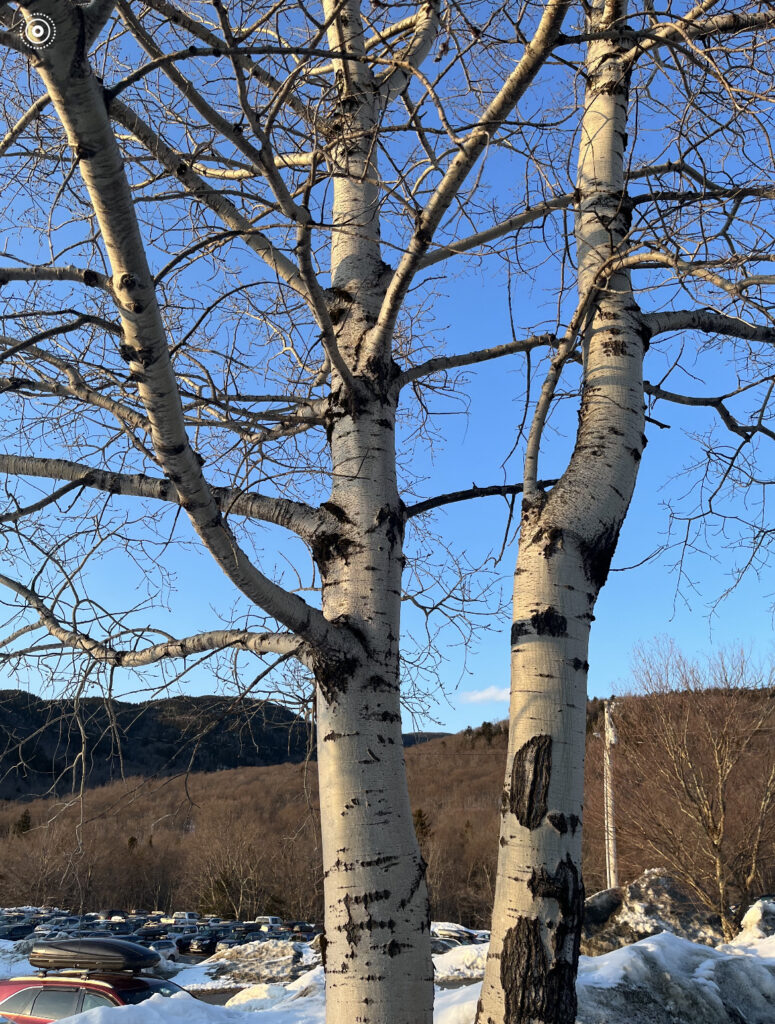
Throughout the investigation of this phenology spot, I have seen my tree go from nothing but bark and branches to full of buds. At the beginning of the semester, I bega backcountry skiing at Bolton valley, and quickly chose the paper birch tree. This tree has undergone all of the expected changes, with the development of the buds making the most sense in the past weeks.I have noticed that the tree, located at a high elevation in comparison to other trees, was slightly delayed. This landmark can be defined by the elevation change from the bottom to top of Bolton valley. In this area, nature and culture intertwined greatly, as the tree is located in a slightly developed ski trail. This opens up the opportunity for the tree to be subject to human impact and harm, although not likely. I have grown to consider myself a part of this place, I have seen this tree in all aspects of the seasons and look forward to revisiting it next year.
Hi, this is a comment.
To get started with moderating, editing, and deleting comments, please visit the Comments screen in the dashboard.
Commenter avatars come from Gravatar.