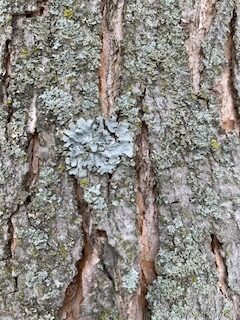
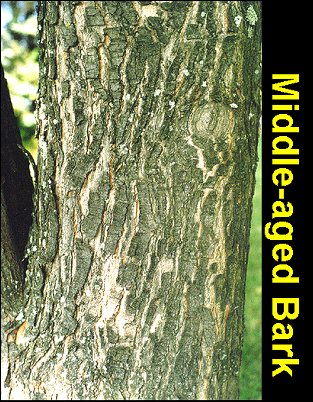
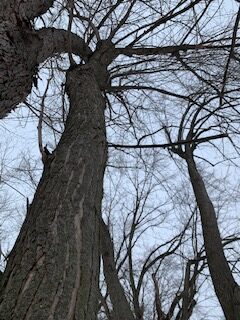
This week, I found myself down at my phenology spot. Not much has changed, which is to be expected since the area is still covered with a coat of snow. The path at the Intervale was much icier than I anticipated it to be, so it took my friend and I a bit longer to get to our phenology spot. However, the state of the snow did make the dog tracks, which were significantly deeper than any other track we spotted, very noticeable. We did not exactly spot many other tracks, except for the stray mouse track, but the dog tracks were very cool to look at, especially because they all varied in size so much.
My reason for visiting my phenology spot this week was to locate either a red maple, Northern red oak, paper birch, or American beech. However, to my surprise (although I should not have been surprised considering I had already identified all the trees at my phenology spot in the fall), none of these trees were there! Now, I could have wandered the Intervale, looking desperately for one of these trees, but instead I decided to choose a silver maple because, although it is not a red maple, it is still a maple, and I really wanted to choose a tree at my phenology spot. From there, it was pretty easy to choose which tree I would be studying over the next few months, as there are very few that have easily accessible branches.
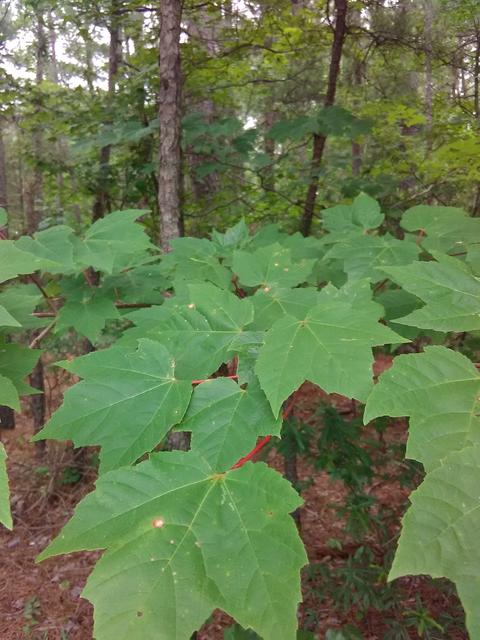
The easiest way to differentiate between a silver maple (Acer saccharinum) and a red maple (Acer rubrum), is their leaves. However, that is obviously not currently possible given that it is winter. Silver maple leaves have much more deeply-cut lobs, and they are also generally larger. The leaves also have a distinct silver underside. I will be sure to post a photo of mine come spring!
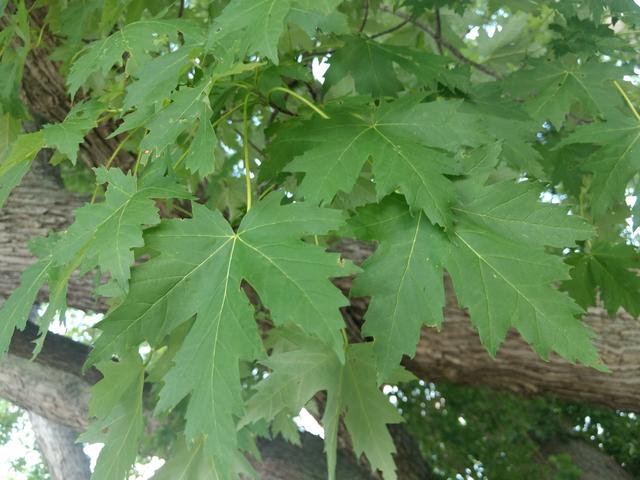
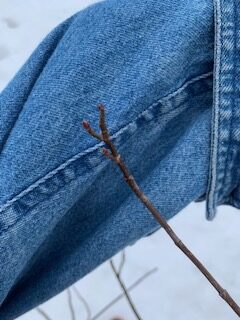
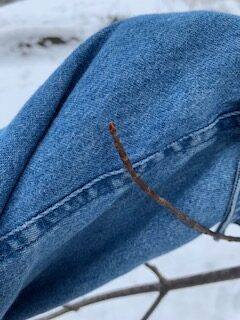
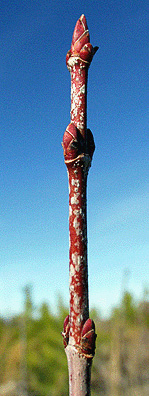
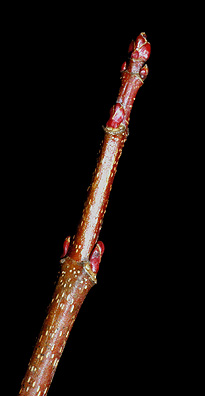
The twigs of the silver maple are also more of a chestnut-brown, as opposed to the reddish color often associated with red maple twigs. The twigs of the silver maple also emit an unpleasant odor when broken.
Silver maple trunks are also more likely to grow in an odd, angled way, which is clearly seen in my phenology spot, and sometimes even have several trunks. The silver maple that I chose does not show any of these features but, since it is such a common characteristic at my phenology spot (even seen in the silver maple right next to my chosen tree!) I thought it necessary to include.