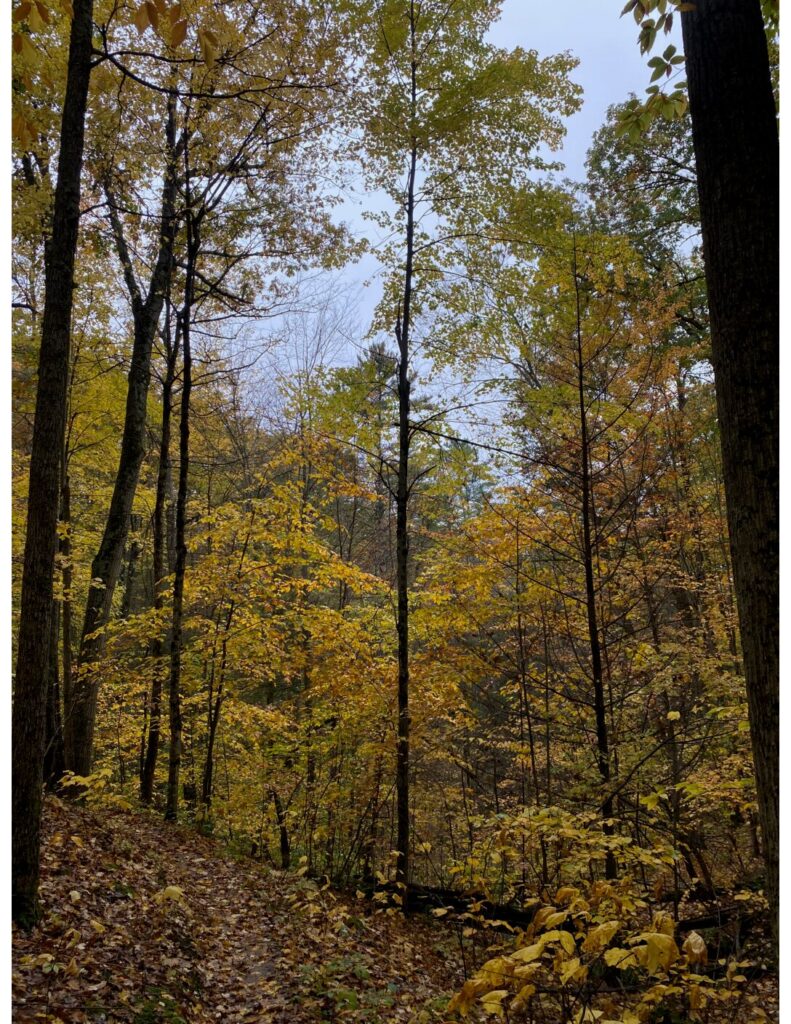
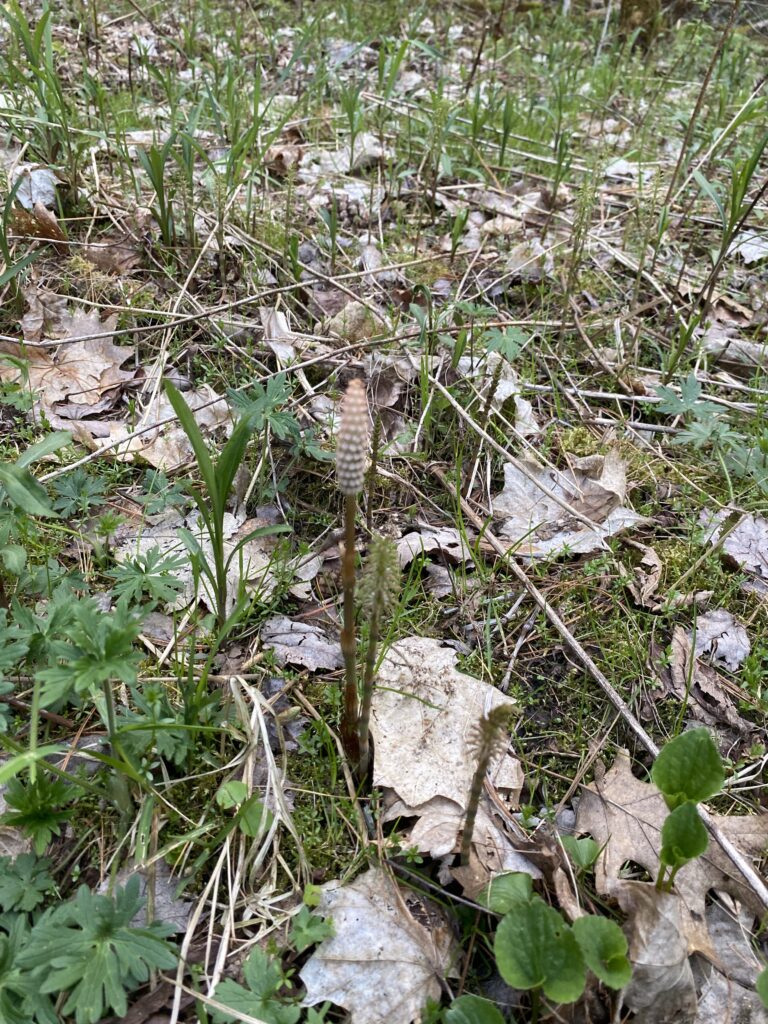
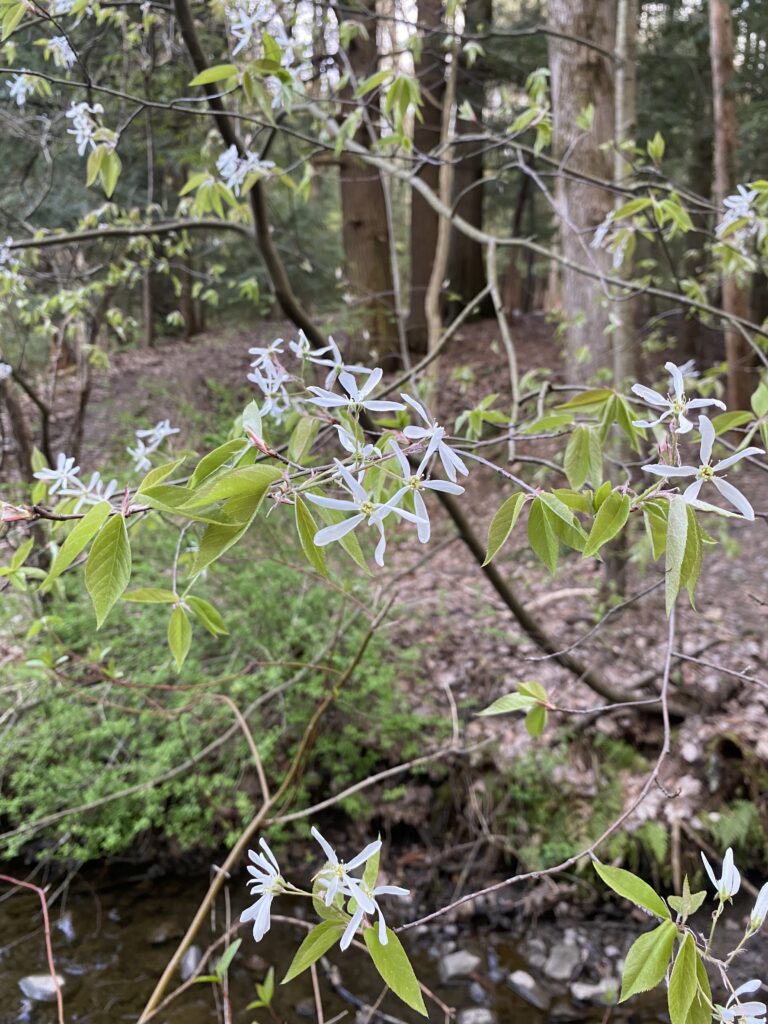
Centennial woods is starting to look more and more similar to when I was first introduced to the forest. Even though this has not been my spot for very long, I still interacted with this forest many times throughout the year. Centennial was actually one of the first natural areas I explored in Vermont. In early September I saw the lush dense foliage and worked to identify trees within the woods. In November I spent time identifying exotic species like Norway Maple, Oriental Bittersweet, Buckthorn, and Japanese Barberry. At the very beginning of April I explored the new growth within the forest like the budding Red Maples along the wetland near the creek. I also observed increased wildlife activity like Woodpeckers. In my most recent visit I observed the culmination of the phenological cycle seeing many flowering species including Serviceberries, Field Horsetail, as well as the aforementioned Red Maple. I also noticed some fry moving around in a calmer area of the creek, which is the first sign of aquatic life I have observed at Centennial Woods.
Throughout my time exploring Centennial Woods I have identified a few different landmarks and specials spots along trails. Everytime I walk along the trail I notice the same snag that has become a hotspot for Woodpecker’s. I also have a particular fondness for crossing the bridge over the wetland as there are always new species and processes to observe. Finally I sit on the same fallen log across the creek to observe changes along the riverbank in species composition, wildlife activity, and streambank health. Because of Centennial’s proximity to the UVM campus it is a hotspot for students whether they are walking, running, or appreciating the outdoors. This makes it a natural and social area which provides a much needed sanctuary for students of all disciplines. Expanding past student use I have seen many Burlington residents use the woods as a recreation area for dog walking and hiking. Because of the intersection of human use and the natural environment there is an increased desire to protect the woods. Simply put the more people that use the space the more work will be put into the preservation of the space. Centennial is a great example of this principle as there are organized events to clean up the woods, research projects identifying areas of concern, as well as restoration projects happening.
As I was conducting my final visit to Centennial I felt very sentimental. I remembered my first visit when I had just arrived to Vermont and had no clue what I was doing. I remembered visiting with my lab group and enthusiastically pulling up Norway Maple sprouts. And I remembered reading a book and appreciating the warming weather and budding plants. I feel that in a lot of ways the changes I have gone through my first year of college reflect the phenological changes happening at Centennial woods. I certainly feel a much deeper connection to the woods after all this time. While I would not go so far as to say I am a part of Centennial Woods, I do think that I feel a sense of belonging in the woods, which is good enough for me!
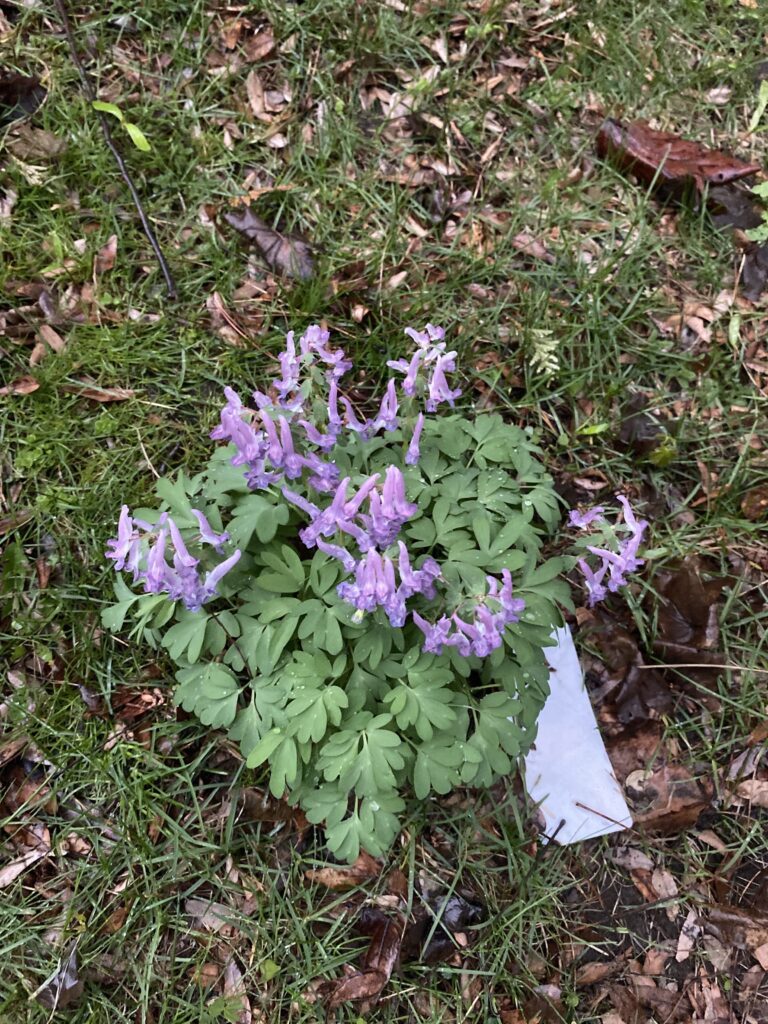
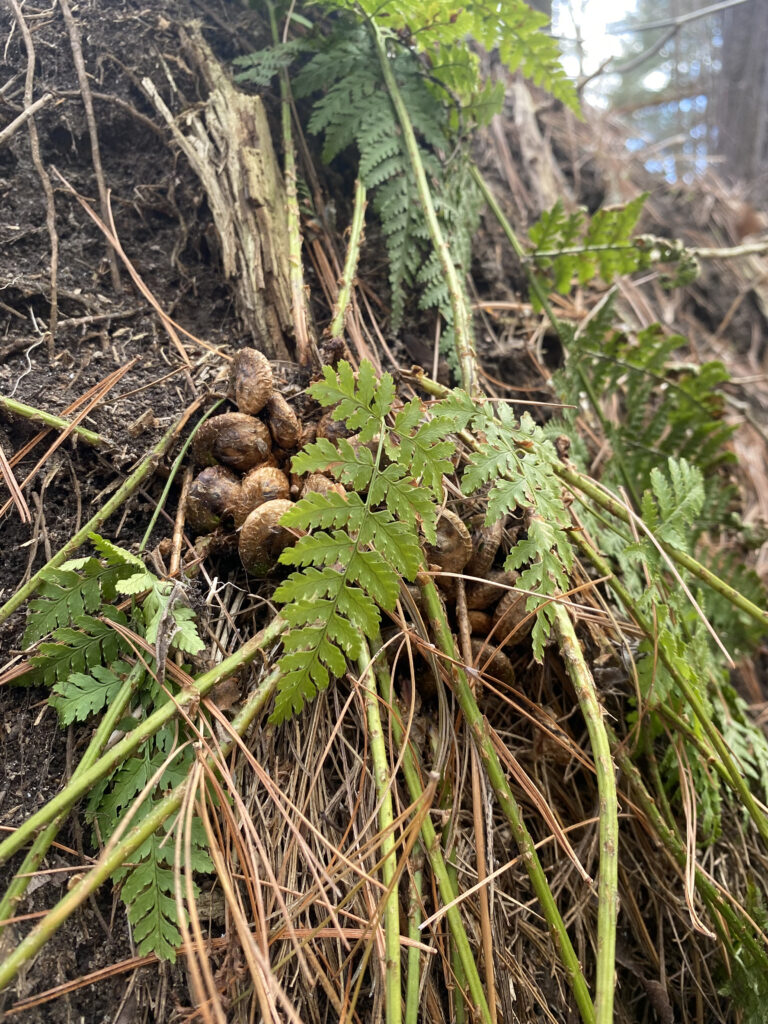
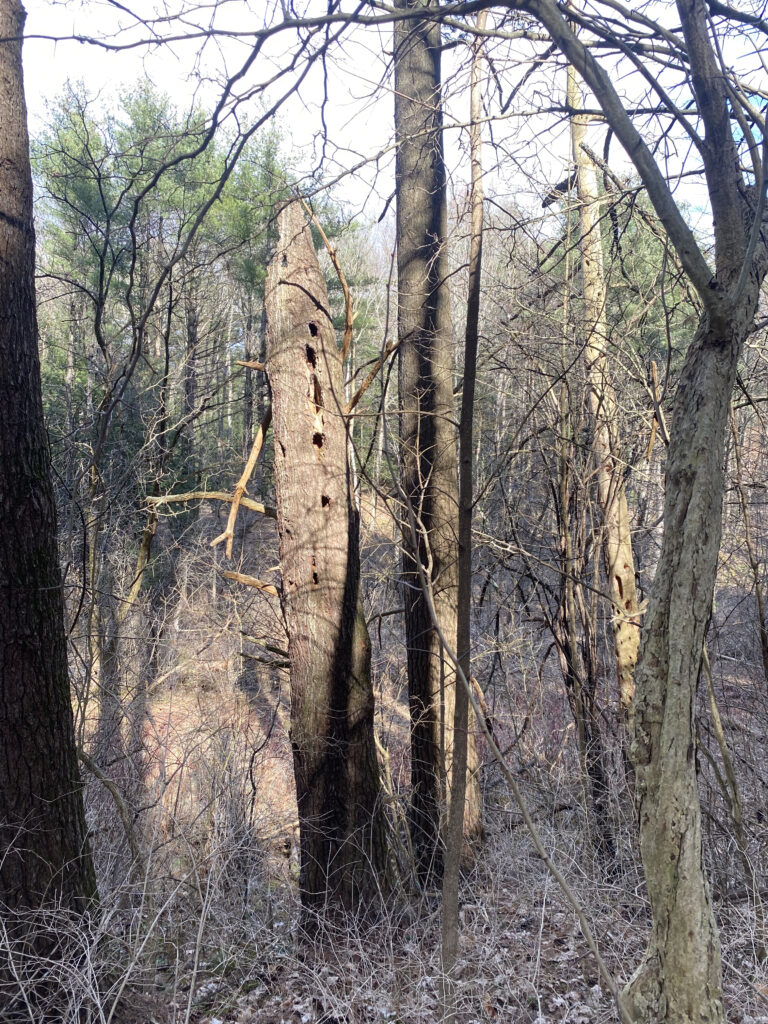
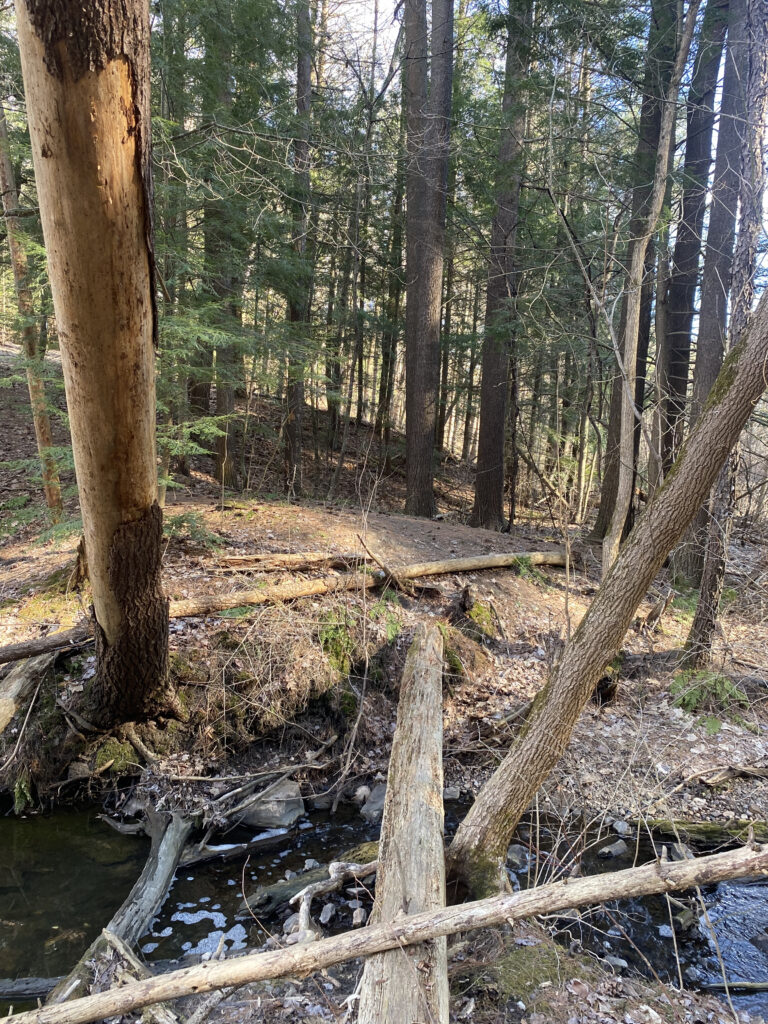
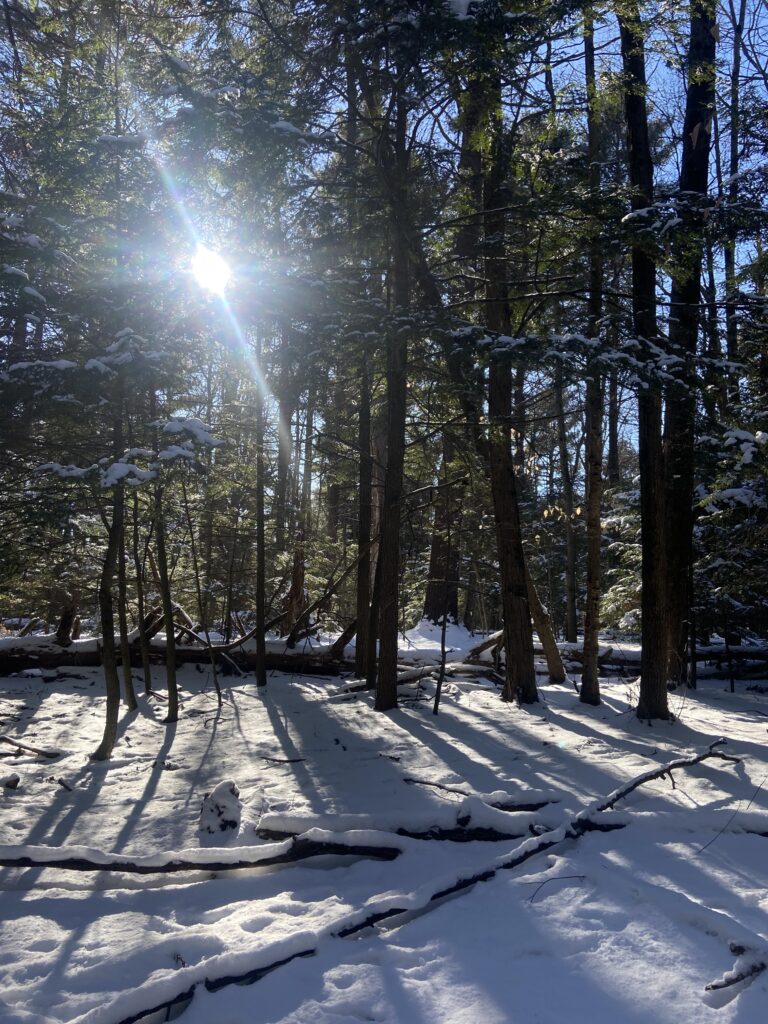
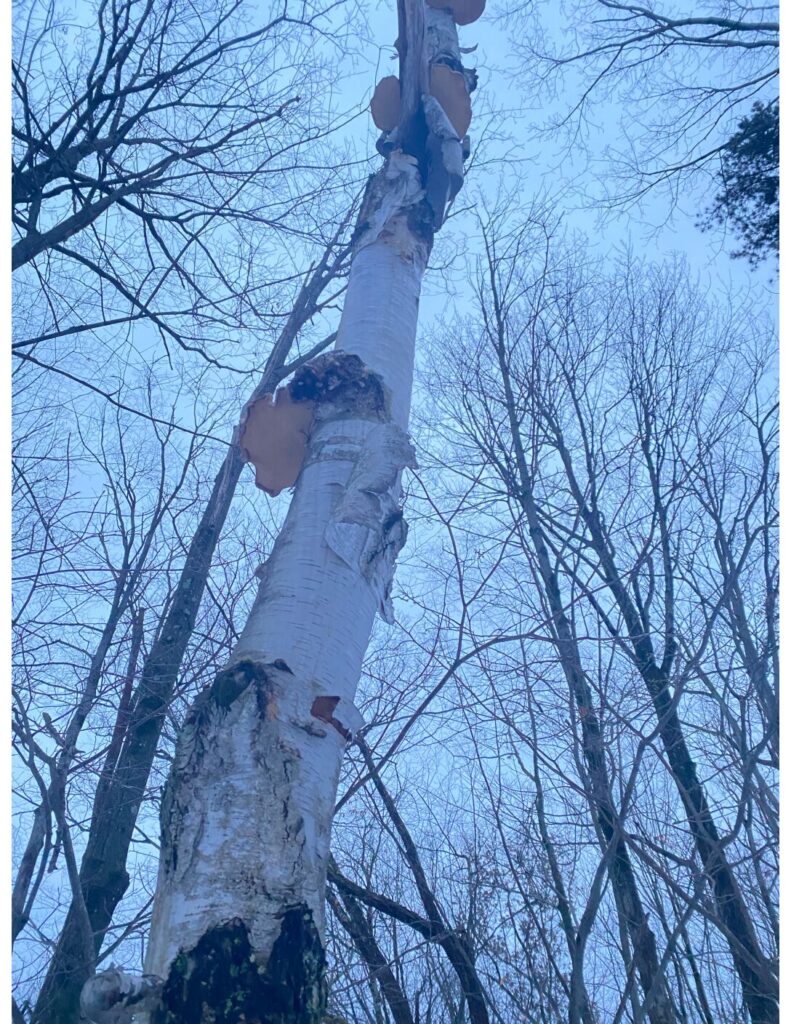
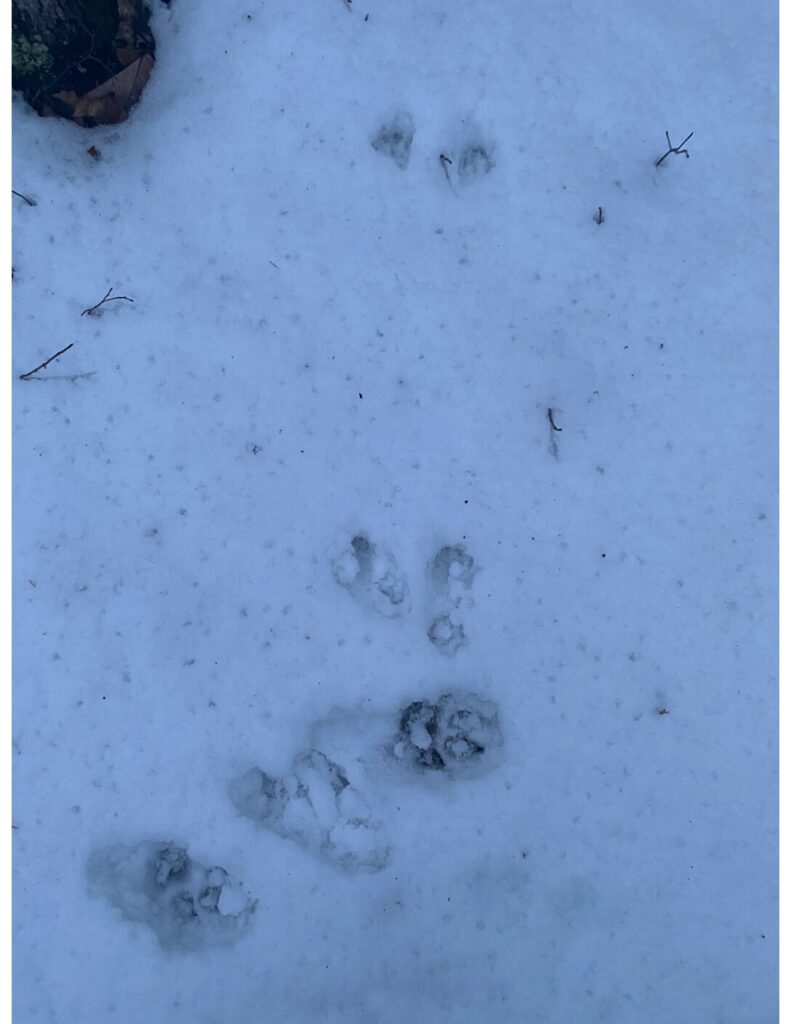
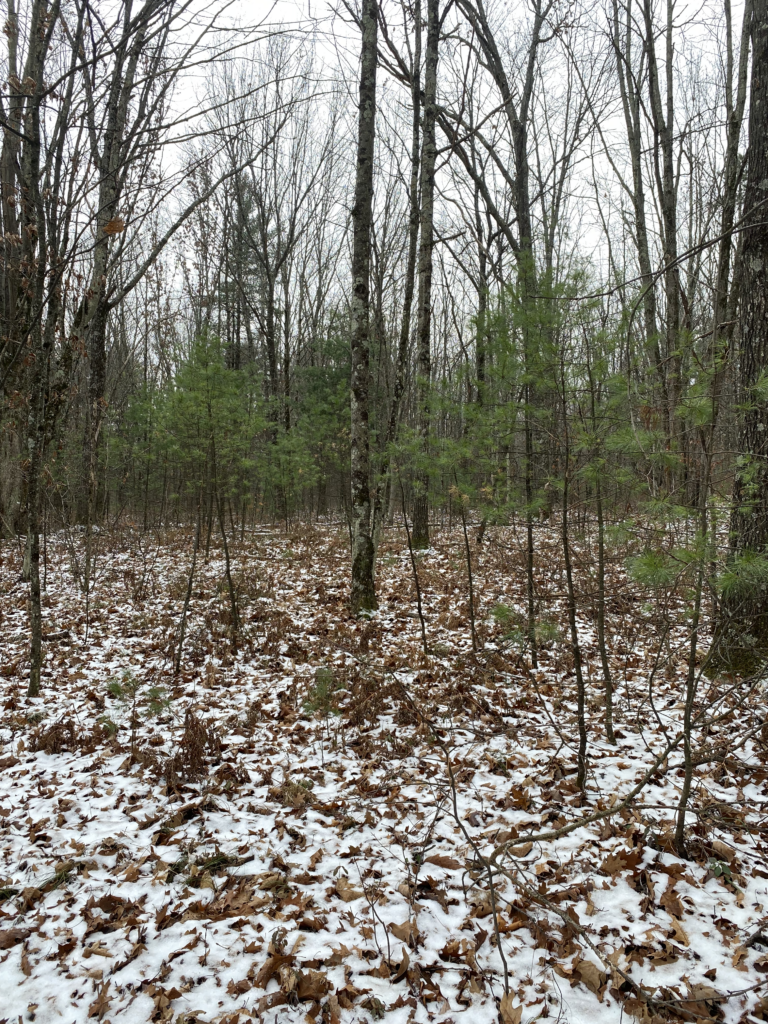
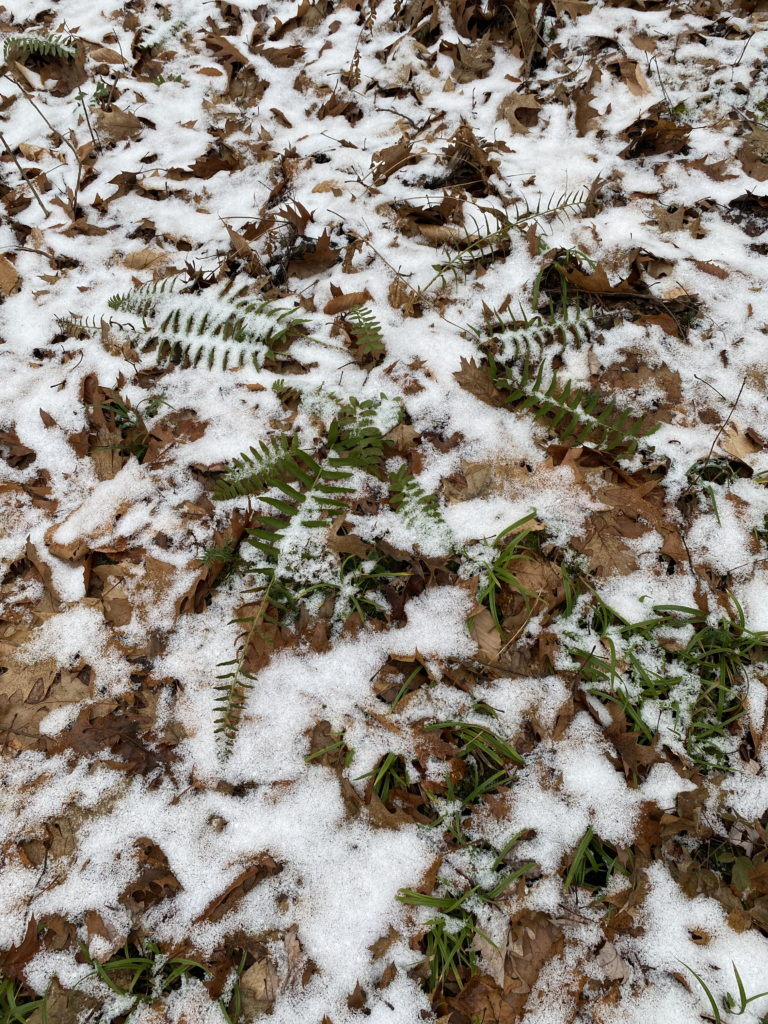
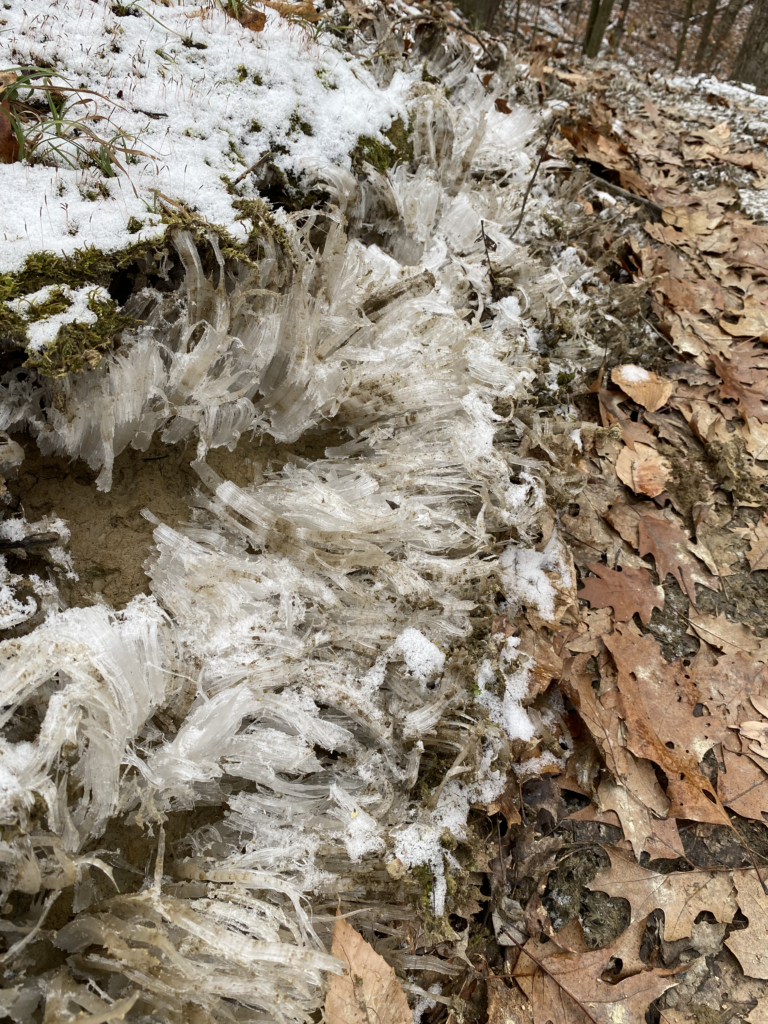
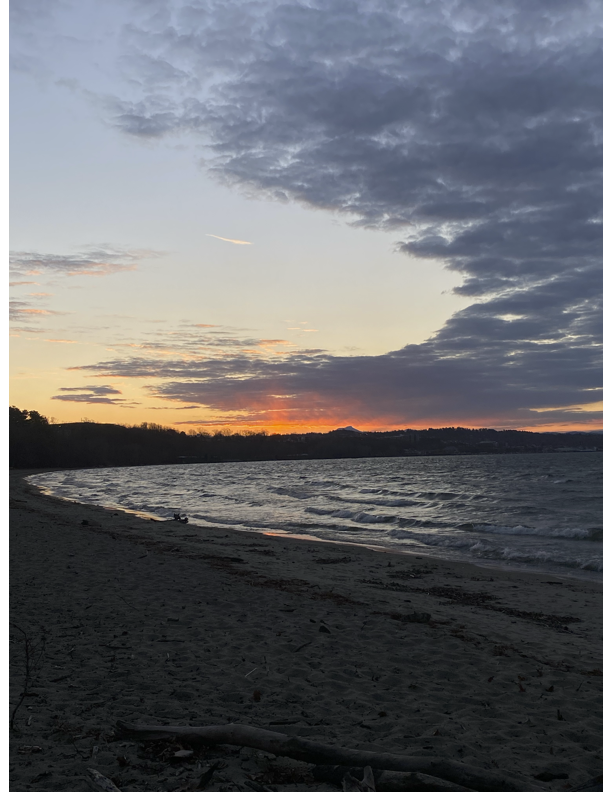
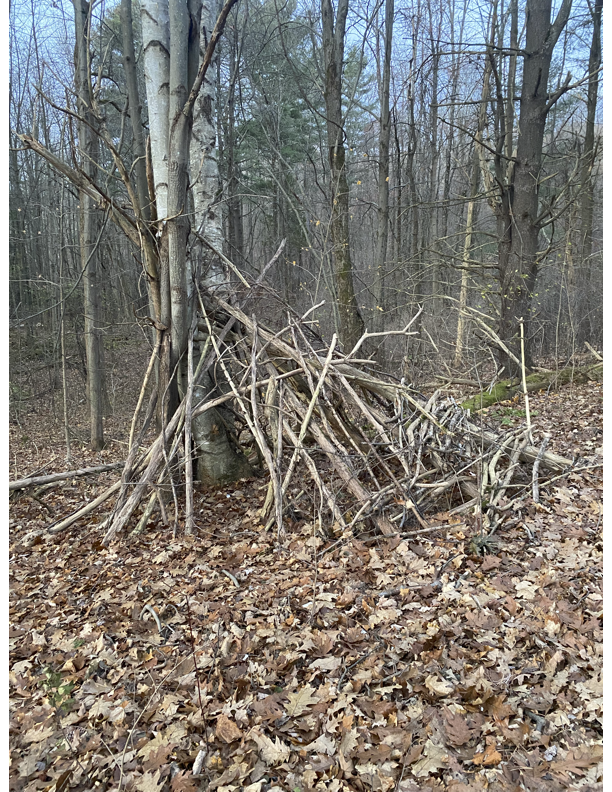
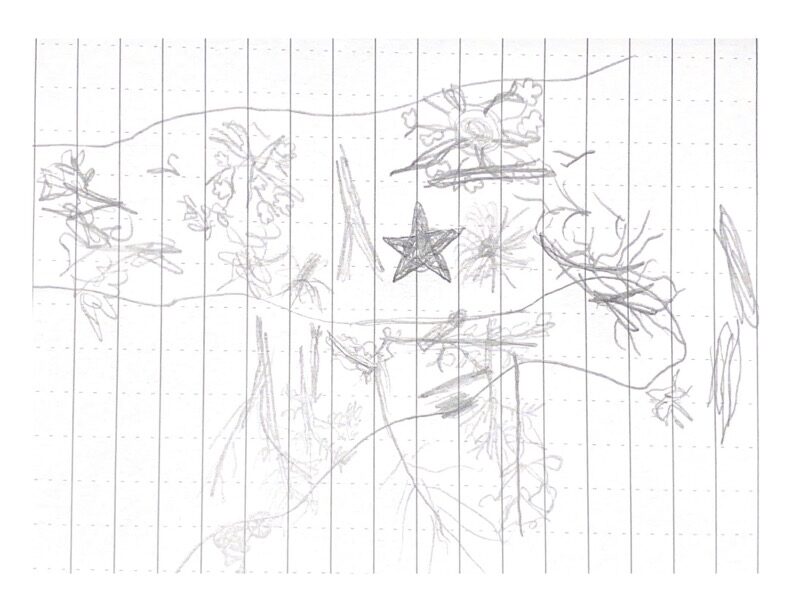
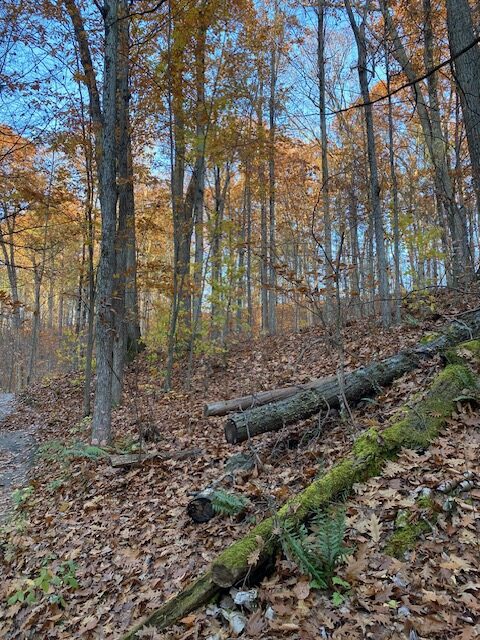
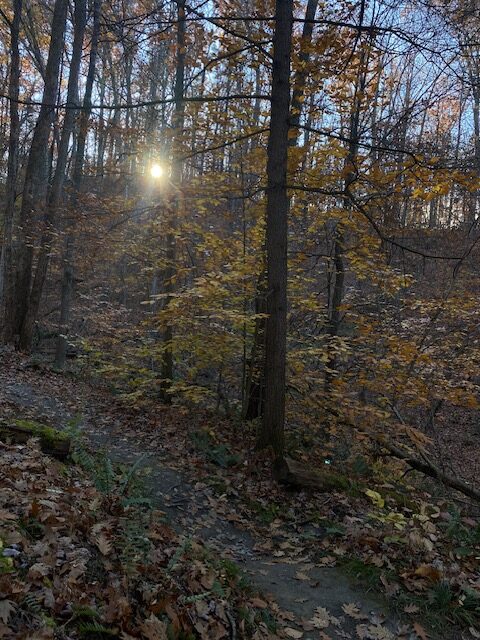
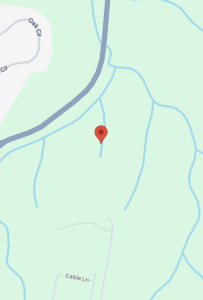 I chose a secluded trail in Sunny Hollow Natural are as my phenological place. To get there you start off Hercules Drive and walk along the gravel path that leads to the trailhead. Here you will take a left towards the Blueberry Loop. From here stay right towards the Ring Finger trail. At the intersection follow the blue arrow that says ring finger. Now keep following the blue arrows until you can see a wooden bridge down the way. I picked this spot because of the variation in undercover species as well as the prevalence of some common tree species. The most abundant species of vegetation included Common Polypody, Honeysuckle, and Oak Fern. The most abundant woody plant species included Eastern Hemlock, Red Maple, Box Elder, American Beech, Northern Red Oak, Red Maple, and White Oak.