Final Visit of the Semester! (5/4)

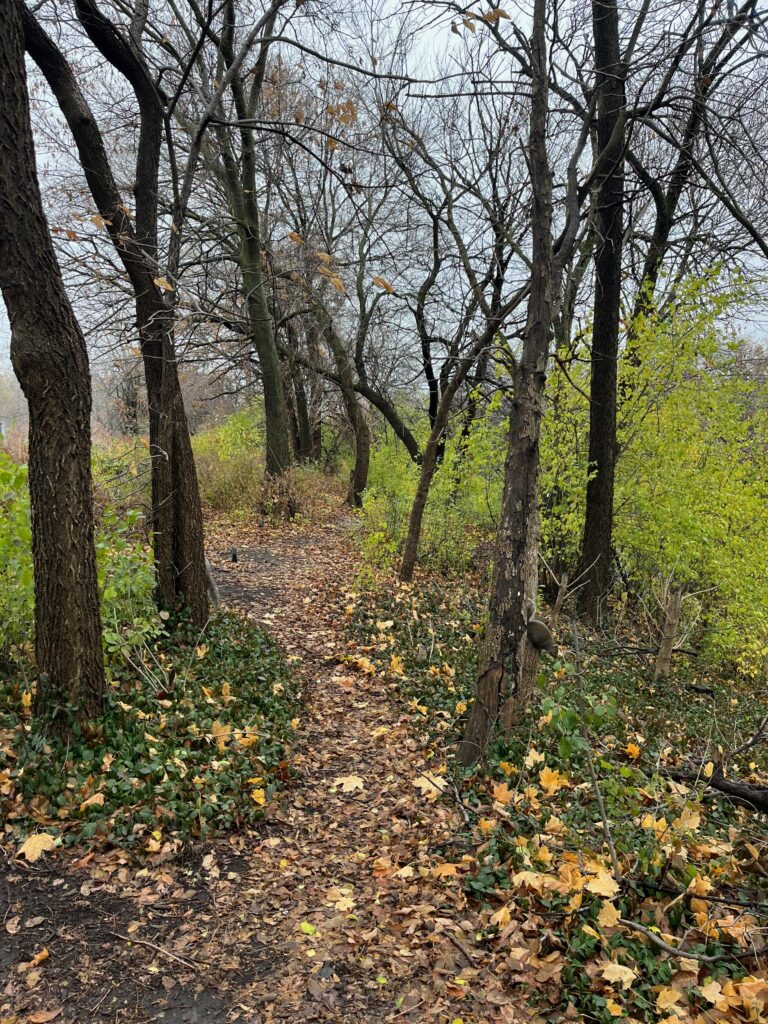
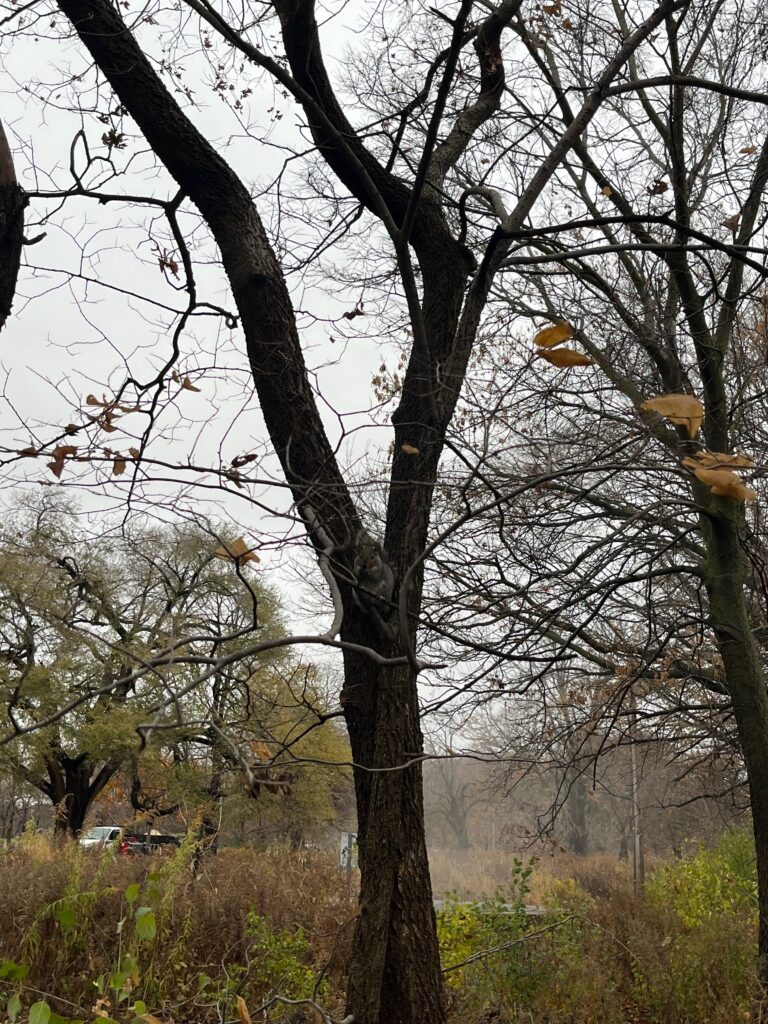
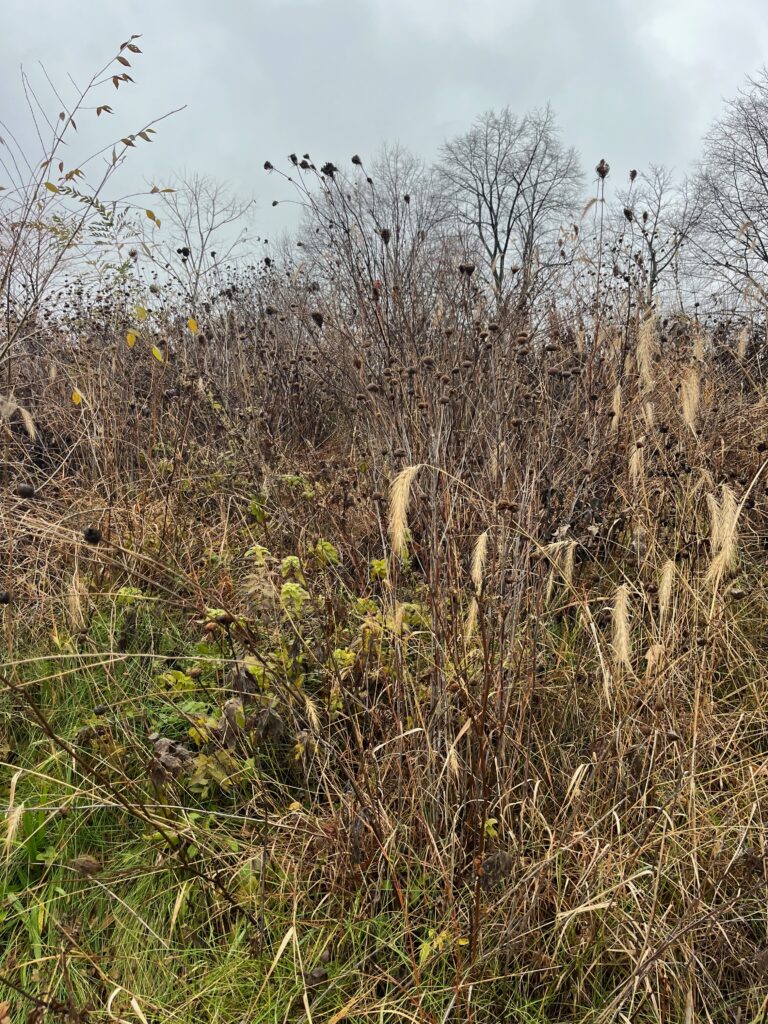
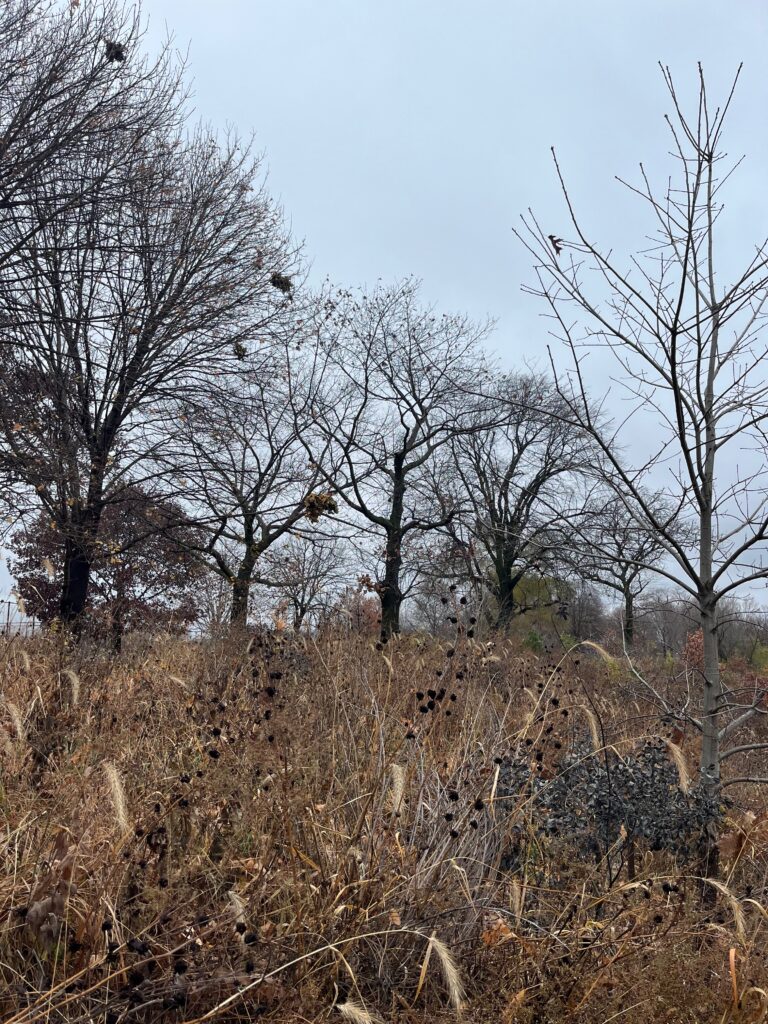
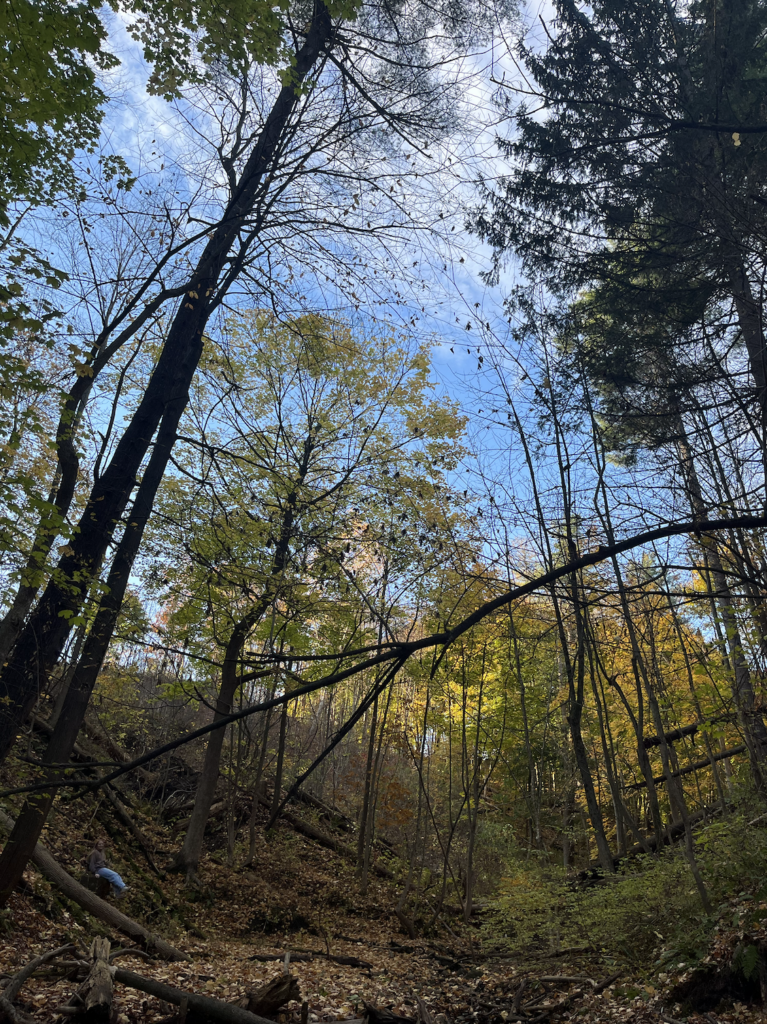
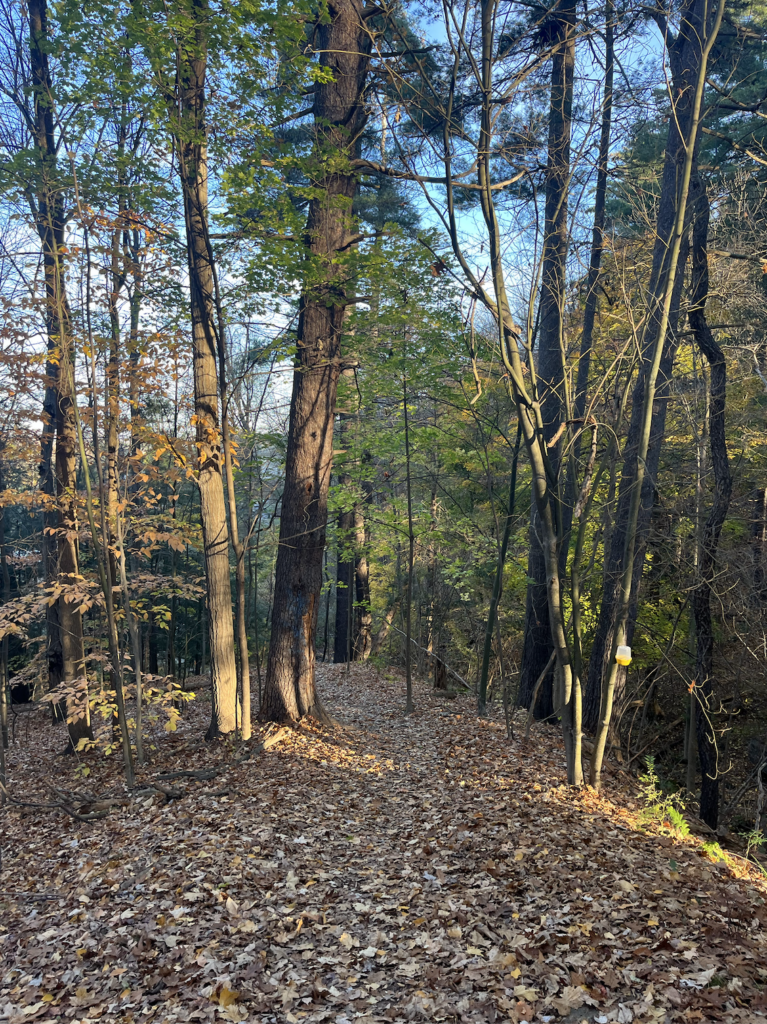
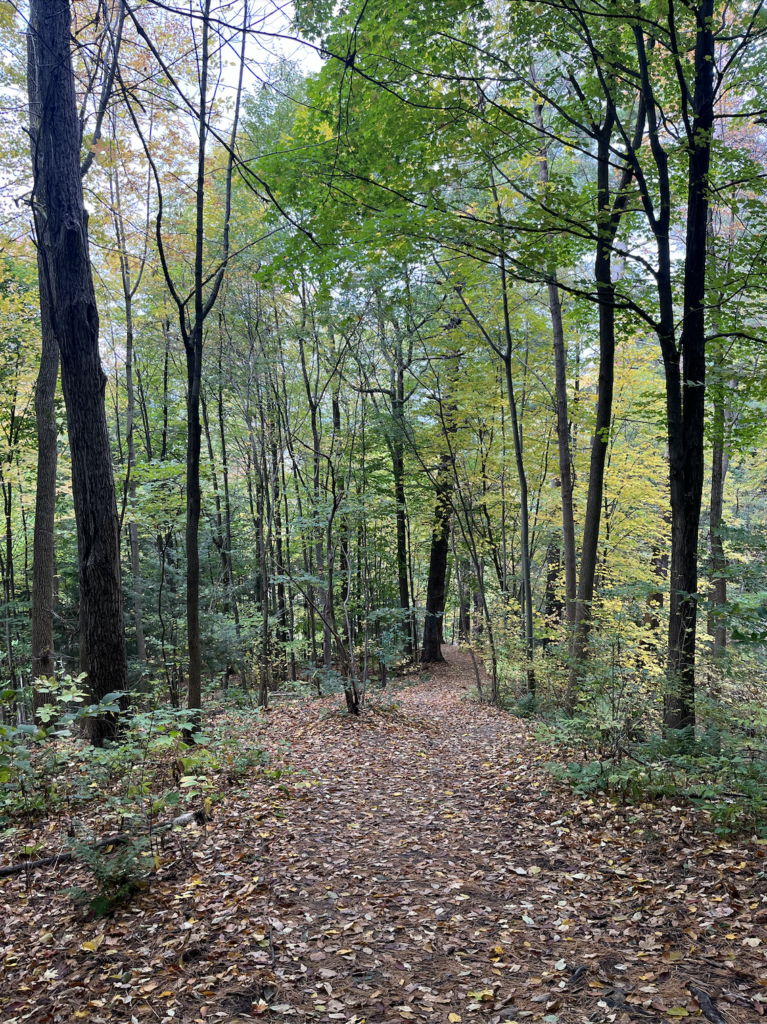
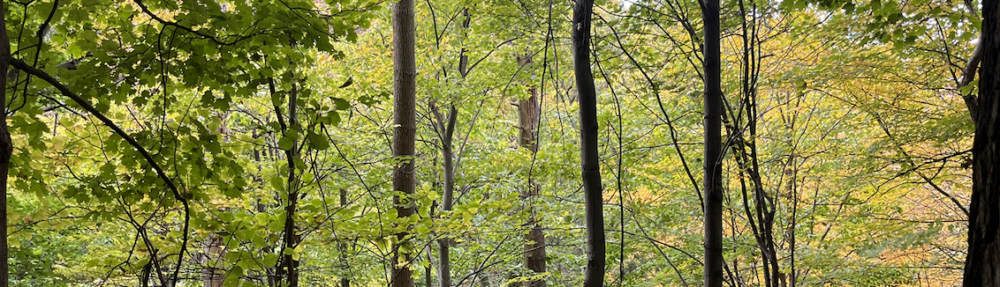
I went back to trinity for the last time of this school year! Things are finally green, and the few buds I found last visit have multiplied and opened and almost every tree has leaves. I went right as the sun started to get lower, and everything in the light was vibrant and light green. It was very quiet when I went, and the only sounds I could hear were the rustling of squirrels in the dry leaves, frogs calling to each other in the nearby pond, and birds above me in the trees.

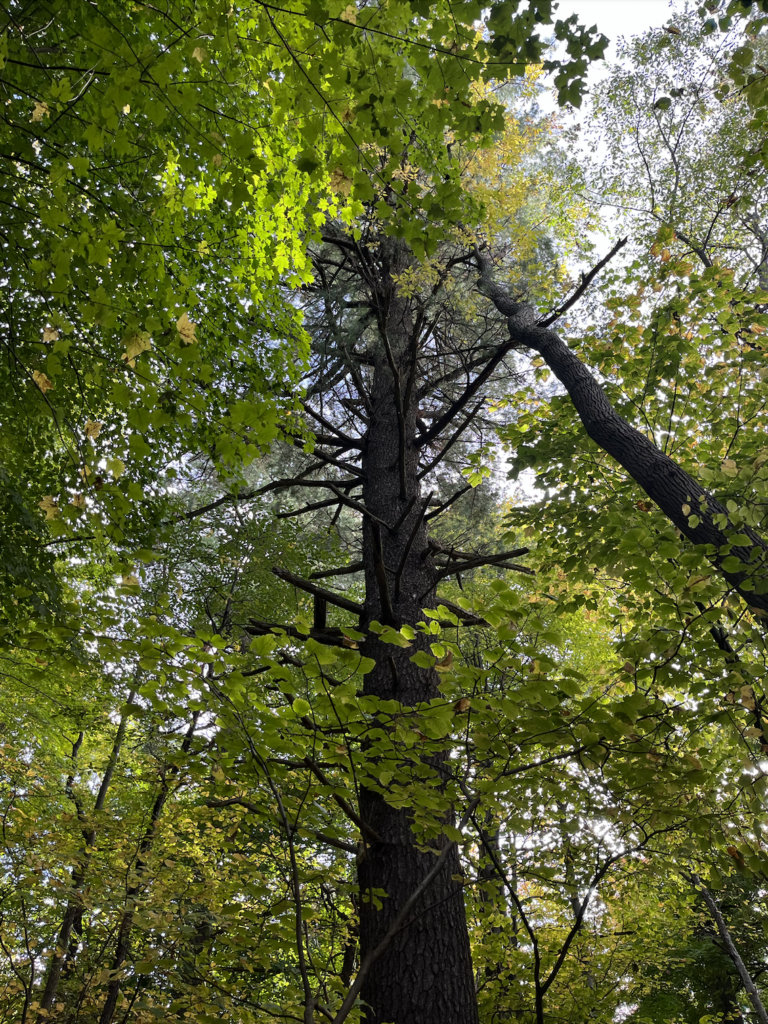
Much of my site has the remained the same through the seasons. The large, memorable pine trees are still in their normal spots, the water in the stream is still running at the bottom of the hill, and the trail I take has stayed fairly the same as before the seasons started to change.

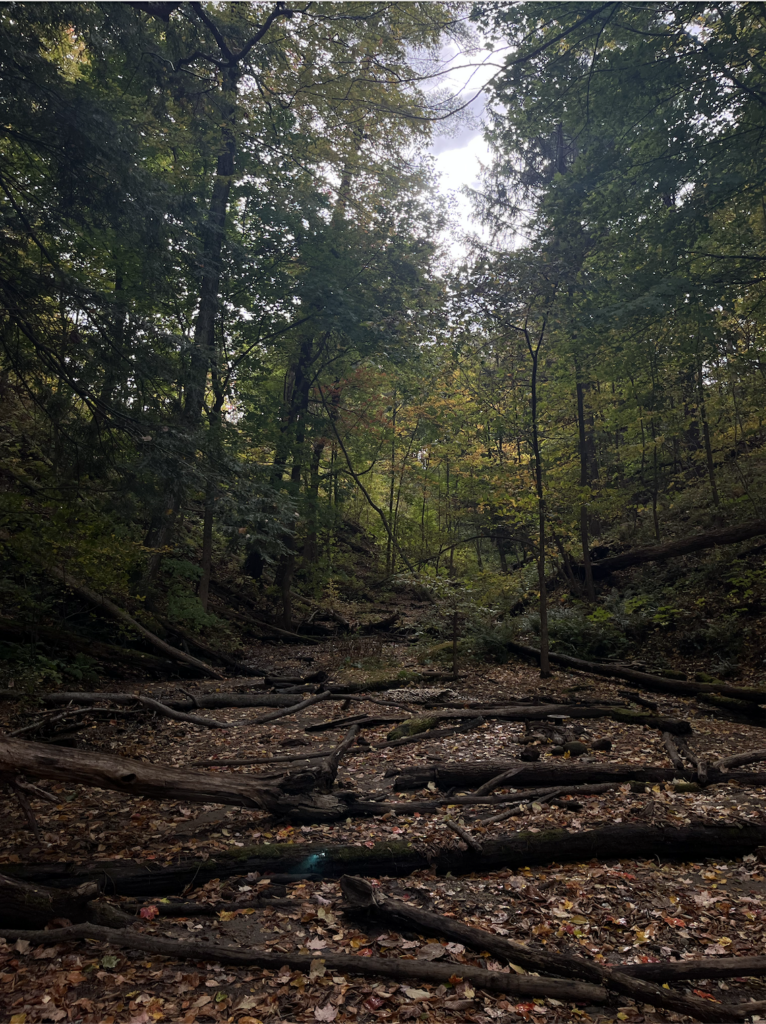
This stream has been the main landmark for me, and I am now very familiar with the view at the bottom of the hill. It has changed course slightly over the past year, and each time I visit I have to step along it a little differently to keep my feet dry. It also looked a little oranger this time around, which I’m guessing is from tannins from all the new plant growth around it. But overall, it has been a consistent part of this spot that I like to observe each time I come.

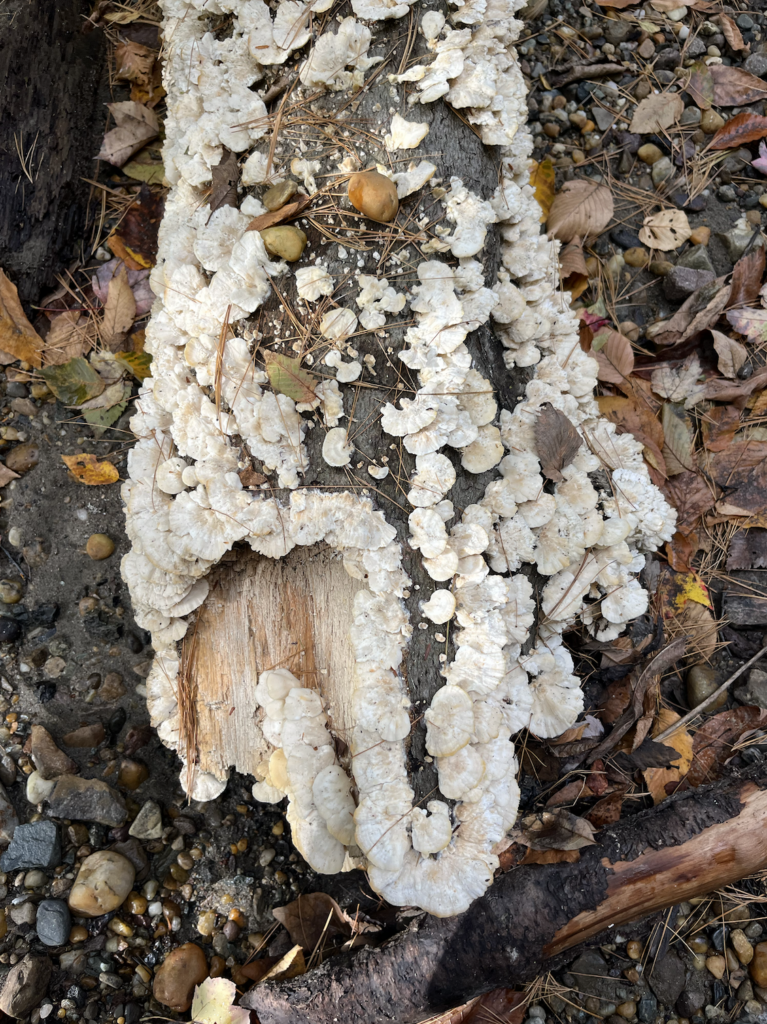
Additionally, the mushroom log I noticed on my first ever visit is still here! The mushrooms look very worn, but it is still in the same spot and I predict that new ones will pop up and refresh the log, especially with its proximity to the stream. This has been a fun little detail to observe each visit.

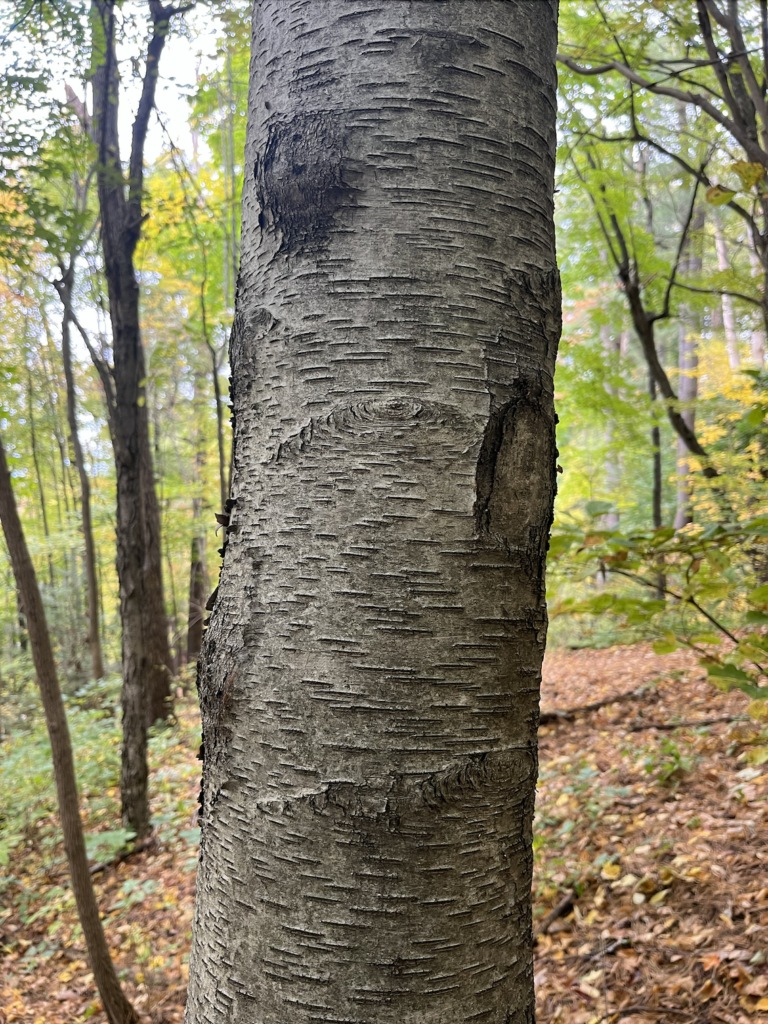
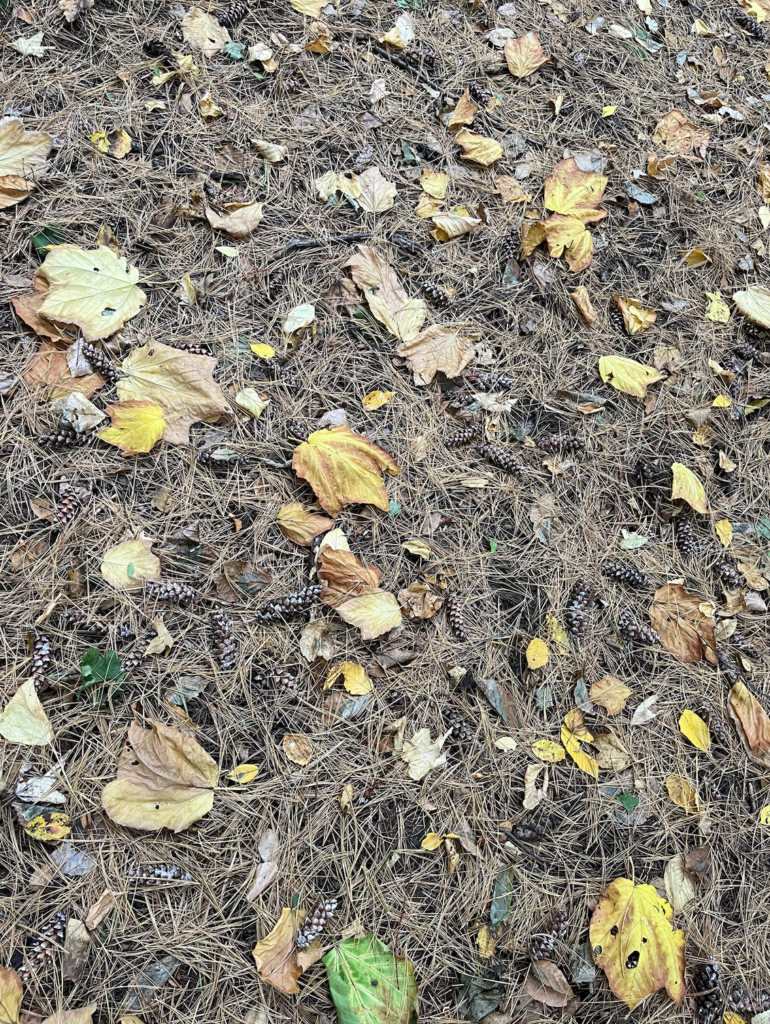
So many sprouts popping up everywhere! Im sure the understory will be back to its normal self soon. I thought this yellow birch branch kind of sinking into the leaves was really cool.

Here’s the sketch I did of the very end of the woods! I had never walked to this part, but the other side of it looked very pretty in the sun. It”s nice to see the different ways students interact with the forest here, especially with it being so close to the dorms on trinity. There were some wooden boards along a stream right down the path in this picture, with a little whiteboard nearby that people had written on. The trail is fairly well traveled, and I can tell that people must walk throughout these woods often on their free time. Despite all this, the woods are very clean!

Moss!

I don’t know if I consider myself a part of Trinity Woods, but I definitely feel connected to it just because of the time I’ve spent here and how I have grown to become used to a lot of parts of the woods. Noticing all the tiny details makes me feel familiar with it, and I feel comfortable with the space, but I feel more like an observer than a part of the woods like how the stream or squirrels might be.

Here is a video where you can hear all the frogs and many types of birds around me!

Goodbye for now Trinity Woods!

City Nature iNaturalist Challenge (4/29)

This past weekend I took walks through Centennial Woods and a forest just outside of Burlington to take part in the City Nature Challenge through iNaturalist, and document the various plant and animal species I found in my walks.

My overall experience with iNaturalist was positive, and I found it really easy to upload my pictures and identify the plants in them using the automatic iNaturalist labeling system. Additionally, after I had uploaded a picture of some Fawn Lilies I found, another account replied to my post and helped specify my classification to Yellow Trout Lilies. This same thing also happened with another posting, where my Genus Hepaticas was specified to Round-Lobed Hepatica. I thought this coordination through the app was very helpful, especially for someone who is still learning about the plants of Vermont!

Here are some flowers I identified! These include, Yellow Trout Lily, Red Trillium, Common Whitlowgrass, Sunflower, and Round-Lobed Hepatica. I also found Daffodils.

For trees, I found some American Beech, Black Cherry, Paper and Yellow Birches, and lots of Hemlock and Spruce!

While looking throughout the reports in Burlington and in other areas around the world, I found the extensive network of postings and observers very interesting. There were over 3 million observers posting in the Americas, more than 1,700 observations from when I last checked our own challenge, and over 400 species found in the greater Burlington area! I think this system has a lot of potential because the people who know an ecosystem best are often the people who live in that area, and I think this can help keep record of species and help to keep these ecosystems thriving.

Here is some beaver activity in one of the areas I visited! I thought it was really cool how perfectly the dam held the water in, and you can see how the water is contained almost seamlessly along the ridge of the higher side.

It was hard to get pictures of a lot of the wildlife, but in total I saw tadpoles, squirrels, a junko and a downy woodpecker, and a lot of songbirds!

And finally here is a very green little stream we found, along with some raccoon tracks right along the side of it in the mud! I’ve read about racoons washing their hands like humans in water, so I imagine that’s what it was doing.

I hope to use iNaturalist more in the future!

Beginning of Spring! (3/25)

There has not been a very green start to this spring and the snow storm from this past weekend has covered everything in a thick layer of snow. Today’s warm temperature and sun has started to melt it down, but needless to say there is still very little green in Trinity Woods. Get ready for a lot of finger close ups and buds, with a touch of green from the pine trees!

The signs of wildlife were limited to this set of tracks and this spider that was curled up on a branch I was taking a picture of. The tracks are likely squirrel, and led directly to a tree. I found a lot of the same types of tracks, sometimes with a big messy pit where the squirrel was likely digging up food it had buried in past months. The intersecting track paths showed that the squirrels have been busy since the recent dumping of snow, and are also ready for spring.

Here are some swelling buds! This was the extent of the spring changes, and I didn’t find any new plant growth or sprouts. Many buds have started to turn purple and red, with some tiny green undertones in between the halves of the bud. Bare trees are looking slightly more alive with their newly swelled buds, and I found many broken off buds which indicates some newer activity by birds who were likely feeding.

Hopefully there will be some more greenery on my next visit!

Wildlife Tracking in Greater Burlington! (2/15)

This week we explored the greater Burlington area to use our animal tracking knowledge in a new area, and also used the iNaturalist app to collect our classes animal sightings.

Our original plan was to go down to the water and look for tracks right around the lake, while also hoping to see frozen parts of the lake, but we ended up exploring the area around Battery park instead. Battery park is a small park right in downtown Burlington that looks over the water and lakefront. The park has a lot of large trees, and is surrounded by lots of vegetation on the steep slope that goes down to the water. This area turned out to be very interesting because it showed the amount of wildlife that can live directly in urban areas virtually without being seen.

The main animal we found a lot of was squirrel. Its hard to distinguish the difference between squirrel and rabbit tracks, especially since we didn’t see any of the actual animals. However, with some of the tracks leading directly to a tree and some having the hind paws in front of the front paws (a notable part of a squirrel’s walking pattern), we could assume there were lots of squirrels in the area and the tracks likely belonged to them. It was also interesting to find this because I didn’t see any squirrel nests in the trees, so I wonder if squirrels were just investigating and scavenging in the area, or if they are living in different parts of the trees.

The next animal we found just as we were leaving was a fisher! I was super surprised to find this, and a little doubtful, because we didn’t find any fisher tracks when we were in the middle of the Jericho forest, so it seemed strange to find one in downtown Burlington. However, the tracks have all the characteristics of a fisher. The tracks have five, pointy looking toes (which on the fisher are retractable and were probably out when running), and the path we found had one paw right after the other in a slightly curved line.

Overall I was surprised to find all these signs of wildlife downtown, and now see that there is much more happening in nature around us in urban areas than what it first seems like. Also, it was cool to see all the other tracks in iNaturalist and see that everyone else found lots of examples too!

Semester 2 Update! (1/28)

Back at Trinity Woods! The layer of snow covering the woods is much thicker than back in December, and it forms a blanket over the entire ground. Even the stream is covered. I was worried that there wouldn’t be any animal tracks since the woods are much smaller and more surrounded by development in comparison to places like Centennial, and I really haven’t seen much activity in the past. But nevertheless, the animals are there!

The tiny, human-like prints of a raccoon in the snow.

Some more tracks! Dog, more raccoon, and some possible rabbit/squirrel’s.

The stream is still flowing, just under the snow and ice; I am going to make sure to take a picture for the next update. I hope to see some more tracks (maybe some skunk🤞), scenery changes, and wintery developments for next time!

Final Phenology Update (12/7)

My phenology spot was quiet today, and there was a thin layer of snow covering the frozen ground. All the leaves have fallen off the deciduous trees, and the only greenery left is on the cedar, white pine, and other conifers, as well on the moss on rocks. Now that the trees are bare, it’s easier to see deeper into the forest and to also see some of the surrounding buildings.

There is even more organic matter and fallen debris and leaves on the ground, and the stream has seemed to grow even larger. With more debris blocking the water flow, the stream has taken on new curves and gotten deeper. The stream has been my favorite part of my phenology spot to observe, and it’s been cool to see the tiny differences in it each time I’ve done an update.

There is also lots of cool ice! And the mushroom log from October’s update is now frozen.

Saying goodbye to Trinity Woods for now 👋

Thanksgiving Break Update

Back home in Chicago, I chose to go to a park by my house called Horner park. It is right on the Chicago river and has lots of wildflowers and birds in the summer, and I thought it would be interesting to see how it has changed in the fall.

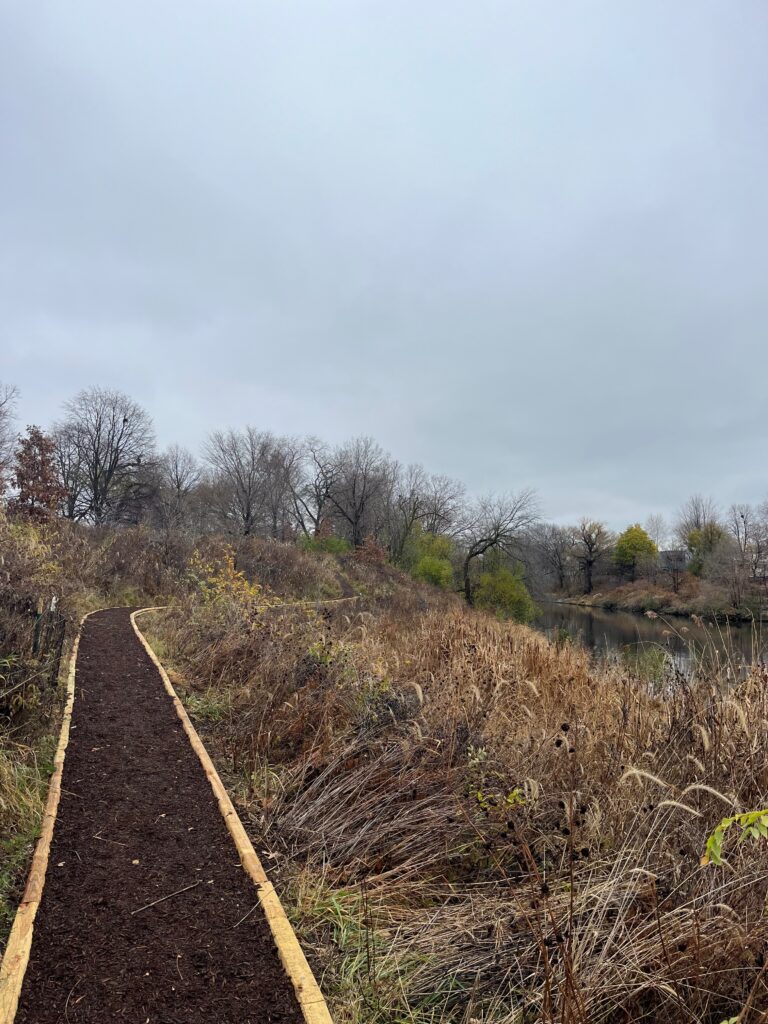
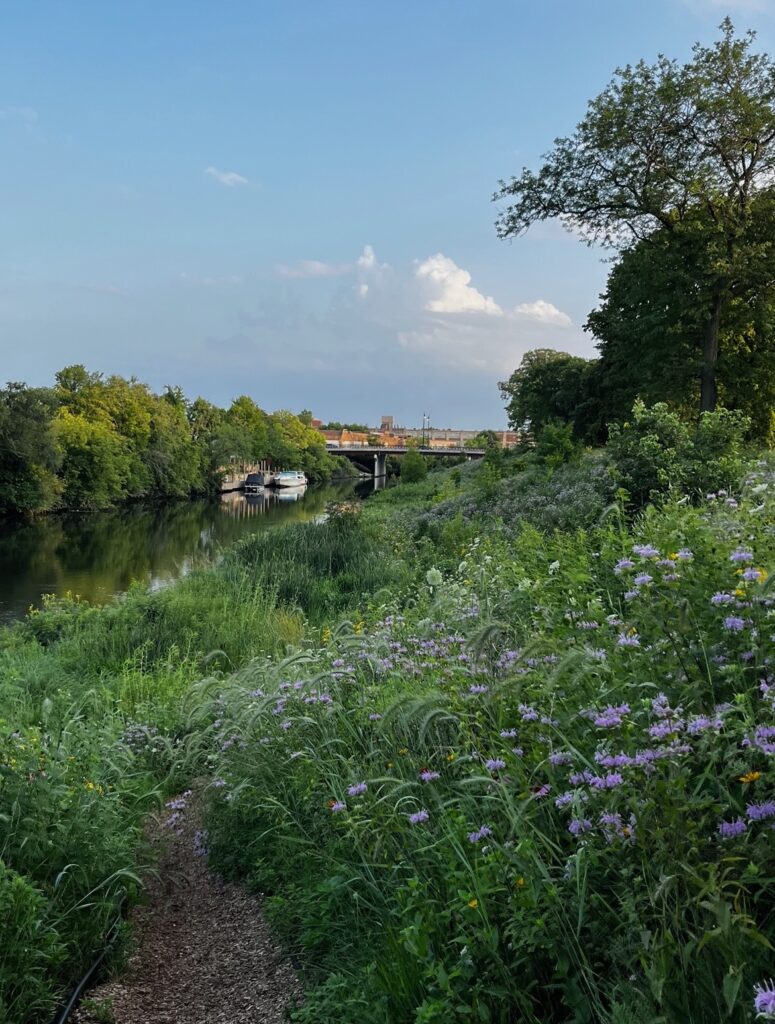
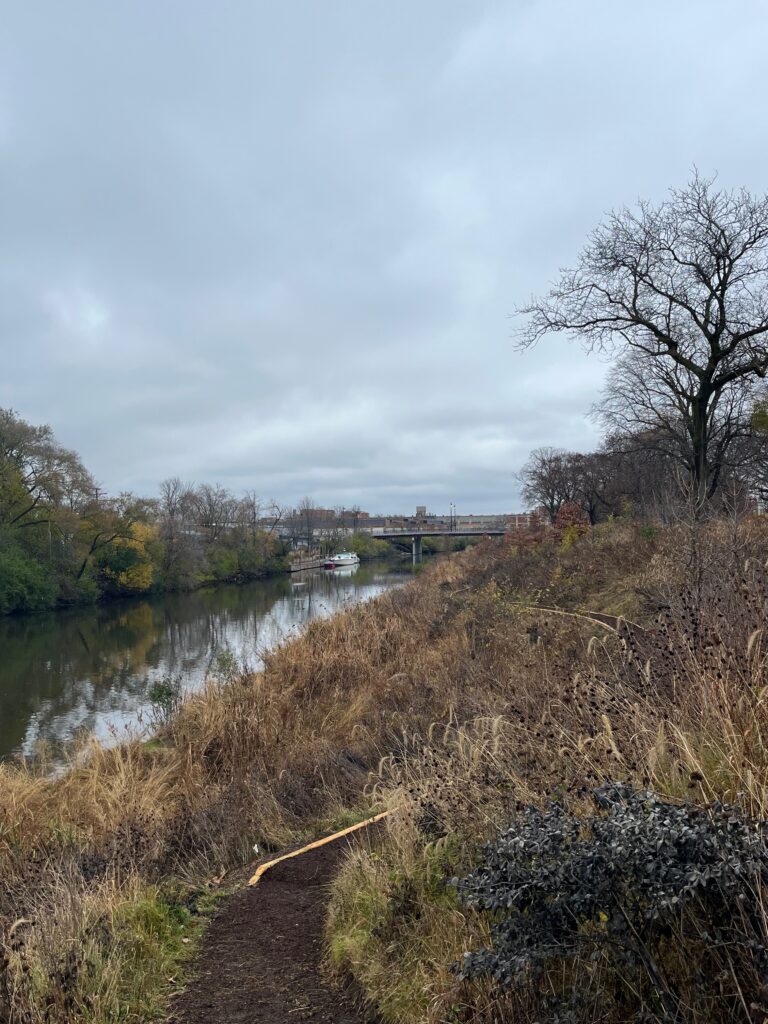
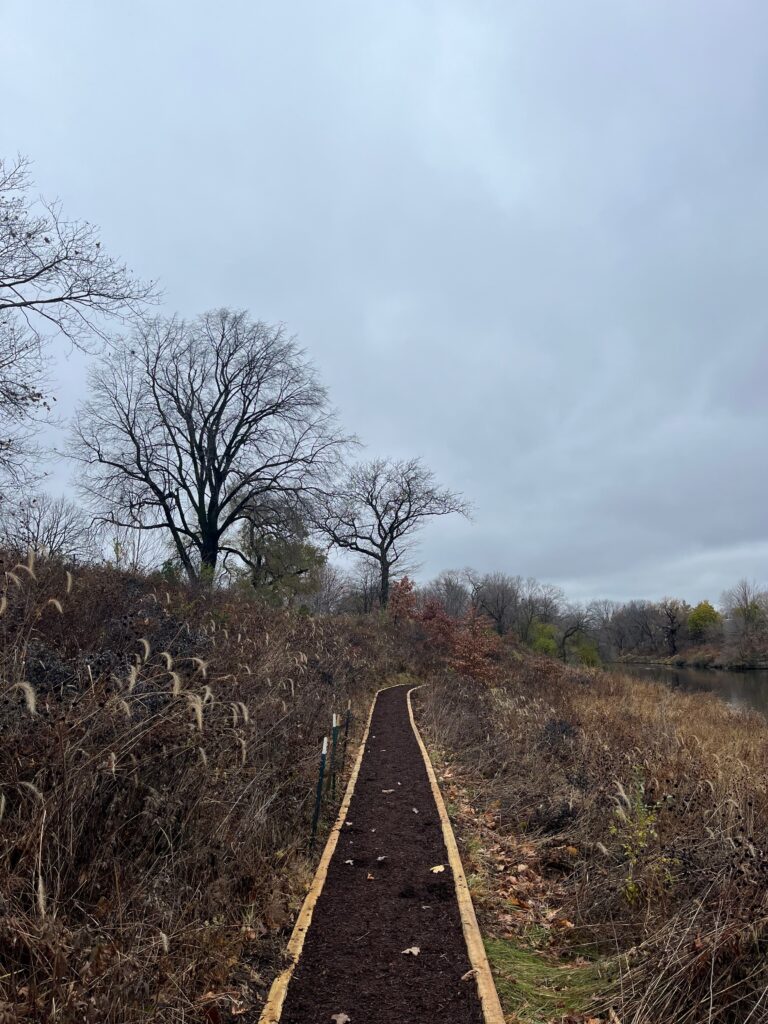
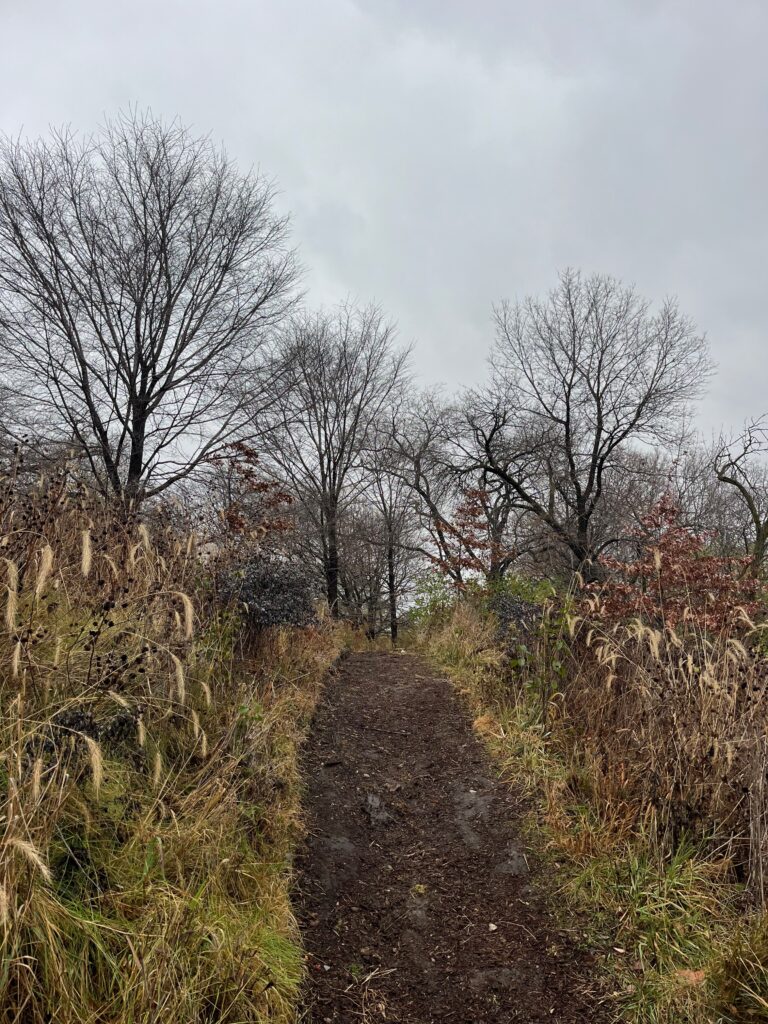
The left picture was taken in August, and the right was taken this past week. The space isn’t managed besides occasional trail maintenance, which I think is important because all the wildflowers are left to reseed and decompose back into the soil. This is also important in combating any chemicals that might runoff into the river.

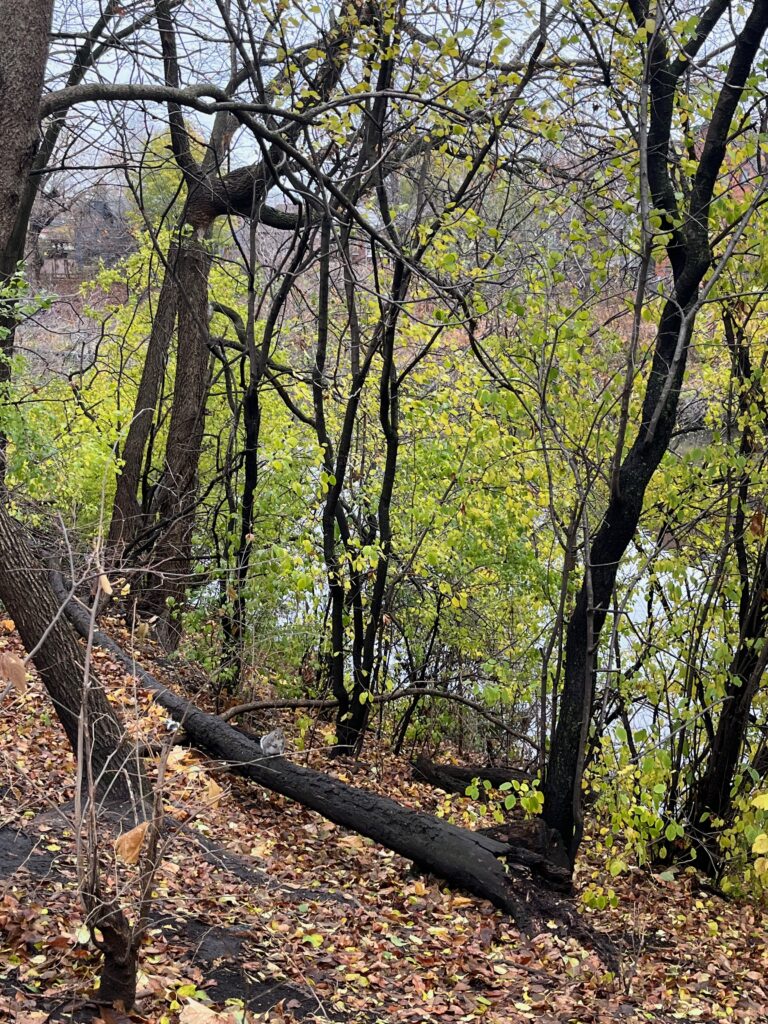
There are tons of squirrels, as well as cardinals, finches, and a lot of juncos. I recognized some maple, beech, and red oak trees. Most of the leaves on these trees had fallen, and any greenery was mainly from buckthorn plants, which were all over.

This spot had much more groundcover and low growing plants in comparison to Trinity Woods, which is mostly forest. Both spots are near moving water, have lots of organic matter on the ground, and go through similar seasons.

November Update! (11/6)

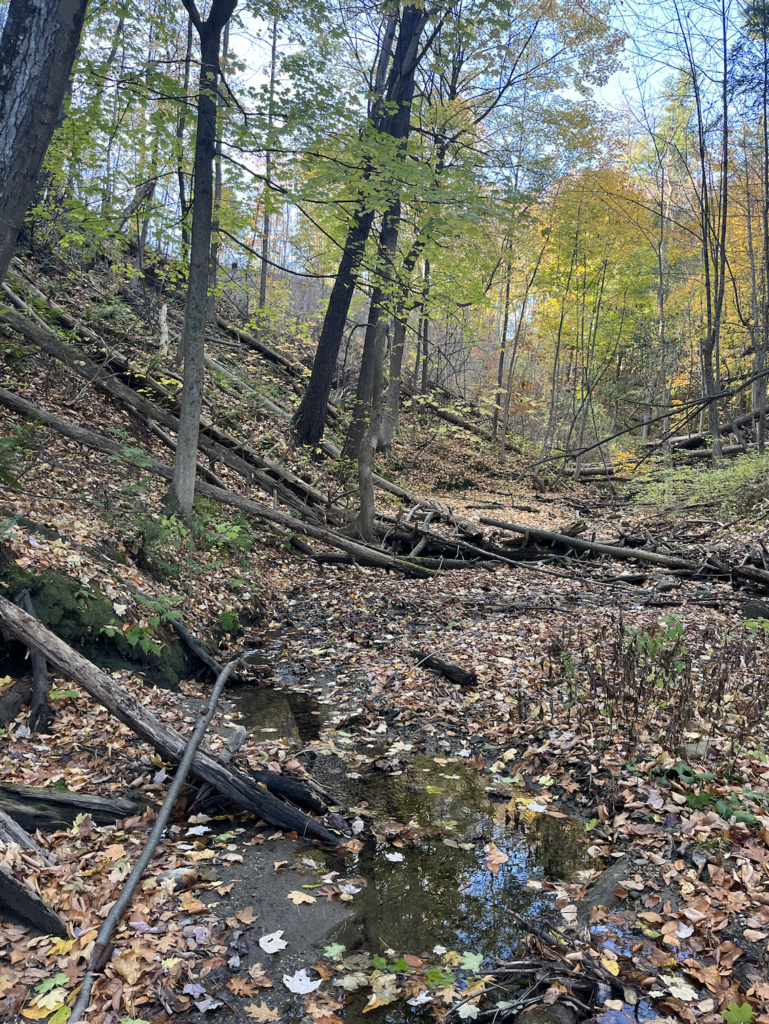
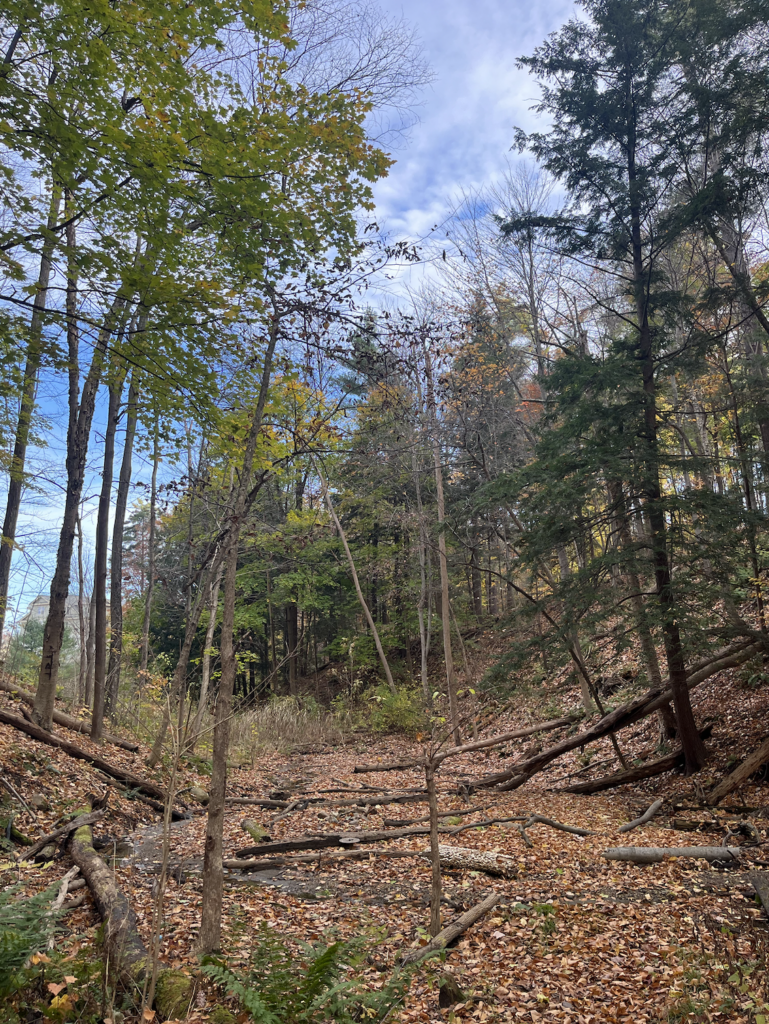
At Trinity Woods this morning, the most apparent change since the last visit in October was the amount of fallen trees, likely having fallen because of colder temperatures and recent winds. There were trees on the trail, and tons on the slopes going down to the small creek. Trees looked more empty and it was easier to see through the overstory, and there were a lot more leaves scattered on the ground. Also, the creek had grown slightly bigger, the flow was more noticeable, and the water was deeper and seemed to have a slightly different path.

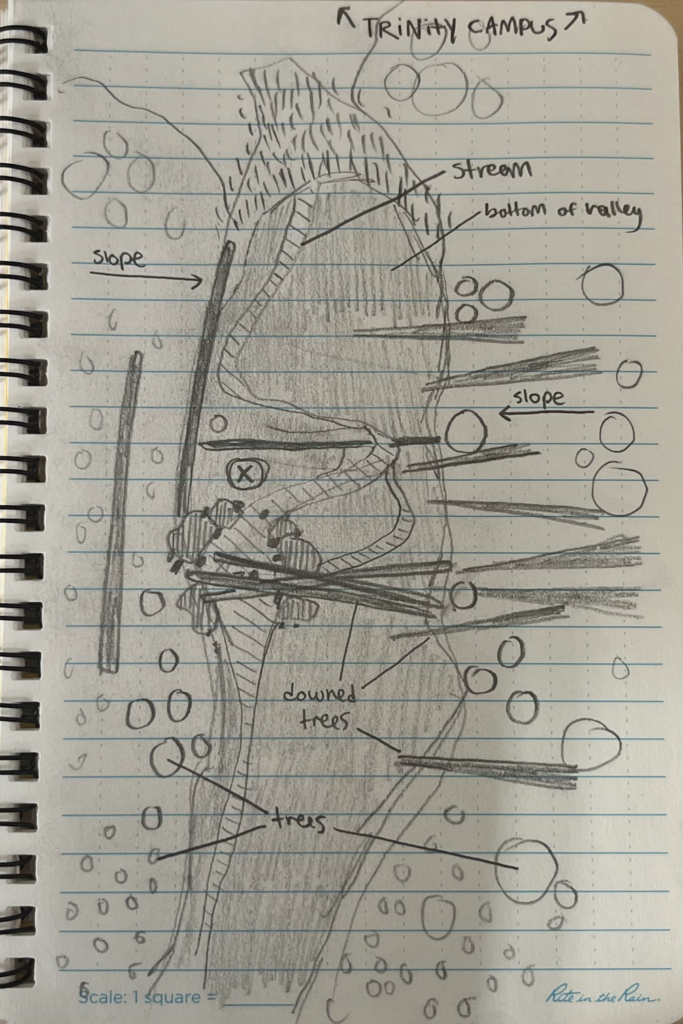
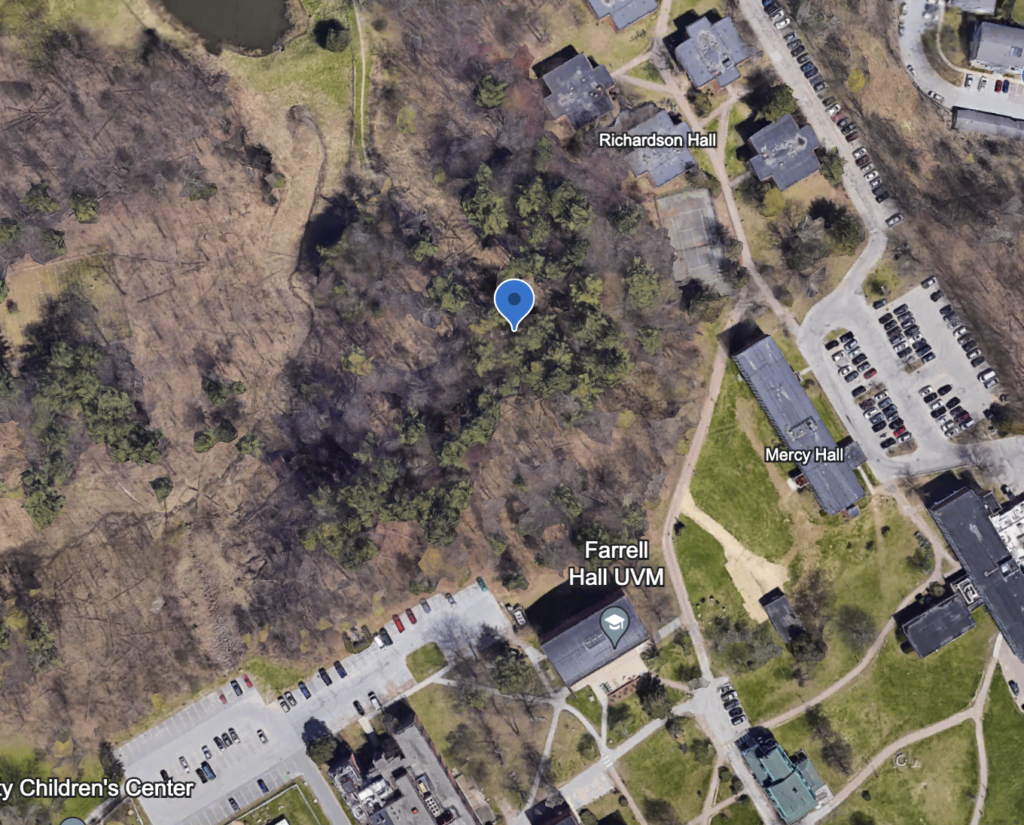
Brief, Birds-eye Map

Trinity Woods Stream (10/16)

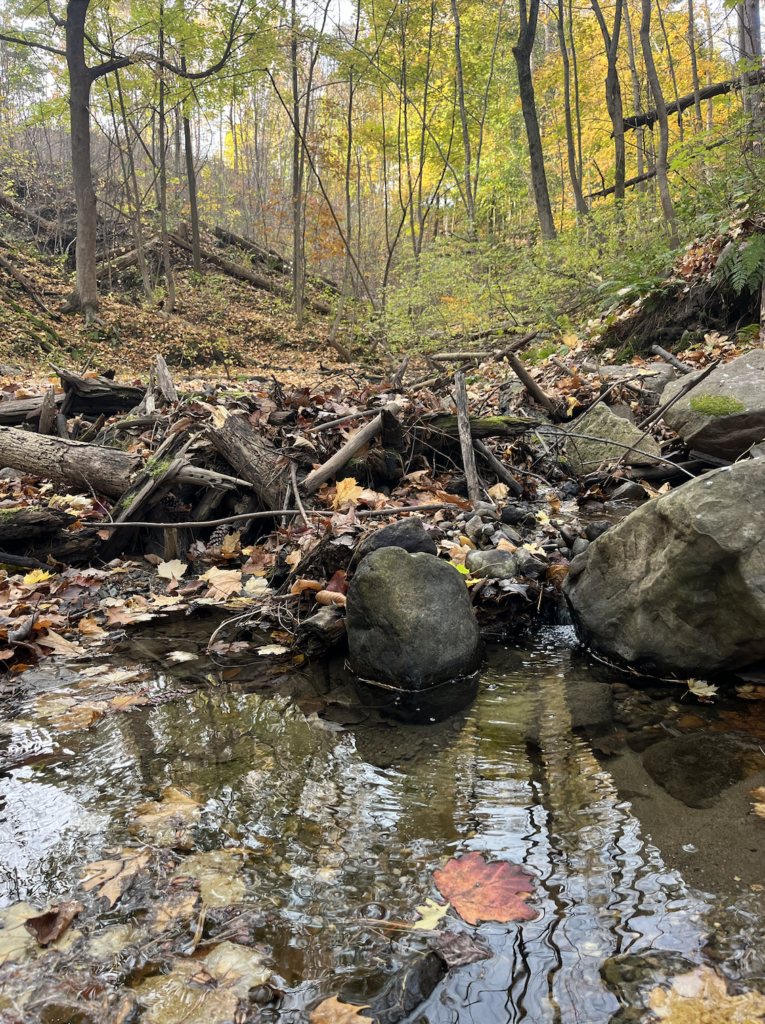
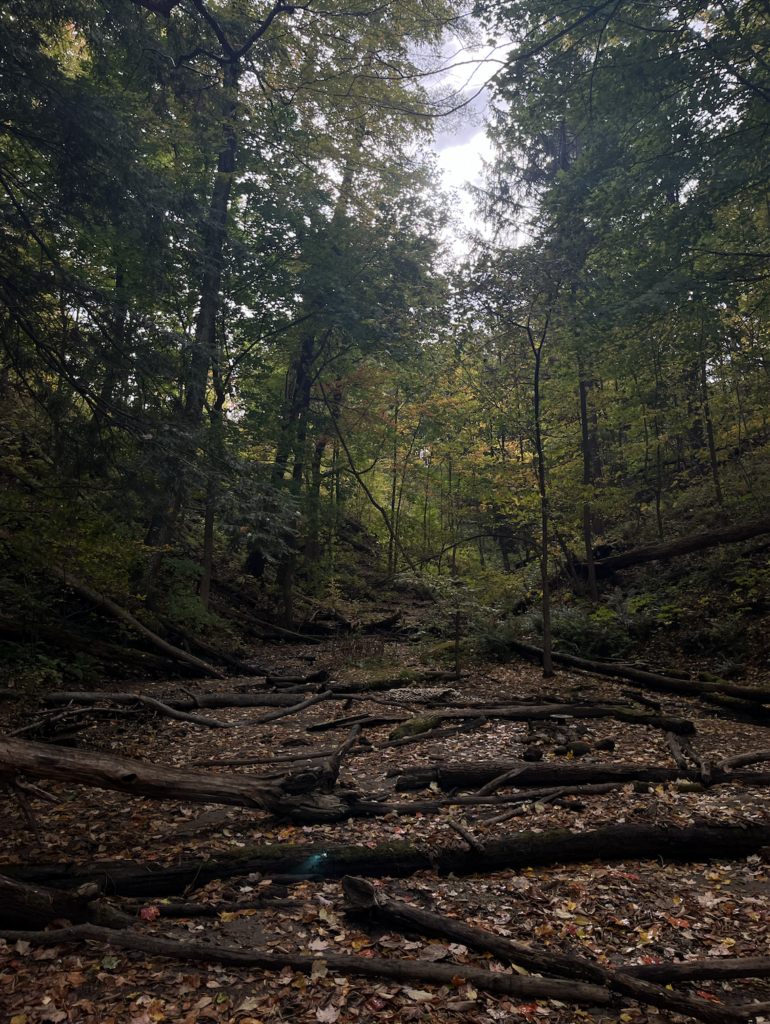
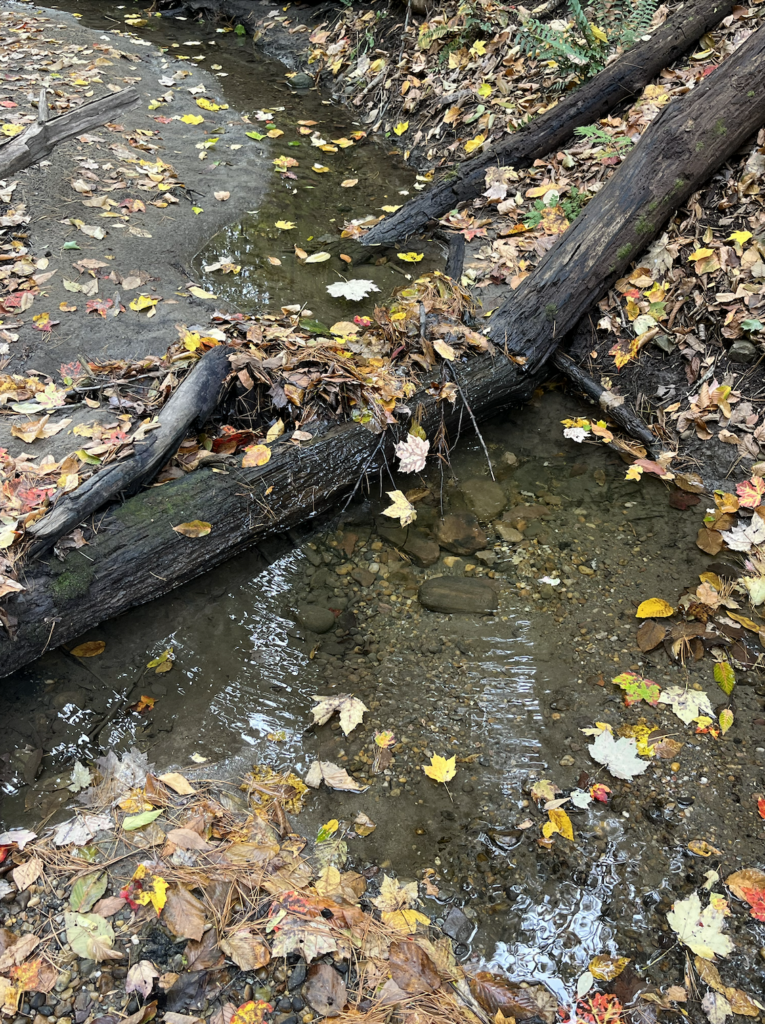
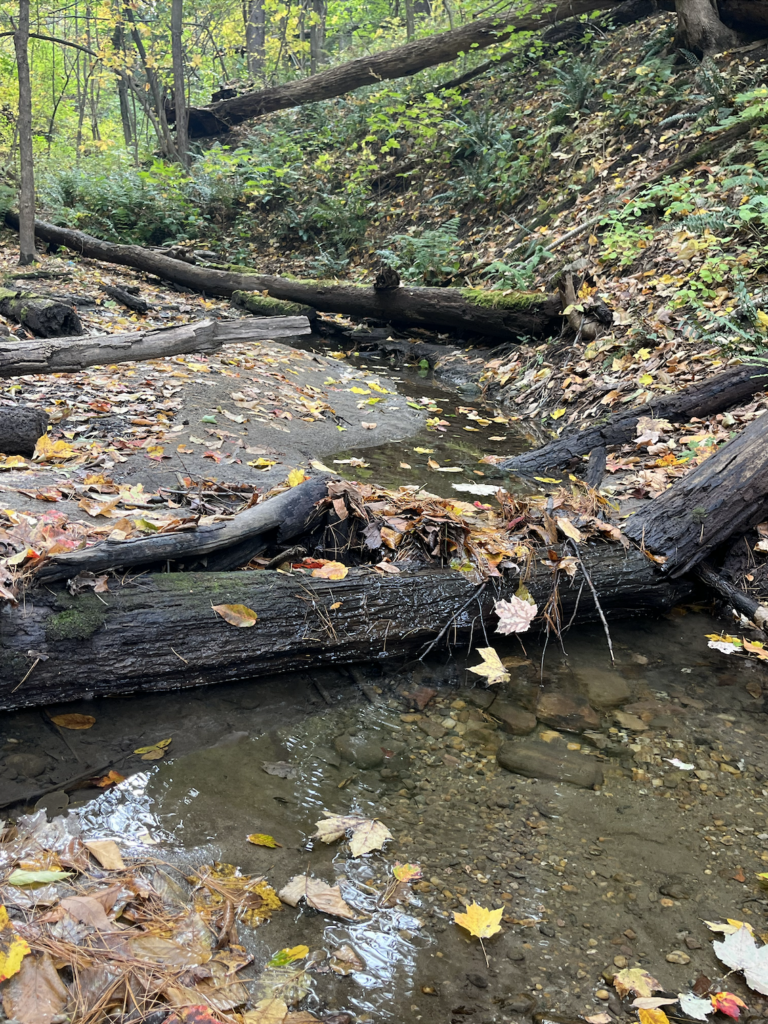
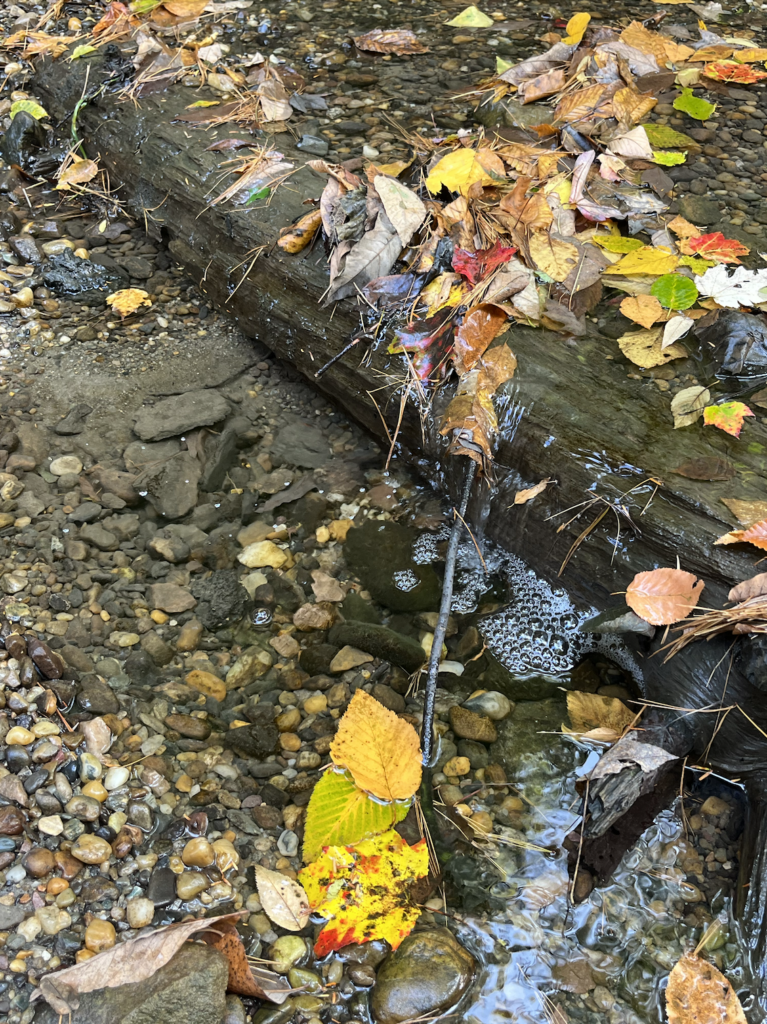
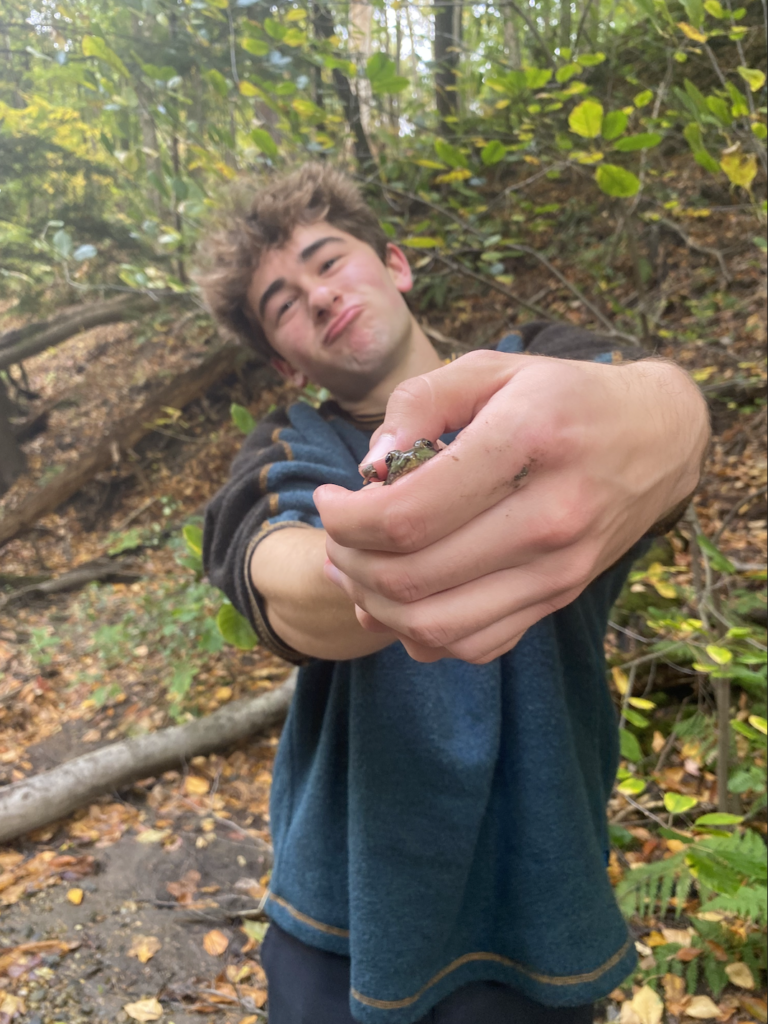
In the northern side of Trinity Woods, there is a steep slope down with a small stream at its base. The stream flows from west to east, and occasionally splits and rejoins. It has a slow flow, is very clear, shallow, filled with small rocks, and littered with organic matter. The soil and dead tree trunks around the stream and bottom of the slope are moist, and home to FROGS.

About the woods (10/16)

Featured

(Use the post list to the left to navigate!)

Location

The Trinity Woods are located on the Trinity Campus at University of Vermont, right off of the path between Mercy hall and Farrell Hall. The trail entrance is an open spot in a patch of small Sumac trees on the left of the path, and the trail curves around the whole extent of the woods.

Vegetation

The overstory in Trinity Woods is mainly composed of large eastern white pines, paper birches, yellow birches, multiple maple varieties, and some scattered black cherries. The understory trees are largely small american beeches and sugar maples, and ground cover is limited but includes large ferns, fungi, moss, and some small herbaceous plants.