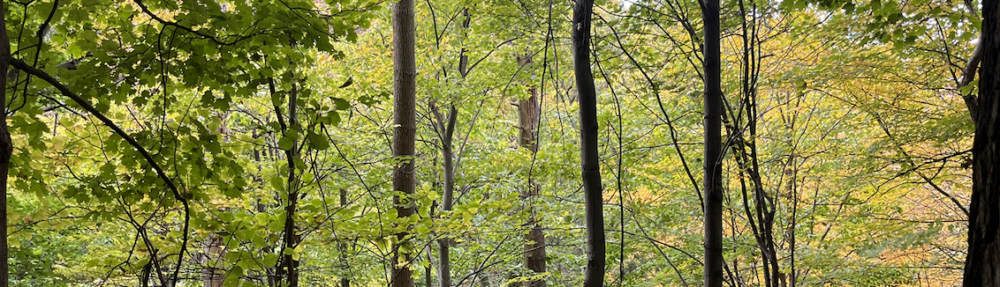
This past weekend I took walks through Centennial Woods and a forest just outside of Burlington to take part in the City Nature Challenge through iNaturalist, and document the various plant and animal species I found in my walks.

My overall experience with iNaturalist was positive, and I found it really easy to upload my pictures and identify the plants in them using the automatic iNaturalist labeling system. Additionally, after I had uploaded a picture of some Fawn Lilies I found, another account replied to my post and helped specify my classification to Yellow Trout Lilies. This same thing also happened with another posting, where my Genus Hepaticas was specified to Round-Lobed Hepatica. I thought this coordination through the app was very helpful, especially for someone who is still learning about the plants of Vermont!


Here are some flowers I identified! These include, Yellow Trout Lily, Red Trillium, Common Whitlowgrass, Sunflower, and Round-Lobed Hepatica. I also found Daffodils.


For trees, I found some American Beech, Black Cherry, Paper and Yellow Birches, and lots of Hemlock and Spruce!

While looking throughout the reports in Burlington and in other areas around the world, I found the extensive network of postings and observers very interesting. There were over 3 million observers posting in the Americas, more than 1,700 observations from when I last checked our own challenge, and over 400 species found in the greater Burlington area! I think this system has a lot of potential because the people who know an ecosystem best are often the people who live in that area, and I think this can help keep record of species and help to keep these ecosystems thriving.


Here is some beaver activity in one of the areas I visited! I thought it was really cool how perfectly the dam held the water in, and you can see how the water is contained almost seamlessly along the ridge of the higher side.

It was hard to get pictures of a lot of the wildlife, but in total I saw tadpoles, squirrels, a junko and a downy woodpecker, and a lot of songbirds!


And finally here is a very green little stream we found, along with some raccoon tracks right along the side of it in the mud! I’ve read about racoons washing their hands like humans in water, so I imagine that’s what it was doing.

I hope to use iNaturalist more in the future!