Category Archives: Phenology Posts

Phenology Post #4: Return to Original Spot

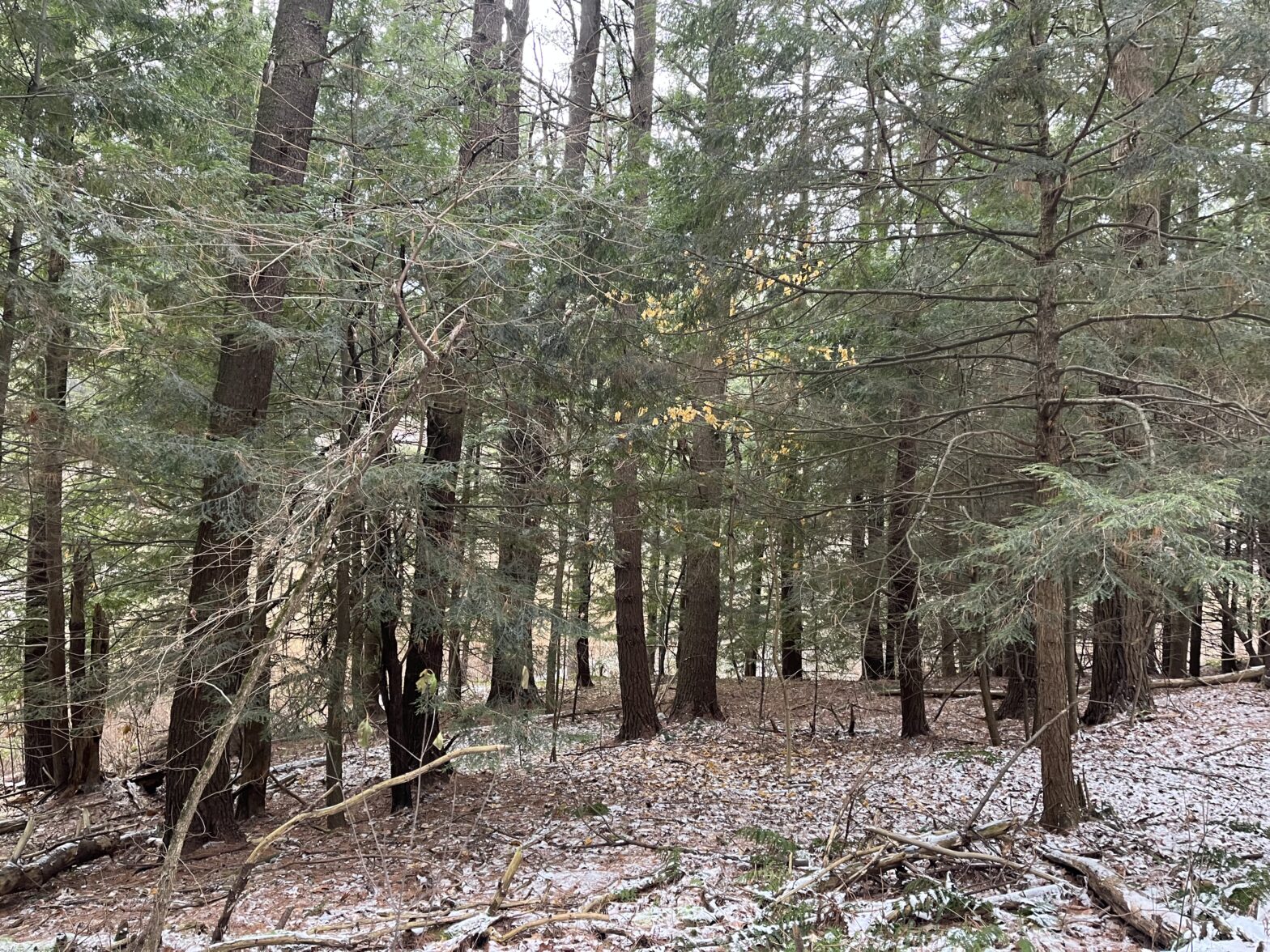
For my final phenology post, I made the trek back to my site nestled inside the Centennial Woods Natural Area. With winter now making its presence felt at my site and the first multi-day freeze of the season setting in, there were lots to notice and observe from my sit-spot. By now, with temperatures having considerably dropped since my last visit, all the deciduous trees at my phenology site had lost their leaves, and I felt like that really helped embolden the evergreens like Eastern Hemlock and White Pine that are also present at the site. In terms of decomposition, there is still a noticeable layer of decomposing leaves from the fall season, but with winter and snow setting in, they are become less and less visible. With a very thin layer of snow coating the forest floor during my visit, it was evident that some of the smaller mammals that inhabit Centennial Woods, like the Gray Squirrel, were most definitely still active, as tracks were visible in a few different spots and I even saw a squirrel up in one of the White Pines! Looking back on how my phenology site has changed and adapted to the changes of the seasons, it is eye-opening just how much adaptation the natural world is equipped with. Seeing how the disappearance of the understory and deciduous forest cover during winter creates an ecosystem that looks completely unfamiliar from the outside, I was struck with just how powerful the inner-workings of nature really are. Reflecting on my time spent at such a special phenology spot, I am so glad I could witness the transformation of an ecosystem in response to outside factors such as the climate, and definitely feel that I am much more equipped to approach the problems facing our planet and figure out ways in which we can respectfully coexist within the natural world.

Thank you all so much for taking the time to read about my observations and I hope you enjoyed what you found!

Abel Murphy
Phenology Post #3: New Phenology Spot

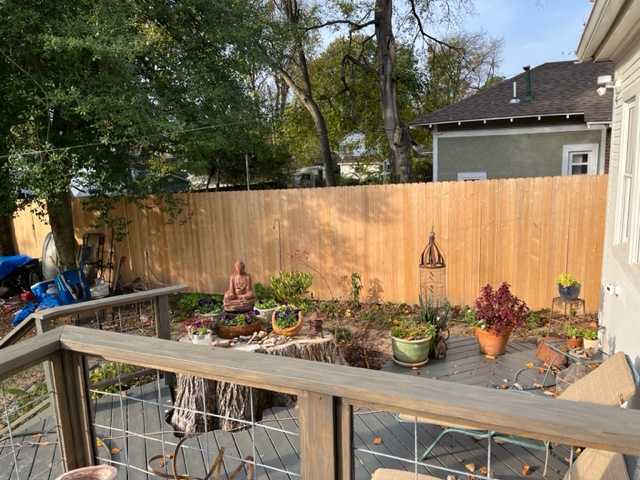
While back home for the week in Memphis, Tennessee, I was able to spend some time observing and exploring a second phenology site and compare it to my own. For this secondary spot, I chose my backyard, as it is a place that I really love to simply sit and be present in, and it offers a different phenological and ecological portrait from that of my site in Centennial Woods. My backyard, with its nonnative grass and variety of landscaped bushes and shrubs differs significantly in an ecological sense from my sit spot within Centennial Woods. Since it is a very fragmented ecosystem due to fencing, and is more so a combination of plants used for human enjoyment rather than a naturally functioning ecosystem, it is very hard to even put it on the same plane as my site in Centennial Woods, as that is a place where natural functions and processes are able to be carried out without human interruption. Attached to the post is an image of my backyard and its many different quirks. Though there are certainly a good number of nonnative species present in my backyard, the presence of massive white oaks and smaller beech trees encroaching from the backyards of my neighbors are undeniable, and that is a key connection between the ecology and phenology found in and around Centennial Woods as well as in my own backyard and neighborhood. After reading the “Honorable Harvest” section of Braiding Sweetgrass , I was struck with the idea of leaving something as a gift of sorts in my own backyard. What I chose to leave, although it is not necessarily a living creature, was a piece of driftwood that I collected earlier in the week when visiting the sandbars along the Mississippi River. This piece of wood, as small as it may be, represents our connection to the vital waterways that fuel society such as the Mississippi River, and expresses my sincere gratitude for those places and provisions given by the Mighty Mississippi in my life. Finally, attached below is a link to a google maps site showing the exact location of my home phenology can be found here: https://maps.app.goo.gl/U62cSrq9ychRLSYp9

Until Next Time!

Abel Murphy

Phenology Post #2

Welcome Back Guys!

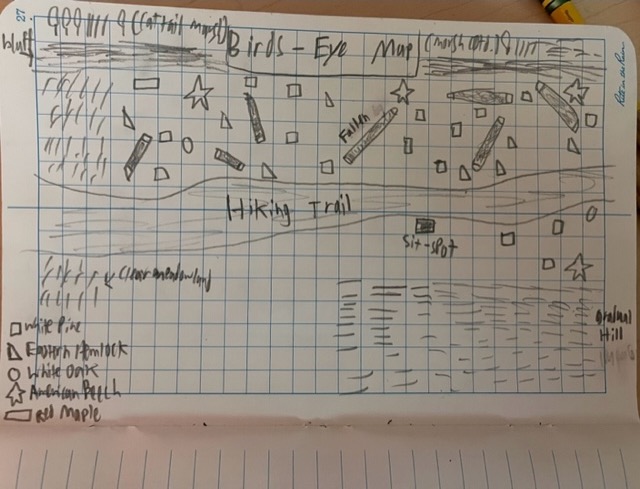
This week for my second phenology assignment, I visited my site within Centennial Woods and took some observations and feelings away following the 15 minutes I spent simply being present and centered at my chosen assignment location. It was a late Sunday afternoon, so there was nothing too crazy going on around me at my phenology site, yet still there were so many signs of life and movement that enveloped me. Having chosen a spot situated in Centennial Woods, something that I am always picking up on when I visit, regardless of the duration, is the lull of traffic in the distance. This is a fact that comes with visiting any urban green space, but a sound that I found especially noticeable during my visit this past Sunday, like the constant hum of a machine that cannot be turned off. Something else that I observed which was very enjoyable to watch was the activity of the squirrels and chipmunks which call Centennial Woods home. A few minutes after arriving at my spot and taking a seat, I began to notice multiple squirrels, both Eastern Grey Squirrels and Red Squirrels, running to different places with purpose, whether that be in search of food to cache or simply to eat at the moment. By sitting and observing the daily tasks of small mammals like squirrels and chipmunks, I felt like I was better able to appreciate the role of every organism in an ecosystem, even if it is such an urbanized setting like Centennial Woods. Something else that I noticed during my experience on Sunday was the stark change in the understory and smaller woody plants as the seasons change, especially within a region like Vermont. When I first visited my phenology in mid-October, there was still such a lush green spread throughout Centennial Woods, but that has now been replaced by perpetual leaf cover and a coinciding sense of desolation. This disappearance of the once-obvious signs of life just further put me in the mindset of winter and the metaphorical silence that will soon envelop Centennial Woods and my phenology site. This loss of small broadleaf woody plants was the most noticeable shift in vegetation since my last visit to the site. Because my phenology spot is dominated by evergreens like White Pine and Eastern Hemlock, there was not necessarily a huge amount of change in the vegetation, as they do not lose their needles as seasons change. However, there were a few younger American Beech, White Oak, and Red Maple trees scattered around my site, and those have all lost their leaves for the most part by now. Ultimately, I could see a lack of greenery in the understory and in the deciduous species which indicated a shift in the seasons, but the domination of evergreens at my phenology sites leaves the overstory vegetation largely unaltered. Attached to this post is also a picture of a hand-drawn bird’s eye map of my site in Centennial Woods.

Until Next Time!

Phenology Site Description and Overview

Hello all and welcome to my phenology site blog!

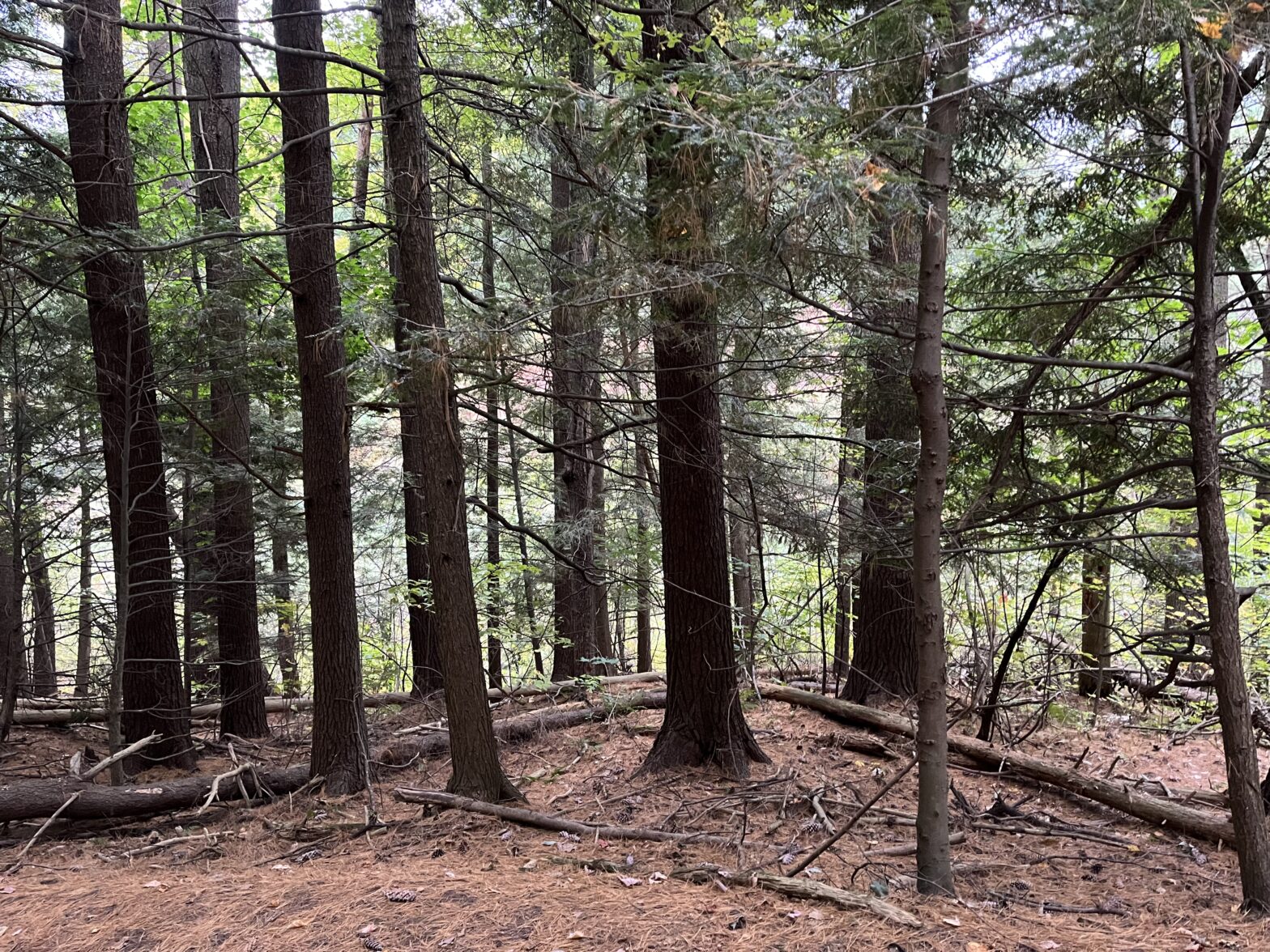
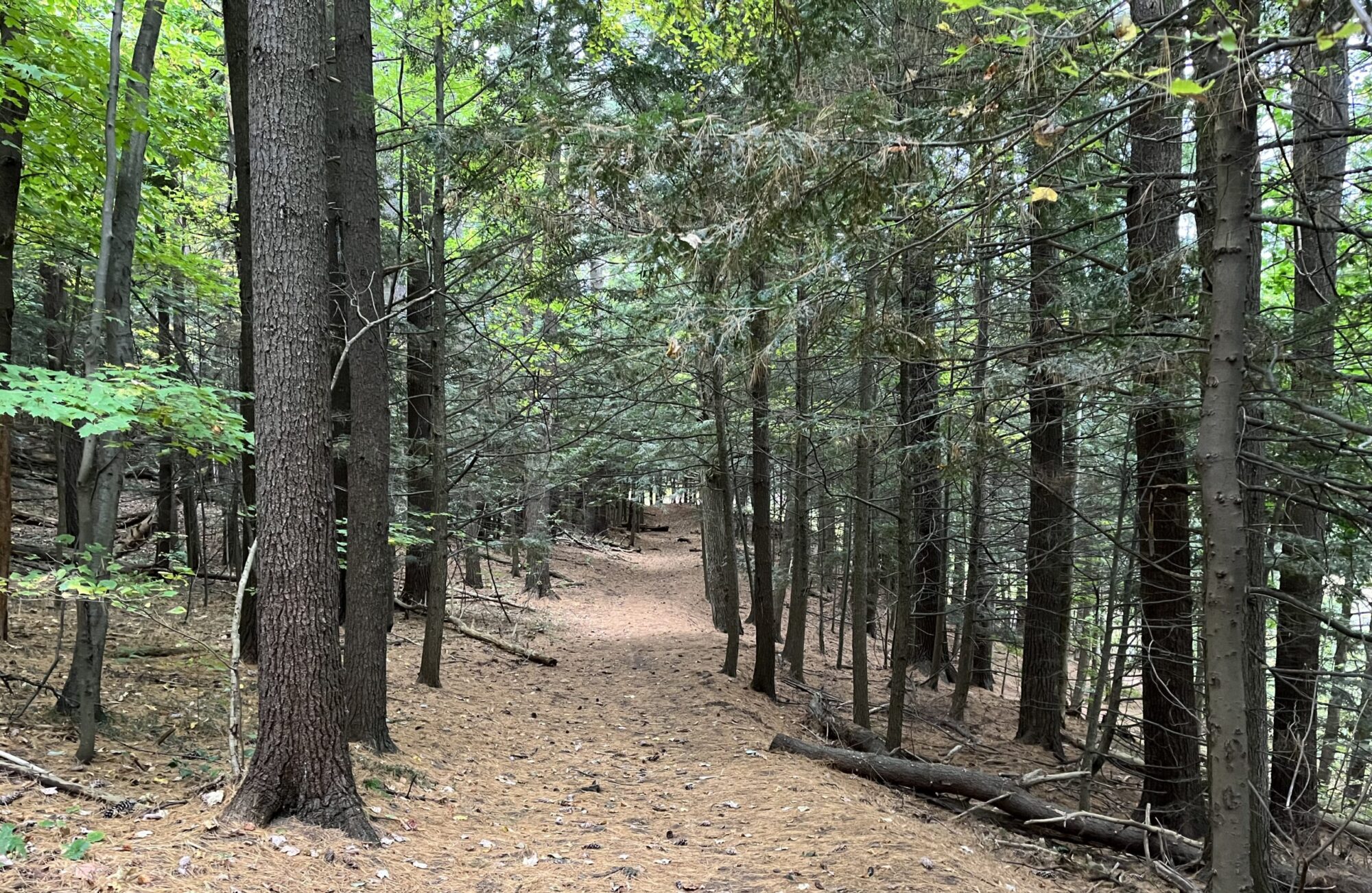
For my site, I chose a section of primarily evergreen trees up on the hillside just to the east of the Centennial Brook marsh within the Centennial Woods Natural Area. This spot can be located by venturing just east of the UVM medical center, hiking along the main loop of the park, and then veering left on the trail just after passing the Centennial Brook intersection. I chose this particular spot because it is filled with a variety of prominent tree and woody plant species found across the Burlington area. I also chose this spot because of how great of an example it is for highlighting the biodiversity and importance of urban woodlands, which perfectly describes the entirety of the Centennial Woods Natural Area. Within my chosen site, some of the different woody plant species that can be found include mature Eastern White Pine and mature Eastern Hemlock, as well as a small number of White Oak, Red Maple, and American Beech saplings. This particular spot, as indicated by the vegetation, is dominated by evergreen species that block out much of the sunlight which would provide for a more lively understory. Attached to this post should be a link to my site’s location on Google Maps (https://maps.app.goo.gl/bvxEy7gNyaWjWLCYA) as well as a photo taken on October 15th.

Enjoy!