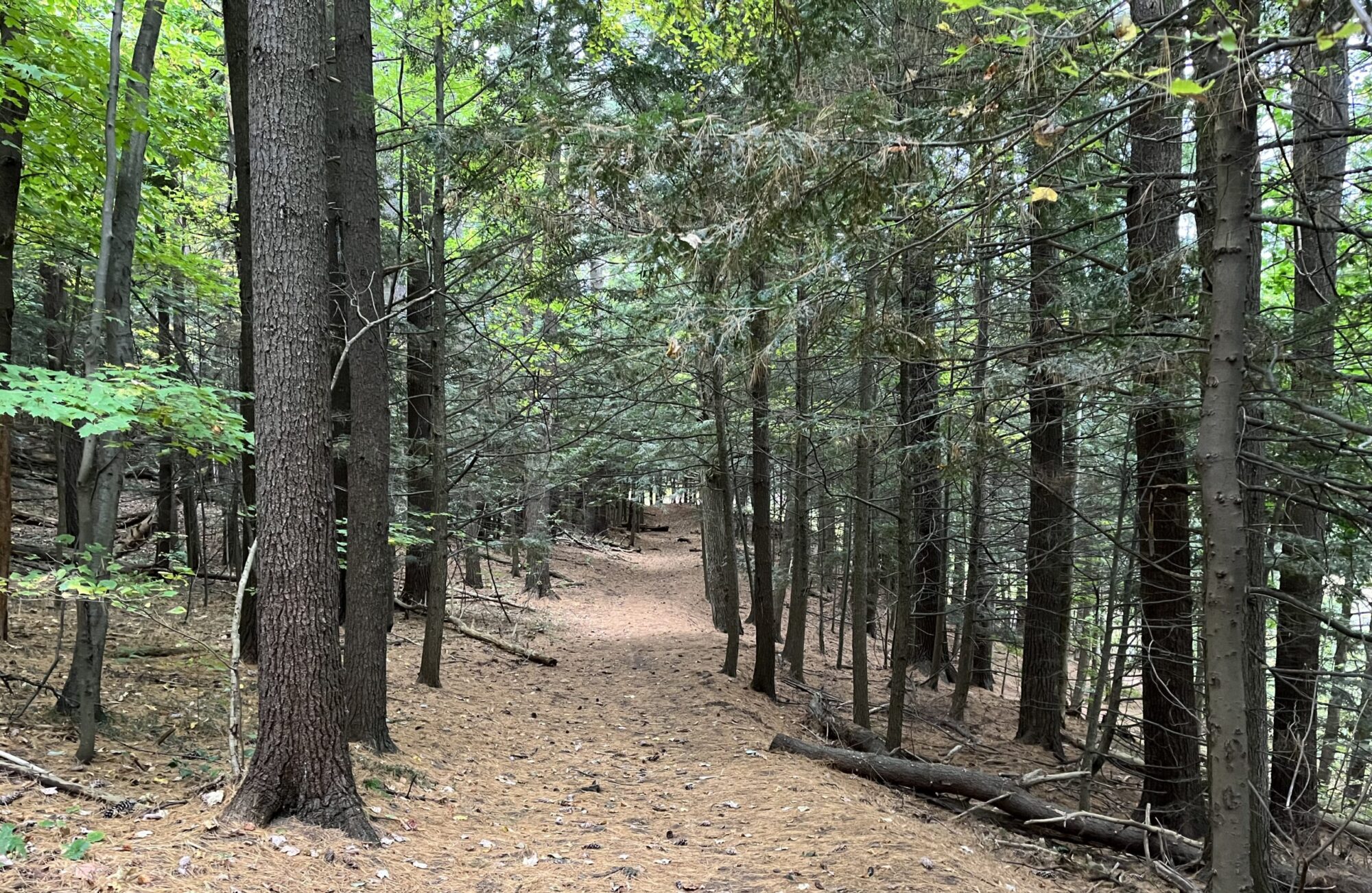
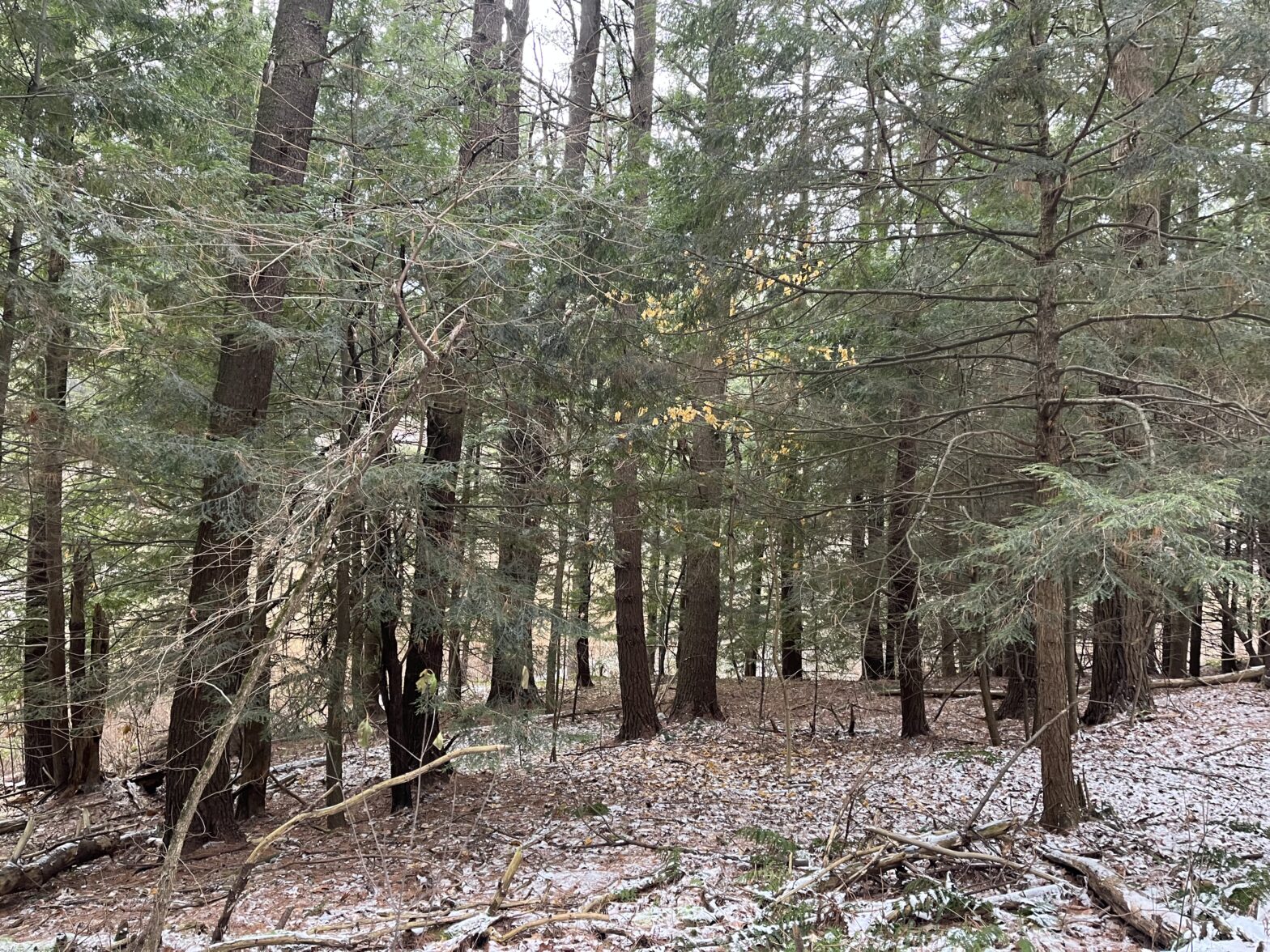
For my final phenology post, I made the trek back to my site nestled inside the Centennial Woods Natural Area. With winter now making its presence felt at my site and the first multi-day freeze of the season setting in, there were lots to notice and observe from my sit-spot. By now, with temperatures having considerably dropped since my last visit, all the deciduous trees at my phenology site had lost their leaves, and I felt like that really helped embolden the evergreens like Eastern Hemlock and White Pine that are also present at the site. In terms of decomposition, there is still a noticeable layer of decomposing leaves from the fall season, but with winter and snow setting in, they are become less and less visible. With a very thin layer of snow coating the forest floor during my visit, it was evident that some of the smaller mammals that inhabit Centennial Woods, like the Gray Squirrel, were most definitely still active, as tracks were visible in a few different spots and I even saw a squirrel up in one of the White Pines! Looking back on how my phenology site has changed and adapted to the changes of the seasons, it is eye-opening just how much adaptation the natural world is equipped with. Seeing how the disappearance of the understory and deciduous forest cover during winter creates an ecosystem that looks completely unfamiliar from the outside, I was struck with just how powerful the inner-workings of nature really are. Reflecting on my time spent at such a special phenology spot, I am so glad I could witness the transformation of an ecosystem in response to outside factors such as the climate, and definitely feel that I am much more equipped to approach the problems facing our planet and figure out ways in which we can respectfully coexist within the natural world.
Thank you all so much for taking the time to read about my observations and I hope you enjoyed what you found!
Abel Murphy