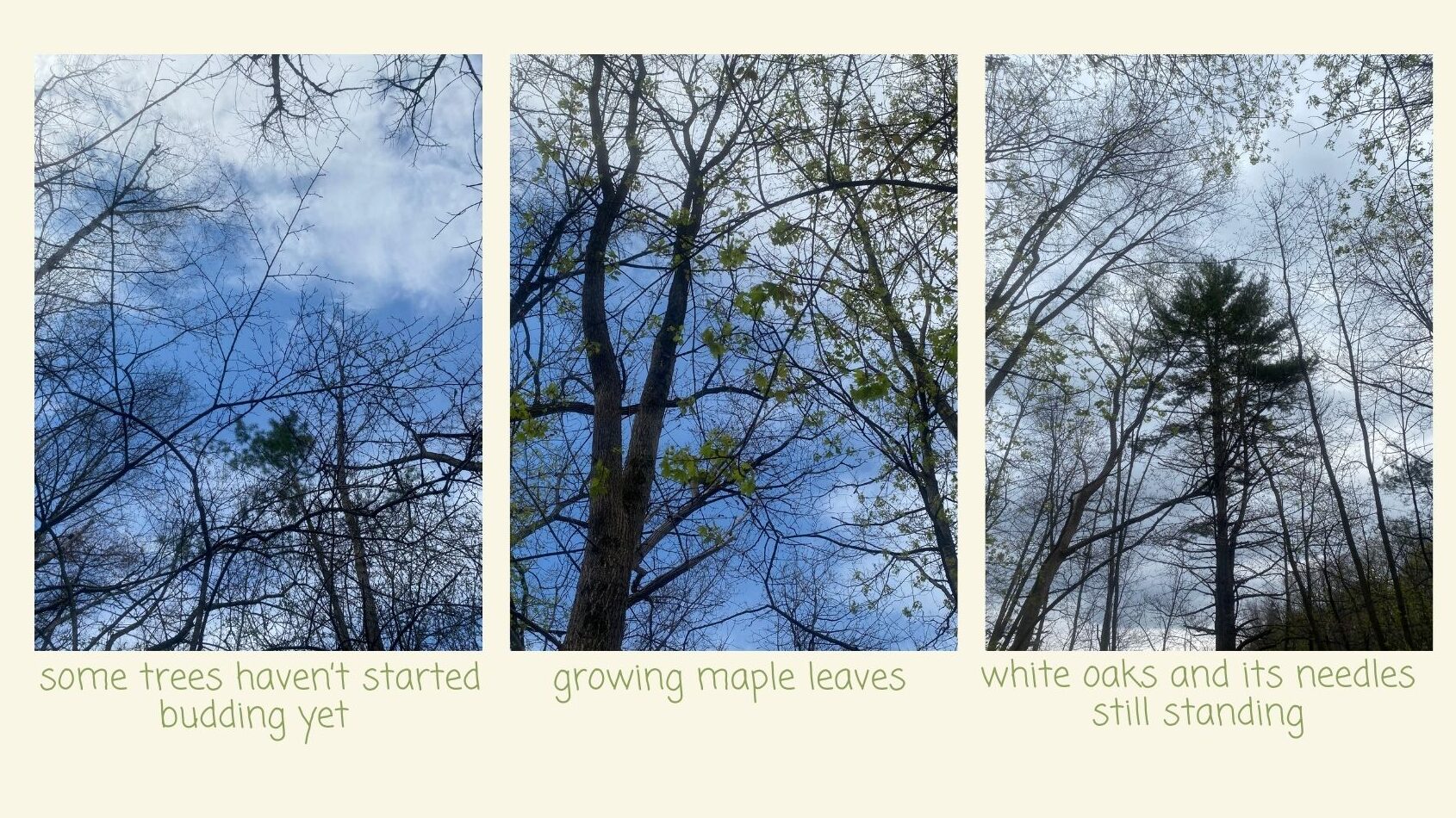
We began in Fall 2024, surrounded by vibrant reds, yellows, and browns. Squirrels running around, and birds chirping above as the leaves fell down. Then came a very white winter, where cold air and strong winds left most trees exposed – except for the evergreens and those conifers like White Pines. Wildlife seemed to vanish, taking shelter beneath the deep, heavy snow. Still, if you looked closely, you could spot signs of life because of the tracks left behind by deer, squirrels, or other animals crossing the snow-covered ground.
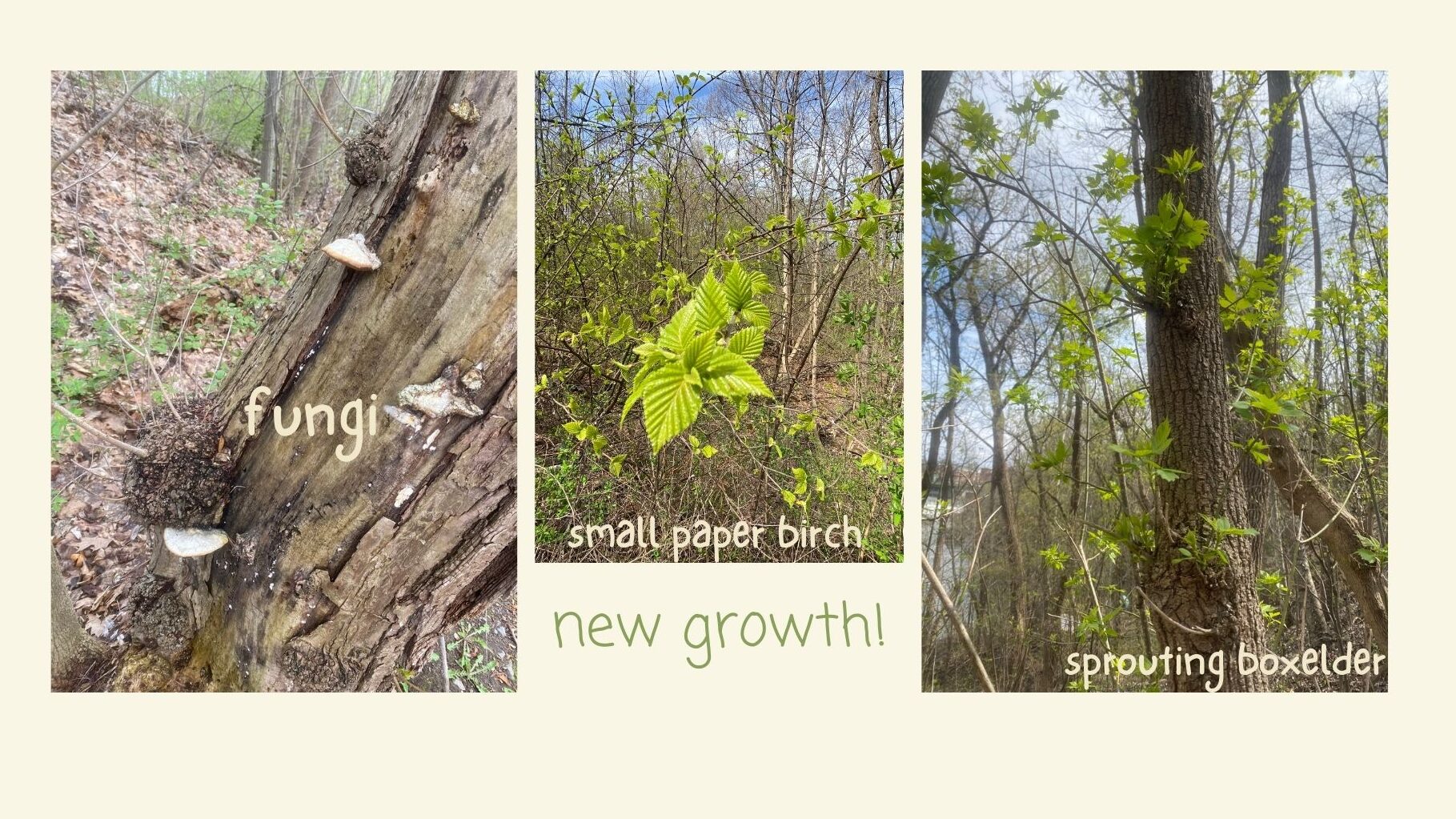
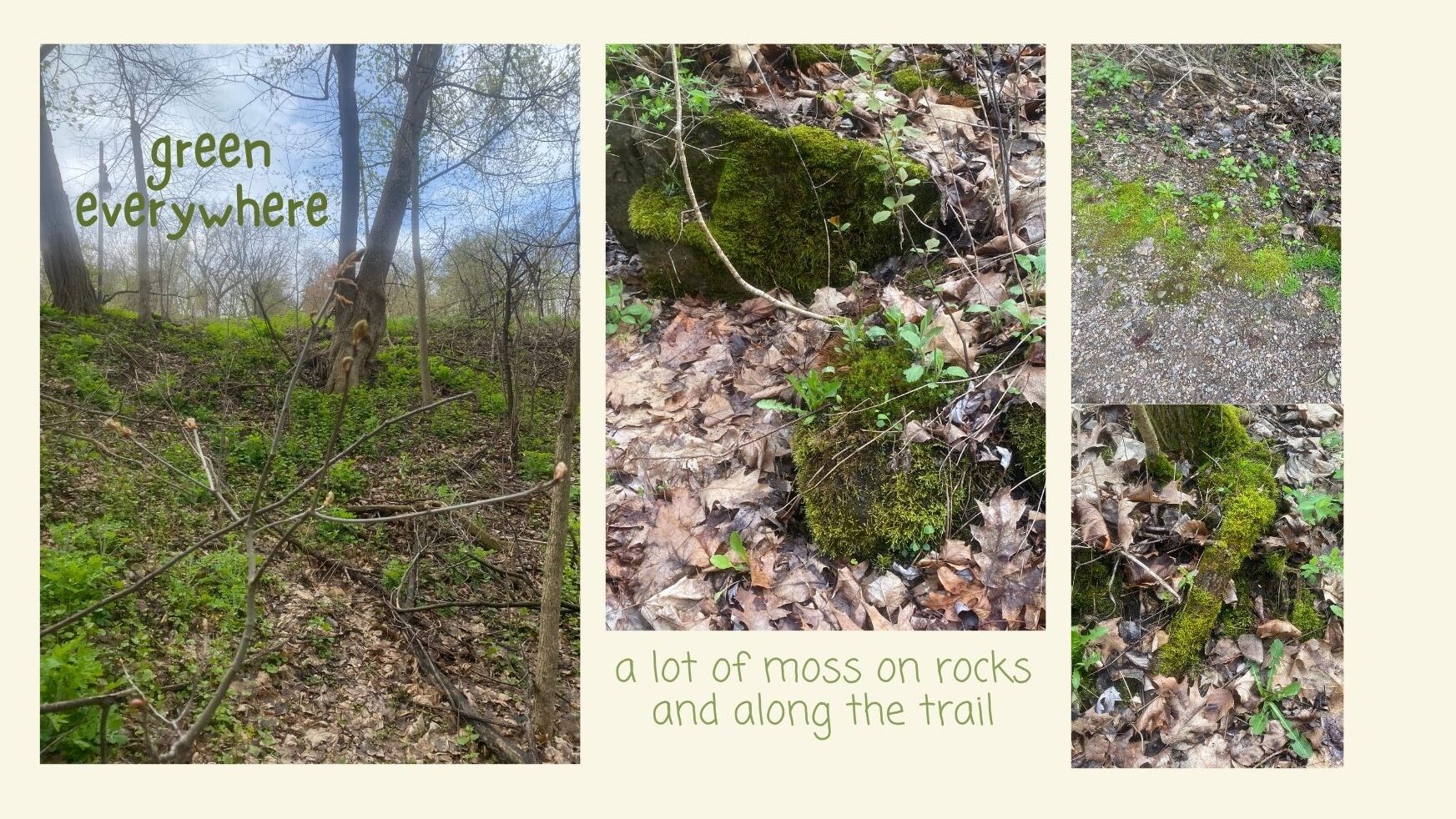
Now, we are stepping into Spring. Green is seen all over the landscape, flowers are blooming on trees and dot the grass, buds are breaking open, birds are singing, and even insects are out and about.
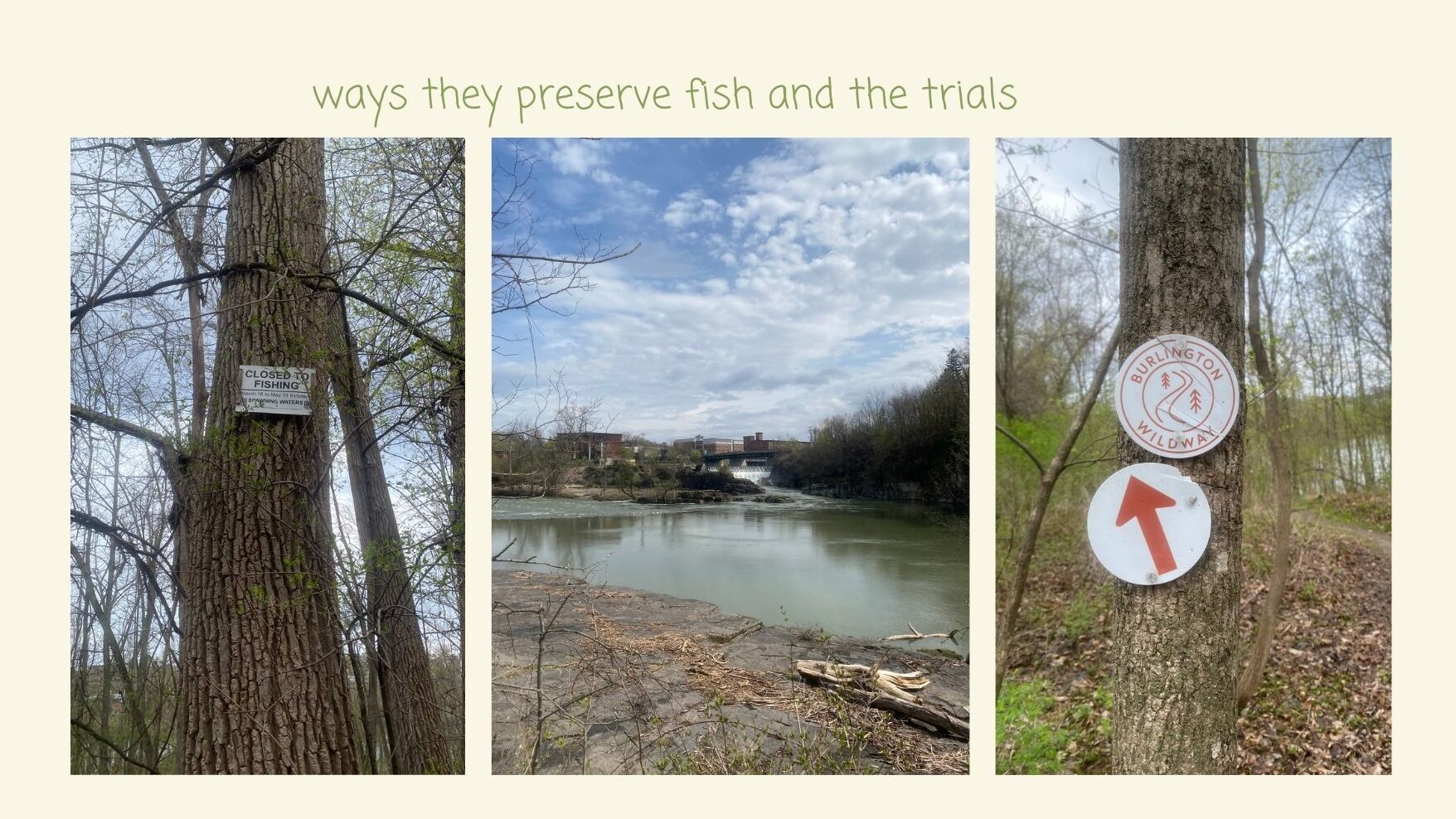
Coming to my phenology spot for the last time – at least for this semester – felt nostalgic. Walking the trail felt different from those first visits. Now, I knew where the different trails would take me, and what different trees – some of them- I would spot while walking. I know that the small bench by the river is tilted just enough that, whenever I sit, I instinctively brace for my feet to dangle. I sit there appreciating the calm of the water’s sound – sometimes soft and soothing, sometimes overpowered by traffic and nearby businesses.
It was interesting learning about the Winooski area history this year. The city grew around the power of the river, which fueled numerous mills, and shaped the economic development of the region, bringing workers, immigration and urban growth. But, this also came with impacts to the land, for example, the flow of the river changed. People must not forget though, that long before industrialization, this land was home to the Abenaki people. For the them it was a vital source of food, travel, and spiritual connection. These sites along the river were once meant for fishing and gathering, rich in both cultural and ecological value.
I don’t consider myself part of this place just yet. Compared to its long and vast history, I have only visited this site a couple of times. But over the semester, I’ve certainly built a relationship with it – and a growing sense of care and respect for it. It’s no longer just a spot on the map – it’s a landscape layered with life, history, and meaning. And that connection, even if still new, is something I now carry with me.