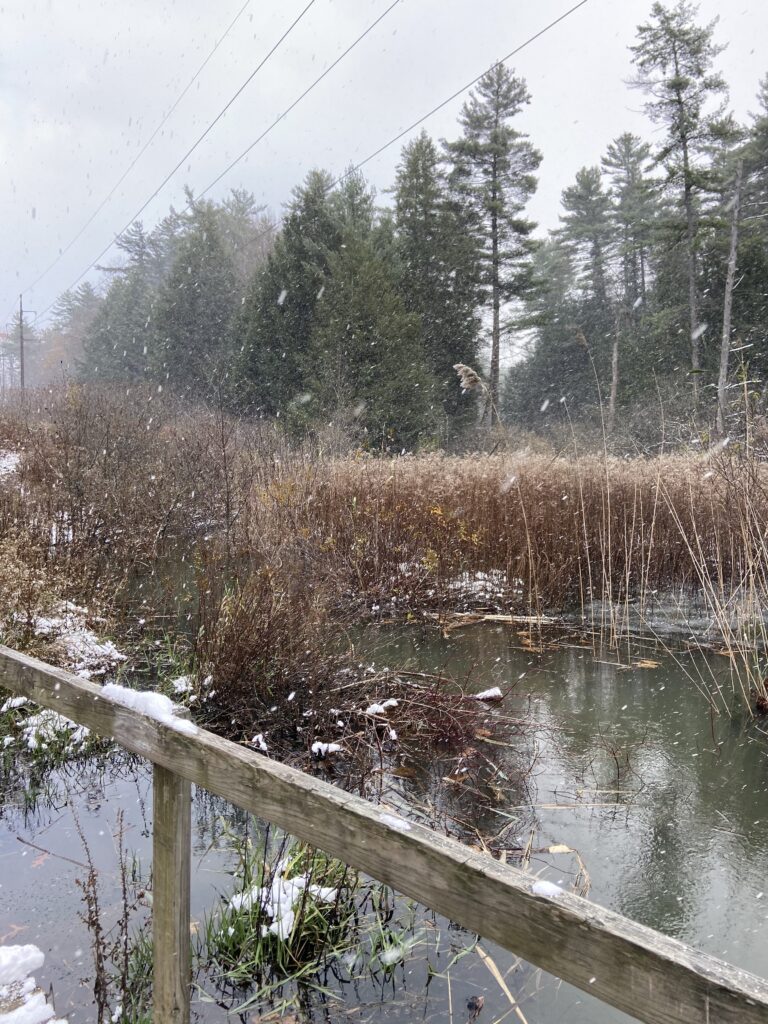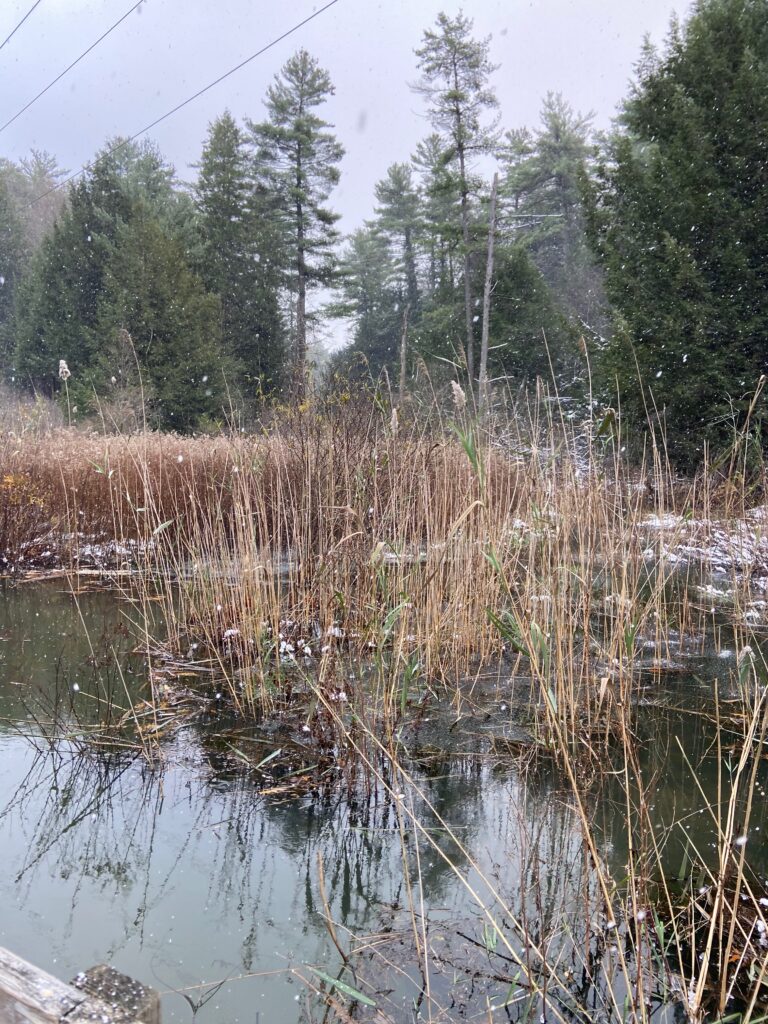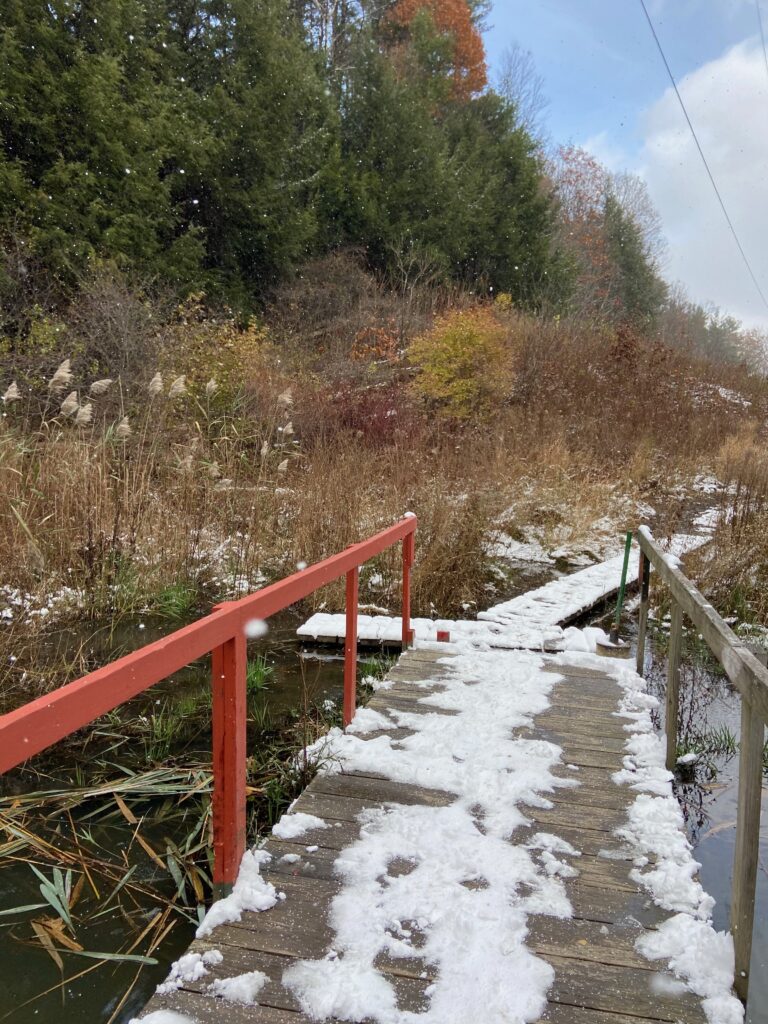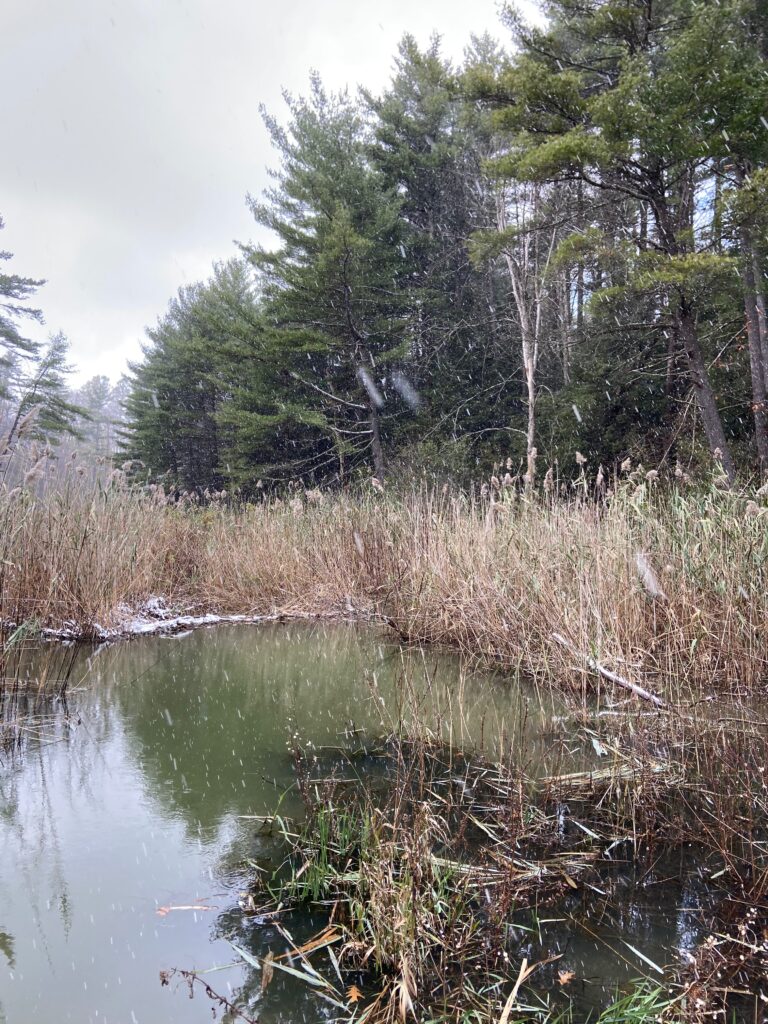
End of the year

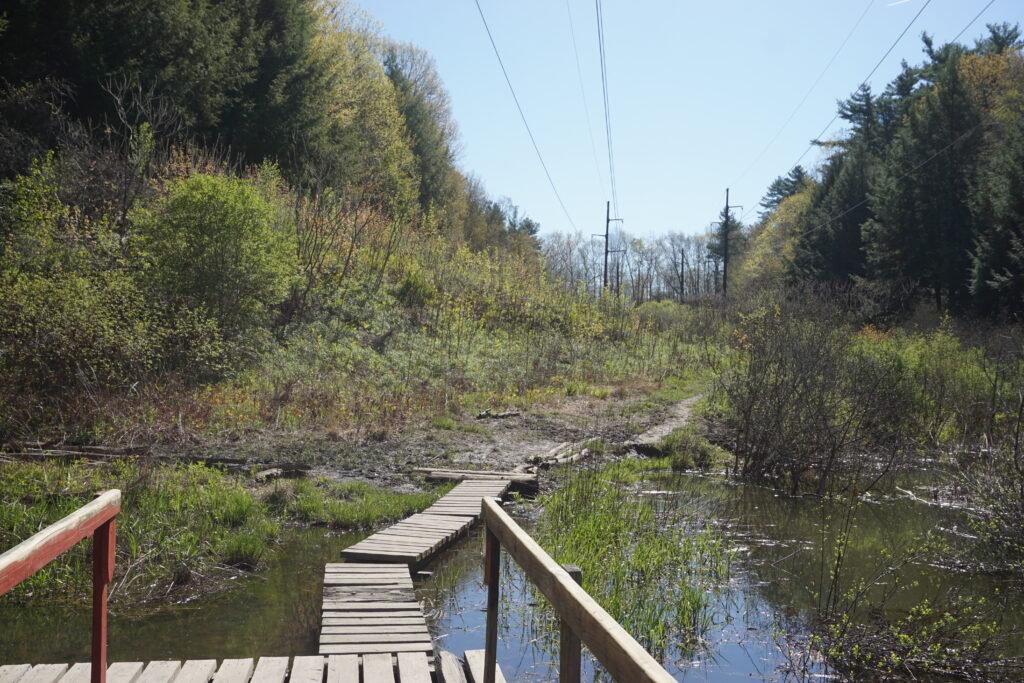
The morning of my chemistry final I woke up feeling nauseous and riddled with anxiety. So, I decided it was the best time to go for a hike. I collected a bagel from the Marche and packed a bag with my camera, and hiked out to the beaver dam.

This time, I did not get lost, which was a new experience. It immediately made me feel more confident, and I felt my anxiety fade away.

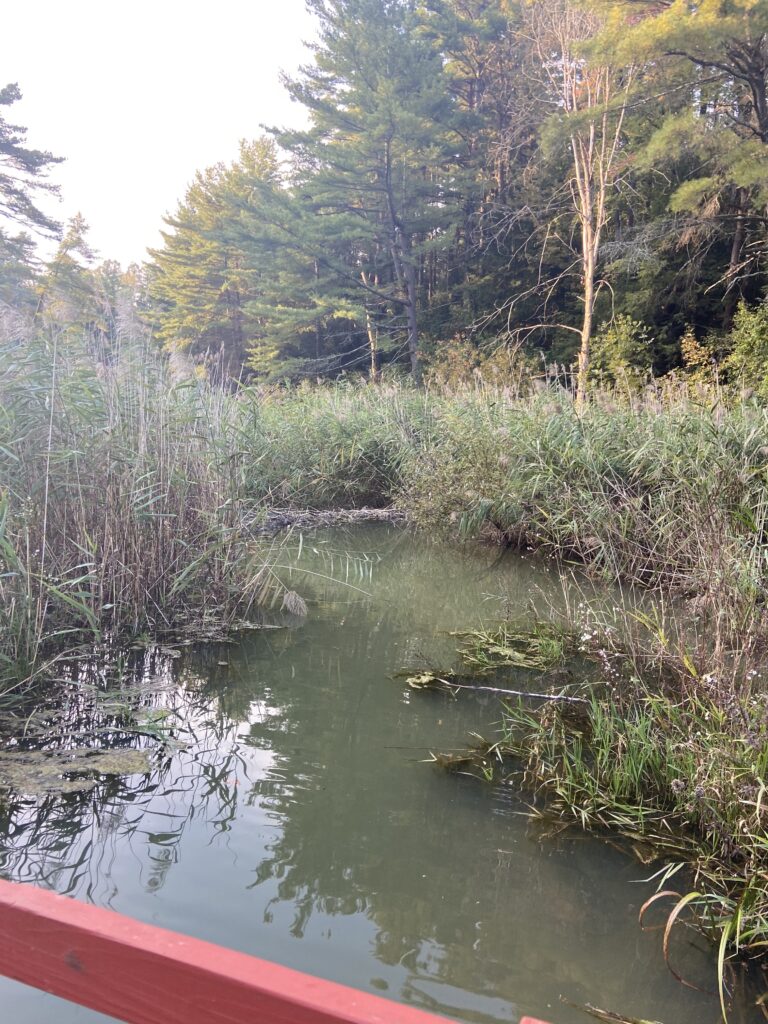
I made it to the beaver dam and sat in the middle of the bridge and took some photos before sitting and enjoying my breakfast with the sounds of the birds around me.
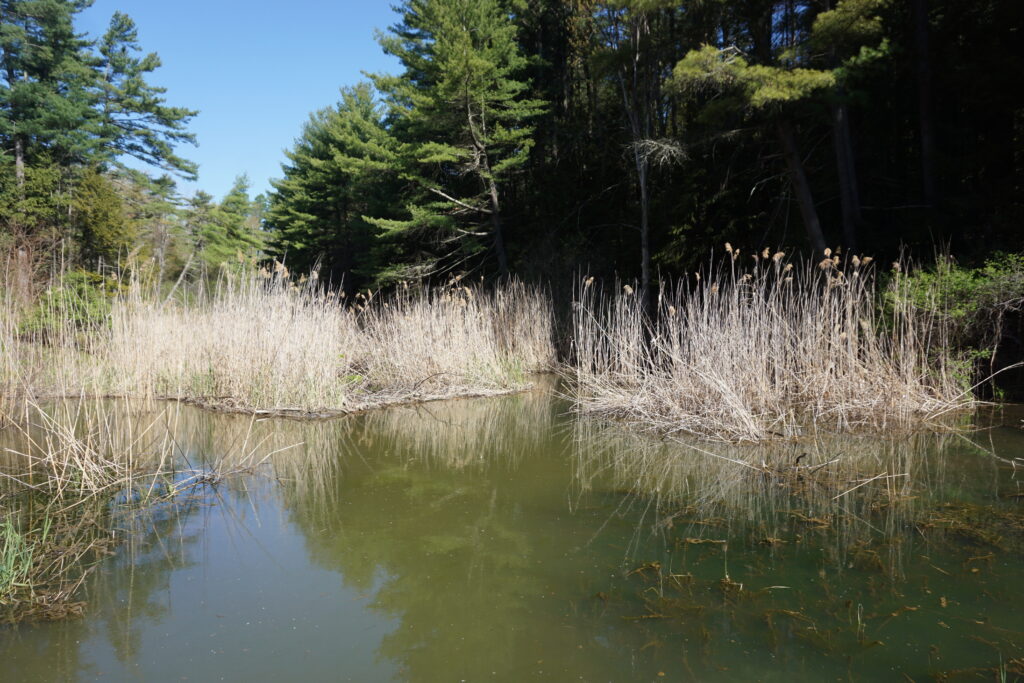
I sat on the bridge and enjoyed the anxiety free moments of my day. This place was a part of me, just as I was a part of it. In those moments, the calm breeze and still water pushed my anxiety out of my mind, and I lived in the present.

Two people passed me while I sat there, and I saw how we interacted with the dam. While the trail was not maintained anymore, people still took advantage of the opportunity, yet very few took a moment to stop and really look around. Today’s culture moves so fast, we hardly look up from our phones, and we start to miss things.

I was looking at my phone when I heard a bird incredibly close. By the time I changed my camera lense, it was gone. So I waited, I was determined to find another bird and take a photo. I sat quietly for an extra thirty minutes before a bird flew to a tree behind me.
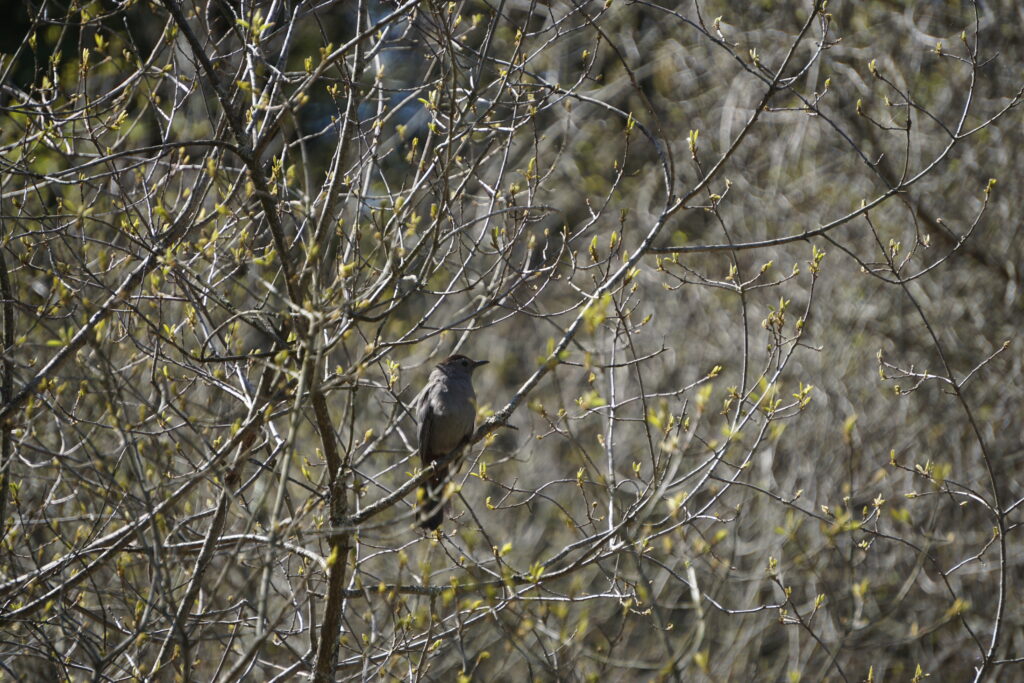
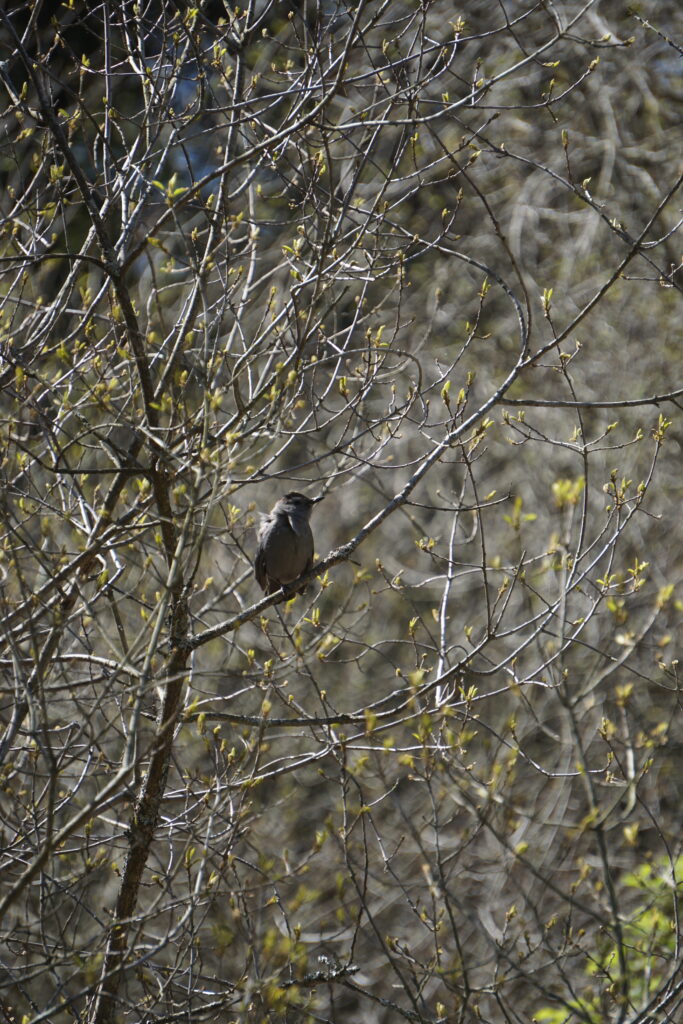
Gray Catbird

I realized that life is almost like a hiking trail. You start at the trailhead, and you finish at a different one. As you walk you encounter new obstacles, discover new places, and go up and down with the ridges. Sometimes you may have to double back, or stop and figure out where you are.

You might meet people along the way, other hikers on their own trails. They may go past you in the opposite direction. They could join you for a few miles, and then move on. Maybe some day someone will join you until the end of the trail. Regardless, you just keep hiking.

Until next year, enjoy the hike.
City Nature Challenge

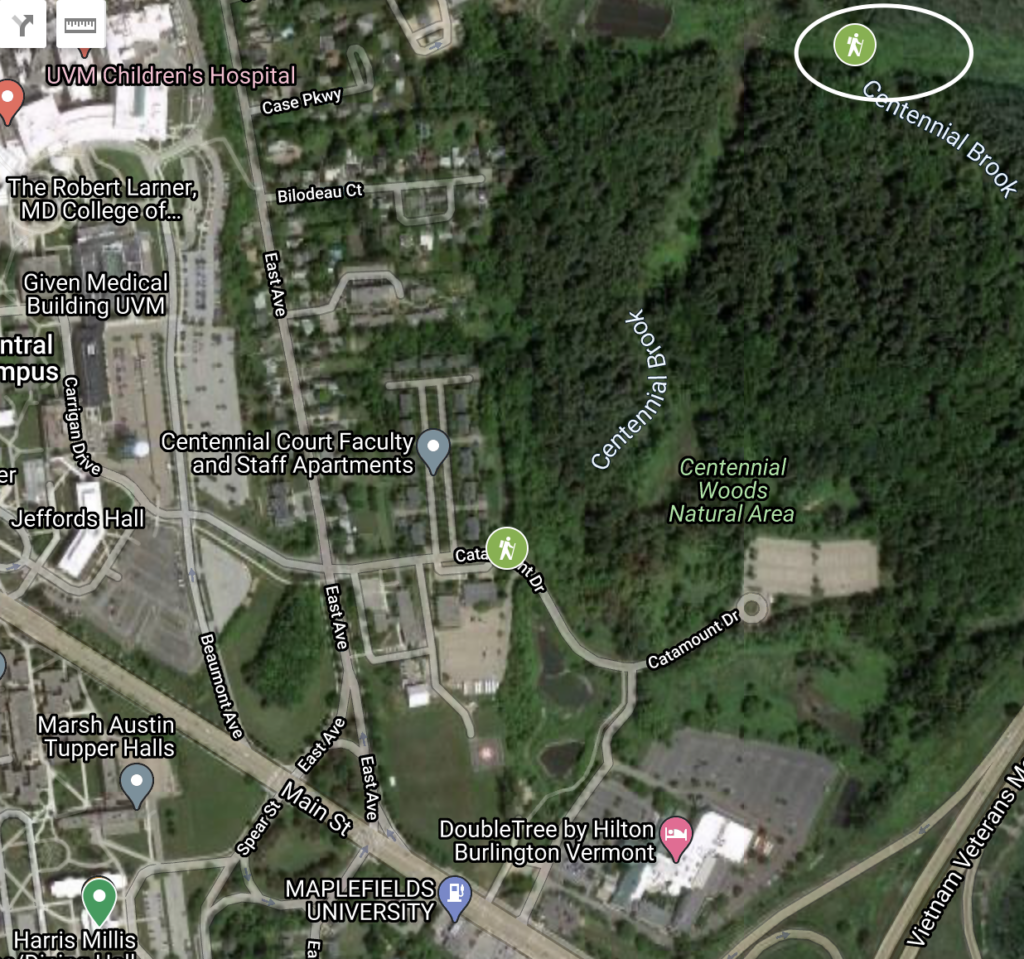
I participated in the city nature challenge this year and I thought it was a really wonderful experience. Not only did it convince me to get outside and participate in a hike or an exploration, it brought me back into a competitive mindset that I had lost for a while being here at college. It was definitely an important experience and it was a lot of fun too. I mostly explored the Centennial woods near the trail head, since that area was largely unexplored on the map when we looked.

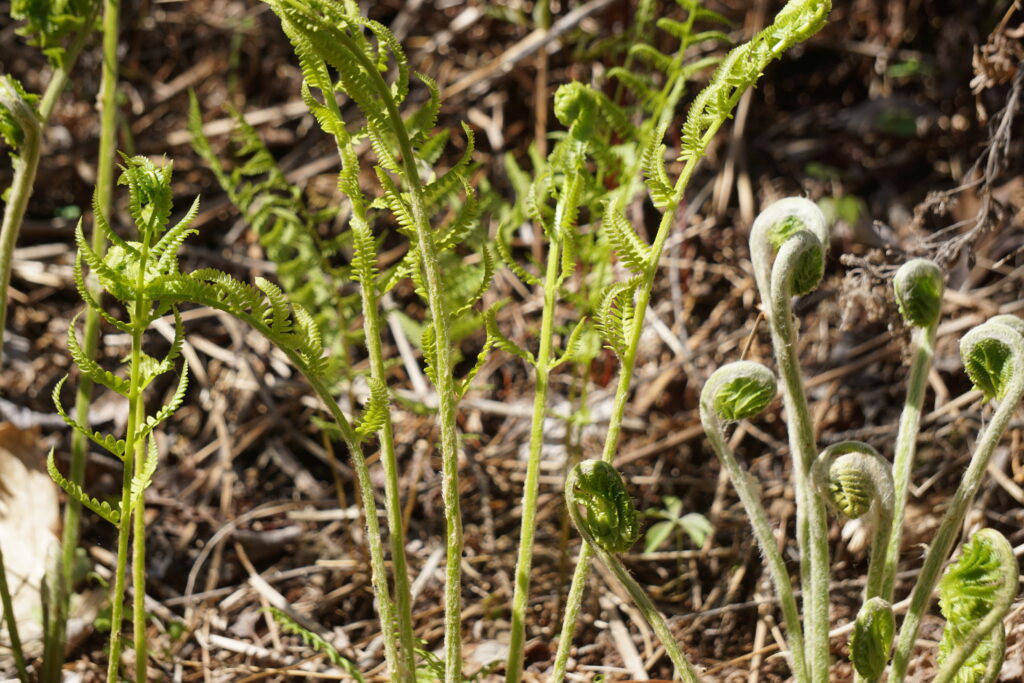
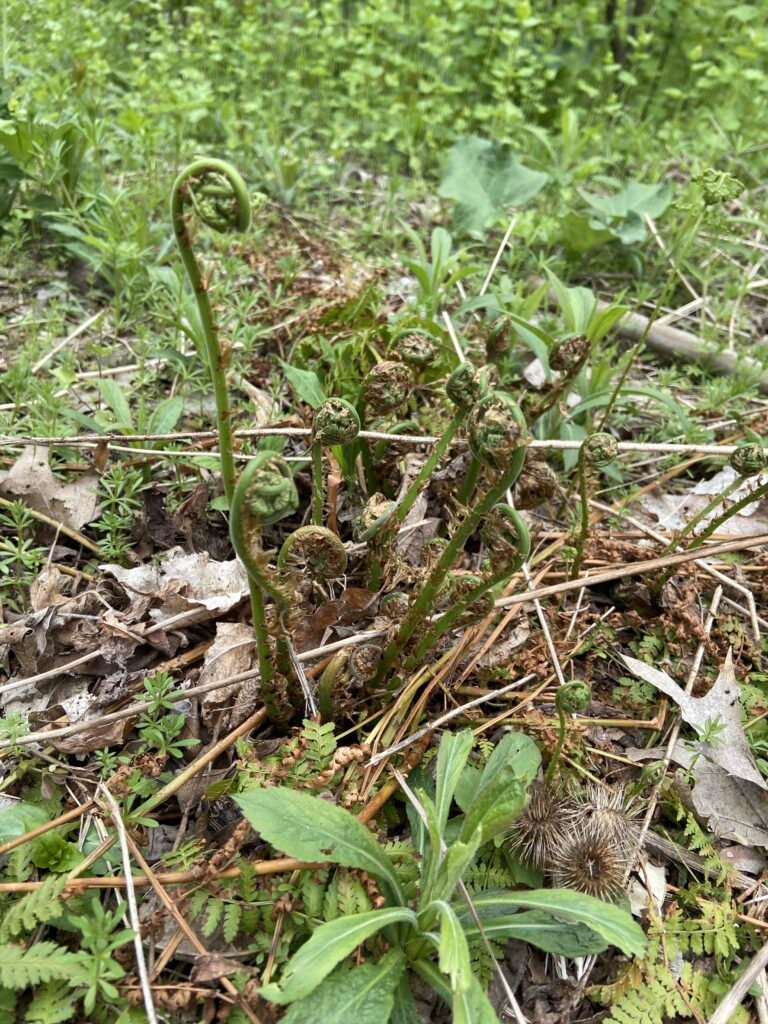
My favorite observations were genuinely just the plants. I loved the ostrich ferns and seeing how they curl before they become the ferns we know. I’ve loved ferns for a while, but I hadn’t seen that before.

I had used iNaturalist before, so it wasn’t an entirely new experience, but it was new to upload to a project. I enjoy using the app because it does give me a lot of options for plants to choose from, and I think that’s really valuable.

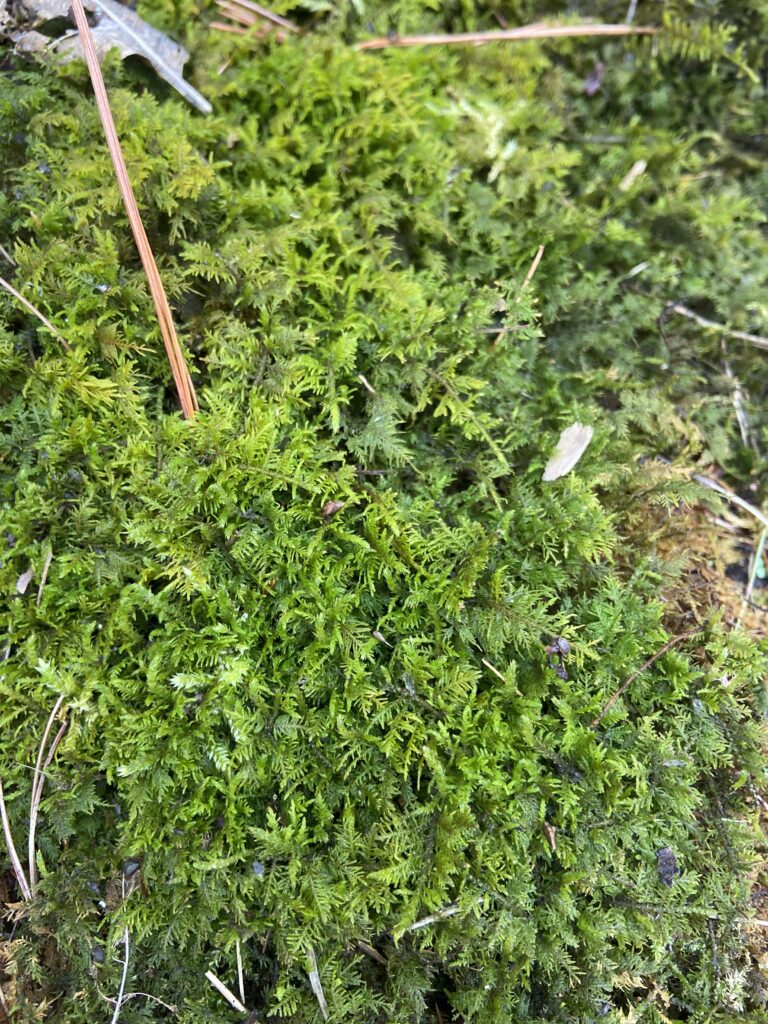
Moss

Honestly I was so surprised that Cape Town had the most people participating and the most observations. I think my mind just never associated the fact that this really was a global thing, and that the top cities were mostly abroad, not in the US. I think that was really cool because it connected us all as environmentalists and having interest groups because we were doing the same challenge, in the same timeframe, with the same app. It was a cool connection for sure.

April – Spring is here

Walking into Centennial woods after two days of rain was an experience that felt incredibly new. The air smelled pure and cleansed, and the new green growth in the forest pushed through thick layers of leaf litter brown sludge. The last time I visited my site snow covered the ground and the small pond was frozen solid. Since then the snow has melted and given way to budding leaflets, new trees and fungus on fallen down roots.

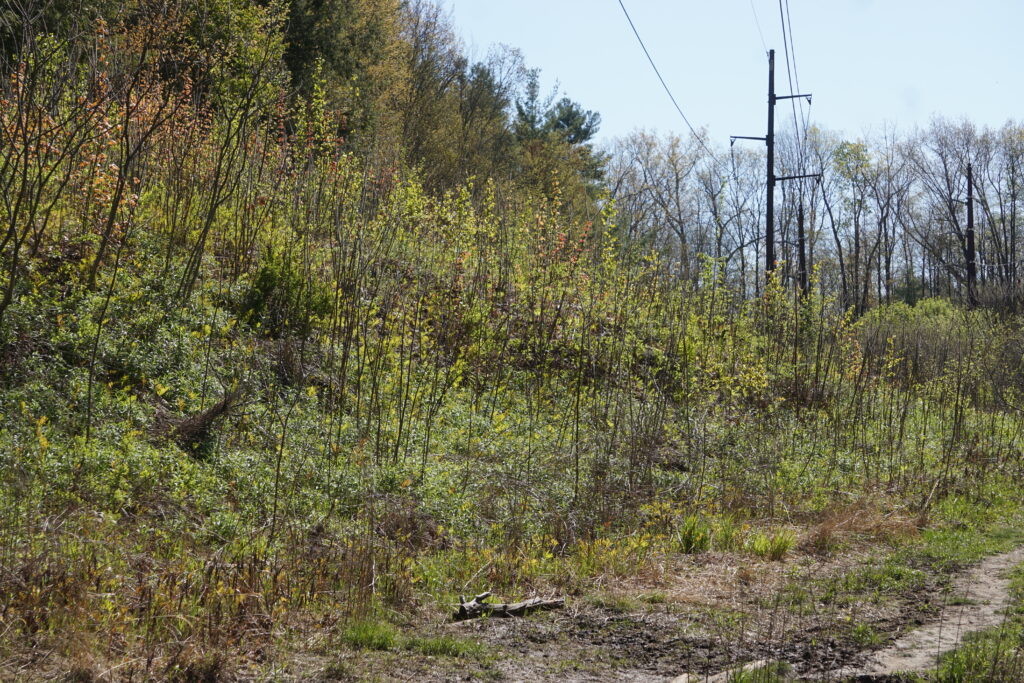
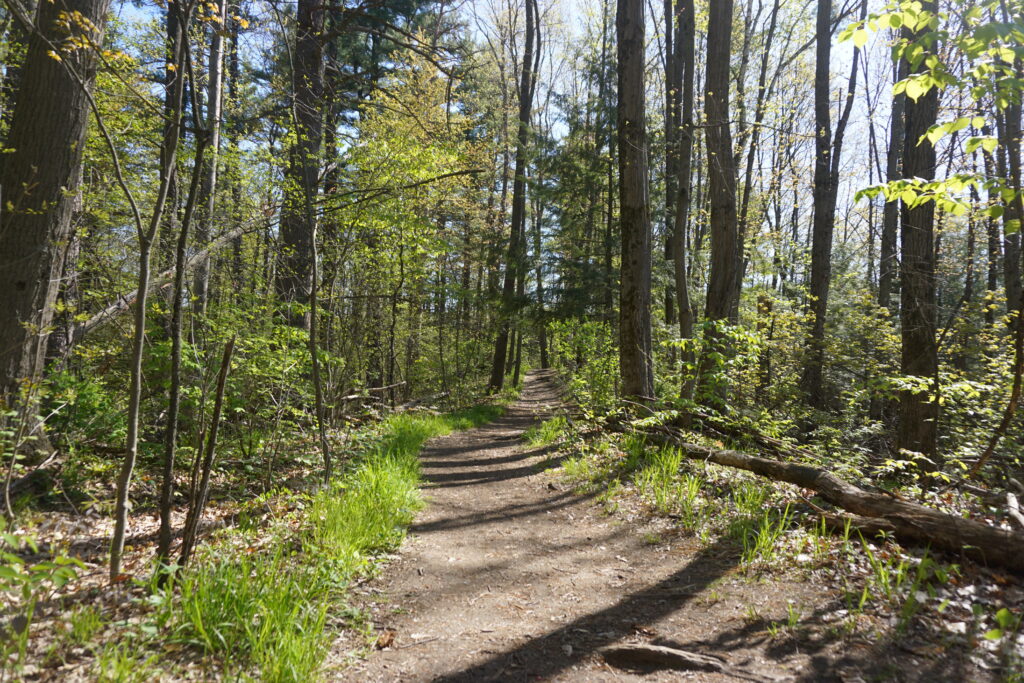
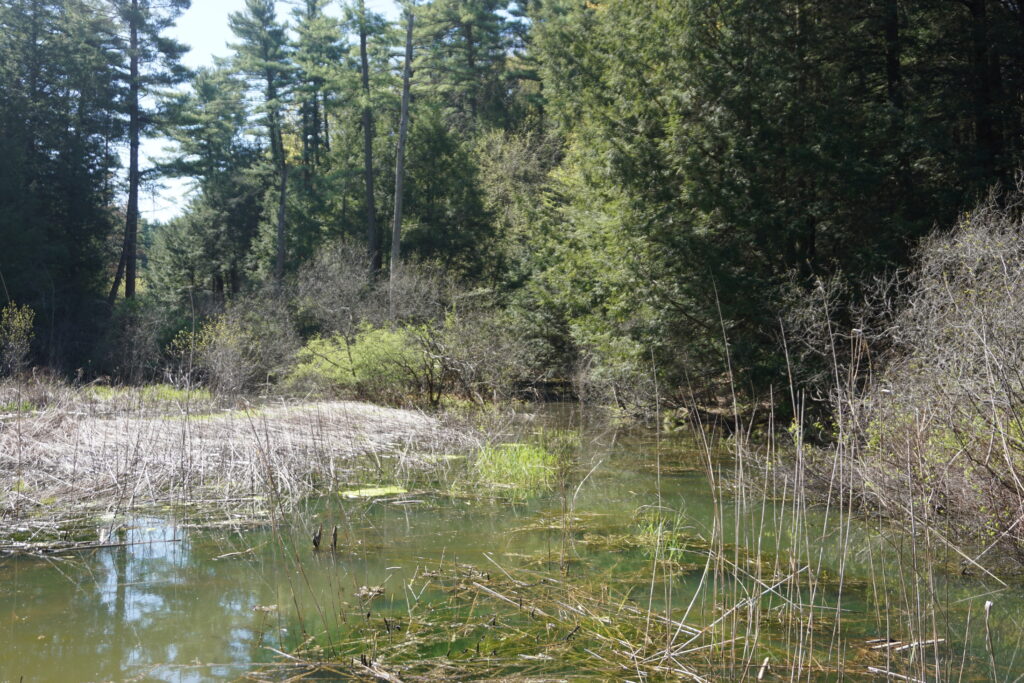
The hike to the beaver dam was scenic, and took me thirty minutes because I got lost twice. I followed game trail after game trail until I realized where I was, then made my way back up to the main trail and to my spot.

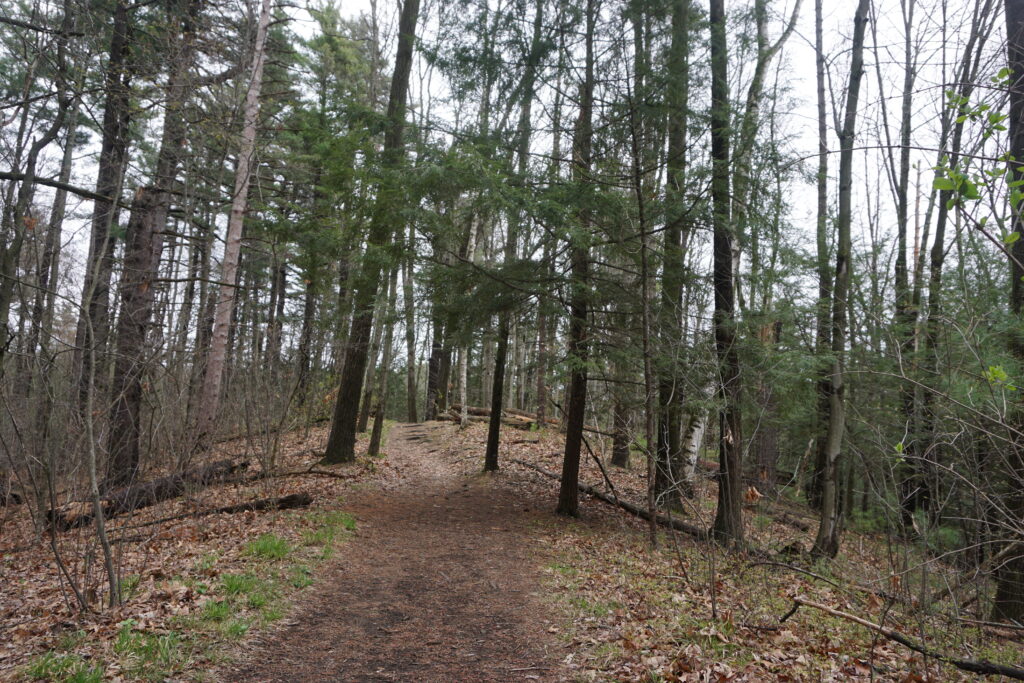
Main Trail leading to the dam – Alanna Duff

On the walk I heard the warbling and songs of a few birds, and held my camera hoping for a glimpse of the source of the sound. Unfortunately I couldn’t find them and moved on.

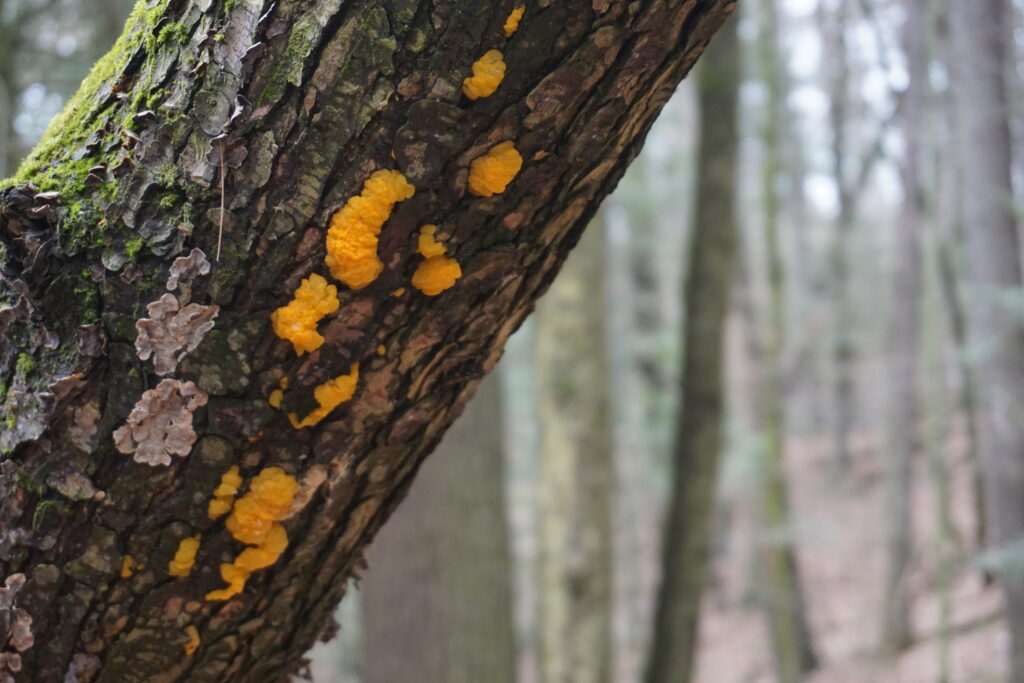
Old trees yielded to new ones, creating the perfect grounds for new life. Fungi grew on rotting logs, and ferns sprouted up from decaying litter on the forest floors. Birds flitted from tree to tree, calling out to neighbors as if to tell them spring is here.

Fungi on a fallen tree – Alanna Duff

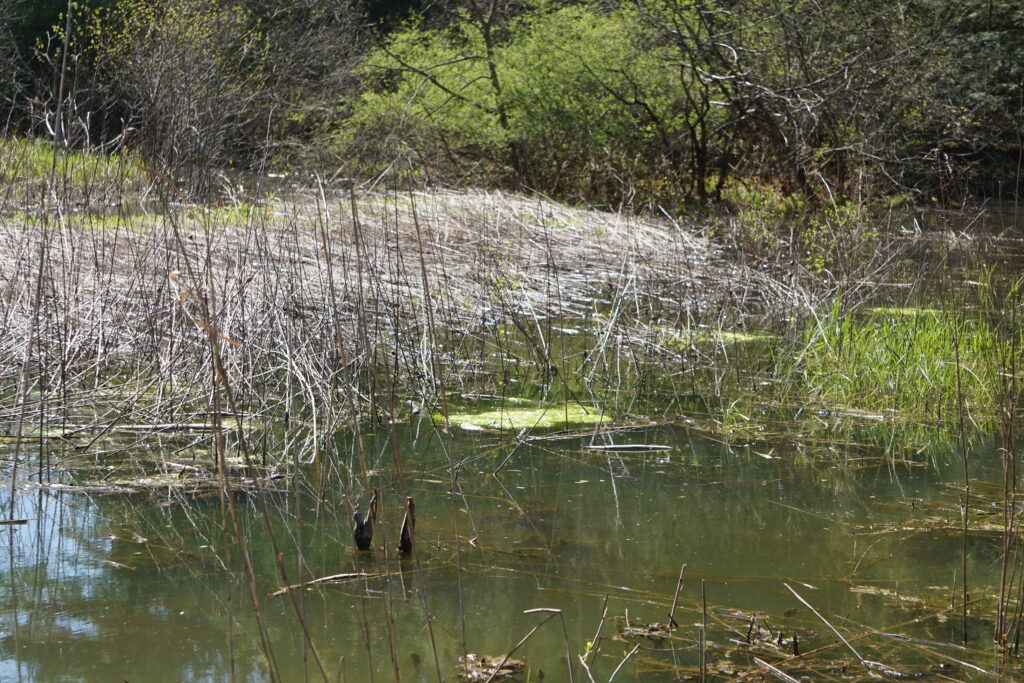
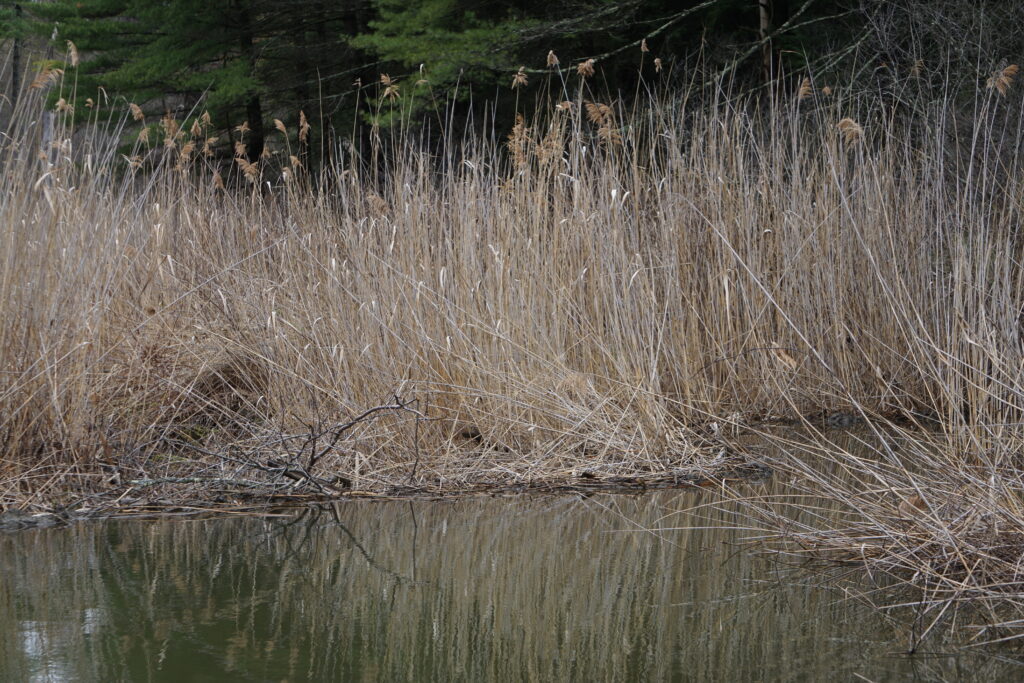
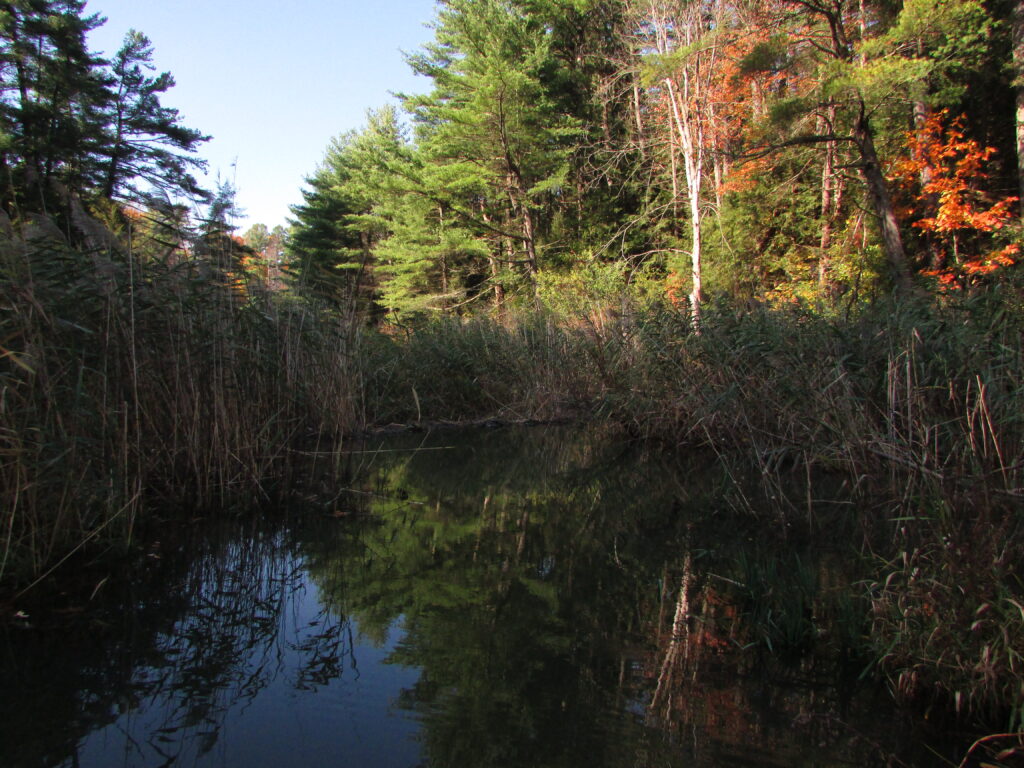
By the time I reached the beaver dam the songbirds had faded into a distance. The pond and unmaintained trail were almost eerily silent. All that could be heard was the trickling of the stream created by the dam. The bridge sunk under my feet, creating little ripples in the pond beneath me. The borders and shore of the pond had swelled with recent rainstorms and snow melt, yet the dam held strong.

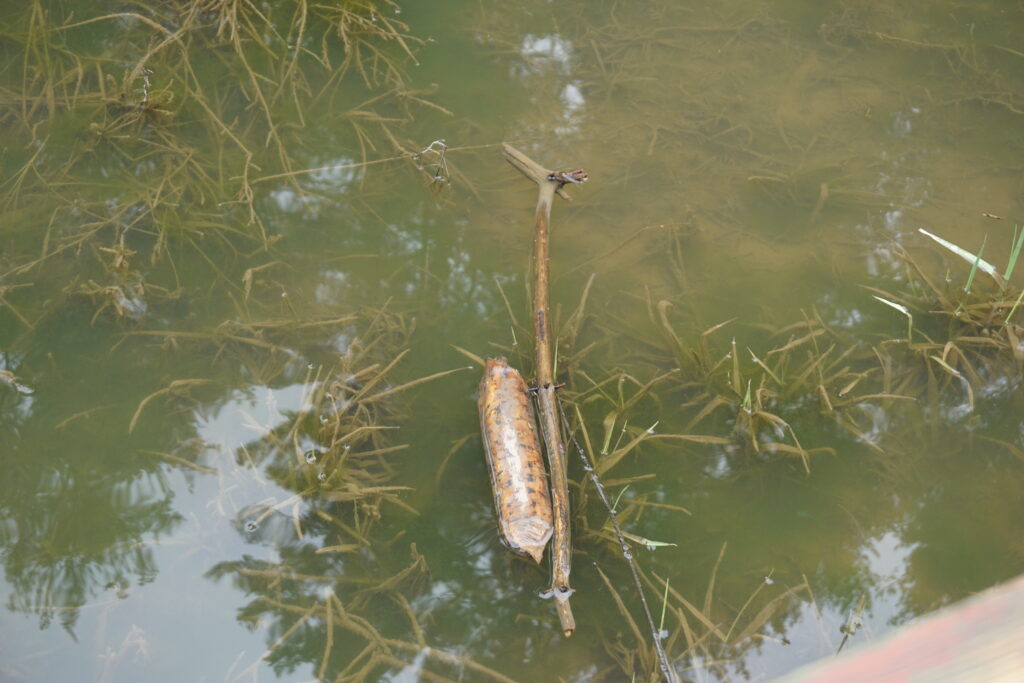
One would think there was no beaver activity with how difficult it is to actually see one, but the maintenance of the dam was clear, and little chewed logs floated on top of the water.

Dogs and other hikers ran past me and I bounced from makeshift bridge to makeshift bridge to make room for them. I hiked up the hill and through thorny branches just trying to get a shot of the dam from the stream side; alas, no luck.

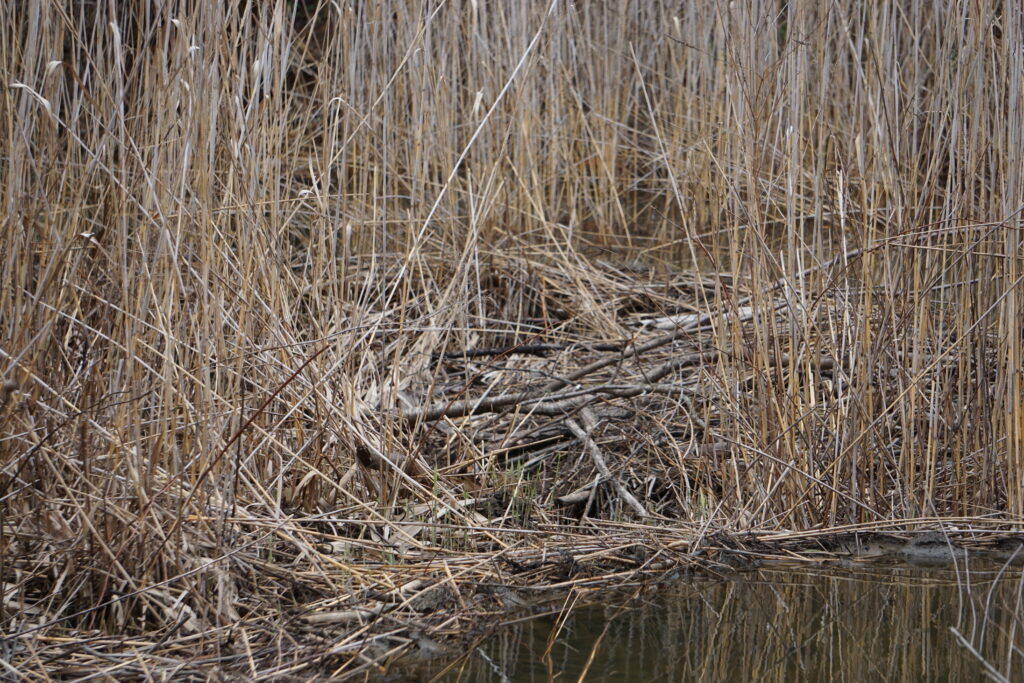
The best shot of the dam I could get 🙁 -Alanna Duff

New green growth on trees surrounding the pond was refreshing. When I say green is my favorite color, spring demonstrates why. In one square foot of forest you can see at least five shades of green, and each offers a different depth and perception of the world.

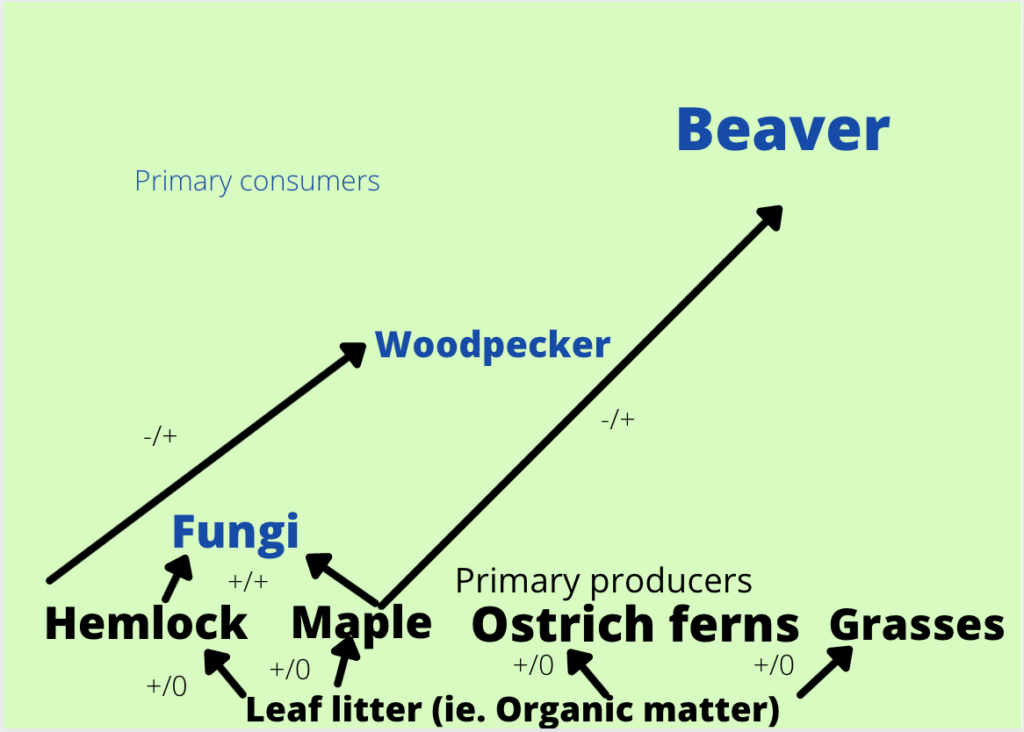
Basic Trophic Pyramid – Alanna Duff

On my hike back I heard a woodpecker in the treetops above me, which was certainly an exciting sound. I’m eager to see further activity from the beavers and other species in my next visits. Maybe before I go home I’ll see a beaver.

March, Spring is coming

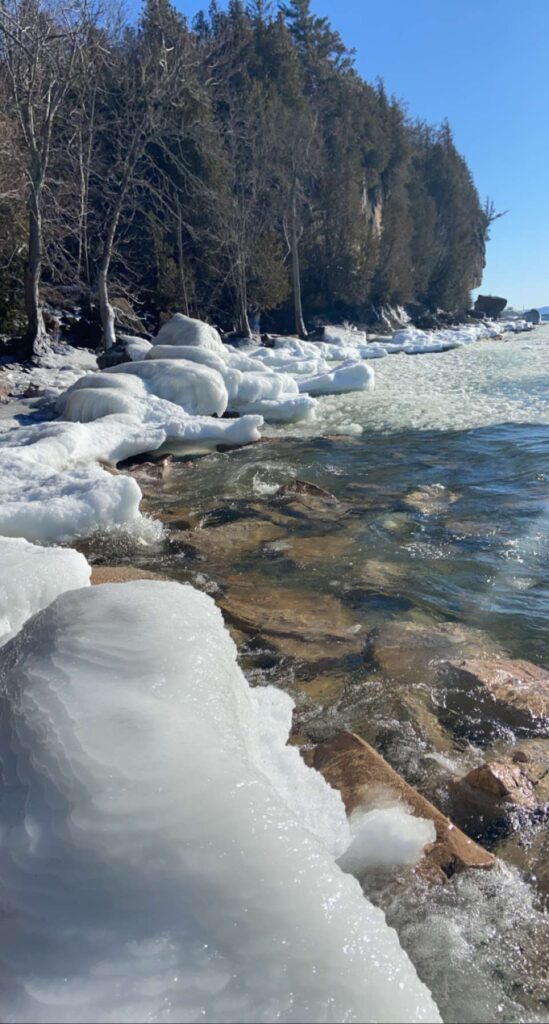
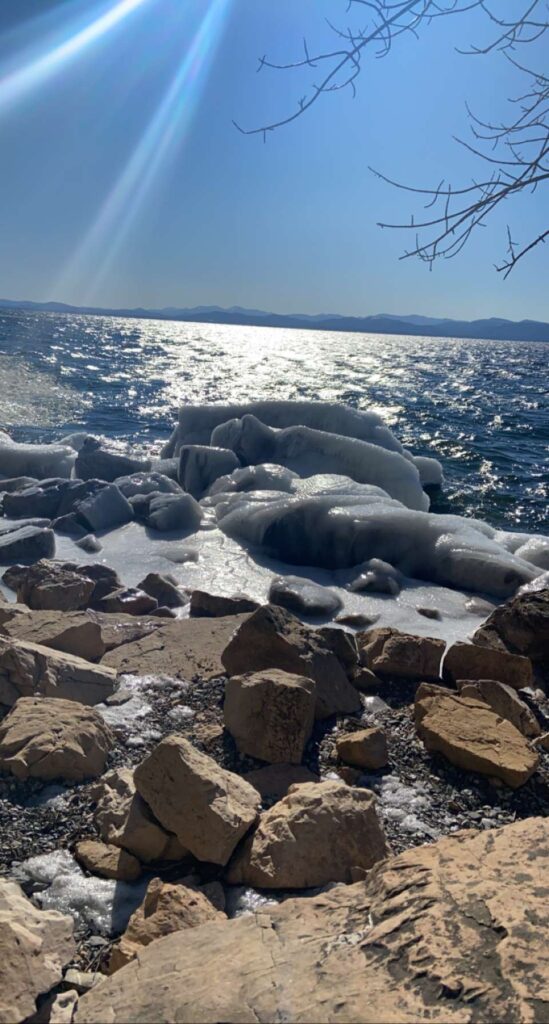
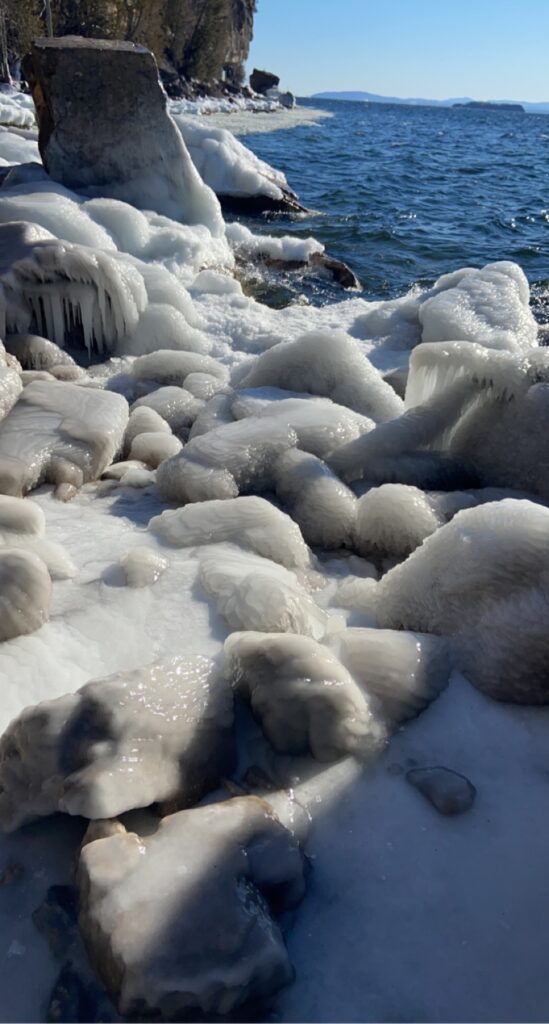
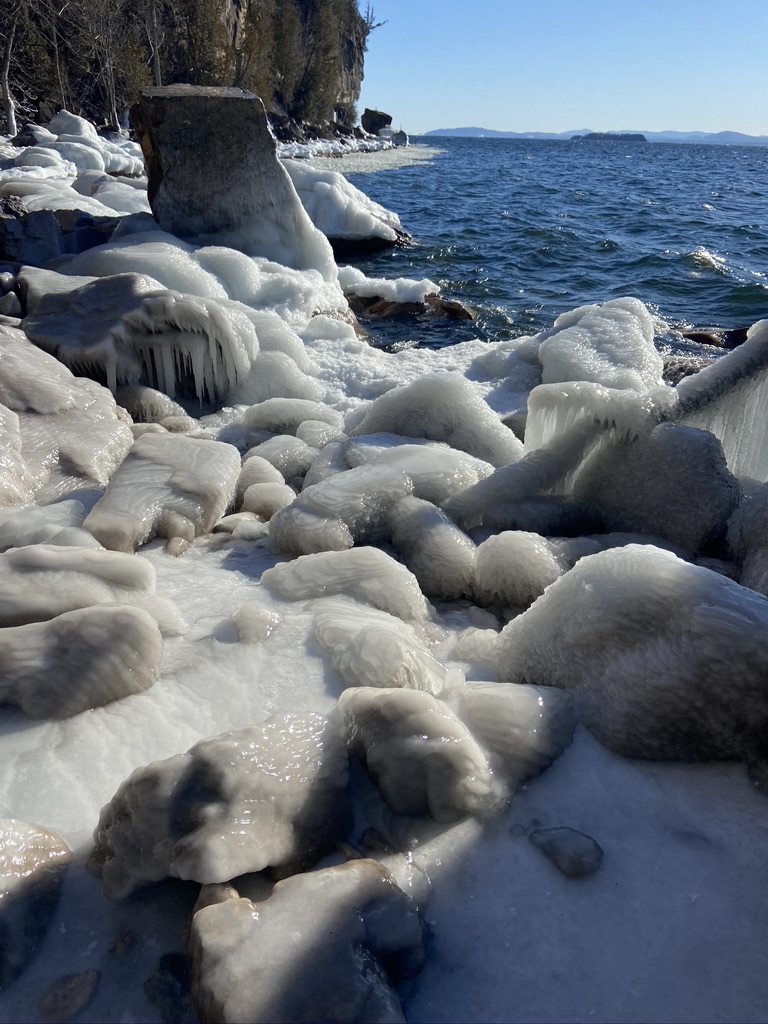
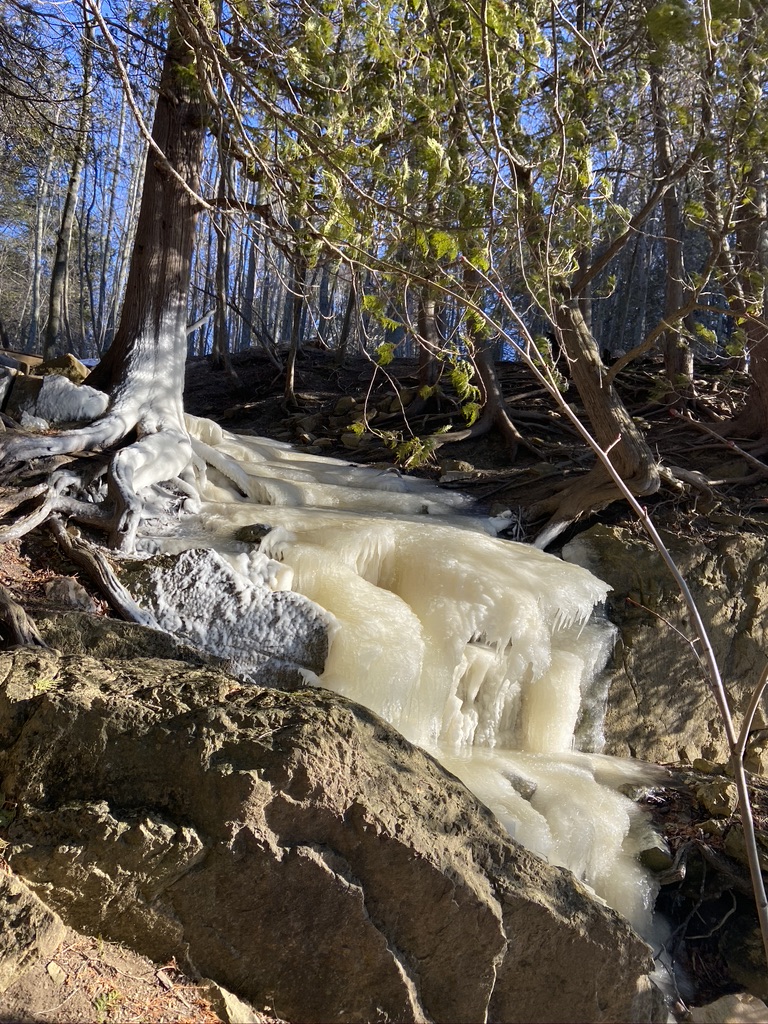
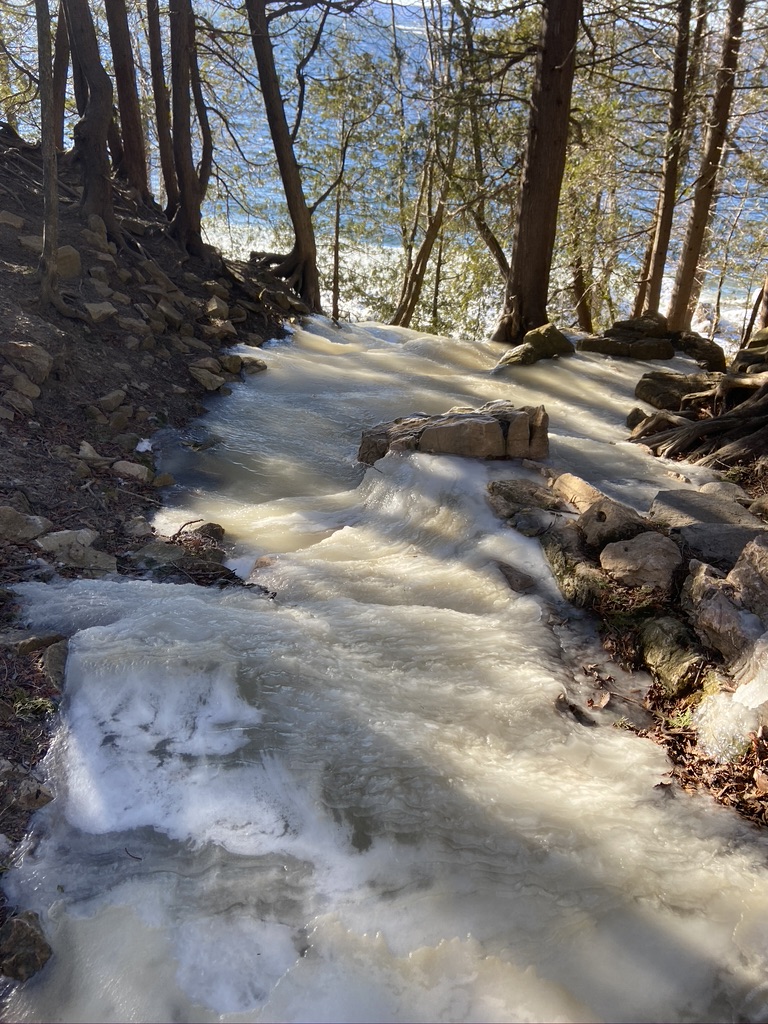
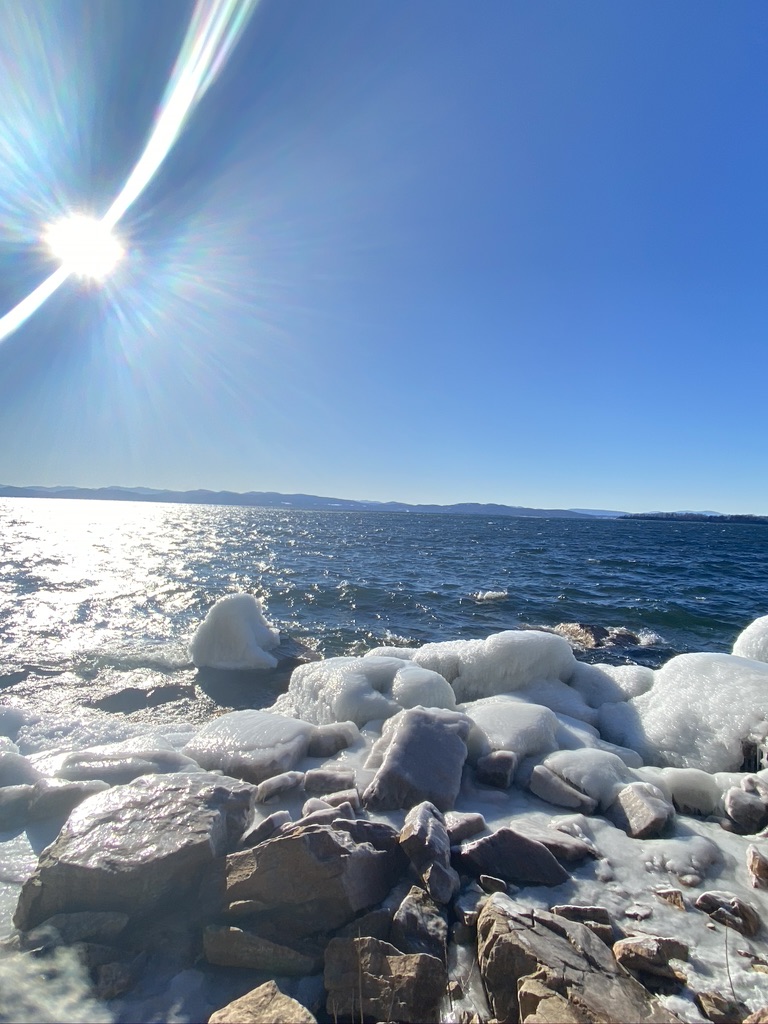
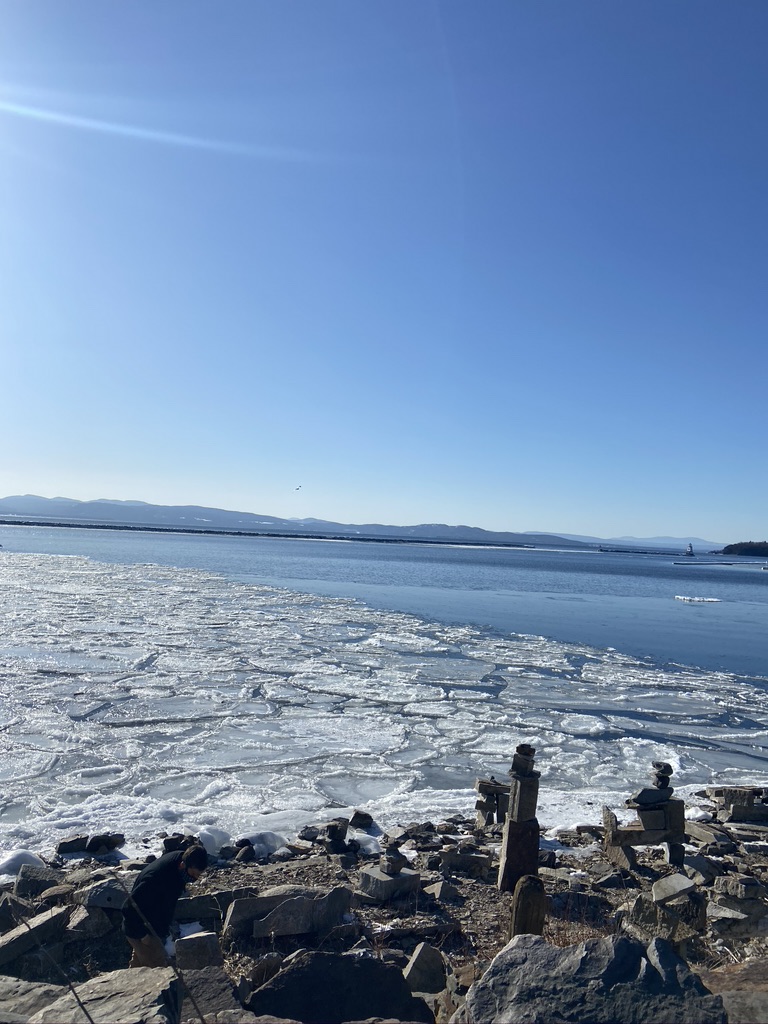
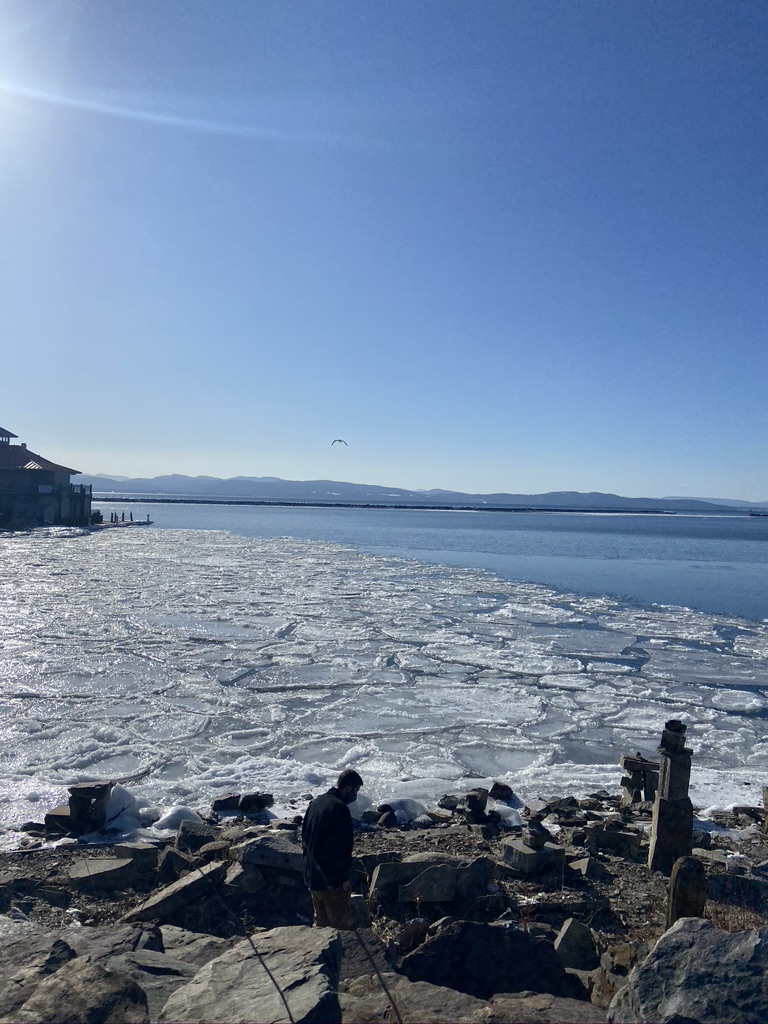
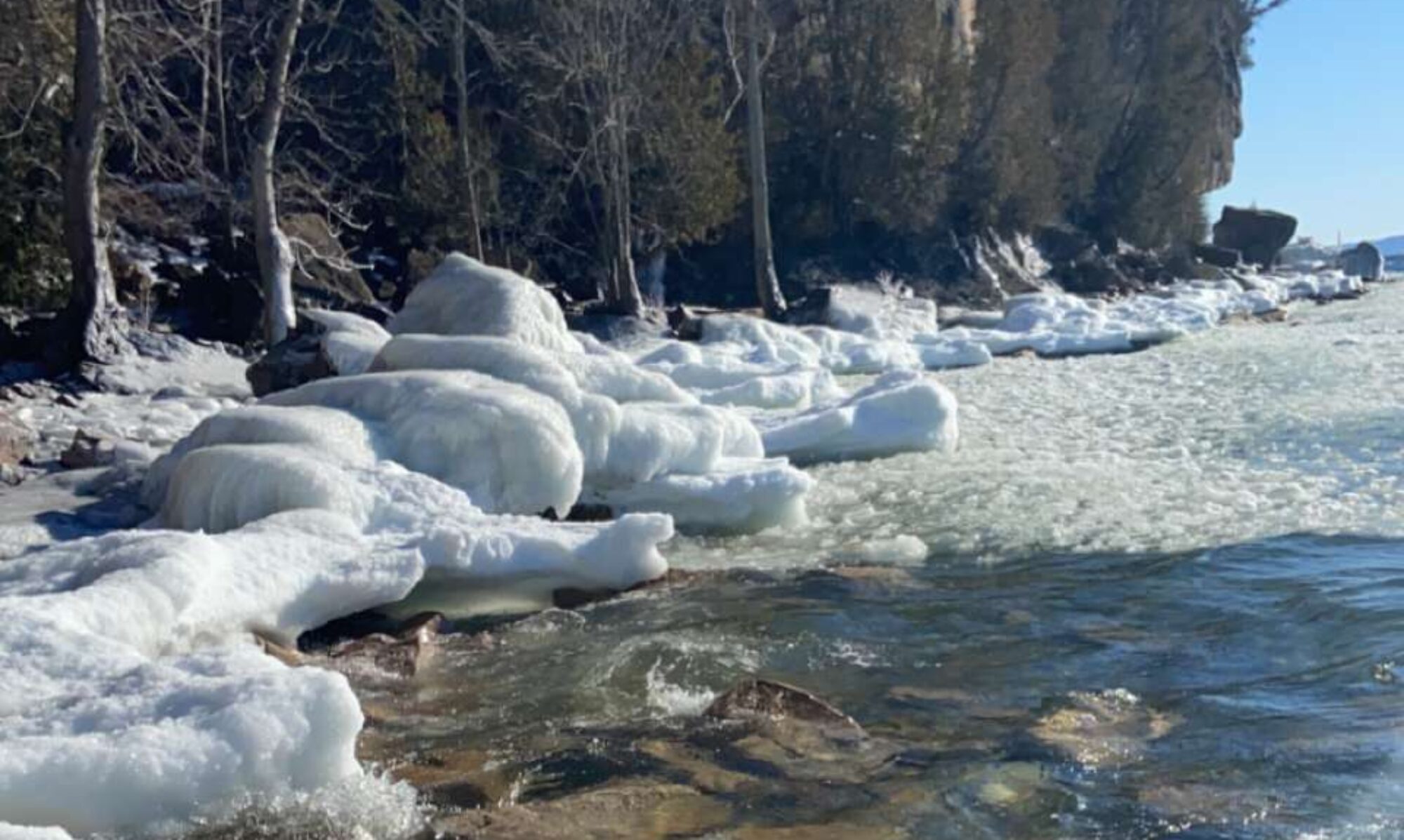
This week I actually went out twice. On the Tuesday we had off I hiked back down to the Champlain Thrust Fault. I parked my car by the school and hiked through Rock Point and down waterfront. I’m proud to say I didn’t slip and fall despite the heavy ice cover all along the trail. The closer I got to the waterfront the thicker the ice was. The stone steps were covered in a 2-4 inch layer of ice.

The hike was so worth it. Before got on the trail that leads to the Thrust Fault, I heard birds on the trail. It actually scared me at first, but it was comforting because it meant spring was coming. The amount of snow melt made it difficult to find any animals tracks, especially since the snow was mostly ice now. But the birds were the most prominent sign that spring is on its way.

I encountered three other people while hiking. Two boys were leaving the fault as I arrived, and one man came and went on an opposing trail.

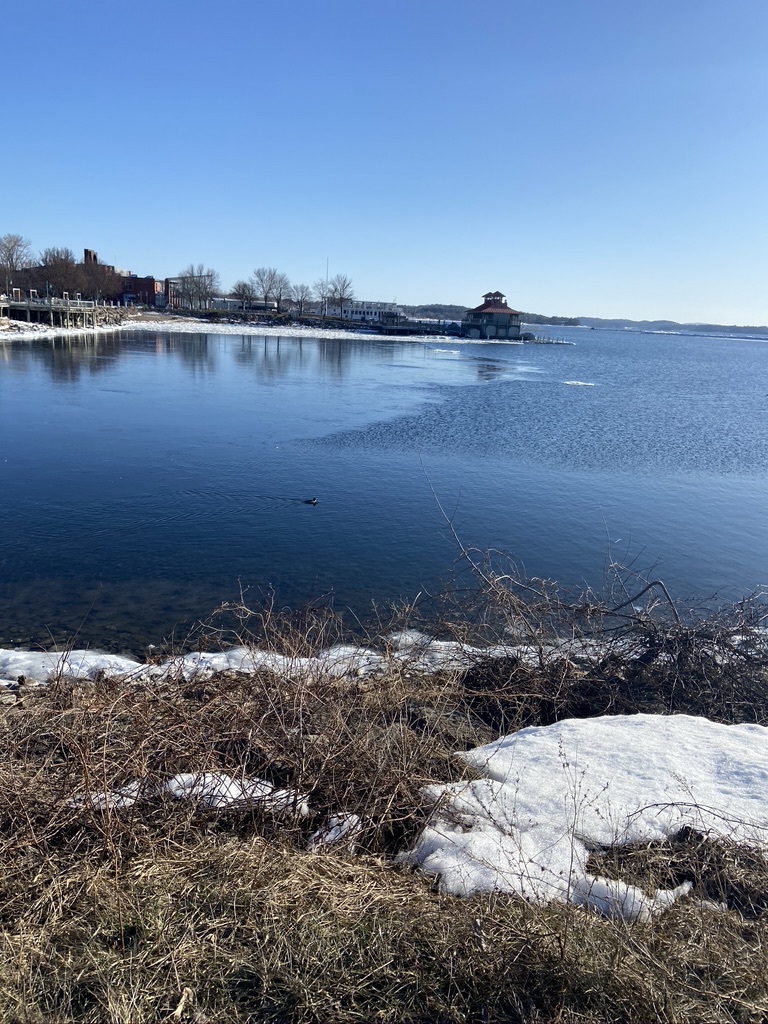
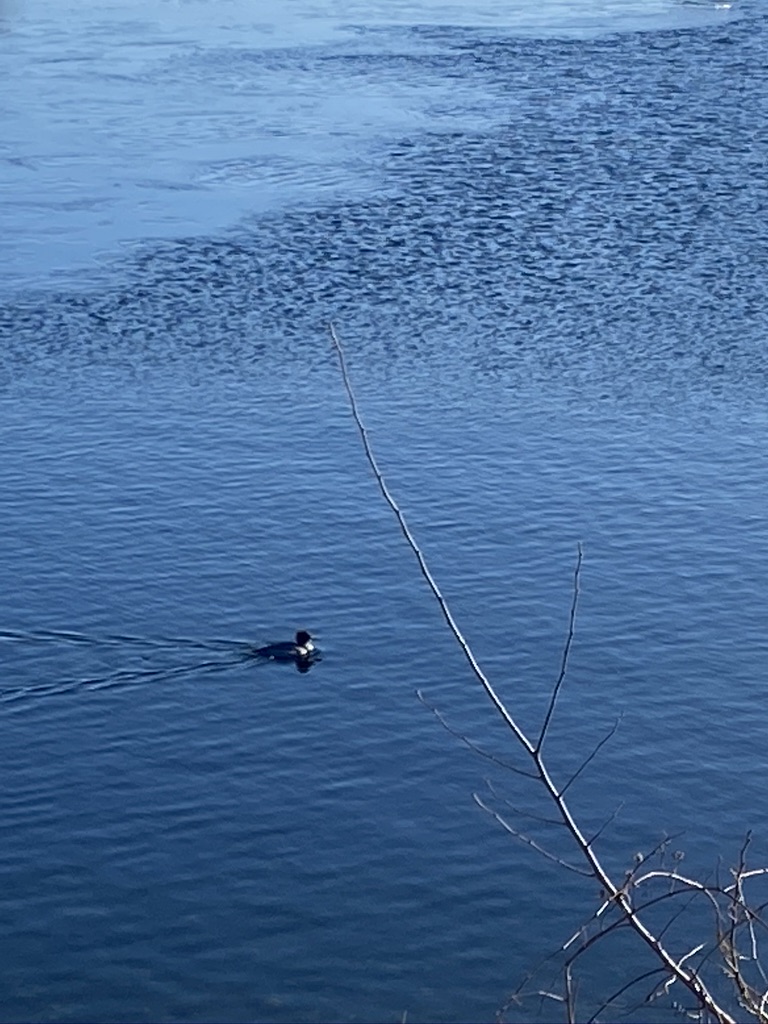
To specifically do my project this week I went for a walk by the waterfront of Lake Champlain. I saw ducks and passed many people. The park was packed! The skate park was buzzing with life, each bench filled with a pair, many people walking. It felt like spring despite the cold. It was nice to see so much life.

Me and my friend walked along the path and climbed over some cement blocks, enjoying the outdoors for a bit. We didn’t hear any birds, but it was wonderful seeing the ducks in the icy water. The most telltale sign of spring was the sunny weather, and all of the people in the park. It felt like hope.

Back Again! February 5 2021

I returned to campus in late January and was ecstatic to see the snow. Coming from Pennsylvania, seeing this much snow on the ground was incredibly exciting. I’m not entirely sure what I expected, but I was still blown away. Being back on campus gives me an incredible sense of calm. I struggle at home simply because my state is constantly shut down. I missed my friends, and most of all I missed the mountains. It’s strange going from being able to see them from my window, to only seeing houses.

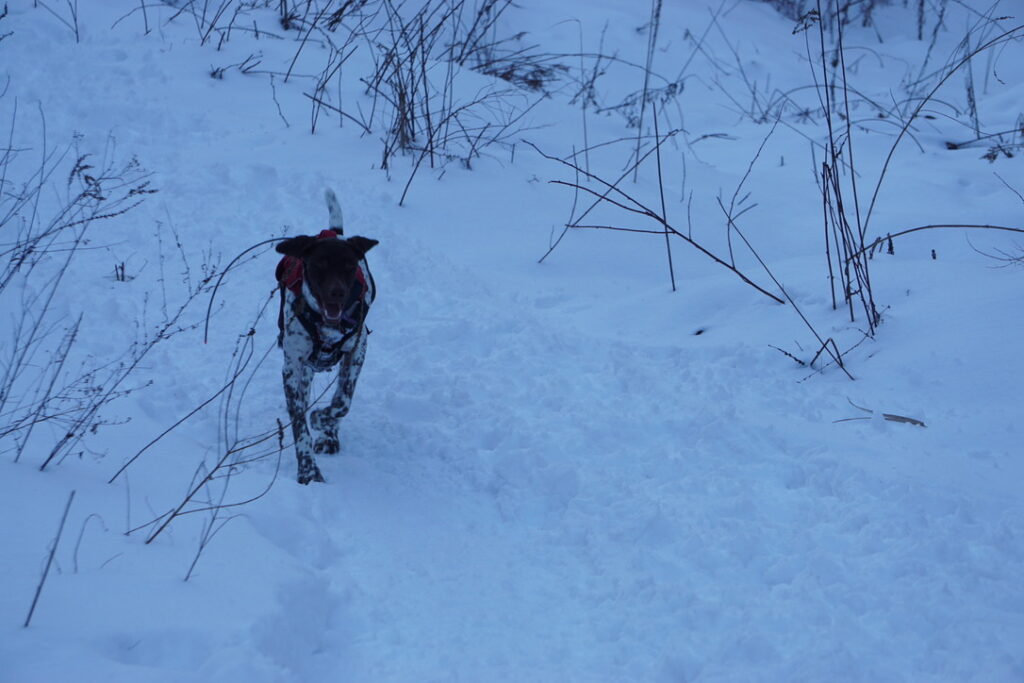
I returned to the same Phenology spot I left; the Beaver dam in Centennial Woods. I’m not sure what I expected, but I was a little disappointed. I almost got lost trying to find it, especially since everything looked so different. I’m not surprised I was unable to find any sign of the beavers’ activity, especially considering the fact that the pond is frozen over. This allowed me to walk far enough out to pick up the trash some hikers left. I also found signs of dogs enjoying the new access, and even met a few dogs.

A new friend enjoying the snow with us -Alanna D

Most plant life around my phenology spot consisted of woody grasses, which means the beaver dam is very exposed now. The pond is frozen enough that I was able to walk across it, which was a new experience for me. Unfortunately I was unable to find any signs of beaver presence other than the dam itself.

The trees, especially the Oak, no longer have leaves. Frankly the view, while beautiful, was serene. It made me miss the fall foliage for sure.

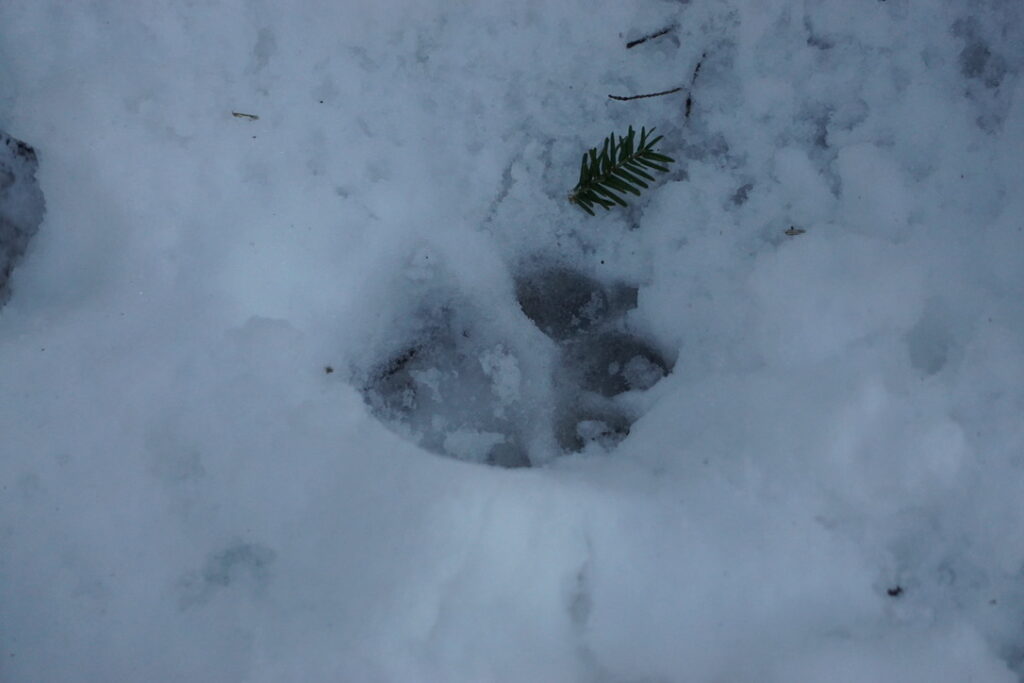
Footprint of a dog on the trail – Alanna Duff
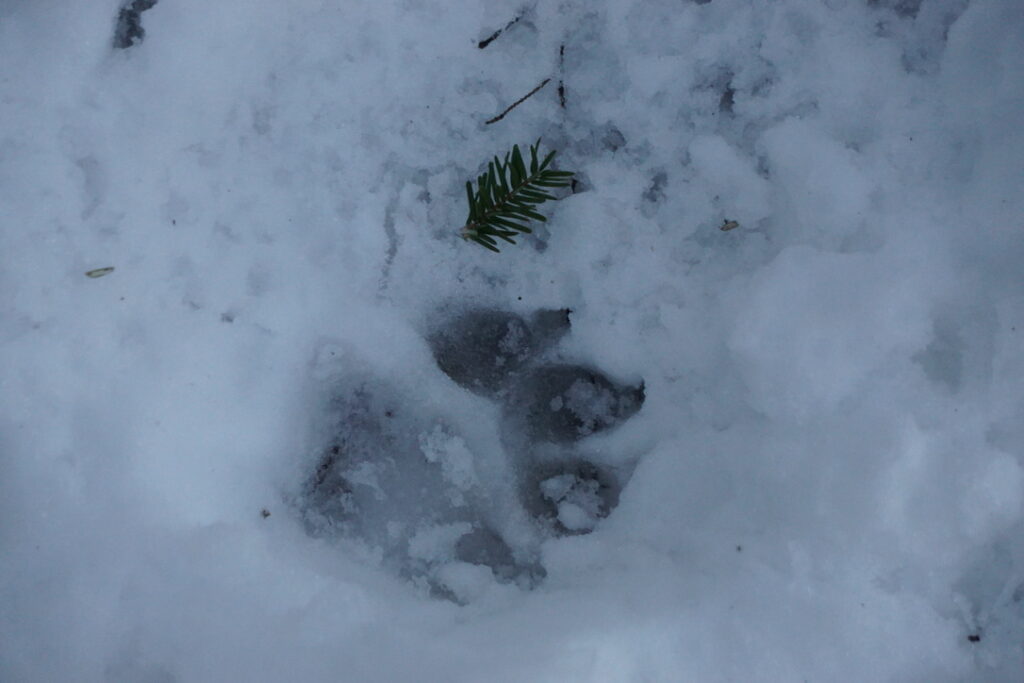
Another dog footprint
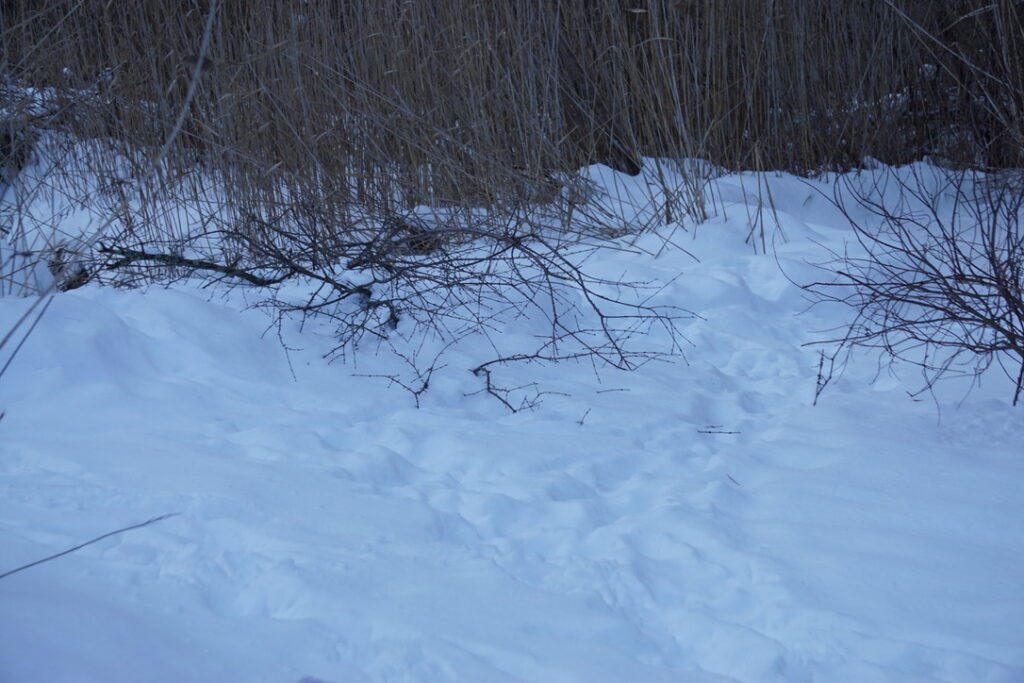
The beaver dam covered in snow, and boot/animal tracks around it – Alanna Duff
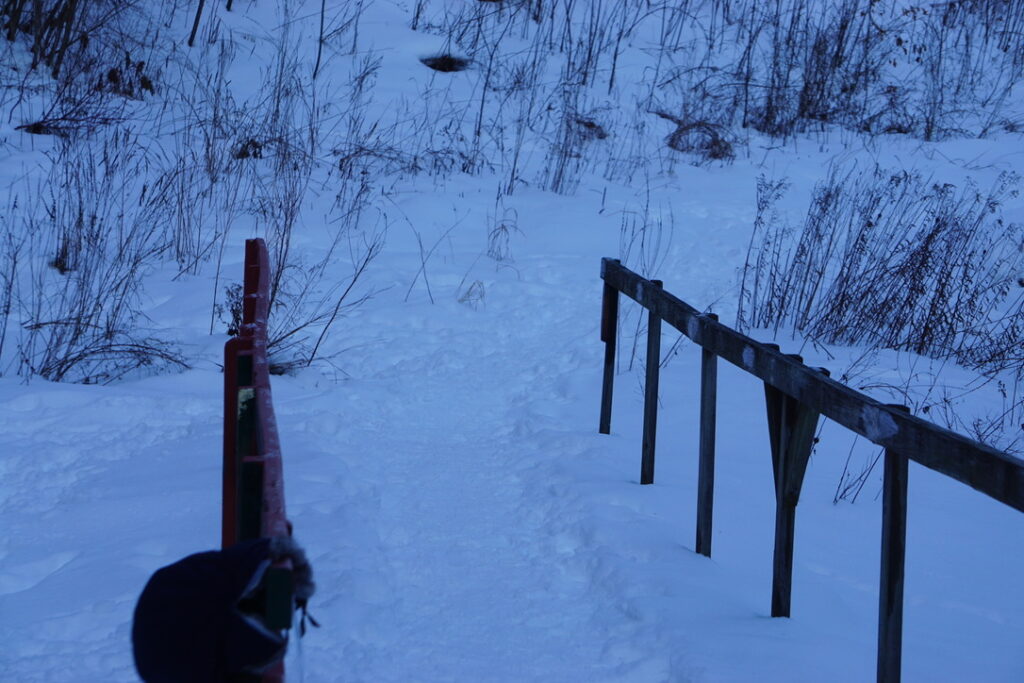
The path and red bridge, snow packed by boots and hikers – Alanna Duff
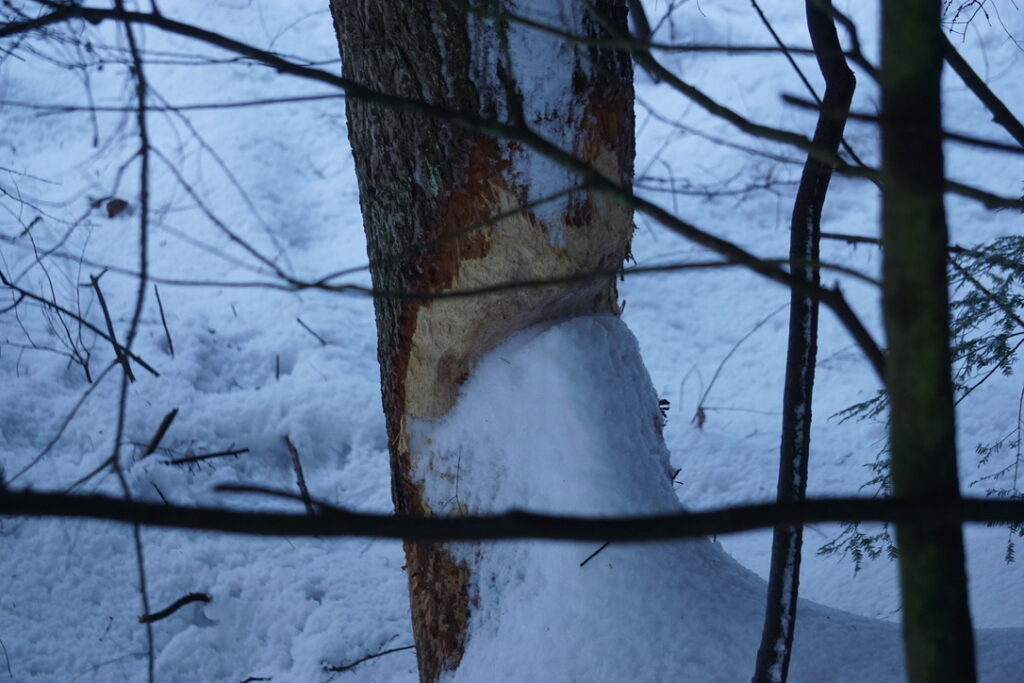
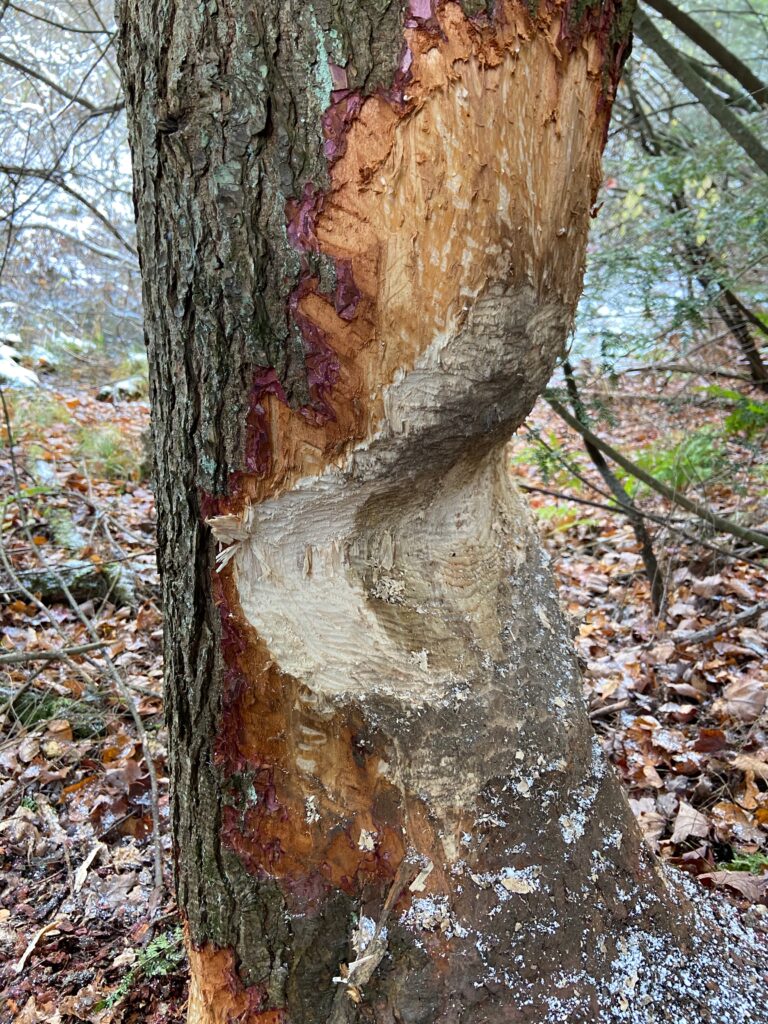
Beaver gnawed tree filled with snow -Alanna Duff

Final Phenology Blog Post

This semester has been unusual to say the least. From COVID to a death in family and having to travel back home mid-semester, it’s easy to say that it could have been easier for me. But I am so incredibly grateful to have been able to attend school in person this semester. Learning about the history of the land, and being in person for lectures was the highlight of my year.

Learning about the land use history of the Centennial woods was fascinating. When the forests were old growth, the Abenaki used the land as their homes. In the height of land clearing, cattle and sheep grazed the woods. Walking through the woods today you can see remnants of barbed wire from cows moving through the trees, old stone walls to corral sheep, and concrete walls from old ROTC bunkers. The forest had a complex history. In an attempt to conserve this natural biosphere, UVM bought parts of the woods throughout the 1970’s. Now we have the incredible woods we see today.1

Today, the land is used for education, recreation, and conservation. There are bridges and footpaths throughout it to create a place to hike and relax, as well as markers for trees for us to study.

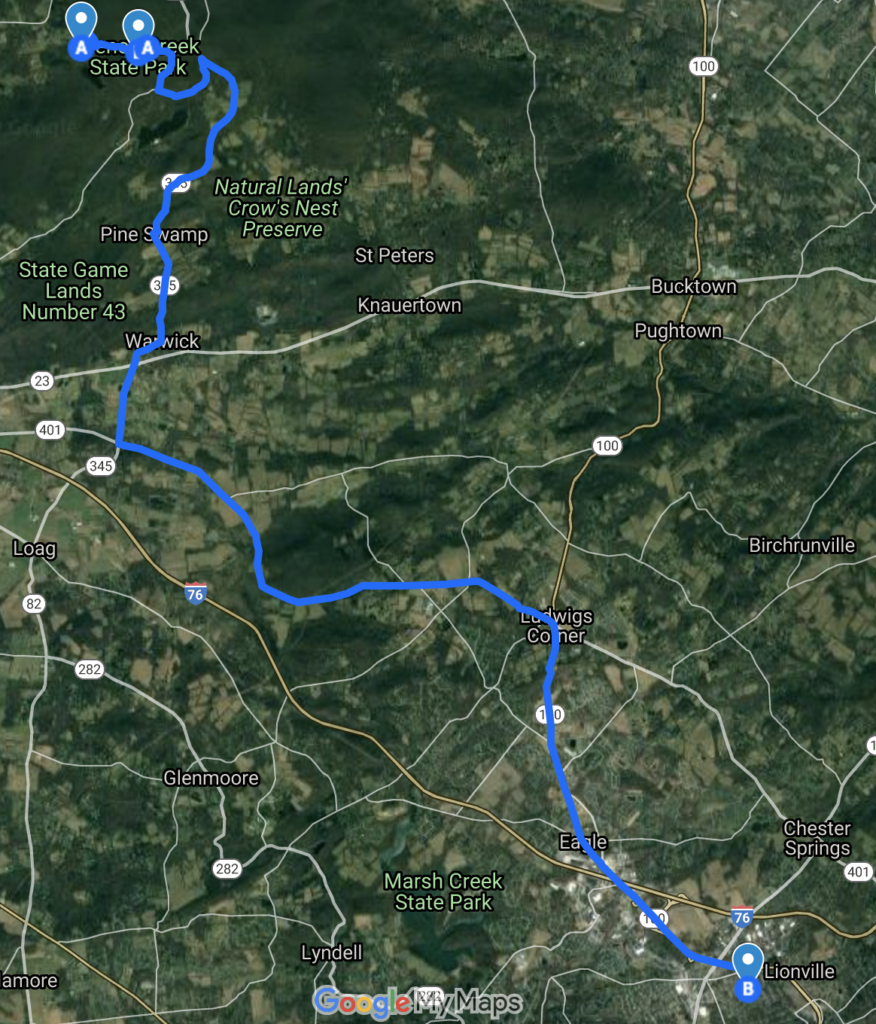
The Centennial woods are similar to French Creek here in PA. French Creek was close to Hopewell furnace, where trees were cleared to burn for charcoal. Much of the trees in French Creek grew after the height of deforestation. Today, the park is recreation based, and shows many remnants of the old land use.2

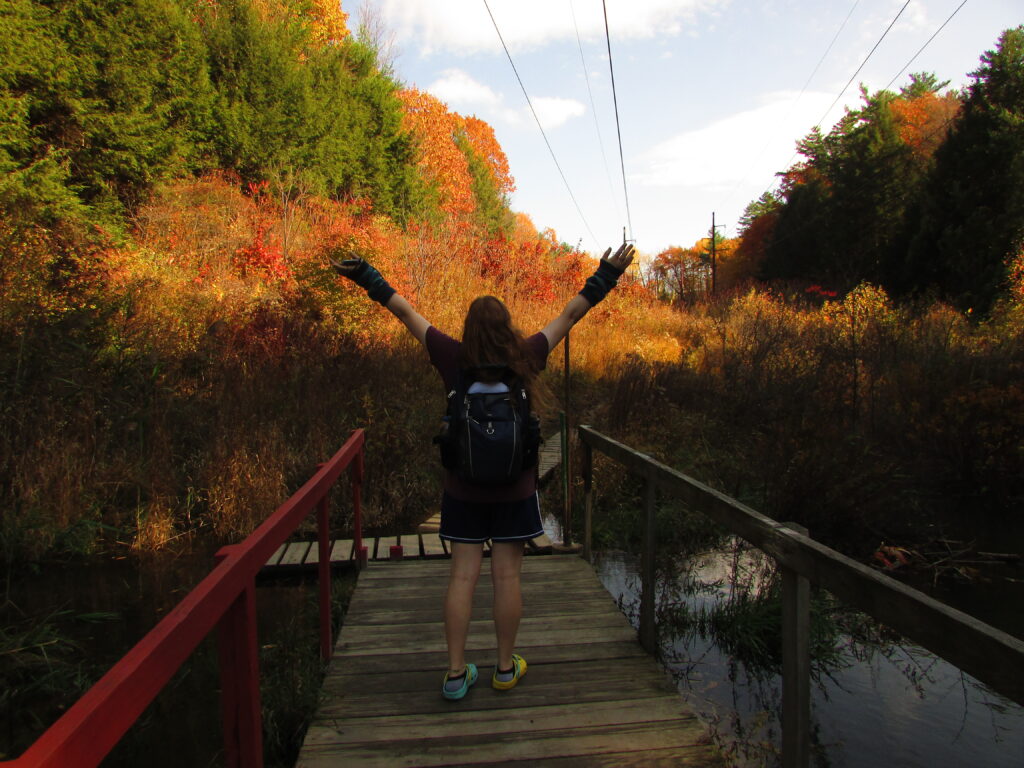
Laura appreciating the sky [Personal photograph taken in Centennial Woods]. (2020, October 23).

Citations

  1. Poleman, W., & Brooks, C. (2020). NR 001 Lectures. Lecture.
  2. 2. French Creek State Park. (2020, January 06). Retrieved December 05, 2020, from https://en.wikipedia.org/wiki/French_Creek_State_Park

Phenology Spot November 29th

Being home in Pennsylvania is weird to me. I left Burlington when it was 29 degrees and snowing. When I arrived in Pennsylvania, it was almost 60 degrees. I looked really out of place in my hat and sweatshirt, mostly since I had spent the entire time in my car.

When you move states and go south, it’s certainly a different experience. In Eastern PA, the mountains run into the ground until you get a hilly but mostly flat area. It’s strange looking out my window and not seeing mountains anymore.

But the comforts of Vermont are still there. We have Red and White Oak and old-growth forests and cover our state parks. I drove to French Creek State Park this weekend for my phenology spot here in Pennsylvania. My family and I went on a 3.3 Mile hike during the cold morning to refresh our minds and so I could find my Phenology spot.

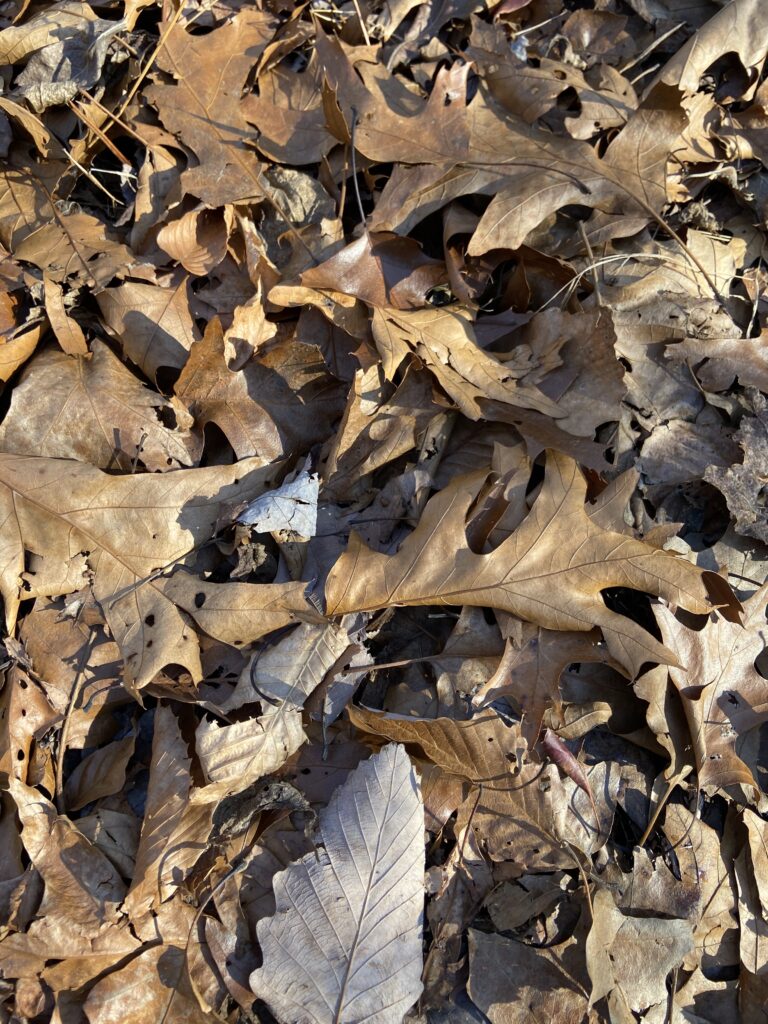
Late fall in PA looks about the same as it does anywhere else. Leaves coat the ground, and you really can’t tell the trees from each other just from the bark. But looking in the piles of leaves, I found some familiar faces. Leaves of both Red and White Oaks coated the ground and leaves from the American Beech trees. This forest seemed to be primarily covered in Beech and Red/White Oak trees. These species show that my home forests are Late Successional and old-growth forests, at least at French Creek. There is very little understory, save a few new trees and some ferns in more moist areas.

Leaves from Red Oak and American Beech Trees [Personal photograph taken in French Creek State Park]. (2020, November 29)

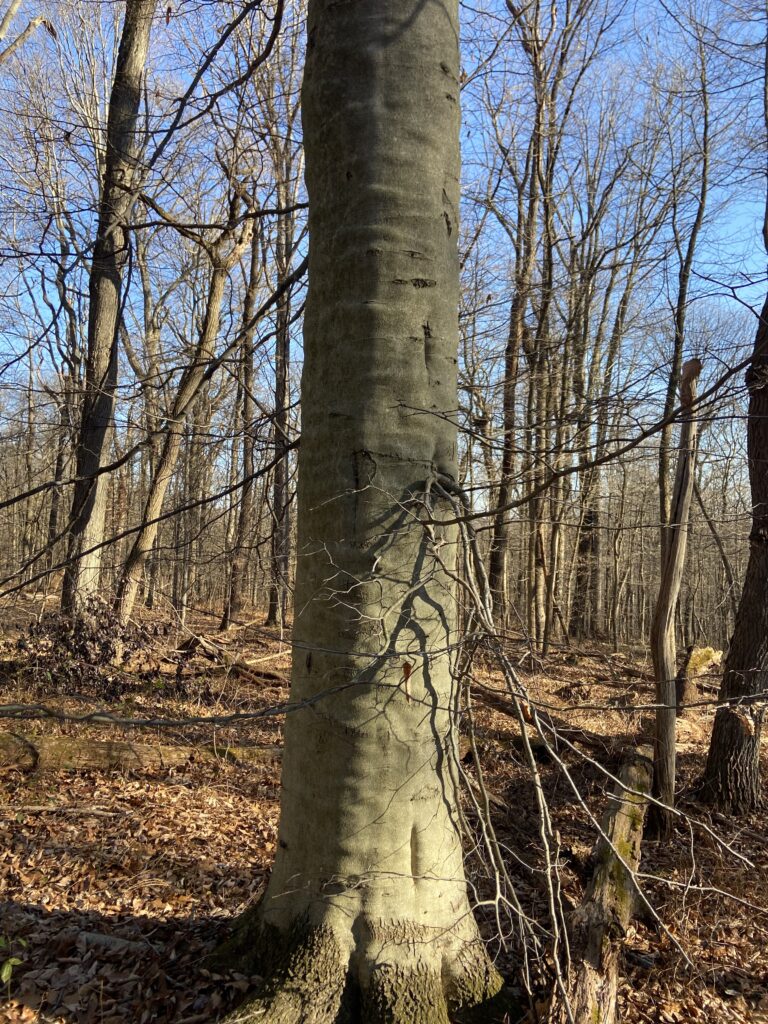
It was certainly strange to see giant American beech trees. The Centennial Woods in Burlington have American Beech, but not as massive as the ones I saw at French Creek.

American Beech [Personal photograph taken in French Creek State Park]. (2020, November 29)

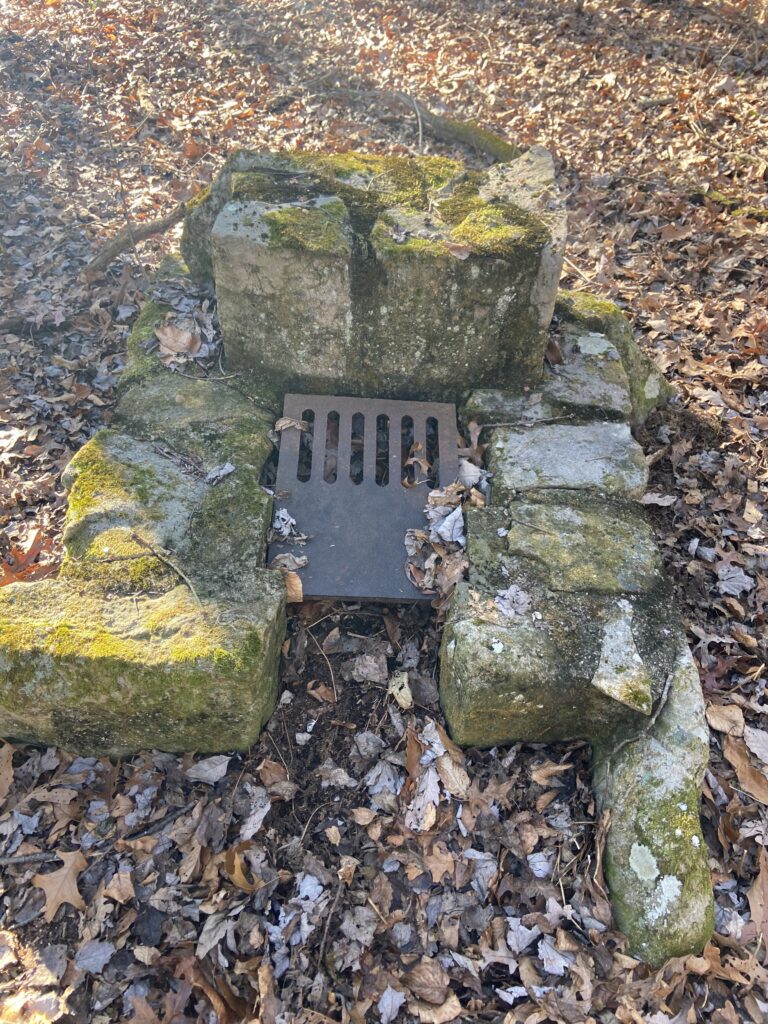
I also looked for pieces of land use. I already knew it was a large recreation and hunting area. We even saw hunters going into the woods as we drove out, but I wanted to know what else there was. I saw abandoned furnaces, stone walls that have mostly eroded away, and ditches that we walked in on my hike. The furnaces have an easily explained history. French Creek is very close to Hopewell Furnace, so some furnaces’ appearance in these woods is not uncommon. The stone wall ran alongside the trail. It could have been for livestock grazing or merely a trail marker. Trees like the American Chestnut dominated this forest until the 1700s, when they were cleared to be burned in furnaces to create charcoal. Today, the woods are second growth.1

Furnace [Personal photograph taken in French Creek State Park]. (2020, November 29).

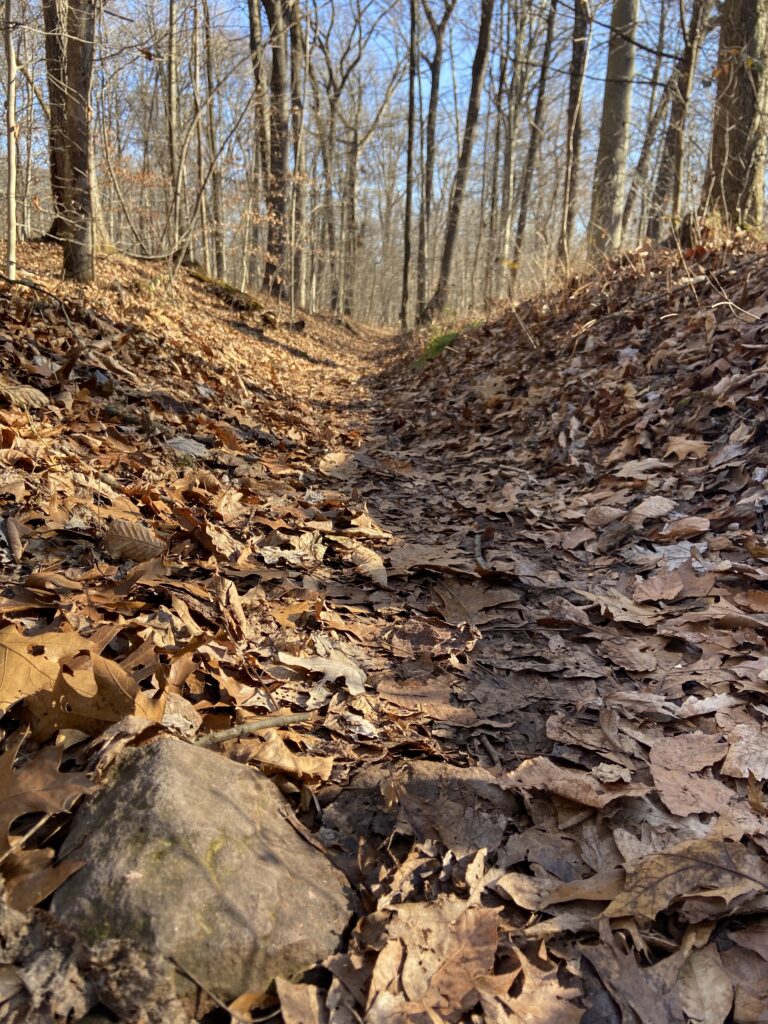
The last land-use I saw was a large ditch we walked in for about twenty minutes. I noticed that the sharp sides of it were indeed not a sign of erosion only. I don’t think the ditch was from water drainage but rather from old roads used for trail repair.

Old trail? [Personal photograph taken in French Creek State Park]. (2020, November 29).

It was almost difficult to choose a spot for my phenology blog back home. Few Natural areas around my house don’t require a 20-minute drive. I think that’s one of the things I miss most about Burlington. Thankfully, French Creek has a rich history that really helps me tie together Pieces, Patterns, and Processes.
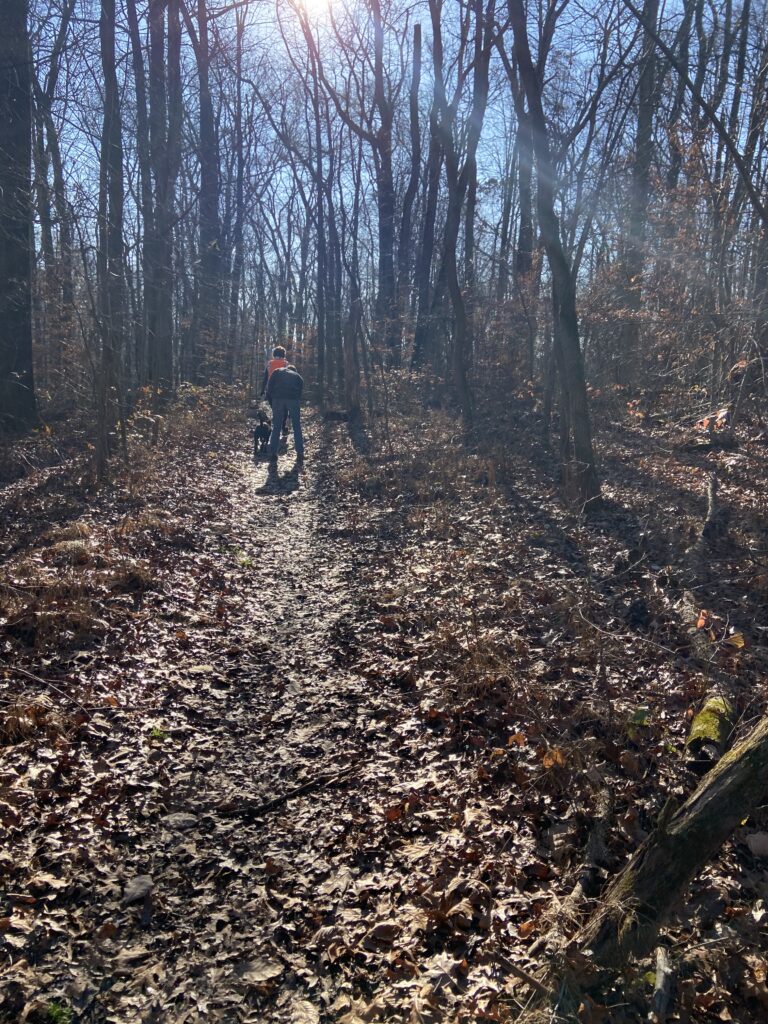
JoJo and Dad [Personal photograph taken in French Creek State Park]. (2020, November 29).

Citations

  1. French Creek State Park. (2020, January 06). Retrieved December 05, 2020, from https://en.wikipedia.org/wiki/French_Creek_State_Park

Phenology Spot November 3

This week I was lucky enough to see my spot in the snow. The pond had slushed over, and you could touch the surface and watch the water jiggle. I didn’t see any new progress on the dam, but the oak tree had no more leaves, and the foliage was quickly dying. Usually, this time of year makes me sad, but something about being in Vermont made this feel happy. I haven’t seen real snow since 2018, primarily snow that I could pack into snowballs.

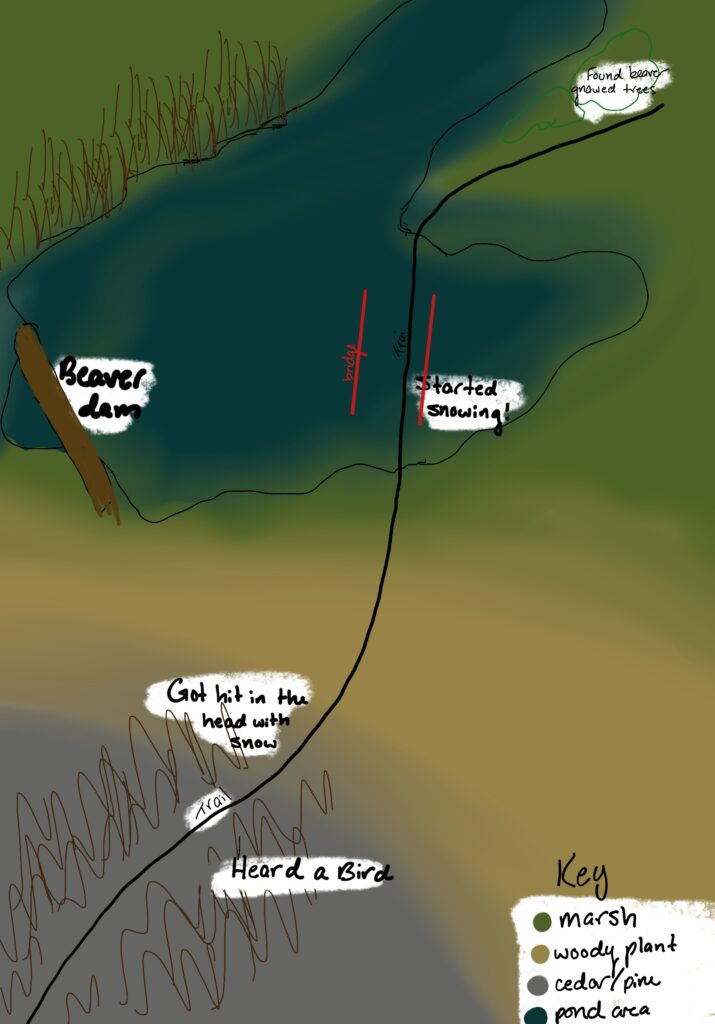
I went with two friends to my spot and really enjoyed throwing snowballs at them. I even called my mom and brother to show them the snow. And as I did that, it started snowing again. Such a simple thing brought momentary joy into my life, and I was so happy to see it.

Since I last visited my spot, much of the foliage had died, and the pond itself had significantly expanded. Melting snow and rainfall made the beaver dam more effective and created a marshy area. I hiked further than I usually did and found a few trees that had obviously very recently been chewed on by a beaver. This was really great because I was able to see that the beavers were still active in this area and not scared off by the hikers on the trail.

Event Map- November 3rd

Photo Gallery

Phenology Spot- October 23rd

Beaver Dam [Personal photograph taken in Centennial Woods]. (2020, October 23).

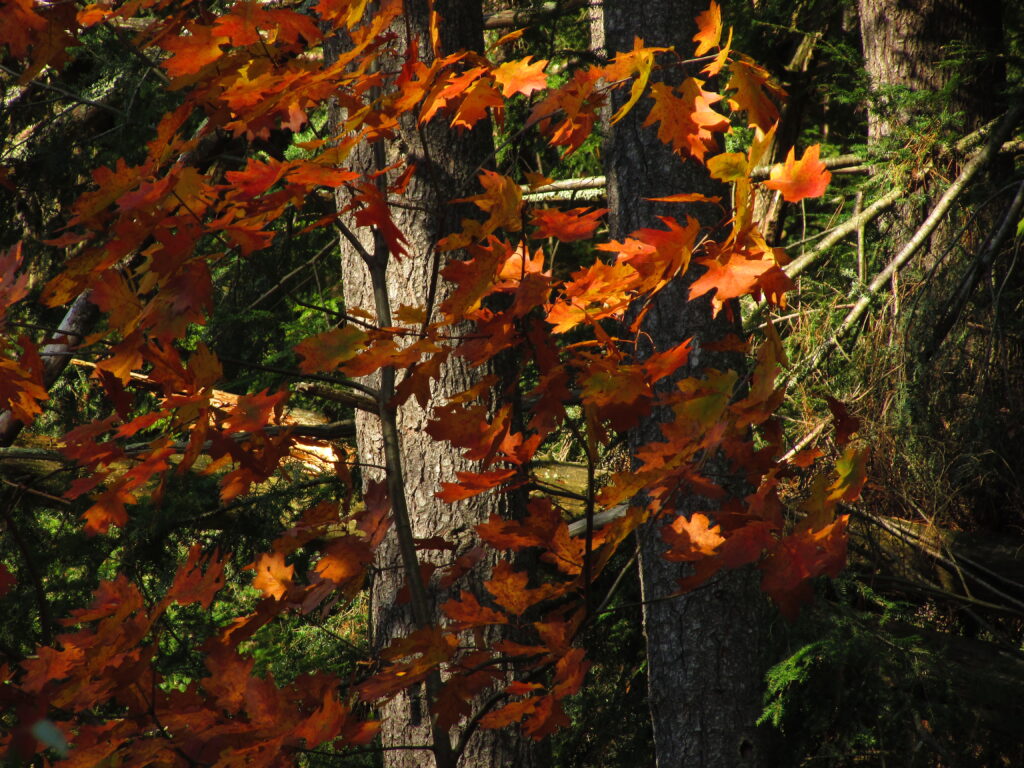
This week I wandered back to my phenology spot after a 3-week long trip home. I knew it was going to be a very different site than what I left. Because of the rain recently, the reservoir created by the beaver was swollen and flooded. This had forced more walking paths to be placed down on the way to the red-railed bridge. Now that the leaves were changing color, I could quickly identify a White Oak on the far outskirts of my spot, as well as various eastern hemlock and white pine mixed hardwoods.

White Oak [Personal photograph taken in Centennial Woods]. (2020, October 23).

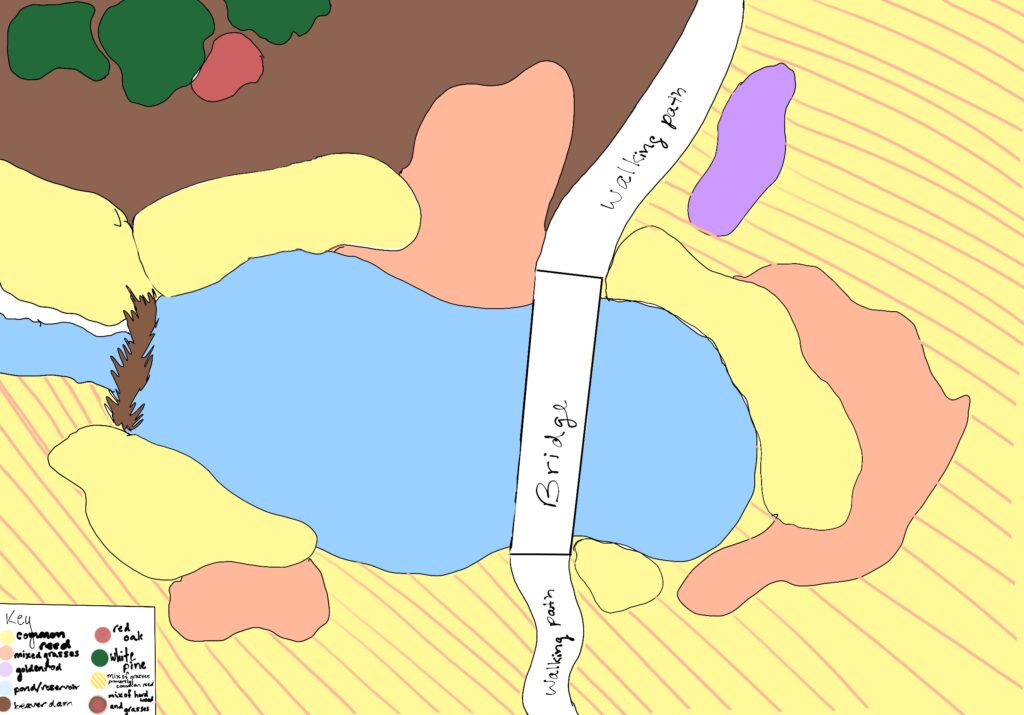
I also was able to really identify the grasses. Most of what I saw was simply common reed, but there were some goldenrod and grasses I couldn’t quite recall mixed in. The goldenrod no longer had really any color to it but was mostly dead near the trail. I was also sad to see that I couldn’t notice much progress with the dam, but it was still held incredibly firmly, and I hope the beavers are still active.

Bird’s eye map of my spot

Phenology Spot- Beaver Dam in Centennial Woods

Hello and welcome to my phenology blog! I decided to go to the Centennial woods since it offers so many different natural environments. I hiked through woods with paper birch, red oak, white pine, eastern hemlock, and American beech trees. I went all the way to the meadow until I found a small pond with a bridge; this pond was expanding due to a beaver dam’s recent addition. I decided this was the perfect place to observe the phenological changes over time since it was the beginning of an expanding ecosystem.


The vegetation of this area doesn’t have many of the woody plants we studied in class. To get there, I passed through goldenrod, honeysuckle, and other tall woody plants. Once at my phenology spot, I was able to see new blooms of algae and various tall reed-like plants. These plants could include Marsh cinquefoil, Rice Cutgrass, Three-way Sedge, and other marsh plants. On the outskirts of my spot, there are species like the Red Oak, Eastern Hemlock, and Northern White Pine. These species compose much of the Centennial Woods. The woods also include species like the Paper and Yellow Birch, Sugar maple, Norway maple, and other trees.1


I am looking forward to coming back to this place and maybe even seeing some beaver while I am here! It’s truly a great hike out, and I really want to see the environment as the ice comes. Skol!

Citations

  1. Poleman, W., & Brooks, C. (2020). NR 001 Lectures. Lecture.