Reflecting on Change & Winter
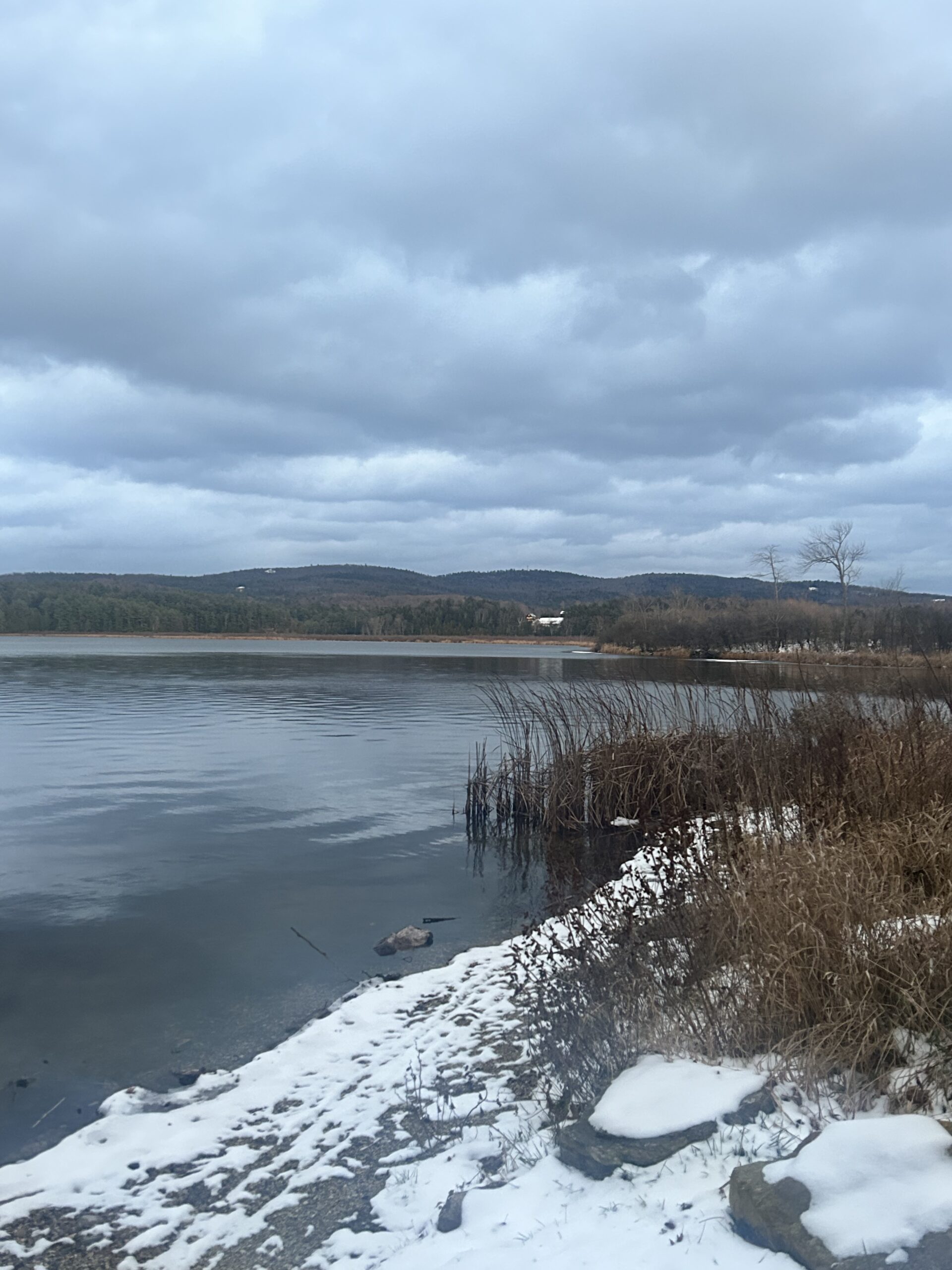
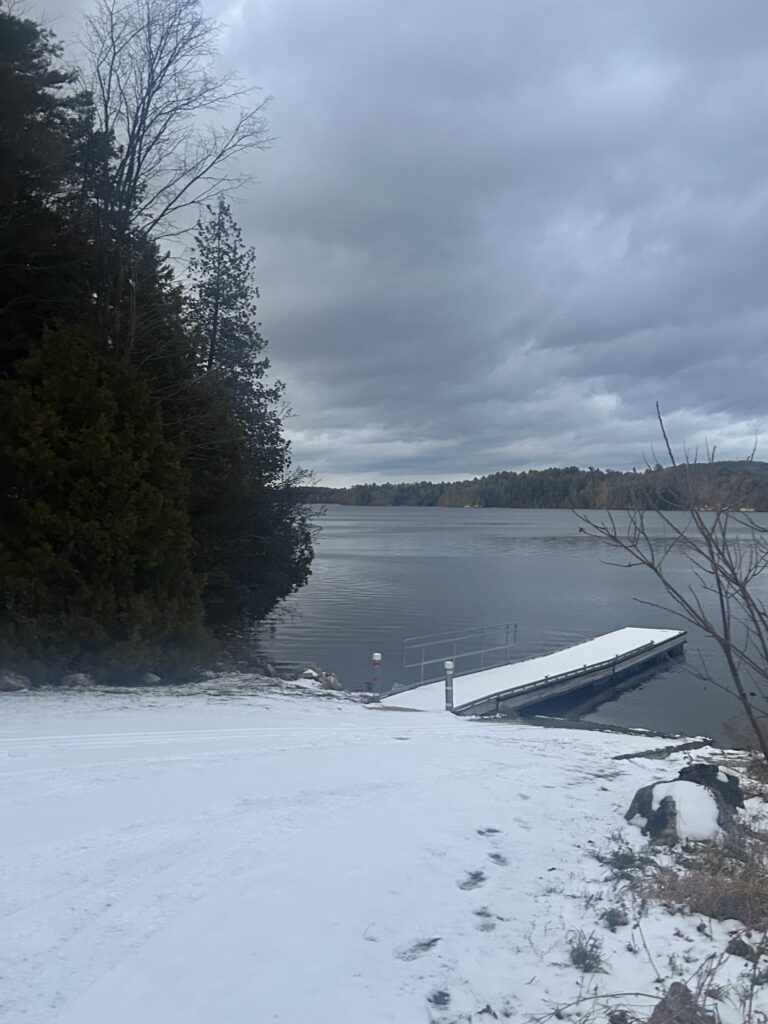
Of all the trips I have made to Shelburne Pond over the past few months, this trip was by far my favorite; not only was it very sentimental to see this place, with which I have now grown a strong connection, one last time for the semester, but it was impeccable to observe just how many phenological changes had occurred since October when my friend and I first stumbled upon the spot. Upon our arrival, the access road, lined with Eastern White Pines and small, warmly-lit cabins, was covered in a 3-inch layer of snow. Initially, we had expected little change in the spot as it was still very cold and bare, but as we crunched through the icy snow to our phenology spot, we were overwhelmed by just how many winter changes had commenced.
Vegetation Changes:
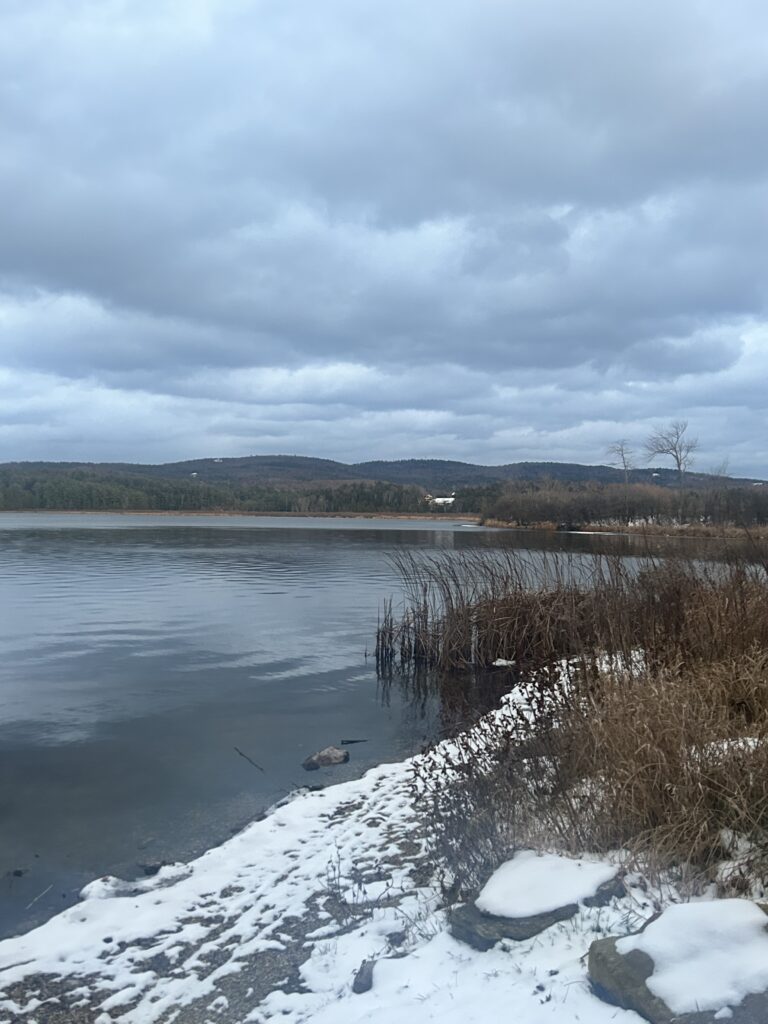
During my previous visit to Shelburne Pond, there was still some foliage on trees like the American Beech, sugar maples, and birches. Upon this visit, however, all of the trees, except the Northern White Cedar and Eastern White Pines, were completely barren, some balancing a thin layer of snowfall on their branches. Almost all understory vegetation had turned a dark brown, bearing no leaves or foliage. The cattails and aquatic vegetation stood stagnant in the frozen patches of the pond near the shoreline. In November, I observed large amounts of leaf litter, primarily at the pond’s shoreline, likely due to the wind’s direction and slope of the boat launch. This time, the majority of the litter had disappeared, likely into the pond since the litter had laid on the concrete boat dock and was unable to decompose.
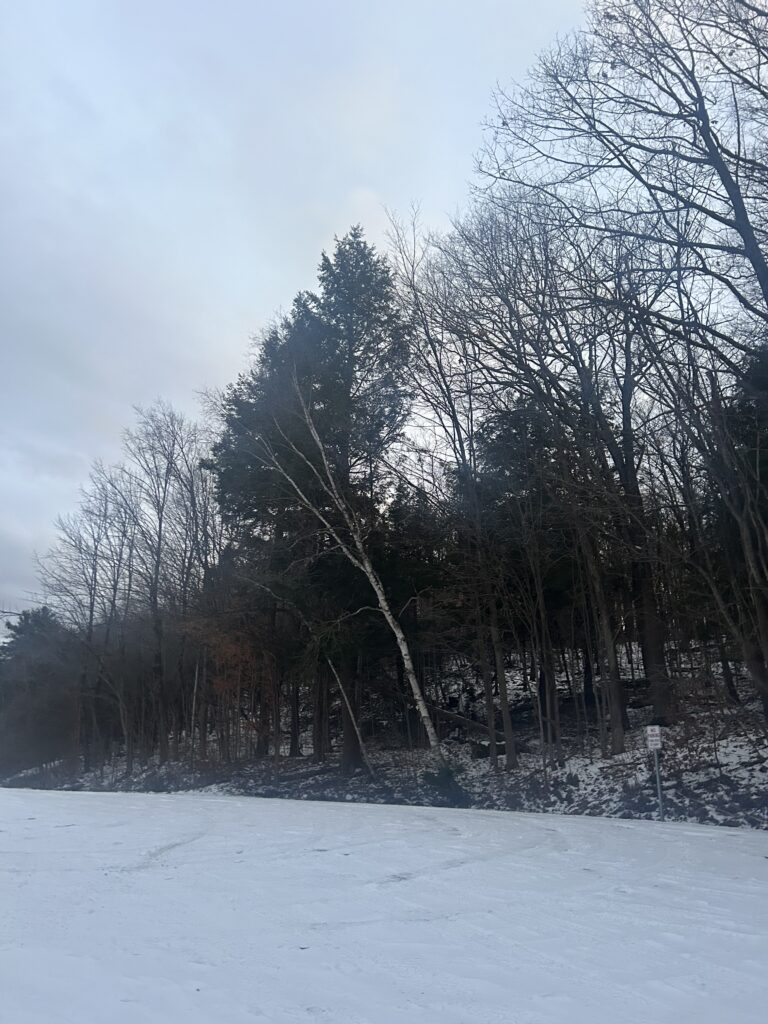
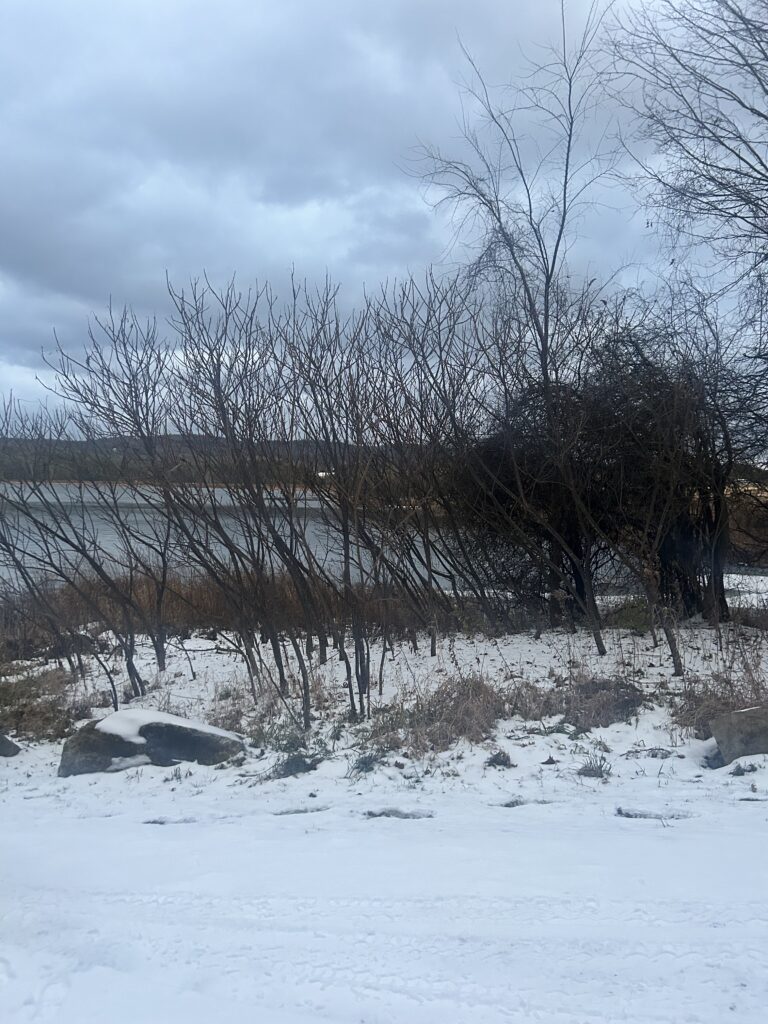
Original pictures: 12/5 4:19 PM
Wildlife Observations:
Over the past few months of visiting this spot, I was disappointed to not see or hear many signs of wildlife. However, this last visit of the season did not disappoint. Within the first few minutes of observing the area, I saw two cardinals, one female and one male, hopping between sugar maple branches. I observed these two birds for a good while as they made their way down to the frozen lake and eventually flew playfully into the brush. In this same brush, my friend and I heard many loud sounds, almost as if an animal was gnawing on or scraping wood. We tried getting a closer look to identify the animal, but we were unable to see through the snowy and thick brush piles. Luckily, the freshly fallen snow was a perfect way to identify what other animals had been in the area. We observed some very small footprints along the forest edge, likely either a chipmunk or a bird. Additionally, we saw many dog footprints and an occasional squirrel track. Despite the freezing wind chill and snowfall, this area had the most wildlife activity I have observed thus far.
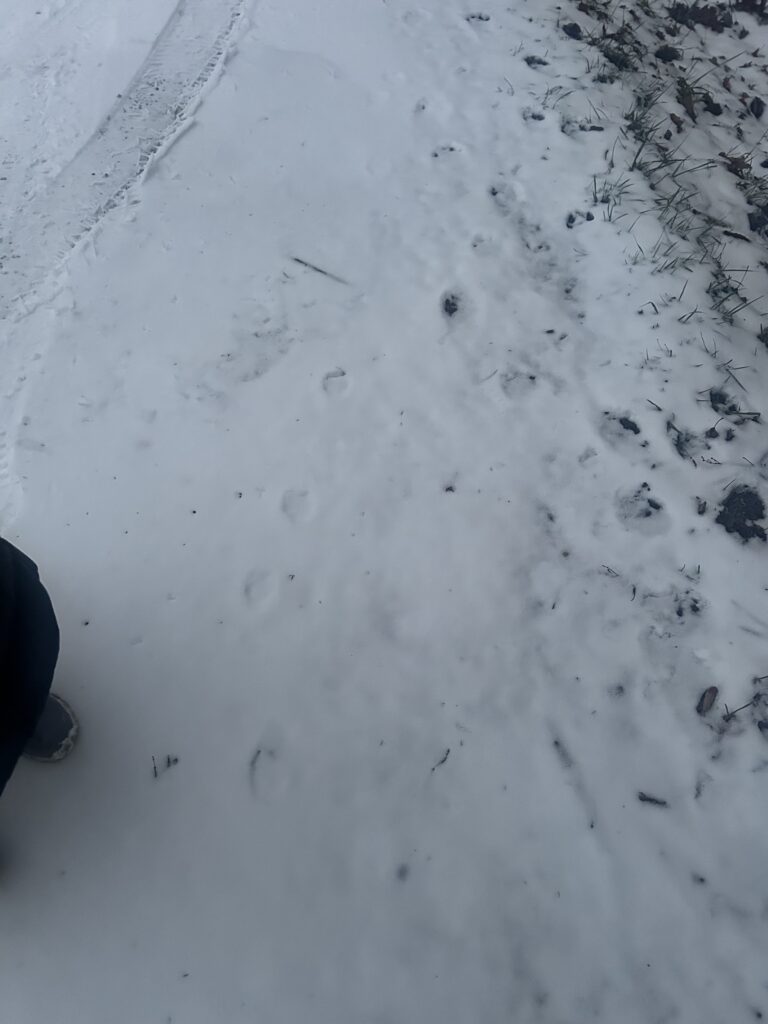
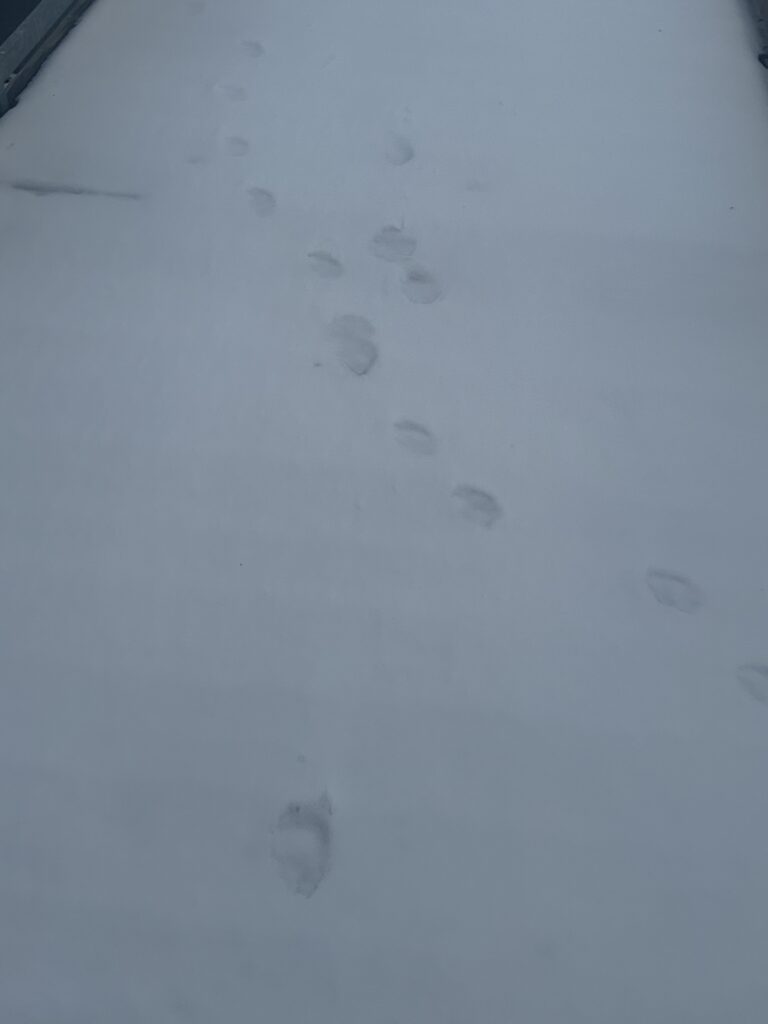
Original Pictures: 12/5 4:21 PM
Reflecting on Phenology:
As I stood in the middle of my phenology spot, observing the dark clouds rolling in at dusk, I felt like my connection to this place had solidified. I was reminded of the very first time my friend and I arrived in the area when the trees were just beginning to turn their vibrant array of reds and yellows. Throughout these few months, I watched the same trees peak in their fall coloration, lose their leaves due to the persistent wind, and become barren aside from a small layer of ice and snow. I watched the conifers remain an unchanging constant in the area, as they served as a beautiful dark green backdrop to the pond. I watched the pond transition from its initial algae-covered state to its frozen and icy form. Overall, reflecting on these changes became very special to me. After a long week of schoolwork and exams, visiting this spot became a way to completely forget about my “school” world. I could simply enjoy and observe this unique little spot and make my predictions of how it would change the next time I visit. I loved getting to sit on the rocks that line the access road and watch the tall pines and oaks sway in the wind, each time the trees losing more and more leaves as the days grew colder and darker. However, my absolute favorite part of this phenology place was the pond itself. I’d often venture out to the very end of the dock and watch the water ripple around the cattails, observing the gorgeous hills in the background with the singular cabin peaking out in the distance.
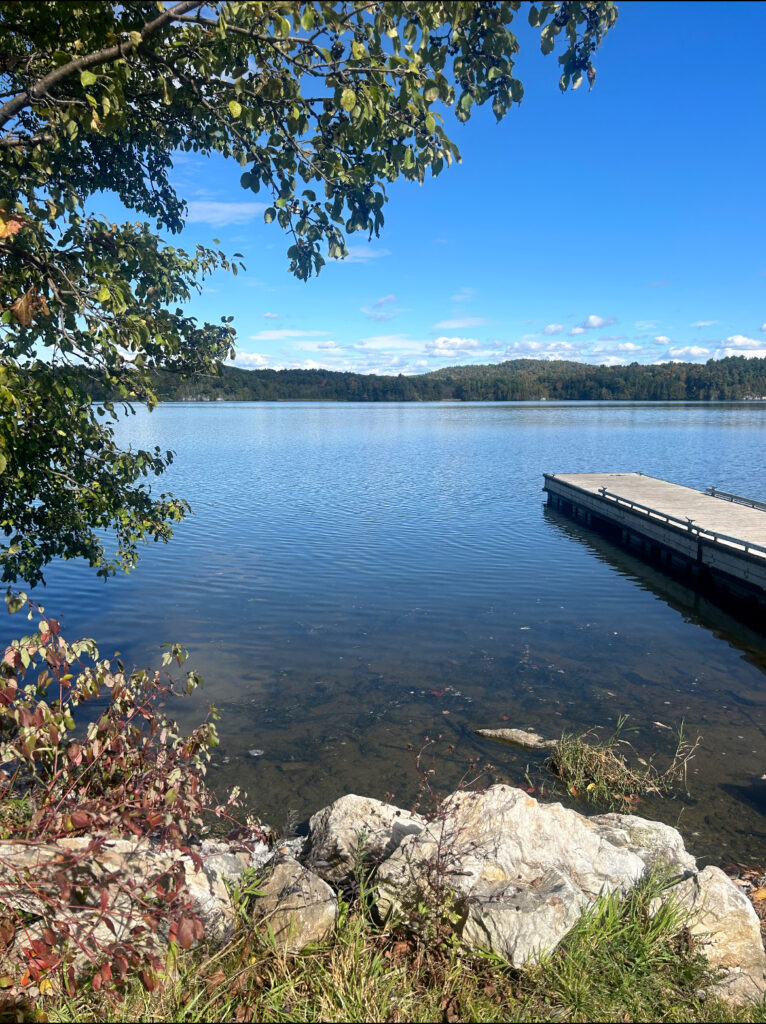
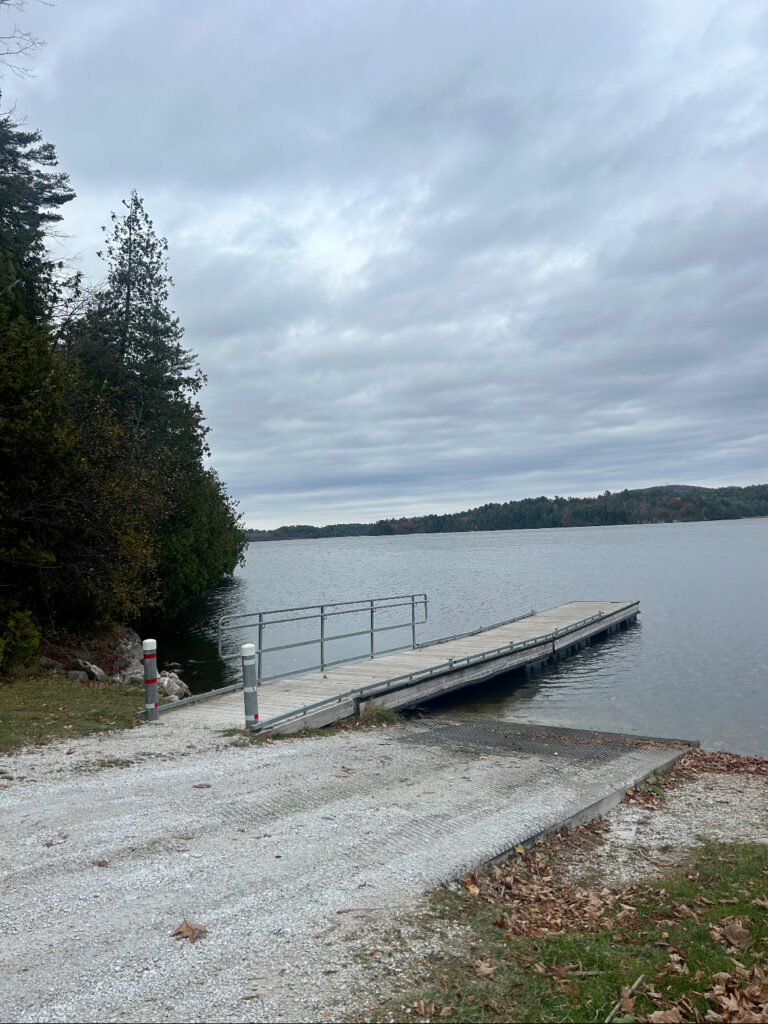
All Original Photos: (10/18, 10/29, 12/5)
Reflecting on my time at Shelburne Pond, I can only describe it as both insightful and peaceful. With my knowledge of natural communities and landscape analysis from NR1010 lecture, I utilized my phenology spot as a way to practice analyzing these patterns and asking questions. Although I may not know the exact reason behind each piece, pattern, or process, making these predictions helped me grow into a more observant and inquisitive naturalist. The most important insight I gained from this area is that when the world seems quiet and cold, there is often a hidden life and beauty that takes a little searching. While visiting Shelburne Pond during these winter months, I had naively expected that I would find little signs of life. Often, winter is seen as this dormant and barren period quickly awaiting spring’s beauty and warmth. But there was something so special about seeing this place in the winter that opened my eyes to the magnificence and life this season possesses. The cardinals playing among the ice and pine branches and the animal tracks in the glistening snow were just some signs that reminded me of the liveliness of winter. Aside from the many lessons my phenology spot taught me, it has always granted me an overwhelming sense of peace. College inevitably brings many stressful and difficult transitions, some expected and others not so much. As I watched my phenology spot also experience change, I was reminded of the benefits of transition, and how life’s magic and beauty are due to such change. A quote from The Wisdom of the Orange Woodpecker perfectly encapsulates this idea stating that “change is not pleasant, but change is constant; only when we change and grow, we’ll see a world we never know.” Shelburne Pond is a new constant in my life; it is a place I can rely on to recenter myself and my values, reminding myself of my mission and goals as a Rubenstein student.
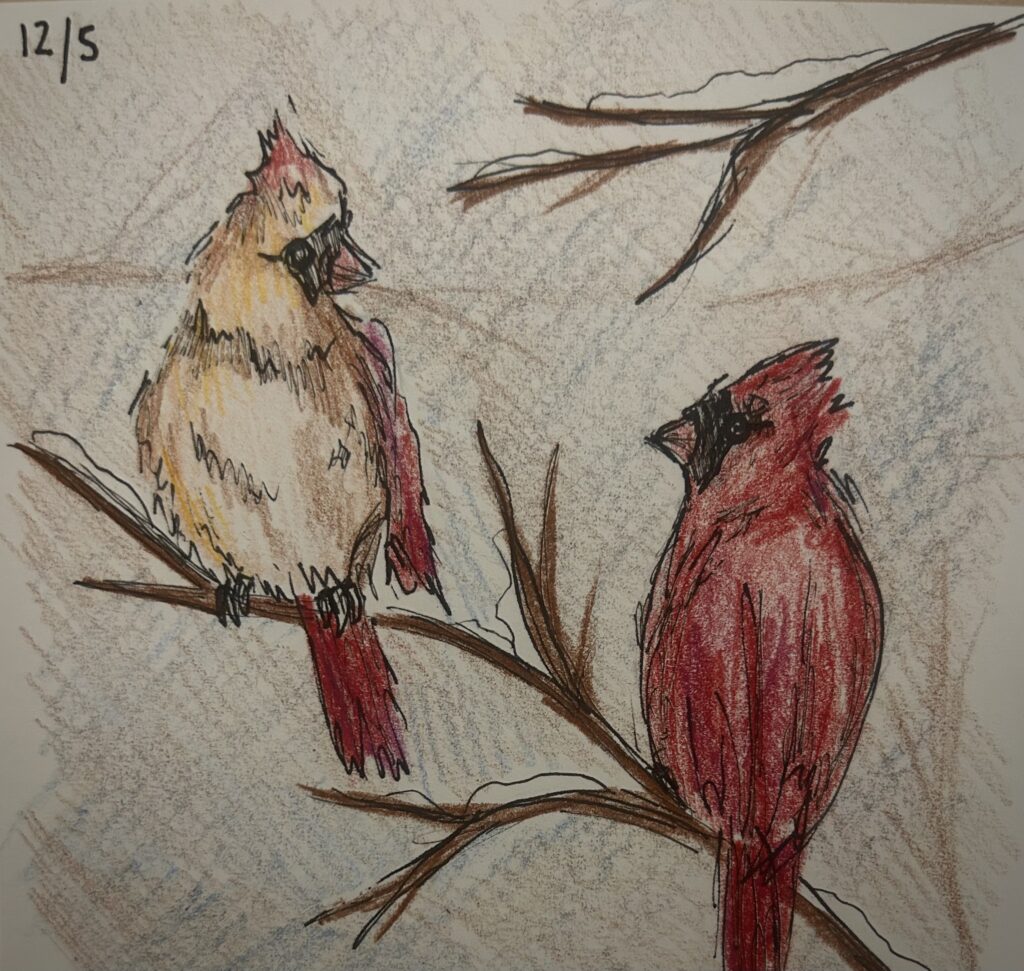
Original Sketch: 12/5