Welcome to Shelburne Pond!
An Introduction to the Area:
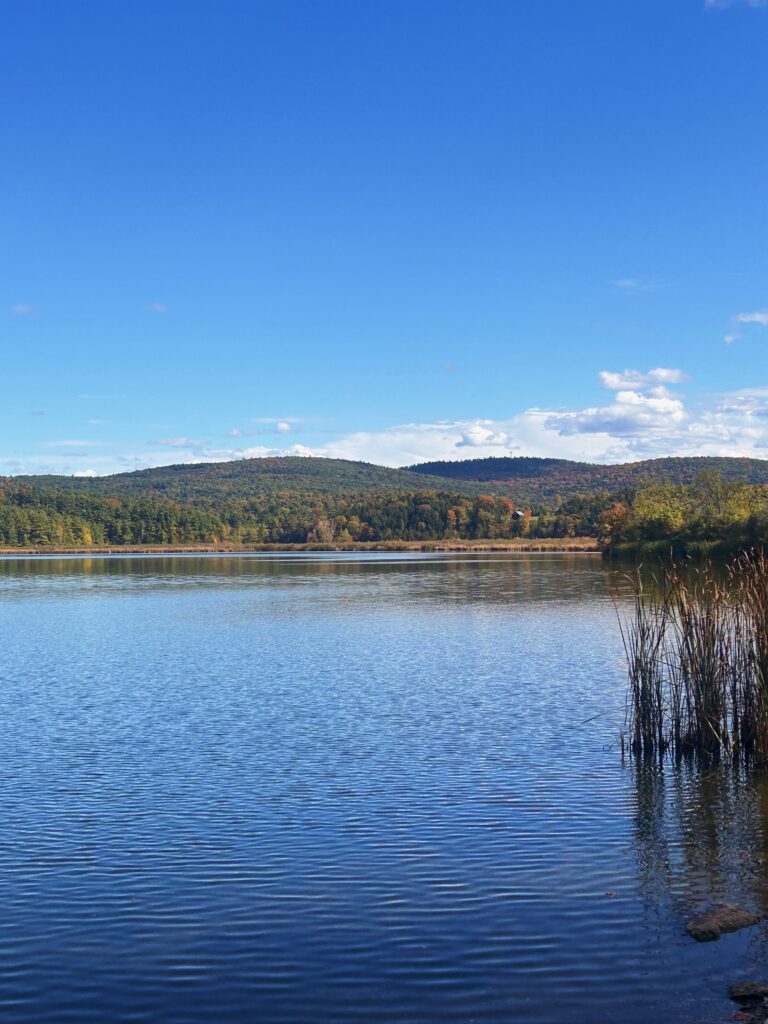
Shelburne Pond, a roughly 10-mile trip from campus, is a large, shallow recreational pond surrounded by a primarily rural area. The area offers a perfect spot for anglers, boaters, and kayakers as there is a large open shoreline and dock as well as various hiking paths along the pond’s edge. When initially planning my phenology place, I wanted to find an area where I could observe the interactions between aquatic and terrestrial environments, as it would be fascinating to observe and compare the phenological changes between the two ecosystems. Shelburne Pond, a relatively short trip from campus, seemed like the perfect, secluded, and accessible spot to conduct these observations.
Navigation:
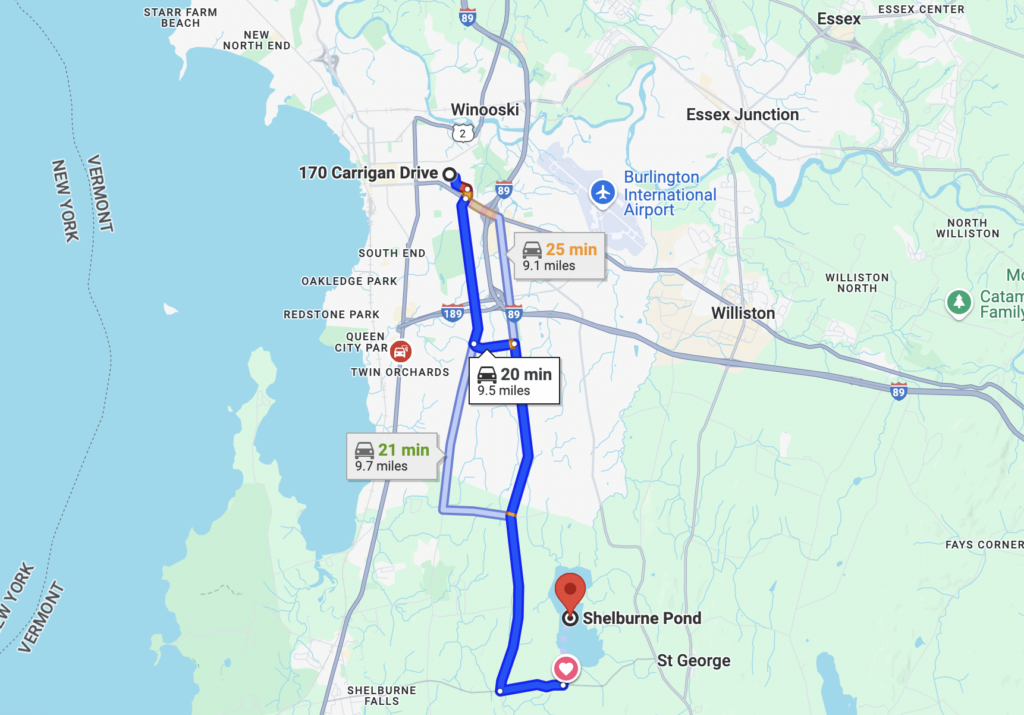
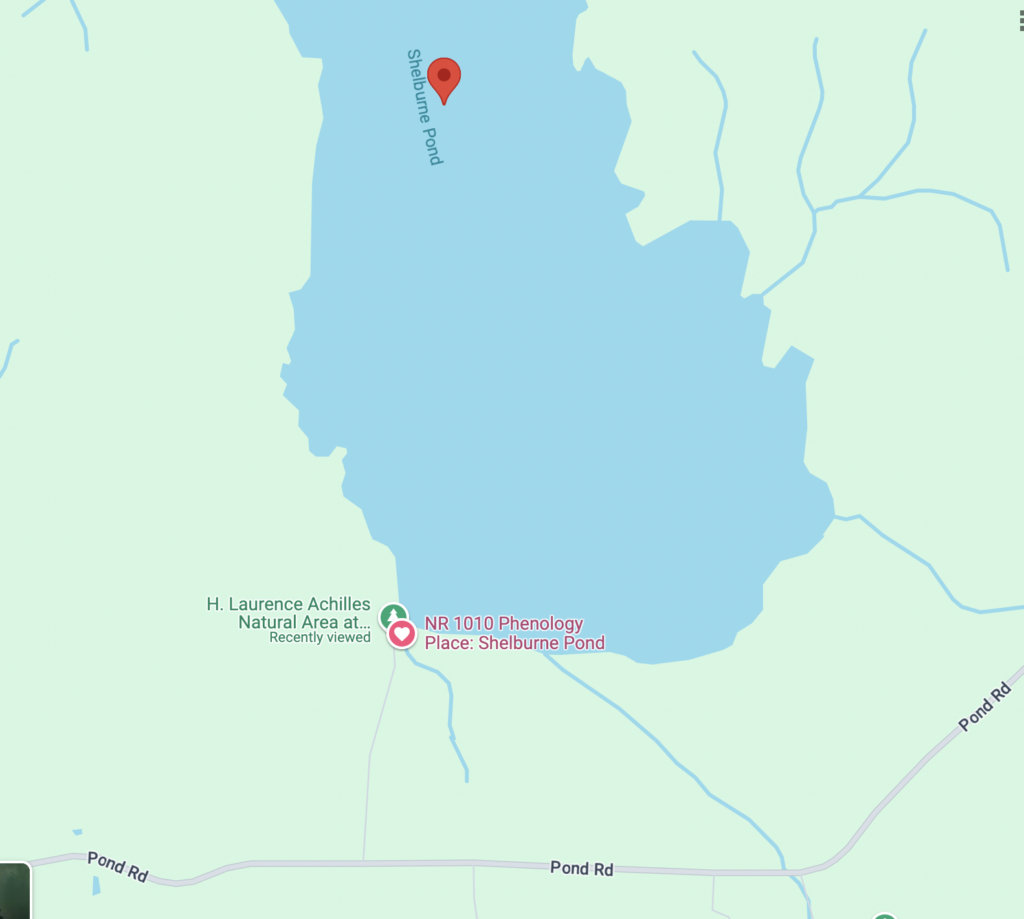
To arrive at Shelburne Pond, a classmate and I drove down Spear Street after exiting the UVM campus. After passing a large golf course, we turned left on Swift St. and right onto Dorset Street. We followed Dorset St. for a few miles passing many farms and a few developments. Then, we turned onto Pond Road. On the left is a sign for the Vermont Fish & Wildlife fishing access area; upon turning down this short access road, we walked a short distance to the pond shoreline. On the right-hand side of the dock, there is a strip of large overstory trees and some invasive shrubs. On the left of the dock, closer to the water, there is a small outcropping of vegetation. Both of these areas will serve as my phenology place.
Click on the first map below to obtain the Google Maps directions to Shelburne Pond from Central Campus!
Composition:
The Shelburne Pond fishing access area showcases various and diverse vegetation, including many understory and overstory plant species. Walking around the area, it is easy to notice many invasives such as buckthorn and honeysuckle. Both of these plants are the predominant understory species in the area. The buckthorn has numerous dark blue-violet berries. In the overstory, there are a few Eastern white pines and many elms, Northern red oaks, and Northern white cedar. Along the shoreline, there are also a couple of herbaceous plant varieties such as the light violet-colored American aster and white, fuzzy Goldenrod. When observing the vegetation, the majority of the understory species, Basswood, and Northern white cedars are beginning to turn yellowish-brown. A lot of the leaves have noticeable discoloration and black spots. As the temperature is beginning to drop, some deciduous trees are starting to show signs of color change; the Northern red oak is a bright red and the sugar maples are beginning to change into a yellowish-orange.
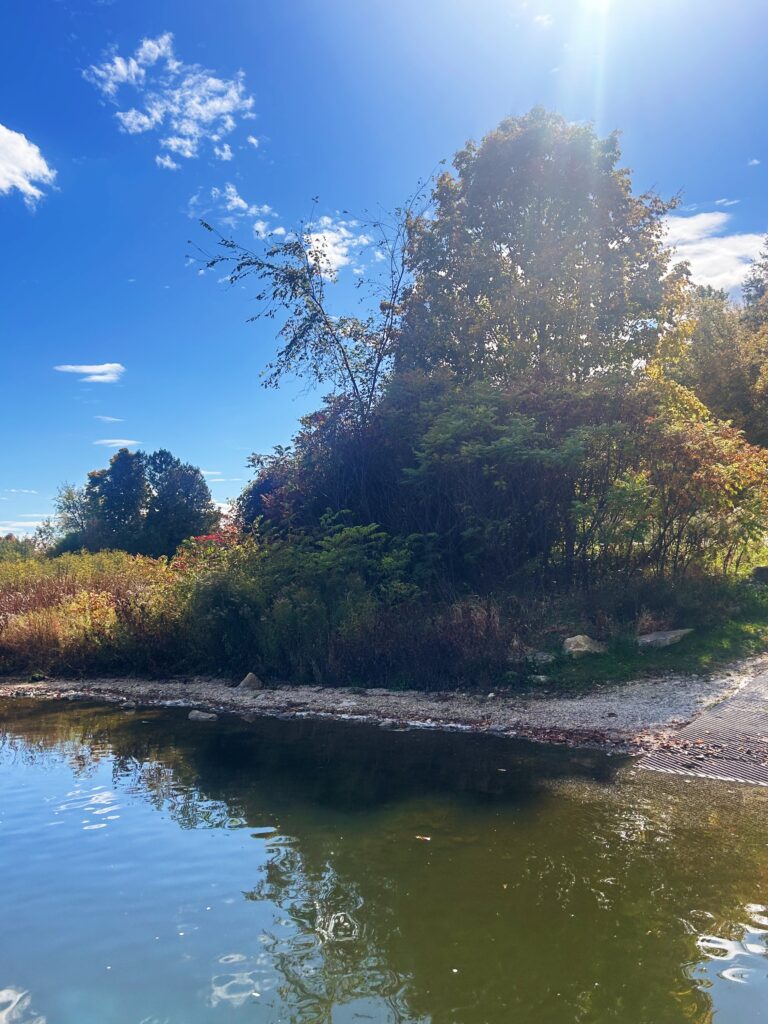
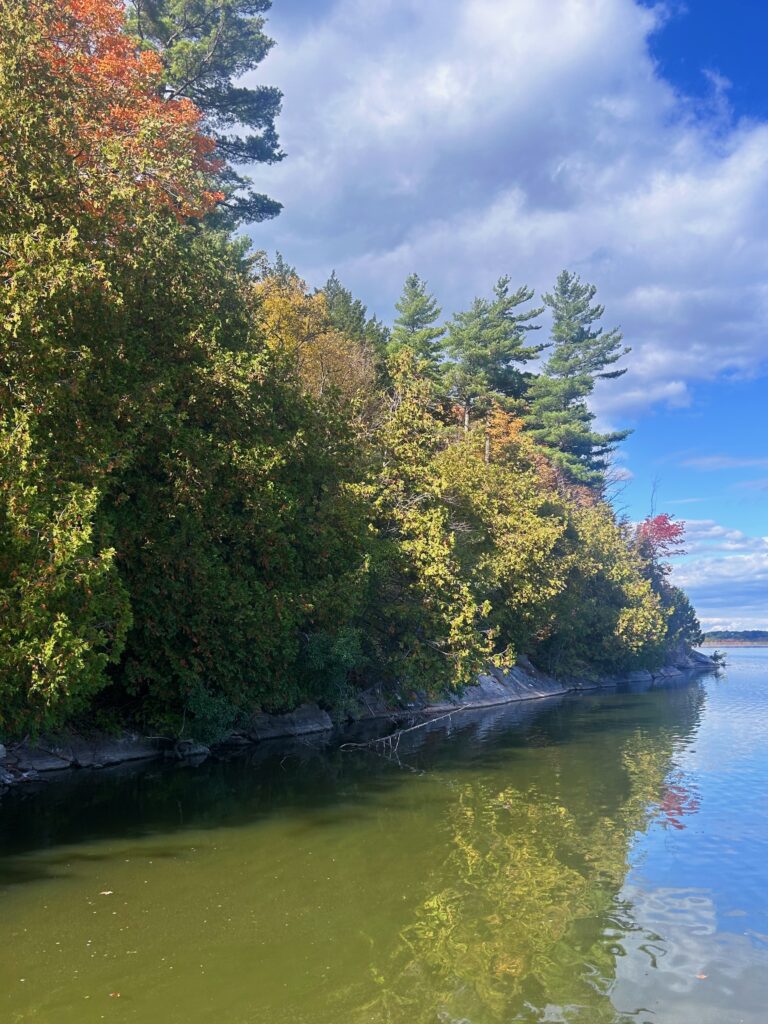
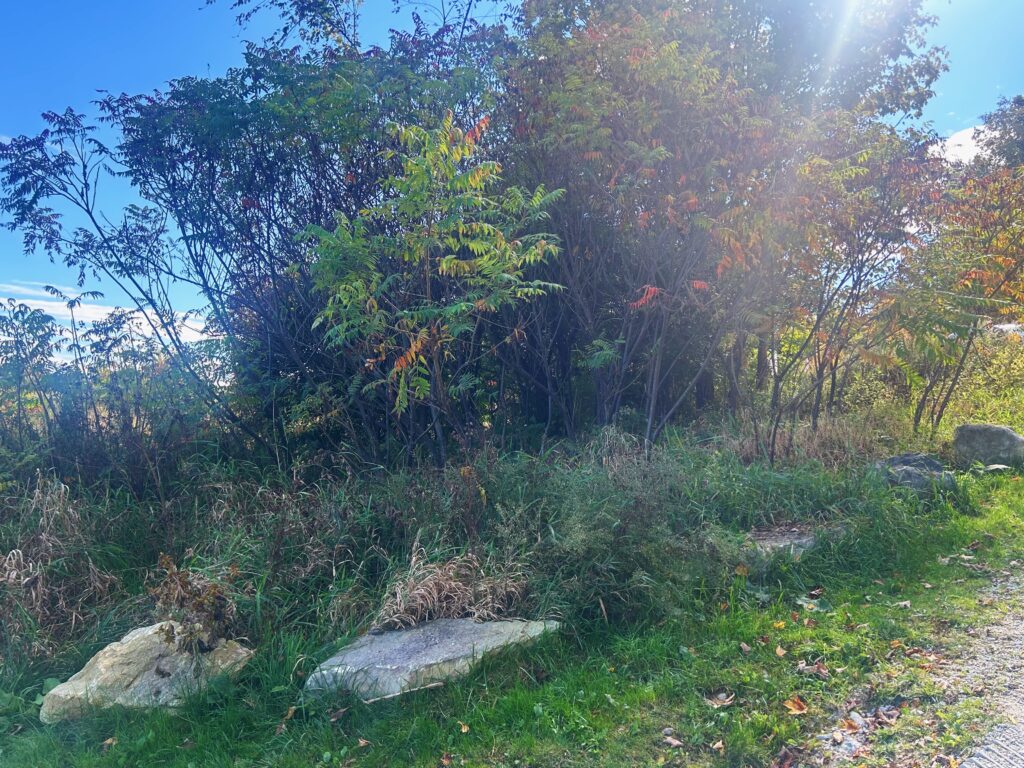
Original Pictures: 10/8 1:37 PM
Vegetation Species:
Click on the hyperlinks below to see iNaturalist profiles!
- Northern White Cedar
- Sugar Maple
- Northern Red Oak
- Basswood
- Buckthorn
- Honeysuckle
- Elm
- Goldenrod
- Sumac
- Ashes
- American Aster
- Eastern White Pine
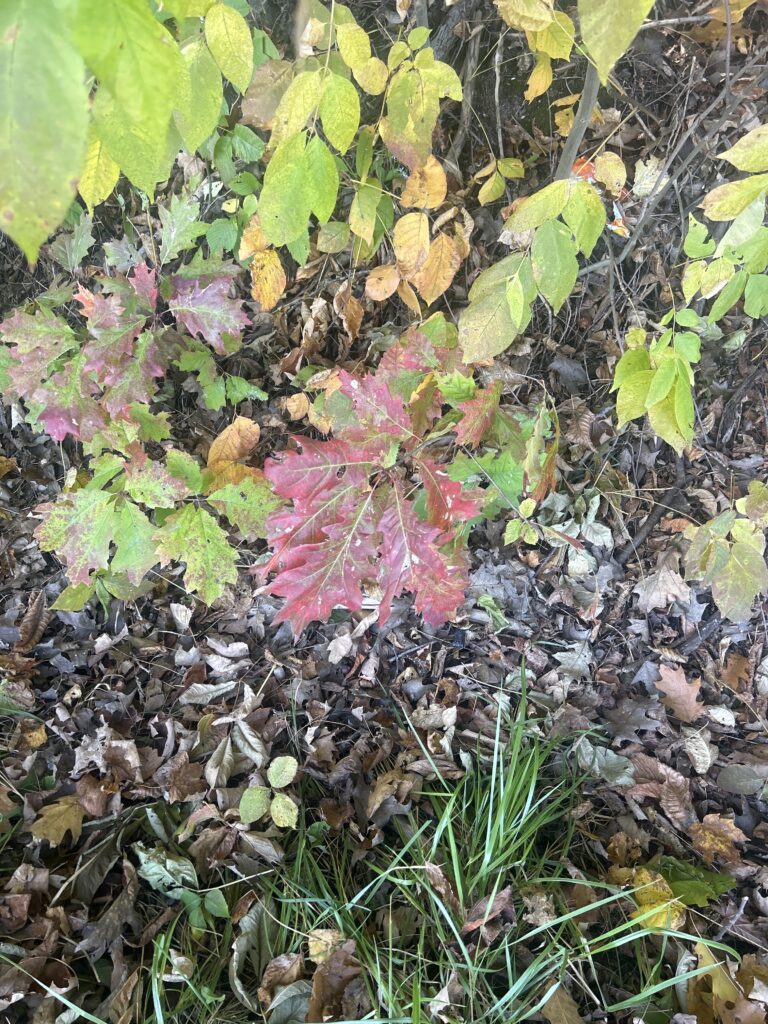
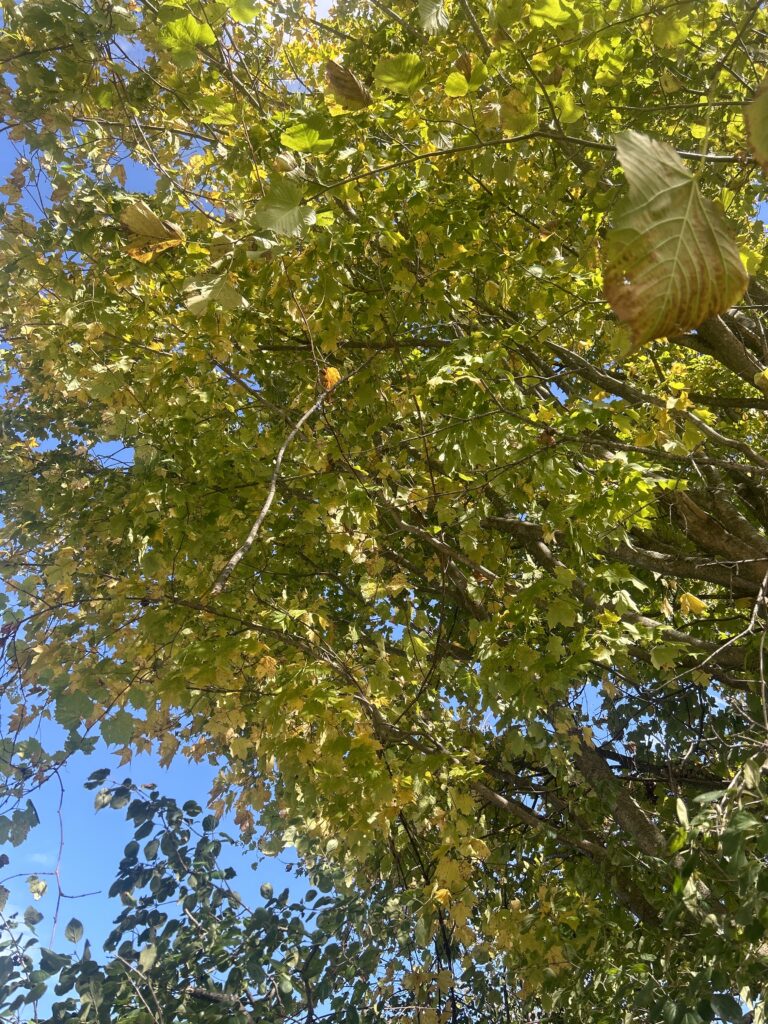
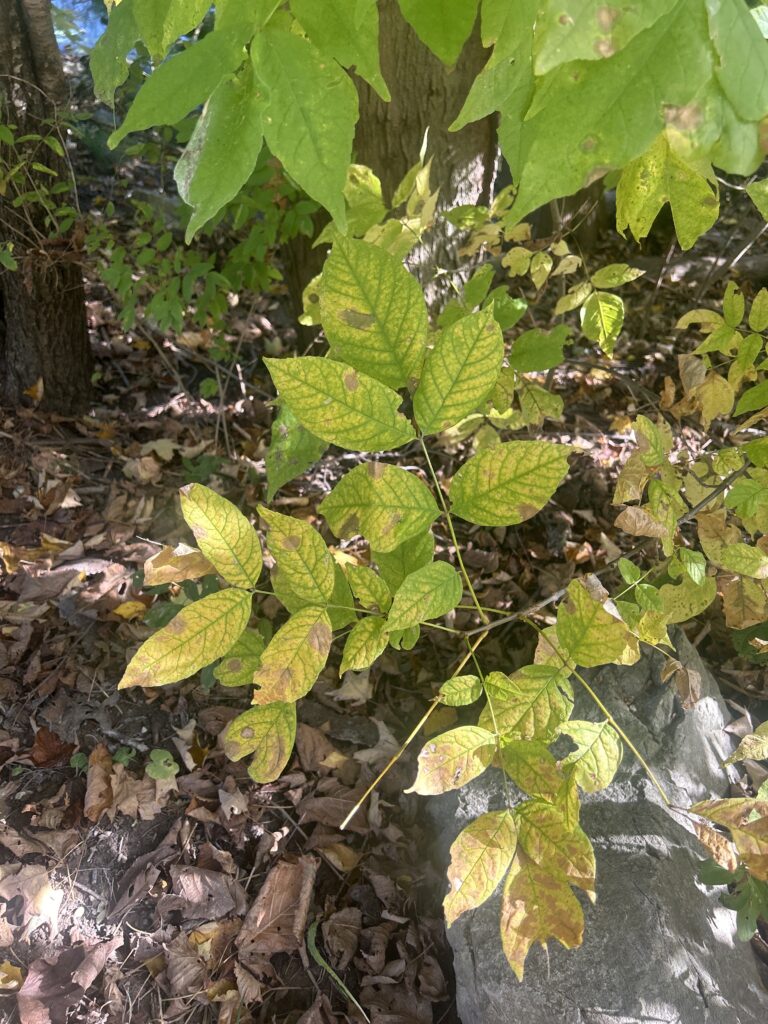
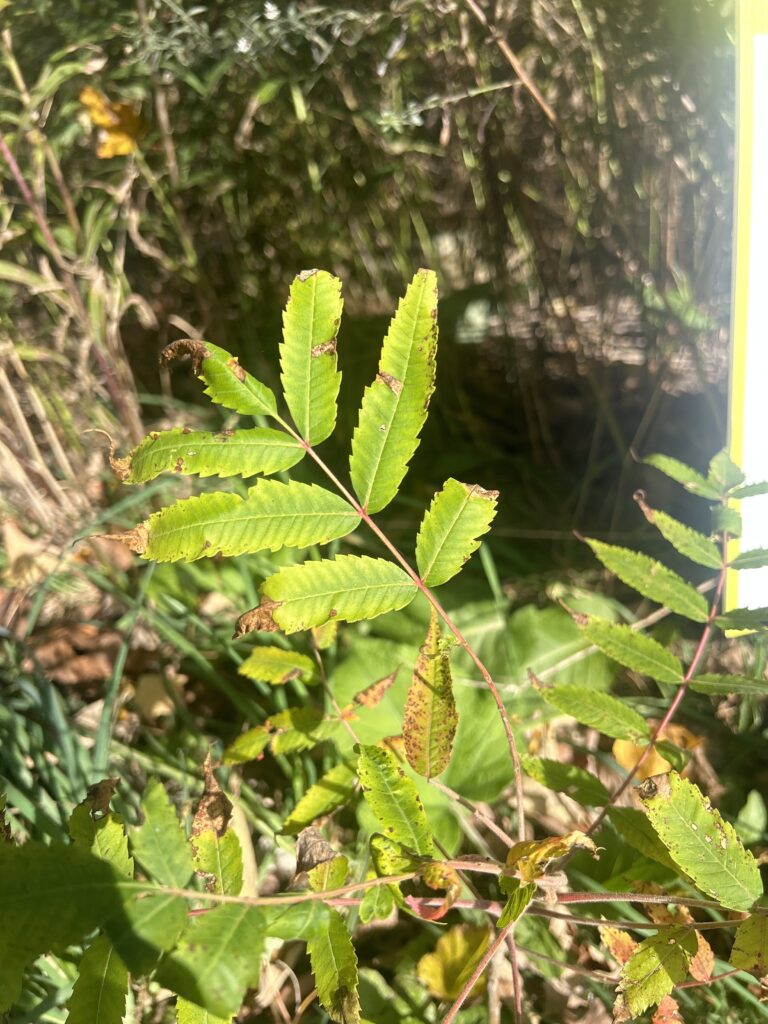
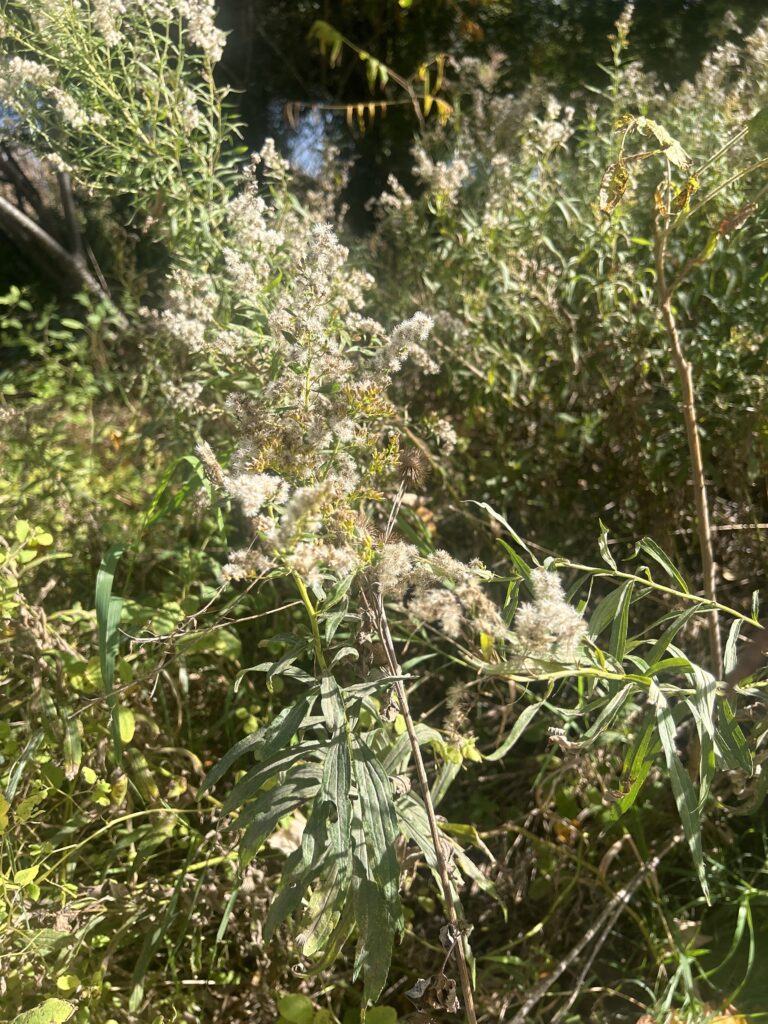
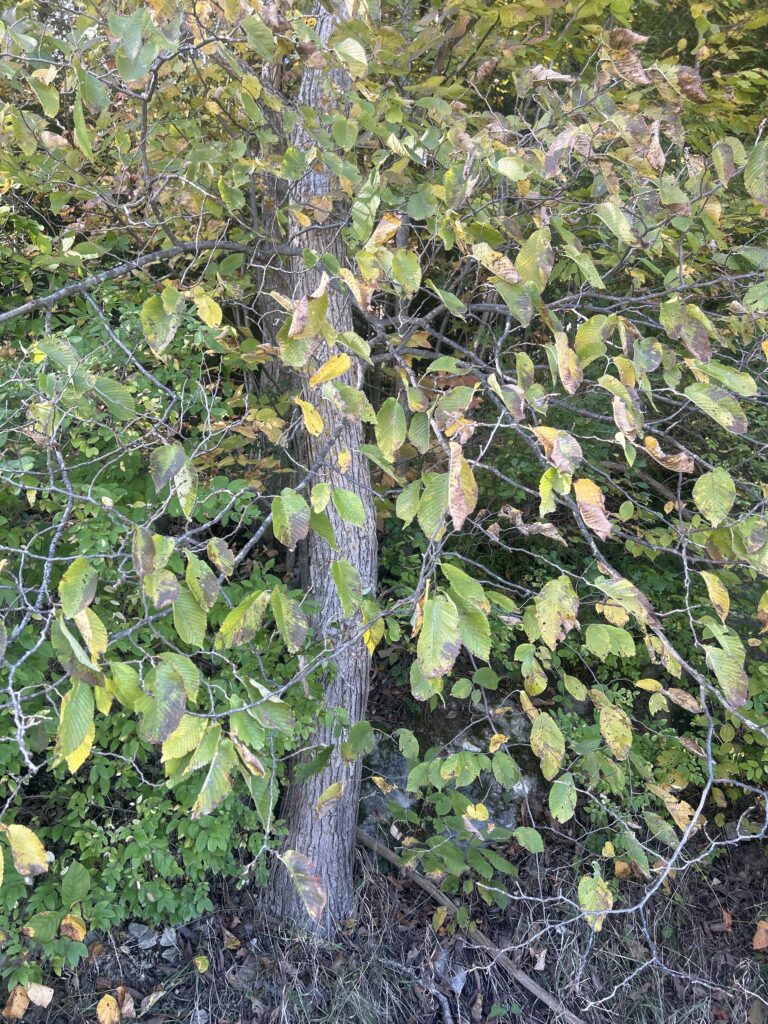
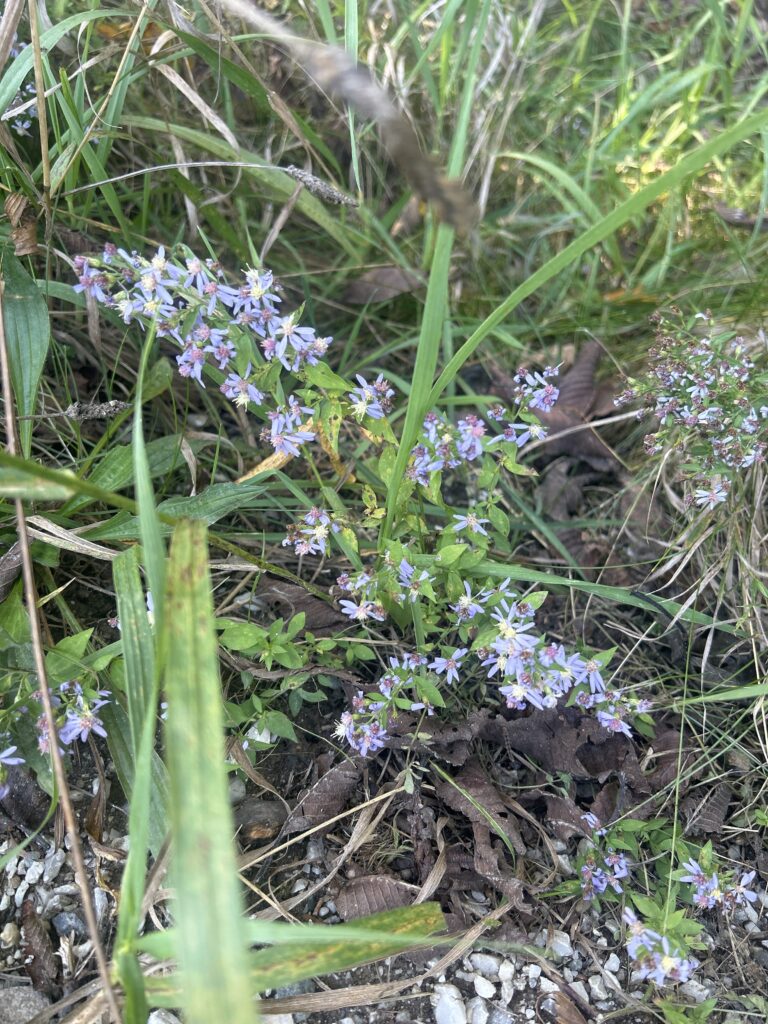
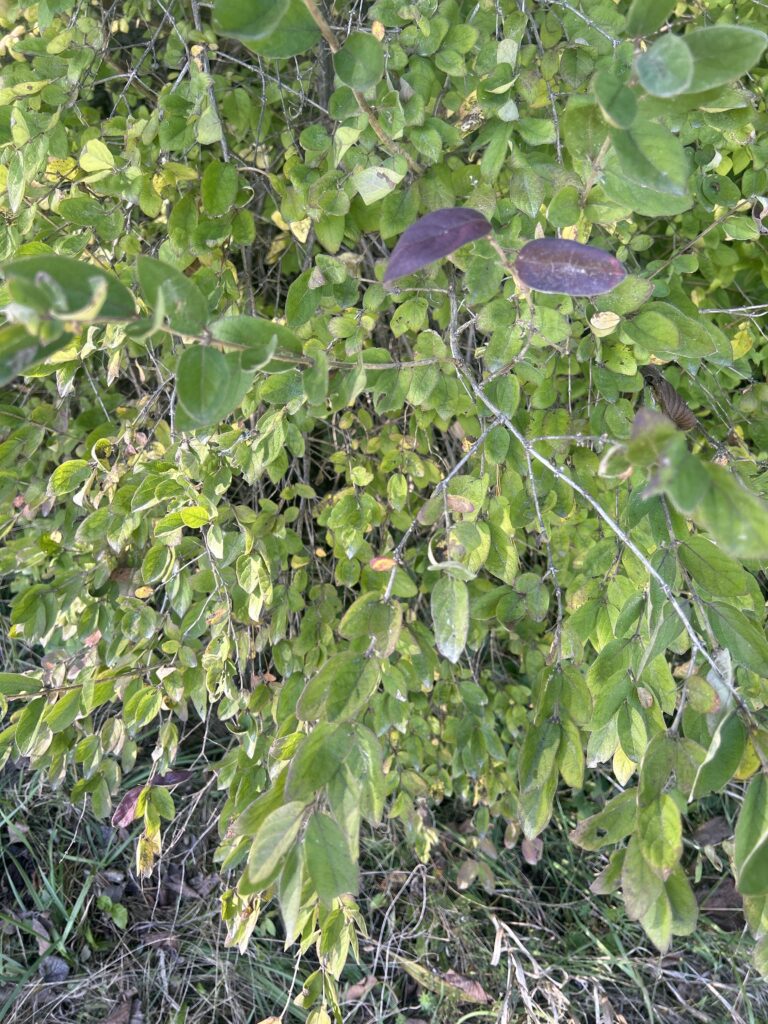
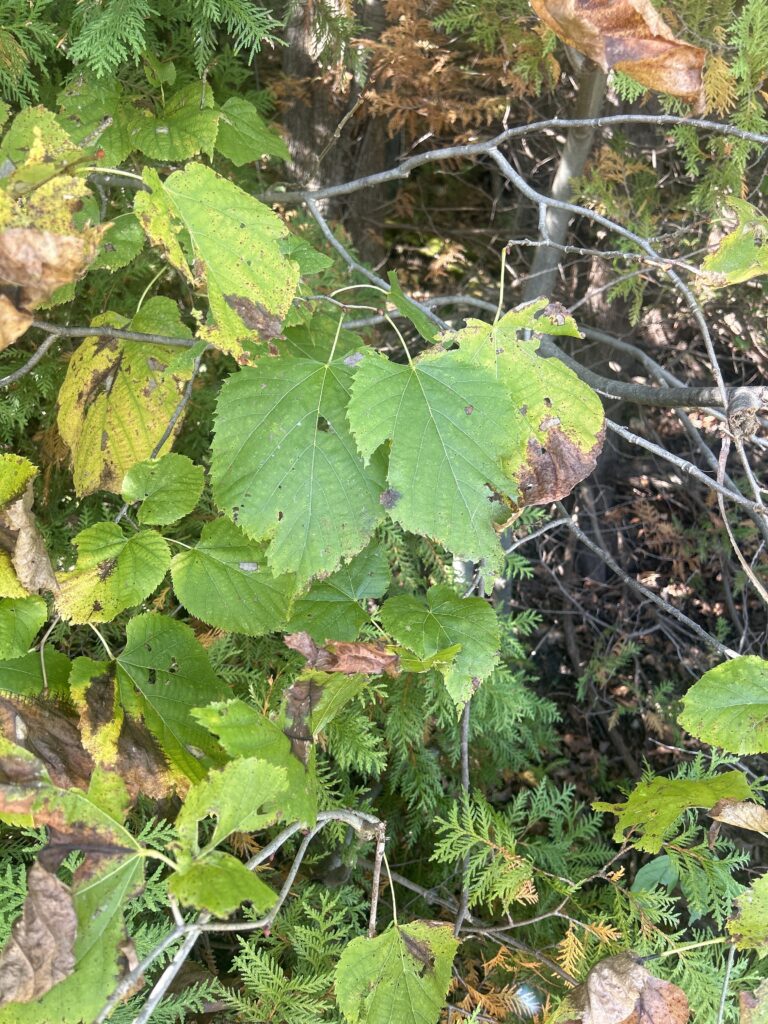
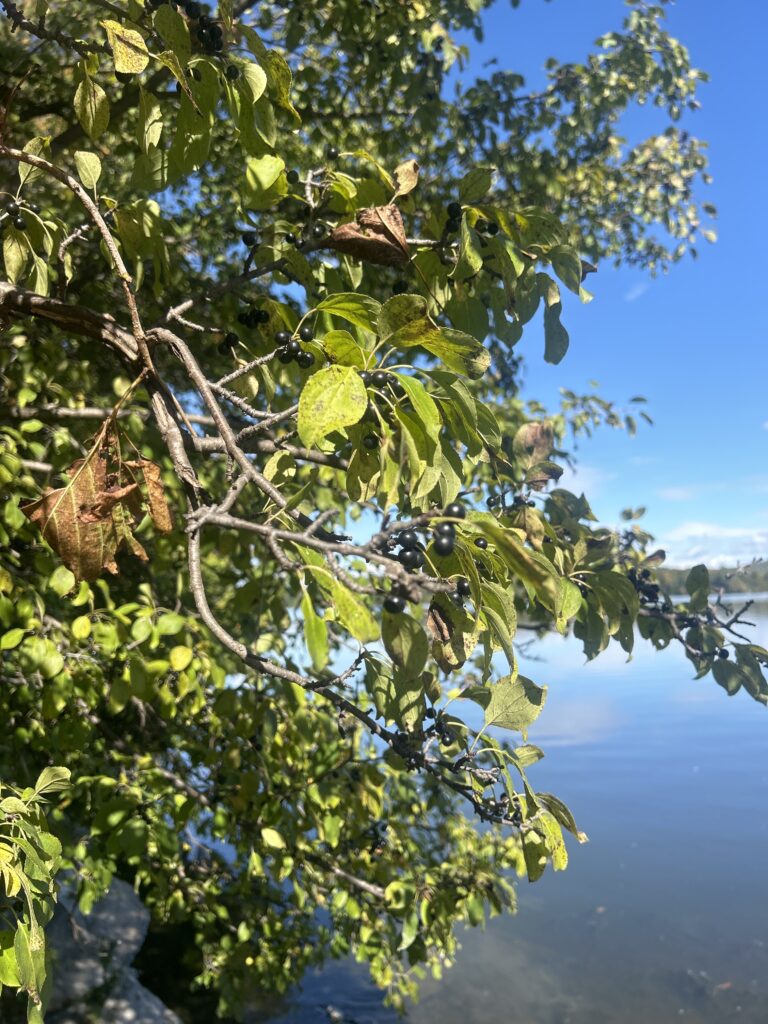
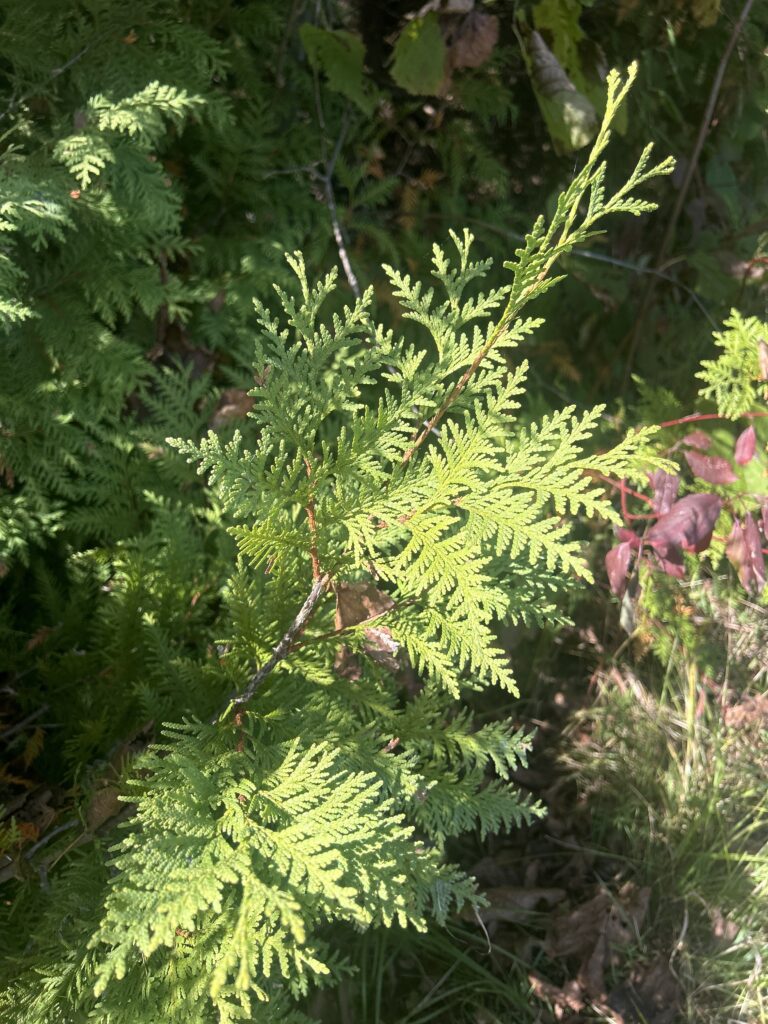
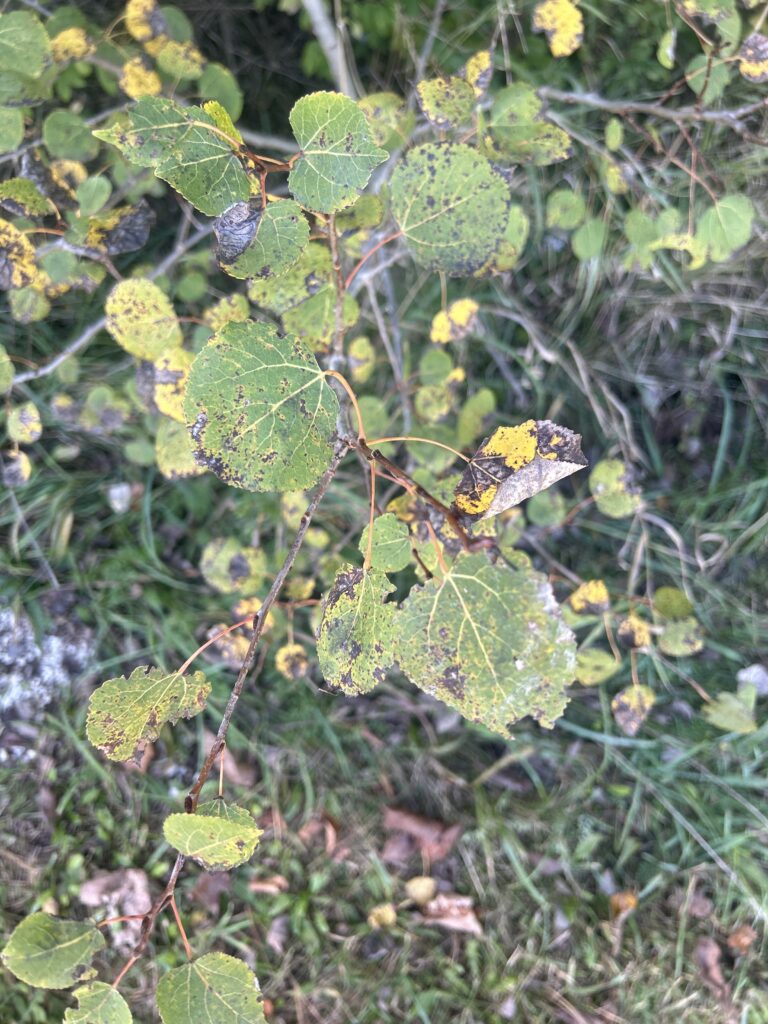
iNaturalist Original Photos: 10/8/2024
Additional Notes:
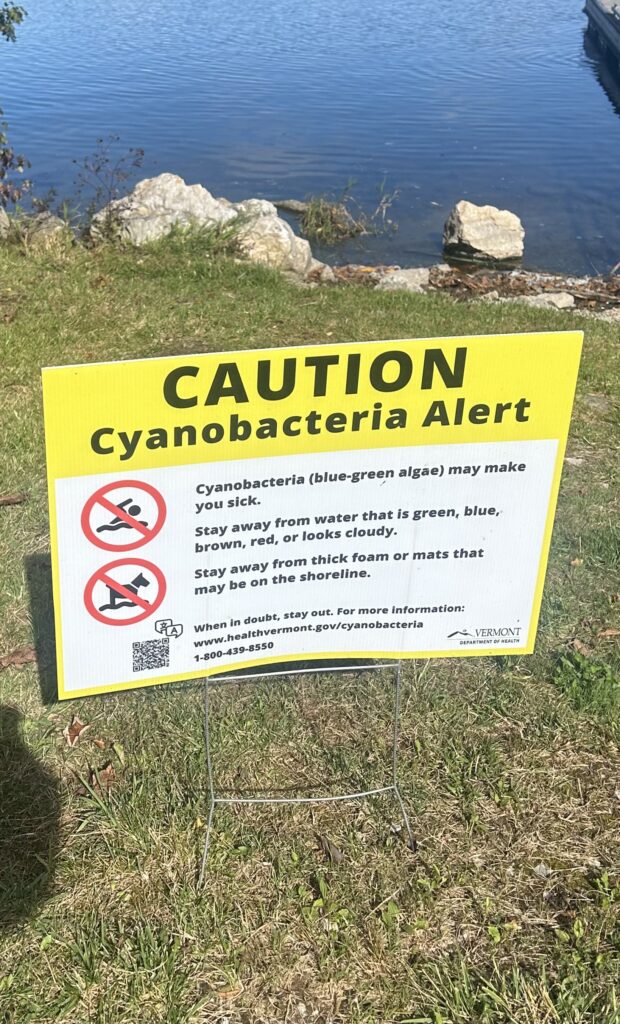
Upon arriving at Shelburne Pond, many Caution signs warn visitors of Cyanobacteria. The sign explains how the blue-green algae can make swimmers or pets that enter or drink the water very sick. While at the pond, some areas are noticeably green-brown in color, as seen in previous images. During the NR 1010 lecture on nutrient loading, we learned how cyanobacteria blooms like this can be due to excess Phosphorus in the water from nearby agricultural fields or streambank erosion. It will be interesting to see if and how these algal blooms and other factors from the agricultural area affect the ecosystem around Shelburne Pond.