Backyard Phenology
Relation & Connection:
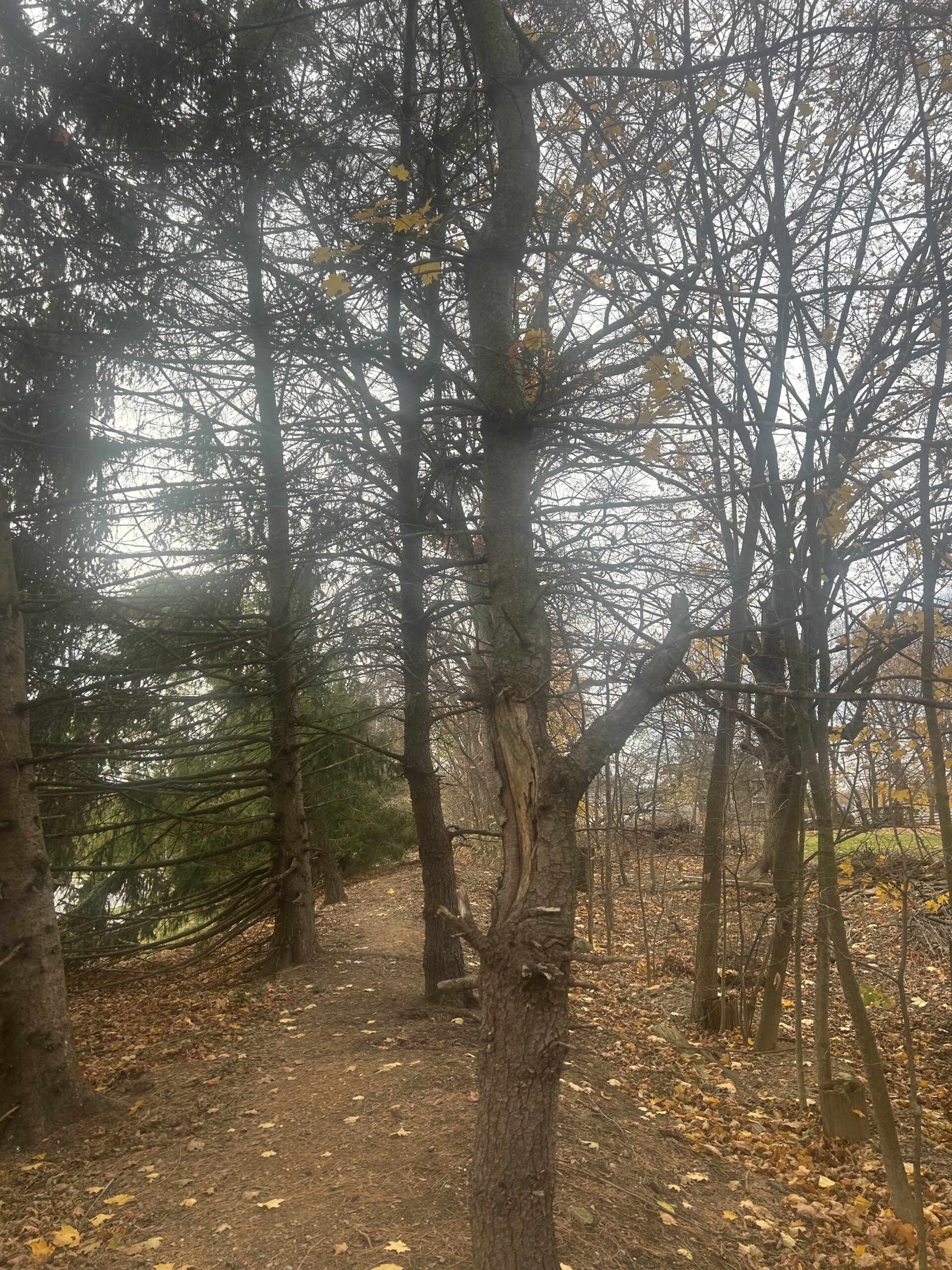
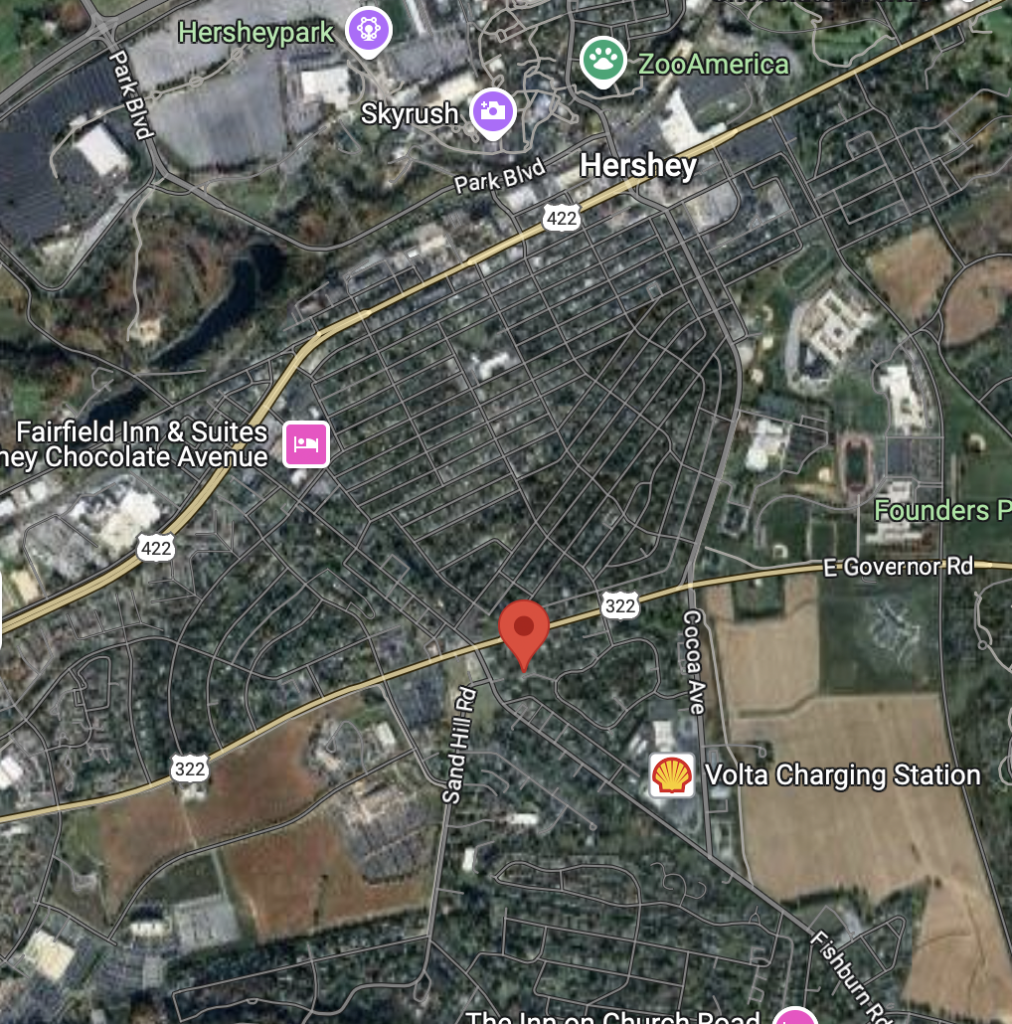
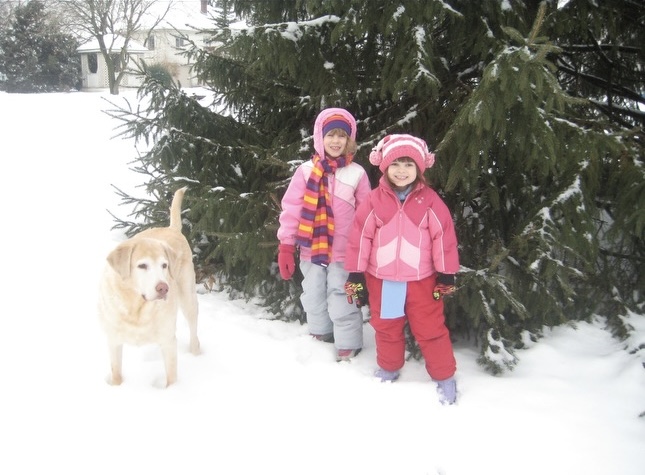
Upon arriving back in my hometown in Hershey, Pennsylvania, I knew the perfect spot to study. Along the very back edge of my backyard, there is a small, long strip of forest. I knew I wanted to study and document this area because this small bit of forest meant a lot to me growing up. My sister and I would often play for hours outside after the school day ended, and if I wasn’t busy climbing the large Norway Spruce in the center of our backyard, I was exploring this small bit of forest at our property line. I’d spend hours making small creations or bird nests out of the dried Eastern White Pine needles or dead leaves. I’d climb on the broken pine branches and create dozens of imaginary games and adventures for my sister and me to complete before dinner. Because this place meant so much to me as a kid, I wanted to revisit the area, notice its changes over the years, and document the species composition now that I am more knowledgeable about tree species.
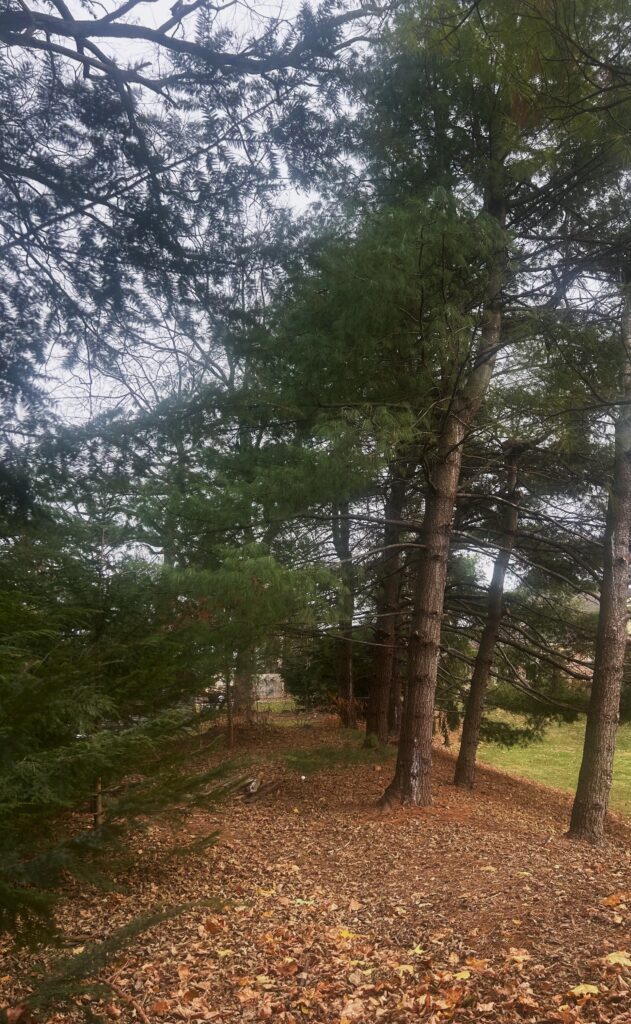
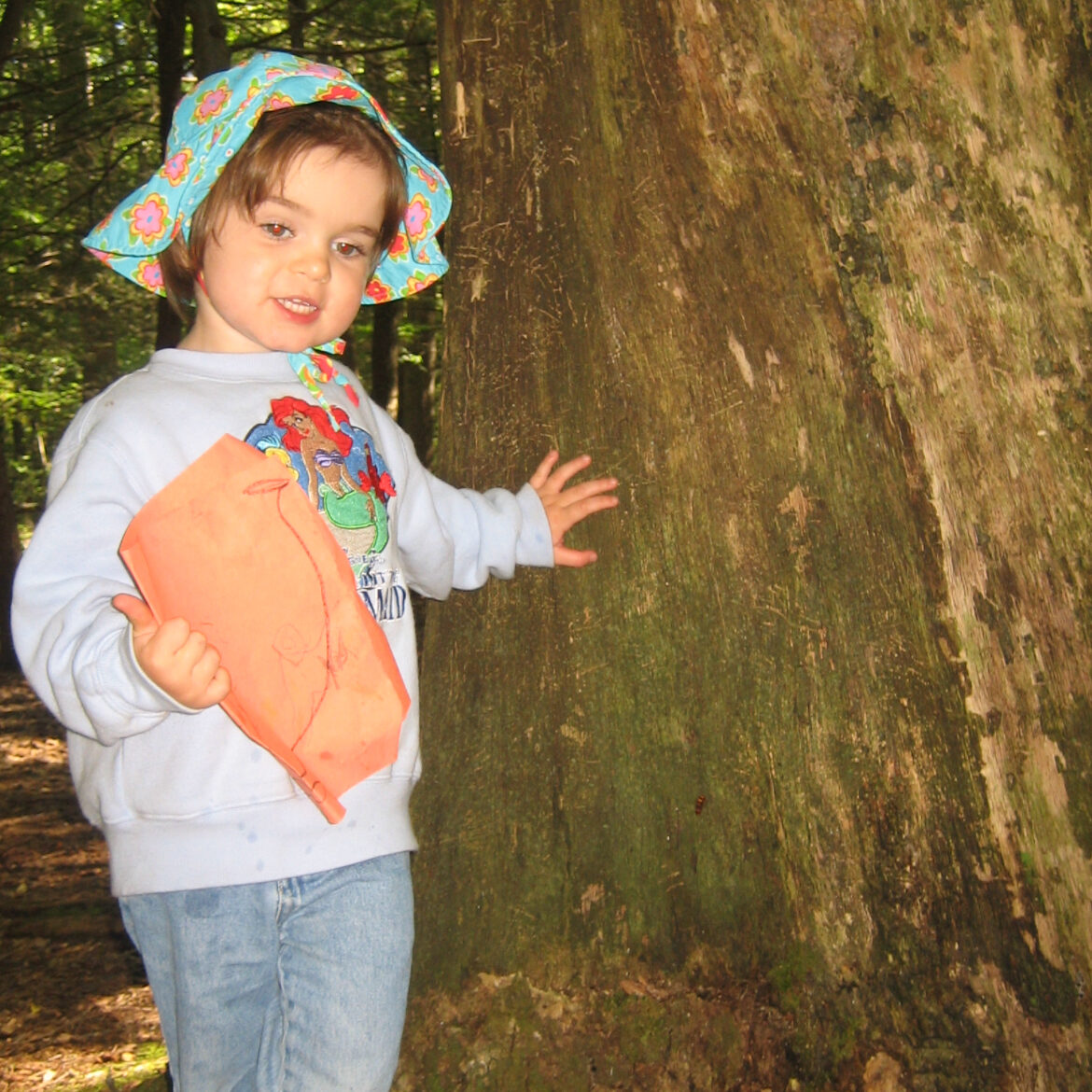
Original Picture: 11/27 1:05 PM
Species Composition & Observations:
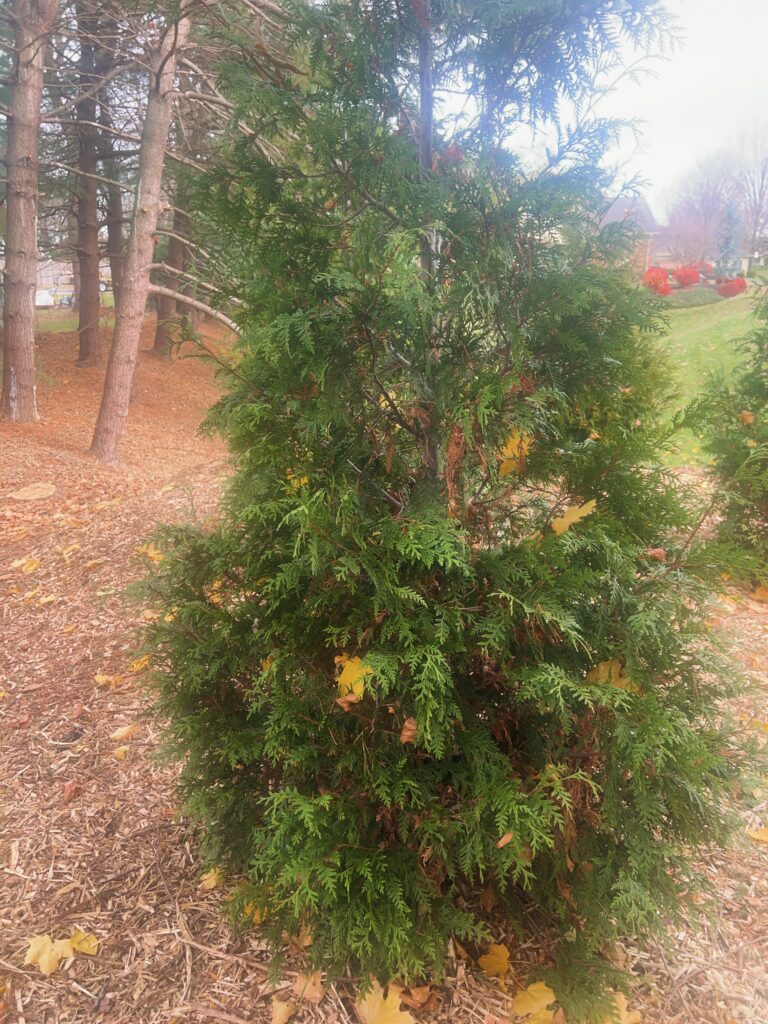
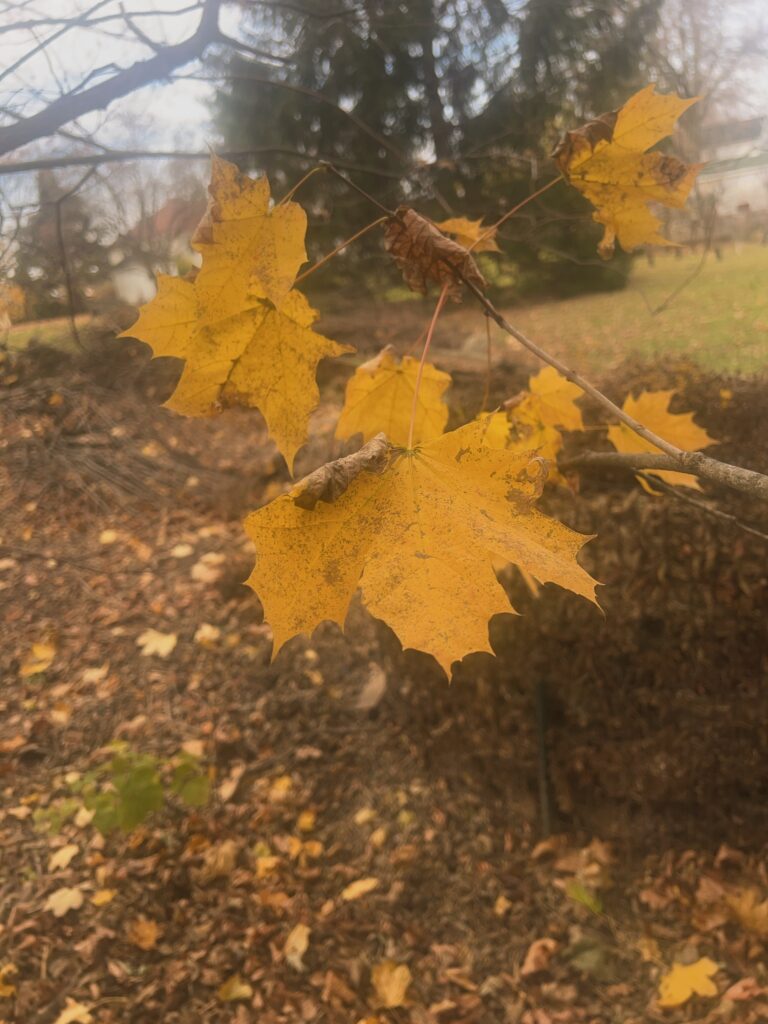
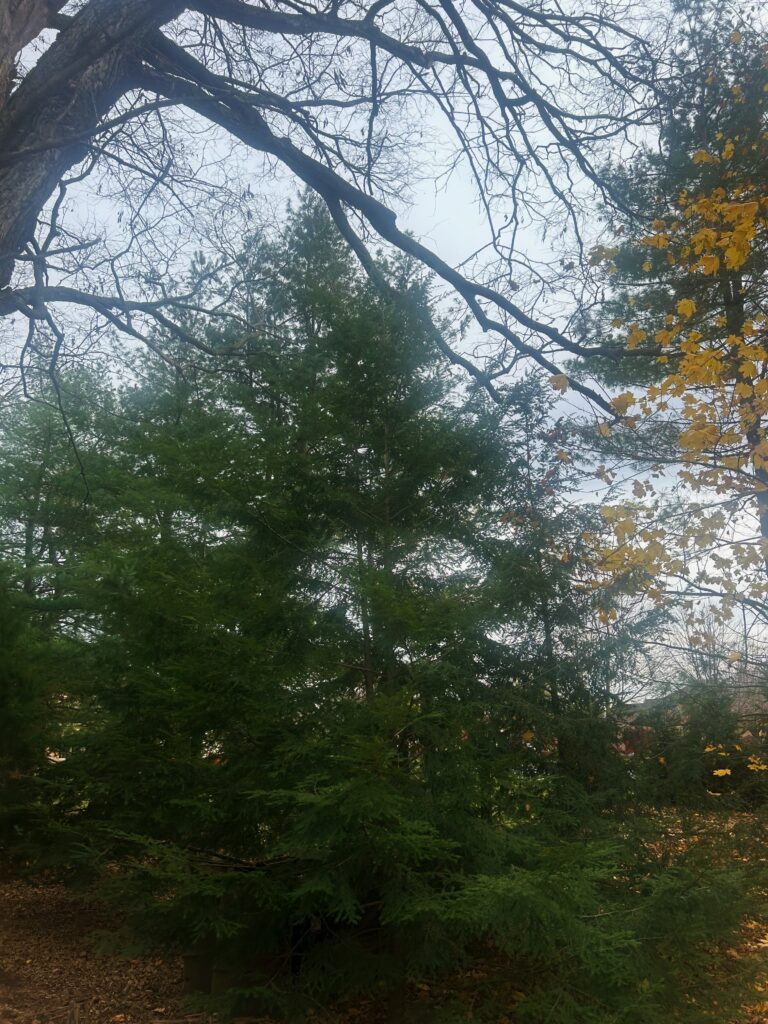
The entire back edge of this strip of forest is composed of very old Norway Spruce trees that sprawl over the neighborhood behind our property line. The majority of their bottom branches are broken and appear like rungs of a ladder. Additionally, there are a few young Northern White Cedars and large Norway maples, their leaves a vibrant yellow. A few Eastern White Pines and Eastern hemlocks tower over both of my neighbor’s backyards, serving as a backdrop to this strip of forest.
A Comparison to Shelburne Pond:
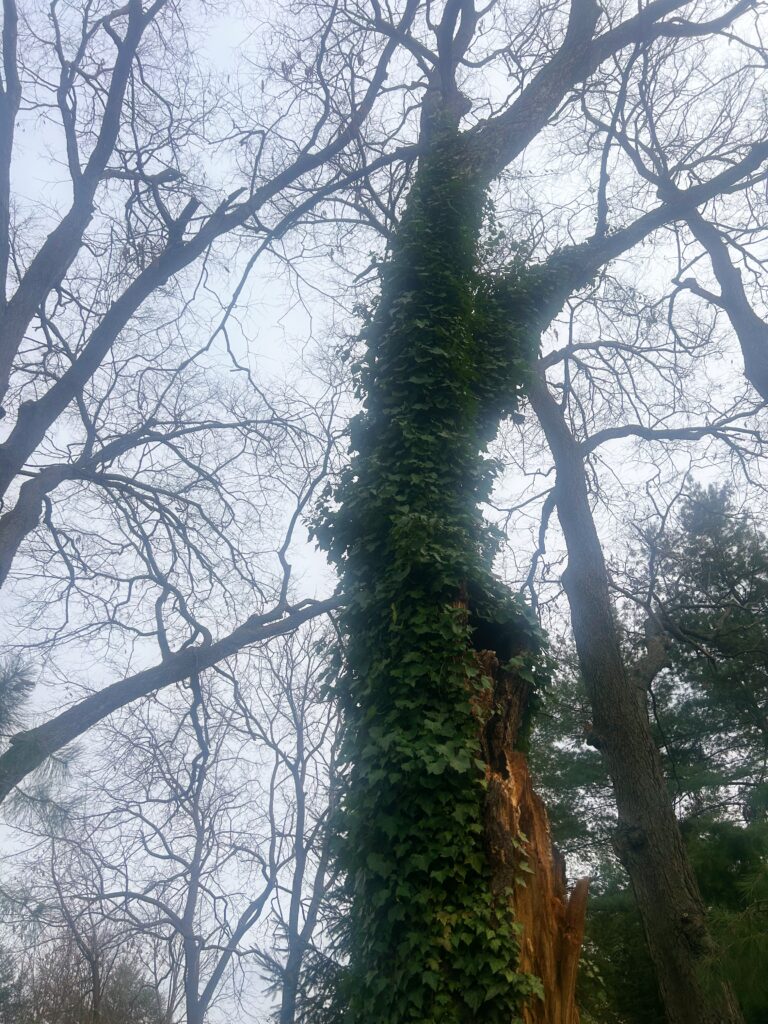
In comparison with my phenology place back at Shelburne Farms, I found many similarities in my backyard, specifically with the tree species. My phenology place in Vermont also contains a few scattered Eastern White Pines and Eastern hemlocks. Additionally, my phenology spot has many Northern White Cedars, although those are much older than the ones growing in my backyard. Shelburne Pond featured a lot more understory vegetation than my backyard; this strip of forest had almost no understory growth, although in the springtime there are often many wildflowers. Similar to Shelburne Pond, I noticed some signs of invasives such as English Ivy (pictured on the left); Shelburne Pond on the other hand featured buckthorn and honeysuckle. Because my phenology place at Shelburne Pond is located right on a gravel access road, the soil there appeared more rocky and compacted; in this spot in my backyard, the soil was very soft, clayey, and deep. Overall, I think both of these places share many similar characteristics in their tree composition, yet differ in understories and soil texture.
A Reflection on Robin Wall Kimmerer’s Honorable Harvest:
“The Honorable Harvest asks us to give back in reciprocity, for what we have been given. Reciprocity helps resolve the moral tension of taking life by giving in return something of value that sustains the ones who sustain us.”
– Robin Wall Kimmerer, “Braiding Sweetgrass”
After reading the chapter about Honorable Harvest from “Braiding Sweetgrass”, I was inspired to connect with the plants of this place in my backyard on a deeper and more reciprocal level. Looking back to the times I spent here as a kid, I realized that I’d often unknowingly practice reciprocity with the trees. The trees let me climb all over their branches, while I’d use their fallen leaves, pine cones, acorns, and needles to create bird nests and chipmunk homes. Revisiting this spot, now knowing how important it is to give back what we take, I began to really listen to the trees. These trees watched me grow up from a kid who loved to build animal habitats and climb trees to a college student studying these same trees. Visiting this spot was very special to me this Thanksgiving; I am very grateful for this small strip of forest in my backyard, and to return the favor I tucked some of the acorns and pine seeds deep into the soil in hopes that new trees can fill the forest in years to come.
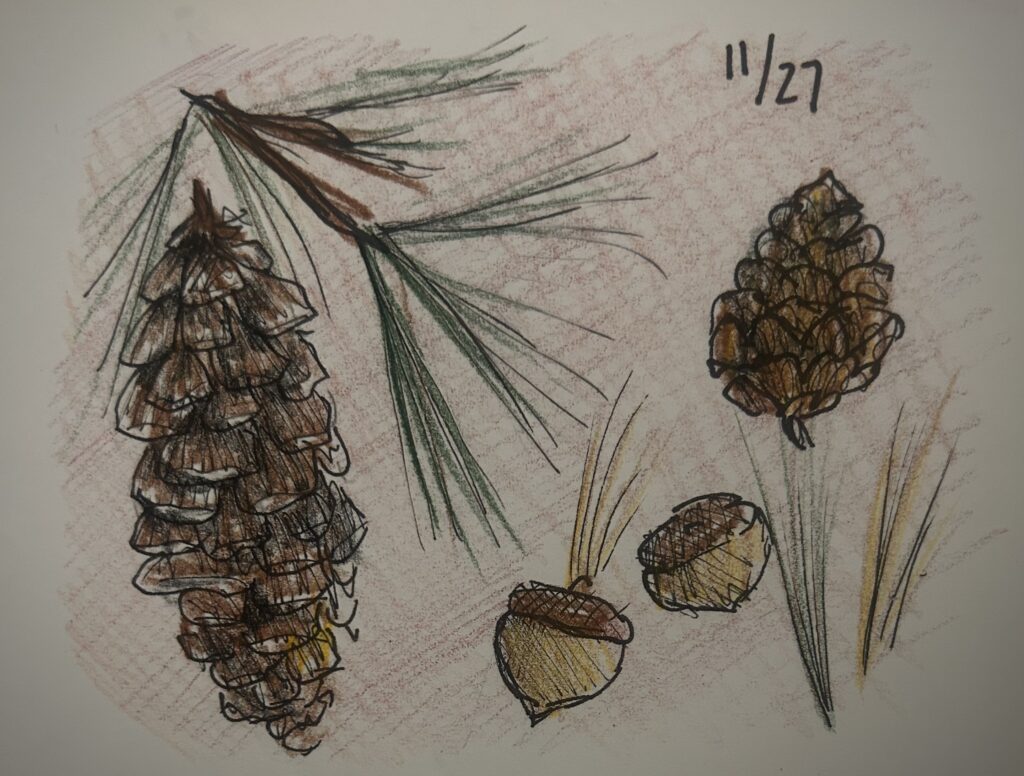
Original Sketch: 11/27