Observing Fall Phenological Changes
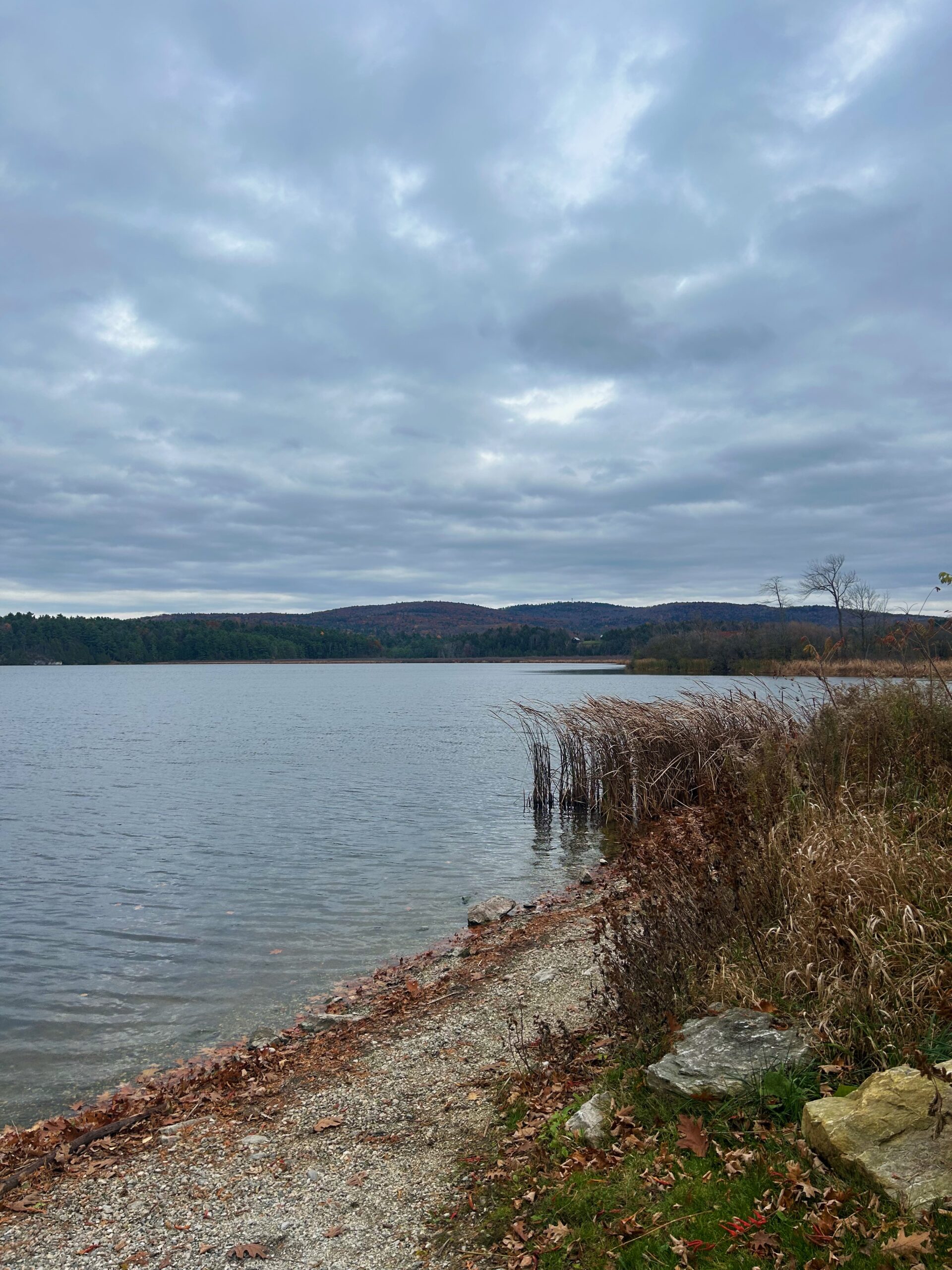
Although a very windy and chilly day at Shelburne Pond, it was a great experience to see how the vegetation surrounding the pond has begun to change as the days have grown colder and shorter.
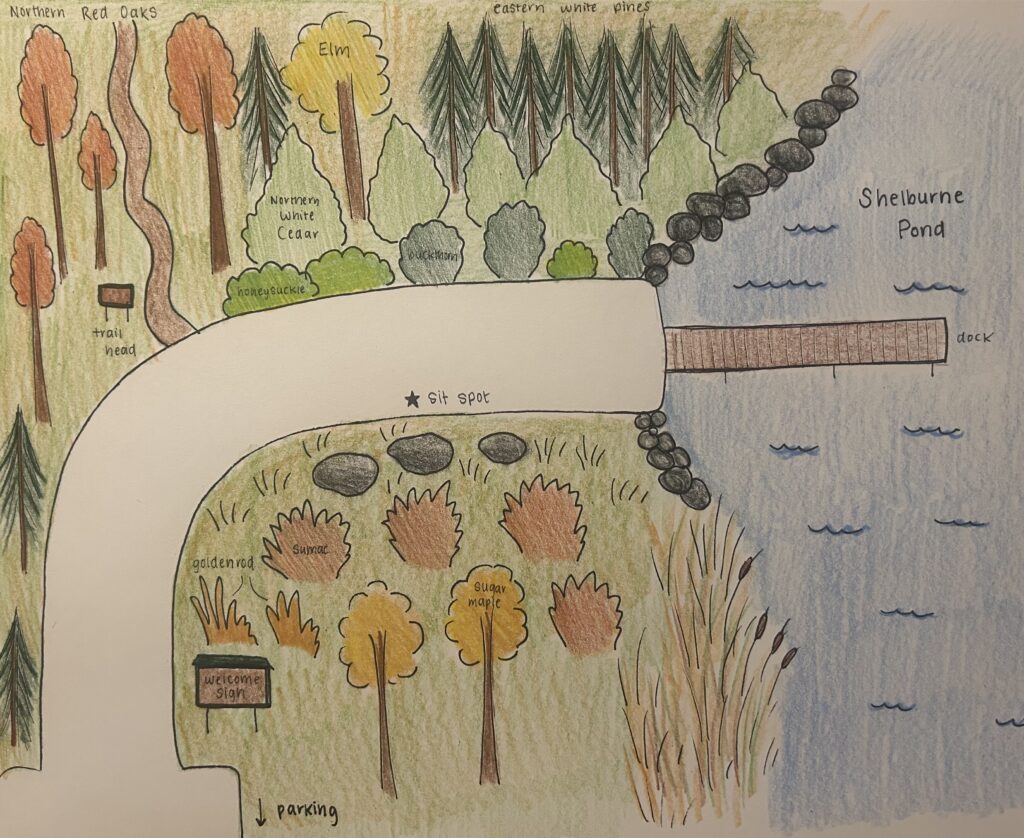
A Birds-Eye View:
Phenological & Vegetation Changes:
Over the past 3 weeks, there have been many noticeable changes to the vegetation at Shelburne Pond. Many of the deciduous trees, specifically the Sugar Maple, Sumac, and Northern Red Oak have lost nearly all of their leaves. The few leaves that remain on the Northern Red Oaks have become reddish-orange and brown. The ground surrounding the boat dock and up to the shoreline is primarily covered with dried leaves and dead grass/herbaceous foliage. The Northern White Cedar that borders the pond, as well as the Eastern White Pines that tower over the area, are much more noticeable, as they have not lost their foliage. There has also been a noticeable difference in the shrubs lining the access road and tucked in between the Northern White Cedars. The honeysuckle has turned a bright greenish yellow and the golden rod has turned brown and become less fuzzy in appearance. The pond color and turbidity appeared to have stayed relatively the same as my previous visit.
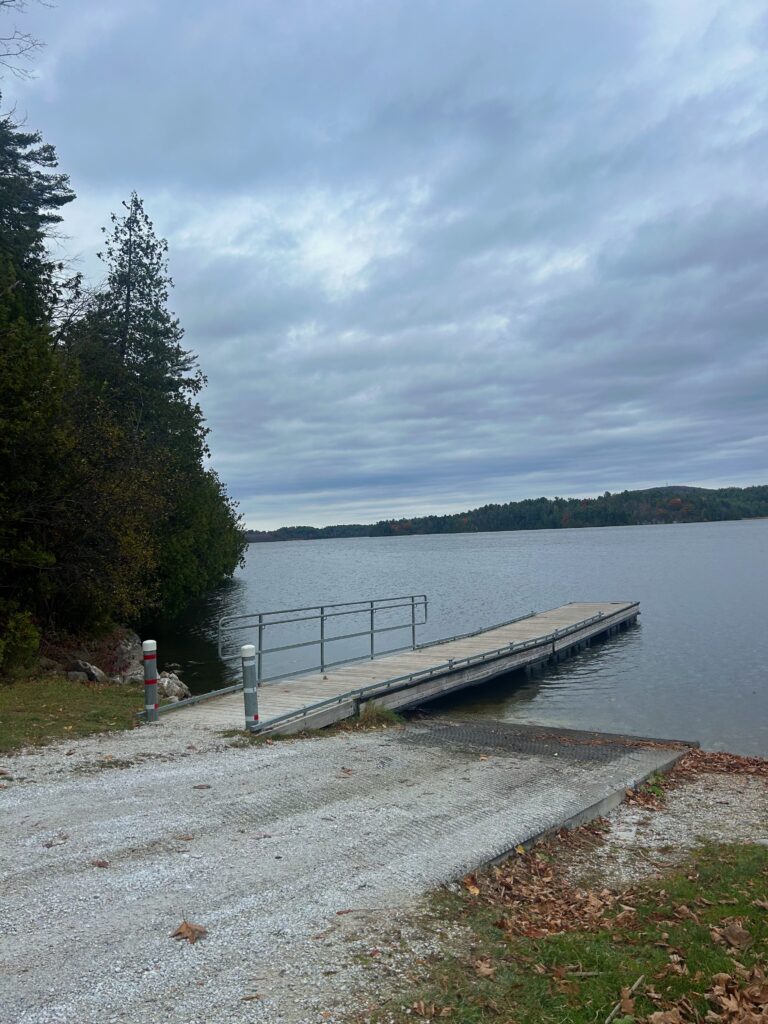
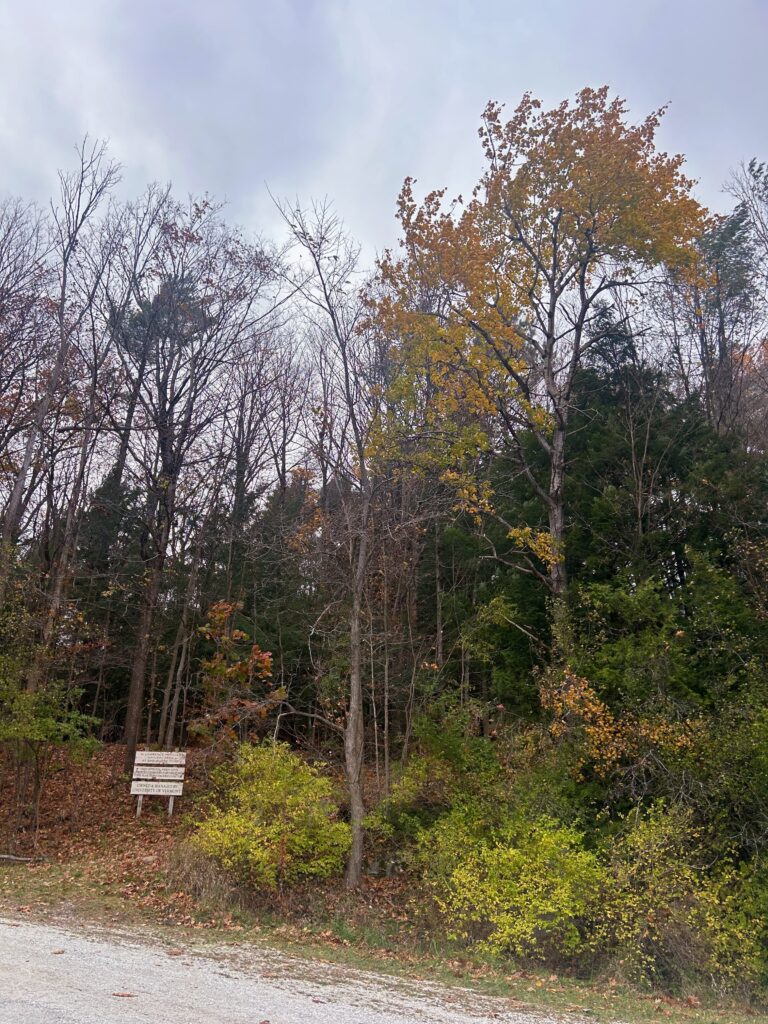
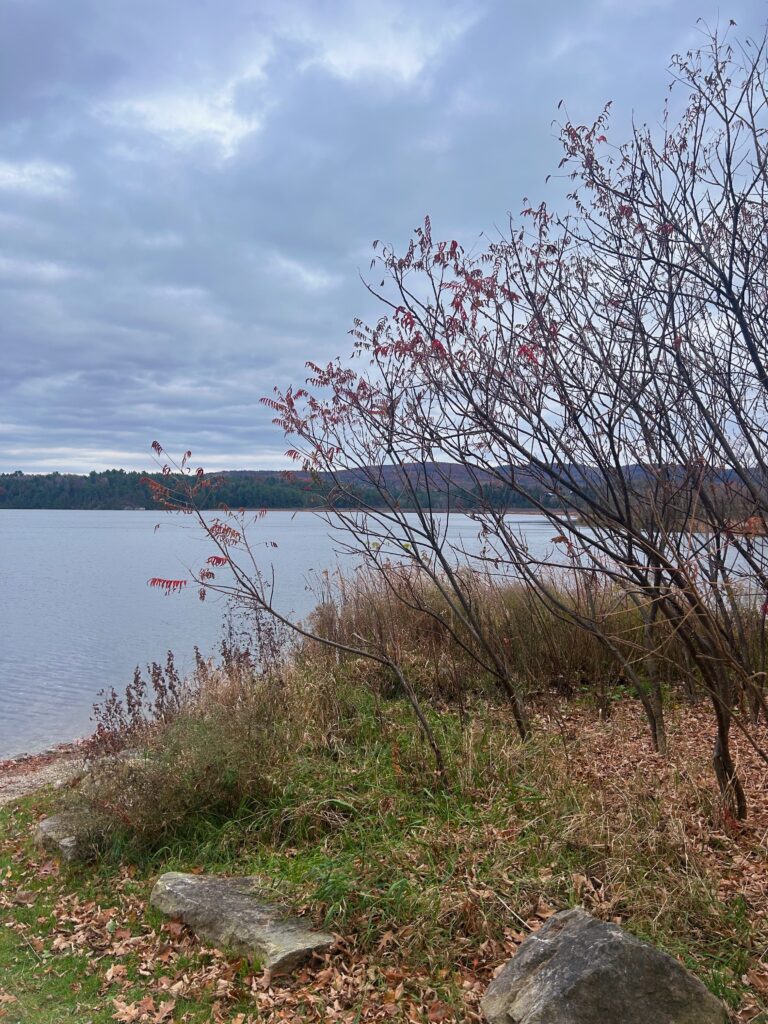
Original Pictures: 10/29 4:03 PM
15-minute Reflection Experience:
While sitting in my phenology spot for 15 minutes, it was amazing to watch each small moving piece within the ecosystem and obtain a new perspective of my phenology place. Sitting in the center of my phenology place, I had an impeccable view of the tallest overstory trees on both sides of the dock. As it was very windy, I watched the tall Eastern White Pines and Northern Read Oaks sway their top branches. The shrubs of buckthorn and honeysuckle below rustled and moved swiftly back and forth as many dried, fallen leaves tumbled toward the shoreline. The grasses and cattails that line the rippling pond also whistled in the wind. During my 15 minutes, I didn’t observe or hear much wildlife, but it was still a great opportunity to listen to the trees and diverse vegetation that make up this special spot. Overall, it was a very calming and relaxing experience to watch how the trees and wind interacted, and it was interesting to notice all of the changes that have occurred over the past few weeks.
A Connection to Lecture:
“Listen to the trees as they sway in the wind. Their leaves are telling secrets. Their bark sings songs of olden days as it grows around the trunks. And their roots give names to all things. Their language has been lost but not the gestures.”
– Vera Nazarian
As I listened to the trees dance in the wind during my reflection, I began to make connections to NR1010 lecture about the history of the land, and the patterns, pieces, and processes framework we discussed. The trees might not be able to physically tell me their “secrets” or why they decided to grow in that particular spot, but by paying very close attention I can make sound predictions about the natural community. As if the trees were “singing songs of olden days” as the Vera Nazarian quote above explains, I began to wonder why the Northern White Cedars all line the pond or why the oaks and Eastern White Pines are scattered and scarce. Using my knowledge as a NR1010 student, I can predict that maybe the Northern White Cedar’s affinity for wet and moist environments is why it grows straight along the edge of the pond. I can also make predictions about a possible disturbance in the area in years past which is why so many understory species dominate the area below the Eastern White Pines and Northern Red Oaks that love the full sun. Overall, I was able to utilize a lot of my knowledge acquired in class to grow my connection with my phenology spot as I made predictions about its detailed and somewhat unknown history that only the trees can tell.