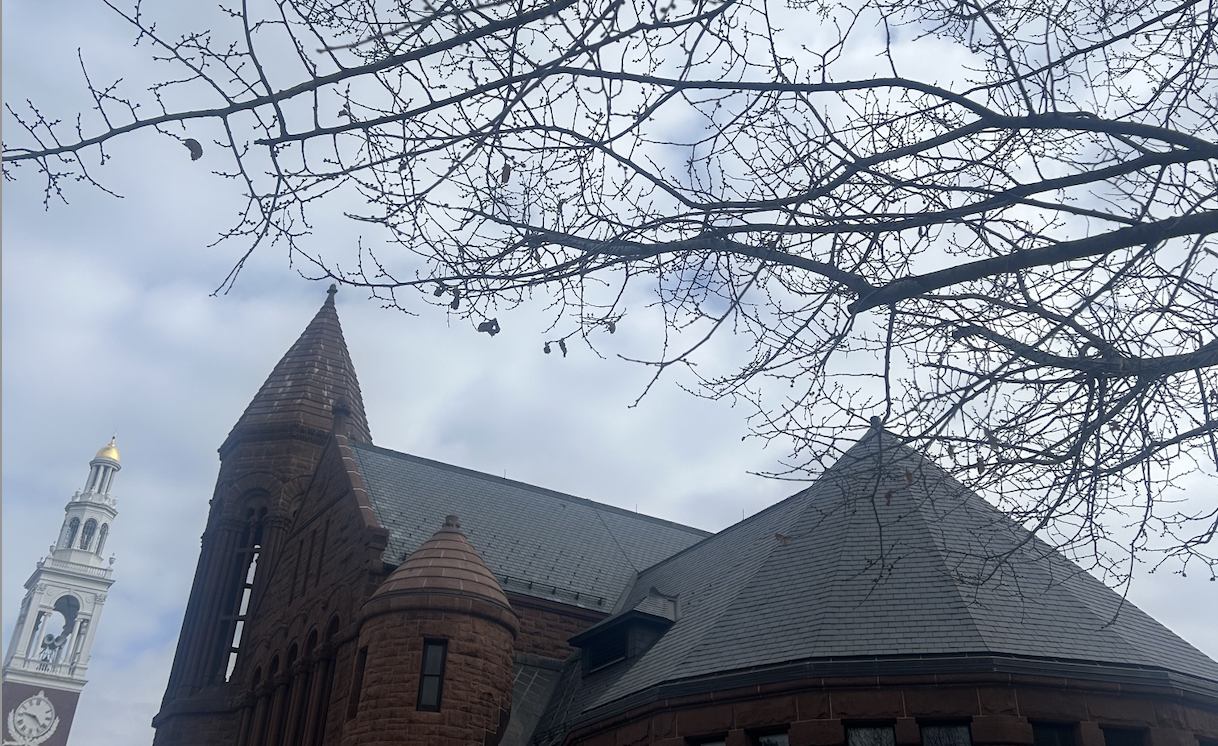
Phenology Walk
To collect my phenological data, I went out on March 25th at around 9:00 am. The weather was generally cloudy, and the temperature was around 35 degrees Fahrenheit.
Observations:
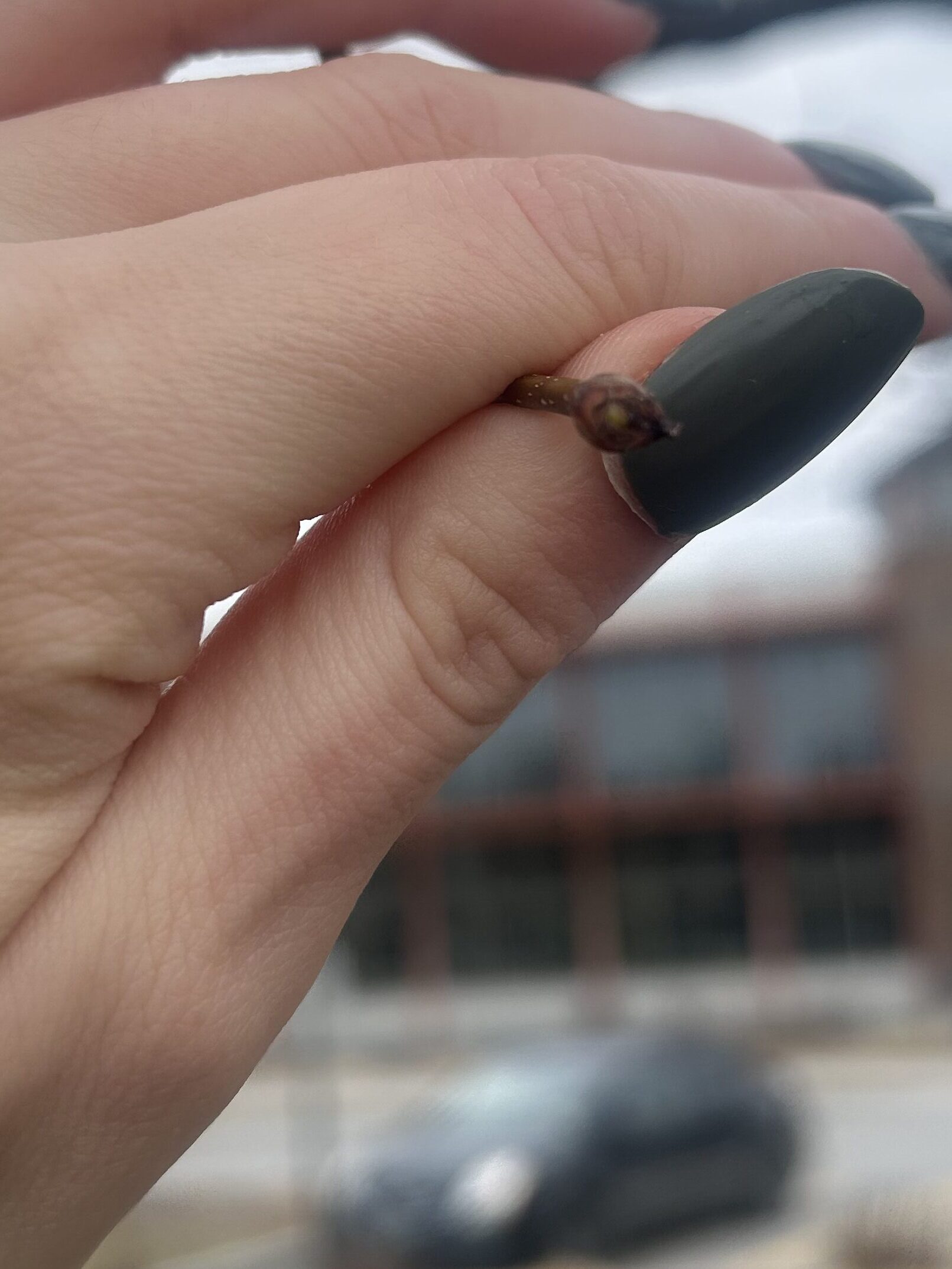
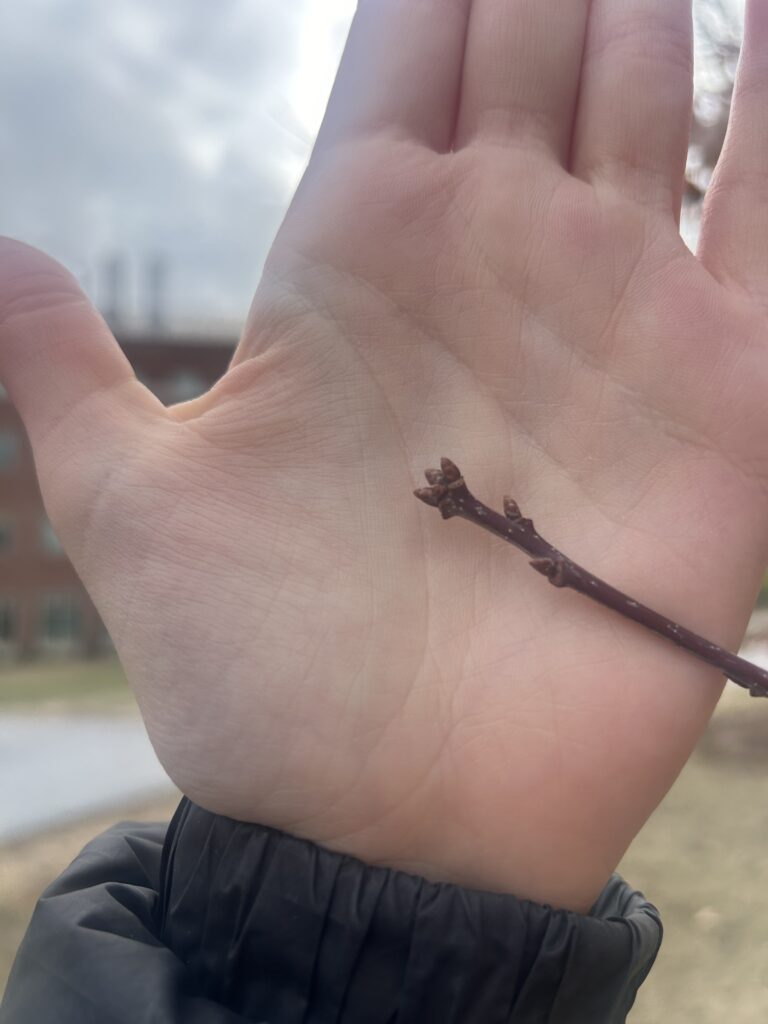
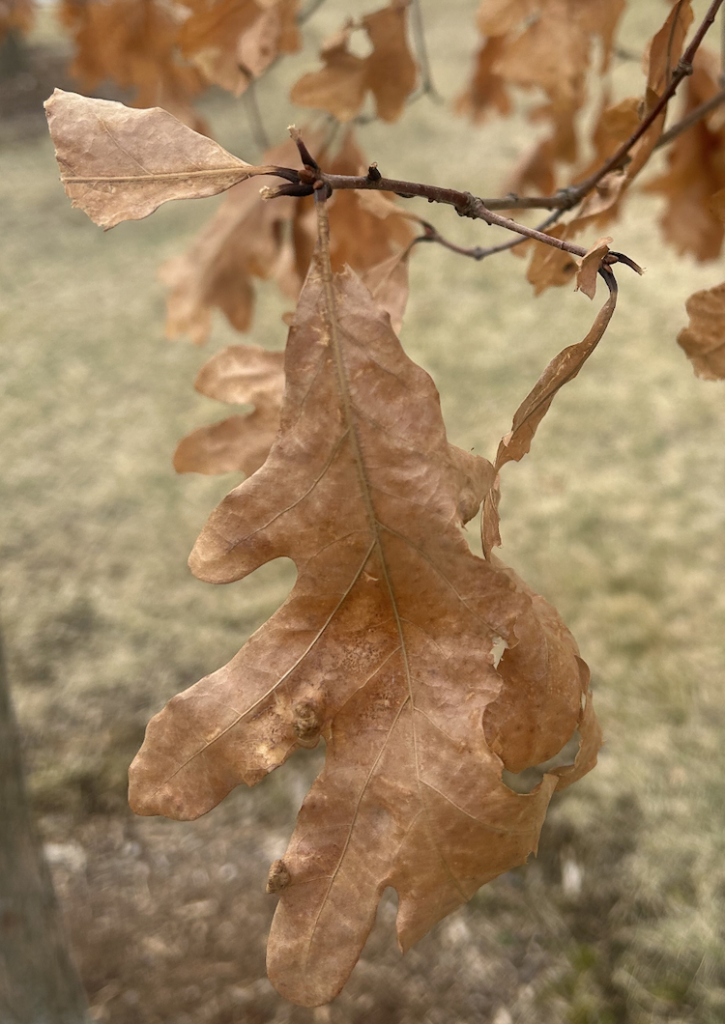
I started my phenological data collection journey with the sugar maple outside of the Davis Center. This larger sugar maple had no leaves, and upon close inspection of its opposite branching and bud development, some of the buds appeared to be breaking slightly. Some of the bud centers were just beginning to show a vibrant yellow-green. Across the way, I observed the young Northern red oak. This tree was clearly in a different phenophase than the sugar maple, as it still had most of its leaves on the branches. The oak’s buds had not yet broken. Similarly, the white oak behind the Aiken Center also still had the majority of its leaves, although they were dry and brown. These buds also remained unbroken. Next, I traveled to the marked red maple by the Old Mill Building. The red maple appeared to be in a similar phenophase to the sugar maple I observed earlier. The buds were large and red, with some breaking. No flowering had occurred yet. Lastly, the Norway maple had some remnants of dried leaves still on its branches. For the most part, the buds remained closed. Overall, the maple trees appeared to be further along in their spring phenophase progression as compared to the oaks. Minimal signs of wildlife were observed, except for one grey squirrel near the red maple.
NPN Website Exploration:
After checking out NPN’s website, I found one publication summary interesting about how male and female trees are responding differently to temperature increases each year. The article explains how dioecious plants, like ash, willow, poplar, and some maples, are beginning to experience a reproduction gap. Climate change has led to longer springtime warmth, and male trees tend to flower earlier than females due to greater warmth sensitivity. With male trees advancing their flowering time at greater rates than females, there is a drop in reproductive success. This can have detrimental consequences for the species and affect wildlife that rely on the pollen transfer and continuation of the tree species. This study is just one way that climate change has resulted in phenological mismatches that not only affect tree phenophase transitions but also the plethora of wildlife interactions that rely on the phenological synchronicity. The five tree species we are observing on campus could be experiencing the same mismatch as Burlington temperatures increase, and flowering/leafing out times are shifting.