Wildlife Tracking & iNaturalist Observations
Initial Observations:
Check out the hyperlinks below to view the iNaturalist observations!
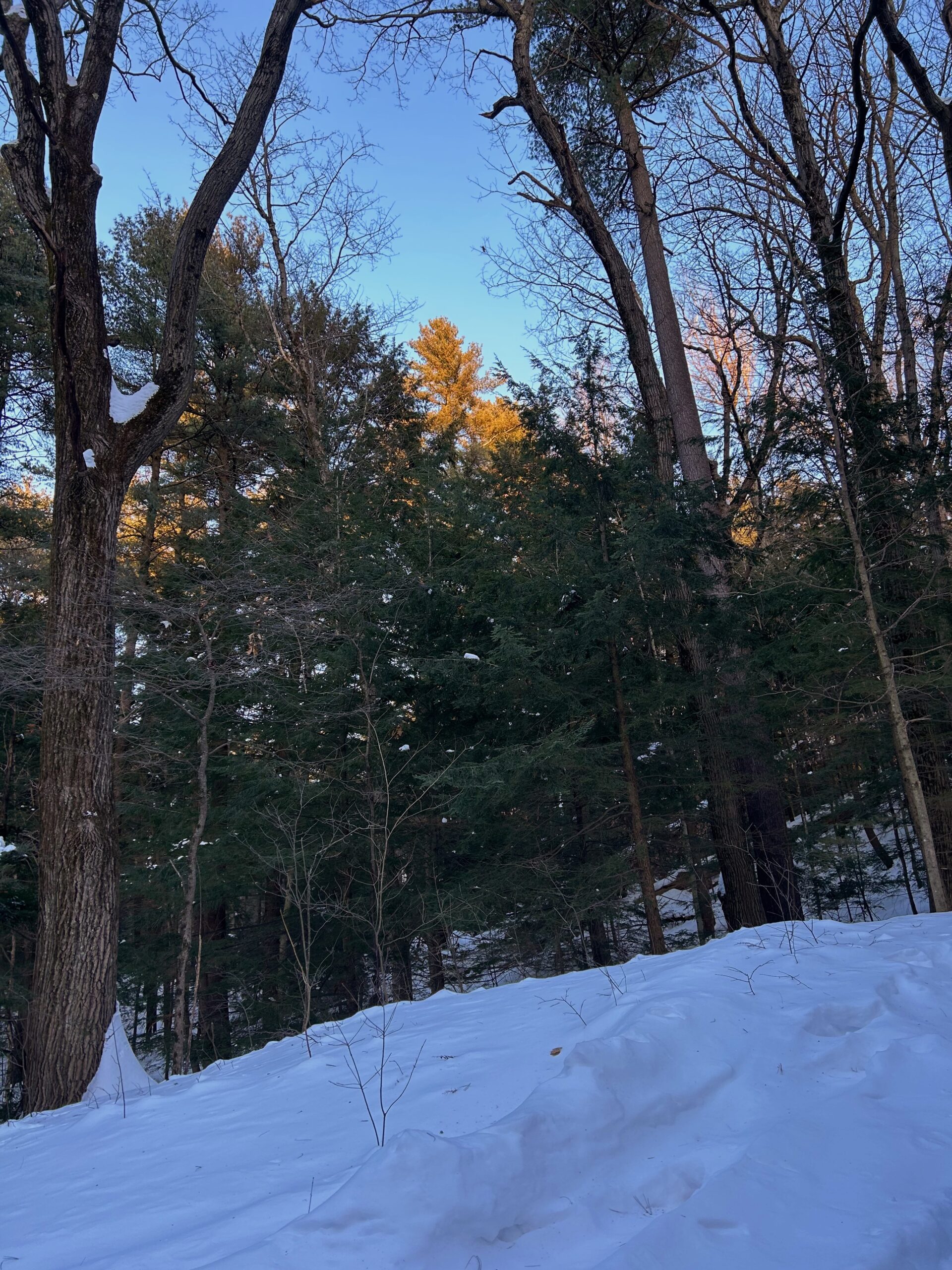
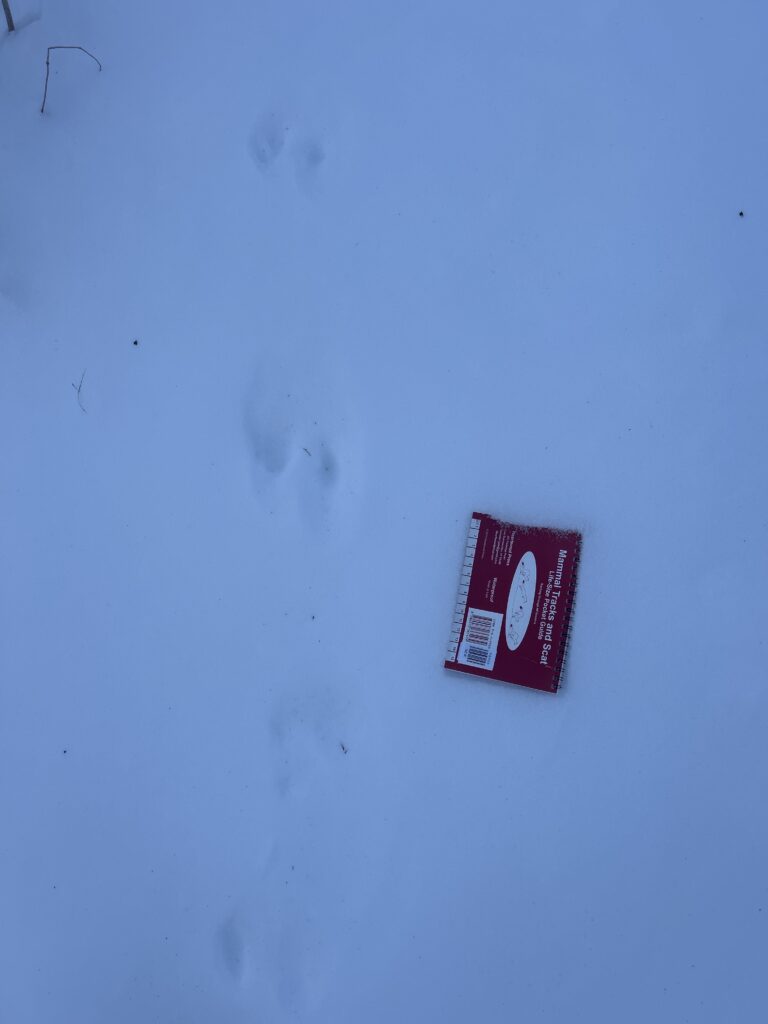
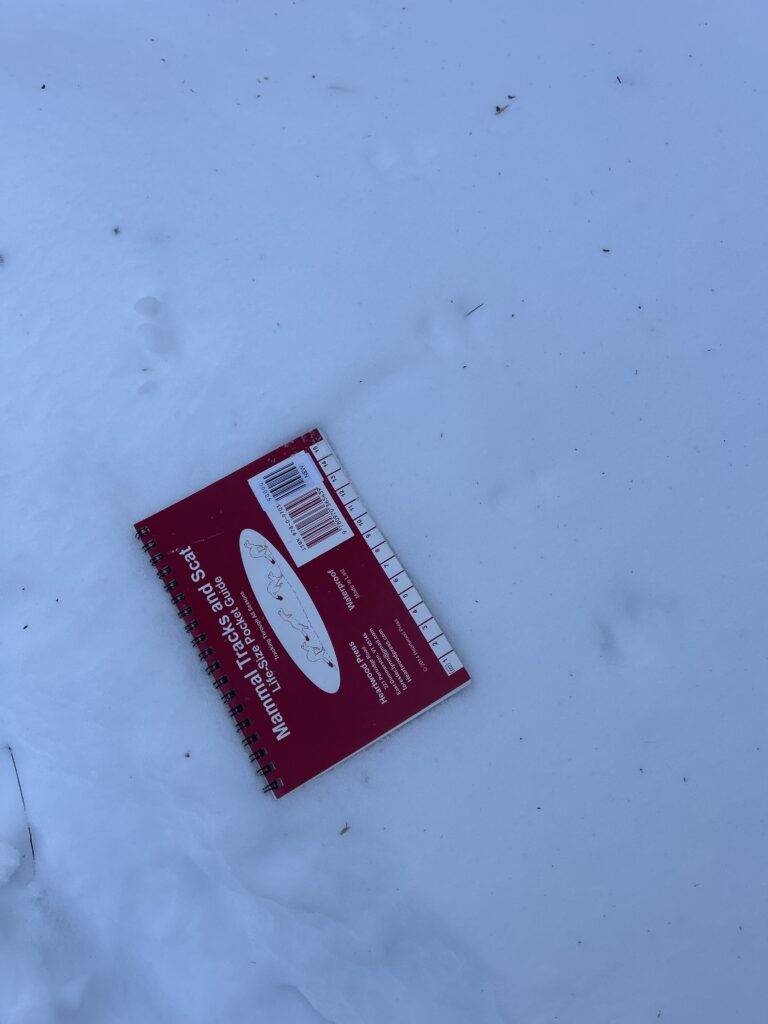
For this week’s phenology post, a peer and I decided to visit Centennial Woods, right down the road from campus, to observe some winter signs of wildlife. After taking the short walk there, we were met with several inches of snow; we took the fairly well-traveled path into the woods and stepped off-trail to follow a few wildlife trails. Within the first few minutes, we made our first observation of a clear galloping gait pattern between a group of old Eastern white pines. The tracks were arranged in parallel groups of four, with the two in the front somewhat larger. The more distinctive tracks were around 2 to 3 inches long and about an inch deep, with a stride of around 6-8 inches. After consulting our field guide, we believed the galloping gait pattern to be that of either a squirrel or a rabbit. However, because the tracks are on the smaller side (around 12 cm according to the guide) and arranged side by side (as opposed to diagonally), we concluded that these tracks belonged to a grey squirrel. Later, we found another distinctive galloping gait pattern but were unable to get an up-close picture due to the thick snow layer. These tracks appeared larger and more similar to that of a rabbit.
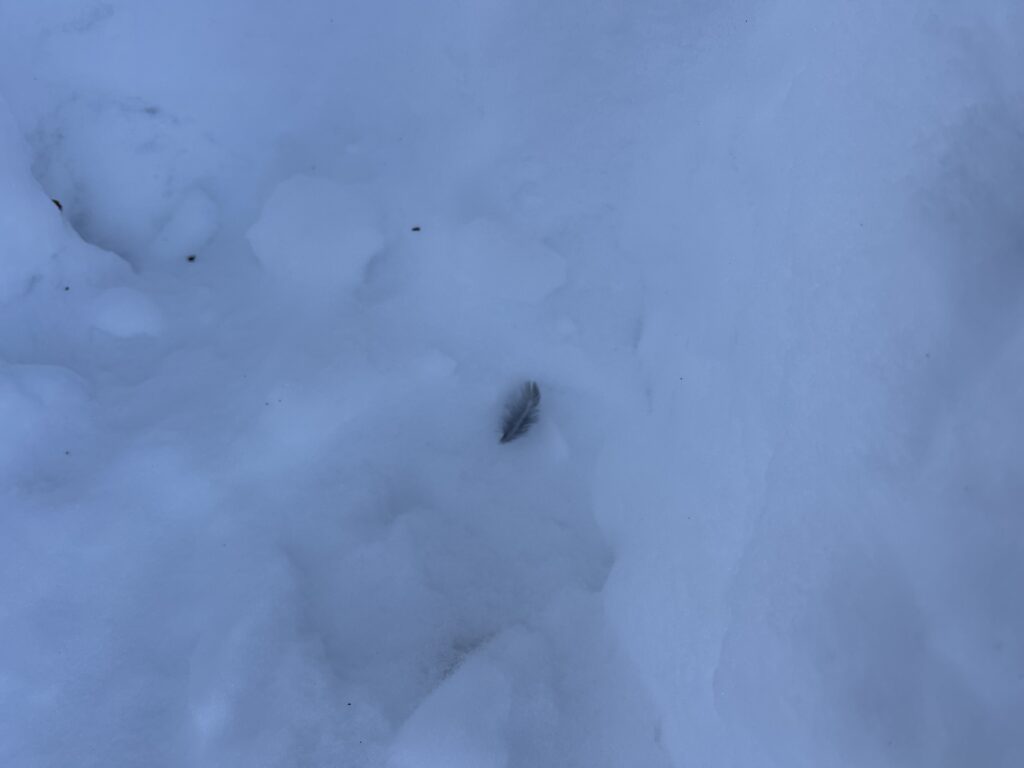
As we continued our journey, we found a couple of trails of very small bird tracks, including a fallen grey feather. Making our way deeper into the forest, we came across what first appeared to be deer tracks, but after closer inspection, they appeared to be additional squirrel tracks. The tracks were all situated near a large brush pile, and deer tracks would likely have gone deeper into the thick snow layer compared to these, likely from a smaller animal like a squirrel.
Mystery Marks:
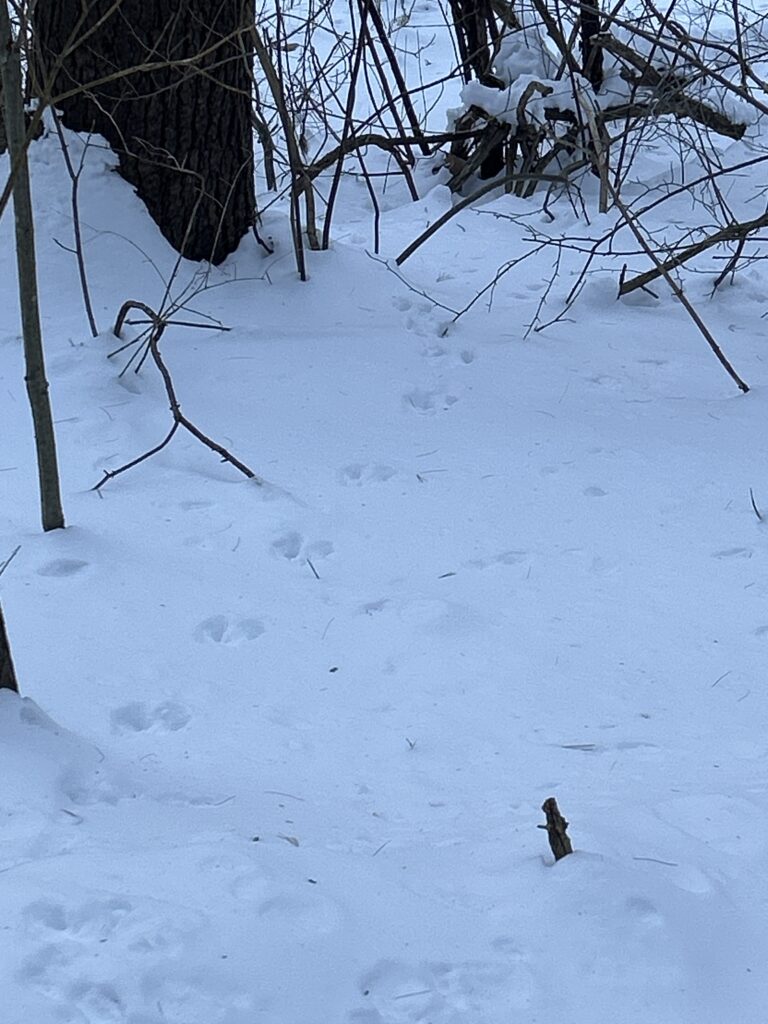
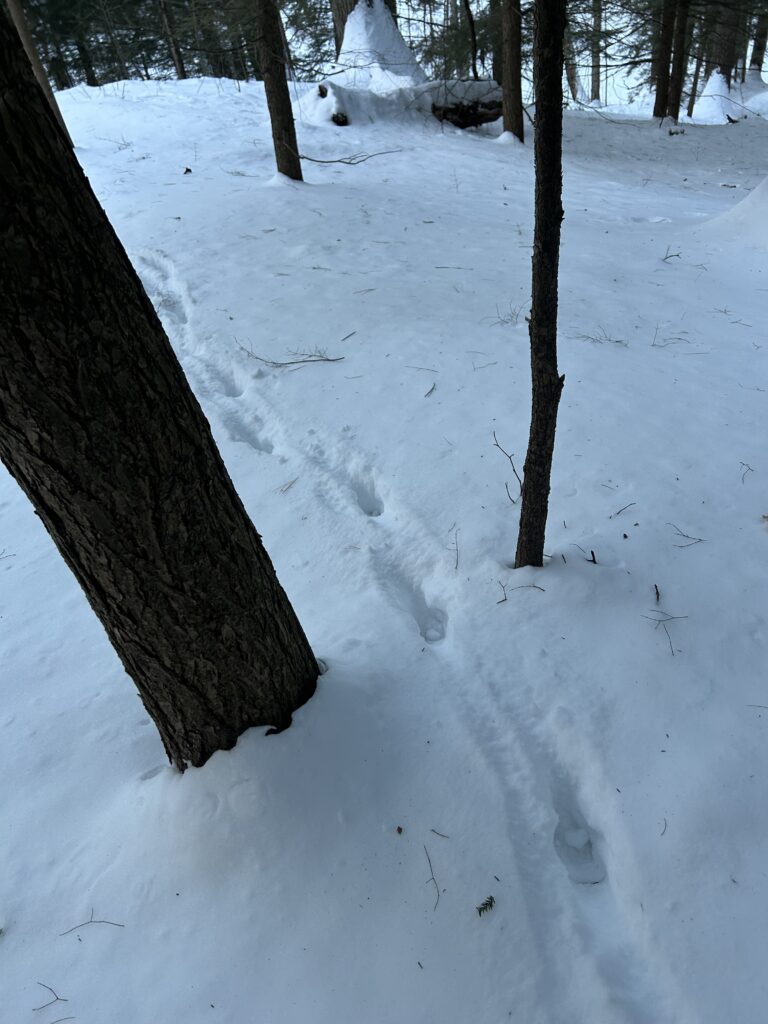
During our time at Centennial, we came across many mystery tracks that we were unsure of their owner. One trail had very long drag marks and a diagonal gait pattern. The trail abruptly started beneath a tree and seemed to disappear before merging into the main trail. Because of the snow’s depth, it was hard to make out any clear print. We hypothesized that it belonged either to a dog or a deer who also display diagonal gait patterns.
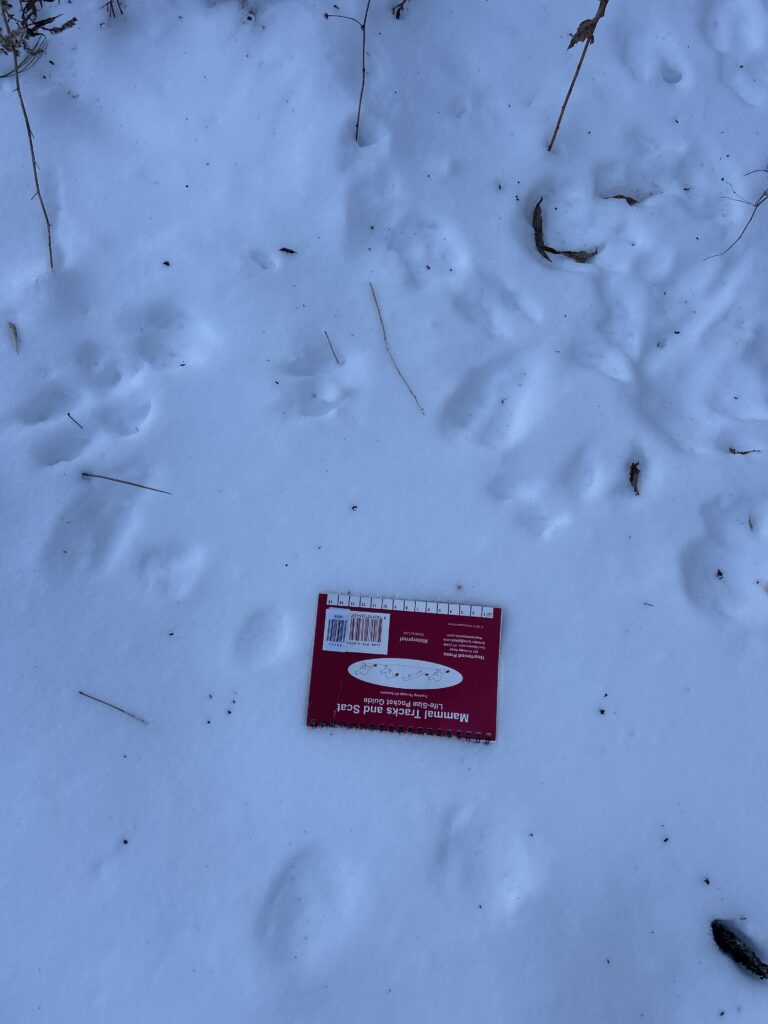
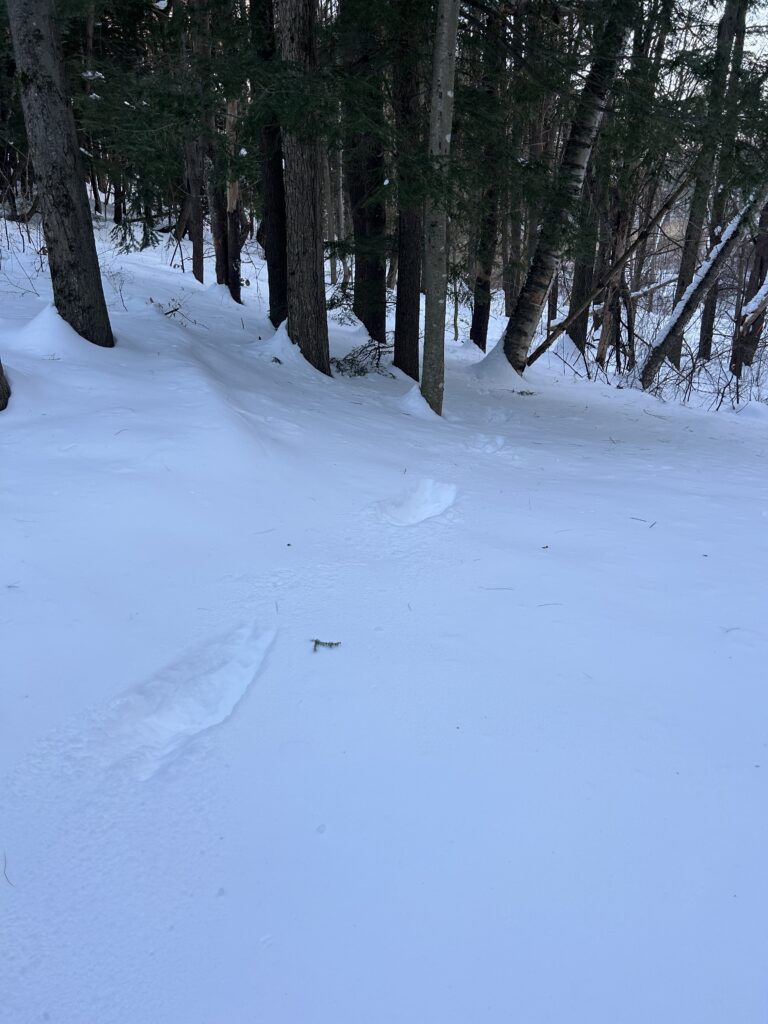
Additionally, there was a group of large impressions in the snow about 2 feet apart. No tracks were easily visible, but the impressions appeared to have 2 drag marks extending from the top and bottom. It appeared that a larger animal was running and jumping through the snow.
Reflection:
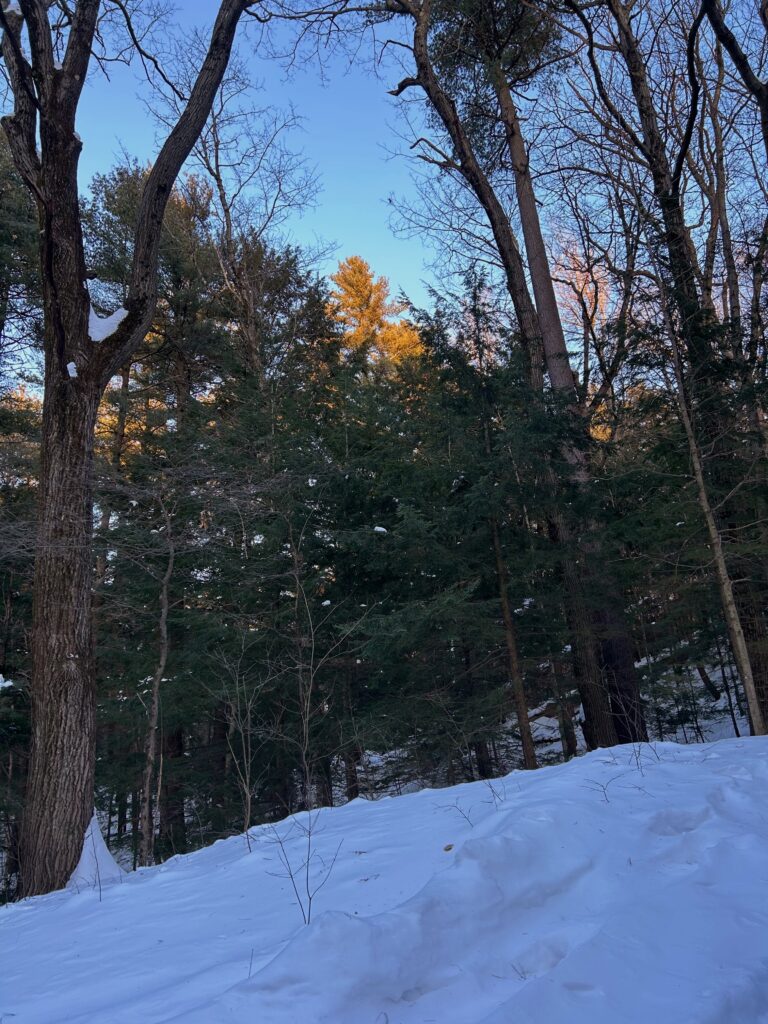
We weren’t able to spot any wildlife during our short hike, although we did hear a few bird calls around dusk. Overall, I really enjoyed observing more phenological winter changes in a new spot, especially one so close to campus and Burlington. Additionally, logging the observations on iNaturalist has been a great way to compare tracks and wildlife signs from other Rubenstein students exploring the area, including at Centennial Woods. It has been an amazing opportunity to research and observe such unique ecosystems that are located directly in a populated city and understand how urban environments play a role in their function. As the snow melts and wildlife becomes more active with the arrival of spring, I hope to return back to Centennial Woods to observe some more phenological changes and activity.