Wildlife Tracks & Winter Changes
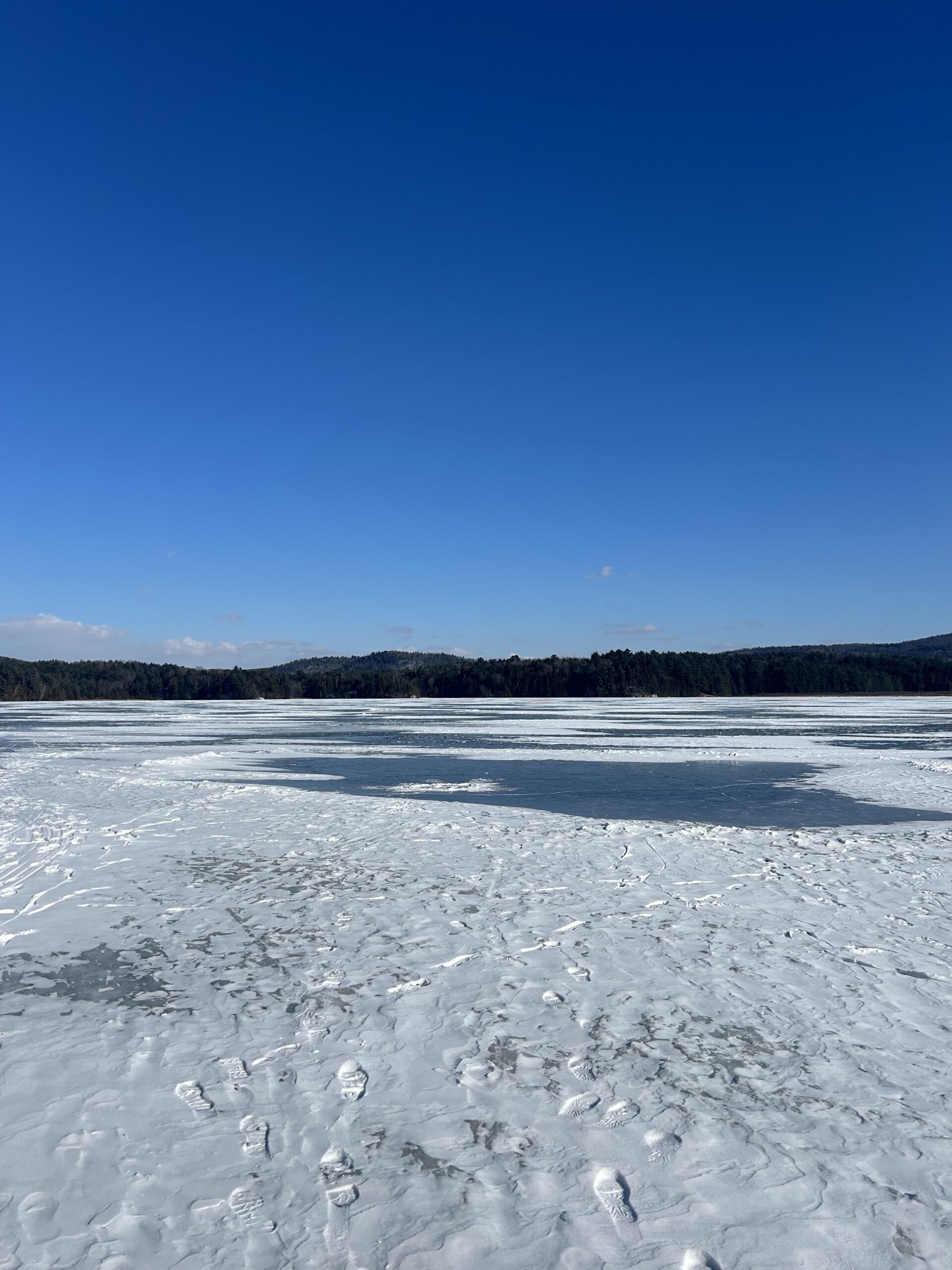
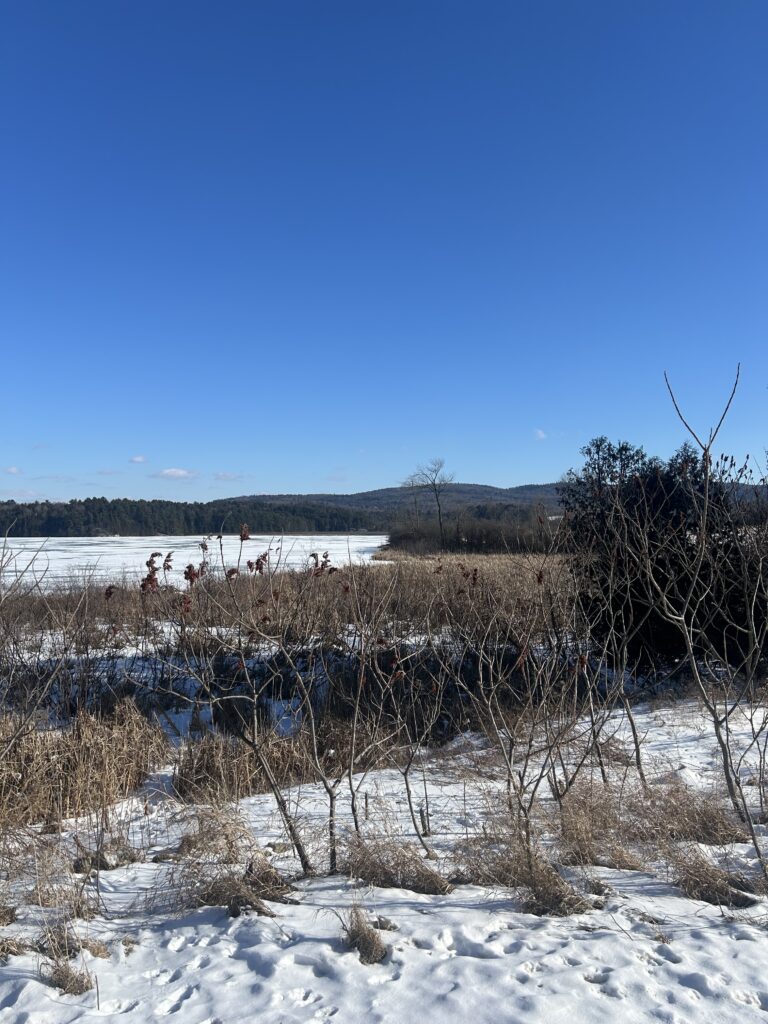
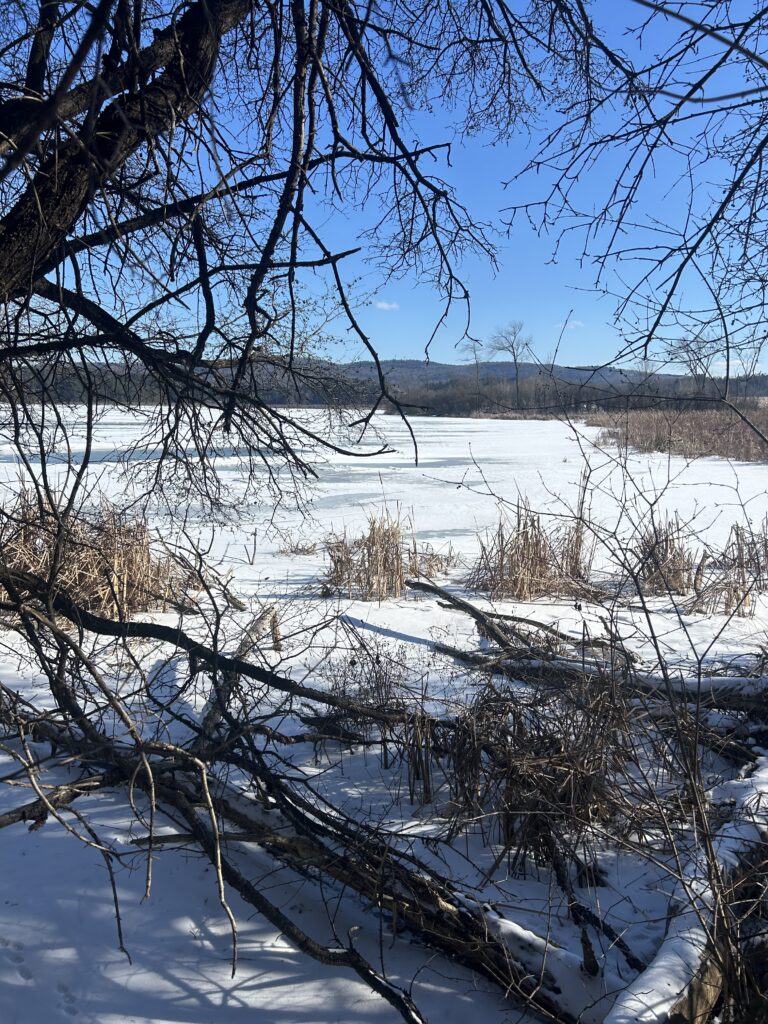
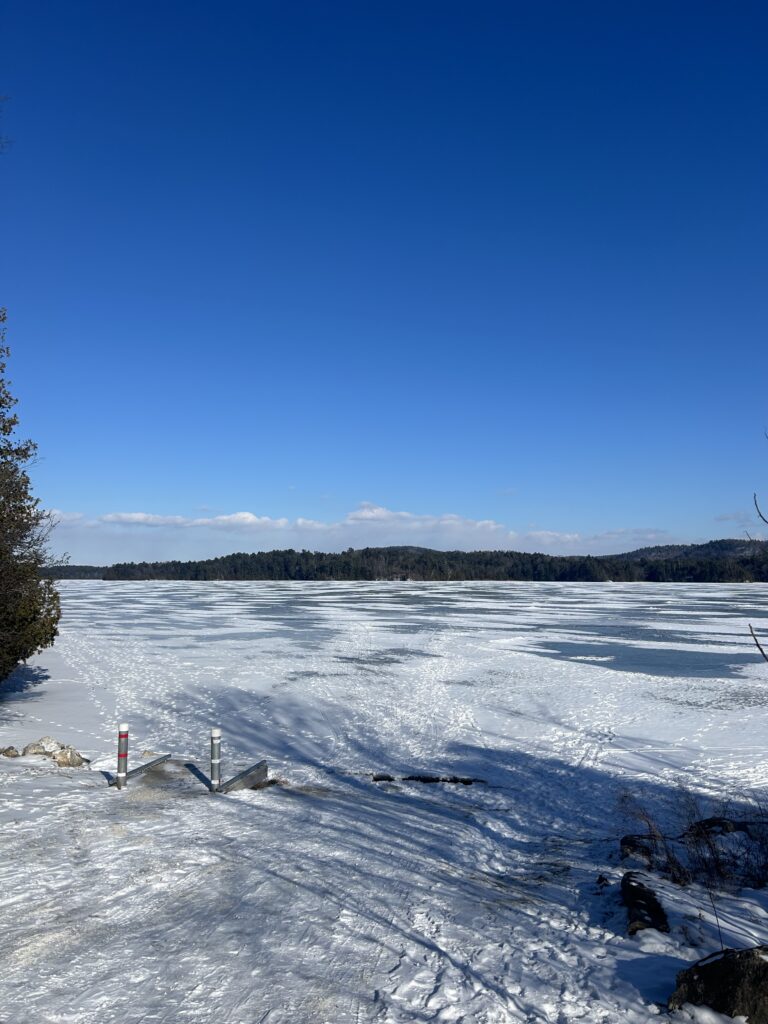
Upon returning to my phenology spot about a month since my last visit, it was clear that many phenological changes have taken place. Due to temperatures dropping to single digits these past few weeks, the entirety of Shelburne Pond was frozen over in a thick layer of ice, with some snow patches. It was such a fun experience to walk out on the ice, view fascinating ice formations, and see my phenology spot from a different perspective. My friend and I even heard some interesting sounds while on the ice, likely from the ice shifting beneath the surface.
Wildlife Tracks:
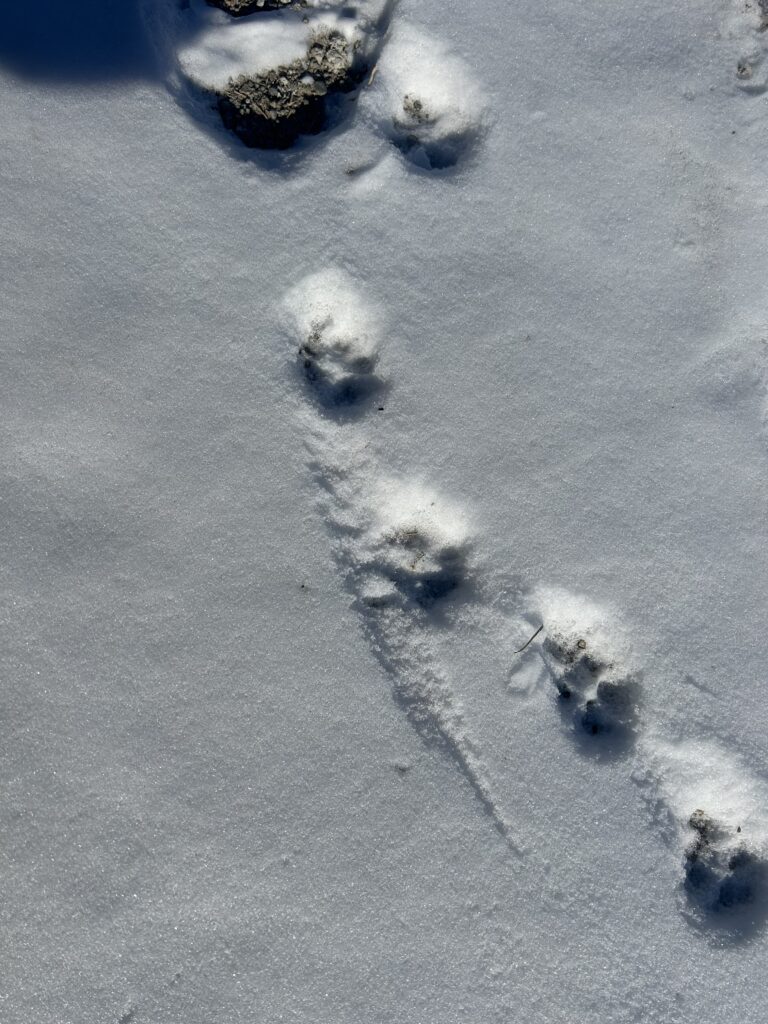
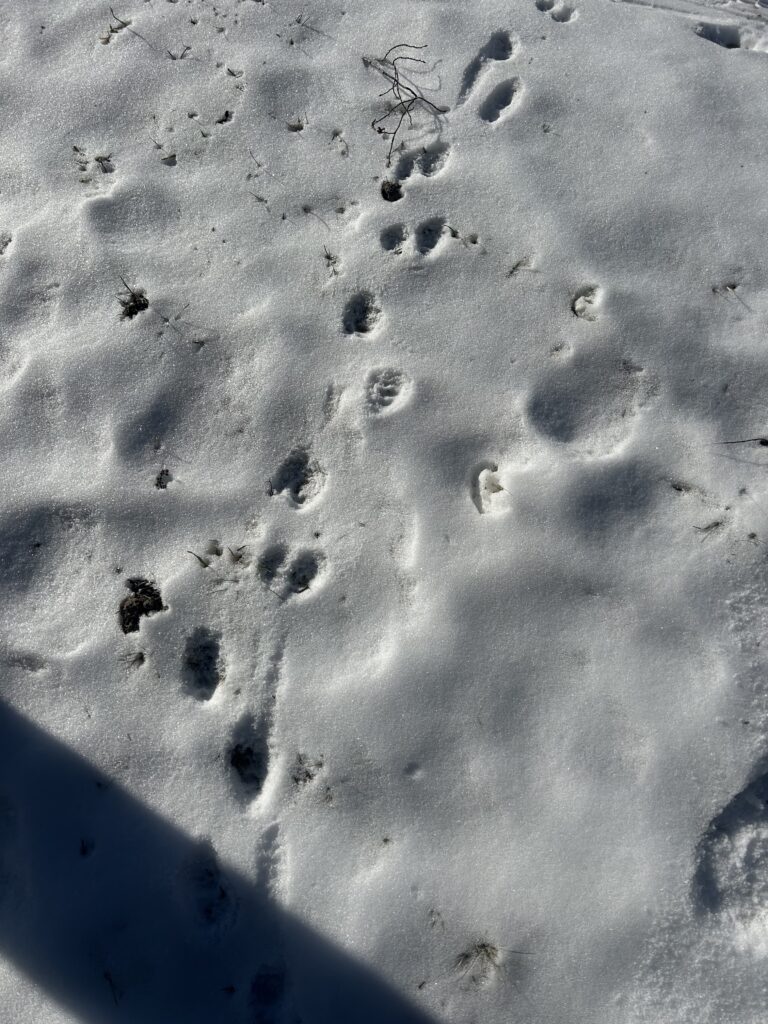
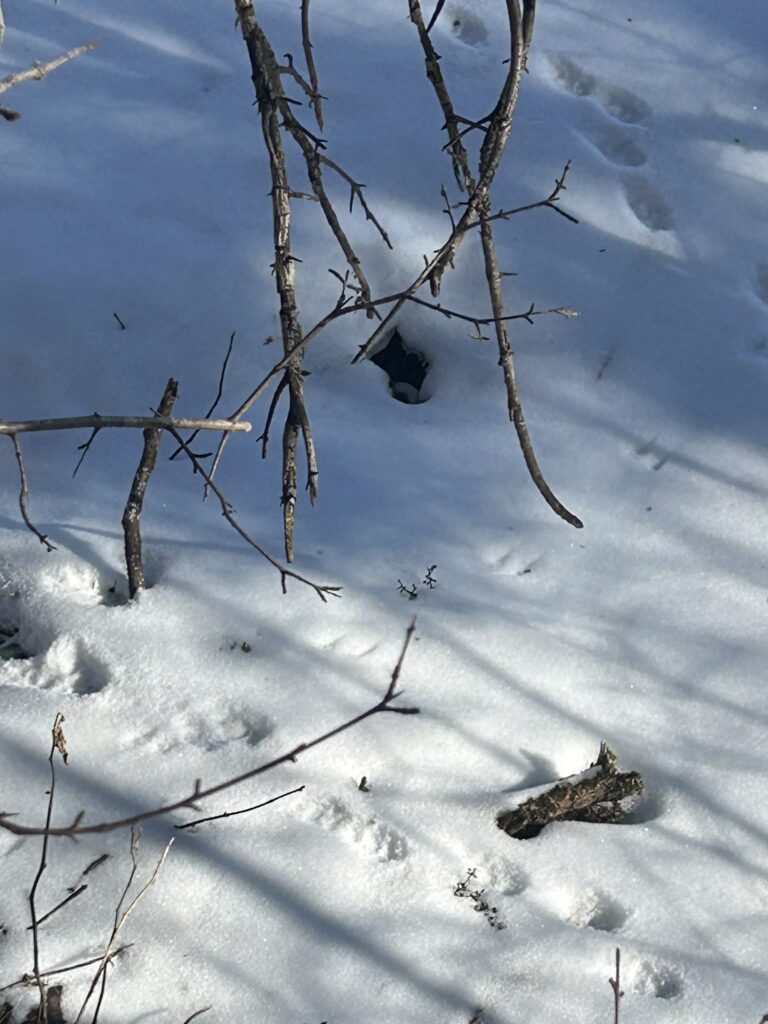
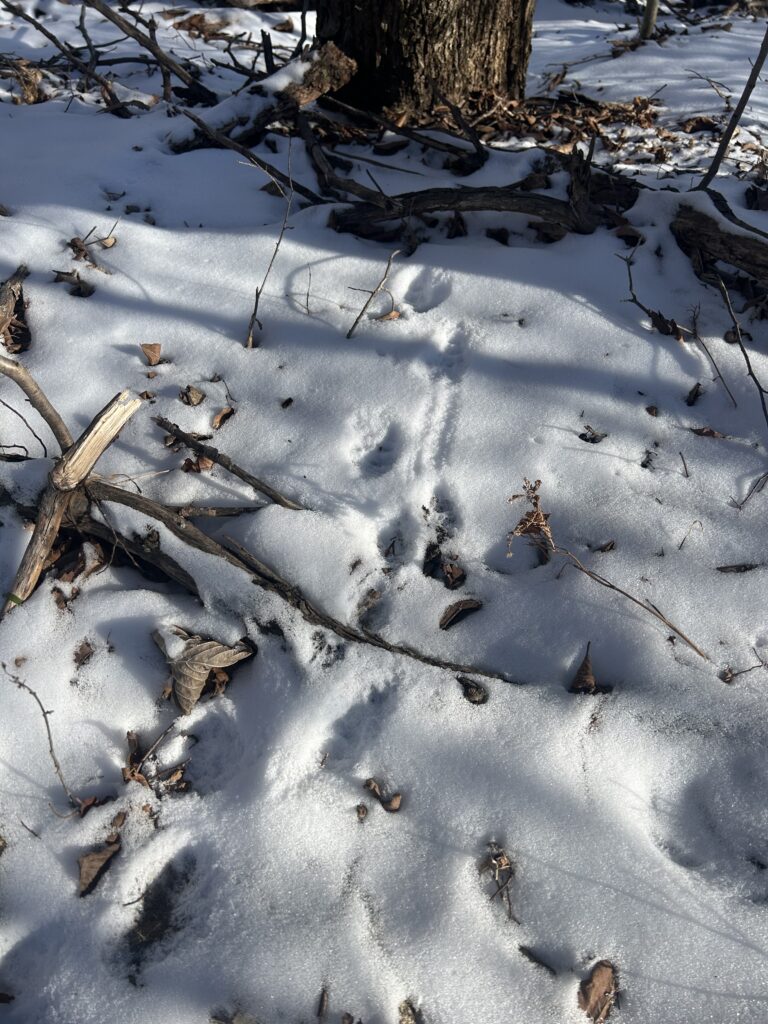
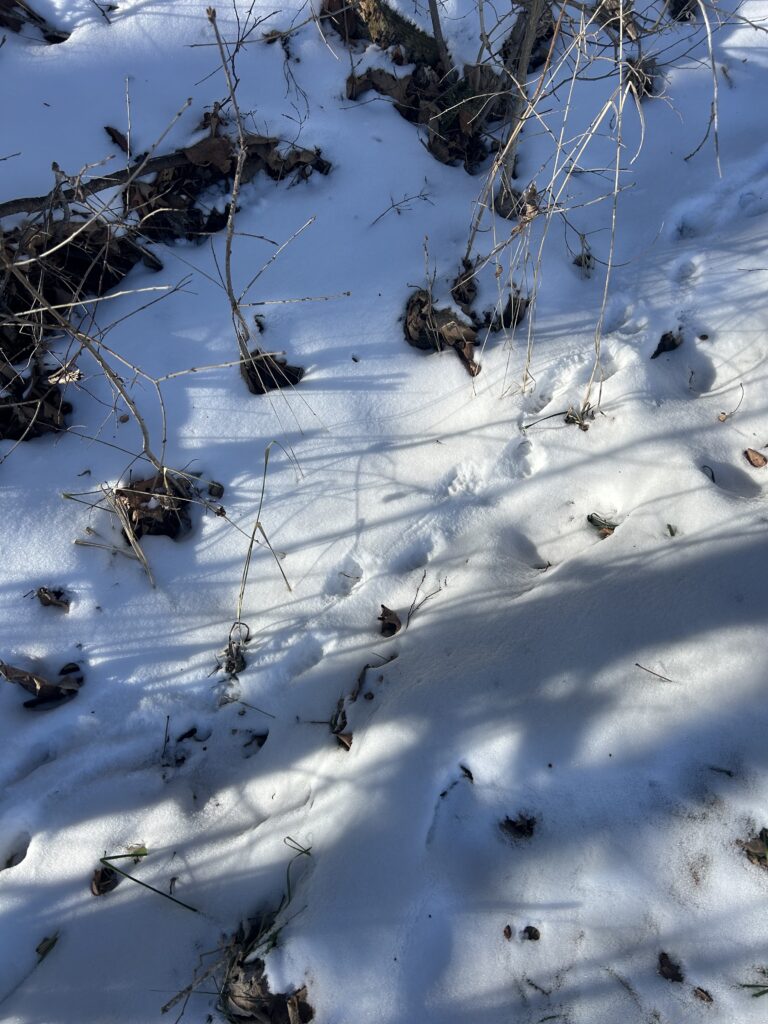
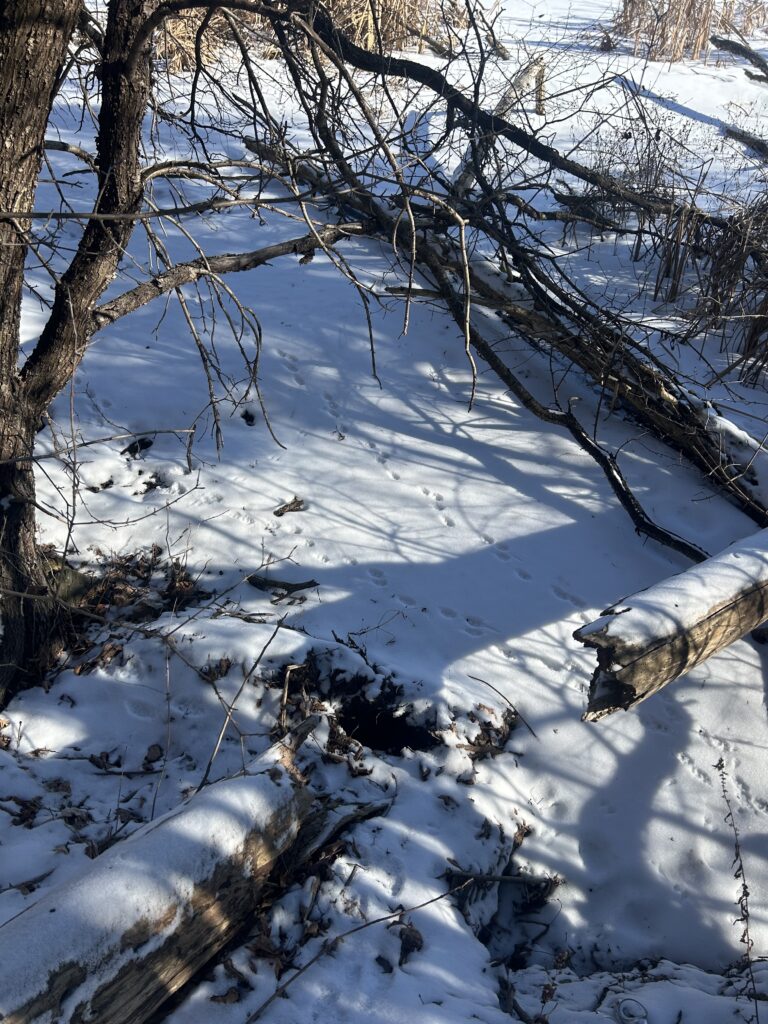
As we made our way to the pond itself, we noticed lots of dog tracks, likely from them joining their human companions on a hike or trip out onto the icey pond. Towards the larger brush area, we noticed a couple patterns of tracks, likely that of skunk due to the shape and pairing of four that we noticed. We observed some tail marks alongside these tracks as they led up the small hill that starts at the pond’s shore. The tracks appeared to be coming from a dense brush pile and an underground burrow at the base of the pond. Alongside these larger tracks, there were a couple small parallel tracks in between, possibly from a small bird. Although the only tracks on the pond itself were that of humans or dogs, we found more skunk and squirrel tracks lining the edges of the Northern White Cedars and Oaks.
Vegetation & Phenological Changes:
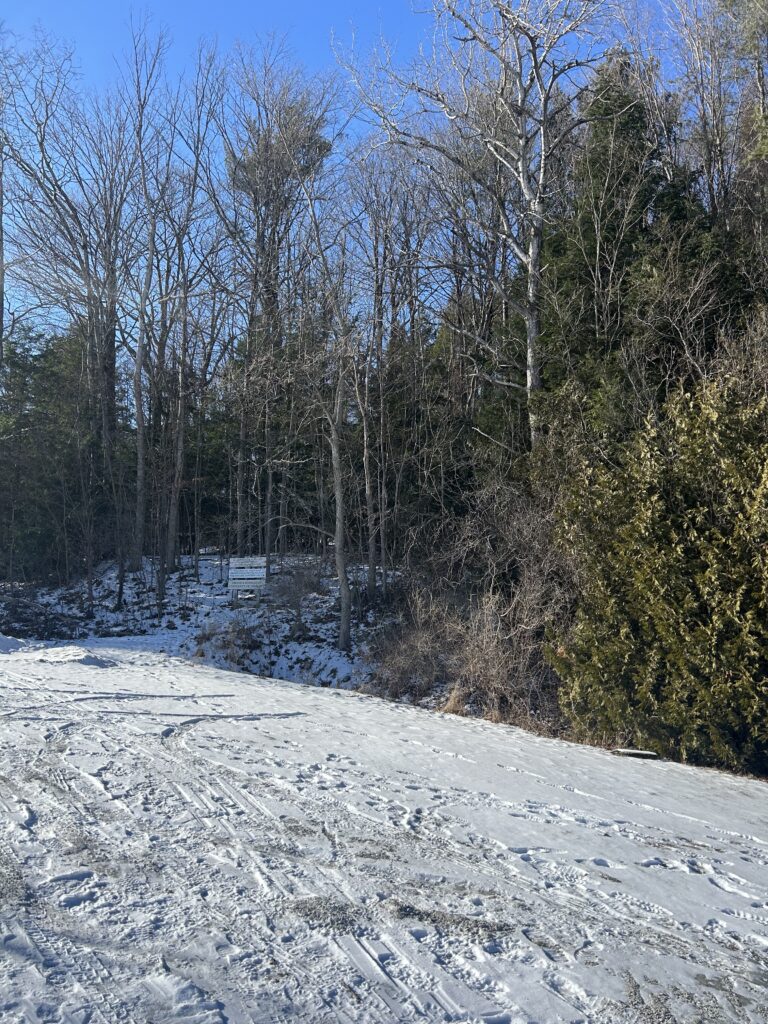
Looking back at the pictures I took during my last visit to Shleburne Pond on 12/5, it is clear that some more phenological changes have taken way. The largest change was surely the fact that the entirety of the pond is now frozen and covered with a thick ice layer. In early December, the pond was still majority unfrozen, with only some ice forming along the edges. Although there is less snow cover than in December, my friend and I were able to pick up on a lot more animal tracks during this visit, specifically by the brush pile and pond’s edge. As for vegetation, there seems to be no obvious change since our last visit. The Northern White Cedars and Eastern White Pines have all maintained their foliage, while the rest of the vegetation is completely barren. A lot of the vegetation previously at the pond’s edge has now been pushed beneath the ice layer or is barely poking out of the snow layer.
Reflection:
As I reflect on these winter phenological changes, I wonder how the wildlife in this area has been adapting to the incredibly cold temperatures and iced-over pond. It seems that a lot of the wildlife is still fairly active, but they have taken shelter in the dense brush or even underneath the snow layer in the subnivian zone. We have yet to see any large wildlife during our visits to the pond, so seeing the many wildlife tracks and trails was very excitig. I am very interested to see how the area will change in the next few weeks and into the spring season as temperatures warm up.