Feeds:
Posts
Comments

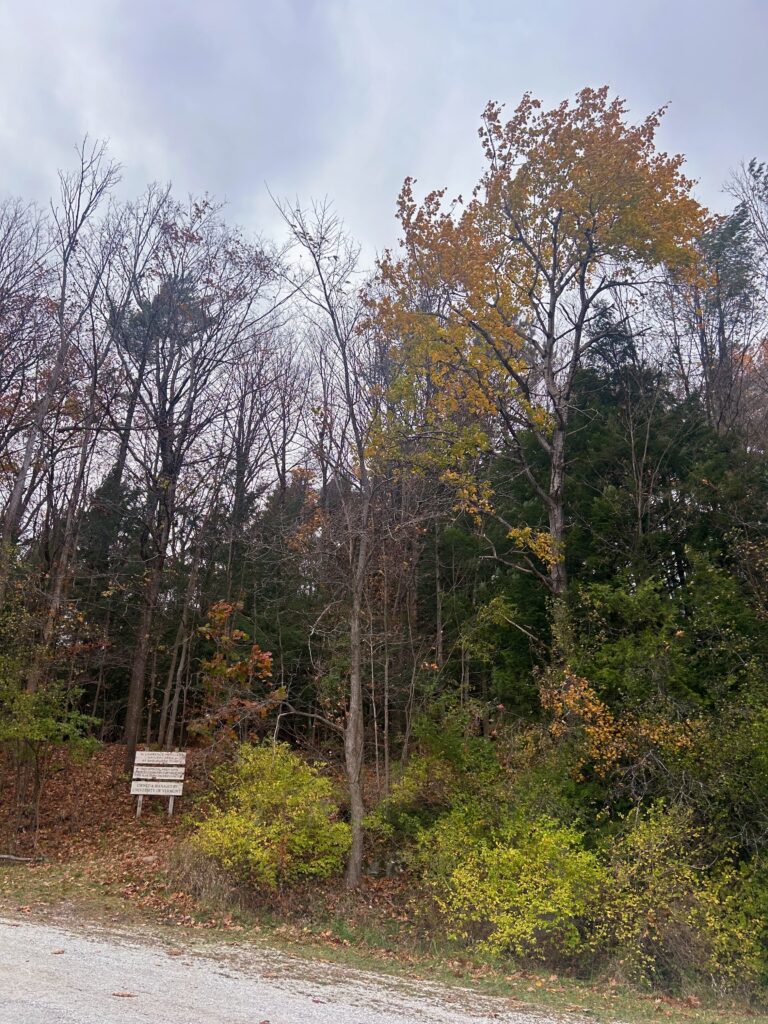
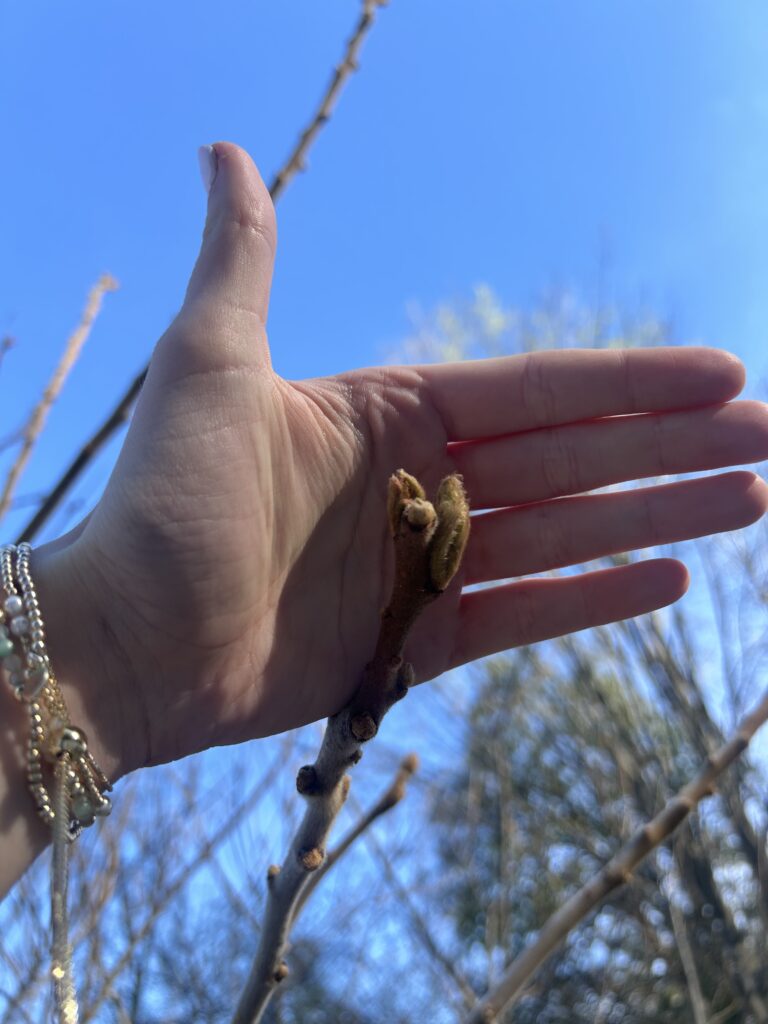
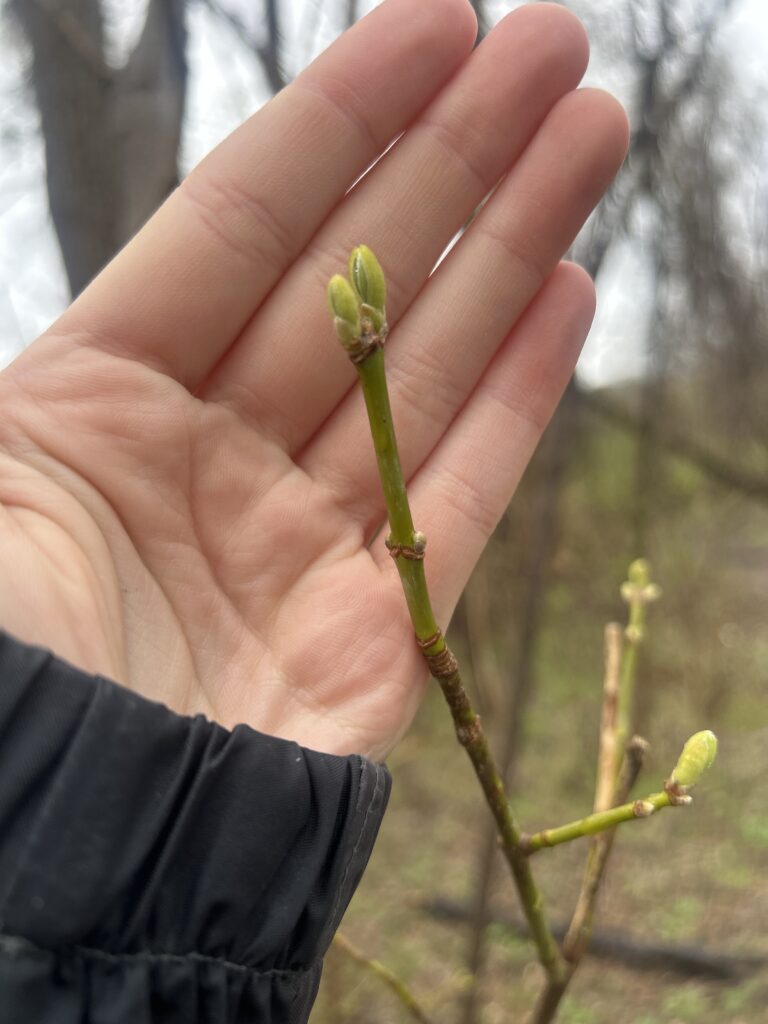
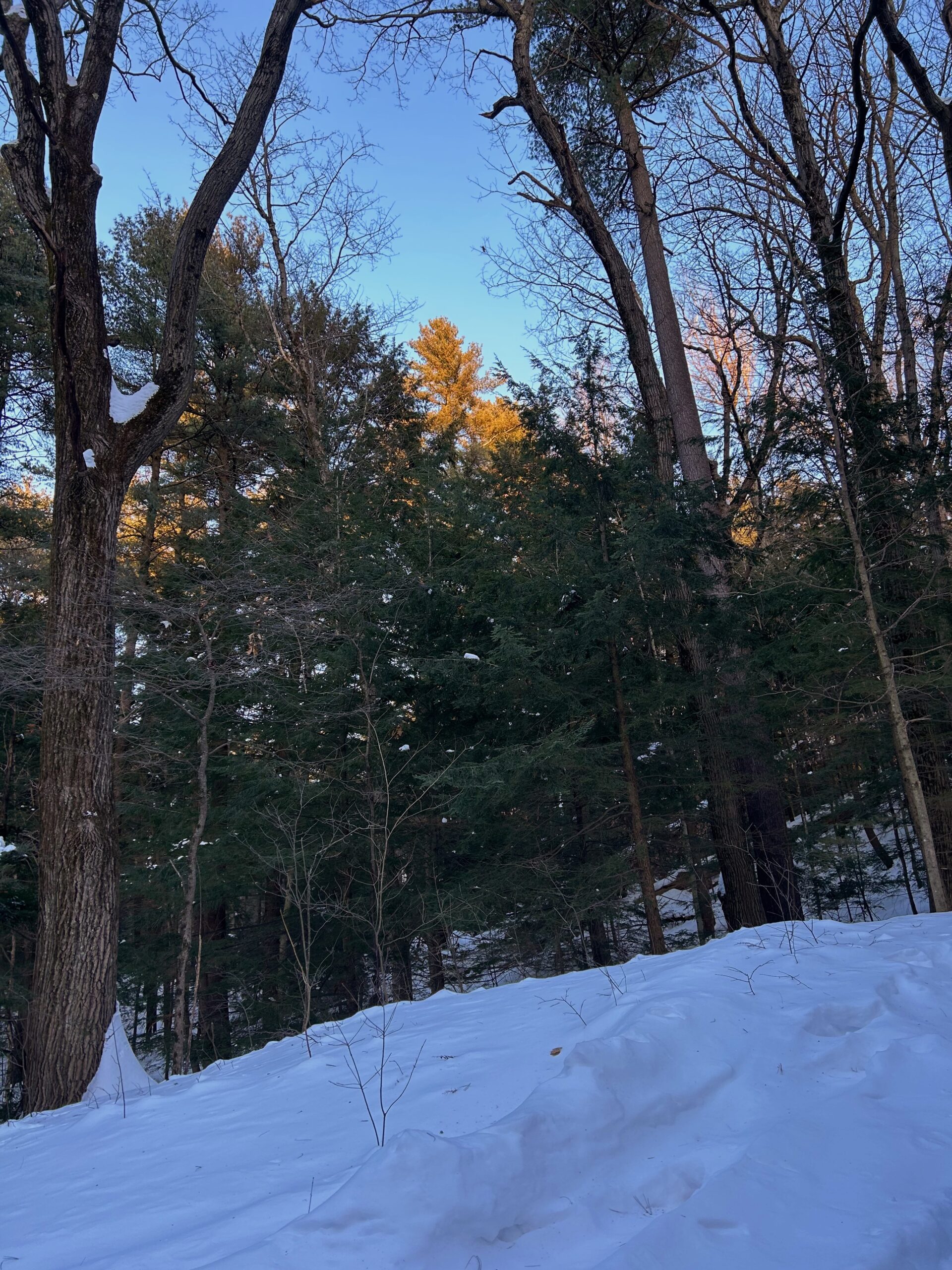
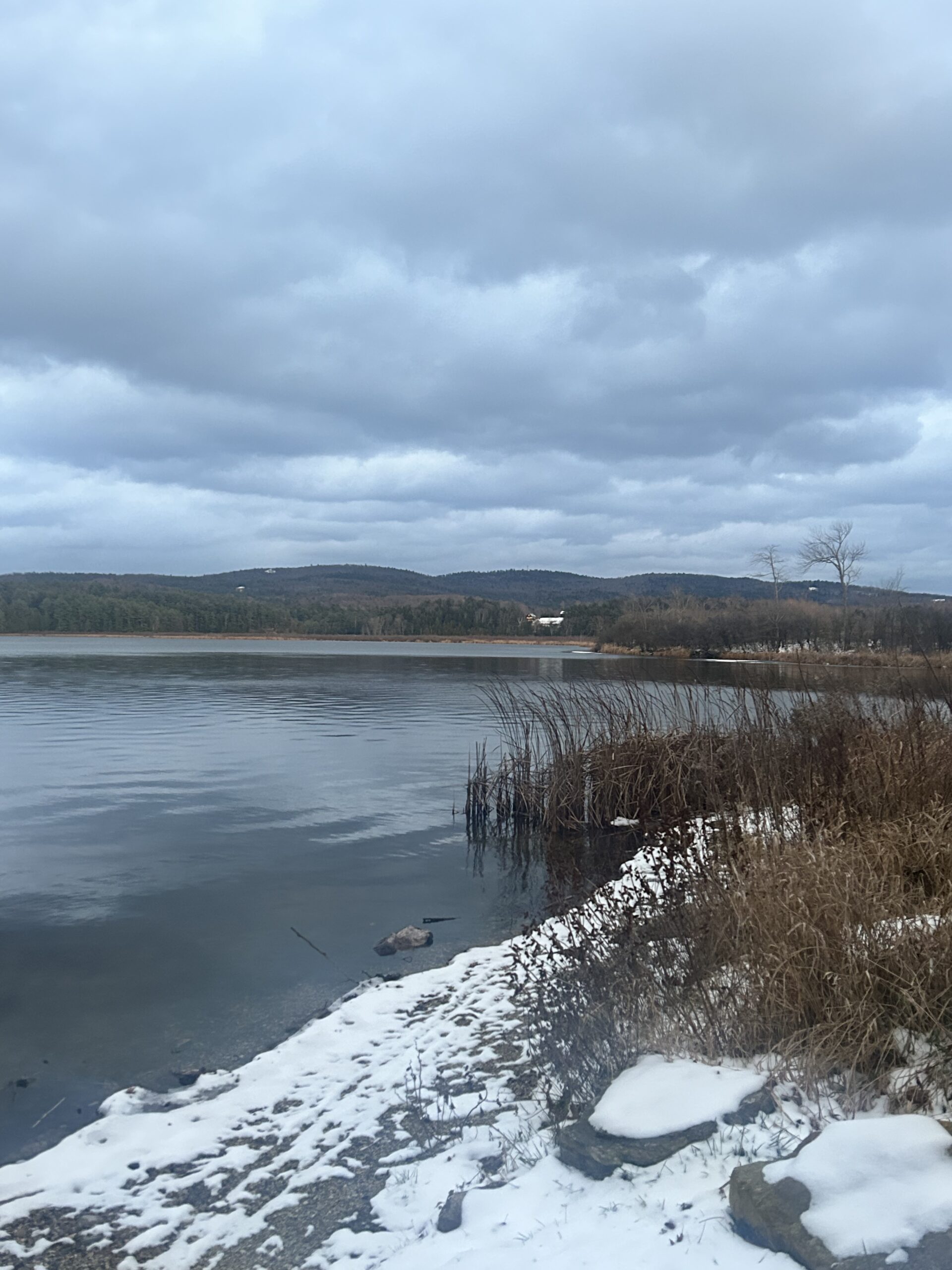
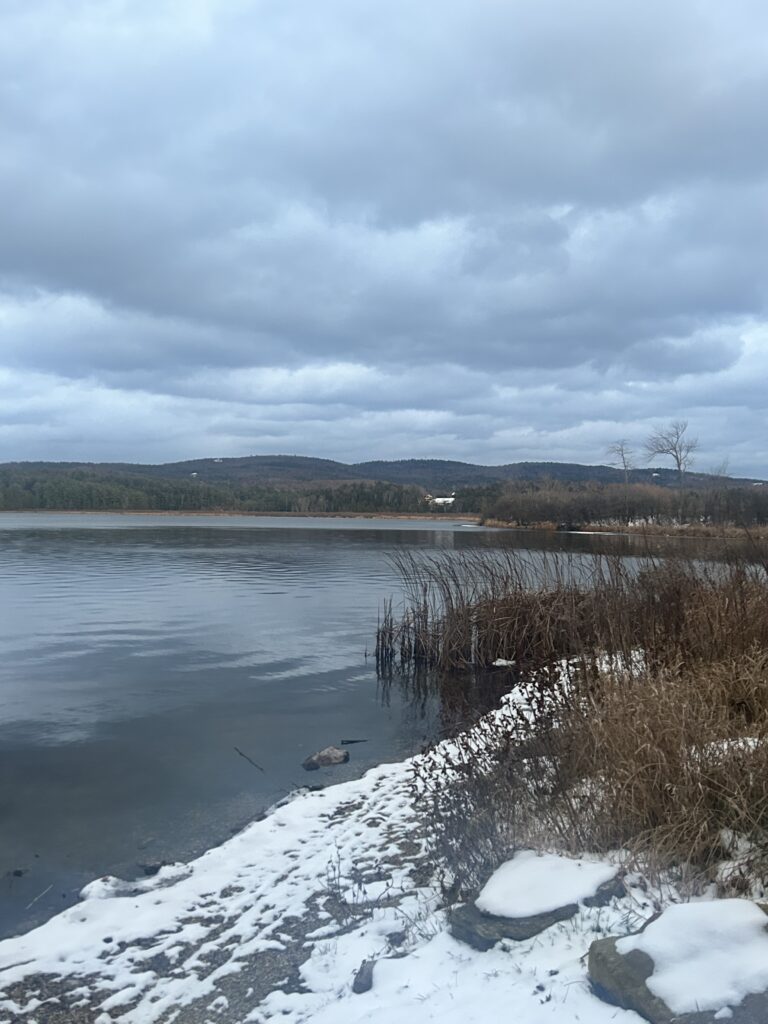
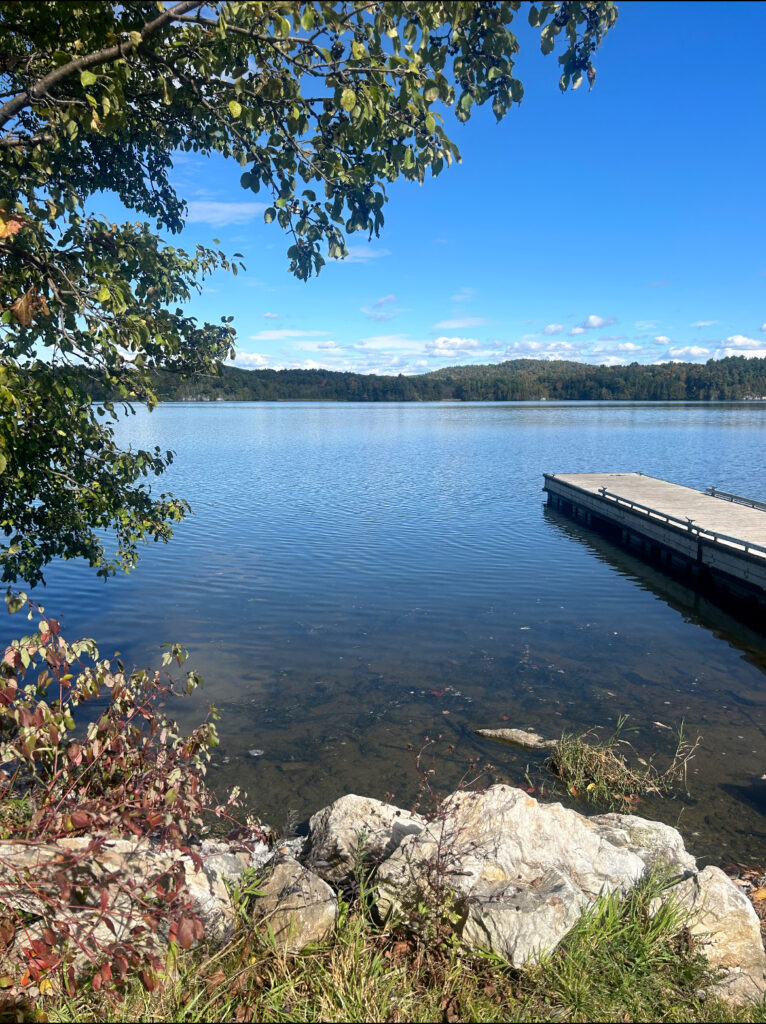
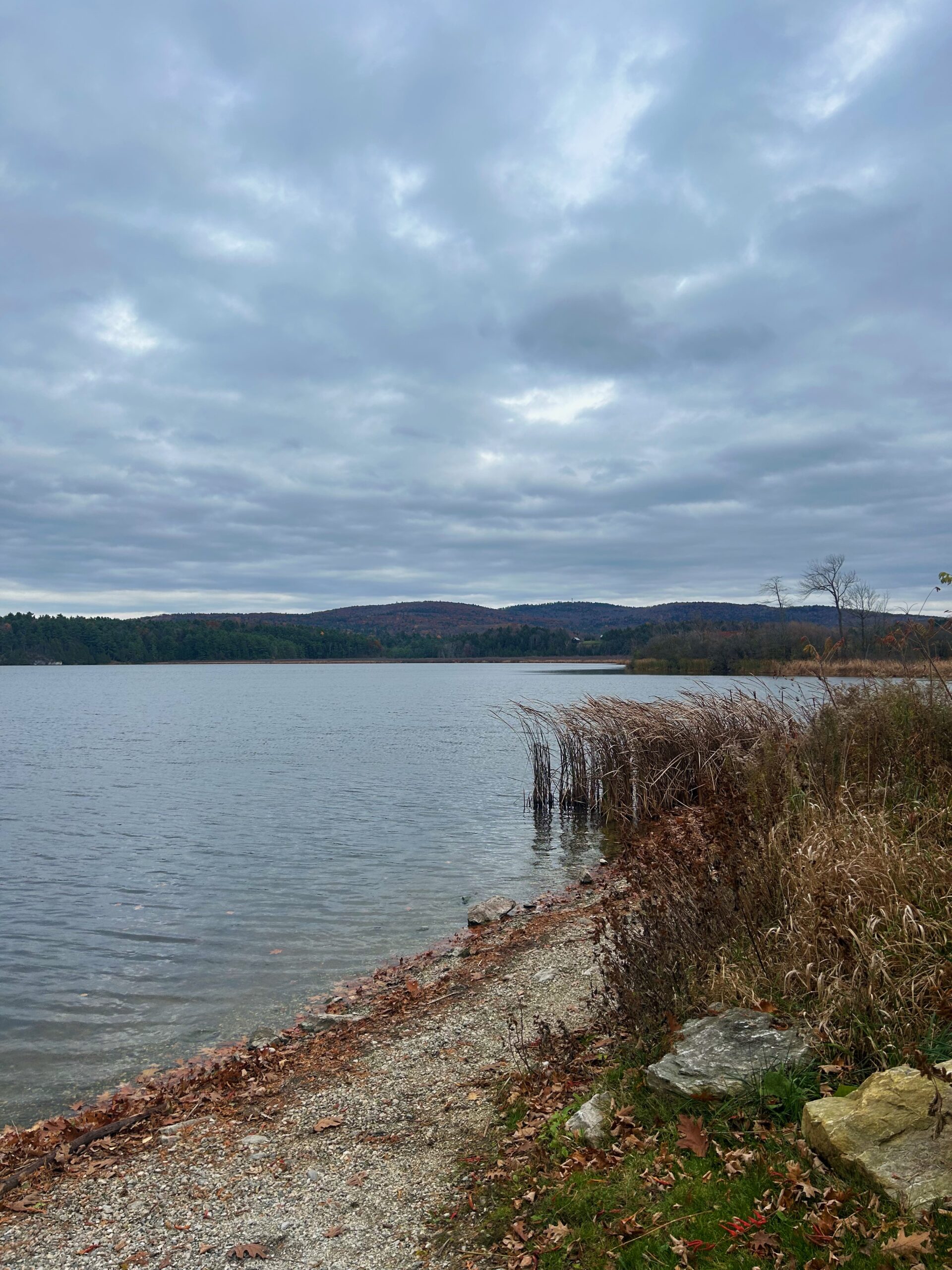
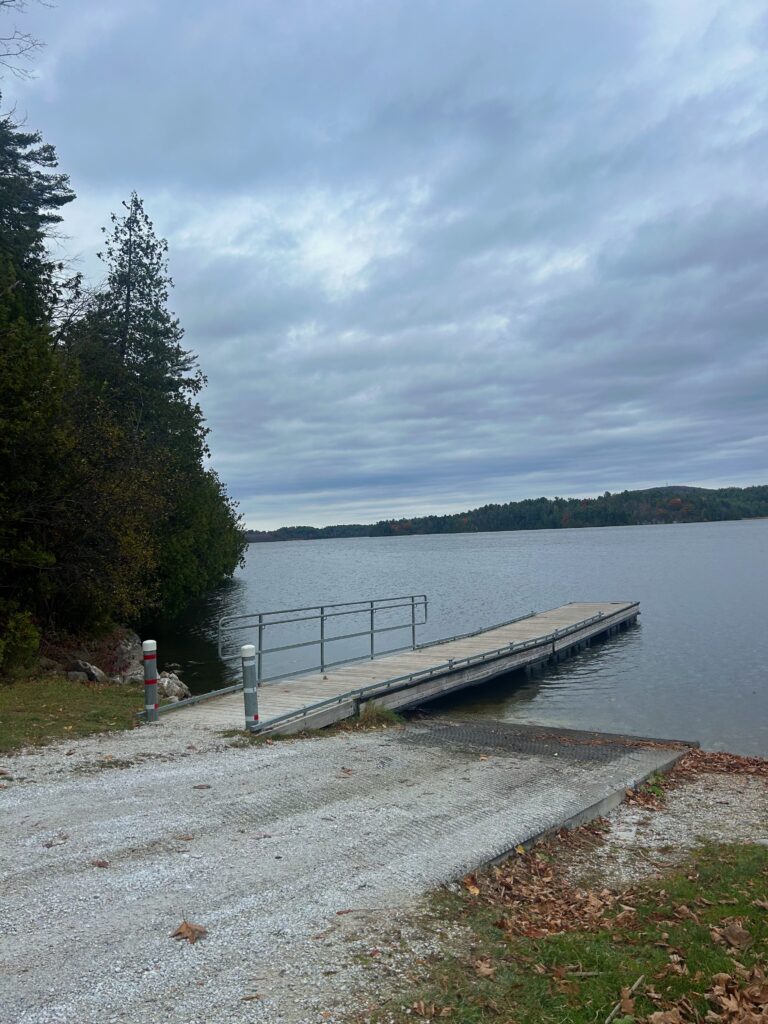
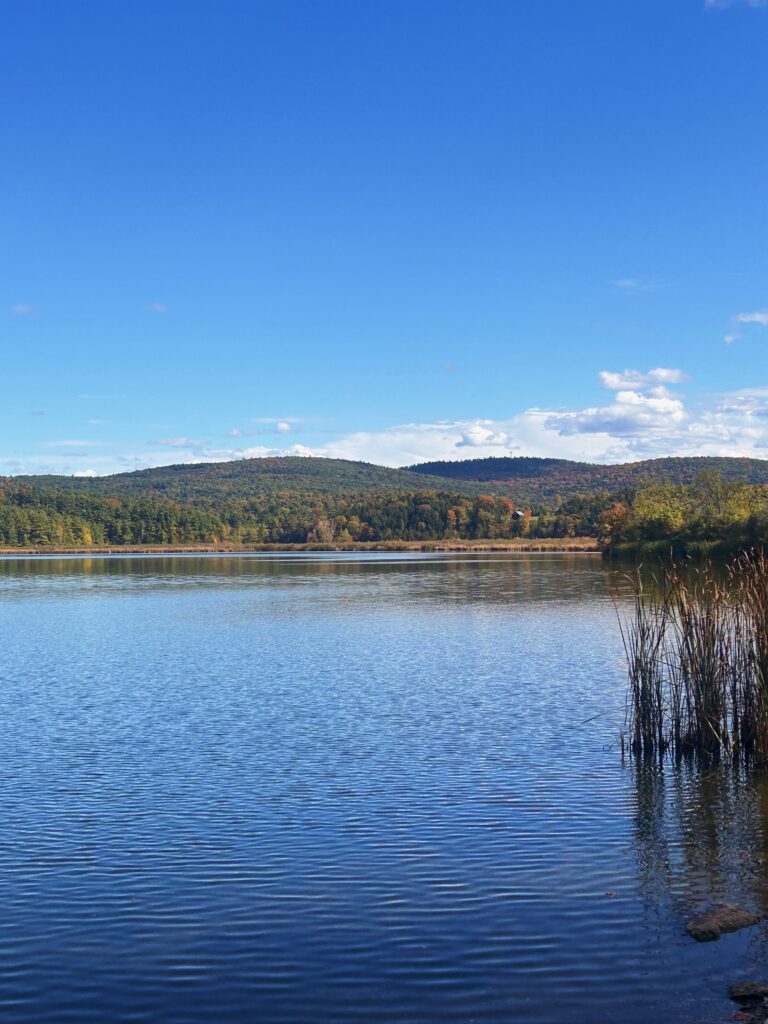
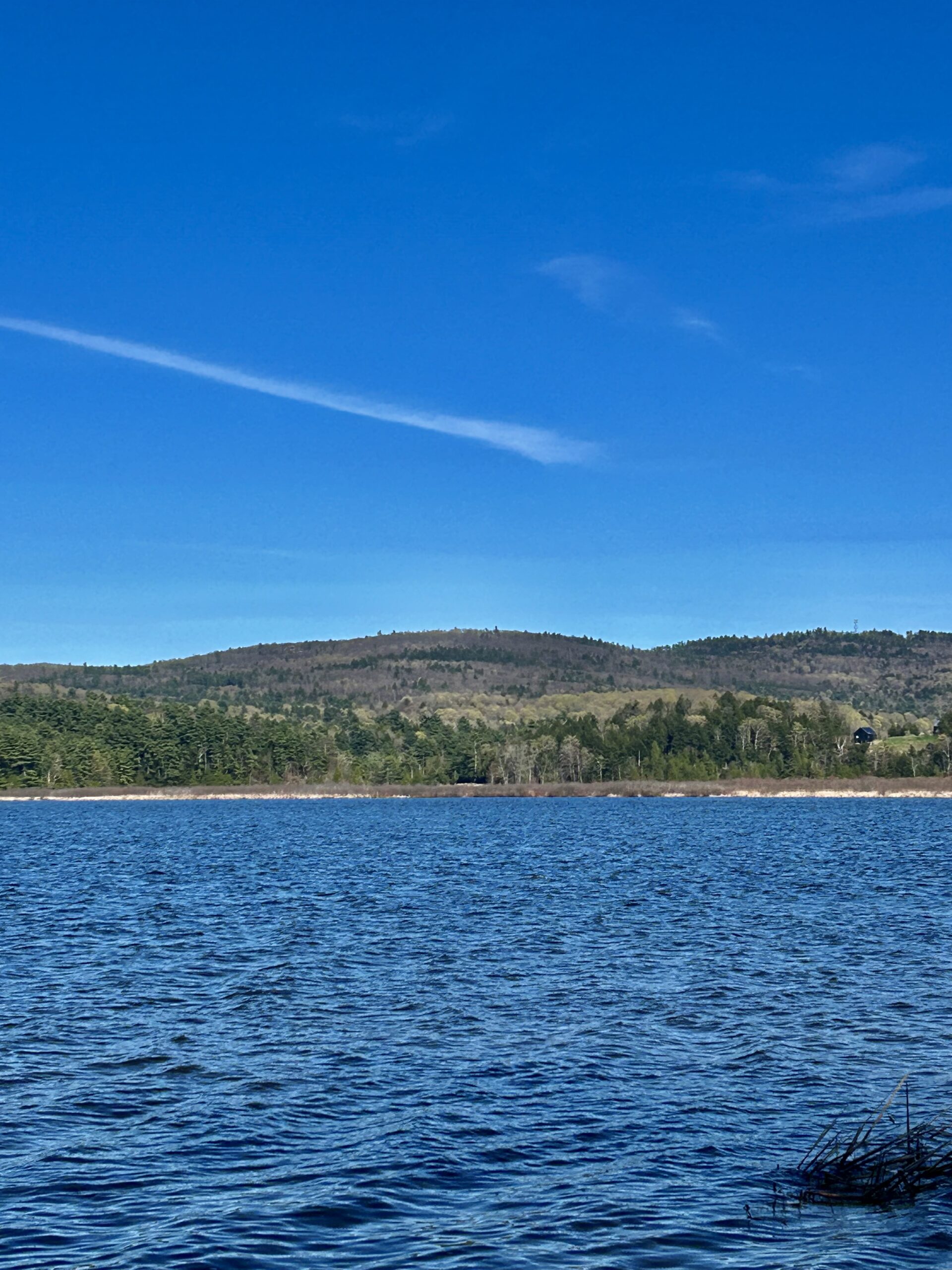
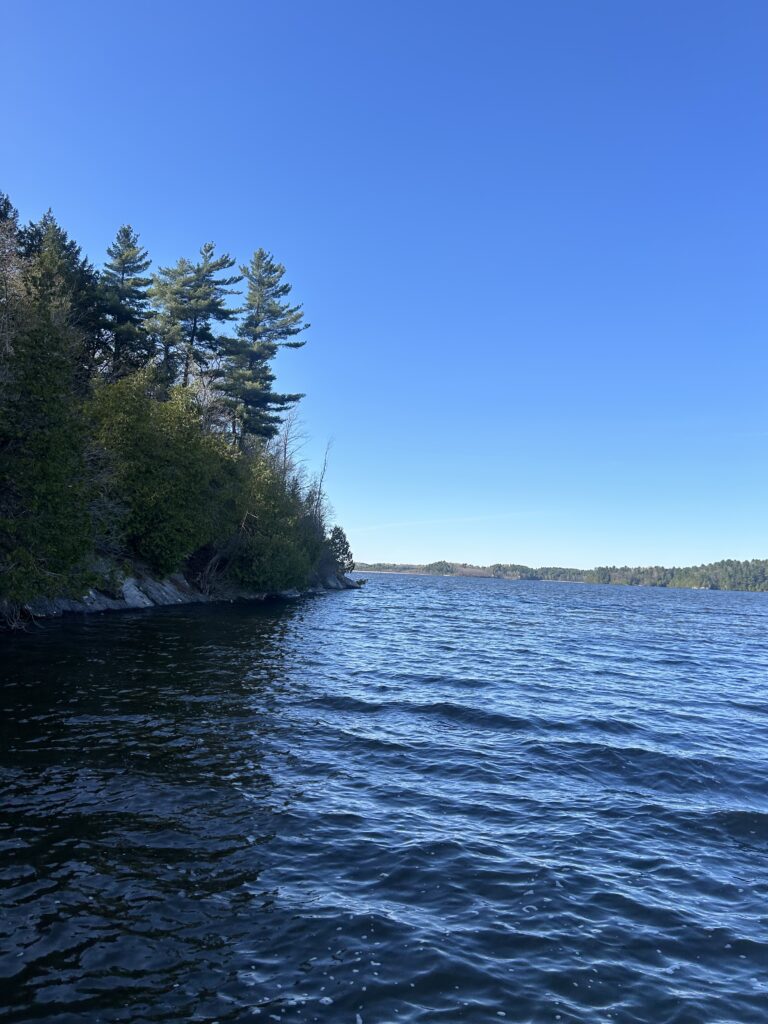
Because the last time I had visited my phenology spot was in January, when Shelburne Pond was frozen over and there was still around a foot of snow on the ground, visiting this place at the onset of Vermont spring was an awesome way to end a year of phenological observations. As we drove up to the dock, it was wonderful and refreshing to see the sun shining again on the vibrant blue pond, as well as some new green tree foliage and vegetation. Upon closer observation, we noticed that the Northern red oaks towering in the canopy, as well as some American beech and elm in the understory, had regained their vibrant greenish-yellow leaves. The Eastern white pines and Northern white cedars had also taken on a brighter green coloration, as the winter season had come to a close. The majority of the understory had yet to regain its leaves, but we did observe some prominent bud breaking. Although we did not hear or see many signs of wildlife, the warmer temperature brought numerous other public visitors to the pond while we were there, many with fishing supplies and kayaks.

The Transitions:

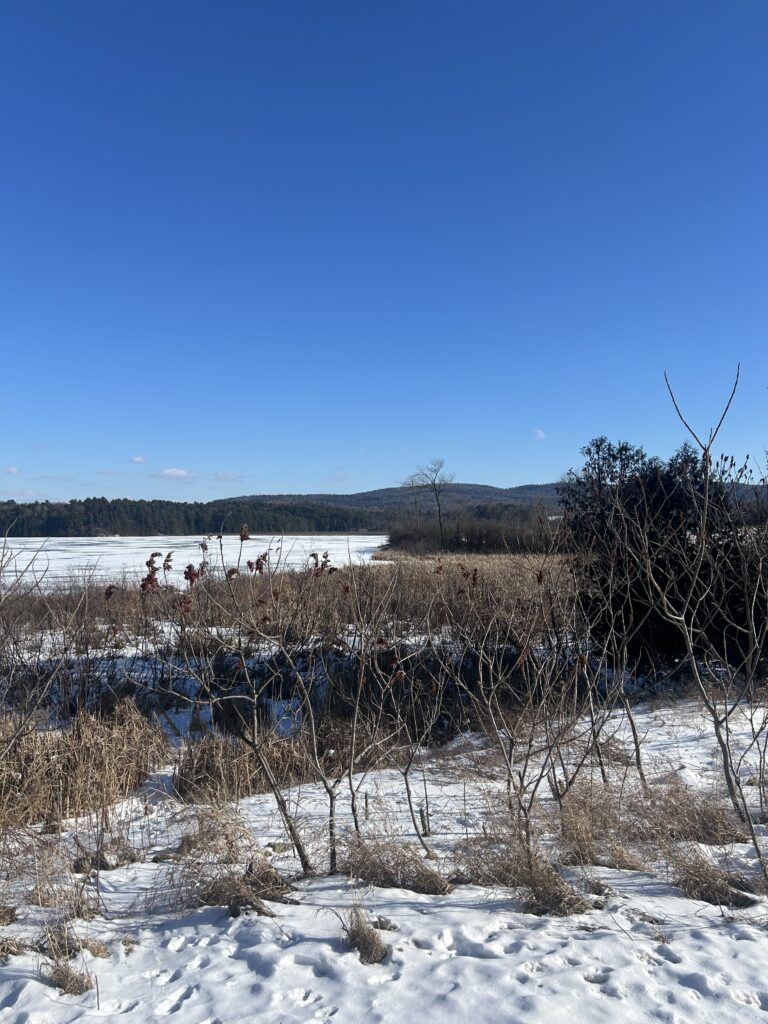
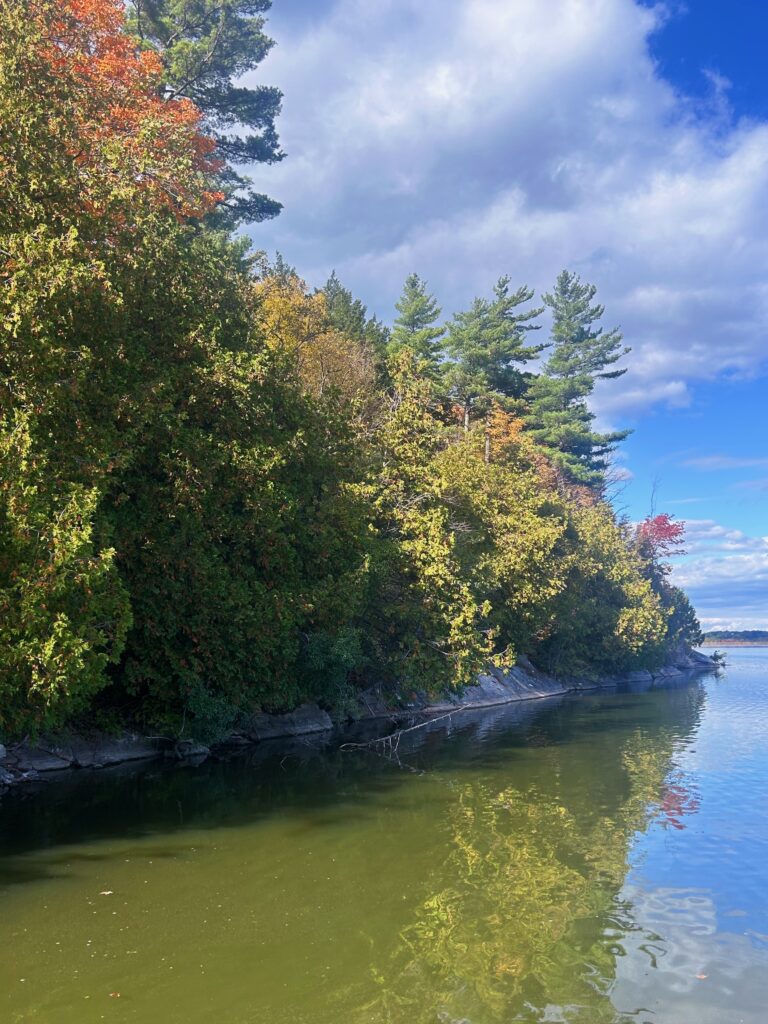
Reflecting on how this site has changed over time, the clearest transitions have been seen in the foliage. During our first visit in October, the leaves had just begun to change into their bright orange and red hues, and the vegetation was dense and shrubby. Within just a few weeks, the trees lost the majority of their foliage, aside from the few conifers in the area, and the site appeared to be much more bare. After about a month, Shelburne Pond in December had become covered with snow, and almost all of the understory vegetation had become completely barren. The snow-covered vegetation that remained became dark and brown, while the cattails and aquatic vegetation stood frozen in the few patches of ice near the pond’s shoreline. Although there weren’t many changes in the vegetation, Shelburne Pond became covered with even more snow and ice by late January. During this visit, we observed numerous signs of wildlife compared to previous visits, thanks to some clear animal tracks in the snow. We even got to walk out onto the frozen Shelburne Pond and view our phenology spot from a different perspective! Now that a few months have passed, the characteristic spring phenological changes have begun, such as the bud-breaking and coloration changes we observed today. Overall, coming back to this spot throughout the year has been such a cool way to understand phenology and the seasonal cycles of both terrestrial and aquatic ecosystems. I am eager to return at the end of August to see what the summer season looks like at Shelburne Pond!
The Landmarks:
The dock!

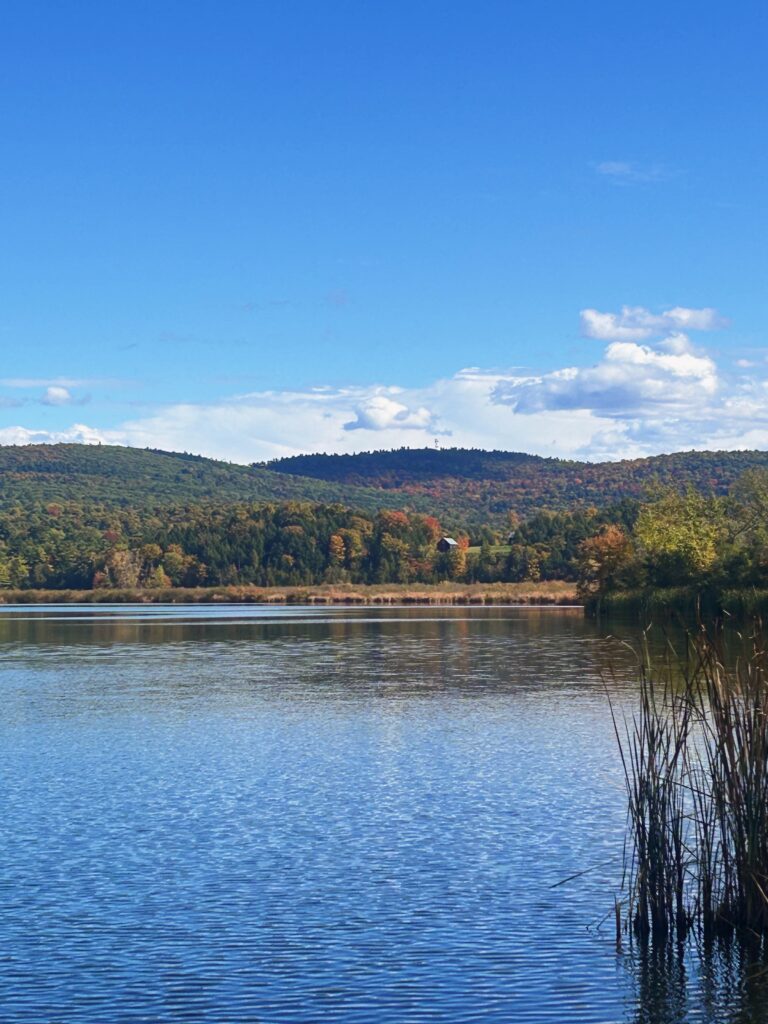
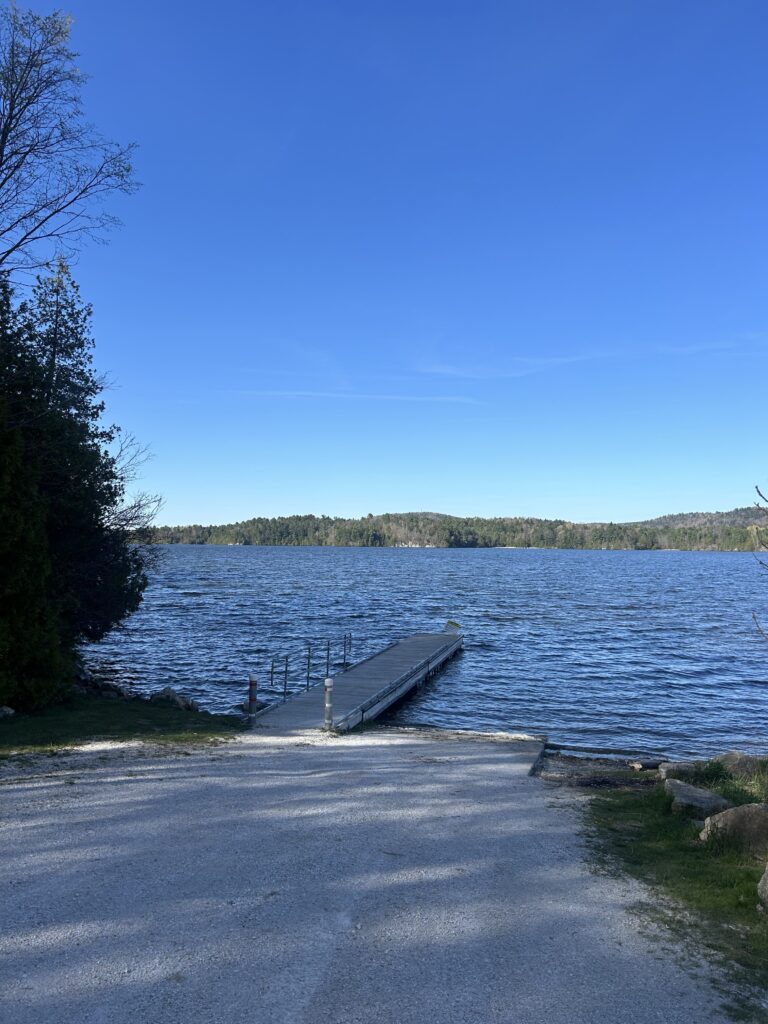
The dock has been one of my favorite parts of our phenology spot. We love walking out to the end and viewing the vastness of the pond and forest on all sides. There are spectacular views of the mountains and farmlands from the dock as well!
The rocks!

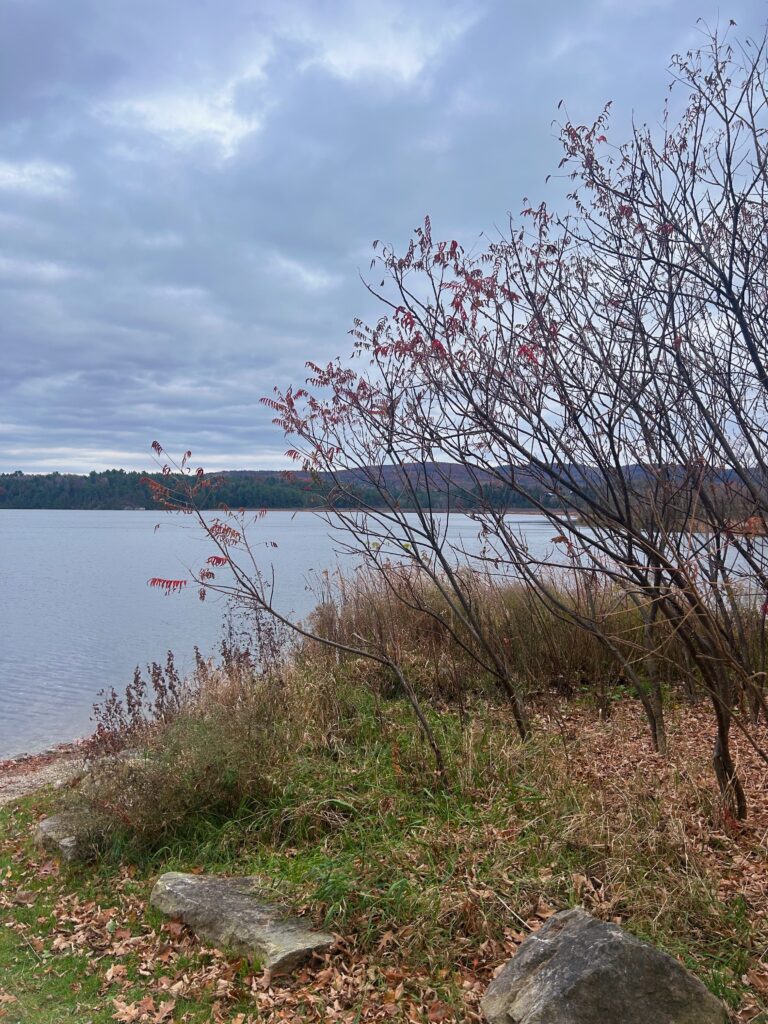
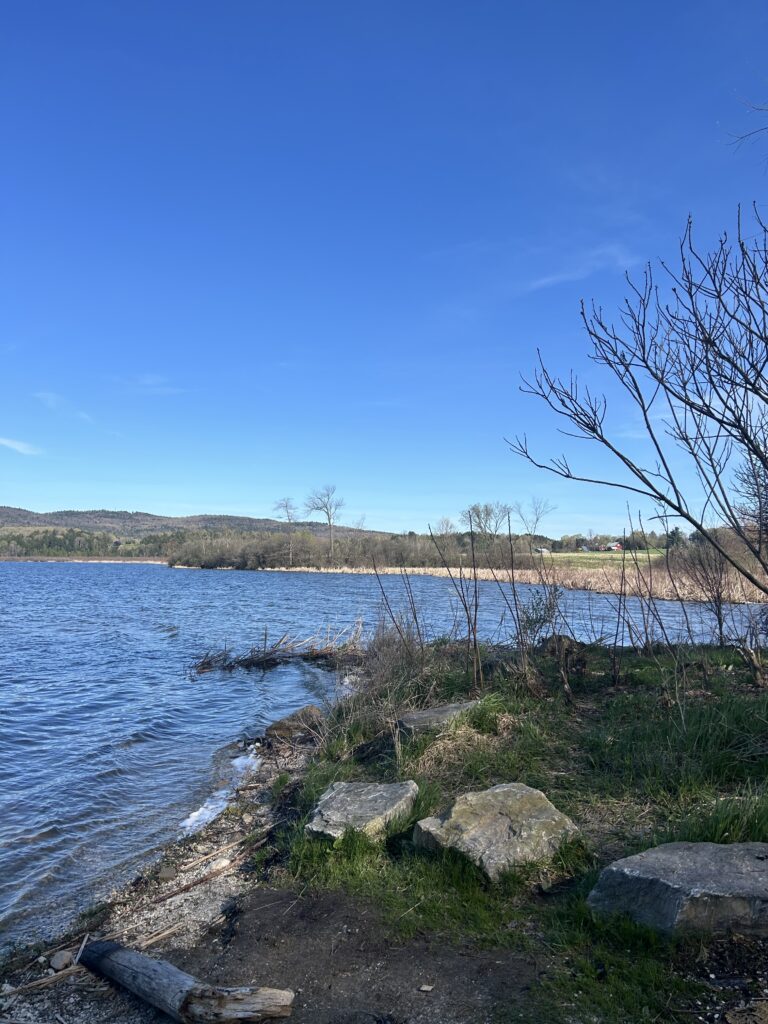
A few large stones line the pathway down to the dock and the pond, and these have made great spots to sit and observe our phenology spot from.
The conifers!

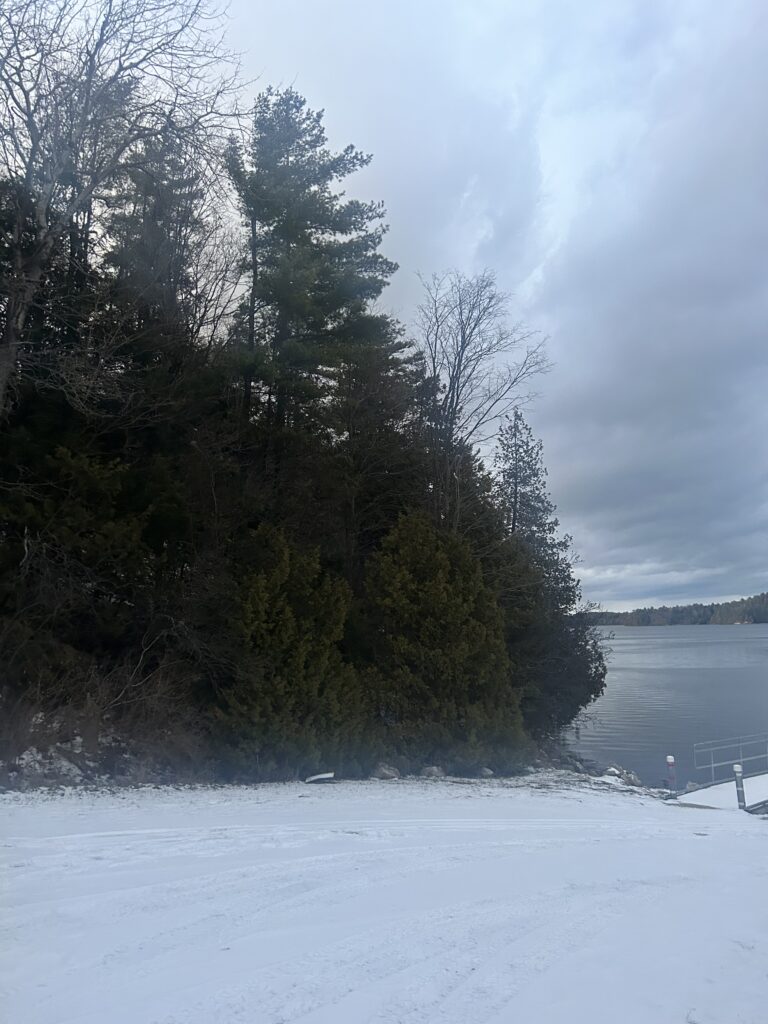
To the left of our phenology spot is a group of large Eastern white pines and Northern white cedars. These trees have become constants in our phenology spot, as they have towered over the area and stood tall throughout the course of the year, from the autumnal leaf changes to snow-covered branches to spring bud-breaking.

The Nature-Culture Connection:

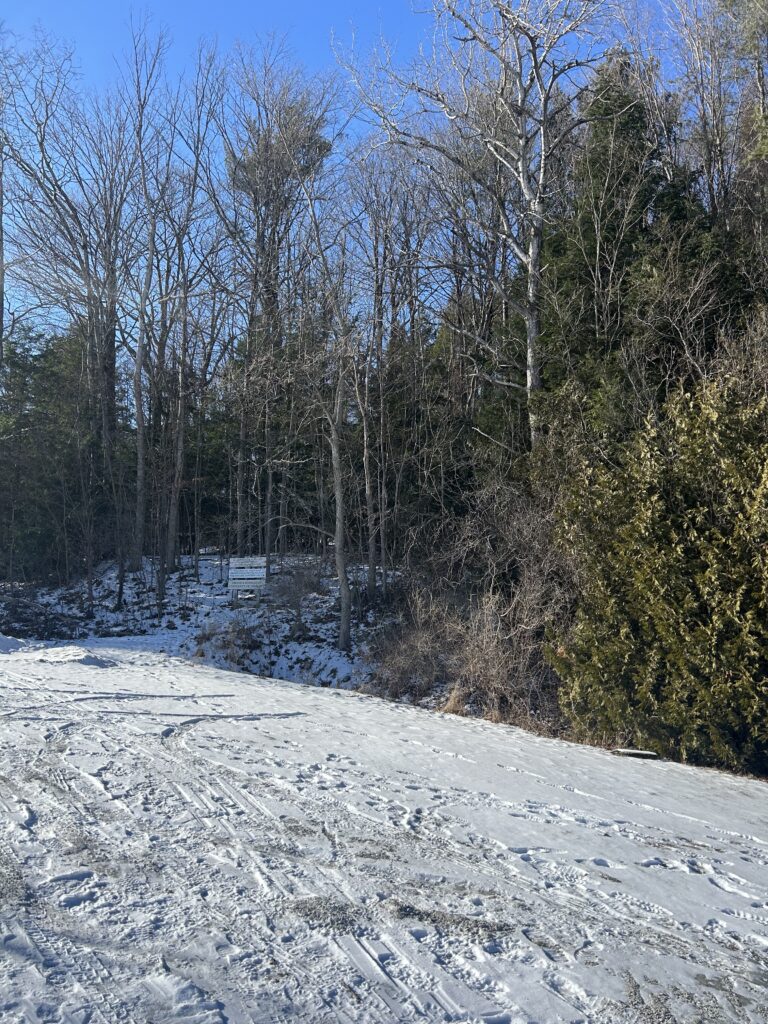
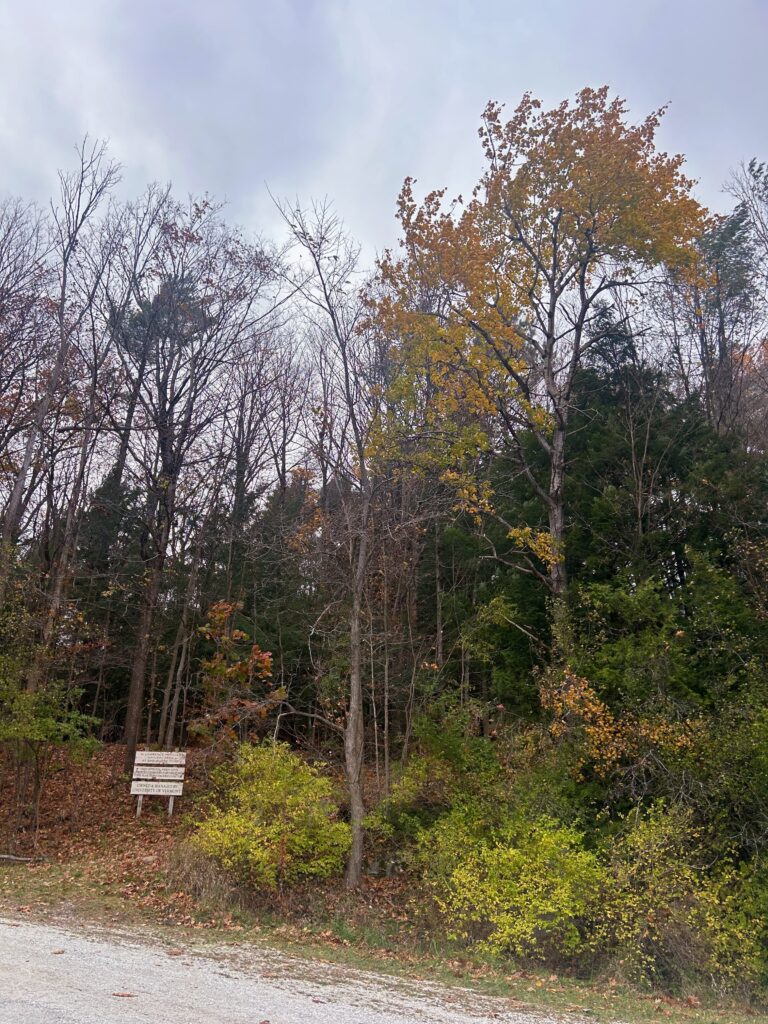
While we have taken a more ecological focus on our studies of the Shelburne Pond shoreline, this area is also a cultural and social recreation spot. This spot is somewhat far from any main road or development, but there are numerous public access points and hiking trails along our phenology spot. At its entrance, there is a large informational sign with maps, warnings, and general facts about the vegetation found at Shelburne Pond. Although we often did not see many hikers or boaters during our visits to Shelburne Pond, there was still a clear connection between Shelburne community members and this space. Shelburne Pond sits amongst large agricultural lands, farming operations, residential communities, and school zones. The pond’s beautiful view of the mountainous landscape, easy water access, and extensive trails make this spot more than just a great space to study phenology. I hope that the community members and visitors to this pond take the time to realize just how special these ecological communities and natural systems are, and find the same connection and sense of place to this pond as I have found over the past few months. In the future, I think it would be amazing to see Shelburne Pond become a stronger and more popular community space and research area while also working to conserve the habitats, wildlife, and views that can be found here, just 10 miles from downtown Burlington.

The Bigger Picture:

Thanks to our many visits and close interactions with the Shelburne Pond ecosystem, I would definitely consider myself a part of this place. I have changed a lot as a student, scientist, environmentalist, and individual during my first year of college, and I think it has been very fulfilling and special to observe another place that is undergoing many changes, too. My knowledge of this spot has grown exponentially, and I have become very familiar with each aspect of the community, from each oak tree down to the specific cattail. Through this intimacy and closeness with the land, I feel as though I am also a part of this ecological family. While at first I felt like I was more of a temporary visitor or onlooker of this spot, I now feel immense comfort and belonging here. Again, no matter what changes had been going on in my life at the time or the struggles I was encountering, this place remained constant for me. I could always rely on a trip to Shelburne Pond to remind me that change is good and natural. As I continue my next 3 years at the University of Vermont, I hope to continue returning to this spot to keep growing my relationship with this ecosystem and remind myself of my purpose and place here in Vermont as a Rubenstein student.
A Rainy Day in Centennial

Choosing a BioBlitz Site:

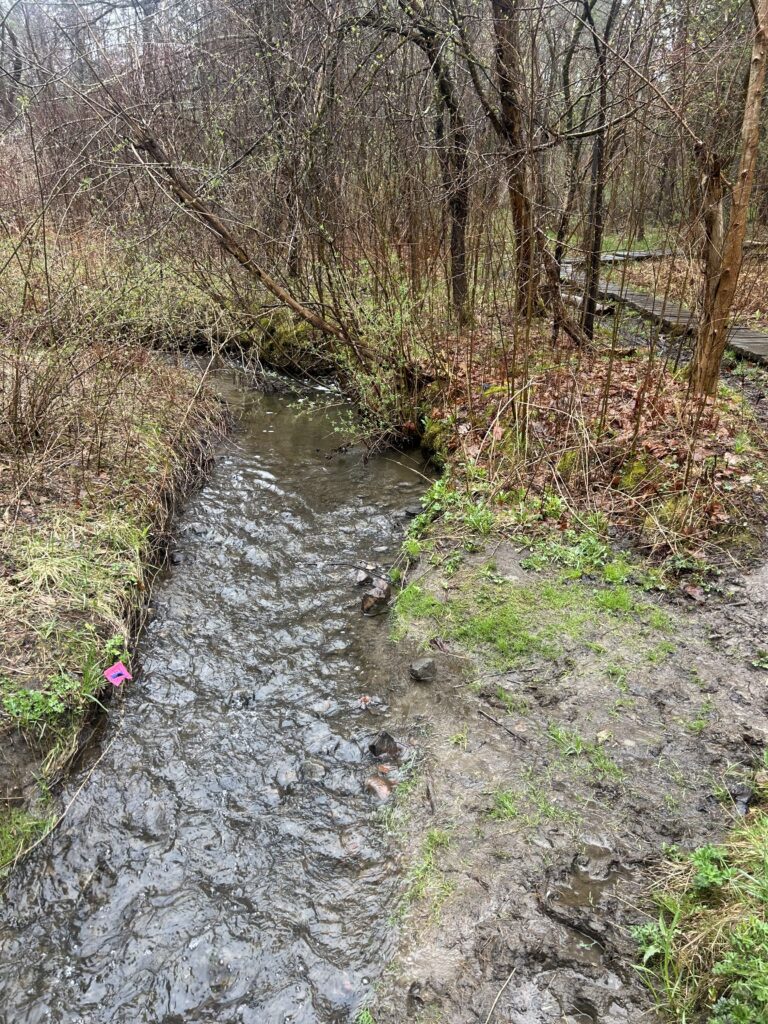
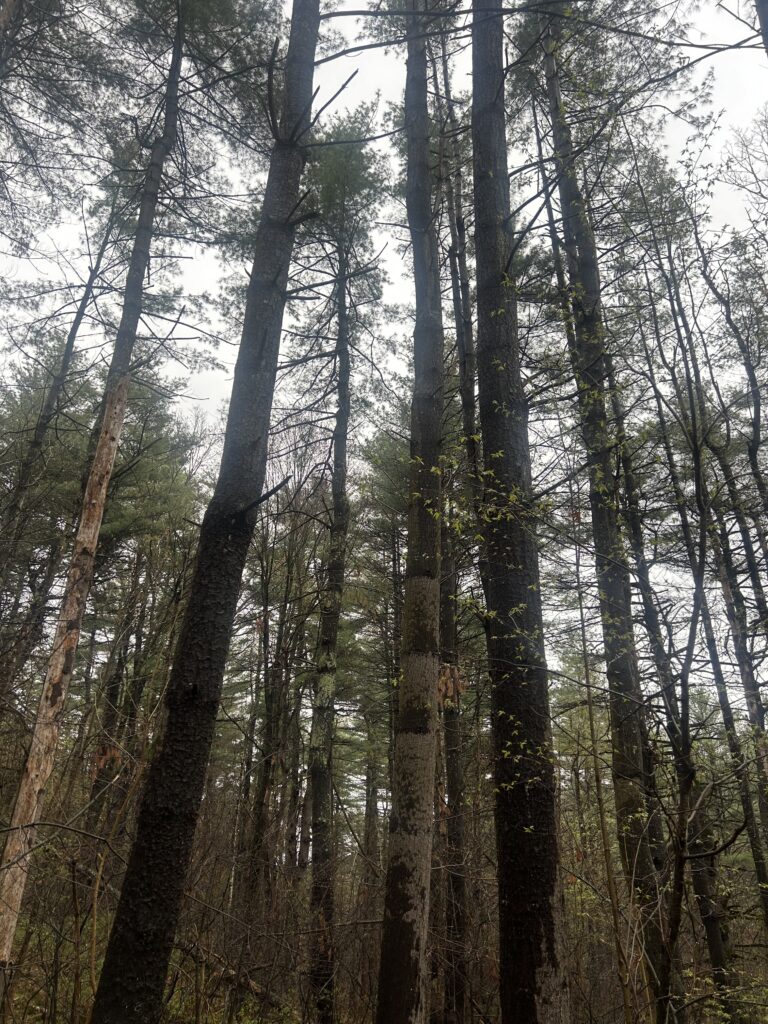
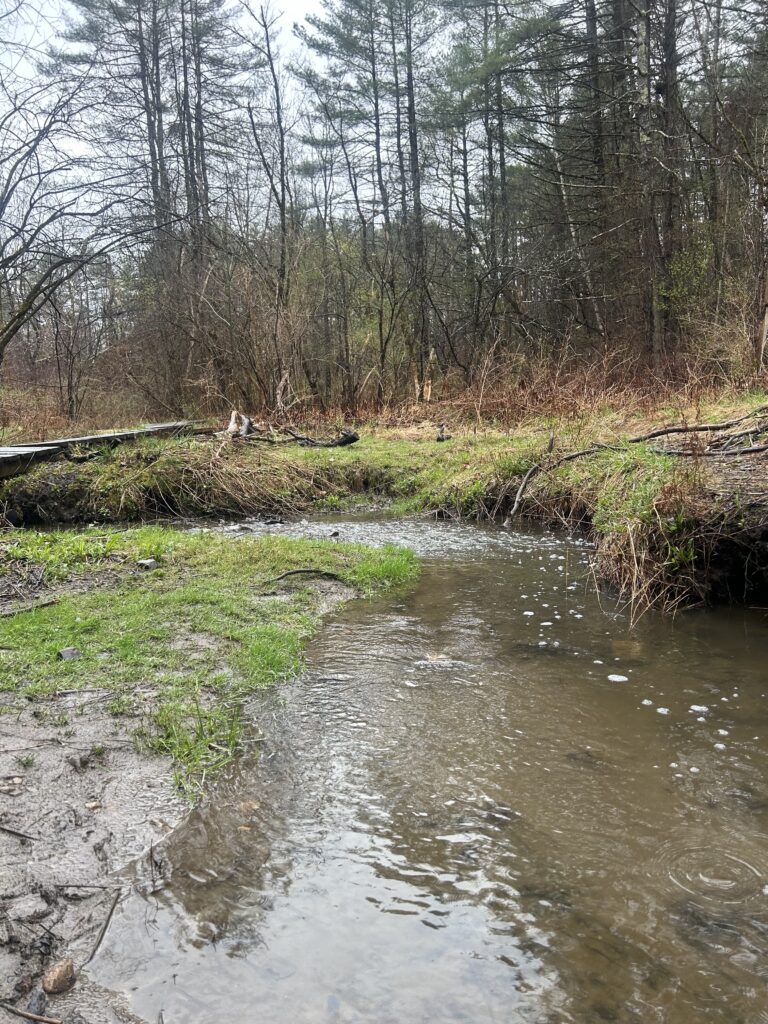
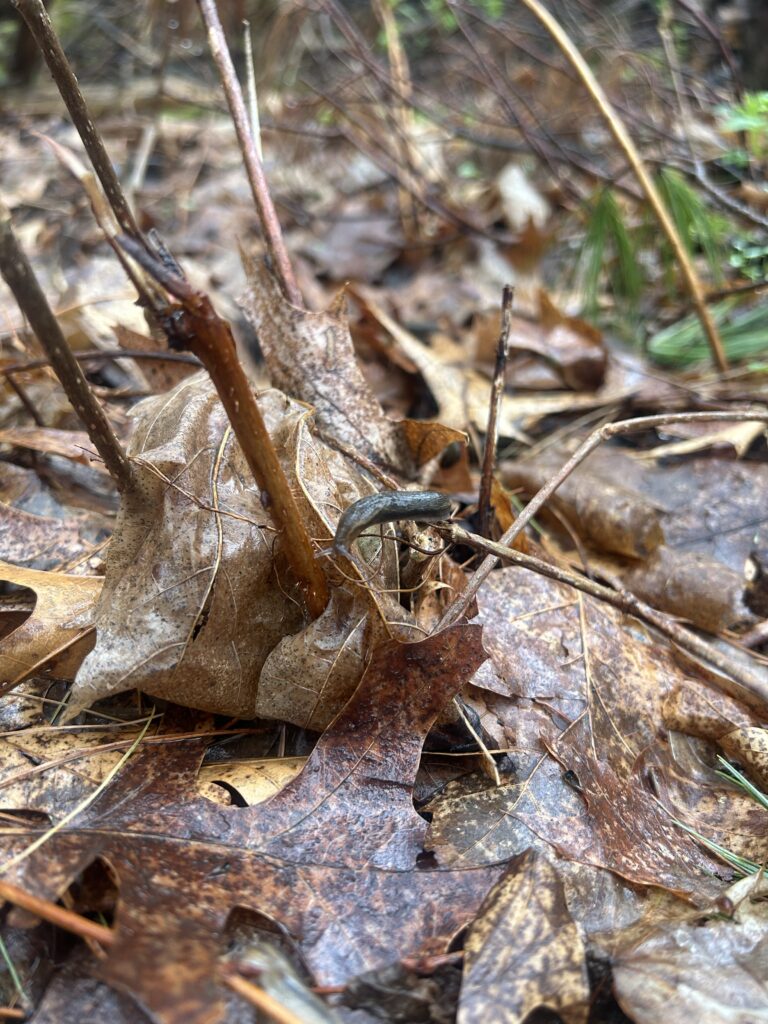
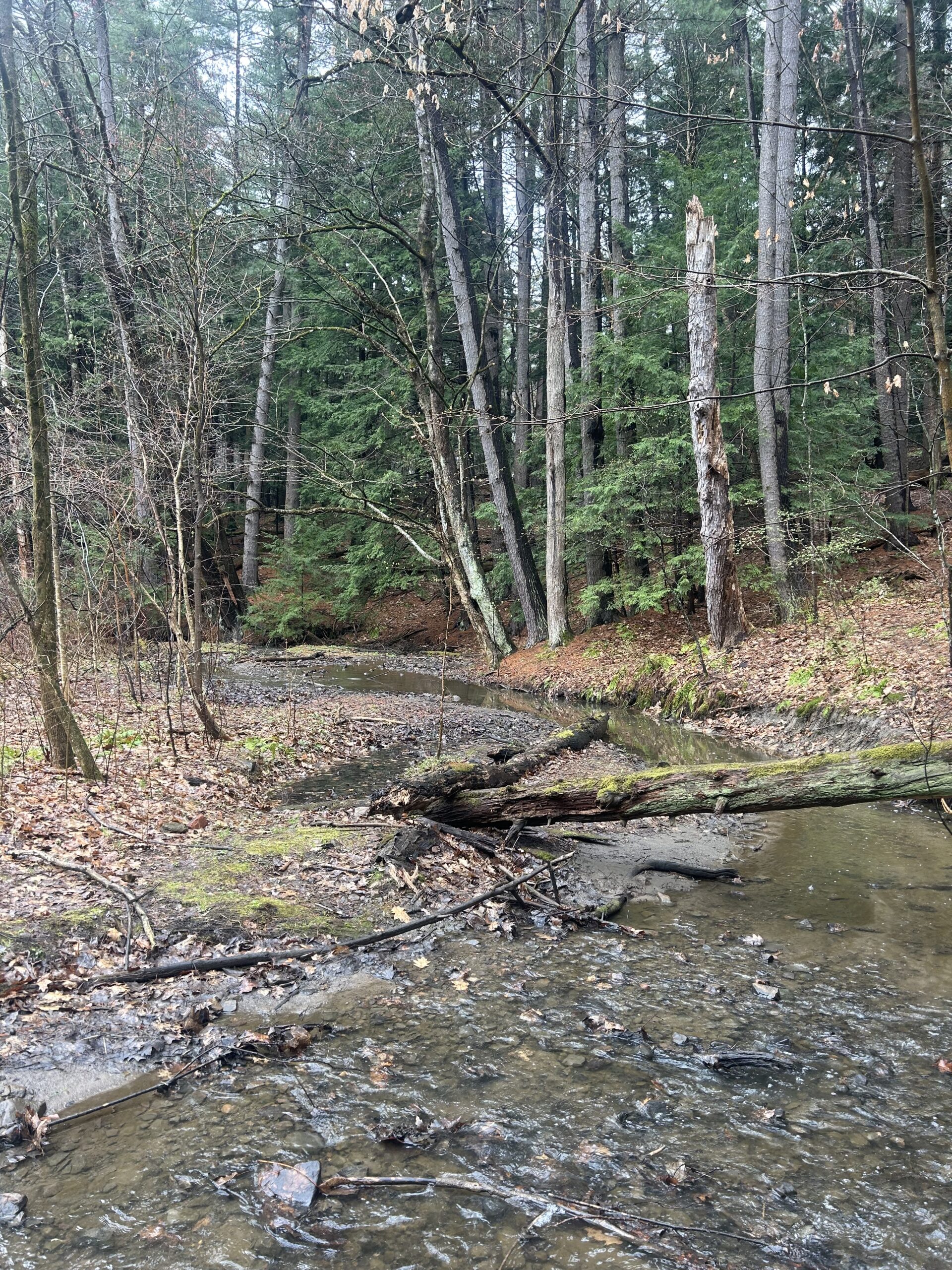
On the morning of April 26th, after a fairly heavy overnight rainfall, I decided to explore the trails and banks of Centennial Woods in hopes of discovering some signs of spring phenological changes and possibly some amphibians due to the recent rain. The last time I had visited Centennial Woods was in February, when there was still around a foot of snowfall on the ground, so I was eager to return and see how the seasons have progressed and what new species I could observe and record on iNaturalist.

Experience with iNaturalist:

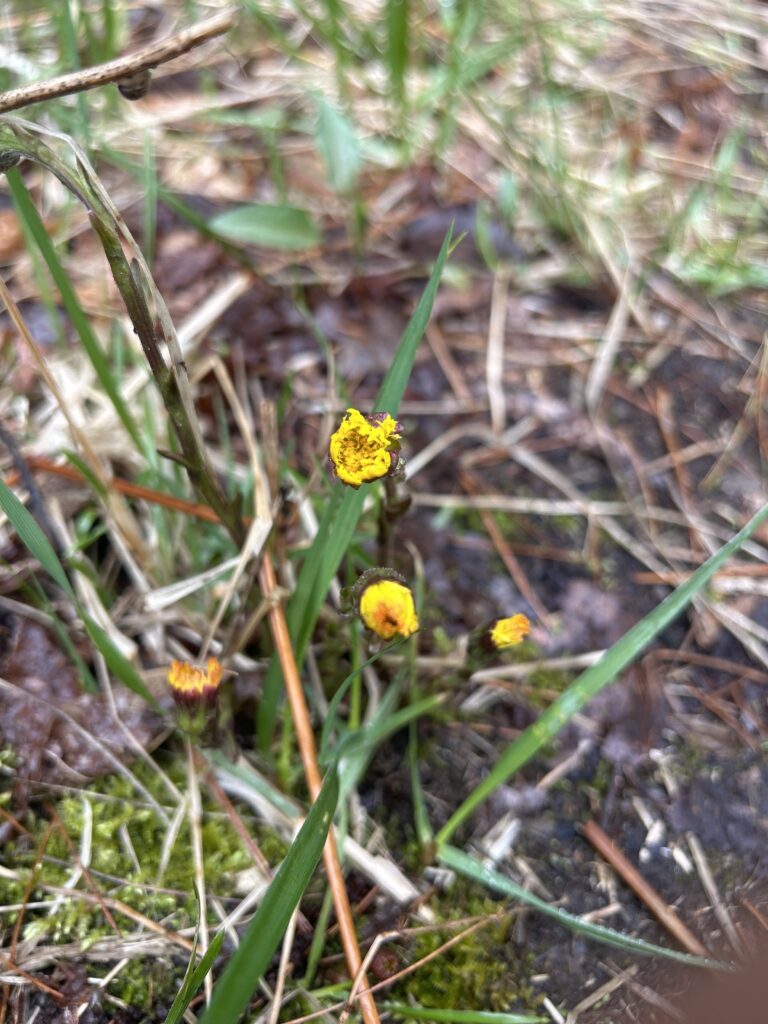
Overall, I really enjoy using iNaturalist to record the species I observe during my phenology site visits, hikes, or simply walks around campus. I think it is a great tool to practice my identification skills and observational inquiries, as I look through reference photos or other observers’ comments to identify the species at hand. One of my favorite parts of the site is being able to see everyone else’s observations in our projects and expanding my knowledge about the species in the greater Burlington area. Also, iNaturalist has many information pages about each species and sometimes gives helpful facts based on location and timeframe of the observation regarding species nativeness and conservation. For example, after observing Colts-Foot, iNaturalist indicated that this plant was introduced in Centennial Woods and arrived in the region via anthropogenic means.

Species Encountered:

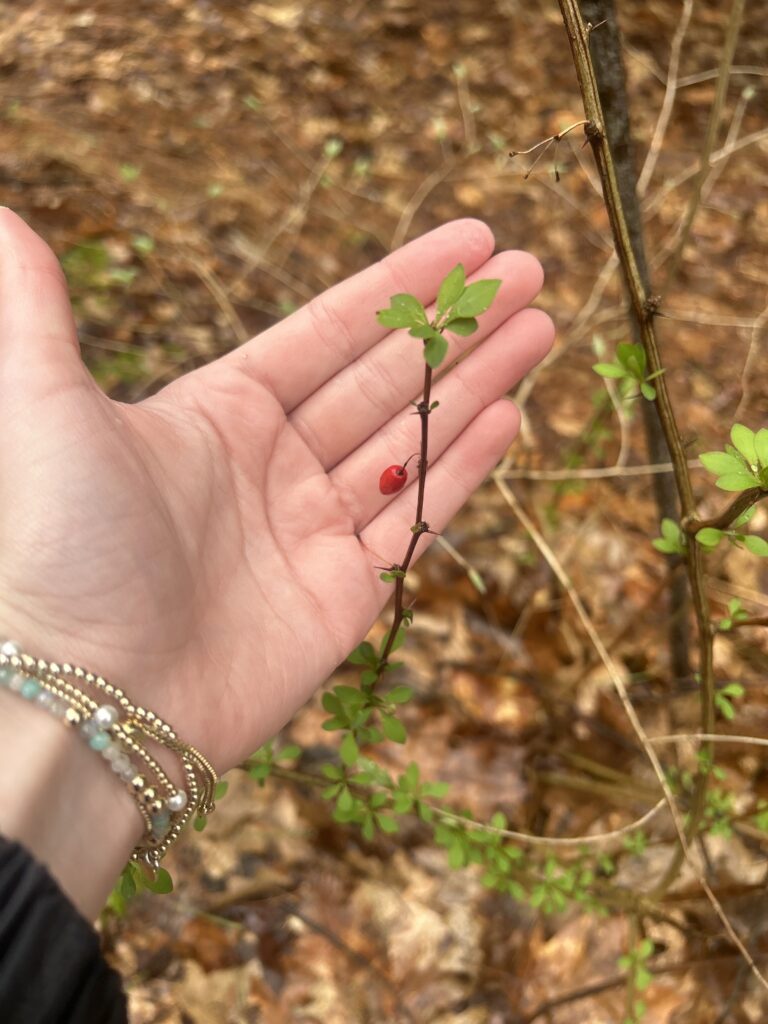
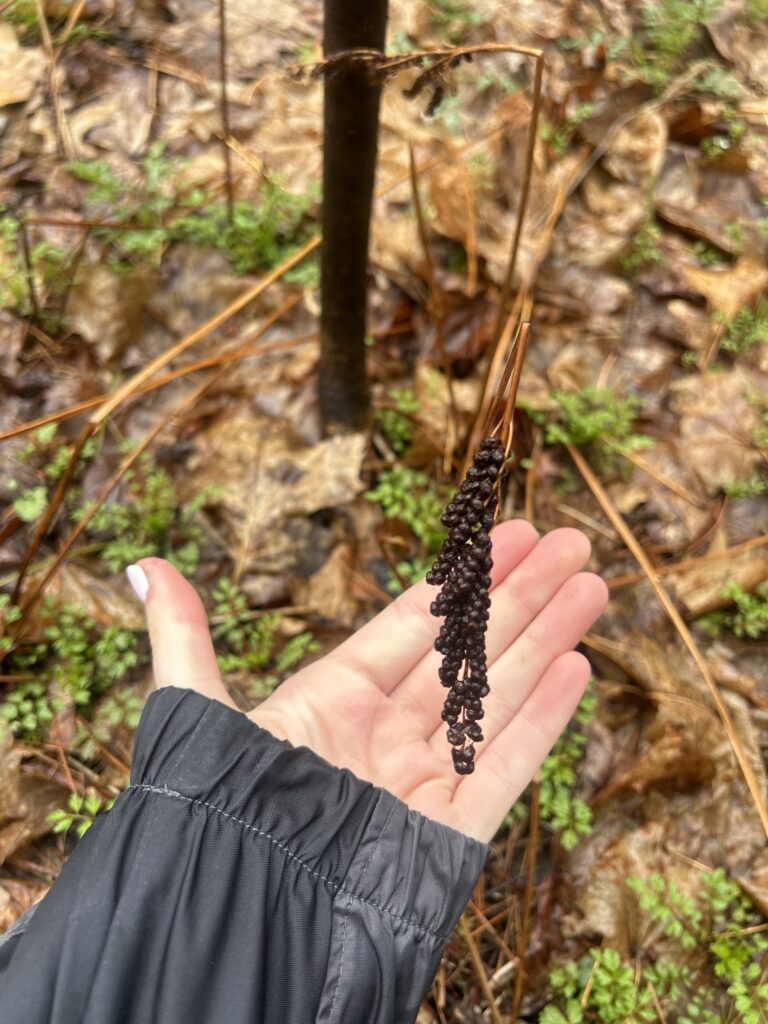
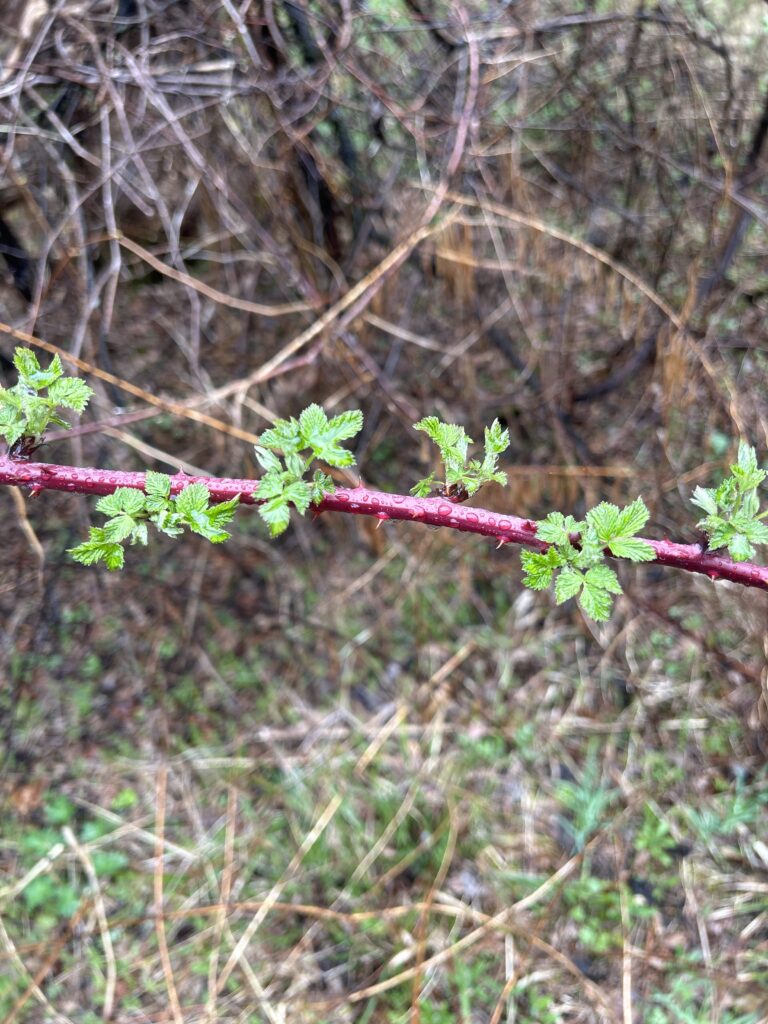
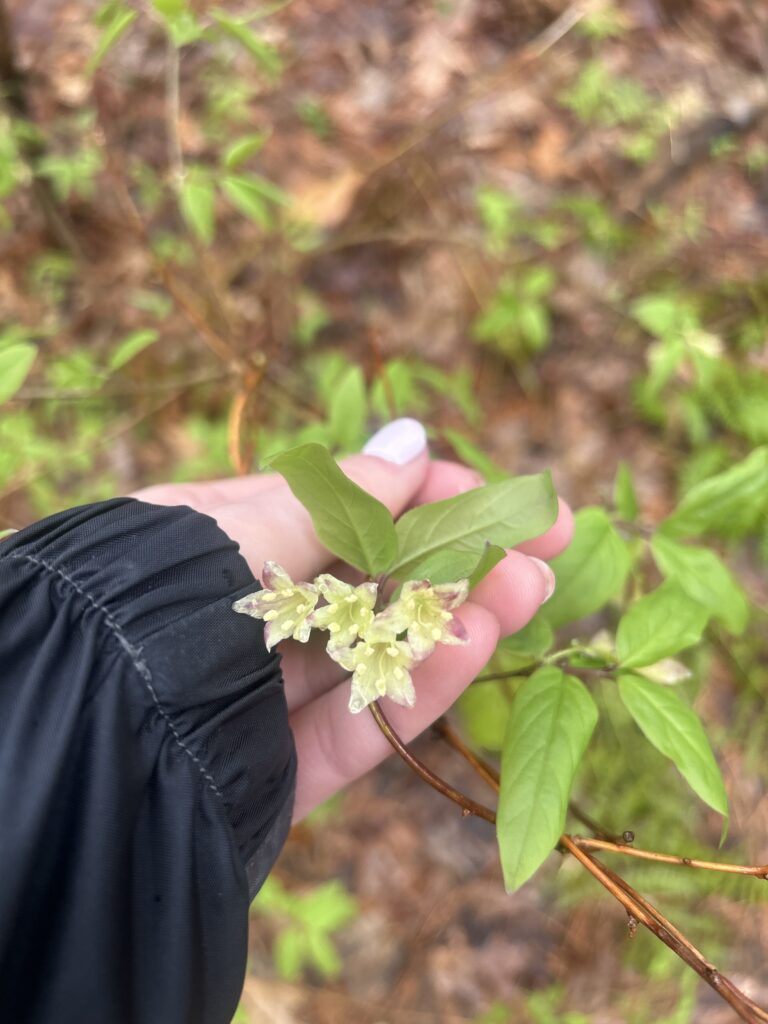
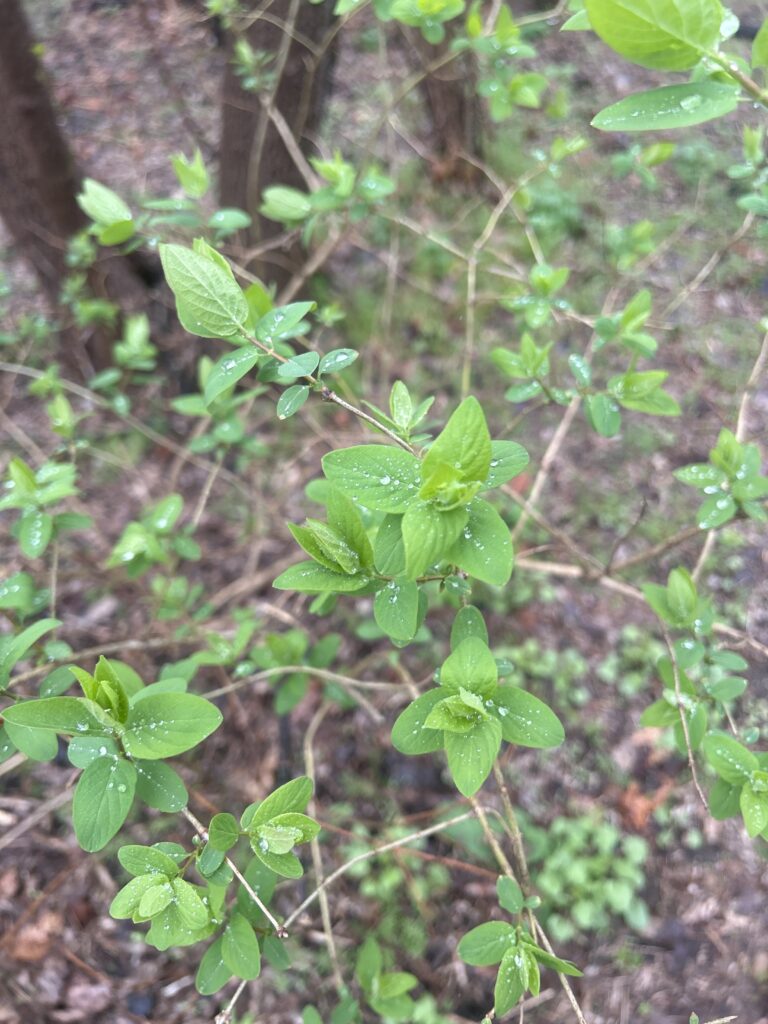
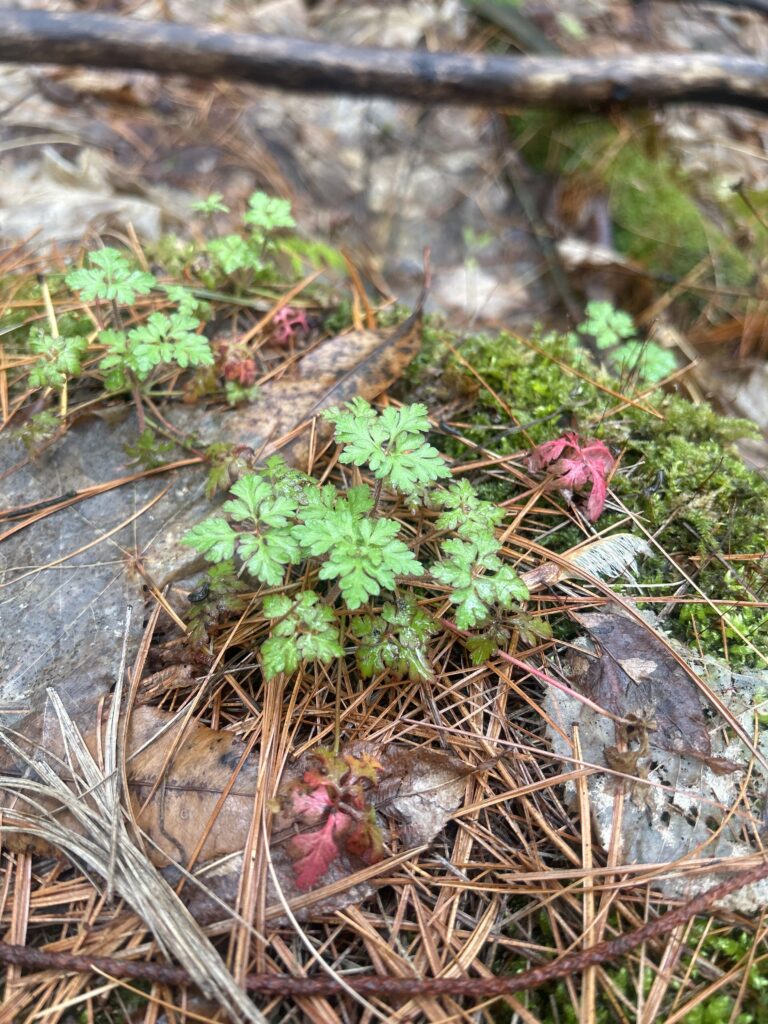
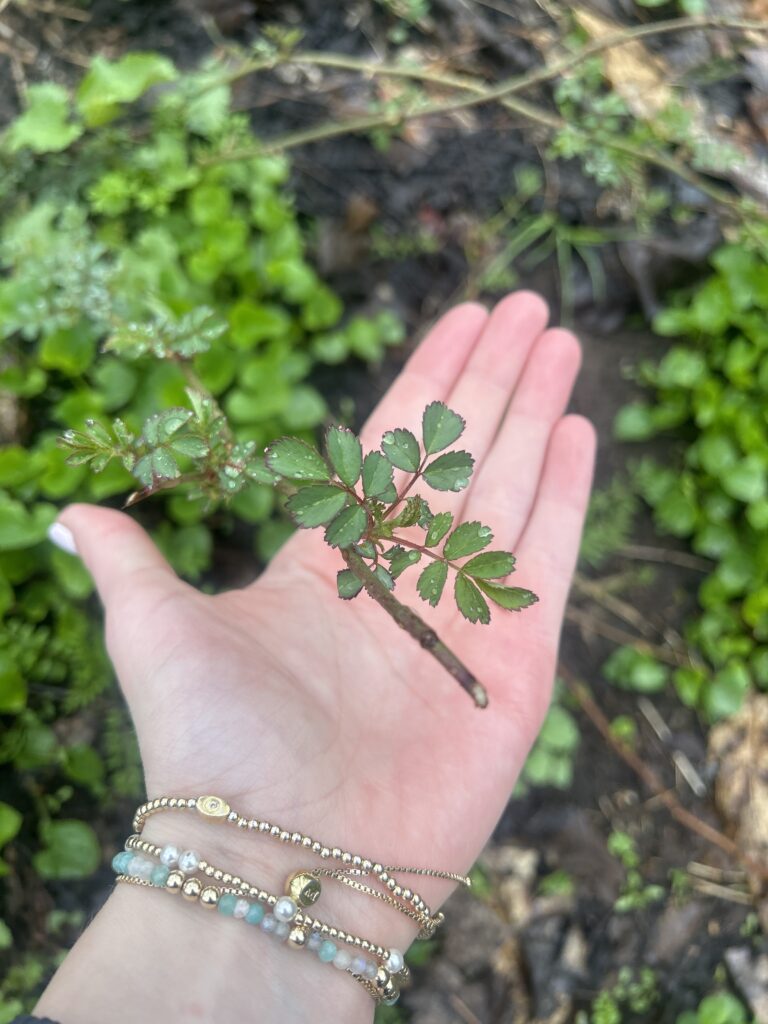
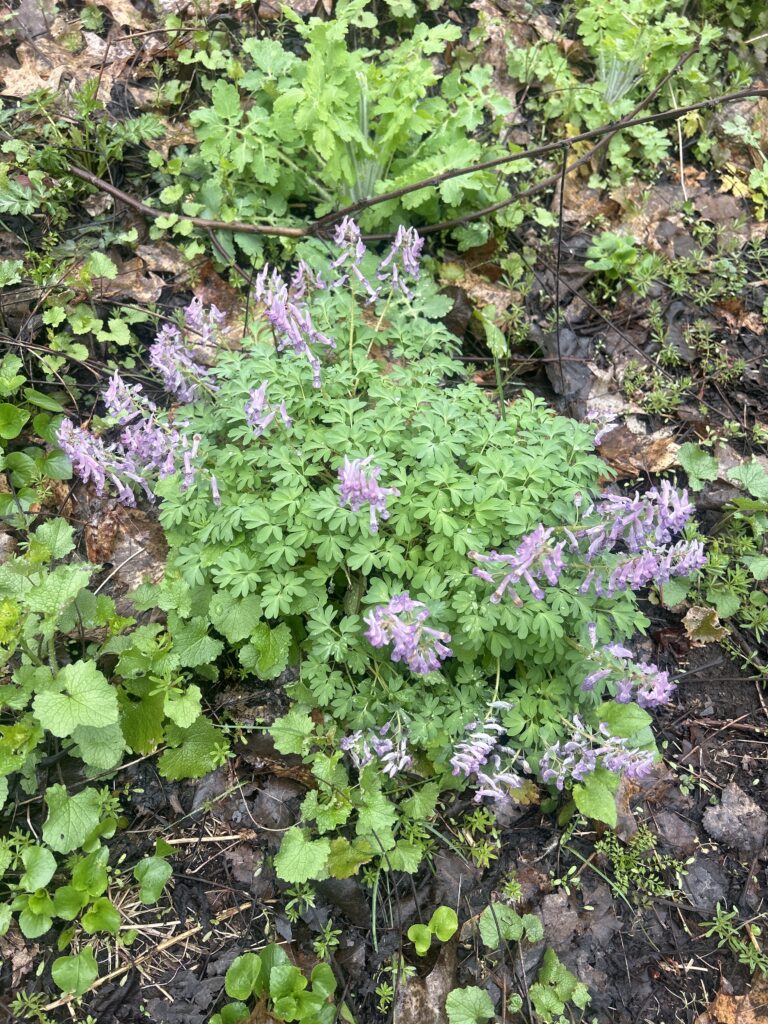
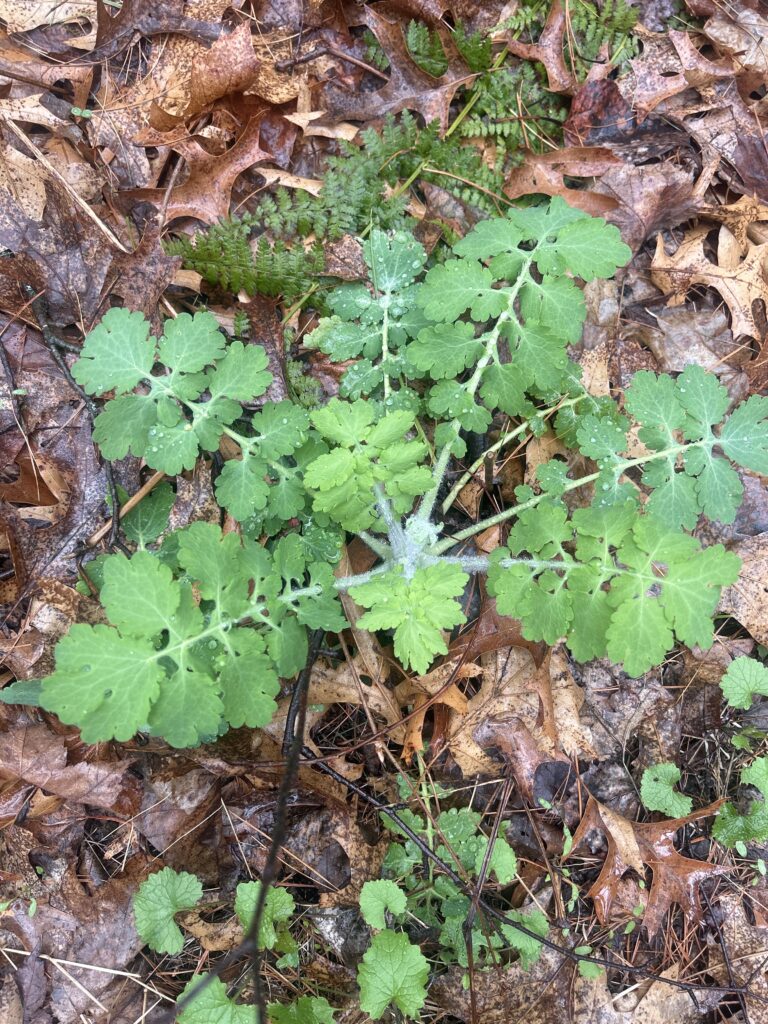
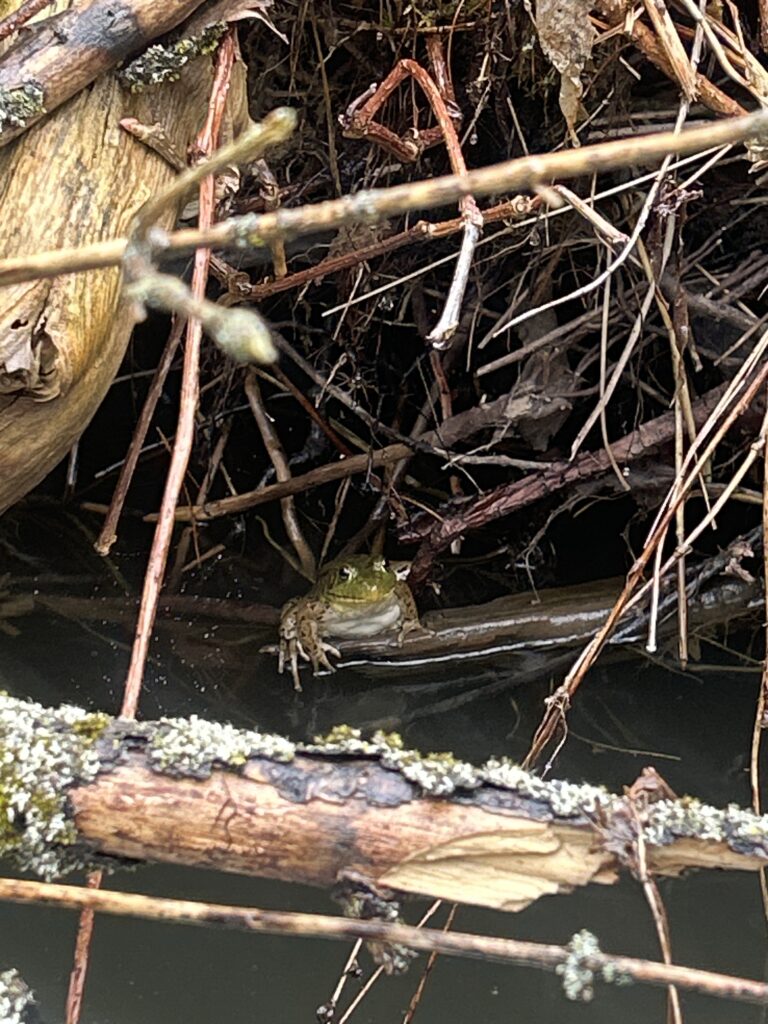
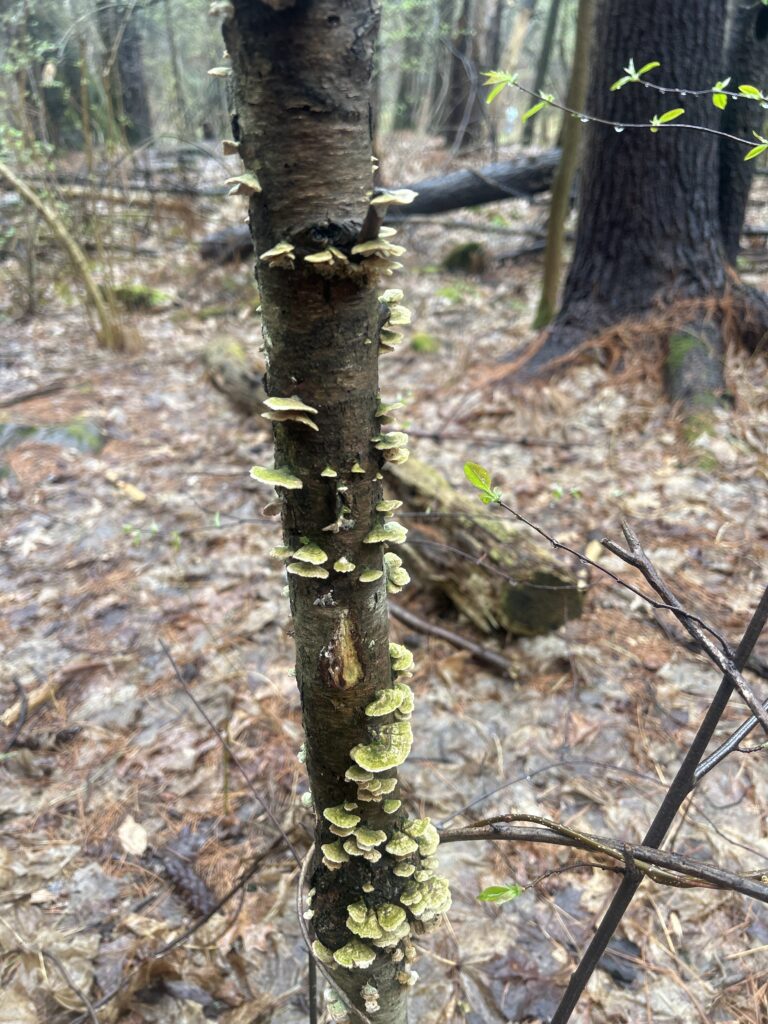
During about a 1 to 2 hour exploration of Centennial, I encountered numerous species, well over 30, but I specifically made 15 iNaturalist observations. I did not record many tree identifications due to my familiarity with tree identification in this area and other observations in our lab group’s iNaturalist project. Instead, I mainly focused on small, understory plants, wildlife, and any other intriguing or unknown vegetation I found along my way. The majority of these observations we along the primary path, while others were deep into the forest near the stream banks. Click on the images below to be directed to the corresponding iNaturalist observation!

Plants & Vegetation:

Animals & Fungi:

City Nature Challenge – A Look Globally:

After looking at the global reports in the iNaturalist City Nature Challenge, I was impressed by the array of diverse plant, insect, bird, and other animal identifications that have already been made within a day of the challenge’s start. As I scrolled through the numerous well-captured photographs, I was fascinated by the types of organisms found so close to these international urban environments. There were numerous observations of more exotic and foreign animals such as pit vipers, collared peccaries, tree frogs, and even an ostrich. However, it was also interesting to compare my observations here in Burlington to observations of the same species in other regions. Numerous other observers had captured similar pictures of fungi, raspberries, honeysuckle, and other woody vegetation, like I had observed in Centennial. Overall, looking through these observations has helped me gain a new appreciation for how diverse our biological world is and why it is so special and important to have thousands of observers worldwide documenting these amazing species, all connected through one online site.

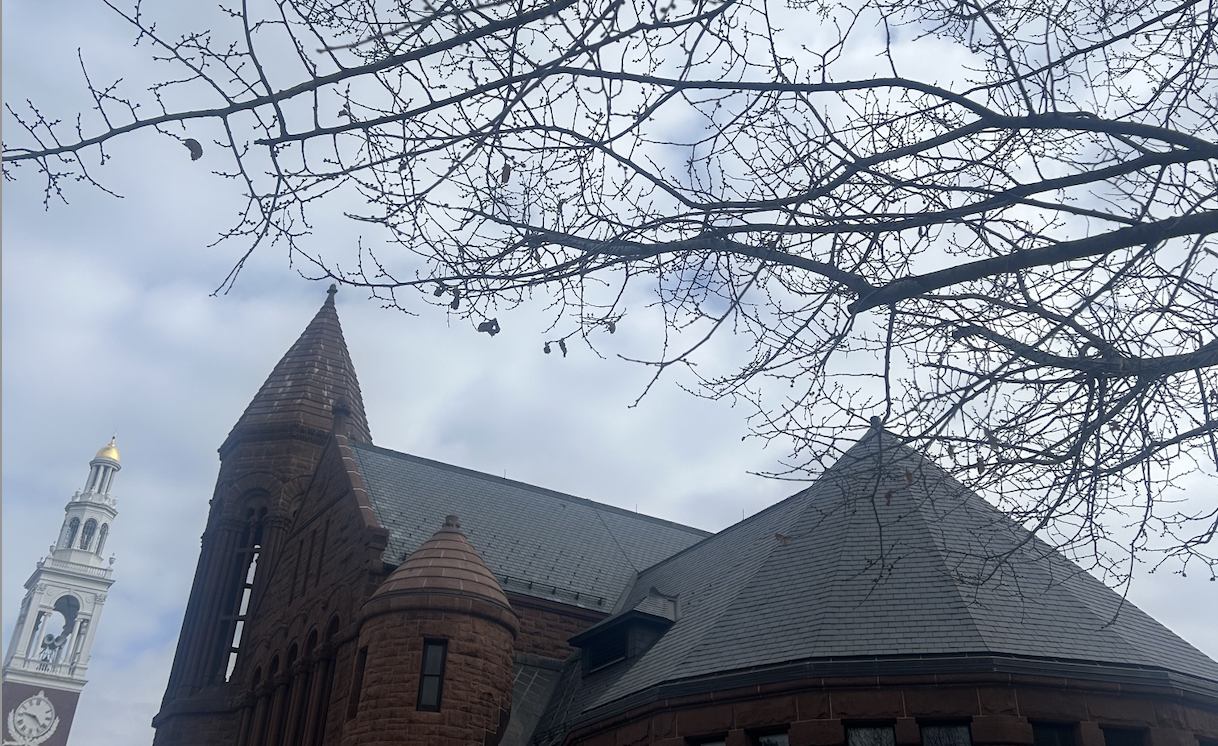
To collect my phenological data, I went out on March 25th at around 9:00 am. The weather was generally cloudy, and the temperature was around 35 degrees Fahrenheit.

Observations:

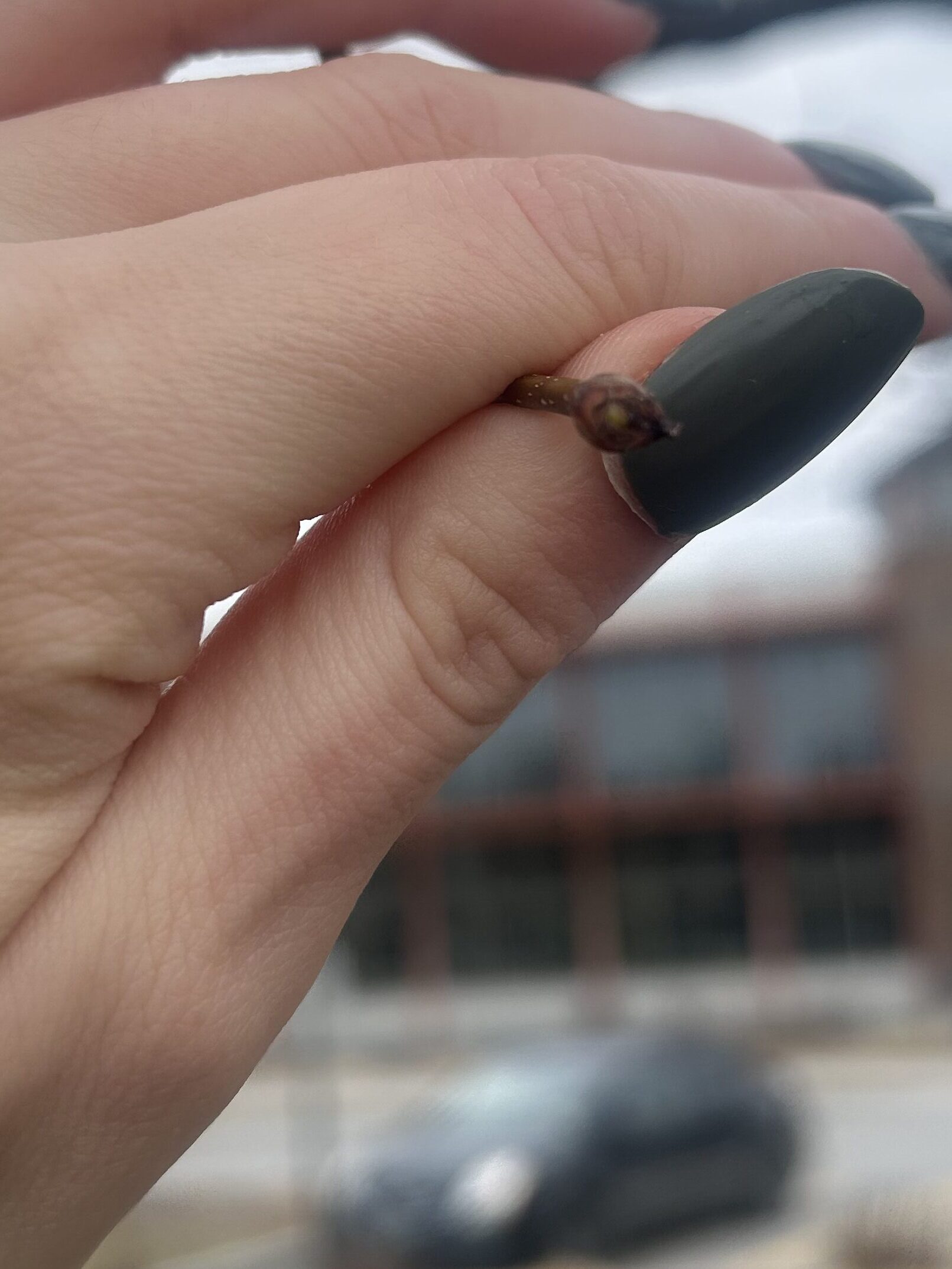
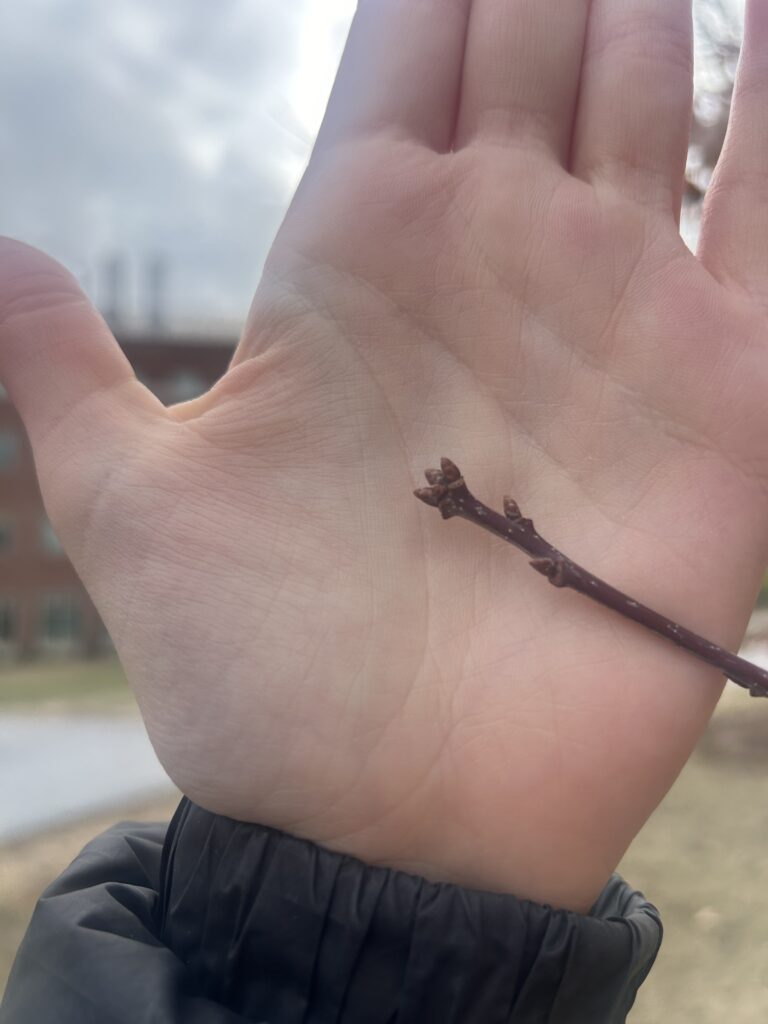
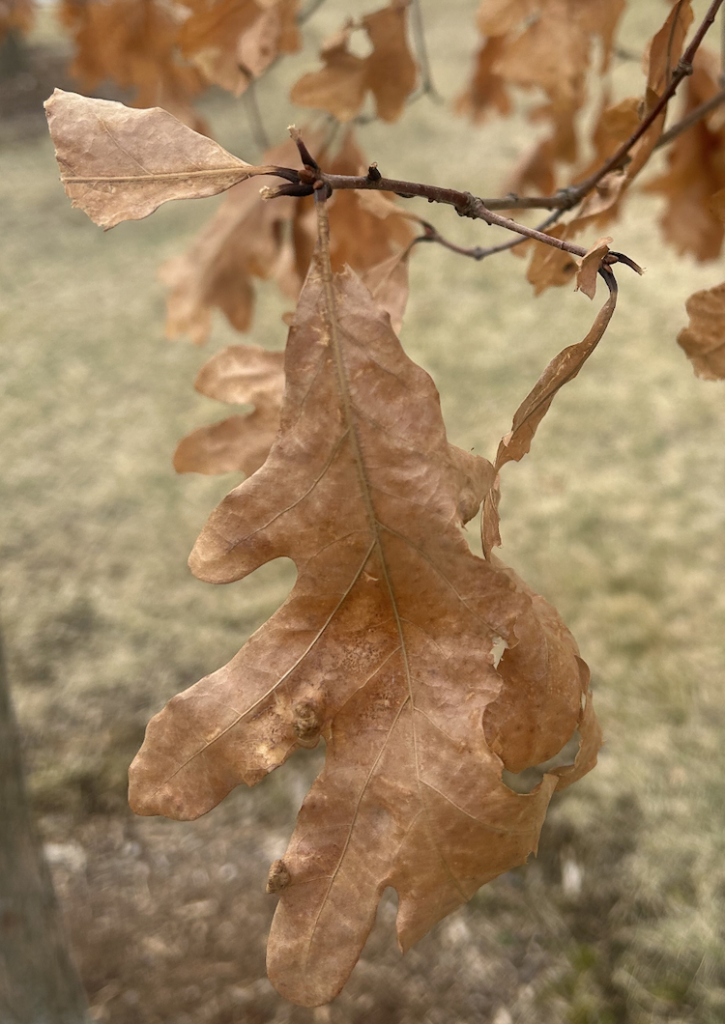
I started my phenological data collection journey with the sugar maple outside of the Davis Center. This larger sugar maple had no leaves, and upon close inspection of its opposite branching and bud development, some of the buds appeared to be breaking slightly. Some of the bud centers were just beginning to show a vibrant yellow-green. Across the way, I observed the young Northern red oak. This tree was clearly in a different phenophase than the sugar maple, as it still had most of its leaves on the branches. The oak’s buds had not yet broken. Similarly, the white oak behind the Aiken Center also still had the majority of its leaves, although they were dry and brown. These buds also remained unbroken. Next, I traveled to the marked red maple by the Old Mill Building. The red maple appeared to be in a similar phenophase to the sugar maple I observed earlier. The buds were large and red, with some breaking. No flowering had occurred yet. Lastly, the Norway maple had some remnants of dried leaves still on its branches. For the most part, the buds remained closed. Overall, the maple trees appeared to be further along in their spring phenophase progression as compared to the oaks. Minimal signs of wildlife were observed, except for one grey squirrel near the red maple.

NPN Website Exploration:

After checking out NPN’s website, I found one publication summary interesting about how male and female trees are responding differently to temperature increases each year. The article explains how dioecious plants, like ash, willow, poplar, and some maples, are beginning to experience a reproduction gap. Climate change has led to longer springtime warmth, and male trees tend to flower earlier than females due to greater warmth sensitivity. With male trees advancing their flowering time at greater rates than females, there is a drop in reproductive success. This can have detrimental consequences for the species and affect wildlife that rely on the pollen transfer and continuation of the tree species. This study is just one way that climate change has resulted in phenological mismatches that not only affect tree phenophase transitions but also the plethora of wildlife interactions that rely on the phenological synchronicity. The five tree species we are observing on campus could be experiencing the same mismatch as Burlington temperatures increase, and flowering/leafing out times are shifting.

Wildlife Tracking & iNaturalist Observations

Initial Observations:

Check out the hyperlinks below to view the iNaturalist observations!

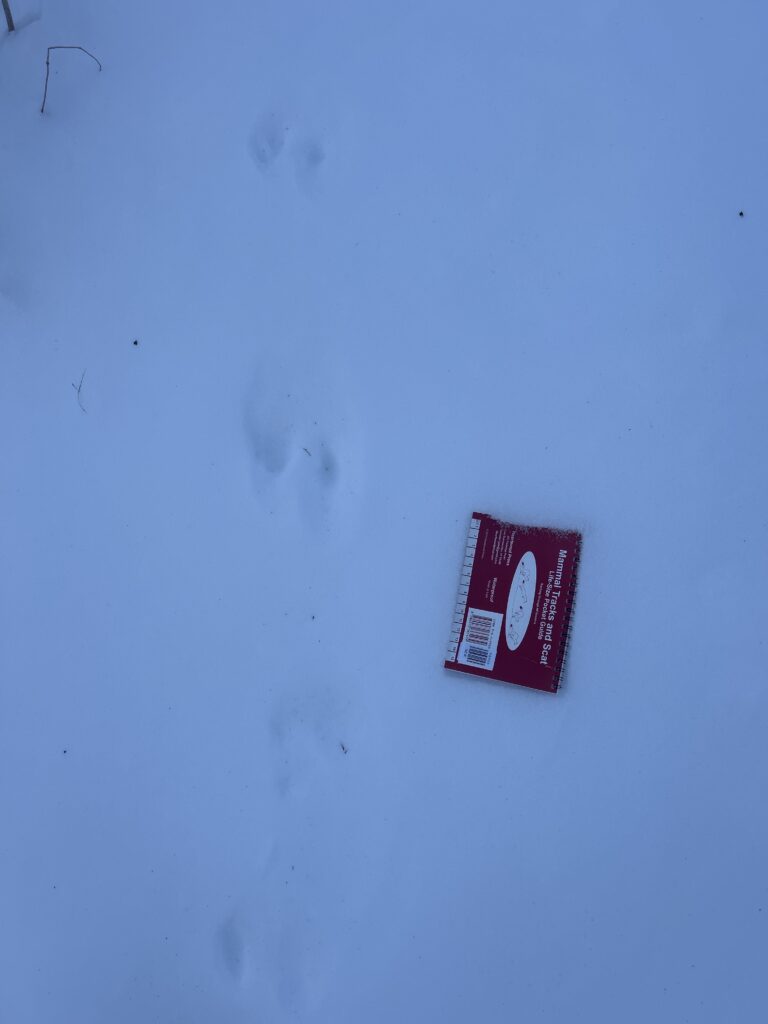
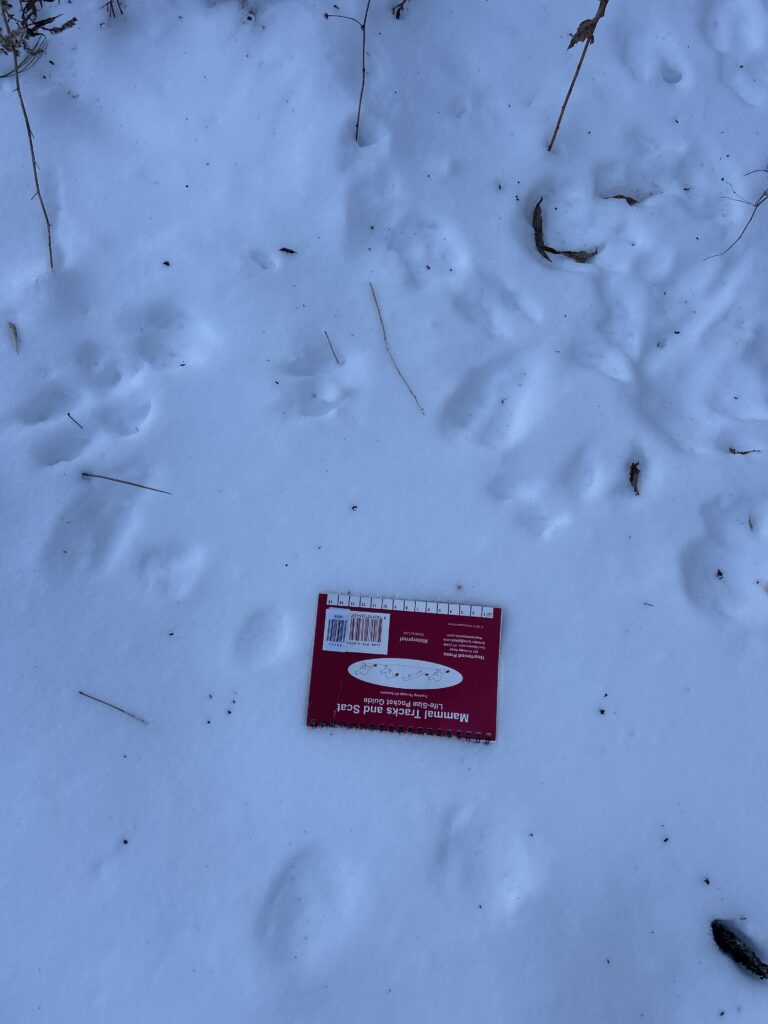
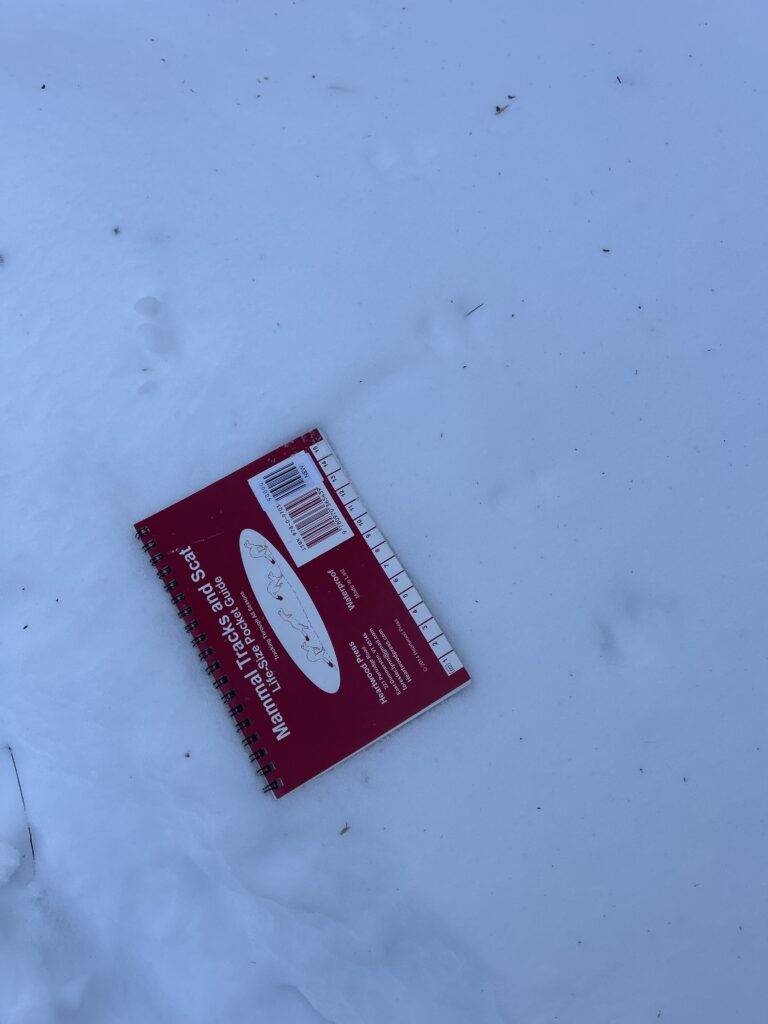
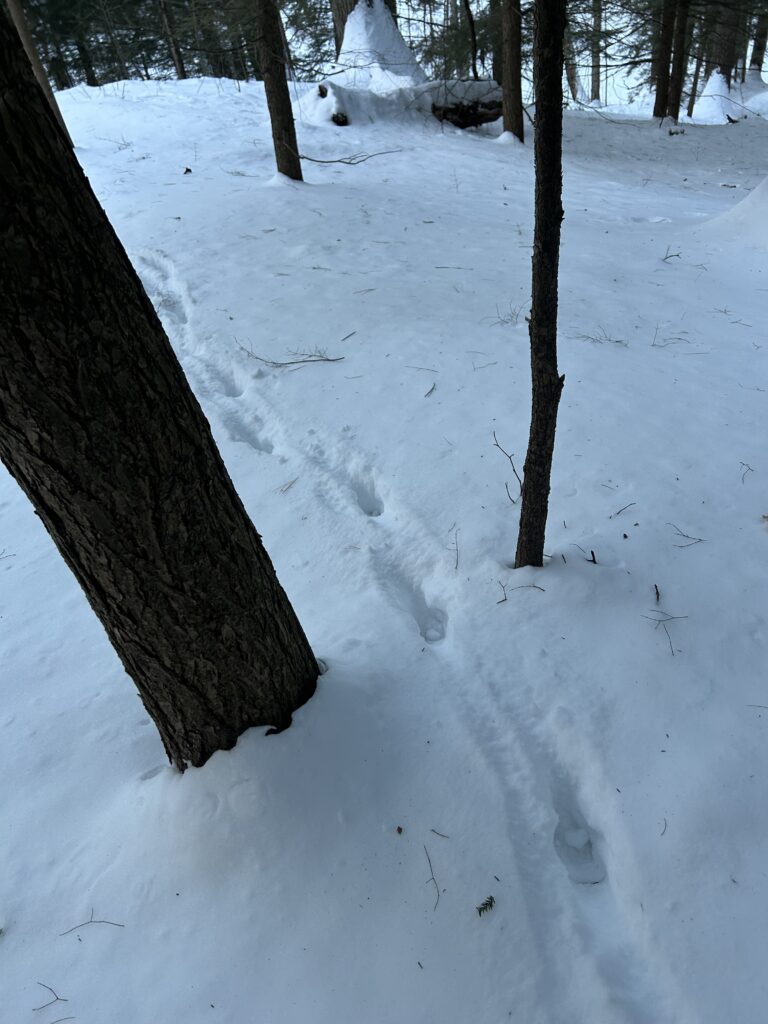
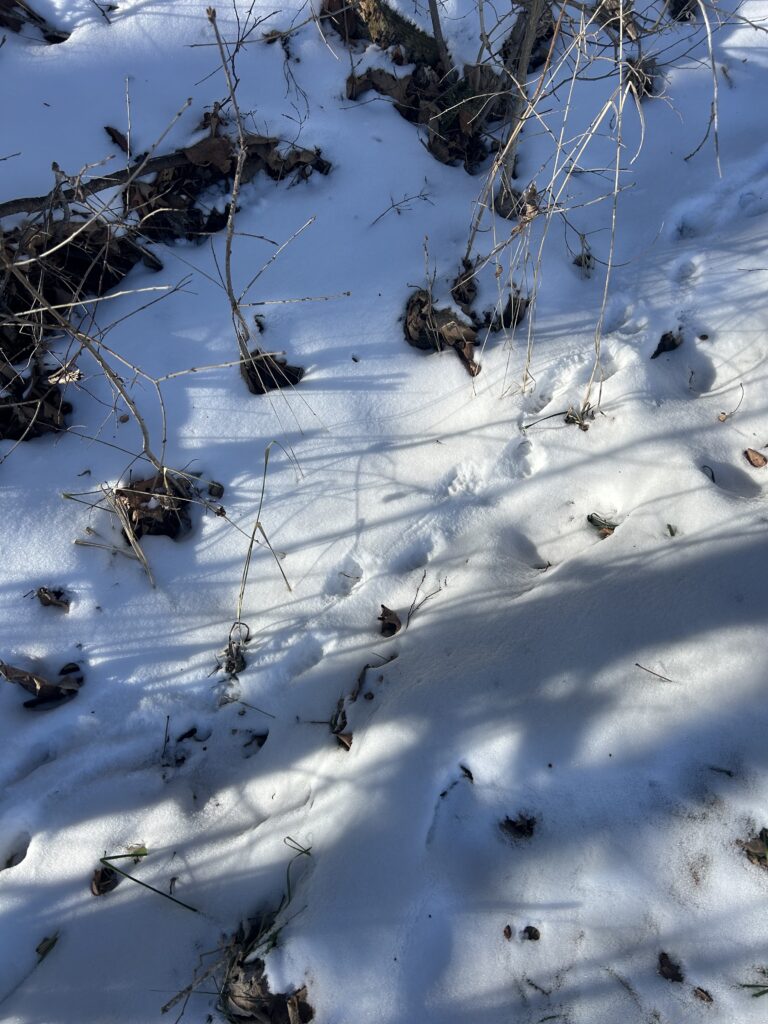
For this week’s phenology post, a peer and I decided to visit Centennial Woods, right down the road from campus, to observe some winter signs of wildlife. After taking the short walk there, we were met with several inches of snow; we took the fairly well-traveled path into the woods and stepped off-trail to follow a few wildlife trails. Within the first few minutes, we made our first observation of a clear galloping gait pattern between a group of old Eastern white pines. The tracks were arranged in parallel groups of four, with the two in the front somewhat larger. The more distinctive tracks were around 2 to 3 inches long and about an inch deep, with a stride of around 6-8 inches. After consulting our field guide, we believed the galloping gait pattern to be that of either a squirrel or a rabbit. However, because the tracks are on the smaller side (around 12 cm according to the guide) and arranged side by side (as opposed to diagonally), we concluded that these tracks belonged to a grey squirrel. Later, we found another distinctive galloping gait pattern but were unable to get an up-close picture due to the thick snow layer. These tracks appeared larger and more similar to that of a rabbit

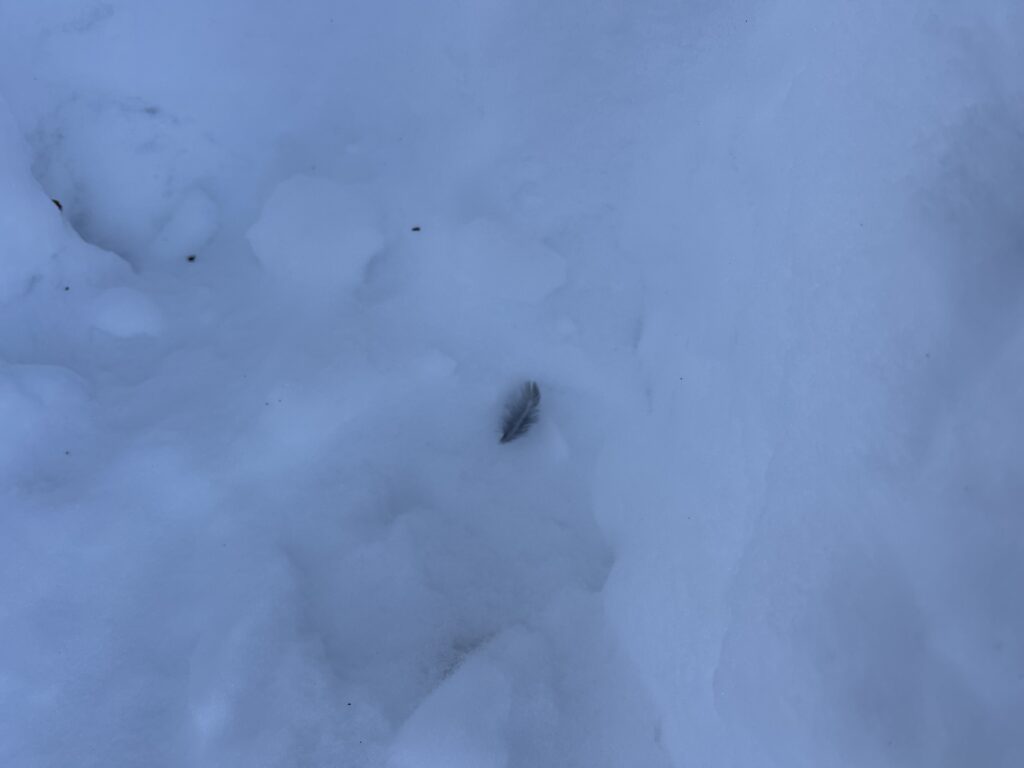
As we continued our journey, we found a couple of trails of very small bird tracks, including a fallen grey feather. Making our way deeper into the forest, we came across what first appeared to be deer tracks, but after closer inspection, they appeared to be additional squirrel tracks. The tracks were all situated near a large brush pile, and deer tracks would likely have gone deeper into the thick snow layer compared to these, likely from a smaller animal like a squirrel.

Mystery Marks:

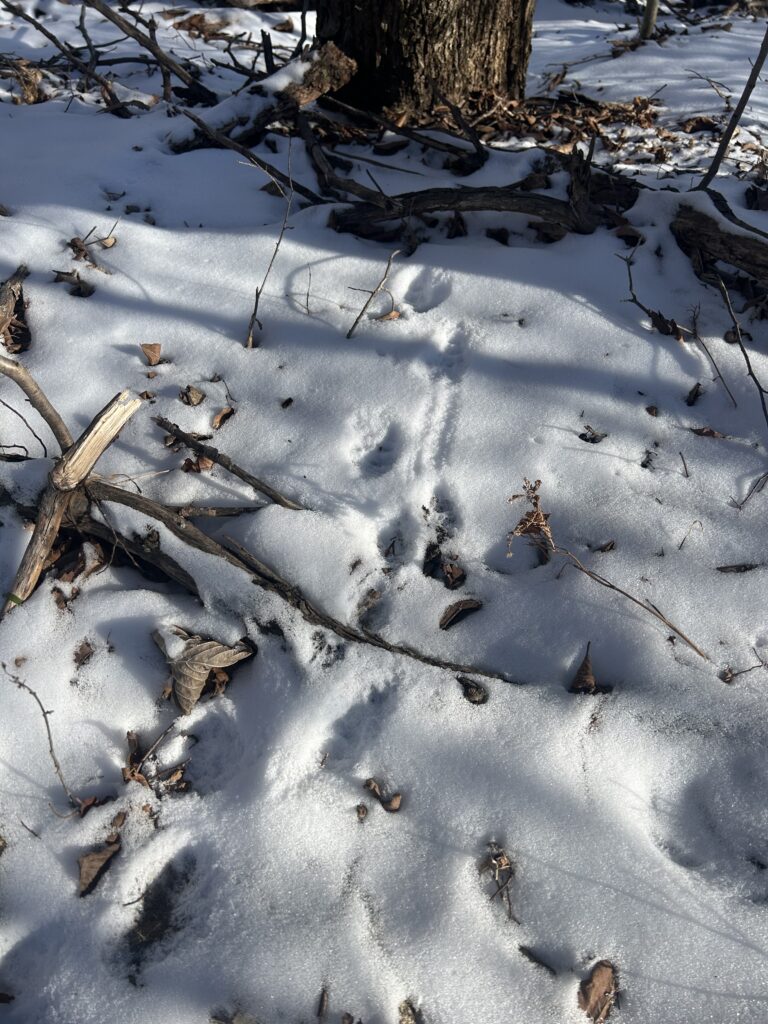
During our time at Centennial, we came across many mystery tracks that we were unsure of their owner. One trail had very long drag marks and a diagonal gait pattern. The trail abruptly started beneath a tree and seemed to disappear before merging into the main trail. Because of the snow’s depth, it was hard to make out any clear print. We hypothesized that it belonged either to a dog or a deer who also display diagonal gait patterns.
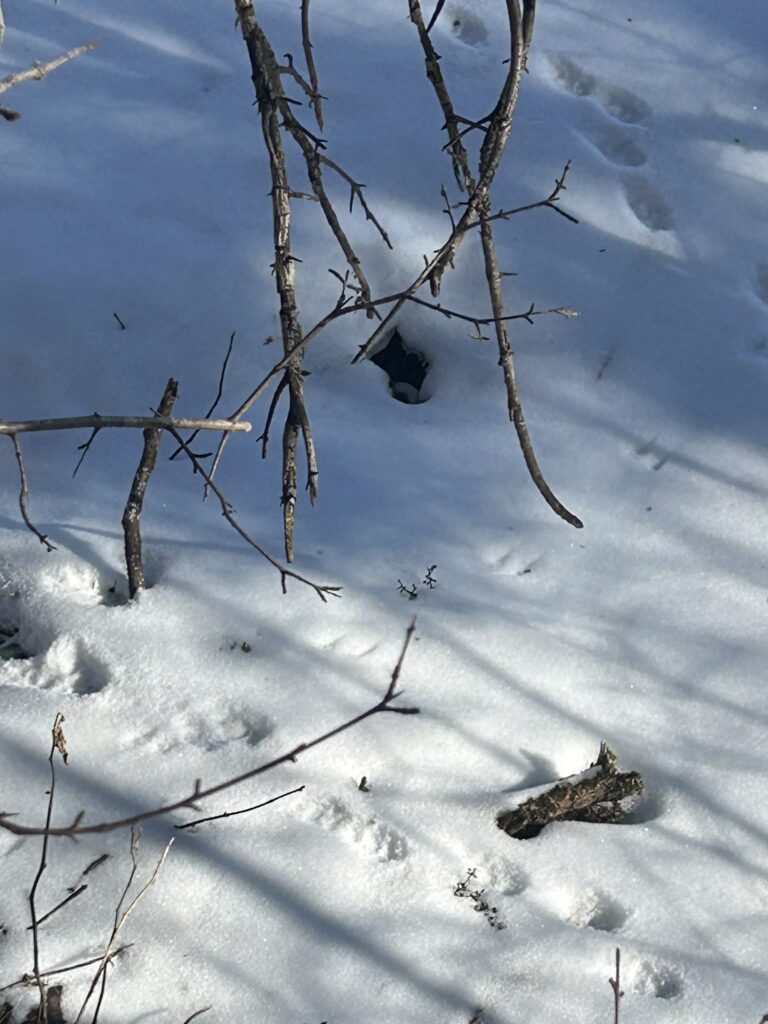
Additionally, there was a group of large impressions in the snow about 2 feet apart. No tracks were easily visible, but the impressions appeared to have 2 drag marks extending from the top and bottom. It appeared that a larger animal was running and jumping through the snow.
Reflection:

We weren’t able to spot any wildlife during our short hike, although we did hear a few bird calls around dusk. Overall, I really enjoyed observing more phenological winter changes in a new spot, especially one so close to campus and Burlington. Additionally, logging the observations on iNaturalist has been a great way to compare tracks and wildlife signs from other Rubenstein students exploring the area, including at Centennial Woods. It has been an amazing opportunity to research and observe such unique ecosystems that are located directly in a populated city and understand how urban environments play a role in their function. As the snow melts and wildlife becomes more active with the arrival of spring, I hope to return back to Centennial Woods to observe some more phenological changes and activity.

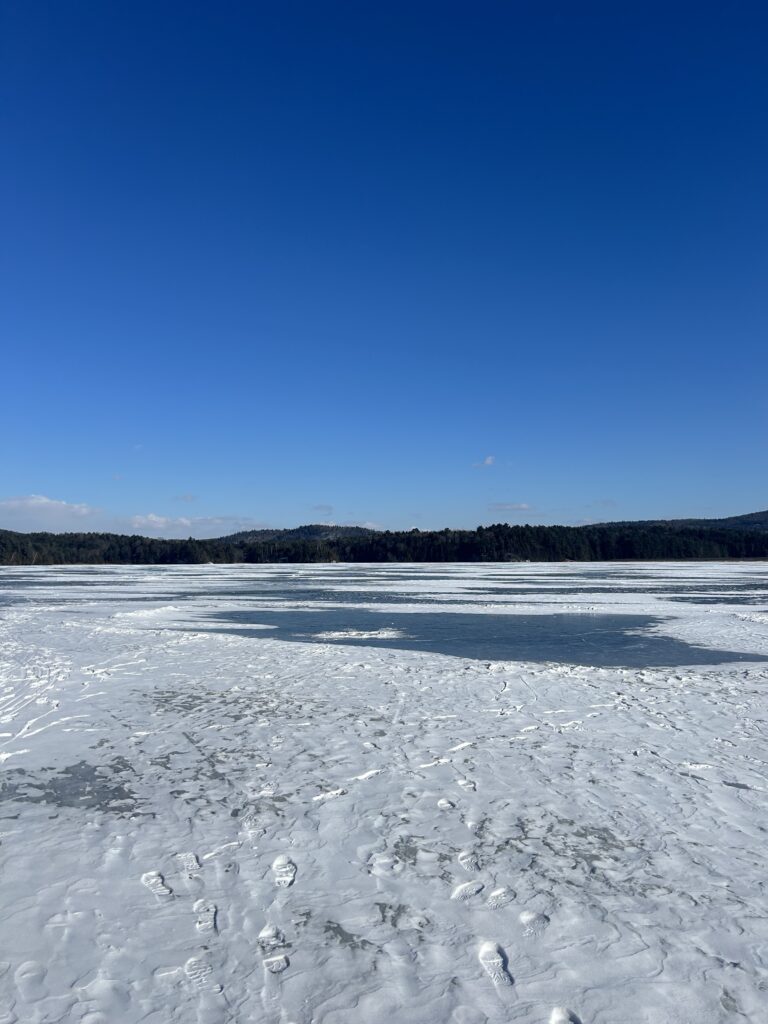
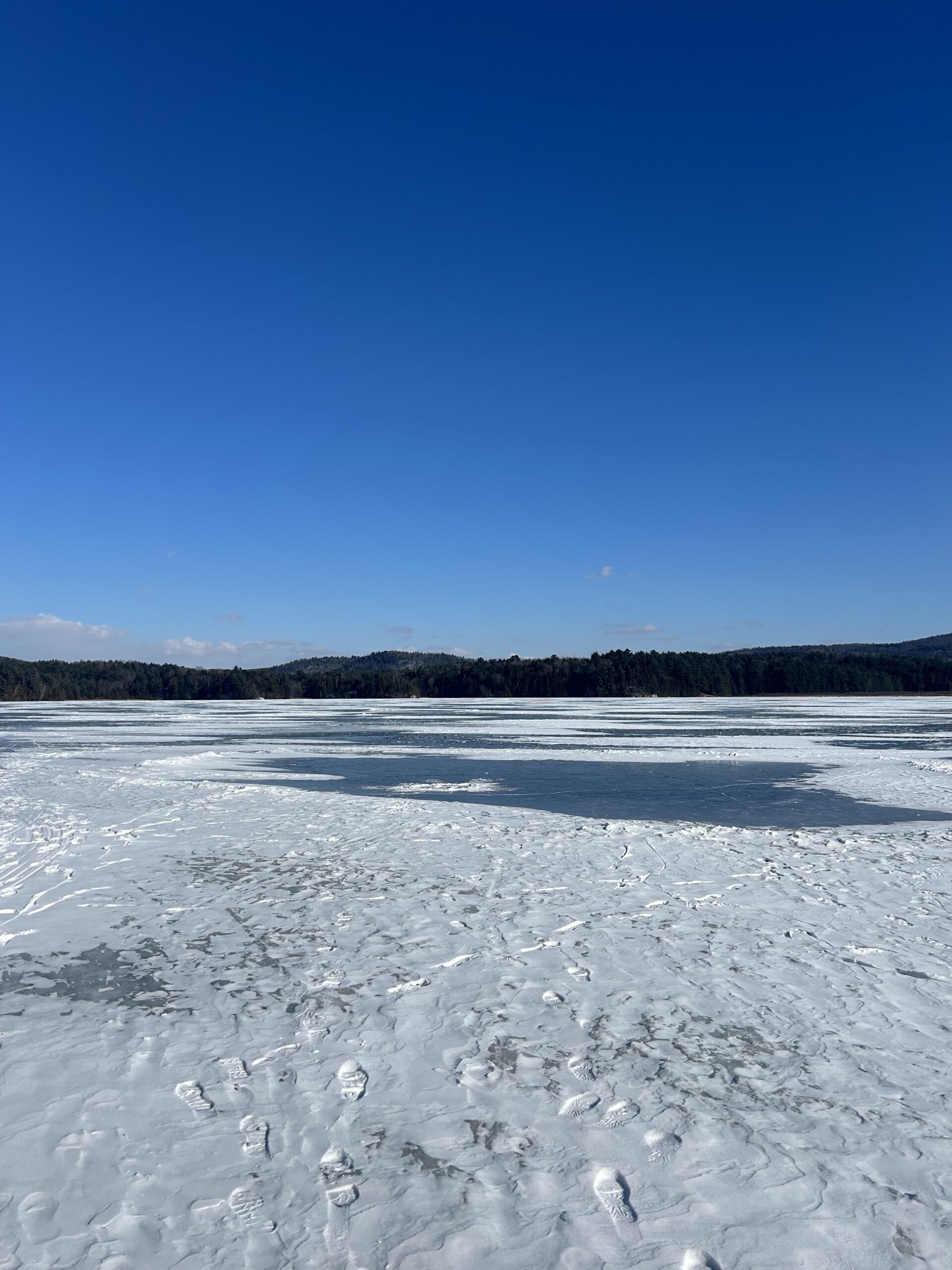
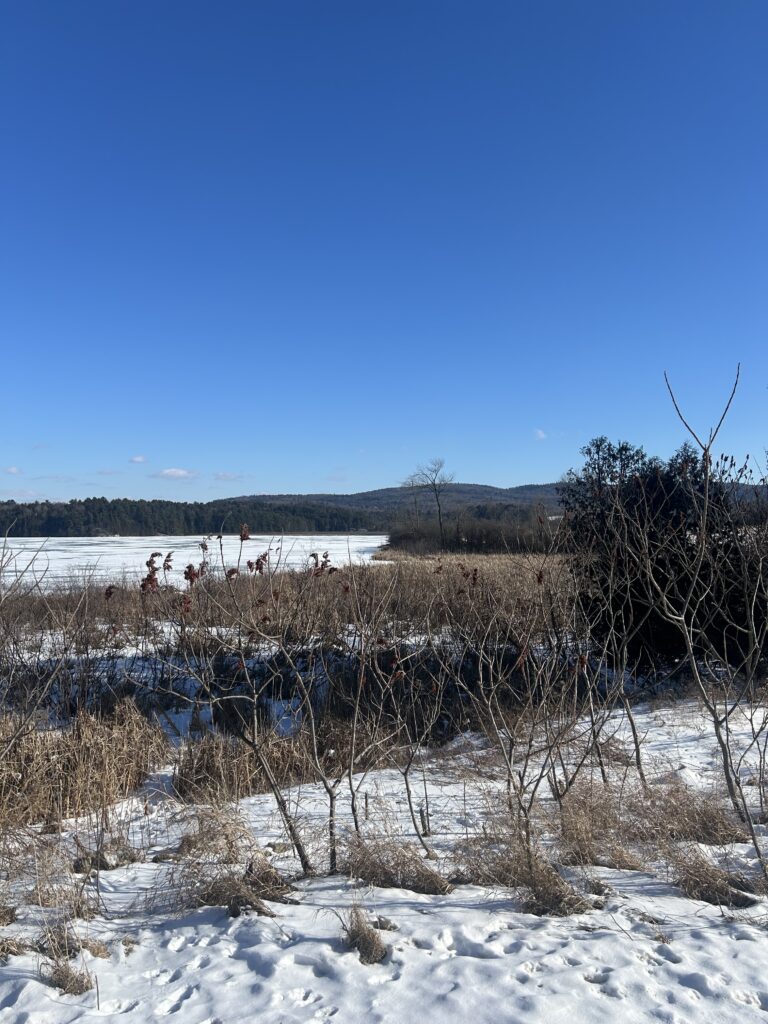
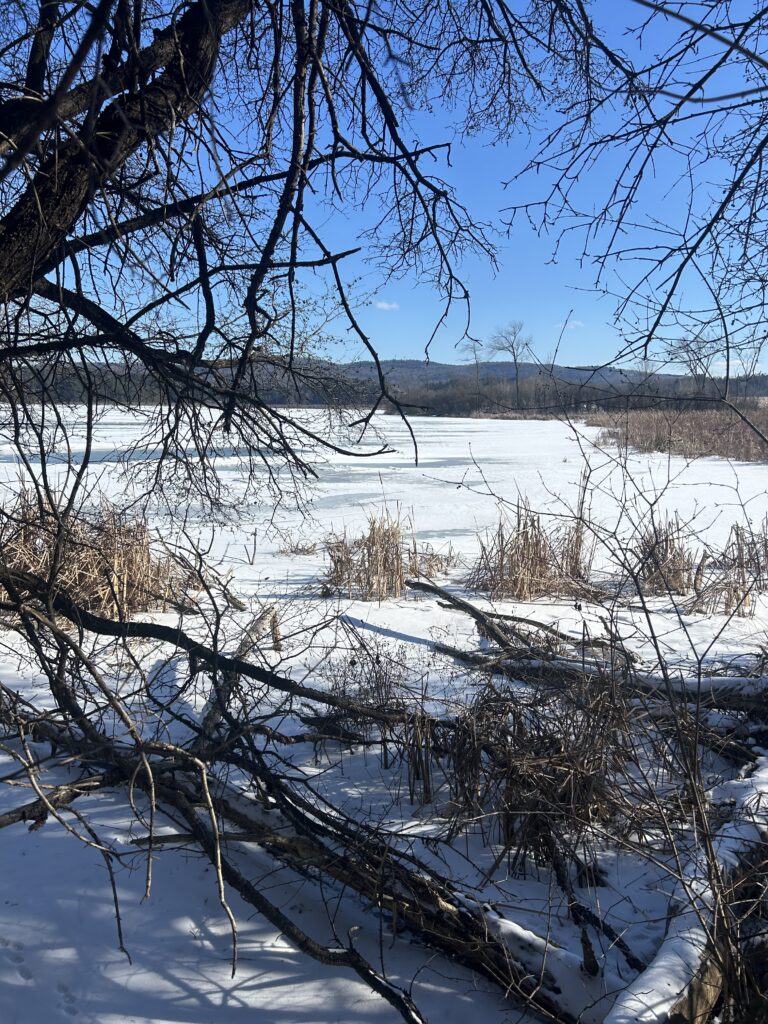
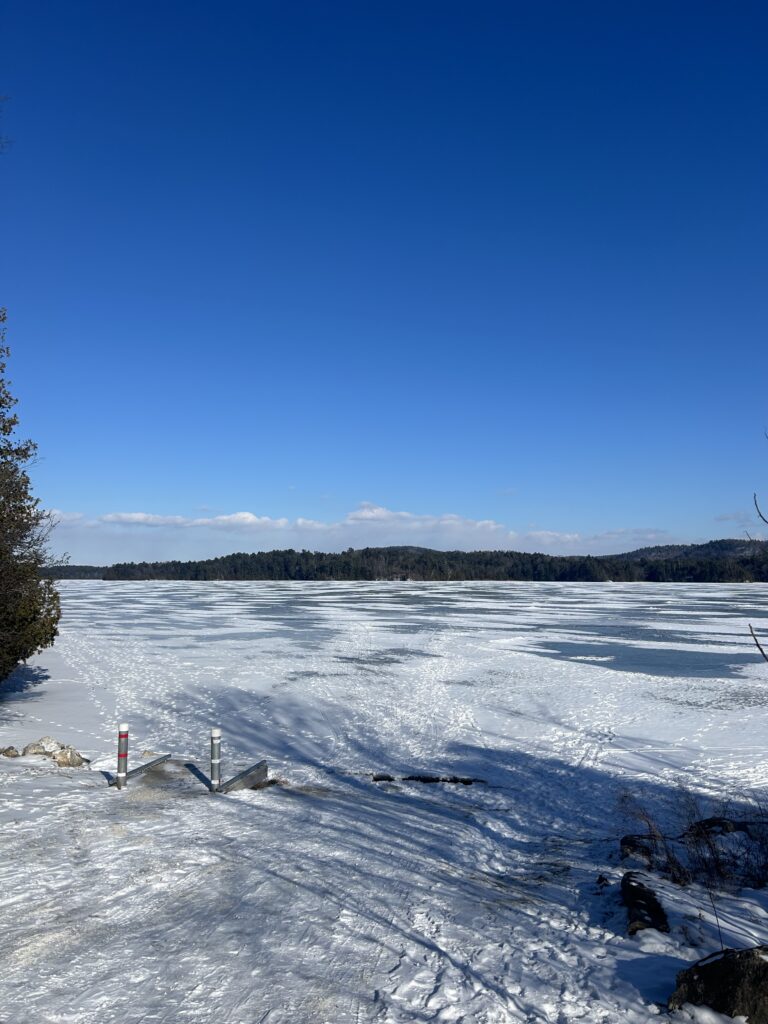
Upon returning to my phenology spot about a month since my last visit, it was clear that many phenological changes have taken place. Due to temperatures dropping to single digits these past few weeks, the entirety of Shelburne Pond was frozen over in a thick layer of ice, with some snow patches. It was such a fun experience to walk out on the ice, view fascinating ice formations, and see my phenology spot from a different perspective. My friend and I even heard some interesting sounds while on the ice, likely from the ice shifting beneath the surface. 

Wildlife Tracks:

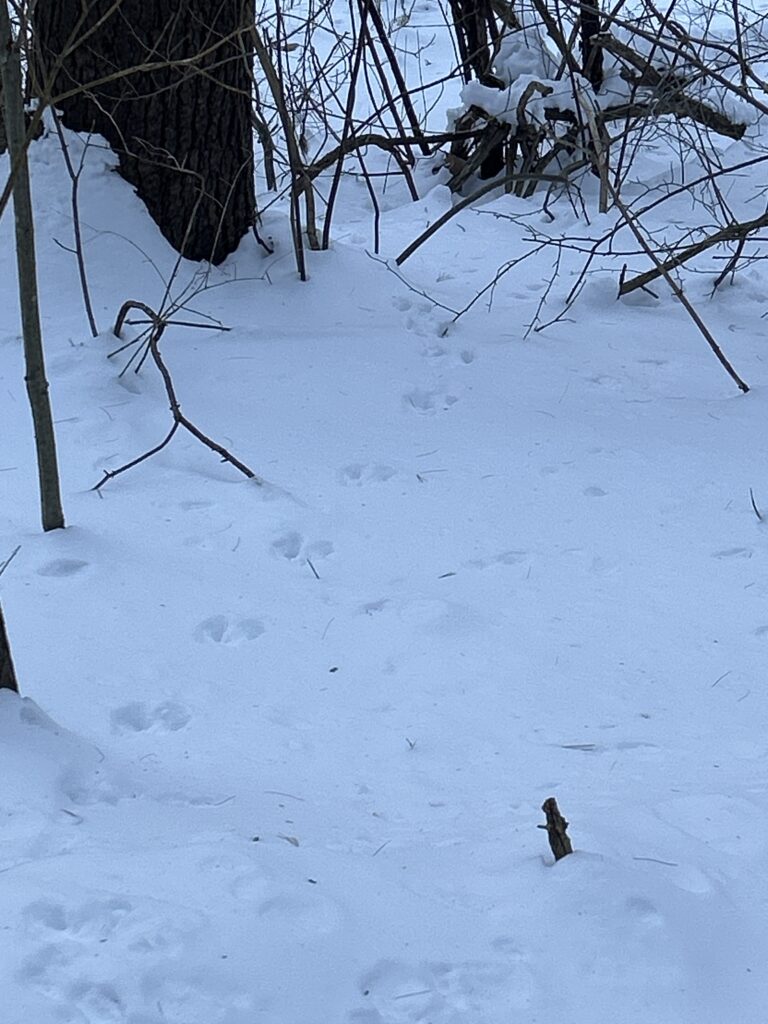
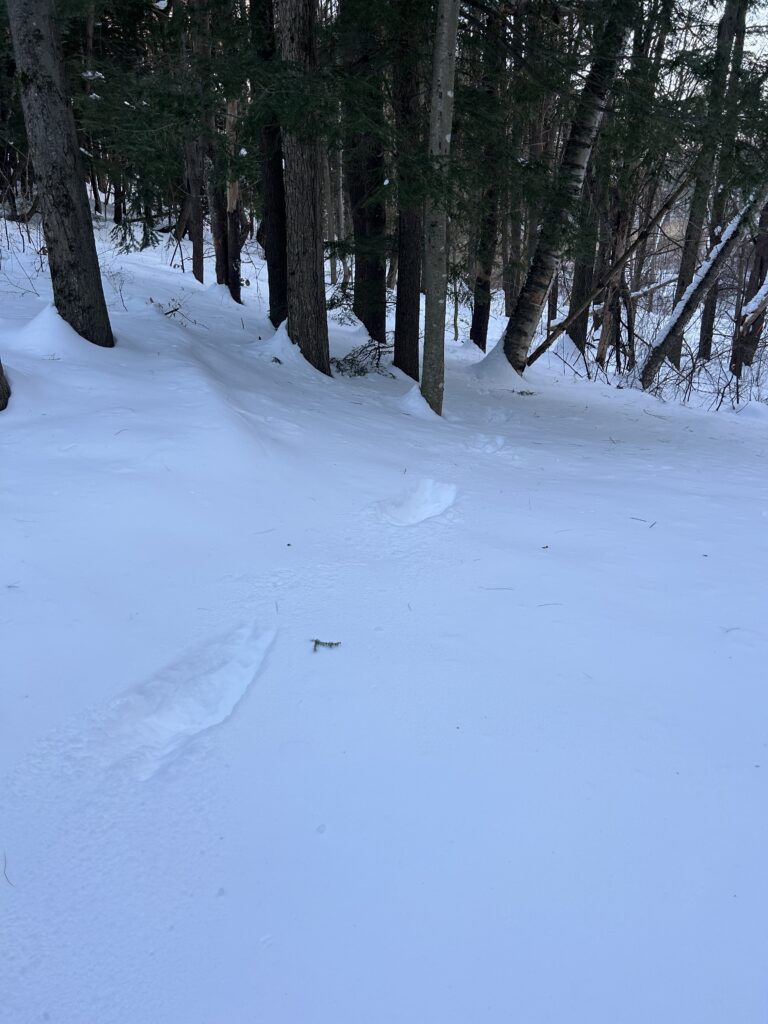
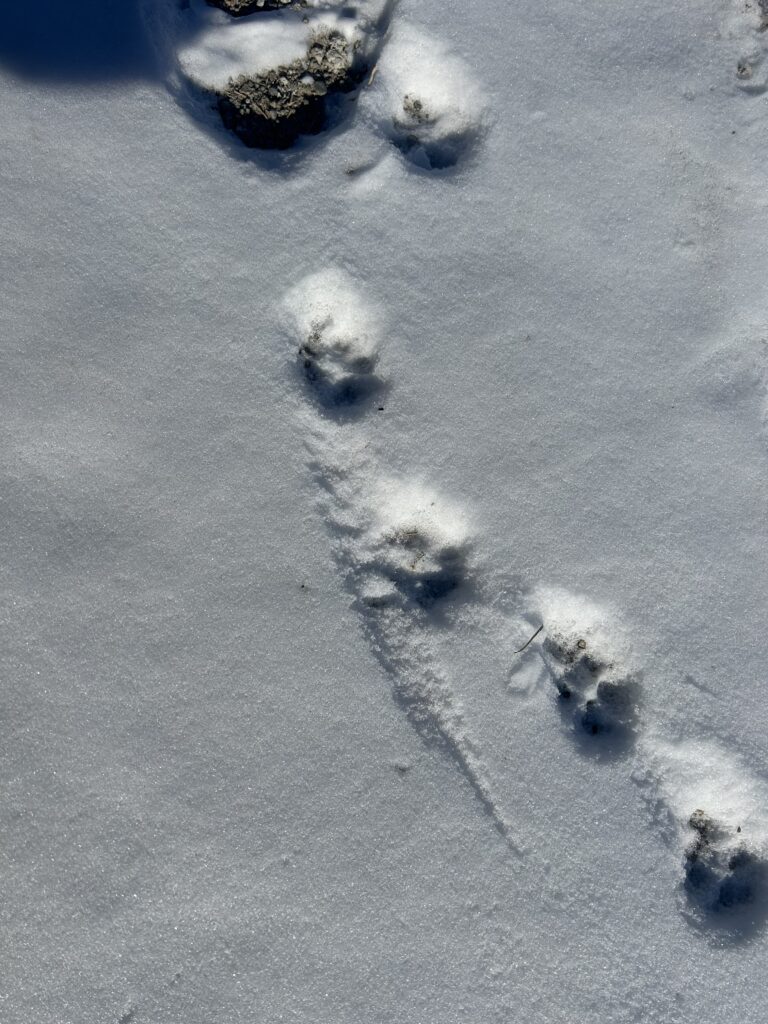
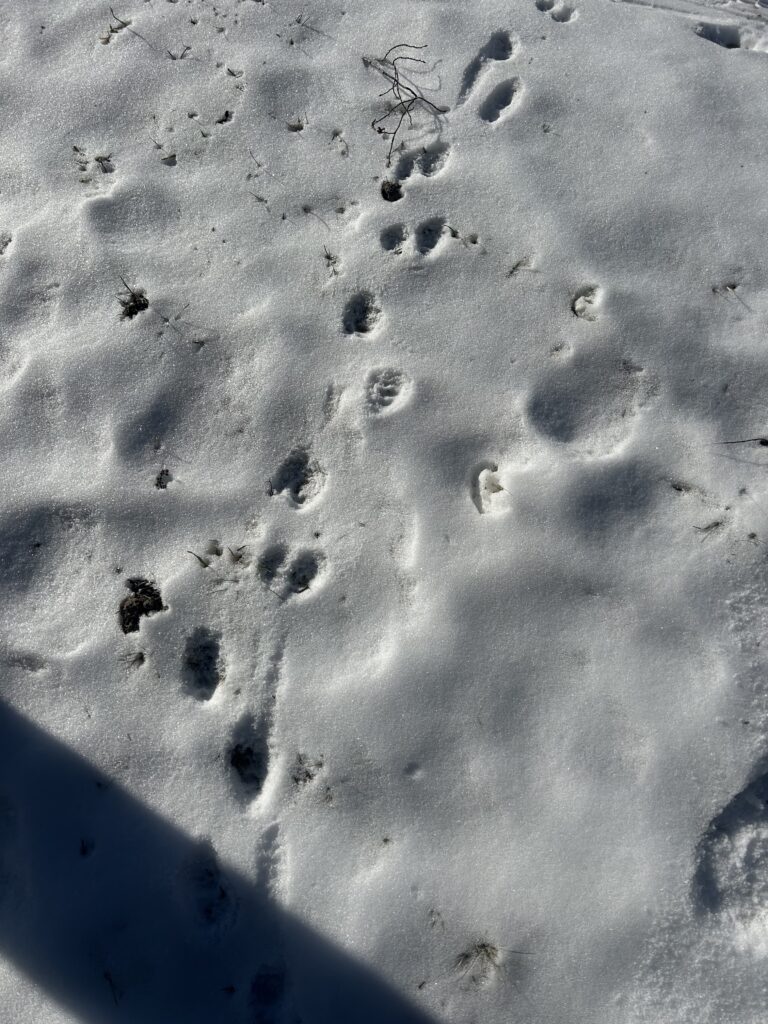
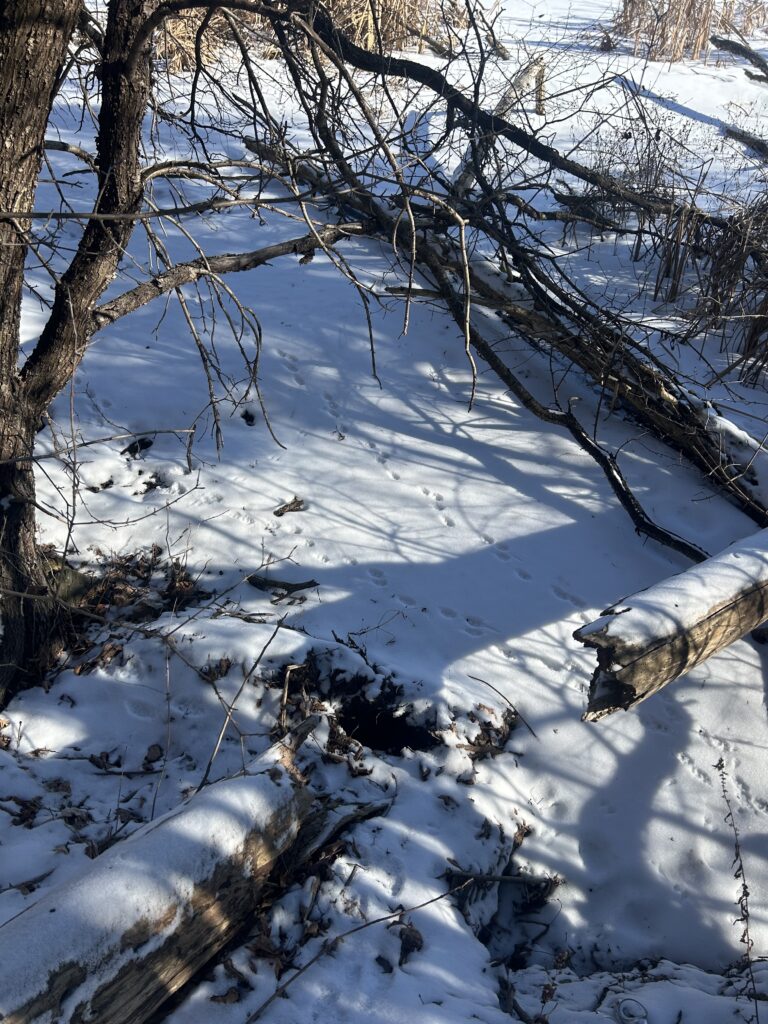
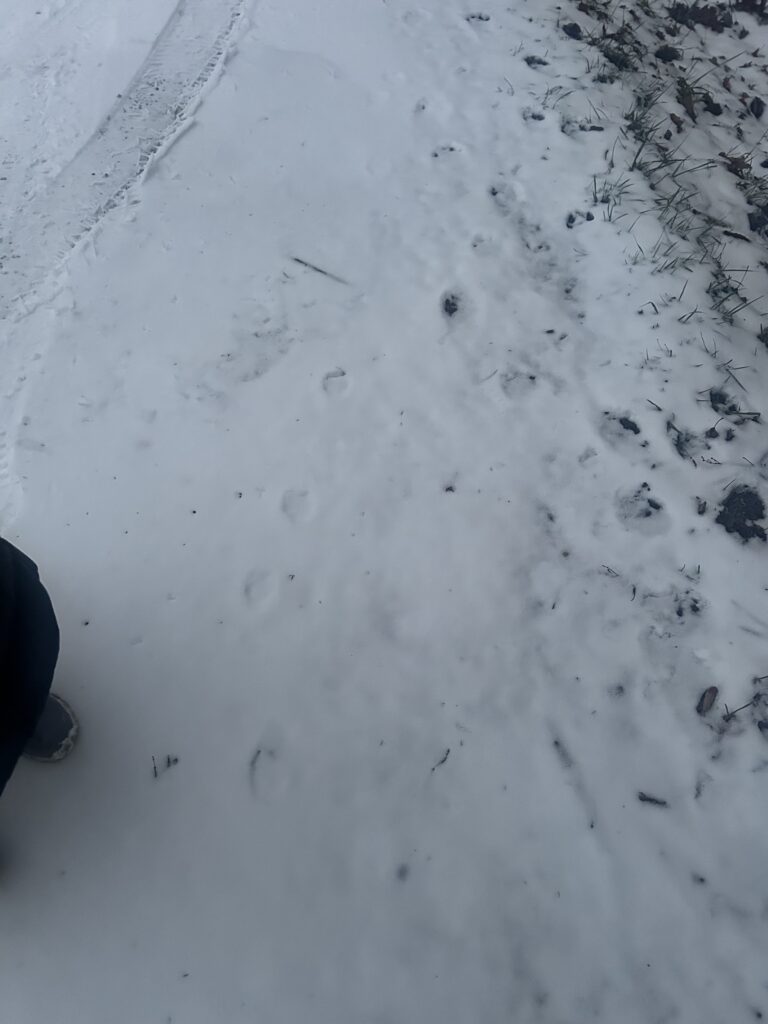
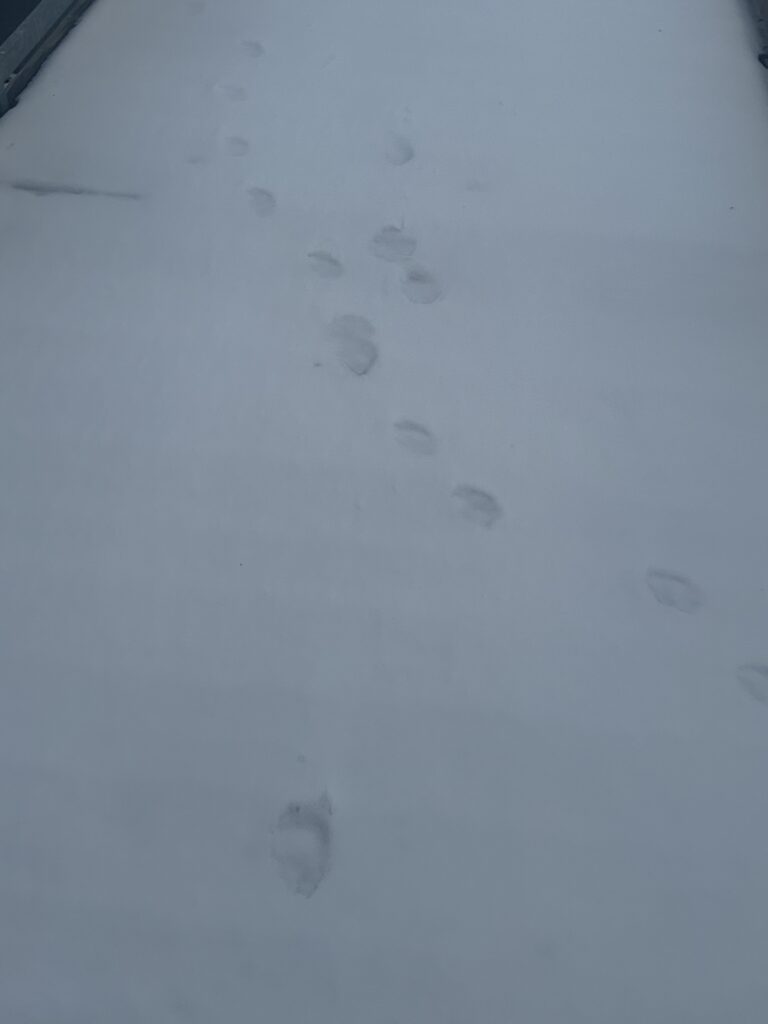
As we made our way to the pond itself, we noticed lots of dog tracks, likely from them joining their human companions on a hike or trip out onto the icey pond. Towards the larger brush area, we noticed a couple patterns of tracks, likely that of skunk due to the shape and pairing of four that we noticed. We observed some tail marks alongside these tracks as they led up the small hill that starts at the pond’s shore. The tracks appeared to be coming from a dense brush pile and an underground burrow at the base of the pond. Alongside these larger tracks, there were a couple small parallel tracks in between, possibly from a small bird. Although the only tracks on the pond itself were that of humans or dogs, we found more skunk and squirrel tracks lining the edges of the Northern White Cedars and Oaks. 

Vegetation & Phenological Changes:

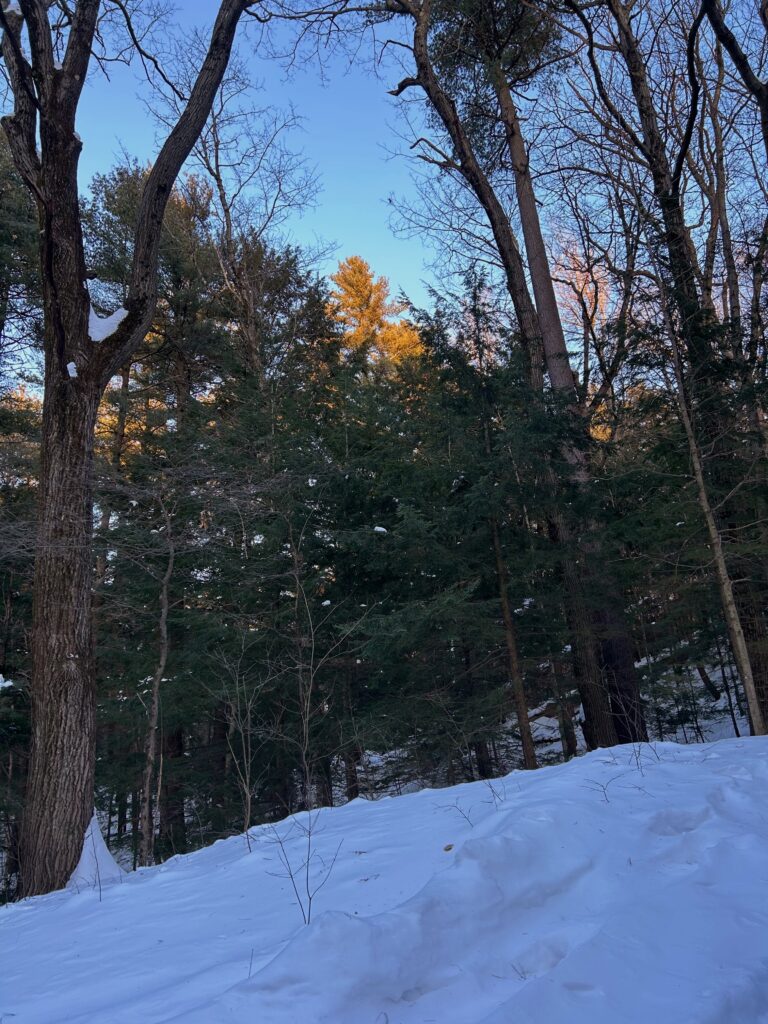
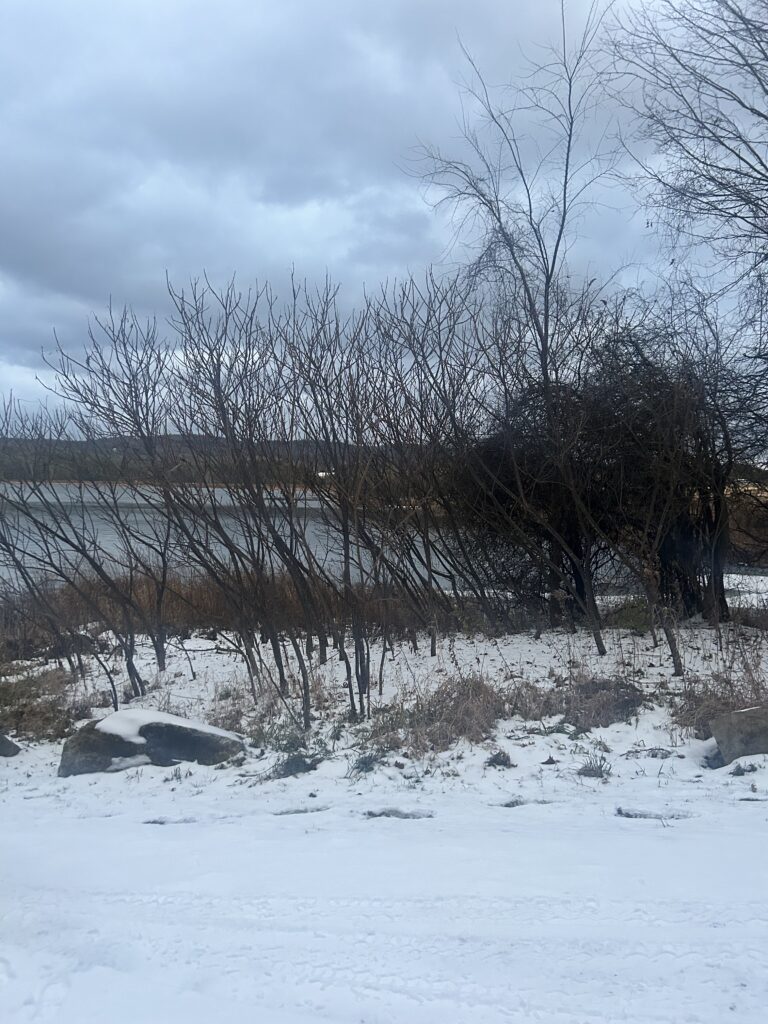
Looking back at the pictures I took during my last visit to Shleburne Pond on 12/5, it is clear that some more phenological changes have taken way. The largest change was surely the fact that the entirety of the pond is now frozen and covered with a thick ice layer. In early December, the pond was still majority unfrozen, with only some ice forming along the edges. Although there is less snow cover than in December, my friend and I were able to pick up on a lot more animal tracks during this visit, specifically by the brush pile and pond’s edge. As for vegetation, there seems to be no obvious change since our last visit. The Northern White Cedars and Eastern White Pines have all maintained their foliage, while the rest of the vegetation is completely barren. A lot of the vegetation previously at the pond’s edge has now been pushed beneath the ice layer or is barely poking out of the snow layer.

Reflection:

As I reflect on these winter phenological changes, I wonder how the wildlife in this area has been adapting to the incredibly cold temperatures and iced-over pond. It seems that a lot of the wildlife is still fairly active, but they have taken shelter in the dense brush or even underneath the snow layer in the subnivian zone. We have yet to see any large wildlife during our visits to the pond, so seeing the many wildlife tracks and trails was very excitig. I am very interested to see how the area will change in the next few weeks and into the spring season as temperatures warm up.

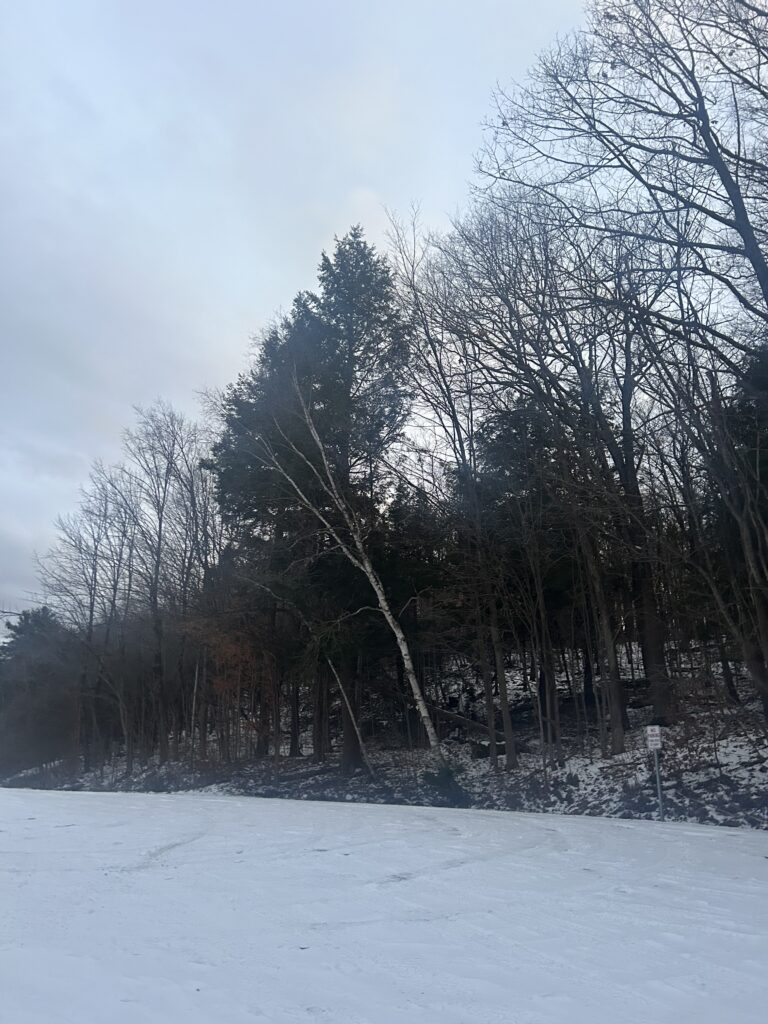
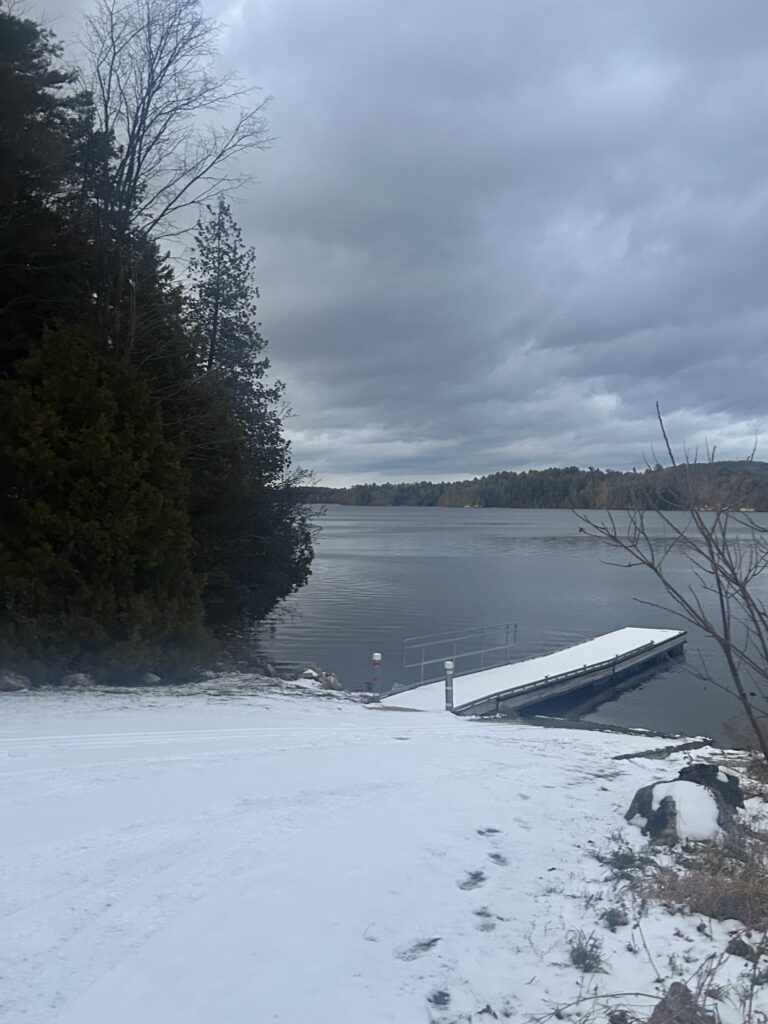
Of all the trips I have made to Shelburne Pond over the past few months, this trip was by far my favorite; not only was it very sentimental to see this place, with which I have now grown a strong connection, one last time for the semester, but it was impeccable to observe just how many phenological changes had occurred since October when my friend and I first stumbled upon the spot. Upon our arrival, the access road, lined with Eastern White Pines and small, warmly-lit cabins, was covered in a 3-inch layer of snow. Initially, we had expected little change in the spot as it was still very cold and bare, but as we crunched through the icy snow to our phenology spot, we were overwhelmed by just how many winter changes had commenced. 

Vegetation Changes:

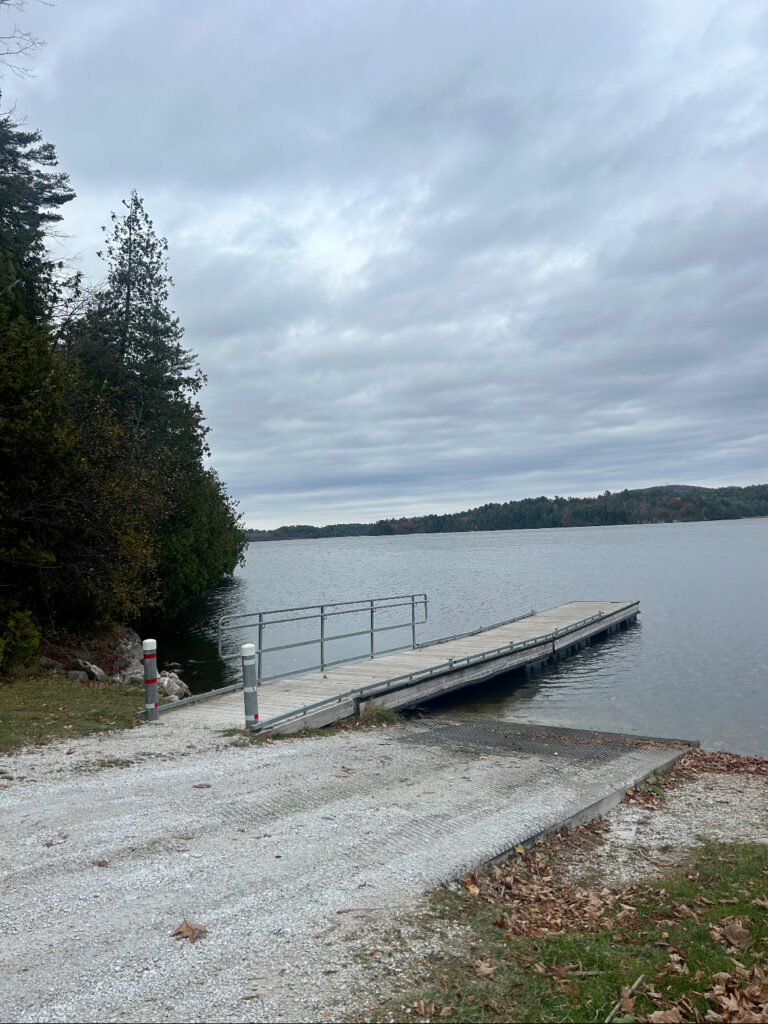
During my previous visit to Shelburne Pond, there was still some foliage on trees like the American Beech, sugar maples, and birches. Upon this visit, however, all of the trees, except the Northern White Cedar and Eastern White Pines, were completely barren, some balancing a thin layer of snowfall on their branches. Almost all understory vegetation had turned a dark brown, bearing no leaves or foliage. The cattails and aquatic vegetation stood stagnant in the frozen patches of the pond near the shoreline. In November, I observed large amounts of leaf litter, primarily at the pond’s shoreline, likely due to the wind’s direction and slope of the boat launch. This time, the majority of the litter had disappeared, likely into the pond since the litter had laid on the concrete boat dock and was unable to decompose.

Original pictures: 12/5 4:19 PM

Wildlife Observations:

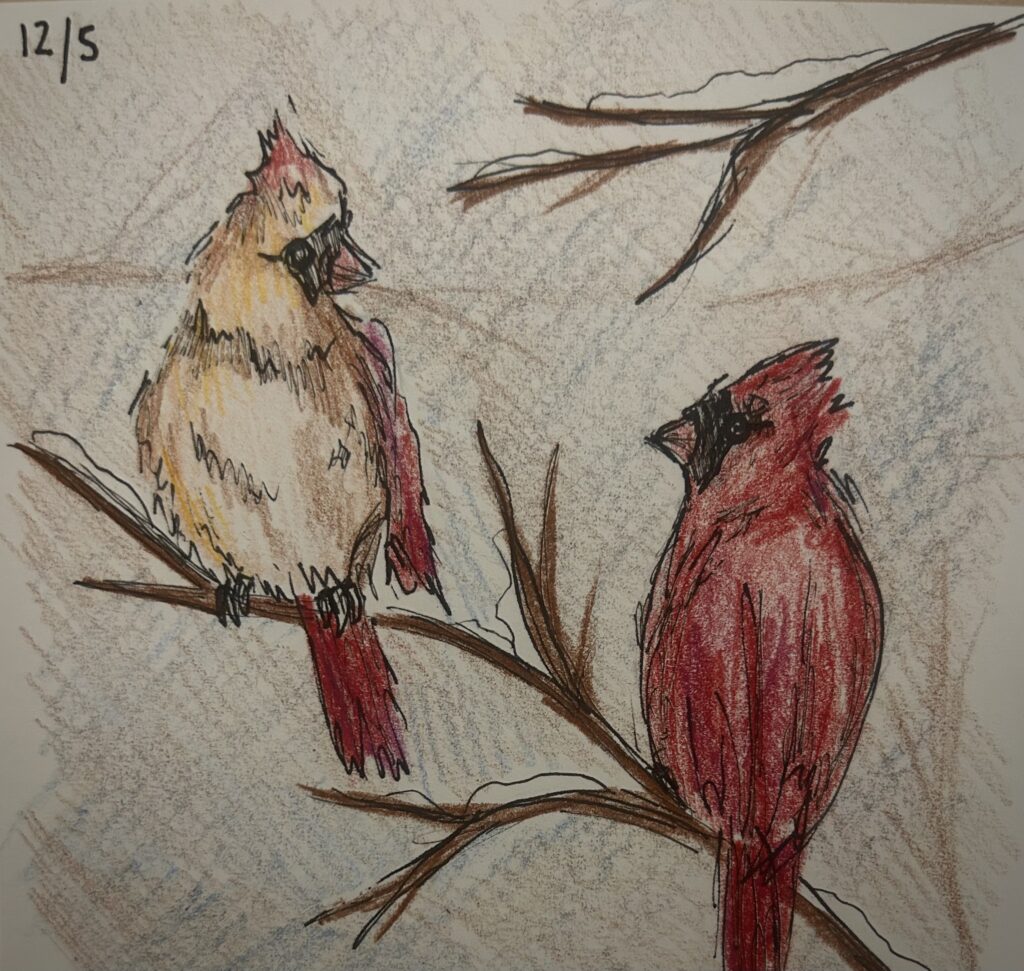
Over the past few months of visiting this spot, I was disappointed to not see or hear many signs of wildlife. However, this last visit of the season did not disappoint. Within the first few minutes of observing the area, I saw two cardinals, one female and one male, hopping between sugar maple branches. I observed these two birds for a good while as they made their way down to the frozen lake and eventually flew playfully into the brush. In this same brush, my friend and I heard many loud sounds, almost as if an animal was gnawing on or scraping wood. We tried getting a closer look to identify the animal, but we were unable to see through the snowy and thick brush piles. Luckily, the freshly fallen snow was a perfect way to identify what other animals had been in the area. We observed some very small footprints along the forest edge, likely either a chipmunk or a bird. Additionally, we saw many dog footprints and an occasional squirrel track. Despite the freezing wind chill and snowfall, this area had the most wildlife activity I have observed thus far.

Original Pictures: 12/5 4:21 PM

Reflecting on Phenology:

As I stood in the middle of my phenology spot, observing the dark clouds rolling in at dusk, I felt like my connection to this place had solidified. I was reminded of the very first time my friend and I arrived in the area when the trees were just beginning to turn their vibrant array of reds and yellows. Throughout these few months, I watched the same trees peak in their fall coloration, lose their leaves due to the persistent wind, and become barren aside from a small layer of ice and snow. I watched the conifers remain an unchanging constant in the area, as they served as a beautiful dark green backdrop to the pond. I watched the pond transition from its initial algae-covered state to its frozen and icy form. Overall, reflecting on these changes became very special to me. After a long week of schoolwork and exams, visiting this spot became a way to completely forget about my “school” world. I could simply enjoy and observe this unique little spot and make my predictions of how it would change the next time I visit. I loved getting to sit on the rocks that line the access road and watch the tall pines and oaks sway in the wind, each time the trees losing more and more leaves as the days grew colder and darker. However, my absolute favorite part of this phenology place was the pond itself. I’d often venture out to the very end of the dock and watch the water ripple around the cattails, observing the gorgeous hills in the background with the singular cabin peaking out in the distance. 

All Original Photos: (10/18, 10/29, 12/5)

Original Sketch: 12/5

Hometown Phenology (11/27)

Backyard Phenology

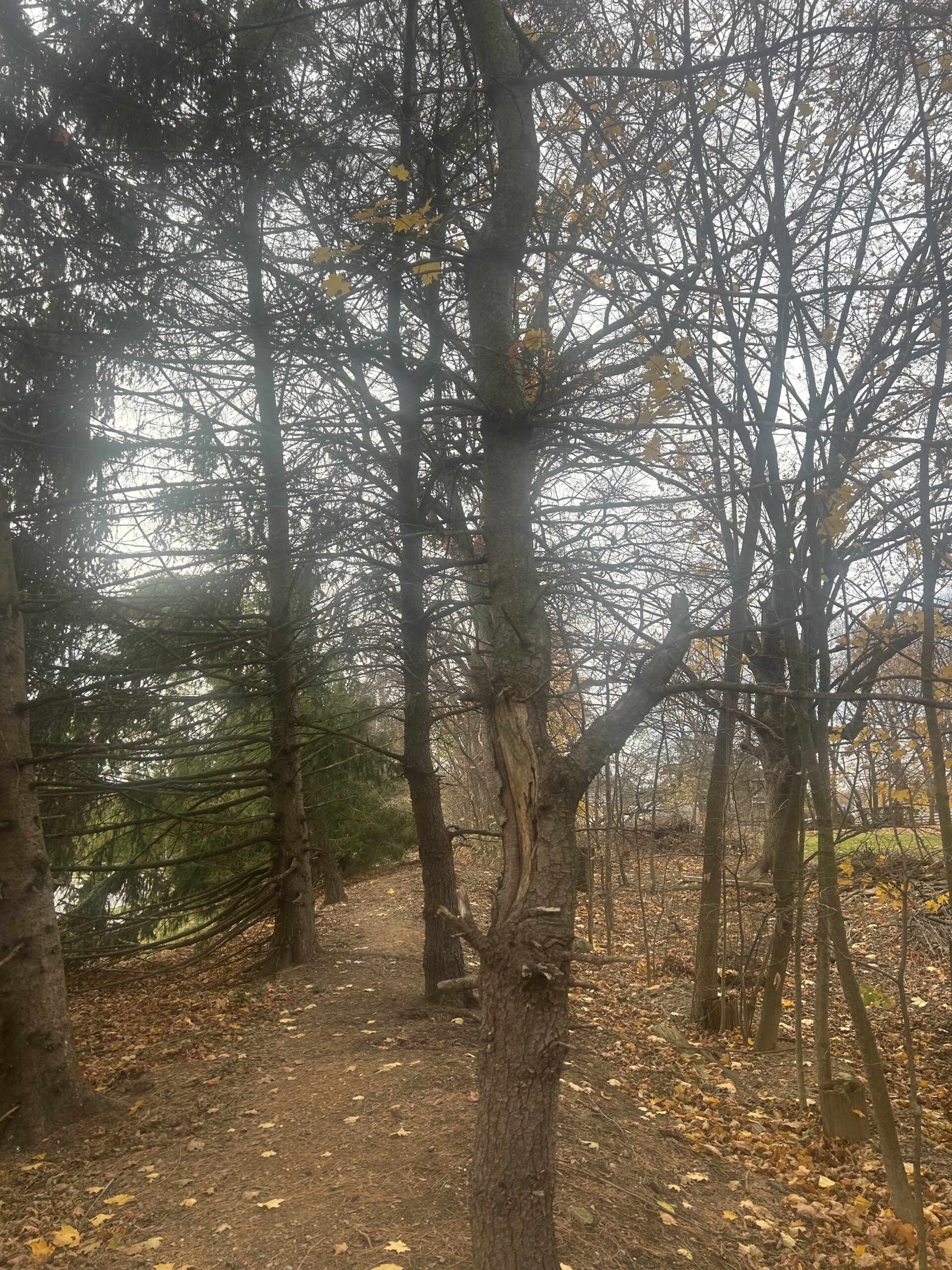
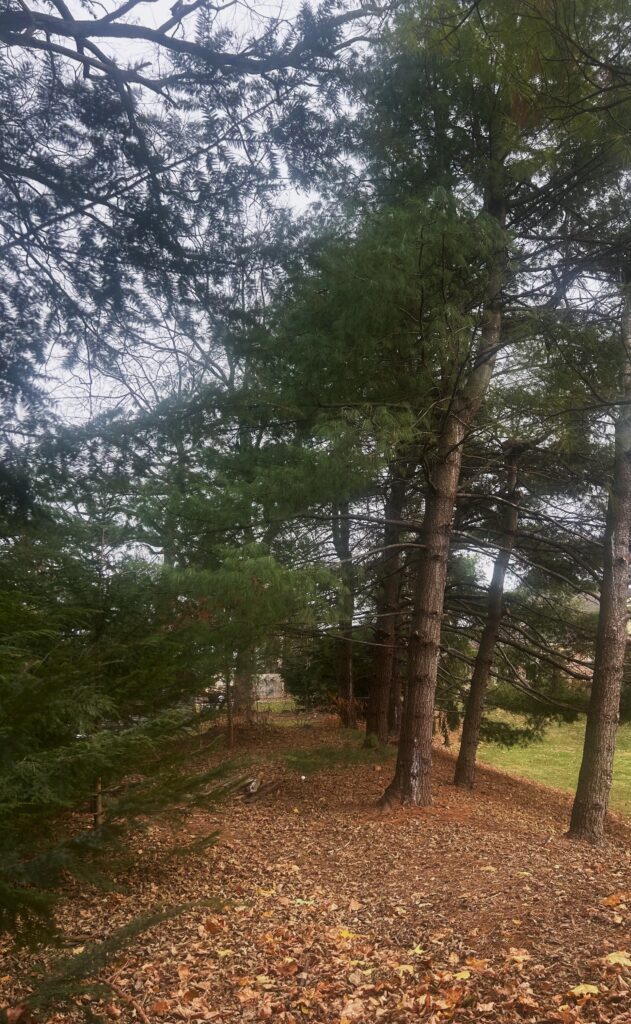
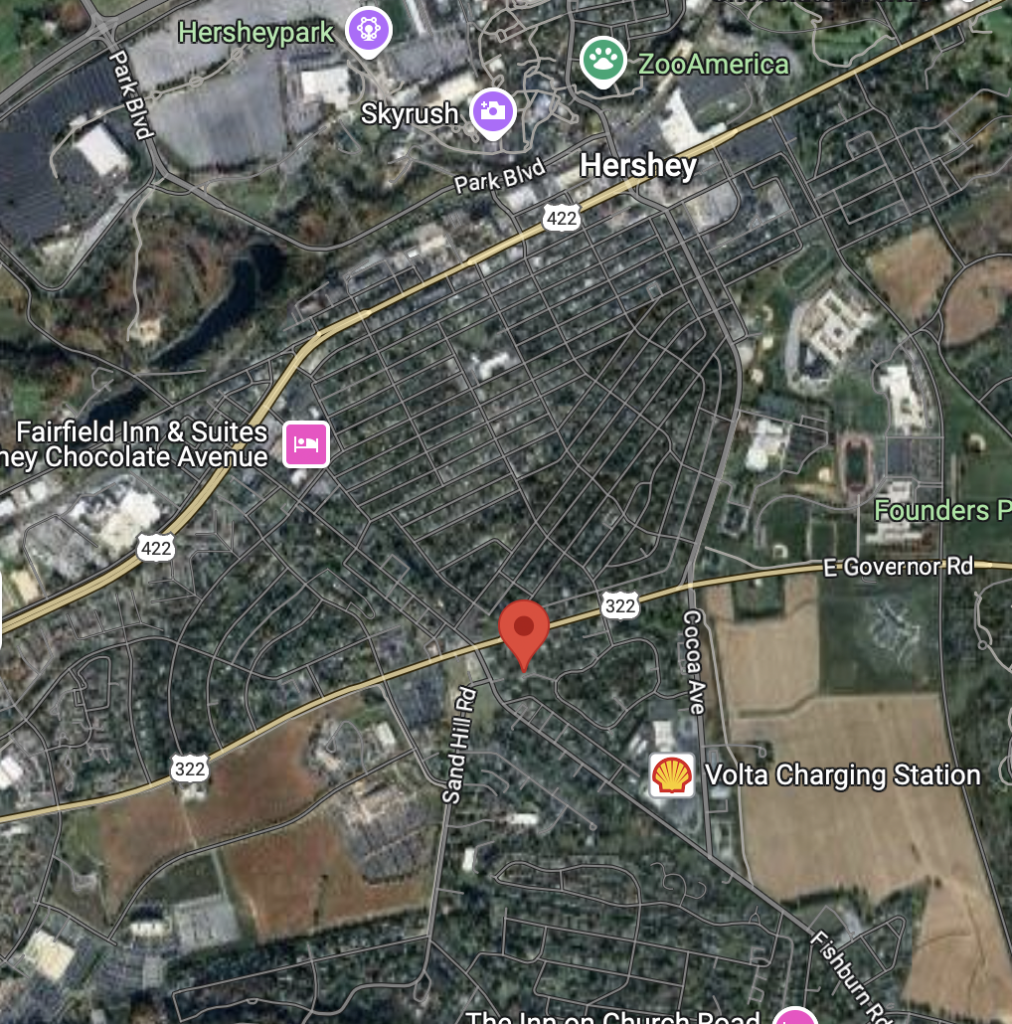
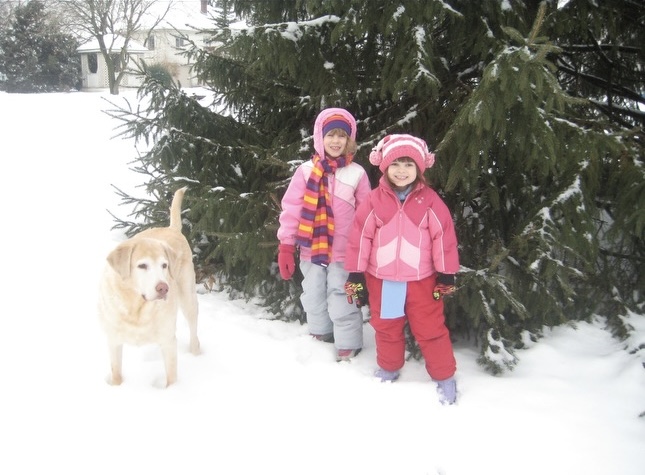
Upon arriving back in my hometown in Hershey, Pennsylvania, I knew the perfect spot to study. Along the very back edge of my backyard, there is a small, long strip of forest. I knew I wanted to study and document this area because this small bit of forest meant a lot to me growing up. My sister and I would often play for hours outside after the school day ended, and if I wasn’t busy climbing the large Norway Spruce in the center of our backyard, I was exploring this small bit of forest at our property line. I’d spend hours making small creations or bird nests out of the dried Eastern White Pine needles or dead leaves. I’d climb on the broken pine branches and create dozens of imaginary games and adventures for my sister and me to complete before dinner. Because this place meant so much to me as a kid, I wanted to revisit the area, notice its changes over the years, and document the species composition now that I am more knowledgeable about tree species. 

Original Picture: 11/27 1:05 PM

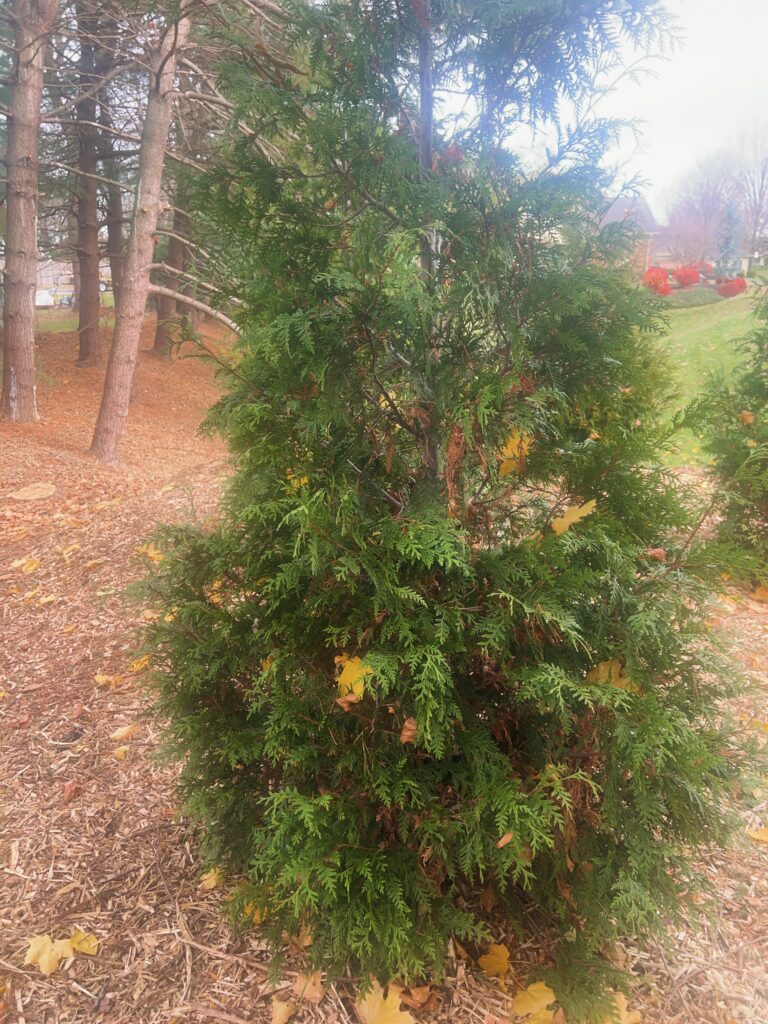
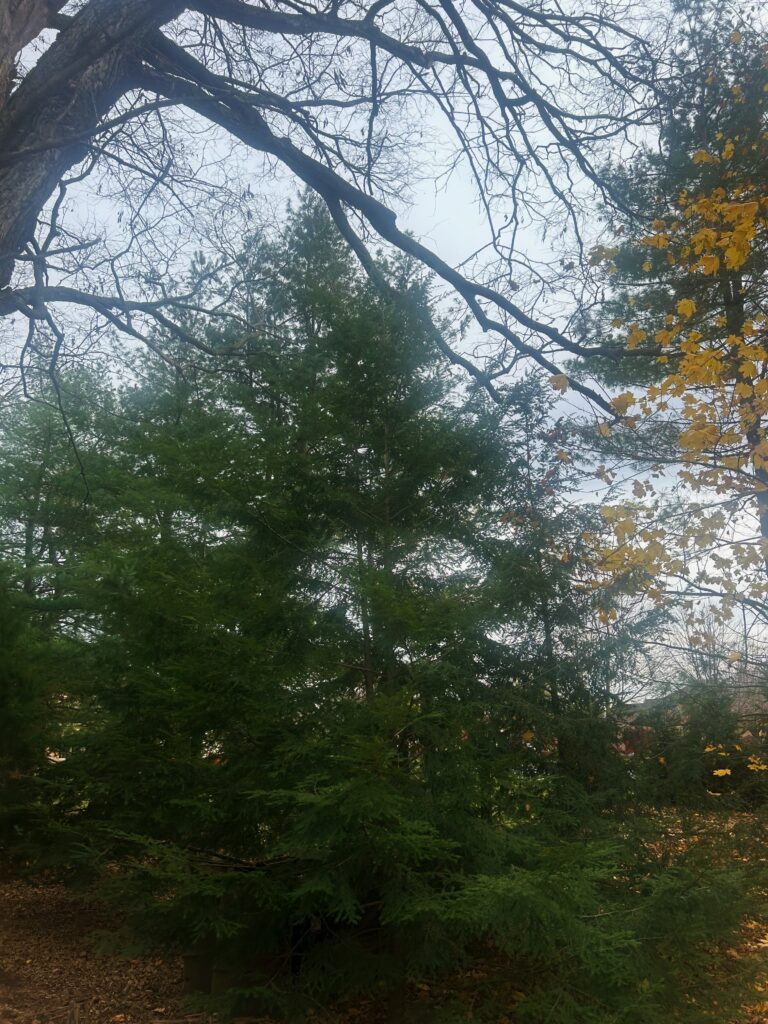
The entire back edge of this strip of forest is composed of very old Norway Spruce trees that sprawl over the neighborhood behind our property line. The majority of their bottom branches are broken and appear like rungs of a ladder. Additionally, there are a few young Northern White Cedars and large Norway maples, their leaves a vibrant yellow. A few Eastern White Pines and Eastern hemlocks tower over both of my neighbor’s backyards, serving as a backdrop to this strip of forest. 

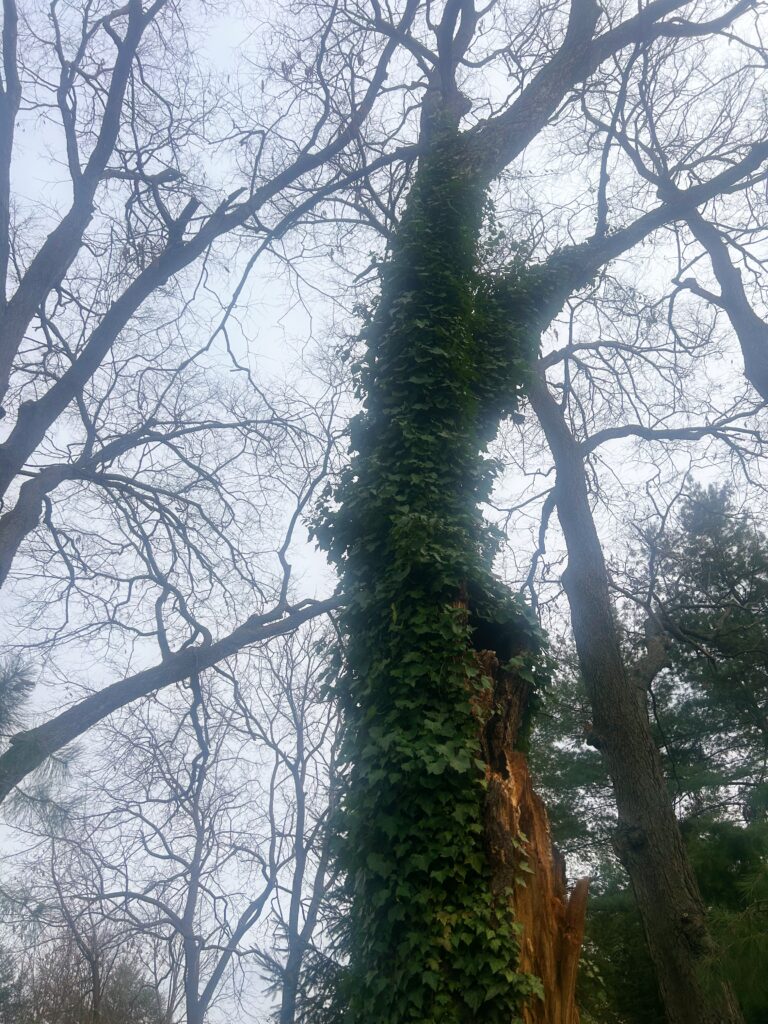
In comparison with my phenology place back at Shelburne Farms, I found many similarities in my backyard, specifically with the tree species. My phenology place in Vermont also contains a few scattered Eastern White Pines and Eastern hemlocks. Additionally, my phenology spot has many Northern White Cedars, although those are much older than the ones growing in my backyard. Shelburne Pond featured a lot more understory vegetation than my backyard; this strip of forest had almost no understory growth, although in the springtime there are often many wildflowers. Similar to Shelburne Pond, I noticed some signs of invasives such as English Ivy (pictured on the left); Shelburne Pond on the other hand featured buckthorn and honeysuckle. Because my phenology place at Shelburne Pond is located right on a gravel access road, the soil there appeared more rocky and compacted; in this spot in my backyard, the soil was very soft, clayey, and deep. Overall, I think both of these places share many similar characteristics in their tree composition, yet differ in understories and soil texture. 

“The Honorable Harvest asks us to give back in reciprocity, for what we have been given. Reciprocity helps resolve the moral tension of taking life by giving in return something of value that sustains the ones who sustain us.”

– Robin Wall Kimmerer, “Braiding Sweetgrass”

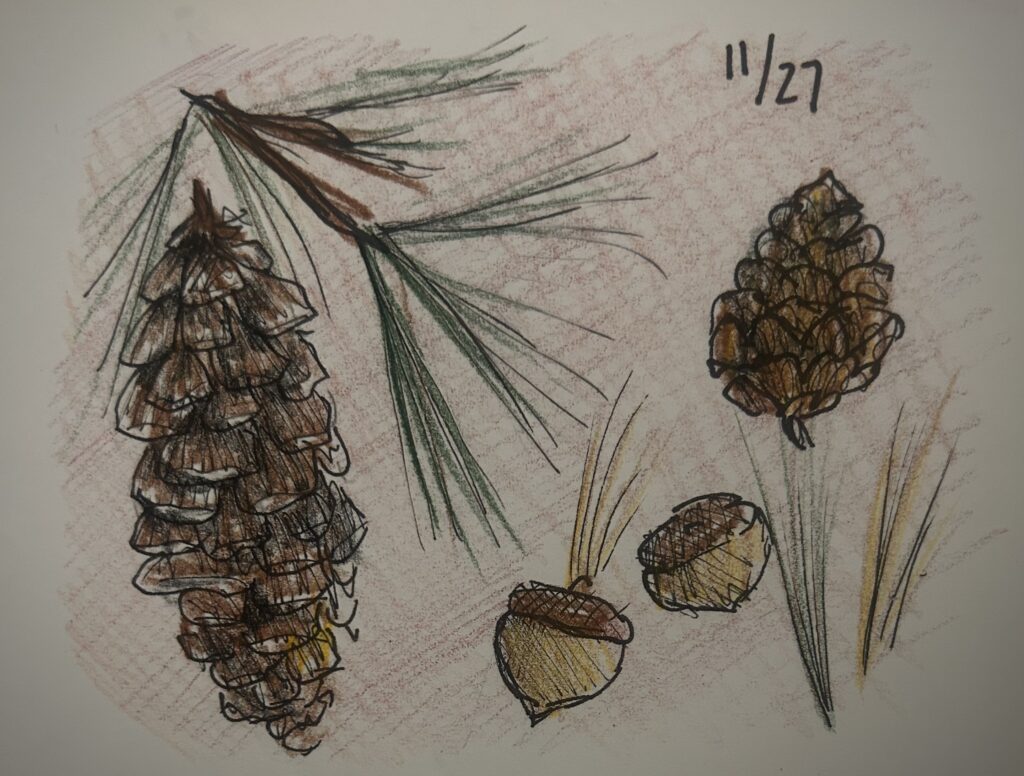
After reading the chapter about Honorable Harvest from “Braiding Sweetgrass”, I was inspired to connect with the plants of this place in my backyard on a deeper and more reciprocal level. Looking back to the times I spent here as a kid, I realized that I’d often unknowingly practice reciprocity with the trees. The trees let me climb all over their branches, while I’d use their fallen leaves, pine cones, acorns, and needles to create bird nests and chipmunk homes. Revisiting this spot, now knowing how important it is to give back what we take, I began to really listen to the trees. These trees watched me grow up from a kid who loved to build animal habitats and climb trees to a college student studying these same trees. Visiting this spot was very special to me this Thanksgiving; I am very grateful for this small strip of forest in my backyard, and to return the favor I tucked some of the acorns and pine seeds deep into the soil in hopes that new trees can fill the forest in years to come. 

Exploring & Collecting Nature in the Backyard

Original Sketch: 11/27

Although a very windy and chilly day at Shelburne Pond, it was a great experience to see how the vegetation surrounding the pond has begun to change as the days have grown colder and shorter.

A Birds-Eye View:

Phenological & Vegetation Changes:

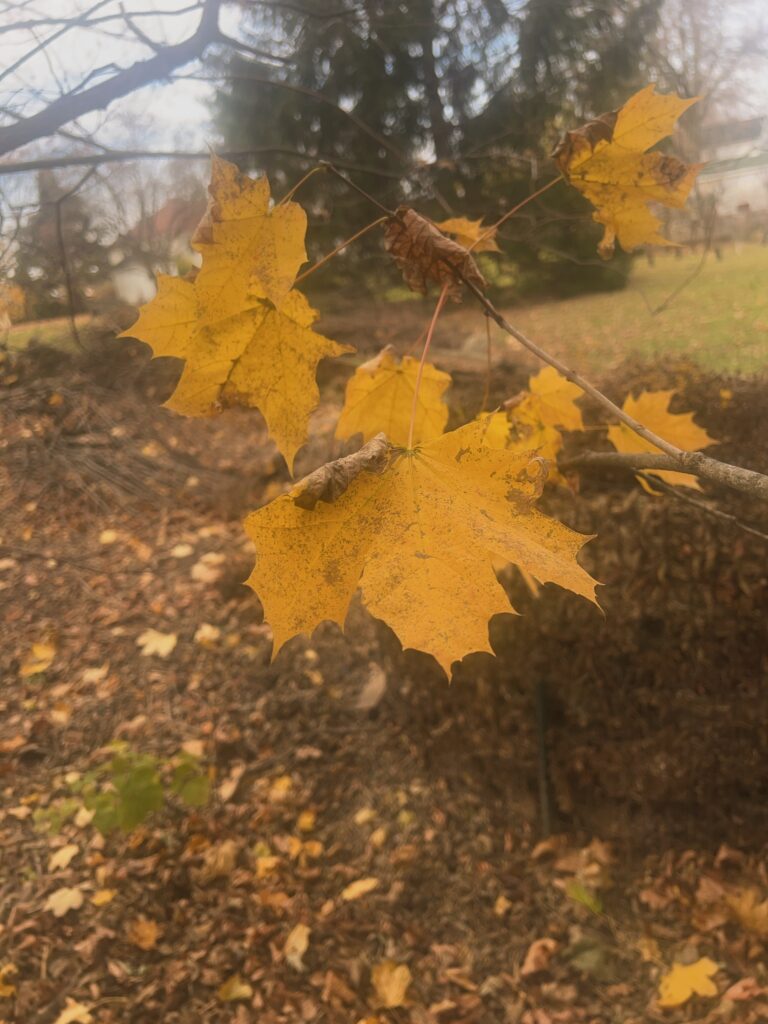
Over the past 3 weeks, there have been many noticeable changes to the vegetation at Shelburne Pond. Many of the deciduous trees, specifically the Sugar Maple, Sumac, and Northern Red Oak have lost nearly all of their leaves. The few leaves that remain on the Northern Red Oaks have become reddish-orange and brown. The ground surrounding the boat dock and up to the shoreline is primarily covered with dried leaves and dead grass/herbaceous foliage. The Northern White Cedar that borders the pond, as well as the Eastern White Pines that tower over the area, are much more noticeable, as they have not lost their foliage. There has also been a noticeable difference in the shrubs lining the access road and tucked in between the Northern White Cedars. The honeysuckle has turned a bright greenish yellow and the golden rod has turned brown and become less fuzzy in appearance. The pond color and turbidity appeared to have stayed relatively the same as my previous visit.

Original Pictures: 10/29 4:03 PM

15-minute Reflection Experience:

While sitting in my phenology spot for 15 minutes, it was amazing to watch each small moving piece within the ecosystem and obtain a new perspective of my phenology place. Sitting in the center of my phenology place, I had an impeccable view of the tallest overstory trees on both sides of the dock. As it was very windy, I watched the tall Eastern White Pines and Northern Read Oaks sway their top branches. The shrubs of buckthorn and honeysuckle below rustled and moved swiftly back and forth as many dried, fallen leaves tumbled toward the shoreline. The grasses and cattails that line the rippling pond also whistled in the wind. During my 15 minutes, I didn’t observe or hear much wildlife, but it was still a great opportunity to listen to the trees and diverse vegetation that make up this special spot. Overall, it was a very calming and relaxing experience to watch how the trees and wind interacted, and it was interesting to notice all of the changes that have occurred over the past few weeks. 

A Connection to Lecture:

“Listen to the trees as they sway in the wind. Their leaves are telling secrets. Their bark sings songs of olden days as it grows around the trunks. And their roots give names to all things. Their language has been lost but not the gestures.”

– Vera Nazarian

As I listened to the trees dance in the wind during my reflection, I began to make connections to NR1010 lecture about the history of the land, and the patterns, pieces, and processes framework we discussed. The trees might not be able to physically tell me their “secrets” or why they decided to grow in that particular spot, but by paying very close attention I can make sound predictions about the natural community. As if the trees were “singing songs of olden days” as the Vera Nazarian quote above explains, I began to wonder why the Northern White Cedars all line the pond or why the oaks and Eastern White Pines are scattered and scarce. Using my knowledge as a NR1010 student, I can predict that maybe the Northern White Cedar’s affinity for wet and moist environments is why it grows straight along the edge of the pond. I can also make predictions about a possible disturbance in the area in years past which is why so many understory species dominate the area below the Eastern White Pines and Northern Red Oaks that love the full sun. Overall, I was able to utilize a lot of my knowledge acquired in class to grow my connection with my phenology spot as I made predictions about its detailed and somewhat unknown history that only the trees can tell.

Welcome to Shelburne Pond!

An Introduction to the Area:

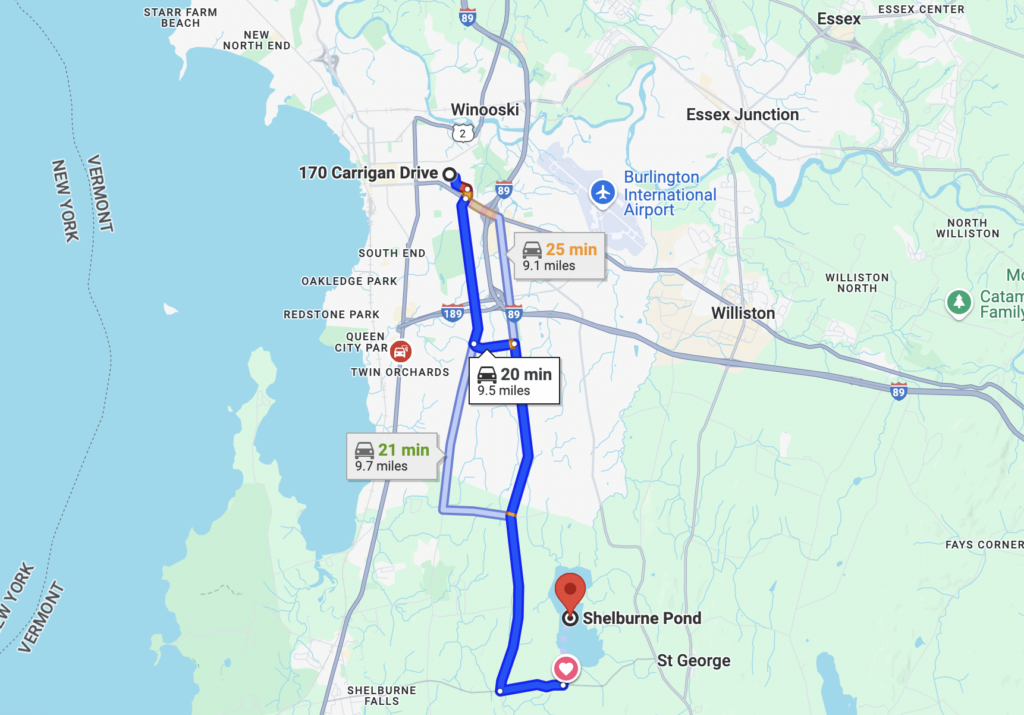
Shelburne Pond, a roughly 10-mile trip from campus, is a large, shallow recreational pond surrounded by a primarily rural area. The area offers a perfect spot for anglers, boaters, and kayakers as there is a large open shoreline and dock as well as various hiking paths along the pond’s edge. When initially planning my phenology place, I wanted to find an area where I could observe the interactions between aquatic and terrestrial environments, as it would be fascinating to observe and compare the phenological changes between the two ecosystems. Shelburne Pond, a relatively short trip from campus, seemed like the perfect, secluded, and accessible spot to conduct these observations.

Navigation:

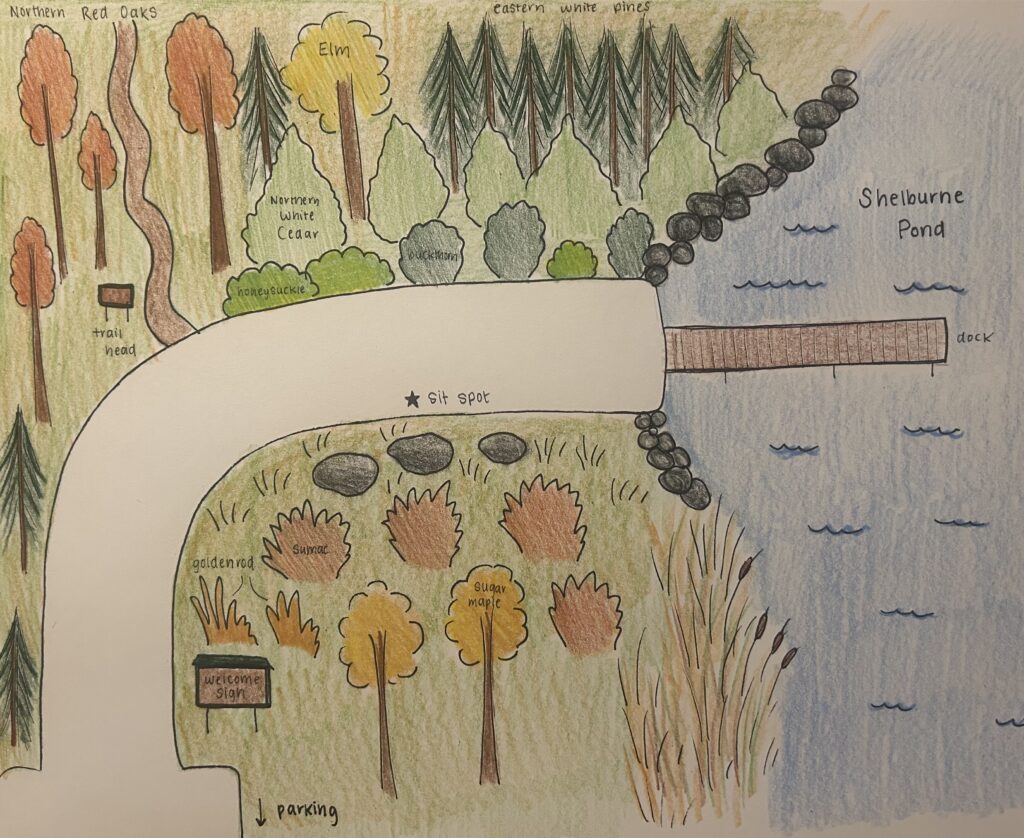
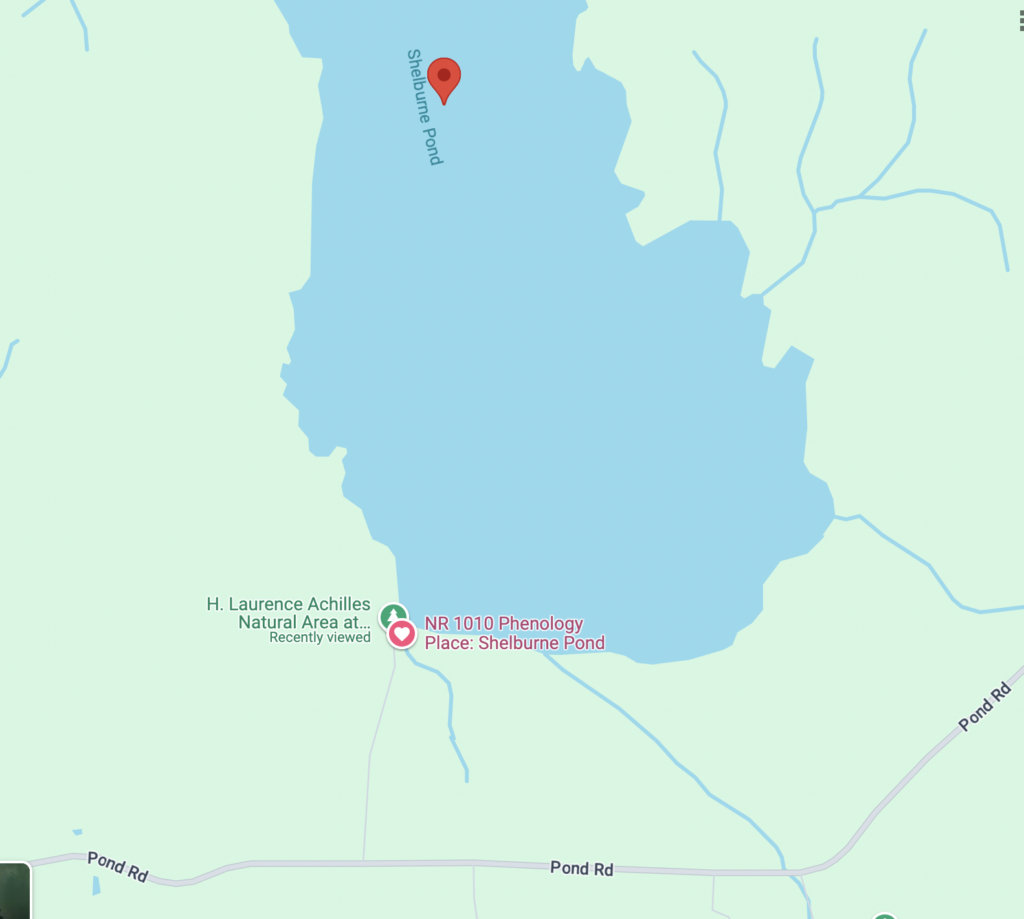
To arrive at Shelburne Pond, a classmate and I drove down Spear Street after exiting the UVM campus. After passing a large golf course, we turned left on Swift St. and right onto Dorset Street. We followed Dorset St. for a few miles passing many farms and a few developments. Then, we turned onto Pond Road. On the left is a sign for the Vermont Fish & Wildlife fishing access area; upon turning down this short access road, we walked a short distance to the pond shoreline. On the right-hand side of the dock, there is a strip of large overstory trees and some invasive shrubs. On the left of the dock, closer to the water, there is a small outcropping of vegetation. Both of these areas will serve as my phenology place.

Click on the first map below to obtain the Google Maps directions to Shelburne Pond from Central Campus!

Composition:

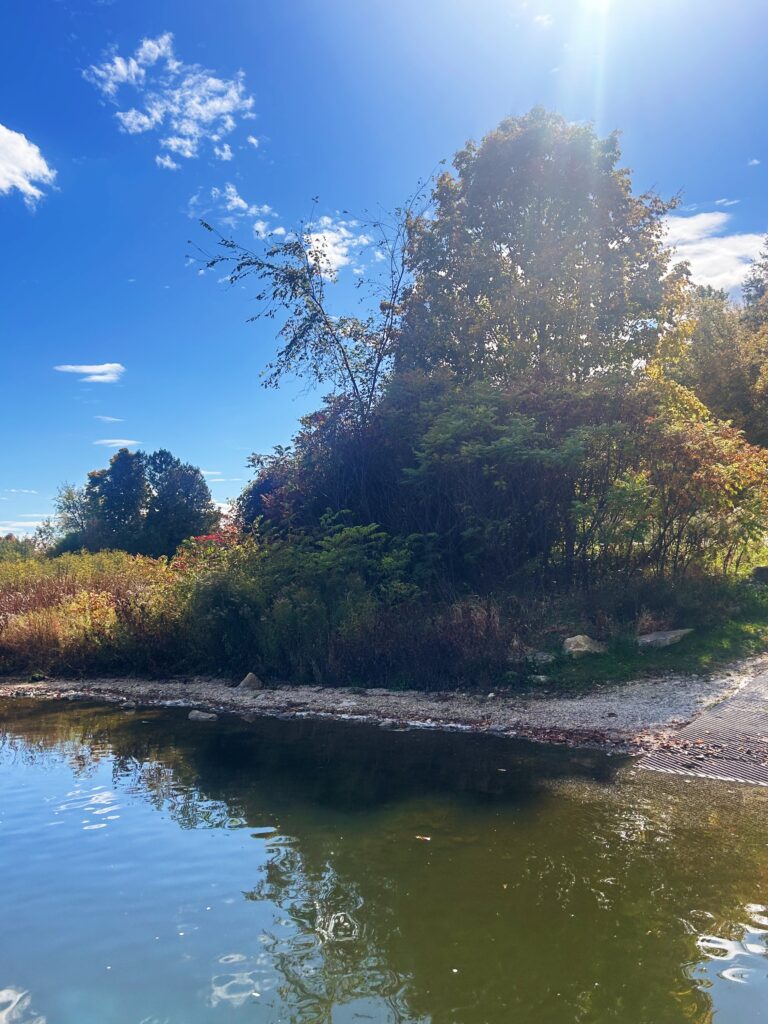
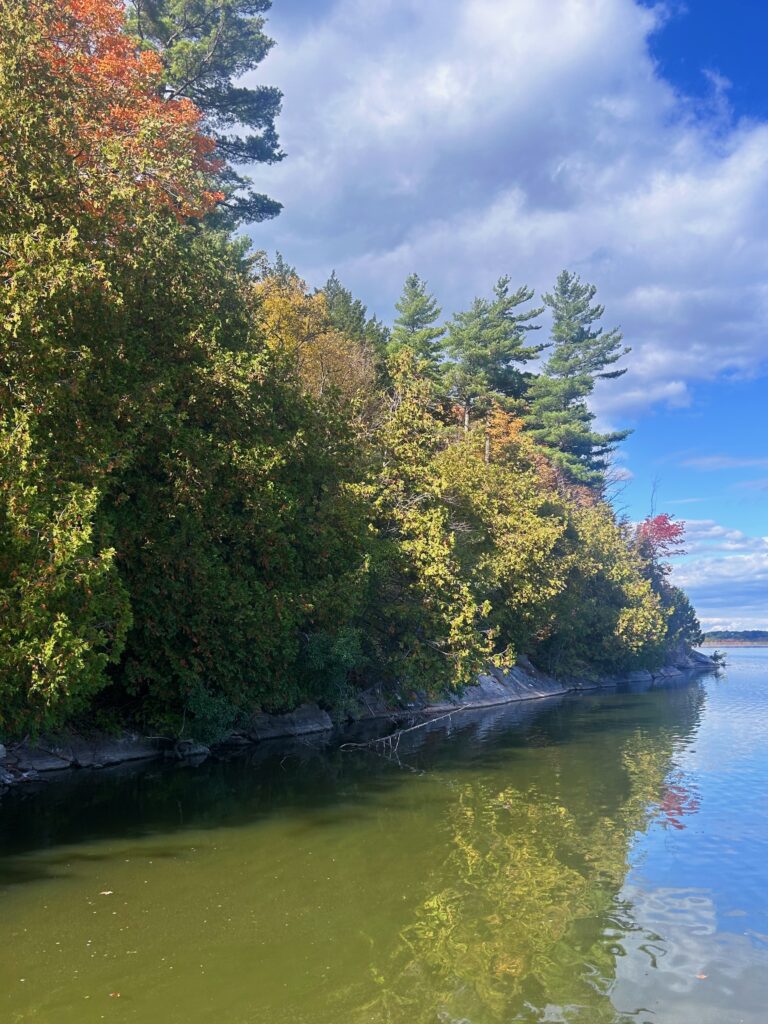
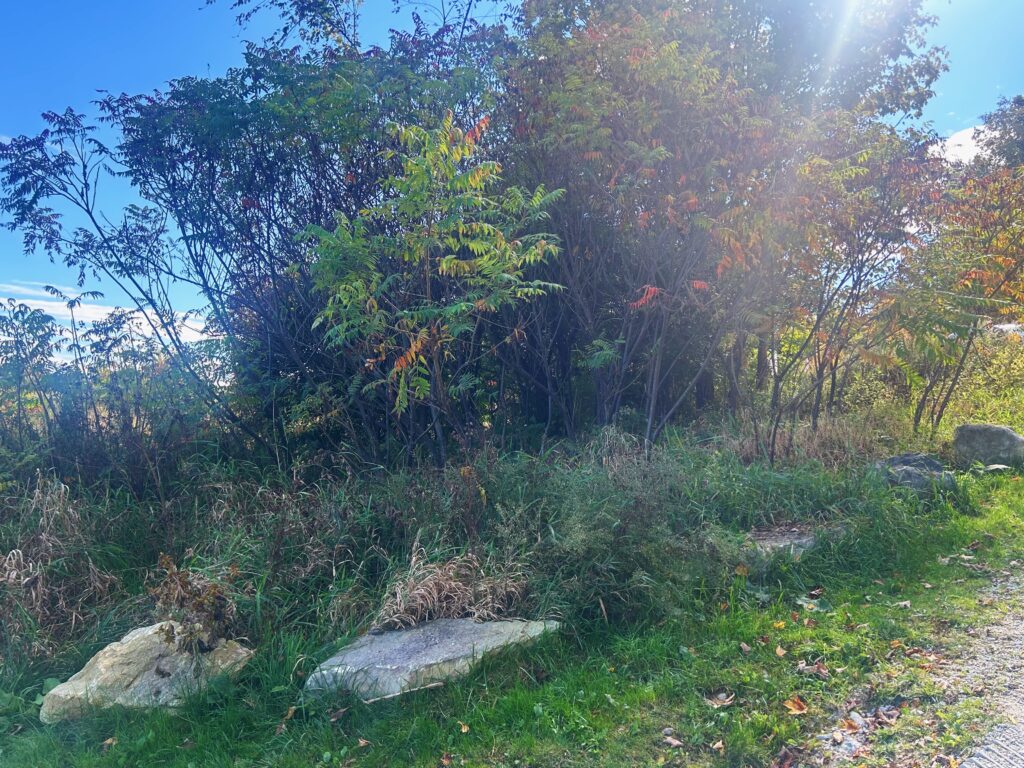
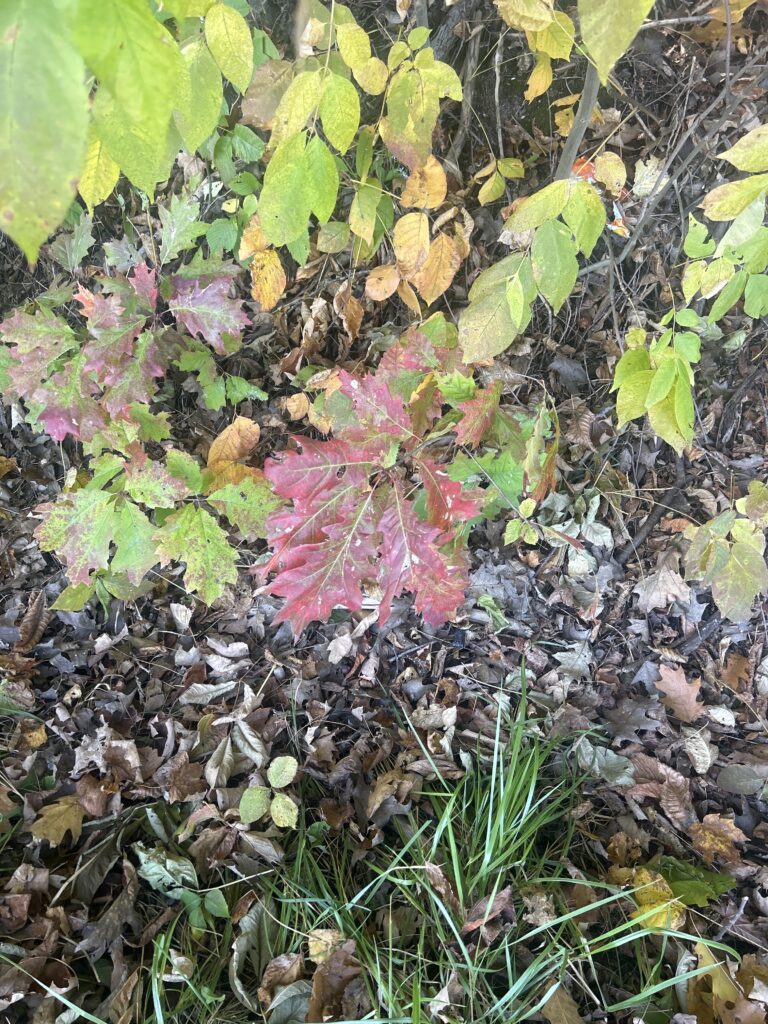
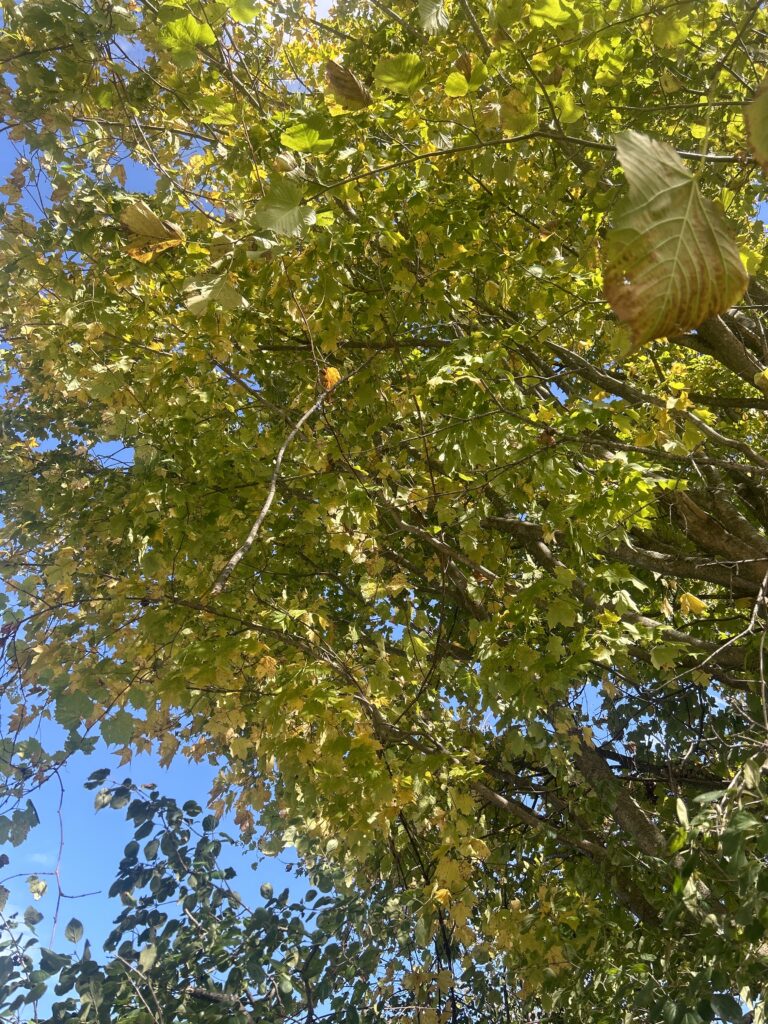
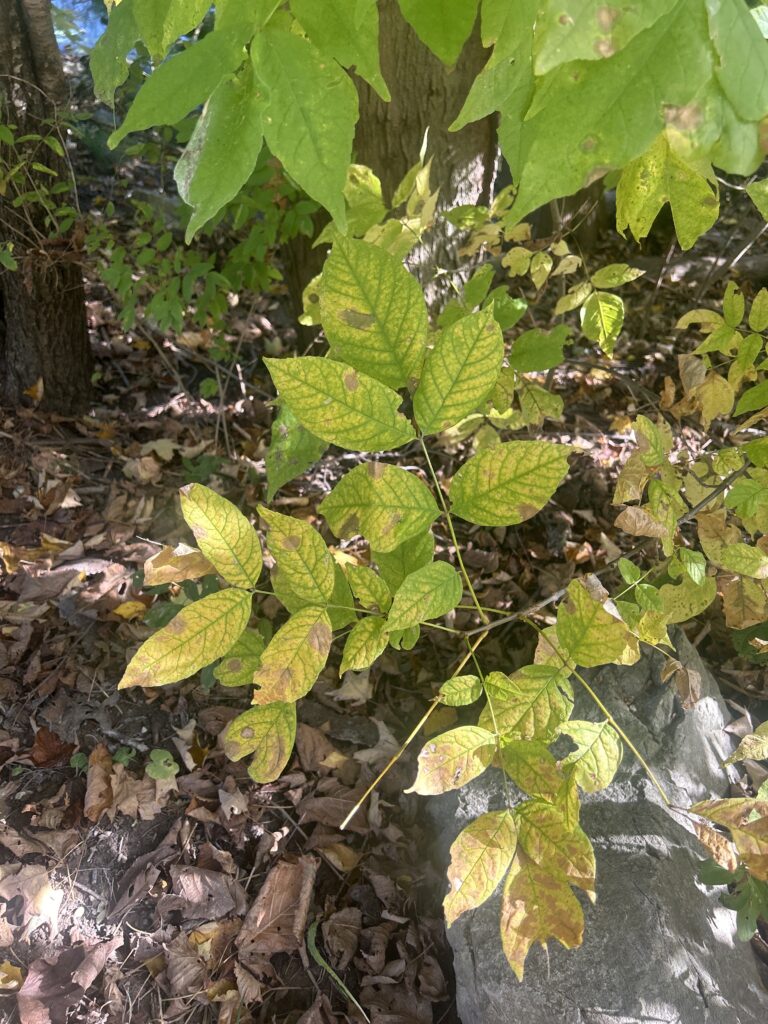
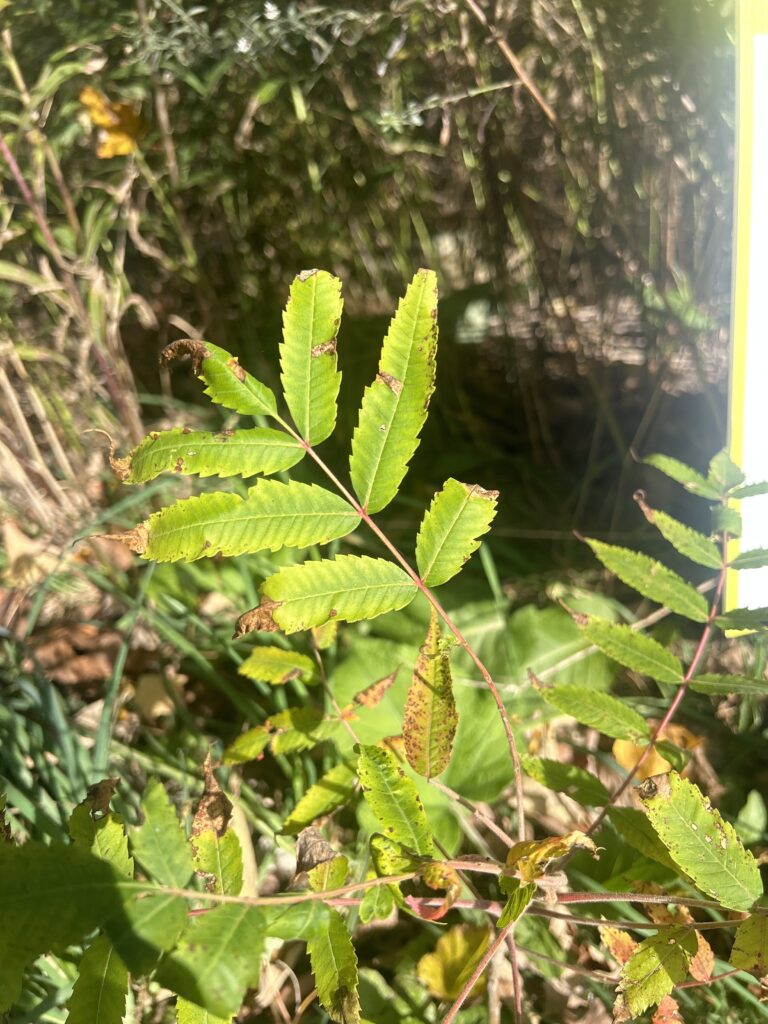
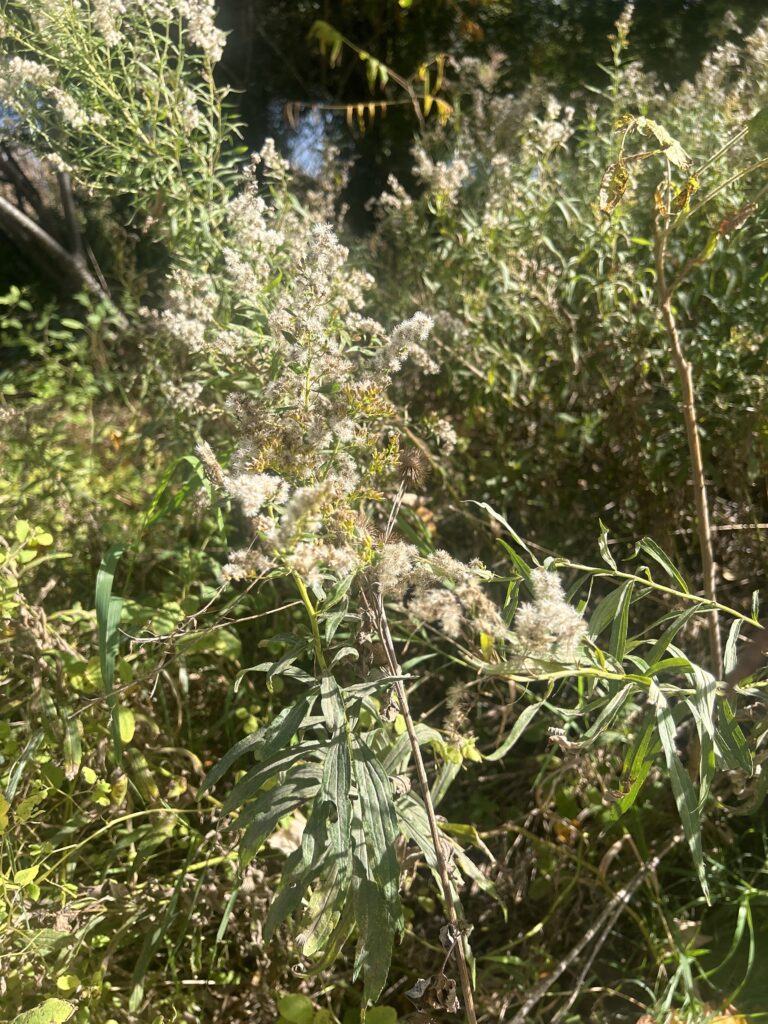
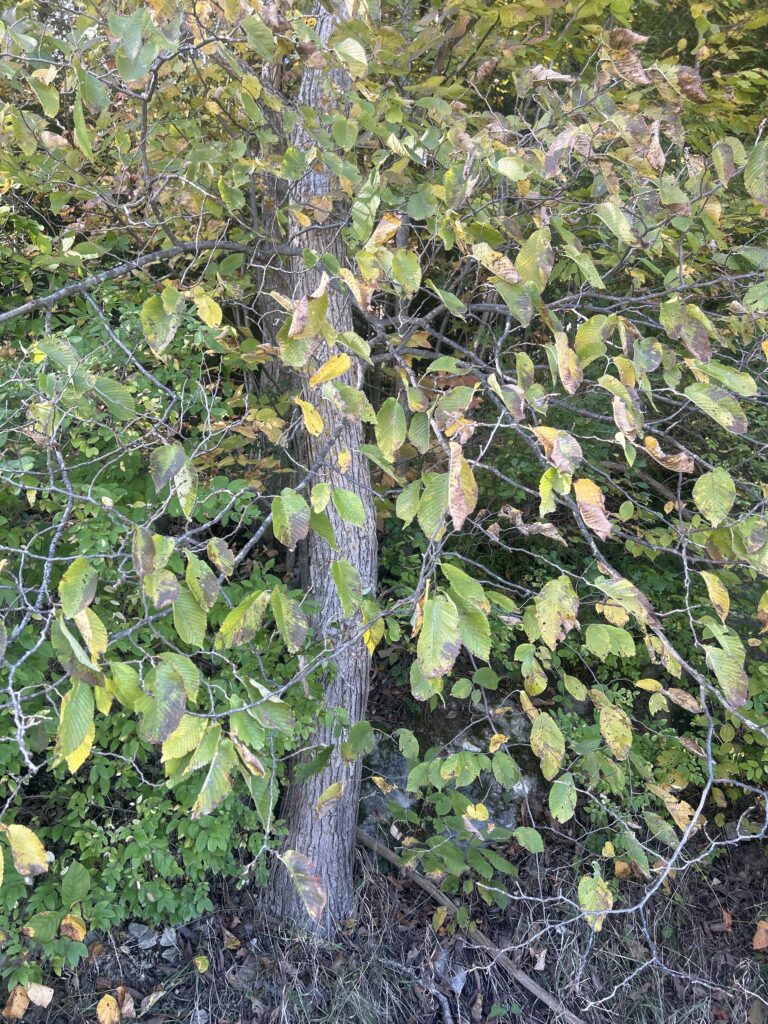
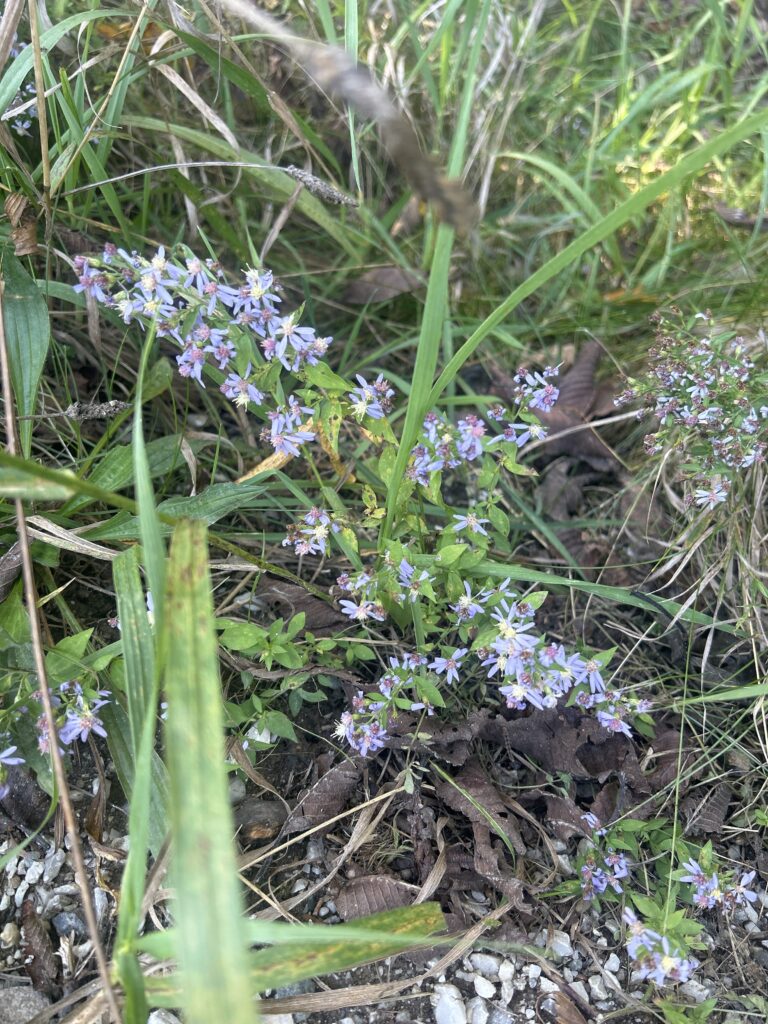
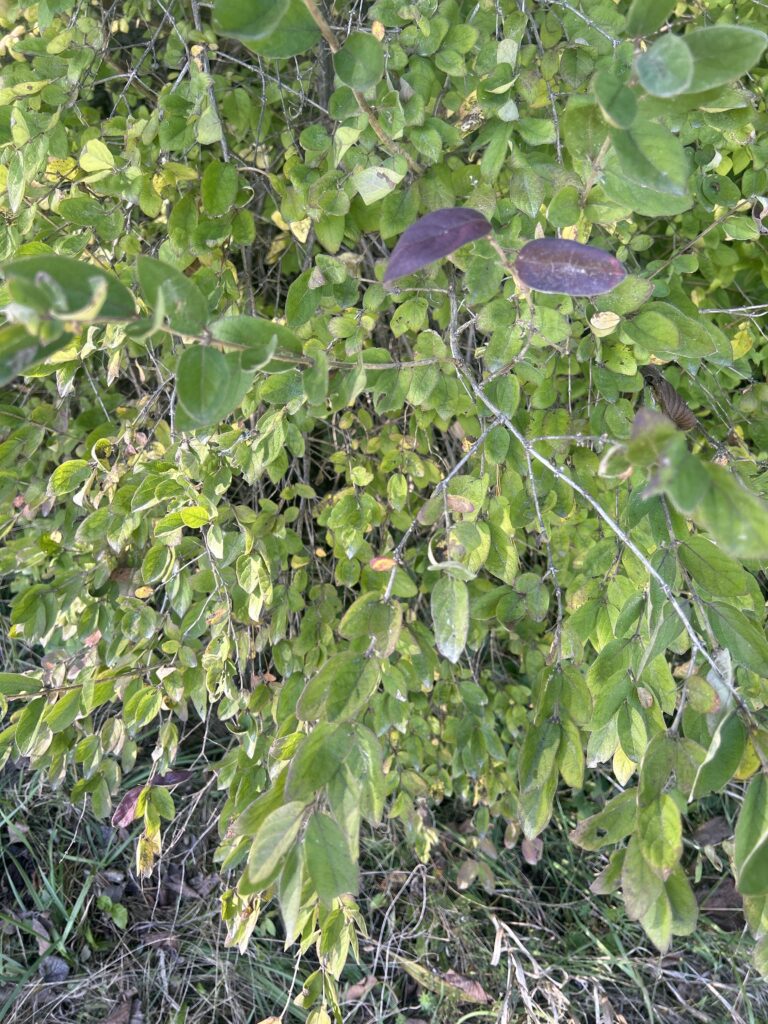
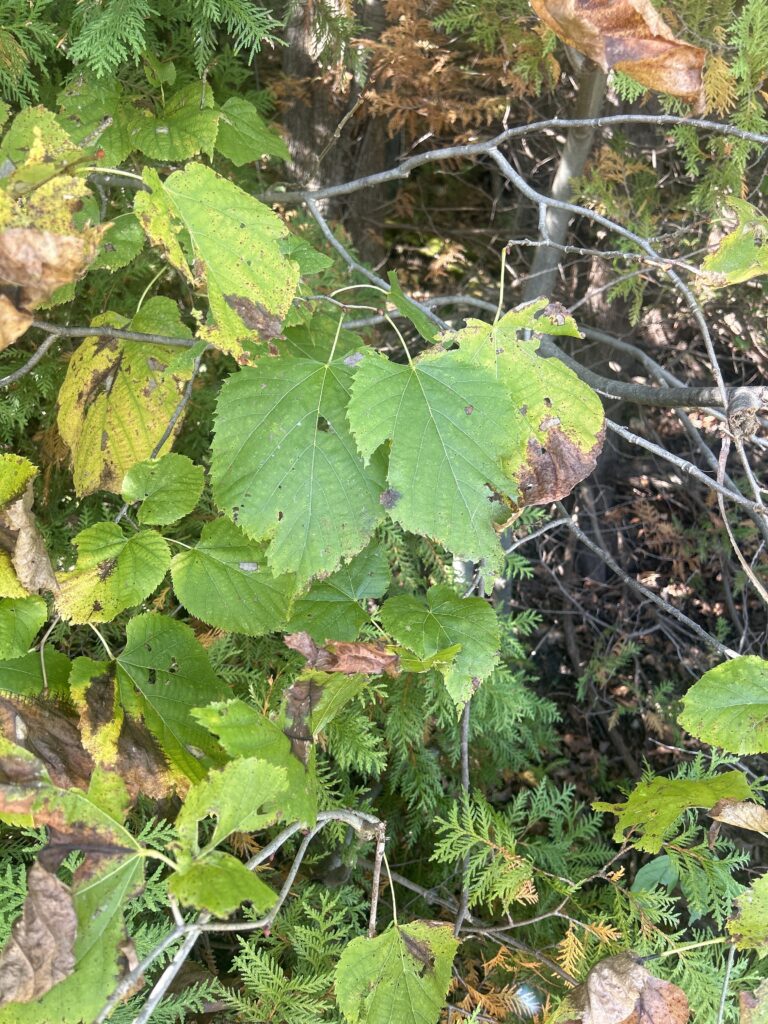
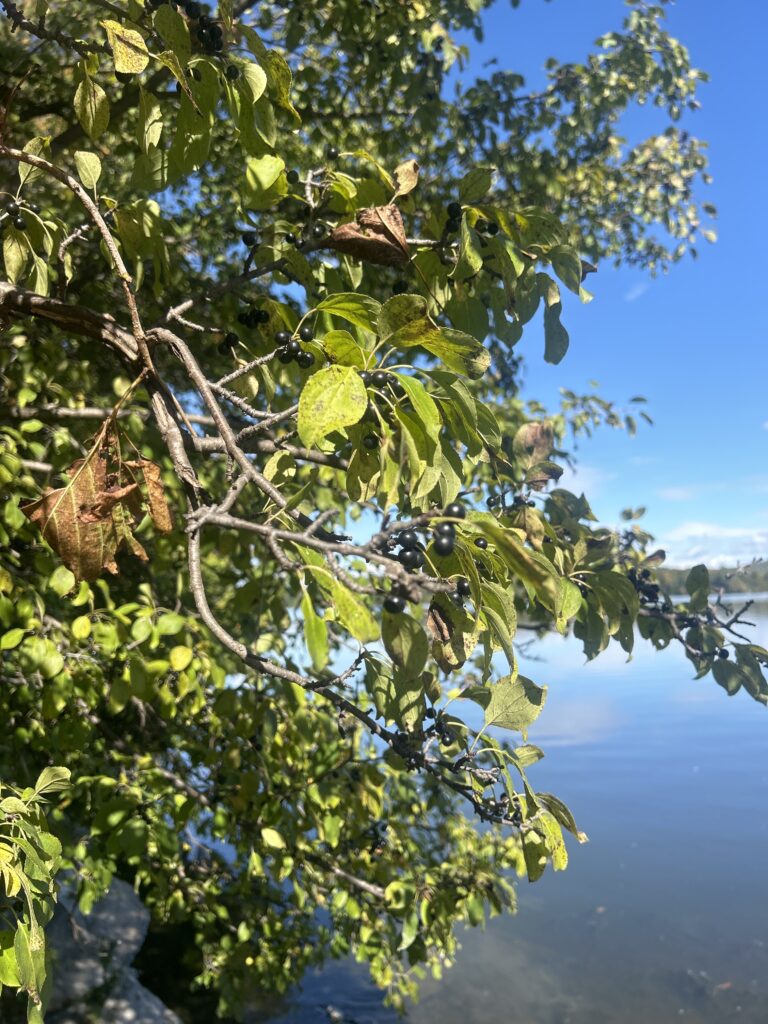
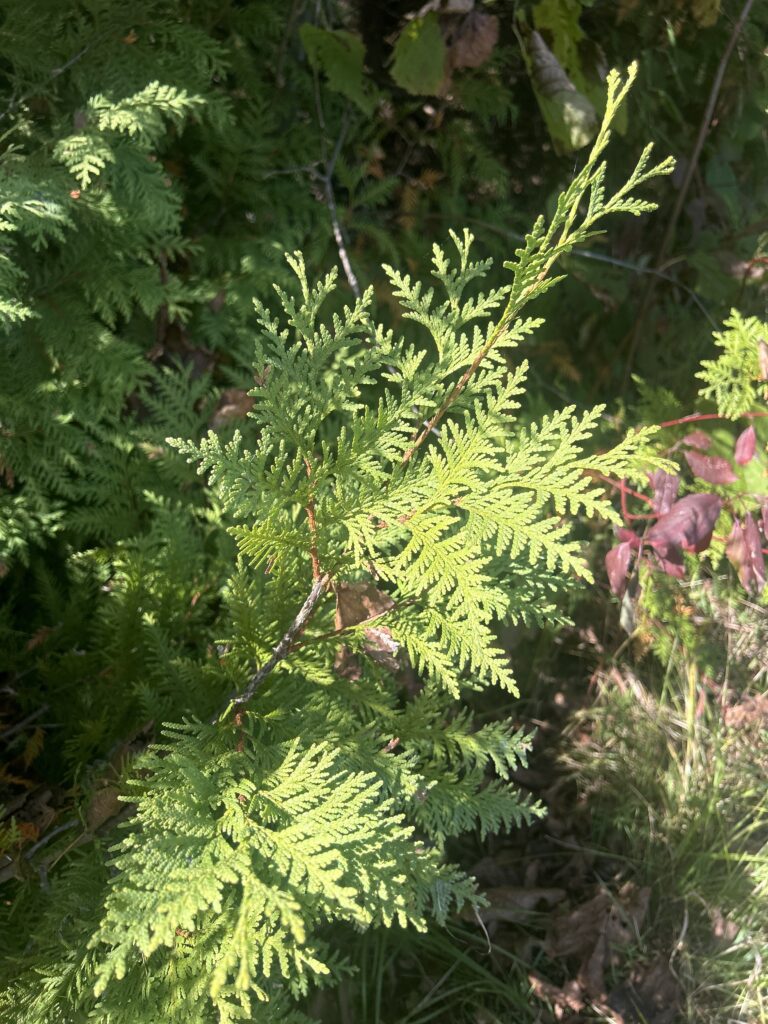
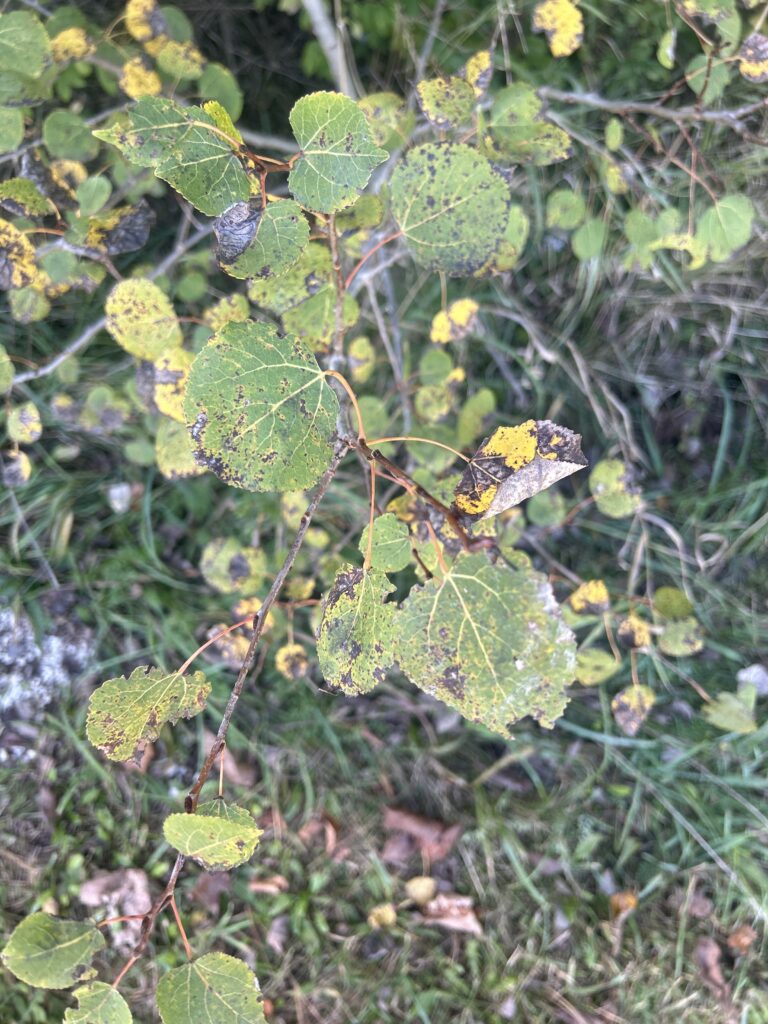
The Shelburne Pond fishing access area showcases various and diverse vegetation, including many understory and overstory plant species. Walking around the area, it is easy to notice many invasives such as buckthorn and honeysuckle. Both of these plants are the predominant understory species in the area. The buckthorn has numerous dark blue-violet berries. In the overstory, there are a few Eastern white pines and many elms, Northern red oaks, and Northern white cedar. Along the shoreline, there are also a couple of herbaceous plant varieties such as the light violet-colored American aster and white, fuzzy Goldenrod. When observing the vegetation, the majority of the understory species, Basswood, and Northern white cedars are beginning to turn yellowish-brown. A lot of the leaves have noticeable discoloration and black spots. As the temperature is beginning to drop, some deciduous trees are starting to show signs of color change; the Northern red oak is a bright red and the sugar maples are beginning to change into a yellowish-orange.

Original Pictures: 10/8 1:37 PM

Click on the hyperlinks below to see iNaturalist profiles!

iNaturalist Original Photos: 10/8/2024

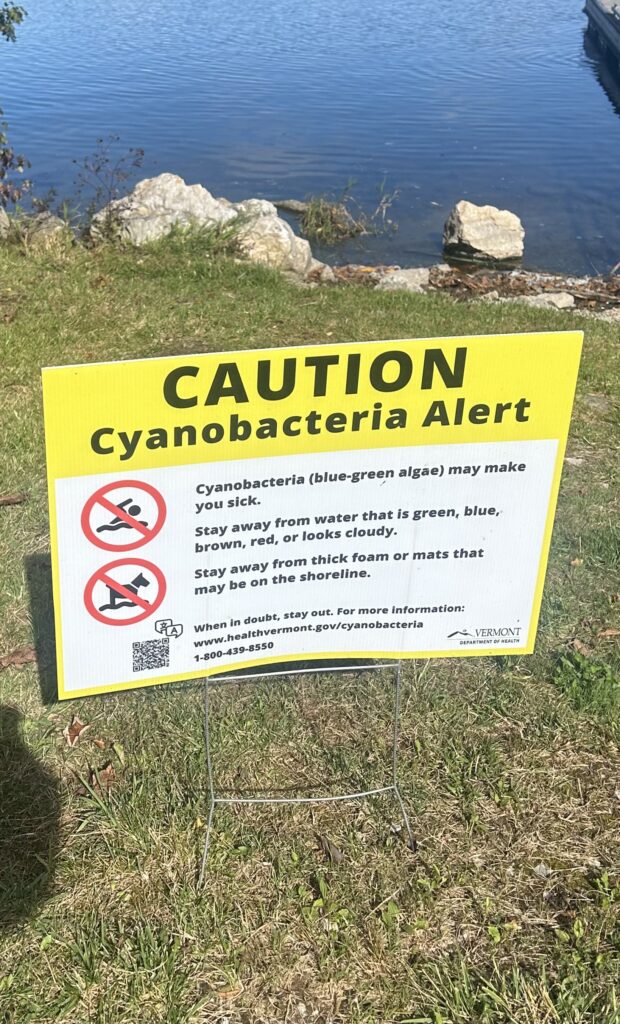
Upon arriving at Shelburne Pond, many Caution signs warn visitors of Cyanobacteria. The sign explains how the blue-green algae can make swimmers or pets that enter or drink the water very sick. While at the pond, some areas are noticeably green-brown in color, as seen in previous images. During the NR 1010 lecture on nutrient loading, we learned how cyanobacteria blooms like this can be due to excess Phosphorus in the water from nearby agricultural fields or streambank erosion. It will be interesting to see if and how these algal blooms and other factors from the agricultural area affect the ecosystem around Shelburne Pond.

Skip to toolbar