This was my second visit to my phenology site. I noticed right away that there were a lot less leaves on the deciduous trees. It was harder to find the red maple and American beech that are near the center of my site because all of their leaves had fallen.
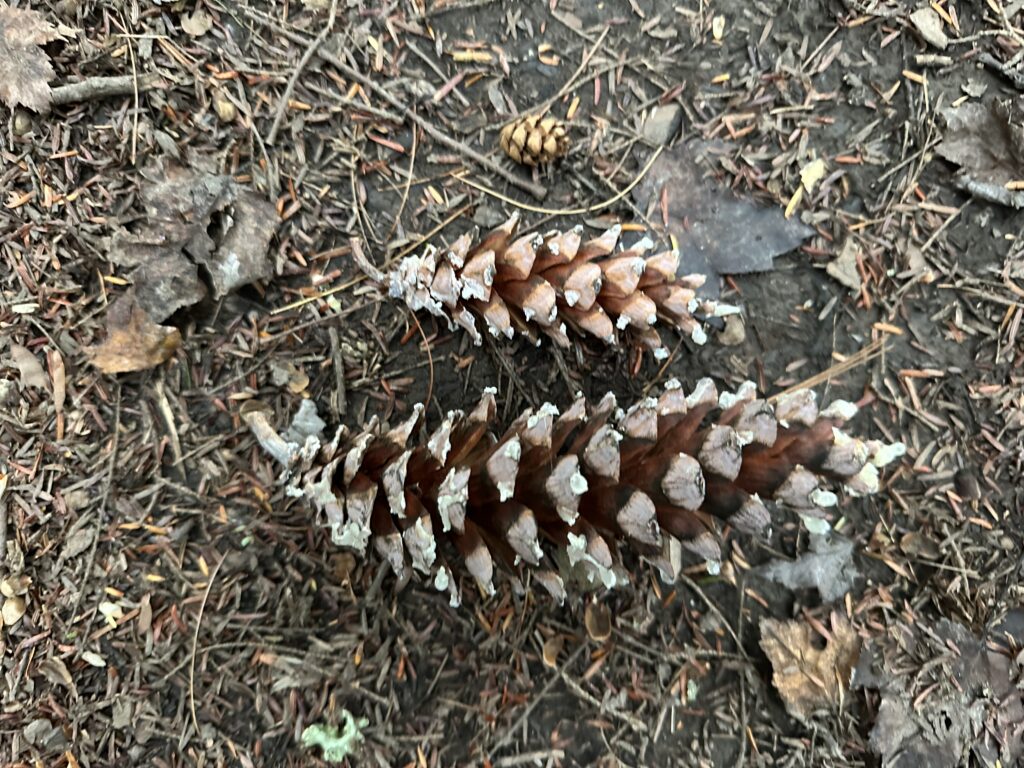
A lot of pinecones had fallen too!
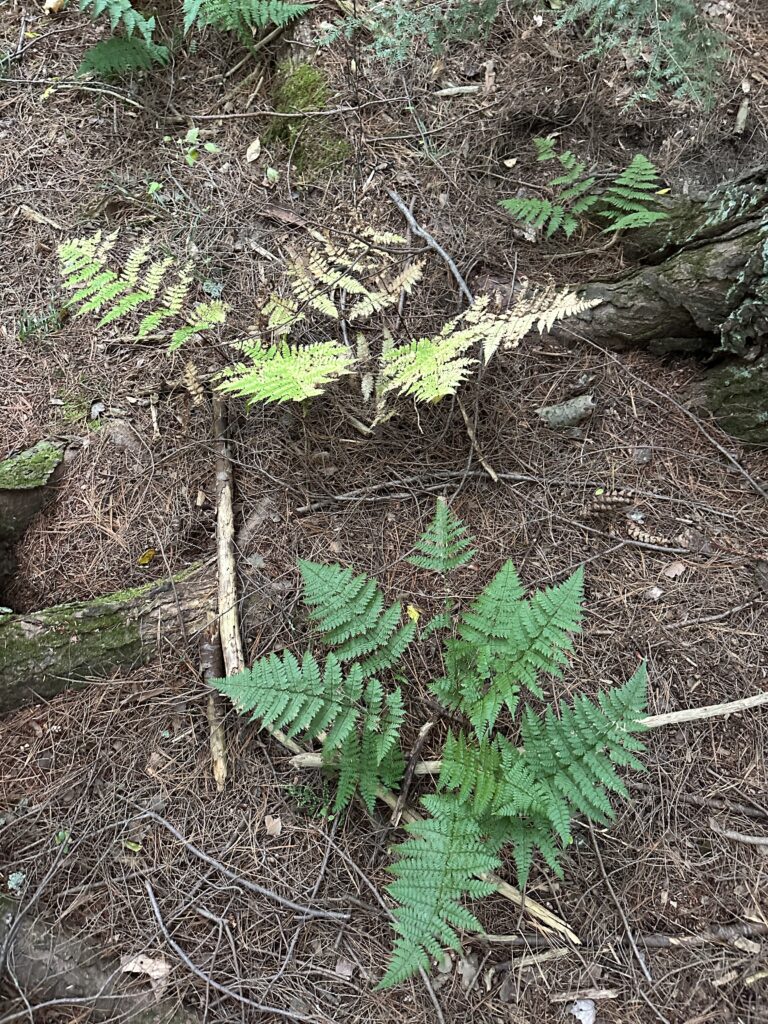
While I read about the infertile fern fronds drying up in November in Naturally Curious, the ferns at my site were still mostly green. The ferns that had turned brown seemed to not have a central fertile frond, so I wonder if the unfertilized ferns die earlier.
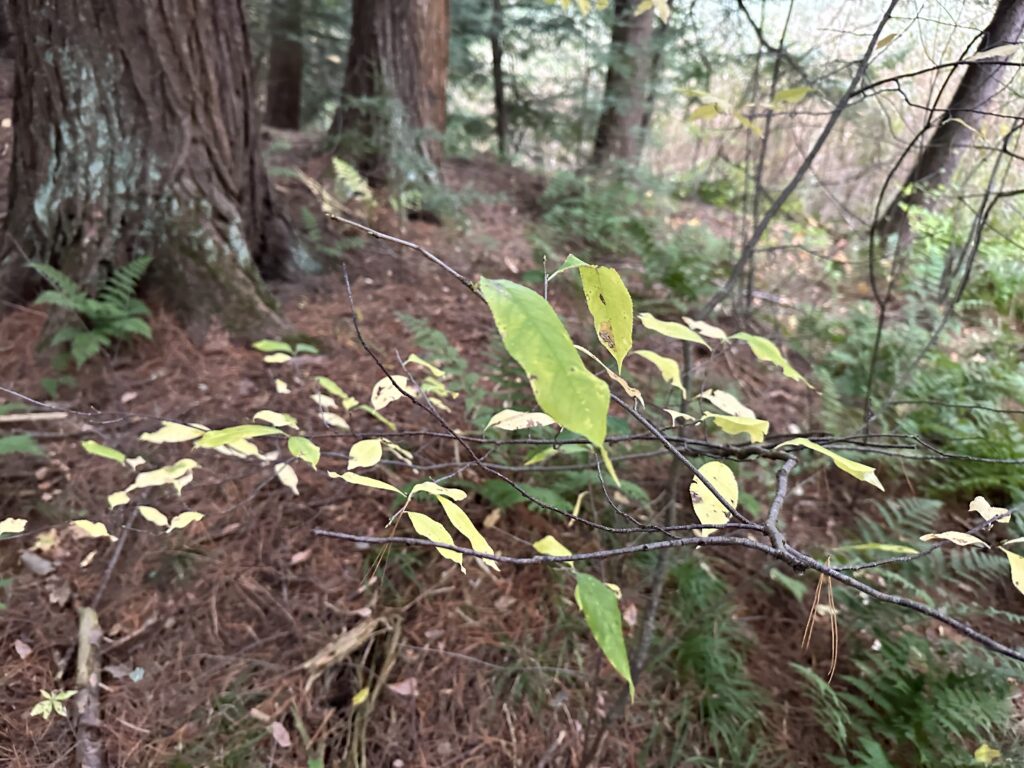
I also noticed that buckthorn seems to hold onto its leaves longer than the other deciduous plants in my area, which might be another advantage that makes it so invasive.
While I was at my spot, I noticed that I still heard many birds, even though the fall migration is ending. I used the Merlin Bird ID app to identify the following birds by their calls:
- American goldfinch
- Blue jay
- Black-capped chickadee
- Golden-crowned kinglet
- Mourning dove
- Tufted titmouse
- Carolina wren
This recording includes the golden-crowned kinglet, American goldfinch, tufted titmouse, and black-capped chickadee. If you listen closely, you can also hear people cheering at a nearby sports game, showing one way how humans have a continuous presence and impact on the space.
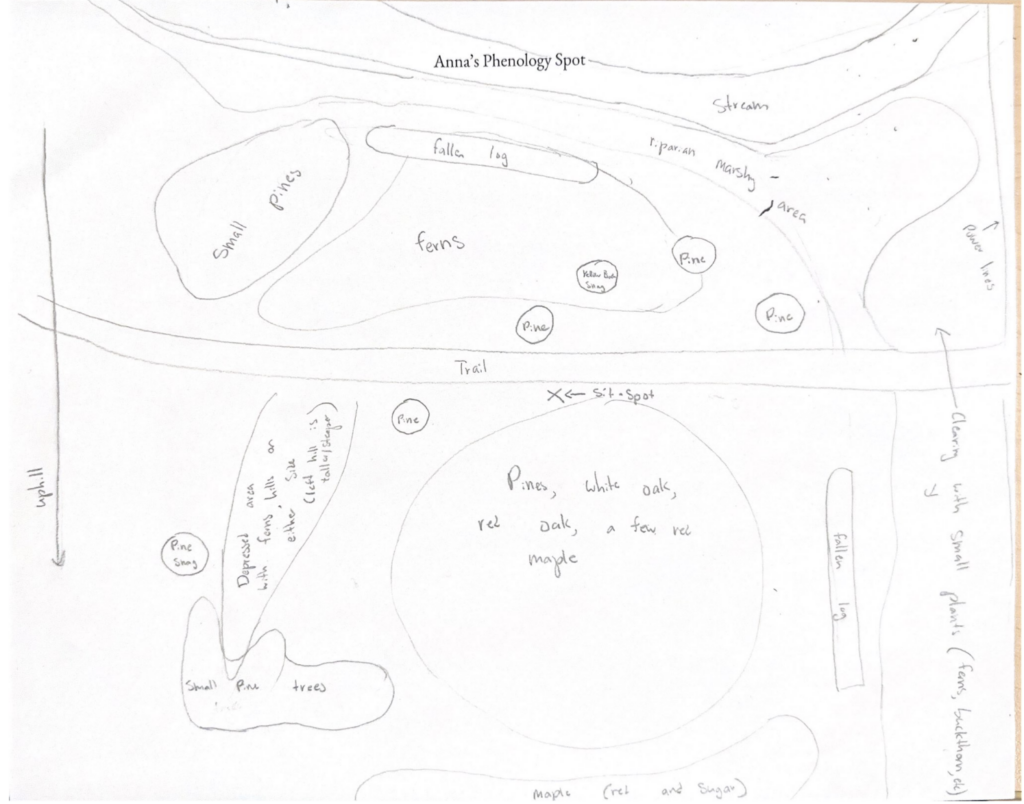
The main purpose for my visit was to create a bird’s-eye map, which you can see below: