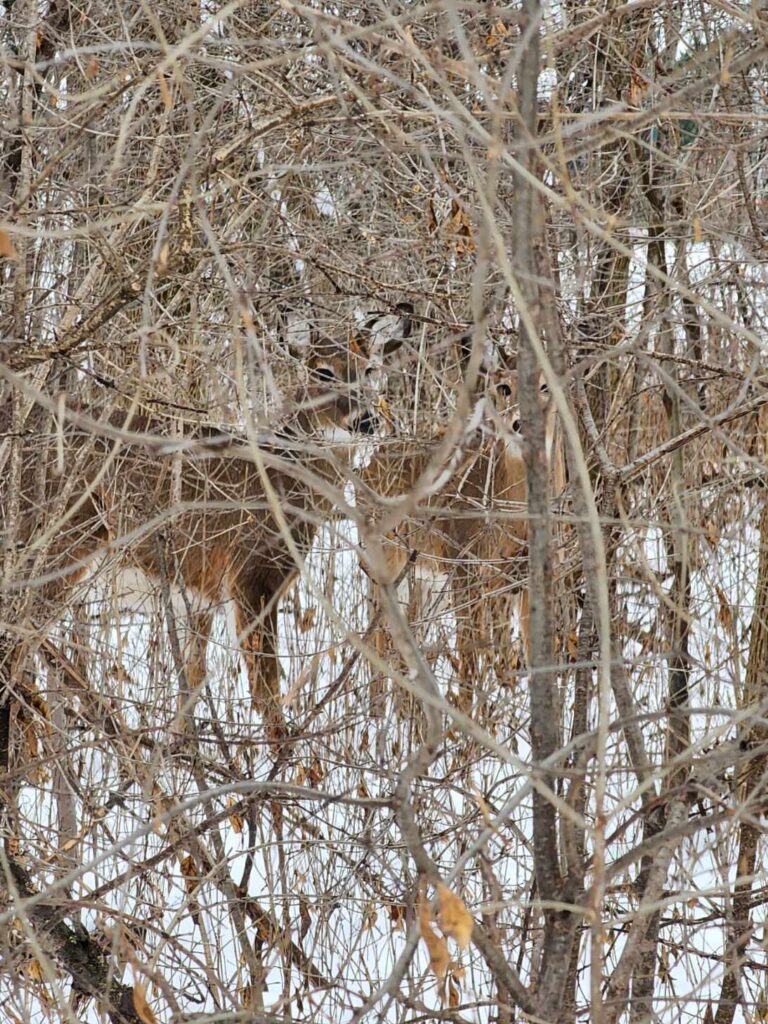
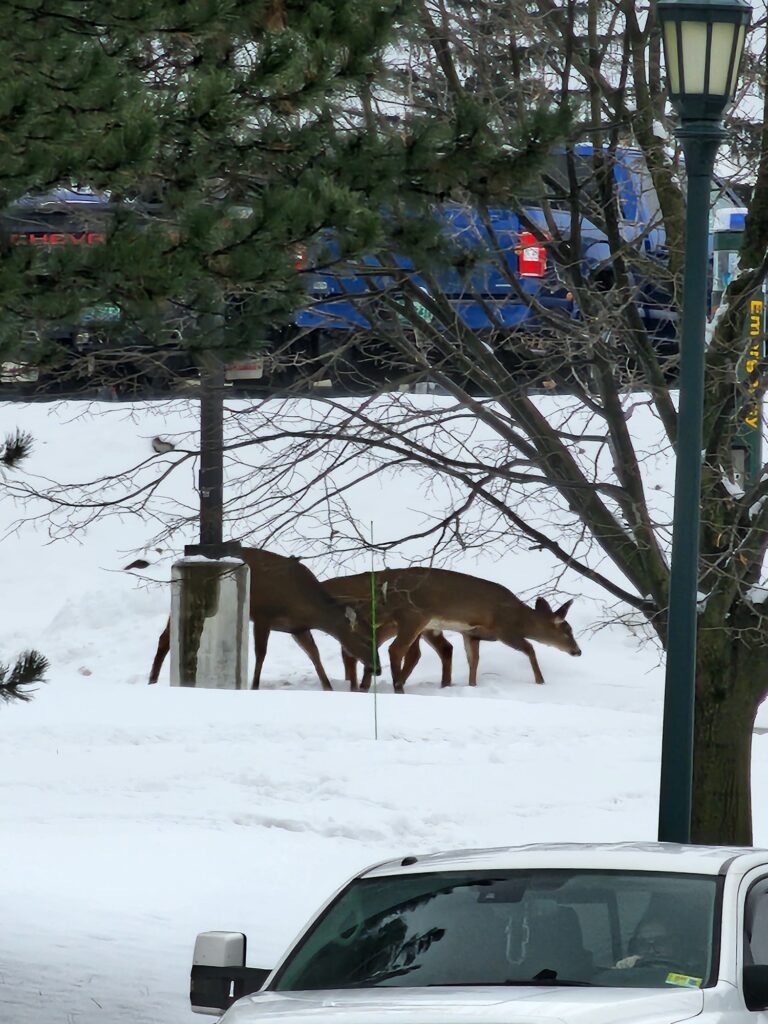
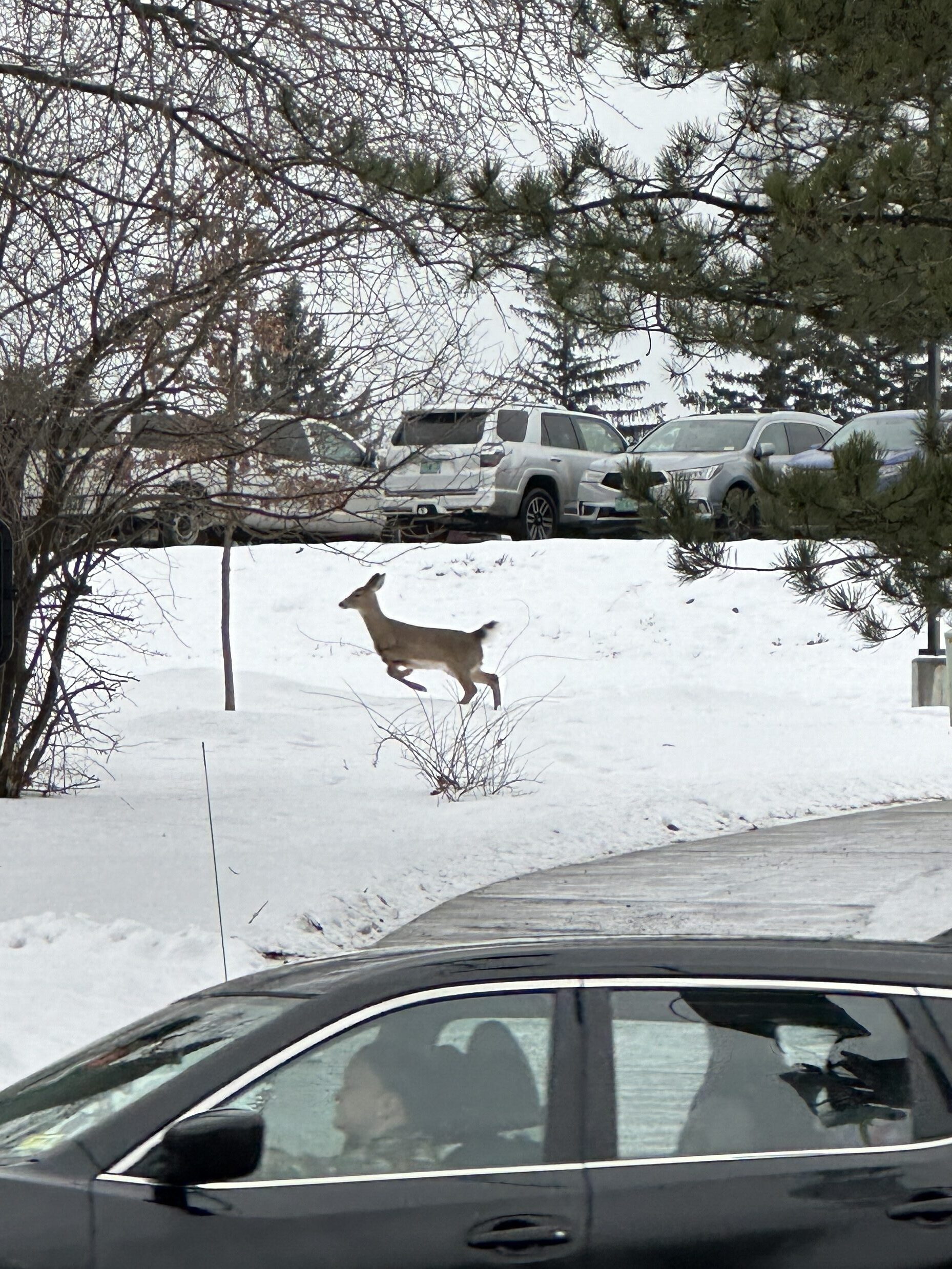
My adventures began before I even entered Centennial Woods on this trip! Across the road from the entrance to Centennial Woods, I spotted some white-tailed deer:
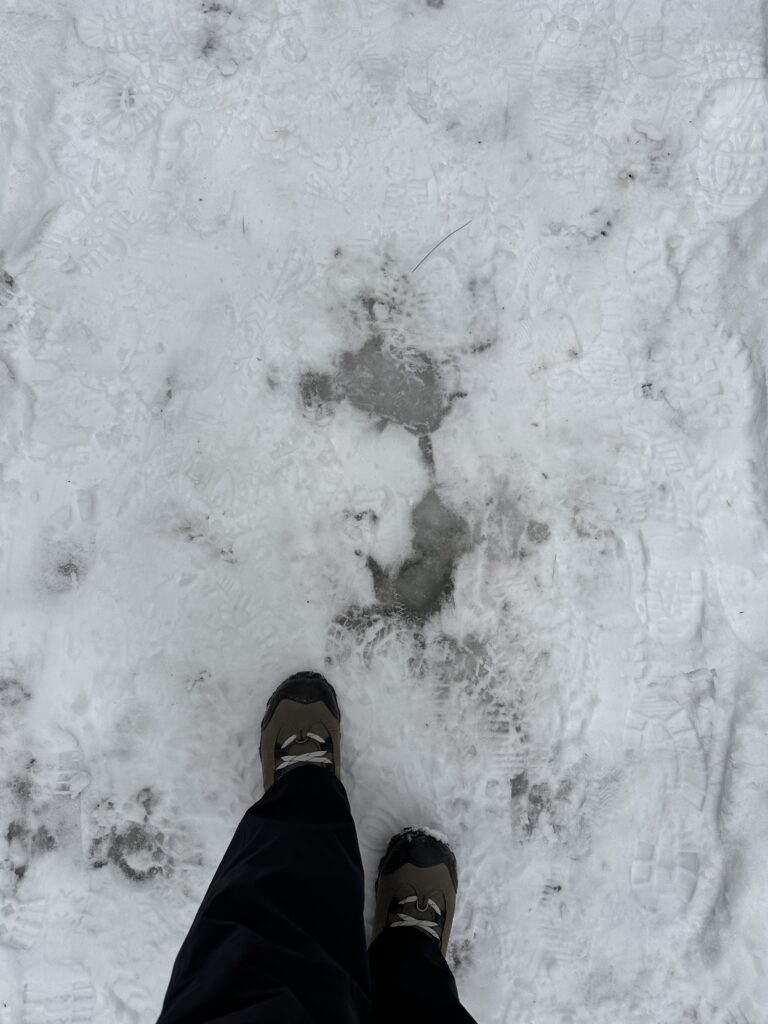
As I walked to my spot in Centennial Woods, I noticed that there was a layer of ice underneath the snow, at least on the trail. This makes sense since it’s so wet there when the weather is warmer. I wondered if the ice layer affects the temperature, oxygen levels, or moisture in the soil below. I wasn’t able to find a lot of information online, since a lot of the resources focused on permafrost.
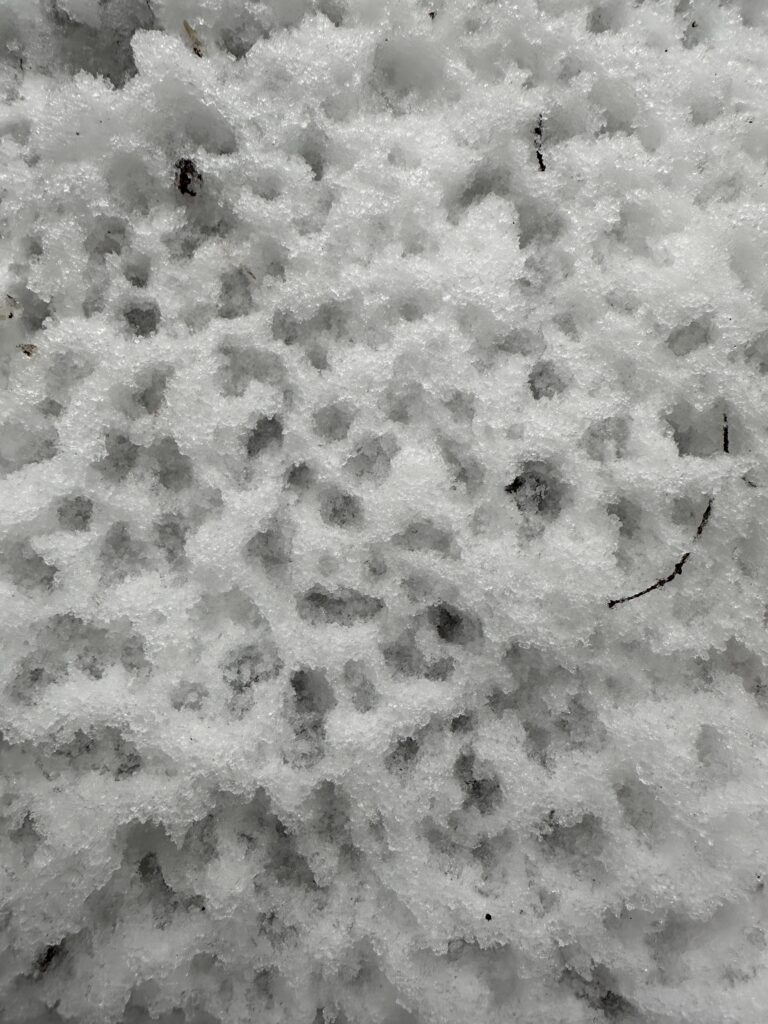
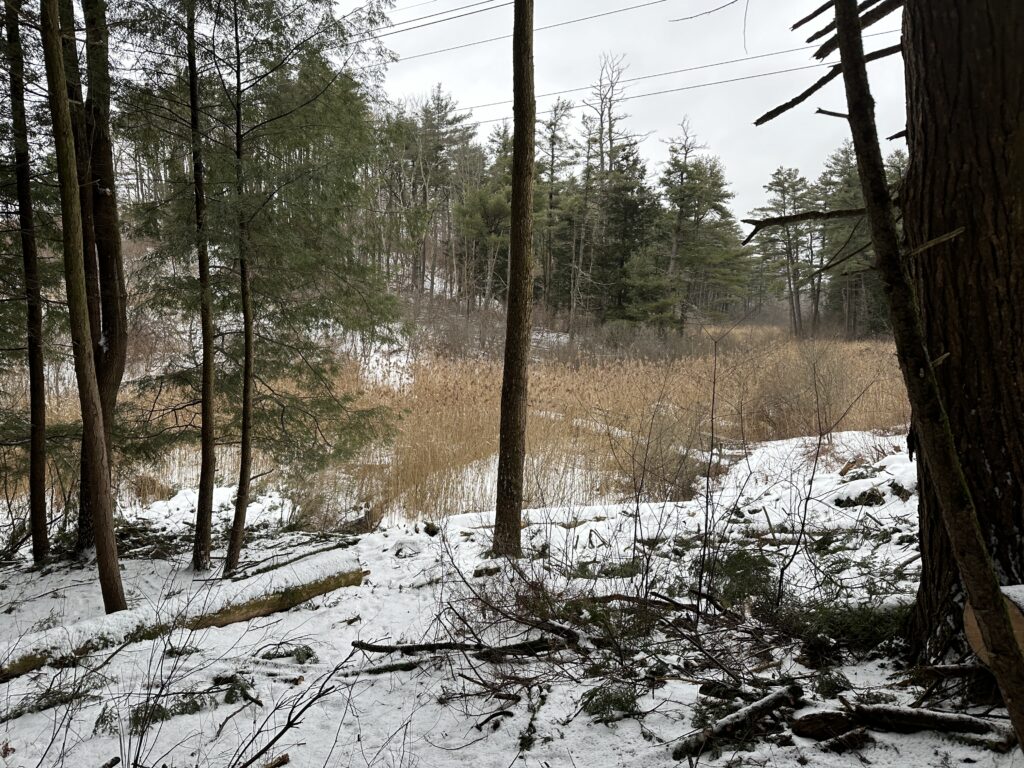
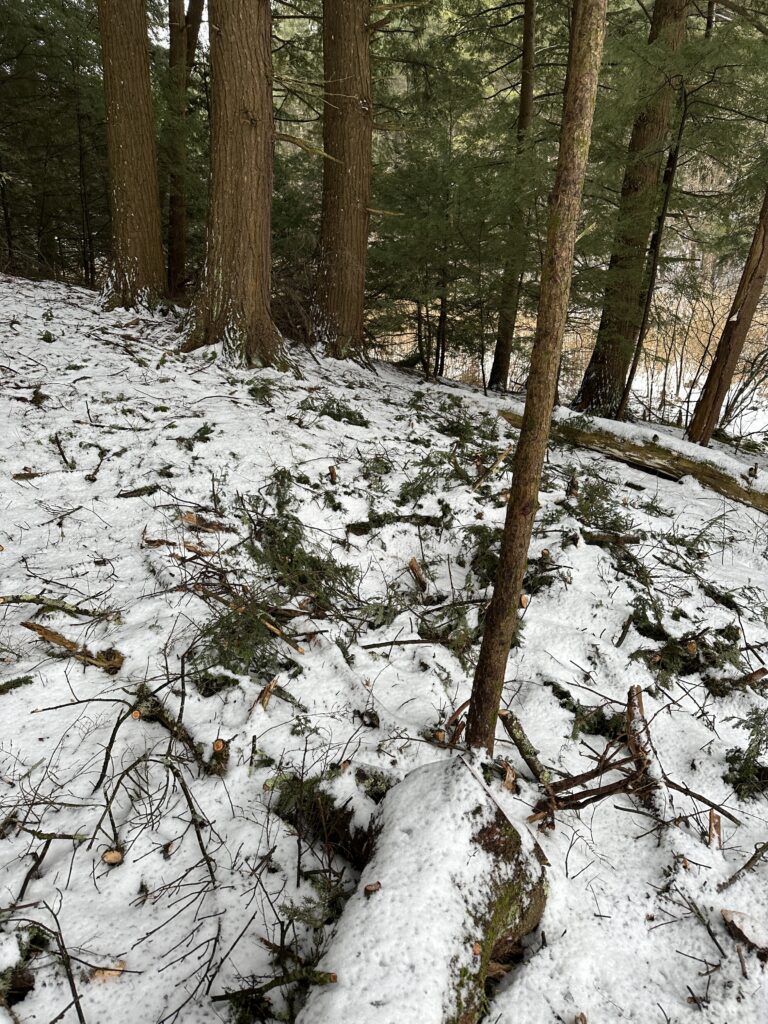
At my site, the snow layer was thinner and slushier, probably because all of the coniferous trees, which keep snow from reaching the ground and also trap in heat. The snow has a pockmarked texture from falling slush and water droplets from the trees, which makes it harder to look for tracks.
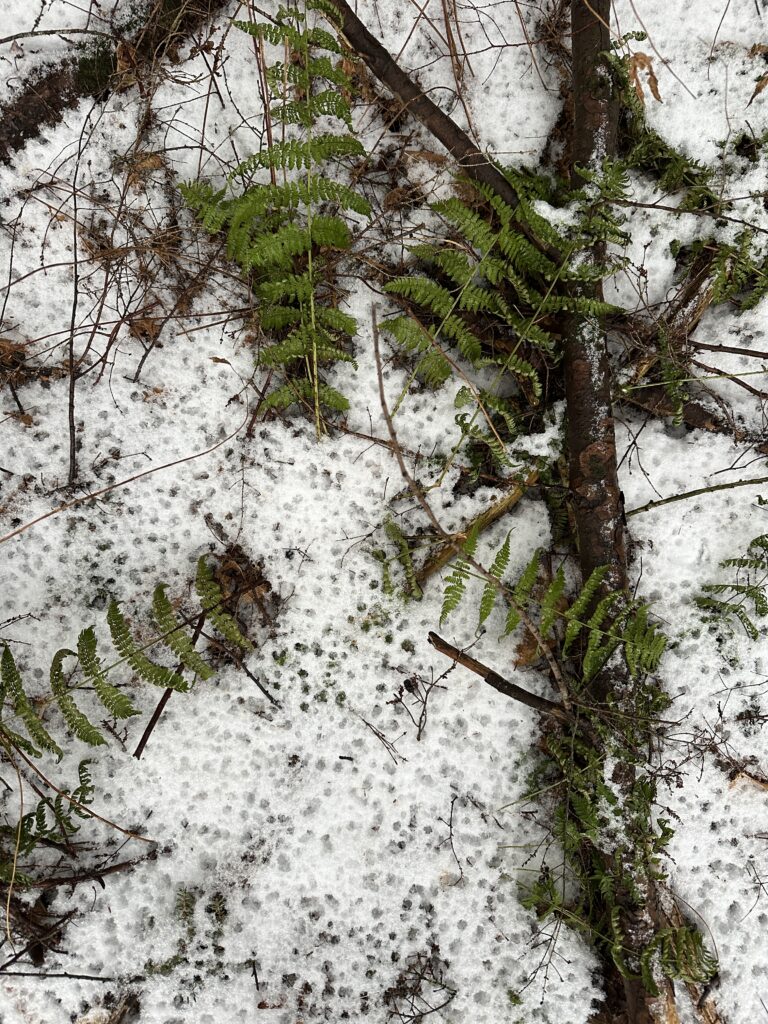
There’s still some greenery in addition to the trees, with a fern still hanging on. I think it’s a marginal woodfern according to the Vermont State Parks’ guide.
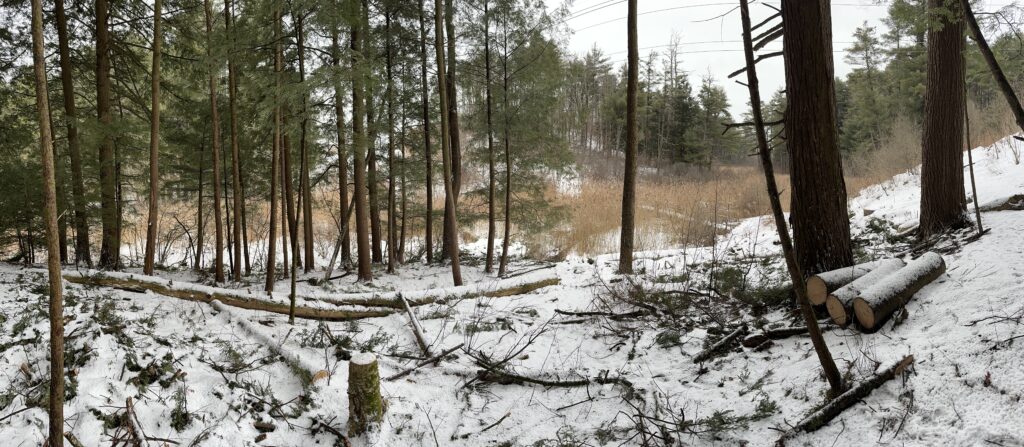
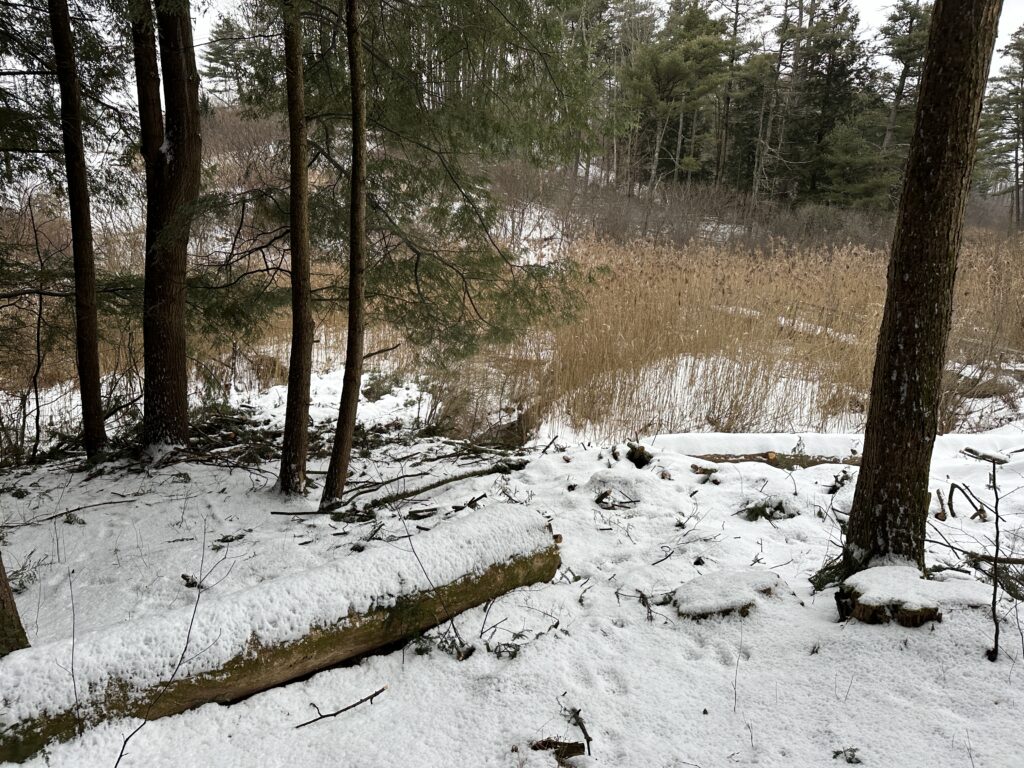
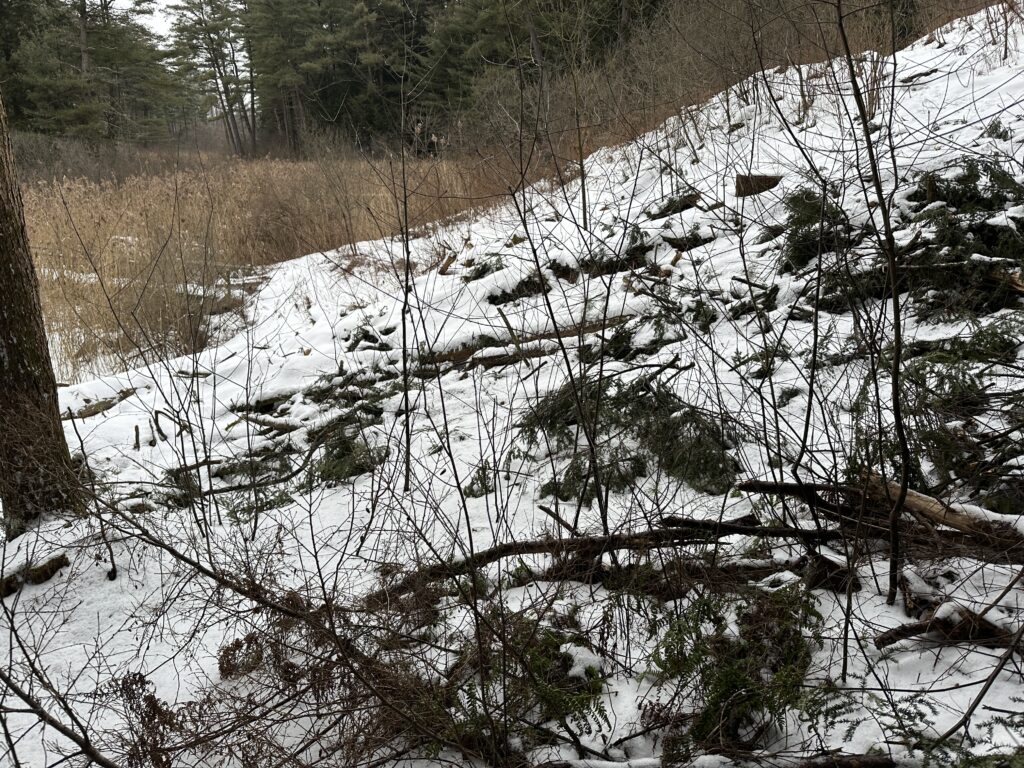
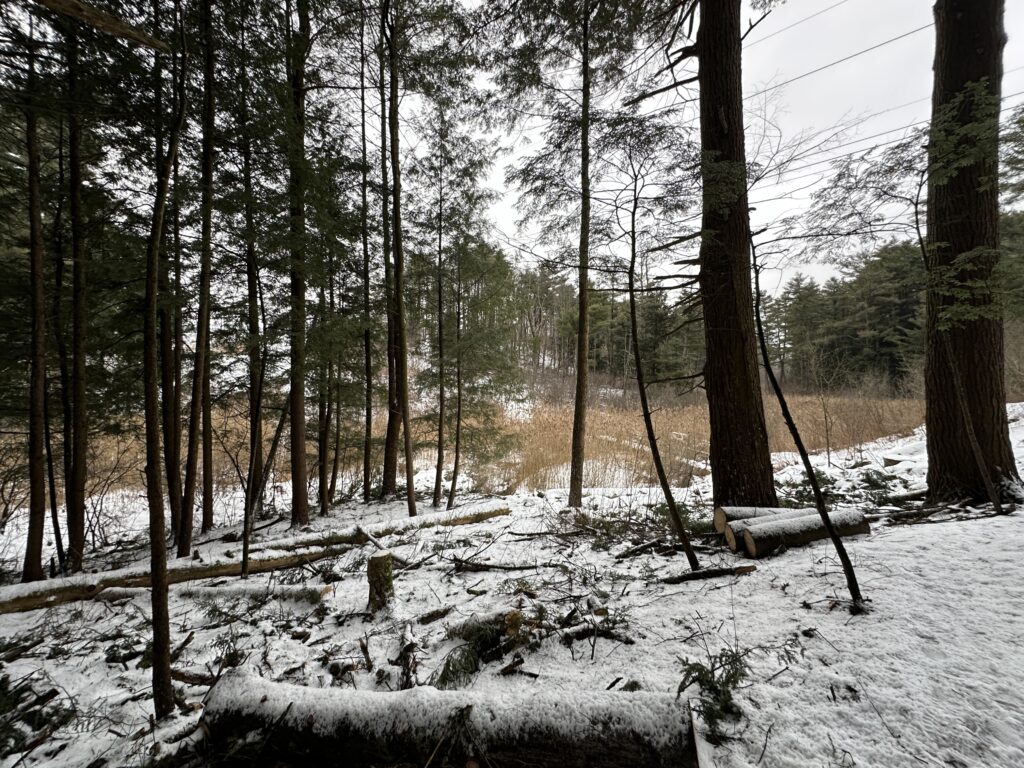
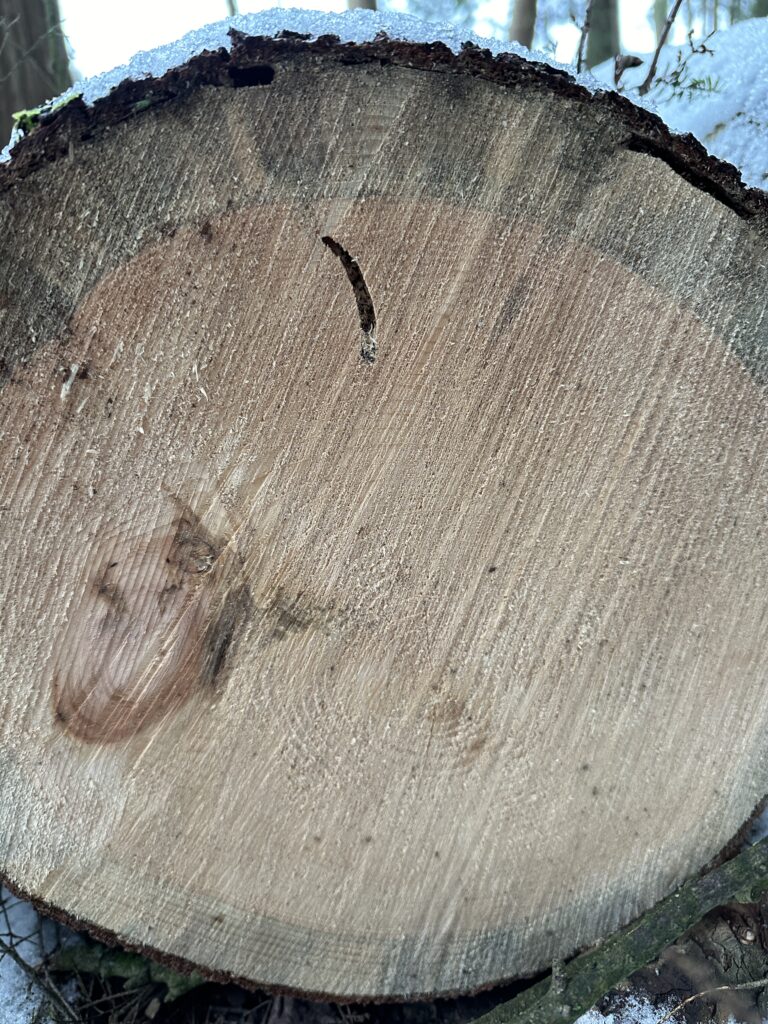
The biggest change at my site is that some trees were taken down between my last visit and this one. I wonder if it’s to speed the growth of hardwood trees and forest maturation, since the forest part of my site is pretty uniformly softwoods.
Animal Signs + Sightings
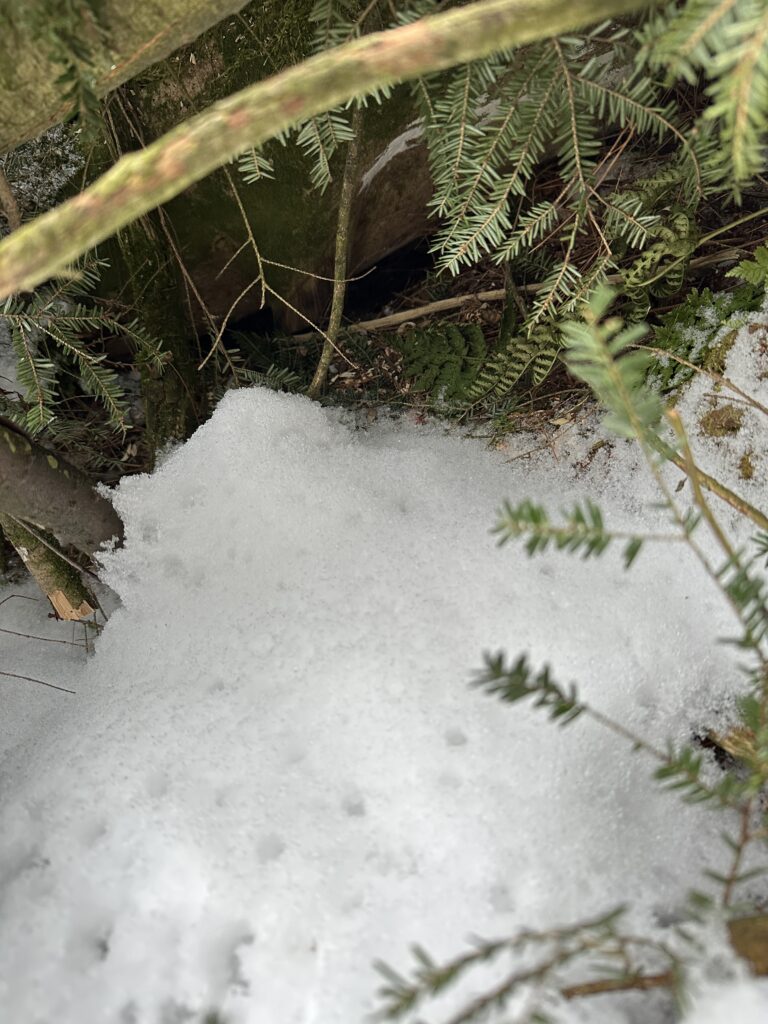
It looked like there were some pinecone pieces under this branch, which is a sign that squirrels have been eating here.
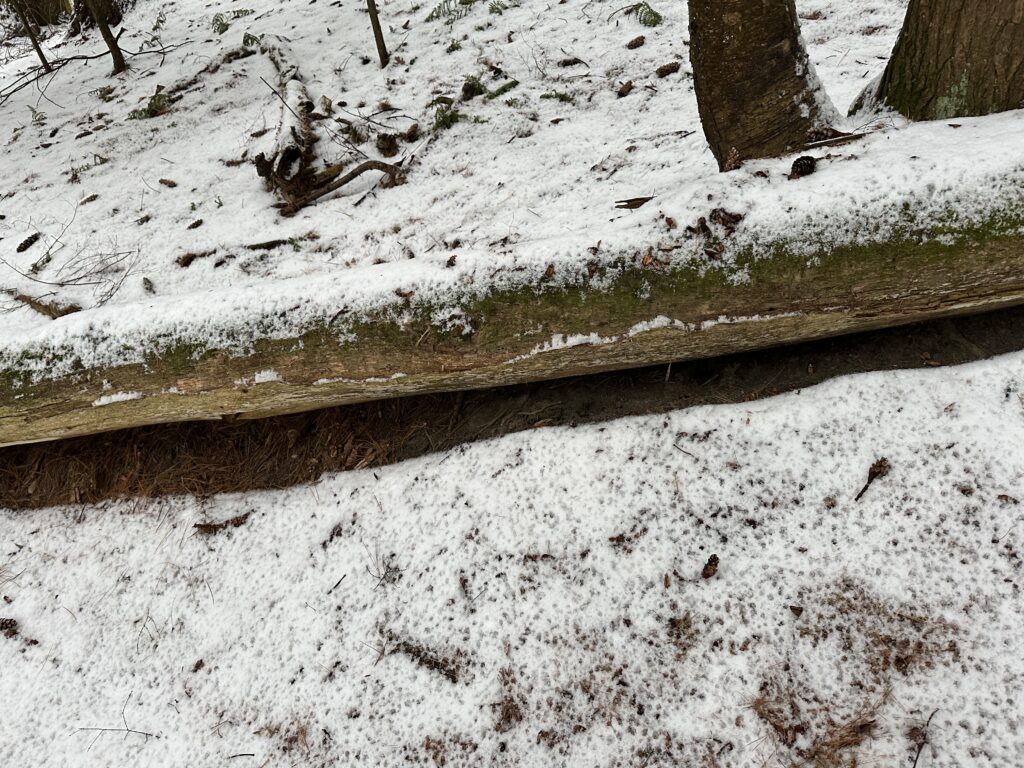
There were more pinecone bracts under this log. The squirrels must appreciate the bit of shelter the log provides!
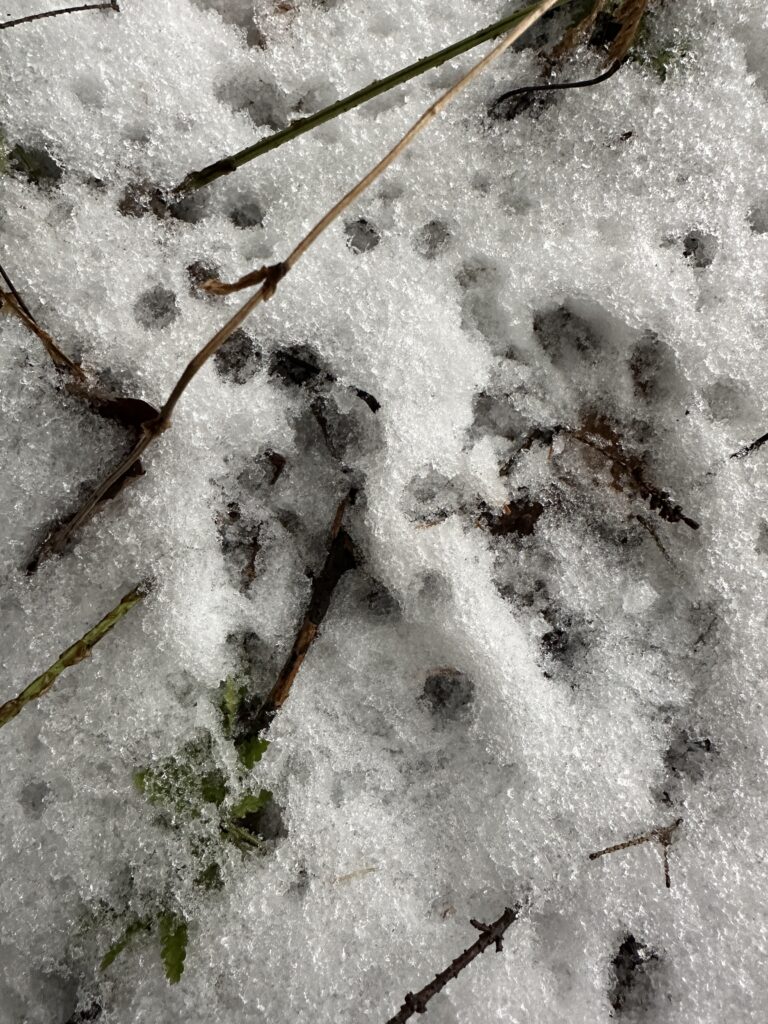
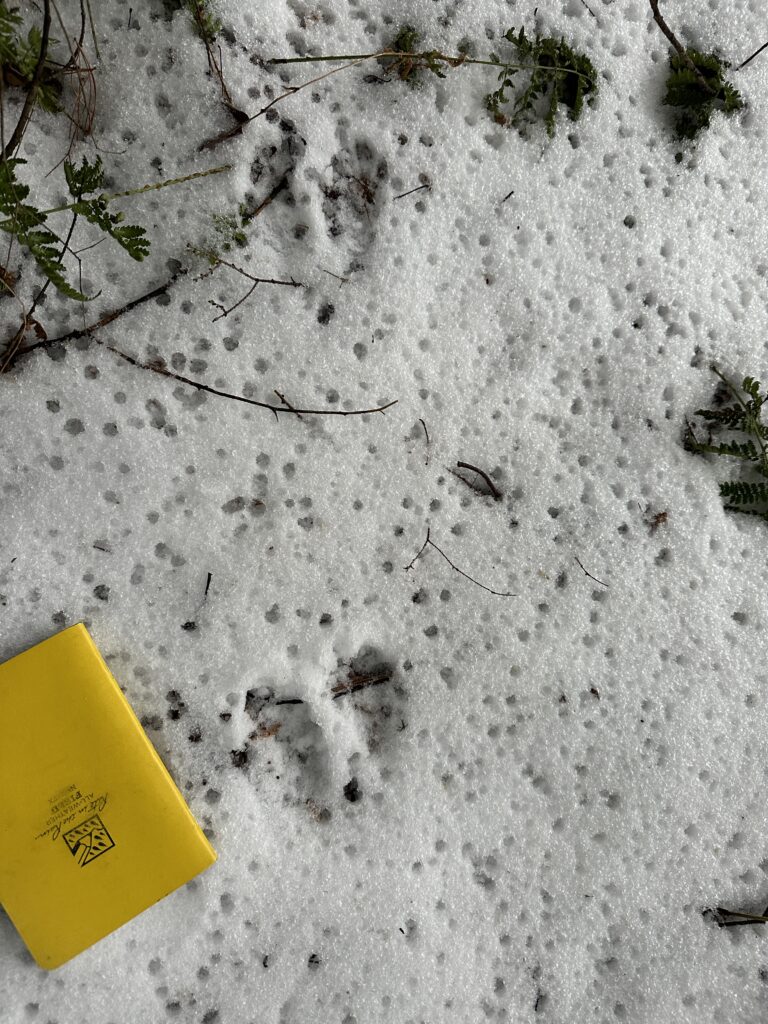
It was tricky to try to ID these tracks because of the snow’s texture. Based on the track pattern and that each pair has one smaller track and one larger, I think it’s from a raccoon.
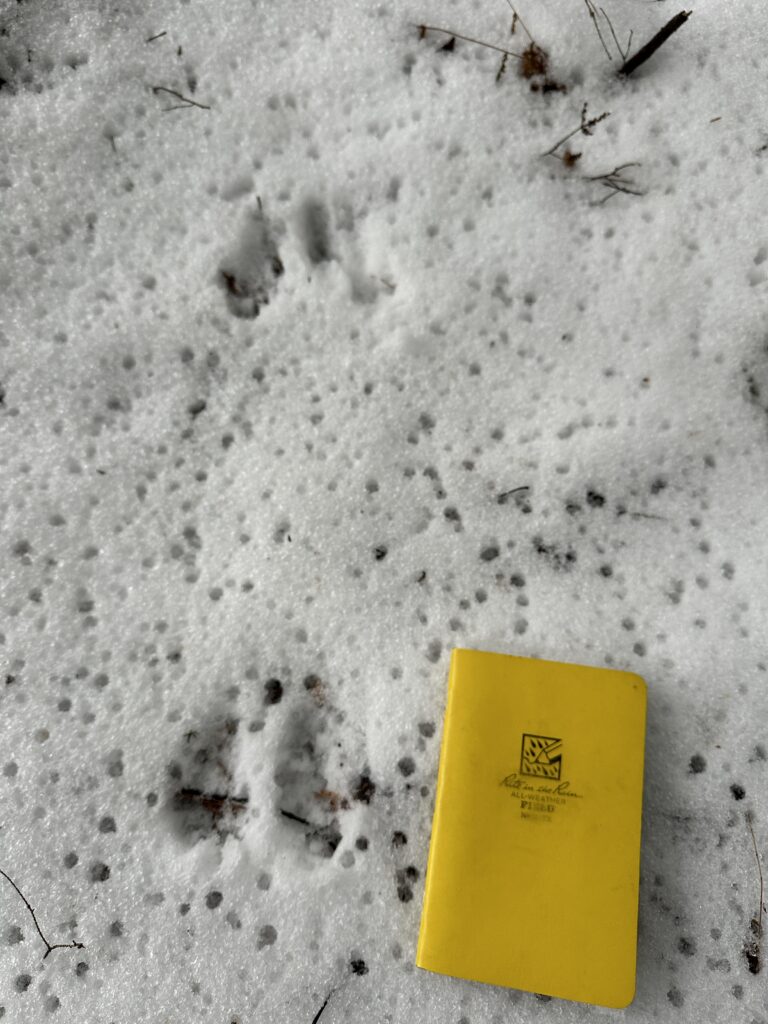
Because of the size and paired nature of these tracks, I think they’re from a squirrel.
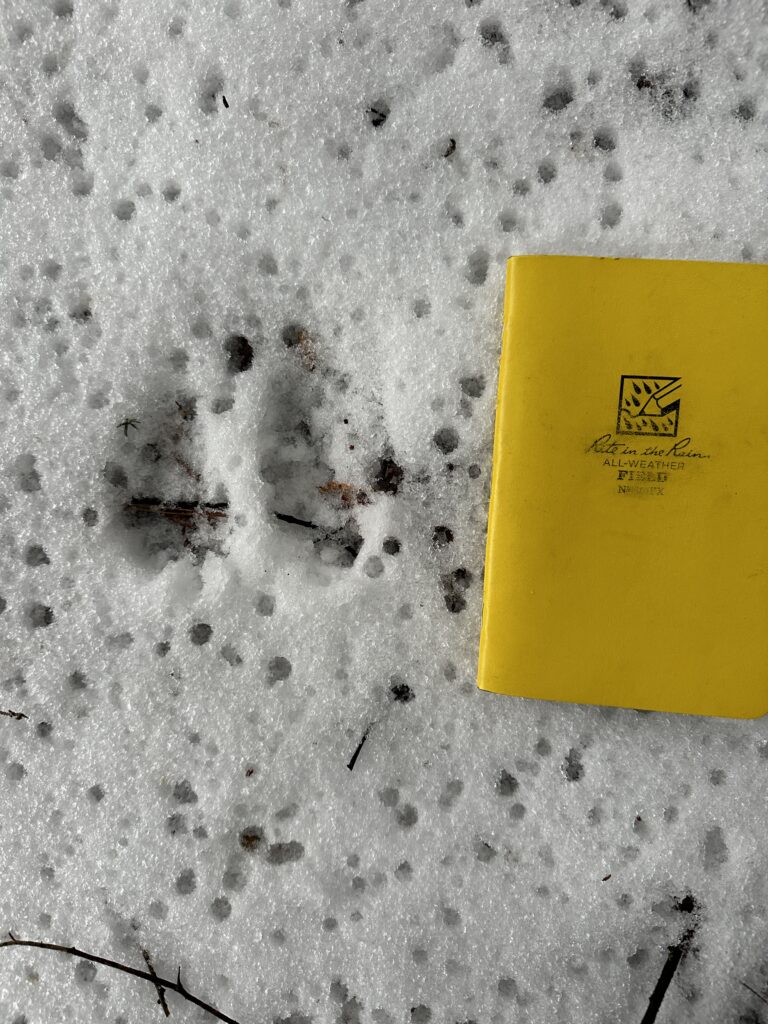
One of my favorite things to do at my phenology spot is to use the Merlin Bird ID app to record the birds and work on my ability to identify by ear. This time, I heard black-capped chickadees, white-throated sparrows, and crows. But as I was listening, at one point they got really loud. I saw a flash of something above me, looked up, and saw a hawk flying overhead with a grey squirrel in its talons. It flew across the marshy area to perch in a tree, where I think it ate the squirrel, because when I saw it fly away again, the squirrel was gone.
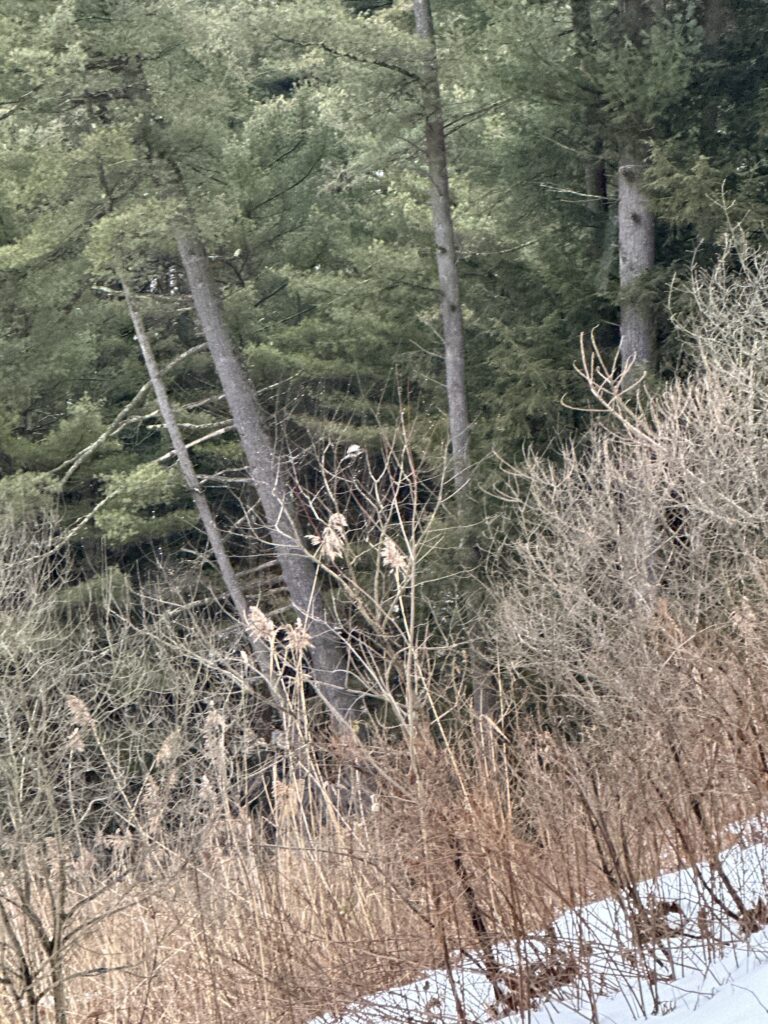
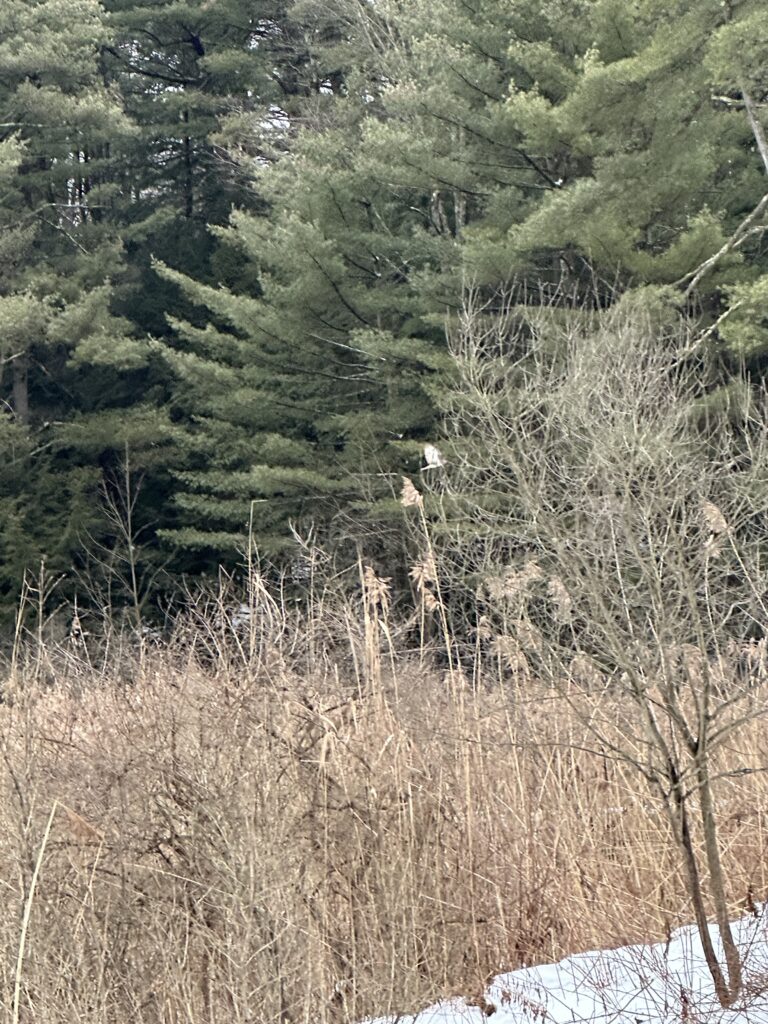
I didn’t get a great look at the bird, but based on the season, habitat, and prey, I thought it was either a small red-tailed hawk or a sharp-shinned hawk (they usually eat other birds, but occasionally eat squirrels). However, my friends have spotted a Cooper’s hawk around campus recently, and I think it’s also possible that it was that. This is strange though, because according to the Cornell Lab of Ornithology range map, Cooper’s hawks typically only live in this area during the breeding season, which doesn’t begin until March. I suppose it’s possible that the warmer temperatures have led them to return earlier.
Listen to the recording from 1:45 to 4:50, when the hawk passes over.