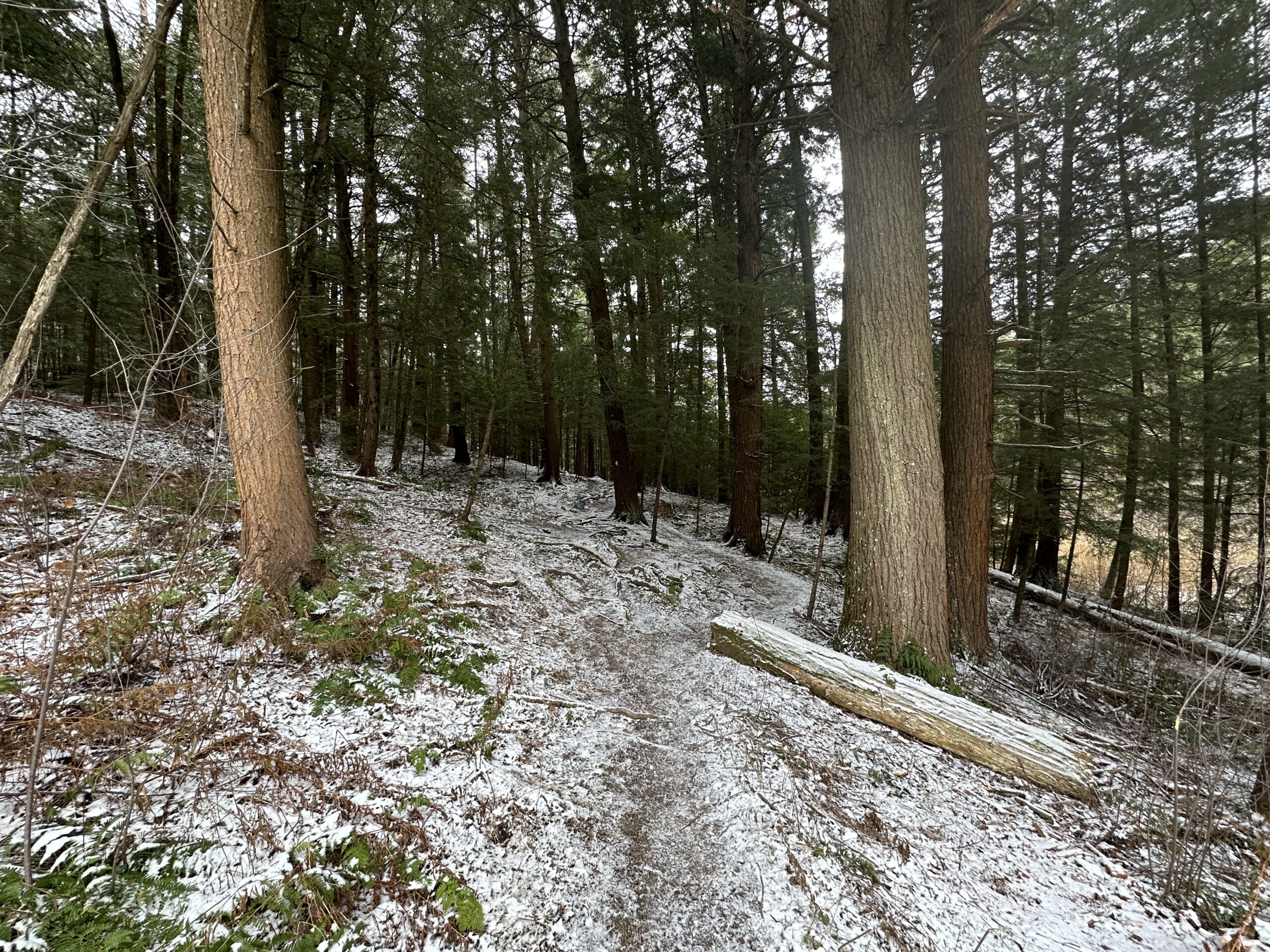
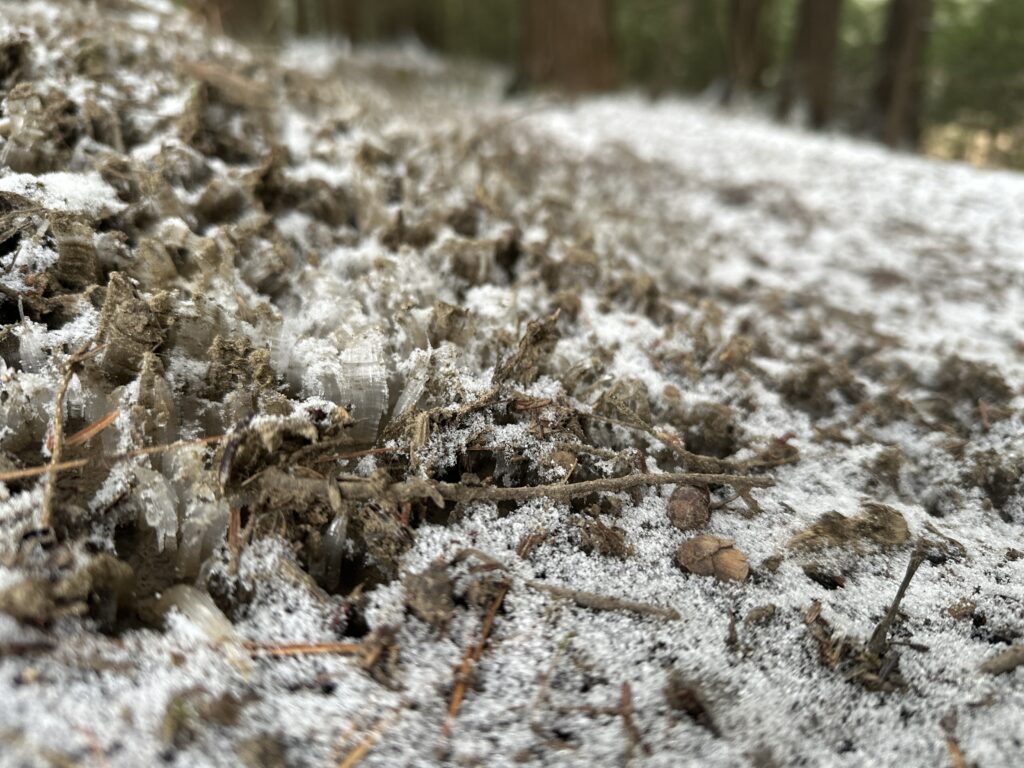
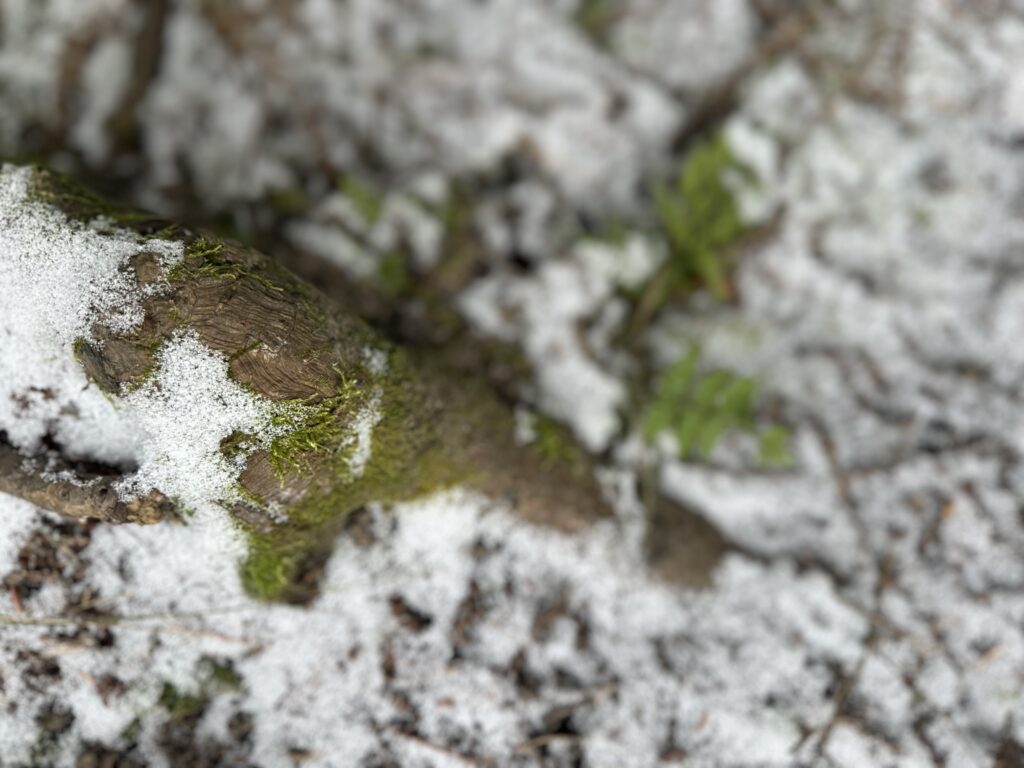
It has snowed a few times already, but this was only the third-or-so snow to stick for a full day. It was also my first time seeing my spot with snow. On the walk to my spot, the mud had a thin crust of ice that cracked and transformed to slush under my feet. Here’s a cool photo of the texture of the frozen ground at my spot:
Because of all of the deciduous trees, the snow cover was a little lighter than other areas of Centennial Woods. We learned in class recently that deer like to sleep near deciduous trees in the winter because they provide shelter from the deepest snow and hold in some of the day’s heat at night. I wonder if I’ll see signs of them bedding down when I come back in January. The snow isn’t thick enough for that yet, but it was thick enough to see some tracks!
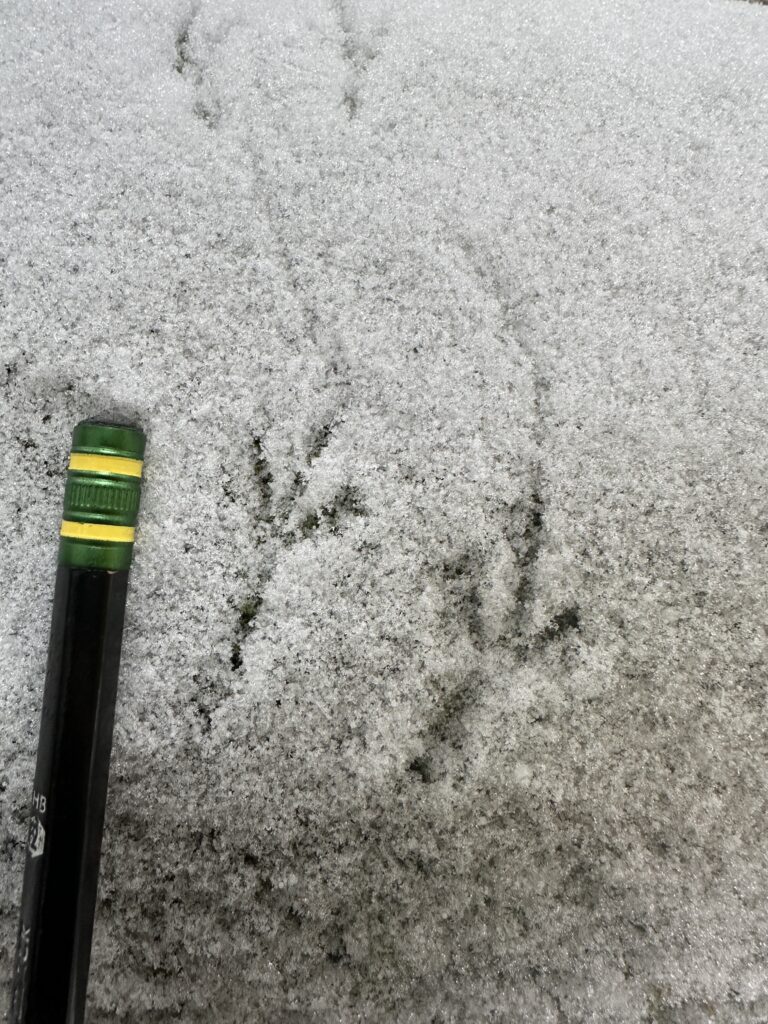


The tracks on the left are some kind of small bird. The tracks on the right look like the hind paws of a squirrel, most likely a red squirrel. I’ve seen them before in my spot, so that wasn’t a surprise. In the middle photo, it looks like there was possibly an interaction between the two. It’s also possible that the squirrel left some food on the log, and the bird came later to scoop it up.
Unfortunately, I didn’t hear as many birds during this visit. Migrations are done by now, and many birds probably focus on using energy to stay warm instead of singing. As I entered Centennial Woods, I did hear two birds cheeping back and forth at each other, little signals of “I’m here,” and it made me smile. At my spot, I used Merlin Bird ID to identify pine siskin and black-capped chickadee, and I also heard a lot of Canada geese and some crows. There seemed to be a few other species active as well, but they weren’t loud enough for the app to pick them up, and I wasn’t able to identify them myself.
At one point, a plane went overhead, and I could hear the birds get louder for a moment, as if in warning, and then they got very quiet. The sound only picked back up to a normal level a few minutes after the plane. I wonder how the frequent air traffic affects their survival.
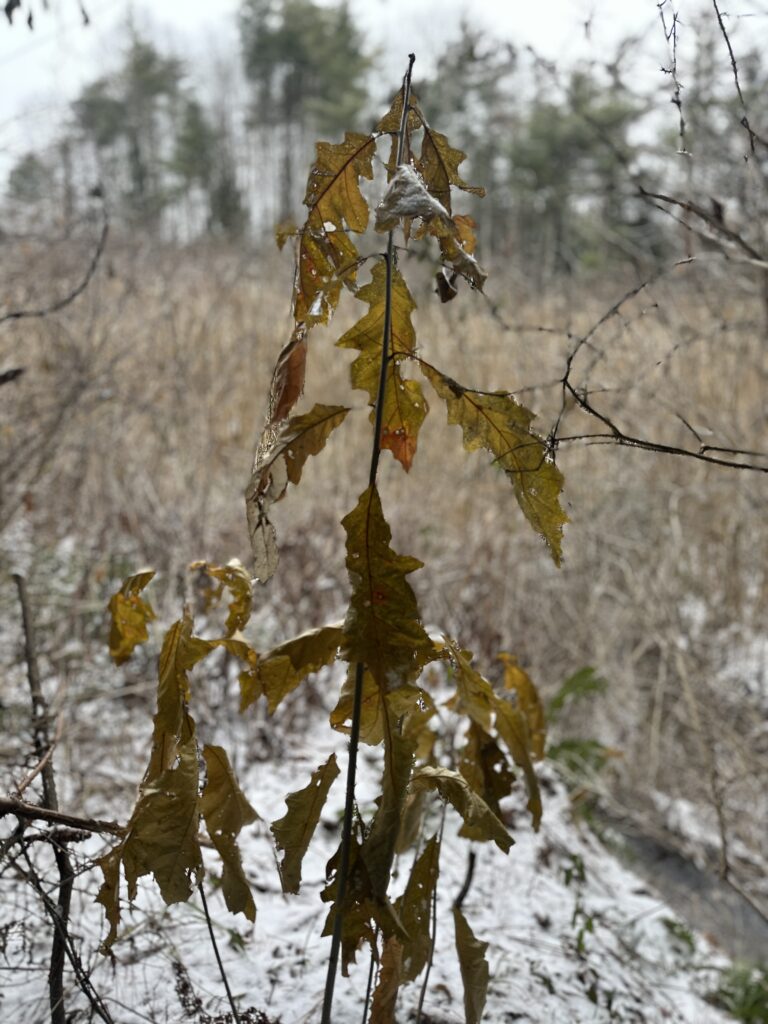
Other than the deciduous trees (pine and Eastern hemlock), there was some vegetation remaining.
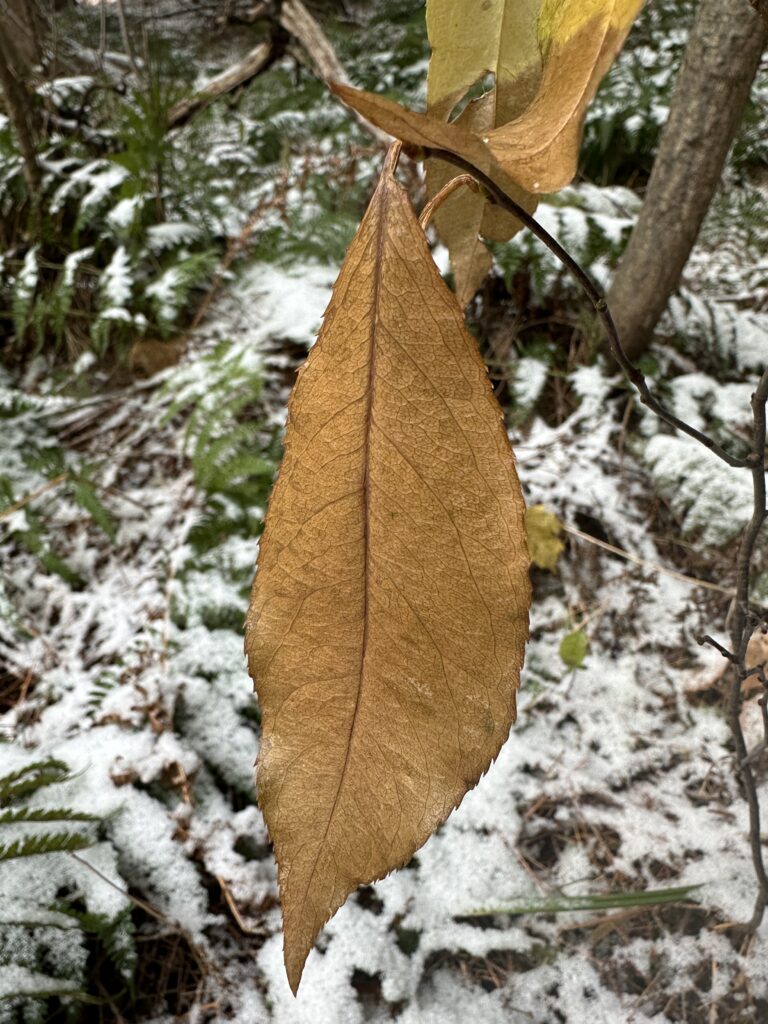
a yellow birch sapling.
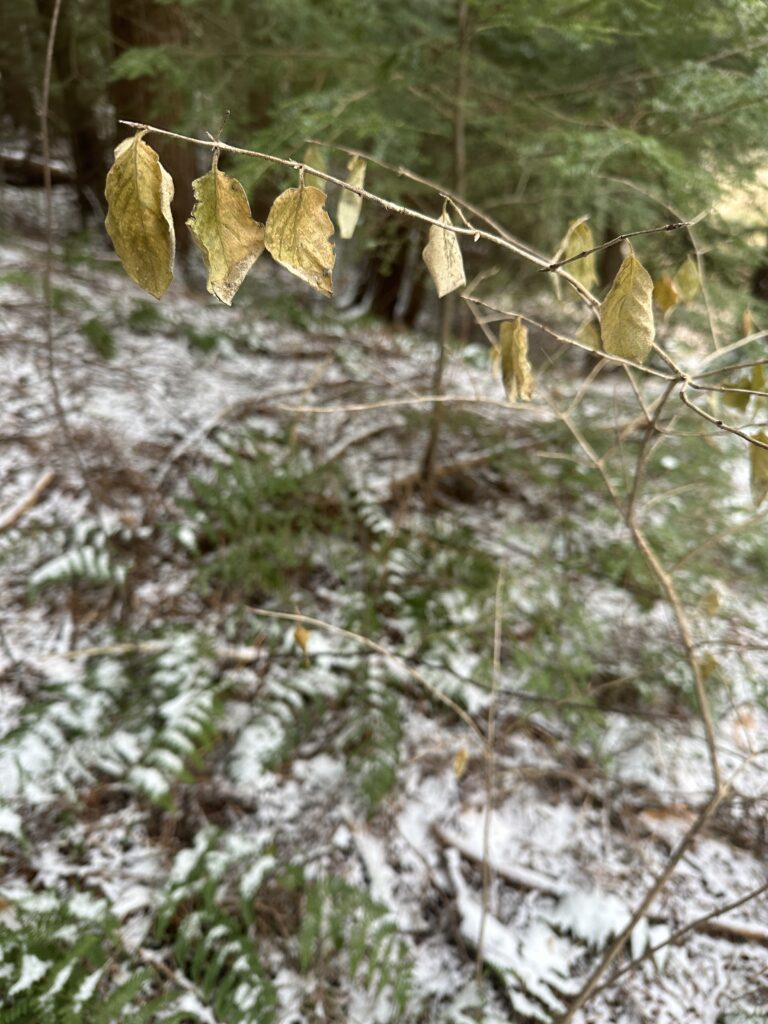
buckthorn bush.
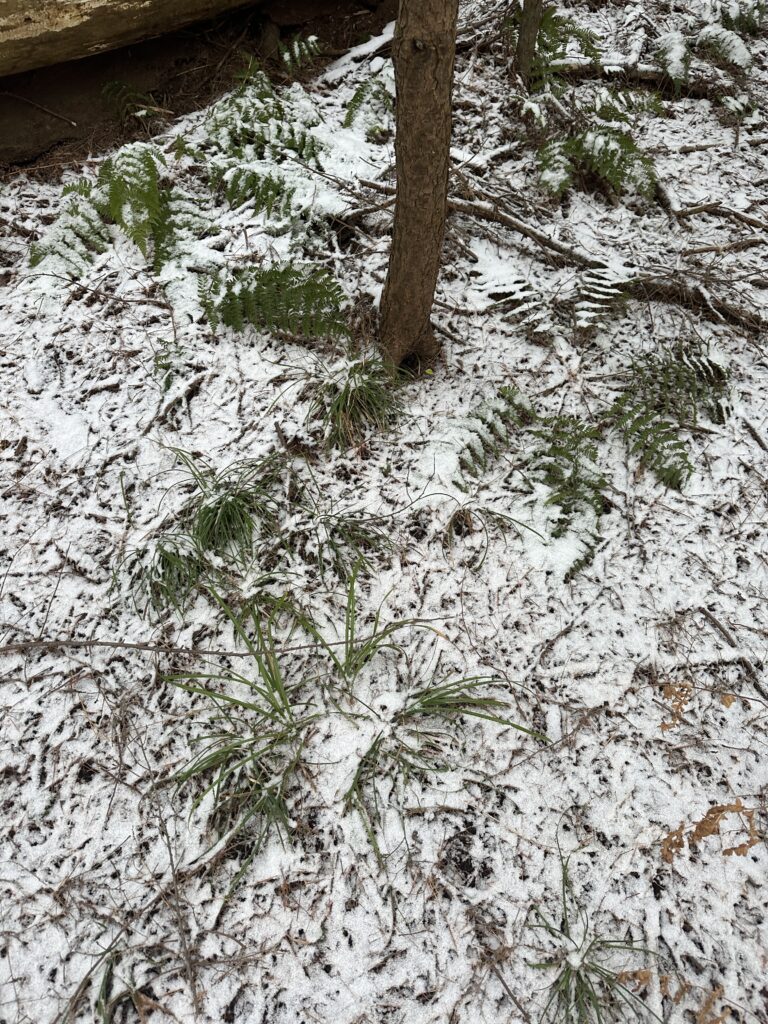
in the December chapter of Naturally
Curious is intermediate wood fern, an evergreen fern. I think that might be what these ferns are.
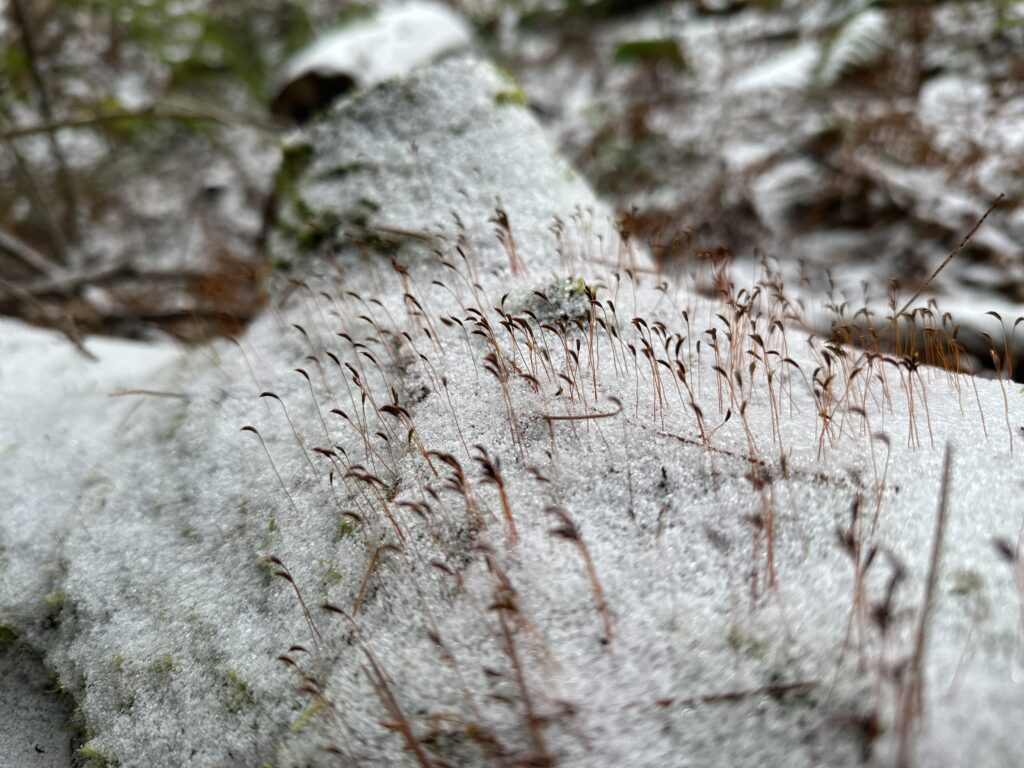
ceratodon purpureus, a type of moss
I also saw three different types of mushrooms.
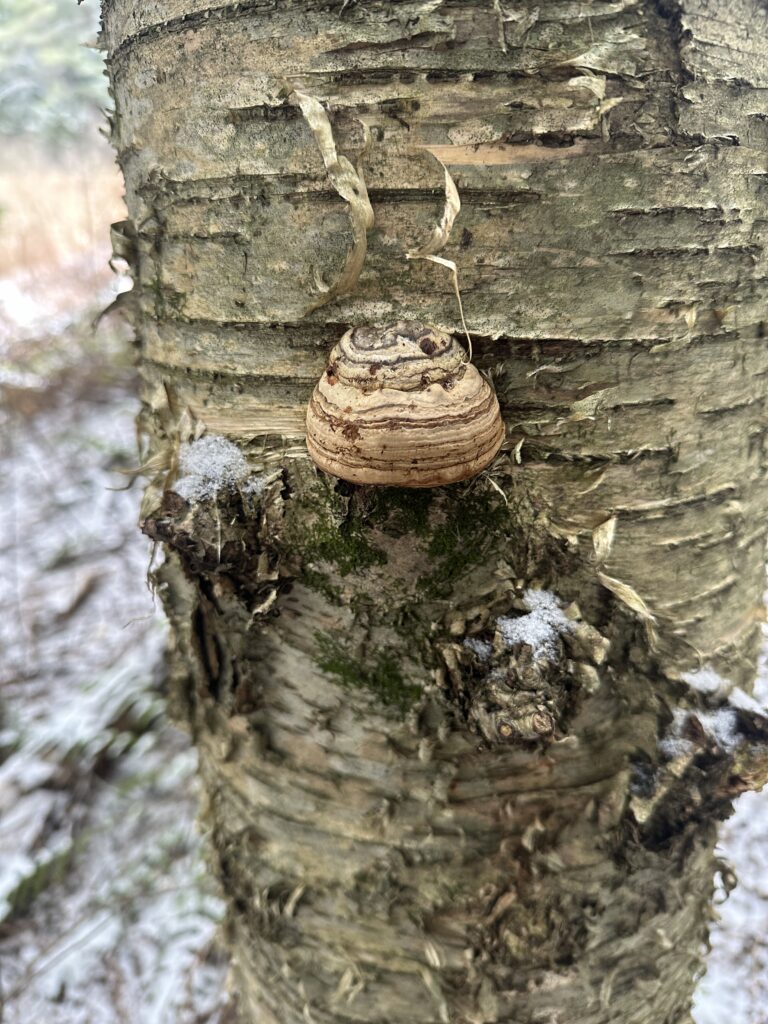
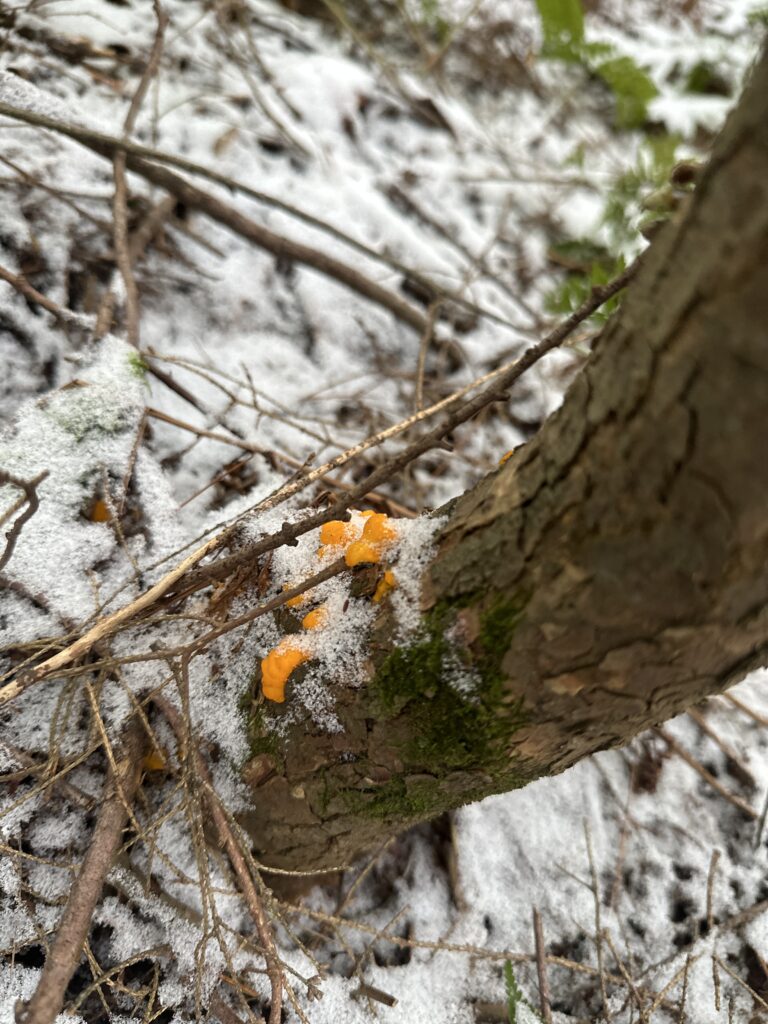
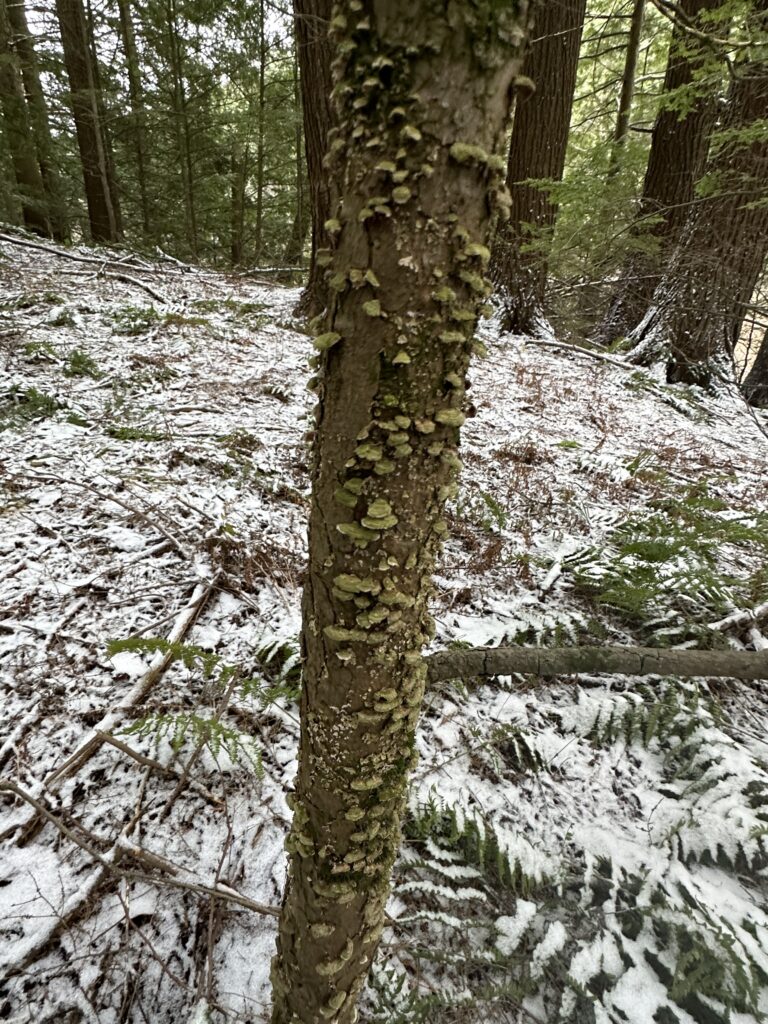
Reflection: What aspects of your phenology place do you enjoy the
most?
I really enjoy the diversity of my spot. The main area is a coniferous forest, but it also includes the brook and the edge of a meadow-y area, which I think is more interesting. It also has a lot of snags and fallen branches, which adds more interest. There’s one giant log that seems to be a hub of activity, with pine cone remnants or animal tracks, and I always enjoy looking at it to see what may have been happening.
Perhaps my favorite thing to do at my site is to listen to the birds. I’m looking forward to hearing more birds again as the migratory birds start to return in March, but I think this time of year also presents a good opportunity to practice identifying birds by ear. With less species around, there’s less for me to immediately learn. Visiting my spot has reinvigorated my desire to acquire this skill, and I’m looking forward to practicing!