I live in Essex, Vermont. Behind my neighborhood, there’s a network of trails. I picked a spot in those woods for my phenology assignment. During 2020, I walked in those woods regularly. That spring, I went almost daily. Because it helped keep me grounded, I feel a lot of gratitude for that space. The specific spot I chose is also where I’ve seen a barred owl before, and that was a special moment that deepened my feeling of connection to the place. Here’s where my spot is located:
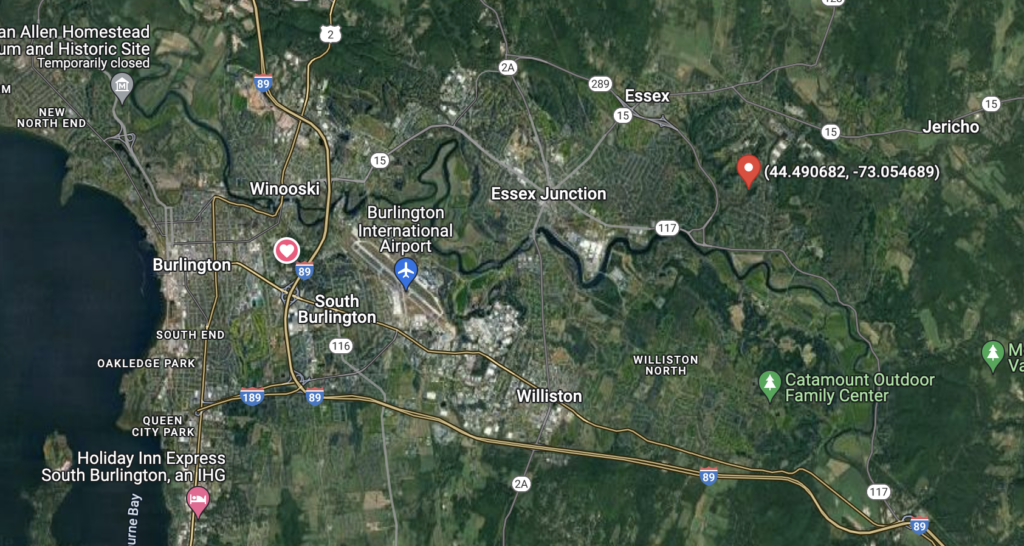
Like Centennial Woods, it is also in the Winooski River basin. Both of my spots are also located next to bodies of water, but they are different. My Centennial Woods spot is forest and then marsh, while my spot at home is where two small streams converge in the forest.
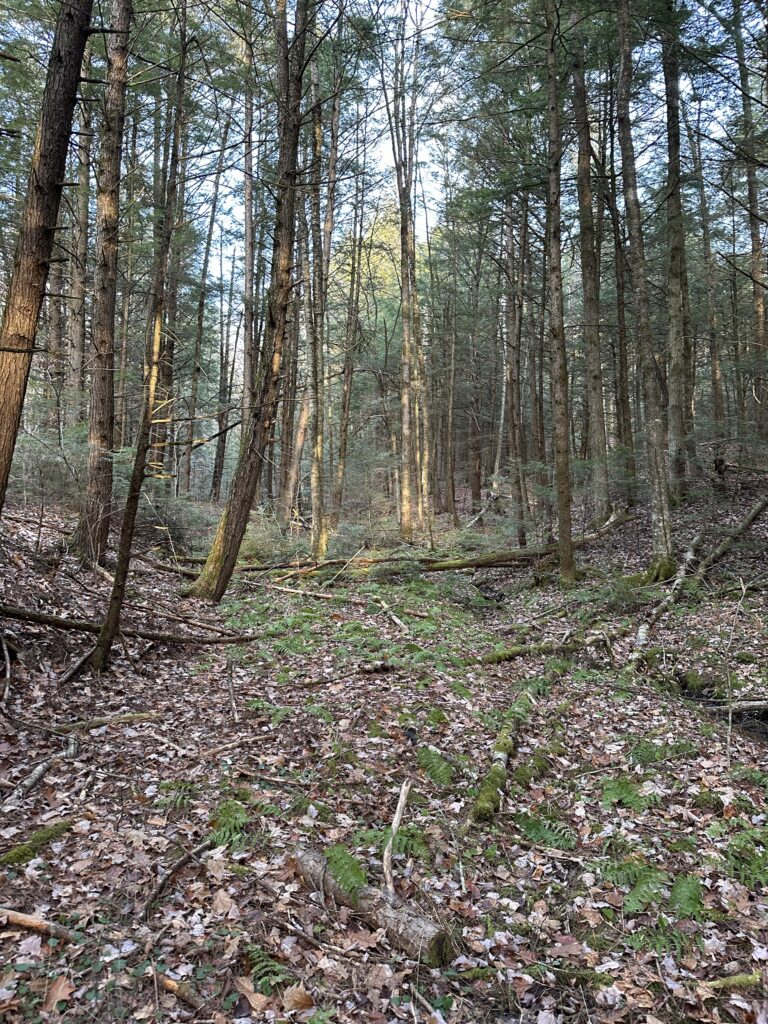
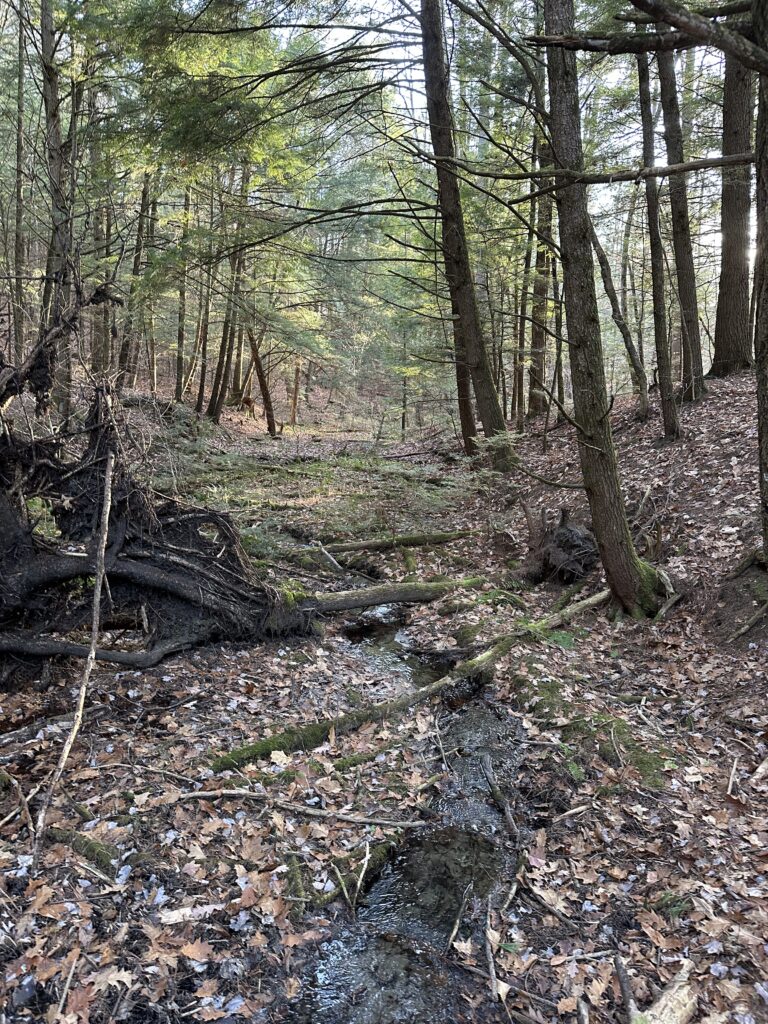
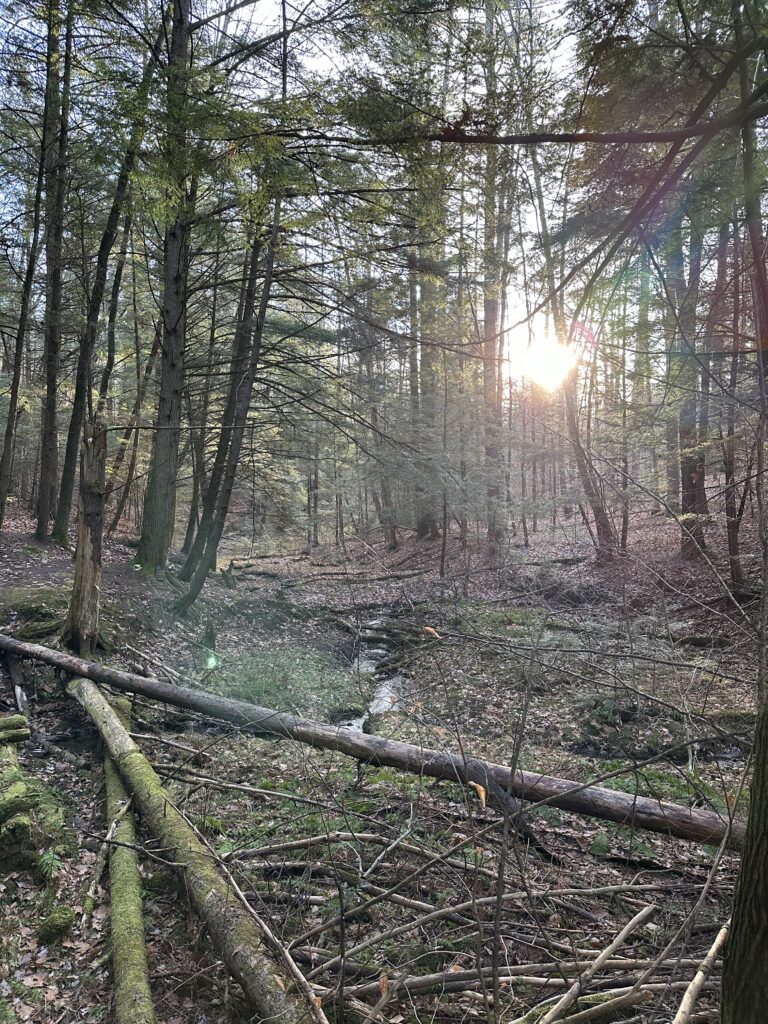
While the walk down to my spot at home goes through areas with a mixture of coniferous trees, beech, red and white oak, and red maple, the spot itself is dominated by pine trees. There are a few paper birch, but some of them are standing snags, and there are probably as many fallen birch trees as standing ones. The pine trees have likely shaded them out. The remaining standing birch trees are located along the stream banks, where there’s more light. There are still some beech, but much less than on the walk down.
Pinecone pieces scatter the ground, just like in my Centennial Woods spot. However, unlike Centennial Woods, there doesn’t seem to be a singular dining spot, as the pieces are scattered everywhere.
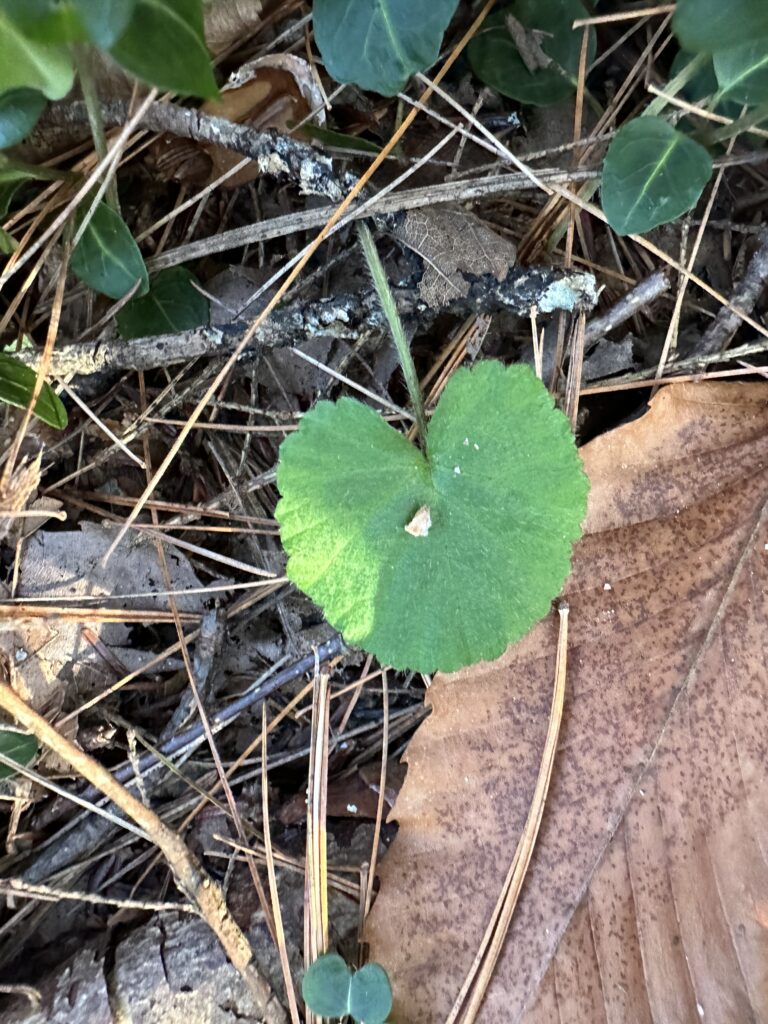
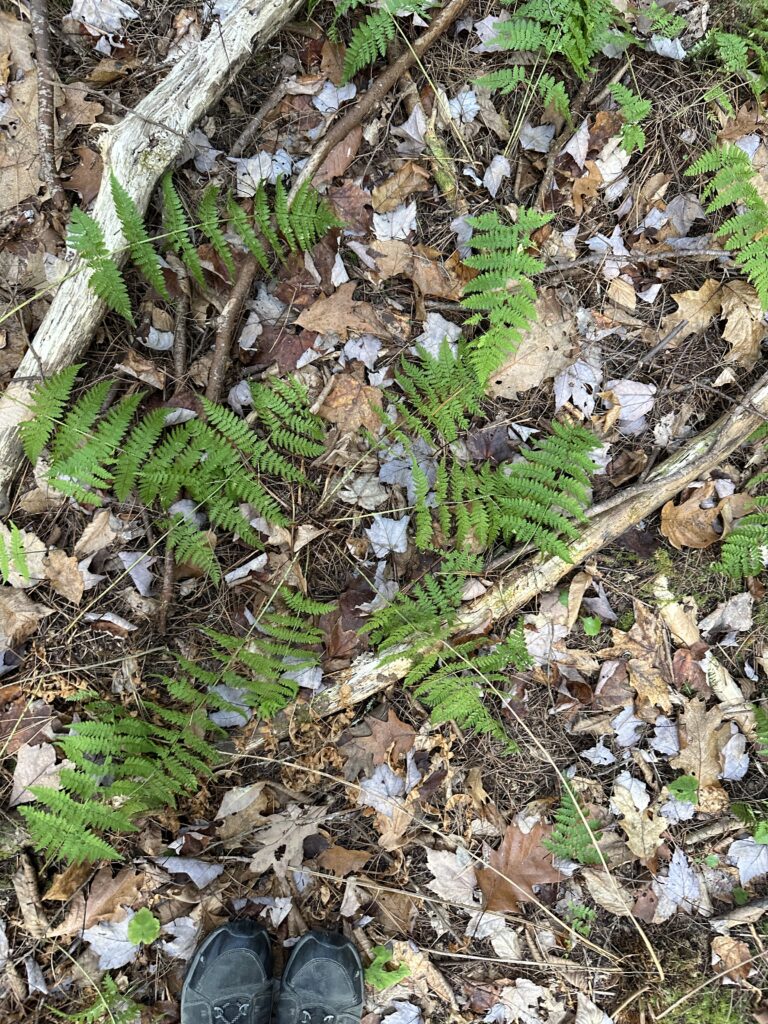
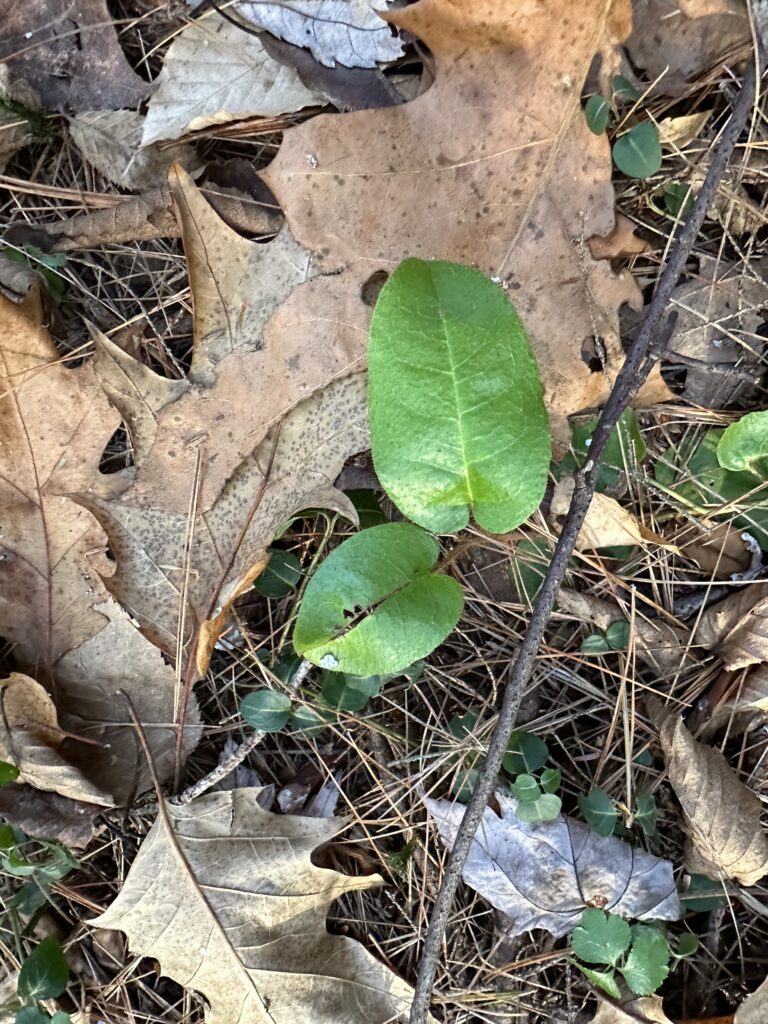
There is little ground cover, probably because the pine needles make the soil acidic. What remains though is still partly green – even though the leaves on the ground are crusted underneath with frost.
Another interesting thing that I noticed was that there’s a large depression where the stream is, and that it’s much wider than the stream itself. It’s probably an indication of how the stream’s boundaries have changed over time. In another section along the stream, I noticed a sandy deposition on one side and erosion on the other, which shows how the stream is creating more meanders.

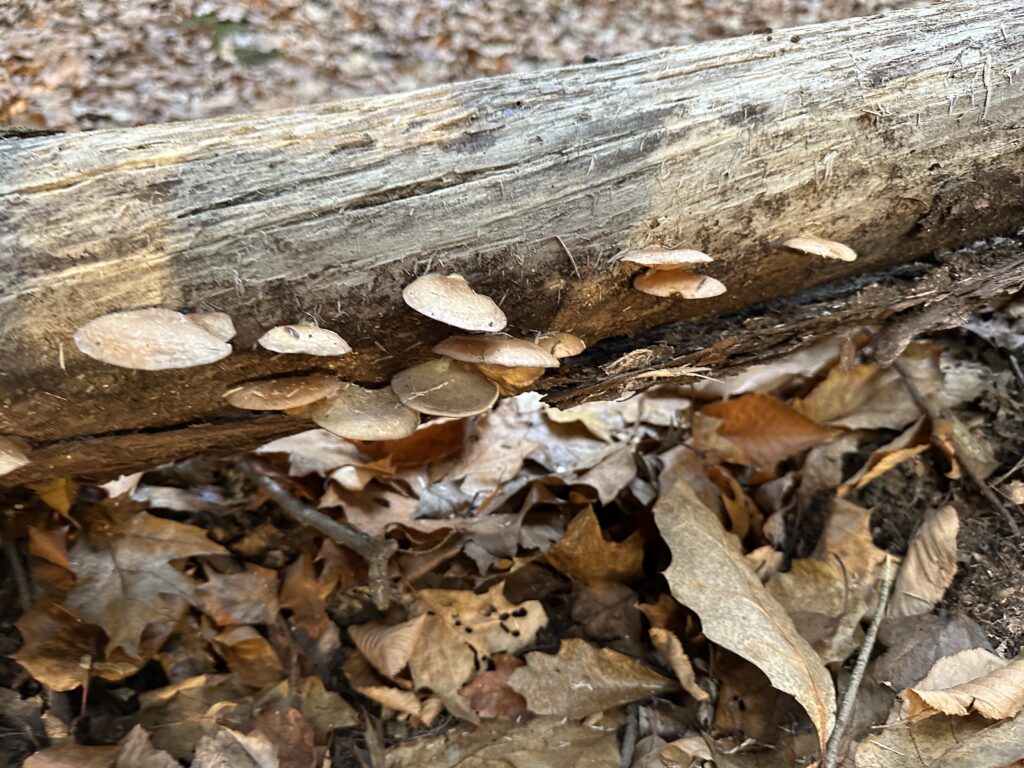
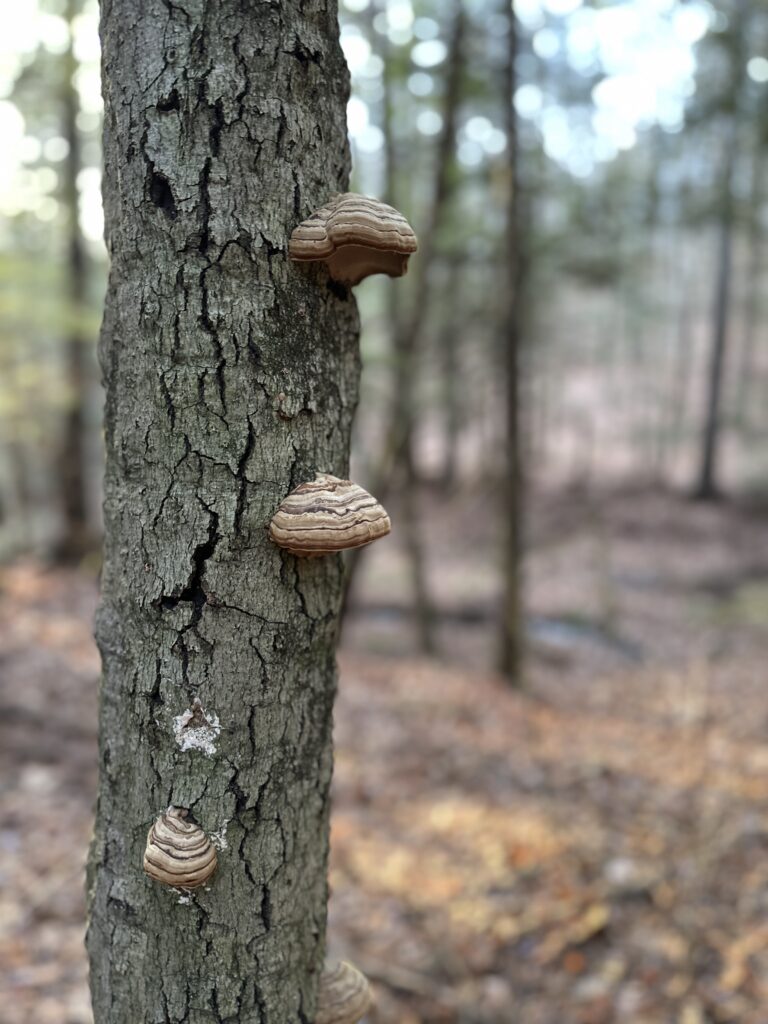
I also noticed some cool mushrooms!
It seems like this spot is in a similar place phenologically to my Centennial Woods spot, which makes sense. They’re both conifer-dominated forests in urbanized areas of the Winooski River Basin. One big difference that I noticed was the lack of birdsong in my spot at home. I wasn’t expecting that. However, my family has noticed that species that typically visit our feeders at this time of year, like black-capped chickadees and tufted titmice, haven’t been very present, so that aligns with their observations. I wonder why they haven’t been at the feeder. It could be a good thing, a sign that there’s enough food that they don’t need to risk the open areas around the feeder, or it could be a bad sign of a population decrease.
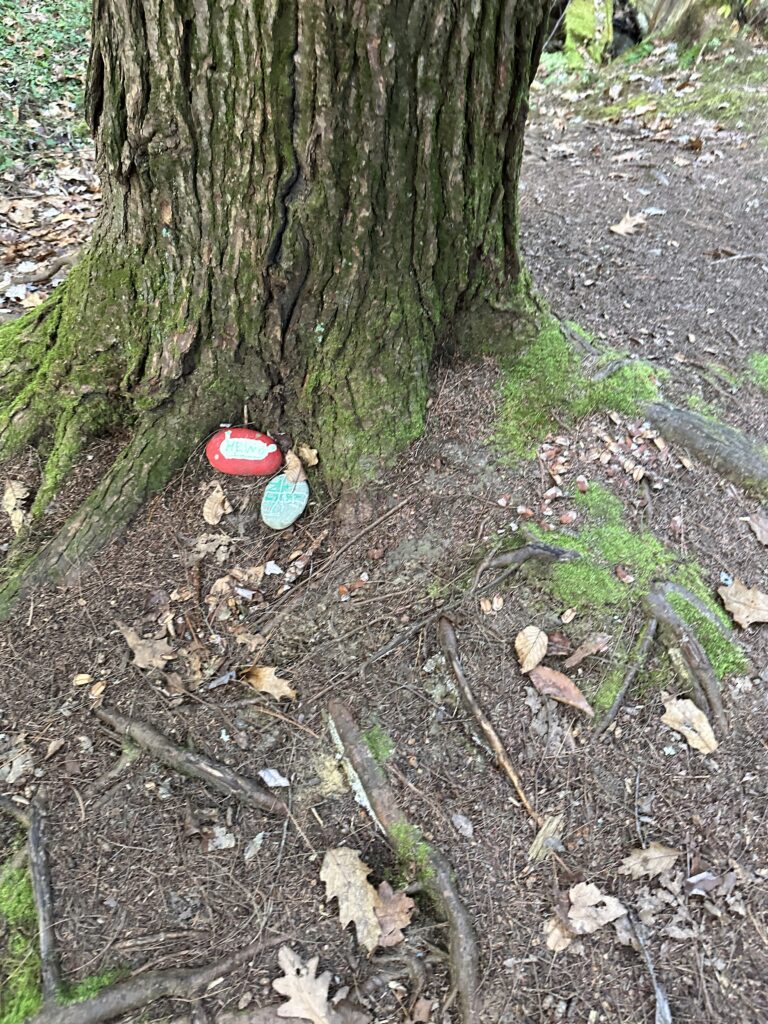
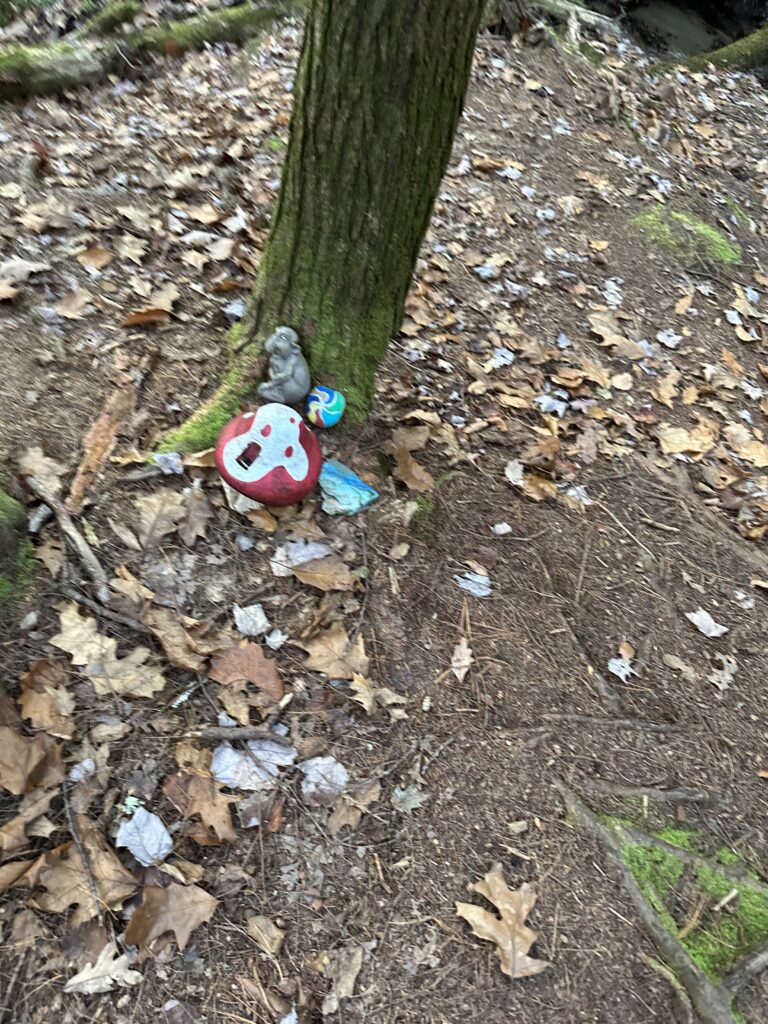
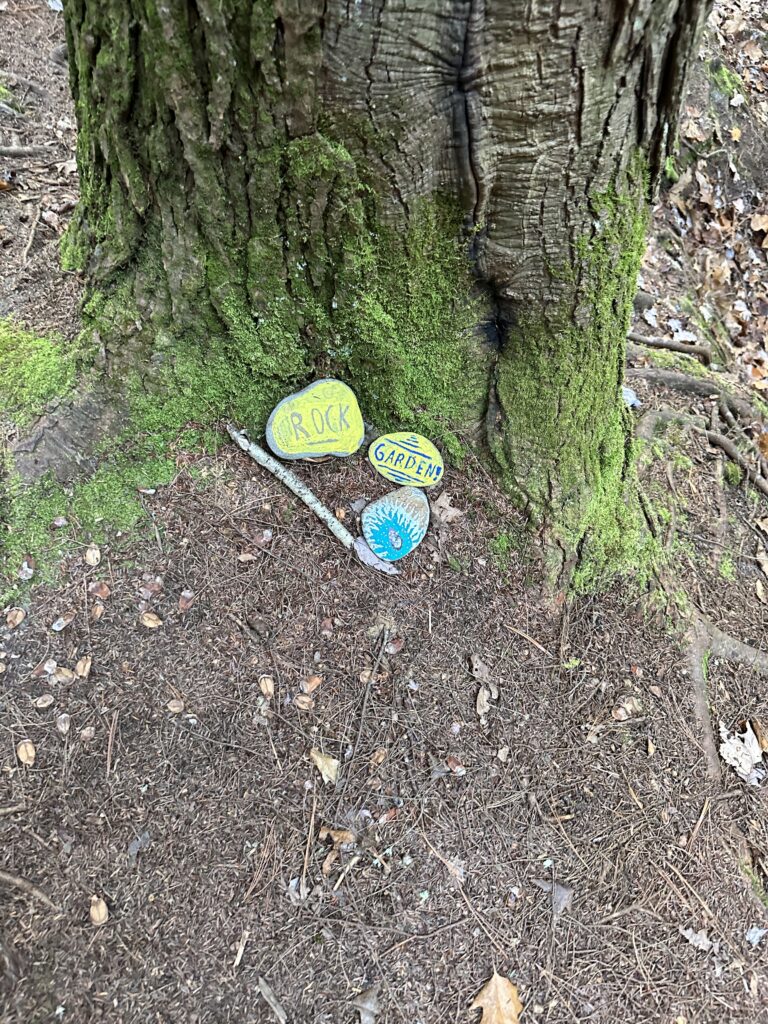
I thought about leaving a gift in response to the Honorable Harvest reading, but I decided to wait until I had a more worthy gift, something that would benefit the ecosystem. Some people had already left things in this spot, painted rocks and a fairy house, which are important ways for people to feel connected to the land, but are not actions that benefit the land the way that actions like spreading wild leeks, like Kimmerer does, do.