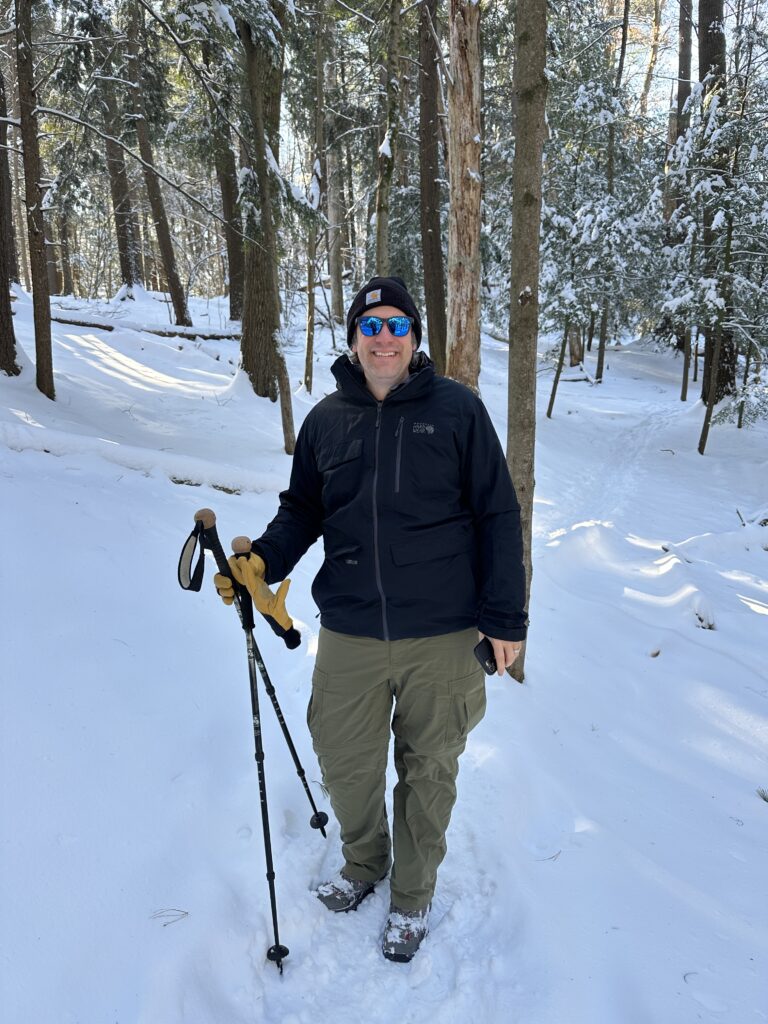
My family lives nearby, so I see them relatively frequently. My dad joined me on this trip. It was his first time visiting my phenology site, so it was nice to show him what I’d been up to.
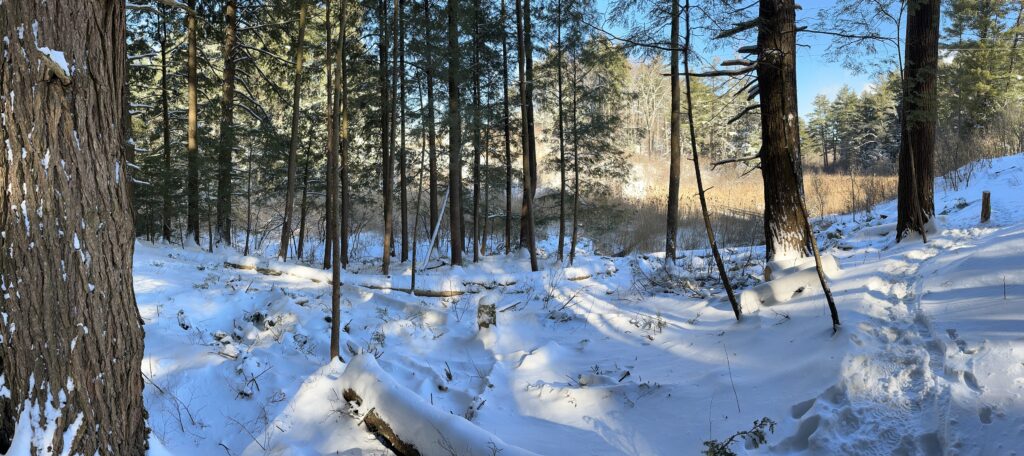
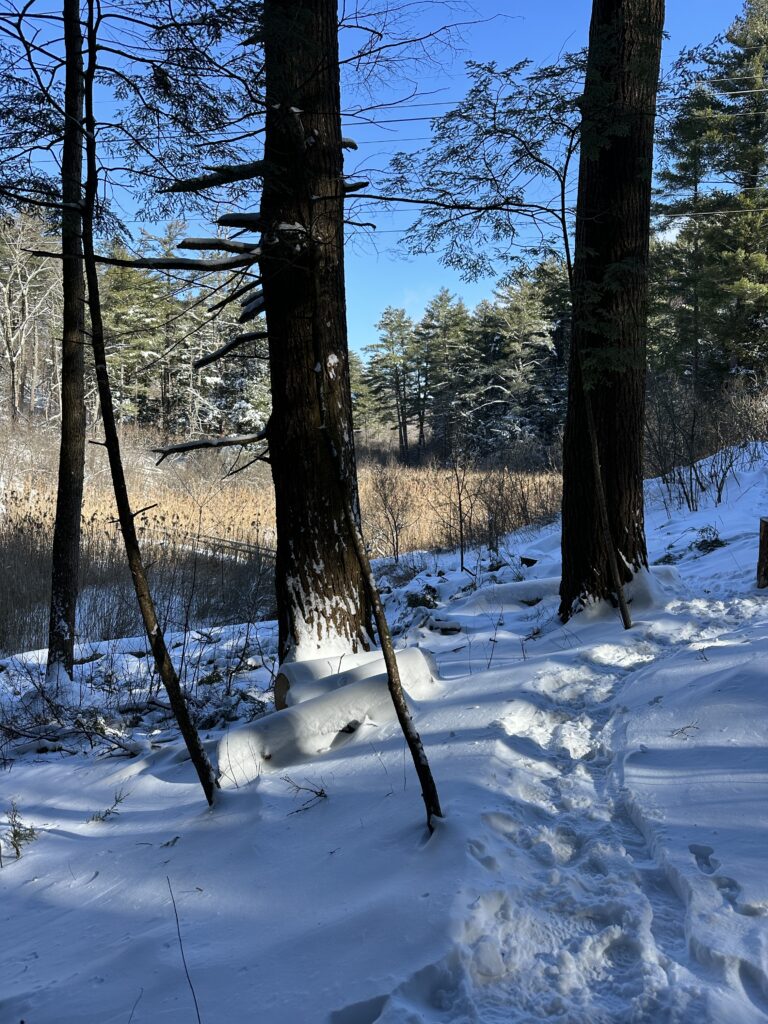
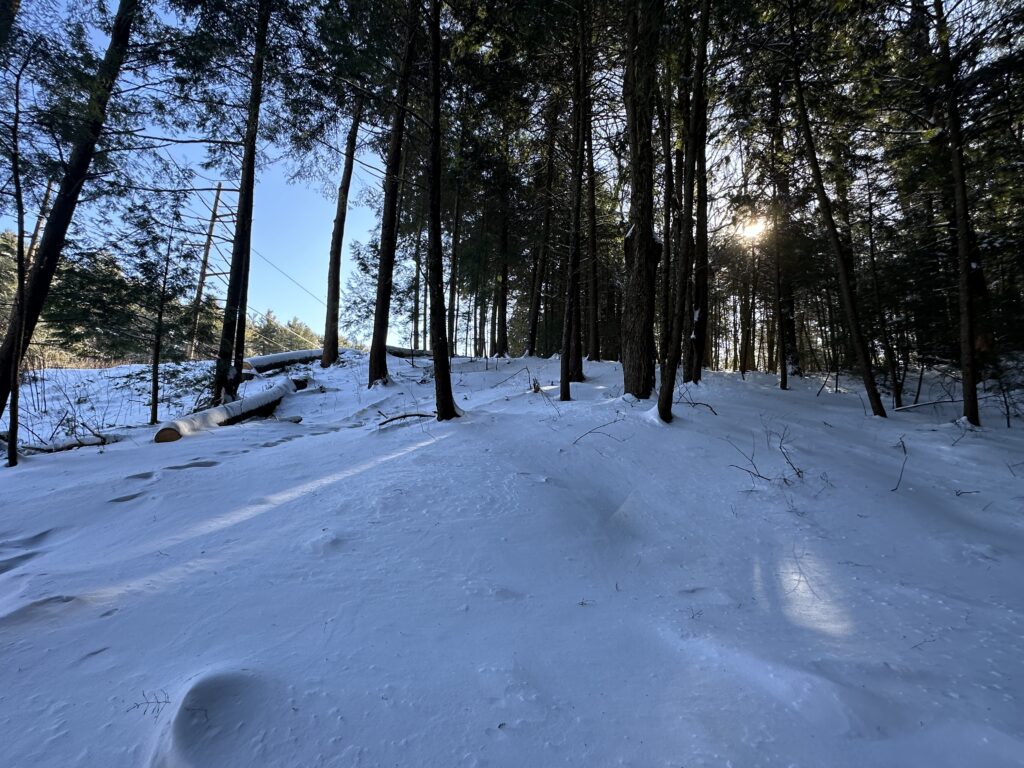
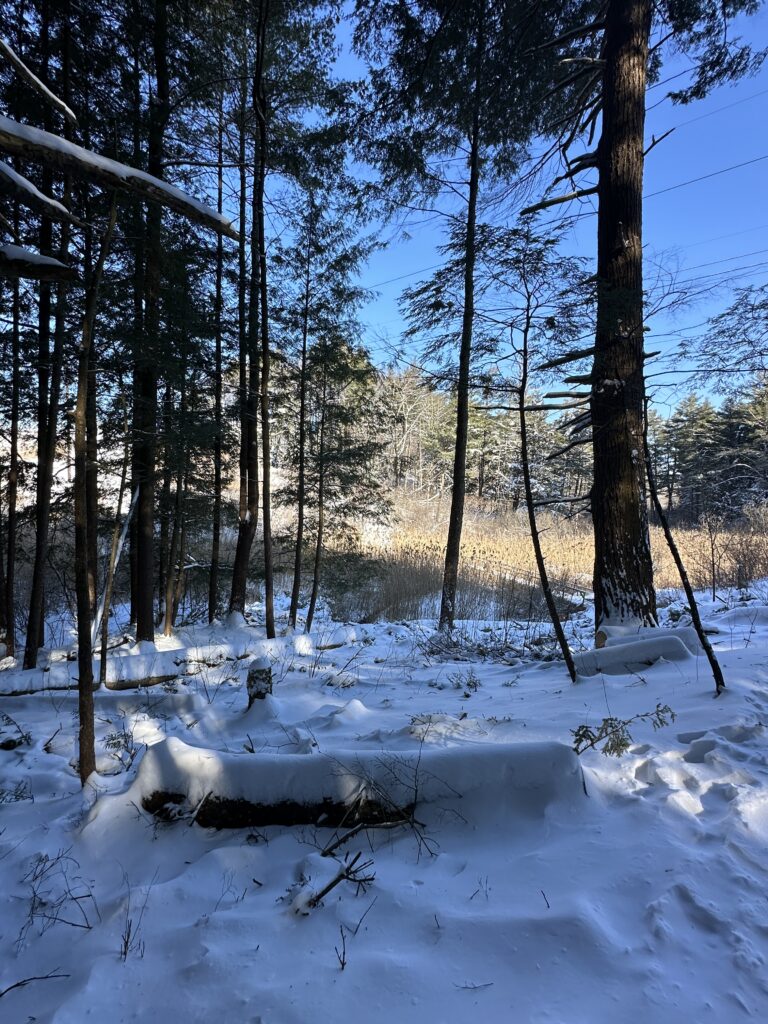
I visited my site on the 24th, after the official start of spring with the equinox on the 19th. However, it didn’t look very spring-like during my visit. A fresh layer of snow coated the ground, and it was 23 degrees Fahrenheit. However, when I looked and listened a little closer, I was able to see signs of spring.
As I entered my spot, I was startled by the calls of a pair of Canadian geese flying over the marshy area along the edge of my site. It sounded like they squawked “hello!”
I heard more songbirds on the walk to my site than I usually do, but I was also at my site earlier than usual, and birds are more active in the mornings. But still, it helped it feel like spring. At my site, in addition to the Canadian geese, I heard:
- Black-capped chickadee
- Northern cardinal
- Song sparrow
- Red-breasted nuthatch
- Pine siskin
- White-throated sparrow
The first four species on this list are year-round residents of this area. In order to find more information about the other species, I looked at the Cornell Lab of Ornithology’s resource “Birds of the World.” It’s a fantastic website! Here’s what I learned:
Pine siskins don’t have a well-defined range or migration time, since they’re an irruptive species, but they typically move north starting in February. According to the Merlin Bird ID app, it’s rare to hear them here at this time of year.
The white-throated sparrows live in southern Vermont year-round, while they only live in northern Vermont, including the Burlington area, during breeding season. However, they’re not typically present in this area until mid-April, so it’s surprising to see them this early. The Merlin Bird ID app noted the sighting as rare.
I didn’t see signs of any other animals, however. The snow had a slight crust and was untouched except for the trail, which was filled with humans’ tracks.
While my attempt to track animals was unsuccessful, I did see many tree buds.
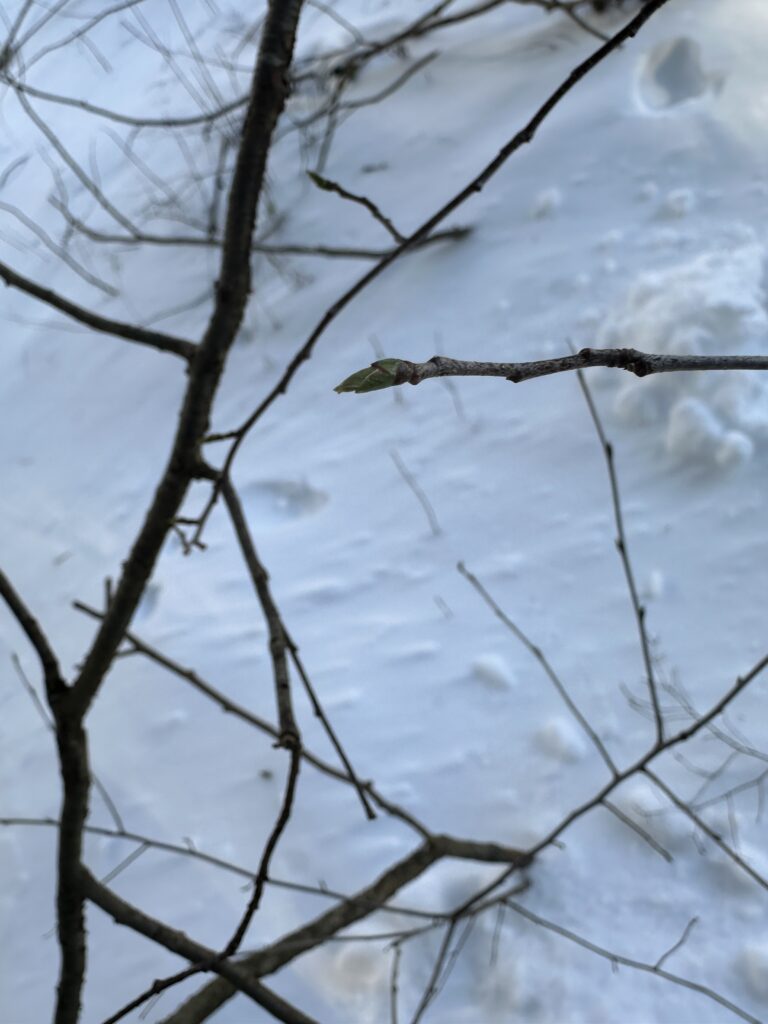
The first sapling that I spotted with buds had green, alternate buds and grey bark. I haven’t been able to identify it, unfortunately.
The second sapling was located alongside a large hemlock tree. It’s probably shade tolerant! It had a slightly fuzzy light brown bud with grey-brown bark. I think it may be a black oak.
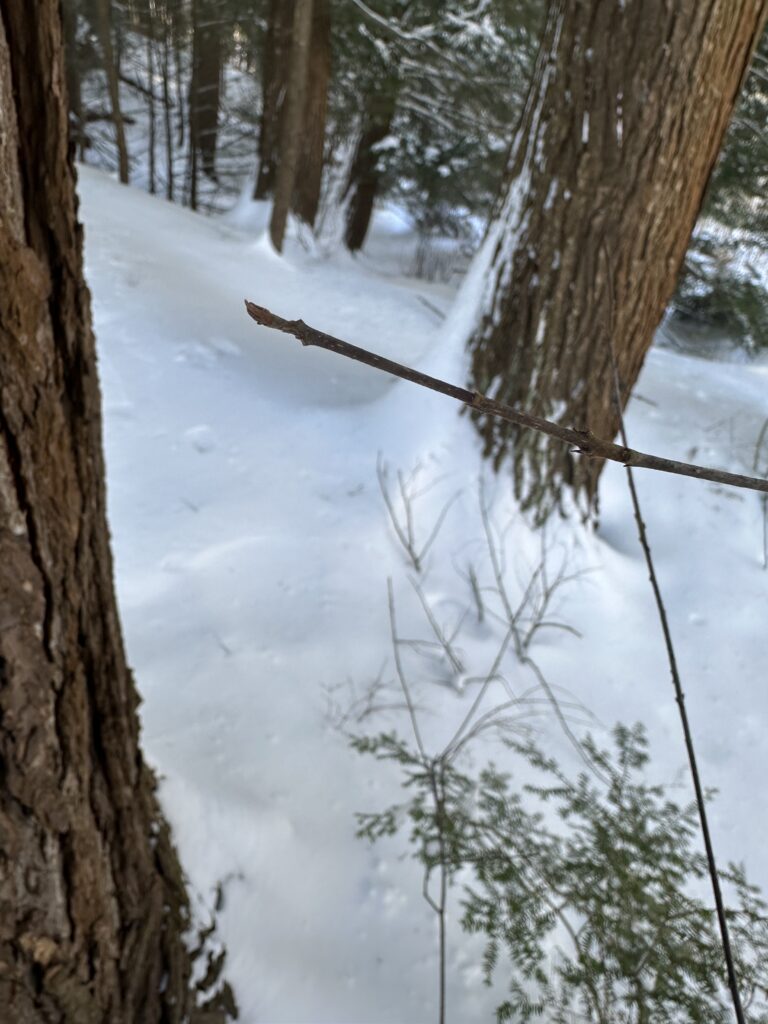
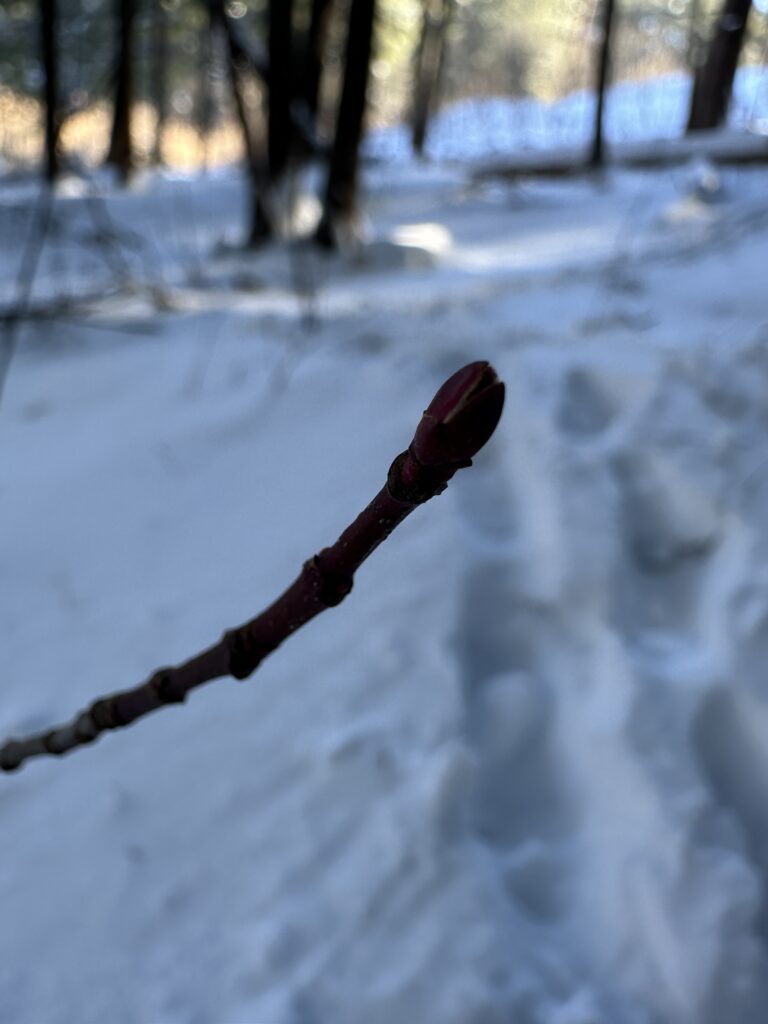
The bud in this photo was more vibrantly pink/red than it appears. It was hard to get it in-focus! The bud is just starting to split open and reveal the green interior. I think it’s a red maple. Some of the branches had cleanly broken-off ends. I think something, perhaps a deer, ate some of the buds.
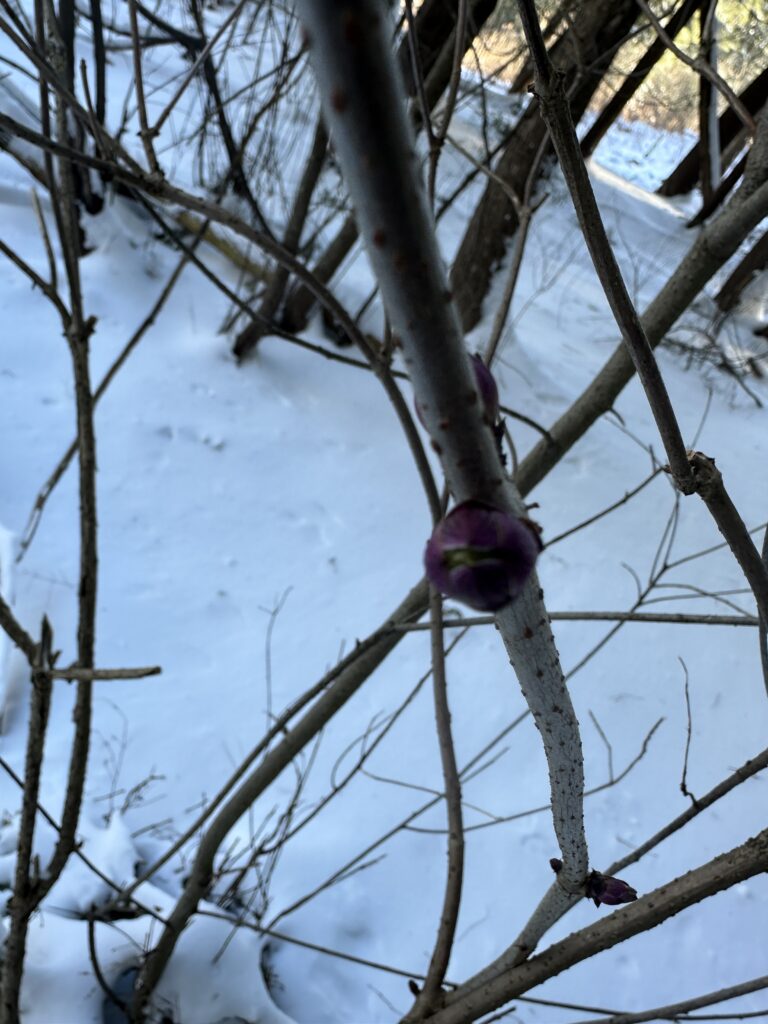
The final sapling that I looked at had fat, spherical pink buds and light grey bark with raised lenticels. These buds were also starting to open. I think it is a basswood. This also makes sense because it’s very close to the stream, and basswood likes moist soils.
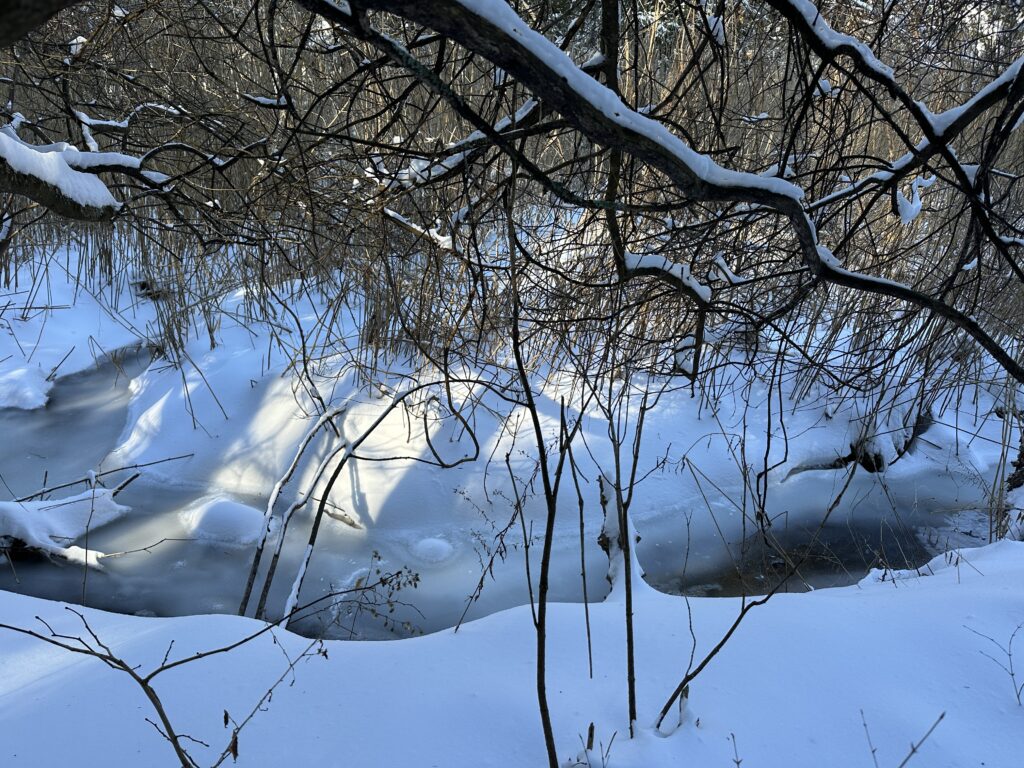
The stream was mostly frozen on top in my section, with only one small hole. Since other sections of the stream aren’t frozen, I wonder if this is one possible explanation for the surprising lack of tracks near my site. Did the animals go to a more accessible water source?