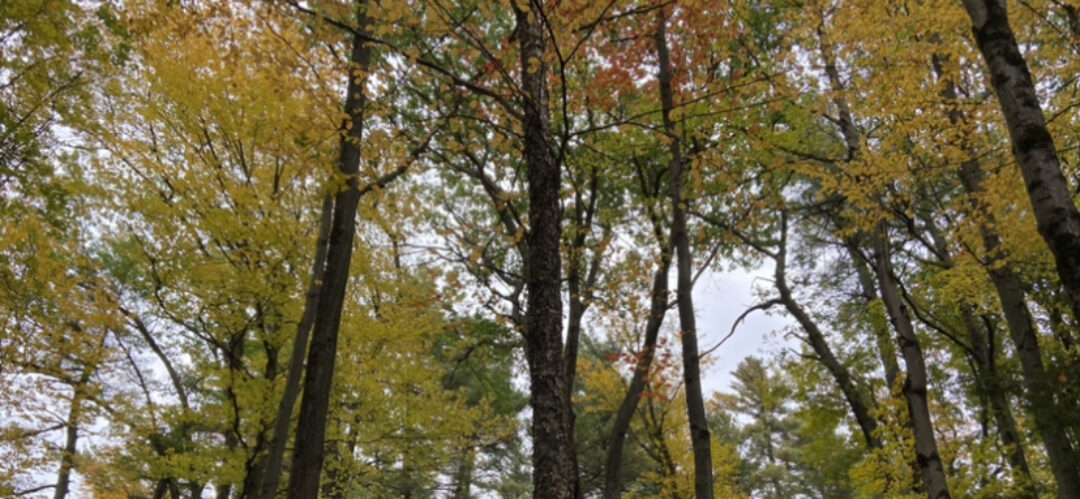
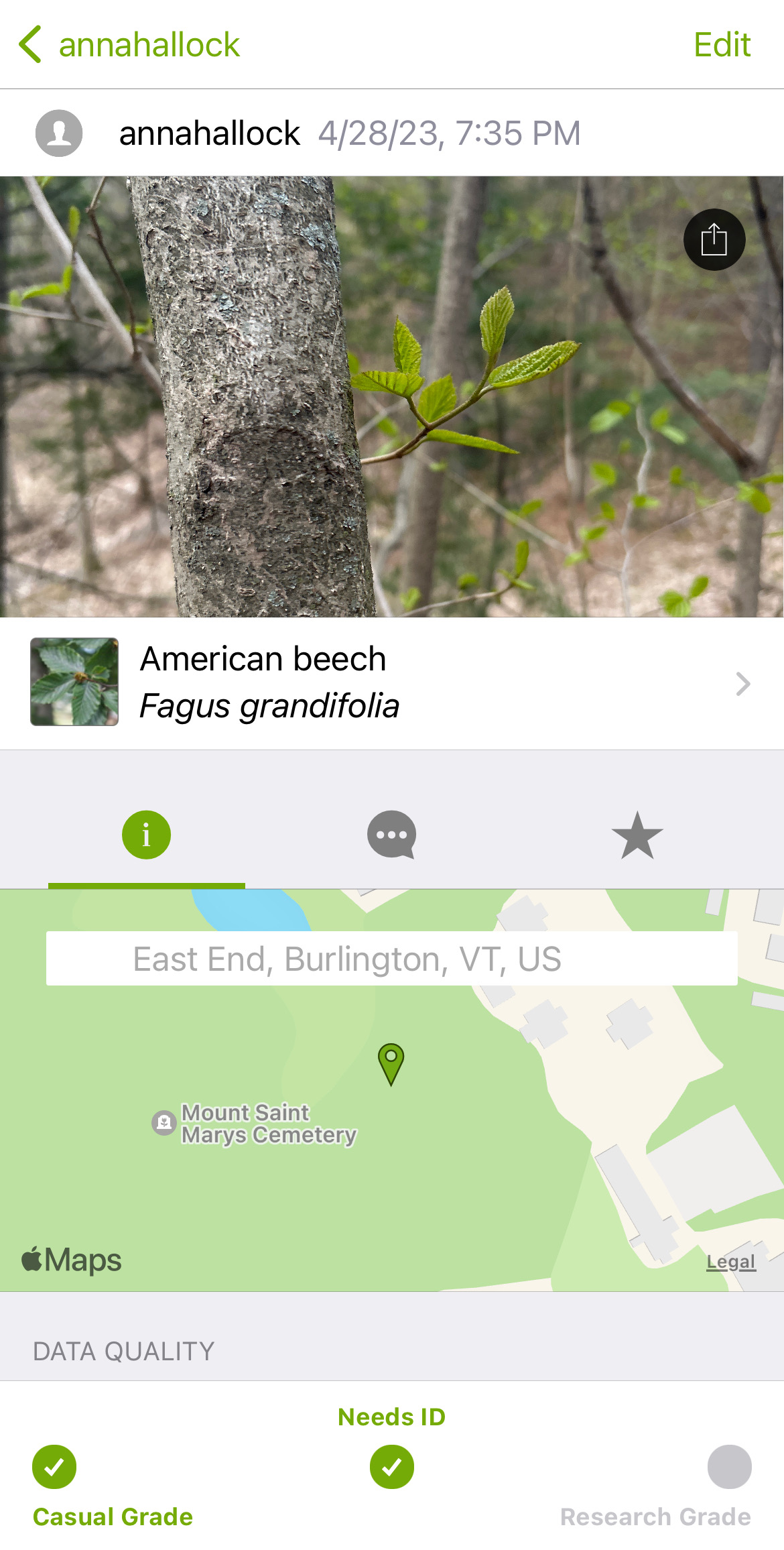
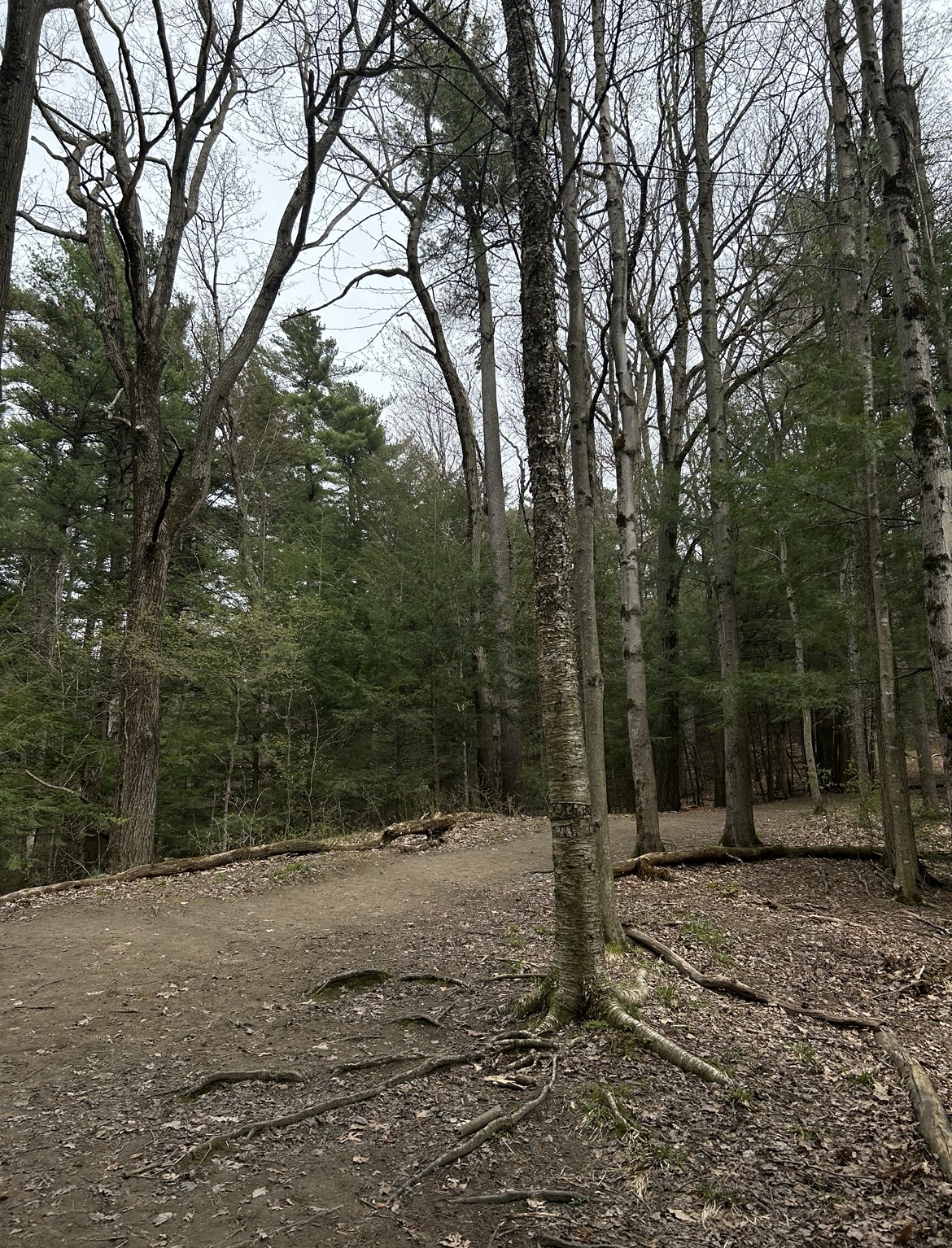
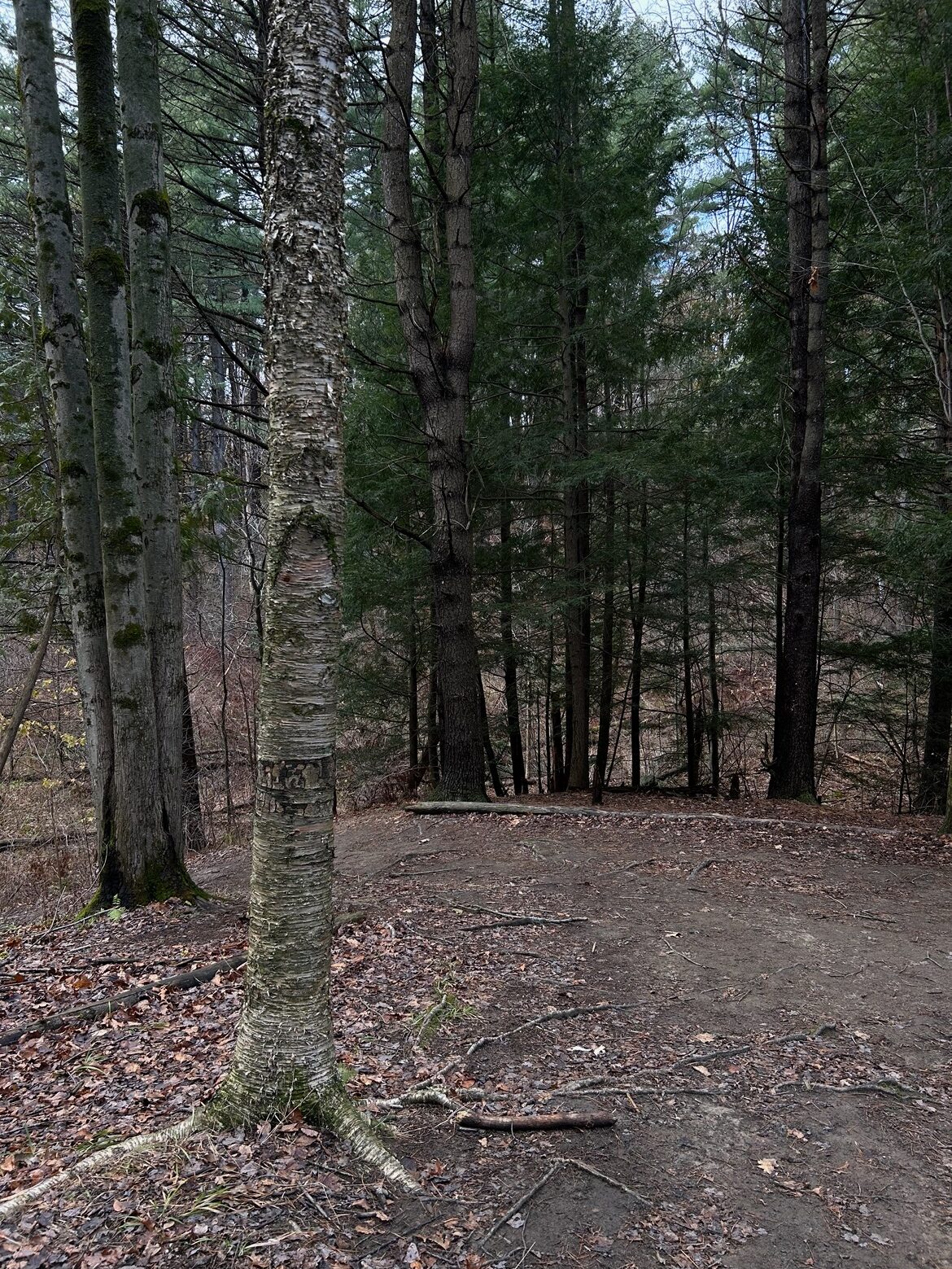
During the iNaturalist BioBlitz, I was not able to participate too much over the four-day period. When I did remember that it was going on, I happened to be in the woods beside Trinity Campus and identified an American beech tree.
My iNaturalist post.
I found that iNaturalist was a super easy platform to use. It was nice when the app would suggest species that the picture might be of, and the suggestions were usually pretty accurate. While I definitely encountered more than just American beeches in those woods, I couldn’t 100% identify any other species so I only made one post.
I thought it was really cool to see all of the participation in the BioBlitz from around the globe! It was also fun to compare the different cities and to see that Burlington actually had a high participation rate as compared to some of the other bigger cities!
I’ve enjoyed blogging about my phenology spot and learning how to use iNaturalist throughout the past 2 semesters. I’ll be sure to visit my spot every once in a while to keep up with it 🙂
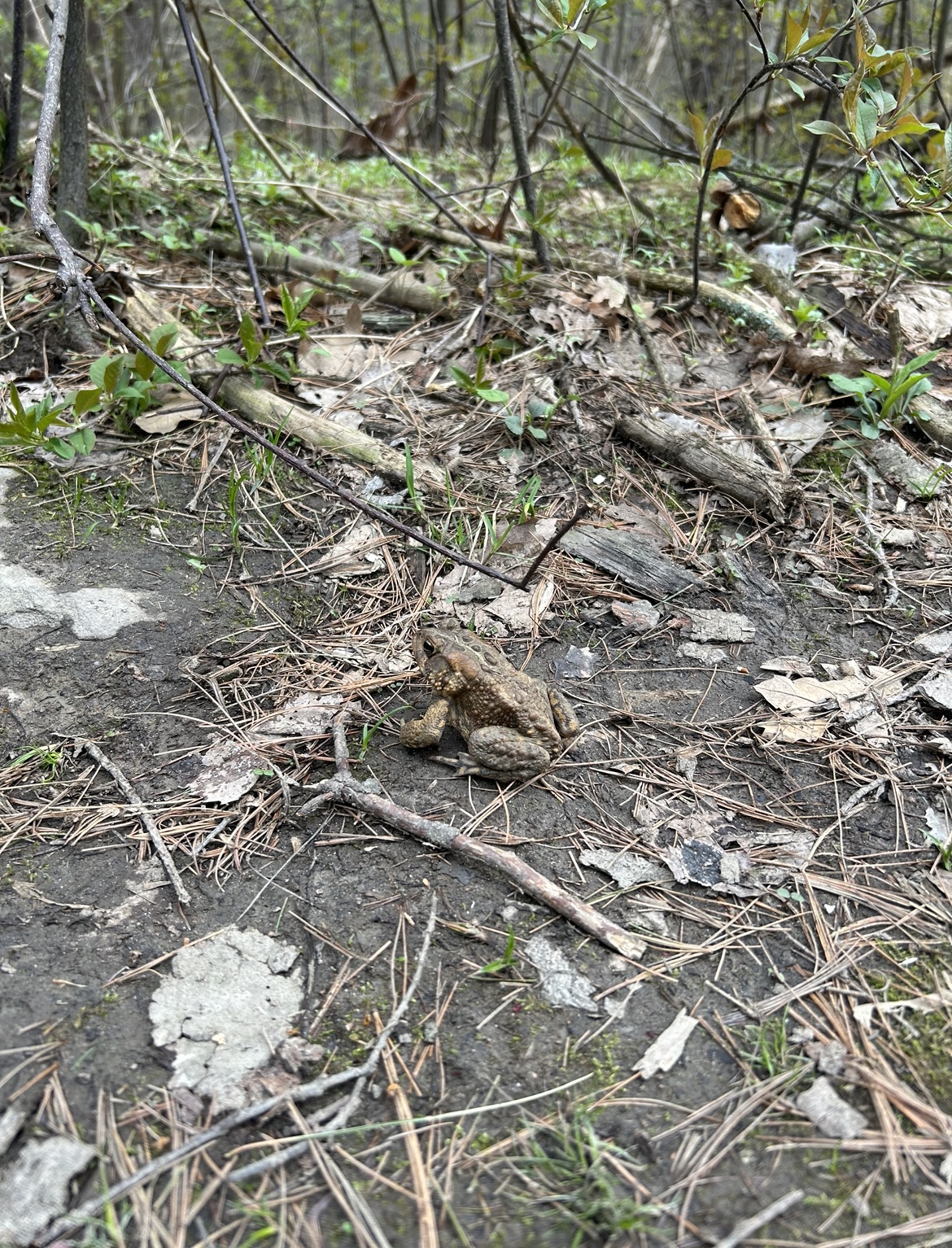
I did my last visit to my phenology site on Saturday, as I knew it was supposed to rain on Sunday. It was a little cloudy and gray, but it was a nice temperature and I even saw a toad on the walk to my spot!
A toad in Centennial Woods.
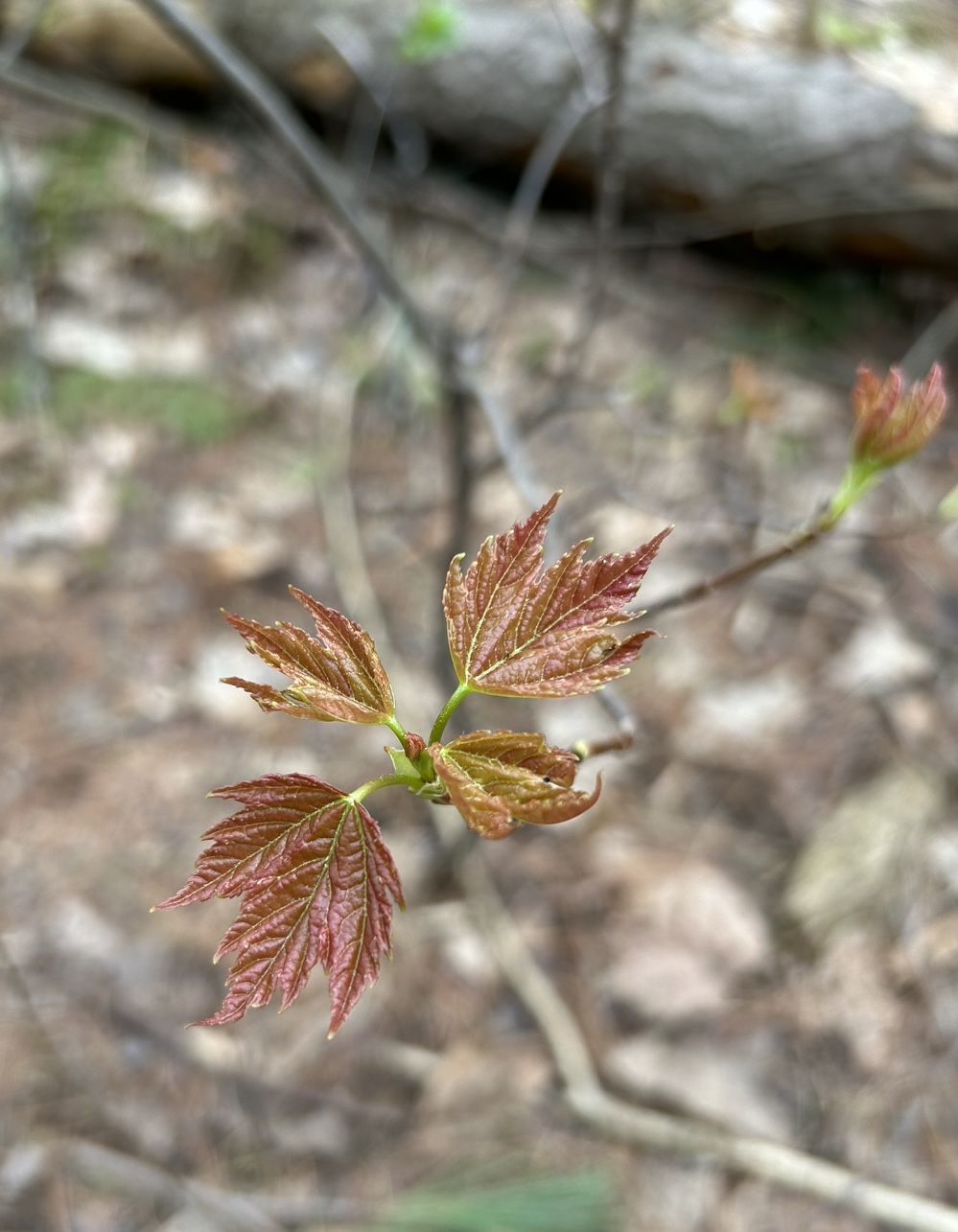
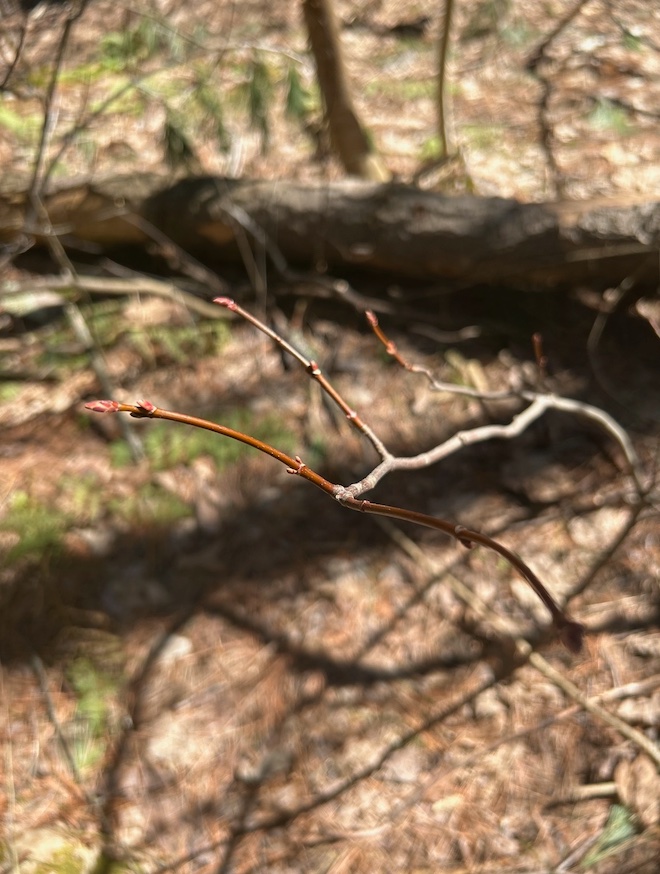
I was also super excited before I even got to my spot because on the way there, I checked back on the tree I had been tracking and it is finally budding! The little leaves were so cute 🙂
My red maple finally budding!
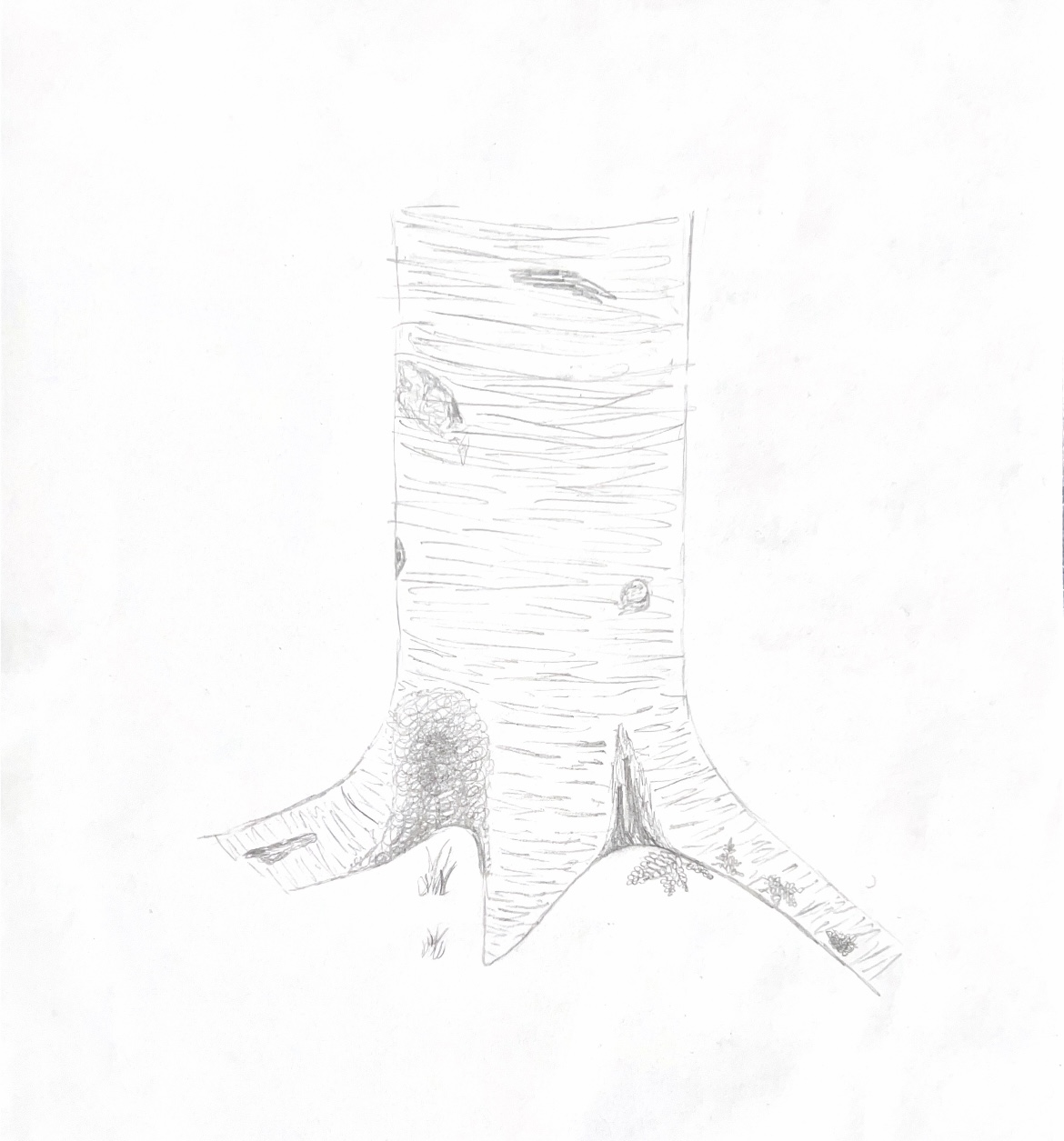
When I made it to my spot, I sat down nearby the yellow birch and did a sketch of its bottom trunk/roots and bark, which I think is so pretty and interesting.
My sit-sketch of the yellow birch tree.
It was really nice to be back at my spot after so long, and now I can see how much it has changed over the past 6 months! The most obvious phenological change has been that of the trees. I’ve seen the trees’ leaves go from green to red and orange to brown and fallen on the ground to (finally) budding again! I’ve also noticed more animal activity now versus in the winter, similar to the beginning of fall semester. Of course, there has also been the transition from fall (with green and rain) to winter (brown and snow) to spring (brown/green and mud).
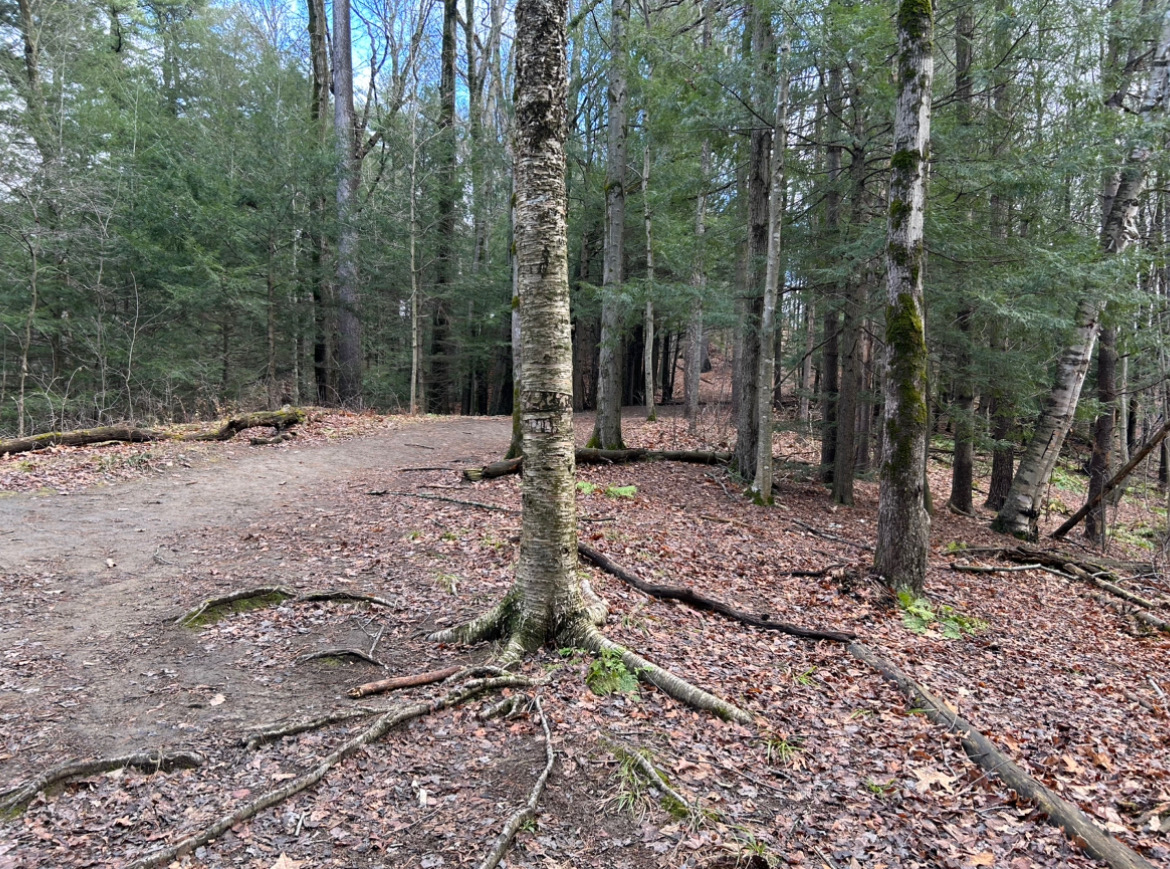
The major landmark I have become familiar with is the yellow birch tree. Last semester, I decided that this tree would be the center of my site and I think it’s fitting because it stands out so much. There are minor landmarks along to way to my spot, too, like now I can recognize the growing red maple I’ve tracked the past month and there is also the one random ditch in the ground on the side of the trail that always reminds me which way to go.
My favorite landmark at my phenology spot: the yellow birch tree.
Nature and culture intertwine here in such a nice way. As my phenology site is a part of Centennial Woods, there are a bunch of people who visit it every day! When I visited on Saturday, I ran into more people than I ever have before, which made me really happy that people are taking advantage of this cute natural spot we have right here in Burlington! There are human-made trails that go through the woods, but much of the woods are left unaltered by humans and you’re able to really experience nature when you visit.
I think after all this time I’ve spent at my spot, I consider myself a part of my place. I really love to visit it and I’ve become so familiar with it – I remember how the first few visits I would have to really think about which trails I was following to get there, but now I can get there off of memory. Also, my spot is so close to campus and accessible that there’s no way I won’t visit in the future, even when it isn’t required. Centennial Woods is such a lovely place to have on UVM’s campus, and I’m very glad I got to spend so much time there!
On Saturday, I took one last visit to my tree. It looked about the same as last week, despite the changes in scenery due to the warmer weather! There was no snow in sight (just mud and dirt), and a very bright sun, which made the walk very enjoyable.
The maple I found a month ago, now in spring conditions!The buds of the red maple.
My tree hasn’t changed very much at all since two weeks ago. It was about the same height (up to my waist) and there are still no signs of flowering, so I made note of that on iNaturalist.
My iNaturalist post.
It was fun to see the progress this tree made, even if it was small. I’m feeling bittersweet about visiting my actual phenology spot in two weeks, and making my last blog post…
When I was taking my walk through Centennial Woods, I kept a very close eye out for the tree that I had found 2 weeks ago. It was a little difficult because there was much less snow on the ground and everything looked different from what I remembered. However, I’m pretty sure I found the same tree as before because it was in the same spot that I remember and also looks very similar. It makes sense that the tree would have changed a little bit since I haven’t been there in a week and it is still growing.
The short little red maple that I found two weeks ago. The buds of the red maple.
I think the tree has gotten a little taller, but it could just be the fact that there is not snow covering half of it, so it just seems taller. However, the buds do look different from the last time I visited, so it’s definitely grown. Again, the red maple had no evidence of flowering, so I noted this on iNaturalist.
My iNaturalist post.
It was wonderful to get another walk through Centennial Woods on such a nice day! I’m looking forward to going back in two more weeks to look at the progress of my little tree. Hopefully it will be even sunnier and warm 🙂
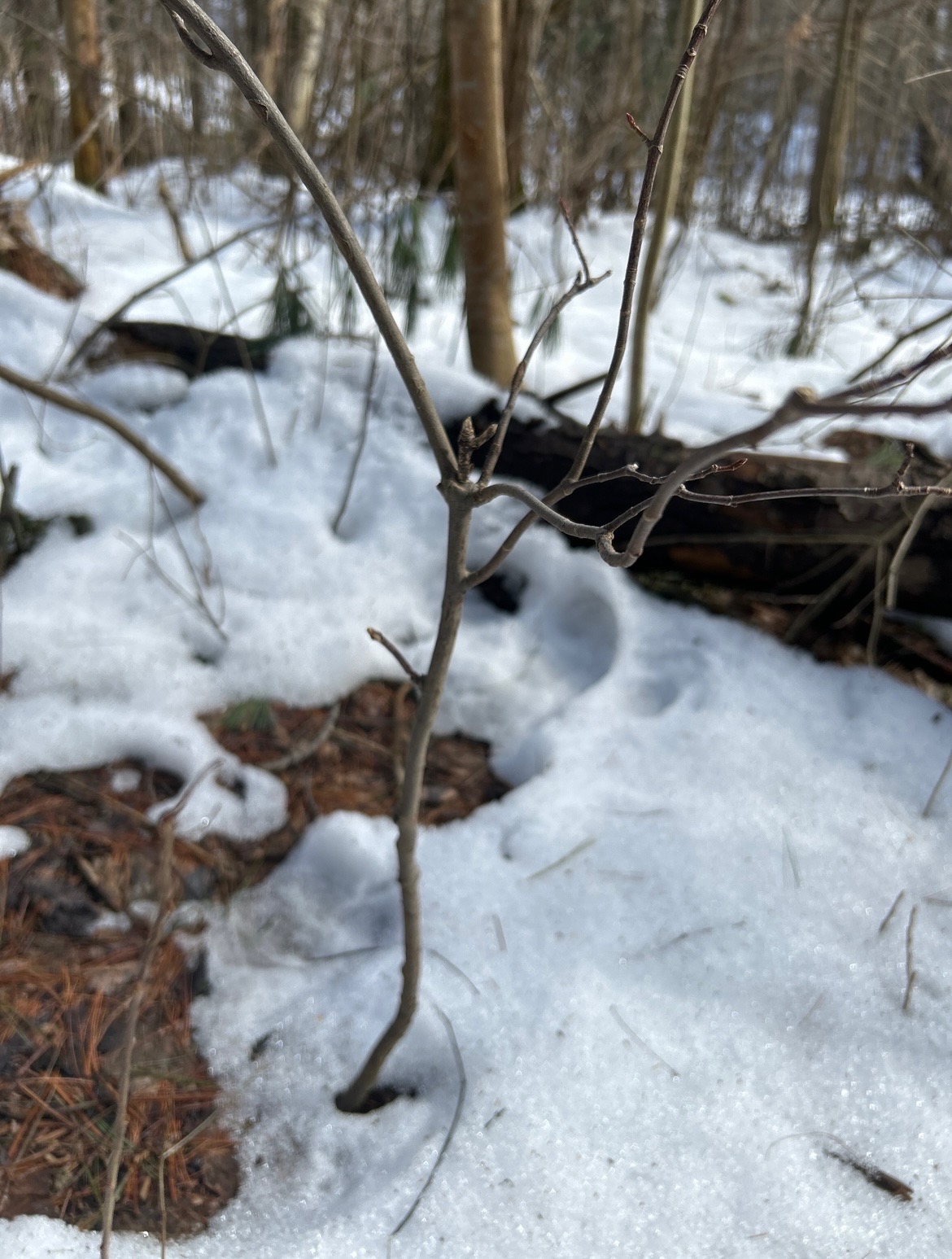
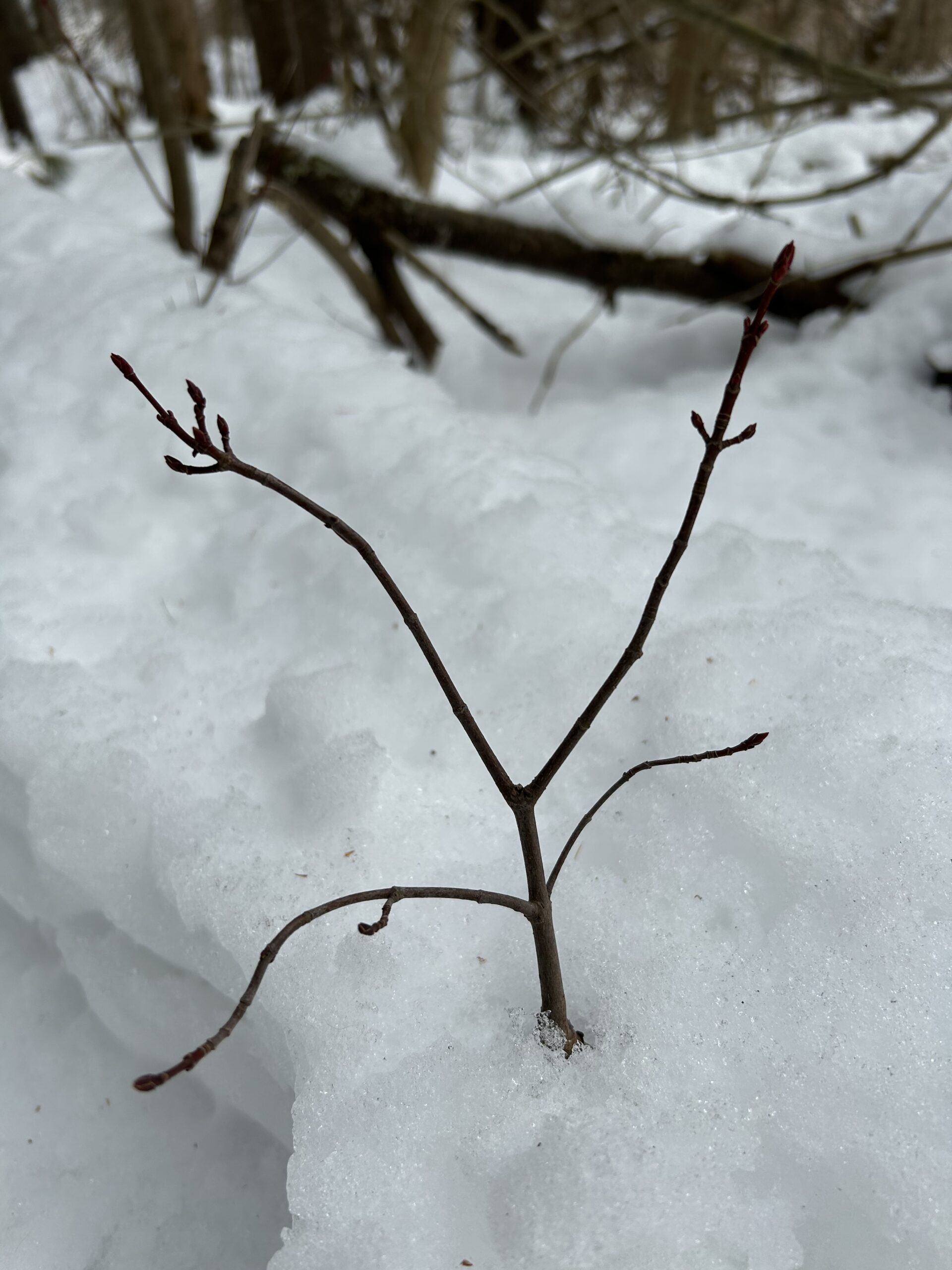
This week I took my usual walk through Centennial Woods, but this time keeping a careful eye out for any trees with twigs I could access. On the way to my spot, I was happy to find what looked like a baby red maple.
A red maple just poking out of the few inches of snow.
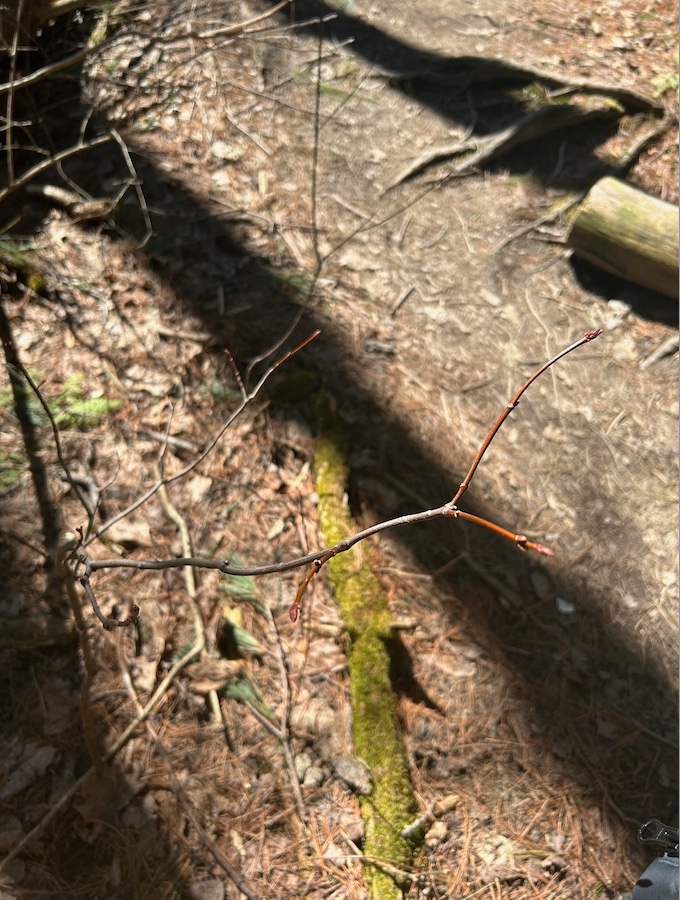
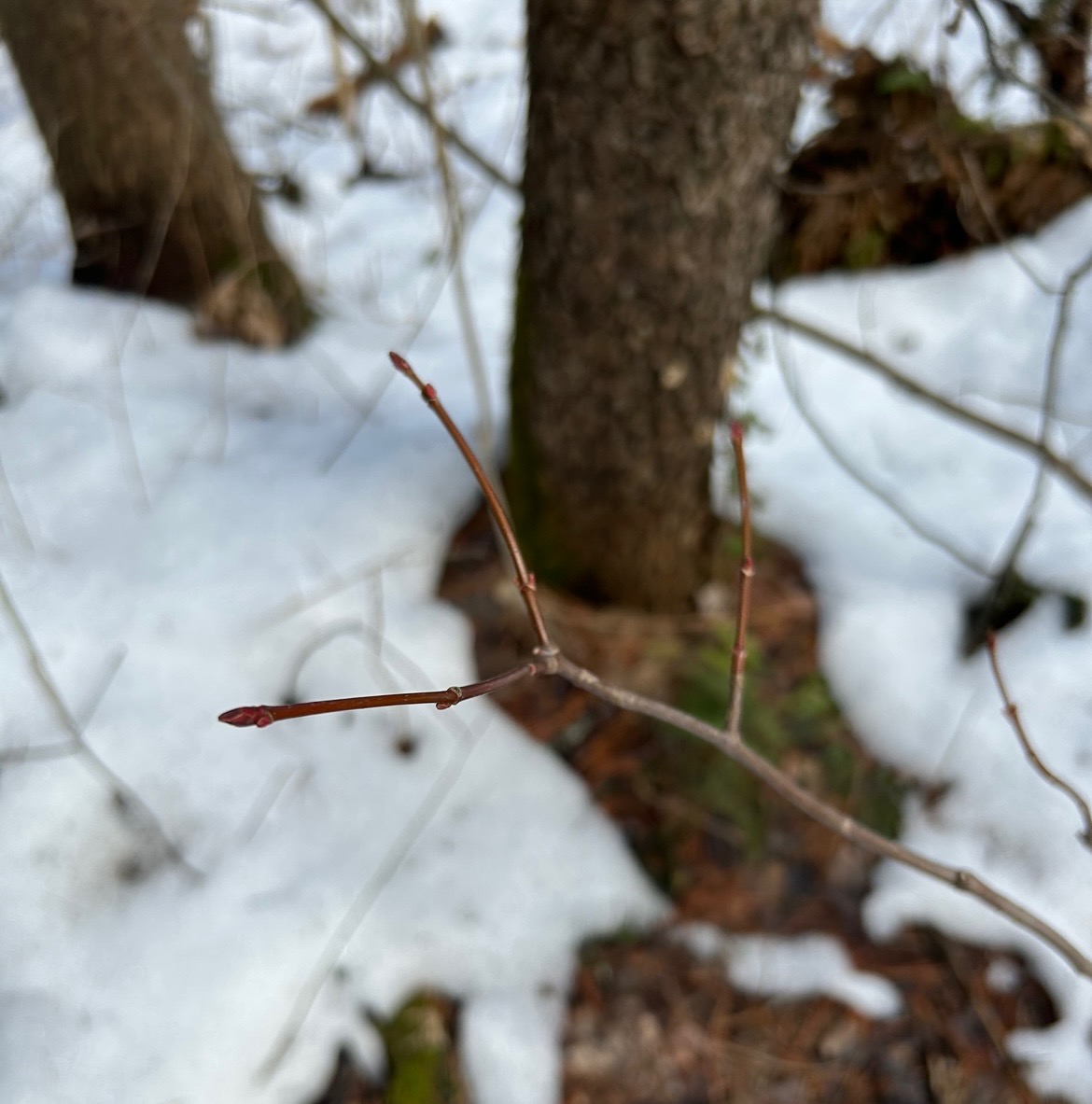
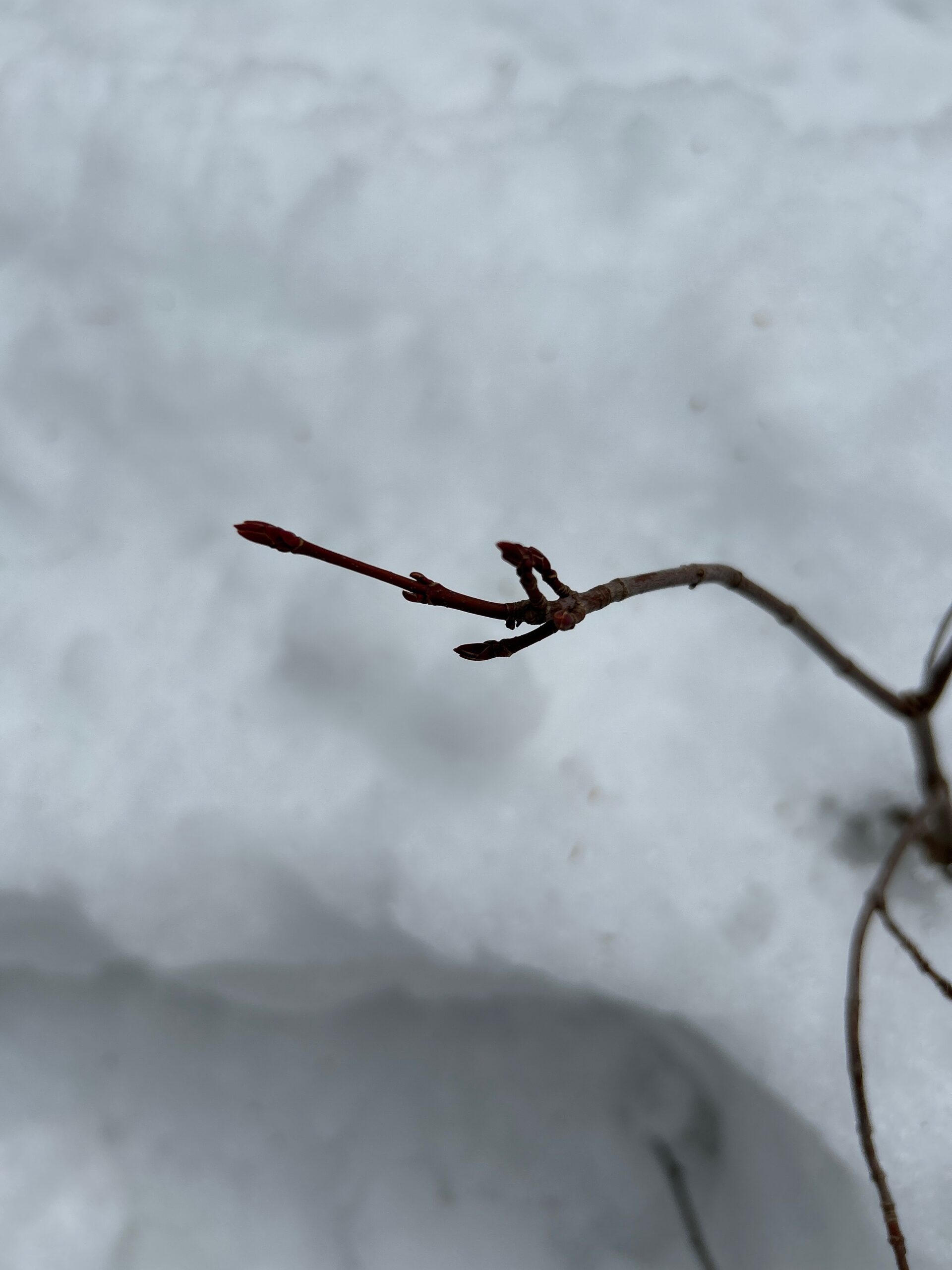
I identified this tree based on its red color and the look of the buds, which were in clusters.
A closer look at the suspected red maple buds.
I differentiated this red maple from the sugar and Norway maple mostly based on its color, which is red like its name. Also, based on the Winter Tree Identification sheet we have, it looked to be in between the thicker green-red Norway maple twig and the skinny brown sugar maple twig.
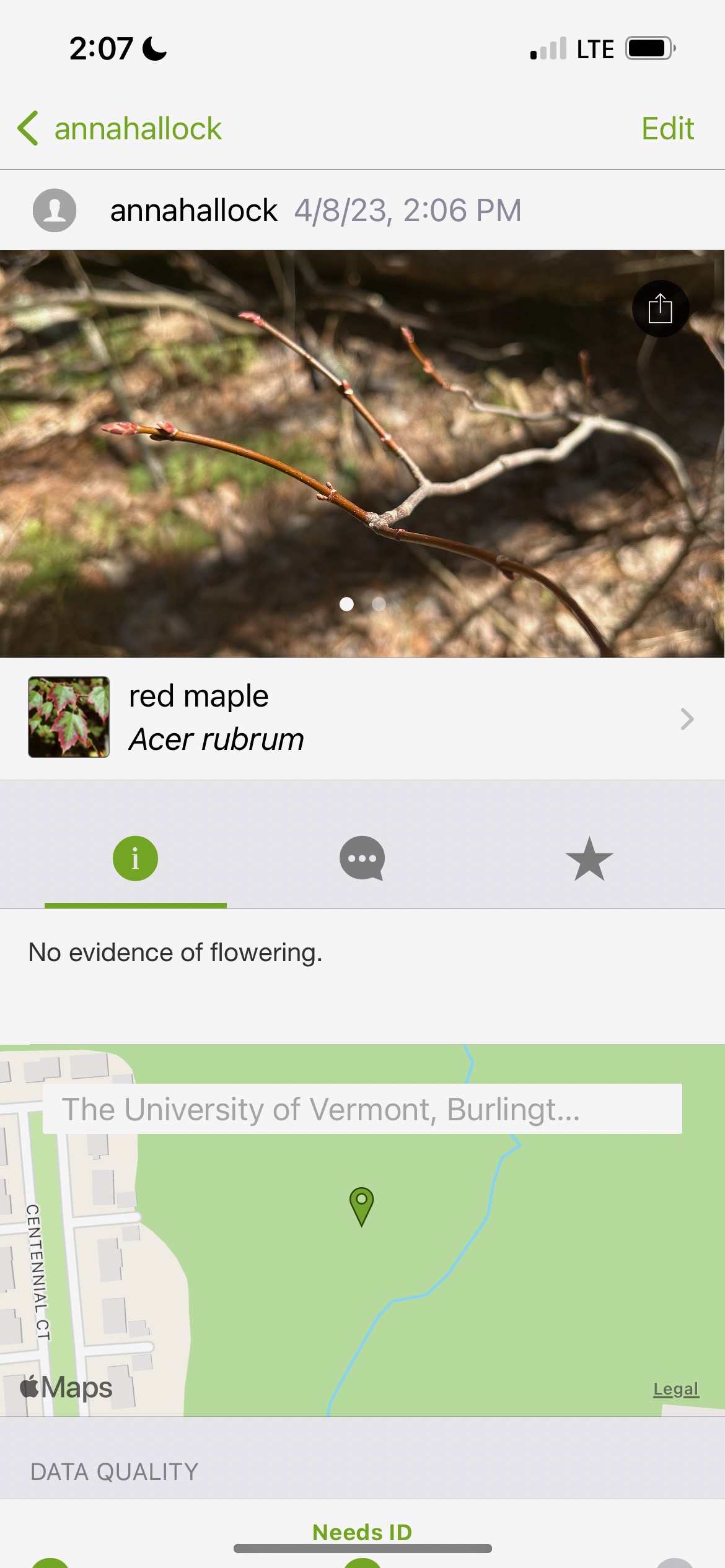
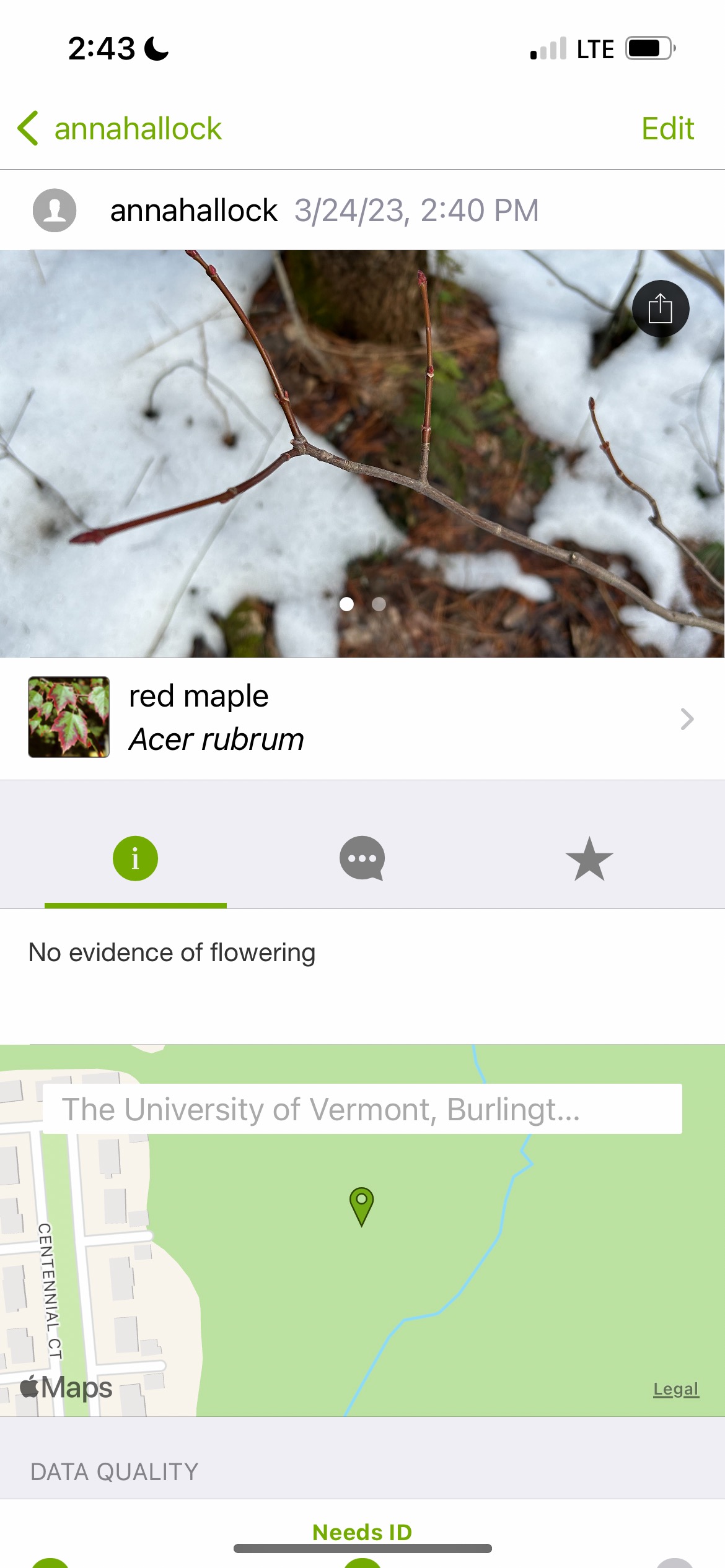
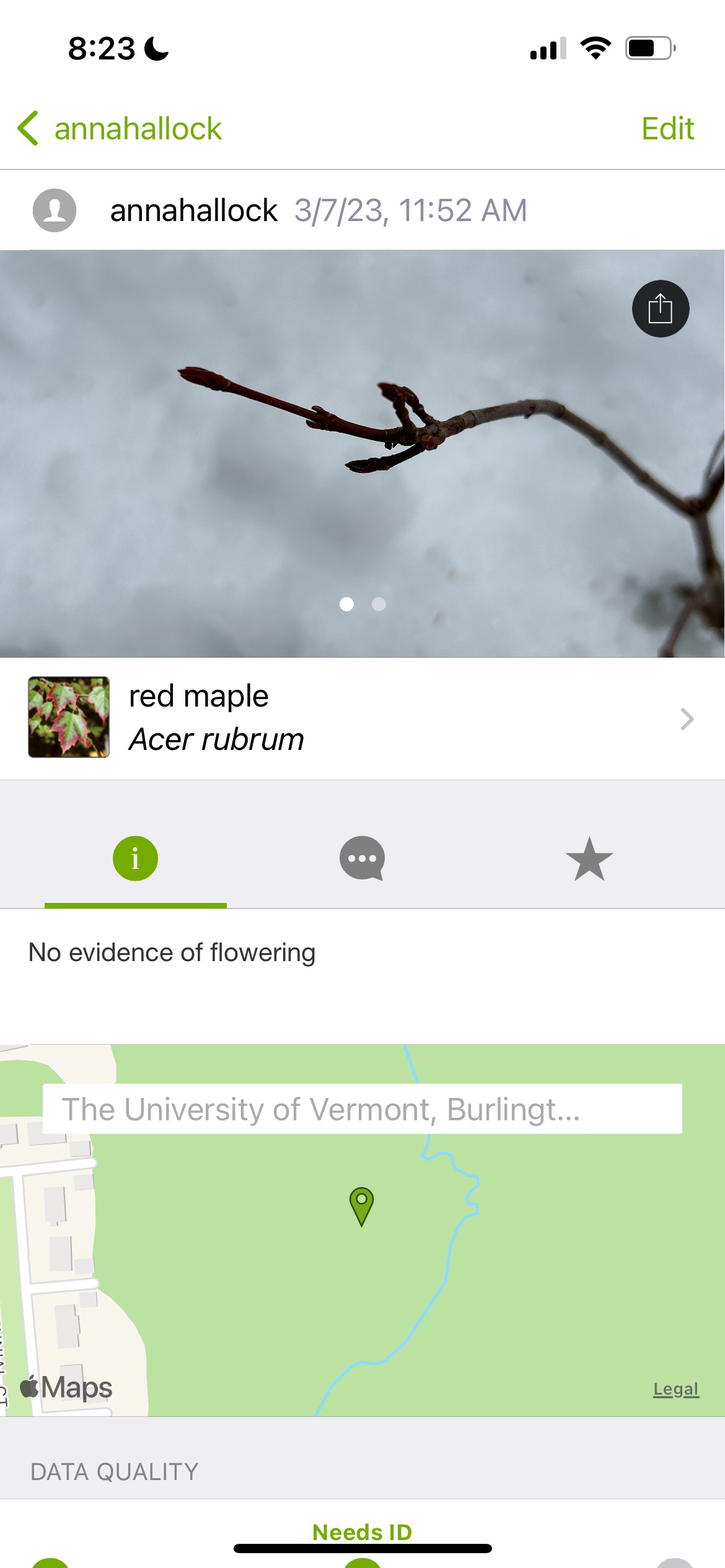
Once I decided that this tree was a red maple, I uploaded my photos to iNaturalist, noting that the state of the tree had no evidence of flowering.
My iNaturalist post.
The location that I was at isn’t too obvious, but it was on my usual walk to my actual phenology spot, I just stopped right before the first wooden bridge on the trail. The red maple was on the right side of the trail, not too far off of it. I didn’t want to go super far through Centennial Woods because the day I went it was super icy and I was sliding all over the place.
Hopefully, I will be able to find this same red maple when I go back in a few weeks to see its phenological progress!
To contribute to our NR2 iNaturalist Project, I decided to take a walk down to Battery Park. My family was up for the weekend, so I roamed around the park with them looking for any sign of wildlife. Unfortunately, the snow was melted so we didn’t find many tracks, but there was a bit of mud that saved the day!
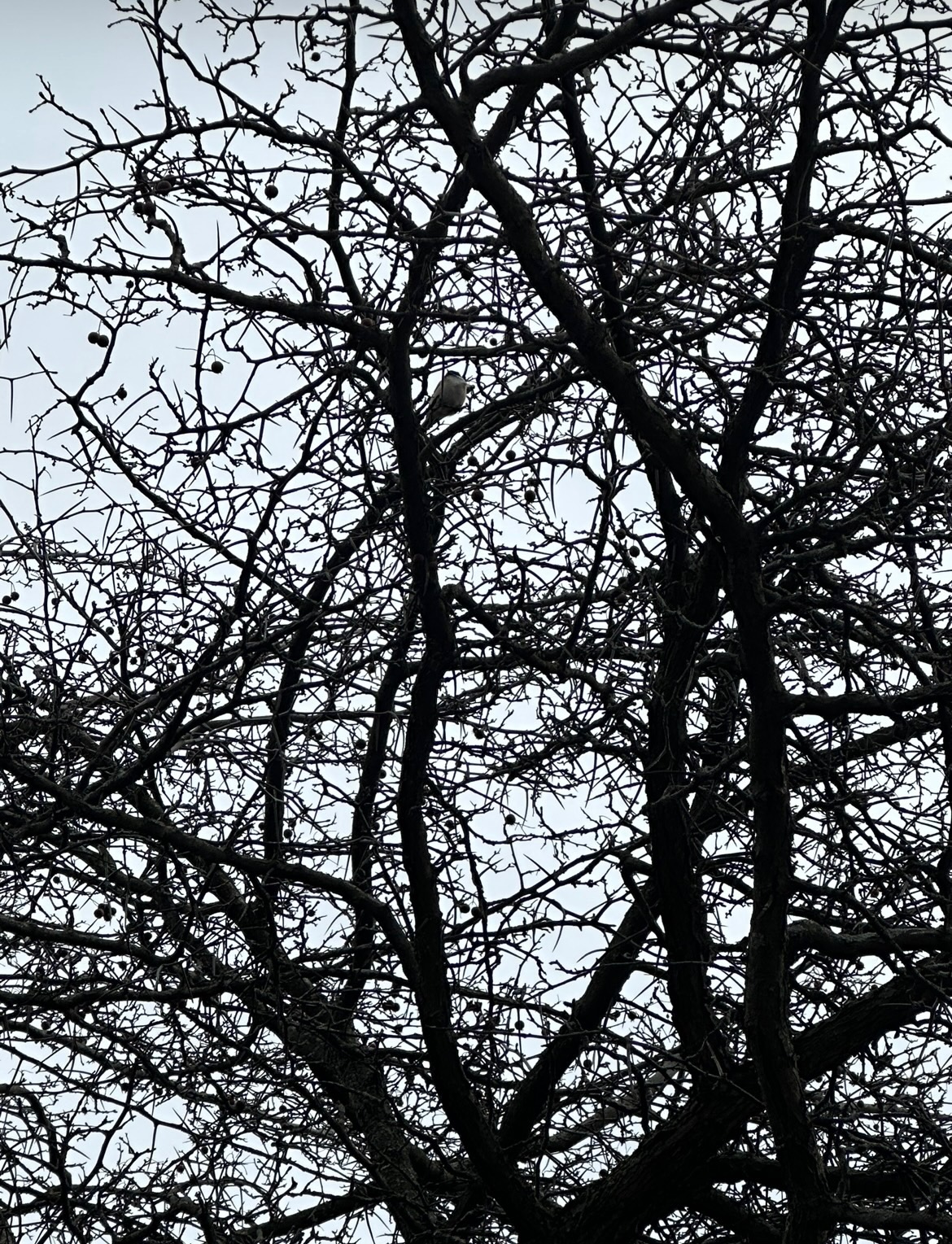
The first thing I noticed while downtown was the sounds of birds chirping. I did attempt to record the calls, but the noise of traffic overshadowed the birds. I did manage to get a picture of a black-capped chickadee in a tree, though! To identify it as a chickadee, I looked through the other bird observations in the Wildlife Signs in Burlington Project on iNaturalist and decided on the species that this bird looked the most like – the chickadee. This one actually looked exactly like the iNaturalist cover image for the black-capped chickadee.
A black-capped chickadee in a tree (upper middle of the photo).
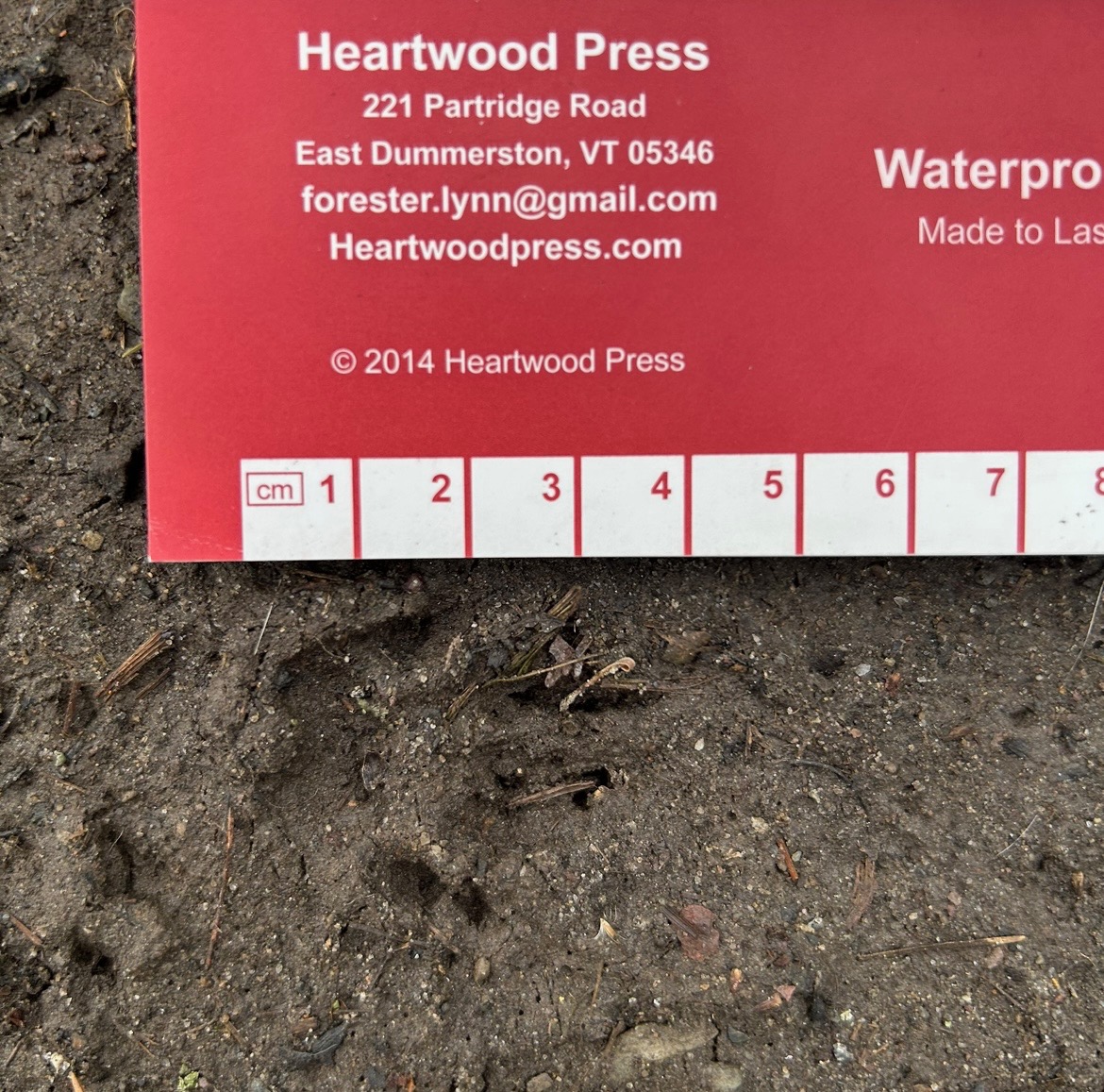
Like I mentioned before, there was a bit of mud to look for tracks in, so I paid close attention to all the patches. Luckily, my sister spotted a small print below a tree in the park! I was thankful to have brought my Mammal Tracks and Scat Life-Size Pocket Guide with me, because I wasn’t sure at first what this track might be. I thought it might unfortunately be a small dog, but after measuring it and comparing it to the drawings in the book, I settled on the Eastern gray squirrel because of the long toes. This print was just a front foot based on its size.
The 4cm front paw track of an Eastern gray squirrel.
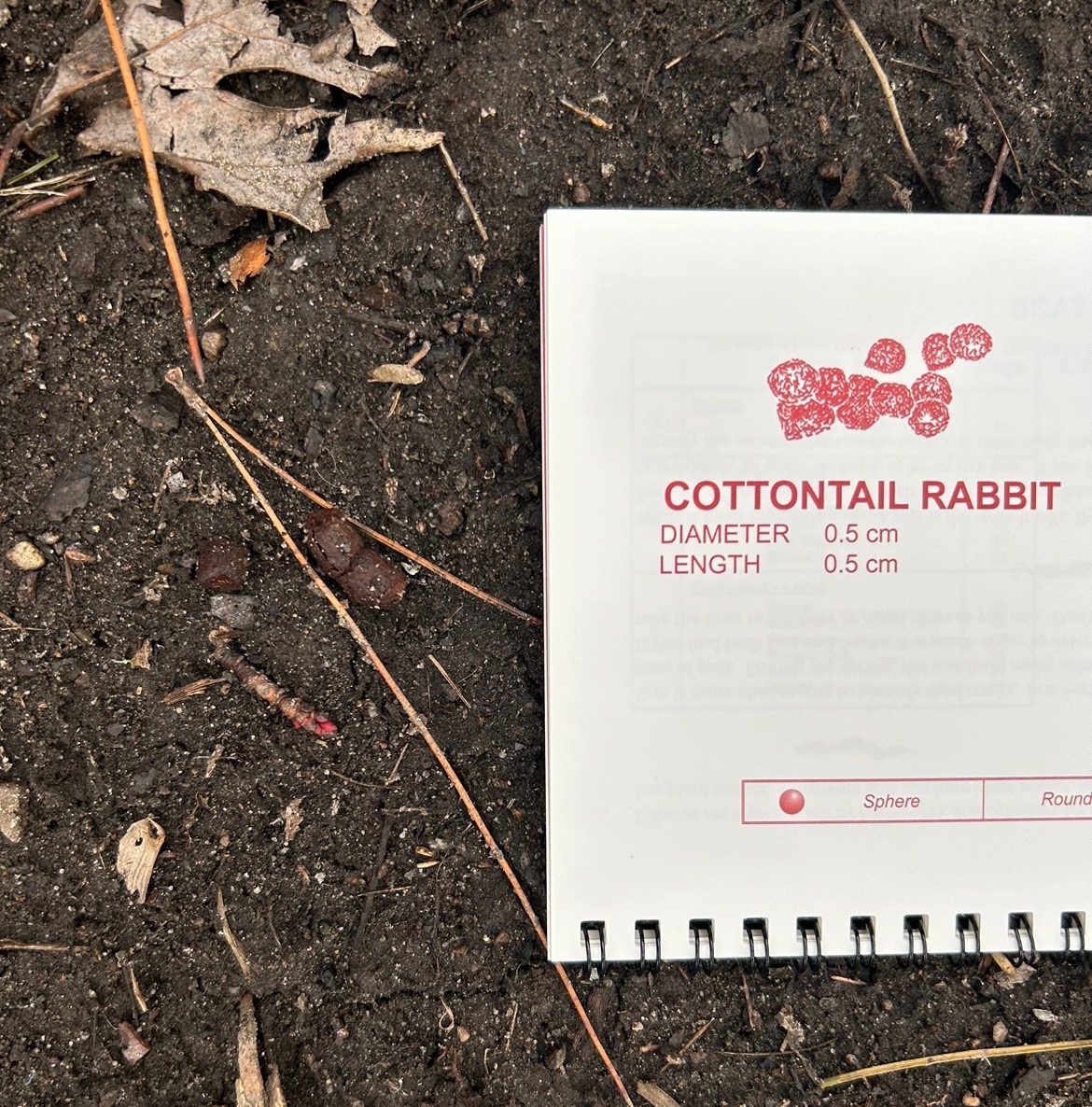
The last find I had of the day was some scat. This one was pretty easy to identify, because it was very round and matched the drawing of the cottontail rabbit scat in the tracks and scat guide to a T.
Cottontail rabbit scat compared to a drawn depiction of it.
These three observations were the only ones I logged onto iNaturalist for our NR2 project. The app was super easy to use and it was fun to see the map of where everyone had been and seen signs of wildlife! I wish I had had the time to go out in the snow and maybe catch a few more tracks, but I’m happy that there were still wildlife signs to find in the absence of snow.
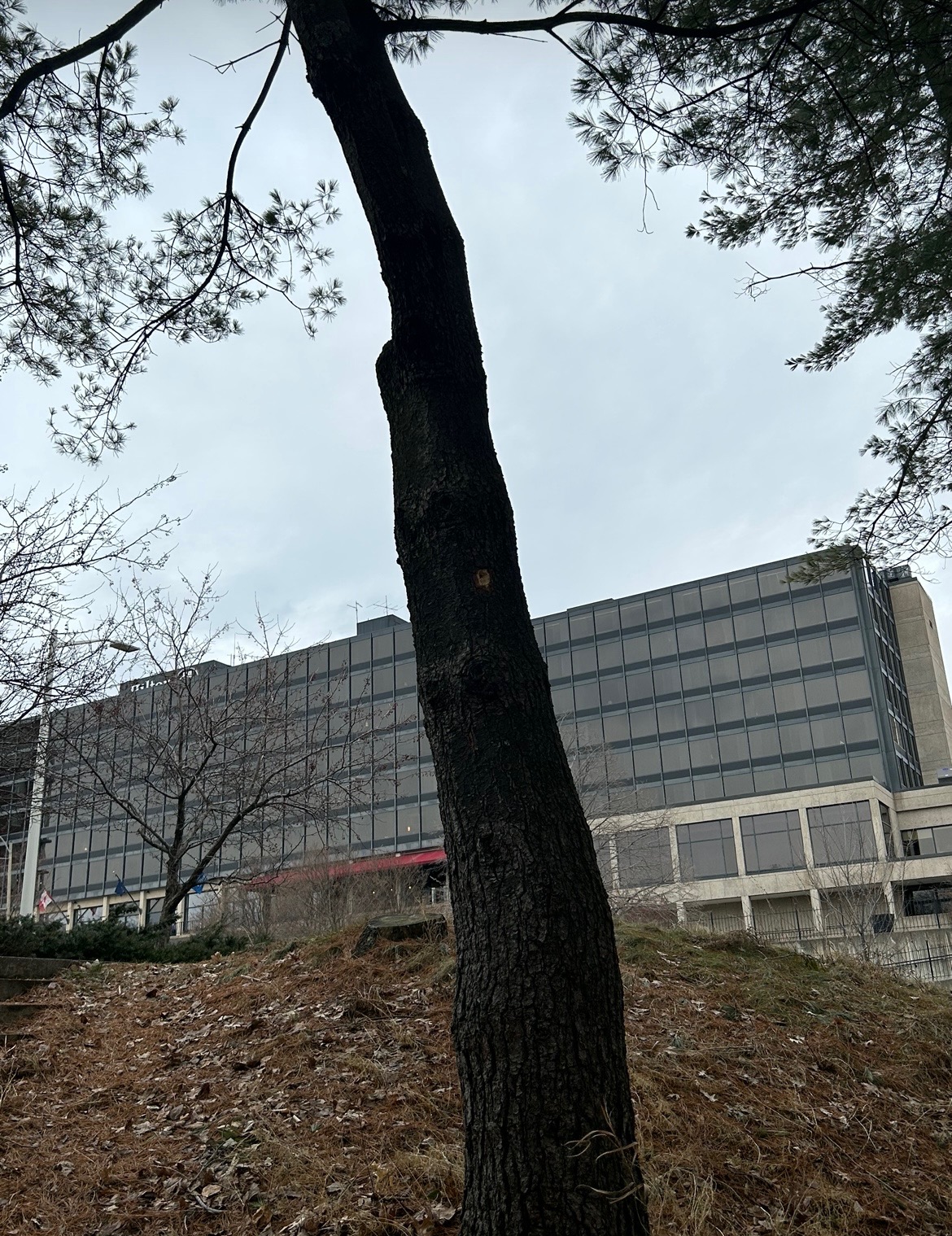
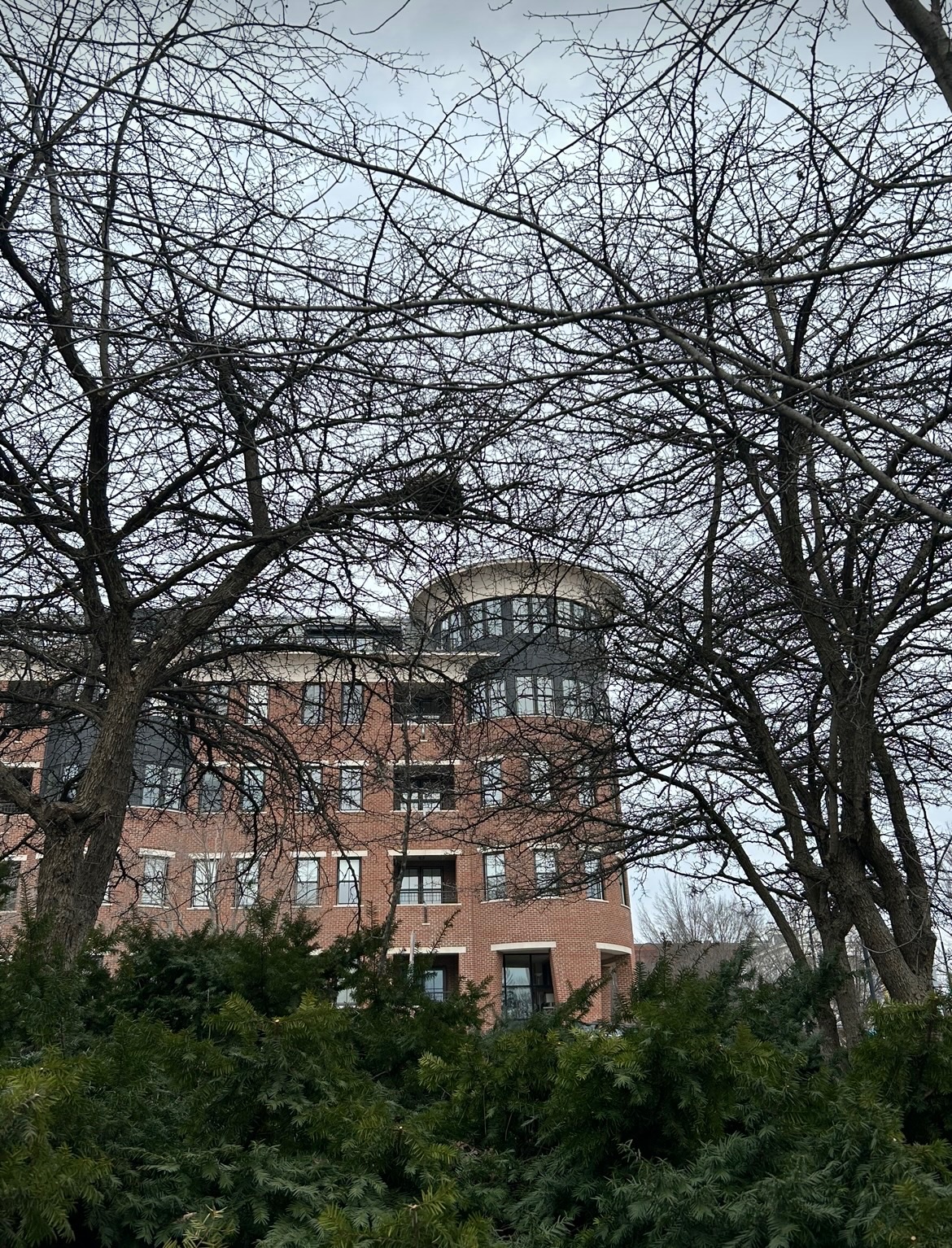
I did not log these observations, but I also came across signs of woodpeckers (holes in trees) and also a huge bird nest!
A pecked hole in a tree that suggests the presence of a woodpecker.A large nest in a tree in Battery Park.
Happy 2023! Here is my first post of the new semester!
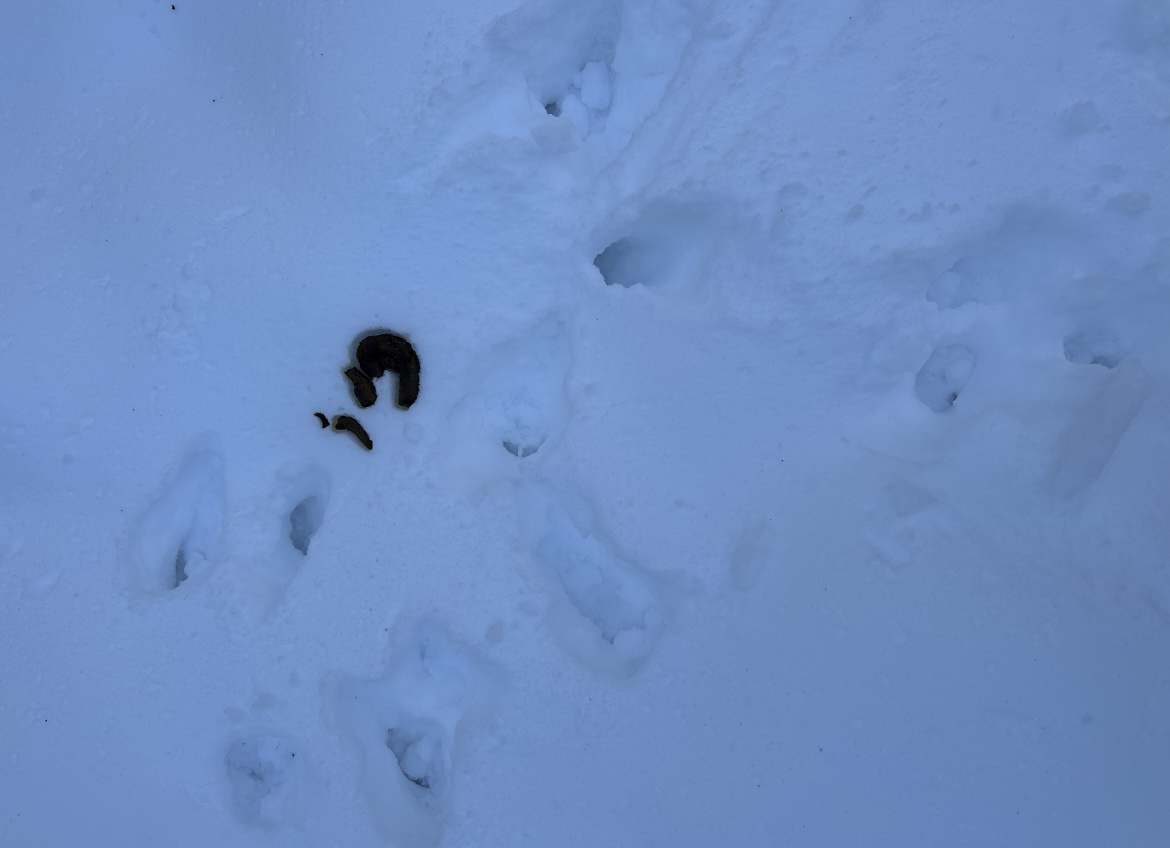
I was super excited when I got to my phenology spot on Friday (1/27) because I had yet to have seen any signs of animals, buuuut this time there were a few tracks and even a pile of scat!
A pile of scat in the snow along with some animal tracks.
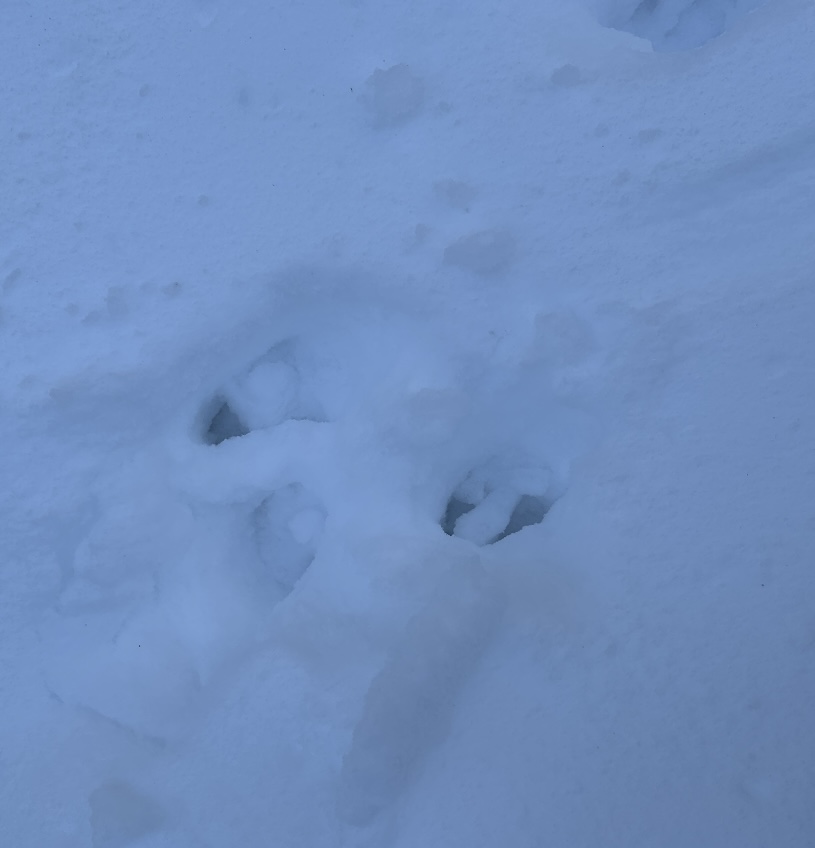
I did attempt to identify which animal the scat could be from, but it didn’t really match any of the drawings in the manual we have. I think it might be just dog poop unfortunately… However, the tracks were interesting because they weren’t dog paws, but rather hooves, so I think they’re from a deer because they’re definitely not large enough for a moose.
Animal tracks that I think are from a deer.
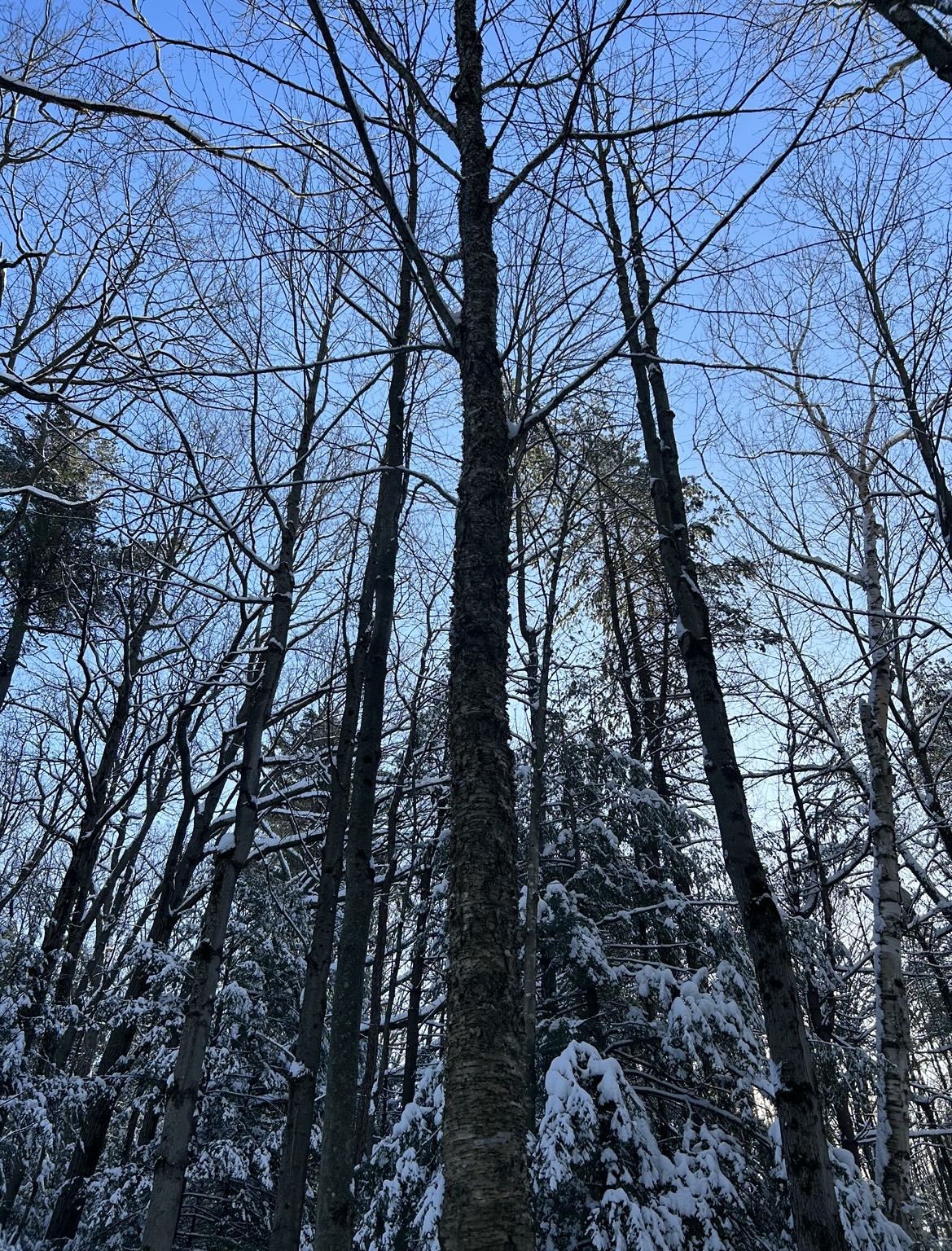
Other than the great amount of snow that has arrived since my last visit, my site hasn’t changed too much other than the deciduous trees having lost their final leaves, so they’re bare now.
My favorite yellow birch and some other trees covered in snow.
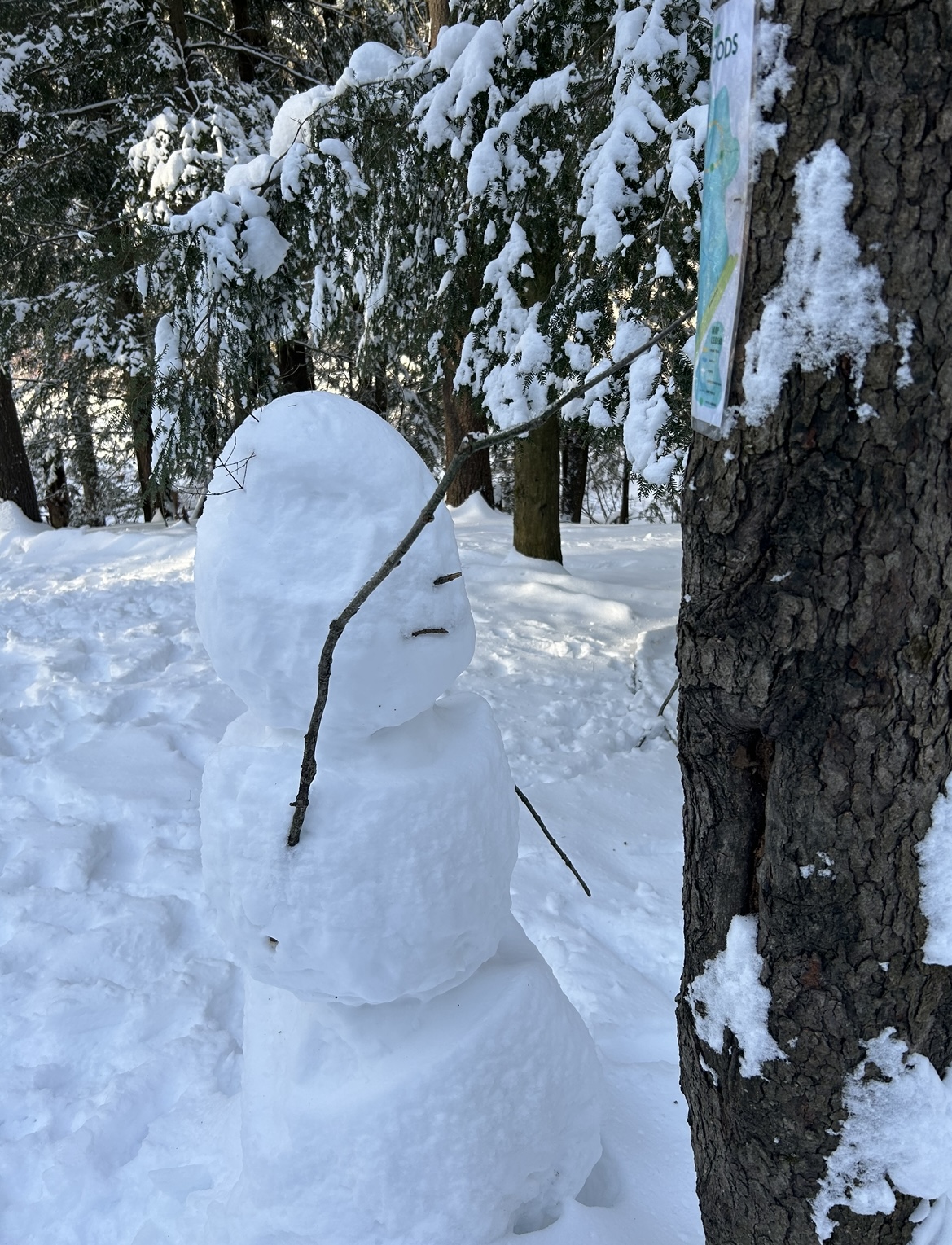
I absolutely love how the snow looks around Centennial Woods! It was fun to see a few snowmen around my area; one of them was even reading the trail map 🙂
A snowman trying to find his way around Centennial Woods.
I can’t wait to continue visiting my site throughout the rest of winter and into the spring! As someone who prefers the cold, I would love even more snow! I’m excited to see what’s to come in this new semester…
We’re already at the end of the semester?! Well, here’s the last post for a bit..
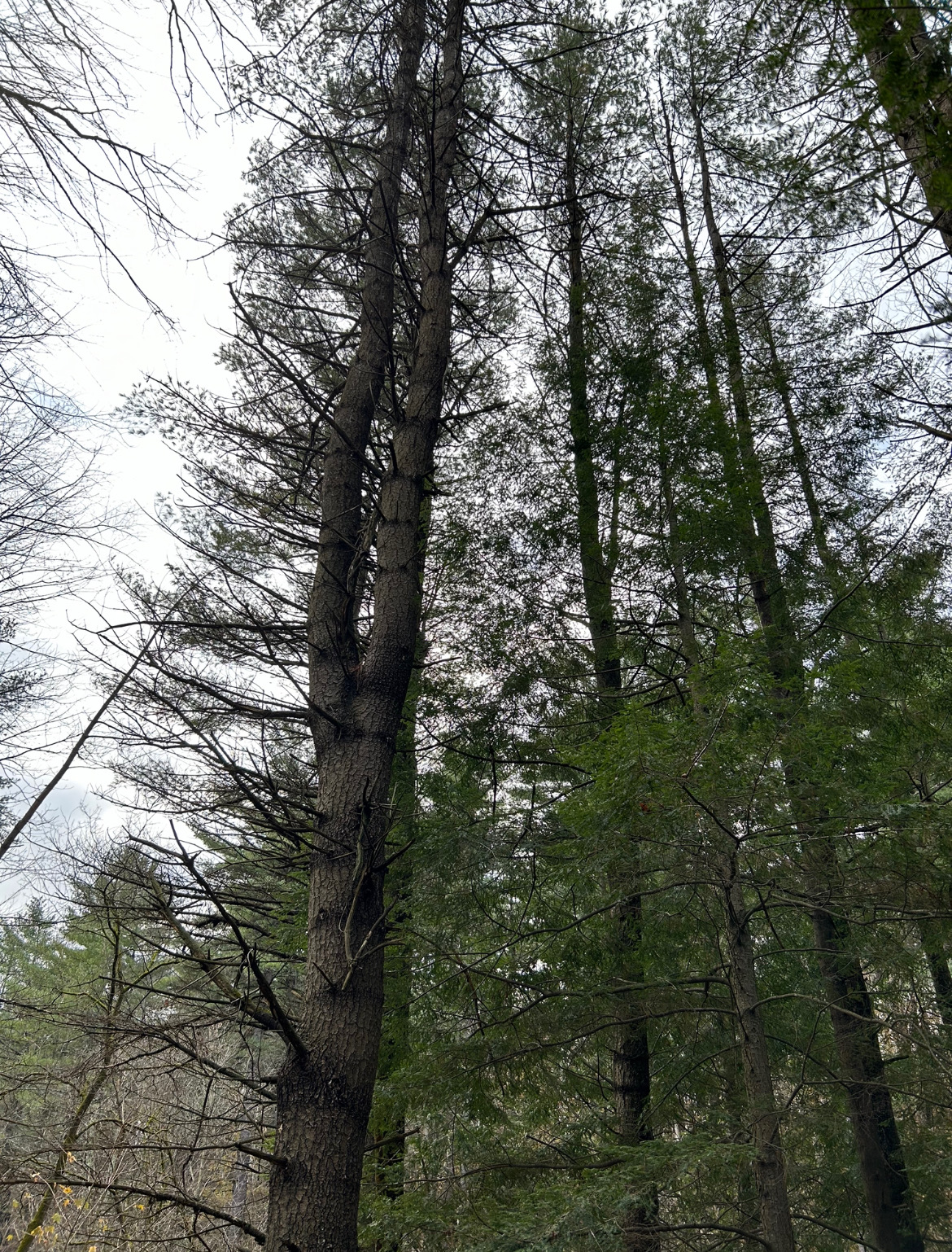
The foliage has changed A LOT since I last visited my spot a little over a month ago. Most of the trees have lost their leaves, with only the Eastern white pine and Eastern hemlock still holding onto the green.
The white pine and hemlock persist through winter.
On the ground, there is some persistent green vegetation, like the intermediate wood ferns and some long grasses, which both tend to clump near the trees. There is also moss on the ground and on some of the trees. Unlike before, the woods are all just really gray and brown. Even the bright-colored leaves that have fallen are beginning to decompose and become part of the soil, which is evident because the ground has become much less covered in them since November.
Some little spots of green around my spot, with the iconic yellow birch at the center.
I didn’t find any traces of animals, and trust me, I looked! I was keeping an eye out for bird nests, woodpecker holes, tracks, or maybe even scat, but I didn’t see anything. Therefore, I think I can safely say that the animal activity has decreased in my spot because I swear I’ve heard birds and seen small animals around before. Though on my way out of Centennial Woods, pretty far from my spot of course, I did see some birds flying and even a squirrel!
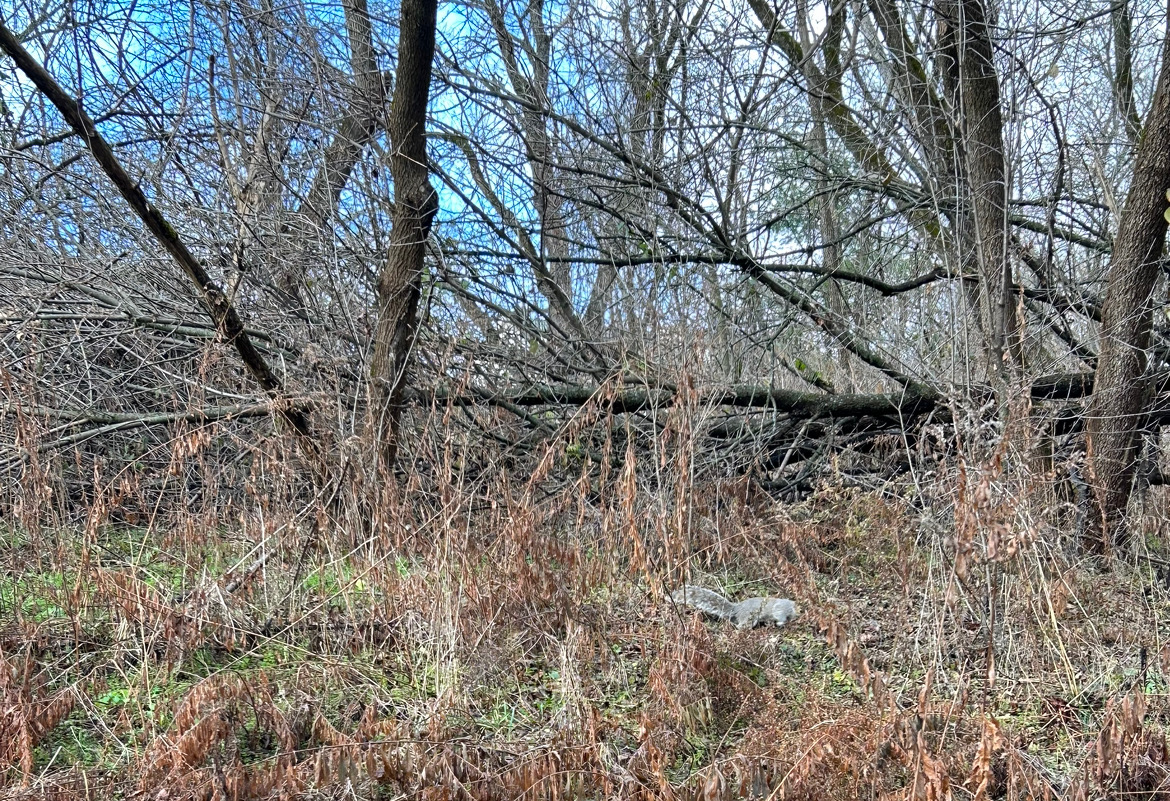
A squirrel out and about near the entrance of Centennial Woods.
I think my favorite aspect of my spot goes along with how close it is to campus. I walk maybe 10-15 minutes from my dorm and I’m suddenly in this forest which doesn’t make me feel like I’m anywhere near a city. The physical area of my spot I like the best is looking out to the pines and hemlocks from the yellow birch tree. Even now in wintertime, it feels full and nice and green.
The yellow birch standing in front of the tall evergreens.
I hope next semester will bring more beautiful scenes in my spot (and snow!) and I can’t wait to see what changes I’ll observe! Happy holidays!
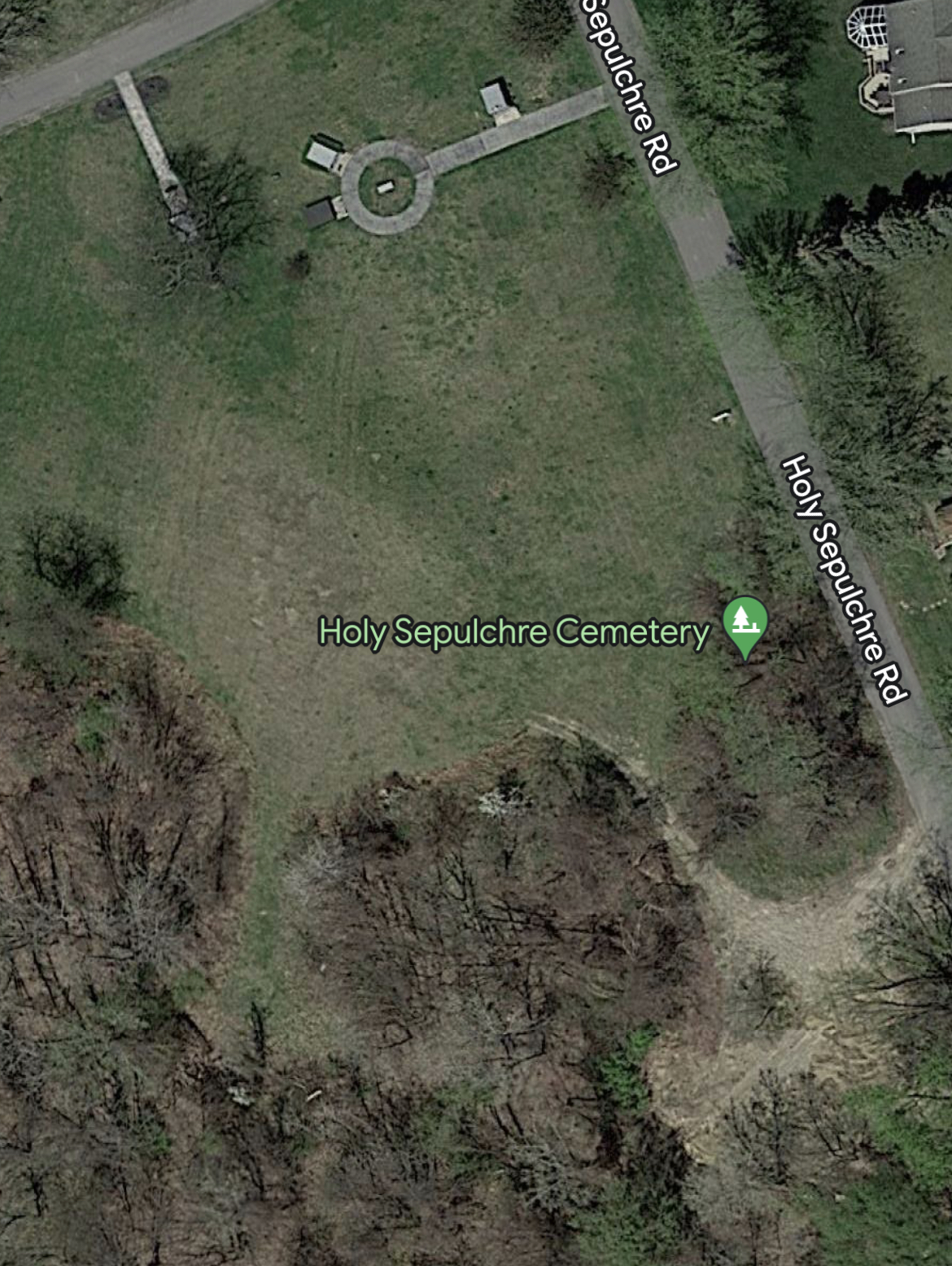
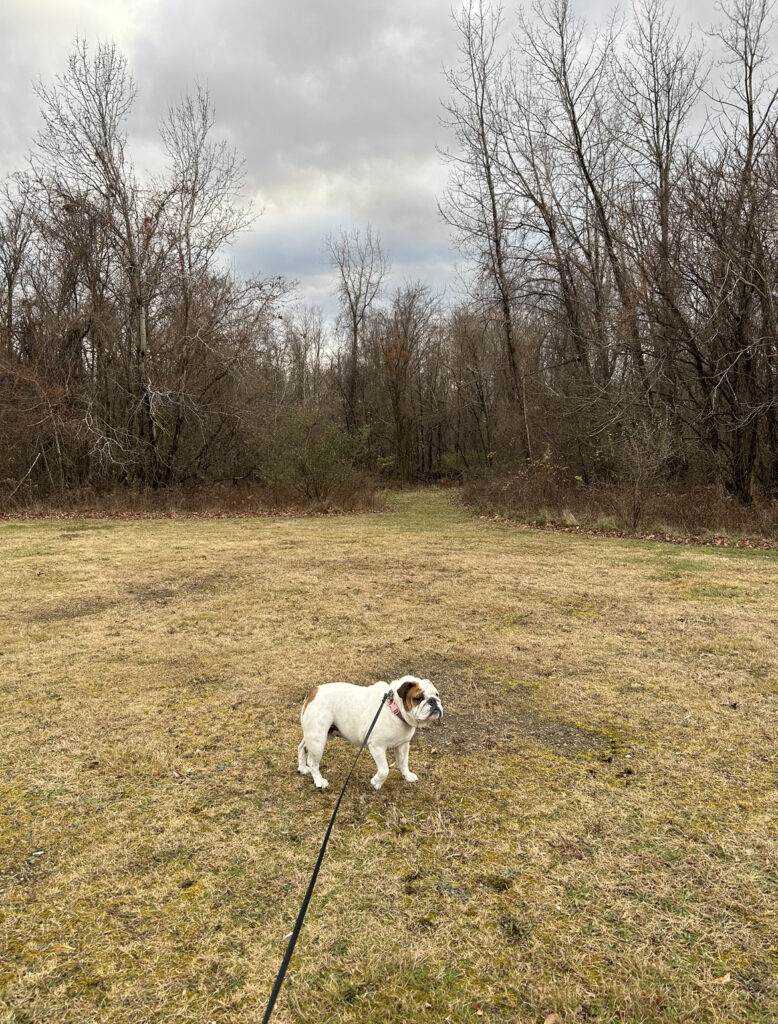
I really enjoyed my time at home with family! Home for me is Rensselaer, New York, a town upstate near the capital of Albany. While I was home, I decided to go on a walk with my mom and our dogs to the cemetery that’s down the road from our house, the Holy Sepulchre Cemetery.
A Google Maps view of the area we walked to in Holy Sepulchre Cemetery.
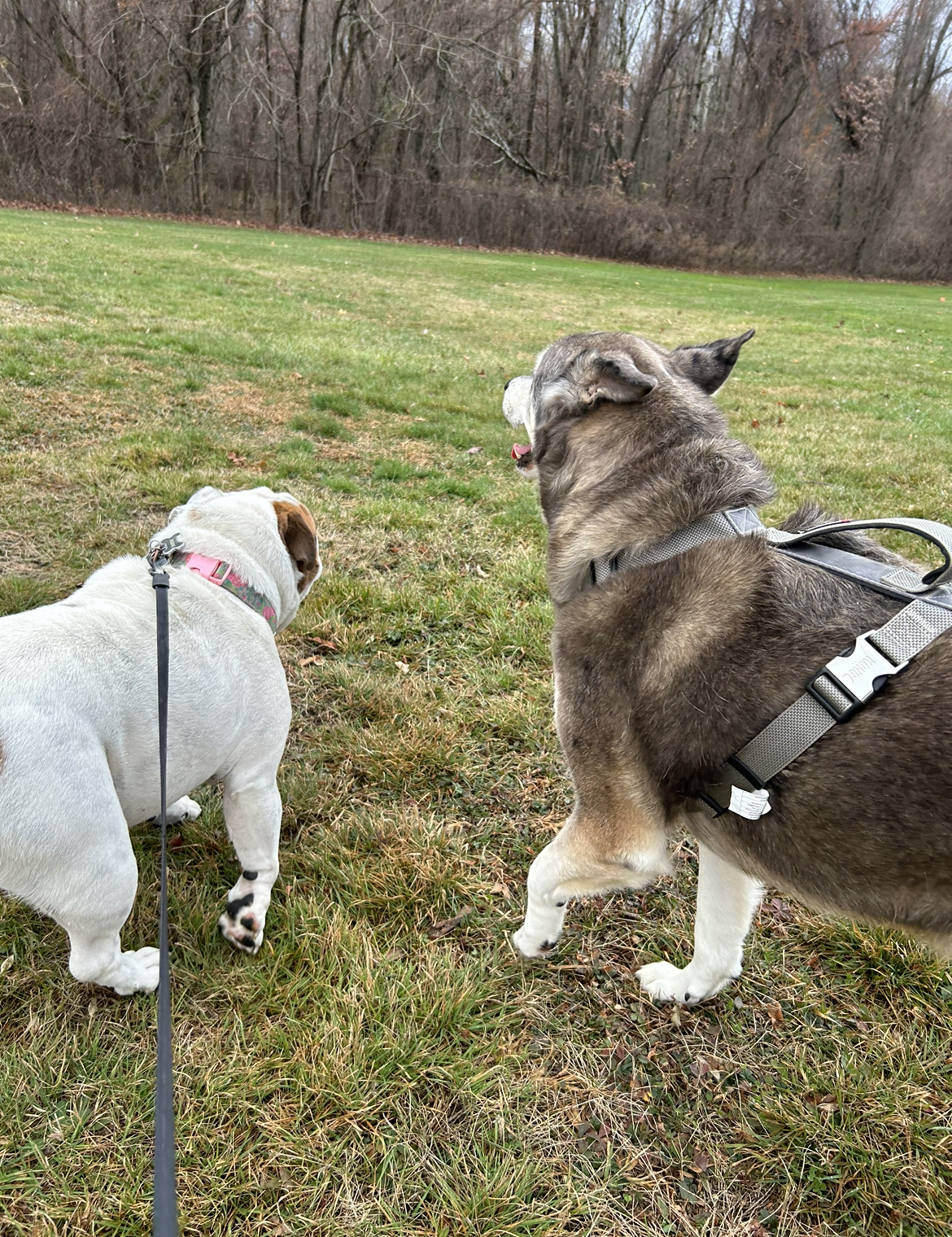
As you can see in the map, we didn’t spend our time where the actual graves are, but instead in the clearing between the actual cemetery and the woods. It was nice to spend some time outside in the cool air and my dogs really enjoyed the walk 🙂
Bubba (left) and Pip (right) enjoying their time outside!
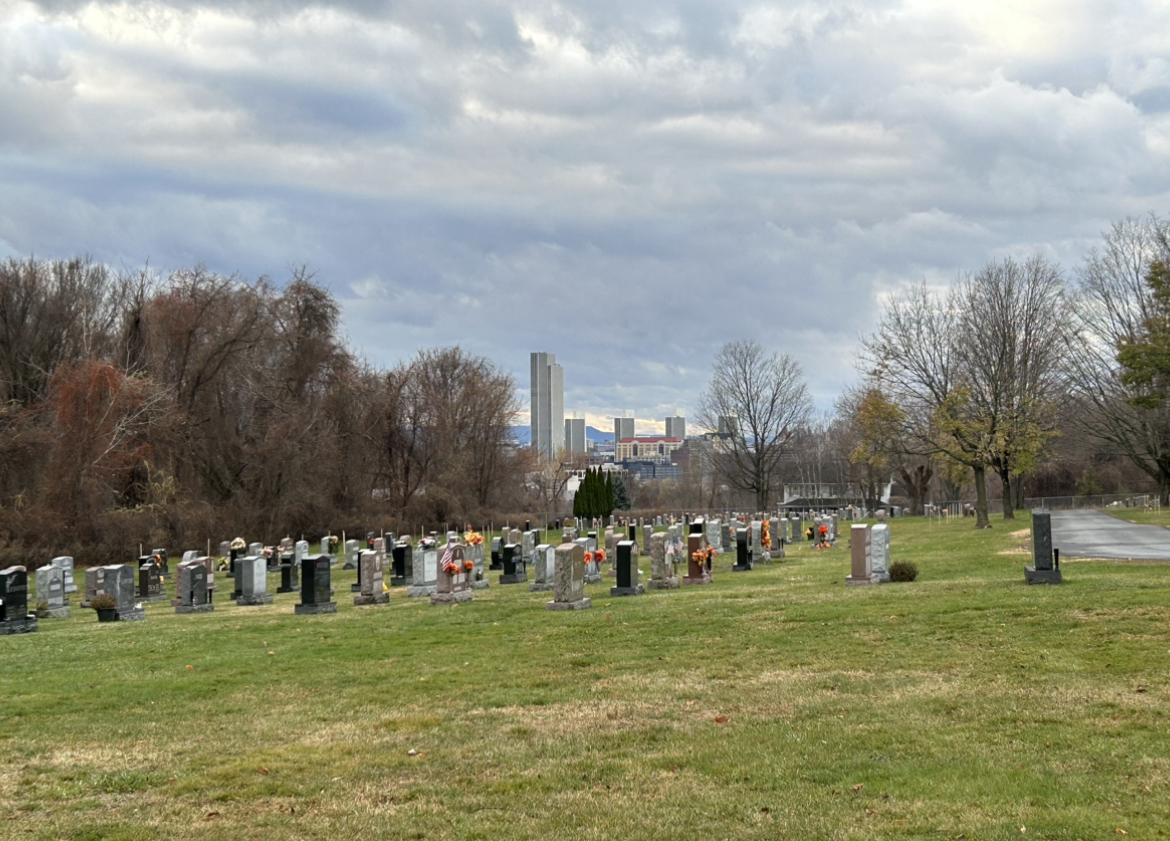
I think this area is really special because of its cultural value. It’s brown and gray right now, but in the summer it’s a beautiful place to be. On the Fourth of July, all the nearby neighborhoods come down to the clearing to watch the Albany fireworks because the cemetery has a great view of the city.
The view of Albany from the clearing in Holy Sepulchre Cemetery.
This area is great for dog-walking too – there are always people with their dogs walking past my house down to the cemetery! My personal connections with this place are that I actually did a lot of my learning how to drive down here and my grandfather is buried underneath one of the trees in this cemetery.
In comparison to my place in Centennial Woods up in Burlington, this place has much less tree cover. There’s a good amount of woods but most of the land is cleared for homes or the cemetery itself. Another difference is how the places are used. While these woods aren’t really for trekking through (mostly due to the “No trespassing” signs), people are encouraged to hike in Centennial Woods. What the areas do have in common is the general makeup of the tree species. Both the woods nearby Holy Sepulchre Cemetery and in Centennial Woods contain birches and maples, though my place at home has more birches yet not as many conifers like the Eastern white pines in Centennial Woods.
I totally forgot to leave a gift at this spot, but Bubba and Pip definitely left their marks…
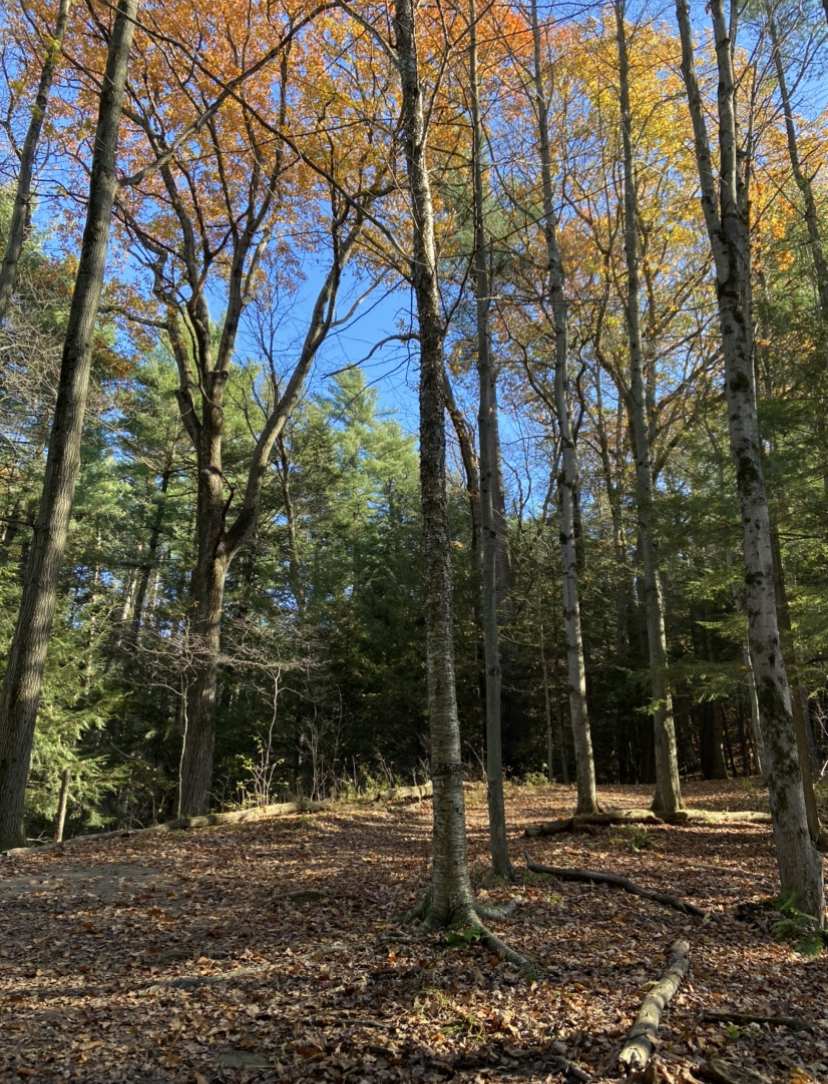
It was a beautiful day when I decided to spend my 15 minutes at my spot in Centennial Woods (though a little too warm for November…). I sat right under the yellow birch tree – pictured below – and just enjoyed the sight of the colorful fall leaves, the smell of the forest, and the sound of nature.
A picture of the clearing in Centennial Woods on a beautiful day with a blue sky and the yellow birch at center.
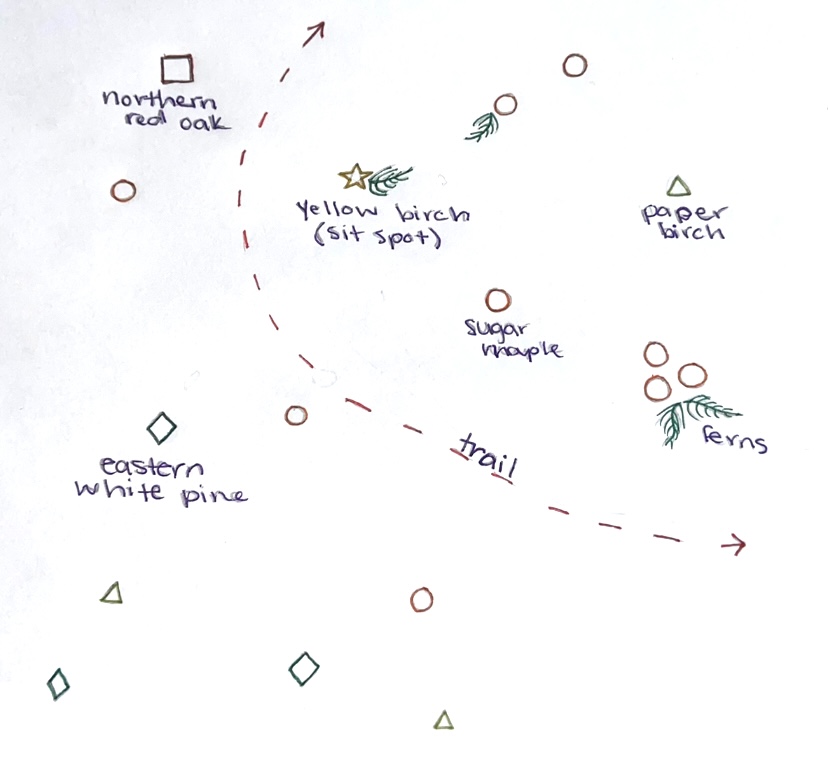
After just enjoying the peacefulness, I drew a little map of my area, with the birch tree at the center of course. Each shape represents a different tree type, at least those I could identify from the species we learned in class.
A bird’s eye view of my phenology spot.
To finish off this post, I will discuss some changes that I noticed since visiting my spot in mid-October. First, I noticed that many of the deciduous trees are almost bare or already completely bare. Because of this, there are plenty of leaves on the ground, which were present during my first visit except they are now more brown in color versus a brighter red-orange. It’s also much easier to see through the trees now, but the conifers are still going strong with their green needles.