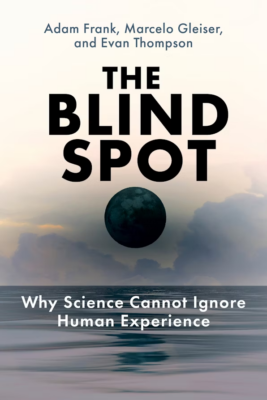
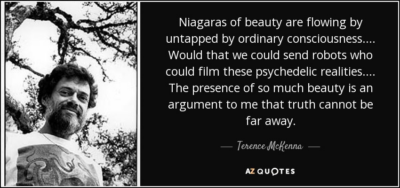
{"id":13578,"date":"2024-04-05T09:22:12","date_gmt":"2024-04-05T14:22:12","guid":{"rendered":"https:\/\/blog.uvm.edu\/aivakhiv\/?p=13578"},"modified":"2024-04-05T09:38:12","modified_gmt":"2024-04-05T14:38:12","slug":"the-death-trip-and-sciences-experiential-blind-spot","status":"publish","type":"post","link":"https:\/\/blog.uvm.edu\/aivakhiv\/2024\/04\/05\/the-death-trip-and-sciences-experiential-blind-spot\/","title":{"rendered":"The death trip and science&#8217;s experiential &#8220;blind spot&#8221;"},"content":{"rendered":"\n<p>The study of so-called &#8220;near-death experiences&#8221; is fascinating, as it is one of those areas that remain most mysterious to science, yet which empirical evidence suggests is very consequential to those who undergo it. <\/p>\n\n\n\n<p>By now we&#8217;ve all likely heard of the countless reports of people journeying through tunnels toward sources of light, being greeted by dead relatives or benevolent deities, and experiencing emotions by which they have been able to deeply reframe their lives upon &#8220;re-entry&#8221; into their post-near-death lives. What&#8217;s less well known are the cases in which someone has been &#8220;clinically dead&#8221; for a period of hours &#8212; more than six hours, in some instances &#8212; and who has &#8220;come back&#8221; to describe experiences like the above. <\/p>\n\n\n\n<p>In a <em>Guardian<\/em> &#8220;Long Read&#8221; article titled &#8220;<a href=\"https:\/\/www.theguardian.com\/society\/2024\/apr\/02\/new-science-of-death-brain-activity-consciousness-near-death-experience?fbclid=IwAR1sac0RMof4tP0KxT8_9d15rebel9KU33SIaMGp00GLJ4L_iF438zpPoc0_aem_AWkl78R3dwMX24Ze5h999iMize6G0lS4WeQrb0tDonXCk3rPAEfpi5dF97b0_Nav5fTWQQy0g8IFKvxAPw9y6Blh\">The new science of death: &#8216;There&#8217;s something happening in the brain that makes no sense&#8217;<\/a>,&#8221; Alex Blasdel provides a fascinating overview of the growing study of near-death experiences &#8212; and even some <em>death<\/em> experiences, examined from a brain-science perspective. <\/p>\n\n\n\n<p>Blasdel divides the various schools of thought among near-death researchers into three, and while the three categories strike me as overgeneralized (e.g., I don&#8217;t think it&#8217;s accurate to say that <em>all<\/em> parapsychologists believe mind and brain are separate), it&#8217;s a helpful mapping. The three are the &#8220;spiritualists,&#8221; &#8220;some of them evangelical Christians, who were convinced that near-death experiences were genuine sojourns in the land of the dead and divine&#8221;; the &#8220;parapsychologists,&#8221; the largest faction,  whose scientific study pursues &#8220;phenomena that seemed to undermine the scientific orthodoxy that the mind could not exist independently of the brain&#8221;; and the &#8220;physicalists,&#8221; the &#8220;smallest contingent,&#8221; who are &#8220;committed to a strictly biological account of near-death experiences.&#8221;<\/p>\n\n\n\n<p>By the end, Blasdel favors the physicalists, for whom mind and body require each other and cannot function apart from each other. My own leaning favors this view as well, even if I&#8217;m fascinated by the experiences that play center stage for the spiritualists, and by the creative theorizing of the parapsychologists. The physicalist understanding fits best with the <a href=\"https:\/\/www.academia.edu\/38995034\/Contemporary_Process_Relational_Thought_A_Primer\">process-relational ontology<\/a> I&#8217;ve been developing (and with Spinozism, panpsychism, and other forms of relational &#8220;new materialism&#8221;). This (and the others) are forms of mind-body non-dualism, or what&#8217;s sometimes called <a href=\"https:\/\/en.wikipedia.org\/wiki\/Double-aspect_theory\">dual-aspect monism<\/a>: they see &#8220;mind&#8221; and &#8220;body&#8221; &#8212; and therefore also &#8220;mind&#8221; and &#8220;brain&#8221; &#8212; as two sides of the same phenomenon, the first experienced from the &#8220;inside&#8221; and the second observed from the &#8220;outside.&#8221; (Not all the perspectives are as clear on this inside\/outside dynamic as is Whiteheadian process-relationalism, which sees the <a href=\"https:\/\/blog.uvm.edu\/aivakhiv\/2013\/10\/21\/whats-real\/\">inside and outside as co-determining<\/a> and present in all things, i.e., all relational events.)<\/p>\n\n\n\n<p>Viewed from this perspective, near-death experiences and their accompanying brain activities appear to be the experience of the brain going into a kind of &#8220;hyperdrive&#8221; (as neurologist <a href=\"https:\/\/www.pnas.org\/doi\/10.1073\/pnas.1308285110\">Jimo Borjigin<\/a> calls it). This raises two important questions: (1) Why do reported near-death experiences seem so <em>coherent and meaningful<\/em> (as opposed to being something akin to the <a href=\"https:\/\/www.ncbi.nlm.nih.gov\/pmc\/articles\/PMC10078162\/#:~:text=The%20hypnagogic%20state%20refers%20to,Bulletin%2C%2083%2C%20452).\">hypnagogic state<\/a> that precedes sleep, which our mind experiences as a kind of randomizing release from narrative coherence)? (2) And what evolutionary benefit do these experiences bring? Why did we evolve to have these experiences?<\/p>\n\n\n\n<!--more-->\n\n\n\n<figure class=\"wp-block-image size-large\"><a href=\"https:\/\/artfulliving.com\/the-real-story-behind-eerie-wisconsin-death-trip\/\"><img data-recalc-dims=\"1\" loading=\"lazy\" decoding=\"async\" width=\"400\" height=\"316\" src=\"https:\/\/i0.wp.com\/blog.uvm.edu\/aivakhiv\/files\/2024\/04\/image-400x316.png?resize=400%2C316&#038;ssl=1\" alt=\"\" class=\"wp-image-13580\" srcset=\"https:\/\/i0.wp.com\/blog.uvm.edu\/aivakhiv\/files\/2024\/04\/image.png?resize=400%2C316&amp;ssl=1 400w, https:\/\/i0.wp.com\/blog.uvm.edu\/aivakhiv\/files\/2024\/04\/image.png?resize=300%2C237&amp;ssl=1 300w, https:\/\/i0.wp.com\/blog.uvm.edu\/aivakhiv\/files\/2024\/04\/image.png?resize=275%2C217&amp;ssl=1 275w, https:\/\/i0.wp.com\/blog.uvm.edu\/aivakhiv\/files\/2024\/04\/image.png?resize=768%2C606&amp;ssl=1 768w, https:\/\/i0.wp.com\/blog.uvm.edu\/aivakhiv\/files\/2024\/04\/image.png?w=1000&amp;ssl=1 1000w\" sizes=\"auto, (max-width: 400px) 100vw, 400px\" \/><\/a><\/figure>\n\n\n\n<p><a href=\"https:\/\/www.theguardian.com\/society\/2024\/apr\/02\/new-science-of-death-brain-activity-consciousness-near-death-experience?fbclid=IwAR1sac0RMof4tP0KxT8_9d15rebel9KU33SIaMGp00GLJ4L_iF438zpPoc0_aem_AWkl78R3dwMX24Ze5h999iMize6G0lS4WeQrb0tDonXCk3rPAEfpi5dF97b0_Nav5fTWQQy0g8IFKvxAPw9y6Blh\" target=\"_blank\" rel=\"noreferrer noopener\"><\/a><\/p>\n\n\n\n<p>Let&#8217;s start here with question #2. The idea that enough of our evolutionary ancestors would have come back from near-death and been changed by it sufficiently to pass on those advantages to their progeny seems a stretch, as it requires that this phenomenon be widespread (well before we developed the technologies to more readily resuscitate people from cardiac arrest) and that those who undergo it would mostly be in child-bearing age (young enough to pass their genes on to their children after these experiences occurred). The article mentions a few other hypotheses, but none sound very convincing (animals feigning death? last-ditch attempt to jump-start the engine?).<\/p>\n\n\n\n<p>Something like the latter could make sense, however, if we consider that the brain is a meaning-making organ: its role is to make sense of our sensory perceptions and to build a <a href=\"https:\/\/blog.uvm.edu\/aivakhiv\/2020\/08\/16\/emotional-practices-part-1-affective-neuroscience\/\">predictive\/constructive machinery<\/a> for doing that over time. The shock of something like cardiac arrest could throw that activity into a scramble that, like the action of <a href=\"https:\/\/www.ncbi.nlm.nih.gov\/pmc\/articles\/PMC10032309\/\">psychedelics<\/a>, elicits a hyper-connectivity across multiple brain regions, now unplugged from actual perception, with the express goal of doing what the brain does best: making sense of everything &#8212; one&#8217;s past and future, one&#8217;s most emotionally impacting memories, one&#8217;s deepest hopes and fears and relational-biographical threads, etc. When all of that floods one&#8217;s awareness, the brain\/mind turns it into a tunnel-like ride through a hyperintensified meaning-making. That&#8217;s where we &#8220;meet God.&#8221;<\/p>\n\n\n\n<p>To come back to a process-relational non-dualism, if what we experience &#8212; the mental activity of what we call &#8220;mind&#8221; &#8212; is the internal expression of what brain <em>does<\/em> &#8212; then neither is <em>reducible<\/em> to the other. &#8220;Physicalism&#8221; suggests that the mind could be reduced to the brain, but non-dualism means that the two <em>are <\/em>each other, viewed from a different perspective. Mind is the &#8220;internal&#8221; experience of what &#8220;brain-and-body&#8221; look like from the outside. <\/p>\n\n\n\n<p>The brain sciences are making great strides, but the fact remains that we hardly know the brain: we&#8217;re still shooting in the dark to make sense of what its regions specialize in, how they interconnect, and so on. We know mind <em>much<\/em> better because we have our own experience of it and that experience has been shared culturally for millennia. Today, in fact, written reports of experiences from across cultures are more available than they have ever been. <\/p>\n\n\n\n<p>There&#8217;s also a lot we don&#8217;t know about <em>bodies<\/em> &#8212; including many bodies (i.e., material phenomena) we don&#8217;t understand at all, from the subatomic level to the <a href=\"https:\/\/blog.uvm.edu\/aivakhiv\/2013\/04\/04\/pretty-dark-out-there\/\">dark matter<\/a> that pervades the universe and the <a href=\"https:\/\/www.discovermagazine.com\/the-sciences\/three-totally-mind-bending-implications-of-a-multidimensional-universe\">multidimensional spaces<\/a> physicists theorize about. For all the progress we&#8217;ve made at understanding the physics of what&#8217;s close to hand, we&#8217;re still in our scientific infancy of understanding the physical universe at large, so it shouldn&#8217;t be surprising that there may be many things in our experience that have not yet been correlated to the materiality (or physicalism) they may be intimately linked with. This would especially be the case with those limit experiences like near-death (or psychedelic experience, for that matter). <\/p>\n\n\n\n<p>This means there&#8217;s nothing inherently reductionist, or even anti-&#8220;spiritualist,&#8221; in mind-body nondualism. If that&#8217;s the case, then it makes sense to <em>start with experience<\/em>, to study it rigorously and comparatively, and to remain open to the many possible ways it is coordinated with the physical world we can study externally, i.e., scientifically. <\/p>\n\n\n\n<p><\/p>\n\n\n\n<figure class=\"wp-block-image size-large is-resized\"><a href=\"https:\/\/mitpress.mit.edu\/9780262048804\/the-blind-spot\/\"><img data-recalc-dims=\"1\" loading=\"lazy\" decoding=\"async\" width=\"267\" height=\"400\" src=\"https:\/\/i0.wp.com\/blog.uvm.edu\/aivakhiv\/files\/2024\/04\/image-1-267x400.png?resize=267%2C400&#038;ssl=1\" alt=\"\" class=\"wp-image-13583\" style=\"width:203px;height:auto\" srcset=\"https:\/\/i0.wp.com\/blog.uvm.edu\/aivakhiv\/files\/2024\/04\/image-1.png?resize=267%2C400&amp;ssl=1 267w, https:\/\/i0.wp.com\/blog.uvm.edu\/aivakhiv\/files\/2024\/04\/image-1.png?resize=200%2C300&amp;ssl=1 200w, https:\/\/i0.wp.com\/blog.uvm.edu\/aivakhiv\/files\/2024\/04\/image-1.png?resize=183%2C275&amp;ssl=1 183w, https:\/\/i0.wp.com\/blog.uvm.edu\/aivakhiv\/files\/2024\/04\/image-1.png?w=596&amp;ssl=1 596w\" sizes=\"auto, (max-width: 267px) 100vw, 267px\" \/><\/a><\/figure>\n\n\n\n<p><strong>The &#8220;blind spot&#8221;<\/strong><\/p>\n\n\n\n<p>This turns out to be more or less the argument made in a new book by three philosopher-scientists whose work I admire very much: astrobiologist Adam Frank, theoretical physicist Marcelo Gleiser, and philosopher and cognitive theorist Evan Thompson. The book is <em><a href=\"https:\/\/mitpress.mit.edu\/9780262048804\/the-blind-spot\/\">The Blind Spot: Why Science Cannot Ignore Human Experience<\/a><\/em>, and it raises some important issues in a way that, I hope, will have more impact than others who&#8217;ve raised them.  <\/p>\n\n\n\n<p>Alas, the publisher&#8217;s advance praise for it may go a bit too far: &#8220;The Blind Spot,\u201d according to its back cover, \u201cgoes <em>where no science book goes<\/em>, urging us to create a new scientific culture that views ourselves both as an expression of nature and as a source of nature&#8217;s self-understanding, so that humanity can flourish in the new millennium&#8221; (emphasis mine). <\/p>\n\n\n\n<p>The authors certainly get the &#8220;big problem&#8221; right: experience is undervalued by the sciences, and some &#8212; Whitehead is a key resource for them, as is Husserl &#8212; have been right all along on why this is a problem. (The other dead white male philosopher I would add to their list is C. S. Peirce, and his absence is significant, but that&#8217;s a topic for another conversation.)<\/p>\n\n\n\n<p>But they may have their own blind spot, which is a failure to recognize that all of these points have been made repeatedly over the decades by people whose angle of vision happens to be more critical on complicating factors like gender, race, colonialism, and patriarchy. For instance, generations of feminist philosophers and historians of science &#8212; women like Evelyn Fox Keller, Sandra Harding, Donna Haraway, Val&nbsp;Plumwood, Karen Warren, Karen Barad, and Silvia Federici, to mention just a handful &#8212; have described the same problem these authors identity, using concepts such as dualism, the &#8220;logic of domination&#8221; (Plumwood, Warren), or the &#8220;god trick&#8221; (Haraway), and done it with greater acuteness and cultural specificity than these three men appear to do. Others, like Susan Griffin and Ursula Le&nbsp;Guin, have done the same through literature rather than philosophy or history of science. <\/p>\n\n\n\n<p>To be fair, I&#8217;ve only read the extensive <a href=\"https:\/\/www.amazon.com\/Blind-Spot-Science-Cannot-Experience\/dp\/0262048809?asin=0262048809&amp;revisionId=&amp;format=4&amp;depth=1\">sample<\/a> that Amazon makes available, so I&#8217;m judging from this, the table of contents, and the book&#8217;s out-takes that have appeared so far, as in <a href=\"https:\/\/www.theatlantic.com\/science\/archive\/2024\/03\/universe-physics-philosophy-blind-spot-experience\/677641\/\">The Atlantic<\/a> and <a href=\"https:\/\/bigthink.com\/13-8\/why-science-must-contend-with-human-experience\/\">Big Think<\/a>. The authors do mention literature as a source of writing about experience, and refer at least in passing to feminist historian of science Carolyn Merchant, so there&#8217;s reason to hope that the remainder of the book isn&#8217;t as tone-deaf as the publisher&#8217;s blurb suggests.<\/p>\n\n\n\n<p>All that said, the basic argument is correct and overdue for uptake by actual working physical scientists. <a href=\"https:\/\/blog.uvm.edu\/aivakhiv\/2013\/10\/21\/whats-real\/\">Experience is<\/a> and <a href=\"https:\/\/blog.uvm.edu\/aivakhiv\/2012\/12\/14\/on-the-subjects-of-experience\/\">should be the starting point<\/a> for understanding not just the human world but <em>any <\/em>worlds. Near-death experience, insofar as it represents a frontier that hasn&#8217;t been mapped out well yet by science, is an important place to go for understanding the &#8220;mind.&#8221; (Psychedelic experience is another; the &#8220;<a href=\"https:\/\/www.ttbook.org\/series\/luminous\">Luminous&#8221; series<\/a> of programs\/podcasts on Wisconsin Public Radio&#8217;s <a href=\"https:\/\/www.ttbook.org\/\">To the Best of Our Knowledge<\/a> is a wonderful place to start with catching up on that research.)&nbsp;<\/p>\n\n\n\n<p>The emphasis some of the recent studies place on the &#8220;death experience&#8221; &#8212; as opposed to (the soul&#8217;s) &#8220;life <em>after <\/em>death&#8221; &#8212; is promising, because it suggests that our preconceptions of what <em>death<\/em> is (an ending) and what <em>time<\/em> is (a regular flow to which experience is tied in measurable and predictable fashion) may be clouding our understanding of what both are. <\/p>\n\n\n\n<p>If we begin from experience, and especially from the richly intense &#8220;extraordinary&#8221; experiences we have with &#8220;near-death&#8221; states, or with psychedelics, or other kinds of mystical experiences, then we might see that experience is not really time-bound, and that a lot can happen in no time at all. Conversely, little can happen in great spans of time. The experience of time may, in other words, have less to do with measurement and more with intensity of activity. And when there are billions of brain cells connecting in complex, dynamic patterns &#8212; as there appears to be in near-death experiences &#8212; there is a lot going on. <\/p>\n\n\n\n<p>The brain in this sense may be less like a machine that sputters out of gas when the heart stops feeding it oxygen, and more like an organism that loves to do what it&#8217;s good at, and when it senses a threat, goes into hyperdrive to do it all the better. The mind, which <em>is<\/em> the brain on its experiential inside, experiences this as an intense journey through the myriads of feelingful relationships it has spent a lifetime cultivating. The near-death experience is one of those in which we get a sense of what Terence McKenna called the &#8220;<a href=\"https:\/\/www.organism.earth\/library\/document\/light-of-the-third-millennium\">Niagaras of beauty<\/a>&#8221; the mind is capable of. It is capable of them because it is what it was made for (which also means, what it <em>made itself<\/em> for). <br \/><\/p>\n\n\n\n<figure class=\"wp-block-image size-large is-resized\"><img data-recalc-dims=\"1\" loading=\"lazy\" decoding=\"async\" width=\"400\" height=\"188\" src=\"https:\/\/i0.wp.com\/blog.uvm.edu\/aivakhiv\/files\/2024\/04\/image-3-400x188.png?resize=400%2C188&#038;ssl=1\" alt=\"\" class=\"wp-image-13592\" style=\"width:351px;height:auto\" srcset=\"https:\/\/i0.wp.com\/blog.uvm.edu\/aivakhiv\/files\/2024\/04\/image-3.png?resize=400%2C188&amp;ssl=1 400w, https:\/\/i0.wp.com\/blog.uvm.edu\/aivakhiv\/files\/2024\/04\/image-3.png?resize=300%2C141&amp;ssl=1 300w, https:\/\/i0.wp.com\/blog.uvm.edu\/aivakhiv\/files\/2024\/04\/image-3.png?resize=275%2C129&amp;ssl=1 275w, https:\/\/i0.wp.com\/blog.uvm.edu\/aivakhiv\/files\/2024\/04\/image-3.png?resize=768%2C361&amp;ssl=1 768w, https:\/\/i0.wp.com\/blog.uvm.edu\/aivakhiv\/files\/2024\/04\/image-3.png?w=850&amp;ssl=1 850w\" sizes=\"auto, (max-width: 400px) 100vw, 400px\" \/><\/figure>\n\n\n\n<figure class=\"wp-block-image size-large is-resized\"><img data-recalc-dims=\"1\" loading=\"lazy\" decoding=\"async\" width=\"400\" height=\"225\" src=\"https:\/\/i0.wp.com\/blog.uvm.edu\/aivakhiv\/files\/2024\/04\/image-2-400x225.png?resize=400%2C225&#038;ssl=1\" alt=\"\" class=\"wp-image-13591\" style=\"width:603px;height:auto\" srcset=\"https:\/\/i0.wp.com\/blog.uvm.edu\/aivakhiv\/files\/2024\/04\/image-2.png?resize=400%2C225&amp;ssl=1 400w, https:\/\/i0.wp.com\/blog.uvm.edu\/aivakhiv\/files\/2024\/04\/image-2.png?resize=300%2C169&amp;ssl=1 300w, https:\/\/i0.wp.com\/blog.uvm.edu\/aivakhiv\/files\/2024\/04\/image-2.png?resize=275%2C155&amp;ssl=1 275w, https:\/\/i0.wp.com\/blog.uvm.edu\/aivakhiv\/files\/2024\/04\/image-2.png?resize=768%2C432&amp;ssl=1 768w, https:\/\/i0.wp.com\/blog.uvm.edu\/aivakhiv\/files\/2024\/04\/image-2.png?resize=1536%2C864&amp;ssl=1 1536w, https:\/\/i0.wp.com\/blog.uvm.edu\/aivakhiv\/files\/2024\/04\/image-2.png?w=1600&amp;ssl=1 1600w, https:\/\/i0.wp.com\/blog.uvm.edu\/aivakhiv\/files\/2024\/04\/image-2.png?w=1000 1000w\" sizes=\"auto, (max-width: 400px) 100vw, 400px\" \/><\/figure>\n\n\n\n<p> <\/p>\n","protected":false},"excerpt":{"rendered":"<p>The study of so-called &#8220;near-death experiences&#8221; is fascinating, as it is one of those areas that remain most mysterious to science, yet which empirical evidence suggests is very consequential to those who undergo it. By now we&#8217;ve all likely heard of the countless reports of people journeying through tunnels toward sources of light, being greeted [&hellip;]<\/p>\n","protected":false},"author":99,"featured_media":0,"comment_status":"open","ping_status":"open","sticky":false,"template":"","format":"standard","meta":{"_monsterinsights_skip_tracking":false,"_monsterinsights_sitenote_active":false,"_monsterinsights_sitenote_note":"","_monsterinsights_sitenote_category":0,"advanced_seo_description":"","jetpack_seo_html_title":"","jetpack_seo_noindex":false,"jetpack_post_was_ever_published":false,"_jetpack_newsletter_access":"","_jetpack_dont_email_post_to_subs":false,"_jetpack_newsletter_tier_id":0,"_jetpack_memberships_contains_paywalled_content":false,"_jetpack_memberships_contains_paid_content":false,"footnotes":"","jetpack_publicize_message":"","jetpack_publicize_feature_enabled":true,"jetpack_social_post_already_shared":true,"jetpack_social_options":{"image_generator_settings":{"template":"highway","default_image_id":0,"font":"","enabled":false},"version":2}},"categories":[4437,691847],"tags":[711140,711137,711139,711138,711141,711134,711136,711131,711144,711135,4460,711132,359303,711133,628343,711143],"class_list":["post-13578","post","type-post","status-publish","format-standard","hentry","category-science","category-religion-spirituality","tag-adam-frank","tag-dual-aspect-monism","tag-evan-thompson","tag-experientialism","tag-marcelo-gleiser","tag-mind-body","tag-mind-body-dualism","tag-near-death-experience","tag-niagaras-of-beauty","tag-nondualism","tag-panpsychism","tag-parapsychology","tag-phenomenology","tag-physicalism","tag-process-relational-ontology","tag-terence-mckenna"],"jetpack_publicize_connections":[],"jetpack_featured_media_url":"","jetpack_sharing_enabled":true,"jetpack_shortlink":"https:\/\/wp.me\/p4IC4a-3x0","jetpack-related-posts":[{"id":1340,"url":"https:\/\/blog.uvm.edu\/aivakhiv\/2010\/09\/13\/field-of-dreams\/","url_meta":{"origin":13578,"position":0},"title":"field of dreams","author":"Adrian J Ivakhiv","date":"September 13, 2010","format":false,"excerpt":"I just watched Amy Hardie's recent film The Edge of Dreaming, a documentary about a year in her life during which this science documentarian and self-proclaimed skeptic becomes haunted by a series of dreams that appear to foretell her own death before the year is over. The film becomes an\u2026","rel":"","context":"In &quot;Cinema&quot;","block_context":{"text":"Cinema","link":"https:\/\/blog.uvm.edu\/aivakhiv\/category\/cinema_zone\/"},"img":{"alt_text":"myyear.jpg","src":"https:\/\/i0.wp.com\/blog.uvm.edu\/aivakhiv\/files\/2010\/09\/myyear.jpg?resize=350%2C200&ssl=1","width":350,"height":200},"classes":[]},{"id":1347,"url":"https:\/\/blog.uvm.edu\/aivakhiv\/2010\/09\/29\/setting\/","url_meta":{"origin":13578,"position":1},"title":"setting","author":"Adrian J Ivakhiv","date":"September 29, 2010","format":false,"excerpt":"David Byrne has a great, observation- and photo-rich post from Detroit (Don't Forget the Motor City) that relates back to some of the themes I touched on when I posted about that city's decline and potential reinvention as an near science-fictional green city. Julien Temple's Requiem for Detroit (as David\u2026","rel":"","context":"In &quot;Visual culture&quot;","block_context":{"text":"Visual culture","link":"https:\/\/blog.uvm.edu\/aivakhiv\/category\/image_nation\/"},"img":{"alt_text":"100_0482.JPG","src":"https:\/\/i0.wp.com\/blog.uvm.edu\/aivakhiv\/files\/2010\/09\/100_0482.jpg?resize=350%2C200&ssl=1","width":350,"height":200},"classes":[]},{"id":13022,"url":"https:\/\/blog.uvm.edu\/aivakhiv\/2022\/10\/09\/r-i-p-bruno-latour\/","url_meta":{"origin":13578,"position":2},"title":"R.i.p., Bruno Latour","author":"Adrian J Ivakhiv","date":"October 9, 2022","format":false,"excerpt":"Hearing the announcement of Bruno Latour's death earlier today, I remembered his visit to the Feverish World symposium, which I co-organized in 2018 in Burlington, Vermont. Despite his health (which was turning for the worse at the time), he participated gracefully in this strange mixture of conference, festival, and street\u2026","rel":"","context":"In &quot;Eco-theory&quot;","block_context":{"text":"Eco-theory","link":"https:\/\/blog.uvm.edu\/aivakhiv\/category\/ecophilosophy\/"},"img":{"alt_text":"","src":"https:\/\/i0.wp.com\/blog.uvm.edu\/aivakhiv\/files\/2022\/10\/image.png?resize=350%2C200&ssl=1","width":350,"height":200,"srcset":"https:\/\/i0.wp.com\/blog.uvm.edu\/aivakhiv\/files\/2022\/10\/image.png?resize=350%2C200&ssl=1 1x, https:\/\/i0.wp.com\/blog.uvm.edu\/aivakhiv\/files\/2022\/10\/image.png?resize=525%2C300&ssl=1 1.5x, https:\/\/i0.wp.com\/blog.uvm.edu\/aivakhiv\/files\/2022\/10\/image.png?resize=700%2C400&ssl=1 2x, https:\/\/i0.wp.com\/blog.uvm.edu\/aivakhiv\/files\/2022\/10\/image.png?resize=1050%2C600&ssl=1 3x, https:\/\/i0.wp.com\/blog.uvm.edu\/aivakhiv\/files\/2022\/10\/image.png?resize=1400%2C800&ssl=1 4x"},"classes":[]},{"id":1210,"url":"https:\/\/blog.uvm.edu\/aivakhiv\/2010\/03\/04\/spiritualizing-science\/","url_meta":{"origin":13578,"position":3},"title":"spiritualizing science","author":"Adrian J Ivakhiv","date":"March 4, 2010","format":false,"excerpt":"or, Carl Sagan rides again, and again... http:\/\/www.youtube.com\/watch?v=XGK84Poeynk&color1=0x3a3a3a&color2=0x999999&hl=en_US&feature=player_embedded&fs=1 Prometheus Unbound raises questions about the atheist spirituality of Symphony of Science's star-scientist-studded videos (pun only slightly intended -- they are mostly men, yes, but drumming on djembes (!), and it's well worth waiting to see Jane Goodall tell us about the\u2026","rel":"","context":"In &quot;Science &amp; society&quot;","block_context":{"text":"Science &amp; society","link":"https:\/\/blog.uvm.edu\/aivakhiv\/category\/science\/"},"img":{"alt_text":"","src":"https:\/\/i0.wp.com\/img.youtube.com\/vi\/XGK84Poeynk\/0.jpg?resize=350%2C200","width":350,"height":200},"classes":[]},{"id":11822,"url":"https:\/\/blog.uvm.edu\/aivakhiv\/2021\/06\/09\/ufos-anomalistics-and-wild-science\/","url_meta":{"origin":13578,"position":4},"title":"UFOs, anomalistics, and &#8220;wild science&#8221;","author":"Adrian J Ivakhiv","date":"June 9, 2021","format":false,"excerpt":"Of all the theories of what UFOs might be\u2014optical illusions and misperceptions, hallucinations (solo and mass), hoaxes, et al\u2014the one that raises the most epistemically troubling questions is not the Extraterrestrial Visitation Hypothesis (EVH) but the Inter-Dimensional Hypothesis (IDH), popularized by astronomer, computer scientist, and venture capitalist Jacques Vall\u00e9e. Once\u2026","rel":"","context":"In &quot;Cultural politics&quot;","block_context":{"text":"Cultural politics","link":"https:\/\/blog.uvm.edu\/aivakhiv\/category\/cultural_politics\/"},"img":{"alt_text":"","src":"https:\/\/i0.wp.com\/blog.uvm.edu\/aivakhiv\/files\/2021\/06\/a1a7fa508f1fe90c4d21e457dc3ab171.jpeg?resize=350%2C200&ssl=1","width":350,"height":200,"srcset":"https:\/\/i0.wp.com\/blog.uvm.edu\/aivakhiv\/files\/2021\/06\/a1a7fa508f1fe90c4d21e457dc3ab171.jpeg?resize=350%2C200&ssl=1 1x, https:\/\/i0.wp.com\/blog.uvm.edu\/aivakhiv\/files\/2021\/06\/a1a7fa508f1fe90c4d21e457dc3ab171.jpeg?resize=525%2C300&ssl=1 1.5x"},"classes":[]},{"id":12335,"url":"https:\/\/blog.uvm.edu\/aivakhiv\/2022\/01\/22\/thay-passing\/","url_meta":{"origin":13578,"position":5},"title":"Thay passing","author":"Adrian J Ivakhiv","date":"January 22, 2022","format":false,"excerpt":"Readers of Shadowing the Anthropocene will know that Buddhist thought has influenced my own thinking in profound ways. To be more precise, Buddhist thought, feeling, and practice has influenced my own thought, feeling, and practice. But there are many forms of Buddhism; like all philosophical and religious systems, it is\u2026","rel":"","context":"In &quot;Process-relational thought&quot;","block_context":{"text":"Process-relational thought","link":"https:\/\/blog.uvm.edu\/aivakhiv\/category\/process-relational-thought\/"},"img":{"alt_text":"","src":"https:\/\/i0.wp.com\/img.youtube.com\/vi\/pGxyUa37WbU\/0.jpg?resize=350%2C200","width":350,"height":200},"classes":[]}],"_links":{"self":[{"href":"https:\/\/blog.uvm.edu\/aivakhiv\/wp-json\/wp\/v2\/posts\/13578","targetHints":{"allow":["GET"]}}],"collection":[{"href":"https:\/\/blog.uvm.edu\/aivakhiv\/wp-json\/wp\/v2\/posts"}],"about":[{"href":"https:\/\/blog.uvm.edu\/aivakhiv\/wp-json\/wp\/v2\/types\/post"}],"author":[{"embeddable":true,"href":"https:\/\/blog.uvm.edu\/aivakhiv\/wp-json\/wp\/v2\/users\/99"}],"replies":[{"embeddable":true,"href":"https:\/\/blog.uvm.edu\/aivakhiv\/wp-json\/wp\/v2\/comments?post=13578"}],"version-history":[{"count":14,"href":"https:\/\/blog.uvm.edu\/aivakhiv\/wp-json\/wp\/v2\/posts\/13578\/revisions"}],"predecessor-version":[{"id":13596,"href":"https:\/\/blog.uvm.edu\/aivakhiv\/wp-json\/wp\/v2\/posts\/13578\/revisions\/13596"}],"wp:attachment":[{"href":"https:\/\/blog.uvm.edu\/aivakhiv\/wp-json\/wp\/v2\/media?parent=13578"}],"wp:term":[{"taxonomy":"category","embeddable":true,"href":"https:\/\/blog.uvm.edu\/aivakhiv\/wp-json\/wp\/v2\/categories?post=13578"},{"taxonomy":"post_tag","embeddable":true,"href":"https:\/\/blog.uvm.edu\/aivakhiv\/wp-json\/wp\/v2\/tags?post=13578"}],"curies":[{"name":"wp","href":"https:\/\/api.w.org\/{rel}","templated":true}]}}