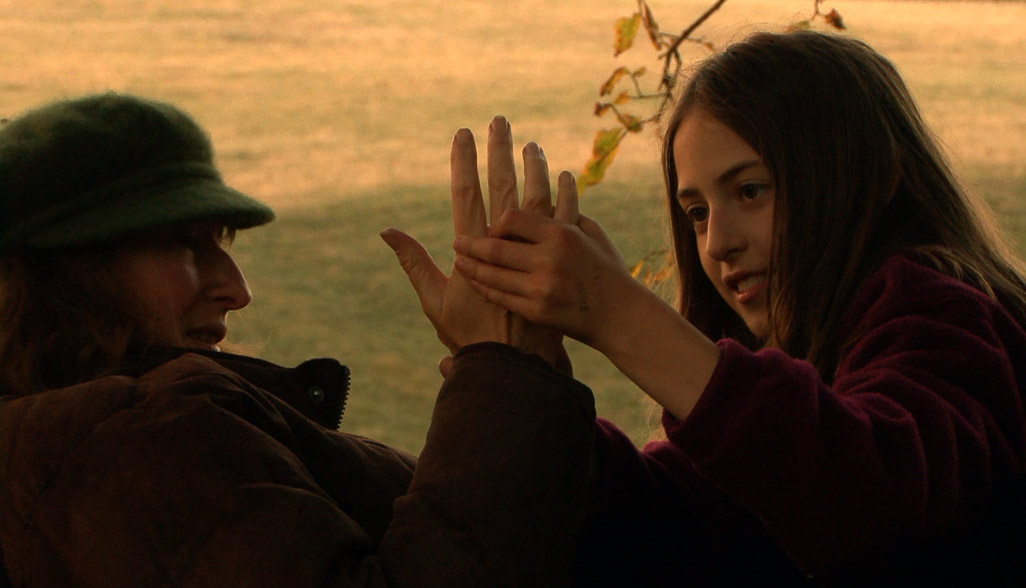
Integral Options Cafe<\/a> for the tip. <\/em><\/p>\n","protected":false},"excerpt":{"rendered":"I just watched Amy Hardie’s recent film The Edge of Dreaming, a documentary about a year in her life during which this science documentarian and self-proclaimed skeptic becomes haunted by a series of dreams that appear to foretell her own death before the year is over. The film becomes an exploration of neuroscience, the meaning […]<\/p>\n","protected":false},"author":99,"featured_media":0,"comment_status":"open","ping_status":"open","sticky":false,"template":"","format":"standard","meta":{"_monsterinsights_skip_tracking":false,"advanced_seo_description":"","jetpack_seo_html_title":"","jetpack_seo_noindex":false,"jetpack_seo_schema_type":"","_jetpack_newsletter_access":"","_jetpack_dont_email_post_to_subs":false,"_jetpack_newsletter_tier_id":0,"_jetpack_memberships_contains_paywalled_content":false,"_jetpack_feature_clip_id":0,"_jetpack_memberships_contains_paid_content":false,"footnotes":"","jetpack_publicize_message":"","jetpack_publicize_feature_enabled":true,"jetpack_social_post_already_shared":false,"jetpack_social_options":{"image_generator_settings":{"template":"highway","default_image_id":0,"font":"","enabled":false},"version":2},"jetpack_post_was_ever_published":false},"categories":[688745,196,691847],"tags":[228,16923,16924,16823,352],"class_list":["post-1340","post","type-post","status-publish","format-standard","hentry","category-cinema_zone","category-ecoculture","category-religion-spirituality","tag-deleuze","tag-depth-psychology","tag-dreaming","tag-ecopsychology","tag-film"],"jetpack_publicize_connections":[],"jetpack_sharing_enabled":true,"jetpack_shortlink":"https:\/\/wp.me\/p4IC4a-lC","jetpack-related-posts":[{"id":12249,"url":"https:\/\/blog.uvm.edu\/aivakhiv\/2021\/11\/08\/dreamlife-of-the-anthropocene\/","url_meta":{"origin":1340,"position":0},"title":"Dreamlife of the Anthropocene","author":"Adrian J Ivakhiv","date":"November 8, 2021","format":false,"excerpt":"The work of environmental\/climate humanists is premised on the assumption that the way we make sense of the world matters. This means that the dreams we have -- Covid pandemic dreams, climate change dreams -- also matter. The best artists, in turn, help shape our collective dreaming. The environmental arts\u2026","rel":"","context":"In "Spirit matter"","block_context":{"text":"Spirit matter","link":"https:\/\/blog.uvm.edu\/aivakhiv\/category\/religion-spirituality\/"},"img":{"alt_text":"","src":"https:\/\/i0.wp.com\/blog.uvm.edu\/aivakhiv\/files\/2021\/11\/Tree_Stories_7_master-1.jpeg?resize=350%2C200&ssl=1","width":350,"height":200,"srcset":"https:\/\/i0.wp.com\/blog.uvm.edu\/aivakhiv\/files\/2021\/11\/Tree_Stories_7_master-1.jpeg?resize=350%2C200&ssl=1 1x, https:\/\/i0.wp.com\/blog.uvm.edu\/aivakhiv\/files\/2021\/11\/Tree_Stories_7_master-1.jpeg?resize=525%2C300&ssl=1 1.5x, https:\/\/i0.wp.com\/blog.uvm.edu\/aivakhiv\/files\/2021\/11\/Tree_Stories_7_master-1.jpeg?resize=700%2C400&ssl=1 2x, https:\/\/i0.wp.com\/blog.uvm.edu\/aivakhiv\/files\/2021\/11\/Tree_Stories_7_master-1.jpeg?resize=1050%2C600&ssl=1 3x"},"classes":[]},{"id":1317,"url":"https:\/\/blog.uvm.edu\/aivakhiv\/2010\/08\/06\/inception-the-anti-matrix\/","url_meta":{"origin":1340,"position":1},"title":"Inception: the anti-Matrix?","author":"Adrian J Ivakhiv","date":"August 6, 2010","format":false,"excerpt":"I've been studiously avoiding reviews of Inception, Christopher Nolan's new metaphysical heist thriller, wanting to see it for myself (intrigued by its premise) before I start to see it through other people's eyes. Today I saw it, and I've now scanned some of the reviews and a bit of blog\u2026","rel":"","context":"In "Cinema"","block_context":{"text":"Cinema","link":"https:\/\/blog.uvm.edu\/aivakhiv\/category\/cinema_zone\/"},"img":{"alt_text":"inception-top.jpg","src":"https:\/\/i0.wp.com\/blog.uvm.edu\/aivakhiv\/files\/2010\/08\/inception-top.jpg?resize=350%2C200&ssl=1","width":350,"height":200},"classes":[]},{"id":4827,"url":"https:\/\/blog.uvm.edu\/aivakhiv\/2011\/06\/27\/malicks-tangled-bank\/","url_meta":{"origin":1340,"position":2},"title":"Malick’s tangled bank","author":"Adrian J Ivakhiv","date":"June 27, 2011","format":false,"excerpt":"\u00a0 It will take some time before I can say anything very intelligible about Terrence Malick's The Tree of Life. But here are some initial thoughts, for what they're worth. (1) This is the film in which Malick just lets it go, and lets it flow... (2) There ought to\u2026","rel":"","context":"In "Cinema"","block_context":{"text":"Cinema","link":"https:\/\/blog.uvm.edu\/aivakhiv\/category\/cinema_zone\/"},"img":{"alt_text":"","src":"https:\/\/i0.wp.com\/blog.uvm.edu\/aivakhiv\/files\/2011\/06\/tree-of-life-movie-275x203.jpg?resize=350%2C200","width":350,"height":200},"classes":[]},{"id":4552,"url":"https:\/\/blog.uvm.edu\/aivakhiv\/2011\/06\/10\/herzogs-cave\/","url_meta":{"origin":1340,"position":3},"title":"Herzog’s cave","author":"Adrian J Ivakhiv","date":"June 10, 2011","format":false,"excerpt":"Cave of Forgotten Dreams is probably not an essential Werner Herzog film, and I sympathize with those (like Bill Benzon) who'd much rather just see the pictures and do without Herzog's prattling on or the \"banshee muzak,\" as Bill calls it. In both the prattling and especially the banshee muzak\u2026","rel":"","context":"In "Cinema"","block_context":{"text":"Cinema","link":"https:\/\/blog.uvm.edu\/aivakhiv\/category\/cinema_zone\/"},"img":{"alt_text":"","src":"https:\/\/i0.wp.com\/blog.uvm.edu\/aivakhiv\/files\/2011\/06\/cave-of-forgotten-dreams-image-275x242.jpg?resize=350%2C200","width":350,"height":200},"classes":[]},{"id":5470,"url":"https:\/\/blog.uvm.edu\/aivakhiv\/2012\/02\/17\/toward-an-ecophilosophical-cinema\/","url_meta":{"origin":1340,"position":4},"title":"Toward an ecophilosophical cinema","author":"Adrian J Ivakhiv","date":"February 17, 2012","format":false,"excerpt":"My paper for this year's Society for Cinema and Media Studies conference, coming up next month in Boston, will focus on the two films that got a lot of side-by-side attention at last year's Cannes festival, Lars von Trier's Melancholia and Terrence Malick's The Tree of Life. Since a few\u2026","rel":"","context":"In "Cinema"","block_context":{"text":"Cinema","link":"https:\/\/blog.uvm.edu\/aivakhiv\/category\/cinema_zone\/"},"img":{"alt_text":"","src":"https:\/\/i0.wp.com\/blog.uvm.edu\/aivakhiv\/files\/2012\/02\/39-275x116.jpg?resize=350%2C200","width":350,"height":200},"classes":[]},{"id":1101,"url":"https:\/\/blog.uvm.edu\/aivakhiv\/2009\/07\/11\/cinematic-ecologies\/","url_meta":{"origin":1340,"position":5},"title":"cinematic ecologies","author":"Adrian J Ivakhiv","date":"July 11, 2009","format":false,"excerpt":"As ecocriticism expands and deepens in scope (of subject matter & media examined), extent (internationally), and diversity (in approaches, connections with other schools of thought, etc.), its interactions with non-literary fields such as cinema studies, theatre\/performance studies, and musicology (as I posted about recently) are starting to develop in healthy\u2026","rel":"","context":"In "Cinema"","block_context":{"text":"Cinema","link":"https:\/\/blog.uvm.edu\/aivakhiv\/category\/cinema_zone\/"},"img":{"alt_text":"stalker7.png","src":"https:\/\/i0.wp.com\/blog.uvm.edu\/aivakhiv\/files\/2009\/07\/stalker7.png?resize=350%2C200&ssl=1","width":350,"height":200},"classes":[]}],"jetpack_featured_media_url":"","_links":{"self":[{"href":"https:\/\/blog.uvm.edu\/aivakhiv\/wp-json\/wp\/v2\/posts\/1340","targetHints":{"allow":["GET"]}}],"collection":[{"href":"https:\/\/blog.uvm.edu\/aivakhiv\/wp-json\/wp\/v2\/posts"}],"about":[{"href":"https:\/\/blog.uvm.edu\/aivakhiv\/wp-json\/wp\/v2\/types\/post"}],"author":[{"embeddable":true,"href":"https:\/\/blog.uvm.edu\/aivakhiv\/wp-json\/wp\/v2\/users\/99"}],"replies":[{"embeddable":true,"href":"https:\/\/blog.uvm.edu\/aivakhiv\/wp-json\/wp\/v2\/comments?post=1340"}],"version-history":[{"count":1,"href":"https:\/\/blog.uvm.edu\/aivakhiv\/wp-json\/wp\/v2\/posts\/1340\/revisions"}],"predecessor-version":[{"id":11892,"href":"https:\/\/blog.uvm.edu\/aivakhiv\/wp-json\/wp\/v2\/posts\/1340\/revisions\/11892"}],"wp:attachment":[{"href":"https:\/\/blog.uvm.edu\/aivakhiv\/wp-json\/wp\/v2\/media?parent=1340"}],"wp:term":[{"taxonomy":"category","embeddable":true,"href":"https:\/\/blog.uvm.edu\/aivakhiv\/wp-json\/wp\/v2\/categories?post=1340"},{"taxonomy":"post_tag","embeddable":true,"href":"https:\/\/blog.uvm.edu\/aivakhiv\/wp-json\/wp\/v2\/tags?post=1340"}],"curies":[{"name":"wp","href":"https:\/\/api.w.org\/{rel}","templated":true}]}}
 <\/p>\n
 <\/p>\n