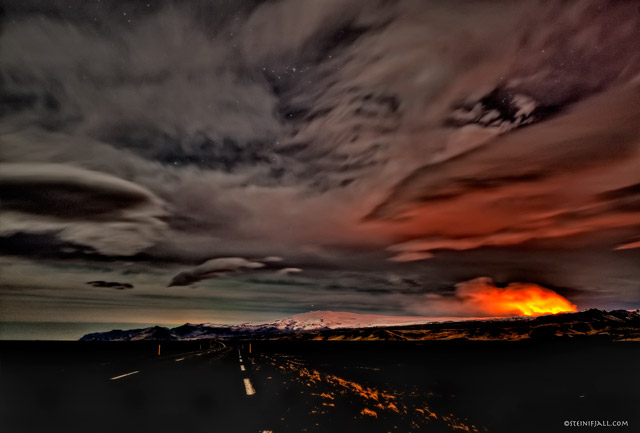
Film Studies for Free<\/a> page on him.)<\/em><\/p>\n","protected":false},"excerpt":{"rendered":"Volcanic eruption films aren’t plentiful enough to make their own genre. Most of them fall into the disaster genre or the straight documentary video. Werner Herzog’s 1977 film La Soufri\u00e8re, about the anticipated eruption in 1976 of an active volcano on the island of Guadeloupe, is different. Like his quasi-science-fictional films — Fata Morgana, Lessons […]<\/p>\n","protected":false},"author":99,"featured_media":0,"comment_status":"open","ping_status":"open","sticky":false,"template":"","format":"standard","meta":{"_monsterinsights_skip_tracking":false,"advanced_seo_description":"","jetpack_seo_html_title":"","jetpack_seo_noindex":false,"jetpack_seo_schema_type":"","_jetpack_newsletter_access":"","_jetpack_dont_email_post_to_subs":false,"_jetpack_newsletter_tier_id":0,"_jetpack_memberships_contains_paywalled_content":false,"_jetpack_feature_clip_id":0,"_jetpack_memberships_contains_paid_content":false,"footnotes":"","jetpack_publicize_message":"","jetpack_publicize_feature_enabled":true,"jetpack_social_post_already_shared":false,"jetpack_social_options":{"image_generator_settings":{"template":"highway","default_image_id":0,"font":"","enabled":false},"version":2},"jetpack_post_was_ever_published":false},"categories":[688745,196,689701],"tags":[16835,16890,16891,16892,206,4469,4470,443],"class_list":["post-1246","post","type-post","status-publish","format-standard","hentry","category-cinema_zone","category-ecoculture","category-media_ecology","tag-dark-vitalism","tag-event","tag-eventology","tag-herzog","tag-iceland","tag-landscape","tag-nature","tag-volcanoes"],"jetpack_publicize_connections":[],"jetpack_sharing_enabled":true,"jetpack_shortlink":"https:\/\/wp.me\/p4IC4a-k6","jetpack-related-posts":[{"id":5100,"url":"https:\/\/blog.uvm.edu\/aivakhiv\/2011\/07\/23\/moving-environments-day-2\/","url_meta":{"origin":1246,"position":0},"title":"Moving Environments, Day 2","author":"Adrian J Ivakhiv","date":"July 23, 2011","format":false,"excerpt":"Here are my notes from Day 2 of the Moving Environments workshop in Munich. The same caveats apply as yesterday: they're hastily typed up and reflect only my own interpretation of what transpired. If any of the participants would prefer not to have their ideas shared in this way, I\u2026","rel":"","context":"In "Cinema"","block_context":{"text":"Cinema","link":"https:\/\/blog.uvm.edu\/aivakhiv\/category\/cinema_zone\/"},"img":{"alt_text":"","src":"","width":0,"height":0},"classes":[]},{"id":1336,"url":"https:\/\/blog.uvm.edu\/aivakhiv\/2010\/09\/11\/assemblages-species-genres-cinema\/","url_meta":{"origin":1246,"position":1},"title":"assemblages, species, genres, & cinema","author":"Adrian J Ivakhiv","date":"September 11, 2010","format":false,"excerpt":"(Warning: This is a long and involved post.) In reposting Steven Shaviro's critique of DeLanda's A New Philosophy of Society, Levi Bryant has reminded me of one of the impetuses (impeti?) that moved me to a Whiteheadian perspective. Steven's review is excellent, and it prefigured what eventually became his book\u2026","rel":"","context":"In "Cinema"","block_context":{"text":"Cinema","link":"https:\/\/blog.uvm.edu\/aivakhiv\/category\/cinema_zone\/"},"img":{"alt_text":"","src":"","width":0,"height":0},"classes":[]},{"id":1313,"url":"https:\/\/blog.uvm.edu\/aivakhiv\/2010\/07\/06\/writing\/","url_meta":{"origin":1246,"position":2},"title":"writing…","author":"Adrian J Ivakhiv","date":"July 6, 2010","format":false,"excerpt":"It's been slow here because I am hard at work on the manuscript of Ecologies of the Moving Image, which I had hoped to finish this summer. The first three chapters are complete or close to it; the last three and final epilogue are in various stages of semi-completion. Until\u2026","rel":"","context":"In "Cinema"","block_context":{"text":"Cinema","link":"https:\/\/blog.uvm.edu\/aivakhiv\/category\/cinema_zone\/"},"img":{"alt_text":"","src":"","width":0,"height":0},"classes":[]},{"id":6643,"url":"https:\/\/blog.uvm.edu\/aivakhiv\/2013\/04\/19\/ecology-film-philosophy\/","url_meta":{"origin":1246,"position":3},"title":"Ecology ~ Film ~ Philosophy","author":"Adrian J Ivakhiv","date":"April 19, 2013","format":false,"excerpt":"Here's what I'm slated to teach this summer, for 3 weeks beginning May 20. Ecology - Film - Philosophy How have movies changed our perception of ourselves, the Earth, and the relationship between the two? How are they continuing to do that as we plunge into an era of digital\u2026","rel":"","context":"In "Media ecology"","block_context":{"text":"Media ecology","link":"https:\/\/blog.uvm.edu\/aivakhiv\/category\/media_ecology\/"},"img":{"alt_text":"Eco-Film-Phil-poster-2013-2","src":"https:\/\/i0.wp.com\/blog.uvm.edu\/aivakhiv\/files\/2013\/04\/Eco-Film-Phil-poster-2013-2.jpg?resize=350%2C200","width":350,"height":200},"classes":[]},{"id":4969,"url":"https:\/\/blog.uvm.edu\/aivakhiv\/2011\/07\/11\/nature-vs-grace\/","url_meta":{"origin":1246,"position":4},"title":"Nature vs. Grace?","author":"Adrian J Ivakhiv","date":"July 11, 2011","format":false,"excerpt":"The latest issue of Precipitate: Journal of the New Environmental Imagination -- which looks like an excellent issue -- includes a review of Terrence Malick's \"The Tree of Life\" that reminds me how important it is to pay attention to the dialogical and heteroglossic texture of Malick's films, and how\u2026","rel":"","context":"In "Cinema"","block_context":{"text":"Cinema","link":"https:\/\/blog.uvm.edu\/aivakhiv\/category\/cinema_zone\/"},"img":{"alt_text":"","src":"https:\/\/i0.wp.com\/blog.uvm.edu\/aivakhiv\/files\/2011\/07\/jessica-chastain-tree-of-life-275x148.jpg?resize=350%2C200","width":350,"height":200},"classes":[]},{"id":5234,"url":"https:\/\/blog.uvm.edu\/aivakhiv\/2011\/08\/30\/cinemas-of-the-not-yet\/","url_meta":{"origin":1246,"position":5},"title":"Cinemas of the Not-Yet","author":"Adrian J Ivakhiv","date":"August 30, 2011","format":false,"excerpt":"Another remixed outtake\/spinoff from my Ecologies of the Moving Image book project has come out, this time in the Journal for the Study of Religion, Nature, and Culture, in a special theme issue on \"Imagining Ecotopia.\" My piece is called \"Cinema of the Not-Yet: The Utopian Promise of Film as\u2026","rel":"","context":"In "Cinema"","block_context":{"text":"Cinema","link":"https:\/\/blog.uvm.edu\/aivakhiv\/category\/cinema_zone\/"},"img":{"alt_text":"","src":"","width":0,"height":0},"classes":[]}],"jetpack_featured_media_url":"","_links":{"self":[{"href":"https:\/\/blog.uvm.edu\/aivakhiv\/wp-json\/wp\/v2\/posts\/1246","targetHints":{"allow":["GET"]}}],"collection":[{"href":"https:\/\/blog.uvm.edu\/aivakhiv\/wp-json\/wp\/v2\/posts"}],"about":[{"href":"https:\/\/blog.uvm.edu\/aivakhiv\/wp-json\/wp\/v2\/types\/post"}],"author":[{"embeddable":true,"href":"https:\/\/blog.uvm.edu\/aivakhiv\/wp-json\/wp\/v2\/users\/99"}],"replies":[{"embeddable":true,"href":"https:\/\/blog.uvm.edu\/aivakhiv\/wp-json\/wp\/v2\/comments?post=1246"}],"version-history":[{"count":0,"href":"https:\/\/blog.uvm.edu\/aivakhiv\/wp-json\/wp\/v2\/posts\/1246\/revisions"}],"wp:attachment":[{"href":"https:\/\/blog.uvm.edu\/aivakhiv\/wp-json\/wp\/v2\/media?parent=1246"}],"wp:term":[{"taxonomy":"category","embeddable":true,"href":"https:\/\/blog.uvm.edu\/aivakhiv\/wp-json\/wp\/v2\/categories?post=1246"},{"taxonomy":"post_tag","embeddable":true,"href":"https:\/\/blog.uvm.edu\/aivakhiv\/wp-json\/wp\/v2\/tags?post=1246"}],"curies":[{"name":"wp","href":"https:\/\/api.w.org\/{rel}","templated":true}]}}
 <\/a><\/p>\n