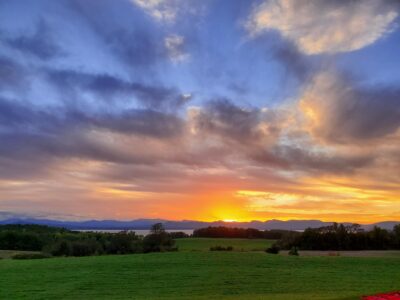
stories<\/a> that will shelter us collectively through to the next summer. If the hope of a flourishing-humanity-to-come seems distant and ungraspable, at least we know that there are cycles to model that hope on, and patterns to tap into. Sunsets, sunrises, autumns, springs. Happy equinox.<\/p>\n\n\n\n<\/p>\n\n\n\nMarking the passage of the seasons from summer to winter and back again is something people have done for millennia. Seasons are reliable — anyone living outside the equatorial band will continue to have colder and warmer seasons, probably for the rest of our lives. But many of us are realizing that larger cycles may […]<\/p>\n","protected":false},"author":99,"featured_media":0,"comment_status":"open","ping_status":"open","sticky":false,"template":"","format":"standard","meta":{"_monsterinsights_skip_tracking":false,"advanced_seo_description":"","jetpack_seo_html_title":"","jetpack_seo_noindex":false,"jetpack_seo_schema_type":"","_jetpack_newsletter_access":"","_jetpack_dont_email_post_to_subs":false,"_jetpack_newsletter_tier_id":0,"_jetpack_memberships_contains_paywalled_content":false,"_jetpack_feature_clip_id":0,"_jetpack_memberships_contains_paid_content":false,"footnotes":"","jetpack_publicize_message":"","jetpack_publicize_feature_enabled":true,"jetpack_social_post_already_shared":true,"jetpack_social_options":{"image_generator_settings":{"template":"highway","default_image_id":0,"font":"","enabled":false},"version":2},"jetpack_post_was_ever_published":false},"categories":[688615,520594,660440,691847],"tags":[520698,660486,660316,38510,455018,16849,25060,12534],"class_list":["post-12144","post","type-post","status-publish","format-standard","hentry","category-anthropo_scene","category-climate-politics","category-manifestos-and-auguries","category-religion-spirituality","tag-climate-crisis","tag-climate-justice-2","tag-equinox","tag-future","tag-holocene","tag-hope","tag-inequality","tag-seasons"],"jetpack_publicize_connections":[],"jetpack_sharing_enabled":true,"jetpack_shortlink":"https:\/\/wp.me\/p4IC4a-39S","jetpack-related-posts":[{"id":11685,"url":"https:\/\/blog.uvm.edu\/aivakhiv\/2021\/03\/24\/equinoxx\/","url_meta":{"origin":12144,"position":0},"title":"Equinoxx","author":"Adrian J Ivakhiv","date":"March 24, 2021","format":false,"excerpt":"Equinoxes and solstices are geometrical phenomena. They mark the passage of time in ways that are easy to understand and more or less universal. I understand people\u2019s desire to watch for them, to mark them out, and to even reclaim them as somehow more primordial than other kinds of temporal\u2026","rel":"","context":"In "Climate change"","block_context":{"text":"Climate change","link":"https:\/\/blog.uvm.edu\/aivakhiv\/category\/climate-politics\/"},"img":{"alt_text":"","src":"https:\/\/i0.wp.com\/blog.uvm.edu\/aivakhiv\/files\/2021\/03\/cfpslider02-1170x500-1.jpeg?resize=350%2C200&ssl=1","width":350,"height":200,"srcset":"https:\/\/i0.wp.com\/blog.uvm.edu\/aivakhiv\/files\/2021\/03\/cfpslider02-1170x500-1.jpeg?resize=350%2C200&ssl=1 1x, https:\/\/i0.wp.com\/blog.uvm.edu\/aivakhiv\/files\/2021\/03\/cfpslider02-1170x500-1.jpeg?resize=525%2C300&ssl=1 1.5x, https:\/\/i0.wp.com\/blog.uvm.edu\/aivakhiv\/files\/2021\/03\/cfpslider02-1170x500-1.jpeg?resize=700%2C400&ssl=1 2x, https:\/\/i0.wp.com\/blog.uvm.edu\/aivakhiv\/files\/2021\/03\/cfpslider02-1170x500-1.jpeg?resize=1050%2C600&ssl=1 3x"},"classes":[]},{"id":13669,"url":"https:\/\/blog.uvm.edu\/aivakhiv\/2024\/07\/01\/the-3-body-problems-ecological-fallacy\/","url_meta":{"origin":12144,"position":1},"title":"The 3 Body Problem’s Ecological Fallacy","author":"Adrian J Ivakhiv","date":"July 1, 2024","format":false,"excerpt":"This is a slightly evolved out-take from my recent Vermont Humanities talk, which can be viewed here. Netflix\u2019s 3 Body Problem was remarkably entertaining, I thought, but the whole San-Ti plot line is built around a basic ecological fallacy. Let me explain. (And I\u2019m referring here to the Netflix series,\u2026","rel":"","context":"In "Eco-theory"","block_context":{"text":"Eco-theory","link":"https:\/\/blog.uvm.edu\/aivakhiv\/category\/ecophilosophy\/"},"img":{"alt_text":"","src":"https:\/\/i0.wp.com\/blog.uvm.edu\/aivakhiv\/files\/2024\/06\/image-3.png?resize=350%2C200&ssl=1","width":350,"height":200,"srcset":"https:\/\/i0.wp.com\/blog.uvm.edu\/aivakhiv\/files\/2024\/06\/image-3.png?resize=350%2C200&ssl=1 1x, https:\/\/i0.wp.com\/blog.uvm.edu\/aivakhiv\/files\/2024\/06\/image-3.png?resize=525%2C300&ssl=1 1.5x, https:\/\/i0.wp.com\/blog.uvm.edu\/aivakhiv\/files\/2024\/06\/image-3.png?resize=700%2C400&ssl=1 2x, https:\/\/i0.wp.com\/blog.uvm.edu\/aivakhiv\/files\/2024\/06\/image-3.png?resize=1050%2C600&ssl=1 3x"},"classes":[]},{"id":6240,"url":"https:\/\/blog.uvm.edu\/aivakhiv\/2012\/10\/13\/take-home-message\/","url_meta":{"origin":12144,"position":2},"title":"Take-home message","author":"Adrian J Ivakhiv","date":"October 13, 2012","format":false,"excerpt":"... from Bill McKibben and 350.org's new roadshow, \"Do The Math,\" previewed tonight here at the University of Vermont: If climate scientists (and climate change modelers) are correct that the burning of more than a small fraction of the world's available fossil fuel reserves will trigger changes that will induce\u2026","rel":"","context":"In "Climate change"","block_context":{"text":"Climate change","link":"https:\/\/blog.uvm.edu\/aivakhiv\/category\/climate-politics\/"},"img":{"alt_text":"","src":"https:\/\/i0.wp.com\/www.english.rfi.fr\/sites\/images.rfi.fr\/files\/aef_image\/2012-08-07T075801Z_1893471262_GM2E887175W01_RTRMADP_3_PHILIPPINES-FLOODS_0.JPG?resize=350%2C200","width":350,"height":200},"classes":[]},{"id":12651,"url":"https:\/\/blog.uvm.edu\/aivakhiv\/2022\/07\/10\/klimat\/","url_meta":{"origin":12144,"position":3},"title":"Klimat","author":"Adrian J Ivakhiv","date":"July 10, 2022","format":false,"excerpt":"I've just posted a piece called \"Understanding Russia\" over at UKR-TAZ, in which I look at some proximate and deeper causes of continued Russian support for the invasion of Ukraine. It's mainly a review of some recent literature. The part that may be of greatest interest to readers of Immanence\u2026","rel":"","context":"In "Politics"","block_context":{"text":"Politics","link":"https:\/\/blog.uvm.edu\/aivakhiv\/category\/politics_postpolitics\/"},"img":{"alt_text":"","src":"","width":0,"height":0},"classes":[]},{"id":8751,"url":"https:\/\/blog.uvm.edu\/aivakhiv\/2016\/05\/09\/fort-mcmurray-as-fictive-image\/","url_meta":{"origin":12144,"position":4},"title":"Fort McMurray as fictive image","author":"Adrian J Ivakhiv","date":"May 9, 2016","format":false,"excerpt":"With reality like this, who needs fiction? https:\/\/youtu.be\/i13EDTnoj1w It's from Fort McMurray, last week. Harrowing. While the impact of such images is undeniable, the debate over whether and how they are related to climate change is a debate the rest of us should not shy away from. Elizabeth Kolbert's piece\u2026","rel":"","context":"In "Climate change"","block_context":{"text":"Climate change","link":"https:\/\/blog.uvm.edu\/aivakhiv\/category\/climate-politics\/"},"img":{"alt_text":"","src":"https:\/\/i0.wp.com\/img.youtube.com\/vi\/i13EDTnoj1w\/0.jpg?resize=350%2C200","width":350,"height":200},"classes":[]},{"id":8472,"url":"https:\/\/blog.uvm.edu\/aivakhiv\/2015\/11\/19\/the-climate-connection\/","url_meta":{"origin":12144,"position":5},"title":"The climate connection","author":"Adrian J Ivakhiv","date":"November 19, 2015","format":false,"excerpt":"How connected are the recent Paris attacks\u00a0with the upcoming United Nations Climate Change Conference, or COP 21 (Conference of the Parties to the United Nations Framework Convention on Climate Change)? At first glance, the targeting\u00a0of Paris for ISIS's act of war on civilian populations would seem to be motivated by\u2026","rel":"","context":"In "Climate change"","block_context":{"text":"Climate change","link":"https:\/\/blog.uvm.edu\/aivakhiv\/category\/climate-politics\/"},"img":{"alt_text":"","src":"","width":0,"height":0},"classes":[]}],"jetpack_featured_media_url":"","_links":{"self":[{"href":"https:\/\/blog.uvm.edu\/aivakhiv\/wp-json\/wp\/v2\/posts\/12144","targetHints":{"allow":["GET"]}}],"collection":[{"href":"https:\/\/blog.uvm.edu\/aivakhiv\/wp-json\/wp\/v2\/posts"}],"about":[{"href":"https:\/\/blog.uvm.edu\/aivakhiv\/wp-json\/wp\/v2\/types\/post"}],"author":[{"embeddable":true,"href":"https:\/\/blog.uvm.edu\/aivakhiv\/wp-json\/wp\/v2\/users\/99"}],"replies":[{"embeddable":true,"href":"https:\/\/blog.uvm.edu\/aivakhiv\/wp-json\/wp\/v2\/comments?post=12144"}],"version-history":[{"count":7,"href":"https:\/\/blog.uvm.edu\/aivakhiv\/wp-json\/wp\/v2\/posts\/12144\/revisions"}],"predecessor-version":[{"id":12154,"href":"https:\/\/blog.uvm.edu\/aivakhiv\/wp-json\/wp\/v2\/posts\/12144\/revisions\/12154"}],"wp:attachment":[{"href":"https:\/\/blog.uvm.edu\/aivakhiv\/wp-json\/wp\/v2\/media?parent=12144"}],"wp:term":[{"taxonomy":"category","embeddable":true,"href":"https:\/\/blog.uvm.edu\/aivakhiv\/wp-json\/wp\/v2\/categories?post=12144"},{"taxonomy":"post_tag","embeddable":true,"href":"https:\/\/blog.uvm.edu\/aivakhiv\/wp-json\/wp\/v2\/tags?post=12144"}],"curies":[{"name":"wp","href":"https:\/\/api.w.org\/{rel}","templated":true}]}}
 <\/figure>\n","protected":false},"excerpt":{"rendered":"