The horror, the horror…<\/a>” was motivated by something tangible (the Vietnam War, the Belgian Congo, war itself, the murky depths humans sometimes descend to), von Trier’s war is a war at the heart of nature, humanity, everything, and it is a war we lost a long time ago.<\/p>\nSlyly dedicating the film to Andrei Tarkovsky, von Trier is Tarkovsky’s demon brother, his evil genius twin. Where Tarkovsky believes in hope against hope, salvation in a universe that sometimes seems stacked against it (though it’s really us who stack it, and in which ultimately time, nature, and beauty redeem us), von Trier’s is a hopeless beauty, a laugh in the face of cruel darkness, which happens to be a cruel darkness he imagines into existence for us and lets us wander around in at our own risk. He’s too good a filmmaker for us to watch as he drives off a cliff; someone ought to rein him in.<\/p>\n","protected":false},"excerpt":{"rendered":"
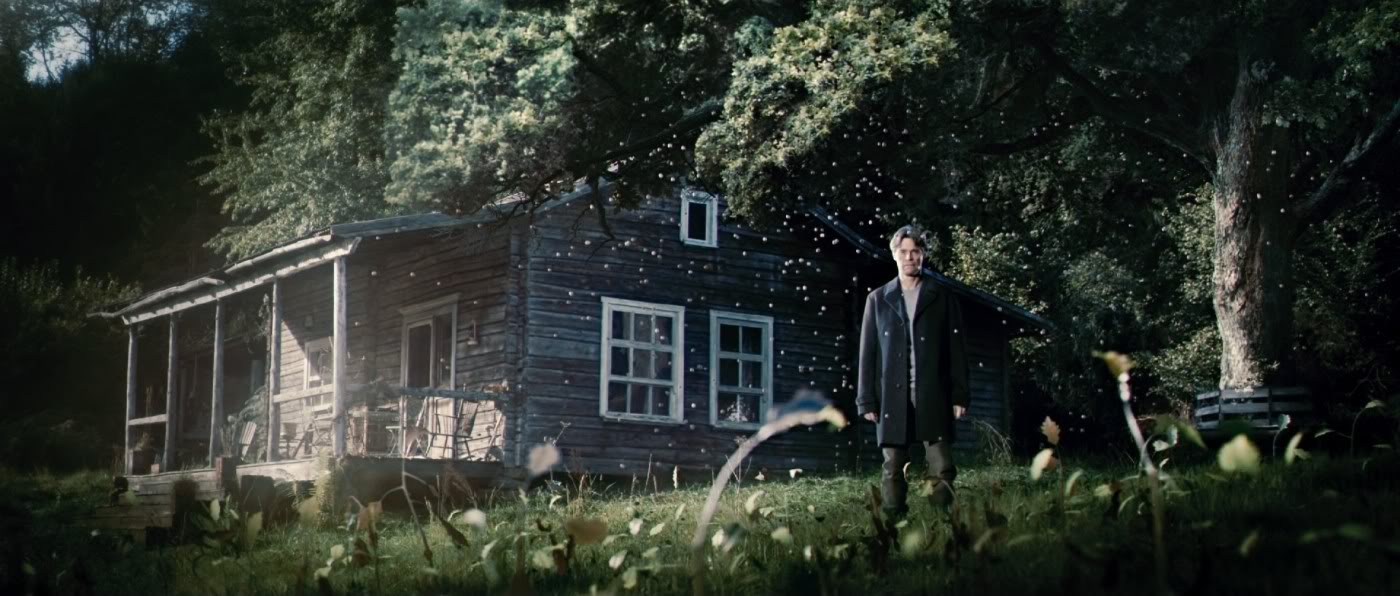
I went to see Lars von Trier’s Antichrist a few days ago. Of the reviews I’ve read, Brent Plate’s captures the way in which the film’s images persist in haunting one’s consciousness. Plate, aptly I think, compares the film to Leni Riefenstahl’s Triumph of the Will, the film that Adolf Hitler called “an incomparable glorification […]<\/p>\n","protected":false},"author":99,"featured_media":0,"comment_status":"open","ping_status":"open","sticky":false,"template":"","format":"standard","meta":{"_monsterinsights_skip_tracking":false,"advanced_seo_description":"","jetpack_seo_html_title":"","jetpack_seo_noindex":false,"jetpack_seo_schema_type":"","_jetpack_newsletter_access":"","_jetpack_dont_email_post_to_subs":false,"_jetpack_newsletter_tier_id":0,"_jetpack_memberships_contains_paywalled_content":false,"_jetpack_feature_clip_id":0,"_jetpack_memberships_contains_paid_content":false,"footnotes":"","jetpack_publicize_message":"","jetpack_publicize_feature_enabled":true,"jetpack_social_post_already_shared":false,"jetpack_social_options":{"image_generator_settings":{"template":"highway","default_image_id":0,"font":"","enabled":false},"version":2},"jetpack_post_was_ever_published":false},"categories":[688745,691847,689354],"tags":[4470],"class_list":["post-1211","post","type-post","status-publish","format-standard","hentry","category-cinema_zone","category-religion-spirituality","category-image_nation","tag-nature"],"jetpack_publicize_connections":[],"jetpack_sharing_enabled":true,"jetpack_shortlink":"https:\/\/wp.me\/p4IC4a-jx","jetpack-related-posts":[{"id":3997,"url":"https:\/\/blog.uvm.edu\/aivakhiv\/2011\/05\/18\/malick-vs-von-trier-cannes\/","url_meta":{"origin":1211,"position":0},"title":"Malick vs. von Trier @ Cannes","author":"Adrian J Ivakhiv","date":"May 18, 2011","format":false,"excerpt":"The artist of sublime faith (of the pantheistic, immanent kind) versus the artist of sublime cynicism. \"Earth is heaven (and purgatory)\" versus \"Earth is evil.\" With catastrophe and Kubrick's 2001 lurking in the background of both... http:\/\/youtu.be\/fLPe0fHuZsc MUBI has a good run-down of the reviews from Cannes of these two\u2026","rel":"","context":"In "Cinema"","block_context":{"text":"Cinema","link":"https:\/\/blog.uvm.edu\/aivakhiv\/category\/cinema_zone\/"},"img":{"alt_text":"","src":"https:\/\/i0.wp.com\/img.youtube.com\/vi\/fLPe0fHuZsc\/0.jpg?resize=350%2C200","width":350,"height":200},"classes":[]},{"id":5470,"url":"https:\/\/blog.uvm.edu\/aivakhiv\/2012\/02\/17\/toward-an-ecophilosophical-cinema\/","url_meta":{"origin":1211,"position":1},"title":"Toward an ecophilosophical cinema","author":"Adrian J Ivakhiv","date":"February 17, 2012","format":false,"excerpt":"My paper for this year's Society for Cinema and Media Studies conference, coming up next month in Boston, will focus on the two films that got a lot of side-by-side attention at last year's Cannes festival, Lars von Trier's Melancholia and Terrence Malick's The Tree of Life. Since a few\u2026","rel":"","context":"In "Cinema"","block_context":{"text":"Cinema","link":"https:\/\/blog.uvm.edu\/aivakhiv\/category\/cinema_zone\/"},"img":{"alt_text":"","src":"https:\/\/i0.wp.com\/blog.uvm.edu\/aivakhiv\/files\/2012\/02\/39-275x116.jpg?resize=350%2C200","width":350,"height":200},"classes":[]},{"id":7499,"url":"https:\/\/blog.uvm.edu\/aivakhiv\/2014\/04\/21\/visiting-uc-davis\/","url_meta":{"origin":1211,"position":2},"title":"Visiting UC Davis","author":"Adrian J Ivakhiv","date":"April 21, 2014","format":false,"excerpt":"I'll be participating in the Mellon-sponsored Environments and Societies Colloquium Series next Wednesday, April 30,\u00a0at the University of California Davis. My colloquium paper, entitled \u201cOn Matters of Concern: Ecology, Ontological Politics, and the Anthropo(s)cene,\u201d is\u00a0available for reading on the E & S website. (It's a variation of a chapter for\u2026","rel":"","context":"In "Media ecology"","block_context":{"text":"Media ecology","link":"https:\/\/blog.uvm.edu\/aivakhiv\/category\/media_ecology\/"},"img":{"alt_text":"Kirsten_Dunst_Charlotte_Gainsbourg_Melancholia_LarsVonTrier_film_3","src":"https:\/\/i0.wp.com\/blog.uvm.edu\/aivakhiv\/files\/2014\/04\/Kirsten_Dunst_Charlotte_Gainsbourg_Melancholia_LarsVonTrier_film_3-300x127.jpg?resize=350%2C200","width":350,"height":200},"classes":[]},{"id":1895,"url":"https:\/\/blog.uvm.edu\/aivakhiv\/2010\/12\/21\/the-tree-of-life-in-pieces\/","url_meta":{"origin":1211,"position":3},"title":"The tree of life, in pieces","author":"Adrian J Ivakhiv","date":"December 21, 2010","format":false,"excerpt":"If you haven't seen the trailer for Terence Malick's forthcoming film The Tree of Life, you're just not a real cineaste, are you? What's better than burrowing analytically into the Heideggerian ecophilosophical themes of Malick's films (Badlands, Days of Heaven, The Thin Red Line, The New World -- before making\u2026","rel":"","context":"In "Cinema"","block_context":{"text":"Cinema","link":"https:\/\/blog.uvm.edu\/aivakhiv\/category\/cinema_zone\/"},"img":{"alt_text":"","src":"https:\/\/i0.wp.com\/blog.uvm.edu\/aivakhiv\/files\/2010\/12\/5-275x145.jpg?resize=350%2C200","width":350,"height":200},"classes":[]},{"id":1205,"url":"https:\/\/blog.uvm.edu\/aivakhiv\/2010\/02\/25\/morsels\/","url_meta":{"origin":1211,"position":4},"title":"morsels","author":"Adrian J Ivakhiv","date":"February 25, 2010","format":false,"excerpt":"First, for anyone living in a JonStewartless alternate universe... Stewart (and Samantha Bee) giving Glenn Beck a history lesson (about progressivism) was pretty funny. Beck may be a cheap target, but it's also a cheap (free) history lesson. Take this country back, Glenn, way back... www.thedailyshow.com Next, Denmark's new tourist\u2026","rel":"","context":"In "Cinema"","block_context":{"text":"Cinema","link":"https:\/\/blog.uvm.edu\/aivakhiv\/category\/cinema_zone\/"},"img":{"alt_text":"","src":"","width":0,"height":0},"classes":[]},{"id":7016,"url":"https:\/\/blog.uvm.edu\/aivakhiv\/2013\/11\/08\/society-space-interview\/","url_meta":{"origin":1211,"position":5},"title":"Society & Space interview","author":"Adrian J Ivakhiv","date":"November 8, 2013","format":false,"excerpt":"Society and Space has posted a conversation\/interview that Harlan Morehouse carried out with me in early October. While it's focused on Ecologies of the Moving Image, we talk about plenty of other things -- nature and culture, the eco-humanities, the Anthropocene, ontology, critical geography, Buddhism, Zizek, Peirce, nationalism, withdrawn objects,\u2026","rel":"","context":"In "Cinema"","block_context":{"text":"Cinema","link":"https:\/\/blog.uvm.edu\/aivakhiv\/category\/cinema_zone\/"},"img":{"alt_text":"","src":"","width":0,"height":0},"classes":[]}],"jetpack_featured_media_url":"","_links":{"self":[{"href":"https:\/\/blog.uvm.edu\/aivakhiv\/wp-json\/wp\/v2\/posts\/1211","targetHints":{"allow":["GET"]}}],"collection":[{"href":"https:\/\/blog.uvm.edu\/aivakhiv\/wp-json\/wp\/v2\/posts"}],"about":[{"href":"https:\/\/blog.uvm.edu\/aivakhiv\/wp-json\/wp\/v2\/types\/post"}],"author":[{"embeddable":true,"href":"https:\/\/blog.uvm.edu\/aivakhiv\/wp-json\/wp\/v2\/users\/99"}],"replies":[{"embeddable":true,"href":"https:\/\/blog.uvm.edu\/aivakhiv\/wp-json\/wp\/v2\/comments?post=1211"}],"version-history":[{"count":0,"href":"https:\/\/blog.uvm.edu\/aivakhiv\/wp-json\/wp\/v2\/posts\/1211\/revisions"}],"wp:attachment":[{"href":"https:\/\/blog.uvm.edu\/aivakhiv\/wp-json\/wp\/v2\/media?parent=1211"}],"wp:term":[{"taxonomy":"category","embeddable":true,"href":"https:\/\/blog.uvm.edu\/aivakhiv\/wp-json\/wp\/v2\/categories?post=1211"},{"taxonomy":"post_tag","embeddable":true,"href":"https:\/\/blog.uvm.edu\/aivakhiv\/wp-json\/wp\/v2\/tags?post=1211"}],"curies":[{"name":"wp","href":"https:\/\/api.w.org\/{rel}","templated":true}]}}
 <\/p>\n