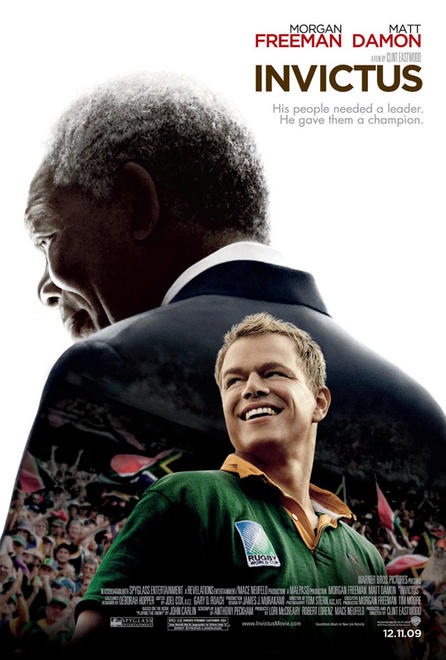
{"id":1172,"date":"2010-01-02T15:24:00","date_gmt":"2010-01-02T20:24:00","guid":{"rendered":"http:\/\/blog.uvm.edu\/aivakhiv\/2010\/01\/02\/invictus-the-politics-of-affect\/"},"modified":"2021-06-10T10:07:03","modified_gmt":"2021-06-10T15:07:03","slug":"invictus-the-politics-of-affect","status":"publish","type":"post","link":"https:\/\/blog.uvm.edu\/aivakhiv\/2010\/01\/02\/invictus-the-politics-of-affect\/","title":{"rendered":"Invictus &amp; the politics of affect"},"content":{"rendered":"<p><img data-recalc-dims=\"1\" loading=\"lazy\" decoding=\"async\" alt=\"invictus_poster.jpg\" src=\"https:\/\/i0.wp.com\/blog.uvm.edu\/aivakhiv\/files\/2010\/01\/invictus_poster.jpg?resize=119%2C176&#038;ssl=1\" width=\"119\" height=\"176\" \/><\/p>\n<p>While Clint Eastwood\u2019s new film Invictus has little to say about ecology or ecopolitics, it does have a lot to do with the relationship between identity, affect, and territory &#8212; a topic that was an important concern in my first book and is the main theme of one of the two manuscripts I\u2019m currently working on. I\u2019m guessing Invictus may get nominated for at least the best actor (Morgan Freeman as Nelson Mandela) and best director (Eastwood) Oscars, so I&#8217;ll hazard a few initial thoughts about it, having seen it a few days ago.<\/p>\n<p>There are many things one can say about its individual pieces: Freeman\u2019s portrayal of Mandela, Eastwood\u2019s directorial prowess and editorial conceits (e.g., masculinity and its transformation through individual experience), the film\u2019s characterization of post-Apartheid South Africa, and the <a href=\"http:\/\/www.newsweek.com\/id\/226323\">accuracy<\/a> or <a href=\"http:\/\/www.telegraph.co.uk\/sport\/rugbyunion\/news\/6796296\/Hollywood-gets-it-wrong-over-Nelson-Mandela-and-Francois-Pienaar.html\">inaccuracy<\/a> of its portrayal of the actual story of the South African national rugby team\u2019s, the <a href=\"http:\/\/en.wikipedia.org\/wiki\/South_Africa_national_rugby_union_team\">Springboks<\/a>\u2019, stunning rise to victory in the 1995 World Cup. What interests me most, though, is its depiction of mass affect and collective emotion, which are portrayed in two of the main variants these take in today\u2019s world: sports and politics.<\/p>\n<p><!--more--><br \/>\nMandela\u2019s wisdom, as depicted in the film, is that he understood the value of symbols and the work they could do in building the post-Apartheid South African state. The symbol in this case was the national rugby team (with its green-and-gold uniforms, reflecting Apartheid South Africa&#8217;s flag) which, unlike the football\/soccer team, was dominated by white South Africans, and which had been unpopular, even despised, among the Blacks who constituted Mandela\u2019s support base. To unify the nation, Mandela recognized, rugby must be brought into, bought into, and taken \u2018ownership\u2019 of, by the new South African \u2018rainbow nation.\u2019<\/p>\n<p>This project of building a unified South Africa places that country somewhere near the tail end of the history of modern nation-building: in this, post-Apartheid South Africa was playing catch-up to the other nation-states of the World-of-Sovereign-States, that is, of the map, the territorial economy, the system of territorialization, of modernity. As a televisual phenomenon taking place in the national public sphere of South Africa, but also within the global public sphere of competitive international sports, South Africa\u2019s nation-building moment also takes place on the cusp of &#8212; but not yet in &#8212; the postmodern, wired and networked, image-saturated world we have entered more fully since the 1990s. The film, in effect, looks back nostalgically onto a significant moment at the tail end of the late modern post Cold War (but pre-9-11) world order, the order of the world we knew before the economic crashes of \u201897 (and now \u201808), the global\/counter-global events of Seattle et al. (\u201899 and on), the world of 9-11 and the wars on \u2018terror,\u2019 and the world of Kyoto\/Copenhagen and climate crisis. In this early 1990s moment, the bipolar world had collapsed into neoliberal flatness (in Tom Friedman&#8217;s ideological sense of a &#8216;flat&#8217; global world, which was only really &#8216;flat&#8217; for the wealthy), and South Africa was liberated to join the community of liberal, multicultural nations.<\/p>\n<p>The film, however, follows the classic Hollywood template in skimming over the most interesting possibilities in this Mandela-rugby relationship. Mandela both understood the value of symbolism and was (and is) a potent symbol himself &#8212; and therefore he was a kind of symbol squared, a symbol rendered self-reflexive, cognizant of his own symbolism and of \u2018symbolicity\u2019 itself. So there is a potential reflexivity in the subject matter that could give us an insight into the image- or symbol-system of postmodern global politics, an image-consciousness that could be prised open to reveal a more interesting (and explosive) potential at its core. (Don Beck of the Global Center for Human Emergence <a href=\"http:\/\/community.nytimes.com\/rate-review\/movies.nytimes.com\/movie\/405513\/Invictus\/overview?permid=81#comment81\">claims some credit<\/a> for the conflict-resolution paradigm underlying Mandela&#8217;s thinking; but that&#8217;s only a piece of what I&#8217;m getting at.) But the film fails to go there: by reducing the Mandela\/rugby moment into the cypher of Mandela\u2019s \u2018greatness\u2019 or political shrewdness, qualities he possesses as an Eastwoodian masculine hero, it leaves intact and thereby tames the symbol of \u2018Mandela\u2019 by focusing on the symbol of sport. (The other causal factor credited for Mandela and the Springboks&#8217; team captain&#8217;s insights is poetry, specifically William Ernest Henley&#8217;s Victorian-era poem &#8220;<a href=\"http:\/\/en.wikipedia.org\/wiki\/Invictus\">Invictus<\/a>.&#8221;)<\/p>\n<p>Or maybe not&#8230; It is a powerful film, and much of its power comes from the way it portrays the collective emotionality embodied in spectator sports, the ritualistic combat of male warrior teams hitched to the project of local or, in this case, national identity. Its main affective vector is the transformation by which the Bokkers become both a genuinely national team and a winning team. The film\u2019s crystal moments, those affect-carrying plateaus or peak moments embodying its main tensions, are those surrounding the combat on the field and its emanation into the crowd: slowed down crunches of bodies against bodies (unprotected, unlike in American football), sweat leaping between them out of their crushing impact, rapid cuts between on-field plays that occur too quickly to be followed and can only be enjoyed as sheer spectacle, and crowds leaping for joy, singing, applauding, and dancing, their emotions spreading like waves across the stadium, the streets, and the nation. These are sutured together initially with swelling, velvety musical chords, and later with anthemic music that ultimately transmogrifies into Ladysmith Black Mambazo&#8217;s hymnal &#8220;<a href=\"http:\/\/www.ilike.com\/artist\/Ladysmith+Black+Mambazo\/track\/World+in+Union+95\">World in Union &#8217;95<\/a>,&#8221; its tune set to the soaring melody of Gustav Holst\u2019s radiant \u2018Jupiter\u2019 (from The Planets).<\/p>\n<p>This slippage from the new national anthem into the Holstian <a href=\"http:\/\/www.youtube.com\/watch?v=qju5aW6uKzc\">globalist<\/a> anthem, with its lofty musical rhetorics and we-are-the-world <a href=\"http:\/\/www.autolyrics.com\/lyrics\/for\/World_In_Union_95\/by\/Liceo_Naval\">lyrics<\/a> &#8212; &#8220;There&#8217;s a dream I feel, so rare so real, of a world in union, a world as one, gathering together, one mind one heart, every creed every colour, once joined never part. [&#8230;] it&#8217;s the world in union, the world as one, as we strive to reach our destiny, a new age has begun&#8221; &#8212; is consistent with Eastwood&#8217;s liberal American globalism. Globalism, of course, plays along with a variety of agendas, and the one that Invictus points to, indirectly, is the neoliberal one, with Mandela meeting with various world leaders to arrange for better trade relations. While he appears more excited by rugby than trade relations, his pet rugby project is really of a piece with the project of building the new South African &#8220;brand&#8221; &#8212; the rainbow nation as reliable and attractive trade partner.<\/p>\n<p>But competitive sports, like other identity-building projects, unify as they separate: they produce an &#8220;us&#8221; at the same time as they generate a &#8220;them,&#8221; they reterritorialize whilst deterritorializing, with the new territorial defenses facing in two directions at once. As black and white South Africans come to unite around their rugby team, they come to unite against New Zealand&#8217;s <a href=\"http:\/\/www.youtube.com\/watch?v=z4LNjNXt1yM\">Maori-flavored<\/a> All Blacks. To the extent that we become wrapped up in the movement of the film&#8217;s main affective trajectory, we take from it what it offers us: a love of sports (rugby, in this case) and an admiration for Mandela\u2019s individual wisdom or insight. (And to the extent that Mandela gets reduced to a rugby-lover rather than a serious politician, this is a loss.) Together, what we take is a renewed belief in the power of masculinity, in both its wizened elder (Mandela) and adolescent bonding (rugby\/combat) archetypes, which complement each other in the dynamic of modern manhood, without necessarily questioning either the combative collectivity of the second or the system of relations (political-economic &#8220;realism&#8221;) in which the first is lodged. Apartheid, like other aberrations, is sloughed off, but the world at large reproduces itself without much change.<\/p>\n<p>We also get an affective involvement with post-racial multiculturalism as both national and potentially global projects. But does neoliberal globalism, in which states compete in sports but cooperate in trade, follow the Adam Smithian ideal in which the &#8220;rising tide&#8221; of economic growth &#8220;lifts all boats,&#8221; or is it still primarily an order in which some nations prosper at others&#8217; expense, with the lowest-caste nations desirous of upward-mobility, and a few occasionally transitioning to a middle level with the aid of nation-building projects like this one, but with the spoils almost always going mostly to (old or new) political-economic elites?<\/p>\n<p>What are the politics of mass emotionality, especially the emotionality of competitive sports, shown here in one of its most violent guises (rugby)? How do mass sporting events mobilize emotion and affect, and how do these get channeled into specific political-economic projects, from local economic &#8216;growth machines&#8217; to projects (as in this film) of national branding, the nation-building of the postmodern neoliberal world order? How do they reterritorialize identity-affect flows, generating new unities and new conflicts from old, moribund elements? How is their mobilizing effect shaped and steered by the reconfiguration of local-national-global media industries (corporate consolidation, cable and internet growth at the expense of traditional media, etc.) and by media and cultural policy at the national and international levels (such as Mandela\u2019s sports-cultural policy here)? Rugby being a particular relic of British imperialism (even if its roots go as deep as <a href=\"http:\/\/en.wikipedia.org\/wiki\/Rugby_football\">ancient Greece<\/a>), its globalization is an artifact of the colonial past, but also part of the present scramble for defining the arenas within which transnational cultural and identity politics evolve toward (and away from) the global. If the film doesn&#8217;t answer these kinds of questions &#8212; in fact, it barely raises most of them &#8212; at least it offers an opportunity to think about them.<\/p>\n<p>A final thought concerns the promo pic shown above, depicting Springboks captain Francois Pienaar (Matt Damon) inside the figure of, but on the back of, Mandela\/Freeman, the evolving father-son-like relationship between the two being a sub-thread in the film&#8217;s narrative. (Here&#8217;s a photo of the <a href=\"http:\/\/www.cnn.com\/2009\/SHOWBIZ\/Movies\/12\/10\/invictus\/index.html\">original 1995 moment.<\/a>) Is this white South Africa redeeming itself by finding its place within the new Black\/rainbow South Africa? Mandela harboring the white Apartheid past in his breast as he raises South Africa to new respectability? The two entwined in yin-yang-like embrace, but without necessarily knowing it (which makes the film about the recognition of this mutual dependency)? Is there not something odd and paradoxical about Mandela, a man of established power and aged (and declining?) wisdom, ex-Communist and socialist man of the people, looking down as if his moment of fame has passed, while the young, white Pienaar stands gestating inside Mandela&#8217;s frame, poised and agile like a springbok (antelope) gearing up toward new and future heights? Or is the image perhaps that of the neoliberal global order encompassing its struggling multitudes &#8212; as shadow, or as image and Hollywood fantasy &#8212; even as it continues to marginalize them in physical fact? (In that case, Pienaar represents the multitude and Mandela the power elite. Nope, that doesn&#8217;t really work&#8230;) Yin-and-yang can also be wielded in more than one direction.<\/p>\n<p>There&#8217;s food for thought in the film, and Freeman&#8217;s strong performance, for most viewers, lends an immediacy to an inspirational figure, Mandela, who many young people (like my students) might hardly know. So despite its shortcomings, I would give Eastwood a thumbs up on it.<\/p>\n<p><span class=\"embed-youtube\" style=\"text-align:center; display: block;\"><iframe loading=\"lazy\" class=\"youtube-player\" width=\"500\" height=\"282\" src=\"https:\/\/www.youtube.com\/embed\/z4LNjNXt1yM?version=3&#038;rel=1&#038;showsearch=0&#038;showinfo=1&#038;iv_load_policy=1&#038;fs=1&#038;hl=en-US&#038;autohide=2&#038;wmode=transparent\" allowfullscreen=\"true\" style=\"border:0;\" sandbox=\"allow-scripts allow-same-origin allow-popups allow-presentation allow-popups-to-escape-sandbox\"><\/iframe><\/span><\/p>\n","protected":false},"excerpt":{"rendered":"<p>There are many things one can say about Invictus: about Freeman\u2019s portrayal of Mandela, Eastwood\u2019s directorial prowess and editorial conceits (e.g., masculinity and its transformation through individual experience), the film&#8217;s characterization of post-Apartheid South Africa, and the <a href=\"http:\/\/www.newsweek.com\/id\/226323\">accuracy<\/a> or <a href=\"http:\/\/www.telegraph.co.uk\/sport\/rugbyunion\/news\/6796296\/Hollywood-gets-it-wrong-over-Nelson-Mandela-and-Francois-Pienaar.html\">inaccuracy<\/a> of its portrayal of the actual story of the South African national rugby team\u2019s, the <a href=\"http:\/\/en.wikipedia.org\/wiki\/South_Africa_national_rugby_union_team\">Springboks<\/a>\u2019, stunning rise to victory in the 1995 World Cup. What interests me most, though, is its depiction of mass affect and collective emotion, which are portrayed in two of the main variants these take in today\u2019s world: sports and politics. [. . .]<\/p>\n<p>The film\u2019s crystal moments, those affect-carrying plateaus or peak moments embodying its main tensions, are those surrounding the combat on the field and its emanation into the crowd: slowed down crunches of bodies against bodies (unprotected, unlike in American football), sweat leaping between them out of their crushing impact, rapid cuts between on-field plays that occur too quickly to be followed and can only be enjoyed as sheer spectacle, and crowds leaping for joy, singing, applauding, and dancing, their emotions spreading like waves across the stadium, the streets, and the nation. [. . .]<\/p>\n","protected":false},"author":99,"featured_media":0,"comment_status":"open","ping_status":"open","sticky":false,"template":"","format":"standard","meta":{"_monsterinsights_skip_tracking":false,"_monsterinsights_sitenote_active":false,"_monsterinsights_sitenote_note":"","_monsterinsights_sitenote_category":0,"advanced_seo_description":"","jetpack_seo_html_title":"","jetpack_seo_noindex":false,"jetpack_post_was_ever_published":false,"_jetpack_newsletter_access":"","_jetpack_dont_email_post_to_subs":false,"_jetpack_newsletter_tier_id":0,"_jetpack_memberships_contains_paywalled_content":false,"_jetpack_memberships_contains_paid_content":false,"footnotes":"","jetpack_publicize_message":"","jetpack_publicize_feature_enabled":true,"jetpack_social_post_already_shared":false,"jetpack_social_options":{"image_generator_settings":{"template":"highway","default_image_id":0,"font":"","enabled":false},"version":2}},"categories":[688745,689701,691215,689354],"tags":[352,16843,123663,651],"class_list":["post-1172","post","type-post","status-publish","format-standard","hentry","category-cinema_zone","category-media_ecology","category-politics_postpolitics","category-image_nation","tag-film","tag-neoliberalism","tag-politics","tag-south-africa"],"jetpack_publicize_connections":[],"jetpack_featured_media_url":"","jetpack_sharing_enabled":true,"jetpack_shortlink":"https:\/\/wp.me\/p4IC4a-iU","jetpack-related-posts":[{"id":6643,"url":"https:\/\/blog.uvm.edu\/aivakhiv\/2013\/04\/19\/ecology-film-philosophy\/","url_meta":{"origin":1172,"position":0},"title":"Ecology ~ Film ~ Philosophy","author":"Adrian J Ivakhiv","date":"April 19, 2013","format":false,"excerpt":"Here's what I'm slated to teach this summer, for 3 weeks beginning May 20. Ecology - Film - Philosophy How have movies changed our perception of ourselves, the Earth, and the relationship between the two? How are they continuing to do that as we plunge into an era of digital\u2026","rel":"","context":"In &quot;Media ecology&quot;","block_context":{"text":"Media ecology","link":"https:\/\/blog.uvm.edu\/aivakhiv\/category\/media_ecology\/"},"img":{"alt_text":"Eco-Film-Phil-poster-2013-2","src":"https:\/\/i0.wp.com\/blog.uvm.edu\/aivakhiv\/files\/2013\/04\/Eco-Film-Phil-poster-2013-2.jpg?resize=350%2C200","width":350,"height":200},"classes":[]},{"id":6451,"url":"https:\/\/blog.uvm.edu\/aivakhiv\/2013\/01\/18\/introducing-e2mc-2\/","url_meta":{"origin":1172,"position":1},"title":"Introducing e\u00b2mc","author":"Adrian J Ivakhiv","date":"January 18, 2013","format":false,"excerpt":"e2mc, short for \"evolving ecological media cultures,\" has gone online. e2mc\u00a0begins as the class blog for the University of Vermont course \u201cMedia Ecologies and Cultural Politics.\u201d Its long-term goal is to become the online face of the UVM Ecomedia Studies Lab, which is still in development. The blog is open\u2026","rel":"","context":"In &quot;Media ecology&quot;","block_context":{"text":"Media ecology","link":"https:\/\/blog.uvm.edu\/aivakhiv\/category\/media_ecology\/"},"img":{"alt_text":"","src":"https:\/\/i0.wp.com\/blog.uvm.edu\/e2mc\/files\/2013\/01\/7229651-albert-einsteins-famous-matematical-equation-e-mc2-written-on-a-chalkboard2-300x201.jpg?resize=350%2C200","width":350,"height":200},"classes":[]},{"id":2908,"url":"https:\/\/blog.uvm.edu\/aivakhiv\/2011\/03\/15\/observations-politics-media-empathy\/","url_meta":{"origin":1172,"position":2},"title":"Observations: politics &#8211; media &#8211; empathy","author":"Adrian J Ivakhiv","date":"March 15, 2011","format":false,"excerpt":"A few observations from the events of the last week or so: (1) Tsunamis happen. When they do, in a globally media-connected world, they bring us all a little closer together. (Not all of us; those who don't wish to be brought closer may drift further apart. But, to risk\u2026","rel":"","context":"In &quot;Media ecology&quot;","block_context":{"text":"Media ecology","link":"https:\/\/blog.uvm.edu\/aivakhiv\/category\/media_ecology\/"},"img":{"alt_text":"","src":"","width":0,"height":0},"classes":[]},{"id":1685,"url":"https:\/\/blog.uvm.edu\/aivakhiv\/2010\/12\/19\/books-of-the-decade-in-ecocultural-theory\/","url_meta":{"origin":1172,"position":3},"title":"Books of the decade in ecocultural theory","author":"Adrian J Ivakhiv","date":"December 19, 2010","format":false,"excerpt":"What books, published over the last ten years, have contributed most cogently and profoundly to our thinking about the relationship between culture and nature, ecology and society? (That's to name just two of the dualisms this blog regularly throws into question.) Who have been the most important ecocultural theorists so\u2026","rel":"","context":"In &quot;Eco-culture&quot;","block_context":{"text":"Eco-culture","link":"https:\/\/blog.uvm.edu\/aivakhiv\/category\/ecoculture\/"},"img":{"alt_text":"","src":"https:\/\/i0.wp.com\/blog.uvm.edu\/aivakhiv\/files\/2010\/12\/article-1268225-094368A3000005DC-346_964x641-275x182.jpg?resize=350%2C200","width":350,"height":200},"classes":[]},{"id":1204,"url":"https:\/\/blog.uvm.edu\/aivakhiv\/2010\/02\/23\/authoritarian-body-politics\/","url_meta":{"origin":1172,"position":4},"title":"authoritarian body politics","author":"Adrian J Ivakhiv","date":"February 23, 2010","format":false,"excerpt":"(This post has been sitting in my Drafts folder for several days, but since it mentions The White Ribbon, which I just named 2009's best film, I thought I might as well share it.) I just got around to reading Timothy Snyder's brilliantly lucid article Holocaust: The ignored reality, fittingly\u2026","rel":"","context":"In &quot;Cinema&quot;","block_context":{"text":"Cinema","link":"https:\/\/blog.uvm.edu\/aivakhiv\/category\/cinema_zone\/"},"img":{"alt_text":"wildthings.gif","src":"https:\/\/i0.wp.com\/blog.uvm.edu\/aivakhiv\/files\/2009\/10\/wildthings.gif?resize=350%2C200&ssl=1","width":350,"height":200},"classes":[]},{"id":5252,"url":"https:\/\/blog.uvm.edu\/aivakhiv\/2011\/09\/02\/shaviro-responds\/","url_meta":{"origin":1172,"position":5},"title":"Shaviro responds","author":"Adrian J Ivakhiv","date":"September 2, 2011","format":false,"excerpt":"Steven Shaviro has posted his response to my and three other \"curators' notes\" on his Post-Cinematic Affect. The twists and turns of the discussions that have followed each of the daily commentaries have been fascinating. Somehow we've gone from a discussion of recent cinema to theorizing about affect and the\u2026","rel":"","context":"In &quot;Cinema&quot;","block_context":{"text":"Cinema","link":"https:\/\/blog.uvm.edu\/aivakhiv\/category\/cinema_zone\/"},"img":{"alt_text":"","src":"","width":0,"height":0},"classes":[]}],"_links":{"self":[{"href":"https:\/\/blog.uvm.edu\/aivakhiv\/wp-json\/wp\/v2\/posts\/1172","targetHints":{"allow":["GET"]}}],"collection":[{"href":"https:\/\/blog.uvm.edu\/aivakhiv\/wp-json\/wp\/v2\/posts"}],"about":[{"href":"https:\/\/blog.uvm.edu\/aivakhiv\/wp-json\/wp\/v2\/types\/post"}],"author":[{"embeddable":true,"href":"https:\/\/blog.uvm.edu\/aivakhiv\/wp-json\/wp\/v2\/users\/99"}],"replies":[{"embeddable":true,"href":"https:\/\/blog.uvm.edu\/aivakhiv\/wp-json\/wp\/v2\/comments?post=1172"}],"version-history":[{"count":1,"href":"https:\/\/blog.uvm.edu\/aivakhiv\/wp-json\/wp\/v2\/posts\/1172\/revisions"}],"predecessor-version":[{"id":11899,"href":"https:\/\/blog.uvm.edu\/aivakhiv\/wp-json\/wp\/v2\/posts\/1172\/revisions\/11899"}],"wp:attachment":[{"href":"https:\/\/blog.uvm.edu\/aivakhiv\/wp-json\/wp\/v2\/media?parent=1172"}],"wp:term":[{"taxonomy":"category","embeddable":true,"href":"https:\/\/blog.uvm.edu\/aivakhiv\/wp-json\/wp\/v2\/categories?post=1172"},{"taxonomy":"post_tag","embeddable":true,"href":"https:\/\/blog.uvm.edu\/aivakhiv\/wp-json\/wp\/v2\/tags?post=1172"}],"curies":[{"name":"wp","href":"https:\/\/api.w.org\/{rel}","templated":true}]}}