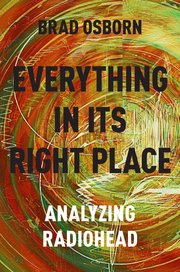
{"id":11530,"date":"2021-01-21T22:04:56","date_gmt":"2021-01-22T03:04:56","guid":{"rendered":"http:\/\/blog.uvm.edu\/aivakhiv\/?p=11530"},"modified":"2021-06-14T07:09:51","modified_gmt":"2021-06-14T12:09:51","slug":"ecologizing-radiohead","status":"publish","type":"post","link":"https:\/\/blog.uvm.edu\/aivakhiv\/2021\/01\/21\/ecologizing-radiohead\/","title":{"rendered":"Ecologizing Radiohead"},"content":{"rendered":"\n<p>What better way to understand ecological perception than by applying it to a study of the music of Radiohead, right?<\/p>\n\n\n\n<p>Okay, I&#8217;ll explain. &#8220;Ecological perception&#8221; is not what you might think. (And it isn&#8217;t what I, in my writing, call &#8220;<a href=\"https:\/\/blog.uvm.edu\/aivakhiv\/2021\/01\/15\/why-three-ecologies\/\">perceptual ecology.<\/a>&#8220;) It is a <a href=\"https:\/\/www.frontiersin.org\/articles\/10.3389\/fpsyg.2018.02228\/full\">psychological theory<\/a> that studies the perception of an organism (such as a human) in terms of how it responds to the perceived &#8220;<a href=\"https:\/\/en.wikipedia.org\/wiki\/Affordance\">affordances<\/a>&#8221; presented by that organism&#8217;s environment. Perception takes place not in the head or the brain, but in the (nervous system mediated) correspondence between organism and environment. Based in <a href=\"https:\/\/www.amazon.com\/Ecological-Approach-Perception-Psychology-Routledge\/dp\/1848725787\">James J. Gibson&#8217;s<\/a> studies of <a href=\"https:\/\/kopernio.com\/viewer?doi=10.2307%2F1574269&amp;token=WzEwODQwMzAsIjEwLjIzMDcvMTU3NDI2OSJd.yIlsk3SgIESqhKp-rDpgY_b6GwM\">visual perception<\/a> and applied to music by <a href=\"https:\/\/www.amazon.com\/Ways-Listening-Ecological-Approach-Perception\/dp\/0199773904\">Eric Clarke<\/a>, <a href=\"https:\/\/www.mtosmt.org\/issues\/mto.05.11.4\/mto.05.11.4.moore.html\">Alan Moore<\/a>, and others, ecological perception in music looks for commonalities and differences in people&#8217;s interpretation of music and traces these to cross-cultural invariants and cultural variations and &#8220;specifications&#8221; in how listeners respond to musical affordances.<\/p>\n\n\n\n<p>What does all of this have to do with ecology? And with Radiohead? For the most part, it doesn&#8217;t have much to do with the first, at least as ecology is commonly conceived, but I want to point out how it does or how it can. As for Radiohead, they are as good an example of &#8220;<a href=\"https:\/\/blog.uvm.edu\/aivakhiv\/2014\/03\/08\/rethinking-the-three-ecologies\/\">process-relationally<\/a> interesting&#8221; music as any. (One of their albums made my &#8220;<a href=\"https:\/\/blog.uvm.edu\/aivakhiv\/2017\/05\/08\/greatest-albums-of-the-lp-era\/\">top 10 albums&#8221; list<\/a> a few years ago, though really it&#8217;s their later work that cashes out on the promise of that album.) <\/p>\n\n\n\n<p>The main reason to connect the two, however, is because that&#8217;s what Brad Osborn does in his book <a href=\"https:\/\/global.oup.com\/academic\/product\/everything-in-its-right-place-9780190629236?cc=us&amp;lang=en&amp;\">Everything in its Right Place: Analyzing Radiohead<\/a> (Oxford University Press, 2017). What I want to do here is to extend his argument to the sort of thing I mean when I talk about perceptual ecology.  <\/p>\n\n\n\n<!--more-->\n\n\n\n<figure class=\"wp-block-image size-large is-resized\"><a href=\"https:\/\/global.oup.com\/academic\/product\/everything-in-its-right-place-9780190629236?cc=us&amp;lang=en&amp;\"><img data-recalc-dims=\"1\" loading=\"lazy\" decoding=\"async\" src=\"https:\/\/i0.wp.com\/blog.uvm.edu\/aivakhiv\/files\/2021\/01\/9780190629236.jpg?resize=119%2C180&#038;ssl=1\" alt=\"\" class=\"wp-image-11540\" width=\"119\" height=\"180\" \/><\/a><\/figure>\n\n\n\n<p>Osborn&#8217;s argument about &#8220;<em>why Radiohead?<\/em>&#8221; goes something like this. Unlike &#8220;smooth jazz,&#8221; <a href=\"https:\/\/en.wikipedia.org\/wiki\/Muzak#:~:text=The%20term%20Muzak%20is%20%E2%80%93%20at,%22%20or%20%22lift%20music%22.\">Muzak<\/a>, or Britney Spears&#8217;s &#8220;<a href=\"https:\/\/www.youtube.com\/watch?v=wsHbHR3Os6U\">Oops, I Did it Again<\/a>,&#8221; a song that is &#8220;so transparently native to an established style,&#8221; and unlike (at the other end) &#8220;aggressively abstract&#8221; works like Stockhausen&#8217;s <em><a href=\"https:\/\/www.youtube.com\/watch?v=69x_R5F5s2I\">Kontakte<\/a><\/em>, which &#8220;bombard[&#8230;] our senses with sounds for which we have little to no frame of reference,&#8221; Radiohead&#8217;s music locates itself somewhere in an ideal mid-range, a &#8220;sweet spot along the Spears-Stockhausen continuum,&#8221; in that it consistently presents listeners &#8220;with recognizable musical stimuli, which we register as expectation, only to subvert those expectations with potent surprises&#8221; (pp. 9, 11).<\/p>\n\n\n\n<p>In other words, music is about expectation: following it, and challenging it. Some of us favor more of the latter, either because we&#8217;re overly familiar with too much of the former (music that follows expectations) or for other, more personal reasons, while others, captivated enough by life&#8217;s exigencies, enjoy the former all the more eagerly. Osborn details how Radiohead follows and challenges expectations in relation to musical form, rhythm\/metre, timbre, and harmony and voice leading. <\/p>\n\n\n\n<p>For all that I enjoy listening to Radiohead, this thesis isn&#8217;t all that exciting to me<em> except<\/em> in its application to the details of the music. The details, after all, are where life gets exciting: in this case, in the specific rhythms, movements and textures, the sonic and melodic play, the singing and the lyrics (and a chapter could have been, but wasn&#8217;t, written on Thom Yorke&#8217;s lyrics), and in the complex interplay between all of these. <\/p>\n\n\n\n<p>This is, arguably, where Osborn&#8217;s application of the theory of ecological perception begins to get<em> <\/em>more genuinely ecological. He writes:<\/p>\n\n\n\n<blockquote class=\"wp-block-quote is-layout-flow wp-block-quote-is-layout-flow\"><p>An ecological approach to understanding and perceiving form necessarily happens <em>in time.<\/em> First-listening experiences, during which we improvise a map of musical events, offer valuable insight into that approach. Subsequent hearings are also interesting, as we continually balance real-time and retrospective experiences in an attempt to make sense of the whole from the parts. After years of interacting with Radiohead songs, I find that the real-time experience of formal perception rubs against or enhances what I now know the song will eventually do, and I still listen for new ways to understand those larger structures in relationship to the perceptually immediate parts. The experience <em>is truly an ecological one, just as intimate and interactive as dancing in a familiar space,<\/em> noting how your ever-changing position with regard to other elements and organisms affects your understanding of the space as a whole. [p. 40, emphasis added]<\/p><\/blockquote>\n\n\n\n<p>What he means, of course, is that our experience of music, like our experience of anything, is dynamic, processual, and relational within its environment(s). This is arguably a <a href=\"https:\/\/blog.uvm.edu\/aivakhiv\/2020\/04\/11\/process-relational-ecologies-querying-some-terms\/\">process-relational<\/a> thesis (as I&#8217;ve <a href=\"https:\/\/blog.uvm.edu\/aivakhiv\/2010\/06\/20\/relationalism-earth-jazz-the-solstice\/\">written about before<\/a>) but not quite an <em>ecological<\/em> one, and arguably not even what Gibson had in mind in his studies of animals and their environments. It&#8217;s, at best, the ecological study of the very <em>limited<\/em> environment of human listeners and recorded music. <\/p>\n\n\n\n<p>There is a point at which Osborn&#8217;s analysis becomes more than that, however, and that&#8217;s when he describes the video of &#8220;The Pyramid Song.&#8221; The video features a &#8220;post-terrestrial earth&#8221; and a lone humanoid, seemingly &#8220;adapted to a watery planet,&#8221; descending to the underwater ruins of an abandoned city. The city features &#8220;[s]kyscrapers, floating office chairs, webs of power lines, and dozens of cars; all tombstones of a past society that has literally drowned itself in technology.&#8221; <\/p>\n\n\n\n<figure class=\"wp-block-embed-youtube wp-block-embed is-type-video is-provider-youtube wp-embed-aspect-16-9 wp-has-aspect-ratio\"><div class=\"wp-block-embed__wrapper\">\n<span class=\"embed-youtube\" style=\"text-align:center; display: block;\"><iframe loading=\"lazy\" class=\"youtube-player\" width=\"500\" height=\"282\" src=\"https:\/\/www.youtube.com\/embed\/3M_Gg1xAHE4?version=3&#038;rel=1&#038;showsearch=0&#038;showinfo=1&#038;iv_load_policy=1&#038;fs=1&#038;hl=en-US&#038;autohide=2&#038;wmode=transparent\" allowfullscreen=\"true\" style=\"border:0;\" sandbox=\"allow-scripts allow-same-origin allow-popups allow-presentation allow-popups-to-escape-sandbox\"><\/iframe><\/span>\n<\/div><\/figure>\n\n\n\n<p>Osborn rightly refers to &#8220;the relationship between timbral and visual representations of the <em>technological\/organic tension<\/em> throughout Radiohead\u2019s output&#8221; (p. 193, emphasis added). He concludes that the humanoid &#8220;Diver&#8221; figure &#8220;would rather die in a comfortable easy chair than do anything to improve the outside world. Nothing could be more evocative of Dante\u2019s &#8216;lukewarm,&#8217; or Radiohead\u2019s critique of modern technocracy\u201d (193). <\/p>\n\n\n\n<p>But he leaves it at that, which is the place where I&#8217;d want to begin. Music videos, with their visual imagery, narratives, and semiotically vibrant audio-visual intersections, add layers of complexity to recorded music. The lyrics and the images add a concreteness as well as a reverberance to the referential meanings, all of which point well beyond the abstractions of form, rhythm, timbre, and harmony &#8212; to the world that we live in. That world is not only <em>represented<\/em> in the video(s), the lyrics, and arguably in the musical form itself; it is literally <em>brought<\/em> to us by those things. Sound and image mediate the world for, to, and with us. <\/p>\n\n\n\n<p>Radiohead <em>takes place<\/em> for us not only as songs to be listened to, but as videos to be streamed, playlists and channels to be subscribed to, commentaries to be shared and applied to our lives, and characters both real and imagined (Thom Yorke, Jonny Greenwood, et al, and the characters played in and by their songs and videos), all in the midst of scenarios marked by our own knowledge, hopes, and fears &#8212; of climate change, swelling seas, and everything else going on in the world (our worlds). <\/p>\n\n\n\n<p>The technologies that bring us Radiohead (and the blog you are reading) are also the technologies that face and surround us every day, that choke us with the carbon burned from their powering, that pile up on mountains of trash once we&#8217;ve discarded them, and that entangle us in their undersea cable networks and infrastructural realignments of the material ecologies of this planet. Our perception of a song takes place amidst our perception of the world, and that perception is mediated in ways that are unavoidably ecological, whether we recognize it or not. <\/p>\n\n\n\n<p>There&#8217;s a way in which &#8220;The Pyramid Song&#8221; in its song-video combo, like a lot of other Radiohead songs (and videos), recognizes this messy, complicated entanglement. And it collects it for us and <em>primes<\/em> us for recognizing it in certain ways. That it doesn&#8217;t go further than that is not so much a sign of its weakness, but a sign of the fact that, like Thom Yorke and Radiohead, none of us are very sure how to take things further, beyond the<em> recognition<\/em> of entanglement. But doing that, it also takes us into a space where we can explore what that recognition <em>feels <\/em>like.    <\/p>\n\n\n\n<p>Another Radiohead song-and-video that does this kind of thing for me &#8212; with hardly a hint of any environmental\/ecological references &#8212; is &#8220;Daydreaming.&#8221; <\/p>\n\n\n\n<figure class=\"wp-block-embed-youtube wp-block-embed is-type-video is-provider-youtube wp-embed-aspect-16-9 wp-has-aspect-ratio\"><div class=\"wp-block-embed__wrapper\">\n<span class=\"embed-youtube\" style=\"text-align:center; display: block;\"><iframe loading=\"lazy\" class=\"youtube-player\" width=\"500\" height=\"282\" src=\"https:\/\/www.youtube.com\/embed\/TTAU7lLDZYU?version=3&#038;rel=1&#038;showsearch=0&#038;showinfo=1&#038;iv_load_policy=1&#038;fs=1&#038;hl=en-US&#038;autohide=2&#038;wmode=transparent\" allowfullscreen=\"true\" style=\"border:0;\" sandbox=\"allow-scripts allow-same-origin allow-popups allow-presentation allow-popups-to-escape-sandbox\"><\/iframe><\/span>\n<\/div><\/figure>\n\n\n\n<p>The daydreamer here, played by Thom Yorke, walks (zombie-like? self-assured?) into and out of worlds, with their intimacies and attachments &#8212; family worlds, work worlds, indoor and outdoor environments of kitchen, living room, school, laundromat, hospital, hallways and stairwells and empty warehouses and freight elevators, a glimpse of woods, the sunlit sea, a beckoning mountain with a cave and the sleeping animal we return to &#8212; never sure of his own entanglements or obligations, seeking place and seemingly never finding it. Always passing through, always on the way, always climbing, waking, and never waking. <\/p>\n\n\n\n<p>Watching him (the scruffy, somnolent, white male <em>anthropos<\/em>), we take on this persona of the dreamer, who &#8220;never learn[s]\/ Beyond the point\/ Of no return\/ And it&#8217;s too late\/ The damage is done.&#8221; Through all the walking, the seeking, the entrapment, there is still the sense that we might wake ourselves up. We are on the cusp, one eyelid open. (Even as we return to the womb of sleep.)<\/p>\n\n\n\n<p>And after all, the song ends (haunting us after its final chord fades&#8230; are we awake yet?).   <\/p>\n\n\n\n<p>There are other ways to dream, to feel (and flee) the recognition of entanglements, and to wake up. <\/p>\n\n\n\n<p>But any one way is a start.<\/p>\n\n\n\n<p>*          *          *          *          *<\/p>\n\n\n\n<p><strong>Further viewing<\/strong> <strong>and listening<\/strong> <\/p>\n\n\n\n<p>Here&#8217;s Radiohead going oceanic for BBC&#8217;s Blue Planet 2 (&#8220;How do you turn an experimental rock song into a soundtrack for the ocean?&#8221;). Required viewing for any ecocritical analysis of the band&#8230;<\/p>\n\n\n\n<figure class=\"wp-block-embed-youtube wp-block-embed is-type-video is-provider-youtube wp-embed-aspect-16-9 wp-has-aspect-ratio\"><div class=\"wp-block-embed__wrapper\">\n<span class=\"embed-youtube\" style=\"text-align:center; display: block;\"><iframe loading=\"lazy\" class=\"youtube-player\" width=\"500\" height=\"282\" src=\"https:\/\/www.youtube.com\/embed\/cIsewG2g-1g?version=3&#038;rel=1&#038;showsearch=0&#038;showinfo=1&#038;iv_load_policy=1&#038;fs=1&#038;hl=en-US&#038;autohide=2&#038;wmode=transparent\" allowfullscreen=\"true\" style=\"border:0;\" sandbox=\"allow-scripts allow-same-origin allow-popups allow-presentation allow-popups-to-escape-sandbox\"><\/iframe><\/span>\n<\/div><\/figure>\n\n\n\n<p>A musicological analysis of The Pyramid Song:<\/p>\n\n\n\n<figure class=\"wp-block-embed-youtube wp-block-embed is-type-video is-provider-youtube wp-embed-aspect-16-9 wp-has-aspect-ratio\"><div class=\"wp-block-embed__wrapper\">\n<span class=\"embed-youtube\" style=\"text-align:center; display: block;\"><iframe loading=\"lazy\" class=\"youtube-player\" width=\"500\" height=\"282\" src=\"https:\/\/www.youtube.com\/embed\/P8aSFj6zdx0?version=3&#038;rel=1&#038;showsearch=0&#038;showinfo=1&#038;iv_load_policy=1&#038;fs=1&#038;hl=en-US&#038;autohide=2&#038;wmode=transparent\" allowfullscreen=\"true\" style=\"border:0;\" sandbox=\"allow-scripts allow-same-origin allow-popups allow-presentation allow-popups-to-escape-sandbox\"><\/iframe><\/span>\n<\/div><\/figure>\n\n\n\n<p>Here&#8217;s the song Thom Yorke called &#8220;the most beautiful thing we ever did&#8221; (and, in terms of musical evolution, one of the better candidates for what The Beatles&#8217; &#8220;A Day in the Life&#8221; eventually evolved into):<\/p>\n\n\n\n<figure class=\"wp-block-embed-youtube wp-block-embed is-type-video is-provider-youtube wp-embed-aspect-16-9 wp-has-aspect-ratio\"><div class=\"wp-block-embed__wrapper\">\n<span class=\"embed-youtube\" style=\"text-align:center; display: block;\"><iframe loading=\"lazy\" class=\"youtube-player\" width=\"500\" height=\"282\" src=\"https:\/\/www.youtube.com\/embed\/Sk6FC7_P88g?version=3&#038;rel=1&#038;showsearch=0&#038;showinfo=1&#038;iv_load_policy=1&#038;fs=1&#038;hl=en-US&#038;autohide=2&#038;wmode=transparent\" allowfullscreen=\"true\" style=\"border:0;\" sandbox=\"allow-scripts allow-same-origin allow-popups allow-presentation allow-popups-to-escape-sandbox\"><\/iframe><\/span>\n<\/div><\/figure>\n\n\n\n<p>And a musical analysis of it:<\/p>\n\n\n\n<figure class=\"wp-block-embed-youtube wp-block-embed is-type-video is-provider-youtube wp-embed-aspect-16-9 wp-has-aspect-ratio\"><div class=\"wp-block-embed__wrapper\">\n<span class=\"embed-youtube\" style=\"text-align:center; display: block;\"><iframe loading=\"lazy\" class=\"youtube-player\" width=\"500\" height=\"282\" src=\"https:\/\/www.youtube.com\/embed\/o4MIxTm0FWQ?version=3&#038;rel=1&#038;showsearch=0&#038;showinfo=1&#038;iv_load_policy=1&#038;fs=1&#038;hl=en-US&#038;autohide=2&#038;wmode=transparent\" allowfullscreen=\"true\" style=\"border:0;\" sandbox=\"allow-scripts allow-same-origin allow-popups allow-presentation allow-popups-to-escape-sandbox\"><\/iframe><\/span>\n<\/div><\/figure>\n","protected":false},"excerpt":{"rendered":"<p>What better way to understand ecological perception than by applying it to a study of the music of Radiohead, right? Okay, I&#8217;ll explain. &#8220;Ecological perception&#8221; is not what you might think. (And it isn&#8217;t what I, in my writing, call &#8220;perceptual ecology.&#8220;) It is a psychological theory that studies the perception of an organism (such [&hellip;]<\/p>\n","protected":false},"author":99,"featured_media":0,"comment_status":"open","ping_status":"open","sticky":false,"template":"","format":"standard","meta":{"_monsterinsights_skip_tracking":false,"_monsterinsights_sitenote_active":false,"_monsterinsights_sitenote_note":"","_monsterinsights_sitenote_category":0,"advanced_seo_description":"","jetpack_seo_html_title":"","jetpack_seo_noindex":false,"jetpack_post_was_ever_published":false,"_jetpack_newsletter_access":"","_jetpack_dont_email_post_to_subs":false,"_jetpack_newsletter_tier_id":0,"_jetpack_memberships_contains_paywalled_content":false,"_jetpack_memberships_contains_paid_content":false,"footnotes":"","jetpack_publicize_message":"","jetpack_publicize_feature_enabled":true,"jetpack_social_post_already_shared":true,"jetpack_social_options":{"image_generator_settings":{"template":"highway","default_image_id":0,"font":"","enabled":false},"version":2}},"categories":[196,4415,692399],"tags":[659283,659285,659287,659278,659277,123527,659280,659279,659282,659281,455012,659286,454977,345,659284,659288,344],"class_list":["post-11530","post","type-post","status-publish","format-standard","hentry","category-ecoculture","category-ecophilosophy","category-music-soundscape","tag-brad-osborn","tag-britney-spears","tag-daydreaming","tag-ecological-psychology","tag-ecology-of-perception","tag-ecomusicology","tag-j-j-gibson","tag-james-j-gibson","tag-music-psychology","tag-music-theory","tag-musicology","tag-perceptual-ecology","tag-process-relational-theory","tag-radiohead","tag-stockhausen","tag-the-pyramid-song","tag-thom-yorke"],"jetpack_publicize_connections":[],"jetpack_featured_media_url":"","jetpack_sharing_enabled":true,"jetpack_shortlink":"https:\/\/wp.me\/p4IC4a-2ZY","jetpack-related-posts":[{"id":11589,"url":"https:\/\/blog.uvm.edu\/aivakhiv\/2021\/02\/19\/in-defense-of-ecological-metaphor\/","url_meta":{"origin":11530,"position":0},"title":"In  defense of ecological metaphor","author":"Adrian J Ivakhiv","date":"February 19, 2021","format":false,"excerpt":"In my writing about media, I've been using the words \"ecology\" and \"ecosystem\" fairly liberally. In a new piece called \"The Limitations of the 'New Ecosystem' Metaphor,\" The Columbia Journalism Review's Lauren Harris argues that this metaphor is misguided. She interviews media scholar Anthony Nadler, who has claims that the\u2026","rel":"","context":"In &quot;Eco-culture&quot;","block_context":{"text":"Eco-culture","link":"https:\/\/blog.uvm.edu\/aivakhiv\/category\/ecoculture\/"},"img":{"alt_text":"","src":"https:\/\/i0.wp.com\/blog.uvm.edu\/aivakhiv\/files\/2021\/02\/Mycorrhizae_1.jpg?resize=350%2C200&ssl=1","width":350,"height":200},"classes":[]},{"id":11507,"url":"https:\/\/blog.uvm.edu\/aivakhiv\/2021\/01\/15\/why-three-ecologies\/","url_meta":{"origin":11530,"position":1},"title":"Why three ecologies?","author":"Adrian J Ivakhiv","date":"January 15, 2021","format":false,"excerpt":"French philosopher and psychoanalyst F\u00e9lix Guattari, in his The Three Ecologies, was the first to articulate the threefold nature of ecology, but he failed to provide a clear articulation of why there should be three and only three ecologies -- not two, not one, not four or more. What is\u2026","rel":"","context":"In &quot;Eco-theory&quot;","block_context":{"text":"Eco-theory","link":"https:\/\/blog.uvm.edu\/aivakhiv\/category\/ecophilosophy\/"},"img":{"alt_text":"","src":"https:\/\/i0.wp.com\/blog.uvm.edu\/aivakhiv\/files\/2021\/01\/285bbd1e-a65e-4b4d-932a-36c5d608a22e_blob.jpg?resize=350%2C200&ssl=1","width":350,"height":200},"classes":[]},{"id":3156,"url":"https:\/\/blog.uvm.edu\/aivakhiv\/2011\/03\/30\/ilands-perceptual-alchemy\/","url_meta":{"origin":11530,"position":2},"title":"iLAND&#8217;s perceptual alchemy","author":"Adrian J Ivakhiv","date":"March 30, 2011","format":false,"excerpt":"Some of today's most important eco-artists -- people like Patricia Johanson, Betsy Damon, and others -- work on a landscape scale with interdisciplinary groups of participants to render socio-ecological change into aesthetically tangible and artistically significant forms. Experimental dancer and choreographer Jennifer Monson's work falls into this category as well,\u2026","rel":"","context":"In &quot;Eco-culture&quot;","block_context":{"text":"Eco-culture","link":"https:\/\/blog.uvm.edu\/aivakhiv\/category\/ecoculture\/"},"img":{"alt_text":"","src":"","width":0,"height":0},"classes":[]},{"id":6643,"url":"https:\/\/blog.uvm.edu\/aivakhiv\/2013\/04\/19\/ecology-film-philosophy\/","url_meta":{"origin":11530,"position":3},"title":"Ecology ~ Film ~ Philosophy","author":"Adrian J Ivakhiv","date":"April 19, 2013","format":false,"excerpt":"Here's what I'm slated to teach this summer, for 3 weeks beginning May 20. Ecology - Film - Philosophy How have movies changed our perception of ourselves, the Earth, and the relationship between the two? How are they continuing to do that as we plunge into an era of digital\u2026","rel":"","context":"In &quot;Media ecology&quot;","block_context":{"text":"Media ecology","link":"https:\/\/blog.uvm.edu\/aivakhiv\/category\/media_ecology\/"},"img":{"alt_text":"Eco-Film-Phil-poster-2013-2","src":"https:\/\/i0.wp.com\/blog.uvm.edu\/aivakhiv\/files\/2013\/04\/Eco-Film-Phil-poster-2013-2.jpg?resize=350%2C200","width":350,"height":200},"classes":[]},{"id":4509,"url":"https:\/\/blog.uvm.edu\/aivakhiv\/2011\/05\/31\/integral-ecology-schedule\/","url_meta":{"origin":11530,"position":4},"title":"Integral Ecology schedule","author":"Adrian J Ivakhiv","date":"May 31, 2011","format":false,"excerpt":"The Integral Ecology reading group schedule has been announced, with Michael at Archive Fire leading the charge (with the announcement; Adam at Knowledge Ecology with the actual hosting). The schedule is as follows: June 1 \u2013 7 Introduction\/Chapter 1 - The Return of Interiority and Conceptual Framework of Integral Ecology\u2026","rel":"","context":"In &quot;Eco-culture&quot;","block_context":{"text":"Eco-culture","link":"https:\/\/blog.uvm.edu\/aivakhiv\/category\/ecoculture\/"},"img":{"alt_text":"","src":"","width":0,"height":0},"classes":[]},{"id":1377,"url":"https:\/\/blog.uvm.edu\/aivakhiv\/2010\/11\/24\/manuscript-update\/","url_meta":{"origin":11530,"position":5},"title":"manuscript update","author":"Adrian J Ivakhiv","date":"November 24, 2010","format":false,"excerpt":"I'm recovering from a hard drive crash that occurred late last week. The only significant part of Ecologies of the Moving Image that I've completely lost are some fairly substantial recent revisions and additions to Chapter Six. I can reconstruct other pieces from earlier saves and from revisions made on\u2026","rel":"","context":"In &quot;Cinema&quot;","block_context":{"text":"Cinema","link":"https:\/\/blog.uvm.edu\/aivakhiv\/category\/cinema_zone\/"},"img":{"alt_text":"","src":"","width":0,"height":0},"classes":[]}],"_links":{"self":[{"href":"https:\/\/blog.uvm.edu\/aivakhiv\/wp-json\/wp\/v2\/posts\/11530","targetHints":{"allow":["GET"]}}],"collection":[{"href":"https:\/\/blog.uvm.edu\/aivakhiv\/wp-json\/wp\/v2\/posts"}],"about":[{"href":"https:\/\/blog.uvm.edu\/aivakhiv\/wp-json\/wp\/v2\/types\/post"}],"author":[{"embeddable":true,"href":"https:\/\/blog.uvm.edu\/aivakhiv\/wp-json\/wp\/v2\/users\/99"}],"replies":[{"embeddable":true,"href":"https:\/\/blog.uvm.edu\/aivakhiv\/wp-json\/wp\/v2\/comments?post=11530"}],"version-history":[{"count":23,"href":"https:\/\/blog.uvm.edu\/aivakhiv\/wp-json\/wp\/v2\/posts\/11530\/revisions"}],"predecessor-version":[{"id":11554,"href":"https:\/\/blog.uvm.edu\/aivakhiv\/wp-json\/wp\/v2\/posts\/11530\/revisions\/11554"}],"wp:attachment":[{"href":"https:\/\/blog.uvm.edu\/aivakhiv\/wp-json\/wp\/v2\/media?parent=11530"}],"wp:term":[{"taxonomy":"category","embeddable":true,"href":"https:\/\/blog.uvm.edu\/aivakhiv\/wp-json\/wp\/v2\/categories?post=11530"},{"taxonomy":"post_tag","embeddable":true,"href":"https:\/\/blog.uvm.edu\/aivakhiv\/wp-json\/wp\/v2\/tags?post=11530"}],"curies":[{"name":"wp","href":"https:\/\/api.w.org\/{rel}","templated":true}]}}