2) Donald Trump’s permanent removal from Twitter felt, to many, like a more significant act<\/a> than his potential second impeachment. Certainly to him, with his 88 million Twitter followers, it was<\/em> more significant; he was, after all, as much a product of Twitter<\/a> as it has been a product of him. To top it off, his temporary suspension from Facebook and Instagram, Google’s and Apple’s announcements limiting the alternative, conservative dominated Parler platform, and discussions among his followers about where to go, both to follow Trump and to organize further actions, have been among the biggest news of the last 24 hours. This relates more generally to the social mediatization of politics<\/em>. <\/p>\n\n\n\n While these two trends are being considered critically by media and cultural theorists, there is a socio-ecological, or ecocultural<\/a>, or even ecotopian<\/a> dimension I’d like to add to that critique here. <\/p>\n\n\n\n\n\n\n\n Here’s a little more context on the first point: I was surprised to see local newspapers<\/a> in my tiny state of Vermont sharing videos<\/a> of full busloads of maskless Vermonters heading to D.C. These people and many others like them could, and probably do, live in my neighborhood, and in yours (if you live anywhere in the United States). The first comment that appears below this video<\/a> (when I first looked at it) got me thinking. The comment reads: <\/p>\n\n\n\n “Every one of these people looks to be either criminally undereducated or mentally disabled. Whoever is taking advantage of them for political purposes should be ashamed of themselves.”<\/p><\/blockquote>\n\n\n\n Unlike the commenter, I hesitate to judge these people based on their looks (which is a slippery slope and prone to racial and class biases). But the latter part of the statement seems self-evidently true. And the first part (“criminally undereducated”) is a reasonable deduction. As I’ve written before<\/a>, the enfeeblement of publicly supported education and public media are two of the crises facing this country, and they are part of a concerted, long-term effort of the libertarian right.<\/p>\n\n\n\n But the real issue here, I think, is about how and why it’s become so easy to organize people (and to “take advantage of them”) through social media. It’s because we love our social media<\/em>. <\/p>\n\n\n\n Over the past two decades, the cellphone and social media have, in their combination, created the infrastructure for the mass and voluntary self-surveillance of society. Every social media user participates in it voluntarily, and especially during this pandemic, this infrastructure has become perhaps the dominant feature of social life. People are thrilled to share information about themselves, even when that information can be used against them, providing the noose by which to hang them if necessary. <\/p>\n\n\n\n The disconnect between those two facts can be explained in part by a certain disconnect between emotion and reason. We love<\/em> our “selfies,” our avatars, the identities we create for the “communities” of like-minded “friends” that social media make possible. This may seem a kind of narcissism, but it is also basic sociality, and when physical<\/em> sociality is curbed by pandemic restrictions, social media easily fill the gap. As it does, we get used to making that our <\/em>primary venue for social life. Digital social media come to replace<\/em> the physical interactions that make up our real, lived-in environments. These echo chambers then curb our ability to gauge our thinking against that of our real <\/em>neighbors — because we no longer talk to them. <\/p>\n\n\n\n It’s not that we lose <\/em>our reason (as I was trying to suggest here<\/a> about QAnon); our capacity to reason is still intact. It’s that we lose the context in which that reason makes sense. We lose the common world<\/em> in which we (used to) live and create a new one. Reason only works when it helps relate<\/a> its practitioners to the social and ecological world around them. When it becomes untethered from that world, it may create a new world in its place, but that world will ultimately be unsustainable. That’s where reason, sociality, and ecology must work together (more on that in a moment).<\/p>\n\n\n\n There is obviously a political problem here that has to do with the control of the (new) infrastructure. Who controls the data? Who has the power to erase it, to retain it, to make it (selectively) available? The answers to such questions get us into the terrain where the interests of private, for-profit media corporations intersect with those of other forces, such as governments, courts, employers, and others. Thanks to films like The Social Dilemma<\/a><\/em> and books like Surveillance Capitalism<\/a><\/em>, we’re all getting a little better at understanding the interests of Google, Facebook, Amazon, and the others who provide the media; and thanks to people like Edward Snowden, we’re also hopefully getting a better sense of the risks when this mass surveillance system is opened to the power of the state. If anything, rendering this system ethically acceptable requires working on multiple fronts. Yet most of us continue to participate in it, eagerly. <\/p>\n\n\n\n Beyond the emotional attraction of what social media offer, there is still (for some) their utopian intellectual attraction: the belief they make it possible to build communities that are informed and informing, self-reflexive, and global. Yet we are seeing more and more how social-mediatized communities grow apart from each other, creating echo chambers that turn into the mutually incomprehensible and incommensurable<\/a> worlds that characterize the U.S. and many other countries today (think Brazil, Ukraine, and increasingly several European countries). If environmental anthropologists and ecocultural theorists have been correct that we live in a world of many worlds<\/a>, these aren’t the ones they had in mind.<\/p>\n\n\n\n Here’s where I’d like to inject an ecocultural and ecotopian critique into this topic. <\/p>\n\n\n\n Humans are not only social creatures; we are also physical creatures. To live healthy and fulfilling lives, most of us require physicality and corporeality: respectful and loving touch, face-to-face social interactions, and an ongoing sense of groundedness within relationships we know will be there tomorrow and the day after. And to live ecologically sustainable lives (which most of us may take to be irrelevant now, but which in the long term is non-negotiable), we need to live in healthy, informed, and respectful relationships with the ecosystems surrounding us. (“Ecosystems” is a term with some limitations, but it suffices for now.)<\/p>\n\n\n\n To the extent that social media replace<\/em> our basic sociality — the sociality of face-to-face relations, physical contact, and ecological stewardship — we are, socially and ecologically speaking, screwed. A livable future will, sooner or later, have to become a more place-centered, bioregional<\/a> future. <\/p>\n\n\n\n This means we need to keep talking to people like the ones in that video<\/a> that we disagree with, just as much as we need to sustain face-to-face contact with — and arguably a sense of political agency and responsibility with respect to — our neighbors and communities (the social) and the larger, more-than-human (ecological) worlds around us. <\/p>\n\n\n\n The social mediatization of politics is thus a threat — not just because it feeds right-wing insurrections<\/a> as it did this week, but because of its very nature — unless<\/em> it comes to supplement rather than replace the “ground-up” political sphere of physical and face-to-face eco-sociality. There is no doubt that it will replace it if corporate interests take precedent. The only way to rein it in is through politics. <\/a><\/p>\n\n\n\n <\/p>\n","protected":false},"excerpt":{"rendered":" Two points of social media use call for more attention as we make sense of this week’s events at the U. S. Capitol. 1) Videos and selfies from Trump’s “Stop the Steal” rallies are circulating online and making it easier to identify those who participated in the attempted coup at the Capitol. Images created and […]<\/p>\n","protected":false},"author":99,"featured_media":0,"comment_status":"open","ping_status":"open","sticky":false,"template":"","format":"standard","meta":{"_monsterinsights_skip_tracking":false,"advanced_seo_description":"","jetpack_seo_html_title":"","jetpack_seo_noindex":false,"jetpack_seo_schema_type":"","_jetpack_newsletter_access":"","_jetpack_dont_email_post_to_subs":false,"_jetpack_newsletter_tier_id":0,"_jetpack_memberships_contains_paywalled_content":false,"_jetpack_feature_clip_id":0,"_jetpack_memberships_contains_paid_content":false,"footnotes":"","jetpack_publicize_message":"","jetpack_publicize_feature_enabled":true,"jetpack_social_post_already_shared":true,"jetpack_social_options":{"image_generator_settings":{"template":"highway","default_image_id":0,"font":"","enabled":false},"version":2},"jetpack_post_was_ever_published":false},"categories":[690660,689701,691215],"tags":[455030,659268,659267,291,520609,4448,520621,659266,659264,520704,4478,454981,659265,659262,628503,659205,17815,659263],"class_list":["post-11469","post","type-post","status-publish","format-standard","hentry","category-cultural_politics","category-media_ecology","category-politics_postpolitics","tag-bioregionalism","tag-capitol-insurrection","tag-cell-phones","tag-ecocriticism","tag-ecocultural-theory","tag-ecopolitics","tag-ecotopia","tag-ecotopian-criticism","tag-googlization","tag-media-ecologies","tag-media-ecology","tag-media-politics","tag-qanization","tag-surveillance","tag-surveillance-capitalism","tag-trumpism","tag-twitter","tag-voluntary-mass-self-surveillance"],"jetpack_publicize_connections":[],"jetpack_sharing_enabled":true,"jetpack_shortlink":"https:\/\/wp.me\/p4IC4a-2YZ","jetpack-related-posts":[{"id":11568,"url":"https:\/\/blog.uvm.edu\/aivakhiv\/2021\/01\/31\/the-information-coup\/","url_meta":{"origin":11469,"position":0},"title":"The information coup","author":"Adrian J Ivakhiv","date":"January 31, 2021","format":false,"excerpt":"Shoshana Zuboff's analysis of \"The Coup We Are Not Talking About,\" published in today's Sunday New York Times, is an essential follow-up to her book Surveillance Capitalism, applying that book's analysis to the situation we are living through. This other coup is the \"epistemic coup\" which, she writes, \"proceeds in\u2026","rel":"","context":"In "Media ecology"","block_context":{"text":"Media ecology","link":"https:\/\/blog.uvm.edu\/aivakhiv\/category\/media_ecology\/"},"img":{"alt_text":"","src":"https:\/\/i0.wp.com\/blog.uvm.edu\/aivakhiv\/files\/2021\/01\/29ZuboffOpen-superJumbo.jpg?resize=350%2C200&ssl=1","width":350,"height":200,"srcset":"https:\/\/i0.wp.com\/blog.uvm.edu\/aivakhiv\/files\/2021\/01\/29ZuboffOpen-superJumbo.jpg?resize=350%2C200&ssl=1 1x, https:\/\/i0.wp.com\/blog.uvm.edu\/aivakhiv\/files\/2021\/01\/29ZuboffOpen-superJumbo.jpg?resize=525%2C300&ssl=1 1.5x, https:\/\/i0.wp.com\/blog.uvm.edu\/aivakhiv\/files\/2021\/01\/29ZuboffOpen-superJumbo.jpg?resize=700%2C400&ssl=1 2x, https:\/\/i0.wp.com\/blog.uvm.edu\/aivakhiv\/files\/2021\/01\/29ZuboffOpen-superJumbo.jpg?resize=1050%2C600&ssl=1 3x"},"classes":[]},{"id":8394,"url":"https:\/\/blog.uvm.edu\/aivakhiv\/2015\/09\/18\/eco-humanities-glossolalia\/","url_meta":{"origin":11469,"position":1},"title":"Eco-humanities glossolalia","author":"Adrian J Ivakhiv","date":"September 18, 2015","format":false,"excerpt":"I've just come across the earliest outline I wrote for the course I'm currently teaching (in its third incarnation), \"Environmental Literature, Arts, and Media.\" The course has also turned into a book project I'm working on, which will be a thematic primer to the environmental arts and humanities.\u00a0Both course and\u2026","rel":"","context":"In "Academe"","block_context":{"text":"Academe","link":"https:\/\/blog.uvm.edu\/aivakhiv\/category\/academe\/"},"img":{"alt_text":"","src":"","width":0,"height":0},"classes":[]},{"id":10497,"url":"https:\/\/blog.uvm.edu\/aivakhiv\/2020\/04\/07\/cfp-when-corona-met-climate-change\/","url_meta":{"origin":11469,"position":2},"title":"CFP: “When Corona Met Climate Change…”","author":"Adrian J Ivakhiv","date":"April 7, 2020","format":false,"excerpt":"Please share the following call for presenters: \"When Corona Met Climate Change... What Changed?\" A series of live, short (under 3 minutes), and creative responses to the intersection of coronavirus and climate change, 50 years after Earth Day and 50 years before Ecotopia Day (EarthDay+100). Think of it as a\u2026","rel":"","context":"In "Academe"","block_context":{"text":"Academe","link":"https:\/\/blog.uvm.edu\/aivakhiv\/category\/academe\/"},"img":{"alt_text":"","src":"https:\/\/i0.wp.com\/blog.uvm.edu\/aivakhiv\/files\/2020\/04\/sars-cov-19-a.jpg?resize=350%2C200&ssl=1","width":350,"height":200},"classes":[]},{"id":11801,"url":"https:\/\/blog.uvm.edu\/aivakhiv\/2021\/05\/13\/post-pandemic-what-will-have-changed\/","url_meta":{"origin":11469,"position":3},"title":"Post-pandemic, what will have changed?","author":"Adrian J Ivakhiv","date":"May 13, 2021","format":false,"excerpt":"When we look back at this time a few decades hence, what changes will we take the pandemic of 2020-21 to have ushered in? How will it have transformed work, recreation, travel and transportation, food, politics, and everything else? The following are some initial thoughts toward a hopeful eco-justice based\u2026","rel":"","context":"In "Manifestos & auguries"","block_context":{"text":"Manifestos & auguries","link":"https:\/\/blog.uvm.edu\/aivakhiv\/category\/manifestos-and-auguries\/"},"img":{"alt_text":"","src":"https:\/\/i0.wp.com\/blog.uvm.edu\/aivakhiv\/files\/2021\/05\/cracks_with-green-1.jpeg?resize=350%2C200&ssl=1","width":350,"height":200,"srcset":"https:\/\/i0.wp.com\/blog.uvm.edu\/aivakhiv\/files\/2021\/05\/cracks_with-green-1.jpeg?resize=350%2C200&ssl=1 1x, https:\/\/i0.wp.com\/blog.uvm.edu\/aivakhiv\/files\/2021\/05\/cracks_with-green-1.jpeg?resize=525%2C300&ssl=1 1.5x, https:\/\/i0.wp.com\/blog.uvm.edu\/aivakhiv\/files\/2021\/05\/cracks_with-green-1.jpeg?resize=700%2C400&ssl=1 2x, https:\/\/i0.wp.com\/blog.uvm.edu\/aivakhiv\/files\/2021\/05\/cracks_with-green-1.jpeg?resize=1050%2C600&ssl=1 3x, https:\/\/i0.wp.com\/blog.uvm.edu\/aivakhiv\/files\/2021\/05\/cracks_with-green-1.jpeg?resize=1400%2C800&ssl=1 4x"},"classes":[]},{"id":10961,"url":"https:\/\/blog.uvm.edu\/aivakhiv\/2020\/07\/30\/the-new-media-regime\/","url_meta":{"origin":11469,"position":4},"title":"The new media regime","author":"Adrian J Ivakhiv","date":"July 30, 2020","format":false,"excerpt":"Here\u2019s a back-of-the-envelope hypothesis on the \"new media regime\" and some open questions that follow from it. Two groups are faring best these days under the current (new) media regime.* The first is surveillance capitalists, who have developed ways to monetize and harvest new data technologies directly for the accumulation\u2026","rel":"","context":"In "Media ecology"","block_context":{"text":"Media ecology","link":"https:\/\/blog.uvm.edu\/aivakhiv\/category\/media_ecology\/"},"img":{"alt_text":"","src":"https:\/\/i0.wp.com\/blog.uvm.edu\/aivakhiv\/files\/2020\/07\/matrix-code.jpg?resize=350%2C200&ssl=1","width":350,"height":200,"srcset":"https:\/\/i0.wp.com\/blog.uvm.edu\/aivakhiv\/files\/2020\/07\/matrix-code.jpg?resize=350%2C200&ssl=1 1x, https:\/\/i0.wp.com\/blog.uvm.edu\/aivakhiv\/files\/2020\/07\/matrix-code.jpg?resize=525%2C300&ssl=1 1.5x"},"classes":[]},{"id":10876,"url":"https:\/\/blog.uvm.edu\/aivakhiv\/2020\/06\/29\/we-are-surveillance-capital-stock\/","url_meta":{"origin":11469,"position":5},"title":"We are surveillance capital stock","author":"Adrian J Ivakhiv","date":"June 29, 2020","format":false,"excerpt":"I\u2019m reading Shoshana Zuboff's widely lauded The Age of Surveillance Capitalism, which some have placed alongside Thomas Piketty\u2019s Capital in the Twenty-First Century as essential reading for understanding today's global economy. The big conceptual idea I find most useful in it is its insistence that we are in the midst\u2026","rel":"","context":"In "Media ecology"","block_context":{"text":"Media ecology","link":"https:\/\/blog.uvm.edu\/aivakhiv\/category\/media_ecology\/"},"img":{"alt_text":"","src":"https:\/\/i0.wp.com\/blog.uvm.edu\/aivakhiv\/files\/2020\/06\/zuboff.jpg?resize=350%2C200&ssl=1","width":350,"height":200,"srcset":"https:\/\/i0.wp.com\/blog.uvm.edu\/aivakhiv\/files\/2020\/06\/zuboff.jpg?resize=350%2C200&ssl=1 1x, https:\/\/i0.wp.com\/blog.uvm.edu\/aivakhiv\/files\/2020\/06\/zuboff.jpg?resize=525%2C300&ssl=1 1.5x, https:\/\/i0.wp.com\/blog.uvm.edu\/aivakhiv\/files\/2020\/06\/zuboff.jpg?resize=700%2C400&ssl=1 2x"},"classes":[]}],"jetpack_featured_media_url":"","_links":{"self":[{"href":"https:\/\/blog.uvm.edu\/aivakhiv\/wp-json\/wp\/v2\/posts\/11469","targetHints":{"allow":["GET"]}}],"collection":[{"href":"https:\/\/blog.uvm.edu\/aivakhiv\/wp-json\/wp\/v2\/posts"}],"about":[{"href":"https:\/\/blog.uvm.edu\/aivakhiv\/wp-json\/wp\/v2\/types\/post"}],"author":[{"embeddable":true,"href":"https:\/\/blog.uvm.edu\/aivakhiv\/wp-json\/wp\/v2\/users\/99"}],"replies":[{"embeddable":true,"href":"https:\/\/blog.uvm.edu\/aivakhiv\/wp-json\/wp\/v2\/comments?post=11469"}],"version-history":[{"count":11,"href":"https:\/\/blog.uvm.edu\/aivakhiv\/wp-json\/wp\/v2\/posts\/11469\/revisions"}],"predecessor-version":[{"id":11483,"href":"https:\/\/blog.uvm.edu\/aivakhiv\/wp-json\/wp\/v2\/posts\/11469\/revisions\/11483"}],"wp:attachment":[{"href":"https:\/\/blog.uvm.edu\/aivakhiv\/wp-json\/wp\/v2\/media?parent=11469"}],"wp:term":[{"taxonomy":"category","embeddable":true,"href":"https:\/\/blog.uvm.edu\/aivakhiv\/wp-json\/wp\/v2\/categories?post=11469"},{"taxonomy":"post_tag","embeddable":true,"href":"https:\/\/blog.uvm.edu\/aivakhiv\/wp-json\/wp\/v2\/tags?post=11469"}],"curies":[{"name":"wp","href":"https:\/\/api.w.org\/{rel}","templated":true}]}}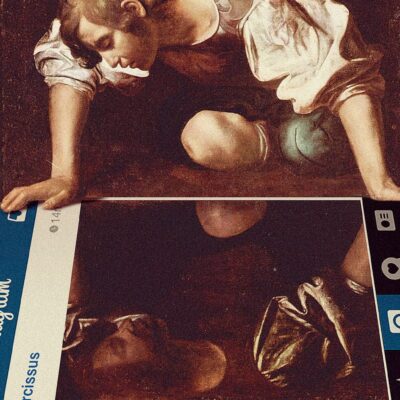 <\/a>
<\/a>