 <\/p>\n
<\/p>\n
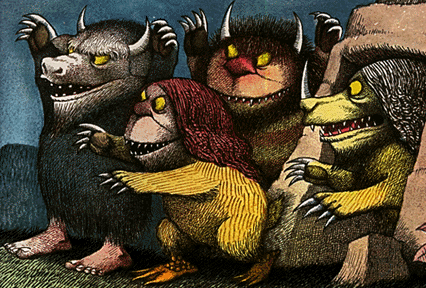
I loved Spike Jonze’s Where the Wild Things Are<\/a>, so I’ve compiled a list of some useful online resources about the film, book, and author (mostly for my own sake, so I can easily access them if and when I might get around to writing more about it). Just to summarize what I like most about the book and the film:<\/p>\n – Its existential realism: play, fun, mischief, friendship, love, loss, fear, loneliness, change, beginnings and endings… all there, in a kind of holistic mix that brings them all into reflective perspective.<\/p>\n – Its extended-family cameraderie\/communalism: Max’s “wild things” are a social network of flawed but hearty characters, kinda like reality. And they like to pile on top of each other.<\/p>\n – Its valorizing of the imagination as a place to play (and work) things out, to figure out one’s emotions & responses to things, a place for practice (in the sense of preparing for reality, but also in the Buddhist sense of practice being everything).<\/p>\n – That they eat their kings (at least up until Max comes along). Kings need to know their place!<\/p>\n – Max’s performance is great.<\/p>\n – Finally, there’s the East European Jewishness of the characters (or call it their Italianness, their Slavicity, whatever) — I mean that quality of being emotionally and bodily there<\/em>, present, expressive, close to the surface but resonant in the depths, which can be a troubling thing for those not used to it, but which can be lovely. In the film, this is in the the facial, bodily, and emotional expressivity of the acting (if animatronically enhanced puppet\/costume\/creatures can be said to act). There’s a soulfulness to these characters that stays with you long after Max leaves the island.<\/p>\n “The creatures spend their days and nights ambling, flopping in and around the forest and seaside (and into each other), averting direct confrontation with dropped sidelong glances and turnings away, shyly or defensively signaling affection or hurt in breathy, nasal, barely enunciated speech. […] Jonze seems to have spent the same obsessive energy on getting James Gandolfini to give him the right quietly nasal delivery of lines like “Oh, hi” or “What?” as D. W. Griffith and his team of artisans expended on the reconstruction of Babylon for <\/em>Intolerance.”<\/em><\/p>\n I realize there are at least two critiques of the story worth considering. The first is the narrative\/psycho-political critique that sees it as reintegrating the child’s rebelliousness into a new compliance with the adult order (he does come home, after all, with a seeming willingness to conform). As Kenneth Kidd puts it in Making American Boys<\/a>, the story makes wildness utterly safe; it’s a story of “managed wildness.” But my hunch is that this reading overplays this “safeness,” since kids do have to grow up (i.e. integrate into the adult world) and both the book and the film, in their effects, valorize the wild things in a way that renders them available for the child as a resource to be drawn on as he or she grows up. (Or am I too much a product of my ego-psychology-as-taken-for-granted time? What would Deleuze & Guattari say? Work with the wild things, become-wild, but not as a prelapsarian reversion back to childhood; rather as a synthesis and integration.)<\/p>\n The second is the post-colonial critique that claims the story reiterates the colonialist trope of the white boy-man adventurer journeying out to tame the wild and (racially) colored jungle primitives and all that. Pushing this interpretation too far, though, would probably sound silly even to the least Euro-American of audiences — but see Shaddock below for a good case of this argument.<\/p>\n Wild Things: The Art of Maurice Sendak<\/a><\/p>\n Richard Gottlieb on WTWTA<\/a><\/p>\n Fitzsimmons et al visual literacy analysis<\/a><\/p>\n (I think that analyzing Jonze’s film using their methodology would show some interesting differences between the book and the film; e.g., in the film Max is treated less like a “king” and more as an equal, a “buddy” or interesting newcomer related to playfully and with interest, but not with too much deference)<\/p>\n Shaddock article<\/a> (postcolonial critique of the story)<\/p>\n Sendak interview with Bill Moyers<\/a><\/p>\n Newsweek interviews<\/a><\/p>\n Maria Lassen-Seger’s thesis on metamorphs in childrens literature<\/a><\/p>\n In any case, a delightful film.<\/p>\n <\/a><\/p>\n","protected":false},"excerpt":{"rendered":" I loved Spike Jonze’s Where the Wild Things Are, so I’ve compiled a list of some useful online resources about the film, book, and author (mostly for my own sake, so I can easily access them if and when I might get around to writing more about it). Just to summarize what I like most […]<\/p>\n","protected":false},"author":99,"featured_media":0,"comment_status":"open","ping_status":"open","sticky":false,"template":"","format":"standard","meta":{"_monsterinsights_skip_tracking":false,"advanced_seo_description":"","jetpack_seo_html_title":"","jetpack_seo_noindex":false,"jetpack_seo_schema_type":"","_jetpack_newsletter_access":"","_jetpack_dont_email_post_to_subs":false,"_jetpack_newsletter_tier_id":0,"_jetpack_memberships_contains_paywalled_content":false,"_jetpack_feature_clip_id":0,"_jetpack_memberships_contains_paid_content":false,"footnotes":"","jetpack_publicize_message":"","jetpack_publicize_feature_enabled":true,"jetpack_social_post_already_shared":false,"jetpack_social_options":{"image_generator_settings":{"template":"highway","default_image_id":0,"font":"","enabled":false},"version":2},"jetpack_post_was_ever_published":false},"categories":[688745,196],"tags":[16823,352,389],"class_list":["post-1143","post","type-post","status-publish","format-standard","hentry","category-cinema_zone","category-ecoculture","tag-ecopsychology","tag-film","tag-psychoanalysis"],"jetpack_publicize_connections":[],"jetpack_sharing_enabled":true,"jetpack_shortlink":"https:\/\/wp.me\/p4IC4a-ir","jetpack-related-posts":[{"id":2156,"url":"https:\/\/blog.uvm.edu\/aivakhiv\/2011\/01\/08\/why-the-wild-things\/","url_meta":{"origin":1143,"position":0},"title":"Why the wild things?","author":"Adrian J Ivakhiv","date":"January 8, 2011","format":false,"excerpt":"For some inexplicable reason, my post on Spike Jonze's movie Where the Wild Things Are keeps getting an inordinate number of hits, seemingly from casual passersby. These are people from all over the world, coming (sometimes) in droves to that one blog post, generally dropping into this blog directly from\u2026","rel":"","context":"In "Blog stuff"","block_context":{"text":"Blog stuff","link":"https:\/\/blog.uvm.edu\/aivakhiv\/category\/blog_stuff\/"},"img":{"alt_text":"","src":"","width":0,"height":0},"classes":[]},{"id":6185,"url":"https:\/\/blog.uvm.edu\/aivakhiv\/2012\/10\/22\/2-or-3-things-about-the-cinema-book\/","url_meta":{"origin":1143,"position":1},"title":"2 or 3 things about the cinema book","author":"Adrian J Ivakhiv","date":"October 22, 2012","format":false,"excerpt":"Ecologies of the Moving Image is a book of ecophilosophy that happens to be about cinema, and about the 12-decade history of cinema at that. What makes it ecophilosophy? It is philosophy that is deeply informed both by an understanding of ecological science and an interdisciplinary appreciation for today's ecological\u2026","rel":"","context":"In "Cinema"","block_context":{"text":"Cinema","link":"https:\/\/blog.uvm.edu\/aivakhiv\/category\/cinema_zone\/"},"img":{"alt_text":"","src":"https:\/\/i0.wp.com\/1.bp.blogspot.com\/_EWY1PJsPzBA\/Sy7A-os24mI\/AAAAAAAAAyI\/71YlZjgAk8M\/s400\/stalker26.jpg?resize=350%2C200","width":350,"height":200},"classes":[]},{"id":6745,"url":"https:\/\/blog.uvm.edu\/aivakhiv\/2013\/06\/24\/emi-is-imminent\/","url_meta":{"origin":1143,"position":2},"title":"EMI is imminent…","author":"Adrian J Ivakhiv","date":"June 24, 2013","format":false,"excerpt":"Ecologies of the Moving Image will be out next month. (Some seven years after I started working on it.) Here is a poster for it. Many thanks to Steven Shaviro and Sean Cubitt for their generous endorsements, which I reproduce here: \u201cEcologies of the Moving Image is an ambitious book,\u2026","rel":"","context":"In "Media ecology"","block_context":{"text":"Media ecology","link":"https:\/\/blog.uvm.edu\/aivakhiv\/category\/media_ecology\/"},"img":{"alt_text":"http:\/\/www.wlu.ca\/press\/Images\/Covers\/ivakhiv.jpg","src":"https:\/\/i0.wp.com\/www.wlu.ca\/press\/Images\/Covers\/ivakhiv.jpg?resize=350%2C200","width":350,"height":200},"classes":[]},{"id":8394,"url":"https:\/\/blog.uvm.edu\/aivakhiv\/2015\/09\/18\/eco-humanities-glossolalia\/","url_meta":{"origin":1143,"position":3},"title":"Eco-humanities glossolalia","author":"Adrian J Ivakhiv","date":"September 18, 2015","format":false,"excerpt":"I've just come across the earliest outline I wrote for the course I'm currently teaching (in its third incarnation), \"Environmental Literature, Arts, and Media.\" The course has also turned into a book project I'm working on, which will be a thematic primer to the environmental arts and humanities.\u00a0Both course and\u2026","rel":"","context":"In "Academe"","block_context":{"text":"Academe","link":"https:\/\/blog.uvm.edu\/aivakhiv\/category\/academe\/"},"img":{"alt_text":"","src":"","width":0,"height":0},"classes":[]},{"id":4814,"url":"https:\/\/blog.uvm.edu\/aivakhiv\/2011\/06\/23\/self-help-james-ray-and-spiritual-culture\/","url_meta":{"origin":1143,"position":4},"title":"‘Self-help,’ James Ray, and spiritual culture","author":"Adrian J Ivakhiv","date":"June 23, 2011","format":false,"excerpt":"The news that self-help guru James Arthur Ray has been found guilty of three counts of negligent homicide brings to an end (of sorts) a saga that began with three deaths and numerous injuries at an October, 2009, sweat lodge ceremony outside Sedona, Arizona. Since I've written a handful of\u2026","rel":"","context":"In "Spirit matter"","block_context":{"text":"Spirit matter","link":"https:\/\/blog.uvm.edu\/aivakhiv\/category\/religion-spirituality\/"},"img":{"alt_text":"","src":"","width":0,"height":0},"classes":[]},{"id":4962,"url":"https:\/\/blog.uvm.edu\/aivakhiv\/2011\/07\/09\/plasticity-run-wild\/","url_meta":{"origin":1143,"position":5},"title":"Plasticity run wild","author":"Adrian J Ivakhiv","date":"July 9, 2011","format":false,"excerpt":"In response to my Dharma of file sharing post, visual artist Tom Gokey, whose work readers may know from Speculations journal, shared a link to his video on \"Public Libraries, 3D Printing, FabLabs, and Hackerspaces.\" It is... stunning in its implications. Just watch. http:\/\/youtu.be\/HCXlJ36x-q0 The democratization of production? The total\u2026","rel":"","context":"In "Eco-culture"","block_context":{"text":"Eco-culture","link":"https:\/\/blog.uvm.edu\/aivakhiv\/category\/ecoculture\/"},"img":{"alt_text":"","src":"https:\/\/i0.wp.com\/img.youtube.com\/vi\/HCXlJ36x-q0\/0.jpg?resize=350%2C200","width":350,"height":200},"classes":[]}],"jetpack_featured_media_url":"","_links":{"self":[{"href":"https:\/\/blog.uvm.edu\/aivakhiv\/wp-json\/wp\/v2\/posts\/1143","targetHints":{"allow":["GET"]}}],"collection":[{"href":"https:\/\/blog.uvm.edu\/aivakhiv\/wp-json\/wp\/v2\/posts"}],"about":[{"href":"https:\/\/blog.uvm.edu\/aivakhiv\/wp-json\/wp\/v2\/types\/post"}],"author":[{"embeddable":true,"href":"https:\/\/blog.uvm.edu\/aivakhiv\/wp-json\/wp\/v2\/users\/99"}],"replies":[{"embeddable":true,"href":"https:\/\/blog.uvm.edu\/aivakhiv\/wp-json\/wp\/v2\/comments?post=1143"}],"version-history":[{"count":1,"href":"https:\/\/blog.uvm.edu\/aivakhiv\/wp-json\/wp\/v2\/posts\/1143\/revisions"}],"predecessor-version":[{"id":11902,"href":"https:\/\/blog.uvm.edu\/aivakhiv\/wp-json\/wp\/v2\/posts\/1143\/revisions\/11902"}],"wp:attachment":[{"href":"https:\/\/blog.uvm.edu\/aivakhiv\/wp-json\/wp\/v2\/media?parent=1143"}],"wp:term":[{"taxonomy":"category","embeddable":true,"href":"https:\/\/blog.uvm.edu\/aivakhiv\/wp-json\/wp\/v2\/categories?post=1143"},{"taxonomy":"post_tag","embeddable":true,"href":"https:\/\/blog.uvm.edu\/aivakhiv\/wp-json\/wp\/v2\/tags?post=1143"}],"curies":[{"name":"wp","href":"https:\/\/api.w.org\/{rel}","templated":true}]}}
\nFilm Comment<\/em>‘s Kent Jones writes:<\/p>\n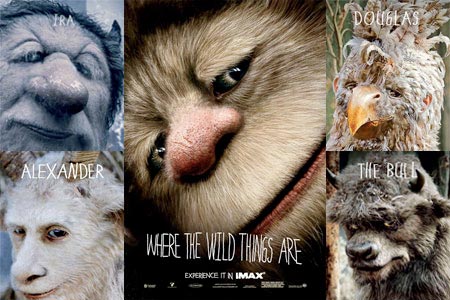 <\/p>\n