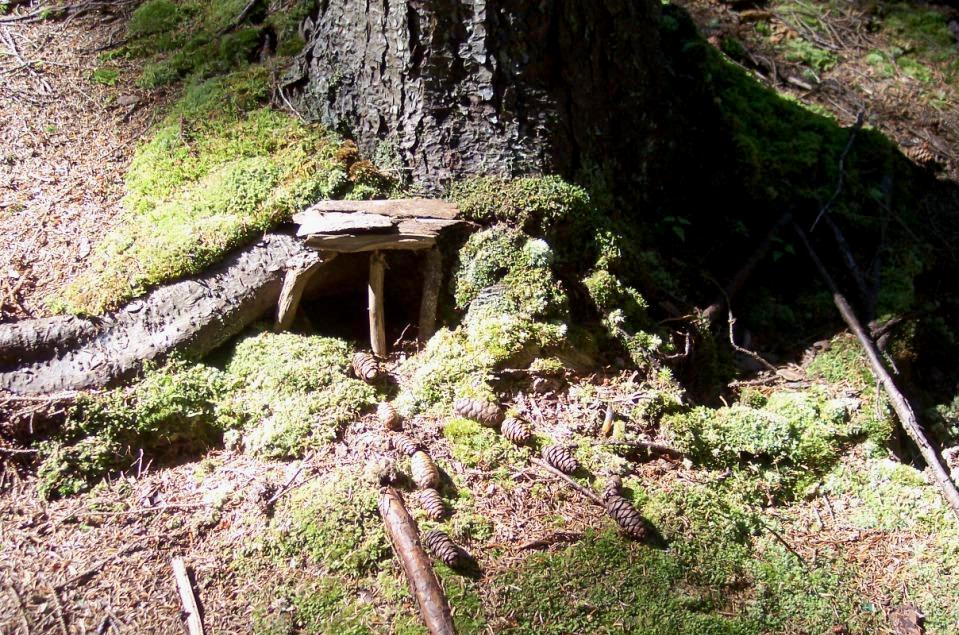
{"id":1122,"date":"2009-09-20T14:18:50","date_gmt":"2009-09-20T19:18:50","guid":{"rendered":"http:\/\/blog.uvm.edu\/aivakhiv\/2009\/09\/20\/fairy-villages-bowerbird-art-other-ambiguous-objects\/"},"modified":"2009-09-20T14:18:50","modified_gmt":"2009-09-20T19:18:50","slug":"fairy-villages-bowerbird-art-other-ambiguous-objects","status":"publish","type":"post","link":"https:\/\/blog.uvm.edu\/aivakhiv\/2009\/09\/20\/fairy-villages-bowerbird-art-other-ambiguous-objects\/","title":{"rendered":"fairy villages, bowerbird art, &amp; other ambiguous objects"},"content":{"rendered":"<p><img data-recalc-dims=\"1\" loading=\"lazy\" decoding=\"async\" alt=\"Monhegan%20Island%20007.JPG\" src=\"https:\/\/i0.wp.com\/blog.uvm.edu\/aivakhiv\/files\/2009\/09\/Monhegan-Island-007.jpg?resize=231%2C175&#038;ssl=1\" width=\"231\" height=\"175\" \/><\/p>\n<p>One of my (largely dormant) pet projects over the years has been to document and theorize anonymous, self-decomposing artworks made in collaboration with nature and time. These works are creative engagements with environments &#8212; often simple rearrangements of physical materials (rocks, wood, found pieces of scrap metal or discarded trash, and the like) &#8212; by individuals, designed or improvised with materials at hand, working with others less by design than by happenstance. They can be found in outdoor public spaces, wooded ravines and forests, wild patches of cities and countryside, abandoned industrial sites. Remaining little documented, they appear not to exist at all except when directly encountered, which is something that usually happens by chance.<\/p>\n<p>Even calling them \u2018artworks\u2019 can be problematic, since they may not be created with the intent of being recognized as art, or made by \u2018artists\u2019, and certainly not as part of the \u2018art system\u2019 (as Bourdieu, <a href=\"http:\/\/books.google.com\/books?id=uEBiiMH6nJ0C&amp;printsec=frontcover&amp;dq=niklas+luhmann+art&amp;ei=c1m2StqOD5mSywTe-PzgDg#v=onepage&amp;q=&amp;f=false\">Luhmann,<\/a> or <a href=\"http:\/\/books.google.com\/books?id=VY8a4P0kS9MC&amp;printsec=frontcover&amp;dq=art+stallabrass&amp;lr=&amp;ei=lmC2SoFsjb7MBIHlwPQO#v=onepage&amp;q=&amp;f=false\">Stallabrass<\/a> would define it). Insofar as they assert the (past) presence of those who have crafted them, they can be read as forms of graffiti, or a kind of resistant creativity akin to the <a href=\"http:\/\/www.amazon.com\/Avant-Gardening-Ecological-Struggle-World\/dp\/1570270929\">guerrilla gardening<\/a> movement of urban space activists. Marking out a space as different and significant, but leaving behind little direct evidence of the intent underlying them, they may convey an aura of mystery, playfulness, childlike wonder, or the more serious character of a sacred space or shrine, but until they are turned into a public topic (as has occurred with the fairy houses on <a href=\"http:\/\/www.monheganwelcome.com\/\">Monhegan Island<\/a>, where I just spent a few days, and about which more in a moment), they remain ambiguous and a little unplaceable within the systems of things that make up the recognized world. They are anomalous or ambiguous objects, which makes them relevant to the recent discussion here of objects versus relations.<\/p>\n<p><!--more--><br \/>\nSomewhere at the outer boundaries of this category of objects\/phenomena one finds self-conscious artworks that are unsigned but that contribute, through documentation or personal narrative, to an artist\u2019s work\/oeuvre (or the &#8216;signed&#8217; works, like Robert Smithson&#8217;s <a href=\"http:\/\/www.channel4.com\/culture\/microsites\/B\/bigart\/gallery_4_gallery_2.html\">Spiral Jetty<\/a>, that are land art&#8217;s defining moments); or functional markings like the <a href=\"http:\/\/images.google.com\/images?hl=en&amp;safe=off&amp;um=1&amp;sa=1&amp;q=rock+cairns&amp;aq=f&amp;oq=&amp;aqi=g10&amp;start=0\">rock cairns<\/a> that are sometimes used to indicate trails in national parks and public lands (but sometimes these also exceed any such functional intent and spill out into the category of anonymous creativity); or religious\/spiritual constructions like the \u2018<a href=\"http:\/\/images.google.com\/images?hl=en&amp;safe=off&amp;um=1&amp;sa=1&amp;q=medicine+wheels+sedona&amp;aq=f&amp;oq=&amp;aqi=&amp;start=0\">medicine wheels<\/a>\u2019 and other circular stone formations constructed by \u2018New Age\u2019 visitors to public lands in the U.S. Southwest (which I discussed and analyzed in chapter 7 of <a href=\"http:\/\/books.google.com\/books?id=QNHTOvnZ3poC&amp;dq=%22claiming+sacred+ground%22&amp;source=gbs_navlinks_s\">Claiming Sacred Ground<\/a>); or perhaps the various forms of <a href=\"http:\/\/images.google.com\/images?hl=en&amp;safe=off&amp;q=crop+formations&amp;um=1&amp;ie=UTF-8&amp;ei=uWG2SrDpMNTR8QbA4cmTDw&amp;sa=X&amp;oi=image_result_group&amp;ct=title&amp;resnum=1\">crop formations<\/a> found around the world (but most concentrated in Britain), which remain enigmatic despite some of them being claimed by so-called hoaxers (i.e. crop artists) and despite a certain commodification they get within the tourist industry that caters to the \u2018croppie\u2019 subculture.<\/p>\n<p>And then one finds similar sorts of things being done by nonhumans &#8212; bowerbirds, for instance, whose males form <a href=\"http:\/\/www.pbs.org\/wgbh\/nova\/bowerbirds\/trail.html\">bachelor pad<\/a>-like structures out of all manner of <a href=\"http:\/\/www.pnas.org\/content\/83\/9\/3042.full.pdf\">objects<\/a> (twigs, sticks, moss, stones, acorns, shells, flowers, fruits, butterfly wings, pieces of metal and plastic), paint them with natural dyes, and even resort to <a href=\"http:\/\/www.youtube.com\/watch?v=IqOXp9SIdNk\">vandalism<\/a> of rivals&#8217; displays, in their pursuit of females through the ostentatious presentation of their own practical and creative skills. Television&#8217;s green archdruid <a href=\"http:\/\/www.pbs.org\/wgbh\/nova\/bowerbirds\/media\/goldsworthy_q.html\">David Attenborough<\/a> argues <a href=\"http:\/\/www.pbs.org\/wgbh\/nova\/bowerbirds\/media\/goldsworthy_q.html\">here<\/a> that these ought to be considered <a href=\"http:\/\/www.pbs.org\/wgbh\/nova\/bowerbirds\/art.html\">art<\/a> no less than any of Andy Goldsworthy&#8217;s nest-like object structures. (These <em>are<\/em> conscious works of individual craftsmanship, unlike the anonymous works I&#8217;m interested in, but their authorship scrambles the much more stubbornly held cultural boundary between the human and the nonhuman.)<\/p>\n<p><span class=\"embed-youtube\" style=\"text-align:center; display: block;\"><iframe loading=\"lazy\" class=\"youtube-player\" width=\"500\" height=\"282\" src=\"https:\/\/www.youtube.com\/embed\/GPbWJPsBPdA?version=3&#038;rel=1&#038;showsearch=0&#038;showinfo=1&#038;iv_load_policy=1&#038;fs=1&#038;hl=en-US&#038;autohide=2&#038;wmode=transparent\" allowfullscreen=\"true\" style=\"border:0;\" sandbox=\"allow-scripts allow-same-origin allow-popups allow-presentation allow-popups-to-escape-sandbox\"><\/iframe><\/span><\/p>\n<p>What then to make of the <a href=\"http:\/\/www.spokaneoutdoors.com\/fairy.htm\">fairy house villages of Monhegan island<\/a>, ten miles off the coast of Maine? These little structures made of sticks, shells, rocks, moss, and other locally found materials, tucked into tree bases and nooks and crannies in the forest floor of Cathedral Woods in the center of the largely communally &#8216;preserved&#8217; island, have been built for decades and have accrued a certain &lt;a href=&quot;<a href=\"http:\/\/books.google.com\/books?id=D7YnAQAACAAJ&amp;dq=%22fairy+houses%22+tracy+kane&amp;ei=C_WzSvbwNYiqzQSXuen3Dg\">storybook narrative<\/a> to them, as well as <a href=\"http:\/\/images.google.com\/imgres?imgurl=http:\/\/fairylandadoptions.com\/images\/fairy_houses_003.jpg&amp;imgrefurl=http:\/\/fairylandadoptions.com\/Fairy_Houses.html&amp;usg=__L1fuwnplKCxiTv88_3LqBhaiKGQ=&amp;h=1704&amp;w=2272&amp;sz=1595&amp;hl=en&amp;start=1&amp;sig2=ZQXmyQwWeUzz3AQFs2ksiQ&amp;um=1&amp;tbnid=6XLXH6mlA6iVYM:&amp;tbnh=112&amp;tbnw=150&amp;prev=\/images%3Fq%3D%2522fairy%2Bhouses%2522%26hl%3Den%26safe%3Doff%26sa%3DX%26um%3D1&amp;ei=w_ezSqX5G5HtlAfd88GJDw\">an etiquette<\/a> to their construction (including <a href=\"http:\/\/www.facebook.com\/note.php?note_id=27429369340&amp;ref=mf\">ecological principles<\/a>). Fairies, of course, are nothing new, and there&#8217;s a growing <a href=\"http:\/\/www.fairyhouses.com\/home.html\">childrens literature<\/a> on fairy houses that dovetails conspicuously with the burgeoning New Age and Pagan literature on the <a href=\"http:\/\/www.amazon.com\/Living-World-Faery-R-Stewart\/dp\/1892137097\/ref=sr_1_1?ie=UTF8&amp;s=books&amp;qid=1253463714&amp;sr=1-1\">faery world<\/a> and its various denizens. (<a href=\"http:\/\/books.google.com\/books?id=4JblNAAACAAJ&amp;dq=fairies+hobgoblins&amp;ei=wt-0SoiNPJmSywTe-PzgDg\">Diana Purkiss<\/a> provides an excellent overview of the history of fairies, hobgoblins, and the like, and of some of the ways they have been accounted for.) The practice of building fairy houses has also, more recently, been actively discouraged on Monhegan by those who take them to be impositions on the forest and potentially damaging to its ecology &#8212; which adds another layer of ambiguity to their already somewhat elusive nature.<\/p>\n<p><img data-recalc-dims=\"1\" loading=\"lazy\" decoding=\"async\" alt=\"Monhegan%20Island%20031.JPG\" src=\"https:\/\/i0.wp.com\/blog.uvm.edu\/aivakhiv\/files\/2009\/09\/Monhegan-Island-031.jpg?resize=205%2C151&#038;ssl=1\" width=\"205\" height=\"151\" \/>    <img data-recalc-dims=\"1\" loading=\"lazy\" decoding=\"async\" alt=\"Monhegan%20Island%20014.JPG\" src=\"https:\/\/i0.wp.com\/blog.uvm.edu\/aivakhiv\/files\/2009\/09\/Monhegan-Island-014.jpg?resize=210%2C149&#038;ssl=1\" width=\"210\" height=\"149\" \/><\/p>\n<p>But when, without knowing any of that, one stumbles across the fairy houses on a walk through the woods, they can elicit a range of responses: for instance, a &#8220;<em>what&#8217;s that?<\/em>&#8220;, followed eventually by a delirious wonder at how many of them there are, and finally a scrambled sense of boundaries so that they seem to appear everywhere even where they aren&#8217;t (which is presumably part of the point in building them, to sharpen our perception of form and beauty in the nonhuman world) &#8212; all of which casts them into an ambiguous space between nature, artifice, and a spooky kind of otherness. In the end, like crop formations (for those not choked in skepticism), they are both crafted (and found) <em>objects<\/em>, though it&#8217;s not always clear who crafted them, and entropic <em>processes <\/em>unfolding over time as nature takes over what initially intervened in it (insofar as humans aren&#8217;t in it, which they are). They are a kind of lay person&#8217;s <a href=\"http:\/\/books.google.com\/books?id=AxLoHXMSOYgC&amp;dq=robert+smithson+entropy&amp;source=gbs_navlinks_s\">Robert Smithson<\/a> moment, a performative enactment of relationship and aestheticism in a tricksterish world that&#8217;s not so easily pinned down.<\/p>\n<p>Being temporary and self-decomposing, they are processes as much as products, relations as much as objects. And the fairies they might be intended to capture, in an imaginal, finger-pointing-at-the-moon kind of way, (or to attract, if you care to go that far,) are also relational processes arising somewhere at the boundary between us, imaginatively equipped humans, and a protean world that proves itself more than a little elusive and mysterious enough of the time, if we let it. Like all such processes &#8212; and for a relational ontology, that includes everything &#8212; these relations ever elude our grasp. An art that helps point that out can do it somberly, unveiling the &#8220;entropic undertow of the earth&#8221; through the heavy texture of its message (I love that phrase from <a href=\"http:\/\/books.google.com\/books?id=gCfk-bt8jz8C&amp;printsec=frontcover&amp;dq=smithson+shapiro+earthwards&amp;ei=SHq2Sr2SI6T8ygTBmLWCDw#v=onepage&amp;q=&amp;f=false\">Gary Shapiro<\/a>&#8216;s book on Smithson), or it can do it playfully and ambiguously, and these works&#8217; anonymity and their unaccompaniment-by-explanation clearly makes it the latter rather than the former.<\/p>\n<p>Like other such anomalous, boundary-blurring objects, they raise questions about the mutable borders between the public and the private, the individual and the communal, the shaped and the unshaped, intended and unintended, marked and unmarked, and the \u2018aestheticized\u2019 or \u2018sacralized\u2019 and the merely functional, random, or \u2018natural.\u2019 When successful, they blur the boundary between the human and the other-than-human, or at least evoke a bit of the sense of what may lay on the other side of the border of the \u2018anthropological machine\u2019 that keeps us here and not there (I&#8217;m thinking of <a href=\"http:\/\/books.google.com\/books?id=X8SIcG3I-W4C&amp;printsec=frontcover&amp;source=gbs_v2_summary_r&amp;cad=0#v=onepage&amp;q=&amp;f=false\">Agamben<\/a> but also <a href=\"http:\/\/www.amazon.com\/Dreamtime-Concerning-Boundary-Wilderness-Civilization\/dp\/0631155481\/ref=sr_1_1?ie=UTF8&amp;s=books&amp;qid=1253491665&amp;sr=1-1\">Hans Peter Duerr<\/a> here).<\/p>\n<p>They also raise questions about the place of such anonymous creativity in a society in which both space and art have been mapped, classified, managed, and commodified, and in which nature and the spiritual\/religious have been relegated to different kinds of marking, managing, and distribution. The space of play (and of childhood) is, after all, one of the pre-eminent spaces in which a liberatory ontological politics can be nourished and cultivated.<\/p>\n<p><img data-recalc-dims=\"1\" loading=\"lazy\" decoding=\"async\" alt=\"Monhegan%20Island%20038.JPG\" src=\"https:\/\/i0.wp.com\/blog.uvm.edu\/aivakhiv\/files\/2009\/09\/Monhegan-Island-038.jpg?resize=242%2C192&#038;ssl=1\" width=\"242\" height=\"192\" \/><\/p>\n<p><em>Dozens of photos of Monhegan&#8217;s fairy houses can be found at <a href=\"http:\/\/www.spokaneoutdoors.com\/fairy.htm\">Spokane Outdoors<\/a>. I had to laugh when I read the website host&#8217;s comment that &#8220;The people on this island, it was said, thought the fairy houses were not good for the forest, but I found them the most interesting thing on the island myself. <b>They totally eclipsed the painters and other artists<\/b>&#8221; (emphasis added). (The island gets filled in the summer with landscape artists and wannabe artists with their easels, brushes, palettes, and canvases, to the extent that one sometimes feels as if one is walking through a three-dimensional, web-like and hyper-linked grand painting-in-the-making, with gazes intersecting gazes as they criss-cross between the artists&#8217; eyes, a clump of trees or rocks, an old shack, some fishing boats, and the everpresent sky in the background. But I exaggerate; it is a beautiful place, and even the village, which only makes up a fraction of the otherwise untamed island, feels wilder than you&#8217;re likely to find on this continent.)  The commenter doesn&#8217;t mention when s\/he visited, but at the time there were several hundred fairy houses which &#8220;taken as one artwork&#8221; was, in their estimation, &#8220;a masterpiece.&#8221; <\/em><\/p>\n<p><img data-recalc-dims=\"1\" decoding=\"async\" alt=\"Monhegan%20Island%20035.JPG\" src=\"https:\/\/i0.wp.com\/blog.uvm.edu\/aivakhiv\/files\/2009\/09\/Monhegan-Island-035.jpg?w=500&#038;ssl=1\"   \/><\/p>\n","protected":false},"excerpt":{"rendered":"<p>One of my (largely dormant) pet projects over the years has been to document and theorize anonymous, self-decomposing artworks made in collaboration with nature and time. These works are creative engagements with environments &#8212; often simple rearrangements of physical materials (rocks, wood, found pieces of scrap metal or discarded trash, and the like) &#8212; by [&hellip;]<\/p>\n","protected":false},"author":99,"featured_media":0,"comment_status":"open","ping_status":"open","sticky":false,"template":"","format":"standard","meta":{"_monsterinsights_skip_tracking":false,"_monsterinsights_sitenote_active":false,"_monsterinsights_sitenote_note":"","_monsterinsights_sitenote_category":0,"advanced_seo_description":"","jetpack_seo_html_title":"","jetpack_seo_noindex":false,"jetpack_post_was_ever_published":false,"_jetpack_newsletter_access":"","_jetpack_dont_email_post_to_subs":false,"_jetpack_newsletter_tier_id":0,"_jetpack_memberships_contains_paywalled_content":false,"_jetpack_memberships_contains_paid_content":false,"footnotes":"","jetpack_publicize_message":"","jetpack_publicize_feature_enabled":true,"jetpack_social_post_already_shared":false,"jetpack_social_options":{"image_generator_settings":{"template":"highway","default_image_id":0,"font":"","enabled":false},"version":2}},"categories":[196,688977,691847,689354],"tags":[16809,16810,4413,5431,4446,16811,4416,16807],"class_list":["post-1122","post","type-post","status-publish","format-standard","hentry","category-ecoculture","category-geo_philosophy","category-religion-spirituality","category-image_nation","tag-ambiguous-objects","tag-animacy","tag-animism","tag-art","tag-eco-art","tag-entropy","tag-paganism","tag-relationalism"],"jetpack_publicize_connections":[],"jetpack_featured_media_url":"","jetpack_sharing_enabled":true,"jetpack_shortlink":"https:\/\/wp.me\/p4IC4a-i6","jetpack-related-posts":[{"id":1102,"url":"https:\/\/blog.uvm.edu\/aivakhiv\/2009\/07\/14\/eco-arts-experimental-geography-round-up\/","url_meta":{"origin":1122,"position":0},"title":"eco-arts &amp; &#8216;experimental geography&#8217; round-up","author":"Adrian J Ivakhiv","date":"July 14, 2009","format":false,"excerpt":"The eco-arts blogosphere has kept simmering through the early summer. Greenmuseum.blog, connected to the excellent online environmental resource and exhibition space Green Museum, has taken on a new look. The blog had recently covered the Earth Matters on Stage EcoDrama Symposium, held at the University of Oregon. Mike Lawler's EcoTheatre\u2026","rel":"","context":"In &quot;Eco-culture&quot;","block_context":{"text":"Eco-culture","link":"https:\/\/blog.uvm.edu\/aivakhiv\/category\/ecoculture\/"},"img":{"alt_text":"","src":"","width":0,"height":0},"classes":[]},{"id":7452,"url":"https:\/\/blog.uvm.edu\/aivakhiv\/2014\/04\/10\/anthropocene-aesthetics\/","url_meta":{"origin":1122,"position":1},"title":"Anthropocene aesthetics","author":"Adrian J Ivakhiv","date":"April 10, 2014","format":false,"excerpt":"Cross-posting this piece by Emil from A(s)cene. Taylor's coral reef art is beautiful. See also the discussion of Donna Haraway's \"String Figures\" lecture and Bruno Latour's 11 theses on capitalism.\u00a0 \u00a0 Last week, Lee led us through an\u00a0exercise\u00a0that helped to contextualize the minuteness of the period in which humans (and\u2026","rel":"","context":"In &quot;Anthropocene&quot;","block_context":{"text":"Anthropocene","link":"https:\/\/blog.uvm.edu\/aivakhiv\/category\/anthropo_scene\/"},"img":{"alt_text":"anthropocene-001-jason-decaires-taylor-sculpture","src":"https:\/\/i0.wp.com\/blog.uvm.edu\/aivakhiv-acene\/files\/2014\/04\/anthropocene-001-jason-decaires-taylor-sculpture-300x206.jpg?resize=350%2C200","width":350,"height":200},"classes":[]},{"id":1035,"url":"https:\/\/blog.uvm.edu\/aivakhiv\/2009\/02\/26\/green-cultural-studies\/","url_meta":{"origin":1122,"position":2},"title":"Green cultural studies","author":"Adrian J Ivakhiv","date":"February 26, 2009","format":false,"excerpt":"\"Cultural studies\" refers to the study of cultural objects, meanings, and processes, and their production and use in contemporary society. It is an interdisciplinary field with a twin commitment to intellectual rigor and social relevance. While the \"rigor\" piece sometimes means \"objectivity,\" often it involves a questioning of the assumption\u2026","rel":"","context":"In &quot;Academe&quot;","block_context":{"text":"Academe","link":"https:\/\/blog.uvm.edu\/aivakhiv\/category\/academe\/"},"img":{"alt_text":"","src":"","width":0,"height":0},"classes":[]},{"id":6525,"url":"https:\/\/blog.uvm.edu\/aivakhiv\/2013\/02\/25\/vik-muniz-his-waste-pickers\/","url_meta":{"origin":1122,"position":3},"title":"Vik Muniz &amp; his waste pickers","author":"Adrian J Ivakhiv","date":"February 25, 2013","format":false,"excerpt":"Here are my introductory comments to the 2010 documentary Waste Land, delivered yesterday at the Fleming Museum in Burlington and shown in connection with the exhibition High Trash, which runs until May 19. http:\/\/vimeo.com\/16290358 Every society implicitly or explicitly acknowledges that things have an ending, and that that ending is\u2026","rel":"","context":"In &quot;Cinema&quot;","block_context":{"text":"Cinema","link":"https:\/\/blog.uvm.edu\/aivakhiv\/category\/cinema_zone\/"},"img":{"alt_text":"","src":"","width":0,"height":0},"classes":[]},{"id":1131,"url":"https:\/\/blog.uvm.edu\/aivakhiv\/2009\/09\/29\/vampyroteuthis-infernalis\/","url_meta":{"origin":1122,"position":4},"title":"vampyroteuthis infernalis","author":"Adrian J Ivakhiv","date":"September 29, 2009","format":false,"excerpt":"http:\/\/www.youtube.com\/watch?v=S3CJIKKSUpg&hl=en&fs=1& (Here's the reference from the last post...) This is one of my favorite scenes from the David Attenborough-narrated Planet Earth series... The music is toned down, soft and sparse and a little eerie, some of the cinematic apparatus (at least the lights of the submersible) is displayed on camera,\u2026","rel":"","context":"In &quot;Eco-culture&quot;","block_context":{"text":"Eco-culture","link":"https:\/\/blog.uvm.edu\/aivakhiv\/category\/ecoculture\/"},"img":{"alt_text":"","src":"https:\/\/i0.wp.com\/img.youtube.com\/vi\/S3CJIKKSUpg\/0.jpg?resize=350%2C200","width":350,"height":200},"classes":[]},{"id":1086,"url":"https:\/\/blog.uvm.edu\/aivakhiv\/2009\/06\/09\/eco-criticismcommunication-the-future-of-reading\/","url_meta":{"origin":1122,"position":5},"title":"eco-criticism\/communication &amp; the future of reading","author":"Adrian J Ivakhiv","date":"June 9, 2009","format":false,"excerpt":"ASLE, Andrew Revkin, blogging","rel":"","context":"In &quot;Eco-culture&quot;","block_context":{"text":"Eco-culture","link":"https:\/\/blog.uvm.edu\/aivakhiv\/category\/ecoculture\/"},"img":{"alt_text":"Boe.jpg","src":"https:\/\/i0.wp.com\/blog.uvm.edu\/aivakhiv\/files\/2009\/06\/Boe.jpg?resize=350%2C200&ssl=1","width":350,"height":200},"classes":[]}],"_links":{"self":[{"href":"https:\/\/blog.uvm.edu\/aivakhiv\/wp-json\/wp\/v2\/posts\/1122","targetHints":{"allow":["GET"]}}],"collection":[{"href":"https:\/\/blog.uvm.edu\/aivakhiv\/wp-json\/wp\/v2\/posts"}],"about":[{"href":"https:\/\/blog.uvm.edu\/aivakhiv\/wp-json\/wp\/v2\/types\/post"}],"author":[{"embeddable":true,"href":"https:\/\/blog.uvm.edu\/aivakhiv\/wp-json\/wp\/v2\/users\/99"}],"replies":[{"embeddable":true,"href":"https:\/\/blog.uvm.edu\/aivakhiv\/wp-json\/wp\/v2\/comments?post=1122"}],"version-history":[{"count":0,"href":"https:\/\/blog.uvm.edu\/aivakhiv\/wp-json\/wp\/v2\/posts\/1122\/revisions"}],"wp:attachment":[{"href":"https:\/\/blog.uvm.edu\/aivakhiv\/wp-json\/wp\/v2\/media?parent=1122"}],"wp:term":[{"taxonomy":"category","embeddable":true,"href":"https:\/\/blog.uvm.edu\/aivakhiv\/wp-json\/wp\/v2\/categories?post=1122"},{"taxonomy":"post_tag","embeddable":true,"href":"https:\/\/blog.uvm.edu\/aivakhiv\/wp-json\/wp\/v2\/tags?post=1122"}],"curies":[{"name":"wp","href":"https:\/\/api.w.org\/{rel}","templated":true}]}}