 <\/p>\n
<\/p>\n
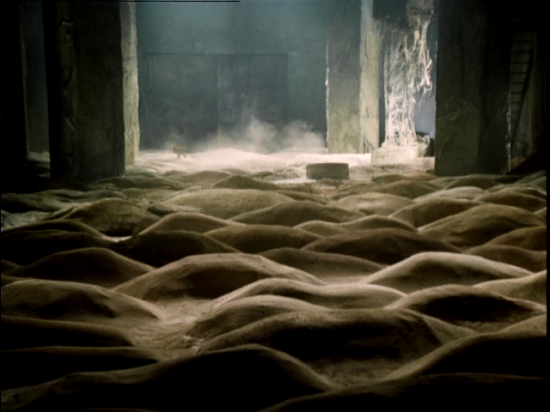
As ecocriticism expands and deepens in scope (of subject matter & media examined), extent (internationally), and diversity (in approaches, connections with other schools of thought, etc.), its interactions with non-literary fields such as cinema studies, theatre\/performance studies, and musicology (as I posted<\/a> about recently) are starting to develop in healthy ways. The ASLE conference had several sessions devoted to film — four panels, several papers within other panels, and a pre-conference session on film and media — which, I believe, is more than the conference has ever had. Since then, an Ecomedia Studies Wiki<\/a> has been started, as has an Ecomedia listserv<\/a> (with very little activity yet, only because I started it and I’ve been too preoccupied to get any conversation going). Among related ventures, the Media Ecology Association<\/a>‘s 2010 convention will be on “Media Ecology and Natural Environments” (e-mail Paul Grosswiler <\/a>for further info on that). A group of us are hoping to make a little splash at the Society for Cinema & Media Studies conference next year. If you have any interest in such things, feel free to e-mail me directly, but expect a slow response during the summer, as I’m on the road through much of it (between the cabin where I’m blogging from in Vermont and Amsterdam the week after next, then the west coast of British Columbia & Alaska, then New Mexico in mid-August).<\/p>\n “In <\/em>The Open: Man and Animal, Giorgio Agamben (2004) refers to the ongoing cultural construction of \u2018the human\u2019 in contradistinction to \u2018the animal\u2019 as the \u2018anthropological\u2019 or \u2018anthropogenic\u2019 \u2018machine.\u2019 This “optical machine,” he writes, “is constructed of a series of mirrors in which man, looking at himself, sees his own image already deformed in the features of an ape. Homo is a constitutively ‘anthropomorphous’ animal (that is, ‘resembling man’ […]), who must recognize himself in a non-man in order to become human” (26-27). Starting from this notion of an \u2018anthropological machine,\u2019 and from Martin Heidegger\u2019s description of the human (<\/em>Dasein) as a world-bearing being and of language, poetry, and art as \u2018world-disclosing,\u2019 this article proposes a model of cinema as an “anthro-geo-animamorphic machine,” a machine that produces worlds. This machine is, at once, <\/em>anthropomorphic in that it produces a cinematic version of or resemblance to the human, thereby generating an apparent social or \u2018subject-world\u2019; <\/em>animamorphic in its production of an apparent world of animate, life-like and interperceptive forms, which are shown to see and be seen, hear and be heard, at the same time as we, the viewers, see and hear them and learn how to see and hear them; and <\/em>geomorphic in that it produces a spatially organized or territorialized material \u2018object-world,\u2019 an apparent geography distinguished by hereness, thereness, and distances and relations between the \u2018pieces of world\u2019 displayed. In effect, cinematic worlds are held together by the dimensions of space (the territorialization of objective materiality), time (the temporal experience of narrative process), sociality (distinctions and relations among social subjects), and animacy (relations among inter-perceptive forms and substances).<\/p>\n “Each of these relational dimensions variously reflects, refracts, comments on, and reverberates within the world outside the film. Cinema, in this sense, adds a refractive or diffractive overlay of meanings onto a world that pre-exists it, and sets up an interactive oscillation between the two in the process. The relationship between the cinematic world and the extra-cinematic world is the relationship most amenable to a form of analysis that, following a related movement in literary and cultural studies, can be called \u2018ecocritical.\u2019 Various forms of film theory interrogate aspects of this set of relations: phenomenology its perceptual and embodied dimensions, psychoanalysis its intra-psychic dimensions, cognitivism its neuropsychological correlates, Marxist and feminist analysis its class and gender politics, and so on. Ecocritical film theory, I argue, can place all of these within the broadest frame of our relationship to the world at large. Through an ecocritical, \u2018world-making\u2019 analysis of an exemplary film, Andrei Tarkovsky\u2019s <\/em>Stalker (1979), I argue here that cinema \u2018stalks\u2019 the real world, and that our appreciation of its potentials should similarly involve a \u2018stalking\u2019 of its effects in the material, social, and perceptual dimensions of the world from which cinema emerges and to which it returns.”<\/em><\/p>\n This tripartite framework (geomorphic, animamorphic, anthropomorphic) is intended to correspond to the three ecologies (Felix Guattari’s term) within which cinematic production and consumption can be located: its material ecologies, social ecologies, and perceptual ecologies. My goals here are two-fold:<\/p>\n (1) To be able to situate film forms and meanings within a set of broadly ecological contexts that include the material world as well as the social world. The inclusion of a third element, the perceptual, is intended to break up the dichotomizing tendency that segregates the natural from the cultural (Latour’s ‘Modern constitution’). Human perception, while distinctive, is caught in the grasp of a world that is perceptual and communicative “all the way down,” as it were, with a ‘subject’ pole and an ‘object’ pole emerging out of the relations that constitute communicative and perceptual interaction. The ‘anthropomorphic machinery’ works at the subject pole, distinguishing between those who will count as subjects and those who will not; the ‘geomorphic machinery’ (the spatialization and territorialization of relations within the object-world) works at the object pole; and the ‘animamorphic machinery’ works in between the two.<\/p>\n (2) To allow for an examination of the ways in which film, alongside other art and media forms, disclose the world in specific ways. “World-disclosure” is Heideggerian language, though Heidegger was too caught up in his own metaphysical narrative about western history and its destiny. I’m more interested in specific ways of “worlding”, including cinema worlding, in a world that is characterized by many levels and scales of interactive dynamism and techno-perceptual change (i.e. globalization, new media ecologies, etc.).<\/p>\n Why Stalker<\/em>? There are a number of films I could have chosen to focus on, but Stalker<\/em>‘s creation of a cinematic world — a geography (consisting of a Zone set apart from the everyday world and that world itself, with a relationship of desire, fantasy, projection, affective investment, and interdependence between the two), an anthropology (this part requires a bit more work to summarize, so I’ll leave it for now), and an animacy (primarily related to the Zone itself) — and the multiple resonances between that world and the extra-filmic world (for instance, the way in which its depiction of a post-nuclear-like landscape captures the late Soviet toxic-industrial imaginary, including the ways in which that imaginary was set into motion several years later in the wake of the Chernobyl nuclear accident, with its resultant depopulated ‘Zone,’ its ‘stalkers,’ its biblical-apocalyptic interpretations of ‘wormwood,’ etc.; or the way in which the making of the film itself registered environmental toxins and anomalies on and in the bodies of the filmmakers themselves, resulting in several illnesses and premature deaths) makes the film paradigmatic of the (material, social, and perceptual) relationship between cinema and reality — that is, between a projected <\/em>‘zone’ of dreams, desires, fantasies, and fears, and a real, inhabited world of dreams, desires, fantasies, fears, and material engagements and interdependencies. (Forgive the run-on sentence.) I’ll come back to the film in a future post…<\/p>\n","protected":false},"excerpt":{"rendered":" As ecocriticism expands and deepens in scope (of subject matter & media examined), extent (internationally), and diversity (in approaches, connections with other schools of thought, etc.), its interactions with non-literary fields such as cinema studies, theatre\/performance studies, and musicology (as I posted about recently) are starting to develop in healthy ways. The ASLE conference had […]<\/p>\n","protected":false},"author":99,"featured_media":0,"comment_status":"open","ping_status":"open","sticky":false,"template":"","format":"standard","meta":{"_monsterinsights_skip_tracking":false,"advanced_seo_description":"","jetpack_seo_html_title":"","jetpack_seo_noindex":false,"jetpack_seo_schema_type":"","_jetpack_newsletter_access":"","_jetpack_dont_email_post_to_subs":false,"_jetpack_newsletter_tier_id":0,"_jetpack_memberships_contains_paywalled_content":false,"_jetpack_feature_clip_id":0,"_jetpack_memberships_contains_paid_content":false,"footnotes":"","jetpack_publicize_message":"","jetpack_publicize_feature_enabled":true,"jetpack_social_post_already_shared":false,"jetpack_social_options":{"image_generator_settings":{"template":"highway","default_image_id":0,"font":"","enabled":false},"version":2},"jetpack_post_was_ever_published":false},"categories":[688745,196,688977],"tags":[4462,291,4412,352,16776],"class_list":["post-1101","post","type-post","status-publish","format-standard","hentry","category-cinema_zone","category-ecoculture","category-geo_philosophy","tag-agamben","tag-ecocriticism","tag-ecomedia","tag-film","tag-heidegger"],"jetpack_publicize_connections":[],"jetpack_sharing_enabled":true,"jetpack_shortlink":"https:\/\/wp.me\/p4IC4a-hL","jetpack-related-posts":[{"id":14491,"url":"https:\/\/blog.uvm.edu\/aivakhiv\/2026\/06\/11\/has-ecocinema-peaked-on-being-stalked-by-ai\/","url_meta":{"origin":1101,"position":0},"title":"Has ‘ecocinema’ peaked? On being stalked by AI…","author":"Adrian J Ivakhiv","date":"June 11, 2026","format":false,"excerpt":"Five hundred scholarly citations is not a lot in some fields (Thomas Kuhn\u2019s The Structure of Scientific Revolutions has been cited at least 167,000 times). But it\u2019s exciting to learn that my 2013 book Ecologies of the Moving Image: Cinema, Affect, Nature passed the 500 citation mark in Google Scholar,\u2026","rel":"","context":"In "Cinema"","block_context":{"text":"Cinema","link":"https:\/\/blog.uvm.edu\/aivakhiv\/category\/cinema_zone\/"},"img":{"alt_text":"","src":"https:\/\/i0.wp.com\/blog.uvm.edu\/aivakhiv\/files\/2026\/06\/5e18af9888b6fc5c64b89154_5-melancholia.jpeg?resize=350%2C200&ssl=1","width":350,"height":200,"srcset":"https:\/\/i0.wp.com\/blog.uvm.edu\/aivakhiv\/files\/2026\/06\/5e18af9888b6fc5c64b89154_5-melancholia.jpeg?resize=350%2C200&ssl=1 1x, https:\/\/i0.wp.com\/blog.uvm.edu\/aivakhiv\/files\/2026\/06\/5e18af9888b6fc5c64b89154_5-melancholia.jpeg?resize=525%2C300&ssl=1 1.5x, https:\/\/i0.wp.com\/blog.uvm.edu\/aivakhiv\/files\/2026\/06\/5e18af9888b6fc5c64b89154_5-melancholia.jpeg?resize=700%2C400&ssl=1 2x, https:\/\/i0.wp.com\/blog.uvm.edu\/aivakhiv\/files\/2026\/06\/5e18af9888b6fc5c64b89154_5-melancholia.jpeg?resize=1050%2C600&ssl=1 3x"},"classes":[]},{"id":13606,"url":"https:\/\/blog.uvm.edu\/aivakhiv\/2024\/04\/17\/ecomaterialist-theory-roundtable\/","url_meta":{"origin":1101,"position":1},"title":"Ecomaterialist theory roundtable","author":"Adrian J Ivakhiv","date":"April 17, 2024","format":false,"excerpt":"I'm part of a roundtable discussion on ecomaterialist theory that's just been published by the New Review of Film and Television Studies. It's with film and media studies scholars Se\u00e1n Cubitt (of Melbourne University),\u00a0Elena Past (Wayne State University), and\u00a0Hunter Vaughan\u00a0(University of Cambridge), and curated by Ludo de Roo\u00a0(Macquarie University). Among\u2026","rel":"","context":"In "Cinema"","block_context":{"text":"Cinema","link":"https:\/\/blog.uvm.edu\/aivakhiv\/category\/cinema_zone\/"},"img":{"alt_text":"","src":"","width":0,"height":0},"classes":[]},{"id":8049,"url":"https:\/\/blog.uvm.edu\/aivakhiv\/2015\/03\/09\/appearances\/","url_meta":{"origin":1101,"position":2},"title":"Appearances","author":"Adrian J Ivakhiv","date":"March 9, 2015","format":false,"excerpt":"My review of Graham Harman's recent book\u00a0Bruno Latour: Reassembling the Political, has been published online in the journal\u00a0Global Discourse. It's part of a book review symposium, which will be accompanied (in the print issue) by the author's reply to his\u00a0interlocutors. The journal has been publishing a lot on Latour's political\u2026","rel":"","context":"In "Academe"","block_context":{"text":"Academe","link":"https:\/\/blog.uvm.edu\/aivakhiv\/category\/academe\/"},"img":{"alt_text":"","src":"","width":0,"height":0},"classes":[]},{"id":7425,"url":"https:\/\/blog.uvm.edu\/aivakhiv\/2014\/03\/23\/scms-media-environment-group\/","url_meta":{"origin":1101,"position":3},"title":"SCMS Media & Environment group","author":"Adrian J Ivakhiv","date":"March 23, 2014","format":false,"excerpt":"The Media and Environment Scholarly Interest Group\u00a0just won the prize for best attended business meeting at the Society for Cinema and Media Studies. Or\u00a0so we were informed by the SCMS interest group liaison present at the meeting. This year's SCMS featured what to my mind was by far the largest\u2026","rel":"","context":"In "Cinema"","block_context":{"text":"Cinema","link":"https:\/\/blog.uvm.edu\/aivakhiv\/category\/cinema_zone\/"},"img":{"alt_text":"","src":"","width":0,"height":0},"classes":[]},{"id":10285,"url":"https:\/\/blog.uvm.edu\/aivakhiv\/2019\/11\/26\/mediaenvironment-has-launched\/","url_meta":{"origin":1101,"position":4},"title":"Media+Environment has launched","author":"Adrian J Ivakhiv","date":"November 26, 2019","format":false,"excerpt":"Media+Environment, the new, open access, online, peer-reviewed journal of transnational and interdisciplinary ecomedia research published by the University of California Press, has launched its first issue and thematic stream, on \"The States of Media+Environment.\" The introduction can be read here. Articles can be accessed here. Articles include: Alenda Chang, Adrian\u2026","rel":"","context":"In "Cinema"","block_context":{"text":"Cinema","link":"https:\/\/blog.uvm.edu\/aivakhiv\/category\/cinema_zone\/"},"img":{"alt_text":"","src":"","width":0,"height":0},"classes":[]},{"id":13301,"url":"https:\/\/blog.uvm.edu\/aivakhiv\/2023\/08\/08\/ecomedia-studies-handbook\/","url_meta":{"origin":1101,"position":5},"title":"Ecomedia Studies handbook","author":"Adrian J Ivakhiv","date":"August 8, 2023","format":false,"excerpt":"I'm happy to share the news that the Routledge Handbook of Ecomedia Studies is out -- and is entirely open-access, which is especially thrilling, as Routledge handbooks can otherwise get pretty expensive. It's a 36-chapter mega-volume that tries to define the field and lay out some of its most exciting\u2026","rel":"","context":"In "Eco-culture"","block_context":{"text":"Eco-culture","link":"https:\/\/blog.uvm.edu\/aivakhiv\/category\/ecoculture\/"},"img":{"alt_text":"","src":"https:\/\/i0.wp.com\/blog.uvm.edu\/aivakhiv\/files\/2023\/08\/image.png?resize=350%2C200&ssl=1","width":350,"height":200},"classes":[]}],"jetpack_featured_media_url":"","_links":{"self":[{"href":"https:\/\/blog.uvm.edu\/aivakhiv\/wp-json\/wp\/v2\/posts\/1101","targetHints":{"allow":["GET"]}}],"collection":[{"href":"https:\/\/blog.uvm.edu\/aivakhiv\/wp-json\/wp\/v2\/posts"}],"about":[{"href":"https:\/\/blog.uvm.edu\/aivakhiv\/wp-json\/wp\/v2\/types\/post"}],"author":[{"embeddable":true,"href":"https:\/\/blog.uvm.edu\/aivakhiv\/wp-json\/wp\/v2\/users\/99"}],"replies":[{"embeddable":true,"href":"https:\/\/blog.uvm.edu\/aivakhiv\/wp-json\/wp\/v2\/comments?post=1101"}],"version-history":[{"count":1,"href":"https:\/\/blog.uvm.edu\/aivakhiv\/wp-json\/wp\/v2\/posts\/1101\/revisions"}],"predecessor-version":[{"id":11904,"href":"https:\/\/blog.uvm.edu\/aivakhiv\/wp-json\/wp\/v2\/posts\/1101\/revisions\/11904"}],"wp:attachment":[{"href":"https:\/\/blog.uvm.edu\/aivakhiv\/wp-json\/wp\/v2\/media?parent=1101"}],"wp:term":[{"taxonomy":"category","embeddable":true,"href":"https:\/\/blog.uvm.edu\/aivakhiv\/wp-json\/wp\/v2\/categories?post=1101"},{"taxonomy":"post_tag","embeddable":true,"href":"https:\/\/blog.uvm.edu\/aivakhiv\/wp-json\/wp\/v2\/tags?post=1101"}],"curies":[{"name":"wp","href":"https:\/\/api.w.org\/{rel}","templated":true}]}}
\nAmong the papers I heard and was impressed by at ASLE were ecocritical takes (which can mean many different things) on Luis Bunuel (particularly the lovely scene in The Phantom of the Liberty <\/em>where he reverses the culture of eating with that of defecating), There Will be Blood, The Texas Chainsaw Massacre, WALL-E, <\/em>Werner Herzog, Manufactured Landscapes, Winged Migration <\/em>and its making, and much else. Our theoretical panel included David Ingram’s perceptive ecocritical assessment of rival theoretical paradigms (the Althusserian-Lacanian, cognitivist, and phenomenological). My own paper presented the model of cinema analysis I’m developing in my forthcoming book ‘Ecologies of the Moving Image’. Here’s the extended version of the paper’s abstract:<\/p>\n