 <\/p>\n
<\/p>\n
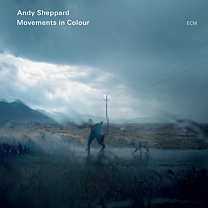
One of the more oblique threads I’ve been pursuing on this blog has to do with what new media are doing to aural and musical information. Music is, of course, much more than information: it is embodied affect (in a Deleuzian sense) that carries, channels, activates, mobilizes (sets into motion), transforms, and disseminates cultural meanings as well as culturally imbued bodily affects. In the process music imprints feelings, sensations and meanings into our bodies and, at the same time, outwards into the world that it describes, inscribes, and infuses with rhythm and aural texture. It fills and organizes the spaces of resonance between bodies, but also ‘spaces’, or reterritorializes, our own sense of ourselves – as Deleuze and Guattari’s oft-quoted opening lines to “Of the Refrain” <\/a>suggest.<\/p>\n Dan Visel’s piece on music & metadata<\/a> has gotten me thinking about how musical metadata — “things that are outside of the text, but still of primary importance to how we read a text”, which in the case of music includes titles and information about the performers — are becoming part of a more fluid and oceanic datasphere. When I was growing up, the access points to the musical universe were radio stations (a few, like the original CFNY, among the dozens available in the Toronto area), record stores (a few, like the Record Peddler, whose employees I could trust for their cool tips), and a handful of magazines (like Toronto’s Shades and a few of the other free art and music zines, most of which have left not a shred of evidence behind themselves in the digital era). I used to have to keep listening, sometimes for half an hour or more, to find out what it was that I liked on my favorite college radio station, and if I wasn’t listening closely I could miss it — the metadata were so scarce. But once I heard it I knew what to look for (on a trip downtown to the Peddler), and once I bought the album, and maybe a copy of New Musical Express or Trouser Press that featured an interview with the band, I was as metadata-rich as anyone I knew.<\/p>\n What’s missing, though, is the singular experience of coming to know a whole album: sitting through an entire side of an LP while caressing its cover like a talisman in your hands and taking in the liner notes, photographs, and cover art as you do that. You knew this album would be the only thing coming from the band for months to come, so you cherished the experience and gave it time to unfold. And there was something about the packaging, particularly with the emergence of ‘concept albums,’ that added a rich emotional layer to the experience. (Think Dark Side of the Moon<\/a>, or Peter Gabriel’s liner notes to Genesis’s The Lamb Lies Down on Broadway<\/a>, or Jon Anderson’s pseudo-yogic lyrical ramblings in Tales from Topographic Oceans<\/a>, or the Daliesque surreal landscapes covering Klaus Schulze<\/a>‘s space rock albums.)<\/p>\n I was reminded of this magic of album cover art when I read Some landscapes<\/a>‘ blog post on ECM records, which got me thinking about the link between music and the perception of landscape — the way music territorializes space for us, creating affective movements and openings within us towards certain places and away from others. Album cover art only became a real art form in the 1960s and matured in the 1970s and 1980s. Its ability to conjure up a mental geography, however, is nowhere more in evidence than on Manfred Eicher’s Munich-based ECM <\/a>label. Best known for its releases of cerebral but soulful instrumental jazz by the likes of Keith Jarrett, Jan Garbarek, Pat Metheny, Egberto Gismonti, and others (never to be mistaken for new age or smooth jazz, the downstream\/lowbrow relatives to ECM’s uptown virtuosity), the label ultimately branched out to a variety of near-jazz forms within the world music, contemporary classical, and experimental music genres. As even the label’s web site <\/a>suggests, however, the “classic” ECM album cover is as far from uptown as you can get. Generally it’s a single shot of an unpopulated, usually northern and often forbiddingly desolate nature scene set within a monochromatic frame, with only the title and artist’s name marking the cover and minimal information on the back. The scene is singular; it’s intended to evoke a mood as well as a geography, a place on earth that is obviously not where we are, and to which we take on a relationship that’s something between being a tourist’s and a pilgrim’s, with the musician (say, Norwegian saxophonist Jan Garbarek or guitarist Terje Rypal) as shamanic mediator-visionary to guide us through that landscape. (Michael Tucker’s book Dreaming with Open Eyes makes that very claim about Garbarek and a series of other twentieth-century artists and musicians, from Klee and Kandinsky to Beuys and Tarkovsky.)<\/p>\n The discussion thread Plinius points us to <\/a> gets at some of the label’s diversity, however. Its cover imagery ranges from the abstract, gestural, mystical and allusive to the urban, expressionistic, and even aniconic – mere text on monochrome background – but it is always arty, often too consciously so, maybe even a little sterile. ECM was a brand, but a brand that created its own geography of sound, of longing, and of attitude.<\/p>\n With the demise of records (and now CDs), much of that seems lost. But there is a way in which that geography of sound has become an element of (formal and informal) cultural policy, specifically in the way certain places and countries brand themselves through the arts today. Iceland <\/a>is an obvious example: the land of Bjork, the quirky princess of creative art-pop, and Sigur Ros<\/a>, the soft, gauzy mystics of uber-landscape rock. Sigur Ros’s film Heima <\/a>does exactly this. Chronicling the band’s travels and performances in small towns in its native country, the film territorializes an entire set of affective moods over the landscape of Iceland: in the movement across the country’s ‘mysterious’ rocky and volcanic surface, the band’s slow ecstatic crescendos, the theme of them ‘giving back’ to their homeland after ‘making it’ in the international arena, and the quasi-religious solemnity of it all. Like a Werner Herzog film without the irony, this is ECM for the post-rock generation. It certainly did make me want to visit Iceland <\/a>, which is actively promoting <\/a>its music scene and its enigmatic landscapes as tourist <\/a>draws (and it’s cheap now after its financial collapse).<\/p>\n So the metadata is now in all the audio-visual products linked to the music itself, an expanding universe of metadata connecting identity, affect, place, geography, commerce, and cultural policy — which, in a global cultural economy, is a matter of survival (for Cajun <\/a>sounds visit Louisiana; for Celtic, Cape Breton<\/a>; for jam bands and free-folk<\/a>, Vermont; etc.).<\/p>\n","protected":false},"excerpt":{"rendered":" One of the more oblique threads I’ve been pursuing on this blog has to do with what new media are doing to aural and musical information. Music is, of course, much more than information: it is embodied affect (in a Deleuzian sense) that carries, channels, activates, mobilizes (sets into motion), transforms, and disseminates cultural meanings […]<\/p>\n","protected":false},"author":99,"featured_media":0,"comment_status":"open","ping_status":"open","sticky":false,"template":"","format":"standard","meta":{"_monsterinsights_skip_tracking":false,"advanced_seo_description":"","jetpack_seo_html_title":"","jetpack_seo_noindex":false,"jetpack_seo_schema_type":"","_jetpack_newsletter_access":"","_jetpack_dont_email_post_to_subs":false,"_jetpack_newsletter_tier_id":0,"_jetpack_memberships_contains_paywalled_content":false,"_jetpack_feature_clip_id":0,"_jetpack_memberships_contains_paid_content":false,"footnotes":"","jetpack_publicize_message":"","jetpack_publicize_feature_enabled":true,"jetpack_social_post_already_shared":false,"jetpack_social_options":{"image_generator_settings":{"template":"highway","default_image_id":0,"font":"","enabled":false},"version":2},"jetpack_post_was_ever_published":false},"categories":[689701,692399],"tags":[4427,4479,4480,228,230,206,354,501,4481],"class_list":["post-1061","post","type-post","status-publish","format-standard","hentry","category-media_ecology","category-music-soundscape","tag-affect","tag-cultural-geography","tag-cultural-policy","tag-deleuze","tag-geography","tag-iceland","tag-imagination","tag-music","tag-visual-culture"],"jetpack_publicize_connections":[],"jetpack_sharing_enabled":true,"jetpack_shortlink":"https:\/\/wp.me\/p4IC4a-h7","jetpack-related-posts":[{"id":2134,"url":"https:\/\/blog.uvm.edu\/aivakhiv\/2011\/01\/05\/environmental-humanities-series-update\/","url_meta":{"origin":1061,"position":0},"title":"Environmental Humanities series update","author":"Adrian J Ivakhiv","date":"January 5, 2011","format":false,"excerpt":"Consider the Wilfrid Laurier University Press Environmental Humanities Series for your next manuscript... The new series poster is here. The Environmental Humanities Series features research that adopts and adapts the methods of the humanities to clarify the cultural meanings associated with environmental debate. The scope of the series is broad.\u2026","rel":"","context":"In "Academe"","block_context":{"text":"Academe","link":"https:\/\/blog.uvm.edu\/aivakhiv\/category\/academe\/"},"img":{"alt_text":"","src":"","width":0,"height":0},"classes":[]},{"id":1018,"url":"https:\/\/blog.uvm.edu\/aivakhiv\/2009\/01\/19\/more-musical-colors\/","url_meta":{"origin":1061,"position":1},"title":"more musical colors","author":"Adrian J Ivakhiv","date":"January 19, 2009","format":false,"excerpt":"After writing about Jon Hassell's \"coffee coloured\" global music of the future, I was intrigued to find out that Timothy Morton, author of \"Ecology Without Nature,\" has been writing about the ecological implications (or something like it) of Just Intonation versus Equal Temperament. For those unaware of the fine details\u2026","rel":"","context":"In "Music & soundscape"","block_context":{"text":"Music & soundscape","link":"https:\/\/blog.uvm.edu\/aivakhiv\/category\/music-soundscape\/"},"img":{"alt_text":"","src":"","width":0,"height":0},"classes":[]},{"id":1097,"url":"https:\/\/blog.uvm.edu\/aivakhiv\/2009\/06\/30\/earth-songs-michael-jacksons-cultural-ecologies\/","url_meta":{"origin":1061,"position":2},"title":"earth songs: Michael Jackson’s cultural ecologies","author":"Adrian J Ivakhiv","date":"June 30, 2009","format":false,"excerpt":"http:\/\/www.youtube.com\/watch?v=f8muMo0fw_M&rel=0&color1=0xb1b1b1&color2=0xcfcfcf&hl=en&feature=player_embedded&fs=1 The death of Michael Jackson has prompted eco-bloggers to take another look at Jackson's 1995 \"Earth Song\", which some consider the most popular environmentally themed song ever produced. The song remains Jackson's biggest seller in the U.K, having sold over a million copies there -- more than either \"Thriller\"\u2026","rel":"","context":"In "Eco-culture"","block_context":{"text":"Eco-culture","link":"https:\/\/blog.uvm.edu\/aivakhiv\/category\/ecoculture\/"},"img":{"alt_text":"","src":"https:\/\/i0.wp.com\/img.youtube.com\/vi\/f8muMo0fw_M\/0.jpg?resize=350%2C200","width":350,"height":200},"classes":[]},{"id":5293,"url":"https:\/\/blog.uvm.edu\/aivakhiv\/2011\/09\/09\/political-ecology-position\/","url_meta":{"origin":1061,"position":3},"title":"Political Ecology position","author":"Adrian J Ivakhiv","date":"September 9, 2011","format":false,"excerpt":"We're been given the green light to announce the following tenure-track position in Environmental Studies and Geography. I'm chairing the Search Committee. Please pass it on to anyone you think will be interested. Review of applications will begin November 15.\u00a0 The Department of Geography and the Environmental Studies Program at\u2026","rel":"","context":"In "Academe"","block_context":{"text":"Academe","link":"https:\/\/blog.uvm.edu\/aivakhiv\/category\/academe\/"},"img":{"alt_text":"","src":"","width":0,"height":0},"classes":[]},{"id":1101,"url":"https:\/\/blog.uvm.edu\/aivakhiv\/2009\/07\/11\/cinematic-ecologies\/","url_meta":{"origin":1061,"position":4},"title":"cinematic ecologies","author":"Adrian J Ivakhiv","date":"July 11, 2009","format":false,"excerpt":"As ecocriticism expands and deepens in scope (of subject matter & media examined), extent (internationally), and diversity (in approaches, connections with other schools of thought, etc.), its interactions with non-literary fields such as cinema studies, theatre\/performance studies, and musicology (as I posted about recently) are starting to develop in healthy\u2026","rel":"","context":"In "Cinema"","block_context":{"text":"Cinema","link":"https:\/\/blog.uvm.edu\/aivakhiv\/category\/cinema_zone\/"},"img":{"alt_text":"stalker7.png","src":"https:\/\/i0.wp.com\/blog.uvm.edu\/aivakhiv\/files\/2009\/07\/stalker7.png?resize=350%2C200&ssl=1","width":350,"height":200},"classes":[]},{"id":1017,"url":"https:\/\/blog.uvm.edu\/aivakhiv\/2009\/01\/15\/music-as-coffee-and-as-philosophy\/","url_meta":{"origin":1061,"position":5},"title":"music as coffee and as philosophy","author":"Adrian J Ivakhiv","date":"January 15, 2009","format":false,"excerpt":"I just came across this interesting tribute Brian Eno had written to trumpeter and experimental composer Jon Hassell, which gets at a few very deleuzian and immanentist notions: about music as \"embodied philosophy\", and Hassell's idea of a \"coffee coloured music of the future\" that reflects \"a globalised world constantly\u2026","rel":"","context":"In "Music & soundscape"","block_context":{"text":"Music & soundscape","link":"https:\/\/blog.uvm.edu\/aivakhiv\/category\/music-soundscape\/"},"img":{"alt_text":"","src":"","width":0,"height":0},"classes":[]}],"jetpack_featured_media_url":"","_links":{"self":[{"href":"https:\/\/blog.uvm.edu\/aivakhiv\/wp-json\/wp\/v2\/posts\/1061","targetHints":{"allow":["GET"]}}],"collection":[{"href":"https:\/\/blog.uvm.edu\/aivakhiv\/wp-json\/wp\/v2\/posts"}],"about":[{"href":"https:\/\/blog.uvm.edu\/aivakhiv\/wp-json\/wp\/v2\/types\/post"}],"author":[{"embeddable":true,"href":"https:\/\/blog.uvm.edu\/aivakhiv\/wp-json\/wp\/v2\/users\/99"}],"replies":[{"embeddable":true,"href":"https:\/\/blog.uvm.edu\/aivakhiv\/wp-json\/wp\/v2\/comments?post=1061"}],"version-history":[{"count":0,"href":"https:\/\/blog.uvm.edu\/aivakhiv\/wp-json\/wp\/v2\/posts\/1061\/revisions"}],"wp:attachment":[{"href":"https:\/\/blog.uvm.edu\/aivakhiv\/wp-json\/wp\/v2\/media?parent=1061"}],"wp:term":[{"taxonomy":"category","embeddable":true,"href":"https:\/\/blog.uvm.edu\/aivakhiv\/wp-json\/wp\/v2\/categories?post=1061"},{"taxonomy":"post_tag","embeddable":true,"href":"https:\/\/blog.uvm.edu\/aivakhiv\/wp-json\/wp\/v2\/tags?post=1061"}],"curies":[{"name":"wp","href":"https:\/\/api.w.org\/{rel}","templated":true}]}}
\nNow the metadata are all over the place: we look up an album on Amazon and find discussions about the ins and outs of every track; we download it from iTunes or eMusic and click on links that give us reviews, histories of the artists, videos, and an ever-branching mycelia-like network of similar artists, tags, and recommendations. (Those are, arguably, what you pay for, since they’re not there when you download music illegally from a file sharing site.) Or we just search for the artist on Last.fm and find neighbors and friends whose libraries give us all that and more.<\/p>\n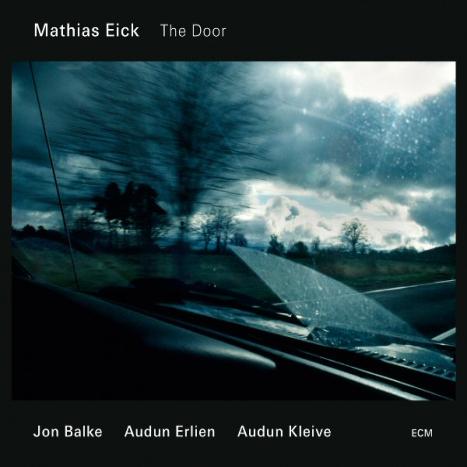 <\/p>\n