The Russian invasion of Ukraine — with its inhuman fanaticism<\/a>, as witnessed in the horrific assault on Mariupol (see below) and to lesser degrees in Kharkiv and other largely Russian-speaking, eastern Ukrainian cities — risks a resort to something similar, though it’s not exactly the Russophobia<\/a> some have warned against. <\/p>\n\n\n\n Understanding the invasion requires examining not only the geopolitical<\/a> and economic<\/a> factors, which have been well covered in the western (especially left-wing<\/a>) press, but also the histories<\/a> and psychologies<\/a> of imperialism<\/a> (notably Russian<\/a>), colonialism<\/a> (ditto), ethnic chauvinism (especially Russian<\/a> toward Ukrainians), Sovietization<\/a> (of the entire Soviet population, but less so in western Ukraine, which experienced it for a shorter period), authoritarianism<\/a> (Putinism) and its refusal<\/a> (among Ukrainians), the draw of “Europe<\/a>” for Ukrainians, and the basic connection to land<\/a> that many Ukrainians<\/a> feel “in their bones” even if that connection has been historically denied, if never fully severed, by those imperial\/colonial histories.<\/p>\n\n\n\n\n\n\n\n The term “ethnic cleansing” may suggest itself here, but I would like to propose that it isn’t that, but that it is<\/em> something related. <\/p>\n\n\n\n Russia’s invasion is not \u201cethnic cleansing\u201d for the simple reason that the target isn\u2019t Ukrainian ethnicity per se<\/em>. It is what could be called \u201cethnopolitical<\/em> cleansing,\u201d which aims to \u201cpurify\u201d a territory of its political resistance as if it were<\/em> ethnic. The ethnic difference is both affirmed and denied, with Ukrainians considered both the same as Russians (\u201cUkrainians are actually Russians,\u201d \u201cthey don\u2019t deserve their own state,\u201d etc.) and different from Russians (\u201cUkrainians are oppressing Russians,\u201d \u201cwe need to protect our fellow Russians from Ukrainians\u201d), depending on the circumstance.<\/p>\n\n\n\n Ethnic cleansing works according to pre-existing ethnic identities. Ethnopolitical cleansing works the ethnic trope strategically, but is really aimed at crushing political resistance: its goal is to squash the very existence of a civic<\/em> Ukrainian nation, which it cannot tolerate. Unlike the Nazi goal of restratifying the world according to its (made-up) racial categories, the Russian neo-imperial goal is to restratify the world politically<\/em>, with ethnicity deployed as one among multiple strategies in its arsenal. But its deployment figures heavily, and in contradictory ways, in defining the difference and the need to eradicate that difference. It is therefore ethno<\/em>political.<\/p>\n\n\n\n The virtue of the term “ethnopolitical,” to my mind, lies in its suggestion of a dynamic relationship between ethnicity and politics, which helps relay the fact that ethnicity is always<\/em> political: it is a dynamic process of people-making, a process by which groups and populations define themselves relationally in contradistinction to others. Language and culture are commonly thought of as essential constituents of ethnicity, while politics is not, but language can become<\/em> political, and politics cultural<\/em>, and this is what a focus on this interplay of factors can help us account for. <\/p>\n\n\n\n In a sense, this war is a war <\/em>over political culture<\/em>. Yaroslav Hrytsak gets at this in his recent New York Times <\/em>piece “Putin Got Ukraine Completely Wrong”<\/a>: <\/p>\n\n\n\n “What happened in Ukraine in 2014 confirmed what liberal Ukrainian historians have been saying for a long time: The chief distinction between Ukrainians and Russians lies not in language, religion or culture \u2014 here they are relatively close \u2014 but in political traditions. Simply put, a victorious democratic revolution is almost impossible in Russia, whereas a viable authoritarian government is almost impossible in Ukraine.”<\/p><\/blockquote>\n\n\n\n But “political traditions” suggest something longstanding and foregone, whereas “political culture” emphasizes culture as a living, dynamic, “cultivable” process. In Ukraine, we are seeing the emergence of a “civic ethnicity” — something that eludes traditional opposition between “ethnic” and “civic<\/a>” nationalisms — that defines Ukrainians as politically different<\/em> from Russians not in some essential or primordial way, but in the sense of a political choice being made by the two respective nations: Ukrainians are choosing a different political culture than the one Russia is trying to impose on it, and by extension the one Russians have themselves, by and large, opted for. <\/p>\n\n\n\n In “What the Russian Invasion Has Done to Ukraine,<\/a>” the New Yorker<\/em>‘s Joshua Yaffa captures this well: <\/p>\n\n\n\n “Putin, after more than twenty years in power, seems to have committed a grave error of projection. The Russian state he has built is a vertical machine, distant from those it rules, and responsive to those at the top. Ukraine is home to a messy, vibrant society, with years of experience in horizontal organization.” <\/p><\/blockquote>\n\n\n\n Yaffa’s piece<\/a> is an excellent overview that is well worth reading. What I am arguing is that this vertical-versus-horizontal distinction is what is at stake in the conflict, and that it has many ethnic markers — that is, if we take ethnicity to be not a given (the way it was defined, say, in the Soviet Union<\/a>, which only recognized “primordial” ethnicities), but a living process<\/a> of ethnocultural formation, one by which collective self-understanding draws together<\/a> elements of politics, culture, language, geography, history, and even ecology. <\/p>\n\n\n\n The figure of Volodymyr Zelensky is central, in some respects, to understanding this process in Ukraine today. Political scientists Olga Onuch and Harry Hunt, in “The Zelenskyy Effect<\/a>,” capture the ways in which Zelensky’s positionality is significant: <\/p>\n\n\n\n “[A]s a Russian-speaker of Jewish descent from the country\u2019s industrial southeast who came of age after communism, he mirrors the lives of the same ordinary Ukrainians whose national loyalty Moscow\u2019s propaganda denies. [. . .] <\/p> “[W]hen Zelenskyy stands up to Vladimir Putin\u2019s tanks and munitions, some of them emblazoned with the ‘Z’ that has become a pro-Russian war symbol, he sends an important signal of resistance on behalf of the whole civic Ukrainian nation \u2013 a nation full of Zelenskyys defined by citizenship rather than any ethnic litmus test. [This] is why Zelenskyy is such a big threat to Putin. He personifies the vacuity of Putin\u2019s narrative on Ukraine and his existence spells eventual doom for any Kremlin effort to force it into submission.”<\/p><\/blockquote>\n\n\n\n (On some other dimensions of Zelensky’s role in this conflict, see the recent articles by Gopnik<\/a>, Allsop<\/a>, and Garber<\/a>.)<\/p>\n\n\n\n In other words, our concepts of ethnicity and nationalism come up short when applied to the Russian invasion of Ukraine. But they are important because they are in play for Ukrainians who are actively changing their relationship not just to the past — which is where nationalism and ethnicity are commonly thought of as being rooted — but also to the future. <\/p>\n\n\n\n As such, they hold a lesson for how all of us can remake our relationship to the present. And that is something we will all need to do, as we contend with the other global challenges<\/a> of the “feverish world<\/a>” of the coming decades. <\/p>\n\n\n\n <\/p>\n","protected":false},"excerpt":{"rendered":" When people ask “How can this be happening that two such close nations” — “brotherly” or “fraternal peoples,” as it’s often said — “are killing each other?” they are missing a crucial political piece, for which we need new terminology as well as a more complex set of lenses. It’s helpful to compare this to […]<\/p>\n","protected":false},"author":99,"featured_media":0,"comment_status":"open","ping_status":"open","sticky":false,"template":"","format":"standard","meta":{"_monsterinsights_skip_tracking":false,"advanced_seo_description":"","jetpack_seo_html_title":"","jetpack_seo_noindex":false,"jetpack_seo_schema_type":"","_jetpack_newsletter_access":"","_jetpack_dont_email_post_to_subs":false,"_jetpack_newsletter_tier_id":0,"_jetpack_memberships_contains_paywalled_content":false,"_jetpack_feature_clip_id":0,"_jetpack_memberships_contains_paid_content":false,"footnotes":"","jetpack_publicize_message":"","jetpack_publicize_feature_enabled":true,"jetpack_social_post_already_shared":false,"jetpack_social_options":{"image_generator_settings":{"template":"highway","default_image_id":0,"font":"","enabled":false},"version":2},"jetpack_post_was_ever_published":false},"categories":[701784,701781],"tags":[12325],"class_list":["post-1163","post","type-post","status-publish","format-standard","hentry","category-identities","category-russian-invasion","tag-russia"],"jetpack_publicize_connections":[],"jetpack_sharing_enabled":true,"jetpack_shortlink":"https:\/\/wp.me\/pdPO21-iL","jetpack_featured_media_url":"","_links":{"self":[{"href":"https:\/\/blog.uvm.edu\/aivakhiv-ukrtaz\/wp-json\/wp\/v2\/posts\/1163","targetHints":{"allow":["GET"]}}],"collection":[{"href":"https:\/\/blog.uvm.edu\/aivakhiv-ukrtaz\/wp-json\/wp\/v2\/posts"}],"about":[{"href":"https:\/\/blog.uvm.edu\/aivakhiv-ukrtaz\/wp-json\/wp\/v2\/types\/post"}],"author":[{"embeddable":true,"href":"https:\/\/blog.uvm.edu\/aivakhiv-ukrtaz\/wp-json\/wp\/v2\/users\/99"}],"replies":[{"embeddable":true,"href":"https:\/\/blog.uvm.edu\/aivakhiv-ukrtaz\/wp-json\/wp\/v2\/comments?post=1163"}],"version-history":[{"count":15,"href":"https:\/\/blog.uvm.edu\/aivakhiv-ukrtaz\/wp-json\/wp\/v2\/posts\/1163\/revisions"}],"predecessor-version":[{"id":1180,"href":"https:\/\/blog.uvm.edu\/aivakhiv-ukrtaz\/wp-json\/wp\/v2\/posts\/1163\/revisions\/1180"}],"wp:attachment":[{"href":"https:\/\/blog.uvm.edu\/aivakhiv-ukrtaz\/wp-json\/wp\/v2\/media?parent=1163"}],"wp:term":[{"taxonomy":"category","embeddable":true,"href":"https:\/\/blog.uvm.edu\/aivakhiv-ukrtaz\/wp-json\/wp\/v2\/categories?post=1163"},{"taxonomy":"post_tag","embeddable":true,"href":"https:\/\/blog.uvm.edu\/aivakhiv-ukrtaz\/wp-json\/wp\/v2\/tags?post=1163"}],"curies":[{"name":"wp","href":"https:\/\/api.w.org\/{rel}","templated":true}]}}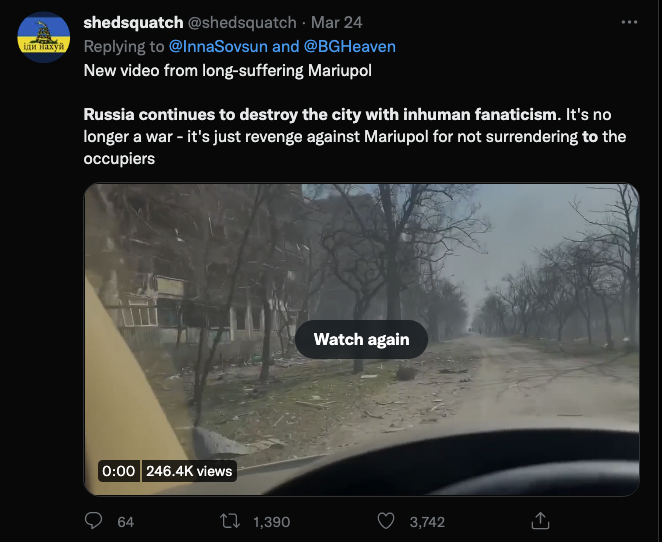 <\/a><\/figure>\n\n\n\n
 <\/a><\/figure>\n\n\n\n