During the 2025 Burlington City Nature Challenge BioBlitz, I primarily identified species on Sunday May 27th while at the Intervale’s City Nature Celebration. I volunteered to table with Hallie Getty and Elsa Tullar, and while we were there we were tasked with overseeing the BioBlitz Information table. However, due to the rain and generally inclement weather very few people actually came to the City Nature Celebration, so we were able to leave our table for parts of the afternoon and explore the surrounding area. The map below shows the route that I took.

The species that I encountered along my walk included:
- Ostrich Fern (Matteuccia Struthiopteris)
- Squills (Genus Scilla)
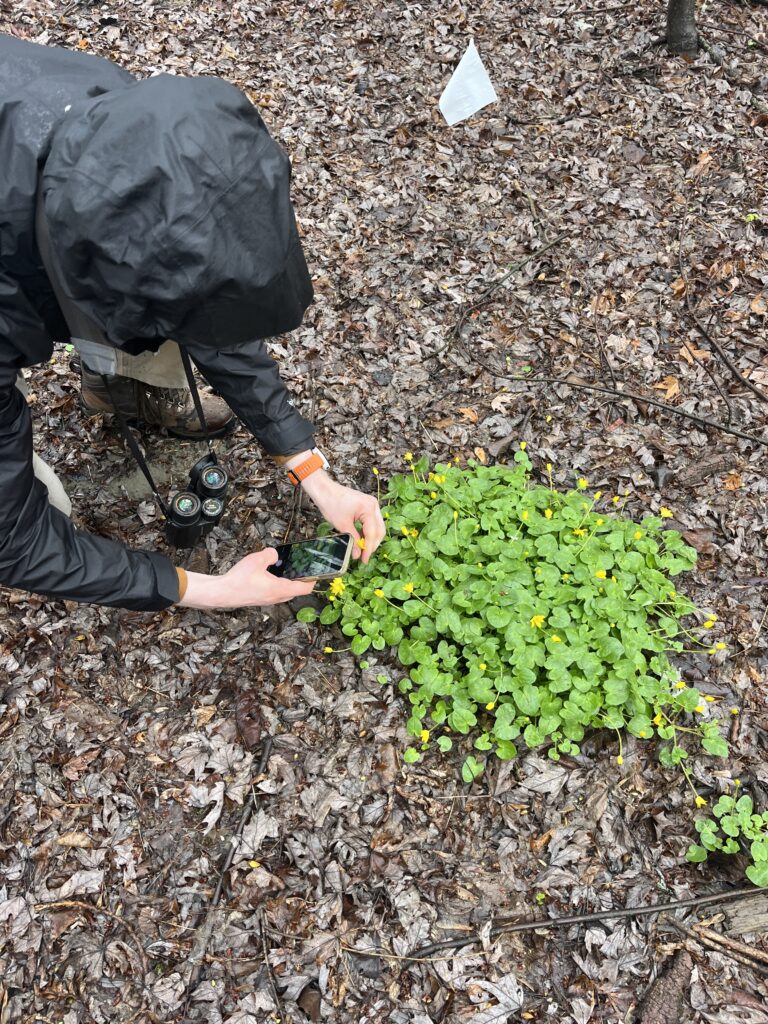
- Buttercups/Anemones/Larkspurs/Allies (Ranunculoideae)
- Common Merganser (Mergus Merganser)
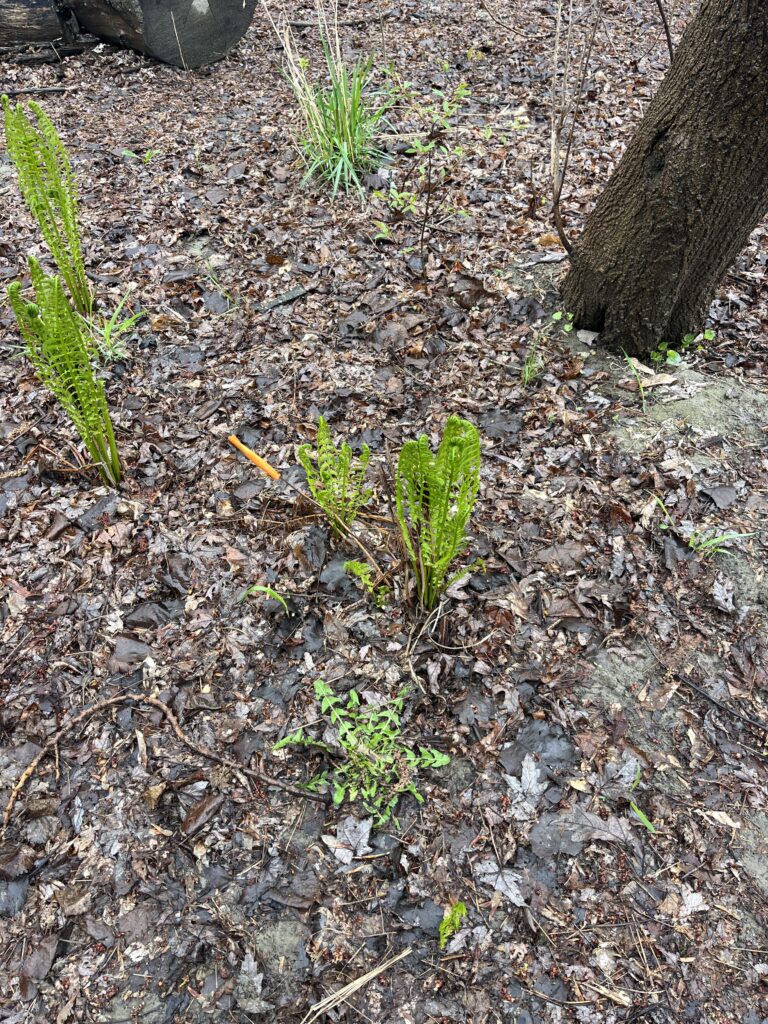
The Ostrich Ferns that I observed were actually planted there during previous Burlington City Celebrations by the Intervale Center (and volunteers), and there was planning actively going on while I walked along the trail. Ostrich ferns are a key species native to floodplain communities, and the annual plantings have been going on for the past few years in an effort to restore the resiliency of the Silver Maple Ostrich Fern Riverian Floodplain ecosystem that lines the Winooski River. I also got the chance to plant a fern of my own, and hopefully next year it will sprout sometime in the spring.
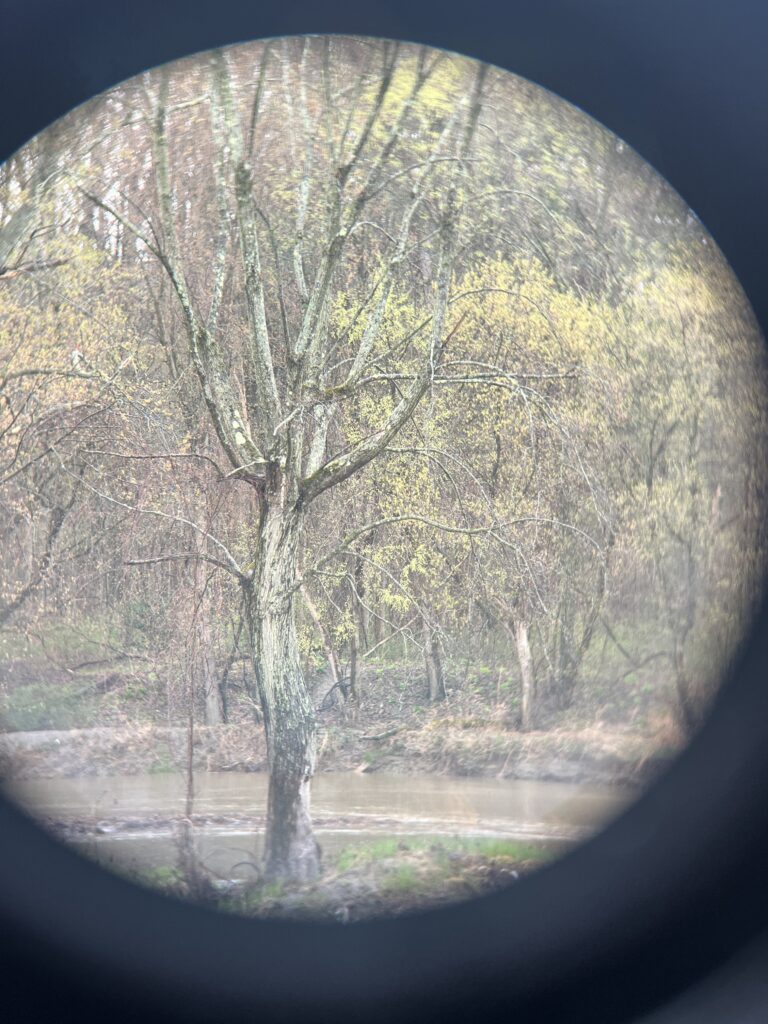
I was particularly excited that I got to see a Common Merganser in the wild, and although they are not considered rare here in Vermont, it was exciting to me because it was one of my first real experiences going bird watching. The Common Merganser that we saw was a female, and she spent most of the time that we watched her nestled up on a small shoal in the middle of the river. It was very grounding to simply stand there and watch her preen herself for a few minutes, and she looked very elegant out there by herself.

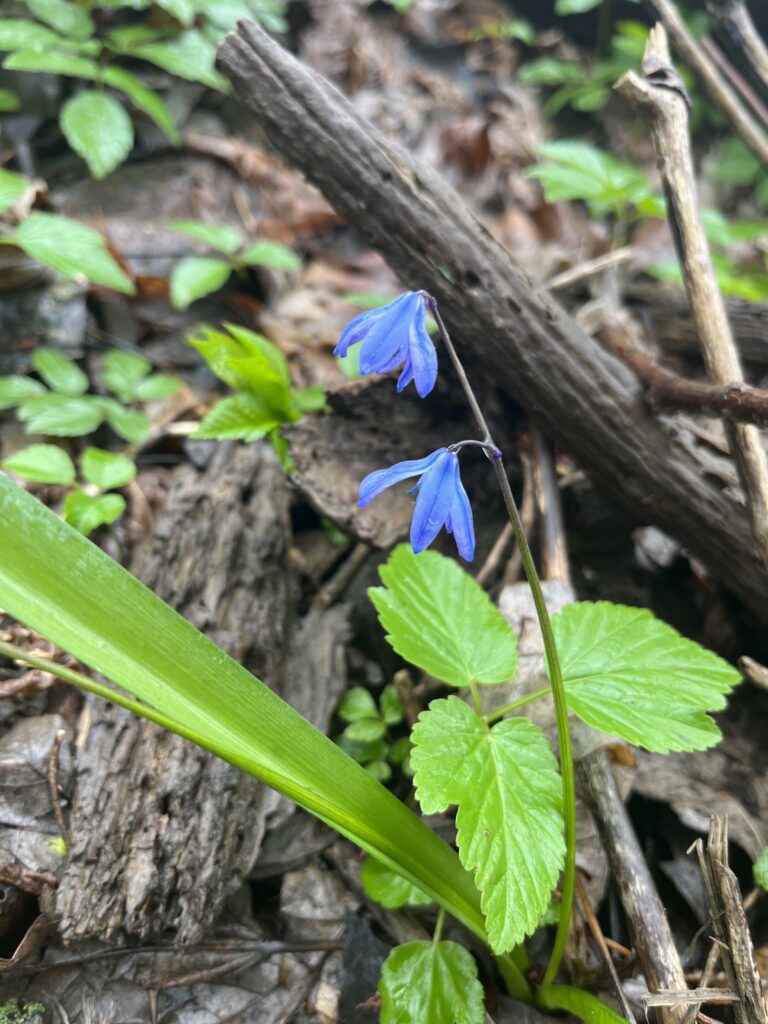
I had a good experience using iNaturalist, and I think that the photos that I took during the Burlington City Nature challenge were much better than most of my previous iNaturalist photos. I tried to take better close ups that focused in on key features of the species I was attempting to identify, and I think that my photo of the Squills was particularly good (for me). Figuring out how to join my lab section project and the Burlington City Nature Challenge project was straightforward, and the only issue I had while using iNaturalist (I struggled to upload a few photos) was not due to the app itself, but was because I was out of wifi range.
One thing that I found interesting about reports coming in from other participating cities was how many included invasive species I have observed here in Vermont. For example, someone recorded observing Japanese Knotweed in Greater Belfast Ireland, and just this past semester during an NR1020 lab I remember seeing it in either the Jericho Research Forest or by the Intervale Center. It’s sad to me how common invasive are globally, but at the same time it’s somewhat comforting to know that many ecosystems around the world face similar challenges (and we can do something about it through removing invasives and planting native species!).
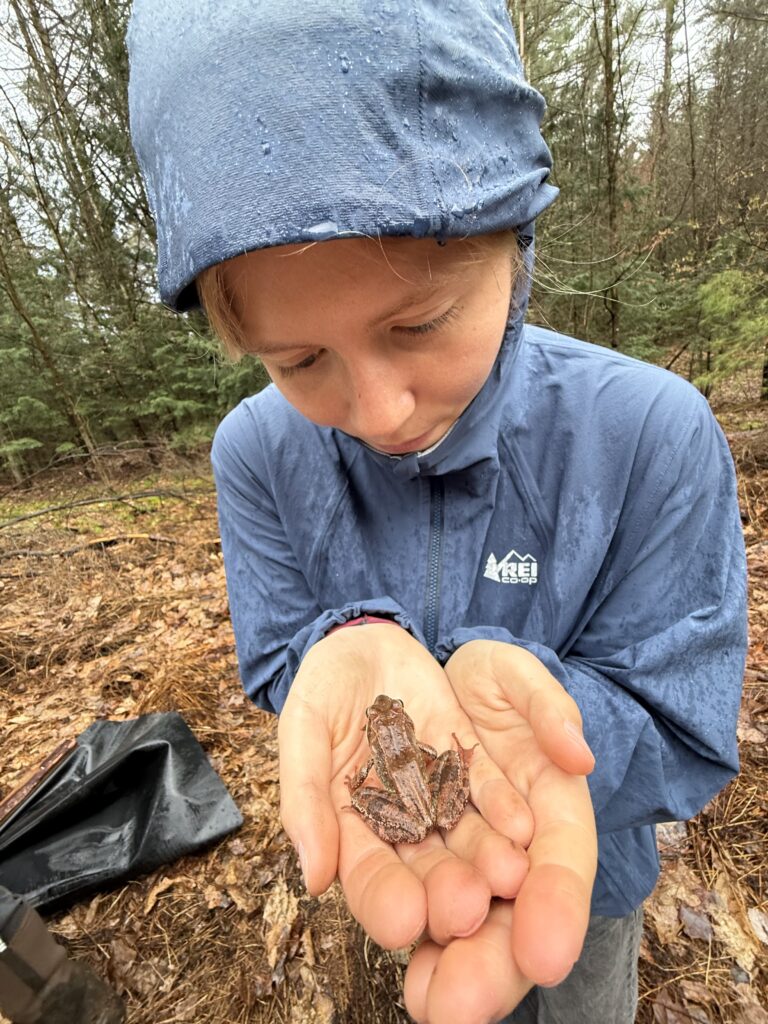
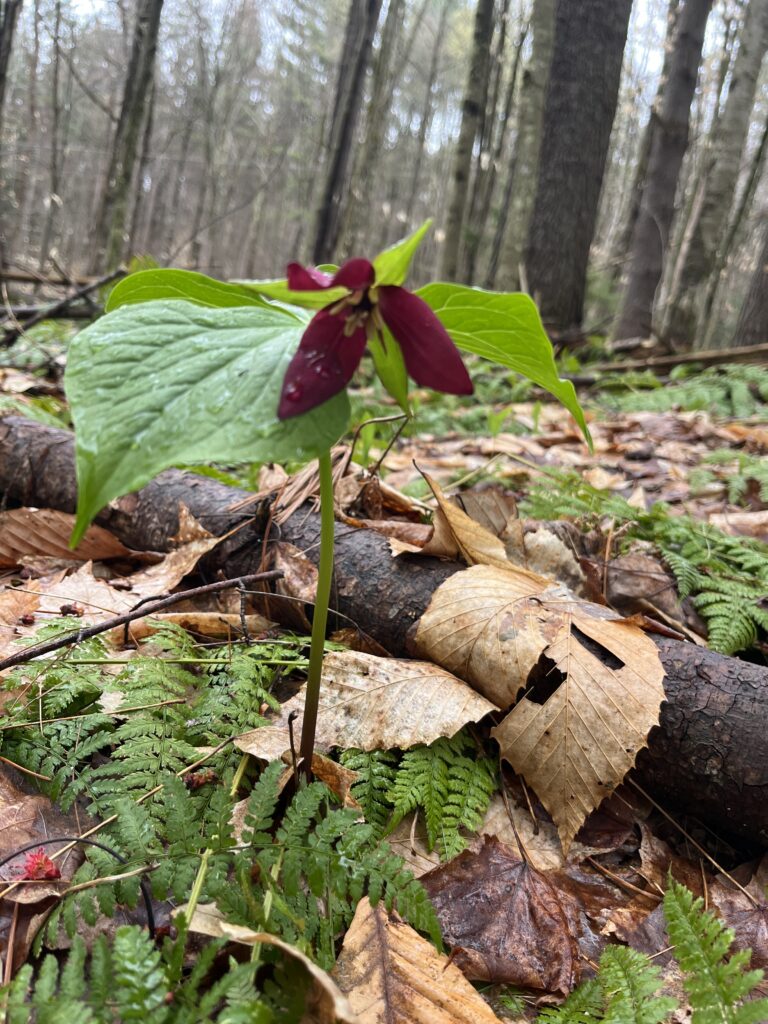
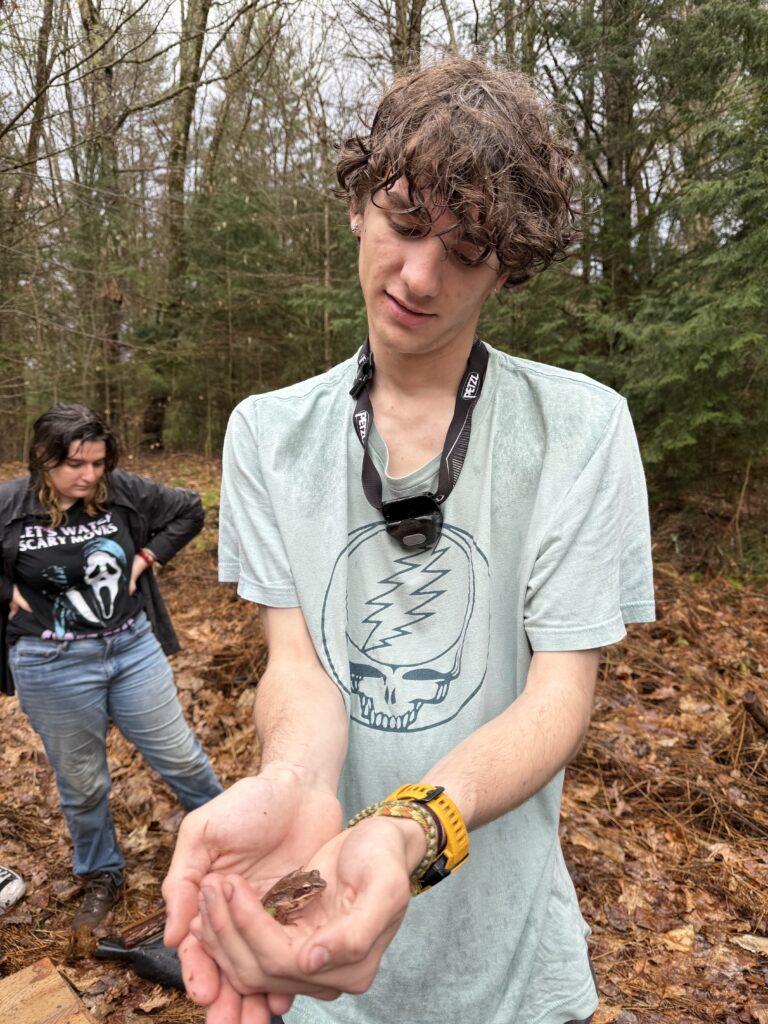
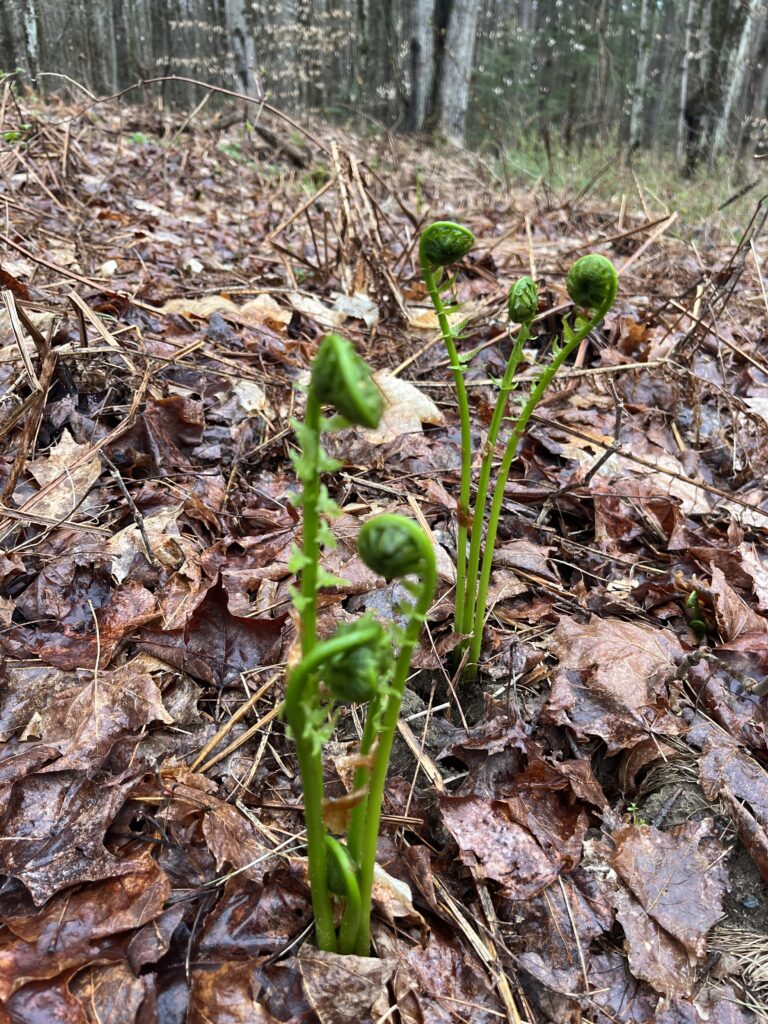
Although it does not count towards the Greater Burlington City Nature Challenge, this past Saturday afternoon (May 26th, 2025 C.E.) I also helped lead a herp walk in the Jericho research forest. We herped from around 4:45-6:20 p.m., and while we were there it was somewhat warm (I’d estimate around 45-50 degrees F) and raining. The rain was light when we first arrived there, but as the afternoon progressed it intensified and temperatures dropped. Although we did not find many herps, one of the people who attended found two Northern Redback Salamanders, and when we checked one of our snake hotels we found a Wood Frog hiding underneath. We also found a few blooming Red Trilliums, which was exciting since they only remain in bloom for around 2-3 weeks each spring. In addition to the Trilliums, we also found many Ostrich Ferns growing in the forest’s understory.